True-DTAC merger would undermine telecom market, Thai economy, says study by NBTC advisers

#SootinClaimon.Com : ขอบคุณแหล่งข้อมูล : หนังสือพิมพ์ The Nation.

https://www.nationthailand.com/business/corporate/40021039

True-DTAC merger would undermine telecom market, Thai economy, says study by NBTC advisers

True-DTAC merger would undermine telecom market, Thai economy, says study by NBTC advisers

FRIDAY, OCTOBER 14, 2022

A merger between True Corporation and Total Access Communication (DTAC) would likely degrade market competition, raise prices and lower service levels due to a lack of competition, a study conducted by telecoms watchdog NBTC’s foreign advisers has found.

The study also said that it would be difficult to rectify the resulting lack of market competition by introducing new competitors after the merger.

The study on the impact of the proposed True-DTAC merger was done by UK-based SCF Associates Ltd for the National Broadcasting and Telecommunications Commission (NBTC).

The telecoms regulator has dithered on whether to approve the proposed merger by Thailand’s second- and third-largest mobile network operators.

Last week, the Thailand Consumers Council urged the NBTC to make its decision on the planned merger strictly according to the law, without allowing capitalists to take advantage of the public and the market.

The adviser report, dated September 14, is the first of three prepared for the NBTC. A copy of the report was obtained by The Nation.

The study said that the merger would adversely affect competition in the Thai mobile market for data, voice and messaging, as well as the market for bundled services integrated with mobile connectivity, which characterises the country’s current and future mobile market.

Also, the study found that the resulting uncompetitive market condition due to the merger would be difficult to rectify by attempting to restore competition through the introduction of new operators.

“All potential remedies have difficulties, be they attempting to encourage a third new mobile network operator to enter, and/or introduction of a resilient and highly aggressive mobile virtual network operator wholesale market, or by forcefully managing pricing and service competition levels, via detailed regulatory reviews over many years,” the report said.

Repercussions on the Thai economy could be serious as “mobile is an essential ingredient of Thailand’s economic success”, the report said.

It pointed out that without vibrant competition, which attracts investments to a sector that drives many others, new mobile market development could be impaired with wider consequences.

“The Thai mobile market and associated communications offerings may become less attractive — thus, for instance, reducing FDI [foreign direct investment] generally,” the report said.

It cited cases from foreign mobile markets, such as the Philippines and Mexico, where a lack of competition led to higher prices and a shortage of new technologies and advanced services.

However, the report also stated that a decision on the merger of True and DTAC was a question requiring further analysis and ultimate conclusions could be drawn from the next phase of research.

“Such a direction would require the regulator to have suitable countervailing powers to halt industry concentration,” the report said.

The study examined the background to the proposed merger, expected impacts after the merger on barriers to entry and access to infrastructure, and conditions and measures that correspond to effects arising from the merger.

It was found that after a merger between two mobile network operators, access to the infrastructure needed to build a new business is “likely to be most difficult”. The study estimated that a new third network would need five to eight years to construct its infrastructure and become capable of gaining market share.

After the merger, it would “likely be most difficult” to restore competition, as remedies are not readily apparent, be they at the level of markets, infrastructure or regulatory oversight, the report concluded.

Indorama Ventures opens largest PET recycling plant in the Philippines

#SootinClaimon.Com : ขอบคุณแหล่งข้อมูล : หนังสือพิมพ์ The Nation.

https://www.nationthailand.com/business/corporate/40021037

Indorama Ventures opens largest PET recycling plant in the Philippines

Indorama Ventures opens largest PET recycling plant in the Philippines

FRIDAY, OCTOBER 14, 2022

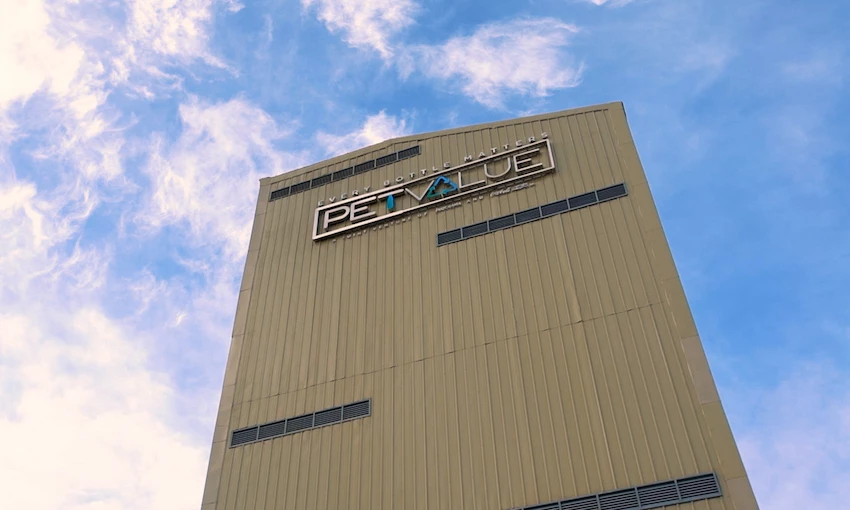
Indorama Ventures Pcl (IVL), a global sustainable chemical company, announced the official opening of its PETValue bottle-to-bottle recycling plant in the Philippines, in partnership with Coca-Cola Beverages Philippines—the bottling arm of Coca-Cola in the country.

The plant is IVL’s latest recycled PET facility. The venture builds on the global integrated petrochemicals company’s position as the world’s largest producer of recycled resin used in plastic beverage bottles.

PETValue Philippines, located in General Trias in Cavite Province south of Manila, is the country’s first food-grade, bottle-to-bottle recycling facility, and the largest in the Philippines.

It was built by IVL in partnership with Coca-Cola Beverages Philippines, Inc. in accord with The Coca-Cola Company’s ‘World Without Waste’ program to collect and recycle the equivalent of every bottle it sells by 2030.

As a result of the joint venture with Coca-Cola, IVL will recycle about 2 billion additional used PET (polyethylene terephthalate) plastic bottles in the Philippines every year and create about 200 new local jobs. The plant will wash and shred post-consumer bottles into flakes to produce recycled PET resin that is suitable for use in food-contact applications.
 

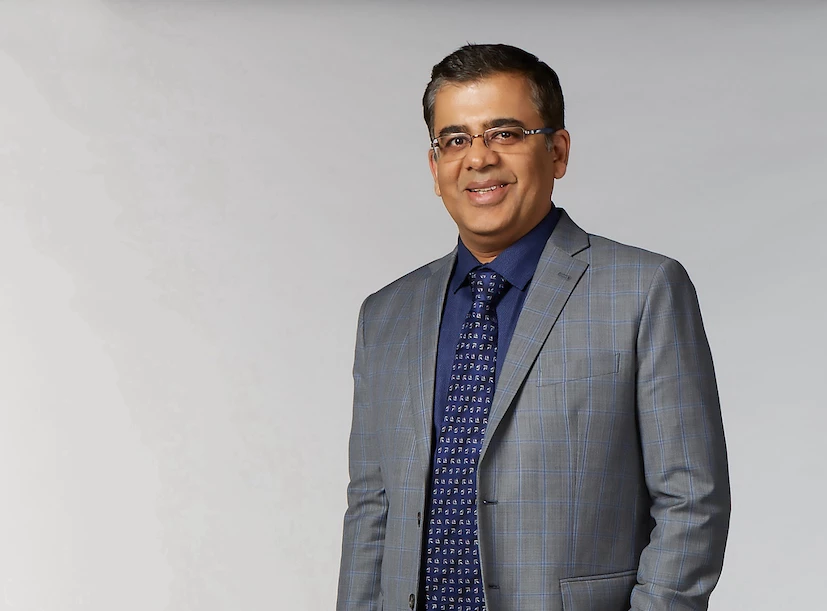
Managed under IVL’s regional business lead for Recycling Vertical Anivesh Tewari, PETValue brings together an experienced leadership team led by Site Manager Joel Potian, who has nearly three decades of manufacturing and chemical engineering expertise in the Philippines and Korea. He is supported by Aris Castillo as Chief Financial Officer, formerly from Coca-Cola Beverages Philippines with more than 10 years in supply chain finance and manufacturing.

Indorama Ventures opens largest PET recycling plant in the Philippines
 
Sanjay Ahuja, Executive President of Combined PET, Indorama Ventures, said, “PETValue is an important development for IVL, for our partner Coca-Cola, and for the Philippines community. IVL, as the largest producer of recycled PET resin, is bringing our global experience and know-how to grow capacity and recycle more bottles. This, together with our partner Coca-Cola’s powerful consumer footprint, represents significant potential for us, as purposeful companies, to close the loop on plastic bottle recycling and help resolve waste in the Philippines.”
 
IVL has already surpassed the half-way milestone towards meeting its 2025 target of increasing its recycling capacity to 750,000 tons per year.

The company is investing US$1.5 billion globally to expand recycling facilities and sustainable production, including a new ambition to reach post-consumer PET bale input of 1,500,000 tons per year by 2030.

PETValue will introduce the most advanced technology and infrastructure in the Philippines, helping to improve collection and recycling rates and prevent leakage into waterways. The new plant will encourage a more robust waste value chain to help address the growing post-consumer waste management problem in the Philippines.

The unique PET plastic used in soft drinks and water bottles is 100% recyclable and the most collected plastic packaging in the world. Global brands including Coca-Cola are using more recycled plastic in their bottles to close the loop and deliver a circular economy.

Indorama Ventures opens largest PET recycling plant in the Philippines 
Yash Lohia, Chairman of ESG Council at Indorama Ventures, said, “By the end of this year we will have increased our recycling capacity to more than 375,000 tons. In 2021, we acquired a PET recycling plant in Texas and announced plans to build a new facility in Indonesia. In 2020, we signed a joint venture agreement with Coca-Cola to build a state-of-the-art recycling plant in the Philippines, which culminated in today’s announcement. In the same year, we also acquired recycling plants in Brazil and two in Poland. This is to be celebrated given the challenging pandemic environment. These seven plants will join a family of existing recycling sites in Alabama, Ireland, two in France and the Netherlands.”  

Indorama Ventures opens largest PET recycling plant in the Philippines
 
Gareth McGeown, President and CEO of Coca-Cola Beverages Philippines, Inc., said, “Sustainability is at the heart of who we are as a company, as evidenced by more than a century of Coca-Cola treating the Philippines as its home. We are extremely proud of PETValue Philippines and our partnership with Indorama Ventures, whose global expertise in recycling technologies will prove to be an asset to the Philippines’ collective goals for more sustainable practices and a truly circular economy for recyclable plastic packaging. It is through innovations like PETValue Philippines and the strong partnerships we’ve formed with like-minded entities like Indorama Ventures that Coca-Cola can continue serving Filipino communities for another hundred years.”

Indorama Ventures opens largest PET recycling plant in the Philippines

Help small businesses, low-income earners, Arkhom tells G20 ministers

#SootinClaimon.Com : ขอบคุณแหล่งข้อมูล : หนังสือพิมพ์ The Nation.

https://www.nationthailand.com/thailand/economy/40021059

Help small businesses, low-income earners, Arkhom tells G20 ministers

Help small businesses, low-income earners, Arkhom tells G20 ministers

SATURDAY, OCTOBER 15, 2022

At this week’s G20 meeting, Finance Minister Arkhom Termpittayapaisith suggested that governments introduce financial measures to help small businesses and low-income earners in the face of a global economic recession.

The meeting brought together finance ministers and central bank governors from the Group of 20 (G20) countries.

Arkhom told them that rising prices of consumer goods and energy have become a huge challenge, with high inflation threatening to lead to economic recession.

Finance Ministry spokesman Pornchai Theeravet said on Saturday that Arkhom made the remarks while attending the two-day meeting in Washington DC at the invitation of Indonesia’s Finance Ministry, which hosted this year’s gathering on Wednesday and Thursday.

The meeting was attended by representatives from the European Union, eight industrial countries — United Kingdom, Canada, France, Italy, Japan, Germany, United States and Australia — as well as 11 large economies, namely Argentina, Brazil, China, India, Indonesia, Mexico, Russia, Saudi Arabia, South Africa, South Korea, and Turkey.

The G20 countries account for 80 per cent of the global economy and two-thirds of the world’s population.

This year’s G20 summit of finance ministers and central bank governors, held along the theme “Recover Together, Recover Stronger”, discussed six topics — global economy, international financial architecture, financial sector regulation, infrastructure investment, sustainable finance and sustainable taxation.

The meeting agreed to consider all tools necessary to address food and energy insecurity as well as the rising cost of living in many countries. It also highlighted the importance of cooperation to ensure a coordinated global response to tackle food insecurity.

The meeting reaffirmed G20’s commitment to the implementation of an international tax package while looking toward the implementation of the Asia Initiative Declaration on International Taxation, which calls for improved transparency and exchange of information for tax purposes.

On Thursday, Arkhom also met with senior executives from the financial institutions HSBC and Mitsubishi UFJ Financial Group, said Pornchai, who doubles as director of the Finance Ministry’s Fiscal Policy Office.

The executives of the two financial institutions voiced their confidence in the Thai economy and the government’s policies on investment for long-term development, the spokesman said.

Pioneering Thai medical cannabis, hemp company nurtures global ambitions

#SootinClaimon.Com : ขอบคุณแหล่งข้อมูล : หนังสือพิมพ์ The Nation.

https://www.nationthailand.com/business/corporate/40020973

Pioneering Thai medical cannabis, hemp company nurtures global ambitions

Pioneering Thai medical cannabis, hemp company nurtures global ambitions

WEDNESDAY, OCTOBER 12, 2022

Nongluck Ajanapanya

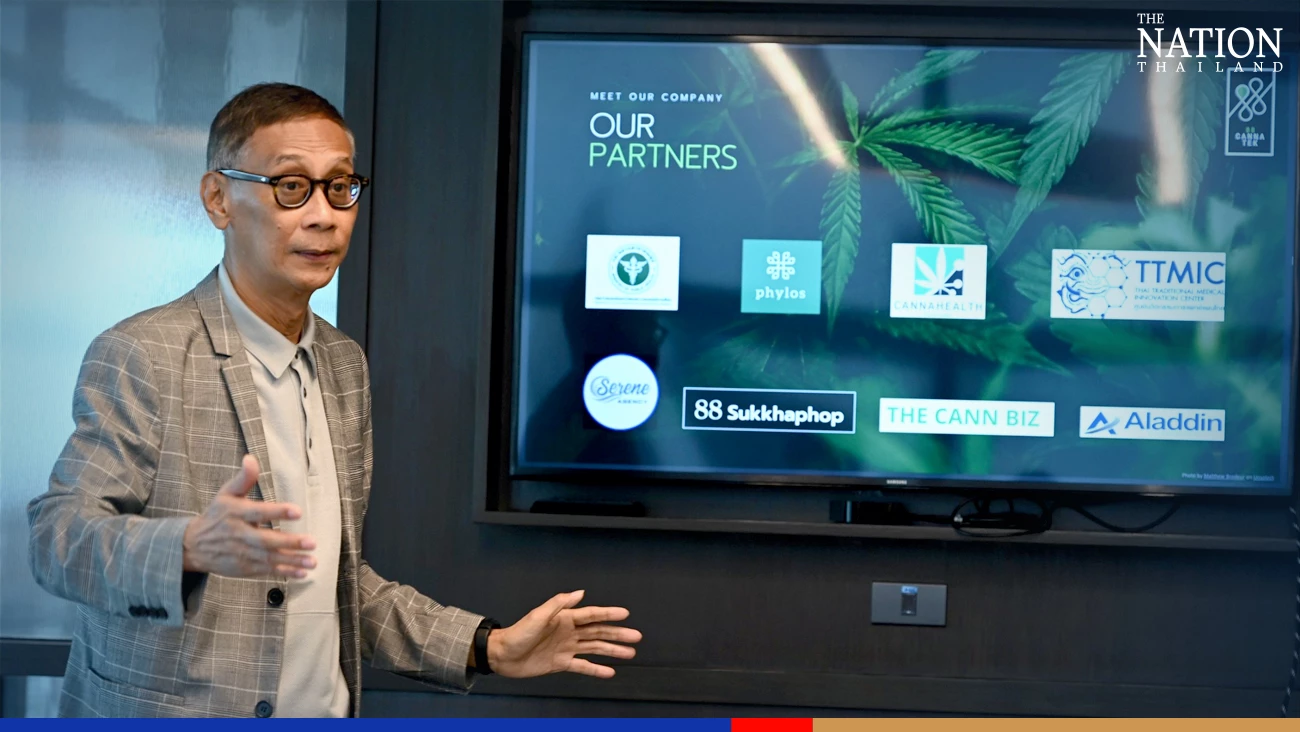
88 Cannatek Co, one of Thailand’s first firms to enter the medical cannabis and hemp business for holistic health and wellness from upstream to downstream, has launched its first product and service with the goal of elevating the country’s cannabis and hemp industry to the level of a global player.

Pornprasit Sibunruang, the managing director of 88 Cannatek, told a press conference on Wednesday that Thailand’s decriminalisation of cannabis, as well as the removal of marijuana and hemp from the narcotics list, has created long-term investment opportunities in the use of cannabis and hemp for health and wellness.

“Thailand is the first and only Asian country that allows the cultivation, extraction, production, and the use of CBD derived from hemp. ther countries, such as Japan, Malaysia, and South Korea, only permit use of the plant but not to grow it,” Pornpasit stated.

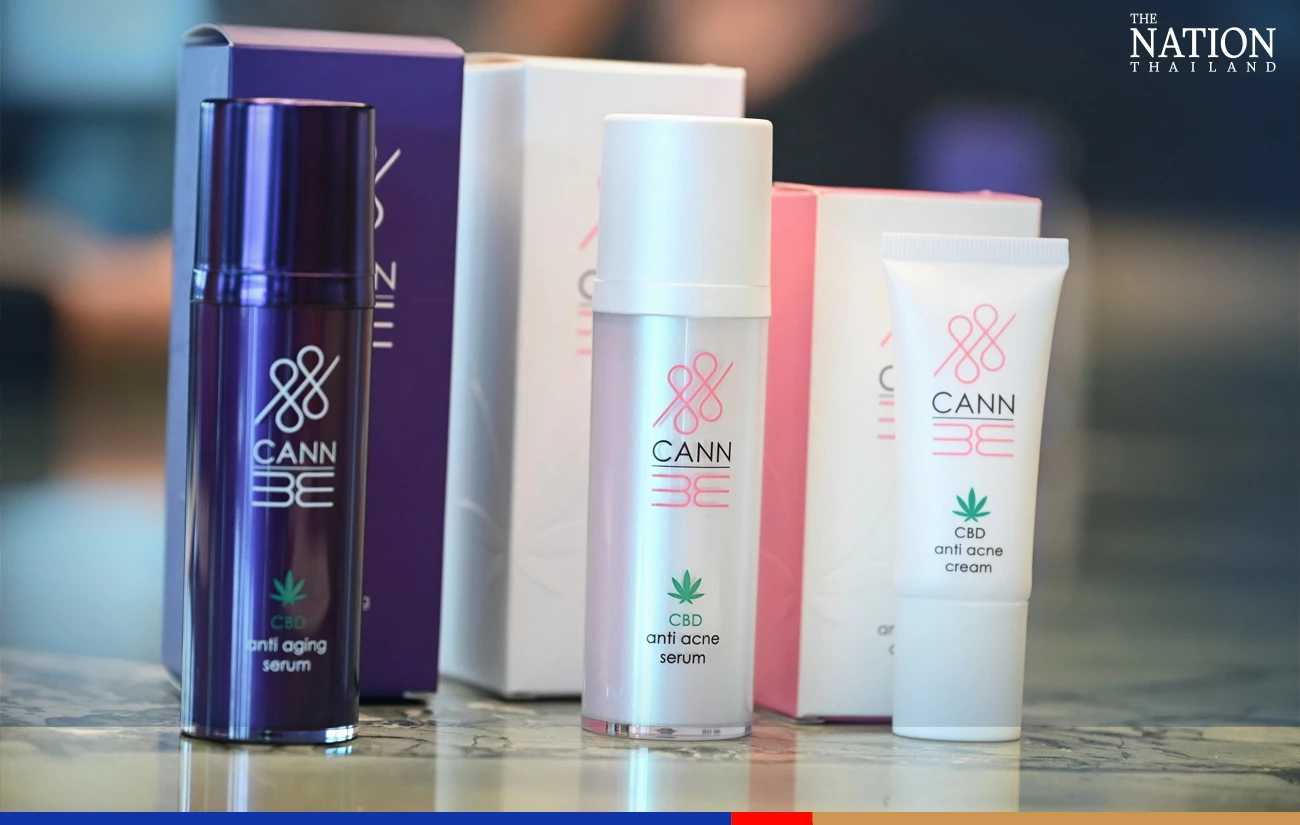
This regulation provides significant opportunities and competitiveness to the country. After three years of importing hemp seeds and growing them, the company has reached the final stage of its comprehensive business model, “Planting — Extracting — and Processing”, with the introduction of the CannBE Cosmetique product line and the CannaHealth Clinic, which cater to consumer needs for alternative herbs, he said.

Pioneering Thai medical cannabis, hemp company nurtures global ambitions

This facial care product will contain cannabidiol, or CBD, a hemp extract that is non-psychoactive and has medicinal properties that are beneficial to the body such as relieving anxiety, increasing appetite, inducing sleep, fighting inflammation, reducing wrinkles, and many others.

Pioneering Thai medical cannabis, hemp company nurtures global ambitions

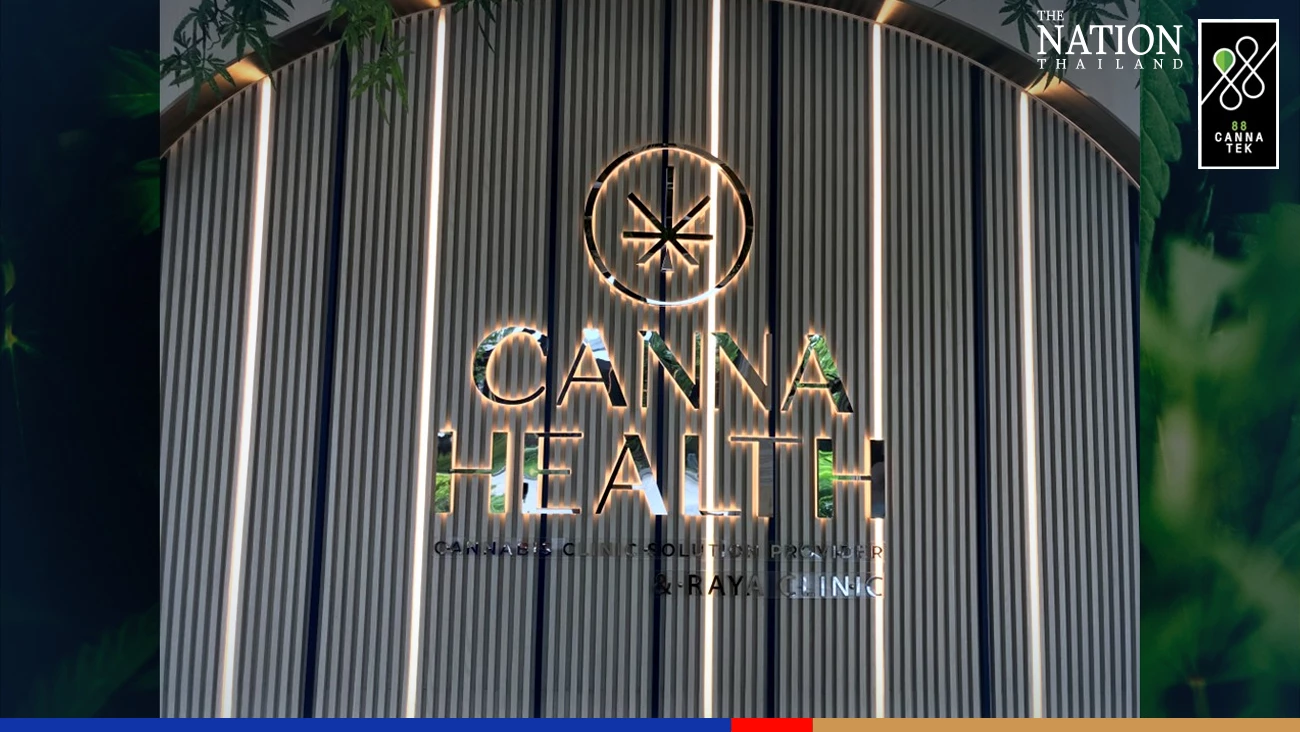
Meanwhile, the company has entered the wellness industry with the launch of “CannaHealth”, the first comprehensive medical and holistic healthcare clinic that incorporates cannabis and hemp into Thai traditional medicinal treatments for health and beauty.

Pioneering Thai medical cannabis, hemp company nurtures global ambitionsPornprasit said that the clinic can prescribe cannabis and hemp-based medicines by the Government Pharmaceutical Organization and the Department of Thai Traditional and Alternative Medicine, catering to consumer needs for alternative herbs.
The product will be available at the end of October, and the clinic will officially open in mid-November.

He said that the company plans to sell facial care products under the brand “CannBE”, both through the brand’s online platforms, such as Facebook, IG, Line, or TikTok, and through distributors.

He added that 88 Cannatek’s marketing strategy is to gain a 40 per cent domestic market share and a 60 per cent export market share in raw material, hemp flower-derived CBD oil, and products such as cosmetics, herbs, and dietary supplements.

Customers from 7-8 countries, including New Zealand, United Kingdom, Germany, Vietnam, Malaysia, Japan, the United States, and Turkey, have contacted the company to purchase all of these products.

“We may begin to see the revenue from selling hemp flowers and seeds to the contract farming companies, but we aim higher. We have started soliciting funds for phase 2 expansion through Sinwattana Crowdfunding, a platform that has been licensed by the Office of the Securities and Exchange Commission of Thailand,” said Pornpaist.

He estimated that by 2023 the company would have a revenue of one billion of baht from more than 1.2 million units of products that would gradually be launched onto the market in the fourth quarter of this year.

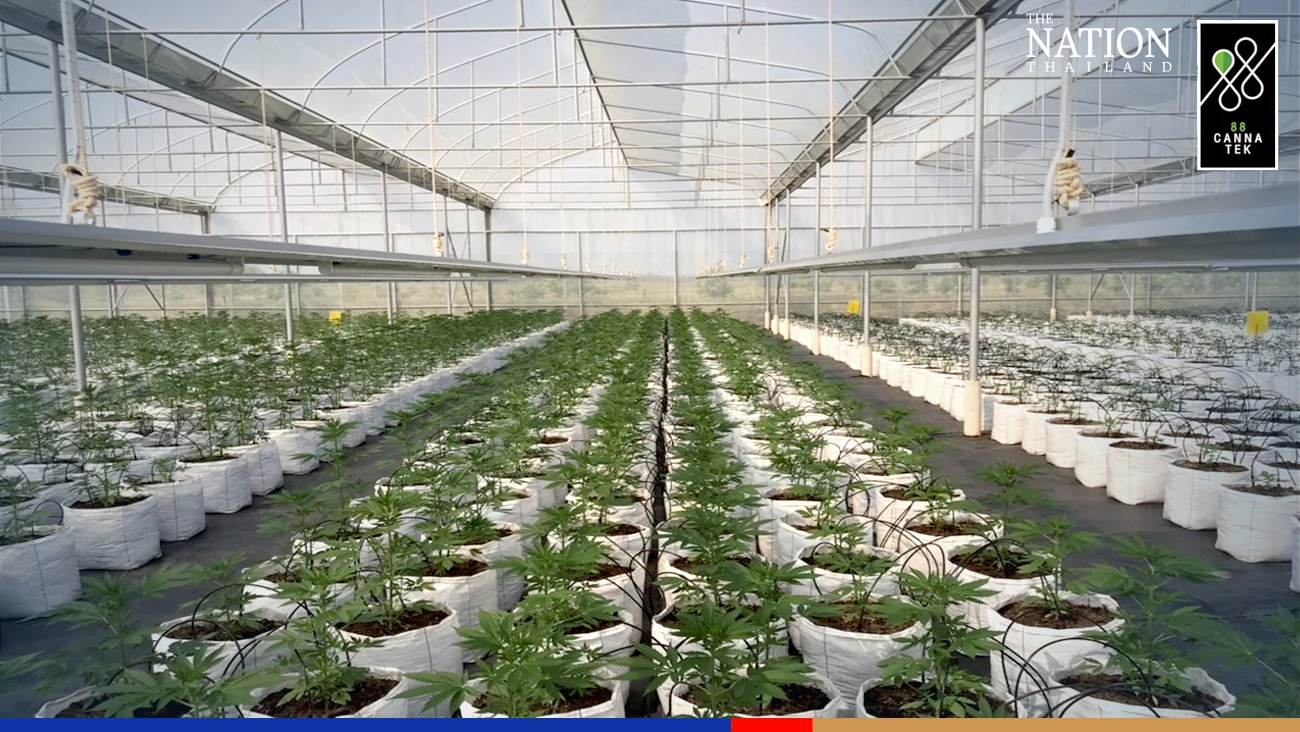
Pioneering Thai medical cannabis, hemp company nurtures global ambitionsAside from the product launch, 88 Cannatek will continue to plant 300,000 hemp seeds in 2023, up from 100,000 hemp seeds in 2022. Around 20 per cent of the hemp seeds will be planted in the company farm’s indoor green house, while the remainder will be distributed to its contact farming, which is already certified by global standards.

He noted that according to a Krungsri Bank report, cannabis and hemp have long been used for medicinal and commercial purposes around the world. It is estimated that the market size is currently 800 billion baht and would grow to 1.3 trillion baht by 2025. The Thai market for hemp alone is expected to increase from 600 million baht today to 50 billion baht in 2025.

He said that hemp and cannabis would be widely used throughout the world, so it is time for the company to develop their technology for growing and extracting these new economic crops, as well as educate the public about the true benefits of hemp and cannabis.
 

Nongluck Ajanapanya

436 foreign firms bring 100 billion baht, 4,000-plus jobs to Thailand this year

#SootinClaimon.Com : ขอบคุณแหล่งข้อมูล : หนังสือพิมพ์ The Nation.

https://www.nationthailand.com/thailand/economy/40021032

436 foreign firms bring 100 billion baht, 4,000-plus jobs to Thailand this year

436 foreign firms bring 100 billion baht, 4,000-plus jobs to Thailand this year

FRIDAY, OCTOBER 14, 2022

As many as 436 foreign companies armed with an investment of just under 100 billion baht have set up operations in Thailand in the first nine months of 2022.

These companies have been allowed to start conducting business in the country under the Foreign Business Act, Deputy Commerce Minister Sinit Lertkrai said.

“These companies have invested about 99.36 billion baht in Thailand and generated up to 4,041 jobs for local people,” he said, adding that the total investment value has jumped 82 per cent from about 45 billion during the same period last year.

The countries that have brought the most funds to Thailand are Japan (110 firms, 34.97 billion baht), Singapore (71, 11.42 billion baht), the US (61, 3.3 billion baht), Hong Kong (28, 7.78 billion baht), and China (21, 20.75 billion baht).

Sinit said opening the door to foreign companies will help promote knowledge and technology transfer, especially in the areas of preserving energy, generating power for airports, exploring for oil in the Gulf of Thailand, reclaiming land in coastal areas, developing deep sea ports and setting up charging stations for electric vehicles.

He added that of the 436 foreign companies, 80 are investing in the Eastern Economic Corridor (EEC) and have brought 40.55 billion baht to the area. Most of these companies are from Japan, Singapore and the United States.

Businesses in the EEC that have received significant foreign investment include public telecommunication services, reselling of mobile phone services, engineering and machinery services, cloud computing and sensor technology.

The Commerce Ministry expects more foreign firms to enter the country before yearend thanks to the country’s full reopening and measures offered to promote investment, including tax incentives.

Thailand determined to push BCG economic model at Apec Summit

#SootinClaimon.Com : ขอบคุณแหล่งข้อมูล : หนังสือพิมพ์ The Nation.

https://www.nationthailand.com/thailand/economy/40021004

Thailand determined to push BCG economic model at Apec Summit

Thailand determined to push BCG economic model at Apec Summit

THURSDAY, OCTOBER 13, 2022

Nongluck Ajanapanya

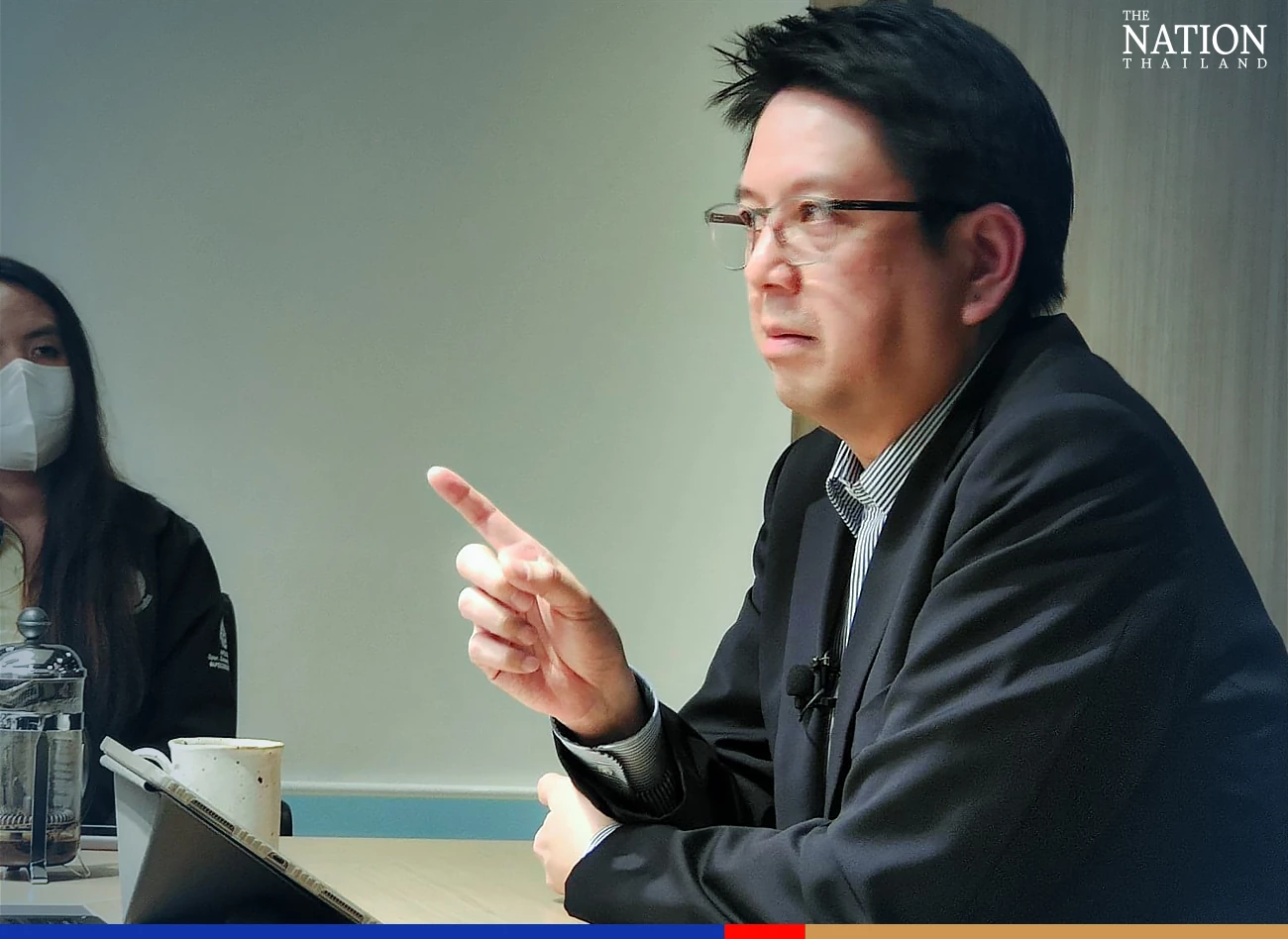
Thailand aims to inspire the 21 Asia Pacific Economic Cooperation (Apec) members with a new business code of conduct, embracing the Bio-Circular-Green (BCG) economy model that is environmentally friendly and responsible, a senior Foreign Ministry official said during an exclusive interview with media representatives from The Nation Group.

Cherdchai Chaivaivid, director-general of the Department of International Economic Affairs and Thailand’s Apec senior official, Foreign Affairs Ministy, noted that the upcoming Apec Summit in 2022 would take place in the midst of a global economic recession and serious geopolitical tensions.

Thailand, as a host country, wants everything to go smoothly. However, politics always determines the direction of international relationships that affect trade and economics, so anything can happen at the Apec Summit in 2022, he cautioned.

Thailand determined to push BCG economic model at Apec SummitDespite these unfavourable possibilities, Cherdchai stated that Thailand is committed to achieving the Bangkok Goal Declaration on the BCG economy.
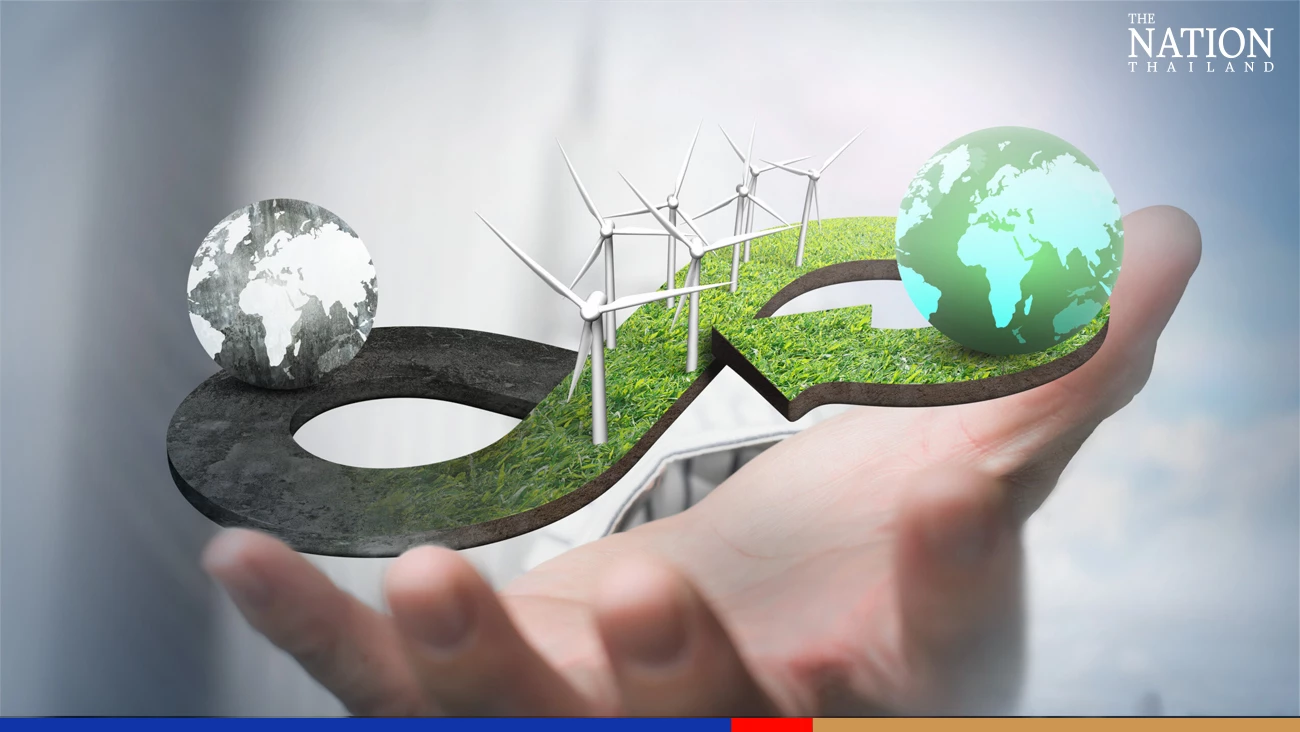
He stated that the focus of this declaration would be the BCG economy model. It will serve as the business code of conduct for the 21 Apec members in terms of trade and investment.

Thailand determined to push BCG economic model at Apec SummitHe explained that the Bangkok Goal Declation on the BCG economy would be highlighted in four agenda items: One deals with the consequences of climate change, the second step is to be environmentally responsible in order to ensure long-term sustainability, the third is serious conservation of natural resources and their efficient use, and the fourth is business management with little or zero waste.

 

“From now on, our collaboration would be focused on the Bangkok Goal Declaration on BCG. It would be Apec’s signal to the world that if your business is not environmentally and socially responsible, it would be rejected,” Cherdchai elaborated.

The declaration will be officially launched on November 19, 2022.

Thailand determined to push BCG economic model at Apec SummitHe is confident that Apec leaders will accept the idea because environmental and climate change are currently the most pressing global issues. He hoped that the summit would inspire the way the world trades and invests in the same way that it had inspired the World Trade Organization (WTO) on tax tariff exemption to encourage free trade zones.

Although the declaration will not be legally binding, Thailand is confident that the BCG economy concept will be carried forward to the next Apec Summit.

“It is the end of doing business in order to maximise profits. It is time to consider how to run a sustainable business while also living in harmony with the community and the environment. We must find a way to balance business growth with environmental sensitivity,” Cherdchai noted.
 

He also spoke on the list of leaders and delegates expected to attend the summit, stating that the list would not be finalised until at least two weeks before the event.

The remark came in response to a new report that Russia’s president would attend the Apec Summit while the US president would not. He emphasised that a country leader not attending the summit and delegating someone to replace them is not unusual. Hence, whether or not they attend has no bearing on Thailand’s image.

Nongluck Ajanapanya

Tourism and sustainable growth high on agenda of Thailand Privilege Card, says chief

#SootinClaimon.Com : ขอบคุณแหล่งข้อมูล : หนังสือพิมพ์ The Nation.

https://www.nationthailand.com/thailand/economy/40021001

Tourism and sustainable growth high on agenda of Thailand Privilege Card, says chief

Tourism and sustainable growth high on agenda of Thailand Privilege Card, says chief

THURSDAY, OCTOBER 13, 2022

Thailand Privilege Card (TPC), a state enterprise under the Tourism Authority of Thailand (TAT), is working with partners on developing the country’s economy and tourism to attract more high-quality visitors.

TPC acting president Apichai Chatchalermkit said the company has implemented a strategy to boost tourism growth along with enhancing the potential of communities and maintaining the environment.

He added that this strategy is in line with Environmental, Social and Governance (ESG) principles and Bio-Circular-Green (BCG) economy model, which focus on sustainable development.

He said the TPC has cooperated with partners on tourism development and sustainable growth promotion, such as Huk Muang Nan Foundation in the “Kla Dee” project to create awareness on importance of natural resources among locals.

He added that the TPC has also launched many corporate social responsibility activities, such as TPC Community Care 2022 in Phetchaburi province’s Tham Rong community, and TPC Impact Day 2022 in Ayutthaya province’s Sai Noi community.

“These cooperation activities will help strengthen communities along with developing Thailand’s economy and tourism to attract more high quality visitors,” he said.

More than 5.6 million tourists visited Thailand over the past nine months this year (January-September), generating more than 200 billion baht for the country.

Thailand proves a hot competitor with AC exports worth a cool THB203 bn

#SootinClaimon.Com : ขอบคุณแหล่งข้อมูล : หนังสือพิมพ์ The Nation.

https://www.nationthailand.com/thailand/economy/40020994

Thailand proves a hot competitor with AC exports worth a cool THB203 bn

Thailand proves a hot competitor with AC exports worth a cool THB203 bn

THURSDAY, OCTOBER 13, 2022

Thailand was the second largest exporter of air conditioners in 2021 after only China, shipping more than 203 billion baht worth of air conditioners and parts last year during the heat of the Covid crisis.

The figure increased by 25 per cent from 2020.

This year, Thailand exported more than 164 billion baht worth of air conditioners in the first eight months, an increase of 21 per cent from the same period last year.

The growth in exports reflects how the industry can cope as manufacturers face several problems.

In an interview with business news agency Thansettakij, Supanee Chantasasawat, president of the FTI’s Air-Conditioning and Refrigeration Club, said the export market is likely to grow now that the Covid-19 situation has eased and demand is recovering, especially from countries such as Vietnam and Indonesia.

Thailand proves a hot competitor with AC exports worth a cool THB203 bn

At the height of the Covid crisis, domestic sales decreased but orders from foreign countries were continuous, so the industry was affected only slightly, Supanee said.

She expects more air conditioners will be manufactured in 2022 compared to the previous year as domestic demand rises, but high fuel and natural gas prices as well as chip shortages are affecting manufacturing costs.

Supanee believes hotter, longer summers around the world, especially in cold climate countries, will provide Thailand with increasing opportunities to export air conditioners and parts.

Furthermore, trade barriers between the US and China and the expansion of middle classes in hot nations including neighbouring countries and Asean might be a supporting factor for Thai exports, she felt.

According to Supanee, the industry is developing better products and parts that utilise smart technology, save energy and are environmentally friendly, so this would be an advantage when competing with other exporters in quality and price.

The top five countries Thailand exported air conditioners and parts to in the first eight months of 2022 were the United States, Australia, Vietnam, Taiwan and Japan, respectively.

China is still Thailand’s main competitor, but Vietnam is an up-and-coming rival with cheaper wages and more available workers, so foreign manufacturers such as Japan have invested in Vietnam since 2018, she pointed out.

In 2023, the Ukraine-Russia war, volatile currencies, high manufacturing costs, chip shortages and trade barriers will pose challenges, Supanee warned.

Thailand still needs to import parts and materials from foreign countries so it might lose its competitive edge, she explained.

She wanted the government to support material and parts manufacturers in technology to compete in global markets amid the current Covid-19 situation and currency problems, expecting political tension and currency woes to take “around 1-2 years to ease”.

The industry must prepare for changes in the future as it relies mainly on exports, she added.

Egat, Egco join hands to build 5MW hydrogen fuel power plant, targeting reduction of CO2 emissions

#SootinClaimon.Com : ขอบคุณแหล่งข้อมูล : หนังสือพิมพ์ The Nation.

https://www.nationthailand.com/thailand/economy/40020991

Egat, Egco join hands to build 5MW hydrogen fuel power plant, targeting reduction of CO2 emissions

Egat, Egco join hands to build 5MW hydrogen fuel power plant, targeting reduction of CO2 emissions

THURSDAY, OCTOBER 13, 2022

The Electricity Generating Authority of Thailand (Egat) will join two partners to develop a hydrogen-fuelled power plant late this year in line with the government’s policy to reduce carbon emissions, one of the partners said.

Thepparat Theppitak, president of Electricity Generating Co Plc (Egco), said that Egco is developing a hydrogen-fuelled power plant with Egat and Bloom Energy Co Ltd.

Thepparat said the first hydrogen power plant of the three partners would be built as a pilot project in the compound of the Klong Luang power plant in Pathum Thani province late this year or early next year at the latest.

In the first stage, the hydrogen power plant would generate 5 megawatts of electricity and its capacity would later increase to 25MW.

Meanwhile, Kulit Sombatsiri, permanent secretary at the Energy Ministry, said that Egat has been developing technologies to produce electricity from clean energy to help the government reach its carbon emissions target.

Kulit said solar and wind would become renewable energy with high-use ratio for producing electricity, and hydrogen would play a key role in the near future.

He said Egat is now experimenting on a wind-hydrogen hybrid power plant that can make 300 kilowatts of power. The hybrid system can use the excess electrical energy to decompose water in an electrolyser to produce and store the energy as hydrogen for use when wind energy dies down.

Kulit said Egat is also experimenting with a project to use ammonia, which has nitrogen and hydrogen, as fuel together with coal to generate electricity.

Kulit said the energy sector in Thailand is releasing about 333 million tonnes of carbon dioxide a year and the new national energy plan to be used next year is aimed at reducing 160 million tonnes of carbon emissions within 2030.

Thailand is among nations that has pledged to achieve carbon neutrality by 2050 and net zero emissions by 2065.

PTT Plc has also pledged its support to help the government achieve the goals.

PTT president and CEO Auttapol Rerkpiboon said PTT Global Chemical is now studying how to use hydrogen obtained during the refining process for operating turbines of electricity generators.

He said the Global Power Synergy Plc is now studying with Avaada Energy Pte Ltd in India on the use of hydrogen and ammonia for generating electricity.

To support the use of clean energy, Auttapol said PTT has signed a memorandum of understanding with AET of Singapore to develop and build two zero-emission Aframax oil tankers with 120,000 metric tonnes capacity.

Auttapol said the oil tankers would be able to use both bunker oil and hydrogen as fuel. The first oil tanker will be delivered to PTT for leasing in the fourth quarter of 2025 and the second in the first quarter of 2026.

Thailand’s Bio-Circular-Green plan: feed grassroots to create sustainable economy

#SootinClaimon.Com : ขอบคุณแหล่งข้อมูล : หนังสือพิมพ์ The Nation.

https://www.nationthailand.com/thailand/economy/40020977

Thailand’s Bio-Circular-Green plan: feed grassroots to create sustainable economy

Thailand’s Bio-Circular-Green plan: feed grassroots to create sustainable economy

THURSDAY, OCTOBER 13, 2022

The Bio-Circular-Green (BCG) economy model is the key driver on Thailand’s path to sustainability and environmental preservation, the National Science and Technology Development Agency (NSTDA) said on Monday.

“The BCG economy model will have a significant impact on the economy, especially the grassroots economy,” NSTDA president Sukit Limpijumnong said.

Thailand will promote BCG for post-Covid economic recovery when it hosts next month’s Asia-Pacific Economic Cooperation (Apec) summit.

BCG focuses on using technology to boost product value, reducing production losses and conserving the environment.

Sukit explained that BCG model consists of three elements:

– Bio Economy: producing renewable biological resources and converting them into value-added products.

– Circular Economy: reusing and recycling resources.

– Green Economy: keeping the economy, society and environment in balance for sustainable development.

He said these elements would enhance Thailand’s food and agriculture, medical and wellness, energy material and biochemical, and tourism and creative economy sectors.

“All elements must go together to drive Thailand towards sustainability and environmental preservation.”

He said BCG planning was part of the 20-Year National Strategy aimed at forging a developed country with security, prosperity and sustainability. BCG would also drive Thailand’s pledge to meet the United Nations’ Sustainable Development Goals. Sukit added that Thailand is working with domestic and international agencies on various projects related to the model, including the Eastern Economic Corridor of Innovation in Rayong’s Wangchan Valley.