EEC office told to hasten infra investments #ศาสตร์เกษตรดินปุ๋ย

#ศาสตร์เกษตรดินปุ๋ย : ขอบคุณแหล่งข้อมูล : หนังสือพิมพ์ The Nation

https://www.nationthailand.com/business/30380213?utm_source=category&utm_medium=internal_referral

EEC office told to hasten infra investments

Jan 07. 2020
By THE NATION

Deputy Prime Minister Somkid Jatusripitak on Monday (January 6) urged the Eastern Economic Corridor Office to hasten the start of investment in key infrastructure projects, in his policy speech to the office.

The projects include development of a high-speed train route linking Don Mueang Airport, Suvarnabhumi Airport and U-tapao Airport, and Phase 3 of Map Ta Phut deep sea port.

Others are Phase 3 of Laem Chanbang deep sea port, the development of U-Tapao Airport as well as maintenance, repair and overhaul (MRO) service facilities.

Last October, the State Railway of Thailand (SRT) and a consortium led by Charoen Pokphand group signed a Public Private Partnership (PPP) contract for the high-speed rail project linking the three international airports.

Somkid added that the government was also keen to proceed with the Northern Economic Corridor (NEC) and the Southern Economic Corridor (SEC) projects.

Kanit Sangsubhan, secretary-general of Eastern Economic Corridor Office, said partnerships would be formed for all key projects in the first quarter of this year.

He expected Thai Airways International and Airbus to sign a contract on the maintenance, repair and overhaul (MRO) facilities in the second quarter.

The investment in EEC, he said, will meet this year’s target of Bt300 billion. It is now a good time for the private sector to import capital goods thanks to the strengthening baht, Kanit said. The EEC covers three eastern provinces of Chachoengsao, Chonburi and Rayong.

What to watch for in commodities in 2020 #ศาสตร์เกษตรดินปุ๋ย

#ศาสตร์เกษตรดินปุ๋ย : ขอบคุณแหล่งข้อมูล : หนังสือพิมพ์ The Nation

https://www.nationthailand.com/business/30380221?utm_source=category&utm_medium=internal_referral

What to watch for in commodities in 2020

Jan 07. 2020
Gold refining at the JSC Krastsvetmet non-ferrous metals plant in Krasnoyarsk, Russia, on Nov. 5, 2019. MUST CREDIT: Bloomberg photo by Andrey Rudakov.

Gold refining at the JSC Krastsvetmet non-ferrous metals plant in Krasnoyarsk, Russia, on Nov. 5, 2019. MUST CREDIT: Bloomberg photo by Andrey Rudakov.
By Syndication Washington Post, Bloomberg · Alex Longley, Yvonne Yue Li, Ranjeetha Pakiam

It’s time for some 2020 foresight in raw materials. After commodities posted a 10% advance last year, how will crude to coffee fare in the months to come?
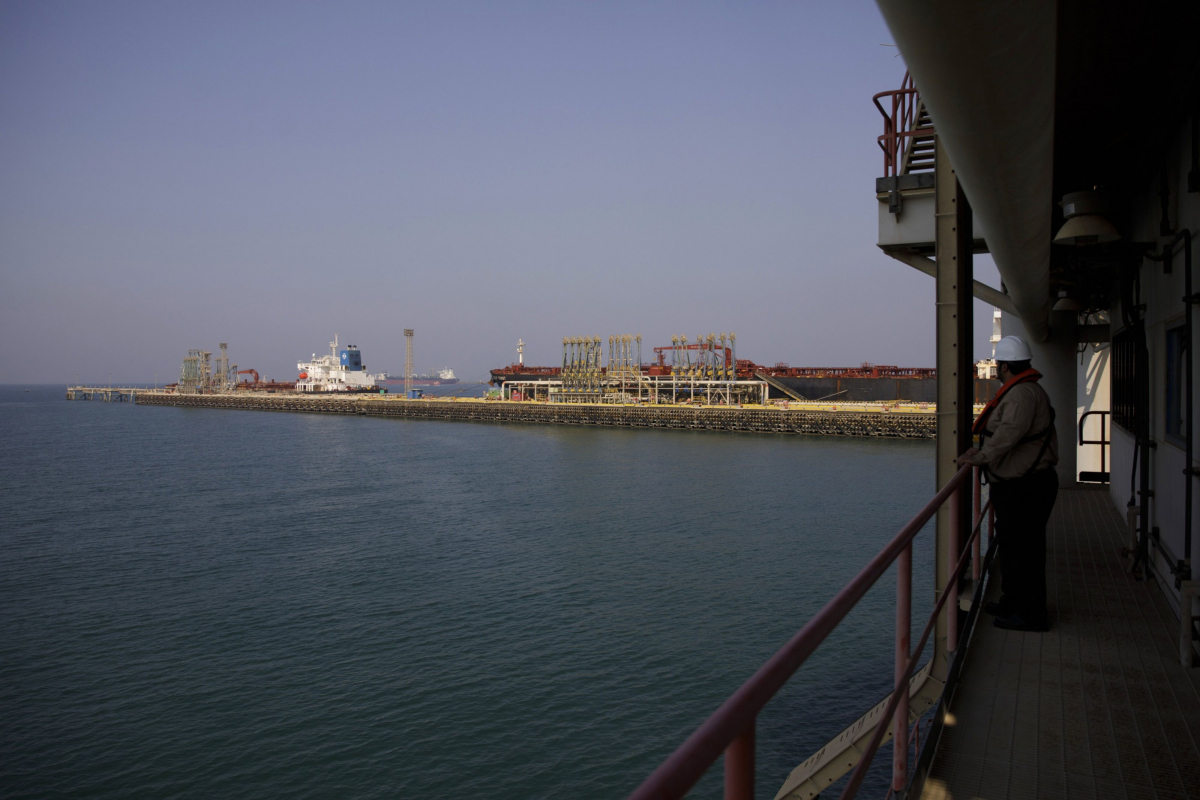
An employee watches oil tankers being loaded with oil for shipping at the North Pier Terminal, operated by Saudi Aramco, in Ras Tanura, Saudi Arabia, on Oct. 1, 2018. MUST CREDIT: Bloomberg photo by Simon Dawson.

An employee watches oil tankers being loaded with oil for shipping at the North Pier Terminal, operated by Saudi Aramco, in Ras Tanura, Saudi Arabia, on Oct. 1, 2018. MUST CREDIT: Bloomberg photo by Simon Dawson.

The year’s first full week of trading will be dominated by the Mideast crisis after the American assassination of one of the Iran’s most powerful generals. Crude and gold surged on Monday after President Donald Trump said he was prepared to strike Iran “in a disproportionate manner” if it hits any U.S. target. RBC Capital Markets has warned of “a retaliatory spiral.”

The complex number-crunching and informed guesswork used to generate year-to-come predictions in the global oil market have been thrown into disarray by the sharp escalation of tensions between Washington and Tehran. Prior to the U.S. killing of Iranian General Qassem Soleimani, investors were focused on whether continued efforts by OPEC and its allies to curb production would be sufficient to counter a global glut supported by rising U.S. shale supply and new output from outside the cartel, including fields in Guyana.

With that in mind, analysts had been forecasting WTI at just below $59 a barrel; but on Monday the benchmark rallied above $70 as the two sides traded ever harsher rhetoric. Further gains will depend on developments this week, including potential risks to crude shipped via the Strait of Hormuz. Tensions between the U.S and Iran disrupted oil markets last year but the episodes were short-lived; the current standoff is of far greater magnitude.

Copper struggled to sustain a rally in 2019 as the trade war spurred destocking of inventories by manufacturers. Now, the outlook is turning brighter with the preliminary truce between Washington and Beijing easing demand concerns for the metal used in everything from automobiles to electronics. Potential output cuts by Chinese smelters also point to tighter supply at a time when stockpiles tracked by the London Metal Exchange are at the lowest in nine months.

Goldman Sachs, Morgan Stanley, Citigroup and Standard Chartered are all bullish on copper as they predict a rebound in global consumption. Citigroup forecasts China’s demand will expand 2.6% this year, underpinned by gains in grid investment. While prices fell on Friday as the Mideast tensions hurt appetite for risk, they remain above $6,000 a ton.

Gold just delivered a stellar year for bulls as the Federal Reserve cut rates, trade tensions hurt growth, central banks beefed up reserves and ETF holdings swelled. The haven’s upward march may not be quite done: Goldman Sachs, Citigroup and UBS Group have all said they’re looking for $1,600 an ounce, and RBC Capital Markets is positive too. And those calls were made before the Iranian crisis sent bullion tearing higher.

On top of the Mideast tensions, additional underlying positivity toward bullion comes as the Fed signals that rates will almost certainly be on hold right throughout this year, at least until central bank officials have seen a “material reassessment” in their outlook. Among other precious metals, palladium also demands attention as a persistent global deficit looks set to fuel gains far beyond $2,000 an ounce.

Bulls in arabica coffee, coming off its best year in five, will be watching developments in Brazil, the top producer and exporter. After 2019’s harvest was marred by irregular weather and poor quality, the country’s green bean stockpiles are set to drop to the lowest in more than five decades, and any signs of more production issues may exacerbate the tight supply scenario.

In addition to a forecast world deficit in 2019-2020 technical indicators are strong, with the beans favored by Starbucks Corp. moving above 50- 100- and 200-day moving averages. While traders will be looking for signs of increased output, many growers are still under financial distress, and that may limit resumption of farm investments. Meantime, a further depreciation in the Brazilian real could raise prospects for increased supplies in the years to come.

After a tumultuous year, iron ore is expected to slide in 2020. The steelmaking material capped the biggest annual gain in three years in 2019 on a shortage triggered by a dam disaster at Brazil’s Vale SA. Prices, which hit as much as $120 a ton in July, ended the year near $90, while shares of miners such as BHP Group rose. Fortescue Metals Group Ltd.’s stock more than doubled.

As seaborne supply expands this year from Brazil and Australia the deficit is seen closing, and there’s a chorus of forecasts for prices to weaken. Top producer Australia sees iron ore averaging $63 a ton, and the material is Morgan Stanley’s least-favored commodity. In China, steel demand is expected to fall as economic growth slows, hurting iron ore consumption.

Unprecedented outbreaks of African swine fever upended the pork trade in 2019, and whether the spread continues will be a key driver for meat markets going forward. The fallout lifted global meat prices to a five-year high and sent pork exports from Europe and elsewhere surging. China’s hog population — the world’s largest — has collapsed, and traders will be eyeing whether a recovery in herds comes as quickly as some government officials have pledged.

Outside of Asia, the market will focus on whether the disease strikes any major pork shippers, risking further trade disruption. The virus has moved nearer to Poland’s border with Germany, a key European producer, and officials are stockpiling fences and training boar-sniffing dogs in a bid to ward off the threat. It also remains to be seen by how much China will boost purchases of U.S. pork after the nations reached an initial trade agreement.

Climate change and how governments, companies and funds respond will shape investment decisions in 2020 as never before. This year, the amount of new wind and solar power generation capacity will cross the 200-gigawatt threshold, boosting the total to about 1,450 gigawatts, BloombergNEF says. To put that in perspective, that’s just shy of 20% of global installed capacity.

That shift will see renewables close the gap with natural gas as the biggest potential source of electricity behind coal, though their intermittent nature will leave them lagging behind in terms of actual output. The variability will also increase challenges for grids and traditional utilities to keep all the lights on, while pressuring wholesale power prices on gusty or bright days.

Palm oil was one of the big winners among commodities in the second half of 2019, and there are signals prices will remain well-supported. The most-used vegetable oil ended the year with a 44% gain, the best showing in a decade, lifted by concerns dry weather and haze will curb supplies from top growers Indonesia and Malaysia, as well as prospects for strong biofuel demand.

The latest Bloomberg survey showed prices may average 2,400 ringgit ($587) a ton this quarter, compared with 2,248 ringgit over all of 2019. Participants flagged Indonesia as a key factor, with Southeast Asia’s top economy boosting palm’s share in its biofuel blend to 30% from 20%. Still, questions remain on export markets, especially the European Union’s limit on palm oil use.

U.S. natural gas prices have slumped for two straight weeks, but the sell-off probably isn’t over, according to traders and analysts surveyed by Bloomberg. Some 55% of respondents were bearish, the most in more than three months, as mild weather slows the seasonal decline in stockpiles.

Soybeans remained in favor with traders and analysts a third week, helped by expectations that the U.S. government will trim crop yields in an upcoming report. Bullish sentiment on gold edged out bearish and neutral views as prices extended a rally fueled by recent dollar weakness and tensions in the Middle East. Terminal subscribers can see other commodity surveys here.


Risk of Iranian conflict rattles investors. But a serious economic hit looks unlikely. #ศาสตร์เกษตรดินปุ๋ย

#ศาสตร์เกษตรดินปุ๋ย : ขอบคุณแหล่งข้อมูล : หนังสือพิมพ์ The Nation

https://www.nationthailand.com/business/30380217?utm_source=category&utm_medium=internal_referral

Risk of Iranian conflict rattles investors. But a serious economic hit looks unlikely.

Jan 06. 2020
File Photo: Getty Images

File Photo: Getty Images
By The Washington Post · Tory Newmyer 

WASHINGTON – The new year is already bringing new threats to fray nerves from C-suites to Wall Street: Just as the U.S.-China trade war cools off, the risk of a hot war with Iran is spiking.

But the economic impact of an escalating conflict in the Middle East remains far from clear. Economists – for now, at least – appear to agree that a limited military confrontation wouldn’t mean much to U.S. growth.

“The economic and financial fall-out from Friday’s events seems likely to be minor,” Macroeconomic Advisors economists wrote, referencing the U.S. military drone attack that killed Iranian Maj. Gen. Qasem Soleimani at the Baghdad airport. In response, the Iranian regime has announced it is suspending its commitments under the 2015 nuclear deal and will attack military sites.

“The direct economic impact would be on the collective psyche, equity prices and oil prices,” Ryan Sweet, director of real-time economics at Moody’s Analytics, writes. “By itself, a military conflict between the U.S. and Iran would have modest implications for the U.S. economy, but the spillover impact on oil prices could be more significant.”

Indeed, oil prices are already jumping on fears that Middle Eastern infrastructure will get caught in the crossfire. But even unraveling what a sustained increase in the cost of the commodity will mean at home is debatable.

“Higher oil prices represent a tax on oil consumers and a windfall for producers,” Pantheon Macroeconomics chief economist Ian Shepherdson writes. “World oil consumption is about 100M barrels per day, so each five dollars on the price of oil is equivalent to an annualized tax of about $183B per year, or 0.1% of global GDP.”

But since the United States is now both a major oil producer and consumer, higher oil prices could benefit the economy by encouraging the domestic energy sector to invest in expanding its capacity. That dynamic has played out over the past half-decade. “When oil prices collapsed between spring 2014 and early 2016, the ensuing plunge in capital spending in the oil sector outweighed the boost to consumers from cheaper gasoline and heating oil, and overall economic growth slowed markedly,” Shepherdson writes. “This story played out in reverse when oil prices rebounded in the three years through spring 2018, and economic growth picked up.”

Consumers – the primary engine of American economic growth – should be able to withstand the pinch of higher prices at the pump in the immediate term, per Michael Pearce, senior U.S. economist for Capital Economics. “Labor market conditions remain solid, the household saving rate is elevated, and consumer confidence remains high,” he writes.

And the Federal Reserve is unlikely to change its outlook based on escalating tensions, per a note from Larry Meyer, a former Fed governor and founder of Washington-based research firm LH Meyer. The conflict is not “anywhere close” to weighing on Fed policymaking “at this point,” he writes.

Then again, the picture could change if the conflict snowballs into a full-scale war. “The wild card is whether turmoil in the Middle East triggers a sustained sell-off in equities, depressing business and consumer confidence to the point where labor market and inflation concerns become secondary,” Shepherdson writes. “We’d be surprised – the drop in the S&P on Friday was just the initial knee-jerk response – but if Iran takes more drastic action than we are expecting, it will become a real risk.”

Or as Fundstrat analyst Vito Racanelli puts it, “Once hostilities begin, predictions go out the window.”

Global and Thai economic forecast for 2020 #ศาสตร์เกษตรดินปุ๋ย

#ศาสตร์เกษตรดินปุ๋ย : ขอบคุณแหล่งข้อมูล : หนังสือพิมพ์ The Nation

https://www.nationthailand.com/business/30380199?utm_source=category&utm_medium=internal_referral

Global and Thai economic forecast for 2020

Jan 06. 2020
Anusorn Tamajai

Anusorn Tamajai
By The Nation

The Thai economy will improve only slightly if the investment and export sectors recover, or it could worsen if a new political crisis affects the investment and consumption sectors.

Also, if a war develops between Iran and the United States, oil prices could spike 20 per cent from the current level.

To make matters worse, the tourism sector in Thailand and Asia may be affected by a new strain of pneumonia if this becomes as severe as the SARS epidemic 17 years ago.

However, the economic situation might not reach 1997 Asian financial crisis proportions.

The economic growth rate this year will be approximately 3.5-3.6 per cent, compared to 3 per cent in 2019, the lowest GDP in 10 years, said Assist Prof Anusorn Tamajai, director of the Economic and Business Research Centre at the Institute of Economics, Rangsit University, on Sunday ( January 5).

Global GDP in 2020, calculated by the IMF Purchasing Power Parity, will be $149.53 trillion.

The impact from the trade war has improved, but global economic growth is still lower than the average seen between 2001 and 2019, which was 3.9 per cent, Anusorn said. The growth rate of the world economy touched 4.3 per cent in 2000.

The latest global economic risk factors stem from the conflict between the United States and Iran, which is likely to expand the crisis and conflicts in the Middle East, he said. These factors will force oil and energy prices to rise. The oil price on the world market has increased by more than 4 per cent, reaching the highest level since April last year. If Iran responds to the conflict by closing the Strait of Hormuz, which connects the Persian Gulf with the Gulf of Oman, or attacks oil tankers in the strait, it will affect the supply of crude oil to Asia as 80 per cent of tankers use the channel to transport approximately 22.5 million barrels per day of crude oil to the continent.

US President Donald Trump has also announced that the military is prepared to attack 52 key targets in Iran.

If Iran takes drastic steps, the domestic oil price will increase more than 20 per cent from the current level, he said.

Inflation rates in many countries will be higher than expected by the International Monetary Fund and the World Bank. However, inflation will not hinder the need for easy monetary and fiscal policies. US GDP is expected to be at the 1.9-2.1 per cent level, the euro zone at 1.2-1.5, Japan 0.5-0.8 and China 5.8-6 per cent.

Anusorn said world trade growth should increase significantly – by no less than 3 per cent compared to 1.2 per cent in 2019. However, when compared to the value in dollars, the growth rate will continue to decrease or remain negative from last year’s level, while trade and investment growth within the region is expected to increase as a result of the “changing globalisation system and the diffusion of trade barriers, including the influence of commercialism and economic nationalism”.

Global stock and financial markets are expected to remain positive from high liquidity and will increase due to quantitative easing measures by the central banks of developed countries and China.

Gold prices and the dollar will rise if the Middle East is engulfed in a war. Investors will seek more safe haven assets such as dollars, government bonds and gold.

One positive factor is that the trade war between the United States and China may not intensify but will see the enforcement of intellectual property laws, especially for high-tech products. In addition, there may be trade conflicts on the taxation of digital and online businesses between the United States and Europe, while Brexit could take longer to achieve.

Thailand’s economic growth rate this year is very uncertain and highly volatile, Anusorn pointed out. There may not be an economic crisis that many people call the “real burn”, or a twin of the 1997 Asian financial crisis, but only a long period of low economic growth due to structural problems, stiff trade competition, the spread of corruption at all levels, the decline of faith as a result of not adhering to the rule of law, and an inability to keep up with international digital technology. These factors will cause more layoffs and unemployment in the first half.

The country’s growth rate in 2020 is expected to be 1.8-2.9 per cent, lower than the average GDP growth of the Asean region. Thailand will have the second-lowest GDP after Singapore this year. The average GDP growth rate of developing countries in Asia is around 6 per cent.

However, the Thai economy may improve slightly if the investment and export sectors recover, which could see an expansion of around 2.6-2.9 per cent, but there are also expectations that it may grow below 2 per cent.

According to Anusorn, investment in financial markets will continue to benefit from low interest rates and high liquidity. The rise in the price of risk-weighted assets may not reflect the fundamentals of the economy and business performance. Therefore, investors must choose the timing of investment and trading appropriately and in line with rapidly changing dynamics. It is expected that the Thai stock market index will move in the range of 1,750-1,550 in 2020.

He forecast that the baht currency will be highly volatile and may strengthen slightly in the first quarter but could weaken after short-term capital outflows. The baht will move at the level of 29-31 per dollar in the first quarter, 30.50-31.50 during the second quarter, 29.50-30.50 in the third quarter, and 31-32 during the last quarter.

Middle East tensions cast shadow over Asian bourses #ศาสตร์เกษตรดินปุ๋ย

#ศาสตร์เกษตรดินปุ๋ย : ขอบคุณแหล่งข้อมูล : หนังสือพิมพ์ The Nation

https://www.nationthailand.com/business/30380191?utm_source=category&utm_medium=internal_referral

Middle East tensions cast shadow over Asian bourses

Jan 06. 2020
For this week's outlook, KSecurities expects the SET to have support at 1,580 and 1,565 points, but resistance at 1,615 and 1,640 points, respectively. Key matters to watch include the deliberations on Thailand’s budget bill for fiscal 2020, US-China trade issues and the Middle East situation. 

For this week’s outlook, KSecurities expects the SET to have support at 1,580 and 1,565 points, but resistance at 1,615 and 1,640 points, respectively. Key matters to watch include the deliberations on Thailand’s budget bill for fiscal 2020, US-China trade issues and the Middle East situation.
By The Nation

Thai and other Asian stock markets dropped in Monday’s trading after a US strike killed a top Iranian commander last week.

The Stock Exchange of Thailand Index dropped this morning along with other major Asian stock markets.

The SET Index was down 0.73 per cent in opening trade at 1,583.37, while the Nikkei 225 fell sharply by almost 2 per cent, South Korea’s Kospi also fell more than one per cent, Malaysia’s KL Composite lost almost one per cent, the Singapore Straits Times index was down about half a per cent, but China’s Shenzhen Composite was up about one per cent and the Shanghai Composite was up about half a per cent.

Kasikorn Securities said on Monday that the SET Index was under pressure from the tension in the Middle East.

For this week’s outlook, KSecurities expects the SET to have support at 1,580 and 1,565 points, but resistance at 1,615 and 1,640 points, respectively. Key matters to watch include the deliberations on Thailand’s budget bill for fiscal 2020, US-China trade issues and the Middle East situation.

Key US indicators include the December purchase managers index, services indices, non-farm payrolls and unemployment rate. Other international factors that warrant close monitoring include the euro-zone and Japan’s December PMI Composite Indices plus China’s December PPI and CPI.

Last week, the SET Index rose week on week, ending at 1,594.97 points, up 1.06 per cent week on week. The average daily trading value was Bt48,445.61 million, up 40.69 per cent week on week. The MAI closed at 311.58 points, up 1.14 per cent week on week. The SET Index moved within a tight range at the end of 2019 before surging at the beginning of 2020 on institutional investor purchases,

supported by the progress in US-China trade issues, as President Donald Trump said he would sign the first phase of the trade deal with China on January 15 and travel to Beijing to begin talks on a second

phase of the deal. However, the SET pared gains somewhat at the end of the week amid concerns over the Middle East situation, KSecurities said.

Baht likely to react to Middle East situation, Thai budget debate #ศาสตร์เกษตรดินปุ๋ย

#ศาสตร์เกษตรดินปุ๋ย : ขอบคุณแหล่งข้อมูล : หนังสือพิมพ์ The Nation

https://www.nationthailand.com/business/30380189?utm_source=category&utm_medium=internal_referral

Baht likely to react to Middle East situation, Thai budget debate

Jan 06. 2020
‭During the week of January 6-‭10‬, KBank expects the baht to move within a range of Bt3‭0-‭30.‬30/USD.‭

‭During the week of January 6-‭10‬, KBank expects the baht to move within a range of Bt3‭0-‭30.‬30/USD.‭
By The Nation

‭Tensions in the Middle East after a US strike killed a top Iranian commander and‬‬ the budget debate will influence the value of the baht this week, says Kasikornbank (KBank).‬‬

Exporters to meet BOT chief to voice concerns over baht’s appreciation

‭‭The baht reversed gains and weakened against the US dollar‭ in the ‬‬first two trading days of the year, but it continued to be traded in a narrow range. The Bank of Thailand signalled that it was closely monitoring the baht’s movement after it broke Bt30 to the US dollar to hit a six-and-a-half-year high of Bt29.75 amid thin trading volumes during the last ‬days of 2019. In addition, the weakening regional currencies weighed down the baht sentiment later in the week. On ‭Friday, ‭ ‬(January ‬3), the baht ‬closed ‬at ‭Bt30.16/USD versus the Bt30.15/USD reported on Friday (December 27, 2019). ‬

‭During the week of January 6-‭10‬, KBank expects the baht to move within a range of Bt3‭0-‭30.‬30/USD.‭ A key domestic factor to be ‬monitored closely ‭is ‬the debate on the 2020 Budget Bill in the Thai parliament. External factors will include issues in‬ ‭the ‬next phase ‭of ‬the ‬US‭-China trade talks after the signing of ‭the‬ first phase agreement, the Middle East tensions, the UK parliament‭’s‬ consideration of the Brexit deal, and ‬Chinese economic data for‬ ‭December. The ‭US ‬economic ‬data ‭to be ‭ ‬released during ‭the week ‬include ‭ ‬December ‭non-farm payrolls data, unemployment rate, ADP employment report, and the purchase managers’ index and ISM non-manufacturing surveys, as well as the November factory goods orders data.

Exporters to meet BOT chief to voice concerns over baht’s appreciation #ศาสตร์เกษตรดินปุ๋ย

#ศาสตร์เกษตรดินปุ๋ย : ขอบคุณแหล่งข้อมูล : หนังสือพิมพ์ The Nation

https://www.nationthailand.com/business/30380176?utm_source=category&utm_medium=internal_referral

Exporters to meet BOT chief to voice concerns over baht’s appreciation

Jan 06. 2020
Some businesses have suffered losses from the unfavourable exchange rate and many struggle to make profits, he said, adding that manufacturers could not increase production because of drop in orders,Visit Limluecha, vice-chairman of the TNSC, a club of Thai exporters, says.

Some businesses have suffered losses from the unfavourable exchange rate and many struggle to make profits, he said, adding that manufacturers could not increase production because of drop in orders,Visit Limluecha, vice-chairman of the TNSC, a club of Thai exporters, says.
By The Nation

Executives of the Thai National Shippers’ Council (TNSC) will on Tuesday hold a press conference to present their assessment of the impact of the strengthening baht on the country’s exports this year, Visit Limluecha, vice-chairman of the TNSC, a club of Thai exporters, said.

The assessment will take into account the adverse impact of the baht appreciating to between Bt29-Bt31 to the dollar. The private sector is concerned about the baht appreciatimg to Bt29 in the beginning of this year, he said.

“We previously expected that the baht would not appreciate further, because it could erode our competitiveness and cause us to loose export markets to our competitors,” he said.

The baht has been the strongest currency in Asia and it ranks fourth among the strongest global currencies, he said.

Over the past two years of the strengthening baht, Thai exporters have lost about 17 per cent of total export value, he said.

Some businesses have suffered losses from the unfavourable exchange rate and many struggle to make profits, he said, adding that manufacturers could not increase production because of drop in orders, according to Visit.

The government recently set up a committee to look into the issue of the baht’s appreciation. However, they could not implement any effective measures as power was in the hands of the central bank, he complained. The Bank of Thailand (BOT), however, said earlier that the baht had moved beyond the Bt30 level during the New Year holidays because of the thin market and it retreated when the market returned to normal on January 2.

Exporters will meet with central bank governor Veerathai Santipraphob on Friday (January 10) to discus about the issue of the baht’s appreciation, he said.

The private sector would like the baht to stay around Bt31 to the dollar, or stay close to the value of competitors’ currencies, he said.

“We’re concerned very much that the baht may appreciate further and surpass the Bt29 level, that would severely hurt Thai exports and the country’s competitiveness.”

Meanwhile, Siam Commercial Bank’s Economic Intelligence Centre (EIC) forecast that the baht would appreciate to 29.5-30.5 by the end of this year.

The EIC believed that there were many factors behind the baht’s appreciation this year. However, the pace of strengthening may not be as fast as last year’s, said the EIC.

The baht averaged 31.05 per dollar last year, or up 4.1 per cent from 2018.

The baht’s Nominal Effective Exchange Rate was 123.2 last year, or up 6.6 per cent from 2018.

The research centre expected Thailand to continue to have a high current account surplus this year, about 6 per cent of GDP, compared with 6.3 per cent of GDP last year. Factors driving the current account surplus include flat exports and imports, expansion of tourism, and weak investment. Combined with high international reserves, the baht has been a regional safe haven currency and demand is high among investors.

The impact of the US-China trade deal would lead to funds inflows into emerging markets including Thailand. The dollar is expected to weaken during the global recovery then it would indirectly boost the baht value relatively. However, the weakness of the dollar is not much as the US Federal Reserve would keep its policy rate unchanged this year, while the European Central Bank and the Bank of Japan are expected to further ease their monetary policies leading to a relatively weaker euro and yen.

The BOT has limited tools to deal with the baht appreciation because it cannot cut the policy rate any further as it is already at a historic low at 1.25 per cent. Moreover the BOT could not intervene much in the exchange rate market because it fears that the United States may accuse Thailand of being a currency manipulator.

The Chinese yuan is on a rising trend after the US and China reached an agreement on the first trade deal. This will pull the Thai baht up too, said the EIC.

However, there are factors that could limit the pace of the baht’s strengthening. Thai corporates are likely to invest more abroad due to slower economic growth in the country. Thai investors are also encouraged to invest more in foreign financial assets. As risk of the global economy reduces, it may cause gold prices to reduce or not increase much this year, which will lessen pressure on the baht, compared with last year when gold price rose high. Thai investors sold gold for profit and exchanged for the baht, the EIC said.

“The conclusion is that the baht is strengthening and would continue the trend this year, but the pace of the appreciation may be smaller than last year’s,” the EIC added.

Commerce Ministry sees short-term impact from US strike on Iranian general #ศาสตร์เกษตรดินปุ๋ย

#ศาสตร์เกษตรดินปุ๋ย : ขอบคุณแหล่งข้อมูล : หนังสือพิมพ์ The Nation

https://www.nationthailand.com/business/30380173?utm_source=category&utm_medium=internal_referral

Commerce Ministry sees short-term impact from US strike on Iranian general

Jan 05. 2020
Pimchanok Vonkorpon

Pimchanok Vonkorpon
By The Nation

The Commerce Ministry is watching the evolving situation in the Middle East after the US airstrike on a top Iranian general, expecting short-term effects from the nearly 4 per cent surge in oil prices.

The ministry believes the impact could be more if the situation is not resolved.

Pimchanok Vonkorpon, director-general of the Trade Policy and Strategy Office (TPSO), revealed that the US operation that killed powerful Iranian commander Maj-General Qassim Suleimani on the morning of January 3 will have effects on the macro-economy and cause fluctuations in the money and capital markets.

The situation will encourage investors to turn to low-risk assets and could lead to a rise in the price of gold.

However, in the medium to long-term, the TPSO estimates that these events will have only a slight effect on confidence and the investment climate.

It is expected that the overall global economy should be better than last year with other positive factors helping alleviate the effects, such as the progress in the US-China trade agreement and the economic stimulus measures of many countries. If there is retaliation and the shipping routes are closed, the oil price will tend to increase further because most of the oil from the Middle East goes through the Strait of Hormuz with Iran being the main player in controlling the route.

Global shipping will be affected as more than 20 per cent of trade passes through the Strait of Hormuz. If the route is closed, tanker ships and cargo will not be able to use the channel to enter the Indian Ocean.

As for the issue of trade, Thai exports related to oil (plastics, chemicals, petroleum products, crude oil, natural gas, gas, and petroleum liquids) were worth $22.87 billion, or about 11 per cent of total exports in 11 months of 2019. However, the unrest will increase the challenge to revitalise the export markets in the Middle East, especially Iraq and Iran and the African market using the Middle East as trading posts for Thai products.

“The Ministry of Commerce is ready to lead the private sector to tap the markets of at least 16 countries, including the Middle East in 2020,” Pimchanok said. She added that although Thailand was currently not directly affected, aside from capital markets, money markets and high volatility in oil prices, the TPSO would closely monitor the situation and prepare a response plan.

“In the first 11 months of 2019, trade between Thailand and the Middle East totalled $25.68 billion ( 5.8 per cent of total trade), with exports valued at $7.64 billion and imports at $18.03 billion. The trade between Thailand and Africa is worth $9.37 billion ( 2.1 per cent of total trade), with exports worth $6.28 billion and imports of $3.08 billion,” Pimchanok added.

วันที่ 30 มิ.ย. 2562 ข่าวเศรษฐกิจ-ธุรกิจ #ศาสตร์เกษตรดินปุ๋ย

#ศาสตร์เกษตรดินปุ๋ย : ขอบคุณแหล่งข้อมูล : หนังสือพิมพ์โพสต์ทูเดย์

https://www.posttoday.com/economy

ธุรกิจขนส่งสะเทือน ปมยาเสพติด ไปรษณีย์คุมเข้มรับส่งพัสดุ

ธุรกิจขนส่งสะเทือน ปมยาเสพติด ไปรษณีย์คุมเข้มรับส่งพัสดุ

จากกรณีคดีกล่องพัสดุยาเสพติดส่งไปที่บ้านของนายตำรวจระดับสารวัตร และบุคคลอื่นตามที่เป็นข่าวในช่วงสัปดาห์ที่ผ่านมา แม้แต่ละคดีจะเริ่มคลี่ คลายเป็นลำดับ หลังเจ้าหน้าที่ตำรวจได้ติดตามและสืบค้น ต้นทางของพัสุดที่นำมาส่งผ่านไปรษณีย์ก็ตาม แต่ก็เกิดคำถามข้อสงสัย ตลอดจนความกังวล ต่อการรับพัสดุทางไปรษณีย์จากนี้ไปปลอดภัยแค่ไหน หากต้องรับพัสดุอยู่หน้าบ้านของตัวเองก็โดนตำรวจเข้าชาร์ททันที จะเกิดกรณีการกล่าวอ้างบุคคลตามที่อยู่ เพื่อส่งยาเสพติดปลายทางหรือไม่

วันที่ 30 มิ.ย. 2562 เวลา 16:07 น.

ข่าวเศรษฐกิจ-ธุรกิจ

ดึงอียูร่วมแก้น้ำท่วมกรุงเทพ แบบเบ็ดเสร็จ

ดึงอียูร่วมแก้น้ำท่วมกรุงเทพ แบบเบ็ดเสร็จ

สทนช.จับมือกระทรวงต่างประเทศ ถกกรอบความร่วมมือ นำเทคโนโลยีระบบป้องกันน้ำท่วม จากประเทศกลุ่มยุโรปปรับใช้ในไทย หวังแก้น้ำท่วม กทม.

วันที่ 30 มิ.ย. 2562 เวลา 13:32 น.

ข่าวเศรษฐกิจ-ธุรกิจ

ทูตสายคิ้วท์ ถึงคิวพี่หมี 'คุมะมง'

ทูตสายคิ้วท์ ถึงคิวพี่หมี ‘คุมะมง’

ตัวแทนแห่งความสุข-เชื่อมเศรษฐกิจการค้าระหว่างประเทศญี่ปุ่น

วันที่ 30 มิ.ย. 2562 เวลา 11:00 น.

ข่าวเศรษฐกิจ-ธุรกิจ

วันที่ 29 มิ.ย. 2562 ข่าวเศรษฐกิจ-ธุรกิจ #ศาสตร์เกษตรดินปุ๋ย

#ศาสตร์เกษตรดินปุ๋ย : ขอบคุณแหล่งข้อมูล : หนังสือพิมพ์โพสต์ทูเดย์

https://www.posttoday.com/economy

สมาคมของขวัญฯ ชี้โอกาสธุรกิจด้านนำเข้าในกลุ่มเอสเอ็มอี

สมาคมของขวัญฯ ชี้โอกาสธุรกิจด้านนำเข้าในกลุ่มเอสเอ็มอี

ตั้งรับเกาหลีมองไทยเป็นศูนย์กลางกระจายสินค้าในตลาดซีแอลเอ็มวี เตรียมเปิดคอร์อบรมเชิงลึก เจาะทายาทธุรกิจ-คนรุ่นใหม่

วันที่ 29 มิ.ย. 2562 เวลา 17:00 น.

SME

เซตท็อปบ็อกซ์ร้องนายกฯโดนลอยแพแบกสต็อกค้างอื้อ

เซตท็อปบ็อกซ์ร้องนายกฯโดนลอยแพแบกสต็อกค้างอื้อ

ชมรมผู้ประกอบการกล่องรับสัญญาณดิจิตอลทีวีภาคพื้นดิน 2558 ร้องนายกฯถูกลอยแพแบกสต็อกอื้อขอ “คสช.”สั่ง กสทช. แจกset-top-boxให้ครบ 22.9 ล้านครัวเรือนตามสัญญา

วันที่ 29 มิ.ย. 2562 เวลา 16:17 น.

ข่าวเศรษฐกิจ-ธุรกิจ