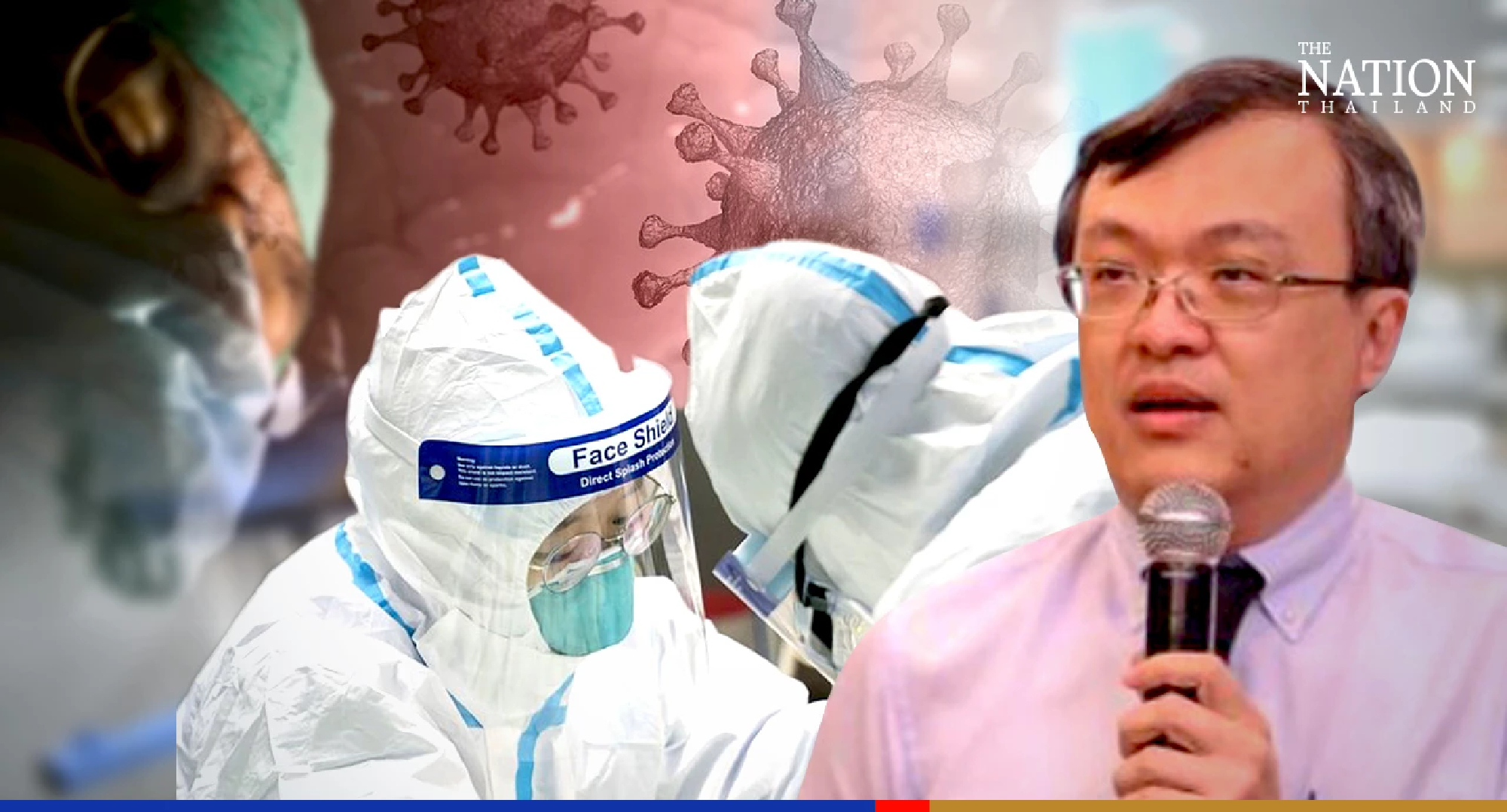
Top virologist Yong Poovorawan has issued guidelines as schools prepare to reopen for the beginning of term next month.
Yong warned that extra precautions were needed as Covid-19 and other respiratory diseases such as influenza are likely to spread among students over the rainy season from June to September.
Covid-19 can still cause severe illness and even death in children, he added. Most at risk are the under-5 age group, who are too young to be vaccinated. Children aged under 2 were especially vulnerable, Yong said.
He urged the Thai Food and Drug Administration (FDA) to consider China’s policy of vaccinating children aged 3 and over to reduce the severity of their symptoms. The FDA currently allows vaccination from the age of six.
Yong said it would be difficult to ensure young students maintained social distancing and mask-wearing, so parents and teachers must cooperate on safety when schools open.
Meanwhile, primary school students should get vaccinated before returning to school and not attend classes if they are sick.
Schools must also adopt daily screening of students via ATKs or other methods and have clear regulations for everyone to follow.
Large secondary schools or those with big class numbers should have a concrete plan for reopening.
Elderly people living in the same house as students should receive at least three doses of vaccine, otherwise they risked severe symptoms if the children brought the virus back from school.
Classrooms should be airy and well-ventilated. In air-conditioned classrooms, windows should be opened frequently or left ajar. Schools should also set up handwashing points.
The number of Covid-19 deaths spiked in Thailand this week after the Songkran holiday, a Chulalongkorn University lecturer said on Saturday.
Public health academic Thira Worathanarat said new infections dropped by 19 per cent this week – or by 11.65 per cent if ATK test results are included.
However, the number of Covid-19 deaths increased by 22 per cent from a week earlier, he added, warning people to stay vigilant and protect themselves against the virus.
Since the start of the pandemic, Thailand has recorded the eighth-highest number of Covid-19 deaths in the world, Thira said in a Facebook post.
The Kingdom also accounts for more than one-fifth or 21.65 per cent of Covid-19 deaths in Asia, he added.
Thira said that more than 508 million people worldwide were infected with Covid-19 this week. New infections and deaths from the virus worldwide fell by 27 per cent and 22 per cent, respectively, according to Worldometer.
In Asia, the number of new cases and deaths decreased by 34 per cent and 26 per cent from a week earlier.
Thira said the Omicron variant will continue to spread and likely mutate into more subvariants. However, symptoms should not be much worse, while more efficient vaccines and medicines will become available, he added.
Two factors would dictate how quickly countries open up and return to normality.
The first was whether they decide to control the virus or let it spread.
The second was the lingering effects of long Covid on public health.
Thira said he was waiting for the results of a study on whether the Omicron variant caused a greater risk of long Covid than other variants.
Thailand logged 20,052 new Covid infections and 129 deaths on Saturday.
A viral-vector vaccine such as AstraZeneca should be taken as a booster by people whose first two doses have been inactivated vaccines, a top virologist said on Friday.
Chulalongkorn University’s Dr Yong Poovorawan said his study shows that this combination boosts people’s immunity against Covid-19 a great deal. The study was completed in August last year and published in the online Science Direct journal on Monday.
He said he had conducted the study because he wanted people to understand the importance of getting a proper booster shot.
Dr Yong said that though his efforts were recognised internationally, his study is still being ridiculed on Thai social media.
Science Direct publishes peer-reviewed literature and studies on physical sciences and engineering, life sciences, health sciences, social sciences and humanities.
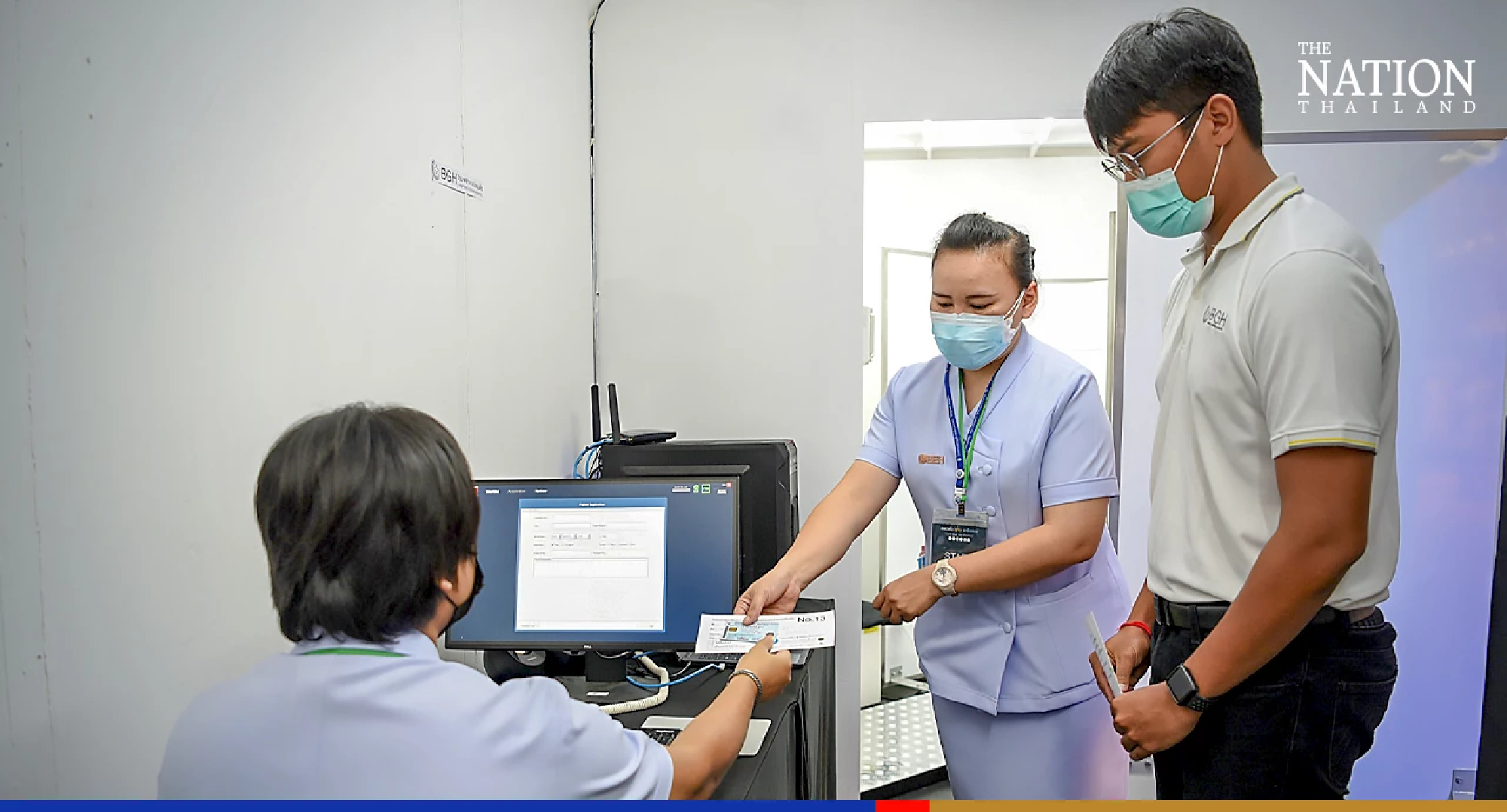
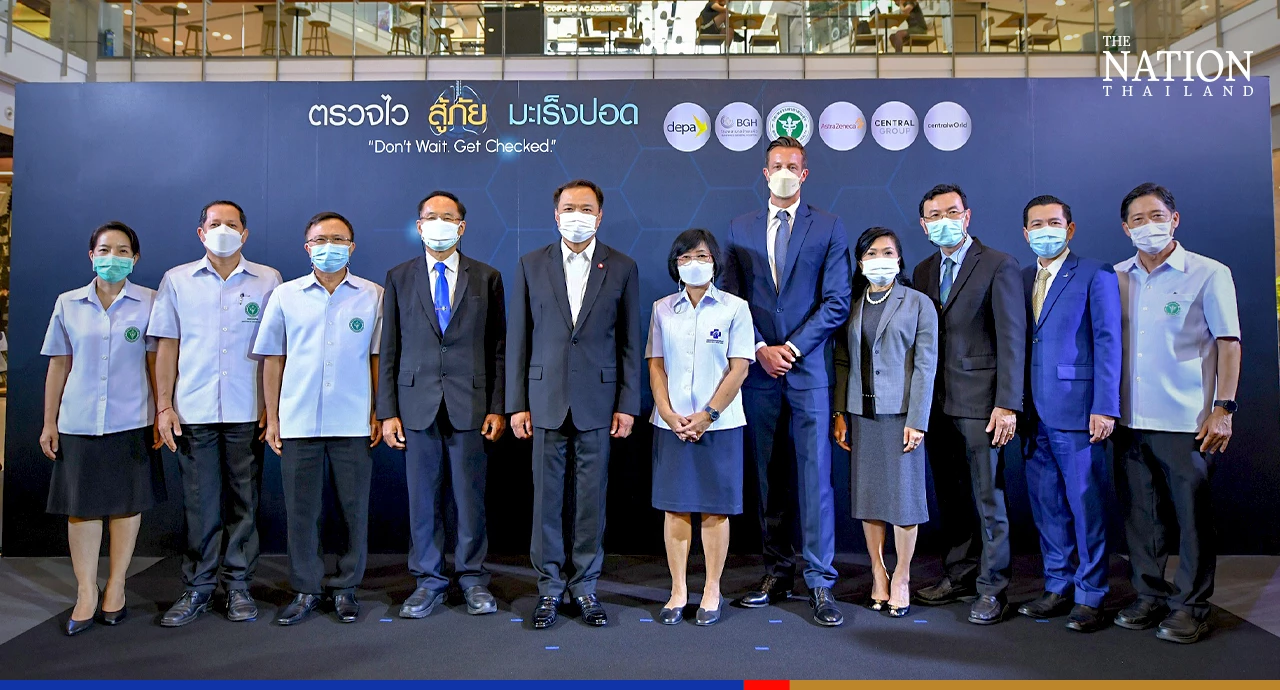
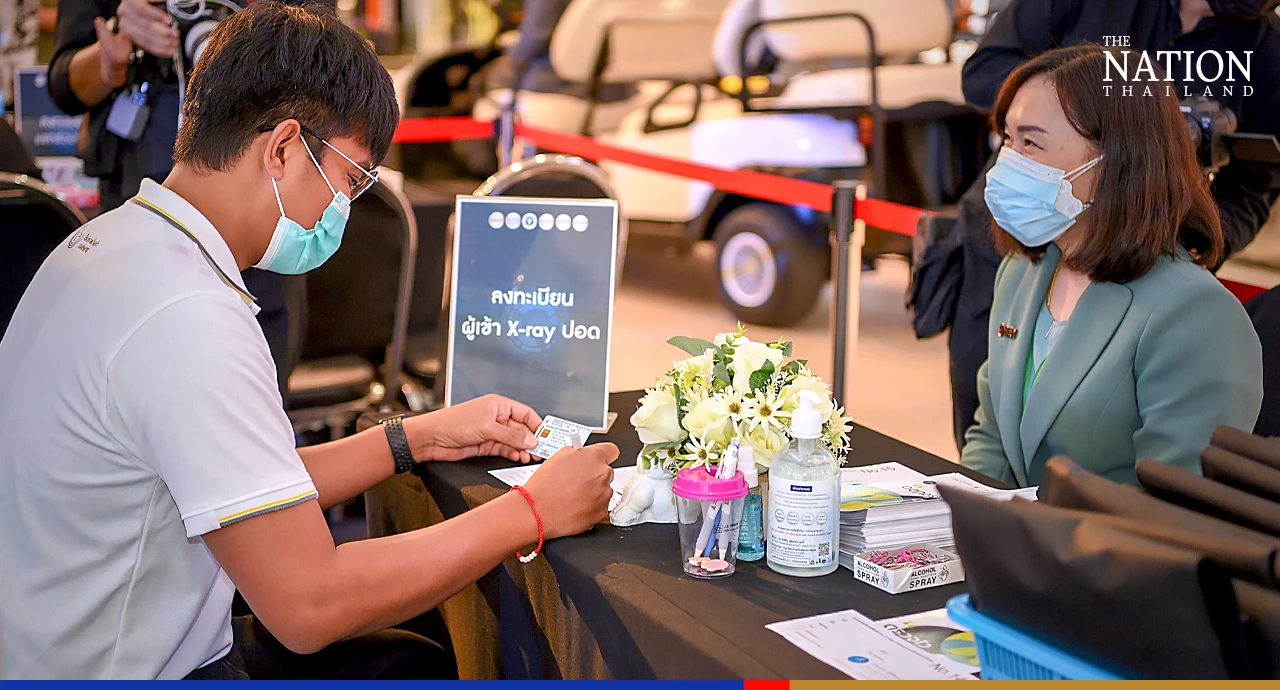
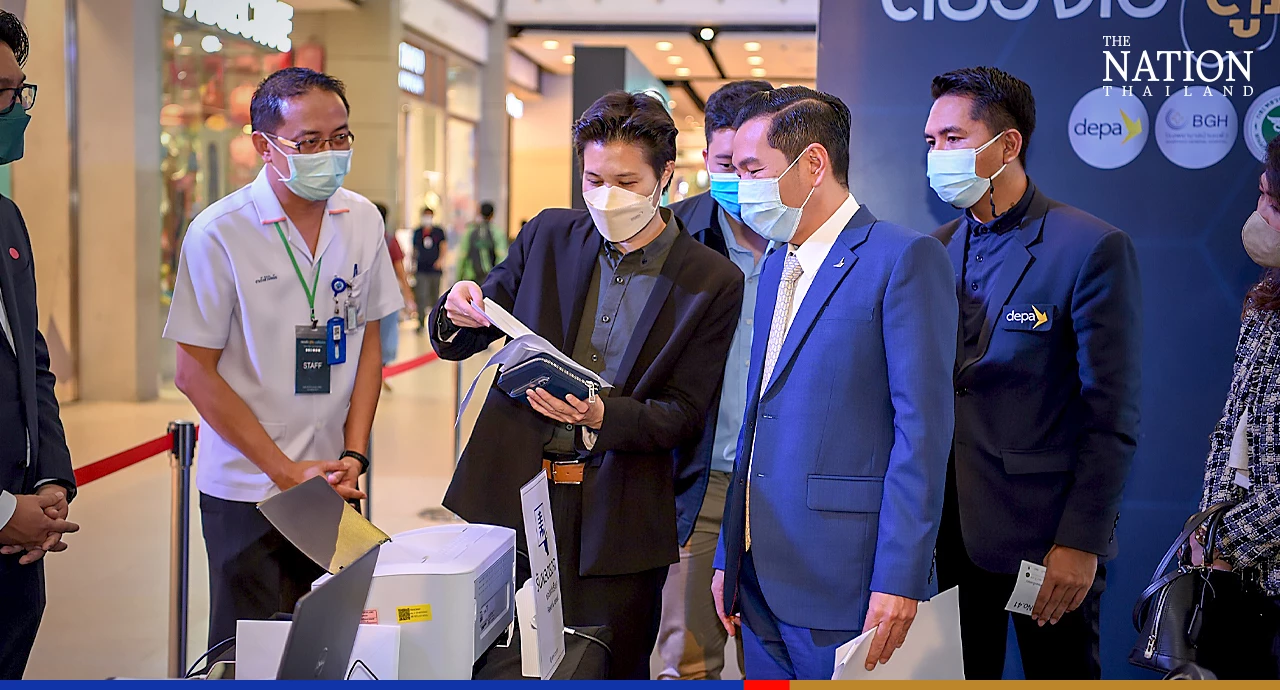
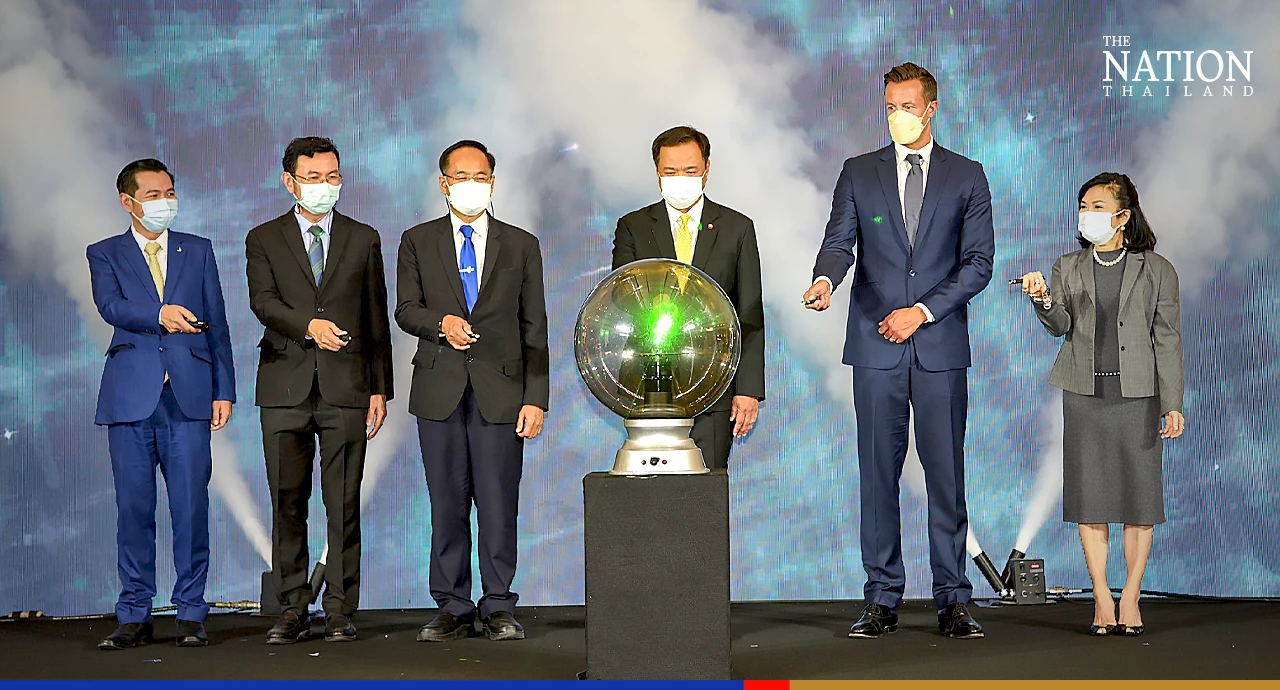
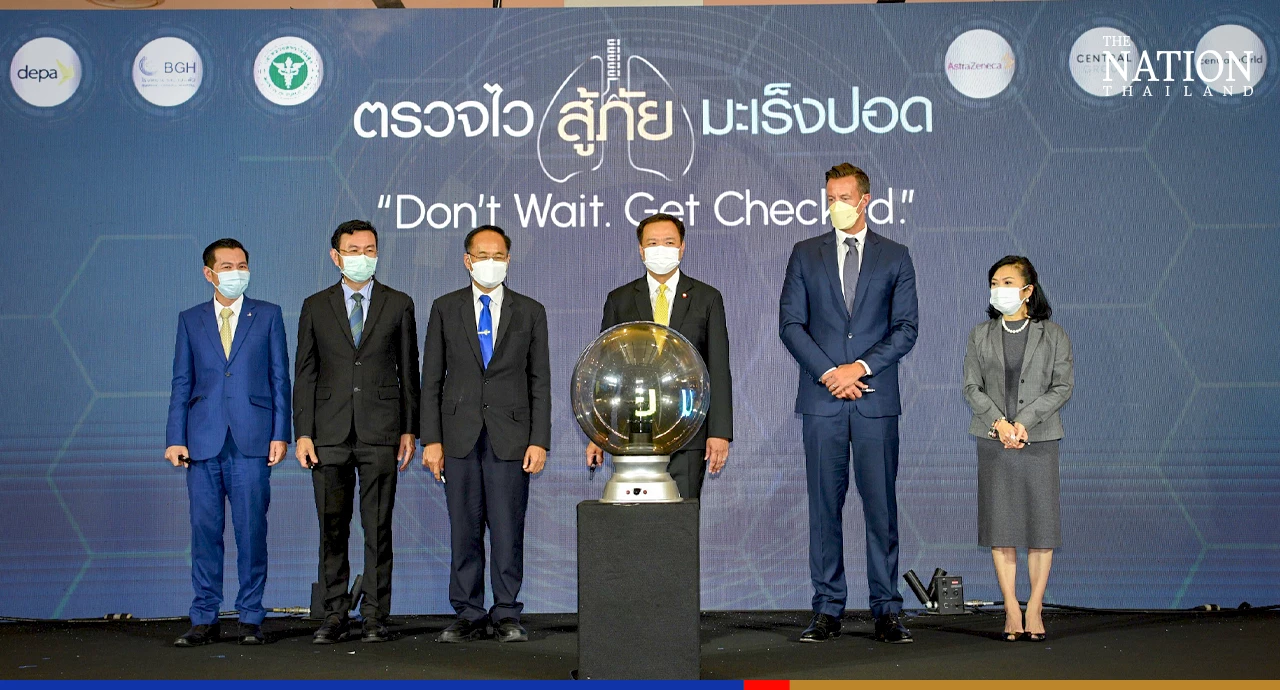
Banphaeo General Hospital is conducting free lung X-ray tests until Sunday on the first floor of CentralWorld to increase early-stage lung cancer screening with artificial intelligence technology.
The hospital’s “Don’t Wait, Get Checked” campaign is being held in collaboration with the Digital Economy Promotion Agency and AstraZeneca (Thailand).
The campaign is a pilot initiative that adopts AI technology to detect ever-smaller lung tumours via chest X-ray scans. It enhances the accuracy of early lung cancer diagnosis that could lead to earlier treatment. It is also one approach to reducing the lung cancer mortality rate. Patients can get a test result in a mere three minutes.
“Lung cancer is usually detected when patients are already in the most advanced stage, or stage 4,” hospital director Dr Pornthep Pongtawigorn said. “Most lung cancer patients start seeing doctors when tumours have already metastasised and become incurable. There is a low chance of survival. Detecting lung cancer at its onset has crucial importance.”
According to the statistics, each day in Thailand sees 47 lung cancer patients, with one person killed by lung cancer every 18 seconds across the world.
“Lung cancer is one of the leading causes of mortality in Thailand,” AstraZeneca (Thailand) country president James Teague said. “The incidence rate of lung cancer has been increasing worldwide and here in Thailand.”
The hospital also aims to set up mobile screening units at Central’s branches later, such as in Robinson Lat Krabang, Central Eastville, Central Ladprao, Central Pinklao and Central Rama 2.
Covid-19 will be around forever but will eventually become endemic as populations build immunity via vaccination or infection, a top virologist said on Tuesday.
Chulalongkorn University’s Dr Yong Poovorawan said the severity of the disease will reduce and become more treatable with new medicines, in the same way that influenza is now treated with Oseltamivir (Tamiflu).
Educational, socio-economic and tourism activities must return as close as possible to pre-Covid normality but with added caution, he said in a Facebook post.
Although Thailand had suffered during the past two years, it was managing the Covid situation well and had a lower fatality rate than developed countries such as the US, the UK and France.
Yong added that children’s strong immune systems would be bolstered further after catching the disease.
Already around half of Thai children aged 5-6 had no symptoms after testing positive for Covid, he said, citing a study by Chula’s Centre of Excellence in Clinical Virology, which he heads.
As with cold-like bugs such as respiratory syncytial virus (RSV), early infection with Covid-19 would boost children’s immunity and offer protection from severe symptoms if they caught the disease again. As adults, they may have no symptoms from Covid-19, Yong said.
This progressive immunity along with better medicines would reduce the impact of Covid on people’s everyday lives. Instead, they should focus on at-risk groups and the elderly, who are more likely to have severe symptoms when infected.
“We must get on with our lives without being careless. We will move on from these problems eventually,” he concluded.
Almost every person in Thailand will at some point contract the Omicron variant of Covid-19 and should learn how to live with the risk, a lung specialist said.
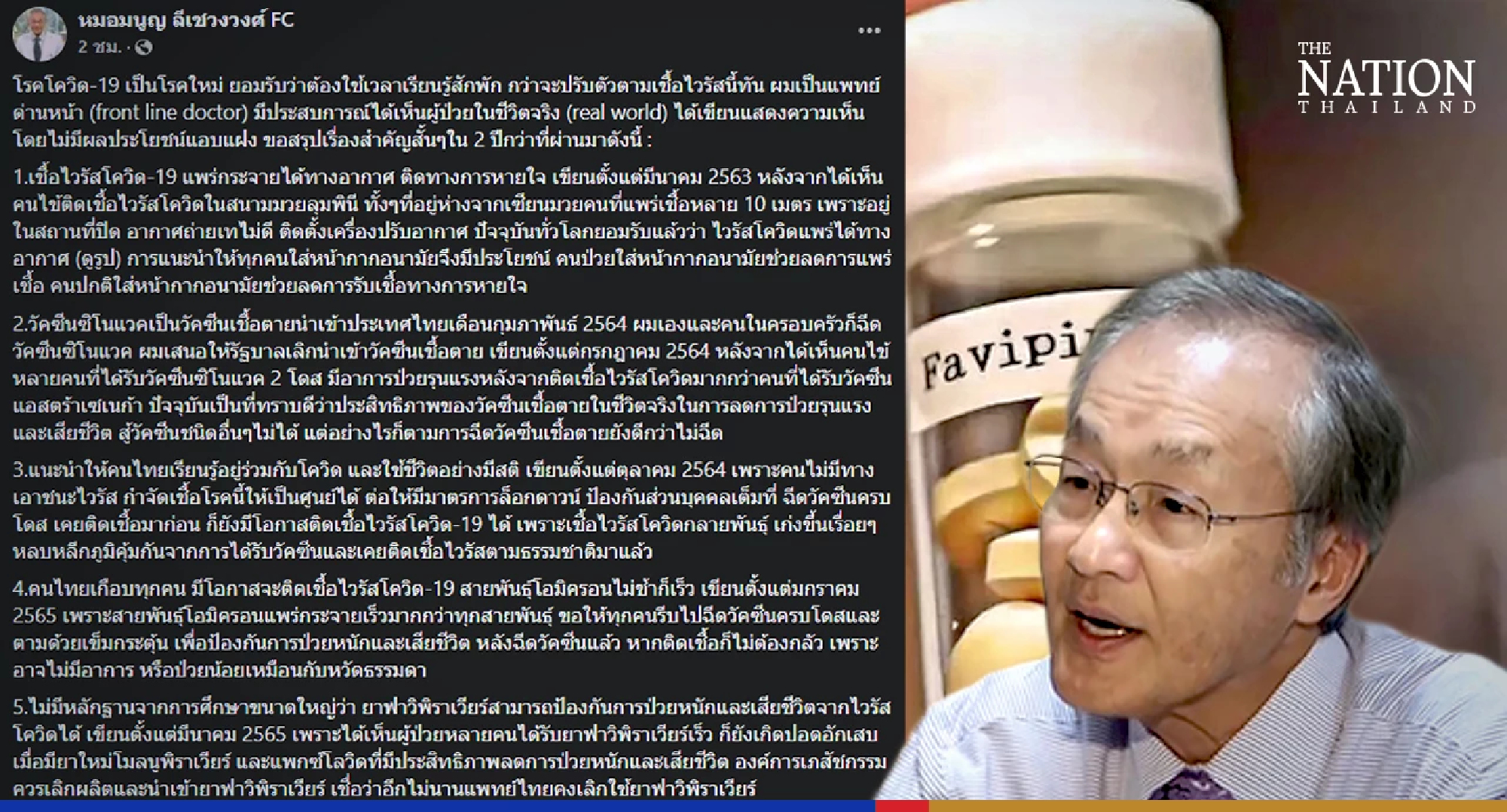
Dr Manoon Leechawengwongs shared his opinion on the Covid-19 situation two years after its arrival in a Facebook post on Monday.
He said Covid-19 was a new disease and it took a while to understand it. As a frontline doctor who treated several Covid-19 patients, he said the pandemic can be summarised into five points:
Covid-19 can be spread via airborne particles
In March 2020, a cluster of infections was sparked at the Lumpini Boxing Stadium even though people were more than 10 metres from the source. This is because the stadium was not well-ventilated and air-conditioned. This proved that wearing masks can curb the virus from spreading.
Widespread use of inactivated vaccines
Thailand began importing Sinovac in February 2021 and Manoon said he and his family members were among the first to receive this jab. However, in July 2021, he suggested that the government stop importing Sinovac because people who contracted Covid-19 after getting the jab had more severe symptoms compared to those who had received AstraZeneca.
People have realised that inactivated vaccines are not very effective, but provide some protection.
Learning to live with Covid-19
In October 2021, he wrote that the virus cannot be defeated and it will be impossible to reduce the number of patients to zero even with the strictest lockdown measures. Fully vaccinated people can still be infected with Covid-19 because it can mutate and skip the immunity gained from vaccination or previous infections.
Almost everybody will be infected by Omicron
In January 2022, Manoon said the Omicron variant can spread quicker than other variants, so everyone should receive vaccines to prevent the severity of symptoms and death.
He said that once vaccinated, people do not have to be afraid because they are likely to have mild or no symptoms when infected.
There is no proof Favipiravir can prevent death from Covid
In a post in March 2022, Manoon pointed out that though many Covid-19 patients were prescribed Favipiravir early, they still developed pneumonia. However, he said, deaths and severe symptoms can be effectively reduced with new medicines like Molnupiravir and Paxlovid.
Hence, he said, the Government Pharmaceutical Organisation should stop producing and importing Favipiravir because doctors will soon stop prescribing it.









 SootinClaimon.Com