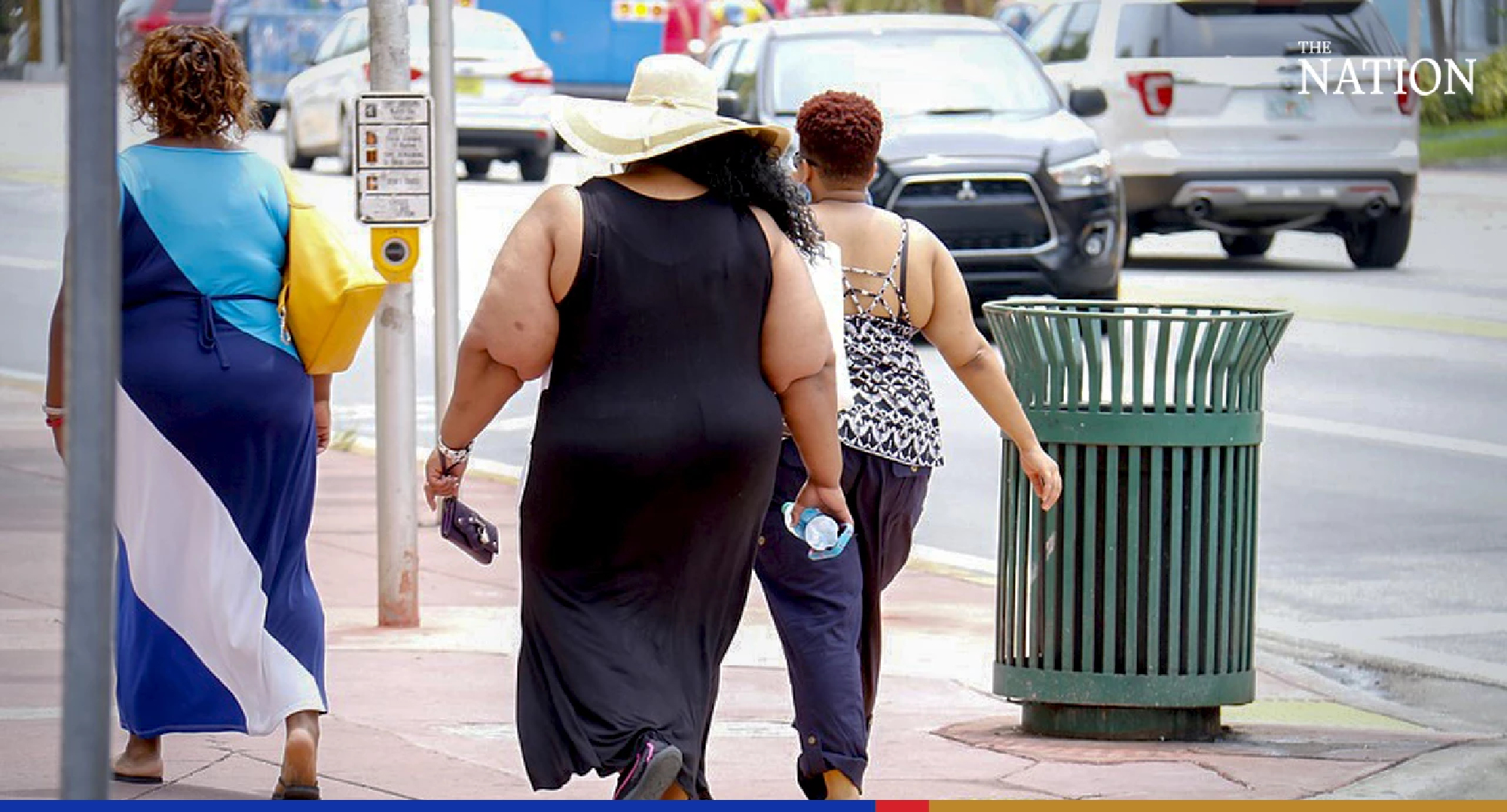
World Obesity Day is marked on March 4 every year and aims to raise awareness about obesity and the health impacts it can have.
The World Health Organisation (WHO) defines obesity as “abnormal or excessive fat accumulation that presents a risk to health”. It is commonly measured through Body Mass Index (BMI), which if taken into account with waist and height ratios, can give more accurate results. A BMI of over 25 is considered overweight and above 30 is categorised as obese. The BMI is calculated by dividing weight in kilograms with height in metres squared.
This year’s World Obesity Day, marked on Friday, follows the theme “Everybody Needs to Act”.
The World Obesity Federation named March 4 as World Obesity Day in 2015 in a bid to create a system where obesity is prioritised as a health issue. It calls on people living with obesity to come forward and share their experiences, and also aims to put an end to the shame and stigma associated with obesity.
Obesity leads to an increased risk of diseases such as diabetes, cardiovascular diseases and cancer, and those living with obesity are twice as likely to be hospitalised when hit by Covid-19.
According to the federation, more than 800 million people across the world are obese and it is estimated that treating their medical conditions will cost more than US$1 trillion by 2025.
Childhood obesity is also on the rise and is expected to affect at least 250 million children by 2030.
This issue is not limited to rich countries anymore, as it is rising fast in middle- and low-income countries, many of which are also tackling the problem of malnutrition.
The Queen Sirikit National Institute of Child Health published an article on MIS-C (multisystem inflammatory syndrome in children) and “Long Covid” in young ones, saying MIS-C can occur two to six weeks in children recovering from Covid-19.
The exact cause of the syndrome is not known yet, but it appears to be an excessive immune response related to Covid-19, the article said.
Director Adisai Pattatang said MIS-C was first identified in the UK in April 2020.
It was found more in boys than girls, with children aged eight to ten most susceptible. But it was found in only 0.03 per cent of children who contracted Covid.
Symptoms are high fever, rash, red lips, red eyes, lymphadenopathy, vomiting and liquid stools. Some suffer from fatigue, pneumonia or even shock from cardiac arrhythmia.
Fifteen children have been treated at the Queen Sirikit National Institute of Child Health but there has been no fatality yet. Seven to 14 per cent of them suffered from cardiac arrhythmia.
The institute has launched a project to monitor child patients with Long Covid.
This condition occurs in individuals with a history of probable or confirmed SARS CoV-2 infection, usually three months from the onset of Covid-19 with symptoms that last for at least two months, according to the World Health Organisation on October 6, 2021.
These conditions are usually not severe, but chronic.
Patients are given symptomatic treatment.
Department of Medical Services director-general Somsak Akksilp said doctors currently do not know the cause and pathology of Long Covid. They only have a hypothesis that it might be related to a part of the germ which affects the immune system and causes inflammation.
There were many possible risk factors according to many studies, such as being female, old age, obesity, people with underlying disease, having more than five symptoms in the first week, or having severe symptoms in the first phase. However, these factors were not confirmed.
According to the Department of Medical Services, the top 10 symptoms that are commonly found are:
People will need to continue receiving Covid-19 vaccine jabs to stimulate immunity against the virus in the long term, expert virologist Dr Yong Poovorawan wrote on his Facebook page on Thursday.
He stressed that Covid-19 vaccines can reduce the severity but cannot prevent infection due to the virus’s short incubation period and mutation.
Yong pointed out that using new Covid-19 variants to produce vaccines would not help improve efficiency.
He went on to write that immunity from Covid-19 is “not very high”, while vaccines cannot prevent infection even though they provide high immunity, but this would eventually decrease as time passed.
“Whatever the vaccine, its maximum efficiency is 14 to 28 days after vaccination and this will eventually decline,” he warned, adding that there is no such thing as “the best vaccine”.
Yong said people can be infected with Omicron easily, but they will develop mild symptoms if they are fully vaccinated or have been infected with other variants before.
However, he pointed out that people who were infected with Omicron could spread the virus, adding that children were among new Covid-19 cases even though they were vaccinated.
Yong stressed that children will have to go to school.
“Schools in many countries including Singapore have not closed but are conducting antigen tests on students. Those who test positive are ordered to isolate at home for seven days. They can then return to school without taking any more tests as the chance is low that they will spread the virus seven days after infection,” he explained.
Yong said he would continue to recommend “stimulating immunity” with vaccines even if people have received the third and fourth jabs.
He made it clear that receiving the third jab is necessary to reduce the severity of the disease and enable the body to become “familiar” with the virus.
“The important thing right now is protecting vulnerable people, while everyone must take care of their health and undergo prevention measures in this new normal era,” he wrote.
The Covid-19 situation is changing so the prevention measures will also change, expert virologist Dr Yong Poovorawan wrote on his Facebook page on Wednesday.
Yong said that Covid-19 at first was severe and had a high fatality rate two years ago. The disease has been changing over time and the severity was decreasing.
“In the first year, the goal was zero or no patients at all, so prevention measures were strict with nationwide lockdowns. However, we realised in the second year that the goal was impossible, so the focus changed to reducing the number of patients to the least possible. This still involved some lockdowns and suspension of some activities.
“This year [the third year], we know that we must live with the disease. The severity is low while the number of patients is high at around 10,000 per day. The fatality rate is down to 1 to 2 deaths per 1,000 patients.
“We are not following the timeline or closing the country anymore. Prevention measures are aimed at reducing severity in risk groups to reduce fatalities,” he said.
For diagnosis, “patients with mild symptoms or those who are asymptomatic need to take only do ATK tests because RT-PCR has a high cost and cannot be done at every place. Only people in risk groups need to be tested with RT-PCR,” he said.
For treatment, “we are not isolating every patient in field hospitals or hospitels as before. Patients with mild symptoms could be treated at home with symptomatic treatment”, he said.
Yong added that only people at high risk need to undergo quarantine for 10 days, with ATK tests on the third and seventh days. “They will be able to work if test results were negative. However, they still need to strictly take care of themselves for five to seven more days,” he said in the post.
Low-risk people could report for work, but they have to protect themselves and monitor their symptoms for seven days, he suggested.
Yong concluded that the measures will always change, according to the situation at that time.
Thailand’s Covid-19 cases have not reached their peak yet and daily infections are expected to rise to between 50,000 and 100,000 cases soon, Public Health Commission vice-chairman Chalermchai Boonyaleephan warned on Tuesday.
He said Covid cases in western countries had already reached a peak and declined faster than eastern countries, including Thailand, due to their decision to ease Covid-19 restrictions.
“However, there has been a rise in the number of Covid-19 deaths in western countries and a severe impact on their public health systems,” he said.
“Meanwhile, eastern countries had opted to maintain strict prevention measures, reopening their economies slower than western nations.”
Chalermchai said some of Thailand’s hospitals cannot support increasing Covid-19 cases as the country decided to maintain strict prevention measures.
He went on to say that Thailand’s Covid-19 cases are still in an upward trajectory, with a slowdown period every two to three weeks.
He said it was necessary to monitor when the country’s cases would hit a peak, reiterating that daily infections could rise to between 50,000 and 100,000 cases soon.
Chalermchai said the country’s public health system would be able to handle rising Covid-19 cases in the future.
“Hence, the government, public and media should come together to reduce the number of Covid-19 infections and deaths as much as possible,” he added.











 SootinClaimon.Com