Hospital will soon maintain files on smokers to facilitate better treatment, Dr. Piyawan Limpanyalert, director of the Institute for Hospital Quality Assurance (Public Organisation), revealed.
He said the Hospital and Health Service Standard No. 5 (HA) requires that medical providers in hospitals record the smoking history of all patients. Patients who smoke must be identified for diagnosis on nicotine dependence and must have a plan for quitting smoking by means of education, smoking cessation programme, etc.
“After recording the patient’s case history, doctors and nurses will create learning, diagnosis and continuous care planning for patients diagnosed with nicotine addiction and linked to various important diseases,” said Piyawan.
The 2011 Global Survey on Smoking Behaviour of Thai Population found 13 million smokers, of whom 34.6 per cent, or 4.1 million, received medical care in one year, and 65.3 per cent, or 2.6 million, received intensive medical care. The smoking history of 55.8 per cent were recorded. Some 1.45 million, or slightly more than one-third of the 4.1 million, were advised to quit smoking.
Currently, Thailand has 10 million smokers and according to the report of the Thai People’s Health Examination Survey No. 6, 2019, there are over 2 million people with diabetes and blood pressure who still smoke.
Children should receive their Covid-19 vaccines despite the risk of them developing myocarditis or inflammation of the heart muscle because the virus is far more dangerous, leading virologist Dr Yong Poovorawan said in a Facebook comment on Sunday.
Citing a study on boys and girls aged 12-15 that was published in the New England Journal of Medicine on January 26, he said boys were more at risk of developing myocarditis after receiving their second Pfizer jab.
“The ratio of boys at risk of myocarditis stood at one to 12,361, while that of girls was 10 times lower at one for every 144,439,” he said.
However, he said, most myocarditis patients had developed mild symptoms and could be cured without requiring treatment.
The study was conducted on 400,000 teenagers who had received their first jab and 320,000 who had received their second jab.
“With the ongoing Covid-19 crisis, children should receive their jabs to cut down the chance of severe infection. However, it is still up to the parents on whether they want their children to receive a jab or not,” he said.
Earlier, the Thai Food and Drug Administration has approved Sinovac and Sinopharm vaccines for children aged six and above for parents to choose as an alternative.
“So far, some 29,752 children aged between five and 11 have received their jab. The Public Health Ministry recommends eight weeks before the second jab is administered,” government spokesman Thanakorn Wangboonkongchana said. “Hospitals have set up separate vaccination points for children to ensure the vaccination drive goes smoothly.”
As of Monday, Thailand’s total caseload from Covid-19 stands at 2,507,471 – 2,392,384 of whom have recovered, 92,784 are still in hospitals and 22,303 have died.
Separately, another 11,063 people were given their first Covid-19 shot in the last 24 hours, 15,217 their second shot and 190,258 a booster, bringing the total number of Covid-19 vaccine doses administered nationwide to 117,094,785.
In a bid to tackle a huge drop in birth rates and Thailand’s fast-ageing society, public health agencies are pushing for fertility treatments and surrogacy programmes to be covered by the Universal Healthcare scheme and other welfare programmes.
According to the Interior Ministry, Thailand saw 563,650 deaths against 544,570 births in 2021, the lowest in 10 years.
Prof Dr Kamthorn Pruksananonda, chair of a reproductive medicine panel at Royal Obstetrics and Gynaecologists of Thailand, warned that this decline in birth rate could trigger economic and social issues in the long term, especially when it comes to a greater reliance on migrant workers.
He said national healthcare schemes do not cover fertility treatments yet because infertility is not considered a disease. He added that currently, only private hospitals offer treatments like in-vitro fertilisation (IVF) for women finding it difficult to get pregnant. However, he said, not everybody can afford this because even the very basic IVF treatment can cost up to 100,000 baht.
“Now that the World Health Organisation has categorised infertility as a disease, government hospitals should start providing treatment at affordable prices,” he said.
Kamthorn said Royal Obstetrics and Gynaecologists of Thailand along with the Department of Health and Department of Health Service Support have drafted guidelines to help people gain access to infertility treatment. However, this process will take more than a year to complete as other related agencies like the National Health Security Office, Social Security Office and Comptroller General’s Department must draft their guidelines as well.
“The Universal Healthcare Coverage should first start providing fertility treatments before it is expanded to social security and civil servants’ welfare schemes,” he said. “Initial treatment is not expensive, as the first step is a correct diagnosis.”
Kamthorn said making infertility treatment more accessible should help solve the problem of declining birth rates, much like Scandinavian countries, which have been focusing on promoting family lives.
“Besides, getting pregnant after turning 40 puts women at the risk of developing high blood pressure and diabetes, etc, while foetuses face the risk of Down’s syndrome and other problems. The only way this can be avoided is if women have access to infertility treatments earlier,” he said.
He added that public hearings are also necessary to determine if same-sex couples can become parents via surrogacy under the Child Protection Act.
Up to 1 million people in Thailand may be suffering from long Covid, which may create labour shortages in the future, research shows.
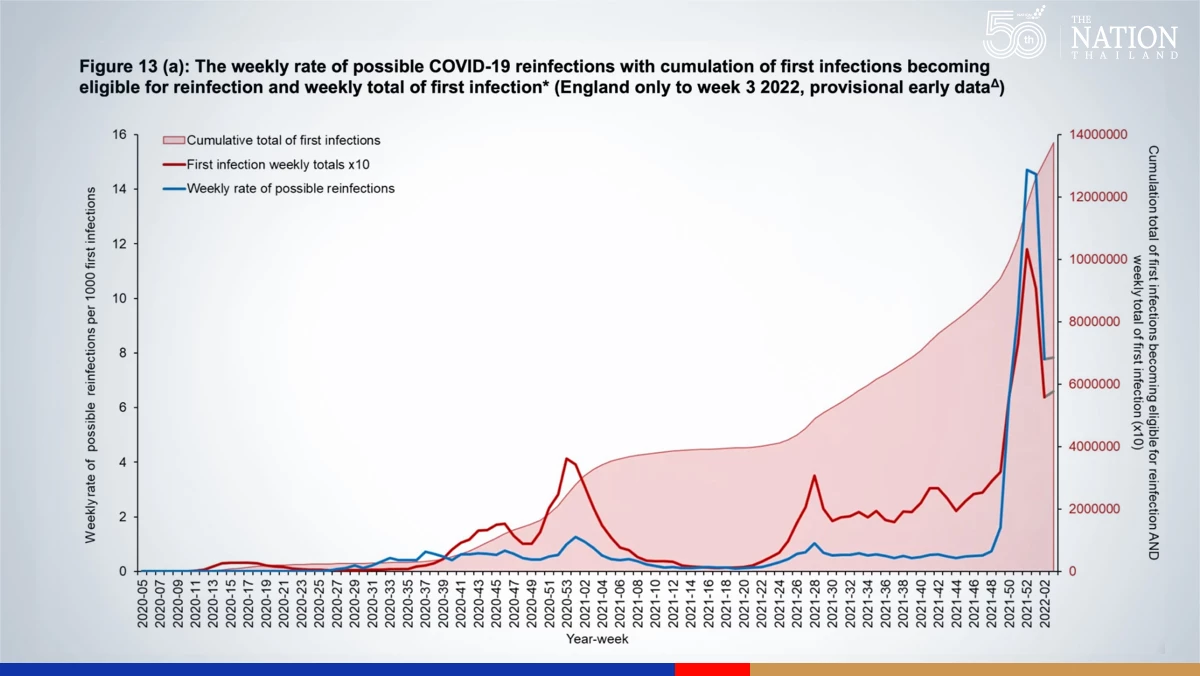
Researcher Thira Woratanarat said the number of reinfections has significantly surged thanks to the highly transmissible Omicron variant.
Hence, he said, people need to take steps to protect themselves and pay no attention to fake news and claims that Covid-19 is like normal flu.
Research shows that there is a 20 to 40 per cent chance of people who have recovered from Covid-19 to develop long-term health problems or long-Covid, such as inflammation of certain organs or gastrointestinal problems, etc.
Long Covid can range from mild to severe and may hit both asymptomatic people as well as those with severe symptoms. It is believed that women face a greater risk of long Covid.
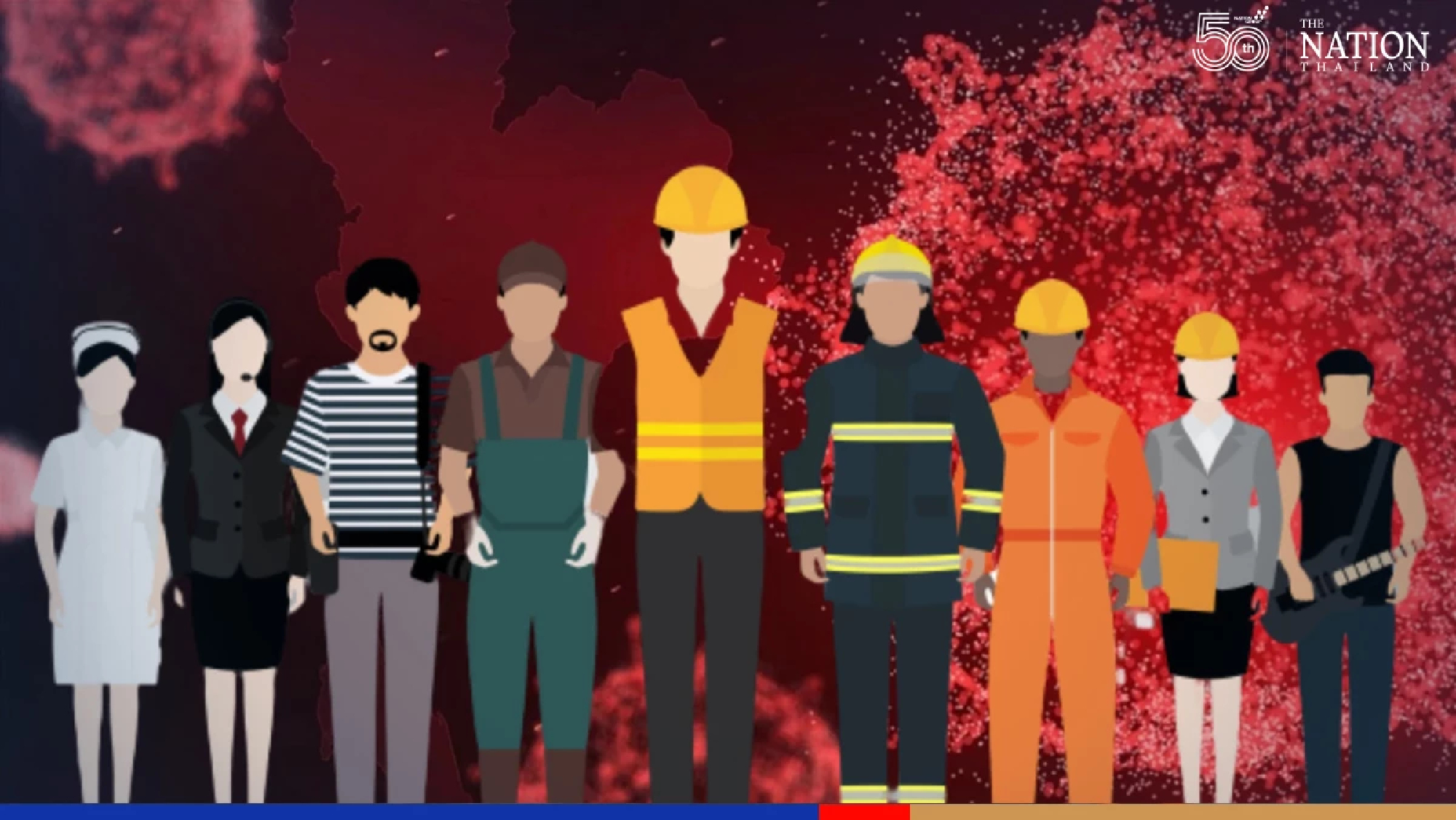
According to Brookings Metro, a US-based policy tracker, long Covid will mostly affect people of working age and subsequently create labour shortages.
As many as 2.5 million people in Thailand have been infected by Covid-19, and it is estimated that up to 40 per cent of them have developed long Covid.




 Research shows that there is a 20 to 40 per cent chance of people who have recovered from Covid-19 to develop long-term health problems or long-Covid, such as inflammation of certain organs or gastrointestinal problems, etc.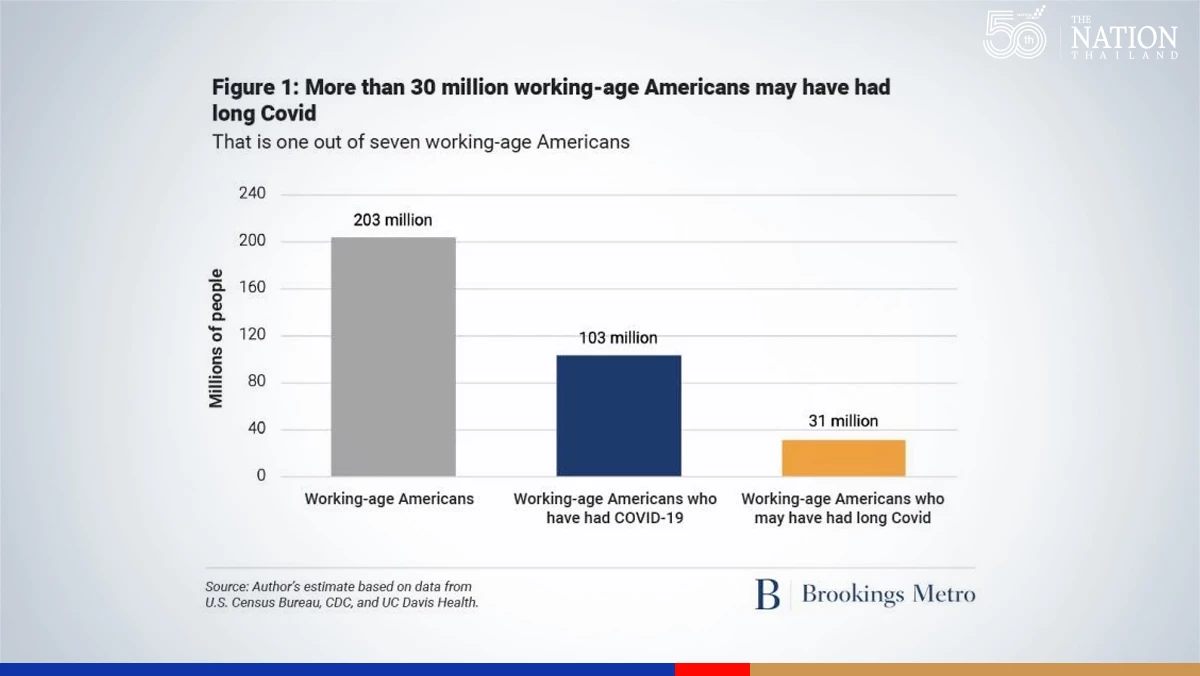


 SootinClaimon.Com