By Syndication Washington Post, Bloomberg · Robert Langreth
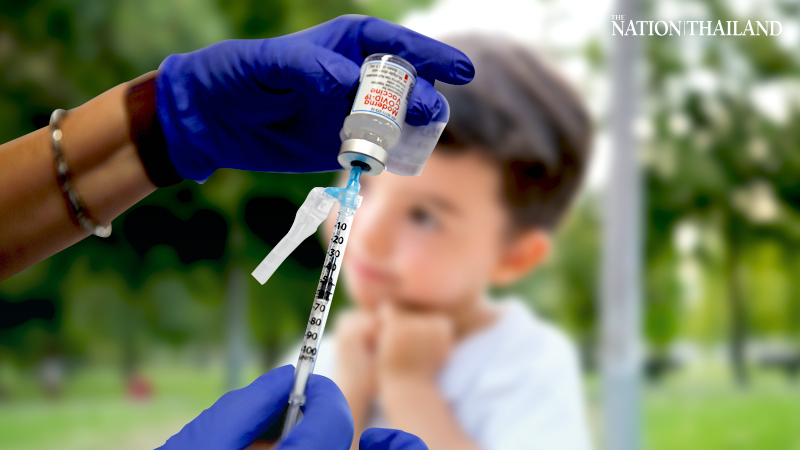
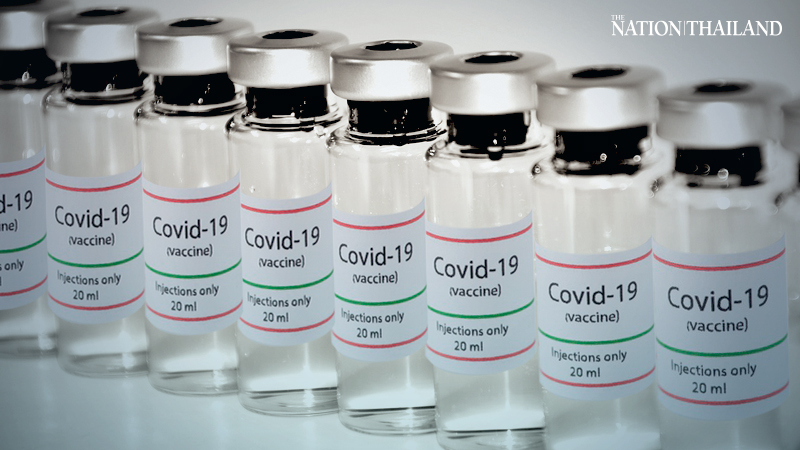
Moderna Inc. said the first children have been dosed in a clinical trial of its coronavirus vaccine in kids from six months to less than 12 years old.
The phase 2-phase 3 trial is being conducted in conjunction with the National Institute of Allergy and Infectious Diseases, the company said Tuesday in a statement. The study is expected to enroll approximately 6,750 participants in the U.S. and Canada.
The two-part study will look at three doses in the youngest children and two doses in older kids in its first phase. An interim analysis will be conducted to determine what dose will be used in the second part of the study. Kids who receive the vaccine will be followed for 12 months.
“This pediatric study will help us assess the potential safety and immunogenicity of our coronavirus vaccine candidate in this important younger age population,” Moderna Chief Executive Officer Stephane Bancel said.
For adults, Moderna’s vaccine was found to be safe and 94.1% effective at preventing covid-19, and it appears to work well across demographic groups and in people with underlying medical conditions. It is given in a two-dose regimen.
Moderna got emergency authorization for use of the shot in people ages 18 and older from the U.S. Food and Drug Administration in December. It has since become a key component of the immunization campaign in the U.S., with more than 52 million Moderna doses administered as of Monday, according to the Centers for Disease Control and Prevention.
A coronavirus vaccine developed by Maryland biotechnology company Novavax was effective, particularly in preventing severe cases of illness, in two trials conducted in areas of the world overrun by concerning variants of the virus, the company announced Thursday. The vaccine was markedly less effective in stopping mild or moderate cases in South Africa, where a variant capable of dodging immunity emerged late last year.
The results back up an interim analysis released in January and provide a window into the challenges presented by the variants – but also underscore the largely robust protection offered by vaccination. The vaccine appeared 96% effective against the original strain of the virus, on par with the most effective authorized vaccines, and protected completely against severe illness caused by variants – even as its ability to prevent milder symptoms eroded.
“Our take on this is this is a very good result. It is important to prevent severe disease; it would be ideal to prevent all disease,” said Gregory Glenn, president of research and development at Novavax.
In its final analysis, which has not yet been peer-reviewed or published, the company said that its vaccine was 96% effective against mild, moderate and severe cases of covid-19 caused by the original strain. That dropped, modestly, to 86% against the B.1.1.7 variant first detected in the United Kingdom. In South Africa, where a variant called B.1.351 has become dominant, the vaccine was 55% effective against any cases of covid-19 among participants who were not infected with HIV.
But it was 100% effective against severe disease, including against the variants. There were five severe cases of covid-19 in the United Kingdom trial, all in people who received the placebo, and five severe cases in the South African trial, also among people who received the placebo.
“A trend we’re seeing, even with these variants, is that these vaccines are retaining high efficacy against severe disease,” said Kathleen Neuzil, director of the Center for Vaccine Development and Global Health at the University of Maryland School of Medicine. “I really loved seeing the 100 percent efficacy against severe disease.”
The new findings also add nuance to an initial analysis of the Novavax data that suggested people with prior infections might not be protected against future illness, a preliminary but concerning signal. Scientists initially found those people were no less likely to be infected than people not previously exposed.
But after following those study participants for longer, scientists found prior infection may offer a “late protective effect” against reinfection, a company news release stated. The rate of illness among people who had signs in their blood of prior infection was about half as high as for those who had no prior infection.
Glenn said that at this point, there were only theories and no clear explanations of that result.
The company will present the data to regulatory agencies worldwide, including the Food and Drug Administration. A large, 30,000-person test of the vaccine is ongoing in the United States and Mexico.
From February 28 to March 9, 33,621 people nationwide have been inoculated against Covid-19 and 2,984 have reported mild side-effects, the Public Health Ministry said on Thursday.
So far, people have only been administered the Sinovac vaccine from China, with AstraZeneca jabs planned to kick off on Friday.
Dr Chawetsan Namwat, acting director of the emergency disease and health hazards control division under the ministry’s Department of Disease Control, said the most common side-effects to the vaccine are swelling at the injection site, dizziness, low fever, body ache, etc, which can be relieved easily.
So far, 2,984 people have reported reactions or 8.8 per cent of all inoculated, which is very small compared to studies that say one in three people react adversely to the vaccine.
“Even after both doses of the vaccine have been administered, the World Health Organisation reiterates that people still need to wear a mask, wash their hands and maintain social distancing. This is because it takes time for the immune system to fully recover. The vaccine only prevents death and serious illness. It will take a long time before one that can prevent infection is found. So, we cannot let our guards down even after getting vaccinated,” Dr Chawetsan warned.
Thailand has, so far, received 200,000 doses of CoronaVac from China’s Sinovac Biotech and 117,600 doses of the AstraZeneca vaccine.
Prime Minister Prayut Chan-o-cha was the first person in Thailand to receive the AstraZeneca jab.
The consumption of raw chicken can result in severe diarrhoea, food poisoning and gastrointestinal infections, the Department of Health warned on Wednesday.
Chicken sashimi, which has become a trend in Japan, is now being sold in some Thai restaurants and has even gone viral on the net, the department’s director-general Suwanchai Wattanayingcharoenchai said.
“People should only consume cooked chicken meat because raw or frozen chicken may contain salmonella, which causes diarrhoea, food poisoning or gastrointestinal infection,” he said.
“The meat may also contain the gnathostoma spinigerum parasite, which causes blindness or encephalitis.”
He said chicken farm owners can prevent the spread of salmonella by screening the health of their chickens and staff.
“To kill the bacteria, the chicken meat should be washed in water and cooked on high heat for at least five minutes,” he said. “Consumers should also check details on the package, such as manufacturing and expiry dates.”
Suwanchai also said chicken meat can be stored for up to five days at a temperature of 0 to -5 degrees Celsius or for up to 12 months in a -18 degrees Celsius freezer.
“All cooked food should be warmed before consuming and people should wash their hands with soap before and after eating,” he added.
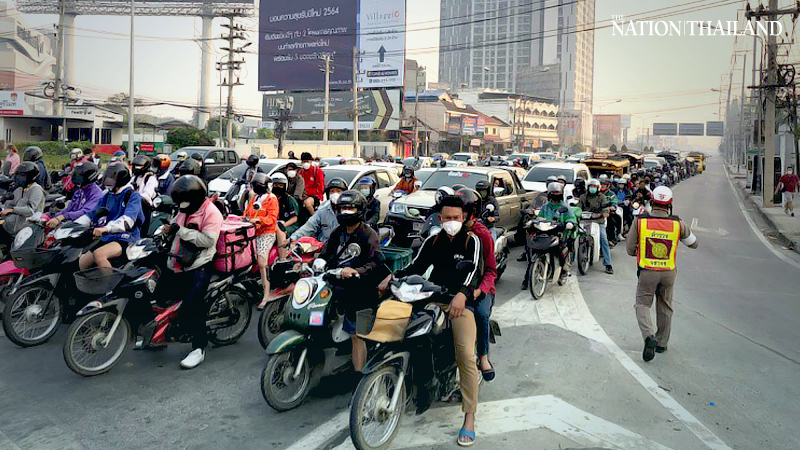
Air pollution due to a forest fire led to an increase in the number of respiratory patients in Chiang Mai on Wednesday.
According to an IQAir report, Chiang Mai ranks as the world’s third most polluted city, with PM2.5 (particles less than 2.5 micrometres in diameter) readings at 118.7 micrograms per cubic metre (μg/m3). Chiang Mai was earlier the globe’s most polluted city for three consecutive days.
Thailand’s standard for safe levels of PM2.5 is 50 μg/m3, much more than the World Health Organisation’s safety limit of 25 μg/m3.
Dr Aphinant Tantiwut
Dr Aphinant Tantiwut, a medicine expert at Lanna Hospital, said patients with respiratory, asthma or heart diseases have increased by 10 per cent, adding that air pollution has also affected patients who have skin diseases or allergies.
He advised residents to wear N95 masks, which fare better than ordinary face masks used by the public against Covid-19.
“People should pay extra attention to their health and avoid outdoor activities. Those at risk, such as the elderly and bed-ridden patients, must be in a confined or air-conditioned room and see the doctor immediately if they have any symptoms,” he said.
Separately, the Save Chiang Mai volunteer group has cooperated with traffic police to deliver N95 masks to the public as these are priced higher than ordinary face masks.
“We would like to ask the government to launch a campaign advising people to wear N95 masks as ordinary face masks can’t prevent people from the toxic haze,” group member Thanawat Weeraphongkamon said.
By The Washington Post · Lena H. Sun, Lenny Bernstein
WASHINGTON – Federal health officials released guidance Monday that gives fully vaccinated Americans more freedom to socialize and engage in routine daily activities, providing a pandemic-weary nation a first glimpse of what a new normal may look like in the months ahead.
The Centers for Disease Control and Prevention said people who are two weeks past their final shot may visit indoors with unvaccinated members of a single household at low risk of severe disease, without wearing masks or distancing. That would free many vaccinated grandparents who live near their unvaccinated children and grandchildren to gather for the first time in a year. The guidelines continue to discourage visits involving long-distance travel, however.
The CDC also said fully vaccinated people can gather indoors with those who are also fully vaccinated. And they do not need to quarantine, or be tested after exposure to the coronavirus, as long as they have no symptoms.
Peter Hotez, co-director of the Texas Children’s Center for Vaccine Development, applauded the advice, but said it has taken too long for the CDC to tell an exhausted public when their masks could come off.
“The sooner we move to telling people if you’re fully vaccinated, you don’t have to wear masks, that will be an incentive for people to get vaccinated,” Hotez said.
The five-page guidelines offer a road map of sorts to those who have made it through the rocky vaccine rollout to resuming aspects of daily life that have been on hold for more than a year. They come as states have begun reopening, and government and public health officials are racing to vaccinate people as fast as possible to outpace highly transmissible versions of the virus spreading in nearly every state.
After a slow start, the pace of inoculations is accelerating, with 60 million people in the United States having received one shot and more than 31 million people now fully vaccinated as of Monday, or about 9% of the population, according to CDC. On Saturday, 2.9 million doses were administered, a record, while about 2.2 million people on average are getting vaccinated daily. President Joe Biden has vowed to have enough supply for every adult who wants a shot by late May, raising hopes of a return to normal life.
The country is “starting to turn a corner,” Andy Slavitt, White House senior adviser on the covid-19 response, said in a briefing Monday, with the guidance highlighting “what a world looks like where we move beyond covid-19.”
CDC Director Rochelle Walensky said the recommendations sought to balance potential risk to those who are unvaccinated, and impacts on community transmission, against the benefit of “getting back to some of the things that we love in life” for those who are inoculated. She and others warned that millions more people need to be vaccinated before everyone can stop following covid-19 precautions.
CDC will continue to update this initial guidance, perhaps loosening travel restrictions if new infections continue to decrease as vaccinations increase, Walensky said. But with more than 90% of the population still unvaccinated and levels of virus high, even those who have received the shots “might get breakthrough infections with lesser amounts of virus,” she said, referring to a fully vaccinated person getting infected.
For now, officials are continuing to discourage travel because “every time that there is a surge in travel, we have a surge in cases in this country,” Walensky said. “We know that many of our variants have emerged from international places, and we know that the travel corridor is a place where people are mixing a lot.”
The guidance outlines several ways that fully vaccinated people can return to their old routines, although it is more general than what some might have hoped for. It doesn’t explicitly say, for instance, whether vaccinated grandparents can hug and kiss their unvaccinated grandchildren, but appears to endorse such behavior by saying vaccinated people can safely gather indoors with those in one unvaccinated household without masks or physical distancing, as long as no one is at risk of severe disease.
A growing body of evidence suggests that fully vaccinated people are less likely to spread the virus to others. While some prevention measures continue to be necessary, the benefits of reducing social isolation “may outweigh the residual risk of fully vaccinated people becoming ill with covid-19” or transmitting the virus to others, the guidance says.
In addition, relaxing restrictions for vaccinated people “may help improve covid-19 vaccine acceptance and uptake,” CDC says. “Therefore, there are several activities that fully vaccinated people can resume now, at low risk to themselves, while being mindful of the potential risk of transmitting the virus to others.”
Small gatherings likely represent minimal risk – with the safest situations being for the fully inoculated to get together with one another in private settings, such as a dinner among vaccinated friends in their homes, the CDC says.
But risk increases as gatherings get larger, take place outside the home, or include more unvaccinated people, who may have come from places with high rates of transmission.
The level of caution people need to exercise should be determined by the characteristics of those who are unvaccinated, the CDC says. Unvaccinated people from one household, or people living under one roof who are at low risk for severe covid-19, for instance, can visit with vaccinated people indoors without wearing masks, such as grandchildren visiting their grandparents. But if the unvaccinated neighbors stop by, the visit should move outdoors or to a well-ventilated space, and everyone should don masks because there is a higher risk of virus spread among them.
If a fully vaccinated person visits with an unvaccinated friend who is 70, and therefore at risk of severe disease, the visit should also take place outdoors, with masks and physical distancing, the guidance says.
Vaccinated people should also continue to follow CDC’s travel recommendations, which include delaying travel while cases are extremely high. That means vaccinated grandparents are advised against flying to see their grandchildren. Grandparents can visit with their unvaccinated children and grandchildren “who are healthy and who are local,” Walensky said.
And vaccinated people must still follow the same requirements before, during and after domestic or international travel, including wearing masks. The CDC requires all international travelers to show proof that they had tested negative for the coronavirus before boarding flights to the United States.
In public settings, vaccinated people should continue to follow all public health precautions, including wearing a well-fitted mask, physical distancing and avoiding poorly ventilated spaces. The virus has been shown to spread in settings such as gyms and bars.
The CDC said fully vaccinated people who have been exposed to someone with suspected or confirmed covid-19 do not have to quarantine or be tested if they remain without symptoms. But if the exposure takes place in certain crowded settings that increase the risk of spread, such as prisons and group homes, they must still quarantine for 14 days and get tested.
Advocates for older people embraced the loosened restrictions on social interaction. Many older people, especially those who live alone, they said, have spent the past year in virtual isolation, hunkered down against a virus that mainly kills people over 65.
“If the CDC is offering new ways for older people to connect more in a way that’s safe and healthy, this is really good news,” said Katie Smith Sloan, president and chief executive officer of LeadingAge, which represents 5,000 nonprofit organizations that provide services to older people. “I think clarity is so important, and good communication around that. So we welcome this. It takes some of the mystery out of it.”
Bill Walsh, vice president for communications for AARP, the interest group that represents 38 million people 50 and older, said that “after nearly a year of the pandemic, we’re grateful for any signs of return to life as we know it.
“To the extent this allows people, grandkids, families, loved ones in nursing homes or assisted living [to interact], we welcome that,” he added. “We’ve heard over the past year some heart-wrenching stories of family separation.”
But Walsh warned that health officials have a long way to go to eliminate the trepidation many older people feel about safely resuming their old lives. He said many have struggled to apply vague and often conflicting information to their lives.
Those who have already begun resuming their lives said they are elated.
After Helen Boucher, an infectious-diseases doctor at Tufts Medical Center in Boston, was vaccinated in December, she began shopping at the grocery store again, and wearing a mask, visited her in-laws, who are 88 and 90 years old, to bring them kielbasa, macaroni and cheese, and a box of chocolates.
“I felt good that I could bring them stuff,” Boucher said. But she kept her visit short since the couple had received their first shot two and a half weeks before. “I had not been willing to put them at risk.”
Hotez and his wife are both fully vaccinated and traveled by plane this past weekend to visit with their two oldest grown children, whom they haven’t seen in 14 months. One has been vaccinated and the other was recently infected.
“The risk of transmission between us is very low,” he said. “It’s as good as it’s ever going to be. Risk is never going to go down to zero.”
Anthony Fauci, Biden’s chief medical adviser, who has been vaccinated, said he will finally embrace his daughter once she is also inoculated. “I’m going to have her over to the house, and I’m going to give her a big hug that I haven’t been able to do for a year,” he told Chris Cuomo recently.
By The NationA Chula veterinary science lecturer has developed biorobots made from safe and effective materials to deliver time-released nutrients to the body, adding value to Thai herbs.
“Food, drugs, dietary supplements, no matter how great the claim, if they dissolve upon entry into the body before they can be absorbed, they are useless”, said Dr Teerapong Yata of the biochemistry unit of the Department of Physiology, Faculty of Veterinary Science, Chulalongkorn University. For this reason, he has developed biorobots to deliver herbs to solve this problem.
“We call this nutrition innovation ‘robots’, due to their ingenious mechanisms that can release the polymers covering the food surface in a timely manner to allow the intestinal wall to absorb nutrients or active ingredients that the body needs. This helps reduce the loss of nutrients during the digestive process when some nutrients may be destroyed by gastric acids,” Dr Teerapong said on his invention.
The key technology behind the microscopic robots is to coat the nutrients and active ingredients with nanoparticles by microencapsulation and nanoencapsulation. This technology prevents the nutrients from being destroyed during the digestive process in the stomach.
The materials used for the biorobots are natural polymers, including seaweed, shrimp and crab shells. These materials are inexpensive and safe for human and animal consumption. They are also biodegradable. The biorobots are being used to coat herbs like turmeric, Centella asiatica, black sesame, and cordyceps, he said.
Chulalongkorn University has already patented the biorobots with the Department of Intellectual Property. Today, biorobots are used in the food industry, especially in health foods, or functional foods that have added antioxidants or vitamins –- a trend of the future.
Dr Teerapong Yata
“Consumers will benefit from biorobots, by receiving important nutrients that can be absorbed effectively, eliminating the need to consume a large number of supplements that can adversely affect the liver,” Dr Teerapong added.
Biorobots are also used in animal feed, for instance in the case of antibiotic-resistant animals nano-coating is used in herbs such as essential oil, timed to activate at the end of the animals’ large intestine, which is full of pathogens.
Dr Teeraphong said that “biorobots would also benefit owners of Thai herbs businesses needing to differentiate themselves from their competitors.”


.jpg)






 มีนาเริ่มมีพุง!! หลังผ่านการฉลองแบบยุ่งๆ ช่วงตรุษจีนและวาเลนไทน์ในเดือนกุมภาพันธ์ คุณหมอแนะนำเคล็ดลับกู้หุ่นพังให้กลับมาปังแบบสุขภาพดีที่ใครๆ ก็ทำได้
 อายุรแพทย์โรคไตไขความลับ “สมุนไพรกับโรคไต” พร้อมเผยเรื่องราว “ถั่งเช่า” ดีจริงหรือแค่ราคาแพง


 เจาะลึกโรคกล้ามเนื้ออ่อนแรง SMA หนึ่งในโรคหายากที่เกิดจากความผิดปกติของกรรมพันธุ์ ซึ่งมีอุบัติการณ์โดยประมาณพบได้ในเด็กแรกเกิดทั่วโลกจำนวน 1 คน ในประชากร 10,000 คนในแต่ละปี และความหวังของหัวอกผู้เป็นแม่


