By Syndication Washington Post, Bloomberg · Nancy Cook
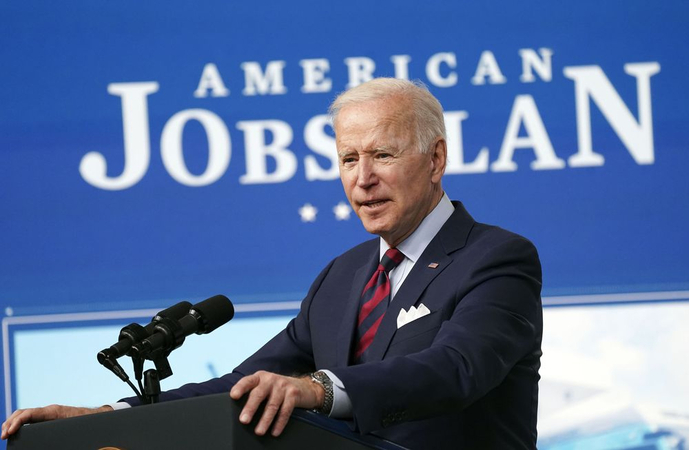
As congressional lawmakers return from a two-week recess, the Business Roundtable is starting a multimillion-dollar campaign aimed at stopping tax increases proposed as part of President Joe Biden’s $2.25 trillion infrastructure plan.
The group’s radio and digital advertisements, airing within the Washington, D.C., market, will praise the current tax regime and contend that the Biden administration shouldn’t attempt to raise corporate tax rates during an economic downturn.
According to a copy of the 30-second script obtained by Bloomberg News, the ad will say: “We’re not out of the woods on covid-19, but we’re getting there. And as we emerge, we need an economy that grows and creates opportunity.”
The spot goes onto to say that current rates, established by the 2017 Republican-backed tax law, “created record low unemployment, higher wages and brought business back to America” before the 2020 arrival of the pandemic.
Critics say Donald Trump’s tax bill pushed the corporate tax rate lower than many CEOs thought it needed to go, and overwhelmingly handed tax cuts to the wealthy.
The Roundtable’s push comes as Republican lawmakers and business and conservative groups are making a variety of plans to fight Biden’s proposed tax increases.
Marc Short, who was chief of staff to former Vice President Mike Pence, is running another group, called the Coalition to Protect American Workers, with a $25 million budget. Half of that will go toward ads fighting the tax hikes in key states and congressional districts ahead of the 2022 mid-term elections.
Biden has spent the past two weeks promoting his infrastructure proposal, called the American Jobs Plan, and contending that more than 70% of Republican voters support parts of it, including rebuilding roads and bridges and expanding broadband access and job training.
The Business Roundtable’s advertising campaign in the Washington market is just its first phase. In the coming weeks, the group will run ads in 19 markets across 13 states.
“We’re focused on communicating the positive aspects of a competitive tax system and why increases would work at cross purposes with the economic recovery, job creation and long-term growth,” said Jessica Boulanger, a spokeswoman for the group.
Coinbase sails toward $100 billion valuation on crypto frenzy
InternationalApr 13. 2021The Coinbase logo on a laptop computer arranged in Hastings-on-Hudson, N.Y., on Jan. 5, 2021. MUST CREDIT: Bloomberg photo by Tiffany Hagler-Geard
By Syndication Washington Post, Bloomberg · Matthew Leising, Ben Bain
Looks like Wall Street is about to get 100 billion new reasons to believe in Bitcoin.
Coinbase Global Inc., the fast-growing exchange at the center of the speculative frenzy in cryptocurrencies, is expected to go public this week at a staggering valuation of about $100 billion. That’s more than the venerable New York Stock Exchange and Nasdaq Stock Market combined — for a company that didn’t even exist a decade ago.
If all goes according to plan, Wednesday’s scheduled direct listing on Nasdaq will cement Coinbase’s position as the Big Board of the U.S. crypto scene and a potent symbol of the risks and rewards of the new era of digital money. Its founders, Brian Armstrong and Fred Ehrsam, own stakes worth $15 billion and $2 billion, respectively, according to Bloomberg estimates.
The bottom line at the San Francisco-based exchange would seem to justify the sky-high valuation, at least recently. Coinbase said last week it expects to report first-quarter profit of $730 million to $800 million, more than double what it earned in all of 2020. And revenue in the first three months of 2021 probably surpassed all of the $1.3 billion total for last year. That compares with the $5.6 billion of revenue Nasdaq generated last year.
Coinbase has 56 million verified users and adds about 13,000 new retail customers a day, according to cryptocurrency analytics firm Messari.
“Coinbase is one of the most prominent cryptocurrency exchanges in the world,” Mira Christanto, an analyst who covers the company for Messari, said in a research report. “The market has shown that investors are hungry for crypto exposure through equity markets.”
It’s an astounding ascent for a company started in a San Francisco apartment in 2012 by Armstrong and Ehrsam, who met online in a Bitcoin forum on Reddit. The apparent demand for Coinbase shares mirrors the appetite for all things crypto: Bitcoin has surged almost eightfold in the past year, hitting a record $61,742 in mid-March.
The opportunity for Coinbase now is to capture the increasing number of institutional and corporate customers, such as MicroStrategy Inc. and Tesla Inc., that are buying Bitcoin for the long haul.
“That’s going to be the holy grail for them if they can hold on to that business, because those folks are seen more as holders than traders,” said Julie Chariell, a senior analyst at Bloomberg Intelligence for fintech and payments firms.
Providing additional products such as custody services might mean Coinbase could look more like a bank than an exchange in a few years, according to Chariell. “It’s a broader play, getting to be a one-stop shop for whatever you want to do with your crypto assets,” she said.
Coinbase spokesman Elliott Suthers declined to make any company officials available for comment, citing the “quiet period” Coinbase is required to maintain before its Nasdaq listing.
It’s been a long and sometime grueling road to the planned debut, and there are still risks to its business model.
Coinbase disclosed in filings for the share sale that it had received a subpoena from the Securities and Exchange Commission. According to a person familiar with the matter, the inquiry was related to XRP, the digital token created by Ripple that’s the subject of an SEC lawsuit alleging it was sold as an unregistered security.
That same month, the SEC announced it was suing Ripple and two of its founders for violating U.S. securities laws. Coinbase was forced to delist XRP, which at the time was the third most valuable cryptocurrency in the world.
It’s difficult to tell how the loss of XRP affected Coinbase’s earnings because Bitcoin at the same time was skyrocketing to records, said Bloomberg Intelligence’s Chariell. A greater risk would be the need to delist many of the alt coins Coinbase now offers if the SEC case determines XRP is a security.
“It is a risk, definitely, but I just don’t think it’s a big risk at this point,” she said.
Despite the XRP scrutiny, Coinbase’s expansion plans seem to be working. In 2020, coins on the exchange other than Bitcoin and Ether accounted for the largest revenue share, at 44%, according to its SEC filing.
“It made economic sense for Coinbase to list high-demand tokens due to higher competition from other exchanges,” Messari’s Christanto said.
Another risk: Coinbase’s fortunes tend to correspond to Bitcoin’s volatile history. The exchange only turned a profit last year as institutional demand for crypto assets propelled Bitcoin and other coins such as Ether to new highs. The recent lean years, known as the crypto winter, stretched from 2018 to 2019, with Bitcoin hitting a low of about $3,100 in December 2018. Until then, Coinbase was known for listing only the big hitters in the crypto world, including Bitcoin, Litecoin and Ether.
Coinbase’s prospects won’t come down to a single token like XRP. The majority of its revenue comes from trading fees, with retail customers charged an average of 1.4% and institutional clients about 0.05%, according to Christanto.
To get it through the lean years, Coinbase has conducted seven fundraising rounds for a haul of more than $500 million since September 2012, Messari research shows. That’s on top of the revenue from selling Bitcoin and Ether, which more than tripled last year to $134 million, according to Messari.
All of that has provided a strong financial position for Coinbase to list publicly. Based on figures provided by the company, Chariell calculated that 5.5 million monthly users equates to $3 billion in 2020 revenue. The top 12 fintech firms to go public in the last six months have had price-to-sales ratios of 36 times, she said. Multiplying that by 2020 revenue gets you a very large number.
“You’re easily over $100 billion in market cap,” she said.
Biden team eyes potential threat from China’s digital yuan
InternationalApr 13. 2021Signage for the digital yuan, or E-CNY, at self check-out counter at supermarket in Shenzhen, China, Nov. 20, 2020. MUST CREDIT: Bloomberg photo by Yan Cong
By Syndication Washington Post, Bloomberg · Saleha Mohsin
The Biden administration is stepping up scrutiny of China’s plans for a digital yuan, with some officials concerned the move could kick off a long-term bid to topple the dollar as the world’s dominant reserve currency, according to people familiar with the matter.
Now that China’s digital-currency efforts are gathering momentum, officials at the Treasury, State Department, Pentagon and National Security Council are bolstering their efforts to understand the potential implications, the people said.
American officials are less worried about an immediate challenge to the current structure of the global financial system, but are eager to understand how the digital yuan will be distributed, and whether it could also be used to work around U.S. sanctions, the people said on the condition of anonymity.
A Treasury spokeswoman declined to comment. A National Security Council spokeswoman did not reply to a request for comment.
The People’s Bank of China has rolled out trial issuance of a digital yuan in cities across the country, putting it on track to be the first major central bank to issue a virtual currency. A broader roll-out is expected for the Winter Olympics in Beijing next February, giving the effort international exposure.
Many key details of the digital yuan are still in flux, including specifics on how it would be distributed. China’s recent establishment of a joint venture with SWIFT, the messaging nexus through which most cross-border settlements pass through today, suggests it is possible a digital yuan could work within the current financial architecture rather than outside of it.
U.S. officials are reassured that China’s intentions aren’t to use the digital yuan to evade American sanctions, according to people familiar with the matter. The dollar’s current dominance in cross-border transactions gives the U.S. Treasury the power to cut off much of a business or even a country’s access to the global financial system.
China’s officials have said the main intentions of the digital yuan are to replace banknotes and coins, to reduce the incentive to use cryptocurrencies and to complement the current private-sector run electronic payments system — dominated by Ant Group Co.’s Alipay and Tencent Holdings Ltd.’s WeChat Pay. The PBOC has been working for years on the digital yuan, also called the e-CNY, having set up a specialist research team in 2014.
”To provide a backup or redundancy for the retail payment system, the central bank has to step up” and provide digital-currency services, Mu Changchun, the director of the PBOC’s digital-currency research institute, said at an event last month.
Beyond seeking a backup to privately run e-payments, Chinese regulators have more broadly been expanding their oversight of the country’s digital champions. Ant Group was told by Beijing to become a financial holding company, which will be regulated more like a bank. China also imposed a $2.8 billion antitrust fine on Ant’s affiliate Alibaba Group Holding Ltd.
The PBOC is also examining the potential for using the digital yuan in cross-border payments, launching a project studying the issue with a unit of the Bank for International Settlements along with the United Arab Emirates, Thailand and Hong Kong’s monetary authority.
The Biden administration isn’t planning to take any action to counter longer-term threats from China’s digital currency, the people familiar with the discussions said. However, China’s plans have given renewed impetus to efforts to consider the creation of a digital dollar, they said.
Members of Congress have also been increasingly interested in a digital dollar, aware of China’s moves, and asked Federal Reserve Chair Jerome Powell and Treasury Secretary Janet Yellen about the issue in hearings earlier this year.
Powell said in February the Fed was looking “very carefully” at a digital dollar. “We don’t need to be the first. We need to get it right.”
Yellen has signaled interest in research into the viability of a digital dollar, a shift from a lack of enthusiasm under her predecessor, Steven Mnuchin.
“It makes sense for central banks to be looking at” issuing sovereign digital currencies, she said at a virtual conference in February. Yellen said a digital version of the dollar could help address hurdles to financial inclusion in the U.S. among low-income households.
A recent report from the U.S. Director of National Intelligence said the extent of the threat of any foreign digital currency to the dollar’s centrality in the global financial system “will depend on the regulatory rules that are established.”
China’s currency makes up little more than 2% of global foreign exchange reserves compared with nearly 60% for the U.S. dollar. Policy decisions, rather than technical developments, will also be necessary to push forward yuan internationalization, as China maintains a strict regime of capital controls.
China’s financial system is too “fragile and weak” to pose a real threat to the dollar’s status as the world’s reserve currency, according to Mark Sobel, U.S. chairman for the Official Monetary and Financial Institutions Forum.
“At the end of the the day, the markets have more confidence in the Fed” than China’s central bank, said Sobel, a former senior U.S. Treasury official for international matters.
India approves Russia’s Sputnik V vaccine for emergency use
InternationalApr 13. 2021India approves Russia’s Sputnik V vaccine for emergency use. Shown, a box of the vaccine in 2021. MUST CREDIT: Bloomberg photo by Asim Hafeez
By Syndication Washington Post, Bloomberg · Abhijit Roy Chowdhury, Chris Kay
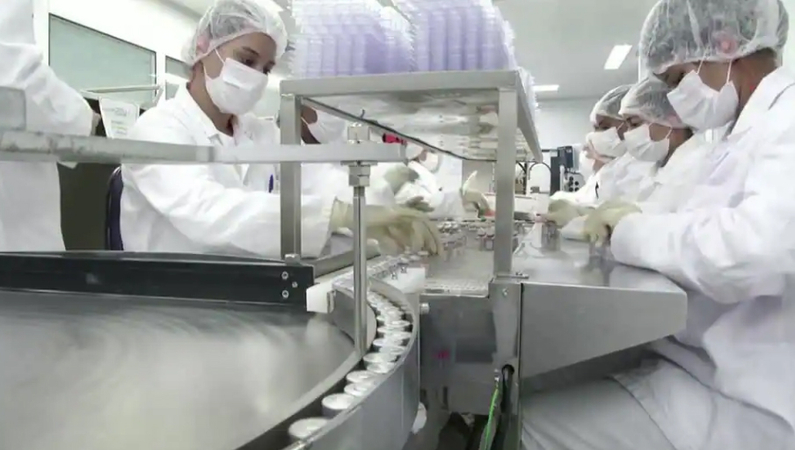
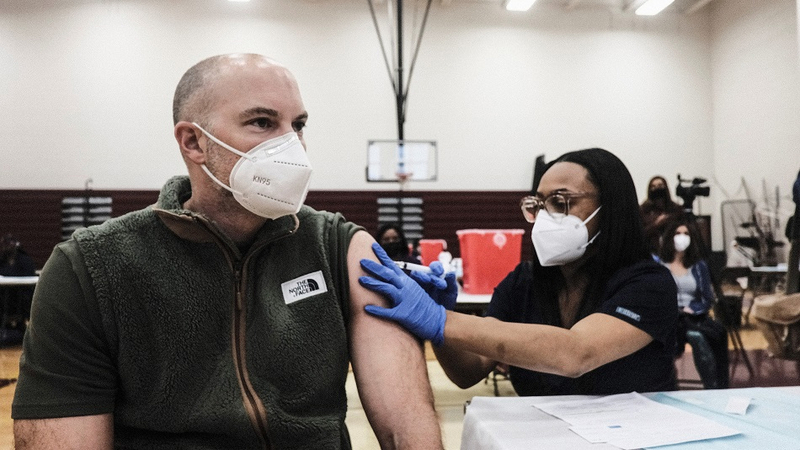
India granted emergency use approval to Russia’s highly effective Sputnik V coronavirus vaccine, making it the third such shot approved by the nation as it races to contain an escalating health crisis amid a record daily surge in infections.
Dr. Reddy’s Laboratories Ltd., the Indian drugmaker that has partnered with Russia to supply this vaccine, has received the regulatory approval, a person familiar with the matter said, who asked not to be identified as they’re not authorized to speak publicly. A spokesperson for Dr. Reddy’s did not immediately respond to a query while V. G. Somani, the drug controller general of India, could not be reached for a comment.
The Hyderabad-based company approached the Indian drug regulator seeking emergency regulatory approval in February after it was deemed safe in Phase 2 human trials in January. It proceeded to the larger Phase 3 trials soon after. Dr. Reddy’s shares closed almost 5% higher in Mumbai after the news broke on Monday.
India is trying to curb a second wave that has already overwhelmed hospitals and put the Asian nation on track to overtake Brazil as the second worst-hit country. Some parts of India have already imposed partial lockdowns while some states such as Maharashtra — where financial hub Mumbai is located — are seeing vaccine shortages. Adding a third vaccine to its arsenal will hopefully ease the shortfall.
Vaccination is also key to fending off further stay-at-home orders and re-opening the economy after a national lockdown in March last year caused a historic recession. India already allows shots made by Astrazeneca Plc’s local partner, Serum Institute of India Ltd., and Hyderabad-based Bharat Biotech International Ltd. Sputnik’s emergency use approval was earlier reported by CNBC-TV18 and other local news outlets.
With Sputnik V winning international recognition in February, overcoming early skepticism, countries are lining up for supplies after peer-reviewed results published in The Lancet medical journal showed the Russian vaccine — with 92% efficacy — protects against the deadly virus just as well as the mRNA shots from Pfizer Inc. and Moderna Inc.
Sputnik V uses a platform based on the adenovirus, which causes the common cold, and has been studied in vaccine development for decades.
Besides Dr. Reddy’s, Russia has tied up with a bunch of Indian drugmakers in recent weeks including Gland Pharma Ltd., Panacea Biotech Ltd., Virchow Biotech Private Ltd. and Stelis Biopharma to produce as many as 852 million doses of Sputnik.
Still, the road to approval was slower than initially anticipated. In September, when Dr. Reddy’s and the Russian Direct Investment Fund announced their partnership, they said deliveries of the vaccine to India, which has required local bridging trials before approval, could potentially begin in late 2020.
India’s inoculation drive, which saw a tepid response in the initial weeks endangering its target of reaching about a quarter of its population by August, is now picking up. Bharat reported 81% efficacy of its Covid vaccine on March 3, days after Prime Minister Narendra Modi got the shot and urged Indians to step forward for inoculation. Sign ups among those willing to be vaccinated has improved in the past month.
India is expanding the campaign to all those over the age of 45 from April 1 and New Delhi has slowed vaccine exports as it seeks to shore up its own immunization drive. So far, more than 104 million vaccination doses have been administered.
By Syndication Washington Post, Bloomberg · Felix Tam, Jinshan Hong
Hong Kong plans to ease social-distancing rules for those vaccinated against the coronavirus to incentivize more people to get inoculated so the city can further reopen for business.
Now that Hong Kong’s outbreak is “obviously contained,” the government will consider “vaccine bubbles” that allow vaccinated people greater freedom of movement, Chief Executive Carrie Lam said at a briefing Monday. If more people get vaccinated, restaurants could extend dine-in hours to 2 a.m. and as many as eight people would be able to sit at a table, up from four now, she said. Bars and nightclubs could reopen on a limited basis if all staff and customers are vaccinated and use the government’s contact tracing app.
“I hereby encourage all citizens to get vaccinated and support our new direction in fighting the pandemic to protect ourselves and family members,” Lam said. “Hong Kong’s vaccination rate can be improved further. In other words, it’s not ideal, especially considering that we have very sufficient supply and convenient infrastructure.”
Hong Kong had administered about 834,800 vaccine doses in total to the public as of Sunday. About 7.7% of the population have received at least one dose.
For now, social-distancing measures will be extended for another two weeks to April 28 as authorities monitor the virus situation following the Easter holiday.
“If suddenly Hong Kong faces a major surge as a result of the Easter holiday, then we may need to revisit and refine these measures,” Lam said. Otherwise, the new measures could be introduced if preparatory work and discussions with stakeholders can be completed within the two-week period.
Hong Kong’s vaccine drive has been hampered by public distrust of the Beijing-backed government and the Chinese-made Sinovac Biotech Ltd. vaccine. It suffered another blow last month when packaging defects were found on a batch of shots developed by BioNTech SE and Pfizer Inc. — the other vaccine available in the city — that led to a temporary halt in those vaccinations.
About 348,600 people have received a first dose of the Sinovac vaccine and 230,300 have had the BioNTech vaccine, the government said Sunday. Sinovac accounts for roughly 146,700 second doses, and BioNTech about 109,200. Hong Kong has a population of 7.5 million.
The government said it may also cut quarantine time for people arriving from areas deemed to be low risk and ease access for more visitors from mainland China. Such moves are key to reopening the city and boosting an economy that’s been starved of big-spending tourists. Hong Kong had about 97% fewer visitor arrivals in February than in the same month last year.
Hong Kong last month cut mandatory hotel quarantine to 14 days from 21 for people coming from low-risk areas including Singapore, Australia and New Zealand. Visitors from mainland China, Macao and Taiwan also currently face 14 days compulsory quarantine. Only a limited quota of Hong Kong citizens arriving from Macao and the southern Chinese province of Guangdong have been exempt from quarantine.
With a tea shop right next to key protest zones in Myanmar’s biggest city, Soe is never quite sure whether he should keep the business open.
If protesters enter to evade authorities, the 43-year-old risks getting shot, arrested or having his property destroyed as the military and police hunt them down. But if he turns away fleeing demonstrators, he may face a backlash on Facebook and a boycott of his tea shop, among hundreds in Yangon that have long served as de facto community centers.
“Now we can’t open our shop on a daily basis but we have to pay regular rental fees, municipal fees, labor wages,” said Soe, using only his first name because of concerns for his personal safety. “Many tea shop owners in Yangon are not sure how long they’ll be able to survive if this crisis continues.”
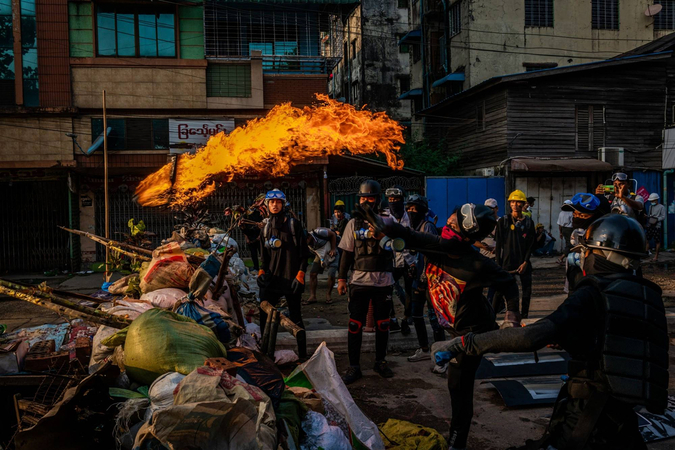
Small businesses like Soe’s are on the front lines of an economy now seemingly in free fall after a group of generals seized power on Feb. 1. The junta has killed at least 614 civilians since then, driving away foreign investors as Western nations put on new sanctions. Their opponents in the Civil Disobedience Movement, meanwhile, are pushing to tank the economy to deprive the military of financial resources.
Shipping lines have suspended operations as truck drivers strike, leaving cargo containers trapped at the ports. Restrictions on cash withdrawals have businesses struggling to pay employees. The military has restricted internet access, making it harder to reach customers. And thousands of civil servants aligned with the protesters are refusing to work, leaving areas with limited public services.
Altogether it amounts to a speedy erosion of the economic gains Myanmar reaped after investors rushed in a decade ago following a shift toward democracy. An economy that averaged growth rates of more than 6% over the past 10 years — more than doubling gross domestic product — is now projected by the World Bank to shrink 10% in 2021, by far the worst in Asia as countries rebound from a pandemic-induced slump.
“We are deeply concerned,” Aaditya Mattoo, the World Bank’s chief economist for Asia, said in an interview. “A 10% contraction in growth for a poor country seems to me disaster enough already. And when I add to it all the other costs, which have an impact on long term growth, I think we have a pretty dismal scenario.”
Some analysts are expecting things to get even worse: Fitch Solutions is projecting a “conservative” 20% contraction for the 2020-21 fiscal year. It said this month the rising death toll combined with increased social instability means “all areas of GDP by expenditure are set to collapse.”
“There is no worst-case scenario on the economy which we can rule out,” Fitch said.
At the moment in Yangon, there’s still no sign of a humanitarian crisis. Supermarkets, convenience stories and small shops still have plenty of food, and prices of rice and other staples are relatively stable. But signs of distress are popping up, like long queues outside banks and ATMs after some banks capped daily withdrawals from ATMs at $135 (200,000 kyat). Demand for gold and U.S. dollars is rising.
“We understand that only 10% of the total number of branches in Myanmar have reopened, and we are aware of the difficulties to withdraw cash at ATMs,” junta spokesman Major General Zaw Min Tun said on Friday at a news briefing.
The junta is vowing to ride out the storm. Aung Naing Oo, the regime’s investment minister, said last month the government expects to see a “slight impact” on foreign investment.
But even business elites in Myanmar aren’t convinced that this is merely a temporary blip.
“No one can predict how long it will take to get back to normal,” said Maung Maung Lay, senior vice president of the Union of Myanmar Federation of Chamber of Commerce and Industry. “Frankly speaking, the future of our economy is now uncertain.”
Western investors have largely shunned Myanmar since allegations surfaced in 2017 of genocide against minority Rohingya Muslims, prompting the government to focus on attracting capital from Asian countries like Singapore and China. But even though China blocked the United Nations Security Council from imposing sanctions after the coup, it remains wary of supporting Myanmar’s generals — particularly after several Chinese-owned factories were torched amid the protests.
“Beijing’s displeasure with the coup and its aftermath, and the attacks on its businesses, mean that neither the Chinese state nor many Chinese companies are likely to rush to invest,” the Brussels-based International Crisis Group said in a report this month.
That doesn’t leave the junta many places to turn to revive growth. Myanmar’s purchasing managers index last month fell further to a record low 27.5, according to IHS Markit data — well below the 48.9 average since the series began in December 2015 for a measure in which 50 is the dividing line between respondents seeing an expansion and contraction in demand. “The generals had a big miscalculation in going through with the coup,” said Moe Thuzar, a fellow at Singapore’s ISEAS-Yusof Ishak Institute. “They wanted to project a more business-friendly attitude — and thought this is where they could have an edge over the National League for Democracy government — and it backfired big time.”
Now the question is just how bad things might get. The World Bank last month warned of a “sharp increase in poverty,” while the United Nations World Food Program said the crisis “will severely undermine the ability of the poorest and most vulnerable to put enough food on the family table.”
The situation on the ground is likely to turn into a “withering stalemate” as the army seeks to take control of the streets while the civil disobedience campaign keeps much of the country ungovernable, according to Thant Myint U, author of “The Hidden History of Burma: Race, Capitalism, and the Crisis of Democracy in the 21st Century.”
“The economy will collapse, destroying the lives of millions of people,” he said. “Whatever happens afterward it will be impossible for Myanmar to recover for many years.”
Concern is mounting that China’s coronavirus vaccines are less effective at quelling the disease, raising questions about nations from Brazil to Hungary that are depending on the shots and the country’s own mammoth inoculation drive.
While vaccines developed by Pfizer Inc., Moderna Inc. and even Russia’s Sputnik shot have delivered protection rates of more than 90%, Chinese candidates have generally reported much lower efficacy results. Research released Sunday showed the rate for Sinovac Biotech Ltd.’s vaccine — deployed in Indonesia and Brazil — was just above 50%, barely meeting the minimum protection required for coronavirus vaccines by leading global drug regulators. The other Chinese shots have reported efficacy rates of between 66% to 79%.
Anxiety over that disparity spilled into the open at the weekend when George Fu Gao, head of the Chinese Center for Disease Prevention and Control, said at a forum that something needed to be done to address the low protection rate of the Chinese vaccines, according to local news outlet the Paper.
The rare admission by a senior official appeared to go viral on social media before China’s censors swung into action, with posts and media reports about Gao’s comments quickly edited or taken down. Gao then backtracked, telling state-backed newspaper the Global Times on Sunday that his remarks were misinterpreted, and were meant only to suggest ways to improve the efficacy of vaccines.
Gao suggested that following up inoculations with additional booster shots and mixing different types of vaccines could help tackle the effectiveness issue, according to the Global Times.
The concerns put a question mark over a vast swathe of the global vaccine rollout, particularly in the developing world, with richer countries’ domination of supplies of the highly effective mRNA vaccines seeing nations like Turkey and Indonesia turn instead to China’s shots.
Beijing, which is also donating vaccines to some nations, has been ramping up its own inoculation drive. It aims to vaccinate 40% of China’s population — or 560 million people — by the end of June, an ambitious effort that will require it to move at twice the pace of the U.S.
“They don’t really trust it themselves,” said Therese Hesketh, an expert on China’s health-care system at University College London. “They really did a rush job on the vaccine and the clinical trials have never been properly scrutinized. I’m aware from colleagues in China that there’s huge vaccine hesitancy anyway.”
Chinese vaccine developers have been repeatedly criticized for a lack of transparency and lag foreign peers in publishing full trial data in peer-reviewed medical journals. The weekend study out of Sinovac vaccine’s late stage trial in Brazil came three months after its first efficacy readouts, while state-owned Sinopharm has yet to publish full data from Phase III trials for its two inactivated coronavirus vaccines.
While a separate Sinovac study involving more than 10,000 people in Turkey put the vaccine’s efficacy at 83.5%, it just added to questions about the shot’s efficacy. The company has said that differences in the severity of outbreaks, various covid strains in circulation and the definition by which virus cases are identified in studies have all contributed to different results across several trial sites.
“The confusion that has arisen highlights the importance of full transparency with publication of results of trials in the peer-reviewed literature,” said Martin McKee, professor of European Public Health at the London School of Hygiene and Tropical Medicine.
One reason for the low efficacy in the Brazil trial, according to the study’s researchers, was that the two doses of the vaccine were administered at a short interval of 14 days. The researchers noted “a trend to higher efficacy” among a limited number of participants who got their second dose in no less than 21 days.
Home to the world’s second worst covid outbreak after the U.S., the stakes are high for Brazil’s vaccination rollout. The country is relying on both the Sinovac shot, known as CoronaVac, and the booster from AstraZeneca Plc and Oxford University which has encountered controversy after some people experienced blood clots.
At home, China is already walking a tightrope in trying to keep its vaccination rates on par with some other countries, especially the U.S., to avoid a delay in lifting border restrictions and resuming international travel.
While China is working on more effective vaccines, including shots that deploy mRNA technology, it should continue to roll out those that have been approved for now, said Benjamin Cowling, head of epidemiology and biostatistics at the University of Hong Kong.
“They can provide a high level of protection, particularly against severe covid,” he said.
Fearing a heavy-handed approach could draw a backlash, officials in China have so far refrained from making shots mandatory, and have spoken out against forced inoculation. Officials have instead dangled rewards and applied peer pressure among workers in the massive state sector to significantly raise vaccination rates, and are now issuing nearly 4 million doses a day from less than 1 million at the start of the year.
Minnesota officer who shot Daunte Wright apparently meant to use Taser but fired gun, police chief says
InternationalApr 13. 2021Demonstrators protest the fatal police shooting of Daunte Wright outside the Brooklyn Center Police Station on April 11, 2021 in Brooklyn Center, Minnesota. MUST CREDIT:
By The Washington Post · Kim Bellware, Andrea Salcedo, Sheila Regan
BROOKLYN CENTER, Minn. – The suburban Minneapolis police officer who fatally shot a 20-year-old unarmed Black man during a traffic stop Sunday apparently meant to fire a stun gun but instead made an “accidental discharge” from her gun, her police chief said Monday.
Less than 24 hours after an officer with the Brooklyn Center Police Department shot and killed Daunte Wright, Police Chief Tim Gannon played an unedited clip of police body-camera video showing the fatal incident for the media and members of the community at a City Hall news conference.
The video shows two male officers approach Wright’s car – one on the driver’s side, the other on the passenger side. A third officer approaches later as the two attempt to handcuff Wright, who is now standing outside the vehicle. As Wright struggles away from the two men, the third officer is heard threatening to stun Wright with a Taser.
In the chaotic seven seconds that follow, the female officer, who already has a weapon drawn, is heard yelling, “I’ll Tase you!” and “Taser, Taser, Taser!” before firing.
Immediately after she is heard saying, “Holy s—, I shot him,” apparently realizing that she had fired her service weapon instead of her stun gun.
Gannon described it as an “accidental discharge that resulted in the tragic death of Mr. Wright.”
Gannon declined to identify the officer, but described her as a veteran of the department and said she was immediately placed on leave while the shooting was investigated.
Meanwhile, several dozen gathered in the rain outside the Brooklyn Center Police Department as police and National Guard troops stood watch.
Chioma Nnadi, a 42-year-old business owner said she had been following previous police shootings on TV, but this one was different because it was her own city.
“This could be my son. This could be my brother,” she said. “How would you feel if Daunte was your own brother, your own husband, your own son?
Nnadi felt her heart breaking. “I am a mother, and I feel for the mother of Daunte,” she said. “I am not feeling good about it at all. I sat my son down and sat my husband down and said, ‘Please be careful.’ “
The suburban Minneapolis community was on edge Monday after a day of grief-filled protests that gave way to late-night clashes with heavily armed law enforcement and break-ins at several local businesses overnight.
News of Wright’s death prompted fresh outcry over police use of force in the Minneapolis area from weary residents. Ten miles away, the high-profile murder trial of formal Minneapolis police officer Derek Chauvin was underway for the 2020 killing of George Floyd.
Wright is at least the 262nd person shot and killed by police this year, according to a Washington Post database tracking such shootings. The swift cascade of reactions to his death indicates how accustomed the United States – and the Twin Cities area in particular – have grown to responding to such incidents.
By noon Monday, President Joe Biden had phoned Brooklyn Center Mayor Mike Elliott to express his support; the Minnesota Twins Major League Baseball team and the National Basketball Association’s Minnesota Timberwolves announced that they would postpone Monday’s games; and the mayors of Minneapolis and St. Paul each announced evening curfews.
Minnesota Gov. Tim Walz, a Democrat, expressed his sympathies to Wright’s family during an afternoon news conference and said it was important to acknowledge that “we don’t have to continue having these press conferences, and having what may be a routine traffic stop and a 20-year-old dead, a family devastated and a community on edge.”
He pledged to demand that the state legislature hold hearings on police policies he said have passed in other states with the support of law enforcement and community groups.
“We can stop pretending that this is just the natural order of the universe and that things happen this way,” Walz added.
Jaylani Hussein, executive director of the Minnesota chapter of the Council on American-Islamic Relations whose group works on civil rights issues in the area beyond the Muslim community, said a familiar pattern is playing out once again in the area.
“Nothing has fundamentally changed since the killing of George Floyd. Nothing,” Hussein said. “Police officers can still do whatever they’ve been doing without any measure of accountability.”
Wright is the latest person in the United States to be shot by a police officer who said he or she meant to pull their stun gun but inadvertently drew and shot a firearm instead, according to an analysis by The Washington Post.
The chief said police stopped Wright just before 2 p.m. Sunday in a largely residential part of Brooklyn Center for having expired registration tags. At Monday’s news conference, an angry audience member noted that the state’s Department of Motor Vehicles was experiencing a two- to three-month backlog because of the coronavirus pandemic. The chief said that after running Wright’s identification, it was discovered that he had an outstanding warrant for a misdemeanor, and police tried to arrest him.
When Wright appeared to try to get back into his car, the officer fired a single shot. Wright drove for several blocks before striking another vehicle, and he was pronounced dead at the scene, police said. A female passenger in the car with Wright was injured and was taken to the hospital.
Outside City Hall on Monday, several community members gathered in search of answers and to show solidarity.
Jarvis Naylor, a 37-year-old landscaper who rents properties in North Minneapolis, said he always comes out to protest when Black men are killed by police.
“It is something that I must do. It’s something I always do,” Naylor said. “I try to be a part of the ones that are peaceful, so then you can really get the message out. With George Floyd I was part of the cleanup.”
Originally from Illinois, he said he has come to learn what it’s really like in Minnesota. “I just feel like it’s open season against Black men and there’s no consequence,” he said.
Wright’s family members said he had spoken to them by phone just moments before he was shot.
Aubrey Wright, 42, said his son had recently asked his mother for $50 for a carwash, and was headed there when he was stopped. They had recently bought him the car, his father told The Post. Wright’s family said he told them that he was pulled over for having an air freshener dangling from his mirror, allegedly blocking his view.
Daunte Wright’s mother, Katie Wright, told the Star-Tribune that her son had called her after being pulled over and that she heard a commotion and someone yelling “Daunte, don’t run” before the line disconnected. Moments later, she said, her son’s girlfriend, who was in the car, called back and said he’d been shot.
Aubrey Wright, who was at a grocery store, said his wife called him about 2 p.m. with the news. “She was screaming over the phone. She was saying, ‘Daunte was shot!’ ” he said.
When Aubrey Wright arrived at the scene less than 10 minutes later, he said, he saw his son’s 2011 Buick LaCrosse partially destroyed and his son’s body covered with a white sheet on the sidewalk.
After news of the shooting circulated through the community, several young residents went to the Brooklyn Center Police Department to gather in protest said Hussein of civil rights group CAIR-MN.
“We tried to keep folks safe. It was peaceful, they were standing in the street and kind of protesting and all of a sudden we saw about eight vans come in with what looked like riot gear police,” Hussein said.
As protesters lingered on the scene, police gave orders to disperse and fired flash bangs and tear gas. The Minnesota National Guard, which is deployed to the Twin Cities for the Chauvin trial, later arrived to assist police as numerous businesses in the area were broken into.
Aubrey Wright questioned whether police had to use lethal force.
“I know my son. He was scared. He still [had] the mind of a 17-year-old because we babied him,” Wright said. “If he was resisting an arrest, you could Tase him. I don’t understand it.”
Daunte Wright, who had a 2-year-old son, dropped out of high school about two years ago because of a learning disability, his father said. Since then, he worked in retail and fast food restaurants to support his son. He planned to go back to school to get his GED.
“He was a great kid,” Aubrey Wright said. “He was a normal kid. He was never in serious trouble. He enjoyed spending time with his 2-year-old son. He loved his son.”
Mexico’s new migrant policy adds to U.S. border woes
InternationalApr 12. 2021Migrants, mostly from Central America, stay in dorms at the Good Samaritan shelter in Ciudad Juarez, Mexico. MUST CREDIT: Washington Post photo by Michael Robinson Chavez
By The Washington Post · Mary Beth Sheridan
CIUDAD JUÁREZ, Mexico – The message popped up on Pastor Juan Fierro’s phone one recent afternoon. U.S. border agents had expelled another group of Central American families to this Mexican city. Could someone take them in?
Fierro, an evangelical minister, was startled by the request. During most of the pandemic, officials in Juarez had sent newly arrived migrants to a quarantine center for 14 days. Suddenly it was full. “There was no place to take care of these people,” Fierro said. So his staff at the Good Samaritan shelter hauled bunk beds into an empty room and penned it in with battered wooden benches. Within days, the rudimentary “quarantine” center held 23 women and children.
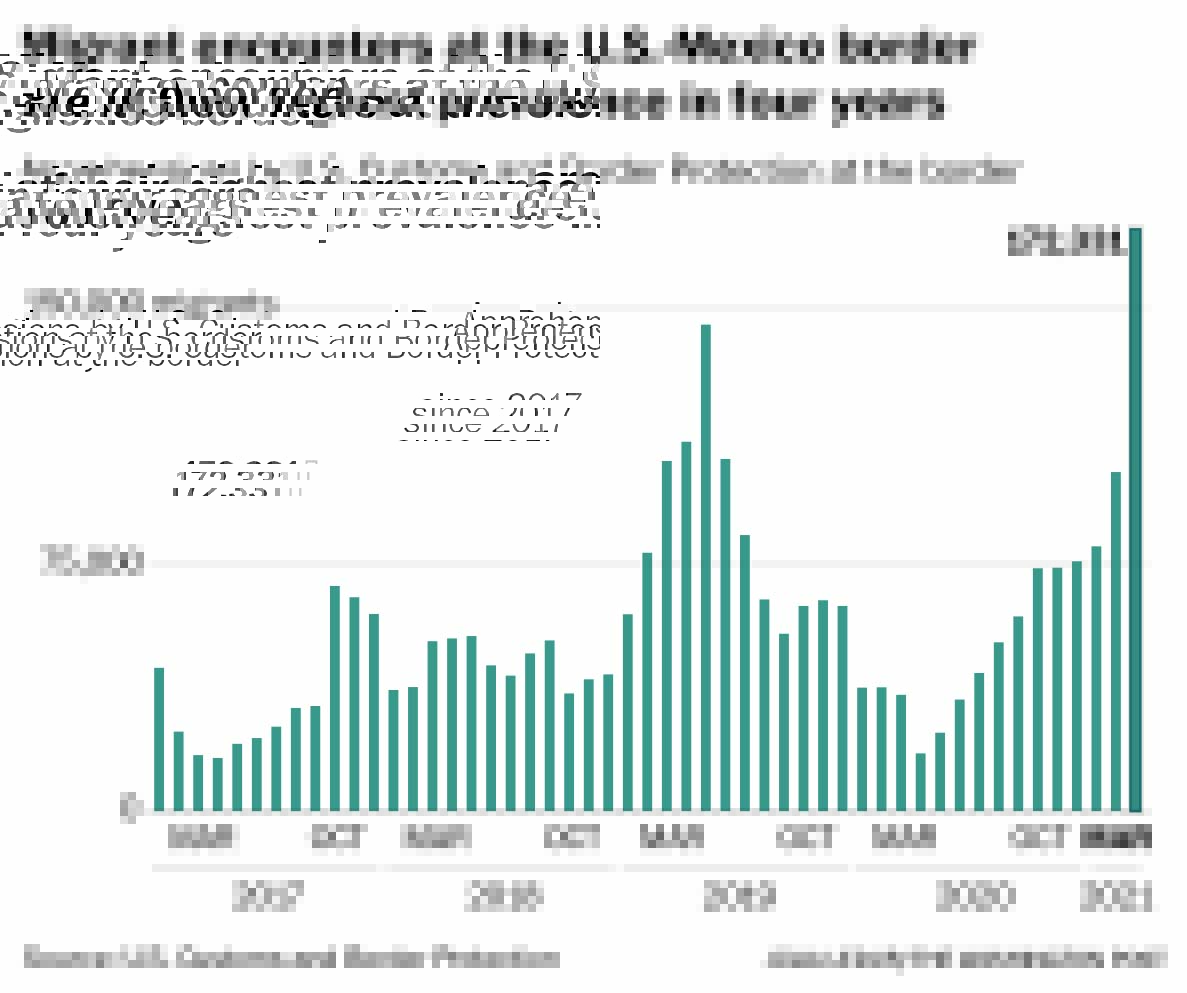
President Joe Biden hoped to put the brakes on a surge of U.S.-bound Central American families by relying on a Trump-era policy to return them to Mexico. But increasingly, this country is straining to cope with the influx. Mexico is now limiting the number of families it will allow back. That’s forced the U.S. government to accept most of them as their numbers soar: About 53,000 members of family units were taken into custody in March, compared with 7,300 in January.
Mexico’s pushback has created a new obstacle as the Biden administration struggles to deal with what could be the biggest wave of migrants at the U.S. southern border in 20 years. Pressured by President Donald Trump, Mexico became a crucial buffer zone between Central America and the United States. Its authorities deported tens of thousands of U.S.-bound migrants and took back asylum seekers to await their U.S. court dates. As the coronavirus pandemic descended on both countries last year, the Trump administration adopted one of the most restrictive border policies ever, using a health measure called Title 42 to expel nearly all Central American migrants and asylum seekers to Mexico.
The Biden administration continued to use that rule for families and solo adults, while exempting unaccompanied children. Now U.S. officials fear that Mexico’s refusal to go along with the family expulsions will have a cascade effect. As more Central Americans succeed in entering the U.S. immigration system, their relatives and neighbors back home are deciding to make the journey.
They include Ingrid Posas, 33, who left Honduras in mid-February after seeing Facebook posts of friends who had made it into the United States.
“We heard they were letting families in. That’s why I came,” she said, sitting with her 4-year-old daughter on a bench at the Good Samaritan center’s quarantine site, under a curtain of laundry hanging from clotheslines.
Mexican authorities say their abrupt refusal to accept most families follows a new law that bars children from being detained in adult migration facilities. It sailed through Mexico’s Congress at the end of last year, receiving little press attention.
U.N. agencies and human rights activists had long pressed for such legislation. But the government has few shelters for children in northern Mexico. So just weeks after the law took effect in January, Mexican authorities said they had no more room for Central American families expelled from the Rio Grande Valley of South Texas, the busiest crossing point.
“It certainly snuck up on us,” said a senior Biden administration official, who spoke on the condition of anonymity to discuss diplomatic issues.
Administration officials then asked whether those families could be flown to other parts of the border and expelled. Mexican authorities “agreed to a limited number,” the senior official said.
In Juárez, that’s been set at 100 family members each day, according to local officials and activists. Even that number is taxing resources in this industrial city across the Rio Grande from El Paso, Texas. More than 1,700 migrants and asylum seekers have filled Juárez’s 20 shelters, sleeping in bunk beds in dorm-style rooms or on mattresses on the floor. That’s more than during the last migration peak in summer 2019. But now there’s a pandemic. And the religious and civic organizations that run most of the shelters have little access to coronavirus tests.
“When they ask me, Father, can you care for these 80 or 120 people – who will guarantee they don’t have covid?” asked the Rev. Javier Calvillo, the Catholic priest who runs Casa del Migrante, one of the largest shelters. The pink-brick complex already weathered one outbreak last fall. Fifteen of his staffers and three dozen migrants were infected. He’s now refusing to receive some of the families.
Across town, the Rev. Hector Trejo, an Episcopalian priest, worries about how many people he can accommodate during the pandemic. He has set a 60-person limit at his shelter at Espiritu Santo church, half the usual capacity. In February, though, local authorities called to say 100 Haitians had just been expelled to Juarez. Could he take half of them?
“At that moment I had 53 people,” he said. “We broke our rules, by necessity.” Three more times last month, the number of migrants at the shelter swelled to more than 100.
Critics say the lack of shelter space is only part of the problem. The Mexican government, they suggest, is using the new law as an excuse to avoid doing the Biden administration’s bidding – or to obtain something in return, such as coronavirus vaccines.
“Everyone knows that Mexican laws are meaningless if the federal government doesn’t want to respect them,” said former foreign minister Jorge Castañeda, a frequent critic of President Andrés Manuel López Obrador. Mexican authorities could easily comply with the new law by transforming unused schools into makeshift centers for migrant families, he said. But the federal government has shown no desire to do so, or to increase the budget for new shelters.
That’s left local officials scrambling. In Juárez, they’ve worked with international organizations and the federal government to set up a shelter in a gym where as many as 500 arriving migrants can be quarantined and tested for the coronavirus. It significantly expanded a quarantine system that until recently had centered on a hotel with capacity for 108 people managed by the International Organization for Migration. But within days of opening last week, the municipal shelter held more than 150 people, raising concerns that it could fill up, too.
Biden said last month that he was negotiating with López Obrador about the Central American families reaching the U.S. border. “They should all be going back,” he declared. U.S. officials say they’ve asked the Mexican government to delay implementation of the new law. So far, though, that has not happened. In February, the United States returned about 40% of the families who crossed the border, but as traffic has surged, the portion has dropped to 10%-20%.
Mexico’s Foreign Ministry said the country “receives certain immigrants depending on institutional capacities” and in compliance with domestic laws. López Obrador has criticized the Biden administration for not investing more in development projects in southern Mexico and Central America to prevent citizens from leaving. “We are ready to do our part and work together in fighting human trafficking and protecting human rights, especially those of children,” he tweeted Wednesday after a phone call with Vice President Kamala Harris.
U.S. officials are also scrambling to house migrant families and unaccompanied children on the American side of the border. Many families are being released with orders to appear in immigration court, but their cases could drag on for months or years. That’s motivating more people in Central America to make the journey.
Xeni, a 25-year-old Honduran, left her home in the province of Comayagua in mid-March. She was hoping to reunite with her husband, who had migrated to Florida in 2019. “Many people from my town had crossed” the U.S. border in recent weeks, she said. She traveled by raft across the Rio Grande from the Mexican city of Reynosa to McAllen, Texas, with her small son and daughter. They waded ashore in what she remembers as a brief moment of jubilation.
“Call Daddy,” her 6-year-old son, Wilson, told her. “Tell him to come get us.”
But Xeni was one of the unlucky ones. U.S. border agents took her and the children into custody and put them on a plane. She said the agents told her that the family was being taken to a different city for processing. When they landed in El Paso, they were bused to a bridge leading into Juarez. On a recent evening, she sat at the cafeteria at a migrant shelter, cradling her 3-year-old daughter, who repeatedly coughed.
“We were all tricked,” Xeni said, speaking on the condition that her last name not be used, for fear of problems with the U.S. immigration system.
U.S. Customs and Border Protection said in a statement that migrants from the Rio Grande Valley were being sent to three other border crossings – Laredo, Texas; San Diego; and El Paso – so they could be processed “as safely and expeditiously as possible.” It added that because of coronavirus restrictions, “The border is not open.”
Activists worry that migrants such as Xeni have no legal status – neither immigration court appointments in the United States, nor work permits in Mexico. “This is provoking chaos on the border,” Fierro said.
The situation could become more complicated if the Title 42 expulsions end. Biden administration officials have said the policy is under review; but as the pandemic wanes, it will eventually become moot. The administration has terminated the Migrant Protection Protocols, a Trump-era program that required asylum seekers to wait in Mexico for their court dates. It has not announced a new system to process those arriving at the border.
Many migrants say they cannot return home, because they fled violence or spent all their money on the journey. Some are traveling to other border points to cross, or instructing their children to walk into the United States alone, knowing the Biden administration is not expelling unaccompanied minors.
Xeni said she cannot go back to Honduras because her home was damaged by two hurricanes in November. And she’s desperate to give her children a better life. So desperate that she’s considering a drastic step.
“The only option I have is to send the kids over the bridge,” she said.
TAIPEI, Taiwan – The head of the Chinese Center for Disease Control and Prevention conceded that the efficacy of Chinese coronavirus vaccines is “not high” and that they may require improvements, marking a rare admission from a government that has staked its international credibility on its doses.
The comments on Saturday from George Gao come after the government has already distributed hundreds of millions of doses to other countries, even though the rollout has been dogged by questions over why Chinese pharmaceutical firms have not released detailed clinical trial data about the vaccines’ efficacy.
China has struck deals to supply many of its allies and economic partners in the developing world and boasted that world leaders – including in Indonesia, Pakistan and the United Arab Emirates – have taken the shots.
There have been signs that some countries remain skeptical: The UAE recently experimented with administering three shots of the Chinese Sinopharm vaccine, instead of two, over reports of low numbers of antibodies produced in some people, while Singapore has stockpiled but not usedSinovac shots.
China is “formally considering” options to change its vaccines to “solve the problem that the efficacy of the existing vaccines is not high,” Gao said at a conference in Chengdu.
Gao added that one possibility was to adjust the dosage or increase the number of doses. He said another option was to mix vaccines that are made with different technologies, in an apparent admission that China needs to develop messenger RNA vaccines using the revolutionary genetic technology that Western countries have harnessed.
Gao’s remarks, which appeared inadvertent and quickly spread through Chinese social media on Saturday before being mostly censored, marked a departure from the rosy assessments of Chinese-made vaccines by the government. By Sunday, Internet users were intentionally misspelling words in their posts while discussing Gao’s comments to keep them from being removed.
Sinopharm and Sinovac use a conventional method of producing vaccines that contains inactivated germs, while other countries’ offerings, including those by Pfizer-BioNTech and Moderna, rely on a newfangled technique that uses messenger RNA (mRNA) to stimulate an immune response.
The mRNA vaccines are widely accepted as having higher efficacy rates, and Chinese pharmaceutical executives have said they are racing to catch up and master mRNA technology themselves.
The admission by the head of the Chinese CDC undercut other arms of the government, including its propaganda organs and diplomats, who have spent months touting Chinese vaccines as part of a soft power push while aggressively sowing doubt about Western alternatives by questioning the efficacy and safety of mRNA technology.
On Sunday, the Global Times, a state-run newspaper that has led the way in pushing theories about the coronavirus originating from outside China, hit back at the “hyped up” reports of Gao’s comments.
It quoted Gao as saying that his comments had been misunderstood and that he was speaking in general terms about how scientists, internationally, should improve their vaccine development.
“I was struck by what Gao said, not because it is significantly different from what we have already known but because it deviates from the official narrative on the effectiveness of Chinese and Western vaccines,” said Yanzhong Huang, a senior fellow at the Council on Foreign Relations. “I think he was trying to push for the approval of the use of Pfizer-BioNTech vaccines in China and/or the acceleration of the development of China’s own mRNA vaccines.”
Even before Gao’s comments, there have been discussion about whether the Chinese companies should tweak their formulations or vaccination regimen. Executives at Sinopharm, the state pharmaceutical giant, said in March that they were assessing whether to include a third booster shot as part of their vaccine’s standard administering procedure. The company said last week that it would begin clinical tests on a third vaccine.
More than 60 countries have approved at least one of China’s vaccines for use. They have been in high demand, especially among lower-income countries, which have not been able to acquire the other vaccines.
Sinopharm has reported a 79 percent efficacy rate for its vaccine – without releasing any data – while trials for Sinovac in Brazil and Turkey have shown an efficacy rate of just 50 percent and more than 80 percent, respectively.
Yet even though both drugmakers carried out mass clinical trials earlier than most other pharmaceutical companies last year, the data has not been still not been published in a peer-reviewed journal.
Foreigners traveling to China, however, have been encouraged to use these Chinese-made vaccines to enjoy streamlined access into the country.
In Turkey, where the Sinovac is in wide use, there has been little concern about the effectiveness of the vaccine. Rather, the worry has been that China won’t be able to deliver the promised 100 million doses amid delays in shipments.
Brazil, Egypt and other nations also have been clamoring for more doses as China has throttled back exports in the face of domestic demand even as cases have been surging worldwide.

 The Coinbase logo on a laptop computer arranged in Hastings-on-Hudson, N.Y., on Jan. 5, 2021. MUST CREDIT: Bloomberg photo by Tiffany Hagler-Geard
 Signage for the digital yuan, or E-CNY, at self check-out counter at supermarket in Shenzhen, China, Nov. 20, 2020. MUST CREDIT: Bloomberg photo by Yan Cong
 India approves Russia’s Sputnik V vaccine for emergency use. Shown, a box of the vaccine in 2021. MUST CREDIT: Bloomberg photo by Asim Hafeez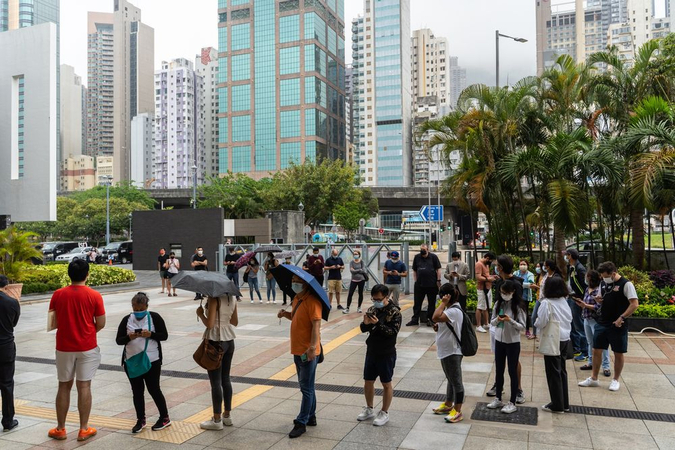
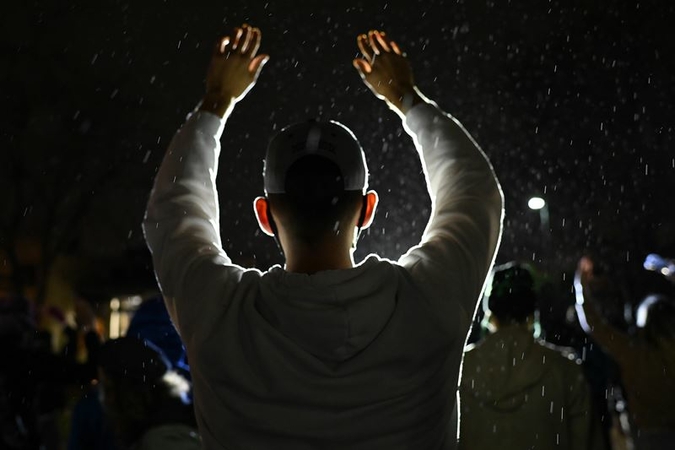 Demonstrators protest the fatal police shooting of Daunte Wright outside the Brooklyn Center Police Station on April 11, 2021 in Brooklyn Center, Minnesota. MUST CREDIT:
 Migrants, mostly from Central America, stay in dorms at the Good Samaritan shelter in Ciudad Juarez, Mexico. MUST CREDIT: Washington Post photo by Michael Robinson Chavez