AstraZeneca’s coronavirus vaccine plausibly linked to rare brain clots, European regulators say #SootinClaimon.Com

#SootinClaimon.Com : ขอบคุณแหล่งข้อมูล : หนังสือพิมพ์ The Nation.

https://www.nationthailand.com/news/30404636

AstraZeneca’s coronavirus vaccine plausibly linked to rare brain clots, European regulators say

InternationalApr 08. 2021

By The Washington Post · Loveday Morris, William Booth

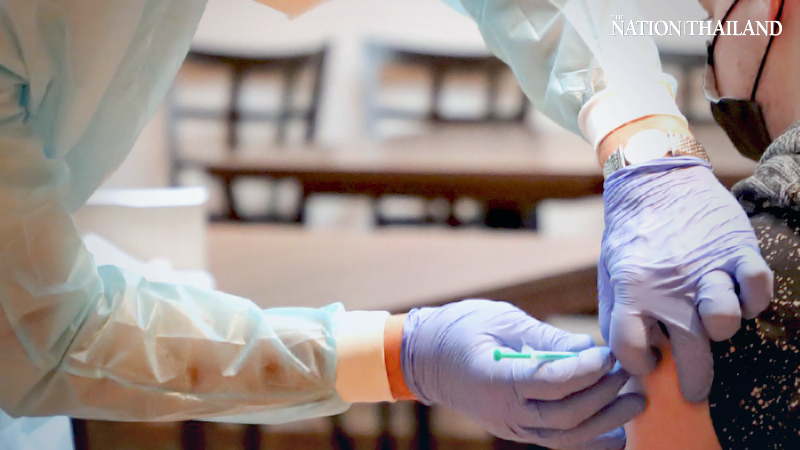
BERLIN – Medical regulators in Britain and the European Union on Wednesday said it was “plausible” that the Oxford-AstraZeneca’s coronavirus vaccine is linked to rare but sometimes deadly blood clots, a development that could complicate plans to roll it out around the world.

The European Medicines Agency stressed that the benefits of vaccination still outweigh the risks, as thousands of people die of coronavirus across the continent each day. But British officials advised that adults under 30 be offered alternative vaccines, noting that the calculus is different for young and otherwise healthy people who are at relatively low risk of serious covid-19.

Italy and Belgium also put new restrictions on the vaccine for people under 60 and 55 respectively, bringing them in line with other European countries, including Germany and France.

But the new guidelines marked a particularly notable shift for the United Kingdom, where the government has wholeheartedly backed its homegrown vaccine even as other European countries raised concerns. British newspapers had pounced on initial pauses of AstraZeneca inoculations in Europe as being more about politics than safety, while members of the scientific community had said they were baffled at the decisions.

“This is a course correction,” acknowledged Jonathan Van-Tam, England’s deputy chief medical officer, in a televised briefing on Wednesday.

He compared Britain’s fast-moving and relatively successful vaccine campaign to an ocean liner. “If you sail a massive liner across the Atlantic, then it’s not really reasonable that you aren’t going to have to make at least one course correction in that voyage,” Van-Tam said. He called the chances of anyone – including the young – getting unusual blood clots in relation to the AstraZeneca vaccine “vanishingly small.”

Still, the suggestion of a link could have global implications, even as the World Health Organization continues to recommend the vaccine.

AstraZeneca has billed its shot as “a vaccine for the world.” Cheaper and easier to store than others on the market, there are plans to roll it out in more than 140 countries through Covax, a program designed to ensure equitable distribution. But roughly half the global population is under 30, according to United Nations figures, and many low-income countries have limited ability to diagnose and treat the complicated and potentially grave side effect.

Wednesday’s duel reports also raise questions about how U.S. regulators will handle an application from the company for emergency authorization, especially given that the United States has a comfortable supply of other vaccines.

AstraZeneca said Wednesday it has been working with European regulators to update product information and better understand the individual cases of concern.

“Overall, both of these reviews reaffirmed the vaccine offers a high-level of protection against all severities of COVID-19 and that these benefits continue to far outweigh the risks,” it said, adding that the regulatory investigations had been unable to identify any specific risk factors, such as age or sex.

The vaccine has been under intense scientific scrutiny since a 49-year-old nurse died following her vaccination in Austria in mid-February.

Concerns center on a rare condition called cerebral venous sinus thrombosis, or CVST, a clot that stops blood from draining from the brain, which have occurred among those vaccinated at a rate above normally expected in the population.

“Our conclusion is that these clotting disorders are very rare side effects of the vaccine,” Sabine Straus, chair of the EMA’s assessment committee, said Wednesday.

A total of 169 cases of CVST have been reported among 34 million people given the AstraZeneca vaccine across continental Europe and Britain as of April 4, the EMA said. In addition, there have been 53 other cases of rare blood clots. While incident rates have differed from country-to-country, the regulator said that could reflect different reporting standards and estimated the overall risk to be about 1 in every 100,000 shots, in line with rates seen in Germany.

Both EU and British regulators said that while the majority of the blood clots have been recorded in younger women, that may reflect who has been getting the vaccine.

Asked whether the risks of the vaccine for young women might outweigh the benefits, EMA’s Straus said, “At the moment, that is something that is very difficult to answer.”

The oral contraceptive pill, which comes with its own risk of blood clots, does not appear to be a risk factor, the EMA said.

British officials said that although 51 of the 79 cases they assessed involved women, looking at the numbers as a proportion of people inoculated with AstraZeneca, there was no difference between women and men.

But Van-Tam said that while the absolute risk might not be higher for younger people, for otherwise healthy people in their 20s, the risk of serious harm from the vaccine slightly outweighed the potential for it to keep them out of coronavirus intensive care wards.

Of the more than 20 million people in Britain who had received at least one dose of AstraZeneca vaccine as of the end of March, 19 people died of rare blood clots and three of those people were under 30 years of age, officials said.

The EMA said that it is “plausible” that the vaccine is triggering an overactive immune response, which is causing clots medically most similar to those seen in a rare adverse reaction to another drug. Teams in both Norway and Germany have put forward that theory, saying that the antibodies can be detected in lab tests.

The regulators said that AstraZeneca has been asked to conduct more laboratory tests and to provide data from closed clinical trials in an attempt to get a better idea of risk factors.

Peter Arlett, head of pharmacovigilance at the EMA, said J&J’s vaccine “uses a similar technology,” but there have been just three cases of blood clots accompanied by low platelet counts among 4.5 million recipients of that vaccine that “have some similarities” to those seen following AstraZeneca.

Regulators emphasized that for most people – especially the elderly – it is far better to get any safe and effective vaccine than not.

“This vaccine has proven to be highly effective in preventing severe disease and hospitalization, and it is saving lives,” EMA chief Emer Cooke said of AstraZeneca. “Vaccination is extremely important in helping us in the fight against covid-19 and we need to use the vaccines.”

Four wealthiest Thais included in Forbes’ record-breaking list of billionaires for 2021 #SootinClaimon.Com

#SootinClaimon.Com : ขอบคุณแหล่งข้อมูล : หนังสือพิมพ์ The Nation.

https://www.nationthailand.com/news/30404626

Four wealthiest Thais included in Forbes’ record-breaking list of billionaires for 2021

InternationalApr 07. 2021(Photo: www.forbes.com/billionaires/)(Photo: http://www.forbes.com/billionaires/)

By THE NATION

In a year when most economies are struggling from the fallout of the Covid-19 pandemic, the world also has an unprecedented number of billionaires. Forbes’ on Wednesday announced 2,755 richest people, including 493 newcomers. Together, these billionaires are worth US$13.1 trillion, up from $8 trillion last year.

Also on the list are CP Group’s senior chairman Dhanin Chearavanont (103), founder of Thai Beverage Charoen Sirivadhanabhakdi (156), CEO of Gulf Energy Development Sarath Ratanavadi (264) and CP Group’s executive chairman Sumet Jiaravanon (502).

“This was a record-breaking year in multiple ways, with more newcomers than ever before and more billionaires globally,” said Kerry A Dolan, the magazine’s assistant managing editor. “It was also the first time that the combined net worth of the world’s billions crossed into double-digit trillions. The pace at which huge fortunes have been created is astonishing.”

In a comprehensive essay, titled “Operation Wealth Speed”, Forbes’ chief content officer Randall Lane writes: “While the initial reaction to the billionaire surge of 2021 will lean toward outrage, the underlying trends offer a road map to greater prosperity for all. Like anything else salvaged from a once-a-century plague, we just need to be brave enough to harness it.”

Despite the turmoil that we’ve seen, Lane writes, people are defying the odds to overcome challenges, like Tyler Perry, who created his own studios in Atlanta because no one would give him a break in Hollywood, or Uğur Şahin, the Turkish immigrant to Germany whose BioNTech helped produce a Covid-19 vaccine in months, rather than years – all embody economic dynamism.

Key facts of the 2021 world billionaires list:

• Top Five:

1. Soon-to-be former Amazon CEO Jeff Bezos retains top spot for fourth year running

2. Elon Musk shoots up from No 31 last year

3. Bernard Arnault of LVMH

4. Bill Gates

5. Facebook’s Mark Zuckerberg

• This is the first time in two decades that Warren Buffet is not among the top five richest people in the world, coming in at No 6.

• Newcomers: The most notable newcomer is Whitney Wolfe Herd, founder and CEO of dating app Bumble, which went public in February.

• Self-Made: This year’s list features a record 1,975 self-made billionaires, who have built a company or established a fortune on their own.

• Women: There are 328 female billionaires, up from 241 last year.

• Globally: Asia-Pacific boasts 1,149 billionaires, followed by the United States with 724 and Europe with 628.

Visit www.forbes.com/billionaires for the full list.

Biden team to help AstraZeneca find U.S. plant after mix-up #SootinClaimon.Com

#SootinClaimon.Com : ขอบคุณแหล่งข้อมูล : หนังสือพิมพ์ The Nation.

https://www.nationthailand.com/news/30404602

Biden team to help AstraZeneca find U.S. plant after mix-up

InternationalApr 07. 2021Joe BidenJoe Biden

By Syndication Washington Post, Bloomberg · Josh Wingrove, Jordan Fabian

President Joe Biden’s administration is working with AstraZeneca Plc to find new manufacturing capacity in the U.S. after the company agreed to abandon a Baltimore coronavirus vaccine plant that will focus exclusively on making doses for Johnson & Johnson.

The talks are the latest development after an error at the Emergent BioSolutions Inc. facility — in which ingredients for the two companies’ vaccines were mixed up — led to a batch of 15 million doses worth of drug substance being spoiled.

J&J announced Saturday that it had taken over production of its vaccine at the Emergent facility, which was manufacturing J&J and AstraZeneca doses. The Department of Health and Human Services worked with AstraZeneca to shift production from the plant.

AstraZeneca’s vaccine hasn’t been authorized for U.S. use yet the government has ordered 300 million of its shots, some of which have already been made. The U.S. loaned 4.2 million of its first doses to Canada and Mexico, which have cleared use of the vaccine.

The manufacturing move was made “to ensure that Johnson & Johnson is the only drug that is being produced at this site, given that the issue was about the cross-contamination of AstraZeneca and Johnson & Johnson,” White House press secretary Jen Psaki said at a briefing Monday. “We’re working with AstraZeneca to immediately identify other facilities to continue their domestic manufacture of AstraZeneca drug substance and several options.”

J&J’s single-dose vaccine has been authorized in the U.S., “hence the importance of Johnson & Johnson production continuing to be expedited,” Psaki said.

The Baltimore plant hasn’t been authorized for production of J&J’s vaccine, meaning that none of the doses administered and distributed in the U.S. so far were manufactured there or affected by the error. The U.S. still has enough doses to meet its goal of having vaccine supply for all U.S. adults by the end of May, Psaki said.

“We were not betting on these to vaccinate the American public,” she said.

J&J said in a statement Saturday that it “is adding dedicated leaders for operations and quality, and significantly increasing the number of manufacturing, quality and technical operations personnel to work with the company specialists already at Emergent.”

At a briefing Monday, White House covid adviser Andy Slavitt stressed the importance of that influx of people, along with the plant now producing only one vaccine’s drug substance instead of two. HHS supports both actions, he said.

Moving AstraZeneca from the facility will “eliminate the potential for any cross-contamination,” Slavitt said. “This was a decision that HHS made with Johnson & Johnson and AstraZeneca in complete collaboration, and so AstraZeneca also agreed that this was the right course.”

The decision “says absolutely nothing about our belief one way or the other” as to whether AstraZeneca’s vaccine will eventually be authorized in the U.S., he said. Slavitt said the AstraZeneca vaccine will go through the Food and Drug Administration authorization process “as soon as an application is submitted.”

AstraZeneca has been confronted with growing concerns in the U.K. and Europe over its vaccine, which is the backbone of the U.K.’s successful inoculation campaign. Many countries around the world were relying on AstraZeneca to drive their immunization programs and some are reconsidering.

The U.K. over the weekend confirmed seven people had died OF rare blood clots after receiving AstraZeneca’s vaccine and Australia is also investigating a case of clotting, raising questions about the safety of the widely used vaccine. More than 18 million doses have been administered in the U.K. and the regulator there insists the shot is safe.

New Zealand agrees to open travel corridor with Australia #SootinClaimon.Com

#SootinClaimon.Com : ขอบคุณแหล่งข้อมูล : หนังสือพิมพ์ The Nation.

https://www.nationthailand.com/news/30404601

New Zealand agrees to open travel corridor with Australia

InternationalApr 07. 2021New Zealand Prime Minister Jacinda Ardern announces the upcoming restoration of unrestricted, two-way travel between neighbor Australia for the first time since the pandemic forced them to close their international borders more than a year ago. Ardern is photographed during a news conference in Wellington on April 6, 2021. MUST CREDIT: Bloomberg photo by Mark CooteNew Zealand Prime Minister Jacinda Ardern announces the upcoming restoration of unrestricted, two-way travel between neighbor Australia for the first time since the pandemic forced them to close their international borders more than a year ago. Ardern is photographed during a news conference in Wellington on April 6, 2021. MUST CREDIT: Bloomberg photo by Mark Coote
By Syndication Washington Post, Bloomberg · Matthew Brockett

New Zealand has agreed to open a quarantine-free travel corridor with Australia in a major boost for its ailing tourism industry.

The so-called travel bubble will open on April 19, New Zealand Prime Minister Jacinda Ardern said Tuesday in Wellington. It will restore unrestricted, two-way travel between the two neighbors for the first time since the coronavirus pandemic forced them to close their international borders more than a year ago.

“The bubble will give our economic recovery a boost and represents a world leading arrangement of safely opening up international travel while continuing to pursue a strategy of elimination and keeping the virus out,” Ardern said. “We have worked hard to ensure travel is safe and that the necessary public health measures are in place.”

While the resumption of trans-Tasman travel will benefit the economies of both countries, New Zealand is a popular holiday destination for its much larger neighbor and stands to gain the most. Before the pandemic, Australian visitors accounted for a quarter of the revenue generated by foreign tourists. Ardern has nevertheless resisted pressure to open a bubble sooner, citing the risks of allowing covid-19 back into the community.

New Zealand and Australia are among the top performers in the global battle against the virus — New Zealand has consistently topped Bloomberg’s covid resilience ranking and Australia currently lies third. But both have also suffered sporadic outbreaks requiring regional lockdowns.

Brisbane, Australia’s third most-populous city, entered a three-day lockdown last week after the U.K. strain of the virus was discovered in the community.

One of the difficulties in establishing an international corridor between the two nations has been working out how to react when there are localized outbreaks at either end.

Ardern warned today that travelers should have contingency plans in place should an outbreak in Australia force a pause or suspension of the travel bubble and prevent them from returning on schedule. Visitors would need to abide by any local restrictions that are imposed, including lockdowns, and may need to enter quarantine on their return, she said.

“Quarantine-free travel will not be what it was pre-covid-19, and those undertaking travel will do so under the guidance of ‘flyer beware’,” Ardern said. “People will need to plan for the possibility of having travel disrupted if there is an outbreak.”

New Zealand virtually eliminated covid-19 from the community, allowing its economy to stage a V-shaped recovery from its initial slump. But it is now facing the prospect of a double-dip recession as the closed border decimates the tourism industry, once its biggest foreign-exchange earner.

The expected influx of Australians will be a huge relief for tourism operators, particularly in South Island ski resorts such as Queenstown as winter approaches. Before the pandemic, about 70% of overseas visitors to New Zealand ski-fields came from Australia, according to Tourism Industry Aotearoa.

“Surveys have shown there is pent-up demand for travel and Australians have no other options for international travel at present,” said TIA Chief Executive Chris Roberts. “But we anticipate that travelers on both sides of the Tasman will be cautious until they are comfortable with the health precautions being taken in both countries. We expect that people reuniting with family and friends will lead the way, followed by holidaymakers.”

Travel bubbles were proposed as pathway to a recovery in the early months of the pandemic, though they’ve largely failed to gain traction. New Zealand and Australia initially aimed to open a quarantine-free flight corridor in the middle of last year.

A travel bubble between Hong Kong and Singapore has also repeatedly been delayed, six months after it was proposed, because of additional waves of infections in Hong Kong.

Ardern said travelers from Australia will be on “green zone” flights, meaning there will be no passengers who have come from anywhere but Australia in the last 14 days.

“On arrival, passengers will be taken through what we call the green zones at the airport, meaning there will be no contact with those who are arriving from other parts of the world and going into managed isolation or quarantine,” she said.

The rollout of vaccinations may make corridors more workable. Australia’s government plans to set up quarantine-free travel to and from Singapore, and perhaps other countries, for those who’ve been inoculated. On March 17, the European Union gave the go-ahead for its own form of vaccine passport, a “Digital Green Certificate.”

The battered airline industry is pinning its hopes on such quarantine-free travel. As of late March, global commercial airline traffic was down 40% from pre-pandemic levels, according to FlightAware data.

New Zealanders were already able to travel to Australia without having to quarantine on arrival, but the necessity to enter a managed isolation facility for two weeks on their return home made it unattractive.

The Fed is making Wall Street forecasters pay attention to Black unemployment #SootinClaimon.Com

#SootinClaimon.Com : ขอบคุณแหล่งข้อมูล : หนังสือพิมพ์ The Nation.

https://www.nationthailand.com/news/30404599

The Fed is making Wall Street forecasters pay attention to Black unemployment

InternationalApr 07. 2021

By Syndication Washington Post, Bloomberg · Matthew Boesler

To get an idea of what Jerome Powell’s Federal Reserve will do next, Wall Street economists are having to try their hand at forecasting new variables — like the Black unemployment rate.

That shift in focus could itself contribute to the outcome that the Fed chair says he wants: an economic expansion reaching corners of the labor force that have been slower to recover in the past.

As the U.S. economy rebounds from the pandemic slump, Powell is spotlighting the kind of job-market metrics that will show Fed officials when it’s time to raise interest rates under their new framework, which explicitly redefines their goal of maximum employment as “broad-based and inclusive.”

Instead of across-the-board measurements like overall employment and wage growth, the focus is on groups that typically take longest to regain lost ground.

That means a prominent place on the Powell dashboard for metrics like the Black unemployment rate, wage growth for low-income workers, and labor-market participation among Americans without college educations.

Those gauges are signaling there’s still a long way to go. And if investors absorb that message, it will help to reinforce the economic support being provided by easy Fed policy.

Employers added 916,000 Americans back onto payrolls in March, in the first of what’s expected to be a string of big months for hiring as the U.S. rolls out vaccines and service industries reopen. Unemployment fell to 6%, down from a peak close to 15% last April.But Black unemployment was 9.6% — still above where it was as recently as January — and labor-force participation for high-school graduates without college educations remained near the lowest levels in decades, at 54.9%.

Annual average wage growth for the bottom 25% of earners was 4.2% in February (the March numbers aren’t out yet), compared with 4.7% just before the pandemic, when low-income jobs were posting their strongest relative pay gains since the late 1990s. Fed officials have been highlighting variables like these while remaining vague about exactly how they’ll play into an eventual decision about when to raise interest rates. Fed-watchers will inevitably press for more clarity as the first hike — which policymakers don’t currently expect before the end of 2023 — draws nearer.

But some Wall Street analysts aren’t waiting for the Fed’s guidance.

In a recent report, Goldman Sachs economists tried to quantify the impact of the new inclusive employment framework on monetary policy. Banks typically come up with monthly forecasts for headline unemployment and labor-force participation, but the Goldman team led by Joseph Briggs took the novel step of writing down a forecast for the Black unemployment rate as well.

While the overall jobless rate should drop to 4% this year and 3.5% by the end of 2022, Black unemployment probably won’t fall to its pre-pandemic low of 5.2% until the second half of 2023, and will still be above 4% by the end of 2024, they said. The forecasts were based on historical statistical relationships.If this kind of more granular forecasting takes hold, it could have an impact on the variables being forecast. That’s because monetary policy is a kind of public-private partnership.The Fed controls short-term interest rates. But it allows investors to set the longer-term rates, which central bankers typically view as more important because they determine the cost of mortgages or auto loans. So investor clarity about how the Fed will implement its new framework tomorrow is a crucial determinant of financial conditions today.

Right now, the Fed-markets partnership is delivering lower interest rates than at comparable points in the last recovery.Yields on 10-year Treasuries have surged to about 1.7% this year after Democrats won control of the Senate, which paved the way for additional fiscal support to speed up the recovery.

Still, yields remain well below the 2.5% level of September 2014, when the U.S. jobless rate first declined under 6% after the financial crisis — or the 2.3% yield in July 2015 when Black unemployment first reached today’s number.As well as shaping financial conditions, Powell’s new dashboard could help steer economic research toward key social questions.

Trillions of dollars hinge on the Fed’s interest-rate moves, which are among the most closely watched events in the financial world. If investors are demanding forecasts for Black unemployment or wages among the low-paid — because they’re key inputs for rate decisions — it could spur more analysis of why those labor-force discrepancies exist in the first place.

But so far, the Fed has been hesitant to make its own forecasts.

In a March 17 news conference, Powell said Fed officials are paying close attention to those variables but are not considering publishing projections for them because “it would not be practical” to do so.

The Fed’s staff economists, who prepare the groundwork for discussion at policy meetings, don’t typically incorporate forecasts for such indicators into their work either.

So for now, Wall Street still has a wide range of outcomes to consider — both for how the economic recovery will progress, and for how the central bank will respond.

The Goldman economists say they expect the Fed will begin raising rates in the first half of 2024, once the headline unemployment rate has fallen to 3.2%.

But even then, there’s “a more than 20% chance that the Black unemployment rate will still be above its last cycle low of 5.2% and a more than 90% chance” that it will be above 4%, they wrote. “Some FOMC members may see this as a reason to wait for further improvement before tightening.”

And according to Goldman, if the Fed decides to adopt a June 2020 proposal — from Jared Bernstein, now a member of President Joe Biden’s Council of Economic Advisers, and Janelle Jones, now chief economist at the Department of Labor — to target the Black unemployment rate instead of overall unemployment, that could delay interest-rate liftoff until 2025.

Millions speed up retirement because of pandemic #SootinClaimon.Com

#SootinClaimon.Com : ขอบคุณแหล่งข้อมูล : หนังสือพิมพ์ The Nation.

https://www.nationthailand.com/news/30404598

Millions speed up retirement because of pandemic

InternationalApr 07. 2021

By Syndication Washington Post, Bloomberg · Alex Tanzi

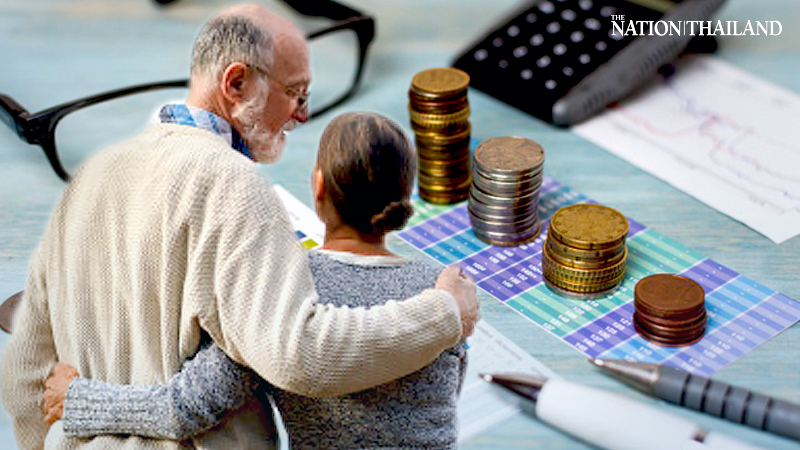
More than 3.1 million Americans ages 55 or older plan to apply for Social Security benefits earlier than they once thought because of the pandemic, according to the Census Bureau.

That’s offset by 1.4 million people in the same age group who anticipate working longer due to the impact of covid-19, according to the bureau’s latest Household Pulse survey conducted between March 3-15.

The upshot is a net 1.7 million early retirements, which will likely mean more positions opening up for younger Americans. Older workers — the so-called baby boomers’ born in the two decades after World War II — have accounted for essentially all of the more than 17 million jobs created in the U.S. since 2000.

“In a good economy, older workers can work and claim later; in a bad economy, older workers are pushed out into the arms of Social Security,” said Teresa Ghilarducci, professor of economics at the New School for Social Research. “Claiming early means a lifetime permanent cut in monthly benefits for you and your spouse and survivors.”

The shift may prove especially significant for some regions. In the New York City metro area, for example, a net 300,000 people expect to apply earlier for Social Security, according to the Census Bureau.

That could add to other evidence suggesting an exodus from New York — even though home sales in Manhattan are now booming after a slump in 2020 — and point to demographic changes ahead. A 2018 study of retired municipal employees by the city’s Independent Budget Office found that more than one-quarter left the state.

“In this bad economy caused by a disease that hit older New Yorkers hard, I’m not surprised older people are paying a high financial cost to leave the workforce and claim Social Security early,” said Ghilarducci. A drop in spending by that age group will slow the city’s economy, she said.

None of the country’s other 15 biggest metro areas came close to the New York numbers. The next-highest figures in the Census Bureau survey were Philadelphia, with a net 85,000 people planning earlier retirement, and Chicago with 68,000.

The Census survey also found that white Americans, who typically have a larger amount of accumulated wealth, were more likely to be planning to bring forward their retirement because of the pandemic.

Yellen declares end to Trump’s global retreat, eyes tax deal #SootinClaimon.Com

#SootinClaimon.Com : ขอบคุณแหล่งข้อมูล : หนังสือพิมพ์ The Nation.

https://www.nationthailand.com/news/30404569

Yellen declares end to Trump’s global retreat, eyes tax deal

InternationalApr 06. 2021

By Syndication Washington Post, Bloomberg · Saleha Mohsin, Christopher Condon

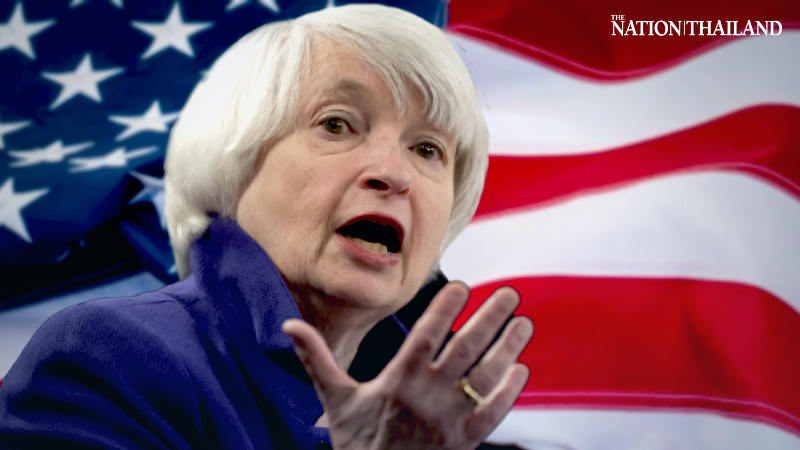
Treasury Secretary Janet Yellen outlined the case for a harmonized corporate tax rate across the world’s major economies, part of an effort to restore global leadership and credibility with U.S. allies following the unilateralist approach of the Trump era.

In her first major speech on international economic policy, Yellen marked an American return to the “global stage.” She singled out China as she said that the US. needs a “strong presence in global markets” to level the playing field.

“America first must never mean America alone,” she said in remarks to a conference Monday ahead of the spring meetings of the International Monetary Fund and World Bank. “A lack of global leadership and engagement makes our institutions and economy vulnerable.”

Yellen criticized the strategy of President Donald Trump’s administration, decrying four years when the U.S. “isolated ourselves and retreated from the international order that we created.”

The new multilateral approach begins with the U.S. taking a leading role in working with Group of 20 nations to find an appropriate minimum corporate tax. Yellen wants to halt what she described as an international “race to the bottom” by countries competing to lure corporations with lower taxes.

– – –

The U.S. is involved in talks led by the Organization for Economic Cooperation and Development with about 140 countries to develop a global agreement on minimum levies, but participants haven’t yet reached a deal.

Yellen is participating in her first round of meetings as Treasury secretary during the spring IMF and World Bank meetings, being held virtually this year.

During the week, she will meet with finance ministers to discuss climate change, finalize a boost to IMF resources to help poor nations cope with covid-19, President Joe Biden’s “Made in America tax Plan,” and attend bilateral meetings, including with her Canadian counterpart.

“Competitiveness is about more than how U.S.-headquartered companies fare against other companies in global merger-and-acquisition bids,” Yellen said in her remarks to the Chicago Council on Global Affairs. “It is about making sure that governments have stable tax systems that raise sufficient revenue to invest in essential public goods and respond to crises, and that all citizens fairly share the burden of financing government.”

– – –

The Treasury chief also called on other major economies “to continue a strong fiscal effort and avoid withdrawing support too early, to promote a strong recovery and help avoid the emergence of global imbalances.”

She highlighted the Biden administration’s plans for sustained economic support, with a $2.25 trillion infrastructure plan following the $1.9 trillion pandemic-relief bill signed last month. She said 130 million relief payments have now been sent to individuals and families.

Four years ago, then-President Donald Trump’s newly sworn-in Treasury secretary, Steven Mnuchin, shocked American allies during the administration’s first international meeting with an approach so unilateral that it extended to outright disengagement.

Mnuchin barely spoke a word during closed-door sessions in his first meetings with Group of 20 finance ministers in March 2017, held in Germany. He spoke up during a plenary session just once — to urge the group to set aside any vows to avoid protectionism.

– – –

Yellen’s speech demonstrates a major about-face. “Credibility abroad begins with credibility at home,” she said Monday.

Yellen also declared that the U.S. would lead a charge against global poverty, beginning with efforts to stamp out Covid-19 in developing countries and helping their economies recover from it. And she again cast the goal as one that aligned not only with U.S. values, but its interests, as well.

Yellen said failure to help poorer countries get past the pandemic “would be a profound economic tragedy.””What’s less obvious — but equally true — is that this divergence would also be a problem for America,” she added. “With few exceptions, stable and prosperous economies tend to be less of a security threat to the United States.”

Yellen warns that slow vaccine rollout in poor countries poses threat to U.S., global economies #SootinClaimon.Com

#SootinClaimon.Com : ขอบคุณแหล่งข้อมูล : หนังสือพิมพ์ The Nation.

https://www.nationthailand.com/news/30404568

Yellen warns that slow vaccine rollout in poor countries poses threat to U.S., global economies

InternationalApr 06. 2021

By The Washington Post · Jeff Stein

WASHINGTON – Treasury Secretary Janet Yellen on Monday called for speeding up the distribution of the coronavirus vaccine in poorer nations, arguing the U.S. and global economies are threatened by the impact of covid-19 on the developing world.

While the United States and other rich countries are hoping for a return to normalcy as soon as this fall, many parts of the developing world are not on pace to have widespread vaccination of their populations until 2023 or 2024. Those countries have largely suffered more devastating economic impacts from covid, in part because they do not have the fiscal capacity to authorize the levels of emergency spending approved in the United States.

In prepared remarks Monday to the Chicago Council on Global Affairs ahead of meetings this week of international finance officials, Yellen called on richer countries to step up both economic and public health assistance to poorer nations reeling from covid. She noted as many as 150 million people across the world risk falling into extreme poverty as a result of the crisis.

“This would be a profound economic tragedy for those countries, one we should care about. But, that’s obvious. What’s less obvious – but equally true – is that this divergence would also be a problem for America,” Yellen said. “Our first task must clearly be stopping the virus by ensuring that vaccinations, testing and therapeutics are available as widely as possible.”

Still, Yellen’s calls for a forceful global effort face significant head winds. The Biden administration has so far resisted pressure to change intellectual property rules in a way that would allow more countries to produce coronavirus vaccines. Democratic members of Congress and some global health experts have warned that refusing to do so could make it harder to vaccinate billions of people in poorer countries such as Africa and parts of South America and Asia.

Meanwhile, Republican opposition has intensified in recent weeks to several of Yellen’s global initiatives. GOP lawmakers have in particular criticized Yellen’s push for a new international minimum tax, as well as her support for foreign emergency aid through the International Monetary Fund.

Yellen’s remarks come at a pivotal juncture for her ambitious international agenda. In a reversal from the decision of the Trump administration, the Treasury Department under Yellen will this month authorize a new allocation of an emergency form of aid to developing nations known as “Special Drawing Rights.”

This form of international aid, which does not need congressional approval, would allocate a special currency reserve through the IMF to dozens of countries across the globe. That special currency could then be traded to the United States in exchange for dollars, which would help distressed foreign countries shore up their financial reserves.

The move has sparked a backlash on Capitol Hill, where Sens. Patrick J. Toomey, R-Pa., and John Kennedy, R-La., criticized the measure as “inappropriate, ineffective, and a wasteful use of taxpayer dollars” that would benefit both countries who do not need help and foreign adversaries such as China and Iran. The Treasury Department responded that the United States would retain the right not to purchase SDRs from foreign countries, such as those being sanctioned by the U.S. The department also said there would be no budget cost to the United States from the initial allocation of SDRs.

On top of these efforts, Yellen is also pushing for an agreement through the Organization for Economic Co-operation and Development on a new global minimum tax. That effort aims to put a floor on taxes internationally to stop corporations from playing nations off each other. Treasury officials have eyed an agreement on international taxes as early as this summer. The Biden administration has cited the effort as central to its proposed international tax hikes, which form a key element of how the White House plans to pay for its $2 trillion jobs and infrastructure proposal.

The Biden administration’s global tax push has also been extensively criticized by Republicans, who worry the United States will allow European countries to tax profitable American tech companies with no significant domestic benefit. “My big concern is that – as part of their desire to be on a ‘let’s be friends’ parade – the Biden administration will give away too much,” Douglas Holtz-Eakin, president of the center-right American Action Forum and a former director of the Congressional Budget Office, previously said.

Yellen cited the need for international action on an additional range of issues, including climate change, a digital divide that has exacerbated global inequality, and the danger posed by cybersecurity attacks.

President Joe Biden’s treasury secretary compared the daunting task to the 1944 Bretton Woods conference, which established the IMF and the basic framework of the global financial system following the devastation of World War II.

“Though it was a different time, I empathize with the enormous weight they faced; the pressure to come together after a global catastrophe in building an enduring and interconnected system aimed at promoting peace and prosperity throughout the world,” Yellen said. “Our current juncture is no less significant.”

Supreme Court vacates ruling barring Trump from blocking Twitter critics, saying case is moot #SootinClaimon.Com

#SootinClaimon.Com : ขอบคุณแหล่งข้อมูล : หนังสือพิมพ์ The Nation.

https://www.nationthailand.com/news/30404566

Supreme Court vacates ruling barring Trump from blocking Twitter critics, saying case is moot

InternationalApr 06. 2021Donald TrumpDonald Trump

By The Washington Post · Robert Barnes

WASHINGTON – The Supreme Court on Monday vacated a lower court opinion that said President Donald Trump could not block critics from his Twitter feed, which since has been suspended by the company.

The U.S. Court of Appeals for the 2nd Circuit in New York had ruled that because the president had used the forum to regularly communicate with the public, he could not block critical individual users. The case held implications for how elected officials nationwide interact with constituents on social media.

But Trump lost reelection, and Twitter canceled his account, leading the Supreme Court to tell the lower court to vacate the judgment and dismiss the case as moot.

There were no noted dissents from the order, but Justice Clarence Thomas wrote separately to say the court at some point will need to examine the power of tech media companies.

It is “unprecedented,” Thomas wrote, to have “control of so much speech in the hands of a few private parties. We will soon have no choice but to address how our legal doctrines apply to highly concentrated, privately owned information infrastructure such as digital platforms.”

Thomas said it was true that some aspects of Trump’s account “resemble a constitutionally protected public forum.” But he said the real work for government might be to limit the ability of social media companies to remove users.

“If the aim is to ensure that speech is not smothered, then the more glaring concern must perforce be the dominant digital platforms themselves,” Thomas wrote. “As Twitter made clear, the right to cut off speech lies most powerfully in the hands of private digital platforms.”

The Justice Department had asked the Supreme Court to declare the case moot.

Because “the @realDonaldTrump account belongs to Mr. Trump personally, he will continue to have control over that account after his term of office has ended, subject to Twitter’s terms of service,” the department said in a brief. “After the inauguration, though, Mr. Trump will no longer be a party to this case, because respondents sued him only in his official capacity.”

Twitter suspended the account on Jan. 8, two days after a mob of Trump supporters stormed the U.S. Capitol in a bid to reverse his election defeat by stopping lawmakers from tallying electoral-college votes.

The organization that brought the lawsuit, the Knight First Amendment Institute at Columbia University, requested that the Supreme Court not disturb the lower court ruling, but it said the point has been made.

“This case was about a very simple principle that is foundational to our democracy: Public officials can’t bar people from public forums simply because they disagree with them,” said Jameel Jaffer, the Knight Institute’s executive director, who argued the case before the Second Circuit.

“While we would have liked the Supreme Court to leave the Second Circuit’s ruling on the books, we’re gratified that the appeals court’s reasoning has already been adopted by other courts, and we’re confident it will continue to shape the way that public officials use social media.”

The case had been renamed Biden v. Knight First Amendment Institute.

China pushes vaccine on bankers, colleges to catch up with U.S. #SootinClaimon.Com

#SootinClaimon.Com : ขอบคุณแหล่งข้อมูล : หนังสือพิมพ์ The Nation.

https://www.nationthailand.com/news/30404565

China pushes vaccine on bankers, colleges to catch up with U.S.

InternationalApr 06. 2021

By Syndication Washington Post, Bloomberg

China is ramping up its covid-19 vaccination push, aiming to be twice as fast as the U.S. by pressuring Communist Party members, bank workers and college staff to get shots, as the lagging rollout threatens to undermine the advantage it secured by effectively wiping out the virus.

The inoculation effort has been stepped up markedly in recent weeks, with China now administering an average of 5 million doses a day from less than a million at the start of the year. While a significant increase, that translates to five doses for every 100 people, compared to 25 in the U.S. and 56 in Israel, according to Bloomberg’s vaccine tracker.

Like other countries in the Asia-Pacific region that have quashed the coronavirus, China is facing significant hurdles in its vaccination drive, as people don’t see the same urgent need to get inoculated as those in places still battling covid-19. However, the prospect of other countries — particularly geopolitical rivals like the U.S. — achieving herd immunity and reopening their economies and borders sooner is hardening the resolve to speed up vaccinations in China.

“It will challenge the success of China’s covid response if developed countries are reopening to each other and China still tries to contain the virus from coming in,” said Yanzhong Huang, director of the Center for Global Health Studies at New Jersey’s Seton Hall University.

The Chinese Center for Disease Prevention and Control upped its vaccination target earlier this month, and now aims to get as many as 560 million people, or 40% of its vast population, injected by the end of June. That means China will need to give out some 460 million doses in the next three months — more than two times as much as the goal stated by U.S. President Joe Biden for roughly the same timespan.

Just as some in the U.S. are eligible for doughnuts after vaccination, part of China’s approach to get people to vaccinate involves dishing out freebies.

One poster in downtown Beijing, for example, says that residents over 60 are eligible for a basket of eggs after getting vaccinated. The city’s Daxing district, home to major technology companies, is luring residents by offering shopping coupons. On one such voucher, slogans encourage people to heed the call to get vaccinated to secure the ultimate covid victory.

Accompanying the accelerated rollout is also a hardening propaganda campaign that increasingly links vaccination to maintaining national pride and China’s place on the world stage.

“Injecting the coronavirus vaccine is not simply an option, it is the responsibility and duty of every Chinese citizen,” according to a news anchor on a program broadcast on state broadcaster CCTV last week. “If we do not rely on vaccinations to consolidate our hard-earned strengths in fighting the virus, we could suddenly slide from commanding heights to troughs.” The news clip has been distributed widely by community workers on chat groups to convince people to get vaccinated.

To achieve its goals, China is calling on its 92 million Communist Party members, plus tens of millions of people employed at state-owned companies.

Some party members have been summoned to meetings where they’ve been told to get shots as soon as possible to set an example, according to people familiar with the matter. At one such meeting in Beijing, cadres were told they had to get vaccinated unless they got a medical exemption.

Employees of at least three state-owned banks and at least one major university who would not speak on the record said that staff have been repeatedly urged to get vaccinated, and had to provide an official reason if they declined.

The information office of China’s State Council didn’t respond to requests for comment. The State-owned Assets Supervision and Administration Commission, or SASAC, which oversees China’s government-run companies, didn’t immediately respond to a fax seeking comment.

“We’ve seen populations of entire cities queue up and be tested within a few days, and the same kind of infrastructure could be used for mass vaccination,” said Benjamin Cowling, head of epidemiology and biostatistics at the University of Hong Kong.

Indeed, China has experience in getting vaccination on such a large scale accomplished in the past. In 2010, the government launched a measles inoculation blitz, giving out 100 million doses to children around the country in 10 days to quell a resurgence in the disease.

The question is whether the current approach, comprising of small incentives and societal and peer pressure, can get China’s vaccination numbers sufficiently high enough in the face of widespread vaccine hesitancy.

Observers expect officials may need to escalate incentives, for example using punitive measure like restricting the movement of people who haven’t been inoculated.

Cowling said that the government could further link vaccination status with the existing health code system, which allows vaccinated people to travel more easily and perhaps be exempt from some quarantine policies.

Some local officials are already escalating measures: a city in Hainan province put out posters warning that if people didn’t get vaccinated they would be blacklisted, and barred from public transport, receiving government subsidies and other benefits. The city government later apologized for the harshness of the notice and rescinded the rules.

Lin Liwei, 35, a migrant worker in Beijing, is waiting to receive her second dose of the vaccine. Lin fears that she wouldn’t be allowed to board a train to return home to Inner Mongolia if she isn’t inoculated.

“If you’re not vaccinated, you’re out,” said Lin.

For the time being, the government is still waiting to see how far the existing approach can get them in the vaccination drive, said Seton Hall’s Huang. It could ultimately move to make vaccines compulsory, as some other countries like Indonesia have done.

“I don’t think China would mind eventually making vaccination mandatory considering they have implemented far more draconian measures,” said Huang. “As long as you have the vaccine supply and the ability to widely administer shots, it won’t be a problem to make vaccination an obligation.”