For investors fretting about an end to the era of cheap and plentiful debt, China just provided another reason to worry.
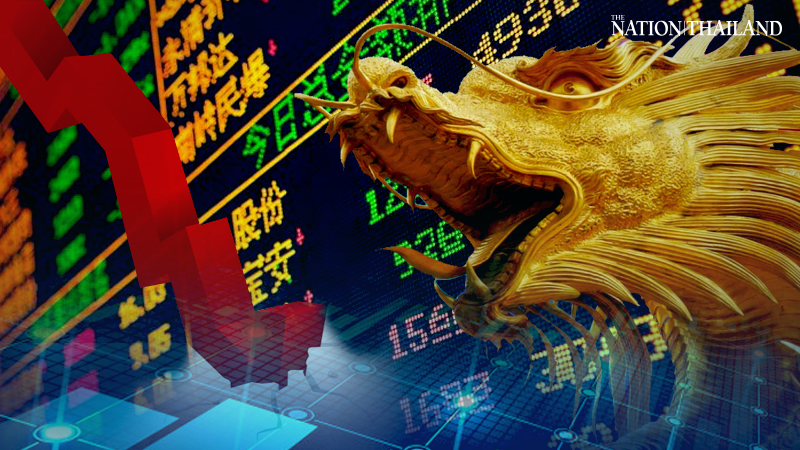
The nation’s top banking regulator jolted markets on Tuesday with a warning about the need to reduce leverage amid the rising risk of bubbles globally and in the local property sector. The impact on Chinese stocks was swift: the CSI 300 index fell as much as 2.1% to lead declines in Asia, while Kweichow Moutai, the biggest contributor to gains during 2020’s stimulus cycle, tumbled almost 5%. China’s largest stock has lost more than $100 billion in nine days.
Central banks around the world are facing the challenge of when and how to pare back stimulus as economies recover from the pandemic. Global bond markets plunged last week as traders pulled forward bets on interest rate increases, with the 10-year Treasury yield reaching the highest in a year.
Deleveraging has particular resonance in China, where it is a key priority of President Xi Jinping due to the size of the nation’s debt mountain. A crackdown on leverage in 2017 sent corporate and government bond yields to multiyear highs before officials halted the drive a year later amid the intensifying trade war with the United States.
Guo Shuqing, chairman of the China Banking and Insurance Regulatory Commission and Party secretary of the central bank, did not mince his words. “From a banking and insurance industry’s perspective, the first step is to reduce the high leverage within the financial system,” Guo said at a briefing in Beijing. Speculation in the property market is “very dangerous” and bubbles in U.S. and European financial markets may soon burst, he said.
“His talk shows a willingness to tolerate higher rates,” said Zhiwei Zhang, chief economist at Pinpoint Asset Management in Hong Kong. “This is a confirmation of monetary-policy stance tightening. That’s important.”
A stronger economy and signs of excess have provoked stronger rhetoric from Beijing in recent weeks. The People’s Bank of China said in its latest monetary policy report that it will balance the need to support growth and prevent risk. A front-page report in state media last week said the economy is strong enough to withstand policy normalization. In January, the central bank engineered the biggest cash squeeze since 2015, after an adviser suggested a shift away from stimulus.
Debt was about 280% of China’s gross domestic product in November, the highest ratio since Bloomberg started compiling the data in 2014.
Beijing is set to unveil its major economic goals on Friday, when the National People’s Congress, China’s rubber-stamp parliament, convenes for its yearly meeting. While officials have stressed that changes in policy would be gradual, China’s monetary policy conditions “will visibly tighten this year,” Li-Gang Liu, managing director and chief China economist at Citigroup wrote in a report this week.
The prospect that China will tighten funding conditions is derailing gains in the country’s most popular stocks. Liquor makers such as Moutai are hardest hit because they are widely owned and command some of the highest valuations. The CSI 300 index – which in February briefly topped its record close from 2007 – has lost 7.9% since mainland markets reopened after the new Lunar New Year.
Authorities are juggling curbing leverage while maintaining economic growth before the Communist Party’s 100-year anniversary this year. The central bank has calmed interbank funding markets since January, when short-term rates spiked to the highest since 2015.
“Deleveraging and financial risk mitigation will both stay in policy focus in 2021,” said Tianhe Ji, a strategist at BNP Paribas in Beijing.
Chip machinery makers emerge as biggest winners in supply crunch
InternationalMar 03. 2021A 300-millimeter silicon wafer at the Globalfoundries semiconductor fabrication plant in Dresden, Germany, on Feb. 11, 2021. MUST CREDIT: Bloomberg photo by Liesa Johannssen-Koppitz
By Syndication Washington Post, Bloomberg · Jeran Wittenstein
The sudden shortage of semiconductors disrupting auto production and limiting revenue growth for Apple Inc. has created a stock market boon for the makers of chip production equipment.
Those companies have emerged as the biggest winners from the supply crunch as chipmakers rush to add more factory capacity. Applied Materials Inc., the world’s biggest equipment maker, has seen its shares advance about 40% this year, making it the best performer in a semiconductor index. Brooks Automation Inc., Lam Research Corp. and KLA Corp. are each up more than 23% over that span, nearly twice the gain in the Philadelphia semiconductor index. The stocks edged lower on Tuesday during early trading in New York.
Expanding equipment budgets by major chipmakers and governments concerned about foreign dominance of production facilities are giving Wall Street increasing confidence that the rally has staying power.
“Over the next three to five years, this is definitely very bullish for semicap equipment in terms of overall tightness and focus on domestic supply,” said Krish Sankar, an analyst with Cowen & Co.
The shortfall is a problem that seemed unthinkable a year ago when a rapidly spreading Covid-19 virus sent economic activity plummeting as companies began efforts to reduce production in anticipation of ebbing sales. Instead, after an initial shock, sales in many industries surged and companies scrambled to boost inventories. Many chipmakers are now producing at maximum capacity and governments are suddenly looking at a dearth of homegrown plants as a national security risk.
President Joe Biden signed an executive order last week to review the country’s supply chains for semiconductors and other products. While there aren’t expected to be any quick fixes, industry watchers say the long-term trend is clear: more equipment will be needed.
“The semiconductor industry is running on all cylinders, and you’re seeing companies that might in the past have been reluctant to commit to capex (capital expenditures) now all of a sudden trying to ramp up as quickly as they can,” said Daniel Morgan, a senior portfolio manager with Synovus Trust Co., which owns shares of Applied Materials.
Taiwan Semiconductor Manufacturing Co., which produces chips for Apple and Broadcom Inc., plans to spend $12 billion to construct a plant in Arizona. Some of the costs for that facility were included in the company’s capital spending plans for 2021 that sparked a rally in chip related stocks around the world in January. Broadcom’s capital outlays could total as much as $28 billion, up from $17 billion in 2020.
Huge manufacturers like Taiwan Semi building smaller plants in new regions creates particularly attractive opportunities for Applied Materials, Chief Executive Officer Gary Dickerson said on the Santa Clara, California-based company’s earnings call last month.
“You have to look at the scale of the factories they’re building and at least what’s been announced is smaller scale,” he said. “That somewhat less efficient factory size is a positive for Applied.”
In addition to Applied Materials, top picks for Cowen’s Sankar include Lam Research and MKS Instruments Inc.
“You have an environment where demand is very strong, supply is constrained and then you add to it domestic supply build out,” the analyst said in an interview. “At some point these things will normalize, but it won’t be anytime soon.”
For U.S. politicians, China’s potential to dominate sensitive cutting-edge technologies poses one of the biggest geopolitical threats of the next few decades. President Xi Jinping is similarly worried the U.S. will block China’s rise, and this week will unveil plans for greater self-sufficiency.
At an annual session of China’s legislature, top Communist Party leaders will approve a five-year policy blueprint to cut dependence on the West for crucial components like computer chips while also making big bets on emerging technologies from hydrogen vehicles to biotech. The push to mobilize trillions of dollars could help China surpass the U.S. as the world’s biggest economy this decade and cement Xi’s goal of turning the nation into a superpower.
“The most important thing is the magnitude of the ambition — this is bigger than anything Japan, South Korea or the U.S. ever did,” said Barry Naughton, a professor at the University of California, San Diego, and one of the world’s top researchers on China’s economy. “The ambition is to push the economy through the gateway of a technological revolution.”
The race to develop the most advanced technology is stoking U.S.-China tensions following decades of integration that raised living standards around the globe. Now both countries are aiming for self-sufficiency in strategic areas, each fueled by fear the other wants to upend their political system: One that sees free speech and democracy as essential to prosperity, and another that puts one-party rule above individual liberty to deliver economic growth.
At stake for Xi is more than just improving the lives of China’s 1.4 billion people, which is key to the Communist Party’s justification for effectively banning political opposition. He also wants to show the party can play a successful role in guiding the economy, particularly after former President Donald Trump’s administration sought to undermine its legitimacy to rule and destroy national champions such as Huawei Technologies and Semiconductor Manufacturing International, China’s largest microchip manufacturer.
Beijing’s confidence in its political system has grown after it quickly contained Covid-19 following delays by local officials in sharing information that allowed it to spread around the globe. Economists predict China’s economy will expand 8.3% this year, compared with 4.1% in the U.S. “The pandemic once again proves the superiority of the socialist system with Chinese characteristics,” Xi said last year. On Monday, he called the party’s “glorious traditions” a “precious spiritual treasure.”
But the U.S. is now looking for allies to help thwart Xi’s aspirations, both through denying Beijing access to key technology and shoring up its own supplies of strategic goods. Last week, President Joe Biden announced a wide-ranging supply-chain review of semiconductors, pharmaceuticals, rare-earth metals and high-capacity batteries, part of a broader plan to out-compete China that includes $2 trillion in infrastructure spending.
“If we don’t get moving, they’re going to eat our lunch,” Biden told reporters in February after holding his first call with Xi. EU Trade Commissioner Valdis Dombrovskis separately highlighted concerns that Beijing was giving unfair advantages to Chinese companies, telling Bloomberg Television last month that the bloc would cooperate with the U.S. on challenges stemming “from the socio-economic model of China.”
Global investors are closely watching the National People’s Congress session, which starts Friday and runs for about a week. While the Communist Party has shown it can quickly channel billions of dollars to control the supply chains of emerging sectors like solar power and electric vehicles, it has also swiftly reined in the private sector if risks escalate — seen most recently by the 11th-hour halt of an initial public offering by billionaire Jack Ma’s Ant Group.
Premier Li Keqiang will outline plans Friday to keep the economy humming over the next 12 months, which may include fresh measures to boost consumption even as he stops short of giving an official growth target for a second straight year. Perhaps more importantly, the legislative session will also reveal details of longer-term plans to develop more than 30 “choke-hold” technologies China currently can’t produce, from chipmaking equipment to mobile-phone operating systems to aircraft design software.
The focus on technology is more urgent due to the waning efficiency of China’s economic model, which has relied on channeling credit into property investment and infrastructure to shore up growth. Yet with housing sales peaking as urbanization slows and local governments struggling to find viable infrastructure projects, Beijing must leverage technology to boost productivity in order to meet a 2035 target of doubling the size of its economy from 2020 levels.
One key number to watch is spending on research and development: Authorities are expected to reveal a target that will match or exceed U.S. annual spending of around 3% of gross domestic product. More will be allocated to state-funded research, with China’s Science and Technology Ministry announcing priority areas such as hydrogen energy, electric vehicles and supercomputing.
From 2014 to 2019, China’s government raised at least 6.7 trillion yuan ($1 trillion) in a series of venture-capital funds to take stakes in hi-tech companies, according to estimates from Naughton. China has already announced plans to invest $1.4 trillion from 2020 to 2025 in high-tech infrastructure, from artificial intelligence to 5G base stations to high-speed rail.
“If that does end up paying off and Xi Jinping is able to engineer a more centrally steered growth model, then China will overcome the long list of challenges that it’s facing domestically,” said Jude Blanchette, a researcher at the Center for Strategic and International Studies in Washington. “If the state-led model is as unproductive as many think it is, then China will have wasted a generation’s capital pursuing a dream of centrally planned technological innovation.”
China’s record of success is mixed. An example of what Beijing has in mind is biotech, which barely existed in China a decade ago and was earmarked as a “strategic industry” in the most recent five-year plan. From 2016 to 2020, the market capitalization of publicly listed Chinese companies developing innovative drugs rose from $1 billion to $217 billion, according to McKinsey. In 2019, the first China-developed cancer treatment was approved in the U.S.
The main area in which China has struggled is chipmaking, with its top companies still at least five years behind global rivals. China’s five-year plan will include measures to boost financing for semiconductors, treating the sector with the same kind of priority it once accorded to building its atomic capability, Bloomberg News reported in September.
But there’s no guarantee it will work — and the avalanche of state-directed investment risks spawning bad debt that destabilizes China’s economy. A taste of such a possibility came last year, when state-owned Tsinghua Unigroup, whose investments in chip production failed to pay off, roiled financial markets by defaulting on $2.5 billion of debt.
To reduce waste, Beijing has signaled that it would continue to rely predominately on private companies to meet its technology goals through tax breaks, direct investment in startups and minority stakes in promising but financially troubled companies. Beijing also wants more investment from foreign companies such as Tesla, as long as they help meet the goal of upgrading China’s technology.
While the West sees Xi’s ambitions as a threat, Beijing’s push to achieve self-sufficiency is mainly a defensive move by the Chinese Communist Party, according to Meg Rithmire, an associate professor at Harvard Business School.
“If the CCP thought there were no dark storm clouds on the horizon,” she said, “I don’t think they would be taking such a heavy hand. It’s a risk-management mindset.”
Historic roundup of Hong Kong opposition draws defiant protest
InternationalMar 02. 2021Pro-democracy activist Benny Tai arrives at Ma On Shan police station in Hong Kong on Feb. 28, 2021. MUST CREDIT: Bloomberg photo by Lam Yik
By Syndication Washington Post, Bloomberg · Chloe Lo, Kari Lindberg, Natalie Lung
Defiant Hong Kong protesters risked arrest outside a local court in the biggest demonstration in months, as dozens of the city’s most prominent pro-democracy activists were jailed on subversion charges and authorities in Beijing moved to limit the opposition’s role in future elections.
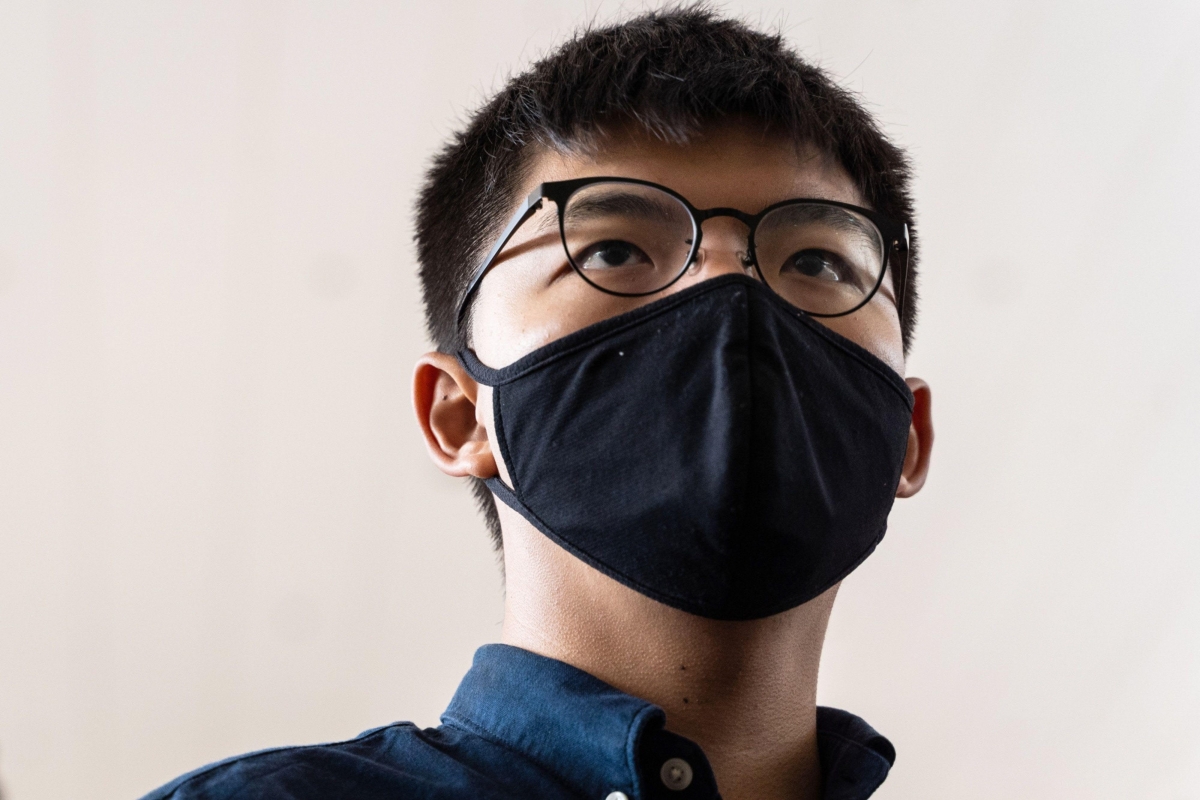
The arrests of 47 opposition figures including key protest organizers Joshua Wong, Benny Tai and Jimmy Sham over their roles in an informal election primary last year represented the most sweeping use of the national security law imposed by China last year. The assembled activists appeared in a mass hearing Monday before Chief Magistrate Victor So.
The proceedings drew hundreds of supporters outside the courthouse in the West Kowloon area. Not only did participants risk arrest by attending an unauthorized rally, some chanted “Liberate Hong Kong! Revolution of our time!” — a slogan banned by authorities since the security law’s enactment.
“I’m here to support our comrades,” said Kwan Chun-sang, a district councilor. “As long as this breath lasts, I’ll fight until the end.”
Pro-democracy demonstrators make the gesture for the “Five demands, not one less” motto outside the West Kowloon Magistrates Courts in Hong Kong on March 1, 2021. MUST CREDIT: Bloomberg photo by Paul Yeung
In another court in the same complex, a handful of other prominent activists — including Martin Lee, Hong Kong’s so-called Father of Democracy, and media tycoon Jimmy Lai — were being tried on separate charges over their roles in an unauthorized rally.
The latest charges were condemned by the U.S. and the European Union, with Secretary of State Antony Blinken calling for the “immediate release” of the activists. The security law case was just one of several moves by authorities to clamp down on the opposition ahead of a legislative election planned for later this year, after being delayed in September.
The move comes ahead of China’s annual legislative session, with senior Chinese officials calling for an overhaul of Hong Kong’s election system that could further reduce the already-limited influence of pro-democracy politicians. Xia Baolong, the head of the Chinese agency responsible for the city, is meeting Hong Kong officials over the mainland border in Shenzhen to discuss electoral changes.
“The decision to charge these people also suggests that the government wants to do real and lasting damage to the political opposition in Hong Kong, above and beyond the 2021 election cycle,” said Thomas Kellogg, executive director of the Georgetown Center for Asian Law. “It may be that we’re seeing the end of formal opposition politics in the SAR, which would be a real shame,” he said referring to Hong Kong’s status as a special administrative region.
Pro-democracy activist Joshua Wong in Hong Kong. MUST CREDIT: Bloomberg photo by Chan Long Hei
Beijing is tightening control over the Asian financial center after a wave of historically large and sometimes violent democracy protests in 2019. The national security law carries sentences as long as life in prison depending on the severity of the offense, and has been criticized by lawyers, rights groups and international governments as a violation of Beijing’s promise to respect Hong Kong’s freedoms and “high degree of autonomy.”
The opposition figures detained Sunday are being prosecuted over their roles in helping organize a primary that drew more than 600,000 voters in July to choose candidates for Legislative Council elections. Authorities say the primary, as well as plans to force the resignation of Hong Kong Chief Executive Carrie Lam using a provision of the mini-constitution, were part of an illegal attempt to paralyze the city’s government.
The election was eventually postponed by a full year, with the government citing the coronavirus. Critics said the pro-China local administration hoped to avoid a repeat of an election defeat in local district council polls in late 2019.
The charge facing Wong, who testified before the U.S. Congress during the protests, was the first for him under the national security law. He is already serving a sentence of more than a year in prison handed down in December for a separate charge related to a protest in 2019.
Authorities didn’t charge American lawyer John Clancey, who was involved in the primary and was among those arrested in January. He told reporters after having his bail extended Sunday that he was asked to report to the police again in early May.
Former Legislative Council President Rita Fan told officials at the Shenzhen meeting that district councilors should be barred from the 1,200-person committee that selects the chief executive, according to the Standard newspaper. The 2019 victory for democracy advocates in 17 of 18 local district councils gave the opposition around 117 seats on that committee, giving them a better chance of blocking Beijing’s choice to lead the city.
“The central government is really worried about the elections,” said Dongshu Liu, a City University of Hong Kong assistant professor of Chinese politics, adding that the plan to force Lam’s resignation alarmed Beijing. “The central government was really shocked that they seemed to be likely to succeed.”
While almost 100 people have been arrested under the new law, prosecutors had previously only brought charges against 10 of them. The most prominent is media mogul Lai, who has been denied bail and is awaiting trial on charges that he colluded with foreign powers to impose sanctions or engage in hostile activities against Hong Kong or China.
“People just want to express their wish on how the pro-democracy camp can get more seats in the Legislative Council, but they’re being accused of ‘subversion,'” District Councilor Angus Wong said outside the court. “The future of Hong Kong is very gloomy.”
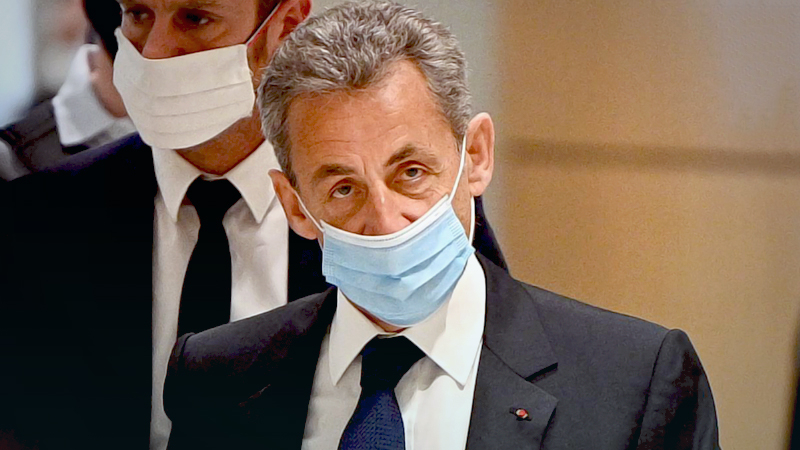
Former French president Nicolas Sarkozy was found guilty of corruption and influence peddling on Monday and sentenced to one year in prison, marking a historic defeat for the 66-year-old, who has remained popular among conservative voters even as his legal woes mount.
The verdict included a two-year suspended sentence, but Sarkozy’s attorney said her client would appeal, delaying the sentence from taking effect. Given that short prison sentences in France can typically be waived, it is unclear whether Sarkozy would have to spend any time in prison even if the appeal were to fail. He could also request to serve the sentence at home, subject to electronic monitoring.
The ruling followed years of parallel investigations against the former president, and some others are ongoing. Sarkozy, who was president from 2007 to 2012, will face another trial later this month over accusations that his party falsified accounts during his unsuccessful reelection bid in 2012.
The charges over which Sarkozy was sentenced Monday were centered on whether he was behind a deal with a magistrate to illegally receive information on an inquiry linked to him, using false names and unofficial phone lines.
According to the prosecution, Sarkozy and his then-attorney and longtime friend Thierry Herzog attempted to bribe the magistrate, Gilbert Azibert, by offering him a high-profile position in return for information. The incident occurred after Sarkozy had left office.
The inquiry related to claims that Sarkozy and others had accepted illegal contributions from business executive Liliane Bettencourt, the late heiress of French cosmetics giant L’Oréal, ahead of the 2007 presidential campaign. Sarkozy was later cleared of those illegal-funding charges.
Sarkozy’s attorneys also denied the accusations of corruption and influence peddling last year, arguing that as the magistrate did not receive the allegedly promised position, it proved the former president’s innocence.
Sarkozy said he “never committed the slightest act of corruption.”
The prosecution argued, however, that there were no doubts that the magistrate had conveyed details illegally. Their evidence was largely based on wiretapped conversations.
Azibert and Herzog also were found guilty on Monday and were given sentences similar to Sarkozy’s. Both have appealed, France’s public broadcaster reported.
Prosecutors had originally demanded a four-year sentence for Sarkozy, with a requirement that he serve at least two years. In justifying their request, they cited what they characterized as the damage Sarkozy inflicted on the French presidency.
In its ruling, the court agreed that Sarkozy had “used his status as former French president,” rendering his offenses more egregious.
Sarkozy attempted to run in the 2017 presidential election, but he did not succeed, partially because of his mounting legal woes.
He subsequently suggested that his career in politics had come to an end. But Sarkozy has maintained high approval ratings among French conservatives, prompting hope among some of his supporters that he might run in the presidential election next year. In a sign of Sarkozy’s continued influence in conservative French politics, he received some prominent backing on Monday.
“The severity of the sentence is absolutely disproportionate and reveals judicial harassment,” wrote Christian Jacob, president of the center-right Republican Party, which Sarkozy used to lead. Supporters also questioned why Sarkozy was subjected to wiretapping after he left office.
Investigators deemed those surveillance measures necessary amid mounting questions at the time over how Sarkozy funded his 2007 campaign. Sarkozy continues to face accusations that he received illegal payments from the regime of then-Libyan dictator Moammar Gadhafi ahead of the 2007 election.
Sarkozy is the second former French president in a decade to be sentenced. Jacques Chirac, Sarkozy’s predecessor and initial patron, was given a two-year suspended sentence in 2011 for handing nonexistent jobs to political allies during his time as Paris mayor.
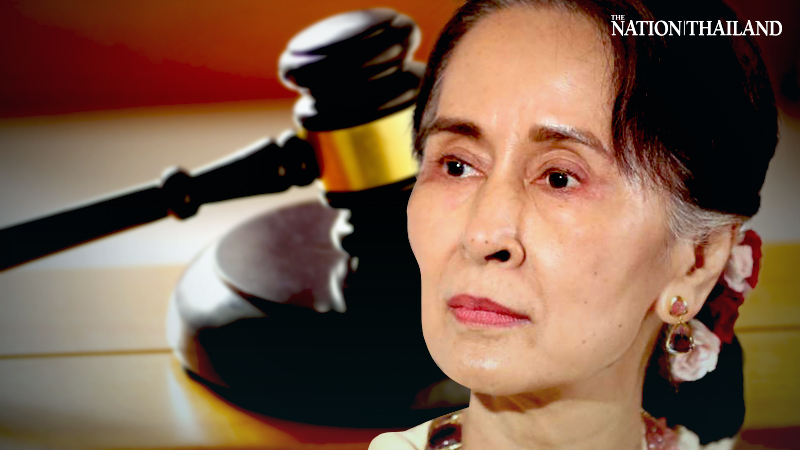
A Myanmar court on Monday brought additional charges against detained civilian leader Aung San Suu Kyi that could keep her behind bars for even longer, according to lawyers for her and her party.
The new charges came as Myanmar on Sunday saw its deadliest day of protests since the Feb. 1 coup. The United Nations said at least 18 protesters were killed in a stark escalation of violence to quell persistent demonstrations against military rule.
Suu Kyi, who is among more than 1,000 people detained since Feb. 1, already faces six years in prison on charges of illegally importing walkie-talkies and breaching the Natural Disaster Management Law. The charges added Monday include incitement under section 505(b) of the country’s penal code used by the authorities to criminalize speech “likely to cause fear or alarm in the public,” her lawyer Khin Maung Zaw said.
The court added another charge under the telecommunications law for owning equipment without the requisite licenses, Myanmar Now reported, citing lawyer Min Min Soe, who is defending Suu Kyi and other leaders of her National League for Democracy party. That charge could add a year to the ousted leader’s likely punishment.
Appearing via video link before a court in Naypyidaw, Suu Kyi appeared to be in good health, Khin Maung Zaw said, adding the new incitement charge was also applied to ousted President Win Myint and former Naypyidaw Council Chairman Myo Aung.
More than 30 others were wounded Sunday when soldiers and police fired live ammunition into crowds in six cities across Myanmar, UN Human Rights Office spokesperson Ravina Shamdasani said in a statement. Myanmar’s government said 12 people died.
The U.S., which has announced sanctions targeting Myanmar’s military leaders and called for a return to democracy, signaled that it plans to respond with further measures.
“We are preparing additional actions to impose further costs on those responsible for this latest outbreak of violence and the recent coup,” Jake Sullivan, President Joe Biden’s national security adviser, said in a statement. “We will have more to share in the coming days.”
The rising death toll may increase pressure on governments around the world to take more action against Myanmar’s generals, who refused to recognize November’s landslide election victory by Suu Kyi’s political party. A court in Myanmar’s capital, Naypyidaw, is set to hear cases against Suu Kyi and former President Win Myint later on Monday, Mizzima News reported.
“In shooting against unarmed citizens, the security forces have shown a blatant disregard for international law, and must be held to account,” said Josep Borrell, the EU’s high representative for foreign affairs. “Violence will not give legitimacy to the illegal overthrowing of the democratically elected government.”
Before last weekend, only three protesters had died among hundreds of thousands that have protested almost daily across the country, also known as Burma. Yet the country has become increasingly ungovernable as more people join the protest movement, leaving hospitals understaffed, containers stacking up at ports and bank ATMs running out of cash.
The Myanmar Police Force said that 571 protesters had been detained Sunday in 11 provinces after the UN Human Rights Office said more than 1,000 people had been “arbitrarily arrested” since the coup.
On Sunday night, Myanmar’s Foreign Ministry repeated that the military takeover was constitutional and said some foreign countries were “wrongly misinterpreting it as a coup and anti-dictatorship protests.” It added that the government was “ensuring minimal use of force by avoiding a violent crackdown.”
With the mass civil disobedience movement disrupting normal banking operations, the Central Bank of Myanmar began limiting cash withdrawals on Monday. Individuals will not be allowed to withdraw more than $1,406 (2 million kyat) from their bank accounts while businesses will be allowed to withdraw up to $14,186 (20 million kyat) a week, according to a directive signed by central bank Deputy Governor Than Than Swe.
The protests and work stoppages also took a toll on industrial activity, with the purchasing managers’ index for manufacturers plunging more than 20 points to a record low of 27.7 in February, IHS Markit said Monday. That’s well below the 50 level that divides between expansion and contraction territory.
The junta fired Myanmar’s UN envoy Kyaw Moe Tun on Saturday after he urged the international community a day earlier not to accept the military regime and instead recognize the results of the November general election.
Suu Kyi’s National League for Democracy plans to put together a parallel government that could engage with the international community, the Financial Times reported, citing a party official who is on the run.
Southeast Asian foreign ministers are arranging to meet this week to discuss the situation, Japan’s Kyodo news agency reported Saturday. It said most members of the 10-nation ASEAN group have expressed a willingness to join, and Myanmar has been asked to participate.
Five journalists were arrested on Saturday for reporting on anti-coup protests, according to Myanmar Journalists Network. One is reported to be a photojournalist with the Associated Press, the news agency said.
Myanmar’s violent crackdown is “outrageous and unacceptable, and must be immediately halted,” said Phil Robertson, deputy Asia director of New York-based Human Rights Watch. “Live ammunition should not be used to control or disperse protests and lethal force can only be used to protect life or prevent serious injury.”
By Syndication Washington Post, Bloomberg · Nick Wadhams
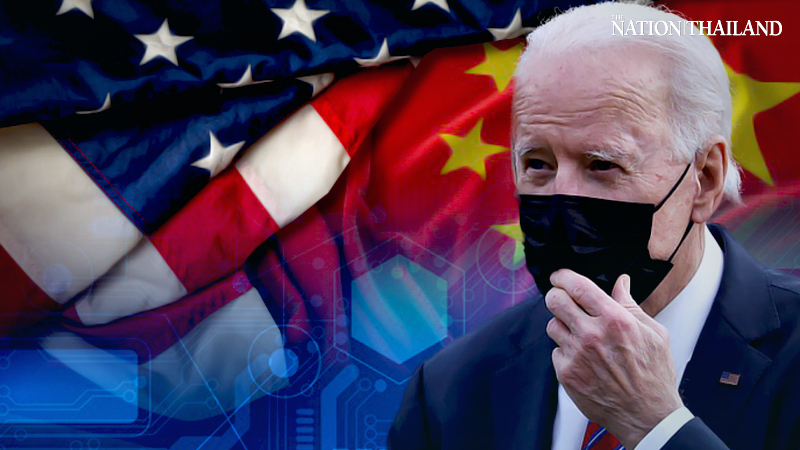
The Biden administration is moving to put semiconductors, artificial intelligence and next-generation networks at the heart of U.S. strategy toward Asia, attempting to rally what officials are calling “techno-democracies” to stand up to China and other “techno-autocracies.”
The new framing for the U.S. rivalry with China has been given added urgency by the sudden global shortage of microchips needed in products such as cars, mobile phones and refrigerators. The strategy would seek to rally an alliance of nations fighting for an edge in semiconductor fabrication and quantum computing, upending traditional arenas of competition such as missile stockpiles and troop numbers.
Current and former government officials, along with outside experts, say the administration’s plans in the technology sphere are a microcosm of its broader plans to take up a more alliance-oriented but still hostile approach to China after a more chaotic approach under President Donald Trump.
“There’s a newfound realization about the importance that semiconductors are playing in this geopolitical struggle because chips underlie every tech in the modern era,” said Lindsay Gorman, a fellow for emerging technologies at the German Marshall Fund of the U.S. “It’s an effort to double down on the technological comparative advantage that the U.S. and its democratic partners.”
It’s an approach partly based partly on denying China access to certain technology for as long as possible, looking to quash Chinese juggernauts like Huawei Technologies Co. and even taking a page from the Communist Party’s playbook by boosting government involvement in key industries when needed.
It comes as Chinese Communist Party leaders including President Xi Jinping are expected to lay out how they intend to make technology a centerpiece of future development at the National People’s Congress beginning later this week.
Several people familiar with the administration’s planning, and especially that of Kurt Campbell, the National Security Council’s Asia coordinator, say he foresees a broad approach that puts greater emphasis on a few key partners such as South Korea, Japan and Taiwan, while offering incentives to bring chip fabrication back to the U.S.
Chips figure in plans to bolster the Quad — a once-sputtering alliance of the U.S., Japan, Australia and India that got a boost of support during the Trump era — including by eventually bringing more technology production to South Asia.
The battle over microchips — and the focus they’re being given in the early days of the Biden administration — is being forced upon the new White House by necessity. A global shortage of chips, due in part to stockpiling by China and a surge in demand during the pandemic, has forced some American automakers to shutter plants and exposed weaknesses in U.S. supply chains, with their heavy dependence on a few manufacturers in Asia.
On Wednesday, President Joe Biden ordered a global supply chain review for microchips as well as large-capacity batteries, pharmaceuticals and critical minerals and strategic materials such as rare earths. Most U.S. chips come from Taiwan, which China still claims as its territory, and the U.S. gets almost all its rare earths from China. China quickly dismissed the pledge to find alternative supply sources as unrealistic.
Officials say it’s too early to detail what the U.S. strategy will look like. The idea of techno-democracies challenging techno-autocracies appeared in a Foreign Affairs magazine report late last year that called for “an overarching forum in which like-minded countries can come together to hammer out joint responses” to the challenge from China.
“We have to confront this challenge together — China’s abuse, China’s predatory practices, China’s export of tools it uses to further its brand of techno-authoritarianism,” State Department spokesman Ned Price said in a Feb. 22 briefing.
The approach is already getting a positive response from Congress, where lawmakers are proposing a number of bills aimed at bolstering U.S. technology, such as the Chips Act, which would offer incentives to bring chip manufacturing back home, and the Endless Frontier Act to invest more broadly in technological advancement.
“The president was very receptive, as was the vice president,” Sen. John Cornyn, R-Texas, said Wednesday after meeting with Biden at the White House. “We all understand this is important, not only to our economy, but to our national security, because these cutting-edge, high-end semiconductors — they operate on everything from the F-35 fifth-generation stealth fighter to our cellphones.”
Although many of the ideas in the emerging plan carry over from the Trump administration, its proponents say one of the differences is the effort to align disparate elements into a unified strategy. Under Trump, getting tough on China often clashed with his focus on securing a trade deal with Beijing, muddling the message.
Biden’s supporters say his strategy will include working more closely with other countries. And it’s looking to strengthen existing partnerships that were rarely utilized. Chief among them is the Quad and the belief that India may be newly willing to set itself against China given recent tensions between the world’s two most populous nations.
It’s also based on a sense that China has essentially forced the U.S. to start breaking off elements of business and technology relations in a pattern known as decoupling. China has essentially erected its own Internet infrastructure, barring many U.S. media outlets and social networks such as Twitter and Facebook, and has shown a willingness to use the size of its market and its economic might as a weapon to make other nations fall into line.
One irony of the state of U.S.-China relations is that for all the traditional hand-wringing in the U.S. about capitalism versus Communism, there’s increasing bipartisan support in Washington for a bigger government role in providing incentives and investments in companies.
“To compete, we’re going to have to change the way we play the game,” said Elizabeth Economy, a senior fellow at Stanford University’s Hoover Institution. “China’s not going to adapt to the rules of the road as we structured them so we have to adapt.”
Sorry, steak lovers: Australia’s running out of cows
InternationalMar 02. 2021A farmer corrals cattle at a farm in Gunnedah, New South Wales, Australia, on May 29, 2020. MUST CREDIT: Bloomberg photo by David Gray
By Syndication Washington Post, Bloomberg · Sybilla Gross
In what would be a blow to steak lovers the world over, Australian beef may slip off global menus if cattle producers Down Under can’t hasten the pace of a nationwide herd rebuild.
With herd sizes near the lowest since the early 1990s, the nation’s beef producers may lose their No. 2 exporter position behind Brazil simply because they don’t have the stock available to service a global market as demand picks up steam post-Covid-19.
The risks of that are growing as some farmers continue to send female cattle to the slaughterhouse instead of keeping them to expand herds. The latest official data show the ratio of female cattle processed as a proportion of total slaughter — an indicator for whether a herd is in restocking phase — at 48.2%, not enough to qualify for a technical rebuild, classified at 47% and under.
While there’s still time to get that ratio down, it needs to happen now as restocking is a years-long process from calf to slaughter and the industry faces a range of head winds, said Matt Dalgleish, manager of commodity market insights at Thomas Elder Markets. “We’ve got to get those numbers back up so that we don’t lose market share into the export markets,” he added.
Australia’s beef industry has seen some turbulent times after years of drought forced farmers, who were unable to support herds on parched pastures, to cull hoards of cattle. The resultant oversupply on the market caused Australian cattle prices to plummet in 2019 to half the levels seen today.
Ranchers are also facing a less certain future with the rise of alternative-protein demand as environmental and health concerns drive consumers to products like faux meat burgers or nuggets.
After rains replenished pastures last year and with the herd rebuild season underway, farmers held onto livestock, squeezing supplies and sending prices soaring to records. Those prices will probably remain at “exceptionally high levels” according to Rural Bank’s 2021 outlook.
Farmers have to contend between keeping their cattle for the rebuild, or sending them for slaughter to “cash in” now — a tempting offer for some looking to pay off large debts incurred during drought years for outsized feed grain purchases to keep the animals alive, Dalgleish said.
Prices for Australian cattle used to track South American countries, but drought conditions during 2014-15 tightened supply Down Under, which saw prices spike and never properly recover. Weaker Brazilian real and Argentine peso in recent years also gave those producers extra leverage.
With the Australian dollar gaining to almost 80 U.S. cents, the Aussie product is becoming out of reach for many importers. Prices have even overtaken the U.S., which traditionally holds the title for the world’s most expensive beef.
The high prices have also elicited a response from Indonesia, where strikes by local meat sellers over Australian beef costs prompted the government to warn that it will look to other suppliers, according to Australian media reports. Indonesia is Australia’s largest export market for cattle and beef offal.
Though Australia accounts for only 4% of global beef production, the country is one of the world’s largest shippers, with major markets in China, Japan and South Korea. Export volumes fell 15% last year as record prices hurt demand.
Australia’s position in those markets is increasingly at risk, compounded by free trade agreements that see higher tariffs on the nation’s shipments versus American beef, according to Dalgleish. “The trade situation is such that the U.S. product is being more favored,” he said.
For Australia’s cows that, unlike cattle in the U.S., mainly feed on grass instead of grains, climate change could add pressure to rebuild stock fast. With drought never far around the corner, coupled with higher frequency of extreme weather events, it’s crucial to bulk up herd sizes while pastures are green.
“Australia’s likely to be back in drought in a couple of years,” Dalgleish said. “It kind of doesn’t leave us a great deal of time to build up to those high twenties in millions of head numbers — 28, 29 million head. And then you’re kind of stuck again, depending on how prolonged the drought scenarios are looking. We could be back down at record herd levels, and low supply again.”
Erika Rose was shocked this month when she sat down to do her taxes and realized she owed $600 to the federal government. She’s been unemployment since April and has spent much of the winter stretching every penny to pay rent and to keep the lights on. On a recent trip to the grocery store, she only had $20 in her bank account.
“I was so upset. How do I owe over $600 in taxes?” said Rose, 31, who lives in Los Angeles. “I have never been so fearful in my life of how I’m going to pay my bills.”
Rose is among millions of unemployed workers facing surprise tax bills, ranging from several hundred to several thousand dollars, and many say they just can’t pay. For tax purposes, weekly unemployment payments count as income just like wages from a job. But few people realize the money they get from the government is actually taxable. Fewer than 40% of the 40 million unemployed workers in 2020 had taxes withheld from their payments, according to The Century Foundation, a left-leaning think tank.
For people who have been without a job for nearly a year, finding money to pay their tax bills is yet another financial burden coming at a fraught time. Advocates for the poor as well as some Democratic lawmakers are trying to get these tax bills waived entirely – or at least reduced.
“I don’t think we should be taxing unemployment insurance benefits, generally, but we really should not be taxing them during a terrible recession,” said Brian Galle, a professor at Georgetown Law.”The right thing to do is just zero out unemployment insurance income from last year.”
Among the unemployed, there was hope that Congress would eliminate taxes on unemployment income, but that provision did not make it into the latest $1.9 trillion bill Democrats are aiming to have on President Joe Biden’s desk by mid-March.
Unemployment insurance was created in 1935 during the Great Depression era as a safety net to help people out of work. For decades,it was not taxed, but in the late 1970s and early 1980s there was a push to make all forms of income taxable. All unemployment payments were subject to federal income tax by 1986. The thinking was that if a rich person lost their job and collected unemployment, they should still be taxed. Others argued that not taxing unemployment aid might discourage people from looking for work where their wages would be taxed.
“The basic theory is everyone should pay tax on it as income. Just because they are unemployed doesn’t change that,” said Pete Davis, who worked on tax reform in the 1970s and 80s in Congress.
Outside of a recession, Americans usuallyremain on unemployment for a few months, so the tax bills are modest. But during recessions, or large-scale natural disasters, it’s more common for people to be unemployed for a year or more, causing a much heftier tax bill. That’s why Congress has typically eliminated at least some of the tax bill for the unemployed during past downturns as a way to lessen the financial pain.
States handle taxation of unemployment benefits in very different ways. Nine states don’t have income taxes, so they don’t tax unemployment benefits. Another six states – Alabama, California, Montana, New Jersey, Pennsylvania, and Virginia – opted not to tax unemployment at the state level. And during the pandemic, Maryland and Delaware decided to temporarily not tax unemployment, according to Lucy Dadayan, a senior research associate at the Tax Policy Center.
Some argue that the unemployed should have done a better job saving up for their tax bill. When people fill out the application for unemployment aid, there is a box they can check to have taxes withheld, similar to what most people do with paychecks at a job.
But several jobless Americans told The Washington Post that they ended up with hefty tax bills even though they did check the box. Rose is one of them. When she lost her job in April at a company that processes debit and credit card transactions, she made sure to check the box to have taxes withheld. But she still ended up owing the federal government taxes.
It was the same for Taryn Johnston. Since being laid off from her medical aesthetician job at a plastic surgery practice when the pandemic escalated, she had the maximum withheld every week from her unemployment checks for taxes. Despite trying to do the right thing, she still ended up with owing $1,500 when she sat down recently to fill out her federal and state tax forms for 2020.
“This whole situation is crazy,” said Johnston, 41, who lives in Brooklyn. “My savings is gone. Most of my 401k is gone. I’m $6,000 in credit card debt and behind on my rent and now I owe the government $1,500 in taxes on my unemployment.”
Johnston says she’s trying to save up money to pay the tax bill by the April 15 deadline. The plastic surgery practice where she works has started giving her more hours, but she’s living on half the money she made pre-pandemic. Her best hope is for Congress to pass the $1,400 stimulus checks – money that she would receive and then turn right around and send to the Internal Revenue Service.
“When I get this stimulus check that’s coming, it’s going to end up going to my taxes,” Johnston said.
Among other ideas in Congress,Sen. Dick Durbin, D-Ill., and Rep. Cindy Axne, D-Iowa, have introduced separate legislation that would eliminate taxes on the first $10,200 of unemployment benefits received in 2020. This proposal is similar to what Congress did during the Great Recession when a portion of unemployment income was not taxed. Sofar, the bill has not advanced.
Opponents of the Durbin bill argue that it is a costly provision – estimates are around $30 billion – and the money is better spent elsewhere. They say it would be wiser to extend unemployment insurance benefits longer to continue helping those deeply in need. Lowering taxes now on 2020 unemployment aid would help a lot of people who have already returned to work, critics say.
“The important policy question is: Who is falling through the cracks?” said Jared Walczak, a vice president at the right-leaning Tax Foundation. “The priority should be making sure there’s uninterrupted benefits for those in need.”
Time is running out for Congress to make tax changes to help with the tax filling season underway since Feb. 12.
Another option discussed in economic policy circles and advocated by the law professorGalle and Elizabeth Pancotti of Employ America, would be for Biden’s Treasury Department to simply waive taxes on most of the unemployment payments in 2020. Galle and Pancotti argue Treasury has done this before during natural disasters, and the pandemic is a large-scale disaster. However, two senior Treasury officials who were not authorized to speak publicly said that idea is not on the table.
Elaine Maag, a researcher at the Tax Policy Center, says a more practical solution at this point is probably for the IRS to grant people who were on unemployment last year more time to pay their taxes.
“I’m very sympathetic to someone showing up having a large tax bill they weren’t expecting,” said Maag. “I think they should get a generous payment plan and not have anything due for many months or until they are back at work.”
Longer term, Maag said the ideal solution would be for the unemployed to fill out W-4 withholding tax forms, the same as most workers hand into their employers whenthey start a new job. Most states withhold a flat 10 percent for federal taxes on unemployment compensation, which doesn’t take into account the complexity of many people’s tax situations. This is the reason so many owe more now, even if they did check the box for withholding.
Proponents of forgiving taxes on unemployment point out that the pandemic recession was the most unequal in modern U.S. history, decimating low-wage workers. These Americans are the least likely to have any savings or be able to handle a surprise bill. Nearly half of adults receiving unemployment between March and November lived in households with incomes below $50,000, according to a Century Foundation analysis of U.S. Census data.
They also point out that the pandemic was an especially chaotic situation, with such a flood of peopleapplying for unemployment last spring that many state offices were overwhelmed and unable to give people guidance on withholding.
Take what happened to Kate Shine in Brooklyn. The state of New York told her there was a problem with her unemployment record in the state’s computer system so the only way she couldget unemployment was to call each week to file her claim. Shine, 34, did that, but she says there wasn’t an option on the phone system to withhold taxes.
Now Shine owes several thousand dollars in taxes, a huge bill she’s struggling to figure out how to pay, as she has still not been able to find another copywriter job.
“Lots of us feel surprised we owe thousands of dollars,” Shine said. “It just sucks. And it feels so unfair giving everything that’s been happening in this pandemic.”
‘Saturday Night Live’ dreams up a Fauci-hosted game show where contestants vie for the vaccine
InternationalMar 01. 2021Kate McKinnon portrays Dr. Anthony Fauci on “Saturday Night Live.” MUST CREDIT: NBC
By The Washington Post · Travis M. Andrews
When “Saturday Night Live” announced it would return in 2021 with five new episodes in a row, it was difficult not to wonder if the show would struggle to find material. For the past four years, after all, nearly every episode opened with a sketch centered on Donald Trump and included a plethora of celebrity guests (including the ever-present Alec Baldwin, who portrayed the former president).
How would it pivot?
Not, it seems, by taking aim at the current administration. Despite debuting Alex Moffat as the newest in a long string of Joe Biden impersonators in December 2020, he’s spent 2021 primarily portraying other characters. (The politics of “SNL” are no secret, but this omission is pretty glaring.)
Instead, “SNL” has used the cold open – often a good indicator of the show’s priorities – to get creative again, each week mining new subjects for comedy, from Rep. Marjorie Taylor-Greene, R.-Ga., to Britney Spears to the Super Bowl.
(Well, mostly new subjects. Sen. Ted Cruz, R-Texas, keeps coming up. Over and over and over.)
On Saturday, the cold open assumed one of the “SNL’s” more reliable formats: the fake talk show. In this instance, Dr. Anthony Fauci (Kate McKinnon) hosts a show titled “So You Think You Can Get the Vaccine,” in which contestants present arguments for why they should get the coronavirus vaccine. A trio of Democratic governors – California’s Gavin Newsom (Moffat), New York’s Andrew Cuomo (Pete Davidson) and Michigan’s Gretchen Whitmer (Cecily Strong) – serve as the judges.
“Getting the vaccine shouldn’t be a competition, but Americans will only want to get it if someone else can’t,” says McKinnon’s Fauci, who refers to himself as “America’s voice of reason and celebrity hall pass, for some reason.”
Of course, not everyone can win a vaccine. Those who don’t, “SNL’s” Fauci says, will go home with a Pfizer Visor, “a visor with the world Pfizer on it.”
The architecture of the sketch allows for a series of brief appearances from wacky characters.
There’s the Michigan-based Only Fans IT worker Jane F. (Heidi Gardner), who has “a really bad attitude,” is “allergic to dust,” has herpes and is immediately mortified that she announced all this on television after learning those don’t count as pre-existing conditions. The pretend granny (Ego Nwodim) who wants the vaccine so she can spend some quality time with the recently single man she’s been talking up for a decade. The pregnant woman (Melissa Villaseñor) who wants the vaccine, only to be told by the governors that they don’t know if it’s safe for her. And the fake smoker (Bowen Yang) who acts like he loves cigarettes because New Jersey gives early priority to smokers.
Oh, yeah, and Ted Cruz (Aidy Bryant), yet again, making jokes about his arms being tired after flying in from Cancún. “Can you really blame a brother for wanting to get some sun?” Bryant’s Cruz asks, before screaming “FREEEEEEDOM!” and dropping the mic.
The winner of “So You Think You Can Get the Vaccine” is Seymour Foreman (Mikey Day), an 85-year-old retired Army doctor who is “now just the world’s proudest granddad.” He’s not likely to actually receive the vaccine, though, as he only uses his computer for Spider Solitaire and doesn’t know how to book an appointment.
Anyway, as luck would have it, “SNL’s” Fauci announces, a nearby CVS has lost power and its store of vaccines are going bad – so it’s first come, first served.
Aside from the tired Cruz bit, Saturday’s cold open was arguably the strongest of 2021. If nothing else, it offered an inventive skewering of a real issue Americans are currently facing – particularly the joke about Day’s Foreman not knowing how to book an appointment and needing to ask someone in the younger generation for help. (He wonders if the mailman might help, before Davidson’s Cuomo asks if the man has “three straight days to help you click ‘refresh.'” If he doesn’t, Cuomo says, and “you do feel sick, make sure your leave the nursing home and get to the hospital. Wink.”)
After four years fixating on the Trump administration, which pleased the former president’s critics but didn’t make for interesting comedy, it’s refreshing to see the show’s writers getting creative – even if there is a curious lack of Biden jokes.

 A 300-millimeter silicon wafer at the Globalfoundries semiconductor fabrication plant in Dresden, Germany, on Feb. 11, 2021. MUST CREDIT: Bloomberg photo by Liesa Johannssen-Koppitz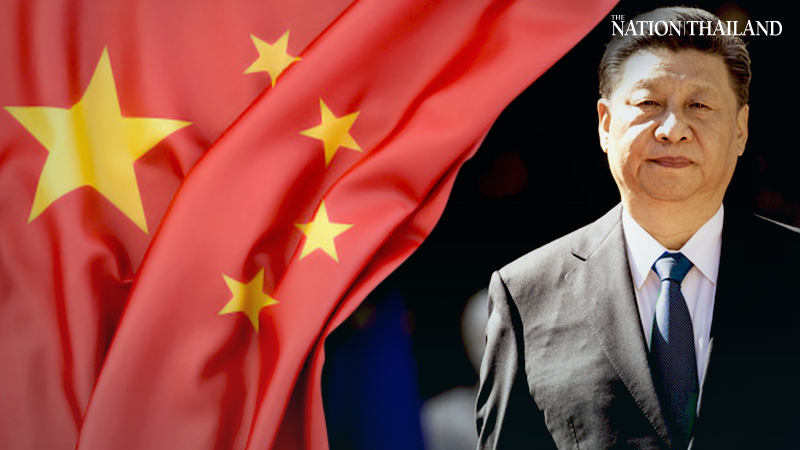
 Pro-democracy activist Benny Tai arrives at Ma On Shan police station in Hong Kong on Feb. 28, 2021. MUST CREDIT: Bloomberg photo by Lam Yik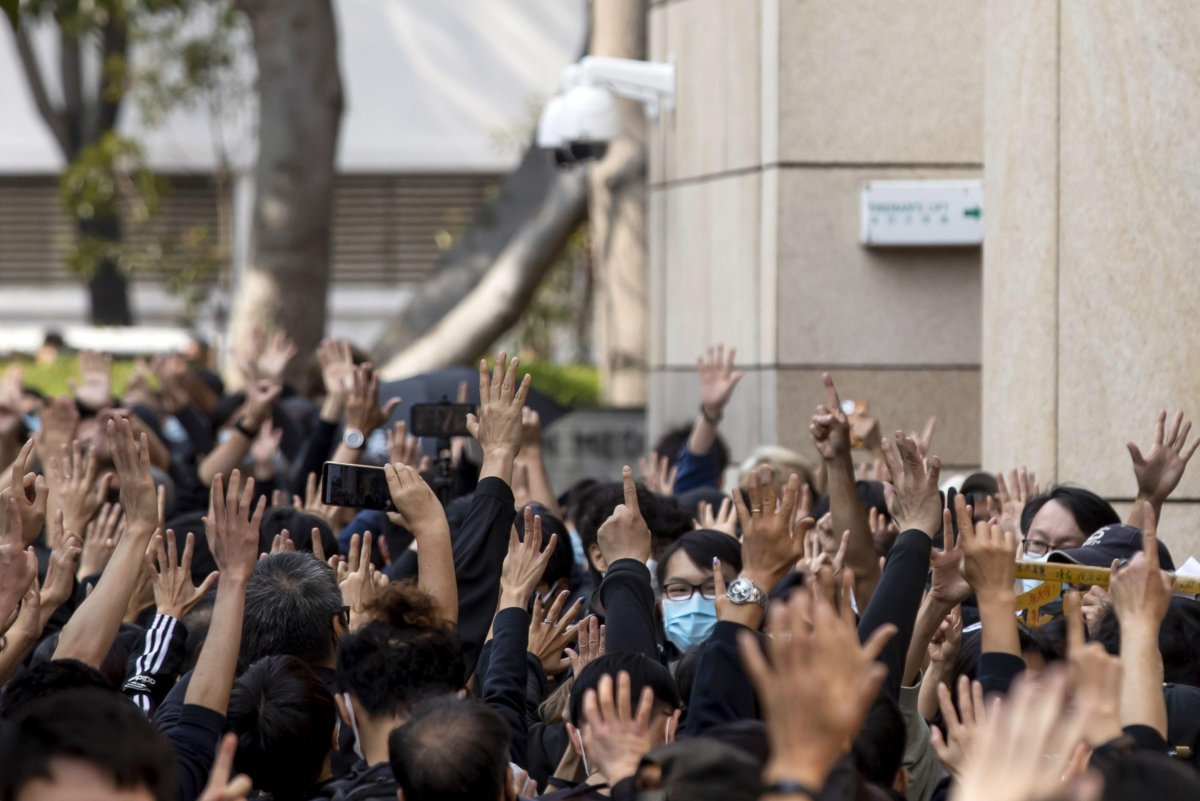
 A farmer corrals cattle at a farm in Gunnedah, New South Wales, Australia, on May 29, 2020. MUST CREDIT: Bloomberg photo by David Gray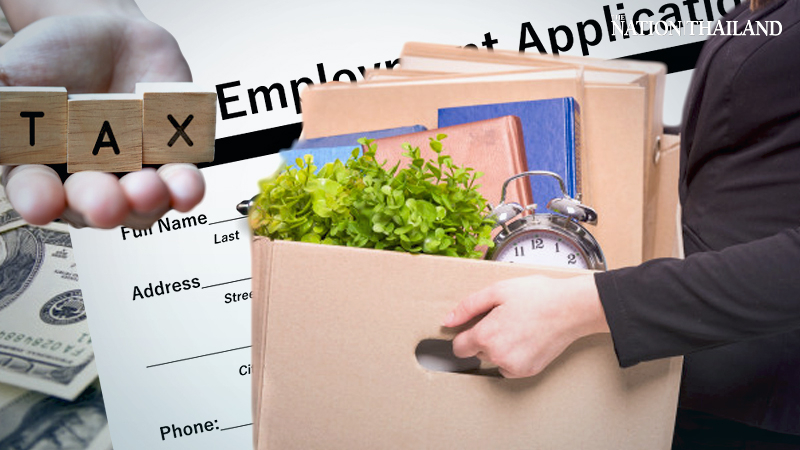
 Kate McKinnon portrays Dr. Anthony Fauci on “Saturday Night Live.” MUST CREDIT: NBC
