U.S. will not require passengers to get covid test before domestic flights #SootinClaimon.Com

#SootinClaimon.Com : ขอบคุณแหล่งข้อมูล : หนังสือพิมพ์ The Nation.

U.S. will not require passengers to get covid test before domestic flights

InternationalFeb 13. 2021
By The Washington Post, Lori Aratani

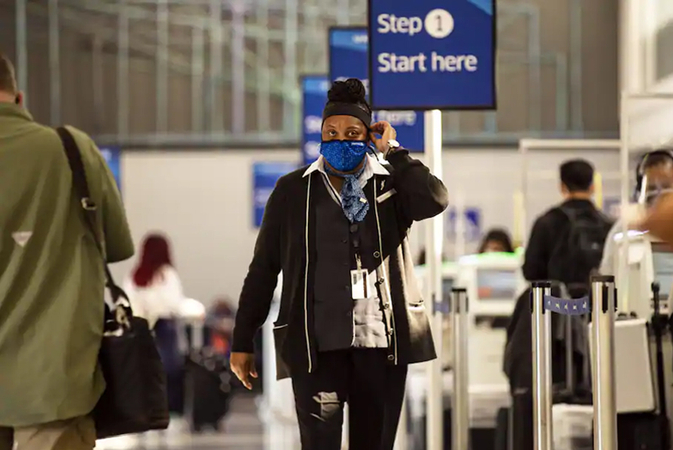
WASHINGTON – Federal health officials said they will not require domestic travelers to show proof that they have tested negative for the coronavirus before boarding flights, a measure that had drawn vocal opposition from airline industry.

“At this time, CDC is not recommending required point of departure testing for domestic travel,” the agency said in a statement issued Friday evening. “As part of our close monitoring of the pandemic, in particular the continued spread of variants, we will continue to review public health options for containing and mitigating spread of COVID-19 in the travel space.”

Earlier in the day, White House officials met with the heads of several major U.S. carriers, all of whom were vehemently opposed to such a mandate.

“We appreciated the opportunity to meet with the administration this morning,” said Nicholas Calio, chief executive of Airlines for America, who was among those who met with Jeff Zients, the administration’s coronavirus response coordinator, and other officials. “We had a very positive, constructive conversation focused on our shared commitment to science-based policies as we work together to end the pandemic, restore air travel and lead our nation toward recovery.”

Following that meeting, the Biden administration signaled that it did not plan to put a testing requirement in place.

“Reports that there is an intention to put in new requirements such as testing are not accurate,” White House press secretary Jen Psaki said.

In interviews this week, Transportation Secretary Pete Buttigieg said there was an “active conversation” with the Centers for Disease Control and Prevention about a testing program.

Federal health officials last month began requiring all international travelers to show proof that they had tested negative for the coronavirus before boarding flights to the United States, with the goal of reducing the spread of the virus and its variants. About the same time, CDC officials said they also were weighing a similar testing requirement for domestic travelers.

That idea drew sharp pushback from airlines, unions and some lawmakers, who said it would be logistically impossible to launch and would further harm an industry struggling to stay afloat. Chief executives at several major airlines pointed to passenger declines on international routes after the testing requirement took effect, even though many had supported the decision.

Most health experts agree that ramping up testing can be an effective strategy for identifying and isolating those who might have the virus, particularly individuals who show no signs of infection.

A report this week from a team of researchers at Harvard’s T.H. Chan School of Public Health and funded by the aviation industry said testing can play a key role in stopping the spread of the virus.

“Viral testing is an important public health screening mechanism that can quickly and efficiently identify those with infections and stop them from undergoing activities that could expose others, including potential travel,” said the report, which recommended steps that airports could take to reduce the risk that travelers could catch the virus.

Edward Nardell, a member of the study team and professor in the departments of environmental health and immunology and infectious diseases at Harvard’s T.H. Chan School of Public Health, said testing might also offer another benefit to travelers: peace of mind.

“I know I’d feel much more comfortable, particularly in a long flight, if I had some assurance that no one on that flight is carrying detectable virus at the time you take off, but there are enormous logistics,” he said. “It can be done on a small scale, [but] the question is what would it take to do it on a large scale and that’s where we get into the unknowns from our perspective.”

There also are questions about who would pay for the tests.

Henry Wu, an associate professor at the Emory University School of Medicine in Atlanta and director of the Emory TravelWell Center, said while such a strategy could be effective at preventing infected passengers from bringing the virus to the United States, a domestic mandate might be less effective since people can use other modes to move between states. One exception, Hawaii, has a testing requirement for visitors who want to avoid quarantine, he said.

Still, Wu said, testing airlines passengers could make sense in some instances.

“Covid-19 is already present in all states, but a key goal of testing is to limit spread of the new variants that have not widely circulated yet,” he said. “Airline passengers are probably traveling farther, so a test requirement before flying could help slow the spread, but the impact would depend on the relative number of travelers using other modes of transportation.”

Despite their opposition to a testing mandate, many airlines and airports have seized on preflight testing as a way to add an extra layer of assurance to nervous travelers.

In November, United Airlines announced it would offer free testing to passengers on select flights between Newark Liberty International Airport and London’s Heathrow Airport, effectively guaranteeing that everyone on board had tested negative for the coronavirus before departure. At least two dozen U.S. airports also now offer coronavirus testing on-site.
Biden asks for pause in Trump’s effort to ban WeChat #SootinClaimon.Com

#SootinClaimon.Com : ขอบคุณแหล่งข้อมูล : หนังสือพิมพ์ The Nation.

Biden asks for pause in Trump’s effort to ban WeChat

InternationalFeb 12. 2021

By The Washington Post
Jeanne Whalen

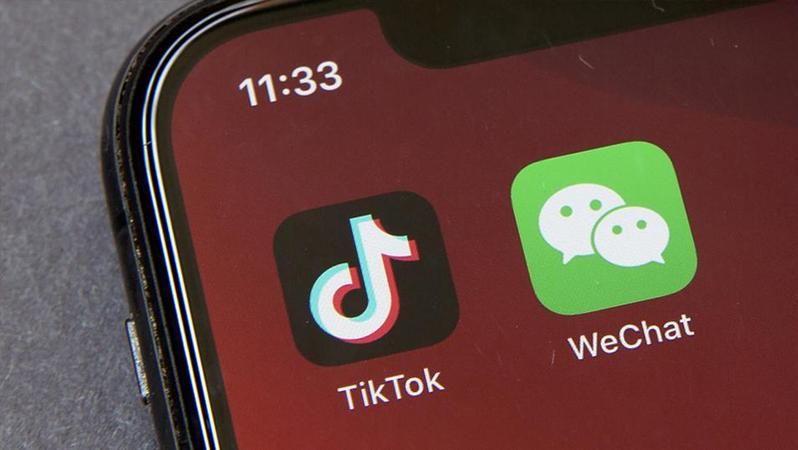
WASHINGTON – The Biden administration on Thursday asked a federal appeals court to place a hold on proceedings surrounding the Trump administration’s attempted ban of the Chinese social media app WeChat, a day after it asked a different court for a similar delay involving a TikTok case.

In both cases, the administration said it needed time to review the Trump administration’s proposed bans, which are now the subject of appeals hearings.

“As the Biden Administration has taken office, the Department of Commerce has begun a review of certain recently issued agency actions, including the Secretary’s prohibitions regarding the WeChat mobile application at issue in this appeal,” the Justice Department said in a filing Thursday with the Ninth Circuit Court of Appeals in San Francisco.

“In relation to those prohibitions, the Department plans to conduct an evaluation of the underlying record justifying those prohibitions. The government will then be better positioned to determine whether the national security threat described in the President’s August 6, 2020 Executive Order, and the regulatory purpose of protecting the security of Americans and their data, continue to warrant the identified Prohibitions,” the filing said.

The filing added that the Biden administration “remains committed to a robust defense of national security as well as ensuring the viability of our economy and preserving individual rights and data privacy.”

The Biden administration used similar language in a request it filed Wednesday with the U.S. Court of Appeals for the District of Columbia Circuit, asking for a delay in proceedings involving President Donald Trump’s proposed TikTok ban.

Trump tried to prohibit both apps last fall, calling them national security threats because they collected “vast swaths” of data on Americans and offered the Chinese Communist Party avenues for censoring or distorting information.

A federal magistrate in San Francisco temporarily halted Trump’s proposed WeChat ban in September over First Amendment concerns, in response to a lawsuit filed by WeChat users. A federal court in Washington, D.C. later issued a preliminary injunction blocking the TikTok ban. The Trump administration appealed both of those rulings.

The moves come as some Republicans express early concerns about the Biden administration’s plans for China policy. Conservatives, and also many Democrats in Congress, want the new administration to maintain a hard line on China and its tech companies.

Last week, Sen. Ted Cruz, R-Texas, placed a hold on Biden’s nomination of Gina Raimondo to head the Commerce Department, after Raimondo declined to specify during a Senate hearing whether she would keep Chinese telecom giant Huawei on a trade blacklist.

In a Feb. 4 tweet, Cruz said he would lift the hold “when the Biden admin commits to keep the massive Chinese Communist Party spy operation Huawei on the Entity List.” Cruz’s office didn’t immediately provide comment on Thursday.

Michael Bien, a lawyer for the WeChat users who filed the lawsuit opposing the Trump ban, called the Biden administration’s pause a positive development. The proposed ban was “just one more extreme and unconstitutional action by the Trump administration” that would harm “millions and millions of people who depend on WeChat every day,” he said.

Some other WeChat users in the United States have said they support the ban proposal, complaining that the app, owned by the Chinese tech giant Tencent, has censored them and blocked them from using their accounts after they’ve posted material critical of Chinese authorities.

EU rebuffs Britain’s call to reset their post-Brexit relationship #SootinClaimon.Com

#SootinClaimon.Com : ขอบคุณแหล่งข้อมูล : หนังสือพิมพ์ The Nation.

EU rebuffs Britain’s call to reset their post-Brexit relationship

InternationalFeb 12. 2021European Union flags fly near the Europa building in Brussels, Belgium, on Feb. 9, 2021. Bloomberg photo by Geert Vanden Wijngaert

European Union flags fly near the Europa building in Brussels, Belgium, on Feb. 9, 2021. Bloomberg photo by Geert Vanden Wijngaert

By Bloomberg
Ian Wishart

The European Union rebuffed Britain’s call to reset the two sides’ relationship, saying Britain needs to honor the promises it made on Northern Ireland as part of the Brexit deal.

In a letter to Cabinet Office Minister Michael Gove, European Commission vice president Maros Sefcovic gave a cool response to Britain’s request to delay the implementation of border checks on some goods entering the province, saying that measures the U.K. previously signed up to “urgently need to be fully and faithfully implemented.”

The letter, published ahead of a meeting between the two men in London on Thursday, is likely to inflame tensions between the two sides that escalated dramatically on Jan. 29 when the commission briefly threatened to trigger an emergency clause in the Brexit divorce deal to curb vaccine exports to Northern Ireland.

Speaking to lawmakers Tuesday, Gove said the part of the Brexit deal covering Northern Ireland, known as the Irish Protocol, wasn’t working, and called for a reset in the EU’s relationship with Britain.

Unlike the rest of the U.K., Northern Ireland effectively remained in the EU’s customs union and single market after Brexit — a concession Prime Minister Boris Johnson made to the bloc to secure Britain’s orderly departure.

“The difficulties on the island of Ireland are caused by Brexit, not by the Protocol,” the EU’s chief Brexit negotiator, Michel Barnier, told the European Business Summit in Brussels on Thursday. “The Protocol is the solution, I’m sure — if it is correctly implemented by everybody.”

With goods crossing the Irish Sea facing delays and disruption, Gove is seeking to postpone the introduction of full checks on food destined for supermarkets, medicines and parcels moving into the province from the rest of the U.K. until 2023.

But “blanket derogations” from EU law as set out in the deal “in respect of Northern Ireland cannot be agreed beyond what the Protocol foresees already,” Sefcovic said in the letter.

He also said granting more flexibility around checks on seeds and pets crossing the border — two British demands — “would entail the U.K. committing to align with the relevant EU rules.”

Sefcovic also set out a list of what he called “shortcomings” in the British implementation of the deal, saying border control posts are still not fully operational and data-sharing aren’t in place.

The U.K.’s Cabinet Office criticized Sefcovic’s letter and called for urgent action to “restore confidence” in the Northern Ireland Protocol.

“It is disappointing that the Commission has failed to acknowledge the shock and anger felt right across the community in Northern Ireland from its decision to trigger Article 16,” the Cabinet Office said in a statement. Gove will underline the need for “political leadership” when he meets with Sefcovic on Thursday, the statement said.

Read more: How a ‘Mind-Blowing’ Blunder Created a Dangerous Brexit Standoff

The letter also drew a critical response from Northern Ireland’s first minister, Arlene Foster, whose Democratic Unionist Party has long opposed the Protocol.

She said that Sefcovic has had his “head in the sand” and “fingers in his ears” over the problems affecting the region. “That’s an incredible state of affairs,” she told on ITV’s “Peston” program on Wednesday.

Irish Prime Minister Micheal Martin called on EU member states to “cool it,” saying there were bound to be teething problems in early days of the Protocol.

“Tensions were rising unnecessarily,” he told RTE Radio on Thursday. “Ultimately, we want the U.K. aligning well with the EU. We want harmonious sensible relationships.”

Separately, the European Commission said Wednesday that it wanted to delay the conclusion of the provisional application of the wider post-Brexit trade agreement from the end of February until April 30 to give time for governments and EU lawmakers to scrutinize the trade pact.

The European Parliament has to vote on whether to approve the deal before the end of the provisional period. Officials on both sides said it’s highly unlikely lawmakers will seek to vote down the accord. Any delay, though, would still have to be approved by both the U.K. and EU.

“It’s a little surprising the EU wish to change it quite so soon,” David Frost, the U.K.’s chief Brexit negotiator, said to a panel of lawmakers Tuesday after being told informally by the EU that it wanted more time. Frost said he didn’t think there is “any wish” on the U.K. side “to extend this more than necessary.”

PayPal looks to stock trading, savings in push beyond checkout #SootinClaimon.Com

#SootinClaimon.Com : ขอบคุณแหล่งข้อมูล : หนังสือพิมพ์ The Nation.

PayPal looks to stock trading, savings in push beyond checkout

InternationalFeb 12. 2021

By Bloomberg
Jenny Surane

PayPal Holdings is weighing a foray into stock trading and high-yield savings accounts as the firm pushes beyond its iconic checkout button.

The payments giant expects the number of active users on its sprawling platform to climb to 750 million by the end of 2025 — roughly double the current level — as it expands into new areas of financial services, Chief Executive Officer Dan Schulman said Thursday at the firm’s investor day. With its latest plans, PayPal aims to become the world’s next financial super-app, akin to Chinese giants Alipay and WeChat Pay.

“There’s few companies in the world that can even aspire to this vision,” Schulman said. “It requires capabilities that cross industries, from financial services to payments to shopping to technology.”

PayPal is coming off a record year, when spending on its platform soared 31% as consumers turned to online shopping in droves after the pandemic shuttered stores around the globe. The firm added 72.7 million users during the year as revenue climbed to $21.5 billion.

The performance came even as PayPal’s main business of speeding up the online checkout process has seen intense competition from the likes of Apple Inc. as well as payment giants Visa Inc. and Mastercard Inc. Still, it’s an area PayPal dominates: The firm’s button has been added to nearly three-quarters of the leading U.S. retail sites, according to a survey last year by Pymnts.com.

Now PayPal has set its sights on turning itself into a one-stop shop for consumers and merchants alike to conduct their finances. The firm said new products could include stock trading and high-yield savings accounts as well as bill-payment capabilities and check-cashing services.

The firm is leaning into the success it’s already seen from adding the ability for users to buy, sell and hold cryptocurrencies in digital wallets in recent months. PayPal has said customers who took advantage of the feature to purchase digital currencies began logging into PayPal at two times the rate they were prior to using the service.

That sort of activity, in turn, drives revenue. Schulman said the firm now expects the average amount of revenue it collects from each user to grow substantially over the next five years.

PayPal’s shares rose 4.9% to $297.18 at 12:07 p.m. in New York. The stock has climbed 710% since it was spun off from EBay Inc. in 2015, compared with the 89% advance of the S&P 500 Index.

PayPal has warned that some of the new initiatives caused an uptick in spending on technology and development. Such costs already rose 27% to $2.64 billion last year. Still, the firm has said it expects profits to climb 17% on an adjusted basis this year.

“We really hit our stride in 2020,” Schulman said. “And I’m so excited about what we plan to deliver and what we are going to deliver in this year and in the years to come.”

U.S. stocks snap 2-day slide #SootinClaimon.Com

#SootinClaimon.Com : ขอบคุณแหล่งข้อมูล : หนังสือพิมพ์ The Nation.

U.S. stocks snap 2-day slide

InternationalFeb 12. 2021

By Bloomberg
Andreea Papuc, Adam Haigh

U.S. stocks rose to a record with a late-session advance, while Treasuries slipped as a decline in jobless claims signaled a modest firming of the labor market.

The S&P 500 Index halted a two-day decline. Gains for tech shares lifted the Nasdaq 100 to a bigger advance. Ten-year Treasury yields rose to about 1.15%. In Europe, the Stoxx 600 Index was buoyed by strong results from Royal Mail Plc and Credit Agricole SA.

Applications for U.S. state unemployment benefits fell slightly last week in a sign that the labor market is still gradually improving as the vaccine rollout continues and business restrictions ease. After a sharp run-up in equities at the start of February, U.S. stocks have taken a pause as investors weighed the implications of the latest inflation data.

In the background, there’s still a debate over whether more U.S. stimulus, the vaccine distribution and the government’s determination to kick-start growth will cause the American economy to overheat.

“While inflation is not showing up in the data right now, inflation is on its way thanks to fiscal and monetary stimulus and pent-up consumer demand that should intensify as the economy reopens,” Nancy Davis, founder of Quadratic Capital Management, said in a note.

In a speech Wednesday, Federal Reserve Chair Jerome Powell said the U.S. job market remains a long way from a full recovery and called on both lawmakers and the private sector to support workers. He also said it will require more than supportive monetary policy to achieve and sustain maximum employment.

Elsewhere in markets, oil slumped after capping the longest run of gains in two years. The dollar held steady and Bitcoin climbed above $47,000. In Asia, several markets in the region were closed ahead of the Lunar New Year holiday.

These are the main moves in markets:

Stocks

– The S&P 500 Index rose 0.2% as of 4 p.m.EST.

– The Stoxx Europe 600 Index advanced 0.5%.

– The MSCI Asia Pacific Index increased 0.2%.

– The MSCI Emerging Market Index advanced 0.4%.

Currencies

– The Bloomberg Dollar Spot Index was little changed.

– The euro advanced 0.1% to $1.2125.

– The British pound fell 0.2% to $1.3806.

– The Japanese yen weakened 0.2% to 104.79 per dollar.

Bonds

– The yield on 10-year Treasurys advanced one basis point to 1.15%.

– The yield on two-year Treasurys was unchanged at 0.11%.

– Germany’s 10-year yield decreased two basis points to -0.46%.

– Britain’s 10-year yield decreased two basis points to 0.47%.

Commodities

– West Texas Intermediate crude fell 0.8% to $58.22 a barrel.

– Gold fell 0.9% to $1,826.68 an ounce.

China to pull BBC News off the air, state broadcast regulator says #SootinClaimon.Com

#SootinClaimon.Com : ขอบคุณแหล่งข้อมูล : หนังสือพิมพ์ The Nation.

China to pull BBC News off the air, state broadcast regulator says

InternationalFeb 12. 2021

By The Washington Post
Adam Taylor

China’s broadcasting regulator has moved to pull BBC News off the air in the country over a “serious content violation,” the Chinese state news agency Xinhua reported Thursday.

China’s National Radio and Television Administration (NRTA) said in an announcement on its website that the broadcaster, which is partly funded by the British state but editorially independent, had “undermined China’s national interests and ethnic solidarity.”

Chinese state media greeted the news with a sense of triumph, while U.S. and British officials have criticized the decision. British Foreign Minister Dominic Raab called the move an “unacceptable curtailing of media freedom.”

The BBC is “disappointed that the Chinese authorities have decided to take this course of action,” a spokeswoman for the broadcaster said in an email to reporters. “The BBC is the world’s most trusted international news broadcaster and reports on stories from around the world fairly, impartially and without fear or favor.”

The announcement, which arrived with the Lunar New Year holiday in China, followed recent disputes between Chinese officials and BBC News.

It also came just a week after Britain’s media regulator pulled the Chinese state-run television channel CGTN off British airwaves because of alleged errors in an application to transfer its license to another company.

In December, BBC News produced a report that alleged the forced labor of ethnic minority Uighurs in China’s cotton industry in Xinjiang. Chinese state media bristled at the work, calling it “fake news” and accusing the BBC of political bias.

“Far from being fake news, our evidence, along with the post-publication propaganda designed to undermine it, is proof of a coordinated effort to control the narrative, extending from the shadowy minders in unmarked cars, all the way up to the national government,” John Sudworth, one of the team who reported the story, later wrote.

BBC News also produced a lengthy report detailing allegations of systematic rape in Xinjiang camps where Uighurs and other minorities are held.

China’s NRTA did not detail precisely why BBC News was being pulled off air or how the move might affect the organization’s staff in the country, but it said any new applications for a license would not be considered.

The Global Times, a newspaper run by the Chinese Communist Party, said the BBC would no longer be available anywhere on the Chinese mainland. Some Chinese academics who spoke to the Global Times, known for its nationalistic stance, said the next step may be to expel journalists.

Even before the ban, BBC News was not available widely in China, mostly limited to hotels that cater to foreigners. Even so, it comes amid a wave of restrictions on foreign journalists in recent years that has seen a number of reporters be arrested or have their credentials pulled.

In a tweet shortly after the announcement, Raab said the Chinese decision was an “unacceptable curtailing of media freedom” and noted that China already had some of the “most severe restrictions” on media and Internet freedoms in the world.

“This latest step will only damage China’s reputation in the eyes of the world,” he added.

State Department spokesman Ned Price said at a briefing Thursday that the U.S. government condemned the decision to ban BBC News, adding that China maintained “one of the most controlled and most oppressive, least-free information spaces in the world.”

The Office of Communications (OFCOM), Britain’s broadcast regulator, did not cite the content of the English-language CGTN in revoking its license. The regulator conducted an investigation that concluded the license was wrongfully held by a company called Star China Media.

OFCOM stated that its investigation had found the company did not control CGTN’s content, as required by British law, and that editorial decisions were made by China Central Television, a company that is controlled by the Chinese Communist Party and that is not eligible to hold a license due to its state links.

A last-minute attempt to register the license to another company was also rejected due to missing information on the application, OFCOM said.

In a response to the OFCOM decision, reported by the Guardian newspaper, CGTN drew comparisons between the BBC and other state-funded broadcasters, such as Japan’s NHK. The BBC has long maintained that there is a distinction between state-controlled broadcasters and those that receive public funding but are editorially independent.

Back to class might not mean back to socializing #SootinClaimon.Com

#SootinClaimon.Com : ขอบคุณแหล่งข้อมูล : หนังสือพิมพ์ The Nation.

Back to class might not mean back to socializing

InternationalFeb 12. 2021

By The Washington Post
Petula Dvorak

My son sat alone in the classroom this week, surrounded by empty desks in a silent formation. Even the teacher’s desk up front was forlorn.

“this is stupid,” he texted me. “i’m here all dressed up. everyone else is at home. in sweats.”

A camera on a tripod focused on him as the rest of the class and the teacher logged in from their homes. A bored proctor sat in the corner, scrolling through her phone.

Welcome back to school – hurrah?

The mid-pandemic return to the classroom is totally weird, and there are no easy answers.

As the coronavirus continues to infect millions and kill hundreds of thousands in the United States, returning kids to their scholastic normalcy is proving to be a halting, difficult process.

There are teachers in Chicago who are holding class outside as parents bring them hot coffee and build fire pits, and teachers in Washington, D.C., wearing masks, visors and clothes they sanitize after a full day inside buildings they fear aren’t properly ventilated.

There are kindergartners who have never met a teacher in real life and, on the other end of the scale, high-schoolers who’ve been back in classrooms for weeks.

Even when schools opt for hybrid learning the way my son’s school did, a largely unvaccinated nation – only about 10% of our population has received at least one dose, according to the Centers for Disease Control and Prevention – is confused and conflicted about whether kids should show up.

In D.C., as schools open in phases this month, the return-to-school rate is different based on ZIP code. The wealthier wards had kids returning to class at twice the rate as the poorest ward in the city, according to city data.

Maybe it’s because the wealthier wards have higher vaccination rates than the lower-income wards, whose residents are primarily people of color.

And because coronavirus infection and death rates have hit American Black and Brown communities and lower-income neighborhoods harder, it would make sense that those families aren’t comfortable sending their kids back to school yet.

“The reality is that as African Americans – and I can speak clearly to this – our health outcomes have not been the same as our peers, and a lot of that is related to systemic racism,” Chancellor Lewis Ferebee, who is Black, told The Washington Post’s Perry Stein. “Every child is different, and every circumstance is different.”

But it doesn’t have to be about income, race or ZIP code to divide a school on the return.

Even though my son’s private Jesuit school spent a fortune on tech and logistics creating a hybrid schedule rotating three cohorts into the classroom, my son kept finding himself alone or among just a few to go to class in person.

There are many reasons for this. Some students have parents or siblings with health issues who can’t risk exposure to the virus. Some families have grown used to a pandemic schedule – Mom and Dad aren’t going into the office – so they decide that everyone should just stay home. And some kids prefer learning from home, sleeping in and wearing sweatpants to virtual class.

It’s the same story I heard from a friend in New Jersey. Her kid, like mine, was suffering under the isolation and flatness of distance learning and couldn’t wait to go back in.

But when their public school district opened up for hybrid learning, most of her daughter’s peers decided to stay online and at home. On top of that, schools opened and then closed again at whiplash speed. Closed because of a positive case. Now open. Wait, closed.

The 17-year-old “asked to go all remote,” my friend said. “She was tired of the back-and-forth.”

But even when the response is tepid, schools have to provide the option. In too many cases, kids continue to be shut out of online learning because they don’t have reliable WiFi. Or they have other circumstances that make remote learning tough. In D.C., 60% of elementary kids who are returning to the classroom are learning English as a second language, receiving special education services, are homeless or are otherwise at risk.

Or there are the younger kids who thrive the most when they’re in social settings.

“It was great. It was amazing,” said Wesley Hanks, 13, who finally got to meet his new teacher in person for the first time last week, when Eliot-Hine Middle School in D.C. opened up.

“I got to see Miss Maxwell,” he said of a beloved teacher whom he hasn’t seen since March (except once, “around Christmas when she was picking out Christmas trees”).

“I also got to see my classmates,” he said, whom he also hadn’t seen for almost a year. He said he hopes D.C. opens up all the classrooms to all the kids.

But, alas, that’s not easy to do.

Schools, we keep forgetting in so many other cases, are part of a community. And until that community is fully vaccinated and everyone feels safe, neither can thrive.

Some kids will return, some will stay at home, some will bounce back and forth for the rest of the year, the way my son plans to. That’s okay.

The most important thing we can do for the kids, besides push for every possible way to speed up the nationwide vaccination effort, is to keep in mind that whatever they end up doing in these crazy times, they are not losing a year of learning. They’re gaining a year of firsthand experience in resilience, flexibility and grit that’s rarely part of a lesson plan.

With theaters and theme parks hit hard, Disney revenue fell 22% over the holidays #SootinClaimon.Com

#SootinClaimon.Com : ขอบคุณแหล่งข้อมูล : หนังสือพิมพ์ The Nation.

With theaters and theme parks hit hard, Disney revenue fell 22% over the holidays

InternationalFeb 12. 2021

By The Washington Post
Steven Zeitchik

The coronavirus continued to hammer Disney in the final months of 2020, with the company’s revenue dropping 22% over the holiday period while it eked out a much smaller profit than usual.

For the entertainment giant’s first quarter, which runs from October through December, Disney saw revenue go from $20.9 billion in 2019 to $16.3 billion in the same period in 2020, as coronavirus shutdowns and consumer caution cut attendance at movie theaters and Disney theme parks, the company said Thursday.

The revenue – which comes heavily from advertising, merchandise, TV and digital subscriptions – is slightly better than the $15.9 billion many analysts expected. The company did make money, but by a much reduced margin: its operating income plunged from $4 billion in 2019 to just $1.3 billion in 2020, a drop of 67%. Once taxes are factored in, the company’s profit stood at just $29 million, after topping $2.1 billion in the same quarter a year earlier.

The Disney Plus streaming service was a bright spot, however. The company said that as 2021 began the service had reached 95 million subscribers, up from the 86.8 million it cited at an investor day in mid-December.

The unit is not expected to be profitable for several years. But investors are watching the subscriber number closely as Disney looks to tighten its hold on the streaming market as a solid No. 2 behind Netflix, which has about 200 million global subscribers. (Disney also has an additional 40 million Hulu subscribers and 12 million ESPN Plus subscribers.)

In fact, Wall Street does not seem much concerned with the impact of the virus, preferring instead to focus on the streaming growth. Buoyed by ongoing enthusiasm for those services, Disney’s stock closed Thursday at a record high of $191, up 58% since the beginning of November. The share price rose an additional 2% in afterhours trading after the new figures were released.

The news for the rest of the company, however, was bleaker. The earnings followed a familiar trend for 2020: Disney posted an 82% drop in operating income in the previous quarter ending in September,

The firm has been hit hard by the closure of most of its theme-park attractions in Southern California and reduced capacity and attendance in Florida. During the most recent quarter, revenue at Disney theme parks dropped 53%, from $7.6 billion a year ago to $3.6 billion in 2020, while the company lost $120 million at the division after posting a gain exceeding $2 billion the year previous.

Executives noted an “estimated detriment of approximately $2.6 billion at the Disney parks” due to the virus – that is, operating income would have been that much higher without the lockdowns and capacity restrictions. Theme park losses are slowing somewhat, going from $2 billion in the spring to $1 billion in the summer to the $120 million this quarter, thanks both to reopenings and, of course, cost-cutting. The company also hopes the re-opening of California Adventure in April could provide a boost.

Asked on an investor call about the forecast for theme parks, Disney chief executive Bob Chapek said it will be “determined by the rate of vaccinations…We have ample demand despite everything that’s happening with the pandemic.”

Due to an internal reorganization, the company did not break out results for its studio division. But that, too, has been hit hard as movie theaters remain largely closed and most big releases stay on shelves or are moved to streaming, as Pixar release “Soul” was at Christmas. In 2019, Disney posted revenue of nearly $4 billion at its studio, driven by hits such as “Frozen II” and “Star Wars: The Rise of Skywalker.”

It remains uncertain when Disney will bring its movies back to theaters. One of the next major releases, the Marvel film “Black Widow,” is scheduled for May after being postponed a year by the pandemic. Chapek said the company is “still intending it to be theatrical but we’re going to be watching very carefully” to determine whether it might move to a streaming platform. He did not suggest a further postponement was likely.

Disney canceled its dividend in the second half of 2020 as its finances remained under pressure. Executive chair Bob Iger saw his annual compensation package go from $47 million to $21 million last year, while Chapek took in $14.2 million for the year.

The results come exactly a year after Chapek took over from Iger after the latter surprisingly stepped down. The waters quickly turned choppy after that as the virus spread around the world.

U.S. federal debt to exceed size of economy even before Biden stimulus is approved, CBO says #SootinClaimon.Com

#SootinClaimon.Com : ขอบคุณแหล่งข้อมูล : หนังสือพิมพ์ The Nation.

U.S. federal debt to exceed size of economy even before Biden stimulus is approved, CBO says

InternationalFeb 12. 2021The U.S. Treasury Department building in 2012 in Washington, D.C. Washington Post photo by Robert Miller
The U.S. Treasury Department building in 2012 in Washington, D.C. Washington Post photo by Robert Miller

By The Washington Post
Jeff Stein

WASHINGTON – America’s federal debt is set to exceed the size of the entire U.S. economy this year for only the second time since the end of World War II, a reflection of the extraordinary emergency measures approved by Congress in response to the coronavirus pandemic, the nonpartisan Congressional Budget Office said Thursday.

The remarkable surge in federal borrowing is due largely to the more than $4 trillion in spending approved by the federal government to fight the pandemic since last March. As a result, the federal government’s debt burden will in 2021 be larger than the size of total U.S. gross domestic product – a measure of all the goods and services in the economy, according to CBO. It’s the second time it’s happened, in two years.

Democratic lawmakers and many economists say another spending blitz is necessary to stabilize an economy that has stalled out and a job market that faces the prospect of permanent scarring. Federal Reserve Chair Jerome Powell said the unemployment rate for January should be considered closer to 10%, rather than the official number of 6.3%, due to misclassification errors and workers permanently leaving the labor force.

But Republican lawmakers and deficit hawks warn that such unprecedented levels of peacetime spending threatens a risk to the economy. A sudden surge in inflation — although not currently considered likely or imminent — could force the Federal Reserve to raise interest rates, which would in turn dramatically increase the costs of U.S. borrowing. The central bank has vowed to keep interest rates low.

The CBO’s debt estimates are based on current policy and do not account for the $1.9 trillion stimulus package Democrats are expected to pass in a matter of weeks.

“It’s pretty horrific. The trouble is it’s high and escalating, and on an unsustainable trajectory,” said Douglas Holtz-Eakin, who served as director of the CBO and as chief economist to Sen. John McCain, R-Ariz., of the debt figures. “World financial markets will at some point lose their faith in the ability of the U.S. to make the numbers add up, and they will either cut us off entirely or charge prohibitively high rates.”

Democrats are expected to press forward with their relief package despite the federal debt. America’s economic recovery from the coronavirus has sputtered as the pandemic rages across the country this winter. Alarmingly, job growth in the United States has all but stalled out, even as about half of the 22 million jobs lost during the crisis have returned.

President Joe Biden’s relief package would devote hundreds of billions of dollars to the U.S. response to the public health crisis, including vaccine distribution; another round of stimulus payments for millions of American households; extended unemployment benefits through August as well as spending for schools and local governments. Biden has frequently downplayed the potential danger of spending too much, and White House officials have pointed to a range of Wall Street analysts who have said more spending is necessary.

Additionally, inflation has remained firmly in check, and the central bank has signaled it would not hike rates even with modest price increases. Powell noted on Wednesday that inflation “has been much lower and more stable over the past three decades” than it had before.

“The biggest risk is not going too big, if we go – it’s if we go too small,” Biden said last week at the White House.

Some economists say more deficit spending could be the help the economy needs. Joseph E. Stiglitz, a Nobel Prize-winning economist at Columbia University, said a significant gap remains between the nation’s actual economic output and its potential economic output. Lawmakers should be focused on closing that gap to reduce unemployment and expand the economy, he said.

“Deficit spending expands output and employment, which can generate more tax revenue,” Stiglitz said. “If as the result of a little more deficit spending we get more growth and higher employment, that should not be too big a worry.”

Yet, just last week, former Obama administration economic adviser Larry Summers penned a column in The Washington Post warning that another big stimulus package did bring some risk of setting off inflation.

“There is a chance that macroeconomic stimulus on a scale closer to World War II levels than normal recession levels will set off inflationary pressures of a kind we have not seen in a generation, with consequences for the value of the dollar and financial stability,” he wrote.

When asked about Summers’ column, White House senior economist Jared Bernstein denied that the administration was dismissing inflationary risks but said: “This is risk management. This is balancing risks. And in our view, the risks of doing too little are far greater than the risks of doing too much.”

To be sure, even the CBO has warned about the challenges in their projections. Its debt and deficit projections could worsen significantly if the pandemic or new coronavirus variants continue to wreak havoc on the American economy. The CBO projects that higher levels of vaccinations will dramatically reduce the number of coronavirus cases, with economic growth quickly returning to pre-pandemic level by as soon as the middle of 2021.

Even under this relatively rosy scenario, the CBO projects the national debt is now on pace to grow to 107% of gross domestic product by 2031 – which would be an all-time high in American history.

But the rollout of vaccines has proven uneven at times, and fears have mounted about new variants of the virus and their effect on the nation’s pandemic response and economic recovery more generally. That could lead to a worse debt scenario than CBO has projected. The CBO said in July that its projections reflect an “average of possible outcomes,” noting the unusually high uncertainty surrounding the pandemic.

“There are so many uncertainties: about the vaccine; about when people come back to work; about what this looks like on the other side – and the standard way of CBO presenting their thinking does not have a framework for quantifying those risks,” said Claudia Sahm, an economist who worked at the Federal Reserve. “And that’s a big problem right now because people are basing their policy advice on these numbers.”

Other budget experts point out that tackling the federal deficit requires more structural reforms to the nation’s economy, such as its low federal tax rates and projected increases in spending on Medicare and Social Security.

The U.S. is projected to hold about $21 trillion in debt in 2021, and that number is expected to increase to $32 trillion by 2030. A $1.9 trillion stimulus bill represents a fraction of that increase, although White House officials have also discussed trying to approve a multi-trillion-dollar infrastructure package later this year. The CBO projections also assume the expiration of numerous provisions of the 2017 GOP tax law aimed at the lower and middle class by the middle of this decade.

Marc Goldwein, senior vice president at the Committee for a Responsible Federal Budget, which pushes for deficit reduction, said lawmakers face a long-term challenge in getting spending and deficit levels to balance. That is not something that hinges on the precise size of Biden’s stimulus package, Goldwein said.

“Even without the $1.9 trillion, we will be at record-high debt levels” in a few years, he said. “Realistically, it’s going to come much sooner than that.”

– – –

The Washington Post’s Erica Werner contributed to this report.

Biden says U.S. will have enough vaccine for 300 million people by end of July #SootinClaimon.Com

#SootinClaimon.Com : ขอบคุณแหล่งข้อมูล : หนังสือพิมพ์ The Nation.

Biden says U.S. will have enough vaccine for 300 million people by end of July

InternationalFeb 12. 2021

By The Washington Post
Isaac Stanley-Becker, Lena H. Sun, Laurie McGinley

WASHINGTON – President Joe Biden said Thursday his administration had finalized deals for another 200 million doses of the two coronavirus vaccines authorized in the United States, securing sufficient shots to cover everyone currently eligible for inoculation by the end of July.

In remarks capping an afternoon tour of the National Institutes of Health, Biden said the federal government had purchased 100 million more doses from Pfizer and German company BioNTech, as well as 100 million more from Moderna, using options built into existing contracts with those companies.

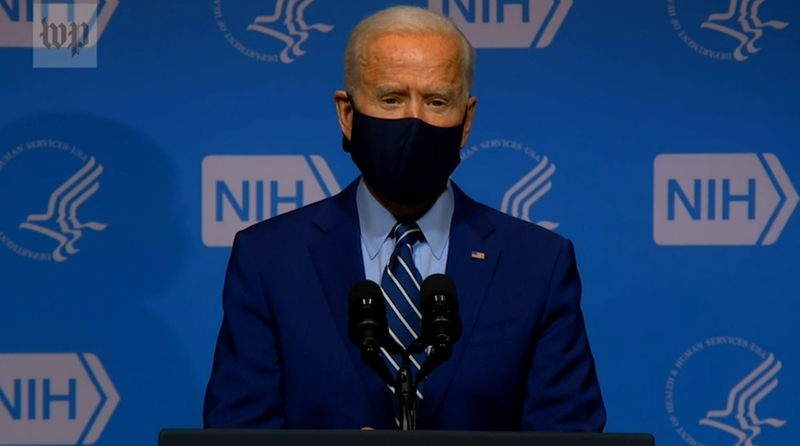
The announcement was the centerpiece of an emotional address from Biden, who made a point of speaking through his mask as he called it a “patriotic responsibility” to wear one.

“We remain in the teeth of this pandemic,” he said, observing that January was the deadliest month of the pandemic, in which “we lost over 100,000 of our fellow citizens.” Mutations of the virus posenew challenges, he said, even as infections and hospitalizations begin to decline.

Recalling a conversation with a nurse staffing an Arizona vaccination site, Biden said she described inoculating people against covid-19 as “like administering a dose of hope.”

“We’re going to get those doses of hope out,” Biden promised.

The new deals don’t immediately expand access to shots, which remain in short supply throughout much of the country. They primarily serve to prevent a shortfall later in the year by increasing supply by 50%, bringing the total to 600 million doses.

Because both products are two-dose regimens, that will be enough to fully vaccinate 300 million people. An estimated 260 million people in the United States are currently considered eligible to receive a coronavirus vaccine, though trials involving children as young as 12 could widen the pool.

Together, Pfizer and Moderna had already agreed to provide 400 million doses to the United States. Biden said some of those doses would be delivered sooner than anticipated, guaranteeing enough supply by the end of May to vaccinate 200 million people under the two-dose protocols. Pfizer had already expedited its delivery schedule for those doses, and a Moderna spokesman confirmed Thursday the Cambridge-based company could do the same.

Moderna issued a statement confirming the purchase and saying it was “working with its domestic manufacturing partners,” as well as federal regulators, to “explore ways to accelerate delivery, with the goal of providing this new order of 100 million doses before the end of July 2021.” Pfizer spokeswoman Amy Rose confirmed the purchase as well as the timeline Biden outlined.

In securing the additional doses, the government used options built into contracts negotiated last year by the Trump administration. Biden said last month he would seek the additional doses, part of a strategy to double down on the two vaccines that have already won federal clearance and not count on candidates from other companies becoming available.

With his vow that the additional doses would be available by the end of July, the president noted the delivery would be “faster than we expected.” His advisers had previously indicated that a summer delivery was anticipated, and Trump administration officials said they were operating under the assumption of a quarterly schedule, with an additional tranche possible by August or September.

Biden administration officials have been telling partners that their recent move to expand Pfizer’s priority rating under the Defense Production Act would help the pharmaceutical giant obtain needed equipment to produce the additional doses sooner than anticipated, according to people with knowledge of the discussions.

Asked last week about the action under the Korean War-era law, Rose did not address it directly but said, “Our teams continue to work closely on our production as our commercial ramp-up progresses.” A Pfizer executive said in a recent interview with USA Today that the company expects to halve its production time as it gains familiarity with the process, expediting the availability of its product globally.

As the country seeks to stay ahead of the spread of the more transmissible and possibly more lethal variants, top health officials have expressed confidence that widespread inoculation would soon be possible because of a steady ramp-up in manufacturing.

“By the time we get to April, that will be what I would call, for better wording, ‘open season,’ namely, virtually everybody and anybody in any category could start to get vaccinated,” Anthony Fauci, the nation’s leading infectious-disease expert, said Thursday on NBC’s “Today” show.

The Biden administration has already increased weekly state allocations by nearly 30%, though shortages remain pronounced in many areas. Los Angeles Mayor Eric Garcetti said Wednesday the city would temporarily close a mass vaccination site at Dodger Stadium, along with several other locations, because there weren’t enough doses.

Additional doses are also expected to come from Johnson & Johnson, which submitted its application for a single-shot coronavirus vaccine to U.S. regulators earlier this month. If approved, the easy-to-store vaccine would further augment supply, though production setbacks are expected to limit availability until the spring. It’s also possible that vaccine experts may only recommend the vaccine for people in certain age groups.

Johnson & Johnson’s vaccine showed strong protection against severe disease from the variant first discovered in South Africa, but offered less-robust protection against moderate illness. Evidence from laboratory tests suggests the Pfizer and Moderna vaccines work against variants, but the ability of the immune response to block the South African variant is diminished.

As more vaccine becomes available, new challenges, including staffing, will arise. But health officials say they’re preparing themselves.

“We’re strategizing around that now and the good thing is we’ve had a couple of months of experience doing this that we can learn from,” said Kevin Litten, a spokesman for the Louisiana Department of Health.

– – –

The Washington Post’s Carolyn Y. Johnson and Amy Goldstein contributed to this report.