Four takeaways from Day 3 of Trump’s impeachment trial #SootinClaimon.Com

#SootinClaimon.Com : ขอบคุณแหล่งข้อมูล : หนังสือพิมพ์ The Nation.

Four takeaways from Day 3 of Trump’s impeachment trial

InternationalFeb 12. 2021
By The Washington Post
Aaron Blake

Day three of former president Donald Trump’s impeachment trial featured the remainder of Democratic House impeachment managers’ case against Trump. Below, some takeaways.

1. A novel appeal to GOP senators about the consequences of acquittal

If there is one quote that summed up the Democrats’ argument for conviction of Trump, it came Thursday from Rep. Ted Lieu, D-Calif.

The fact that Trump is no longer in office renders the biggest punishment of the impeachment process – removal from office – moot. Beyond that, it’s about sanctioning him and preventing Trump from being able to hold high office again.

But Lieu suggested that this wasn’t just about preventing Trump from running (and potentially winning) again; he said it was instead about avoiding another situation such as this.

“You know, I’m not afraid of Donald Trump running again in four years,” Lieu said. “I’m afraid he’s going to run again and lose, because he can do this again.”

The comment was clearly intended for Republican senators who might be on the fence. The party establishment has flirted with a break from Trump in an attempt to phase him out, but that’s no easy process. And of late, Republicans appear to have rallied behind the former president.

It’s also logical that Democrats wouldn’t be terribly concerned about Trump running again, given that he just lost and was one of the most unpopular presidents in history (despite actually coming closer than most recognize to winning reelection). Lieu tried to drive home that this was bigger than just an attempted political disqualification.

Another impeachment manager, Rep. Diana DeGette (D-Colo.), also got at this idea.

“All of these people who have been arrested and charged, they’re being accountable, held accountable for their actions,” she said. “Their leader, the man who incited them, must be held accountable as well.”

DeGette added later: “Impeachment is not to punish, but to prevent. We are not here to punish Donald Trump. We are here to prevent the seeds of hatred that he planted from bearing any more fruit.”

The concerted message on the final day of the Democrats’ arguments was to warn Republicans about what they might have to account for if they let Trump slide.

But it didn’t sway at least one key Republican who has suggested Trump carries blame, Sen. Mike Rounds, R-S.D.

“I think that was a very powerful statement on his part,” Rounds said of Lieu’s quote. “And I know I wrote that down. I know a number of my colleagues did. But once again, the issue for most of us is are you asking us to do something that we simply don’t have the capability of doing because the Constitution does not give us that tool with regard to a private citizen.”

– – –

2. Driving home Trump’s history of violent rhetoric

A big question going into the trial was how much Democrats would keep focused on Jan. 6 and Trump’s effort to overturn the election, and how much they would address his past rhetoric encouraging or excusing political violence.

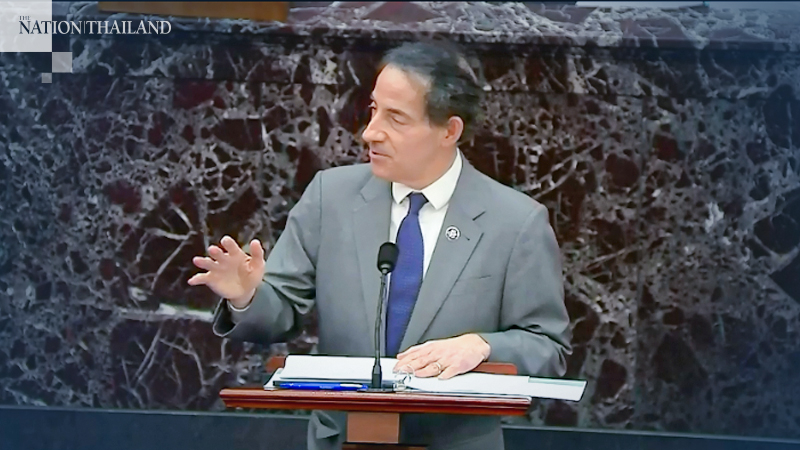
Rep. Jamie Raskin, D-Md., the lead impeachment manager, briefly made his team’s offering on the latter Thursday.

This is hardly the first time people have tied Trump’s comments to real or potential violence. It happened throughout his presidency. It happened to the point where even many Republicans now allied with Trump – who are playing down the need for his impeachment – warned about a situation similar to this, including former South Carolina governor Nikki Haley and Sen. Ted Cruz of Texas.

Raskin referred to many of these instances, including Trump jokingly praising a Montana politician for assaulting a reporter, suggesting that there were good people on “both sides” of the racist rally in Charlottesville in 2017, and his repeated suggestions both at his 2016 rallies and since that his supporters might get violent. Trump also endorsed a clip from a supporter saying “the only good Democrat is a dead Democrat” – before that supporter was arrested for his part in the Capitol riot.

Perhaps most compellingly, Raskin noted Trump’s tweet to “LIBERATE MICHIGAN” in April. It came two weeks before armed protesters flooded the state Capitol there. Trump suggested approval for their show of force and, in response, urged Gov. Gretchen Whitmer, a Democrat, to negotiate with them on the coronavirus restrictions Trump had criticized. Two weeks later, protesters returned with more violent rhetoric. Then an alleged plot to kidnap Whitmer surfaced – a plot in which the alleged perpetrators echoed Trump’s rhetoric.

“This Trump-inspired mob may indeed look familiar to you,” Raskin said of the initial scenes at the state Capitol. “Confederate battle flags, MAGA hats, weapons, camo Army gear – just like the insurrectionists who showed up and invaded this chamber on Jan. 6. The siege of the Michigan Capitol was effectively a state-level dress rehearsal for the siege of the U.S. Capitol that Trump incited on January 6th.”

Trump’s defenders have focused narrowly on his speech Jan. 6, which they argue was unremarkable, and which they note included one line that those marching to the Capitol should “peacefully” protest. They have even argued that revelations about planning by some Capitol rioters suggest that they couldn’t have been incited.

That ignores everything that preceded Jan. 6, and Trump’s efforts to overturn the election. The fact is that there had been all kinds of suggestions that Trump’s rhetoric could lead to what we saw. Trump often did far less than his critics said he should to prevent or condemn such scenes.

That might be the most significant evidence Democrats have – even if Raskin’s presentation gave it short shrift, in the grand scheme of things.

– – –

3. A prebuttal to Trump’s free-speech defense

Democrats offered a prebuttal to an argument the Trump legal team’s is expected to make Friday, that this is a matter of free speech.

Trump’s team, in its briefs, hasn’t actually delved into the well-established limits on free speech, which include things like incitement and defamation.

Democrats argued that even those limits are beside the point. They said Trump, as president and commander in chief, is held to a higher standard.

Rep. Joe Neguse, D-Colo., cited a letter from legal experts on free speech, including many conservatives, who rebuked the idea that such a defense applies in this case.

“That [defense] has no basis in the evidence,” Neguse said. “To hear his lawyers tell it, he was just some guy at a rally, expressing unpopular opinions. They would have you believe that this whole impeachment is because he said things that one may disagree with.”

Raskin said that a president’s speech carries inordinate weight when it comes to things like incitement, by virtue of his oath of office.

“Nobody made Donald Trump run for president and swear an oath to preserve, protect and defend the Constitution on Jan. 20, 2017,” Raskin said. “But when he did, by virtue of swearing that oath and entering this high office, he took upon himself a duty to affirmatively take care that our laws would be faithfully executed under his leadership.”

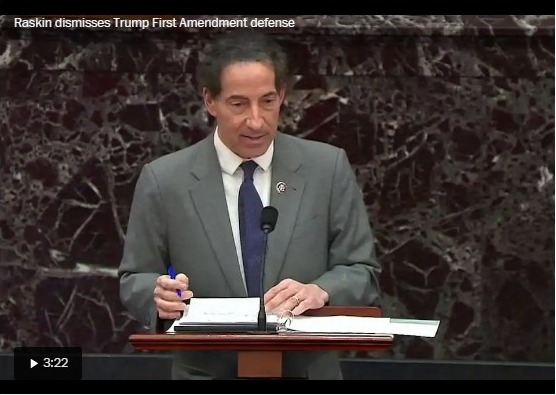
Raskin also went further, noting that constitutional experts generally agree that impeachment doesn’t require a statutory crime. “High crimes and misdemeanors,” despite the claims of Trump’s legal team both this week and in his first impeachment, doesn’t actually mean felonies or what the legal code today calls misdemeanors.

“Incitement to violent insurrection is not protected by free speech,” Raskin said. “There is no First Amendment defense to impeachment for high crimes and misdemeanors. The idea itself is absurd. And the whole First Amendment smokescreen is a completely irrelevant distraction from the standard of high crimes and misdemeanors governing a president who has violated his oath of office.”

4. The participants who cited Trump

The early focus Thursday was on driving home the incitement argument by pointing to rioters who said they had been incited.

Multiple rioters who have been charged with crimes have cited perceived invitations from Trump as part of their defense. That could be convenient for them, legally speaking. But DeGette focused more on people who said these things in real time.

Among them:

One man who wrote on the day of the siege, “Trump just needs to fire the bat signal . . . deputize patriots . . . and then the pain comes.”

Another man said on a live stream from inside the Capitol: “Our president wants us here. We wait and take orders from our president.”

One man told a police officer who stood in his way: “There’s a f—— million of us out there, and we’re listening to Trump – your boss.”

Another woman responded to now-President Biden’s calls for peace by saying, “Does he not realize President Trump called us to siege the place?”

Another talked about calling Trump from inside the Capitol and said, “He’ll be happy. . . . We’re fighting for Trump.”

“Have you noticed throughout this presentation the uncanny similarity, over and over and over again, of what all these people are saying?” DeGette said. “They said what Donald Trump said and they echoed each other. ‘Stand back and stand by.’ ‘Stop the steal.’ ‘Fight like hell.’ ‘Trump sent us.’ ‘We are listening to Trump.’ “

It’s possible to cherry-pick anecdotes in a prosecution. It’s also possible that people perceived a message that Trump didn’t technically send. The combination of these comments and those citing Trump’s invitation as part of their legal defense, though, suggests that this is something many truly believed was done at Trump’s behest – or at least that it would meet with his approval.

How Trump is still writing the GOP’s story #SootinClaimon.Com

#SootinClaimon.Com : ขอบคุณแหล่งข้อมูล : หนังสือพิมพ์ The Nation.

How Trump is still writing the GOP’s story

InternationalFeb 12. 2021

By The Washington Post
David Weigel

Donald Trump has rarely said so little for so long.

Through his attorneys, the former president refused to testify in the Senate’s impeachment trial. His post-White House website, built by his former campaign manager, consists of a single page with an official-looking seal. He has not spoken into a microphone since the short speech he delivered before skipping President Joe Biden’s inauguration. His Save America PAC, which raised at least $31 million before his eponymous Jan. 6 rally, has spent money on fundraising fees – and so far, nothing else.

But Trump’s disappearance from public life has not removed him from the center of the Republican Party’s universe. Republican-run states are debating ways to roll back the voting laws that Trump attacked before and after his loss. The 10 House Republicans who voted to impeach Trump last month have been condemned by their local parties. Republicans declaring for open seats are touting not just their support for Trump, but often, the theory that he didn’t really lose.

“This is about 74 million Americans who likely voted for the winner, in Donald Trump,” Eddy Aragon, a New Mexico radio host running for Congress, said on the Tuesday edition of his radio show. It was “hard to believe” that Trump lost, he said, “given the mathematicians, the Dominion machines, the Smartmatic voting machines, the voter fraud that will never be investigated.”

Aragon, one of the candidates anticipating a special election when Rep. Deb Haaland becomes secretary of the Interior Department, is not running a Trump-focused campaign. In an interview, he emphasized his past as a Democrat, his focus on free speech and affordable energy, and a “lost decade” of economic growth in Albuquerque as his key issues.

But Trump’s falsehoods about voting machines, even in places he won, are still being shared by Republican activists across the country. This week, Georgia’s Republican Party urged the state to scrap its Dominion machines, which were approved in July 2019 by the Republican-run state government, and Aragon had questions of his own about the technology that recorded Trump’s defeat.

“You lose an election before it’s even run because you didn’t pay attention to the machines that were purchased,” Aragon said. “We have nobody to blame but ourselves.”

As they prepare for this year’s elections and next year’s midterms, Republicans are operating two message machines at once – one a response to President Biden’s actions, and one aimed at voters still angry about 2020.

The Congressional Leadership Fund, the House GOP’s independent campaign arm, has begun buying ads that accuse Democrats of keeping schools closed to mollify teachers’ unions; the Republican Main Street Partnership, which intends to spend at least $25 million to help flip the House, argued in a post-election autopsy that “it is time to move beyond Trump and embrace the Republican governance that gave us the best economy in our lifetime.” A three-page National Republican Congressional Committee memo first reported by Politico ran through its 2022 targets with no mention of Trump whatsoever.

But Republican voters don’t just want the party back in power. They want to fight for Trump. Blast fundraising appeals from the National Republican Senatorial Committee this week offered donors a T-shirt that portrayed Trump hugging an American flag; fundraising texts from the Republican National Committee, which avoided mentioning Trump for 22 days after the Capitol riots, has fundraised against “the impeachment trial scam” in nearly every message since.

Sarah Chamberlain, the RMSP’s president, was optimistic that Republicans could run campaigns this year and next without Trump getting in their way. Most of the Republicans who voted for impeachment, she pointed out, were RMSP members; after a wave of criticism, she said, the calls for them to go for betraying the former president were dying down.

“Right now, Trump is not on Twitter,” Chamberlain said. “He would tweet, and it would fire up his base, but now it’s pretty quiet. So they’re doing some healing back home.”

But more Republicans are linking their ambitions to Trump and echoing his views, shared by most of the party’s voters, that the election was stolen. Former Ohio treasurer Josh Mandel, who began his 2018 Senate bid by echoing Trump’s criticism of a “rigged” system, launched a new campaign this week by attacking the “unconstitutional” impeachment trial. In an interview with Cleveland’s 3 News, Mandel went further, saying that “we’re going to see studies come out that evidence widespread fraud,” and that Trump had likely won the 2020 election.

“With any type of fraud, it usually takes time to investigate it and to dig it out,” Mandel said. “It might be months, it might be years, it might be decades. But I think when we look back on this election, we’ll see in large part that it was stolen from President Trump.”

In several states, the debate over the 2020 election’s rules has consumed Republican legislators. In Kentucky, a GOP supermajority removed the power of the secretary of state – a Republican – to change election laws without consent from the legislature. Although the state saw turnout surge in both a primary and general election conducted under generous absentee ballot rules, and while Republicans grew their majorities, their effort to prevent a repeat was backed by Sen. Rand Paul.

“It shouldn’t be that contentious of an idea to pass a new law that says you can’t pass any law without the state legislature voting on it,” Paul told the Lexington Herald-Leader.

In Pennsylvania, Republicans are working to break up the state Supreme Court, which repeatedly ruled against Trump’s post-election challenges; instead of statewide elections, voters would pick judges in districts drawn to create a GOP majority. While Gov. Tom Wolf, a Democrat, will veto attempts to reverse the state’s absentee ballot changes, a ballot measure to break up the courts can proceed without his signature.

“They’re counting on low-information voters and a low turnout, thinking that everyone got their anger out in November,” said Lt. Gov John Fetterman, a Democrat who launched a Senate bid this month. “I’m going to be talking about this nonstop and Democrats will have to put millions of dollars behind it in messaging.”

The 2020 hangover has affected Democrats, too. Amanda Litman, the founder of the campaign training and recruiting group Run for Something, said that 3,000 people had signed up for information about running between the 2020 election and the new year. Since Jan. 5, the sign-up number had doubled – a surprise she credited both to the Democrats’ Georgia runoff wins, and to anger at Republicans continuing to defend Trump and echo his false election conspiracy theories.

“They are mentioning Trump, in the context of “it’s Trump’s party, it’s rotten all the way down,” Litman said. “It’s grounded in reality. People are seeing that he’s not the exception; he’s the rule. People who didn’t know about the Michigan Board of Canvassers four months ago watched them parrot his rhetoric.”

Democrats who had thought some Republicans would move on from the election, or from Trump, continue to be surprised. Last week, Michigan Senate Majority Leader Mike Shirkey was filmed agreeing with conservative activists that some elements of the Jan. 6 riots were “staged” and that it “wasn’t Trump people” entirely behind the violence. On Wednesday, after Shirkey had apologized, a live mic recorded him telling Lt. Gov. Garlin Gilchrist that he didn’t “take back” what he said, but wished he was clearer: An investigation would determine “who exactly was behind” the riots, the subject that activists were pushing him on.

“I don’t back off very easily,” Shirkey told the Democrat. “Sometimes, I should.”

– – –

House watch

The 2020 election isn’t over, but we’re getting closer every week. The last truly unresolved House race ended this week as former Rep. Claudia Tenney, a Republican, prevailed in a months-long election contest with Rep. Anthony Brindisi, who’d narrowly beaten her in 2018.

This race was even closer, decided in the end by 109 votes, after legal warfare over hundreds of uncounted ballots. In most years that would have been the tightest race in the country; this year, the title still belongs to Iowa’s 2nd Congressional District, where Democrat Rita Hart is still contesting Rep. Mariannette Miller-Meeks’s six-vote win. Hart, who appealed to the House to investigate the election, continues to ask for 22 uncounted ballots, with errors such as unstuck envelopes, to be counted, saying they’ve identified enough disenfranchised voters to narrowly overturn the result.

Democrats seated Miller-Meeks while the contest continued, and Hart’s operation chided the Republican’s team – which has characterized the challenge as frivolous and anti-democratic – for conducting its own search for uncounted ballots. “With her true motivations now clear, Miller-Meeks must drop her wholly unsupported and hypocritical motion to dismiss and join Rita in her contest to ensure all votes are counted in Iowa’s 2nd Congressional District,” Hart’s campaign said in a statement. The House investigation is ongoing.

Given the vacancies in Louisiana and Texas – more about that below – and expected vacancies in at least two more states, the House is unlikely to be fully seated until sometime this autumn, if ever. The current makeup of the lower chamber is 221 Democrats, 211 Republicans, and three vacancies; the expected departure of two more Democrats could, for a short time, drive the Democratic majority down to 219 seats, the lowest for any governing party in decades.

The risks of that to House Speaker Nancy Pelosi’s party were on display yesterday, when one Democrat’s absence in the House Agriculture Committee allowed a Republican amendment to pass. Holding on to the Iowa seat, filling their vacancies and flipping five Democratic seats would put Republicans into the majority; that’s possible in the long run, but unlikely given the heavy Democratic lean of the Democrats’ open seats.

But Democrats, who urged the president not to pull more of their colleagues into the Cabinet, are hoping that nobody else gets restless. On Feb. 1, a coalition of civil rights groups urged California Gov. Gavin Newsom not to pick Rep. Adam Schiff to replace state Attorney General Xavier Becerra, now the president’s nominee to run the Department of Health and Human Services. Schiff’s Los Angeles-area district backed Biden by 44 points last year, but a vacancy would take months to fill.

– – –

Ad watch

– Julia Letlow, “Introduction.”Republican Hill staffer Luke Letlow died last year, shortly after his victory in Louisiana’s 5th Congressional District and before taking office. Julia, his widow, organized her own campaign to replace him, and her full-length biographical video portrays her as a conservative who literally wrote her “doctoral dissertation on grief.” (She did so after her brother died.) “We all have to walk through seasons of darkness,” Letlow says. “I look at Washington and see the division, the ugliness, and the darkness. But I know there is hope.” Not until the final 40 seconds does she lay out a conservative agenda: “protecting the unborn” and other “Christian values” motivating voters in the solidly red district.

– – –

Poll watch

“Do you approve of the way Joe Biden is handling his job as president?” (Gallup, 906 adults)

Approve: 57%

Disapprove: 37%

The new president’s first approval rating is higher than his predecessor’s ever was, but lower than Barack Obama during his first months in office. The gap between Biden’s support from Democrats and his support from Republicans is the highest ever found by Gallup at this point in a presidency – an 87-point difference. Just 11% of Republicans approve of Biden’s administration so far, compared to 98% of Democrats.

While Trump frequently touted his sky-high approval ratings with Republicans, Biden’s support from his own party is higher than any other president, per Gallup, besides George W. Bush’s “in the days and weeks after the Sept. 11, 2001, terror attacks.” Biden’s 61% approval rating with independents is just one point lower than Obama’s 12 years ago, and Biden starts out with slightly lower White support than his former running mate: 47% approve, while 48% disapprove. Biden’s promise of “unity,” loosely defined since the election, has been focused on policies that Democrats and independents support, with little buy-in from Republicans, and here are the results and the reasons.

“Is democracy in the United States is alive and well, or under threat?” (Quinnipiac, 1075 adults)

Alive and well: 22%

Under threat: 71%

This isn’t even the first poll since Jan. 6 to study whether voters think our 234-year-old republic is in trouble; a CBS poll last month also found that 71% of adults considered American democracy “under threat.” Even though congressional Democrats are the ones arguing that Trump put our system of government of risk, it’s Republicans, distraught at Trump’s defeat, who are more likely to fear the future: Just 11% say democracy is “alive and well,” compared to 26% of Democrats. No group of voters say that democracy’s in good shape, but voters under 35 years old (32%) and non-White voters (29%) are most likely to say so.

“Is the covid-19 relief package being discussed by Congress too much, or not enough?” (CBS News, 2,508 adults)

Not enough: 40%

About the right amount: 39%

Too much: 20%

The collapse of traditional fiscal conservatism is a defining trend of the post-Trump era, with the former president adding trillions to the debt over four years and ending his term with a call for $2,000 coronavirus relief checks. CBS’s polling, which finds higher levels of support for Biden than most other polls, puts the opposition to a $1.9 trillion relief bill in the deep minority. A majority of Trump voters say the proposal is either the “right amount” or “not enough,” while 46% say it’s too expensive. No other subgroup of voters is so resistant to the legislation, which isn’t laid out in detail by the pollster. Yet a strong majority of all voters say it’s “important” that the legislation, which Democrats have said they will pass even if it lacks Republican votes, get bipartisan support.

– – –

Special elections

Rep. Ron Wright of Texas died on Feb. 8, shortly after contracting covid-19. The two-term Republican, a cancer survivor, had just won reelection in the fast-changing 6th Congressional District, and an election to fill the vacancy will be held once Gov. Greg Abbott, a fellow Republican, orders it.

This is the third House vacancy of 2021, and it could be filled quickly. Texas law requires Abbott to schedule the election between 36 and 50 days after he declares it. Candidates who file at least 5,000 petition signatures compete in one election, regardless of party; if no candidate wins more than 50% of the vote, the top two finishers head to a runoff.

That might not be necessary, depending on which candidates run. Texas’s last House vacancy, created by the retirement of disgraced ex-Rep. Blake Farenthold, was filled in a single election: Rep. Michael Cloud, a Republican, cleared 50% in the first round to represent the 27th Congressional District. That seat has gone easily for the GOP since its lines were drawn 10 years ago; the 6th, which covers the suburbs just south of the Dallas-Fort Worth metroplex, has grown more Democratic. Its Republican margin in presidential races shrank from 17 points in 2012 to 12 points in 2016 to just three points last year.

Like the special election in Louisiana’s 5th Congressional District, which was called after Rep.-elect Luke Letlow died, early speculation has focus on the late politician’s widow, Susan. “Ron and Susan Wright shared a deep and abiding relationship with their Lord and Savior,” the congressman’s office said in announcing his death. Nobody has officially filed yet, and Democrats, whose effort to flip more seats in Texas last year failed disastrously, are looking to make it competitive.

In Louisiana’s 2nd Congressional District, which includes the city of New Orleans and is safely Democratic, the leading candidates released their first fundraising totals. From announcing their campaigns to Dec. 31, state Sen. Troy Carter pulled in around $405,000; state Sen. Karen Carter Peterson, a former party chair, raised around $301,000; Gary Chambers, a liberal activist who hasn’t held office, raised around $107,000. Some context: Former congressman Cedric Richmond, who left the seat to join the Biden administration, raised $1.1 million for the 2010 campaign that sent him to Congress.

Two other Democrats, nominated for Cabinet roles, have yet to leave their seats: Rep. Marcia Fudge of Ohio and Rep. Deb Haaland of New Mexico. Candidates in Ohio’s 11th Congressional District and New Mexico’s 1st Congressional District have been mobilizing for two months; in Ohio, former state senator Nina Turner blew away the competition, raising nearly $647,000 before Dec. 1, with her campaign telling Cleveland’s News 5 that she has since cleared $1 million. Cuyahoga County councilor Shontel Brown, who has collected plenty of local endorsements, raised just $40,000 by the end of last year.

In the Ohio seat, gerrymandered 10 years ago by the GOP, winning the Democratic primary is tantamount to winning election. There won’t be a primary at all in New Mexico unless Democratic state legislators change special election statutes; at present, candidates will be picked by party committees.

Japan Olympics chief who said women talk too much will resign over remarks, reports say #SootinClaimon.Com

#SootinClaimon.Com : ขอบคุณแหล่งข้อมูล : หนังสือพิมพ์ The Nation.

Japan Olympics chief who said women talk too much will resign over remarks, reports say

InternationalFeb 11. 2021

By The Washington Post
Simon Denyer, Julia Mio Inuma

TOKYO – The head of the Tokyo Olympics organizing committee is set to resign, Japanese media reported on Thursday, after an uproar over sexist remarks he had made about women at a meeting last week.

Mori, an 83-year-old former prime minister with a record of insensitive and sexist pronouncements, had tried to justify the lack of women at a senior level in the Japanese Olympic Committee by saying women talk too much at meetings and make them run on too long. The following day he apologized but showed no apparent remorse and said he had no intention of resigning.

The comments provoked an unprecedented reaction in Japan, with more than 146,000 people signing an online petition calling on him to step down. Nearly 500 Olympic volunteers withdrew, and one poll found less than 7% of respondents thought Mori was qualified to continue in his role.

Mori’s intention to resign was reported by public broadcaster NHK and the Kyodo news agency, among other outlets, citing unnamed sources.

The initial reaction to Mori’s outburst among Japan’s elderly, conservative male elite was to brush off the outrage. Prime Minister Yoshihide Suga, 72, initially told parliament he was “not familiar with the remarks,” to boos from the opposition, before saying they were “unfavorable to the national interest” but claiming it was not up to him whether Mori resigned.

Toshihiro Nikai, the 81-year-old secretary general of the ruling Liberal Democratic Party, tried to play down the withdrawal of the volunteers, predicting they would return “when things calm down.” The International Olympic Committee (IOC) also closed ranks, saying last week the issue was “closed” after Mori’s “apology.”

But the issue was not closed as far as the Japanese public was concerned, and the attempts to brush off the comments provoked more anger.

Female legislators from the opposition parties wore white in parliament to protest Mori’s comments, while the president of Toyota, a leading Olympic sponsor, called the remarks “disappointing.”

Tokyo Gov. Yuriko Koike said Mori had “disgusted many people,” and said she would not take part in a high-level planning meeting for the Games next week.

As the outcry grew, the IOC said Mori’s comments “were absolutely inappropriate” but still declined to press for his resignation on Tuesday.

The World Economic Forum ranks Japan 121st out of 153 countries in terms of gender parity, with the largest gender gap among advanced economies.

Kazuko Fukuda, one of the women who started the petition, said she had wanted a way to get the message across to politicians in their “boys’ club” who had closed ranks around Mori and cling to old attitudes.

“These people have so much power, but for the person who was the chief of the Olympic Games to say something like this – that’s too much,” she said. “Enough is enough. Because of the #MeToo movement, we created an atmosphere where we had to say something.”

Ironically, it is elderly men in senior positions who often have a reputation for talking endlessly during meetings and resenting any challenge to their authority, especially from women.

“Actually I think that many people have faced these kinds of attitudes or words in their workplace or school,” Fukuda said. “It’s not like there’s only one person who is sexist and it doesn’t have any effect.”

Yayo Okano, a professor of feminist theory at Doshisha University, said the remarks had come at a time when women were suffering disproportionately from the coronavirus pandemic, with more having lost their jobs than men, with many facing a greater burden as parents or caregivers, with nurses overwhelmed and suicide rates among women surging.

“And yet, these women’s voices are not covered in the media, and society is being run in the majority by men, with large corporations and government focusing only on profit, continuing to ignore the struggles and efforts being made by women,” she said. “And that’s why this has resonated with so many people.”

The scandal has come as polls show Japan’s people are increasingly opposed to holding the Olympics this summer because of the pandemic. While officials argued that Mori’s presence at the helm of the organizing committee was needed to ensure the Games went ahead, it became apparent that his continued presence risked sinking the ship.

The Kyodo news agency reported that former soccer Japan Football Association President Saburo Kawabuchi was front-runner to take over from Mori. The 84-year-old Kawabuchi is currently head of the athletes’ village for the Games.

Coronavirus is airborne. Here’s how to know if you’re breathing other people’s breath. #SootinClaimon.Com

#SootinClaimon.Com : ขอบคุณแหล่งข้อมูล : หนังสือพิมพ์ The Nation.

Coronavirus is airborne. Here’s how to know if you’re breathing other people’s breath.

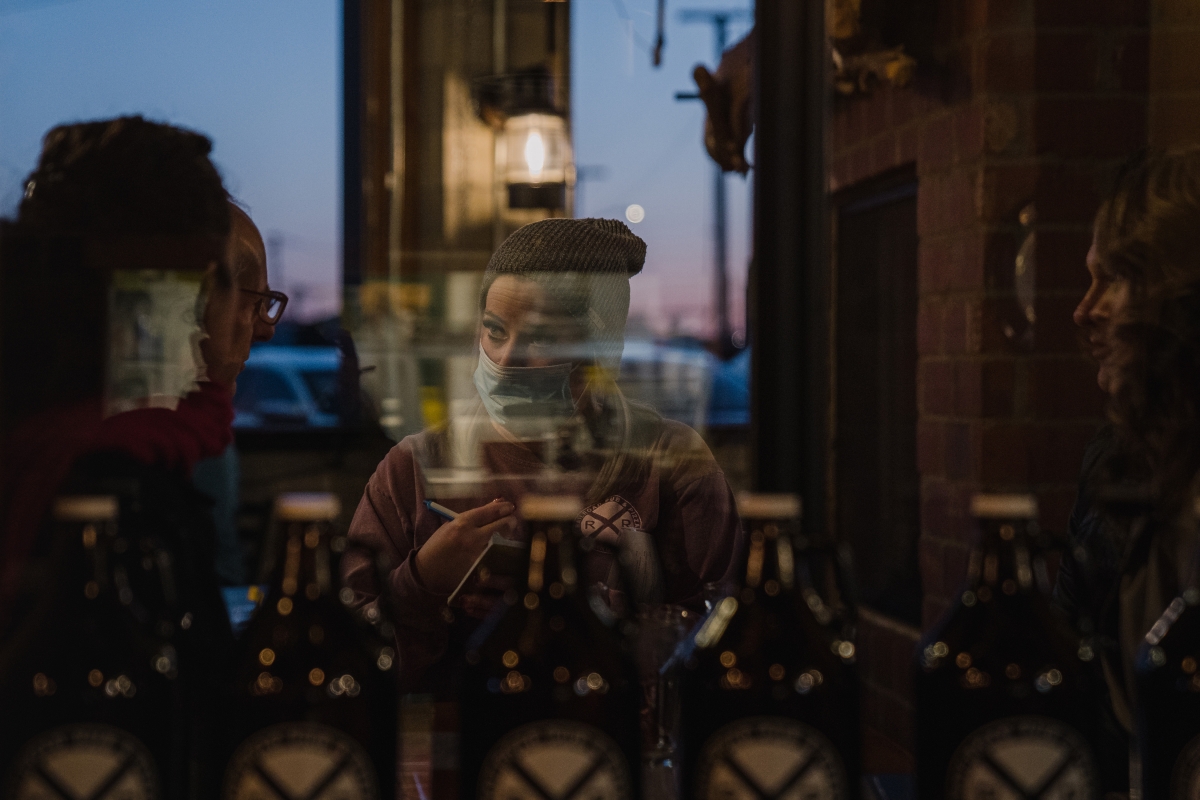
InternationalFeb 11. 2021Bri Yeager, a server at Railroad Pub and Pizza in Burlington, Wash., prepares a table for diners. MUST CREDIT: Photo for The Washington Post by Jovelle TamayoBri Yeager, a server at Railroad Pub and Pizza in Burlington, Wash., prepares a table for diners. MUST CREDIT: Photo for The Washington Post by Jovelle Tamayo
By The Washington Post · Chris Mooney

With its five wall-length windows, Nick Crandall’s restaurant, Railroad Pub & Pizza, can bring in a lot of outside air. In late December, though, Washington state regulators said the restaurant could not qualify as “outdoor” dining, and would have to close because of heightened coronavirus restrictions.

So Crandall went to Facebook to protest, giving a video tour of the Burlington, Wash., pub and its vast, garage-door-style windows. “I’m just kind of curious on what the science is for outdoor dining, how much airflow you need to do,” he said. He took aim at the state’s Democratic governor, Jay Inslee, suggesting he use “common sense.” The video was viewed over 73,000 times.

It may sound like yet another politicized, Trump-era battle over coronavirus restrictions – yet this one ended in something that looks less like polarization and more like compromise.After Crandall and others complained and took to the media, state regulators introduced a new policy, which appears to be one of the first of its kind, allowing certain restaurants to count as “open air” dining even if they have four walls. In a new pandemic trend, these establishments can open up large windows or doors and actively measure levels of carbon dioxide, the gas we all exhale when breathing, as a key indicator of how much fresh air is circulating.

Now Crandall’s restaurant is open again – with a CO2 monitor whose reading he tries to keep under 450 parts per million, only slightly higher than levels in the outside air, per state policy. Thanks to the human burning of fossil fuels, outdoor levels currently average around 415 parts per million, and are steadily rising.

It’s part of a new wave as scientists, citizens and businesses including gyms, restaurants and bars try to quantify the airborne coronavirus risk in hopes of staying open. Sales of handheld carbon dioxide monitors have boomed, so much that one popular model, the $250 Aranet4, sold out rapidly, requiring its Latvia-based manufacturer, SAF Tehnika, to dramatically ramp up production.

“We did not expect to, you know, have this increase so exponential,” said Toms Rekšņa, marketing director for the Aranet, speaking from the country’s capital, Riga.

The trend is also catching on fast with a number of coronavirus activists – or citizen scientists – who tweet out their readings in different locations and use the hashtag #covidco2. In Australia, a group of “CO2Guerillas” have been documenting measurements in grocery stores, doctor’s offices, and businesses, often displaying very high levels of carbon dioxide. In Japan, the use of monitors is also catching on, including on a massive screen recently at a concert venue.

The impetus for measuring carbon dioxide is simple: An increasingly powerful body of evidence suggests the coronavirus is airborne, capable of traveling distances well beyond six feet in tiny aerosols released when infected people talk, shout, sing or just breathe. But there’s currently no sensor that can monitor, in real time, whether these infectious aerosols are floating around us when we’re indoors.

But carbon dioxide can, in some ways, act as a proxy. People exhale it when they breathe, and the gas builds up in indoor spaces that aren’t well ventilated, reaching concentrations far above the baseline level of outside air.

“It gives you some insight into ventilation, which is really hard to figure out otherwise,” explains Linsey Marr, an aerosol expert at Virginia Tech. “Even building owners and managers often don’t know much about the ventilation. The person who knows is the person who installed it, and they are usually long gone.”

Marr is a medical adviser to the network of CrossFit gyms – installing indoor monitors is now part of their coronavirus guidelines, at her urging.

Longtime experts on indoor air say the heightened attention to ventilation is very valuable, and that carbon dioxide measurements can definitely be useful. Yet amid the grass-roots frenzy to find the next gadget that can confer a safety edge during the pandemic, some worry about misunderstandings.

“It is a piece of information, not a smoking gun,” said indoor air expert Jeffrey Siegel of the University of Toronto. “If you have a long period of measurement in a space with a sensor that you know how to interpret, then it means something different than if you bring a sensor inside, read a few minutes of data, and say, ‘Oh, my God, the ventilation doesn’t work.'”

In Washington state, the new regulation calls for restaurants to bring in so much outside air that concentrations stay below 450 parts of carbon dioxide per million. MUST CREDIT: Photo for The Washington Post by Jovelle Tamayo

In Washington state, the new regulation calls for restaurants to bring in so much outside air that concentrations stay below 450 parts of carbon dioxide per million. MUST CREDIT: Photo for The Washington Post by Jovelle Tamayo

When scientists want to measure carbon dioxide to a very high level of accuracy, they use sophisticated lab equipment. It can cost thousands of dollars. That is not what citizen activists are generally using during the pandemic.

Rather, a variety of handheld or mountable sensors, costing around $100 and up, have become popular. Experts recommend devices that use a technology called non-dispersive infrared sensing (NDIR), a well-known technique based on the same basic physical principles that drive the so-called greenhouse effect. Whether in the atmosphere or a small chamber within your sensor, carbon dioxide absorbs a type of radiation with a wavelength longer than that of visible light, often dubbed infrared or heat radiation.

At the scale of the Earth, greenhouse gases like carbon dioxide not only absorb this type of radiation but also re-emit it, keeping some of the heat within the planet’s system, rather than letting it escape to space. Within the far smaller sensor, infrared gets beamed from one side of a chamber to the other, and carbon dioxide concentrations are calculated based on how much radiation arrives at the other end without being absorbed by the gas.

In theory, at least, such measurements can give a good sense of how many humans have been exhaling into a space, and how much their breath is lingering.

“The reason CO2 measurements are important is that they can give an indication of how much air you are breathing that is coming out of other people’s respiratory systems,” says Richard Corsi, an indoor air quality expert at Portland State University who has been taking carbon dioxide measurements for years with many different instruments.

A critical figure, Corsi says, is the “rebreathe fraction,” which refers to the percentage of the air you breathe in that others in the same indoor space recently breathed out. For instance, he has calculated that when the indoor concentration of carbon dioxide reaches 800 parts per million, then each time you breathe in, one percent of the air you inhale has come from the exhalations of others. During a pandemic, that’s an alarming thought.

But carbon dioxide concentrations of 1,000, 2,000, or even 4,000 can be found in poorly ventilated indoor spaces, where people simply aren’t aware how much of the gas has built up.

“Many teachers are reporting, they say they have 2,000, 5,000, and then curves of it going up in classes,” said Jose-Luis Jimenez, an aerosol science expert at the University of Colorado at Boulder who has promoted the use of the sensors and has been involved in testing a number of them for accuracy.

It is very good news that the pandemic has raised our consciousness about the quality of air within buildings, a subject that has been neglected for decades, say longtime experts such as Corsi and the University of Toronto’s Siegel. And in their field, carbon dioxide has long been used as a proxy for how well ventilated a space is by outside air.

But at the same time, these scientists worry that carbon dioxide measurements can be misinterpreted or even, in some cases, give a false sense of security.

Siegel warns, for instance, that handheld devices can require calibration, can sometimes be confounded by other greenhouse gases (such as water vapor), and can drift in their measurements as time passes. That doesn’t make measurements useless, he said – but it does mean that you have to have some experience with your instrument, and should be measuring consistently over time.

“The more engagement with indoor air, the better everything is,” he said. “But the problem is, good indoor air or bad indoor air is not defined by a spot measurement of CO2 with a low-cost sensor, without appropriate interpretation.”

Corsi, meanwhile, cautions that even if very low or very high carbon dioxide concentrations may appear easy to interpret, many readings will fall into more of a gray area, somewhere between around 700 to 1000 parts per million.

Are you safe in such a space? The answer is, it depends. For instance, Corsi notes, a space with 25 people in it and a CO2 measurement of 700 parts per million is far better ventilated than one with three people in it and the same measurement.

Moreover, he adds, if a room has a portable HEPA air filter, or a good HVAC system with similarly strong filters (properly installed), then your risk will be lower even though carbon dioxide levels may seem a tad high. Carbon dioxide, a tiny molecule, passes right through these filters, even though the larger aerosols containing viruses can be caught by them.

“I think a single point measurement of CO2 can tell you something in the extremes, but when you get into this middle, typical area, there’s a lot of nuance,” Corsi said. Ideally, he thinks, there should be an app that would help people interpret CO2 levels by inputting other information, such as the number of people in a space and how much time they plan on spending there.

Rekšņa, marketing director for the Aranet, says the device’s start-up guide tells users how to calibrate it, and after that it is accurate to within about 50 parts per million (which would certainly be enough to distinguish low concentrations from high ones).

“We have dedicated technical support for the whole business ecosystem where we try to explain these things,” he said. “We have recently launched an Aranet forum as well. So we do try to inform the consumers as much as possible.”

One more thing to keep in mind: Just as has happened with outdoor air all across the Earth, humans can fill the air indoors with carbon dioxide by burning wood or fossil fuels, such as in fireplaces and gas stoves. In these cases, concentrations can spike for reasons that have nothing to do with our breathing.

In other words, CO2 measurements can be useful and informative, but have to be understood in context.

– – –

Still, the baseline principle is hard to dispute: If carbon dioxide levels are very low in a business, or office, or grocery store, or wherever – then your coronavirus transmission risk is probably also low, at least from people who aren’t very close to you. (The risk will be lower still if people are also masked and wearing their masks properly.)

What’s unfolding in Washington state right now may be a case study of how well – or how poorly – the technique can be employed through a concerted policy effort involving state regulators and individual businesses.

“There’s been a number of studies that have used CO2 levels as kind of a risk proxy for covid,” said Sheri Sawyer, a policy adviser to the state’s governor, Inslee, who was centrally involved in issuing the new guidance on “open air” dining. The document is a joint product of the state’s health department and its Department of Labor and Industries.

“And we thought that made great sense for businesses to use that as a tool for what their risk is for covid transmission.”

“It’s kind of uncharted territory,” Sawyer continued. “But certainly, given what businesses are going through, we think it’s a worthy endeavor to try to figure these answers out.”

The new Washington state policy is one factor that is driving “a tremendous spike in demand for these products,” said Travis Lenander, the CEO of CO2Meter.com, which manufactures the devices used in Crandall’s restaurant.

Indeed, Sawyer says the state is now receiving a large number of questions from businesses about how to use carbon dioxide monitors, and suggests that this is probably the beginning of a lengthy dialogue between the state and its restaurants and other venues. The state has just added an FAQ document to further help restaurants learn to use their monitors, adjust them when needed and set up spaces with good airflow.

The large response so far is “a sign businesses are seeing this as a way they can open up,” she said.

That’s certainly how Crandall, in Burlington, feels. “Everybody is trying to figure out how to open their doors, and spending all this money on heaters, and trying to figure out these CO2 detectors,” said Crandall, who has also installed one at his other business, the Train Wreck Bar & Grill.

“You’ve got all these employees that you want to get hired back, and get your system up rolling again, and hopefully you can start paying your bills and get ahead again.”

4 takeaways from Day 2 of Trump’s impeachment trial #SootinClaimon.Com

#SootinClaimon.Com : ขอบคุณแหล่งข้อมูล : หนังสือพิมพ์ The Nation.

4 takeaways from Day 2 of Trump’s impeachment trial

InternationalFeb 11. 2021

By The Washington Post · Aaron Blake

Democratic House impeachment managers on Wednesday began formally laying out their case that President Donald Trump incited the rioters who stormed the U.S. Capitol on Jan. 6. They are allowed 16 hours, spread over two days, to make their arguments.

Below are some early takeaways from Day 2 of the Senate impeachment trial.

1. Raskin’s extended fire-in-a-theater metaphor

While Tuesday’s presentation was mostly about emotion – Democratic impeachment managers sought to emphasize the importance of the trial to pass a procedural hurdle – Wednesday was more about actually connecting things to Trump.

It’s one thing to remind viewers that bad stuff happened, after all. But to prove incitement, you need to argue that Trump actually caused it to happen.

Rep. Jamie Raskin, D-Md., the lead impeachment manager, sought to do that early in his presentation. Trump’s team has broadly referred to Trump’s claims of free speech while ignoring the established limits on such speech, which include incitement and defamation. The generic example is shouting fire in a crowded theater. Yes, you have free speech, but no, you can’t just say whatever you want, because your words have consequences for other people.

Raskin rode that metaphor:

“This case is much worse than someone who falsely shouts ‘Fire!’ in a crowded theater. It’s more like a case where the town fire chief who’s paid to put out fires sends a mob not to yell ‘Fire!’ in a crowded theater but to actually set the theater on fire, and who then when the fire alarms go off and the calls start flooding into the fire department asking for help, does nothing but sit back, encourage the mob to continue its rampage and watch the fire spread on TV with glee and delight.

“So then we say this fire chief should never be allowed to hold this public job again, and you’re fired and you’re permanently disqualified.”

There are limits to the metaphor. Trump’s response was delayed, even by the accounts of GOP senators and some former White House aides. He also offered words of praise for the rioters, expressing “love” for them even as it was occurring and later saying it would be a day for them to remember. But he did, in the same “love” video, tell them to go home peacefully.

Trump often mixes his messages like this, giving himself plausible deniability while seeming to send a message. His team will focus on the “go home” stuff rather than the “We love you” stuff. It’s up to Democrats to argue that his encouragement and negligence outweighed these messages.

Expect that argument to rely heavily upon the statements of rioters who say they were encouraged by Trump to act – along with accounts that Trump was happy about the scenes he was seeing on TV.

2. Connecting the dots on subversion

Democrats’ impeachment article focused mostly on one event: Trump’s Jan. 6 speech on the Ellipse. It also mentioned Trump’s call to Georgia Secretary of State Brad Raffensperger, a Republican, in which he asked the official to “find” enough votes to flip the state, as well as a broad reference to Trump’s “prior efforts to subvert and obstruct the certification of” election results.

Given that, there was a real question about how far back in history they would go and what they would use to prove incitement – including whether and how much they would lump in Trump’s past references to violence by his supporters.

Early on, they did go through some of that history, while focusing more on Trump’s subversion of the election.

Rep. Joaquin Castro, D-Texas,) laid out a timeline of events dating to the summer, noting Trump laid a predicate for claiming the election was stolen as far back as June. Trump made these claims long before even mail ballots were sent out. The argument: He was whipping up his supporters for a moment like Jan. 6 for a very long time.

“This attack did not come from one speech, and it didn’t happen by accident,” Castro said. “The evidence shows clearly that this mob was provoked over many months by Donald J. Trump. And if you look at the evidence, his purposeful conduct, you’ll see that the attack was foreseeable and preventable.”

Castro pointed to Trump’s tweets and comments as early as May saying that the only way he would lose the election was if it was rigged – despite polls at the time repeatedly showing his loss was the likeliest outcome. He played clips of Trump supporters who internalized this message and took it at face value. He also played clips of people, even as the votes were being counted, rising up in protest – scenes that bore a less violent resemblance to what transpired Jan. 6.

Rep. Eric Swalwell, D-Calif., said Trump sought to “prime” his supporters for Jan. 6 for months.

“That took time,” Swalwell said, revisiting the fire metaphor. “Just like to build a fire, it doesn’t just start with the flames. Donald Trump for months and months assembled the tinder, the kindling, threw on logs for fuel to have his supporters believe that the only way their victory would be lost was if it was stolen – so that way President Trump was ready, if he lost the election, to light the match.”

There is no question that Trump’s claims about the election have been routinely wrong; the courts have ruled as such. Claiming an election will be stolen months before it’s held also speaks to the idea that he was planning for a specific eventuality.

The challenge for Democrats, from there, is to argue that this wasn’t just an effort to save face – to pretend he never lost. Playing with fire is different from deliberately lighting it. On that front, you would think they’ll soon talk about the many ways in which he seemed to offer a specific course of action in the situation he spent so many months preparing his supporters for.

3. References to Trump and violence

Democrats did get around to highlighting Trump’s past rhetoric encouraging and suggesting violence by his supporters, while keeping it focused on events surrounding the election.

Del. Stacey Plaskett of the Virgin Islands was given an unusually large platform for a non-voting member of Congress. She used it to lay out Trump’s past comments about such violence.

She noted that Trump endorsed his supporters surrounding a Biden campaign bus on a Texas highway just before the election and, according to some accounts, attempting to drive it off the road. Trump tweeted a video with fight music behind it and said at the time, “These patriots did nothing wrong.” Sen. Marco Rubio, R-Fla., also approved of the scene.

An organizer of that event was later involved in encouraging people to storm the Capitol, having cited flimsy fencing around the Capitol and using a bullhorn to urge people to enter the building.

The second major event she spotlighted was Trump being asked at a September presidential debate to repudiate more extreme elements of the conservative movement, during which he told the Proud Boys to “stand back and stand by.” The comment, like many of Trump’s which will be at issue in the trial, was criticized for promoting potential violence which eventually became a reality. The Proud Boys also used it as a mantra, suggesting they viewed it as encouragement. And they figured prominently in the storming of the Capitol.

“This was not just one reference or a message to supporters by a politician to fight for a cause,” Plaskett said. “He’d assembled thousands of violent people, people he knew were capable of violence, people he had seen be violent. They were standing now in front of him. And then he pointed to us (in Congress), lit the fuse and sent an angry mob.”

Thus far, Democrats haven’t delved more deeply into Trump’s past suggestions or endorsements of violence, outside the context of the election. Plaskett’s presentation was focused upon those specific ones, which could be more directly attached to those who literally stormed the Capitol.

But there is plenty of grist for that mill beyond what she referenced, which could come later in the Democrats’ presentation.

4. The deliberate-negligence argument

One way to drive home the above point is to note that Trump didn’t just light the fire – he declined to snuff it once it started burning. That shows that, at the very least, this was an outcome he was OK with, even if he didn’t outright desire it.

Democrats set about making such an argument – call it deliberate negligence – on Tuesday.

Beyond Raskin’s allusion to Trump deciding to “sit back” and let it happen, Castro and Swalwell noted that some officials had warned about the possibility of such scenes weeks beforehand, but Trump did little. Swalwell contrasted this with Trump’s other calls to action.

“‘Stop the count.’ ‘Stop the steal,'” Swalwell said, referring to Trump’s post-election tweets alleging fraud. “President Trump was never shy about using his platforms to try and stop something. He could have very easily told his supporters: Stop threatening officials. Stop going to their homes. Stop it with the threats. But each time he didn’t. Instead, in the face of escalating violence, he incited them further.”

Democrats signaled this will be a focal point of the case against Trump, including Trump’s tweet attacking Vice President Mike Pence, even shortly after Pence had been removed from the chamber for his safety.

“You will see his relentless attack on Vice President Pence, who was, at that very moment, hiding with his family as armed extremists were chanting, ‘Hang Mike Pence!,’ calling him a traitor,” said Rep. Joe Neguse, D-Colo., another impeachment manager. He added: “If as soon as this had started, President Trump had simply gone on to TV, just logged on to Twitter and said, ‘Stop the attack,’ if he had done so with even half as much force as he said, ‘Stop the steal,’ how many lives would we have saved? Sadly, he didn’t do that.”

A majority of the people arrested for Capitol riot had a history of financial trouble #SootinClaimon.Com

#SootinClaimon.Com : ขอบคุณแหล่งข้อมูล : หนังสือพิมพ์ The Nation.

A majority of the people arrested for Capitol riot had a history of financial trouble

InternationalFeb 11. 2021Thousands of Trump supporters violently storm the U.S. Capitol on Jan. 6, 2021, to support President Trump's baseless claims that he won the election. MUST CREDIT: Washington Post photo by Michael Robinson ChavezThousands of Trump supporters violently storm the U.S. Capitol on Jan. 6, 2021, to support President Trump’s baseless claims that he won the election. MUST CREDIT: Washington Post photo by Michael Robinson Chavez



By The Washington Post · Todd C. Frankel

WASHINGTON – Jenna Ryan seemed like an unlikely participant in the mob that stormed the U.S. Capitol on Jan. 6. She was a real estate agent from Texas. She flew into Washington on a private jet. And she was dressed that day in clothes better suited for a winter tailgate than a war.

Yet Ryan, 50, is accused of rushing into the Capitol past broken glass and blaring security alarms and, according to federal prosecutors, shouting: “Fight for freedom! Fight for freedom!”

But in a different way, she fit right in.

Despite her outward signs of success, Ryan had struggled financially for years. She was still paying off a $37,000 lien for unpaid federal taxes when she was arrested. She’d nearly lost her home to foreclosure before that. She filed for bankruptcy in 2012 and faced another IRS tax lien in 2010.

Nearly 60% of the people facing charges related to the Capitol riot showed signs of prior money troubles, including bankruptcies, notices of eviction or foreclosure, bad debts, or unpaid taxes over the past two decades, according to a Washington Post analysis of public records for 125 defendants with sufficient information to detail their financial histories.

The group’s bankruptcy rate – 18% – was nearly twice as high as that of the American public, The Post found. A quarter of them had been sued for money owed to a creditor. And 1 in 5 of them faced losing their home at one point, according to court filings.

The financial problems are revealing because they offer potential clues for understanding why so many Trump supporters – many with professional careers and few with violent criminal histories – were willing to participate in an attack egged on by the president’s rhetoric painting him and his supporters as undeserving victims.

While no single factor explains why someone decided to join in, experts say, Donald Trump and his brand of grievance politics tapped into something that resonated with the hundreds of people who descended on the Capitol in a historic burst of violence.

“I think what you’re finding is more than just economic insecurity but a deep-seated feeling of precarity about their personal situation,” said Cynthia Miller-Idriss, a political science professor who helps run the Polarization and Extremism Research Innovation Lab at American University, reacting to The Post’s findings. “And that precarity – combined with a sense of betrayal or anger that someone is taking something way – mobilized a lot of people that day.”

The financial missteps by defendants in the attempted insurrection ranged from small debts of a few thousand dollars more than a decade ago to unpaid tax bills of $400,000 and homes facing foreclosure in recent years. Some of these people seemed to have regained their financial footing. But many of them once stood close to the edge.

Ryan had nearly lost everything. And the stakes seemed similarly high to her when she came to Washington in early January. She fully believed Trump’s false claims that the election was stolen and that he was going to save the country, she said in an interview with The Post.

But now – facing federal charges and abandoned by people she considered “fellow patriots” – she said she feels betrayed.

“I bought into a lie, and the lie is the lie, and it’s embarrassing,” she said. “I regret everything.”

The FBI has said it found evidence of organized plots by extremist groups. But many of the people who came to the Capitol on Jan. 6 – including Ryan – appeared to have adopted their radical outlooks more informally, consuming conspiracy theories about the election on television, social media and right-wing websites.

The poor and uneducated are not more likely to join extremist movements, according to experts. Two professors a couple of years ago found the opposite in one example: an unexpectedly high number of engineers who became Islamist radicals.

In the Capitol attack, business owners and white-collar workers made up 40% of the people accused of taking part, according to a study by the Chicago Project on Security and Threats at the University of Chicago. Only 9 percent appeared to be unemployed.

The participation of people with middle- and upper-middle-class positions fits with research suggesting that the rise of right-wing extremist groups in the 1950s was fueled by people in the middle of society who felt they were losing status and power, said Pippa Norris, a political science professor at Harvard University who has studied radical political movements.

Miller-Idriss said she was struck by a 2011 study that found household income was not a factor in whether a young person supported the extreme far right in Germany. But a highly significant predictor was whether they had lived through a parent’s unemployment.

“These are people who feel like they’ve lost something,” Miller-Idriss said.

Going through a bankruptcy or falling behind on taxes, even years earlier, could provoke a similar response.

“They know it can be lost. They have that history – and then someone comes along and tells you this election has been stolen,” Miller-Idriss said. “It taps into the same thing.”

Trump’s false claims about election fraud – refuted by elections officials and rejected by judges – seemed tailored to exploit feelings about this precarious status, said Don Haider-Markel, a political science professor at the University of Kansas who studies political extremism.

“It’s hard to ignore with a Trump presidency that message that ‘the America you knew and loved is going away, and I’m going to protect it,'” Haider-Markel said. “They feel, at a minimum, that they’re under threat.”

While some of the financial problems were old, the pandemic’s economic toll appeared to inflict fresh pain for some of the people accused of participating in the attempted insurrection.

A California man filed for bankruptcy one week before allegedly joining the attack, according to public records. A Texas man was charged with entering the Capitol one month after his company was slapped with a nearly $2,000 state tax lien.

Several young people charged in the attack came from families with histories of financial duress.

The parents of Riley June Williams – a 22-year-old who allegedly helped to steal a laptop from House Speaker Nancy Pelosi’s Capitol office – filed for bankruptcy when she was a child, according to public records. A house owned by her mother faced foreclosure when she was a teenager, records show. Recently, a federal judge placed Williams on home confinement with her mother in Harrisburg, Pa. Her federal public defender did not respond to a request for comment.

People with professional careers such as respiratory therapist, nurse and lawyer were also accused of joining in.

One of them was William McCall Calhoun, 57, a well-known lawyer in Americus, Ga., 130 miles south of Atlanta, who was hit with a $26,000 federal tax lien in 2019, according to public records. A woman who knows Calhoun, who spoke on the condition of anonymity to talk candidly, said he started to show strong support for Trump only in the past year. An attorney for Calhoun declined to comment.

Ashli Babbitt, who was shot and killed by police when she tried to leap through a door’s broken window inside the Capitol, had struggled to run a pool-service company outside San Diego and was saddled with a $23,000 judgment from a lender in 2017, according to court records.

Financial problems were also apparent among people federal authorities said were connected to far-right nationalist groups, such as the Proud Boys.

Dominic Pezzola, who federal authorities said is a member of the Proud Boys, is accused of being among the first to lead the surge inside the Capitol and helping to overwhelm police. Up to 140 officers were injured in the storming of the Capitol and one officer, Brian Sicknick, was killed.

Pezzola, of Rochester, N.Y., also has been named in state tax warrants totaling more than $40,000 over the past five years, according to public records. His attorney declined to comment.

The roots of extremism are complex, said Haider-Markel.

“Somehow they’ve been wronged, they’ve developed a grievance, and they tend to connect that to some broader ideology,” he said.

Ryan, who lives in Frisco, Texas, a Dallas suburb, said she was slow to become a big Trump supporter.

She’s been described as a conservative radio talk show host. But she wasn’t a budding Rush Limbaugh. Her AM radio show each Sunday focused on real estate, and she paid for the airtime. She stopped doing the show in March, when the pandemic hit.

But she continued to run a service that offers advice for people struggling with childhood trauma and bad relationships. Ryan said the work was based on the steps she took to overcome her own rough upbringing.

Twice divorced and struggling with financial problems, Ryan developed an outlook that she described as politically conservative, leaning toward libertarian.

But politics was not her focal point until recently. She recalled being upset when President Barack Obama won reelection in 2012. And she preferred Trump over Hillary Clinton four years later. But she said she wasn’t strident in her support for Trump.

That changed as the 2020 election approached.

She said she started reading far-right websites such as Epoch Times and Gateway Pundit. She began streaming shows such as Alex Jones’s “Infowars” and former Trump campaign manager Steve Bannon’s “War Room: Pandemic.” She began following conspiracy theories related to QAnon, a sprawling set of false claims that have coalesced into an extremist ideology. She said she didn’t know if the posts were true, but she was enthralled.

“It was all like a football game. I was sucked into it. Consumed by it,” Ryan said.

She attended the first protest in her life in April, going to Austin to vent about the state’s pandemic lockdown orders. That was followed by a rally for Shelley Luther, who gained national attention for reopening her beauty salon in Dallas in defiance of the lockdown.

Ryan said she traveled to Trump’s “Save America” rally on a whim. A Facebook friend offered to fly her and three others on a private plane.

They arrived in Washington a day early and got rooms at a Westin hotel downtown, Ryan said.

It was her first trip to the nation’s capital.

The next morning, Jan. 6, the group of friends left the hotel at 6 a.m., Ryan said. She was cold, so she bought a $35 knit snow hat with a “45” emblem from a souvenir shop. They then followed the crowd streaming toward the National Mall.

“My main concern was there were no bathrooms. I kept asking, ‘Where are the bathrooms?'” she said. “I was just having fun.”

They listened to some of the speakers. But mostly they walked around and took photos. She felt like a tourist. They grabbed sandwiches at a Wawa convenience store for lunch. They hired a pedicab to take them back to the hotel.

She drank white wine while the group watched on television as Congress prepared to certify the electoral college votes. They listened to clips of Trump telling rallygoers to walk to the Capitol and saying, “We fight like hell, and if you don’t fight like hell you’re not going to have a country anymore.”

They decided to leave the hotel and go to the Capitol.

Ryan said she was reluctant.

But she also posted a video to her Facebook account that showed her looking into a bathroom mirror and saying, according to an FBI account of her charges: “We’re gonna go down and storm the capitol. They’re down there right now and that’s why we came and so that’s what we are going to do. So wish me luck.”

She live-streamed on Facebook. She posted photos to Twitter. She got closer to the Capitol with each post. She stood on the Capitol’s steps. She flashed a peace symbol next to a smashed Capitol window. The FBI also found video of her walking through doors on the west side of the Capitol in the middle of a packed crowd, where she said into a camera, according to the bureau: “Y’all know who to hire for your realtor. Jenna Ryan for your realtor.”

The FBI document does not state how long Ryan spent inside the building. She said it was just a few minutes. She and her new friends eventually walked back to the hotel, she said.

“We just stormed the Capital,” Ryan tweeted that afternoon. “It was one of the best days of my life.”

She said she realized she was in trouble only after returning to Texas. Her phone was blowing up with messages. Her social media posts briefly made her the infamous face of the riots: the smiling real estate agent who flew in a private jet to an insurrection.

Nine days later, she turned herself in to the FBI. She was charged with two federal misdemeanors related to entering the Capitol building and disorderly conduct. Last week, federal authorities filed similar charges against two others on her flight: Jason L. Hyland, 37, of Frisco, who federal authorities said organized the trip, and Katherine S. Schwab, 32, of Colleyville, Texas.

Ryan remained defiant at first. She clashed with people who criticized her online. She told a Dallas TV station she deserved a presidential pardon.

Then Trump left for Florida. President Joe Biden took office. And Ryan, at home in Texas, was left to wonder what to do with her two mini-goldendoodle dogs if she goes to prison.

“Not one patriot is standing up for me,” Ryan said recently. “I’m a complete villain. I was down there based on what my president said. ‘Stop the steal.’ Now I see that it was all over nothing. He was just having us down there for an ego boost. I was there for him.”

‘I’m not a cat’: Lawyer’s struggle with Zoom filters makes for instant Internet catnip #SootinClaimon.Com

#SootinClaimon.Com : ขอบคุณแหล่งข้อมูล : หนังสือพิมพ์ The Nation.

‘I’m not a cat’: Lawyer’s struggle with Zoom filters makes for instant Internet catnip

InternationalFeb 11. 2021

By The Washington Post · Meryl Kornfield, Kim Bellware, Hannah Knowles

As far as courtroom disclosures, this one was unique: “I’m not a cat,” a Texas attorney claimed as his Zoom square displayed a fluffy, white feline.

https://www.washingtonpost.com/video/c/embed/ff5ef92a-8a68-407e-8c16-932ca6e78122

At a routine civil forfeiture case hearing in Texas’ 394th Judicial District Court, Rod Ponton, Presidio County attorney, accidentally signed on with the cat filter, making the flummoxed attorney look like an adorable kitten. The 34-second clip of Ponton’s brief appearance as a cat immediately amusing many and becoming a viral hit among the likes of Vermont Sen. Bernie Sander’s mittens and runaway llamas at a time when court events are frequently held virtually.

The prevalence of video chat platforms for court appearances has led to other unusual moments: A defendant in Sacramento appeared from a barber’s chair, a Florida burglary suspect tried to shoot his shot with a judge and a lawyer in Peru was caught on camera naked after he stripped to have sex. But Tuesday’s video was the cat’s pajamas to many.

Even Ponton, once he recovered from cat face and mortification, found humor in his proverbial 15 minutes of fame.

“At first I was worried about it,” Ponton, 69, told The Washington Post on Tuesday, “but then I realized as it was going viral if the country could take a moment to laugh at my cat moment at my expense, I’ll take it. We’ve had a stressful year.”

Judge Roy Ferguson, who was presiding over the hearing, was the first to mention the cat filter.

For the first few seconds, it seemed a cat had Ponton’s tongue as he silently tried to revert the effect, giving an illusion that the virtual kitten’s delightfully wide eyes were darting back and forth.

“Mr. Ponton I believe you have a filter turned on in the video settings,” Ferguson said.

Ponton interrupted the judge with an exacerbated guttural noise.

“Auughh,” he exclaimed. “we’re trying to – can you hear me judge?”

The video’s sound was fine.

“I can hear you,” Ferguson told the cat lawyer. “I think it’s a filter.”

“It is,” Ponton said, the kitten’s head bobbing up and down to signal Ponton was nodding.

“I don’t know how to remove it. I got my assistant here trying to…” Ponton added, trailing off.

“I’m prepared to go forward with it,” Ponton said, not wanting to pussyfoot around. “I’m here live.”

“I’m not a cat,” Ponton promised as the cat mouthed what he was saying.

“I can see that,” Ferguson said after a pause.

Eventually, Ponton figured out how to remove the filter and the rest of the hearing proceeded as normal. He said he was using his legal assistant’s computer in his office and believes her daughter may have swapped in the filter before he logged on.

Seeing the moment as an educational opportunity, Ferguson posted the video and it was shared by Texas attorney Kendyl Hanks and Reuters U.S. Supreme Court reporter Lawrence Hurley. By Tuesday evening, one version on Twitter had been viewed more than 18 million times.

“It’s something that’s given the world a smile – and it’s an innocent smile at no one’s expense,” Ferguson told The Post.

Reaction to the video was immediate: People jokingly compared the cat lawyer’s hearing to the ongoing Impeachment hearing, photoshopping a cat head over the face of Trump lawyer Bruce Castor Jr. Many joked the viral moment could end badly, alluding to Milkshake Duck, a meme that describes people who initially are perceived as good but later revealed to be flawed.

Ponton, a well-regarded lawyer, is a former city attorney for Alpine, the small Texas city where he currently practices law, the Dallas Morning News reported. In 2019, Ponton appeared in a Netflix documentary series, The Confession Killer, about one of his former clients, convicted serial killer Henry Lee Lucas, according to the newspaper.

Now, Ponton has joined the ranks of others who gained fame during the pandemic for Zoom antics, including a boss who accidentally showed up to a Monday virtual meeting as a potato.

Since the start of the pandemic, Texas courts have held more than 1 million virtual hearings, leaving Ferguson often in charge of guiding others through technical difficulties, he said.

“That’s part of my job now in the pandemic – to fix everything that can go wrong,” he said.

The 394th Judicial District has no IT department, Ferguson said, and covers a roughly 25,000-mile rural area of western Texas nestled between Mexico and New Mexico. Ferguson, who has presided over cases via Zoom since last March, said he’s seen “everything possible that could go wrong” with a virtual hearing.

His best tip for those appearing virtually before a judge: You’re still in the courtroom – and audible to the judge – after he adjourns the virtual hearing. “There are some very colorful things from lawyers being heard,” Ferguson said. “Watch what you say, because YouTube hears all and never forgets.”

Ferguson also said that while he was genuinely happy to see people enjoy a laugh – one he hopes is with the lawyers and not at them – he views the video as a testament to the professionalism of Texas lawyers, as the other attorney present was notably straight-faced in the video.

“Every one of those people in that room kept their composure,” Ferguson said. “The lawyer who was, I guess you would say the butt of the joke, has handled it with absolute grace.”

Ponton, who says he prefers dogs to cats if you ask (and we did), has another tip to take from the tale: “It happened to me today, it can happen to you tomorrow.”

Hong Kong to reopen venues, relax distancing rules as cases drop #SootinClaimon.Com

#SootinClaimon.Com : ขอบคุณแหล่งข้อมูล : หนังสือพิมพ์ The Nation.

Hong Kong to reopen venues, relax distancing rules as cases drop

InternationalFeb 11. 2021

By Syndication Washington Post, Bloomberg · Jinshan Hong

Hong Kong will allow restaurant dining-in services until 10 p.m. and relax other social-distancing rules after the Chinese New Year, as the city tries to move past a winter wave that’s throttled the economy.

The city will permit four people per dining table, doubling from the current limit of two, starting from Feb. 18, if the virus remains contained over the Lunar New Year, officials said at a briefing on Wednesday. Venues ranging from indoor and outdoor sports centers, beauty parlors, theme parks and cinemas will also be allowed to reopen.

“We are cautiously positive on the epidemic,” Food and Health Secretary Sophia Chan said. “If Hong Kong residents continue to observe social-distancing rules, following this trend, we hope we can resume normal life after Lunar New Year.”

Hong Kong will require staff virus tests if businesses want to reopen. The government is also discussing relaxing the public gathering rule to four people as well, from the current limit of two, according to Chan.

The Asian financial hub has seen cases fading to a few dozens in the past week, after Hong Kong deployed compulsory testing and neighborhood lockdowns in an attempt to achieve zero cases in the community. The closure of schools and some businesses has been in place for over two months, and has been extended into the New Year holidays.

A panel of experts on Wednesday postponed a decision on recommending a second vaccine for the city. It announced they will seek more data from Sinovac Biotech Ltd. on its vaccine before it meets again in two weeks to review its emergency use application.

The vaccine developed by BioNTech SE and Pfizer Inc. already received a greenlight last month. The city is expected to start its inoculation program as early as the end of February.

Myanmar faces wider business fallout after Kirin retreat #SootinClaimon.Com

#SootinClaimon.Com : ขอบคุณแหล่งข้อมูล : หนังสือพิมพ์ The Nation.

Myanmar faces wider business fallout after Kirin retreat

InternationalFeb 11. 2021A demonstrator holds up a National League for Democracy (NLD) flag during a protest outside the Embassy of Myanmar in Bangkok, Thailand, on Feb. 1 2021. MUST CREDIT: Bloomberg photo by Andre Malerba.A demonstrator holds up a National League for Democracy (NLD) flag during a protest outside the Embassy of Myanmar in Bangkok, Thailand, on Feb. 1 2021. MUST CREDIT: Bloomberg photo by Andre Malerba.
By Syndication Washington Post, Bloomberg · Faris Mokhtar, Philip J. Heijmans, Chanyaporn Chanjaroen

Myanmar’s political upheaval is prompting global companies from Japan to Thailand to dial back operations in the country, spurring concern about a widening business fallout.

From beer maker Kirin Holdings Co. to an early backer of gaming firm Razer Inc., companies and investors are weighing the impact of a military coup that’s thrust the once- thriving nation into a state of emergency. The turmoil is prompting multinationals like Thailand’s biggest industrial developer to delay investment plans, a harbinger of things to come should the chaos deepen.

Western nations are applying pressure on the newly installed military government of the Southeast Asian country, once regarded as greenfield territory for everything from oil and gas to leisure resorts. With the U.S. reiterating plans to renew sanctions, it could cause a rippling effect among businesses, threatening $5.5 billion in foreign investment in a country that just a few years ago was on the path to democracy.

“It will definitely get bigger as these corporations get on board the leave-first-and-ask-questions-later bandwagon,” Justin Tang, head of Asian research at United First Partners in Singapore.

Myanmar has been attracting more outside investment in recent years after posting double-digit economic growth in the early part of the last decade. Bordering the massive markets of India and China, Myanmar has abundant natural resources, including oil and gas, gold, silver and precious stones. The population of about 57 million people is greater than South Korea’s, and not far off Italy’s.

Among recent foreign deals, CVC Capital Partners reached an agreement in December to buy Myanmar’s biggest telecommunications tower company for close to $700 million. The deal for Irrawaddy Green Towers was the second-biggest in the country, trailing only the acquisition of Myanmar Distillery group by a unit of Thai Beverage. Singapore’s sovereign wealth firm GIC and Norway’s Norfund bought a 30% stake in Yoma Bank for 131 billion kyat ($92.1 million) last April.

Nations with the most at stake from the instability include Singapore, Myanmar’s largest foreign investor, accounting for almost 34% of approved investment by dollar value, according to a World Bank report in December. Yoma Strategic Holdings, a Singapore-listed conglomerate that gets almost all its revenue from Myanmar, has plunged by a third this year.

Singapore is monitoring the situation closely, said a spokesperson for Enterprise Singapore, a government agency that helps companies grow overseas.

The turmoil is creating a rippling effect across industries. Kirin ended its joint-venture partnership with the nation’s largest brewer Myanma Economic Holdings Public Co., which has ties to the military. The company isn’t planning to entirely exit the country, where its operations accounted for just 1.7% of revenue in 2019.

Lim Kaling, the founding investor of Singapore-based gaming firm Razer, is disposing of his one-third stake in a joint venture that owns RMH Singapore Pte Ltd. RMH owns 49% of Virginia Tobacco Co. in Myanmar, while Myanma Economic Holdings Ltd. — owned by the military — holds the balance. “I hope for a time when I can be an investor in the country and its people once more,” Kaling said in a statement on Monday.

Amata Corp., one of Thailand’s biggest industrial land developers, delayed some investment plans after it won approval from the government to proceed on several projects.

“The investment outlook of Myanmar doesn’t look good,” Viboon Kromadit, the company’s chief marketing officer, said last week. “Possible sanctions by the international community will definitely affect foreign companies’ confidence.”

Singapore-listed energy company Interra Resources Ltd. may face labor disruptions at the Chauk and Yenangyaung plants due to the protests, the company said in a filing to the Singapore Exchange.

Rights groups have called on a boycott of companies believed to be owned by the country’s military. There are 134 companies owned by two of Myanmar’s military-run holding firms — Myanma Economic Holdings and Myanmar Economic Corp. — according to data compiled by Bloomberg.

The unrest will lower the country’s economic growth this fiscal year to 3%, from a previous estimate of 4.5%, according to estimates from Malaysia’s Malayan Banking Bhd.

“A military coup has dealt a severe blow to Myanmar’s economic recovery and political stability,” economists Linda Liu and Chua Hak Bin said in a note. Investment “will likely fall given heightened uncertainty and freeze on fresh investments from Western countries.”

Companies adopting a wait-and-see approach include:

– Thailand’s energy company, PTT Exploration & Production, is closely monitoring the political situation but doesn’t expect the internal strife to affect its operations or plans, senior vice president for finance Orachon Ouiyamapun said at an investor presentation on Tuesday.

– Australian & New Zealand Banking Group Ltd. said it has a small presence in the Southeast Asian country and is monitoring the situation closely, a spokesperson said.

– Singapore’s Oversea-Chinese Banking Corp.’s branch continues to operate in the country, said Patrick Chew, head of operational risk management.

Chinese investors, on the other hand, could benefit from the upheaval. They tend to have a higher risk tolerance compared with those from other regions, according to an analysis by Fitch Solutions Country Risk & Industry Research. That means there’s a “chance they may take the opportunity to expand their reach in the country as other investors stay cautious.”

Biden says he will impose new sanctions on Myanmar leaders over coup #SootinClaimon.Com

#SootinClaimon.Com : ขอบคุณแหล่งข้อมูล : หนังสือพิมพ์ The Nation.

Biden says he will impose new sanctions on Myanmar leaders over coup

InternationalFeb 11. 2021

By The Washington Post · Anne Gearan, John Hudson

WASHINGTON – President Joe Biden announced Wednesday that the United States would impose economic sanctions on the leaders who carried out a military coup in Myanmar and voiced support for crowds risking arrest to protest the ouster of elected officials in the Southeast Asian nation.

The move marks Biden’s first implementation of new sanctions, a punitive tool with varying effectiveness. The White House did not announce names of current and former military leaders who will be targeted or other details.

Biden said he had approved an executive order “enabling us to immediately sanction the military leaders who directed the coup, their business interests, as well as close family members.”

Biden said his order will block the generals’ access to some $1 billion in assets in the United States.

It is not yet clear whether the United States is going after the country’s longtime military chief, Min Aung Hlaing, who is now the nation’s de facto leader, or how onerous the new penalties will be on military figures thought to control assets in other countries. Many senior military leaders in Myanmar are already under sanctions imposed in protest of military action against the Muslim Rohingya minority.

“The military must relinquish power it seized and demonstrate respect for the will of the people of Burma,” the president said at the White House, using another name for the country.

Biden also renewed the U.S. call for the elected leadership to be released, including deposed de facto leader Aung San Suu Kyi.

The military took power by force on Feb. 1, claiming that the victory by Suu Kyi’s pro-democracy political party had been fraudulent. Military leaders promised a new election in one year and placed Suu Kyi and others in detention.

“The people of Burma are making their voices heard, and the world is watching,” Biden said. “We’ll be ready to impose additional measures and we’ll continue to work with our international partners to urge other nations to join us in these efforts.”

Demonstrators have filled city streets in Myanmar, demanding that the military restore civilian leadership and release more than 150 political detainees. The protests have continued despite the threat that authorities might use military force to clear the crowds.

On Sunday, demonstrators in Yangon massed near the iconic Sule Pagoda, the site of major pro-democracy uprisings in previous decades, defied the military by holding up three fingers in a gesture of resistance popularized by the “Hunger Games” series.

In response to the protests, the military has banned gatherings of more than five people and implemented a curfew from 8 p.m. to 4 a.m. in Yangon and Mandalay, the country’s two biggest cities. The military also banned the use of Facebook, Twitter and Instagram for citizens “until further notice.”

The events appeared to end a march toward democratic rule in Myanmar over the past decade. The military, long the most important nonreligious institution in the country, had gradually relinquished direct control over the government, released Suu Kyi from house arrest and invited foreign investment, including from the United States.

The Obama administration had encouraged these efforts, dropping some sanctions and broadening its diplomatic and economic outreach. As vice president, Biden had supported those moves.

On Wednesday, Biden noted that U.S. efforts to encourage democracy in Myanmar have been bipartisan and said his administration had consulted with Senate Minority Leader Mitch McConnell, R-Ky.

National security adviser Jake Sullivan spoke to McConnell on Wednesday morning about the latest U.S. efforts related to Myanmar, a McConnell aide said.

“I appreciate the President’s ongoing engagement with Congress on prompt and practical steps to restore democracy in Burma,” McConnell said in a statement. “I hope all nations that respect democracy and the rule of law will join the U.S. in imposing meaningful costs and accountability on the junta.”

Across a range of global issues, the Biden administration has stressed its emphasis on coordinating with U.S. allies to address the biggest challenges the country faces. When asked why Biden’s sanctions announcement did not coincide with measures from U.S. allies, State Department spokesman Ned Price suggested that such moves would be imminent.

“As you hear more from our partners, it’ll be very clear that what we are collectively rolling out will impose steep and profound costs on those responsible for this coup,” Price told reporters Wednesday.

In recent days, Secretary of State Antony Blinken has raised the Biden administration’s “deep concern over the coup in Burma” during his discussions with Asian partners in the region, including in calls with the foreign minister of Singapore on Tuesday and with Vietnam’s foreign minister and deputy prime minister last Thursday.