Majority of Americans approve of Biden’s coronavirus response, poll finds
InternationalFeb 08. 2021President Joe Biden leaves the White House on Friday, Feb. 5, 2021. MUST CREDIT: Washington Post photo by Jabin Botsford
By The Washington Post · Brittany Shammas
WASHINGTON – Two in 3 Americans approve of President Joe Biden’s handling of the coronavirus pandemic, according to a poll by ABC News-Ipsos, with widespread support for his efforts to pass a relief bill.
The survey was conducted Feb. 5 and 6 among 508 adults using the probability-based KnowledgePanel. Biden’s 67% approval on handling the coronavirus contrasts sharply with how Americans felt President Donald Trump handled the pandemic. In October, 61% said they disapproved of Trump’s response to the coronavirus.
Biden earned high marks among Democrats and political independents in the new poll, with 96% of Democrats and 67% of independents approving. A third of Republicans, 33%, voiced approval.
The poll found that a majority of Americans favor a new coronavirus aid package, though there is disagreement on how it should be approached. About half, 49%, think Biden should work to pass the $1.9 trillion package with the support of only Democrats in Congress, while 40% said they want him to push for something smaller with the backing of some Republicans.
The Senate on Friday approved a budget bill paving the way for passage of the $1.9 trillion package, with Vice President Kamala Harris casting the tiebreaking vote. With Democrats controlling both houses, Congress has the ability to push the package through without the support of Republicans, who have called for a less expensive measure.
Biden, who has called for a new era of unity and bipartisanship, met last week with a group of 10 Republicans proposing a $618 billion relief package but has not indicated willingness to abandon the $1.9 trillion package. He said Friday that he prefers for the parties to work together but will choose “getting help right now to Americans who are hurting so badly” over “getting bogged down in a lengthy negotiation or compromising on a bill that’s up to the crisis.”
On vaccines, the poll found, 67% believe the distribution process has been fair and 33% believe it has been unfair. Officials in many states have attempted to speed up distribution by prioritizing older age groups over essential workers, pushing back vaccinations of people whose jobs often put them at the highest risk of exposure.
A Centers for Disease Control and Prevention report also found that, among the vaccinated whose race was known, Black people accounted for just over 5%, while 6% were Asian and 11.5% were Latino.
The ABC-Ipsos survey sought participants’ views on whether Trump should be convicted in the Senate and barred from holding public office in future. A slight majority, 56%, favored conviction, though opinions fell along party lines: 9 in 10 Democrats supported conviction, while more than 8 in 10 Republicans opposed it.
The coronavirus variant that shut down much of the United Kingdom is spreading rapidly across the United States, outcompeting other mutant strains and doubling its prevalence among confirmed infections every week and a half, according to new research made public Sunday.
The report, posted on the preprint server MedRxiv and not yet peer-reviewed or published in a journal, comes from a collaboration of many scientists and provides the first hard data to support a forecast issued last month by the Centers for Disease Control and Prevention that showed the United Kingdom variant becoming dominant in the U.S. by late March.
The spread of the variant, officially known as B.1.1.7, and the threat of other mutant strains of the virus, have added urgency to the effort to vaccinate as many people as possible as quickly as possible. The variant is more contagious than earlier forms of the coronavirus and may also be more lethal, although that is far less certain.
The mutations do not change the fundamental way the virus spreads, and masks and social distancing will continue to be effective in limiting infections, disease experts point out.
“Our study shows that the U.S. is on a similar trajectory as other countries where B.1.1.7 rapidly became the dominant SARS-CoV-2 variant, requiring immediate and decisive action to minimize covid-19 morbidity and mortality,” the authors of the new study write.
Florida stands out in the study as the state with the highest estimated prevalence of the variant. The new report estimated the doubling time of B.1.1.7 prevalence in positive test results at 9.1 days.
Florida leads the nation in reported cases involving B.1.1.7, with has recorded 187 infections involving B.1.1.7 as of Thursday, followed by much-more-populous California with 145 infections, according to the CDC.
The new study only looked at data through the end of January, but the percentage of infections in Florida involving B.1.1.7 may have risen from a little less than 5 percent to approximately 10 percent in just the past week, Kristian Andersen, an immunologist at Scripps Research Institute and a co-author of the new study, said Sunday in an email.
Mary Jo Trepka, an immunologist at Florida International University, said she is not surprised by the spread of the variant in Florida, because the state has not been strict about mask mandates or other restrictions, and it is a hub for international travel. She worries that the variant will reverse recent favorable trends in infection rates.
“We’re in good shape in terms of numbers of cases coming down, the hospitals are doing well. So is that going to reverse because we’re seeing these variants?” she said. “The message is that we have to work harder to prevent transmission of all these cases of covid. If we don’t we’ll potentially see more variants. We need to get everybody vaccinated and we need to do a much better job at preventing transmission.”
The B.1.1.7 variant carries a package of mutations, including many which change the structure of the spike protein on the surface of the virus and enhance its ability to bind to human receptor cells. People infected with the variant have higher viral loads, studies have shown, and they may shed more virus when coughing or sneezing.
Last’s month’s CDC forecast was based on a simple model that extrapolated from trends in the United Kingdom. The new research posted Sunday confirms the forecast trend through the end of January. The researchers scrutinized genomic analyses of the virus samples from 10 states, including from 212 infections involving the variant.
The report concludes that the variant has been 35 to 45 percent more transmissible than other strains of the virus in the United States.
“It is here, it’s got its hooks deep into this country, and it’s on its way to very quickly becoming the dominant lineage,” said Michael Worobey, an evolutionary biologist at the University of Arizona and a co-author of the new paper.
The United States is just emerging from a disastrous winter surge in cases, with new infections and hospitalizations dropping – although the numbers remain higher than they were during the summer surge. The CDC forecast shows that, with a steady rate of a million vaccinations a day, infections will most likely continue to decline even in the presence of the more transmissible variant.
But the decline will be much more gradual than if the variant had not taken hold, according to the CDC’s forecast. And there are other wild cards in play, in the form of additional variants. They include B. 1.351, first seen in South Africa and of elevated concern to the medical community because it contains a mutation (E484K, nicknamed “Eeek”) that limits but does not entirely undermined the efficacy of vaccines.
Even more worrisome is preliminary evidence from a clinical trial in South Africa conducted by Novavax, maker of a successful vaccine, showing that people previously infected by the coronavirus and given a placebo were becoming reinfected with B. 1.351. There was no evidence these follow-on infections were severe or deadly, but authorities view the South Africa variant as well as another that emerged first in Brazil as posing a particularly high risk for reinfections.
The United Kingdom variant does not generally include the worrisome “Eeek” mutation, though it has appeared sporadically. A report published recently in the journal Science, based on laboratory research using different variants of the virus, found that the Pfizer-BioNTech vaccine remained effective against B.1.1.7.
But the virus is continuing to mutate, and with transmission at such high levels – both in the United States and globally – the variants have abundant opportunities to change further as they react to the human immune system and to therapies administered to patients with protracted infections.
“We should vaccinate as fast as we can,” said James Lu, a co-author of the new report and president and co-founder of Helix, a genomics company that provided much of the data used in the research.
The new study does not include any data on the South Africa variant because it has been detected in only a handful of cases in the U.S., while the United Kingdom variant has been seen hundreds of times already. The new study concluded that the United Kingdom variant had multiple introductions to the United States by end of November.
The variant first appeared in genomic surveys in the United Kingdom on Sept. 20, but did not get tagged as a “variant of concern” until early December when its rapid spread stunned scientists and spurred lockdowns in southern England.
When the CDC issued its warning last month about B.1.1.7, it was still present in less than one-half of 1 percent of cases. That jumped to about 3.6 percent at the end of January, the new research found. Those numbers remain small, but the new research highlights the exponential increase in prevalence among positive test results – doubling every 9.8 days nationally.
“What concerns me is the exponential growth in the early stages doesn’t look very fast,” said Andrew Noymer, an epidemiologist at the University of California at Irvine who was not part of the new study. “It kind of putzes along – and then goes boom.”
How a dated cyber-attack brought a stock exchange to its knees
InternationalFeb 08. 2021The New Zealand Stock Exchange building, operated by NZX Ltd., center, stands in Wellington, New Zealand, on Aug. 31, 2020. MUST CREDIT: Bloomberg photo by Birgit Krippner.
By Syndication Washington Post, Bloomberg · Jamie Tarabay
The website of the New Zealand Stock Exchange slowed to a crawl on a Tuesday afternoon in August. It was so badly throttled that the exchange couldn’t post market announcements, as required by financial regulators. So with an hour left for trading, management shut the entire operation down.
It didn’t take long to figure out what happened. The website had been overwhelmed by a tsunami of offshore digital traffic. An email from the perpetrators made clear that it was a malicious attack.
NZX Ltd, which operates the exchange, restored connectivity ahead of the next trading day. But the attacks resumed once the market opened, forcing more trading suspensions over the next few days.
When the exchange finally moved its servers out of the reach of the digital bombardment – to cloud-based servers – the attackers began targeting the exchange’s individually-listed companies. In the end, trading at NZX was stopped for four days, with “only intermittent periods of availability,” according to a government review.
“You wouldn’t wish this on your worst enemy,” NZX Chief Executive Officer Mark Peterson told a local newspaper.
NZX was hit with the cyber equivalent of a mugging, a crude and dated style of hack that John Graham-Cumming, the chief technology officer at the cybersecurity firm Cloudflare, described as “the simplest, dumbest attack you can do.” Known as a distributed denial of service, or DDoS for short, such attacks inundate a computer network or server with so much traffic that it can become overwhelmed and stop functioning.
DDoS attacks have been around for decades even though the cybersecurity industry has largely figured out how to withstand them. Nevertheless, they have endured and grown because they are relatively easy to pull off compared to actual hacks of computer networks and the explosive growth of internet-connected devices has given hackers an edge in launching attacks.
Also, many companies and organizations, such as NZX, don’t bother taking the necessary precautions.
“The reason they persist is people think they will never be a victim,” Graham-Cumming said.
This account is based on interviews with more than a dozen cybersecurity experts in New Zealand and elsewhere and provides new details about an attack, including boastful notes from the attackers and glaring cybersecurity deficiencies at NZX. A report released on Jan. 28 by New Zealand’s financial markets regulator reinforced those findings, blasting NZX’s failure to prevent the DDoS incident and accusing officials of a “lack of willingness to accept fault.”
NZX was targeted as part of a DDoS campaign that began last year and was striking in its global ambition. More than 100 companies and organizations around the world have so far felt its force, including Travelex in the U.K., YesBank in India and New Zealand’s meteorological service, according to cybersecurity researchers and the companies themselves. None suffered the impact of NZX.
Travelex didn’t respond to messages seeking comment, nor did the meteorological service. YesBank said the attack “wasn’t material” but provided no further details.
The attacks have followed a familiar pattern, according to cybersecurity experts. Potential victims receive an email often personally addressed to the chief IT officer. It lists a bitcoin address and a demand for what has typically been about $200,000. The attackers promise discretion for those who pay to “respect your privacy and reputation, so no one will find out that you have complied,” according to copies of the extortion emails reviewed by Bloomberg.
The attackers, believed to be based in eastern Europe, have variously identified themselves in the emails as Lazarus, FancyBear and the Armada Collective – all names of infamous hacking groups, according to the emails and cybersecurity experts.
“We absolutely assume it is one entity. Every aspect of the campaign is absolutely similar,” Hardik Modi, senior director of threat intelligence at cybersecurity firm NetScout Systems Inc., based in Washington. “I run a research team and I feel like we’re up against a research team where the level of devotion is uncommon. That’s why it’s caught our attention.”
Since NZX was temporarily shut down, the attackers have used it to establish credibility with new targets. Emails delivered in the weeks and months afterward contained some variation of this warning: “Perform a search for NZX or New Zealand Stock Exchange in the news, you don’t want to be like them, do you?”
Financial exchanges have halted trading for a variety of reasons over the years, from squirrels chewing through power lines to wars. In October, for instance, exchanges on three continents cited technical issues for shut downs, with the all-day halt at the Tokyo Stock Exchange being the worst in its history. Similarly, the 10-hour outage at the Bolsa Mexicana de Valores was the longest blackout in its recent history; Euronext shuttered trading for three hours.
Officials at NZX declined to comment for this story but have told financial regulators that the magnitude of the attack was unprecedented and couldn’t have been foreseen. The Financial Markets Authority, in its report, wasn’t buying it: “Many other exchanges worldwide have experienced significant volume increases and DDoS attacks but we have not seen any that were disrupted as often or for such a long period.”
NZX, and much of New Zealand suffers from a general lack of awareness about cyber risks and doesn’t spend enough on security, said Jeremy Jones, head of cybersecurity at IT consultancy Theta in Auckland.
“There’s a reason why New Zealand is a very juicy target for this,” he said. “The country is highly digitized and so dependent on the internet and cloud services. But historically, we’re at least 10 years behind the U.K. and Europe on general cybersecurity measures in the commercial space.”
The NZX Ltd. logo is displayed at the entrance to the New Zealand Stock Exchange building in Wellington, New Zealand, on Aug. 31, 2020. MUST CREDIT: Bloomberg photo by Birgit Krippner.
Unlike a traditional hack, in which an attacker finds a way into a computer network to steal information or lock up files and demand payment, a DDoS attack is simply a blunt-force assault – directing more useless data at a company or organization than it can handle.
A common type of DDoS attack involves summoning a network of internet-connected devices – from laptops and servers to IoT devices such as DVRs and baby monitors – that have been infected with malware. The group of devices is known as a botnet, effectively a robot army, which the attacker can commandeer to do their bidding by sending directions to each device, or bot, according to Cloudflare. More often than not, the devices’ owners have no idea their machines have been hijacked.
When hundreds of thousands of devices are focused on a single target, like a server or a network, they can overwhelm the systems’ capabilities. It’s one reason, for example, why streaming services for popular television shows crash when millions of viewers are trying to download an episode at the same time. This is the ‘denial of service’ element of the attack.
In the decades since the first widely acknowledged DDoS attack in 1999 – on a single computer at the University of Minnesota — DDoS attacks have grown in size, sophistication and regularity, due in part to the growth of the internet and devices connected to it. In the first half of 2020, there were 4.83 million DDoS attacks, up 15% from the year before, according to NetScout. In the month of May alone, the firm recorded 929,000 DDoS attacks.
In 2017, in what is believed to be the largest DDoS attack yet, Google said nation-state hackers launched a six-month assault on its servers, reaching a size of 2.54 terabits per second. A terabit is a thousand times faster than a gigabit, which transmits data at a billion bits per second. In a blog post, Google said the attack didn’t cause a disruption.
There are various ways companies can beef up their cyber defenses against DDoS, including having enough bandwidth to absorb any deluge of junk traffic. They can also deploy layers of defenses, where each one protects the layer behind it, as Google said it did to block the attack on its network.
– – –
A few months after NZX was temporarily shut down, the attackers turned their attention to Telenor Norway, a telecommunications company whose security operations center is nestled in the seaside town of Arendal, the inspiration for the magical village of Arendelle in the Disney film “Frozen.” About 80% of internet usage in Norway comes through Telenor Norway’s infrastructure, and the operations center normally bats away anywhere from five to 30 DDoS attacks a day. The October attack unloaded as much as 400 gigabits of data per second at the network – a fraction of what was thrown at Google but still enough to garner the full attention of a company Telenor Norway’s size.
In the end, service was disrupted for about an hour, though the attack lasted for three, said Andre Arnas, the chief security officer for Telenor Group. Gunnar Ugland, the head of the security operations center in Norway, quickly recognized the parameters of the October attack as it was happening – only a few weeks earlier his tech team had written about the NZX attack in the company newsletter. The company had also had previous experience with major DDoS attacks and had built “quite a massive infrastructure” to deal with the digital disruptions, he said.
“It’s not always easy to talk openly about these issues because it shows when you have to be able to be open to discuss the threats and the risks,” Ugland said. “There’s a lot of companies that do not have DDoS specific defenses and will probably have a bigger problem for a much longer time.”
– – –
In New Zealand, the DDoS attack has prompted a fair bit of finger pointing, as well as frustration that NZX wasn’t better prepared.
Jeremy Sullivan, an investment adviser based in Christchurch, said he could forgive a temporary glitch but not a dayslong outage, which delayed the processing of orders. “A DDoS attack is the equivalent of walking into a bank with a hammer and demanding money, it’s pretty crude. The fact that they didn’t have defenses against that was obviously disappointing,” he said.
Some cybersecurity researchers, meanwhile, say they believe they know what caused the initial spate of attacks – NZX’s reliance on two local servers with not nearly the bandwidth to handle a major DDoS attack. The exchange was in the process of moving to cloud-based servers as part of a long-planned update when the attack hit.
Losing access to those servers “means that eventually the company ceases to exist on the internet,” said Daniel Ayers, a New Zealand-based IT security and cloud consultant, who worked with NZX staff during the outage. “Email can’t be delivered, web addresses can’t be resolved.”Worse yet, Ayers said, those servers didn’t have nearly enough DDoS protection once the attack got underway.
The Financial Markets Authority described NZX’s technology, staffing and preparations for a crisis as insufficient. It said a DDoS attack was “foreseeable,” and “should have been planned for.” Indeed, similar extortion emails had been sent to New Zealand firms during 2019 carrying threats of action similar to what NZX sustained in August 2020, according to the regulator.
Regardless, the DDoS attack on NZX has made one thing clear: New Zealand’s days of acting as if it is a “safe haven like Hobbiton” are over, said Andy Prow, the chief executive officer of the Wellington-based cybersecurity firm RedShield Security Ltd, referring to the idyllic home for Hobbits in the “Lord of the Rings.”
“We’ve literally joined the rest of the world,” he said. “New Zealand is being hammered as badly as everyone else.”
WASHINGTON – In his first network television interview since taking office, President Joe Biden acknowledged that it will be “very difficult” for the United States to reach herd immunity at the current rate coronavirus vaccines are being administered in the country and that his administration would utilize all 32 National Football League stadiums as mass vaccination centers to help in the effort.
“It is a national emergency,” Biden said on “CBS Evening News with Norah O’Donnell,” referring to the ongoing coronavirus pandemic and its effect on schoolchildren and the workforce.
Biden indicated that the Trump administration’s handling of the pandemic was “even more dire than we thought.” Biden has used the Defense Production Act to direct companies to ramp up manufacturing of vaccines and protective equipment. On Thursday, National Football League Commissioner Roger Goodell told Biden that all 32 stadiums would be made available as mass vaccination sites.
The president also told O’Donnell that he thinks about “the price so many of my grandkids and your kids are going to pay” for not being able to attend school in person.
“I think it’s time for schools to reopen safely. Safely,” Biden added, noting that officials with Centers for Disease Control and Prevention would be releasing guidelines in the coming week about minimum requirements for schools to reopen. “You have to have fewer people in the classroom. You have to have ventilation systems that have been reworked.”
In portions of the wide-ranging interview, which aired Friday and Sunday before the Super Bowl, Biden discussed the pandemic, foreign policy and why he believed former president Donald Trump should not have continued access to intelligence briefings.
Biden said that he would not handle relations between the United States and China “the way Trump did,” and that he would refuse to lift sanctions against Iran until its leaders committed to stop enriching uranium.
Biden acknowledged that he had not yet called Chinese President Xi Jinping but added that “there was no reason not to call him.” He offered Xi praise but warned that things would be different under the Biden administration.
“He’s very bright. He’s very tough. He doesn’t have – and I don’t mean it as a criticism, just the reality – he doesn’t have a democratic, small D, bone in his body,” Biden said. “I’ve said to him all along that we need not have a conflict. But there’s going to be extreme competition. And I’m not going to do it the way that he knows. And that’s because he’s sending signals, as well. I’m not going to do it the way Trump did. We’re going to focus on international rules of the road.”
Biden and his officials have indicated a willingness to take a more aggressive posture toward China, while maintaining that it is perhaps the most important relationship for the United States. Shortly after Biden was inaugurated, the Chinese government announced sanctions against more than two dozen outgoing U.S. officials and advisers, which the Biden White House dismissed as an “unproductive and cynical move.”
The president has spoken on the phone with several other world leaders, and Secretary of State Antony Blinken spoke to his Chinese counterpart last week. In a summary of the call, Blinken struck a firm tone, saying he had “made clear the U.S. will defend our national interests, stand up for our democratic values, and hold Beijing accountable for its abuses of the international system.”
Blinken has previously said he believes China is committing genocide against its Uighur people in the Xinjiang region, a declaration that the Trump administration had made in its last days.
As he had frequently on the campaign trail, Biden noted in the CBS interview that he had a long relationship with Xi from when he was President Barack Obama’s vice president.
“I probably spent more time with Xi Jinping, I’m told, than any world leader has, because I had 24, 25 hours of private meetings with him when I was vice president,” Biden told O’Donnell. “Traveled 17,000 miles with him. I know him pretty well.”
In the portion of the interview that aired Sunday, Biden also had a simple response to one of the most pressing foreign policy questions for his new administration.
“No,” he replied, when asked whether the United States would drop sanctions on Iran as a first step toward reviving negotiations.
“They have to stop enriching uranium first?” O’Donnell asked.
Biden nodded his head slowly in the affirmative.
With that, Biden appeared to reject Iranian demands that the United States make the first move to revive the 2015 international nuclear agreement.
Biden has long said that the ball is in Iran’s court. As a candidate, he pledged that once Tehran stops nuclear activities that violate its commitments under the agreement, the United States would rejoin it. Trump had pulled the United States out of the agreement in 2018, calling it a giveaway to a dangerous and untrustworthy country.
The agreement, the signature foreign policy accomplishment of Obama’s presidency, is largely dormant. Iran’s parliament has set a Feb. 21 deadline for the United States to drop Trump-era sanctions or risk an end to some international inspections of Iranian facilities.
Biden is under pressure from European allies to restore the agreement, but his administration has not committed to any timeline.
There are various proposals to jump-start negotiations or allow a mutual return to the deal by Washington and Tehran.
These include allowing Iran to ease its domestic economic crisis by selling oil, using existing foreign exchange reserves or receiving a coronavirus-related loan from the International Monetary Fund while U.S. sanctions remain in place.
Biden’s top national security aides held their first Iran strategy session Friday.
In a portion of the interview that aired Friday, Biden said Trump should not have access to intelligence briefings, as former presidents typically do even after leaving office. Biden cited Trump’s “erratic behavior unrelated to the insurrection,” referring to the pro-Trump mob that overran the U.S. Capitol on Jan. 6 in a violent siege that left five people dead.
“I just think that there is no need for him to have the intelligence briefings,” Biden told O’Donnell. “What value is giving him an intelligence briefing? What impact does he have at all, other than the fact he might slip and say something?”
Biden’s remarks were a step further than the stance he and other officials in his administration had previously taken on the issue, when they said they would seek guidance from intelligence professionals.
Former White House officials and political analysts have expressed fear that Trump could divulge classified information, either unintentionally or for personal gain.
By The Washington Post · Andrew Nachemson, Shibani MahtaniYANGON, Myanmar – Tens of thousands of demonstrators filled the streets of Yangon, Myanmar’s largest city, for the second day in a row on Sunday in defiance of the military’s overthrow of the democratically elected government and demanded the release of civilian leader Aung San Suu Kyi.
The largely peaceful protests, which happened despite a shutdown of the internet over the weekend until late Sunday afternoon, represented the biggest display of resistance against the Myanmar military, known as the Tatmadaw, since the 2007 Saffron Revolution protests. Those demonstrations in 2007, like every other popular uprising in Myanmar’s recent history, were brutally crushed – raising the stakes for what follows and how the military government will respond. Many in the international community, including Pope Francis on Sunday, have expressed support for the protesters.
Myanmar’s military seized power from the democratically elected civilian government, led by Suu Kyi and her National League for Democracy party, in a pre-dawn raid on Monday. The military and its proxy political party had for months before the coup complained of widespread fraud in November elections, with little evidence, in an apparent effort to discredit the NLD’s landslide win and claim power for themselves.
Since the coup, a steady drumbeat of resistance has been building in the country, where Suu Kyi is singularly beloved, with a civil disobedience movement that swelled this weekend into street protests. Suu Kyi remains in detention, along with Myanmar’s president Win Myint. The government is now controlled by Min Aung Hlaing, commander-in-chief of the military, who has also replaced the cabinet with former generals.
The military “thinks they can break the law and do whatever they like,” said a 23-year-old student, who only gave part of her name, Thu, out of fear of repercussions. “We won’t accept it. Our leader is our hope,” she added, referencing Suu Kyi.
Protesters flowed in from townships on Yangon’s fringes and all over the city, converging on the area around Sule Pagoda, a sparkling golden stupa that is the heart of the city center. They held up the three-finger salute, a gesture of resistance popularized by the Hunger Games movie trilogy and later also used by anti-junta protesters in Thailand. Residents who were not already at the demonstrations rushed out from their homes in support of the protesters, while cars honked their horns in support and cheered them on.
Police, armed with water cannons, largely stood by, watching, barricading off important landmarks in Yangon like City Hall and stopping protesters from marching toward the U.S. Embassy. Protesters offered water, snacks, flowers and cigarettes to the officers, chanting that they should be for the citizens and stand on their side.
There were also protests in numerous other cities outside of Yangon. In Pathein, a city in the country’s delta region 120 miles west, people began to gather at around 8 a.m. Some 400 people, many riding motorbikes and also holding the three finger salutes in the air, choked the streets in a show of defiance.
“Some people who experienced the ’88 revolution don’t dare go out,” an owner of a rice shop said, referencing the 1988 uprising when millions took to the streets before the military opened fire on them, killing hundreds. “But young people are not afraid of the military.”
“They blocked the internet, whatever, we will keep going,” she added, speaking on the condition of anonymity similarly fearing repercussions.
When the first signs of resistance and civil disobedience campaigns began emerging on Facebook, one of the main online platforms in Myanmar, authorities moved to block access, and later expanded that to other social media sites like Twitter and Instagram. Then on Saturday, all mobile internet connectivity was disrupted. Netblocks, a website that tracks real-time Internet disruptions, said Sunday that connectivity was just 14 percent of ordinary levels.
By late afternoon Sunday, Telenor, one of Myanmar’s telecommunications operators, announced they had restored the network, following instructions from authorities.
International pressure, meanwhile, is growing. United Nations special rapporteur on Myanmar, Thomas Andrews, pointed out that more than 160 people have been arrested since the coup – including representatives of the elected government and prominent activists. He urged the Human Rights Council to hold a special session on the crisis.
“The military must accept public acts of opposition for what they are, a peaceful demand for justice and democracy,” he said. “We must all stand with the people of Myanmar in their hour of danger and need.”
In his Sunday address in St. Peter’s Square, the pope said he was following the situation “with deep concern” and expressed solidarity with the people of Myanmar.
By The Washington Post · William Booth, Carolyn Y. Johnson
LONDON – South Africa will suspend use of the coronavirus vaccine being developed by Oxford University and AstraZeneca after researchers found that it provided “minimal protection” against mild to moderate coronavirus infections caused by the new variant first detected in that country.
Health Minister Zweli Mkhize said Sunday that the rollout will be paused while scientists assess the data and determine a way forward. Officials had been eager to begin vaccinating health-care workers with the shots after 1 million doses arrived last week.
The data, disclosed at a news conference Sunday, showed that once the variant became dominant in the country in November, the vaccine provided no significant protection against illness – though all the cases of disease were mild or moderate. There were 19 cases of covid-19 caused by the variant among people who received the vaccine and 20 cases among people who got a placebo. That suggests that the vaccine was 10% effective, but the difference could have been due to chance.
“That is largely disappointing news,” said Shabir Madhi, a vaccine expert at the University of the Witwatersrand in Johannesburg, who presented the data.
Because many vaccines, including other coronavirus vaccines, are more effective against severe disease, there’s still hope that it could protect against the worst outcomes. But because the participants in the trial were young and healthy – their average age was 31 – researchers weren’t able to test whether the vaccine still works against severe disease.
“The vaccine clearly does not work against this variant for mild and moderate disease,” said Larry Corey, a virologist at the Fred Hutchinson Cancer Research Center. “Does it work against severe disease? The answer is: We don’t know.”
The preliminary data is a potential setback, and bolsters concern that some of the emerging variants of the virus might be able to elude at least some of the new vaccines.
Vaccine developers say they are creating “libraries” of tweaked vaccines that they could quickly test against emerging viral variants. They say that some of the new and improved versions of their vaccines could be tested and released within the year, if necessary.
The variant first identified in South Africa, known as B.1.351, appears to be more transmissible and has subtle but important changes to its telltale spike protein, which the virus uses to attach to and then enter human host cells.
Thousands of new variants are circling the planet, but only a few rise to the level of “variants of concern,” because they are more transmissible, more lethal or suspected of being able to dodge the antibodies produced by vaccination.
Thousands of new variants are circling the planet, but only a few have risen to the level of “variants of concern,” because they are more transmissible, more lethal or suspected of being able to dodge the antibodies produced by vaccination.
Mutated virus may reinfect people already stricken once with covid-19, sparking debate and concerns
The date released Sunday was limited. Scientists eagerly await a detailed preprint or publication in a scientific journal.
Researchers from the Universities of Witwatersrand and Oxford examined adults between the ages of 18 and 64 across seven sites in South Africa from June 24 to Nov. 9. Half the participants received at least one dose of the Oxford vaccine; half received at least one dose of a placebo.
Given the median age of the participants, researchers could not produce statistically robust conclusions about whether the vaccine protected against severe covid-19 cases, hospitalizations and deaths. Few young adults get severe illness, and the number of participants in the study was small.
The Oxford vaccine looked very promising until November, with about 75 percent effectiveness – in line with its performance in other trials. But once the mutated B. 1.351 variant became dominant, its protective abilities were severely eroded, at least against mild and moderate disease.
In contrast, vaccine trials from Novavax and Johnson & Johnson have shown that vaccines don’t work as well against B. 1.351, but do still work, with 50 to 60 percent efficacy.
Andrew Pollard, chief investigator on the Oxford vaccine trial, said the study “confirms that the pandemic coronavirus will find ways to continue to spread in vaccinated populations, as expected.”
Speaking to the BBC, Oxford vaccine developer Sarah Gilbert said the coronavirus vaccines in use worldwide “have a reduction in efficacy against some of the variant viruses.”
“What that is looking like is that we may not be reducing the total number of cases, but there’s still protection in that case against deaths, hospitalizations and severe disease,” she told the “Andrew Marr Show.”
Gilbert added that her team is developing a vaccine to protect against the variant identified in South Africa. “It’s not quite ready to vaccinate people yet. It’s easy to adapt the technology, develop a new vaccine, which will have to go through a small amount of clinical testing, not nearly the same amount as we had to go through last year,” she said.
Public health officials have been relieved in recent days by preliminary reports that the Novavax and Johnson & Johnson vaccines were up to 60 percent effective against the variant from South Africa. That efficacy is good but substantially lower than against the original virus.
That variant contains a worrisome mutation, at a site on the virus RNA called E484K, that has drawn close scrutiny from infectious-disease experts, who have given it the nickname “Eeek.”
The “Eeek” mutation has been seen in variants in Brazil and Britain. It has also been identified in recent days in a handful of cases in the United States.
On Friday, the Oxford-AstraZeneca team reported that its vaccine may help keep people from spreading the virus, offering a hopeful but uncertain answer to one of the great remaining questions of the pandemic.
In a preprint of an article under review at the Lancet medical journal, the Oxford University vaccine developers reported that based on follow-up studies of their clinical trials in Britain, which found the vaccine safe and effective, there is also “the potential for the vaccine to reduce transmission of the virus.” That data is preliminary, and independent researchers are awaiting more information.
NEW DELHI – A piece of a glacier broke off high in the Himalayas on Sunday, causing a deadly flash flood that smashed through a hydroelectric power plant and destroyed homes in India. More than 125 people were reported missing.
India rushed disaster response teams to Uttarakhand, a mountainous northern state. Seven bodies have been recovered. Because of the rapid flow of the water, bodies were being recovered away from the disaster site, officials told local media.
Ashok Kumar, Uttarakhand’s police chief, said the avalanche occurred at 11 a.m. Authorities evacuated several villages downstream. “The picture will be clear tomorrow morning,” he said, referring to the rescue operations and those missing.
Television channels aired footage of water barreling down a narrow canyon and sweeping away the power plant at its base. A second state-run power plant nearby also suffered extensive damage.
Most of the missing were workers at the two power plants. Troops dug a ditch to rescue about a dozen workers trapped in a tunnel. Videos of the operation showed rescue workers pulling out a man, who flung his arms in the air victoriously. Rescue operations continued late into the night at another tunnel, where an estimated 30 people remain trapped.
Girish Joshi, a consultant with the state’s disaster management authority, said that an eight-mile stretch of the Alaknanda River was affected but that there was no further danger. “The river levels are normal now,” he said.
Authorities in the neighboring state of Uttar Pradesh said they were on alert and monitoring water levels.
Uttarakhand suffered a devastating flood in 2013 that claimed thousands of lives. Analysts have blamed climate change and unchecked construction for such disasters.
“This looks very much like a climate change event,” said Anjal Prakash, a professor at the Indian School of Business in Hyderabad. “The glaciers are melting due to global warming.”
Prakash, who serves on a United Nations panel on climate change, said that the Himalayan area is one of the least monitored in the region and that the disaster Sunday shows how vulnerable it can be.
Farooq Azam, a specialist in glaciology and hydrology at the Indian Institute of Technology in Indore, said glacial bursts are rare. He said more information is needed to understand the event Sunday, but “climate change-driven erratic weather patterns” such as increased snowfall and rainfall and warmer winters have led to the melting of “a lot of snow.”
Trivendra Singh Rawat, the chief minister of Uttarakhand, said that experts will look into the cause of the disaster but that the priority is to “save lives.” Prime Minister Narendra Modi said the nation “prays for everyone’s safety.”
China’s messy car repair market gets a Goldman-backed makeover
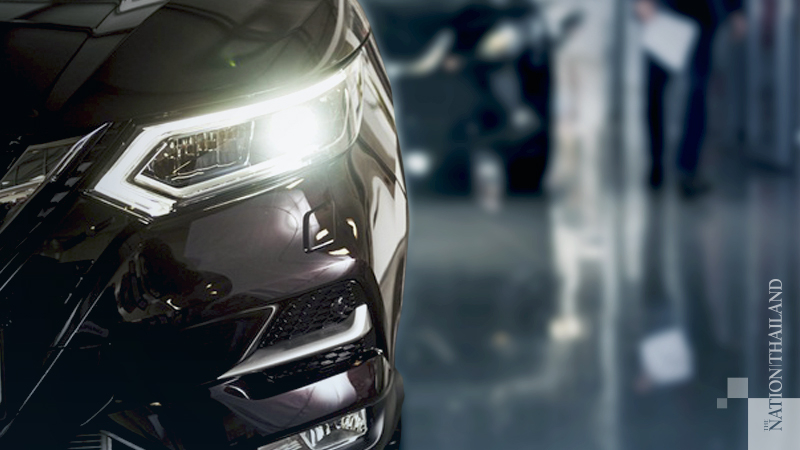
InternationalFeb 08. 2021An employee inspects a vehicle at a Tuhu repair and service center in Shanghai on Feb. 3, 2021. MUST CREDIT: Bloomberg photo by Qilai Shen.
By Syndication Washington Post, Bloomberg
Car repair can be challenging in China, rife with the potential for disputes over the quality of service and parts and dominated by mom-and-pop stores. But the auto after-market industry is changing as vehicles age and owners become more exacting, creating a giant opportunity for companies trying to raise the bar using technology.
One of those is Shanghai Lantu Information Technology Holding, or Tuhu, and it’s got some notable backers in Goldman Sachs, Carlyle Group, Sequoia Capital, as well as internet giant Tencent Holdings. Valued at $4 billion, the company is already a major distributor of auto parts and China’s biggest internet-based car maintenance service provider, according to founder Chen Min.
Chen says Tuhu is bringing a new approach to car repair in China through its 2,400 franchises and 13,000 partner shops. Unlike many of the individual or family-run auto-repair stores in the country, Tuhu centers share similar designs and layouts, bear the company’s red and white logo, and employees wear a uniform. This universal standard is important to Chen, 39, who likens it to what customers have come to expect from somewhere like Starbucks Corp.
“When customers maintain their cars, we hope it’s as simple as going to Starbucks for a cup of coffee: no matter what type — big cup, medium cup, small cup — they get what they ask for and don’t need to worry about the cost,” he said in a Jan. 20 interview. “We must offer very affordable prices.”
For routine maintenance of a Dodge 2.7-liter sport utility vehicle, Tuhu charges 426 yuan ($66), according to its website, more than 20% cheaper than the same service offered at a Dodge dealership.
Vehicle ownership in China more than tripled over the past decade to 281 million units at the end of 2020, according to government data, putting it on track to overtake the U.S. as the world’s biggest auto market this year in terms of car ownership. That also means the average age of vehicles in use is increasing. Deloitte & Touche forecasts that China’s auto-maintenance market revenue, which includes spare parts sales, will rise to 1.7 trillion yuan a year by 2025, almost double the figure in 2015.
Competition is heating up as companies with deep-pocketed backers enter the fragmented market and overpower the smaller, inefficient independent players. With that, China is becoming more like Western countries where well-known after-market operators such as Autozone, O’Reilly Automotive or Halfords Group in the U.K. have large networks and recognizable brands.
As vehicles get older, there is “rising demand for the type of standardized maintenance services offered by companies like Tuhu both online and offline,” China Passenger Car Association Secretary General Cui Dongshu said in a phone interview. “Other companies such as JD.com that want to grasp this business opportunity are also getting into the game.”
Another is New Carzone, whose backers include Alibaba Group Holding Ltd., Goldman Sachs and Warburg Pincus, which says it is “well-positioned to expand its nationwide network and empower independent auto after-market service providers in China.”
Tuhu has an online platform and database that can be used to find spare parts, make orders and book appointments for repairs. A real-time inventory tracker of some 100,000 components at about 500 warehouses helps control the management of stock and lets customers figure out whether, where and when they can get new components, according to Chen.
“There is a huge market for car services in China and that is why I founded this company,” said Chen, who worked for Microsoft Corp.’s China software venture and HP Inc. before creating Tuhu in 2011. “A lot of my colleagues started their career as programmers. We believe digitalization and the internet can bring changes to various industries and society.”
Tuhu’s revenue this year should increase at least 50% from the 10 billion yuan recorded last year, according to Chen, and the company plans to add as many as 1,400 franchise stores. Discussions are also being held about a possible initial public offering, he said, without providing details.
Putin’s once-scorned vaccine now favorite in pandemic fight
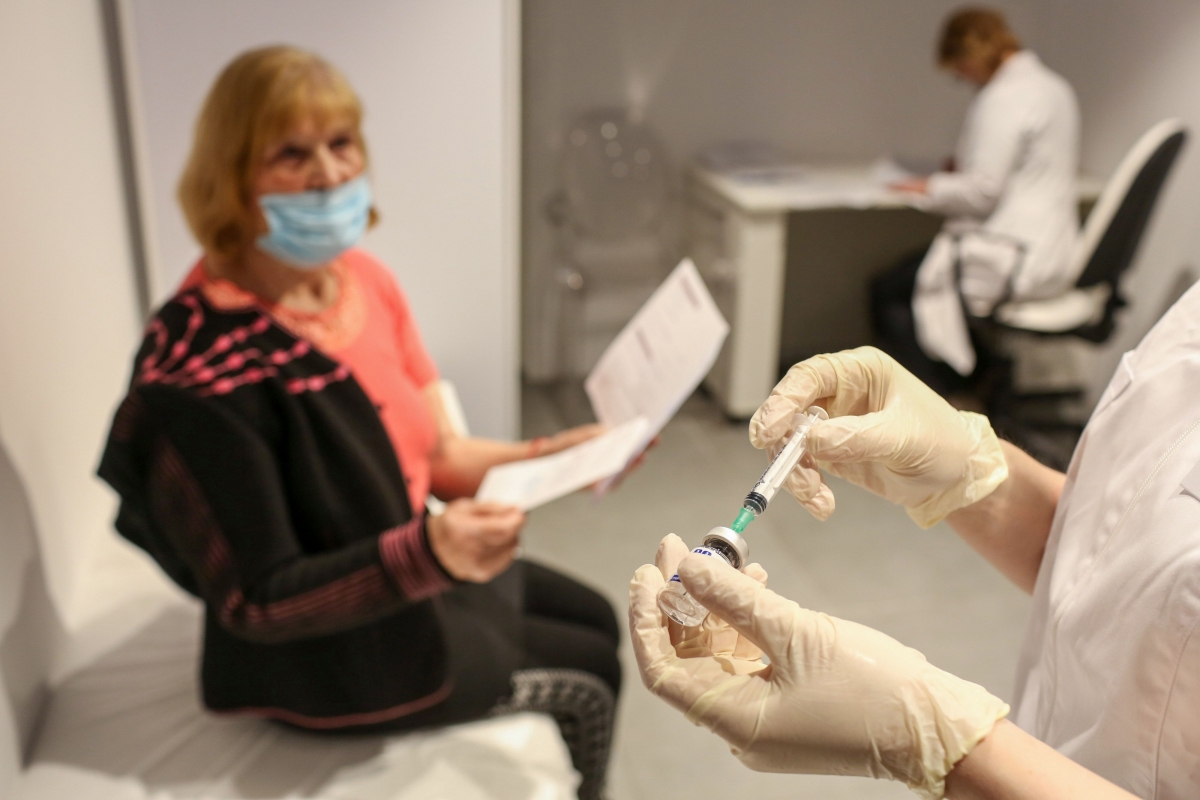
InternationalFeb 07. 2021A healthcare worker receives a dose of the Russian Sputnik V Covid-19 vaccine at a hospital in La Plata, Argentina, on Jan. 11, 2021. MUST CREDIT: Bloomberg photo by Anita Pouchard Serra.
By Syndication Washington Post, Bloomberg · Henry Meyer
President Vladimir Putin’s announcement in August that Russia had cleared the world’s first covid-19 vaccine for use before it even completed safety trials sparked skepticism worldwide. Now he may reap diplomatic dividends as Russia basks in arguably its biggest scientific breakthrough since the Soviet era.
Countries are lining up for supplies of Sputnik V after peer-reviewed results published in The Lancet medical journal this week showed the Russian vaccine protects against the deadly virus about as well as U.S. and European shots, and far more effectively than Chinese rivals.
At least 20 countries have approved the inoculation for use, including European Union member-state Hungary, while key markets such as Brazil and India are close to authorizing it. Now Russia is setting its sights on the prized EU market as the bloc struggles with its vaccination program amid supply shortages.
In the global battle to defeat a pandemic that’s claimed 2.3 million lives in little more than a year, the race to obtain vaccines has assumed geopolitical significance as governments seek to emerge from the huge social and economic damage caused by lockdowns imposed to limit the spread of the virus. That’s giving Russia an edge as one of a handful of countries where scientists have produced an effective defense.
Its decision to name Sputnik V after the world’s first satellite whose 1957 launch gave the Soviet Union a stunning triumph against the U.S. to start the space race only underlined the scale of the significance Moscow attached to the achievement. Results from the late-stage trials of 20,000 participants reviewed in The Lancet showed that the vaccine has a 91.6% success rate.
“This is a watershed moment for us,” Kirill Dmitriev, chief executive officer of the state-run Russian Direct Investment Fund, which backed Sputnik V’s development and is in charge of its international roll-out, said in an interview.
While it’s too early to gauge the political gains for Putin, Russia is already making much of the soft-power impact of the vaccine on its image after years of international condemnation over election meddling and targeting of political opponents at home and abroad. State television reports extensively on deliveries to other nations.
Sputnik’s success won’t change hostility toward Putin among Western governments, though it could strengthen Russia’s geopolitical clout in regions such as Latin America, according to Oksana Antonenko, a director at Control Risks consultancy.
“With this vaccine, it’s proven itself capable of producing something new that’s in demand around the world,” she said.
Production constraints are the biggest challenge facing all manufacturers as global demand far outpaces supply. Russia, pledging free shots for its 146 million population, began output last year and the vaccine is currently being manufactured in countries including India, South Korea and Brazil.
This week, it emerged a close ally of Turkish President Recep Tayyip Erdogan signed an agreement to produce Sputnik V in Turkey, even as the nation has deals to buy 50 million doses of China’s Sinovac Biotech’s CoronaVac vaccine and 4.5 million doses of the Pfizer- BioNTech shot.
Despite Russia’s success, domestic demand remains lukewarm so far, driven by public suspicion of the authorities. Putin, 68, fueled the skepticism in December when he said he was waiting to get the inoculation until it had been cleared for people his age.
He still hasn’t said whether he’s been vaccinated, but other nations aren’t waiting to find out. The day after announcing he’d contracted covid-19, Mexican President Andres Manuel Lopez Obrador said Jan. 25 he’d thanked a “genuinely affectionate” Putin for pledging 24 million doses of Sputnik V in the coming two months. Three days later, Bolivian President Luis Arce personally took delivery of a batch at La Paz airport.
Latin America is proving fertile territory. Argentina, which has struggled to obtain vaccine supplies, started its mass inoculation program after taking delivery of more than half a million Sputnik V doses by January. It’s been joined by Nicaragua, Paraguay and Venezuela. In Brazil, the region’s biggest market, a decision announced Feb. 3 to scrap the requirement for phase three trials for emergency use may speed up approval.
Guinea became the first African nation to start dispensing Sputnik V in December with Moscow-friendly President Alpha Conde and several ministers taking the vaccine. It expects to get 1.6 million doses this year and is also in talks on acquiring Chinese vaccines, along with AstraZeneca Plc’s shot. Zimbabwe, the Central African Republic and Ivory Coast are among other potential customers for Russia.
“We’re not in a position where we can say no to any vaccine. We’ve opted for the Pfizer vaccine, but we’re looking at other vaccines as well,” said Professor Joseph Benie, head of the National Institute of Public Hygiene in Abidjan, Ivory Coast. “There’s an urgency now to start inoculating.”
Unlike the Pfizer/BioNTech vaccine, Sputnik V can be stored in a fridge rather than a freezer, making it easier to transport and distribute in poorer and hotter countries. At around $20 for a two-shot vaccination, it’s also cheaper than most Western alternatives. While more expensive than AstraZeneca, the Russian inoculation has shown higher efficacy than the U.K. vaccine.
For some nations such as Iran, which received the first batch of a promised 2 million doses this week, Russia offers a more palatable political alternative than Western suppliers. But Russia is also making inroads into countries such as the United Arab Emirates, which is traditionally close to the U.S. and has approved Sputnik V for use.
A nurse prepares to administer a dose of the the Sputnik V vaccine in a covid-19 vaccination center inside the GUM department store in Moscow on Jan. 20, 2021. MUST CREDIT: Bloomberg photo by Andrey Rudakov.
China, whose inoculations are as low as 50% effective in the case of Sinovac Biotech, retains a lead in Asia. Only a handful of countries have opted for Sputnik V, including the Philippines, which is in talks for 25 million doses.
Chinese developers may now team up with Russia. The RDIF struck a preliminary deal to test a combined regimen of shots from Sputnik V and China’s CanSino Biologics to boost effectiveness against Covid-19, people with knowledge of the matter said Friday.
In what could represent the Kremlin’s biggest potential breakthrough, Russia has asked European regulators to examine a request for authorization of Sputnik V after Germany promised to help expedite the process. With top EU officials still smarting over a sluggish vaccine roll-out, German Chancellor Angela Merkel said Tuesday the Russian shot could be used to protect people in the 27-member bloc as long as it was approved by the European Medicines Agency.
Hungary has already granted emergency approval, signing a deal for 2 million doses of Sputnik V with the first 40,000 shots delivered Tuesday. “The vaccine cannot be a political question,” Prime Minister Viktor Orban told state radio Jan. 29. “One can only choose between western and eastern vaccines when you have enough.”
European approval may take several months because of the need to submit detailed data, The Lancet’s Editor-in-Chief Richard Horton told Bloomberg’s QuickTake. “I do think this Russian vaccine will come on tap,” but “not quickly,” he said.
While Russia says it expects the vaccine to be available to 700 million people this year, it’s facing production bottlenecks. “We have to be realistic. Given our other commitments, we will not be able to supply to Europe before May, other than Hungary,” said RDIF’s Dmitriev.
Still, the vaccine is paying dividends for Putin. Even as he visited Moscow Friday to confront Foreign Minister Sergei Lavrov over the imprisonment of opposition leader Alexey Navalny, EU foreign policy chief Josep Borrell took time to congratulate Russia on developing Sputnik V.
“It’s good news for the whole mankind,” Borrell said. “It means that we are going to have more tools to face the pandemic.”
Will Ferrell has it out for Norway. “Did you know that Norway sells way more electric cars per capita than the U.S.?” he asks before smashing his fist through a plastic globe. In an unlikely and very expensive Super Bowl ad made by the usually-staid General Motors, a disheveled, bearded Ferrell shouts “Well I won’t stand for it!”
During a break in the Super Bowl action, the comedian vows to “crush” Norway and recruits help from Kenan Thompson of “Saturday Night Live” and actress and rapper Awkwafina in a multimillion-dollar promotion for GM’s Ultium battery. At the end, after Ferrell mistakenly winds up in Sweden and Thompson and Awkwafina mistakenly end up in Finland, the ad says “We’re coming, Norway.”
Conquering Norway’s small car market won’t make or break the fate of GM, which has been making cars for more than a century. But the good-humored GM ad – one of two EV ads the company will air – is another sign that the world’s fourth-largest automobile company might be trying to steer its way toward a new era of electric vehicles.
This week, GM’s corporate account tweeted, “Norway is crushing us at EVs. That’s crazy. We have to do better.” GM’s chief executive Mary Barra said in a tweet: “Norway has set the bar high with electric vehicle adoption.” And the company account tweeted again to say: “Did you know 54% of new cars sold in Norway are EVs? We can’t let them show us up.”
It isn’t just GM. The global automobile business is peering into an all-electric future, the industry’s most profound turning point in a century and the most crucial since the 2009 financial crisis that saw GM go in and out of bankruptcy. After spending the past four years encouraging President Donald Trump to weaken fuel efficiency standards, GM’s Barra last week did a U-turn on electric vehicles, declaring that the company’s “aspiration” was to phase out gasoline vehicles and sell only electric versions of passenger cars and light trucks by 2035, eliminating tailpipe emissions.
“The timing right now is excellent,” said Dane Parker, head of sustainability at GM, noting the Biden administration’s “clear emphasis on a low-carbon or zero-carbon future.” The industry knows more about how to make electric cars than American scientists knew about space travel before going to the moon, Parker said. “We will look back and say, ‘Wow, that worked.'”
Other companies have already been speeding ahead. Ford Motor Co. on Thursday said it would double its outlays on EVs, adding about $11 billion in new spending through 2025; another $7 billion will go to driverless vehicles. Volkswagen is pumping $37 billion into a race to outdo all-electric Tesla.
But there are many bumps in the road ahead. The carmaker of the future will have to be as much a battery or software company as it is a conventional engineering company. It will need networks of rapid recharging stations and massive new supply chains to meet demand for new parts, like lithium for batteries. New business models could alter the nature of car ownership – and undermine politically powerful dealers. And throughout, the big car companies must work to maintain peace with their unions.
“Barriers will slow down the achievement of some of these goals,” said John Paul MacDuffie, professor of management at the University of Pennsylvania’s Wharton School, “but there will be a tipping point and all forward-looking forces will be focused on this future.”
Even if the big car manufacturers can marry the expertise of Silicon Valley-style software and Detroit-style mass production, climate experts worry that the scale of the transportation sector is so great that overhauling it will take far too long from a climate perspective. GM’s Chevrolet Bolt sales in the United States doubled in the fourth quarter of 2020 from a year earlier, but they remained 0.8% of GM’s 2.5 million U.S. sales for the year. Globally, electric vehicles made up about 3% of total cars sold in 2020, according to the International Energy Agency.
David R. Keith, a Chevy Bolt owner and assistant professor at the Sloan School of Management at the Massachusetts Institute of Technology, said “given that EVs cost more than conventional vehicles and we’re at a point where consumers are not making lavish discretionary purchases, the question is not, ‘Can we sell to the wealthy?’ It is, ‘Can we get the everyday household in mainstream America to buy an EV?’ and we’re still a long way away from that.”
Meanwhile, he added, the cars on the road today will be on the road for the next 15 to 20 years. “There is so much inertia baked into those 250 million light-duty vehicles,” he said.
The biggest companies, like GM, have not gotten off to a strong start.
On at least three occasions, the batteries powering GM’s Chevy Bolt caught on fire under the rear passenger seat, according to National Highway Traffic Safety Administration reports. In one instance, a car recharging in a driveway in Belmont, Mass., caught fire, billowing smoke, forcing the evacuation of neighbors and leaving behind noxious fumes through the house; it took firefighters three hours to extinguish the blaze. In Vienna, Va., it took firefighters an hour to douse a burning Bolt outside a townhouse – and they had to be called two more times when the car started smoking again.
In November, GM issued a recall for 50,932 Chevy Bolts – more than 60% of all Chevy Bolts on the road. The company urged its customers to park their cars outdoors a safe distance from their houses, an inconvenience for EV owners who rely on recharging sockets inside their garages. And GM adjusted the Bolt batteries so that they couldn’t recharge more than 80% of capacity.
“It’s really a city car,” said MIT’s Keith.
GM’s early struggles are cultural as much as they are technological.
In November, GM launched a hiring blitz for 3,000 engineering, design and information technology specialists. “This will clearly show that we’re committed to further developing the software we need to lead in EVs, enhance the customer experience and become a software expertise-driven workforce,” GM President Mark Reuss said in a news release.
But on the online job site Glassdoor, many GM workers in software were disappointed. One current GM employee said there were “good benefits” and a “good work/life balance,” but “too much time spent on meetings and political games.” The advice to management? “It is hopeless. IT management needs to be completely replaced. IT bureaucracy is an obstacle for innovation.”
A former employee said the pros of working there included “working with the latest on Car Tech.” The cons? “Big company, slow pace of changes.”
Glassdoor does not post the names or contact information of people who correspond on its site.
VW has also struggled with software glitches, which forced the German carmaker to twice postpone sales of its new ID.3, which resembles the Golf.
The big carmakers have to compete for talented engineers, not only with Tesla but with other new entrants into the car market. One 11-year-old EV startup, Rivian, last year swiped a rising star named Alex Archer from GM’s design engineering department. Archer, a 2015 Stanford University graduate, had already invented a sliding console in 2020 models of GM’s small trucks and SUVs.
Rivian said this week that the first of 10,000 vans Amazon had ordered by 2022 would start making deliveries in select cities. Rivian also plans to start selling pickup trucks later this year, a direct competitor with some of the industry’s most popular brands. Amazon has invested $700 million and Ford has invested $500 million in Rivian. (Amazon founder Jeff Bezos owns The Washington Post).
For workers who lack Archer’s star power, the coming upheaval in the car markets is a source of anxiety. Unions are worried that the change to electric vehicles might undermine their membership. EV powertrains are mechanically simpler than those in internal combustion engines, the United Auto Workers said in a report. According to analysts at UBS, the Chevy Bolt’s e-motor has three moving parts, while a VW Golf’s internal combustion engine has 113.
“This simplicity could reduce the amount of labor, and thus jobs, associated with vehicle production,” the UAW report said.
But while electric vehicles lack transmissions, exhaust systems and fuel systems, they could create employment in batteries, electric motors, electronics, thermal systems, braking systems, and semiconductors.
The problem, the union warned, is that many of those new components “could shift business and employment to non-auto companies that lack a large U.S. manufacturing base. This could undermine auto job quality by shifting work to employers with a poor history of labor relations or companies that are more likely to import components.”
The big carmakers also face a variety of battery challenges, posing tough questions for President Biden on trade, subsidies and investment. In her confirmation hearing, energy secretary nominee Jennifer Granholm noted that “of the 142 lithium ion battery mega-factories that are under construction, 107 are in China. Nine are in the U.S. We can’t sustain this. We have got to lean in much more quickly.”
That’s going to mean subsidizing domestic battery makers or arm-twisting or incentivizing foreign battery makers to set up factories in the United States. The UAW has called for large-scale retraining programs for displaced workers.
An explosion in the use of electric batteries could also spark conflict over environmental choices, pitting conservation against industrial needs.
James D. Calaway, chairman of an Australian firm called Ioneer, is hoping to get the permits to start a lithium mine in Nevada that would quadruple U.S. production of the mineral. It would be located on the parched outcropping Rhyolite Ridge in the third most sparsely populated county in the United States, Calaway says, between Reno and Las Vegas. Phase one would produce about 22,000 tons a year of battery-grade lithium for the next 25 years – enough to produce about 400,000 EVs a year. The U.S. market usually exceeds 17 million cars a year, though with the ailing economy, sales fell about 15% short of that last year.
But getting that lithium would mean destroying the majority of the habitat of Tiehm’s buckwheat, a plant, says the Center for Biological Diversity, which wants to stop the mine.
“What we need is sensible environmental policy,” Calaway said. “We have got to weigh this against our targets on CO2.”
The nascent electric vehicle market could soon be riled further by a spat between two South Korean battery makers arguing over intellectual property. One company, SK Group, is sinking about $2.6 billion into a massive battery plant in a rural town in Georgia, the largest foreign investment in the state’s history. But LG Chem says SK stole its intellectual property and has asked the International Trade Commission to block SK from starting up the plant. That would hurt SK’s two biggest customers, Ford, which wants to put the batteries in an electric version of the popular F-150 pickup, and VW, which wants to use them in a car plant in Chattanooga, Tenn.
“If somehow this plant were to be rendered unusable because of this ITC decision, it isn’t like they go out and put Duracell batteries in this thing. You need to design customized batteries,” said Daniel Spiegel, vice chair of the public policy practice at the law firm Covington & Burling, which is representing SK.
If the ITC sides with LG Chem, Biden could overturn that decision. There are only five other occasions when a president has overruled the ITC. The last was President Barack Obama in a dispute between Apple and Samsung. Either way, the case shows how vulnerable the EV supply chain is to disruption.
“This goes right into the wheelhouse of Biden’s jobs plan, Biden’s global warming plan, Biden’s advanced technology plan, Biden’s manufacturing in the United States plan,” Spiegel said. “All these things are embedded in this trade agency’s decision next week.”
And then there are the auto dealers, who in most states are shielded from manufacturers by consumer protection laws. Many dealers make more money on follow-up services and leasing than they do selling cars in the first place. They have little to no expertise in batteries or EV software. When Tesla announced it would have virtually no showrooms and would sell directly to customers, dealers were up in arms.
“An EV well engineered is going to have a much lower service profile than an internal combustion engine,” said Diarmuid O’Connell, a former top Tesla executive. “The question is what is the strategic business model for dealers to be incentivized to support EVs.”
Another ad to be aired during the Super Bowl takes aim at car dealers, portraying one as a villain who has tied up a potential customer on the floor and threatens him with jumper cables in a horror-like sequence that ends with a sunny pitch for Vroom, an online car dealership that delivers vehicles to the home.
Many dealers are simply closing shop. Given a choice, 17% of 880 Cadillac dealers took a buyout from GM rather than invest in the repair equipment and charging stations needed to sell and service electric versions of the luxury car, the Wall Street Journal reported.
When O’Connell worked at Tesla, he was tasked with overcoming the dealers’ demands. “It was a painful experience to have to go state to state, dealing with folks who were locally very politically connected. And very often there was, if not an explicit, an implicit monopoly,” he said.
O’Connell said the auto industry every year for three or four years invited him to a summertime conference in Traverse City, Mich., to debate the future of EVs. And every year, auto industry executives would say that motorists aren’t interested in them. O’Connell would reply, “You’re not even trying.”
For now, the big century-old companies are sprucing up existing brands. Ford, in addition to introducing electric F-150 pickups, will start selling an electric version of its Mustang. GM is pressing ahead with plans for a new electric Cadillac crossover called the Lyriq.
So far, though, the road to an EV future looks like a long one. “Kenan, Norway’s out EV’ing us,” Ferrell says in the Super Bowl ad. “Grab an EV, meet me in Norway.” Ferrell then interrupts Awkwafina, who is practicing archery outside her house. “Sorry to disturb you, but Norway’s beating us in EVs,” he says, catching an arrow in his teeth. “Meet me there in an hour.”
Perhaps the auto industry will have a better sense of direction than Ferrell and his fellow stars.

 President Joe Biden leaves the White House on Friday, Feb. 5, 2021. MUST CREDIT: Washington Post photo by Jabin Botsford

 The New Zealand Stock Exchange building, operated by NZX Ltd., center, stands in Wellington, New Zealand, on Aug. 31, 2020. MUST CREDIT: Bloomberg photo by Birgit Krippner.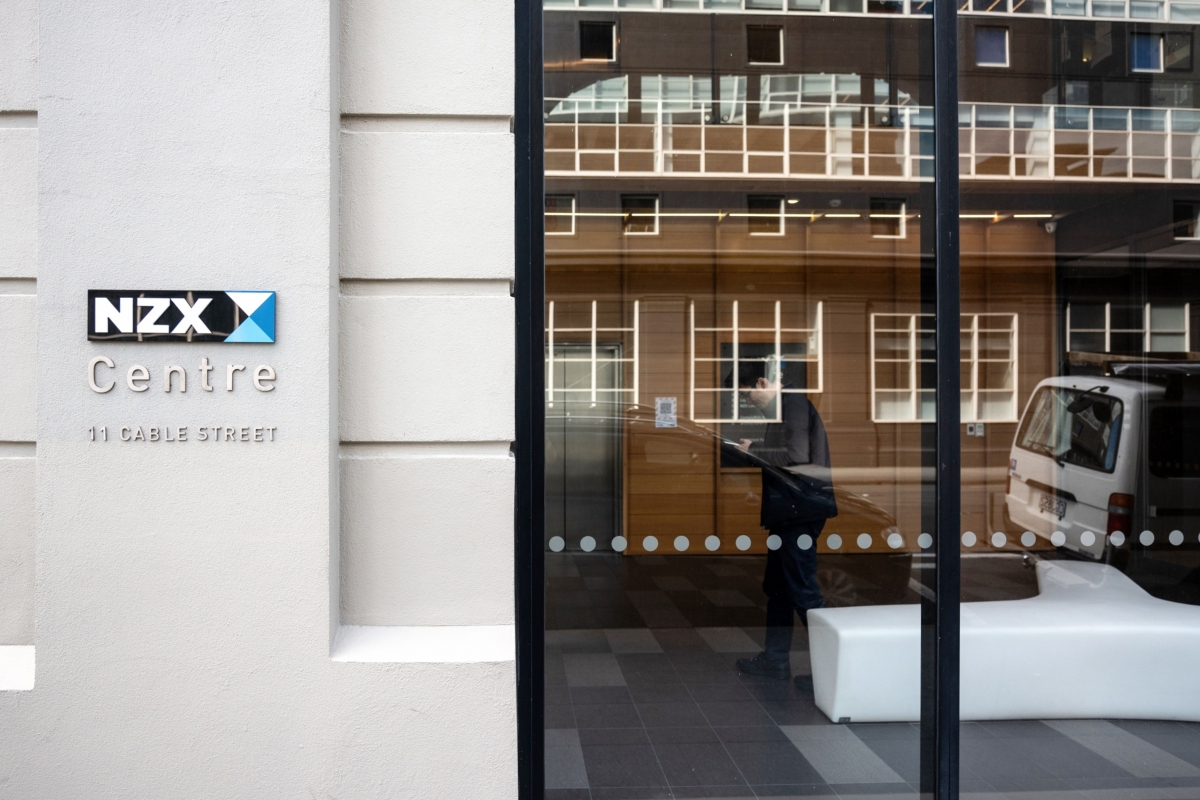
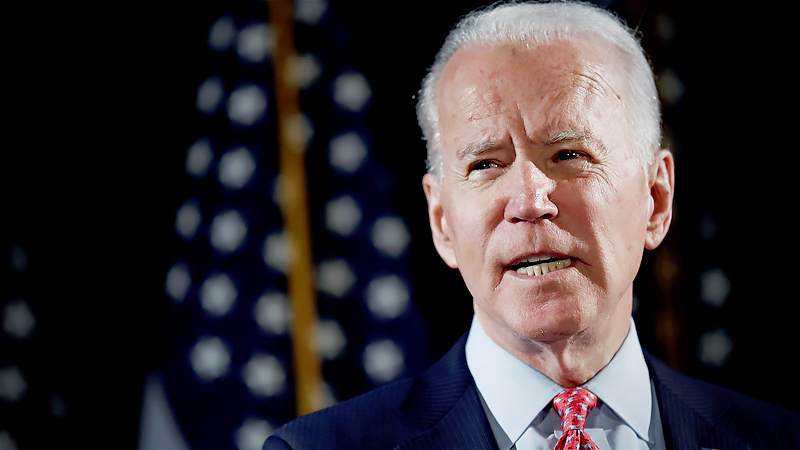 US President Joe Biden

 An employee inspects a vehicle at a Tuhu repair and service center in Shanghai on Feb. 3, 2021. MUST CREDIT: Bloomberg photo by Qilai Shen.
 A healthcare worker receives a dose of the Russian Sputnik V Covid-19 vaccine at a hospital in La Plata, Argentina, on Jan. 11, 2021. MUST CREDIT: Bloomberg photo by Anita Pouchard Serra.