By Syndication Washington Post, Bloomberg · Jake Rudnitsky, Anya Andrianova
Russia’s death toll from covid-19 in 2020 was nearly three times the level previously reported by the government, and accounted for half of all excess deaths last year, according to official data.
The Federal Statistics Service reported 44,435 deaths linked to covid-19 in December in a statement Monday, lifting the full-year total to 162,429. The number of deaths in 2020 reported by the government’s virus response center was 57,555.
In total, 2,124,479 Russians died in 2020, nearly 324,000 higher than the previous year, according to the statistics service data. There were 94,000 additional deaths in December compared to 2019, a 63% increase.
December was the deadliest month for Russia in the pandemic, Deputy Prime Minister Tatyana Golikova said in a televised briefing Monday.
Russia’s population shrank overall by nearly 700,000 people last year, more than twice the decline reported in 2019 and the worst shrinkage since 2005.
The figures demonstrate that the fallout from the novel coronavirus has been far worse than officials initially reported, even as President Vladimir Putin resisted locking down the country during the second, more severe wave of infections that started in the fall. Only the U.S., Brazil and Mexico have reported higher death totals in the pandemic so far.
The figures are a blow to Putin’s long-held goal of reversing Russia’s demographic decline. He has promoted a series of benefits aimed at increasing the birthrate and has overseen dramatic gains in life expectancy.
Russia has pinned its hopes for taming the pandemic on domestically developed vaccines, with Putin ordering universal access to the inoculation earlier this month.
February or March could be the turning point after which the pandemic could begin to ease, Health Minister Mikhail Murashko said Friday in northwestern Russia, according to Tass news service. The authorities aim to vaccinate about 60% of the adult population in the first half of the year, he said.
Even before the vaccine is widely distributed, the infection rate has been falling. New daily cases are down by about a third from their December highs, and some regions have begun to ease restrictions intended to limit the spread of the virus.
In Moscow, Mayor Sergei Sobyanin has allowed restaurants and bars to stay open all night long and dropped a requirement that employers keep at least 30% of their workers home.
By Syndication Washington Post, Bloomberg · Rajesh Kumar Singh, Sudhi Ranjan Sen
Rescue workers continue to battle mountains of slush and debris at a hydropower construction site in north India that was damaged by flash floods that have killed at least 11 people.
The rescue team of Indo-Tibetan Border Police is working to clear out a tunnel passage, where it expects more than 30 workers trapped, said Vivek Pandey, the spokesman for the police force. The Tapovan tunnel is the only easy entry point to NTPC’s Tapovan Vishnugad project in the Himalayan state of Uttarakhand.
The flood has also damaged other parts and entry points to the 520-megawatt electricity project. The rescue team has recovered 11 bodies, the state’s Chief Minister Trivendra Singh Rawat said in a tweet earlier today.
Images of the devastation brought back memories of 2013 floods in the same state that left thousands dead or missing and reignited debates on the environmental sustainability of hydropower, a source of electricity India considers important to balance the increasing addition of intermittent renewable power into the grid.
NTPC said it is still assessing the damage, adding it has insurance protection for the loss. The state-run generator, predominantly dependent on coal, is making a clean energy push and seeks to expand use of non-fossil fuels for making power.
The incident was caused by a sudden surge in river levels, sending floodwaters gushing downstream and leaving behind a trail of devastation. Besides the NTPC’s Tapovan Vishnugad project, the Rishi Ganga hydropower project was also damaged.
Jaiprakash Power Ventures said it halted operations at its Vishnuprayag project after slush brought along with floodwaters choked the tail race tunnel of the 400-megawatt project. The company expects to resume operations in a few days.
Shares of Jaiprakash Power slumped 5.5% in Mumbai on Monday, its steepest dropped in seven weeks. NTPC fell as much as 3.5% in early trade before recovering to close 0.8% higher, although still underperforming the benchmark S&P BSE Sensex.
Climate change may be a contributing factor, as the heating planet speeds up glacier melts, according to Anjal Prakash, a lead author at the United Nations Intergovernmental Panel on Climate Change.
Temperatures in the region are rising faster than the global average because of the high altitude, he said. The government should increase research and monitoring to avoid future disasters and improve climate adaptation, he said.
“Temperatures are rising in the Hindu-Kush Himalayan region and the rise in global temperature will have more impact in the Himalayan region due to elevation-dependent warming,” he said.
By The Washington Post · Douglas MacMillan, Yeganeh Torbati
Last month’s GameStop trading mania was sparked by members of a popular Reddit investing community who said they hoped to strike back at the Wall Street elites who had long dismissed them as dumb money. But growing evidence casts doubt on the idea that the episode mostly benefited small-time investors.
Giant mutual funds that own the largest stakes in GameStop saw the biggest gains in value. Hedge funds – some that have started using algorithms to track retail investors on social media sites – appear to have bought and sold millions of shares during the stock’s most volatile period of trading, industry experts said.
And in at least some cases, novice investors lost their shirts.
Instead of heralding a new wave of investor populism, the rise and fall of GameStop’s stock may end up reinforcing what professional investors have known for a long time: Wall Street is very good at making money, and more often than not, smaller investors lose out to wealthy traders and giant institutions.
The four largest asset managers in the world together own 39% of GameStop shares, according to regulatory filings. Those stakes, which are mostly held for years in passive index funds, have collectively gained roughly $1 billion in value since the beginning of this year. One hedge fund, Senvest Management, recently boasted to clients that it made more than $700 million from a bet it placed on GameStop in September, the Wall Street Journal reported last week.
Steve Bruce, a spokesman for Senvest, declined to comment on the GameStop trades.
The sheer number of shares that changed hands during the stock’s most manic trading period in late January suggests the episode was driven by more than just small, retail investors. Some hedge funds bought shares because they were forced to “cover” their short positions – a financial cost imposed on investors who bet a stock will go down before it goes up. Meanwhile, other hedge fund managers were likely taking calculated, short-term risks buying and selling as the stock price traded up, said Robert J. Shapiro, a policy fellow at Georgetown University and former economic advisor to Bill Clinton.
“You have hundreds of millions of shares being traded at prices of $200 to $300 a share,” Shapiro said. “The Reddit crew cannot afford to play in this game in any significant way.”
The question of who profited from the stock bonanza is important to regulators, who are investigating whether the market was manipulated for profit. Individual investors can freely share their opinions about a stock on social media, but it’s illegal for a group of investors to coordinate an effort to pump up a stock price, said Jacob S. Frenkel, a former senior counsel at the Securities and Exchange Commission.
Professional investors who are licensed by the Financial Industry Regulatory Authority to give investment advice face stricter limits around how they can discuss their stock positions, Frenkel said. Legal experts believe financial regulators will likely be combing through social media posts to determine whether sophisticated investors used online anonymity to stoke demand for stocks.
– – –
The category of individual traders known as retail investors has ballooned with the rise of commission-free online trading apps including Robinhood. There’s no doubt these traders showed up in record numbers to help drive up GameStop and other stocks last month, creating a temporary liquidity crisis for Robinhood, which had to raise $3.4 billion to help cover the cost of guaranteeing all of its customer deposits.
But the rise in retail investors has also led some Wall Street firms to pay more attention to the mom-and-pop investors they used to ridicule. Quietly, hedge funds have started to build algorithms or hire outside firms that specialize in scanning conversations on Reddit and Twitter for clues about what retail traders are thinking. Several of these services, with names like Swaggy Stocks, Robintrack and Quiver Quantitative, popped up in the past two years.
“The most innovative investment firms realized that tracking Reddit was important to portfolio management,” said Justin Zhen, co-founder of Thinknum Alternative Data, a New York software firm with more than 300 clients who pay for data scraped from various sources across the web.
Aside from Senvest, the New York hedge fund that manages $2.4 billion in assets, Wall Street firms have kept mum about any GameStop gains. Most investors, with the exception of top corporate executives and shareholders who own at least 5% of a company, aren’t required to disclose their trading activity.
But industry experts say the soaring stock price was almost certainly given a boost by the hidden hand of larger investors.
Benn Eifert, chief investment officer of San Francisco-based investment fund QVR Advisors, said the largest hedge funds likely knew about the GameStop buzz early because they are actively monitoring conversations on social media forums.
“You better believe the large sophisticated firms in the space have technology to tell them about what’s happening in the world in real time,” Eifert said. He declined to comment on whether QVR took a position in GameStop or specify what technology his firm uses to monitor social media.
Last year, prominent hedge funds including Point72, D.E. Shaw, Two Sigma and Capital Fund Management were all found to be quietly siphoning trading data from a popular app called Robintrack, which collected information on which stocks users of Robinhood bought and sold. Casey Primozic, the programmer who created the now-defunct app, tweeted his finding in May of last year that he had traced large volumes of traffic back to servers that appeared to belong to those firms.
“It was mostly a vindication of the fact that the data does have value to these bigger players,” Primozic said in an interview.
Spokespeople for Point72, Two Sigma and Capital Fund Management all declined to comment on that incident or whether they participated in trading of GameStop. D.E. Shaw did not respond to a request for comment.
GameStop has only 47 million shares available to trade in the stock market. And yet, on its rollercoaster ride from a share price of $17 to $483 in the span of three weeks, investors bought and sold those shares hundreds of millions of times. Over three of the stock’s most volatile trading days, GameStop shares changed hands 554 million times – more than 11 times the number of total shares available.
This pattern suggests there is more to the story than retail investors buying shares and holding them through the stock surge, said Shapiro, the Georgetown policy fellow.
“The same shares are being bought and sold four or five or six times a day,” Shapiro said, a pattern he believes points to the involvement of hedge funds with large amounts of capital to bet on highly volatile stocks. “Hedge funds make money off of volatility and price change. If prices are going to change very rapidly that gives you a lot of opportunity to make profit.”
If social media scraping has been a secret weapon for Wall Street, the secret is out.
Quiver Quantitative, a firm that compiles data sources including social media, regulatory filings, and lobbying records, saw a surge of interest in its product from hedge funds and other institutional investors in the past two weeks, said Christopher Kardatzke, who launched the company with his twin brother last year. The company also offers a web dashboard of data for ordinary investors.
“A lot of people want to know what retail investors are talking about,” he said. “It’s a force which is going to be influencing the markets for awhile now.”
– – –
Another possibility regulators are examining is whether employees of large Wall Street firms were actively using the Reddit forum to boost their portfolios. Though posters are anonymous, r/WallStreetBets has long been populated by users who grasped complex trading concepts, shared screenshots of their Bloomberg terminals and discussed six-figure bets on single stocks, said Jaime Rogozinski, who founded the forum in 2012.
“Since it was started, it’s always attracted professionals,” said Rogozinski, who is 39 and lives in Mexico City. “It’s easy to miss them or assume they are not there because of the crude language.”
The sophistication of some forum members was evident, Rogozinski says, during an incident in late 2019 when they discovered a glitch in the Robinhood app. Redditors shared a “free money cheat code” which they said let them borrow an infinite amount of money to perform trades. One user named MoonYachts claimed to have placed a $1 million bet with only $4,000 of his own cash before Robinhood fixed the bug.
“It’s evident that these guys knew exactly what they were doing,” said Rogozinski, who said he stopped moderating the subreddit he founded last year.
Joey Brookhart, an analyst at a hedge fund in Denver, has monitored the subreddit for years as a form of entertainment. He said a typical post on the site is a “pump” – a message designed to get other users to drive up the price of a stock. Brookhart said he thinks most of these posts are shared by active traders, but not necessarily professionals.
“They kind of realize the power of a network that’s ripe for manipulation,” he said. “There’s a pretty easy formula if you want to go pump something.”
It’s clear that Redditors helped spark the initial surge that sent shares of GameStop trading at levels far above what any rational investor would have paid for a failing brick-and-mortar retail chain. One veteran of r/WallStreetBets who goes by the username DeepF***ckingValue has evangelized GameStop since last year, when he bought about $50,000 of the stock.
Last month, as his position soared above $47 million, the user was unmasked as Keith Gill, a 34-year old certified financial adviser in Massachusetts. Gill, who did not respond to a request for comment, has told interviewers he is not trying to pump up the price of the stock and always intended to hold his shares for the long term.
Debra O’Malley, a spokeswoman for the the Massachusetts Secretary of the Commonwealth said the state is currently examining Gill’s social media activity as it relates to his role as a registered broker and employee of MassMutual. She said the state has asked MassMutual for details about his employment, his disclosures and the terms of his departure from the company on Jan. 28.
“It’s our understanding they were unaware of his [social media posts] and likely would not have approved them,” O’Malley said in an interview.
Paula Tremblay, a spokeswoman for MassMutual, confirmed Gill no longer works at the company. She said MassMutual is reviewing the matter but declined to comment further.
Andrew Hong, an analyst for a financial software company in Toronto who bought stock options in GameStop last August, said he thinks investors on Reddit actually have a lot in common with the Wall Street investors they claim to despise: At the end of the day, they’re all trying to make money.
“There are some really smart people on [WallStreetBets], but for the most part all this is just poor habitual gambling addicts versus rich habitual gambling addicts,” Hong said. “No one is a good guy here.”
By Syndication Washington Post, Bloomberg · Lynn Thomasson, Olivia Raimonde
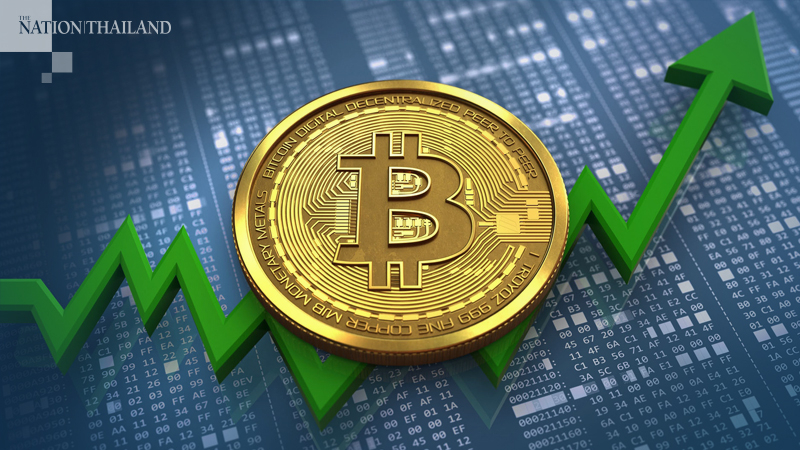
Bitcoin surged to an all-time high after Tesla Inc. said it’s invested $1.5 billion, becoming the biggest company yet to back the controversial cryptocurrency.
Bitcoin jumped as much as 15% after Tesla made the disclosure in a regulatory filing, with prices exceeding $44,000 for the first time. Tesla also said it would begin accepting the digital token as a form of payment for its electric cars.
That Tesla, one of the world’s most influential companies, and billionaire Elon Musk have thrown their weight behind Bitcoin is a massive sign of support for the cryptocurrency, which policymakers have criticized for facilitating money laundering and fraud.
“The world’s richest man allocating $1.5 billion of his company’s treasury to Bitcoin speaks volumes about the magnitude at which crypto gains institutional adoption,” said Antoni Trenchev, managing partner and co-founder of Nexo in London. “Tesla has now paved the way.”
Trenchev said he expects that at least 10% of S&P 500 companies will be invested in Bitcoin by the end of 2022.
Other companies have made similar investments in Bitcoin. MicroStrategy Inc. has spent some $1.1 billion on the token. In October, Square Inc., headed by longtime crypto advocate Jack Dorsey, announced that it converted about $50 million of its total assets as of the second quarter of 2020 into the token. Proselytizers like Bill Miller of Miller Value Partners have said this was just the start of what was sure to be a trend across Main Street.
Bitcoin’s journey to a record has been marked with big swings that continue to stoke uncertainty about its outlook. Some see speculators at work and an inevitable bubble bursting. Others cite high-profile backers and interest from long-term investors as evidence of a more durable rally.
Predictions for Bitcoin’s possible long-term price range from $400,000 and more to zero. The token is designed to have a fixed supply of 21 million coins, underpinned by a digital ledger distributed across computer networks.
Workers who quit rather than risk covid on the job now hope Biden can help them collect unemployment.
InternationalFeb 09. 2021Jonathan Burlingame stands outside his home in Canton, Mass. MUST CREDIT: Photo for The Washington Post by Olivia Falcigno
By The Washington Post · Eli Rosenberg, Hannah Knowles
Jonathan Burlingame had seen enough in mid-July.
The machines at the factory he worked at in South Boston were not wiped down enough, he said. Gloves and masks were in short supply, except for the workers who, like himself, took it upon themselves to bring their own. And he heard that some workers were testing positive, even though management hadn’t said a word.
With his parents moving in with him in a matter of weeks – his father, 75, a two-time cancer survivor and mother, 71, both fleeing rising coronavirus cases in Florida – Burlingame quit, deciding that he couldn’t continue to go into a workplace he no longer believed was safe. Burlingame’s employer did not respond to a request for comment.
Burlingame was denied unemployment insurance by the commonwealth of Massachusetts, falling into the gaps between state and federal laws that only give limited protection to people who choose to quit work for safety reasons. He has been living without any income since July.
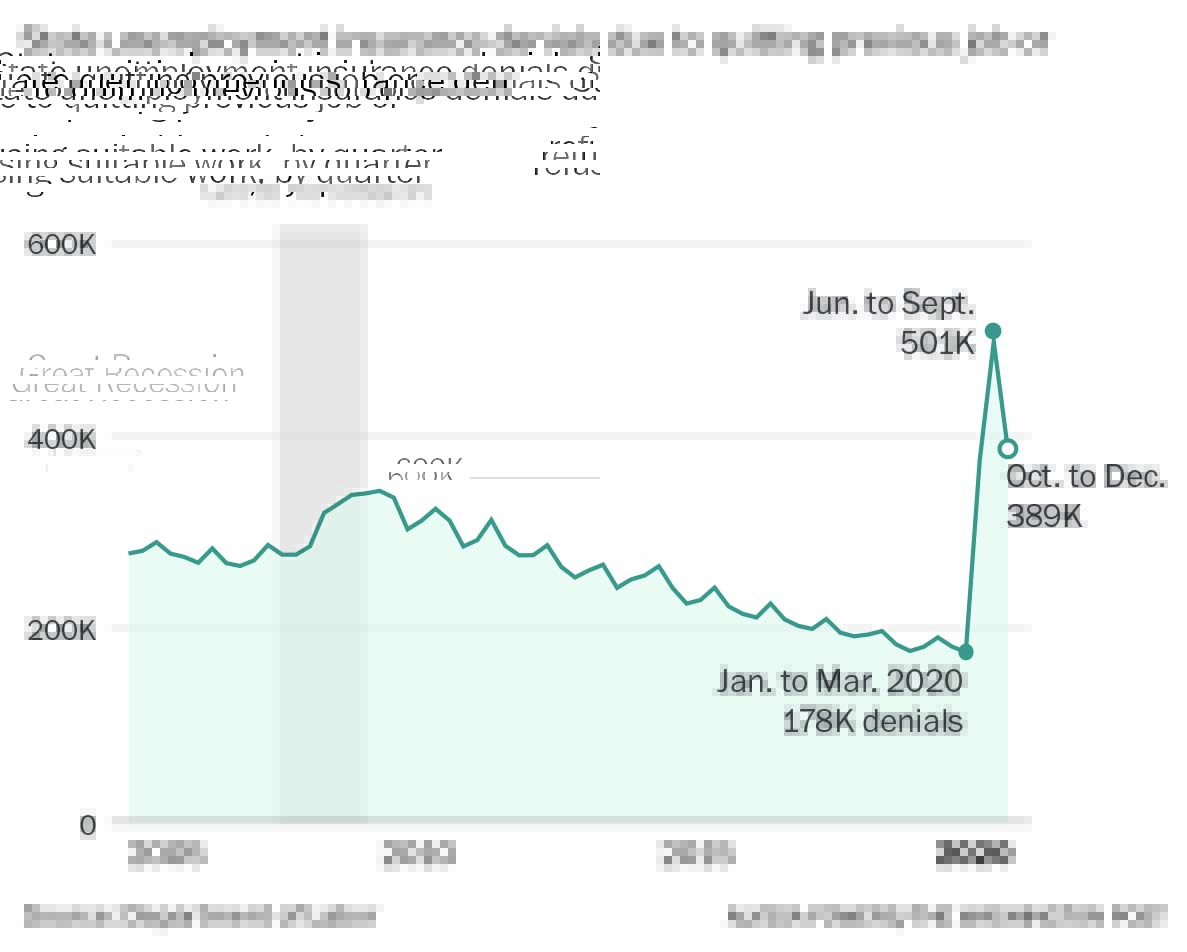
Burlingame is one ofmore than 1.5 million people who quit their jobs voluntarily because of the pandemic last year and filed for unemployment insurance, according to data from the Department of Labor, more than twice the amount over the same period in 2019. Some 80 percent have had their claims denied. A separate group of 75,000 have applied for unemployment insurance after being laid off anddeclining to return to work; 49 percent of that group had their claims denied.
The statistics speak to an unfortunate legacy of the pandemic: many workers have been forced to choose between a paycheck and their or their family’s health.
“My dad beat cancer twice,” Burlingame said. “I’m not going to bring something home to him and let him have two big wins beating cancer and then have this kind of thing shut him down because someone wanted their profit margin to be high.”
From left, Richard, Jonathan, and Christine Burlingame stand with their dog, Blaze, outside of Jonathan’s home in Canton, Mass. MUST CREDIT: Photo for The Washington Post by Olivia Falcigno
Complicating matters, a jobless claim gets treated differently under disparate state unemployment systems, pointingto the challenges facing the Biden administration, which seeks to cut down on the number of workers who have been denied unemployment assistance because they were concerned about the safety risks of going to work.
A new executive action issued by President Biden in January directs the Department of Labor to clarify federal rules so that workers who refuse to go to unsafe workplaces will be more likely to be granted unemployment insurance. A White House official said the Department of Labor’s guidance will clarify what qualifies as an unsafe workplace.
“You could be denied unemployment insurance because you’re offered a job and you didn’t take it. It’s wrong,” Biden said, announcing the executive action last month. “No one should have to choose between their livelihoods and their own health or the health of their loved ones in the middle of a deadly pandemic.”
The Washington Post interviewed more than a dozen people who said they quit their jobs, or declined to return to their jobs after the reopenings last year because of fears about coronavirus infections. Another handful of workers said that they continued attending jobs they believed were unsafe, because they did not think they would be granted unemployment insurance.
Nawal Abbas, 52, a Sudanese immigrant with blood cancer told The Post she worked for months at a Walmart in Iowa City during the pandemic, unaware that her health condition could qualify her for unemployment.
“If I stop how I’m going to survive?” she said in Arabic, with translation from an advocate at the Center for Worker Justice of Eastern Iowa, which has helped Abbas with her rent. “And if I work, I might die, too.”
All spoke of the impossible decision they faced.
Many spoke of months of back-and-forth calls with unemployment administrators, watching bank accounts dwindle as they struggled to get by without a paycheck or aid. And many said they had high hopes that the executive order could result in them receiving some support at long last.
“I was absolutely elated,” said Troy Williamson, 29, who hasn’t received any unemployment aid since he quit his job at a day-care center in Toledo over the summer, worried about his high-risk girlfriend and concerned about a lack of proper safety precautions at his workplace. “This is something that really needs to happen. Not just for myself – there are so many people who need this help.”
But experts caution that the executive order’s influence could depend on how the Biden administration defines “unsafe workplaces,” as well as the complicated dynamics between federal and state unemployment law and administration.
Workers who quit their jobs voluntarily may still have trouble getting unemployment benefits, experts say. The new order appearsto help only those who are already unemployed, turn down return-to-work offers or other employment offers because the workplacesare unsafe.
To qualify for unemployment benefits, workers who quit their jobs for safety reasons face a higher threshold than those who turn down work: Typically they have to show that not only was there a significant health risk in the workplace, but also that they first sought to remedy their concerns by bringing them to their employers’ attention, according to George Wentworth, an unemployment expert at the National Employment Law Project.
That hasn’t always worked out for workers like Williamson, who said he raised safety concerns with administrators and managers repeatedly after the day-care center reopened before quitting – and communicated that in his unemployment claim. He also complained to the county health department. The day-care center did not immediately respond to a request for comment.
These provisions are complicated by other factors as well: the unprecedented volume of jobless claims that have swamped underfunded state unemployment agencies, and the way that unemployment benefits became politicized, like many other issues raised by the pandemic.
Many Republican-led states pressured people to go back to work during the reopening push last spring, warning that those who turned down suitable work would be penalized, amid concerns workers would take advantage of historically generous unemployment benefits available at the time. Oklahoma, Ohio, Tennessee and Iowa even set up specific channels for businesses to report employees who turned down work.
Businesses have been in a difficult position when it comes to unemployment insurance during the pandemic, said Kevin Kuhlman, a vice president at the National Federation of Independent Business.
“They had either had employees decline the job offer or had to offer higher salaries for employees to return,” he said. “Our overall concern is just, you know, inserting more friction between the small-business owners and small-business employees.”
The Labor Department under President Donald Trump signaled support for restrictions,writing in guidance last spring that “barring unusual circumstances, a request that a furloughed employee return to his or her job very likely constitutes an offer of suitable employment that the employee must accept.”
Experts said that a more worker-friendly interpretation of federal unemployment laws could push some state unemployment agencies to side more frequently with workers who turn down employment that poses a significant risk to them.
“The fact that the Department of Labor hasn’t pushed back when governors or other officials make statements that are running roughshod over a thoughtful reasoned application of the law to the facts has been problematic,” Wentworth said. “When governors start basically acting on behalf of businesses that aren’t complying with necessary protocols and saying you’re going to lose your job if you don’t go back to unsafe work, they’ve overstepped.”
For their part, workers told The Post of the challenging decision they faced early on in the pandemic, with most having little awareness of the technicalities of their state’s unemployment insurance laws.
James Burrus, 54, who worked as a poker dealer at a casino in Maryland before the pandemic, said he did not even file for unemployment insurance after declining to return to work during the reopening in late June, fearing for the safety of himself and his asthmatic 13-year-old daughter. He said he was not able to get clear information from the state about whether he was eligible. He did not want to be accused of fraud and potentially be told he owed the government money.
Ashley Vacek, 23, who lives outside of Houston, said she was denied unemployment by Texas after quitting her secretary job at a veterinary clinic in December.
She said nearly half of the couple dozen workers at the clinic came down with covid-19, the disease caused by the coronavirus. After taking herself to get tested for at least the fourth time, Vacek said, she decided to quit, wanting to protect herself and family members, like her fiance’s father and her pregnant sister.
On her unemployment benefitsapplication, she detailed what she said were basic safety lapses at the clinic, describing clients not wearing masks and a lack of sanitizing procedures, she said.
Her claim was denied within days, she said. Her pregnant sister, who is due next week, was also denied unemployment after quitting a job for similar reasons, she said.
“I feel like I shouldn’t have had to be put in the position – where you either choose to be healthy or choose to keep making money,” Vacek said.
Other workers spoke about the real costs of the pressure they felt to continue working.
Harry Wilson, an 83-year-old from Denver, Iowa, left his part-time job at supermarket chain Hy-Vee last March over health concerns. Wilson’s age, heart disease and COPD made him high-risk for the coronavirus and therefore “unable to work,” according to a health provider’s note later submitted to a judge. He received unemployment insurance through April.
Later,the state told him he never should have gotten the money and ordered him to pay back $4,835.
Wilson spent months appealing the decision and finally reapplying for Pandemic Unemployment Assistance, which covers workers told to stay home by a doctor because they are highly vulnerable to covid-19, according to guidance from the Department of Labor.
But state employment officials and a judge said he did not qualify. Iowa Workforce Development, the state’s employment agency, did not respond to questions about their policies and specific workers.
By then it was late October. Wilson was supporting a daughter with cancer, he said, and still under orders to pay back thousands of dollarsin benefits.
He decided it was time to go back to work.
Within a couple weeks of his return, Wilson said, the telltale symptoms showed up: coughing, achy bones, a headache. Wilson tested positive for the coronavirus. Soon his 82-year-old wife came down with it as well, a bout so severe she needed to be hospitalized and put on oxygen. Wilson feared for her life, but she recovered.
Wilson is back at work now. Hy-Vee confirmed he works for the chain but did not comment further. Wilson’s jobless benefits from last March through December were finally granted on Dec. 21, after his story was covered by the Des Moines Register.
“I was kind of disgusted with them for taking so long,” Wilson said.
Biden’s executive action could help workers like Wilson get jobless benefits more quickly. But states will still have significant authority over the process, said Matthew Bodie, an expert in employment law at Saint Louis University School of Law, noting how broadly worded Biden’s executive order is.
The order itself says that government agencies should “promptly identify actions they can take within existing authorities” to address the economic crisis caused by the virus. An accompanying fact sheet is more specific, saying Biden wants the Department of Labor to “consider clarifying that workers who refuse unsafe working conditions can still receive unemployment insurance.”
“I don’t know how much that’s going to change things on the ground, though, because I think the red states will still be kind of tougher and the blue states will still be more open-ended,” Bodie said.
Still, many unemployed workers say they have high hopes the Biden administration will make it easier for workers trying to keep themselves or their families safe to receive jobless benefits.
“It’s been one thing after another that just brings you down and gives you less and less hope every time,” Burlingame said. “And this was the first thing where someone finally said, ‘Hey, you’re not replaceable. You matter to us, and we’re going to try to do something to help you out.’ “
By The Washington Post · Max Bearak, William Booth, Lesley Wroughton
When a plane loaded with 1 million doses of vaccines produced by AstraZeneca landed in South Africa on Feb. 1, a hopeful country watched with rapt attention.
Exactly a week later came the blow: A study, however limited and not yet peer-reviewed, said the vaccine provided only “minimal protection” against contracting mild to moderate infections of a new coronavirus variant that is widespread in South Africa, where it was first detected. The variant has since been found in at least 30 countries.
The news was a blow not only to South Africans but to billions of people whose governments are relying on the vaccine developed at Oxford University and made by AstraZeneca. If further studies confirm the finding about the effectiveness of the vaccine, dozens of countries around the world may need to adjust their vaccine rollout plans. South Africa, however, has the unwelcome role of going first.
For now, its government has suspended the use of the AstraZeneca vaccine and is trying to expedite its procurement of Johnson & Johnson, Pfizer and Moderna vaccines – though only the efficacy of the Johnson & Johnson vaccine has been studied in South Africa during the new variant’s predominance. In a much larger study than the AstraZeneca vaccine study, it was also found to be less effective against the variant but prevented severe cases and death almost totally. South Africa expects its first delivery in mid-February and hopes to use it to vaccinate a first phase of health workers, but it is still negotiating the size of the first batch.
South Africa has also ordered 20 million doses of the Pfizer vaccine, the country’s health minister told the Sunday Times newspaper on Jan. 29, but delivery dates had not been set.
“It’s a preview of what other places in the world will see. We are learning that vaccine rollouts will require continuous recalibration,” said Shabir Madhi, a professor of vaccinology at South Africa’s University of the Witwatersrand and chief investigator of the trial. “It can’t be a generic approach.”
The suspension announced by the South African government Sunday night was partially explained as a timesaving measure while researchers get better data on the AstraZeneca vaccine – particularly how effective it is at preventing severe cases. The study, produced by researchers from the universities of Witwatersrand and Oxford, involved only 2,000 participants, half of whom got the vaccine while the other half got a placebo, and its median age was 31, meaning little could be gleaned about the vaccine’s efficacy against severe cases of the new variant or about how well it protects the elderly, who are the mostly to be hospitalized or die.
People should not conclude “that this vaccine doesn’t work at all,” said Soumya Swaminathan, the World Health Organization’s chief scientist, of AstraZeneca at a news conference Monday. “What we’ve seen is data from a small study. It’s indicative. It is telling us we need to collect more data, we need to study it more.”
At the same briefing, Seth Berkley, a top official administering the WHO-led effort to ensure vaccine supply to low-income countries, said the new research would not stop it from distributing more than 300 million doses of the AstraZeneca vaccine in a first round of deliveries beginning later this month.
On Sunday, however, South Africa’s health minister, Zweli Mkhize, said that more recalibration of the country’s response would be inevitable.
“Our scientists must get together and quickly figure out what approach we’re going to use,” he said. A spokesman for President Cyril Ramaphosa did not respond to requests for comment.
The new variant, known as B.1.351, drove a monster second wavein South Africa that subsided only after another round of lockdowns and other restrictions. More than 90% of new cases since December have been of the new variant, and studies showed tens of thousands of excess deaths during that period that experts said were largely attributable to it.
Thousands of variants are in circulation, but only a few such as B.1.351 have been treated as “variants of concern” because they are more transmissible, more lethal or are suspected of being able to dodge the antibodies produced by vaccination. Two others, first detected in Britain and Brazil, have also risen to that level and spread to dozens of countries.
Madhi said that the proliferation of such variants would almost certainly continue, underscoring the need to spread vaccine studies around the world to better understand how they stand up to different variants.
“Without a study in South Africa, the entire world would’ve been oblivious to this,” he said. “I think what we’re now going to experience globally, especially in places with slow rollout, or with a huge amount of virus circulating like in the United States, is how continued mutations make new variants less susceptible to vaccines.”
Vaccine developers say they are creating “libraries” of tweaked vaccines that they could quickly test against emerging variants. They say that new and improved versions of their vaccines could be tested and released within the year, if necessary.
Sarah Gilbert, one of the lead developers of the Oxford-AstraZeneca vaccine, said her laboratory and others are already working on ways to adjust their existing vaccines to meet the challenge of new variants.
“This year we expect to show that the new generation of the vaccine is able to generate antibodies that recognize the new variant,” she told the BBC. “And then it will be very much like working on flu vaccines. People will be familiar with the idea that we have to have new components in the flu vaccine every year to keep up with the main flu strains that are circulating, and there are regulatory procedures that established for that.”
Britain is also relying heavily on the AstraZeneca vaccine and doesn’t expect doses of the Moderna vaccine until spring. Speaking to reporters Monday morning at a manufacturing facility for coronavirus tests, Prime Minister Boris Johnson said he was still “very confident” in the vaccine. British health regulators have approved vaccines by Pfizer, Moderna and AstraZeneca, which all show efficacy against the variant that was first identified in the U.K.
“I think it’s important for people to bear in mind that all of them, we think, are effective in delivering a high degree of protection against serious illness and death, which is the most important thing. We also think, in particular in the case of the Oxford-AstraZeneca vaccine, that there’s good evidence it’s stopping transmission as well,” he said citing preliminary and still unconfirmed data.
Researchers in South Africa cautioned, however, that while data from the AstraZeneca trial in South Africa was limited, especially on its ability to prevent severe cases, the emergence of new, more concerning variants was almost assured.
“I would not be surprised if in a few weeks a relatively large percentage of the variant from Britain show nastier mutations similar to B.1.351 that result in reduced efficacy of vaccines,” said Tulio de Oliveira, the director of the KwaZulu-Natal Research Innovation and Sequencing Platform, or KRISP, a scientific organization that has played a key role in identifying and studying new variants.
DNA sequencing by KRISP has found that B.1.351 is likely already dominant in many countries bordering or close to South Africa including Mozambique, Botswana and Zambia.
As South Africa scrambles to come up with a new inoculation plan, officials have begun to warn of a potentially severe third wave as soon as June, when the country heads into winter. At the news briefing on Sunday, they stressed that sustained research was the only way to know how to respond.
“Science has to dictate what we do,” said Barry Schoub, chairman of the Ministerial Advisory Committee on coronavirus vaccines. “If we want to get the most effective bang for our buck, then we’ve got to use scientific information.”
By Syndication Washington Post, Bloomberg · Adam Haigh, Anchalee Worrachate
Rising prospects for a robust federal spending package, coupled with a slowdown in virus infection rates, sent U.S. stocks higher for the sixth straight session.
The S&P 500 Index rose 0.4% to an all-time high, spurred by fresh signs the Biden administration is committed to passing a sizable aid bill to address unemployment. An increase in vaccination numbers boosted optimism that the economy will take off later this year. Treasurys started the day lower, but reversed on speculation recent declines had gone too far with the latest economic data showing some weakness.
Commodities prices pointed to renewed optimism in the global economic recovery. Brent oil advanced above $60 a barrel for the first time in more than a year, while copper climbed for a second day and iron ore prices rebounded. Bitcoin jumped to a record after Tesla Inc. bought $1.5 billion of the cryptocurrency.
“As people feel safer, investors can expect the economy to experience a rebound that should contribute to revenue and earnings growth as the economy reflates,” John Stoltzfus, chief investment strategist at Oppenheimer, wrote to clients.
In Europe, Italian equities outperformed as Mario Draghi set about forming a new national government. Dialog Semiconductor Plc shares jumped after the company agreed to be acquired by Renesas Electronics Corp. In Japan, the Topix index ended Monday at the highest since 1991 amid reports the government may lift its state of emergency early for some areas.
Investors are taking comfort from the continued rollout of vaccines and data suggesting a declining trend in infections in countries like the U.S. A Citigroup Inc. gauge of global risk aversion dropped to its lowest since the pandemic first roiled markets last year. Weaker-than-forecast U.S. jobs data Friday reinforced economic risks as the pandemic lingers, but also highlighted the case for further stimulus.
“The vaccine rollout programs certainly suggest that the reflation trade has legs but central banks seem to want to ensure that expectations are kept in check,” Jane Foley, head of foreign exchange strategy at Rabobank, said on Bloomberg TV. “This suggests a choppy ride.”
President Joe Biden is pushing for a mammoth $1.9 trillion economic relief measure. Some commentators, such as former Treasury Secretary Larry Summers, have raised questions about the size of the package and risks such as much faster inflation.
These are the main moves in markets:
Stocks
The S&P 500 Index increased 0.7% as of 4 p.m. EST.
The Stoxx Europe 600 Index gained 0.3%.
The MSCI Asia Pacific Index rose 0.9%.
The MSCI Emerging Market Index climbed 0.3%.
Currencies
The Bloomberg Dollar Spot Index fell 0.1%.
The euro was little changed at $1.2051.
The onshore yuan strengthened 0.3% to 6.4486 per dollar.
The Japanese yen weakened 0.2% to 105.21 per dollar.
Bonds
The yield on 10-year Treasurys rose one basis point to 1.17%.
The yield on two-year Treasurys climbed less than one basis point to 0.11%.
The 30-year rate fell one basis point to 1.96%.
Germany’s 10-year yield was little changed at -0.45%.
Britain’s 10-year yield fell one basis point to 0.47%.
Japan’s 10-year yield rose one basis point to 0.071%.
Commodities
West Texas Intermediate crude gained 2% to $58 a barrel.
Brent crude gained 2.1% to $60.60 a barrel.
Gold futures strengthened 1% to $1,831.98 an ounce.
To mark Safer Internet Day on February 9, Twitter has offered five steps to enjoy a safer experience:1. Activate two-factor authentication:
For the most secure experience on Twitter, turn on Login Verification and Password Reset Verifications. After you enable this feature, you will need your password, along with a secondary login method – a code, a login confirmation via an app, or a physical security key. This can be enabled in the Security section of your account settings.
Protect your Tweets:
By default all of your Tweets are public but you can choose to protect your Tweets in settings. Be mindful of sharing personal information such as details about your home or family. If you’re Tweeting pictures with children, consider putting an emoji over their face.
Advanced Filter Setting:
Advanced filter settings allow you to disable notifications from certain types of accounts that you’d like to avoid. In addition, if your account receives a lot of sudden attention, we may insert a notification in your Notifications tab inviting you to adjust these filters to give you more control over what you see.
Location Sharing
Think before you post information that could reveal your location. Information that could identify your home, office address or where your children go to school should be avoided.
How to report content
It can be distressing to receive unsolicited Tweets that are unkind or abusive – report it to Twitter (you can report Tweets, accounts, Lists and Direct Messages). That way, you are also doing a favour for the Twitter community at large.
Hashtags #SaferInternetDay and #SID2021 are encouraging conversations in 18 languages around a safer internet. Users can check out updates at @TwitterSafety.
Senior Democrats to announce $3,000-per-child benefit as Biden stimulus gains steam
InternationalFeb 08. 2021House Speaker Nancy Pelosi, D-Calif., speaks with Rep. Richard Neal, D-Mass., and other members of Congress to discuss the first impeachment vote against President Donald Trump in Washington in 2019. MUST CREDIT: Washington Post photo by Melina Mara
By The Washington Post · Jeff Stein
WASHINGTON – Senior Democrats on Monday will unveil legislation to provide $3,000 per child to tens of millions of American families, aiming to make a major dent in child poverty as part of President Joe Biden’s $1.9 trillion economic relief package.
The 22-page bill to dramatically expand direct cash benefits to American families was obtained by The Washington Post ahead of its release.
Under the proposal, the Internal Revenue Service would provide $3,600 over the course of the year per child under the age of 6, as well as $3,000 per child of ages 6 to 17. The size of the benefit would diminish for Americans earning more than $75,000 per year, as well as for couples jointly earning more than $150,000 per year. The payments would be sent monthly beginning in July, a delay intended to give the IRS time to prepare for the massive new initiative.
The bill, spearheaded by Rep. Richard Neal, D-Mass., chair of the House Ways and Means Committee, emerges as congressional Democrats accelerate their plans to enact Biden’s stimulus plan within weeks. It also comes days after Sen. Mitt Romney, R-Utah, surprised policymakers with a proposal to send even more in direct cash per child to American families, lending bipartisan support to the major push for child benefits.
Biden’s proposed child benefit has quickly emerged as a potentially defining feature of his administration’s economic agenda – one that could make a lasting imprint on American welfare policy. Its execution could also prove crucial to deciding Democrats’ ability to maintain control of Congress, given its likely direct impact on the lives of tens of millions of voters.
Despite Romney’s support, several Republican lawmakers and conservative scholars have started criticizing similar measures because they would give government aid both to working and nonworking Americans alike. That has set the stage for a major political clash over the new benefits.
Biden’s plan has been estimated to cost upward of $120 billion per year, which would add to the national deficit as part of the Democrats’ broader package.
“The pandemic is driving families deeper and deeper into poverty, and it’s devastating. … This money is going to be the difference in a roof over someone’s head or food on their table,” Neal said in a statement. “This is how the tax code is supposed to work for those who need it most.”
America has one of the highest rates of child poverty in the developed world, according to the Organization for Economic Co-operation and Development, in part because it spends less on child benefits than almost any other. Neal’s plan would only create the new benefit for one year, but congressional Democrats and White House officials have said they would push for the policy to be made permanent later in the year.
White House officials and Senate Democrats have reviewed Neal’s legislation and are supportive of the proposal. Aides cautioned some of its details may change between now and final passage of the legislation. It is also unclear whether Democrats can pass the new child benefit through the Senate under the rules of reconciliation, the parliamentary procedure they are using to pass Biden’s stimulus without Republican votes.House Speaker Nancy Pelosi, D-Calif., has said she is aiming to pass Biden’s relief package, which would include the child benefit, through the House within two weeks.
An analysis by Columbia University researchers of Biden’s proposal found it would cut the number of children in poverty by as much as 54 percent, the equivalent of 5 million children. More than 1 million Black children would be lifted out of poverty by the plan, the researchers found.
“Of all the policy issues being discussed this Congress, of all the things we are working on, the biggest impact we can make for economic justice in our country – and enact measurable transformational change – lies within this policy that would slash child poverty,” said Sen. Cory Booker, D-N.J., who has been involved in similar efforts in the Senate, in an interview.
The White House called generally for an expansion of the Child Tax Credit in its initial stimulus proposal, largely leaving how to do so to congressional Democrats.
Neal’s office has now filled in those details. Under his bill, the IRS would base eligibility for the payments on families’ prior year income, which is also similar to how it sent out stimulus payments last year. The legislation would create an online portal, managed by the Treasury Department, for families to update their incomes if their annual incomes decline and they became eligible for the payment as a result.
The IRS would begin sending out payments July 1 in a similar fashion to how it sent out the stimulus payments, directly depositing the payments in taxpayers’ bank accounts. Crucially, the benefits would not be deducted off taxpayers’ existing tax liability, meaning American parents would still receive $250 per month per child – or $300 per month per young children – even if they have an existing tax obligation with the IRS.
The benefits will also be delivered monthly in an attempt to help poorer parents facing fluctuations of income. That may be difficult for the IRS to achieve. Treasury officials have told Democratic lawmakers that they will do their best to implement the program. But concerns remain about the capacity of the tax agency to stand up the new benefit during a pandemic and filing season that has already stretched the IRS thin.
Congress has also substantially cut IRS funding over the past decade, largely due to Republican efforts to curb its influence. The Democratic plan calls for substantially increasing funding for the IRS to implement the plan, although the precise amount remains unclear. It also says Treasury Secretary Janet Yellen can adjust the monthly payment structure if she decides it is “not administratively feasible” and instead deliver the payments at the “shortest interval” that is.
Neal’s plan also creates a “safe harbor” provision for parents who are mistakenly sent the benefit. Many parents who are caring for a child one year may not the next, but since eligibility is based on prior year income the IRS may still send them a check anyway. The “safe harbor” provision aims to prevent parents of poorer and moderate incomes from being saddled with a surprise bill at tax time because the IRS incorrectly assumed they were owed the child benefit, excluding them from requirements to pay the bill back at the end of the year.
The Neal plan represents an expansion of an existing $2,000 Child Tax Credit under current law, both through extending it to low-income families and by making it more generous. Under Neal’s plan, the phaseout parameters for this existing $2,000 would not change. Lowering the income requirement for that $2,000 would reduce its value for more affluent families, and violate Biden’s pledge not to raise taxes on families with below $400,000 in annual income.
Some policy experts fear Neal’s plan could create unnecessary administrative complications for families with sharp fluctuations in income.
Chye-Ching Huang, executive director of the New York University Tax Law Center, said on Twitter that numerous countries with similar child benefit programs have “caused massive hardship and (& political firestorm)” by creating surprise end-of-year bills for families who were incorrectly disbursed the payment over the year.
She cited the case of Australia, where in 2015 about 350,000 families were overpaid benefits and faced aggressive debt-collection tactics.
“The basic point is that you want to do everything possible to avoid creating this type of hardship for families. Safe harbors should be very robust,” she wrote on Twitter.
Romney’s proposed expansion of child benefits would have sent payments to every American, regardless of their income, through the Social Security Administration. Under Romney’s plan, child benefits that went to affluent households would then be clawed back at tax filing time by the IRS.
By instead tethering the benefit payments to annual income, Democrats risk creating an administrative headache for both the IRS and taxpayers, said Sam Hammond, a policy expert at the right-leaning Niskanen Center who helped craft Romney’s plan. The diminishing size of the benefit may mean the IRS would deposit checks worth as little as $10 in the bank accounts of more affluent Americans.
Romney’s plan included the elimination of an existing federal welfare program and cuts to food stamp benefits, which Neal’s proposal would not.
“There is something symbolically important about this being a universal child benefit,” Hammond said. “Overall, Neal’s plan would be, unequivocally, a massive win against child poverty. But it could do more to clean up the administrative complexity of the current system by making the payment universal.”
Booker said he supported the push to making the program more universal but resisted the idea of endorsing a plan that would send benefits to affluent Americans.
Matt Bruenig, founder of the left-leaning think tank People’s Policy Project, warned tying the benefit to prior year status would mean some families receive too much or too little money if they have changes in their number of children, custody, or marital status.
“Since these things cannot be known in advance, the IRS is being instructed to assume each family’s situation is exactly the same as it was the last time they filed taxes,” Bruenig said. “Many families whose circumstances change will end up receiving lower monthly payments than they are eligible for – or find themselves with a massive surprise tax bill at the end of the year.”
Under Neal’s plan, the rules for immigrant children are the same as under existing law, meaning a child needs to have a Social Security Number for the family to receive the benefit but the parents do not. About four million tax returns were filed by those without a Social Security Number before Republicans restricted eligibility in their 2017 tax law.
On the right, conservatives have begun increasingly arguing that the expansion of child benefits represents a dangerous expansion in America’s welfare programs. Scott Winship, director of poverty studies at the right-leaning American Enterprise Institute, wrote last week that Romney’s plan would discourage poor Americans from working by giving them government subsidies.
“We know that the negative income tax experiments of the 1970s found that on net, greater benefits led to a sizable decline in employment among single mothers, and research on the state and federal welfare reforms of the 1990s found that, on net, less generous benefits led to more work in the population affected,” Winship said in an email Sunday. “My concern is that the Romney proposal’s incentives for some low-income parents to work more would be weaker than the incentives for some to work less – both because the child allowance benefits can replace earnings foregone but also because the Earned Income Tax Credit that would be available to many single parents under the proposal would be less generous than it is now.”
Sens. Sherrod Brown, D-Ohio, and Michael Bennet, D-Colo., have been involved in crafting similar legislation in the Senate, as have Reps. Rosa DeLauro, D-Conn., and Suzan DelBene, D-Wash., in the House.
The White House believes Neal’s plan is consistent with the provisions of his stimulus proposal.
“The President has made it a central priority of his first legislative proposal to cut child poverty in half this year through a child tax credit expansion in the American Rescue Plan, and looks forward to working with members of Congress on this legislation,” a White House spokeswoman said in a statement.
Court documents point to how Trump’s rhetoric fueled rioters who attacked Capitol
InternationalFeb 08. 2021People fight to gain access to the Capitol on Jan. 6, 2021. MUST CREDIT: Photo for The Washington Post by Amanda Voisard
By The Washington Post · Rosalind S. Helderman, Rachel Weiner, Spencer S. Hsu
WASHINGTON – Storming the U.S. Capitol on Jan. 6 was no spur-of-the-moment decision for Jessica Marie Watkins, an Ohio bartender and founder of a small, self-styled militia, federal prosecutors allege.
In documents charging her with conspiracy and other crimes for her role in the insurrection, they say she began planning such an operation shortly after former president Donald Trump lost the November election, ultimately helping recruit and allegedly helping lead dozens of people who took violent action to try to stop congressional certification of the electoral college vote last month.
In text messages cited in court documents, Watkins was clear about why she was heading to Washington. “Trump wants all able bodied patriots to come,” she wrote to one of her alleged co-conspirators on Dec. 29, eight days before prosecutors say they invaded the building.
The question of what exactly motivated Watkins and other alleged rioters – and when their plans took shape – will be among the central questions of Trump’s impeachment trial this week, when the Senate will consider whether to convict the former president on charges that he incited the crowd to attack the Capitol.
The nine House impeachment managers leading Trump’s prosecution made clear in an 80-page brief filed last week that they will argue that his role in inspiring the crowd to action began long before the 70-minute speech he gave that day.
They assert that the violence was virtually inevitable after Trump spent months falsely claiming that the election had been stolen from him.
“He amplified these lies at every turn, seeking to convince supporters that they were victims of a massive electoral conspiracy that threatened the Nation’s continued existence,” the House impeachment managers wrote.
After refusing to take the “honorable path” and admit defeat in the election, they wrote, Trump “summoned a mob to Washington, exhorted them into a frenzy and aimed them like a loaded cannon down Pennsylvania Avenue.”
Evidence to bolster the Democratic case has emerged in federal criminal cases filed against more than 185 people in the aftermath of the insurrection.
Trump’s pull on his supporters is a dominant theme. Court documents show that more than two dozen people charged in the attack specifically cited Trump and his calls to gather that day in describing on social media or in conversations with others why they decided to take action by coming to Washington.
Even when Trump is not cited by name, filings in dozens of other cases show how alleged rioters were broadly motivated by his rhetoric about a stolen election – including his false claims that Vice President Mike Pence could have used his ceremonial role to stop the counting of the electoral college votes.
And some came primed for battle.
According to prosecutors, Pittsburg QAnon adherent Kenneth Grayson wrote to an associate on Dec. 23: “I’m there for the greatest celebration of all time after Pence leads the Senate flip!! OR IM THERE IF TRUMP TELLS US TO STORM THE FUKIN CAPITAL IMA DO THAT THEN!”
Grayson has been accused of trespassing into the Capitol and charged with five felonies. A lawyer for Grayson did not respond to a request for comment.
Trump’s lawyers have denied that his attacks on the 2020 election can be proved false – or that his comments in the run-up to Jan. 6 or at his rally that day constituted incitement.
“The 45th President exercised his First Amendment right under the Constitution to express his belief that the election results were suspect,” attorneys Bruce Castor and David Schoen wrote in a response to the trial summons.
In addition to arguing that the Constitution does not allow a former president to be tried in a Senate impeachment proceeding, Trump’s defenders have sought to parse the language of the fiery speech he delivered shortly before the riot. His lawyers argue that while Trump called on the crowd to “march” to the Capitol, he did not urge them to attack and, at one point, asked them to act “peacefully.”
And they have sought to focus just on his remarks that day. In a tweet last month, Trump’s son Donald Trump Jr. wrote that if some rioters were planning an attack in advance, then “POTUS didn’t incite anything.”
Barring a dramatic development, House impeachment managers appear unlikely to secure a conviction. A majority of Republican senators have signaled that they plan to vote against such a move.
But Democrats hope to lay out a compelling case to the country of Trump’s responsibility for the insurrection.
They say Trump’s address on Jan. 6 could be shown to constitute “incitement” under criminal law – which the Supreme Court has said requires showing that speech was “directed” and “likely” to produce “imminent lawless action.”
On Sunday, Rep. Liz Cheney, R-Wyo., who voted to impeach Trump, called the Senate trial only a “snapshot” and said Trump’s actions should be examined as part of ongoing criminal investigations.
“People will want to know exactly what the president was doing. They want to know, for example, whether the tweet he sent out calling Vice President Pence a coward while the attack was underway, whether that tweet, for example, was a premeditated effort to provoke violence,” she said on “Fox News Sunday.” “There are a lot of questions that have to be answered, and there will be many, many criminal investigations looking at every aspect of this and everyone who was involved, as there should be.”
In the Senate, House impeachment managers will argue that regardless of the criminal investigation, Trump’s actions before, during and after the riot represent an assault on democracy that amounts to the kind of “high crimes and misdemeanors” that should cause a commander in chief to be convicted by the Senate under the Constitution and barred from holding public office again.
House managers have cited videos taken in the crowd, which show that after Trump exhorted the group to “show strength,” people could be heard shouting, “Take the Capitol right now!” and “Invade the Capitol!”
In their brief, they quoted from videos taken inside the Capitol, where one rioter exclaimed, “We wait and take orders from our president!” and another taunted a police officer, “We were invited here . . . by the president of the United States!”
Some defense attorneys have echoed those arguments, saying those who participated in the attack were doing so at the behest of Trump.
“You have these people who were vulnerable, who were receptive, who were euphoric,” said Al Watkins, an attorney representing Jacob Chansley, who was photographed in the well of the Senate chamber, wearing a headdress of animal fur and horns. “What these people heard, including my client, was an invitation, a call to arms by the president.”
Watkins said Trump led otherwise reasonable and law-abiding people such as Chansley into an “abyss” through “relentless” use of social media to propagate false information.
“But for the president, they would not have walked down Pennsylvania Avenue,” he added. “They believed the president was going with them. They thought they were helping the president save our country.”
The Federal Public Defender’s Office for Washington, which is representing many of those charged, declined to comment on individual cases. But A.J. Kramer, chief of the office, said he expected that there may be arguments in court that Trump bore “full responsibility for encouraging the rally, inciting them and telling them he would lead them” to overturn the results of the election.
Defense attorneys may say Trump “told them to march up Pennsylvania Avenue, and he’d be leading them, and he’s the commander in chief of the military and the nation’s top law enforcement officer,” Kramer said, adding: “I can’t speak for any particular individual, but I certainly think it’s going to play a large role in a number of the cases.”
Many of those charged indicated that they felt called to duty on Jan. 6, court documents show.
William Wright Watson told an FBI agent that he had driven overnight from his home in Auburn, Ala., to the nation’s capital to “support the patriots, support Trump, support freedom,” documents show.
The day before he allegedly stormed the Capitol, Samuel Fisher posted on Facebook that “At 1 when congress certifies the election . . . Trump just needs to fire the bat signal . . . deputize patriots . . . and then the pain comes.”
Texas winery owner Christopher Ray Grider, who was charged with destruction of government property and other crimes, told a local television station that he went to Washington because “the president asked people to come and show their support. I feel like it’s the least that we can do,” court filings note.
He added that he had been within feet of fellow rioter Ashli Babbitt when she attempted to crawl through a broken window into the barricaded Speaker’s Lobby and was fatally shot by a Capitol Police officer.
Grider’s attorney, Brent Mayr, said it’s “surreal” that Grider is incarcerated while “Donald Trump is sitting there down in Florida doing whatever he feels like he wants to do.”
“He supported President Donald Trump. He went there to support the president. Did he ever anticipate what was going to happen was going to happen? Absolutely not,” Mayr said in an interview.
Trump tweeted repeatedly about the Jan. 6 gathering, exhorting his supporters to come to Washington as a way to pressure Congress – and his rallying cry was effective, court documents show.
On Dec. 19, more than two weeks before the rally, Trump tweeted, “Big Protest in D.C. on January 6. Be there, will be wild!”
Beverly Hills, Calif., salon owner Gina Bisignano quickly responded on Twitter: “I’ll be there.”
Mark Sahady, an organizer from Boston, tweeted that his group “will be in DC once again on January 6th to get wild.”
In Montana, Henry Philip Munzter posted Trump’s tweet to Facebook with a note: “I will be going to Washington DC. Anyone that would like join me let know.”
All three have been charged with storming the building.
Some defense attorneys representing people charged with crimes related to the insurrection have indicated that they plan to use Trump’s words in court to try to argue that their clients could not have known that their actions were illegal.
Sahady’s attorney, Rinaldo Del Gallo, said he will argue that Sahady thought he was allowed to enter the Capitol, in part because of Trump’s speech. “The fact that the president said go to the Capitol, and he’s the executive – it’s not like John on the street saying it, he’s the president – is of some relevance,” he said.
As the crowd chanted, “Fight for Trump!” at the rally that day, Trump told the group, “we are going to walk down Pennsylvania Avenue – I love Pennsylvania Avenue – and we are going to the Capitol.”
But Trump returned to the White House while a mob of his supporters stormed metal barricades surrounding the building.
Brandi Harden, a lawyer for Emanuel Jackson, a 20-year-old Pennsylvania man accused of attacking police officers with fists and a baseball bat, wrote in a recent court motion that Jackson is “mentally challenged,” has no criminal history, owns no cellphone and recently lost his home. She wrote that he was “inspired by inflammatory propaganda.”
Arguing that Jackson should be released from jail on bond, she said his actions were “spontaneous and sparked by the statements made during the ‘Stop the Steal’ rally.” Hardin did not respond to a request for comment.
Others who allegedly planned to invade the Capitol also appear to have been influenced by Trump’s nonstop assault on the integrity of the election – and by his depiction of Jan. 6 as a final showdown.
By the time Congress gathered in a joint session that day, Trump had entertained all kinds of extralegal ways of retaining office, including pressuring Republican officials to change their states’ results and weighing a proposal to use the military to rerun the election in key counties. On social media, die-hard supporters were calling for him to invoke the Insurrection Act and mobilize the military and the National Guard.
Jessica Marie Watkins, a U.S. Army veteran and volunteer firefighter from Ohio, was charged together with two others with conspiring to “stop, delay, and hinder Congress’s certification of the electoral college vote.”
Prosecutors say she was affiliated with the Oath Keepers, a national self-styled militia group, and founded a smaller, local paramilitary organization called Ohio State Regular Militia. They accused her of helping to train other rioters, organizing their travel and then storming the building in a coordinated fashion while wearing a bulletproof vest and other tactical gear.
“We have about 30-40 of us. We are sticking together and sticking to the plan,” Watkins said through a walkie-talkie software app while the breach was underway, according to court documents.
A lawyer for Watkins declined to comment, and her boyfriend did not respond to requests for comment. An attorney for another man charged with Watkins denied that he was involved with planning or coordinating action to storm the building.
In her text message exchange with an alleged co-conspirator on Dec. 29, Watkins described her hopes for how Jan. 6 might turn out – and why she felt she had to take part.
“If Trump activates the Insurrection Act,” she wrote, “I’d hate to miss it.”

 Tatyana Golikova

 Jonathan Burlingame stands outside his home in Canton, Mass. MUST CREDIT: Photo for The Washington Post by Olivia Falcigno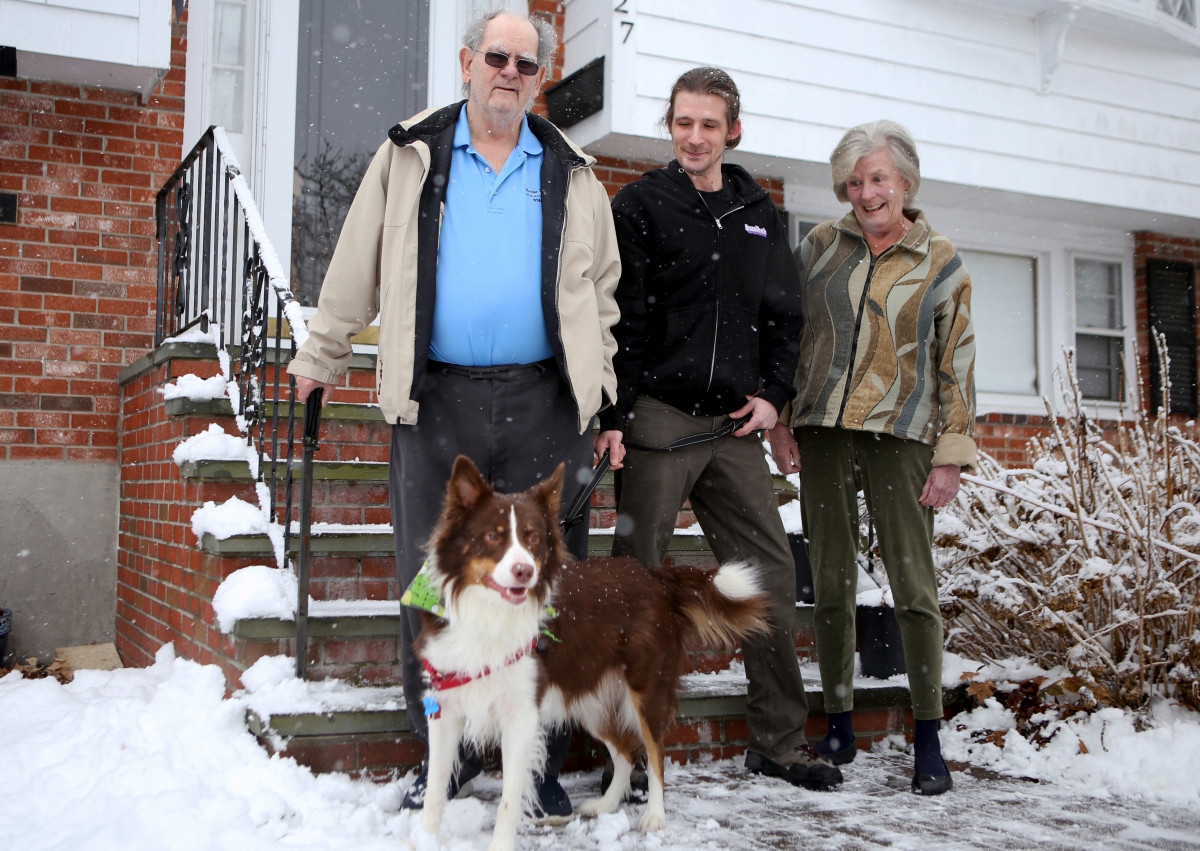



 House Speaker Nancy Pelosi, D-Calif., speaks with Rep. Richard Neal, D-Mass., and other members of Congress to discuss the first impeachment vote against President Donald Trump in Washington in 2019. MUST CREDIT: Washington Post photo by Melina Mara
 People fight to gain access to the Capitol on Jan. 6, 2021. MUST CREDIT: Photo for The Washington Post by Amanda Voisard
