Brexit talks suspended after aide tests positive for covid
InternationalNov 20. 2020Michel Barnier, center, outside the Westminster Conference Center in London on Sept. 9, 2020. MUST CREDIT: Bloomberg photo by Simon Dawson.
By Syndication Washington Post, Bloomberg · Nikos Chrysoloras · WORLD, EUROPE
Crunch talks over a post-Brexit trade agreement were disrupted on Thursday when a European Union official involved in the negotiations tested positive for the coronavirus.
Michel Barnier, the EU’s chief Brexit negotiator, will suspend talks with his U.K. counterpart David Frost “for a short period,” he said in a tweet on Thursday. He will also go into a period of quarantine, according to a person familiar with the negotiations.
The two teams will continue their work “in full respect of guidelines,” Barnier said.
Negotiators who haven’t been in contact with the official who tested positive will continue with face-to-face talks in Brussels, while others will carry on discussions virtually, said the person, who asked not to be identified because they weren’t authorized to speak publicly.
“The health of our teams comes first,” Frost said in a tweet, adding that he is in close contact with Barnier about the situation.
The pound was was little changed on the news, trading 0.4% lower against the dollar at 4:50 p.m. in Brussels.
Negotiations have been going on in Brussels since Sunday. Officials have said they are in the final stretch, with an agreement possible next week. The two sides are trying to strike an accord in time for it to be ratified before the U.K. leaves the EU’s single market and customs union at the end of the year.
Although the two sides had yet to bridge their differences on the three most difficult topics of fishing, the level playing field for businesses, and the governance of a potential trade agreement, officials had recently been relatively upbeat. Barnier was scheduled to brief EU government envoys in Brussels about the state of the talks on Friday morning. That will now be done by one of his deputies.
This isn’t the first time the coronavirus has disrupted the negotiations. In March, Barnier, Frost and several members of their teams were forced into isolation after either testing positive for, or showing symptoms of, Covid. The two sides were also forced to suspend face-to-face discussions as Europe went into a continent-wide lockdown.
Tokyo raises virus alert to highest level amid record cases
InternationalNov 20. 2020Pedestrians wearing protective masks cross a road in Tokyo on Nov. 19, 2020. MUST CREDIT: Bloomberg photo by Soichiro Koriyama.
By Syndication Washington Post, Bloomberg · Isabel Reynolds, Keiko Ujikane · WORLD, ASIA-PACIFIC
Tokyo raised its covid-19 alert to the highest of four levels, as daily infections in the Japanese capital increased by more than 500 for the first time amid a resurgence of the pathogen across the country.
The Tokyo government didn’t introduce any restrictions in a press conference Thursday, but urged individuals to be more cautious. Governor Yuriko Koike said residents should focus on things such as wearing masks and using disinfectant, and should gather only in small groups for short periods of time.
The government lacks the legal means for a harsh lockdown, but has shown it can keep the virus under control without one. In addition, officials want to avoid heavy restrictions as they try to get the country’s recessionary economy back on track.
“Even without the virus spread, we were expecting the economy to struggle after a rebound, so this is shaping up to be a double blow,” said Yuichi Kodama, an economist at Meiji Yasuda Research Institute. He added that more than 20 trillion yen ($192 billion) may be needed for a third extra budget, depending on how the situation develops.
The city on Thursday reported 534 cases, a new high after the previous day’s tally of 493 overtook a record set in August. The nationwide total also set a daily record — 2,259, according to TBS — as prefectures including Osaka, Aichi and Hokkaido posted their highest number of infections.
The increase comes as the virus is surging globally with the onset of colder weather in the northern parts of the world. While Japan’s numbers are low compared with other countries, the increase is a reminder that, in the absence of an effective vaccine, even the most successful countries at containing the virus are vulnerable to resurgences.
Japanese officials have stressed that hospital capacity isn’t under any strain. Koike said Thursday that avoiding serious cases is the biggest priority.
Tokyo had lowered the alert from its highest level in September, prompting the city to end voluntary restrictions on operating hours for bars and restaurants.
With cases climbing again, a debate has emerged over generous government subsidies for travel and eating out as part of a Go To campaign to support businesses, which some have blamed for fueling the latest wave. Chief Cabinet Secretary Katsunobu Kato said Wednesday that the central government had received no request from Tokyo to be removed from areas eligible for subsidies. He added there was no need to refrain from travel between prefectures across the board.
“The Go To campaign was meant to be one of the main pillars, but if this becomes difficult they may have to add different measures to support the economy and people’s livelihoods,” Kodama said.
The higher alert level was implemented days after International Olympic Committee chief Thomas Bach told reporters in Tokyo he was confident that next year’s Olympics could safely be held with spectators present.
By The Washington Post · Tom Hamburger, Kayla Ruble, David A. Fahrenthold, Josh Dawsey · NATIONAL, POLITICS
DETROIT – President Donald Trump has invited the leaders of Michigan’s Republican-controlled state legislature to meet him in Washington on Friday, according to a person familiar with those plans, as the president and his allies continue an extraordinary campaign to overturn the results of an election he lost.
Trump’s campaign has suffered defeats in courtrooms across the country in its efforts to allege irregularities with the ballot-counting process, and has failed to muster any evidence of the widespread fraud that the president continues to claim tainted the 2020 election.
Trump lost Michigan by a wide margin: At present, he trails President-Elect Joe Biden in the state by 157,000 votes. Earlier this week, the state’s Republican Senate majority leader said an effort to have legislators throw out election results was “not going to happen.”
But the president now appears to be using the full weight of his office to challenge the election results as he and his allies reach out personally to state and local officials in an intensifying effort to halt the certification of the vote in key battleground states.
In an incendiary news conference in Washington, Rudy Giuliani, the former New York mayor who is now serving as Trump’s lead attorney, made baseless claims that Biden had orchestrated a national conspiracy to rig the vote.
Trump’s team appear to be increasingly focused on Michigan as a place where Republican officials – on the state’s Board of Canvassers and in the legislature – might be persuaded to overturn the results.
Earlier this week, Trump called a member of Wayne County’s Board of Canvassers after a contentious meeting in which she first refused, and then agreed, to certify election results from the state’s largest county. She subsequently released an affidavit seeking to “rescind” her vote for certification – a move that the secretary of state’s office said was impossible.
Legal experts condemned the president’s actions, saying he was trying to use the power of his office to alter the vote.
“To bring the weight of the White House and the presidency onto an individual county canvassing board commissioner about what to do with certification is an incredible assault on the democratic process,” said Richard Pildes, a constitutional law professor at New York University. “No question about that.”
Joanna Lydgate, the national director of the Voter Protection Program, said “there is no basis in fact or law for failing to certify the election.”
“The president’s unpatriotic behavior is reaching new heights with summoning state legislative officials to the White House,” she said. “But the legislature has no role in certification, as its leaders have already publicly admitted. This raises serious legal and ethical concerns about the president’s conduct – but it will not alter the outcome of the election.”
Trump and his allies have spent the last week making baseless allegations of fraud in lawsuits, news conferences and tweets – seemingly probing to find a judge or an elected official who would accept them.
At the news conference in Washington on Thursday, Giuliani claimed without evidence that the campaign could roll back Biden’s wins in multiple states, including Michigan.
“It changes the result of the election in Michigan if you take out Wayne County,” he said. The county includes Detroit, the state’s heavily Democratic, majority-Black largest city.
Also on Thursday, Trump’s efforts seemed to have gained some traction, with the news that Michigan’s GOP leaders appear willing to meet with him.
The Detroit News reported that the state GOP legislative leaders who plan to visit the White House on Friday are Senate Majority Leader Mike Shirkey and House Speaker Lee Chatfield.
Earlier this week, Shirkey said that Biden is the president-elect, and that an effort to award Michigan’s electoral votes to Trump was “not going to happen,” according to the news outlet Bridge Michigan.
Shirkey’s office did not respond to requests for comment from The Washington Post. Gideon D’Assandro, communications director for the Michigan House speaker, declined to comment Thursday.
In Michigan, the high-water mark for Trump’s efforts came Tuesday night, during an hours-long meeting of the Wayne County board of canvassers. The board’s two GOP members voted against certifying the county’s results, which favored Biden by a large margin. But then, after three hours of angry comments from the public, the two GOP members changed their minds and voted to certify the results.
After the meeting, Trump called one of the two GOP members, Monica Palmer, who said Trump did not pressure her to change her vote.
“His concern was about my safety, and that was really touching. He is a really busy guy, and to have his concern about my safety was appreciated,” she told The Post.
“It was not pressure. It was genuine concern for my safety,” Palmer said.
Afterward, Palmer and the board’s other GOP member changed their minds again: On Wednesday, they signed affidavits saying they wanted to “rescind” their votes. The two said they were improperly pressured into certifying the election and accused Democrats of reneging on a promise to audit votes in Detroit.
William Hartmann, the other Republican on the board, has signed a similar affidavit, according to a person familiar with the document. Hartmann did not respond to a message from The Post.
Jonathan Kinloch, a Democratic member of the board, lamented the late attempt by Republicans to change their vote.
“They’re playing with the vote and the will of the people,” Kinloch said.
The Michigan secretary of state’s office, which oversees elections, said Thursday that there is no legal mechanism for Palmer and Hartmann to rescind their votes now. “Their job is done, and the next step in the process is for the Board of State Canvassers to meet and certify,” said Tracy Wimmer, a spokeswoman for Secretary of State Jocelyn Benson, a Democrat.
Palmer and Hartmann said they had agreed to certify Wayne County’s results on the condition that they be audited by state authorities, to resolve small errors in the counts of voters at some Detroit precincts. The number of votes affected is believed to be in the hundreds, far less than Biden’s margin of victory in Michigan.
On Thursday, Benson’s office said it would be conducting an audit of votes statewide and in Wayne County and other jurisdictions “where the data shows notable clerical errors” – but only after the election results are certified.
Palmer did not respond to questions asking whether that audit assuaged her concerns. She has said she does not doubt that Biden won Michigan but wants to be sure that clerical errors are fixed.
Also on Thursday, the Trump campaign dropped a lawsuit it had filed in federal court to block Michigan from certifying its election results. In explaining the move, Trump’s lawyers said – incorrectly – that the Wayne County board had voted not to certify the county’s results.
Meanwhile, in Arizona, there were signs of a potential delay in vote certification in one pro-Trump county.
Supervisors in rural Mohave County, a Republican stronghold bisected by the Grand Canyon, were set to canvass their county vote at a public meeting on Monday. Instead, they decided to delay their vote and take it up again Monday – the deadline for certification.
The supervisors agreed that they did not question whether the results in their own county were accurate. Instead, one GOP supervisor said, they wanted to show solidarity with the president’s challenges elsewhere.
“It has nothing to do with our results,” Supervisor Hildy Angius said in explaining her vote. “It’s more of a big-picture sort of thing.”
Chairwoman Jean Bishop initially voted to certify the vote on Nov. 16 but changed her mind, siding with those who wanted a delay.
“To not canvass our vote makes no sense unless you’re saying we’re trying to make a statement to support the state party. Which makes it sort of political – but I guess it is political,” she said.
The move to delay the vote was introduced by Supervisor Ron Gould, a former state senator who said he fear that canvassing the vote would foreclose Republicans’ options to challenge the statewide election results. “If we go ahead and canvass the election, then we’re saying we’re done, and that puts a different legal level on it,” Gould said at Monday’s meeting.
Trump trails Biden by more than 10,000 votes in Arizona. Secretary of State Katie Hobbs, a Democrat, has repeatedly defended the integrity of the election and said she will certify the statewide results.
By The Washington Post · Juliet Eilperin, Dino Grandoni · NATIONAL, POLITICS, SCIENCE-ENVIRONMENT One of Joe Biden’s boldest campaign pledges was to ban “new oil and gas permitting on public lands and waters,” part of a sweeping agenda aimed at curbing greenhouse gases that are warming the planet and threatening life on Earth.
Transforming that promise into reality, however, will be tough.
The incoming administration will face several legal and political hurdles if it seeks to halt new oil and gas permits on federal land and waters, given existing laws and the enormous sums that drilling royalties generate for the federal and state governments – including Democratic-leaning states such as New Mexico and Colorado. But failure to do so is sure to become a flash point with environmental and youth activists within the Democratic Party, who helped elect him and have made climate a priority.
Meanwhile, the Trump administration, in a bid to help its allies in the oil and gas business before it leaves office, has embarked on an 11th-hour leasing spree to help those companies lock in rights to drill. It offered up 79 million acres of leases in the Gulf of Mexico on Wednesday, selling nearly 518,000 acres. And it is rushing to auction off rights to drill in the Arctic National Wildlife Refuge by Jan. 20, Inauguration Day.
In a recent interview, Interior Secretary David Bernhardt said that Biden would not be able to halt new drilling on public lands and waters until his first term ends. “If their intention is to end all leasing and permitting, they will find that that’s rife with conflicts, opposed by Democratic governors, and not perpetually legally sustainable.”
But Michael Brune, head of the Sierra Club, one of the nation’s oldest and most influential environmental groups, said his members expect nothing less than a ban from the candidate they helped elect.
“The Biden campaign made a clear and unequivocal campaign promise to end fossil fuel leasing on public land.” Brune said. “That’s a big reason why we had Sierra Club members write more than a million letters to undecided voters, make more than 5 million phone calls to undecided voters and send 20 million text messages.”
There is little question that energy development on public lands and waters represents a significant share of America’s global warming pollution. The fossil fuels that are extracted there and eventually burned to run cars, heat homes, operate factories and generate electricity account for nearly a quarter of U.S. carbon dioxide emissions, according to a 2018 U.S. Geological Survey study.
Still, lawmakers from both parties have welcomed drilling as a source of jobs and revenue for decades. President Barack Obama worked to curtail U.S. coal production on public land, but he praised natural gas production as an important bridge to clean energy. The Trump administration has moved aggressively to expand oil and gas drilling across the country, scaling back protected areas, offering more leases and accelerating federal approval for pipelines and other drilling-related projects.
Fossil fuel gas activity on federal and tribal land and offshore last year generated $11.7 billion in tax revenue, according to the Interior Department’s Office of Natural Resources Revenue. Of that total, the U.S. Treasury kept $4.9 billion, more than $2.4 billion went to state and local governments and the rest funded tribes, restoration, conservation and other projects.
But as climate projections have become dire, Democrats have embraced a “keep it in the ground” strategy aimed at ending this activity altogether without the help of a sharply divided Congress. According to a Washington Post survey, every 2020 Democratic presidential candidate pledged to ban fossil fuel leasing with the exception of Montana Gov. Steve Bullock and Sen. Michael Bennet of Colorado, both of whom hail from energy-producing states.
Biden repeatedly brought up the issue on the campaign trail, saying that he would shift the nation away from fossil fuels while allowing fracking to continue on private land in places like Pennsylvania, which happened to be a swing state pivotal to his victory.
At a town hall in New Hampshire in February, he said he opposed drilling in the Arctic National Wildlife Refuge, given the impacts of climate change on Alaska, before adding, “And by the way, no more drilling on federal lands, period. Period, period, period.” The crowd clapped enthusiastically.
Frank Macchiarola, the American Petroleum Institute’s senior vice president for policy, economics and regulatory affairs, said in an interview that his group is well aware of Biden’s pledge. “But we also recognize that that was a campaign proposal, and campaigning is often different from governing,” he said.
“Our first order of business is to tell the story of the value of oil and gas production in the United States,” Macchiarola said. He added that if Biden sought to impose a leasing ban, “we think there are a significant number of impediments to that, and we would challenge it vigorously.”
Legal experts from across the political spectrum said it will be easier to stop issuing new leases than to halt drilling permits linked to existing leases. Two primary laws govern leasing – the Mineral Leasing Act (MLA) and the Outer Continental Shelf Lands Act (OSCLA) – and both call for auctions at regular intervals. But the Obama administration suspended leasing both onshore and off at times, and the president has the right to remove offshore areas from leasing altogether.
It is much harder to deny a company the right to drill on a tract that is already leased. And it can take decades to cancel leases outright: Lawyers have been fighting for nearly 40 years over whether the U.S. government has the right to cancel oil leases that the Ronald Reagan administration awarded on land sacred to Montana’s Blackfeet Nation.
The Trump administration has offered more than 100 million acres in onshore and offshore leases since taking office. More than 4 million acres have been sold in the Lower 48, and another 1 million on Alaska’s North Slope.
“They’re trying to lock in as many leases and as much climate pollution as they can before the Biden administration takes control,” said Taylor McKinnon, a public lands campaigner for the Center for Biological Diversity, an advocacy group.
Some experts have begun to outline how the Biden administration could achieve “net-zero emissions” even if it continued to allow some oil and gas drilling.
Nada Culver, senior policy counsel at the National Audubon Society, recently co-authored a law review article that noted that Interior’s Bureau of Land Management is required by law to protect “atmospheric values,” and the agency could use that to impose new requirements on leases and permits.
Alex Daue, assistant director for energy and climate at The Wilderness Society Action Fund, said these requirements could include plugging up abandoned wells that are leaking greenhouse gases and financing restoration projects that could absorb carbon from the atmosphere and store it. “Public lands represent one of the Biden administration’s best opportunities to tackle climate change,” he said.
When it comes to curbing new leasing, New Mexico may pose the biggest challenge for the new administration. The Democratic-leaning state accounts for 57% of oil production on federal land and nearly a third of onshore gas extraction, according to a recent industry analysis, which projected New Mexico could lose $1 billion a year in federal revenue if all drilling activity ceased. Pumpjacks bobbing across the desert landscape funnel money to local governments and school districts through royalty payments and other drilling fees, even as politicians cite heat waves and prolonged drought as reasons to tackle climate change.
Democratic Gov. Michelle Lujan Grisham, a Biden ally, said this summer she would ask for an exemption from any leasing ban. Three New Mexico Democrats – Rep. Deb Haaland and Sens. Tom Udall and Martin Heinrich – are all in the running to be Biden’s interior secretary, and they have differing views on whether to prohibit new drilling on public lands and waters.
Both Udall and Heinrich have expressed reservations about a total ban. In a recent interview, Udall called for setting a goal of “carbon-neutral” public lands, where the emissions from fossil fuel extraction could be offset by reforestation and other activities that remove carbon from the atmosphere. “That’s where we should be headed,” he said.
“Go into the departments that have the expertise and have the scientists and tell them this is your goal,” Udall added. “How do we get there? What do we need to do? And then you can reapproach this in a concrete way and get it done.”
But Haaland, who would be the first Native American to run the department that oversees federal and tribal lands, is more open to a straightforward ban. In September, she told reporters, “We don’t need drilling everywhere.”
Methane, a greenhouse gas that can be more than 80 times more potent than carbon dioxide, frequently escapes from oil patches in New Mexico and elsewhere. Haaland was referring to methane leaks when she added: “If I had my way, it’d be great to stop all gas and oil leasing on federal and public lands, because those lands belong to all of us; they don’t just belong to one sector.”
Regardless of who Biden selects to chart the nation’s policies on fossil fuels, the intraparty fissures are already on display. The Biden team faced swift reprisal from environmental activists this week after naming Rep. Cedric Richmond, D-La., his campaign co-chair, as a senior White House adviser.
The oil and gas industry has viewed Richmond as one its chief advocates within Biden’s inner circle.
Mike Sommers, head of the American Petroleum Institute, said before the election that the Biden campaign had been “pretty closed off to outside organizations” but that Richmond had “helped communicate messages” from the petroleum industry.
But Varshini Prakash, head of the youth-led Sunrise Movement that campaigned for Biden, said in a statement that hiring the Gulf Coast congressman who has raised money from oil and gas interests for a White House job “feels like a betrayal.”
“Biden assured our movement he understands the urgency of this crisis; now, it’s time for him to act like it.”
Disarray and defeats mark Trump post-election period
InternationalNov 19. 2020President Trump listens as Vice President Mike Pence speaks about the coronavirus Friday in the Rose Garden. MUST CREDIT: Washington Post photo by Jabin Botsford. Photo by: Jabin Botsford — The Washington Post
By The Washington Post · Toluse Olorunnipa · NATIONAL, POLITICS, WHITEHOUSE
WASHINGTON – In the two weeks since Election Day, the clumsiness and turbulence that many voters said drove them to oust President Donald Trump from office has been on full display as the president denies the election results and ignores a rapidly worsening pandemic.
From the courtroom to the Oval Office, Trump’s government, campaign and legal team have been plagued by mistakes, oversights, rejections and defeats in a post-election period marked by unprecedented disarray.
As Trump has embraced a sense of denial about his election loss to Democrat Joe Biden and the coronavirus crisis surging across the nation, the final weeks of his presidency have been marked by rudderless and haphazard governance.
Trump’s campaign has suffered a string of defeats in court as its baseless claims about fraudulent voting have withered under scrutiny. The president’s swift post-election purge of top administration officials has sparked criticism from Democrats and some Republicans. Positive news about potential coronavirus vaccines has been clouded by Trump’s attacks on drugmakers and his own administration for not approving the treatment before the election. Trump has continued to cite debunked claims that dead people voted, days after those claims were proved false.
As the spiraling pandemic has begun to overwhelm hospitals, the president has spent more time at his golf clubs than at coronavirus task force meetings.
“I can’t remember a set of circumstances in which a president’s own personal pique has so completely disrupted the government’s ability to do its job well,” said Russell Riley, a presidential historian at the University of Virginia’s Miller Center. “History will judge this administration very poorly on this dimension.”
Since the election, Trump has remained mostly behind closed doors, tweeting hundreds of times and spreading baseless theories that are often posted in all caps and repeatedly flagged by Twitter as disputed or misguided.
His low-profile approach to governing comes as the country is facing the worst stretch yet of a public health crisis that has already killed almost 250,000 Americans.
Trump has not used his broad platform to encourage Americans to practice public health measures that medical experts say are necessary to get control of the virus before it devastates the nation’s hospitals. Anthony Fauci, the nation’s top infectious-disease expert, has publicly pleaded for a more robust national response to the virus. His pleas have not swayed Trump, who has declined to meet with the task force for months.
Trump has instead turned to Scott Atlas, a neuroradiologist who has embraced the dangerous theory of herd immunity and attacked local governors for taking steps to slow the spread of the virus.
“The only way this stops is if people rise up,” Atlas said in a tweet Sunday criticizing Michigan Democratic Gov. Gretchen Whitmer for closing colleges, some workplaces and in-person dining for three weeks. “You get what you accept. #FreedomMatters #StepUp.”
Atlas was immediately condemned for what some interpreted as an incitement against a Democratic governor who was recently the target of an alleged kidnapping plot. He quickly sought to clarify himself, in the latest example of slapdash messaging from the Trump administration.
“I’m not very good at Twitter, and I take responsibility for what I tweeted,” Atlas said Monday on Fox News.
Trump’s disjointed approach to handling the coronavirus threatens to handicap the incoming Biden administration. Biden’s transition team has been prevented from meeting with federal scientists as Trump’s administration has declined to acknowledge the Democrat as the victor in the election.
Speaking to reporters Monday, Biden said “more people may die” as a result of Trump’s refusal to engage in traditional transition activities in the middle of a pandemic. Biden, who has twice called Trump’s refusal to concede the election “embarrassing,” ran for office in part on a pledge to restore competent governance.
The White House defended Trump’s response to the virus.
“President Trump and his Administration remain focused on saving lives as Operation Warp Speed continues to fast track treatments and vaccines in record time,” White House spokesman Brian Morgenstern said in a statement. “The Task Force is in constant contact with state and local jurisdictions and health care providers, and continues to promote common sense mitigation measures. We routinely provide data, analysis, and recommendations, and surge PPE, medical personnel, and capacity when they are needed.”
While Biden received a record-high number of votes – more than 79 million and counting – Trump has continued to declare himself the winner and try to overturn the election results in court.
The effort has not gone smoothly.
On a daily basis, judges have questioned, rejected and tossed aside the Trump campaign’s claims of election rigging in swing states. Many of the claims have fallen apart quietly in legal chambers after much public fanfare from Trump and his allies.
Accusations from a Pennsylvania postal worker of widespread mail-in voting fraud were recanted after Trump and several Republicans touted them as a consequential bombshell. Allegations that Republican observers were banned from witnessing ballot-counting in Pennsylvania fell apart in court when a Trump attorney was forced to acknowledge that a “nonzero” number of observers had been in the room.
Other claims – that Sharpies had corrupted votes in Arizona, that late-arriving ballots had been smuggled into a precinct in Georgia, that voting machines had changed votes from Trump to Biden – have been dismissed by judges or withdrawn by Trump’s attorneys after they collapsed under light scrutiny.
The Trump campaign’s claim that thousands of people voted illegally in Nevada while living outside the state also failed to launch. Many of the ballots were legally cast by military service members.
Trump has continued to push some claims long after they were debunked.
“DEAD PEOPLE VOTED,” he tweeted Wednesday, quoting a six-day-old video in which Fox News host Tucker Carlson claimed to have evidence of multiple deceased people casting ballots in Georgia. But the claims had already been investigated and determined to be false – in one case the 96-year-old widow of James Blalock voted legally as Mrs. James Blalock. Carlson issued a correction on his show days before Trump tweeted out the old allegation.
Trump’s determination to prove fraud despite the lack of evidence has put his attorneys in the unenviable position of trying to turn the president’s baseless musings into actual legal cases, said James Gardner, who teaches election law at the University at Buffalo School of Law.
“What seems puzzling is the willingness of Trump’s lawyers to pursue even extremely remote and unlikely possibilities, yet it is not puzzling,” he said. “This is how otherwise good and reasonable lawyers sometimes behave when they have a client who is completely unreasonable and who refuses to take, or perhaps even to hear, counsel to the effect that his position is weak and ought to be abandoned.”
Senior Trump legal adviser Jenna Ellis said media organizations that covered Russian interference in the 2016 election “suddenly won’t even consider the idea that an election was tampered with.”
“So-called ‘experts’ warned everyone in advance that the 2020 election would take weeks after Election Day to sort out, but now they want to declare everything settled before legal challenges play out,” Ellis said in an emailed statement. “Democrat political machines in corrupt cities were in charge of these elections and it takes a little legal digging to get to the bottom of it. We are confident that when the legal votes are counted and the illegal votes are discarded, President Trump will be proven to have been reelected.”
Some of the Trump campaign’s moves have been especially awkward. In one instance, the Trump legal team mistakenly filed a brief in an obscure Washington court alleging irregularities with Michigan’s voting process. Trump personal attorney Rudy Giuliani held a news conference on Nov. 7 outside a little-known company in Philadelphia, Four Seasons Total Landscaping, that Trump initially mistook for the major hotel brand.
Amid the chaos, several lawyers from major law firms have backed out of the effort or withdrawn from cases.
Trump’s broader goal may not be a strictly legal one. Even as he is suffering defeats in court, he is rallying much of his base and convincing large swaths of Republicans that the election he lost was neither free nor fair. By sowing doubt about the electoral process and painting himself as a victim, Trump could be laying the groundwork for another run at the presidency in 2024.
While Trump has been successful in keeping many Republicans from acknowledging the reality of Biden’s victory, some GOP officials have begun to break ranks and cast doubt on the president’s fraud claims.
Georgia Republican Secretary of State Brad Raffensperger has said publicly that his state’s vote was not tainted by fraud and that Biden’s narrow victory there was likely to stand after a hand recount. Raffensperger told WSB-TV in Atlanta that Trump may have cost himself the election by railing against mail-in voting.
“He actually suppressed, depressed his own voting base,” he said, noting that more than 24,000 Republican voters who cast ballots by mail in the June primary did not vote at all in November. Biden is leading in the state by about 13,000 votes.
Nationwide, as Trump’s fraud claims have failed, Biden’s popular-vote lead has been increasing and his margins of victory in several key swing states have widened or remained secure.
While some Trump administration officials have continued to claim the president won the election, others have begun to refer to the reality of Biden’s win. National security adviser Robert O’Brien said this week that a Biden administration appears likely.
Career prosecutors at the Justice Department pushed back against Attorney General William Barr’s decision to greenlight investigations of voting irregularities, saying no evidence of widespread issues existed.
On Tuesday, Trump tweeted that he had terminated a top Department of Homeland Security official who led the agency’s efforts to help secure the election and vocally rejected unfounded claims of ballot fraud.
Christopher Krebs, who headed the Cybersecurity and Infrastructure Security Agency at DHS, had previously publicly asserted that the election had been the most secure in history. He also forcefully dismissed claims that voting machines had switched votes, even after Trump repeatedly made such charges.
Krebs’s dismissal is part of an ongoing post-election purge of administration officials that itself has been marred by haphazard execution.
“It’s like the Saturday Night Massacre but much dumber,” National Review senior editor Ramesh Ponnuru tweeted Tuesday after Krebs was fired via Twitter.
Elsewhere in the government, signs of instability abound. Johnny McEntee, Trump’s 30-year-old director of presidential personnel, has spearheaded an effort to root out disloyalty from the administration.
The push has resulted in the rapid dismissal of officials from the Pentagon, DHS, the U.S. Agency for International Development and elsewhere.
White House press secretary Kayleigh McEnany, who has been moonlighting as a campaign adviser, has gone on television to refer questions back to the White House. On Saturday, she tweeted that there were more than “one MILLION marchers” in Washington protesting in support of Trump – a claim refuted by the facts on the ground and by Trump’s own assertion that “tens of thousands” of people were present.
At the Pentagon, Trump has sparked bipartisan pushback by unexpectedly announcing a swift drawdown of American troops from Afghanistan and Iraq by early January. The move came days after Trump terminated Defense Secretary Mark Esper.
Trump also said he overrode “the ridiculous decision” by Army officials to cancel the annual Wreaths Across America veterans event at Arlington National Cemetery.
“It will now go on!” Trump tweeted Tuesday, a day after the Pentagon said the event had been canceled because of the coronavirus.
The group that helps host the event was surprised by the announcement.
“We cannot comment on what really happened today,” Sean Sullivan, a spokesman for Wreaths Across America, said in an emailed statement that included a timeline of the cancellation, the backlash and then the reinstatement of the event by presidential tweet.
British PM Boris Johnson is launching an ambitious plan to transform the green economy, including ending the sale of new petrol and diesel cars by 2030 and implementing new measures to become a world leader in carbon capture.
The UK government has also earmarked £12 billion for a 10-point plan, which will create up to 250,000 jobs. This comes as the UK gets ready to co-host the Climate Ambition Summit on December 12, and the COP26 next year.
The 10 points built around the UK’s strengths are:
• Offshore wind: Producing enough offshore wind to power every home, quadrupling the current production to 40GW by 2030 and creating up to 60,000 jobs.
• Hydrogen: Working to generate 5GW of low-carbon hydrogen production capacity by 2030 for industry, transport, power and homes, developing the first town heated entirely by hydrogen by the end of the decade.
• Nuclear: Advancing nuclear as a clean energy source and developing the next generation of small and advanced reactors, which could support 10,000 jobs.
• Electric vehicles: Ending the sale of new petrol and diesel vehicles by 2030 – 10 years earlier than planned –with hybrid cars to follow in 2035, and transforming the UK’s national infrastructure to better support electric vehicles. This will put the UK on course to be the first G7 country to decarbonise road transport.
• Public transport, cycling and walking: Making cycling and walking more attractive ways to travel and investing in zero-emission public transport of the future.
• Jet Zero and greener maritime: Supporting difficult-to-decarbonise industries to become greener through research projects for zero-emission planes and ships.
• Homes and public buildings: Making homes, schools and hospitals greener, warmer and more energy efficient, whilst creating 50,000 jobs by 2030, and a target to install 600,000 heat pumps every year by 2028.
• Carbon capture: Becoming a world-leader in technology to capture and store harmful emissions away from the atmosphere, with a target to remove 10 million tonnes of carbon dioxide by 2030.
• Nature: Planting 30,000 hectares of trees every year, whilst creating and retaining thousands of jobs.
• Innovation and finance: Developing cutting-edge technology needed to reach these new energy ambitions and making London the global centre of green finance.
“Although this year has taken a very different path to the one we expected, the UK is looking to the future and seizing the opportunity to build back greener,” PM Johnson said.
“The recovery of our planet and of our economies can and must go hand-in-hand.
“This is a shared global challenge – every country in the world needs to take action to secure the future of the planet for our children, grandchildren and generations to come.”
The prime minister also announced significant new investment today to deliver on the plan, including:
Carbon capture: The UK will be at the global forefront of carbon capture, usage and storage technology, benefiting regions with industries that are particularly difficult to decarbonise.
An extra £200 million of new funding to create two carbon capture clusters by the mid-2020s, with another two set to be created by 2030. This increases the total invested to £1 billion.
Hydrogen: Up to £500 million, including getting homes to experiment with using hydrogen for heating and cooking, starting with a Hydrogen Neighbourhood in 2023, moving to a Hydrogen Village by 2025, with an aim for a Hydrogen Town before the end of the decade.
Nuclear: £525 million to help develop large and smaller-scale nuclear plants, and research and develop new advanced modular reactors.
Electric vehicles: The UK will end the sale of new petrol and diesel cars and vans by 2030, 10 years earlier than planned, with hybrid cars to follow in 2035 subject to strict standards on zero emissions.
To support this acceleration, Johnson has announced:
• £1.3 billion to accelerate the rollout of charge points for electric vehicles in homes, streets and on motorways across England.
• £582 million in grants for those buying zero or ultra-low emission vehicles to make them cheaper and incentivise more people to make the transition.
• Nearly £500 million to be spent in the next four years for the development and mass-scale production of electric vehicle batteries.
Homes and public buildings: £1 billion next year into turning new and existing homes and public buildings more efficient and comfortable, extending the Green Homes Grant voucher scheme by a year and making public sector buildings greener and cutting bills for hospitals and schools, as part of the Public Sector Decarbonisation Scheme.
Greener maritime: £20 million for a competition to develop clean maritime technology, such as feasibility studies on key sites.
InternationalNov 19. 2020The sun sets at the White House on Monday, Nov. 16, 2020. MUST CREDIT: Washington Post photo by Jabin Botsford
By The Washington Post · Amy Gardner, Robert Costa, Rosalind S. Helderman, Michelle Ye Hee Lee · NATIONAL, POLITICS, COURTSLAW, WHITEHOUSE
President Donald Trump has abandoned his plan to win reelection by disqualifying enough ballots to reverse President-elect Joe Biden’s wins in key battleground states, pivoting instead to a goal that appears equally unattainable: delaying a final count long enough to cast doubt on Biden’s decisive victory.
A Marine stands guard outside the West Wing doors, signifying that President Donald Trump is in the Oval Office on Tuesday, Nov. 17, 2020. MUST CREDIT: Washington Post photo by Jabin Botsford
On Wednesday, Trump’s campaign wired $3 million to election officials in Wisconsin to start a recount in the state’s two largest counties. His personal lawyer, Rudy Giuliani, who has taken over the president’s legal team, asked a federal judge to consider ordering the Republican-controlled legislature in Pennsylvania to select the state’s electors. And Trump egged on a group of GOP lawmakers in Michigan who are pushing for an audit of the vote there before it is certified.
Giuliani has also told Trump and associates that his ambition is to pressure GOP lawmakers and officials across the political map to stall the vote certification in an effort to have Republican lawmakers pick electors and disrupt the electoral college when it convenes next month – and Trump is encouraging of that plan, according to two senior Republicans who have conferred with Giuliani and spoke on the condition of anonymity to discuss the matter candidly.
But that outcome appears impossible. It is against the law in Pennsylvania, Wisconsin law gives no role to the legislature in choosing presidential electors, and there is little public will in other states to pursue such a path.
Behind the thin legal gambit is what several Trump advisers say is his real goal: sowing doubt in Biden’s victory with the president’s most ardent supporters and keeping alive his prospects for another presidential run in 2024.
The shift in strategy comes after the president has suffered defeat after defeat in courtrooms around the country. And it serves as a tacit acknowledgment that Trump has failed to muster evidence to support his unfounded claims about widespread fraud.
While he continues to make such false allegations on Twitter and in fundraising emails driving money into his new leadership PAC, the president’s legal cases have largely been focused on attempts to discard ballots for missing information or on other technicalities. On Wednesday, the Trump campaign agreed to a joint stipulation in a lawsuit in Bucks County, Pa., that there was no fraud, even as it continued to press for the tossing of mail ballots with voter information missing from their envelopes.
Several Republicans said that even Giuliani believes the legal path is arduous. The goal now is to play for delay and cast doubt on the election, they said.
According to people familiar with their conversations, Giuliani is conferring regularly with Stephen Bannon, the controversial former White House adviser who earlier this month called for Anthony Fauci, the coronavirus task force member, to be beheaded.
“We continue to push forward,” said Boris Epshteyn, a Trump ally and strategic adviser to the campaign, who appeared with Giuliani at a federal court hearing Tuesday in Pennsylvania, where the president’s lawyer faced skeptical questioning from the judge. “The push is to determine what truly happened in this election and the point is to get to the bottom of how many people voted legally for President Trump and how many for Joe Biden.”
The toll of the president’s false claims on public confidence in the election was apparent in a new poll from Monmouth University that found that 77 percent of Trump supporters believe Biden’s win was due to fraud.
“Anything that aids and abets doubts about an election that has been conducted with integrity makes the future of democracy darker,” said William Galston, senior fellow in governance studies at the Brookings Institution. “To weaken a democratic people’s faith in its fundamental institutions of self-government is inexcusable.”
And the president faces growing skepticism within his own party – and outrage elsewhere – about his drumbeat of false statements.
Former White House chief of staff Mick Mulvaney, in an interview Wednesday on Fox Business, criticized Trump’s hiring of Giuliani to litigate a federal lawsuit in Pennsylvania.
“It strikes me that this is the most important lawsuit in the history of the country, and they’re not using the most well-noted election lawyers,” Mulvaney said. “There are folks who do this all of the time. This is a specialty. This is not a television program. This is the real thing.”
Trump’s current chief of staff, Mark Meadows, told reporters on Capitol Hill on Wednesday that he “personally” has evidence of ineligible voters casting ballots. “But the real question fundamentally continues to be: Are there enough votes out there to overturn the election?”
In Arizona’s Maricopa County, which the state Republican Party has sued over the way the county conducted a required hand-count audit, the GOP chairman of the county Board of Supervisors has expressed exasperation with the claims.
“It’s time to dial back the rhetoric, rumors, and false claims. There is no evidence of fraud or misconduct or malfunction,” Clint Hickman wrote in a public letter Tuesday.
Roopali Desai, an attorney representing Arizona Secretary of State Katie Hobbs, a Democrat, accused Republicans of using the lawsuit to delay the vote certification by furthering claims that the election was riddled with problems.
In asking Judge John Hannah to dismiss the case quickly, Desai said it was “dangerous” to allow that narrative “to go on even one more day.”
Hannah appeared skeptical of the Republicans’ claims, saying they waited until after the election results were known to raise concerns about a hand-count procedure they knew about before Election Day.
Meanwhile, in Pennsylvania, Guiliani submitted a new filing showing that he plans to argue in federal court that election officials violated the campaign’s constitutional rights because observers were not able to watch votes being counted. Pennsylvania’s Supreme Court ruled Tuesday that Philadelphia authorities gave reasonable access to the observers.
In a new court filing asking for permission to amend the campaign’s lawsuit, Giuliani said Trump would ask the judge to consider declaring the state’s election results “defective” and order Pennsylvania’s Republican-controlled legislature to select the state’s presidential electors rather than Gov. Tom Wolf, a Democrat.
Under state law, the governor appoints the electors based on the popular vote – a fact that even Republican legislative leaders have emphasized.
In Nevada, the Trump campaign is asking a state judge to overturn or annul Biden’s victory under a state law that allows candidates to contest an election based on allegedly fraudulent votes and other grounds.
In a 21-page statement of contest filed Tuesday, Republicans focus largely on the Democratic stronghold of Clark County, repeating some of the same allegations they put forth in recent lawsuits – and that state and federal judges summarily rejected.
The election contest also makes a number of other new allegations, including that thousands of people voted improperly in the state and that some people were offered improper incentives to vote. The document does not provide evidence for those claims but says evidence will be forthcoming.
Linda Fitzsimmons, a Democratic lawyer who has done voter protection in the state for decades, said she sees the election contest as a delay tactic to disrupt certification.
“They’re just desperate,” she said. “They probably know better than the rest of us that their allegations are unfounded, and they’re just seeking a delay for some reason that is tactical, but not legal.”
Trump is increasingly relying on Giuliani and campaign advisers Jenna Ellis and Jason Miller for legal guidance, several campaign officials said – in part because Trump has stopped listening to the original legal team and in part because of those lawyers’ decision to distance themselves in recent days from the president’s increasingly erratic effort to reverse the election’s outcome.
As a result, Trump increasingly is hearing only from aides who are maintaining that the election is not over. He remains hopeful about Wisconsin, Michigan and Pennsylvania largely on the advice of Giuliani, who is close to Bannon, and Trump has urged Giuliani to continue the fight, several officials said.
Giuliani “is crazy and actually believes Bannon,” one senior Republican adviser said.
Giuliani could not be reached, and Bannon declined to comment. On his conservative podcast, Bannon said Trump should continue to urge Michigan Republicans to block certification.
“You can’t certify Michigan,” he said. “You don’t have to put up a slate of electors.”
The president was furious Wednesday morning about the decision by election officials in Wayne County, Mich., to certify their results after initially deadlocking along partisan lines, according to aides familiar with his reaction. He is also increasingly angry at Georgia Gov. Brian Kemp and Secretary of State Brad Raffensperger, both Republicans who have given no indication that they will intervene to block certification there.
Nothing on the ground in any of the key states that helped propel Biden to victory suggests good reason for Trump’s optimism. The states continued their march toward vote certification, with election officials saying they expect to complete the process by the statutory deadline.
In Georgia, Raffensperger announced Wednesday the near-completion of a hand-counted audit that reduced Biden’s lead in the state from 14,156 to 12,781 – but revealed no evidence of fraud. County officials have until midnight Wednesday to wrap up their audit before certifying results by Friday. The Trump campaign has two business days after the certification of results – by Tuesday evening, at the latest – to request a recount.
In Pennsylvania, a GOP attempt to throw out thousands of ballots suffered a further setback in state court Wednesday when a judge in Allegheny County rejected a pair of requests to bar a total of 2,649 ballots where voters either did not write the date on their mail ballot envelope or signed on only one line rather than two when casting a provisional ballot.
“In light of the fact that there is no fraud, a technical omission on an envelope should not render a ballot invalid,” the judge, Joseph M. James, wrote in one order.
In Michigan, Democrats and some Republicans said the effort to force an audit before certification of the vote is unlikely to succeed because it is not required by Michigan law. Although Trump amplified the written request by retweeting it Wednesday, it was signed by only 10 out of 70 Republican lawmakers, none of them in leadership positions.
Even inside Trump’s inner orbit, evidence that reality was setting in came into view on Wednesday.
Trump signed off on the Wisconsin recount the previous evening after talks with Giuliani and other aides, and he urged them to “go to the limit” of contesting the election and delegitimize Biden’s win in the eyes of Trump’s core supporters, one of the senior Republicans said.
But in the end, the Trump campaign asked for a recount only in Dane and Milwaukee counties – at a cost to the campaign of about $3 million instead of about $8 million if he had requested a recount for the entire state. Wisconsin state law requires campaigns to pay upfront for recounts.
Veteran Republicans, meanwhile, expressed unease and apprehension Wednesday about a mission tying Giuliani, Trump and Bannon together, calling it embarrassing and ill-fated.
“Giuliani is turning this into a clown car and Bannon has never had a plan. They think they’re being aggressive but it’s disorganized,” said longtime GOP strategist Scott Reed. “Bannon thinks he’s disrupter in chief.”
Giuliani and Bannon last worked in tandem in the weeks leading up to the Nov. 3 vote, when they sought to publicize emails and photos belonging to Biden’s son that they said had been taken from a laptop abandoned by Hunter Biden at a Delaware computer repair shop. Reporters for the New York Post, which published some of the material, indicated they were first told about the material by Bannon and provided copies of it by Giuliani.
Bannon was charged in August with fraud, accused by federal prosecutors in New York of duping Trump supporters into giving money to a charity dedicated to building a wall on the southern border and then redirecting the money for his own purposes. He has pleaded not guilty.
Earlier this month, Bannon was permanently barred from Twitter after posting a video to YouTube in which he said that Trump should behead Fauci, the leader of the government’s effort to fight the coronavirus, as well as FBI Director Christopher Wray.
“I’d put the heads on pikes. Right. I’d put them at the two corners of the White House as a warning to federal bureaucrats. You either get with the program or you are gone,” Bannon said in the video.
The next day, William Burck, a prominent Washington attorney who had been representing Bannon in his criminal case, told the court that he intended to withdraw from the case. He has declined to comment.
As holidays approach, wait times rise for coronavirus tests amid record spike in cases
InternationalNov 19. 2020Maryland Gov. Larry Hogan, a Republican, hosts a news conference in Annapolis on Tuesday, Nov. 17. MUST CREDIT: Washington Post photo by Bill O’Leary
By The Washington Post · Meagan Flynn, Michael Brice-Saddler, Julie Zauzmer, Rachel Chason · NATIONAL, HEALTH, HEALTH-NEWS
WASHINGTON – Ahead of Thanksgiving, thousands in the Washington region are flocking to public coronavirus testing sites amid a record surge in cases with many are hoping for negative results before visiting family over the holiday.
The seven-day average of new cases across Virginia, Maryland and the District of Columbia notched a high Wednesday for a 15th consecutive day, jumping to 3,830 daily infections. The spike has propelled the region’s number of confirmed cases since the start of the pandemic to more than 400,000 infections.
Public health officials are bracing for “substantial community transmission” as the holiday season approaches, said Natalie Talis, population health manager at the Alexandria Health Department. The warnings are coming amid new restrictions on social and economic activity since the start of the month as officials look for way to blunt the virus’s spread.
The rising demand for coronavirus tests was evident Wednesday at several testing sites, where dozens or, at least at one location, hundreds waited for hours to receive a test. Lines were short or nonexistent at other locations.
In D.C., the number of people tested daily has risen from fewer than 2,000 during the summer to as many as 4,200, said Christopher Geldart, the city’s director of public works.
At the Judiciary Square testing site, hundreds of people wrapped around several city blocks Wednesday, bundled in scarves, blankets and headbands to fend off the cold. Some jogged in place to stay warm. One man wrestled with his laptop.
Many in line said they wanted tests before Thanksgiving and were willing to wait as long as needed to avoid infecting their families. Rachel Rosenfeld, 25, ultimately waited 2½ hours.
“This is the longest wait I’ve ever had. All the other times it’s been 10 minutes or five minutes,” said Rosenfeld, who wanted to get tested before seeing family in Virginia next week. “I assumed this one would be longer because of Thanksgiving, and it definitely turned out to be. But it was worth it.”
Public health officials have cautioned against gathering with family and friends outside their household for Thanksgiving, saying coronavirus testing can’t protect against all infections. And yet many officials in the region said the spiking demand for tests appears to be, in part, because of holiday plans.
Officials also said some people are seeking tests because they feared they were exposed to someone with covid-19 as infection rates rise.
“We’re hearing a lot of people are getting tested in anticipation of air travel or before seeing loved ones, which is concerning to us, because we’re encouraging people to not travel,” said Talis. “We also don’t want (the tests) to give people a false sense of security.”
In Arlington, Va., more than 50 people were lined up at the Arlington Mills walk-up testing site Wednesday before it even opened.
Near the front of the line was Allegra Jabo, who said she arrived to save a spot for her husband and two daughters for precautionary Thanksgiving tests. She tried to get tested Tuesday but said the line wrapped around the building, so she arrived early on Wednesday.
“I decided it would be better to wait one hour at the front of the line than three hours at the back,” she said.
The longer wait at the Arlington Mills site is a new phenomenon that didn’t exist even two weeks ago, said Hannah Winant, public affairs manager for Arlington County’s emergency management agency.
Elsewhere in Virginia, 0fficials in Prince William County said that the county’s free testing sites have started running out of test kits as quickly as 30 minutes after they open due to the increased demand.
Alison Ansher, who heads the county’s health district, told the county board Tuesday that she’s unsure whether the higher demand is due to worries about the spike in coronavirus cases or because of Thanksgiving travel. But she said it’s too soon to tell whether the county should ramp up its testing capacity.
“If the trend continues,” she said, “we’ll certainly look towards providing more testing opportunities.”
Virginia health officials said Wednesday the state has abundant testing resources and that wait times have not been long, except at some large community testing events. They said the average turnaround at state labs is two days, an improvement compared to earlier in the pandemic.
New restrictions went into effect Monday in Virginia that lowered the number of people allowed to gather and imposed new limits on restaurants and businesses. Virginia recorded 2,071 new cases Wednesday, higher than the state’s seven-day average of 1,761 daily infections.
Virginia Gov. Ralph Northam made an emotional plea for citizens to abide by the new restrictions, choking up as he described seeing images of mobile morgues set up in other states to handle the bodies of covid-19 victims.
“I’ll tell you what really affected me was seeing mobile morgues outside of hospitals, because there’s no place to put the dead,” Northam, a Democrat, said at a news conference in Richmond, shaking his head and pausing briefly. “We don’t need that to happen in Virginia.”
In Maryland, the state reported 2,018 new cases Wednesday with the seven-day average of 1,914 daily cases setting a record for the 15th straight day. It’s the third-highest daily total since the start of the pandemic – with all three coming in the past five days. Maryland also reported 16 new coronavirus-related deaths.
The state tightened pandemic-related restrictions Tuesday, for the second time this month, when Gov. Larry Hogan, a Republican, issued an executive order to limit the hours that restaurants can operate and the number of people allowed in retail stores.
Elin Jones, a spokeswoman for the Anne Arundel County Health Department, said health officials decided Tuesday to reduce testing for appointments-only because cars were backed up at the drive-through testing operation.
“We are hearing that this is a response to more people having symptoms, media and data reports on the fall surge,” Jones said in an email. She said the turnaround time for test results is two to four days.
Pascal Crosley, who owns Quality First Urgent Care in Burtonsville, Md., and is running testing at two fire stations in Howard County, said demand has doubled or tripled since last Monday, citing concern about the winter surge and people seeing family over the holidays.
He estimated up to 95 percent of people who come in are asymptomatic and concerned about exposure or taking holiday precautions – a distinct change from the spring, when most people coming in for testing were essential workers with symptoms.
“Demand has outstripped supply when it comes to testing,” Crosley said Wednesday at a fire station in Savage, Md. “And we haven’t really even hit flu season yet.”
Several jurisdictions were making adjustments to accommodate the increasing demand.
Montgomery County requested more test kits from private laboratories and plans to provide more free testing opportunities for being tested in the evenings and over weekends, health officer Travis Gayles said.
The District of Columbia on Wednesday recorded 156 new cases, near its seven-day average of 155 daily cases. That average number has doubled since the end of October, but it is still below the peak of 194, set May 6. The District recorded five new coronavirus-related deaths Wednesday – the most in a single day since June 16.
Democratic Mayor Muriel Bowser, who has so far resisted increasing restrictions amid the latest rise in cases, announced Wednesday that next week the city will begin to offer tests for five hours each weekday afternoon in a parking garage at Nationals Park. The city will also extend hours at testing sites.
The city has paid for tests administered at its public testing sites. Beginning Monday, those with health insurance will be asked to provide insurance information when registering online for a test so insurers can bear some of the cost.
Bowser said no one would be charged a co-pay, and the city will continue to pay the full cost for any resident without insurance.
“It is going to help us with the sustainability of our testing system,” Bowser said. “We can make better use of District resources. Insurance companies should be paying for the test.”
Geldart said that the city has more than enough test kits to cover the rising demand, and that turnaround times have stayed steadily between 3 and 5 days for those tested at the public sites.
The region’s 4,245 new daily cases Wednesday lifted the total of confirmed infections in Virginia, Maryland and the District since the start of the pandemic to 400,121.
Public health experts were consistent in their pleas: If traveling for the holiday, reconsider and stay home. Neil Sehgal, a health policy professor at the University of Maryland School of Public Health, said he was looking at staying home this way: “It’s worth it to me this year so that I can have Thanksgiving next year.”
“I’m imploring friends to cancel their travel plans now,” he said. “Even if you’re going to visit someone who has been isolating, it’s the journey, it’s all of the social friction that you create getting there that creates the risk.”
Apple to cut App Store fees in half to 15% for most developers
InternationalNov 19. 2020Tim Cook, CEO of Apple, speaks during a virtual product launch on Oct. 13, 2020. MUST CREDIT: Bloomberg photo by Daniel Acker.
By Syndication Washington Post, Bloomberg · Mark Gurman · BUSINESS, TECHNOLOGY, US-GLOBAL-MARKETS
Apple is cutting by half the fees charged to most developers who sell software and services on the App Store, marking the biggest change to the store’s revenue structure since the iPhone maker launched the service in 2008.
The company is lowering the App Store fee to 15% from 30% for developers who produce as much as $1 million in annual revenue from their apps and those who are new to the store. The change will go into effect Jan. 1 as part of an App Store Small Business Program, Apple said Wednesday in a statement. The company said the new structure will apply to the “vast majority” of developers who charge for apps and in-app purchases on Apple’s devices. The program won’t affect some major apps such as those from Netflix and Spotify.
The Cupertino, California-based technology giant said it’s making the change to help small developers financially and to provide a way for them to invest in their businesses amid the economic struggles caused by the Covid-19 pandemic.
Apple has faced ongoing scrutiny from government regulators and criticism from developers about the percentage of revenue it takes for App Store purchases. The company also is engaged in a lawsuit with Epic Games, the maker of the video game Fortnite, over its App Store fees and payment rules. Alphabet’s Google also charges similar fees to developers on its Android app store.
Income from app developers has been key to Apple’s growing services business, which reached almost $54 billion in revenue in fiscal 2020. The App Store is one of several products and offerings that make up the services unit, but is the biggest revenue driver, according to Toni Sacconaghi, an analyst at Sanford C Bernstein. He estimates the App Store alone will bring in $18.7 billion in 2021, about a third of Apple’s total services revenue next year.
Apple has said there are 1.8 million apps in the App Store across all of the company’s platforms and more than 28 million registered developers. The company said earlier this year the store has generated $155 billion for developers since it started.
Since the beginning of the App Store, Apple generally has charged developers a 30% slice of revenue generated by their apps. In 2016, Apple lowered to 15% the cut it takes from subscriptions purchased through the apps for more than a year. Earlier this year, Apple also loosened restrictions on some cloud-gaming apps and email services, charging a fee to fewer developers.
CEO Tim Cook testified about the company’s App Store practices at a July hearing before U.S. lawmakers. In advance of Cook’s appearance, Apple published a study that claimed its 30% cut is normal for the industry or lower than some app stores.
Apple’s standard 30% fee will remain for developers that generate more than $1 million in a calendar year.
“We’re launching this program to help small business owners write the next chapter of creativity and prosperity on the App Store, and to build the kind of quality apps our customers love,” Cook said in a statement. “The App Store has been an engine of economic growth like none other, creating millions of new jobs and a pathway to entrepreneurship accessible to anyone with a great idea.”
The company said that if a developer made $1 million or less in 2020, the fee will drop to 15% in 2021 until they reach the $1 million mark. If a developer doesn’t reach $1 million in revenue in 2021, they will retain that discount in 2022. If a developer tops $1 million in revenue in a calendar year, they won’t be eligible again for the 15% split until their revenue falls to less than $1 million for a full calendar year.
The change will take place across App Stores on the iPhone, iPad, Mac, Apple TV and Apple Watch. The company has said that 85% of apps found on the App Store are free and aren’t part of the revenue fee system.
Small developers make up the majority of App Store sellers. Some major apps, such as those offered by Netflix and Spotify, don’t let subscribers sign up through the App Store, avoiding the 30% charge. Apple’s new fee program reductions won’t lure those subscriptions back because the popular apps generate far more than $1 million annually.
Apple is betting that the fee change will result in developers creating more apps and sticking with the App Store, which will create enough new revenue to offset any potential financial negatives from the fee reductions.
U.S. Justice Department lawyers have probed the rules that govern Apple’s App Store, and at least one developer was asked about the 30% fee. Spotify also has complained about the fees to the European Union’s antitrust agency.
By The Washington Post · Gene Park · ENTERTAINMENT, VIDEO-GAMES
The Game Awards nominees announced Wednesday showcased the fleet of quality titles – the swan song of a lucrative console generation – released in a challenging year.
The Game Awards will be broadcast internationally from three stages in Los Angeles, London and Tokyo on Dec. 10. A committee of more than 90 media outlets and influencers selected the following games in these categories.
– – –
Game of the Year
Animal Crossing: New Horizons
Doom Eternal
Final Fantasy VII Remake
Ghost of Tsushima
Hades
The Last of Us Part II
– – –
Best game Direction
Final Fantasy VII Remake
Ghost of Tsushima
Hades
Half-Life: Alyx
The Last of Us Part II
– – –
Best Narrative
13 Sentinels: Aegis Rim (George Kamitani)
Final Fantasy VII Remake (Kazushige Nojima, Motomu Toriyama, Hiroki Iwaki, Sachie Hirano)
Ghost of Tsushima (Ian Ryan, Liz Albl, Patrick Downs, Jordan Lemos)
Hades (Greg Kasavin)
The Last of Us Part II (Neil Druckmann, Halley Gross)
– – –
Best Art Direction
Final Fantasy VII Remake (Square Enix)
Ghost of Tsushima (Sucker Punch/SIE)
Hades (Supergiant Games)
Ori and the Will of the Wisps (Moon Studios/Xbox Game Studios)
The Last of Us Part II (Naughty Dog/SIE)
Best Score and Music
Doom Eternal (Mick Gordon)
Final Fantasy VII Remake (Nobuo Uematsu, Masahi Hamauzu, Mitsuto Suzuki)
Hades (Darren Korb)
Ori and the Will of the Wisps (Gareth Coker)
The Last of Us Part II (Gustavo Santaolala, Mac Quale)
– – –
Best Audio Design
Doom Eternal (id Software/Bethesda)
Half-Life: Alyx (Valve)
Ghost of Tsushima (Sucker Punch/SIE)
Resident Evil 3 (Capcom)
The Last of Us Part II (Naughty Dog/SIE)
– – –
Best Performance
Ashley Johnson as Ellie, The Last of Us Part II
Laura Bailey as Abby, The Last of Us Part II
Daisuke Tsuji as Jin Sakai, Ghost of Tsushima
Logan Cunningham as Hades, Hades
Nadji Jeter as Miles Morales, Marvel’s Spider-Man: Miles Morales
– – –
Games for Impact
If Found . . . (DREAMFEEL/Annapurna Interactive)
Kentucky Route Zero: TV Edition (Cardboard Computer/Annapurna Interactive)
Spiritfarer (Thunder Lotus Games)
Tell Me Why (Dontnod Entertainment/Xbox Game Studios)
Through the Darkest of Times (Paintbucket Games)
– – –
Best Ongoing
Apex Legends (Respawn/EA)
Destiny 2 (Bungie)
Call of Duty Warzone (Infinity Ward/Activision)
Fortnite (Epic Games)
No Man’s Sky (Hello Games)
– – –
Best Indie
Carrion (Phobia Game Studio)
Fall Guys: Ultimate Knockout (Mediatonic/Devolver)

 Michel Barnier, center, outside the Westminster Conference Center in London on Sept. 9, 2020. MUST CREDIT: Bloomberg photo by Simon Dawson.
  Pedestrians wearing protective masks cross a road in Tokyo on Nov. 19, 2020. MUST CREDIT: Bloomberg photo by Soichiro Koriyama.
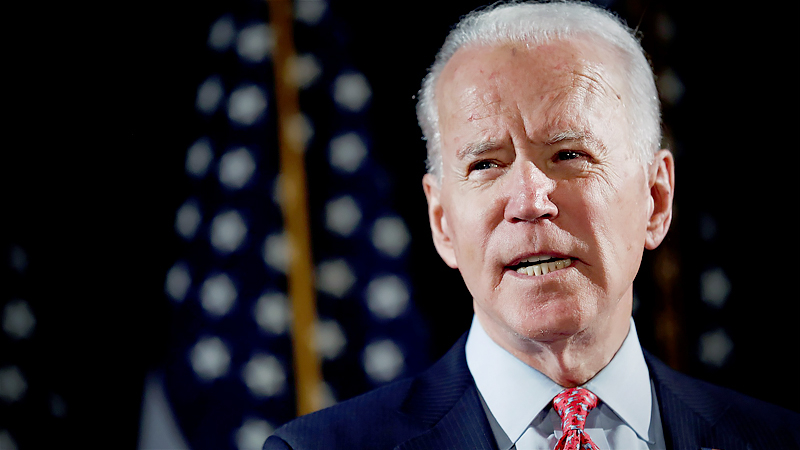
 President Trump listens as Vice President Mike Pence speaks about the coronavirus Friday in the Rose Garden. MUST CREDIT: Washington Post photo by Jabin Botsford. Photo by: Jabin Botsford — The Washington Post
  Boris Johnson
  The sun sets at the White House on Monday, Nov. 16, 2020. MUST CREDIT: Washington Post photo by Jabin Botsford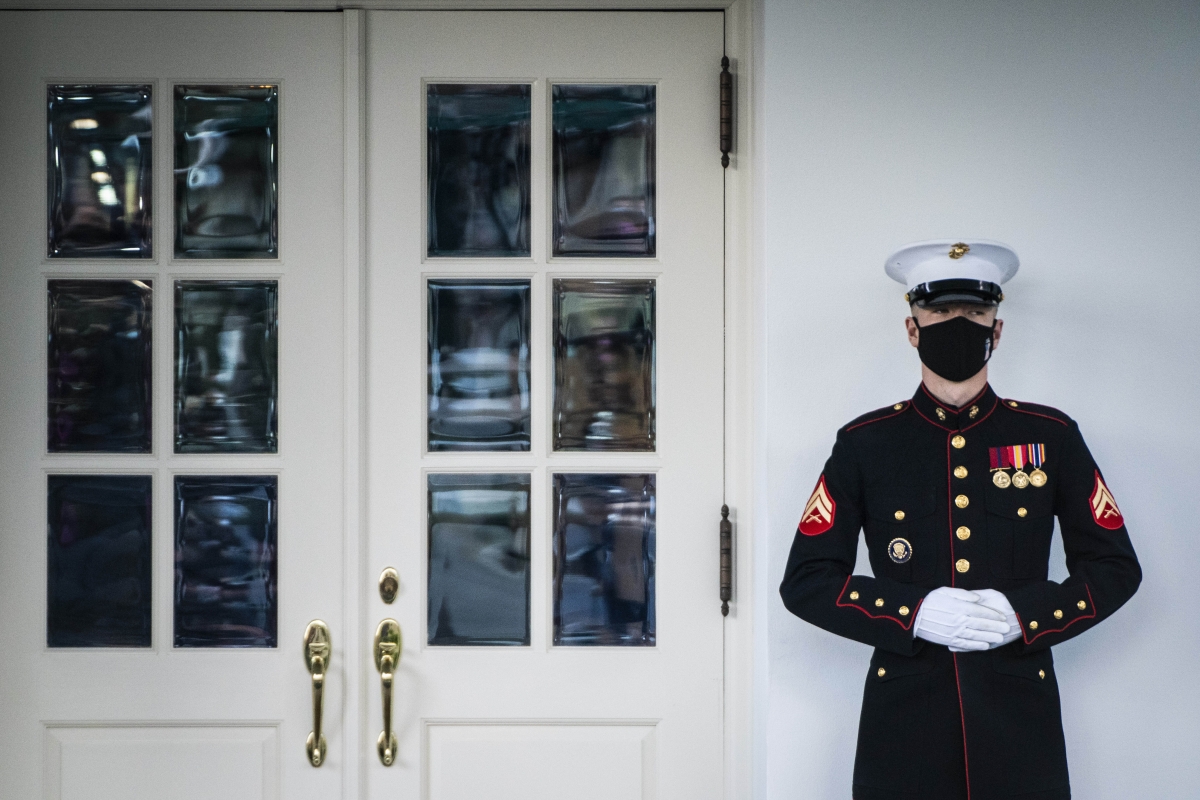
 Maryland Gov. Larry Hogan, a Republican, hosts a news conference in Annapolis on Tuesday, Nov. 17. MUST CREDIT: Washington Post photo by Bill O’Leary
  Tim Cook, CEO of Apple, speaks during a virtual product launch on Oct. 13, 2020. MUST CREDIT: Bloomberg photo by Daniel Acker.