Abbey Was Important To Queen, Says Dean Of Westminster
MON, SEPTEMBER 12, 2022
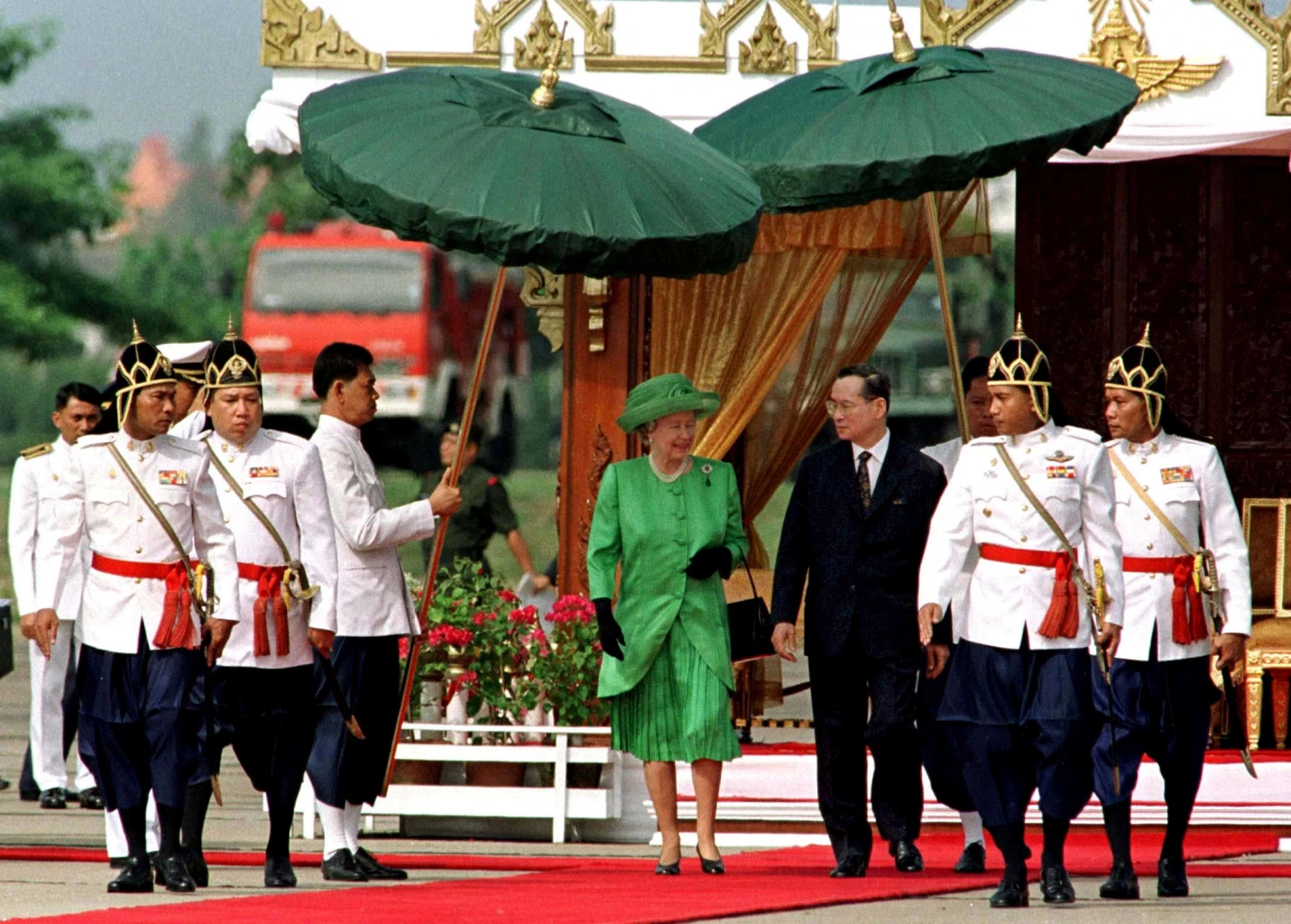
In 1947 Westminster Abbey Staged The Wedding Of Queen Elizabeth And Prince Philip. Six Years Later She Was Crowned There And On September 19 Her Funeral Will Be Held In The Same Building In Central London.
On Sunday the Dean of Westminster, David Hoyle said the Queen had discussed with him the abbey’s significance to her.
Hoyle recalled an audience he had with the Queen when she talked about her memories of the Abbey.
“There is a particular relationship between this building and our Queen. This is the place where she was married in 1947, this is of course the place of coronation,” Hoyle said.
“This building, and its long history, this is the church of coronation, this is the place where Nations and Commonwealth gather, so we’re stepping into the role we’re supposed to play. And I, all my colleagues in the Abbey, all of us share this sense of privilege and responsibility,”
Japan Liquor Businesses Turn To Non-Alcoholic Drinks To Attract Gen Z
MON, SEPTEMBER 12, 2022
In Tokyo, The Newly-Opened Sumadori Bar — A Play On The Japanese Words For “Smart Drinking” — Offers Elaborate, Sugary Mocktails Or Cocktails With Alcohol Levels Of Up To 3%.
The bar, managed by Japanese beverage giant Asahi Group Holdings, provides an environment where both boozers and teetotallers can enjoy a drink together.
The popularity of low- and non-alcoholic drinks has risen worldwide, accelerated by the COVID-19 pandemic, which led many people to be more health conscious. The global market value for the segment rose to just under $10 billion in 2021 from $7.8 billion in 2018, according to market researcher IWSR.
The effect has been especially pronounced in Japan, where the older population — which tends to drink more — is shrinking rapidly. Just 7.8% of Japanese people in their 20s were regular drinkers in 2019 compared with 20.3% of that age group in 1999, according to government surveys.
“There are fewer drinking parties at my university club, so I don’t hear about drinking opportunities nowadays. Maybe that’s why there are fewer people drinking,” said 20-year-old university student Kurumi Takahashi, who was visiting the bar with a friend.
Mizuho Kajiura, a general manager at Asahi, said the pandemic has also played a part, limiting opportunities for colleagues to socialise after work.
Facing a steady decline in revenue from alcohol sales, Japan’s tax office in July launched a contest seeking ideas on how to stimulate demand among younger people.
Japan’s major drink makers are also looking outside the country for growth. The chief of domestic beer leader Asahi Group Holdings told Reuters last month he saw North America as a key market. Suntory Holdings Group is also looking to expand its canned cocktail business there.
At home, companies are coming up with new ways to improve the bar experience for non-drinkers.
On a recent afternoon in the entertainment district of Roppongi, groups of mostly young women gathered at a no-alcohol “beer garden” set up in the shadow of one of Tokyo’s tallest buildings.
Beer gardens are a summer tradition in Japan, but this one — promoted by Suntory and broadcaster TV Asahi — skipped the beer, offering patrons a lineup of mocktails and no-alcohol wine instead.
Masako Koura, the general manager of Suntory’s business strategy division, said people enjoyed the atmosphere as well as the alcoholic beverage they consume and they hoped to create a space where everyone can enjoy themselves.
Competitor Kirin Holdings Co also offers non-alcoholic wines, cocktails and beer. The company said sales of its booze-free beer were up more than two-fold in the three months through June compared with a year ago.
But for some, the new trend is a hard sell.
“Oh no, I cannot believe there are fewer people drinking. The people around me all drink,” said 61-year-old Satsuki Matsuzaki.
Traditional bars with lanterns, low lighting and cold beer live on.
Royal Wardrobe: A Look At Queen Elizabeth’s Unique Fashion Style
BY LINE : REUTERS
MON, SEPTEMBER 12, 2022
From Diplomatic Dressing And Priceless Jewels, Bold Block Colours And Pearls To Tweed And A Headscarf – Britain’s Late Queen Elizabeth Was Known For Her Unique Wardrobe And Style.
Brightly coloured outfits with matching hats and umbrella trim, black pumps and her omnipresent handbag became staples for the monarch, who died peacefully at her home in Scotland on Thursday (September 8) aged 96.
“She has developed her own consistent signature style,” said Elizabeth Holmes, author of “HRH: So Many Thoughts on Royal Style”, ahead of the Queen’s Platinum Jubilee celebrations in June 2022.
“She has the same shape hat, the same silhouette of coat, those fantastic block black heels, her three strands of pearls. But then also within those guardrails, she has a lot of fun with fashion… The queen is famous for her block colours.”
Those colours have ranged from canary yellow and bright green for the weddings of her grandsons Princes William and Harry to purple and pink for the horse racing at Ascot. She had chosen red, bright blue and orange on official visits.
“There’s a tremendous amount of thought put into the queen’s wardrobe and it’s so important because when she steps out of the car, everybody looks at what she’s wearing. Everybody wants to see the queen,” Holmes said.
At the start of her reign 70 years ago, Elizabeth’s outfits were made by royal designers Hardy Amies and Norman Hartnell, who created her wedding and coronation gowns. In her later years, personal assistant, adviser and curator Angela Kelly planned her wardrobe.
“The Queen has a fantastic understanding of clothes and fashion and is very aware of what suits her, what would be appropriate for any occasion,” Kelly wrote in her 2012 book “Dressing The Queen”.
LAYER OF MEANING
That meant choosing the right colours, embroideries for gowns, non-crease fabrics and ensuring necklines, sleeves and hemlines were the correct lengths. Kelly’s team also logged outfits and the queen herself reviewed designs.
For her historic 2011 visit to Ireland, Elizabeth wore a green outfit to meet then President Mary McAleese, while her evening gown for a state banquet featured silk shamrocks.
“Because the queen really isn’t supposed to say anything out loud, I feel that what she wears is really one of the only ways that she has of expressing her feelings,” Lydia Slater, editor-in-chief of Harper’s Bazaar, told Reuters ahead of the Queen’s Platinum Jubilee in June 2022.
“Her brooches, which she has a huge collection of, are a way that she can potentially add a little layer of meaning to what she’s wearing,” Slater added.
For both William’s and Harry’s weddings, the monarch wore brooches “associated with … love and with happiness”, Slater said. For her Christmas address in 2021 – the year her husband Prince Philip died – she wore a brooch from her honeymoon.
For more casual looks, Elizabeth was often seen in brown or blue tweed and a headscarf.
“She’s just created a whole royal dressing look … It’s absolutely recognisable. It’s immediately visible. It’s used as a diplomatic tool and it’s comfortable,” Slater said ahead of the Platinum Jubilee.
“It just fulfils all her requirements and it will never go out of fashion because it’s sort of never in fashion. It’s just essentially itself,” she added.
Thailand’s Delegates Attend Indo-Pacific Economic Framework Ministerial Meeting In The US
BY LINE : THE NATION
MON, SEPTEMBER 12, 2022
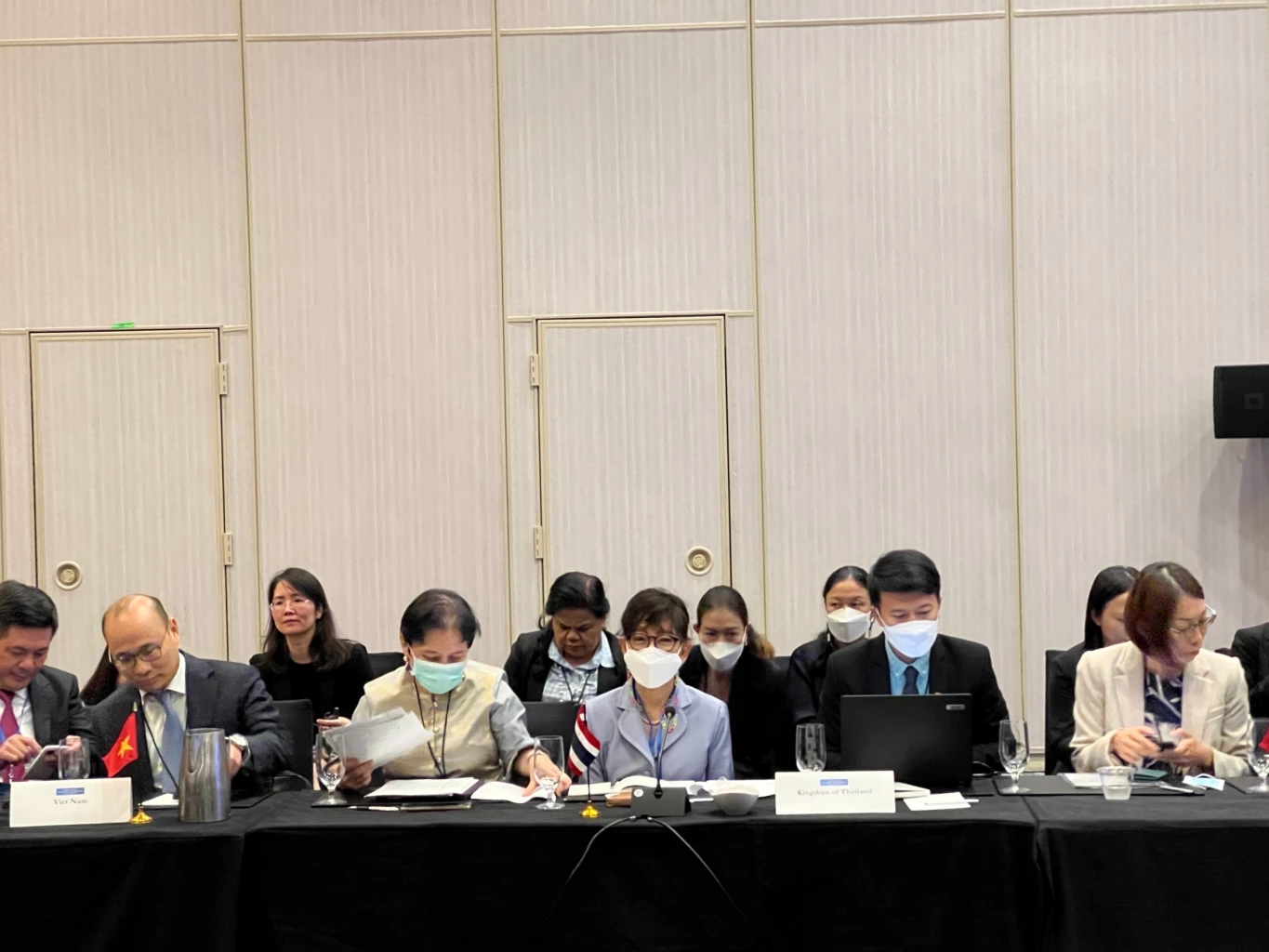
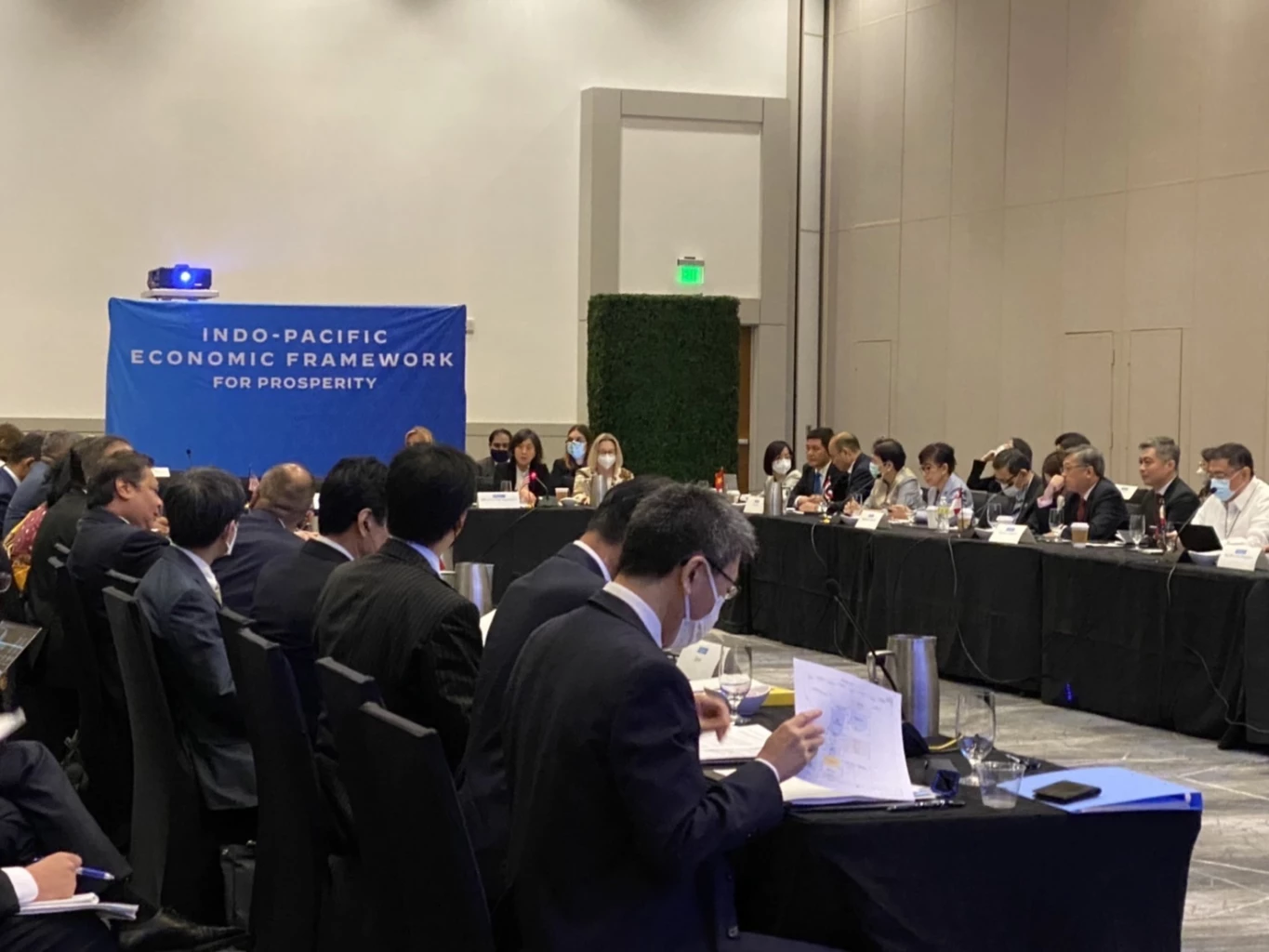
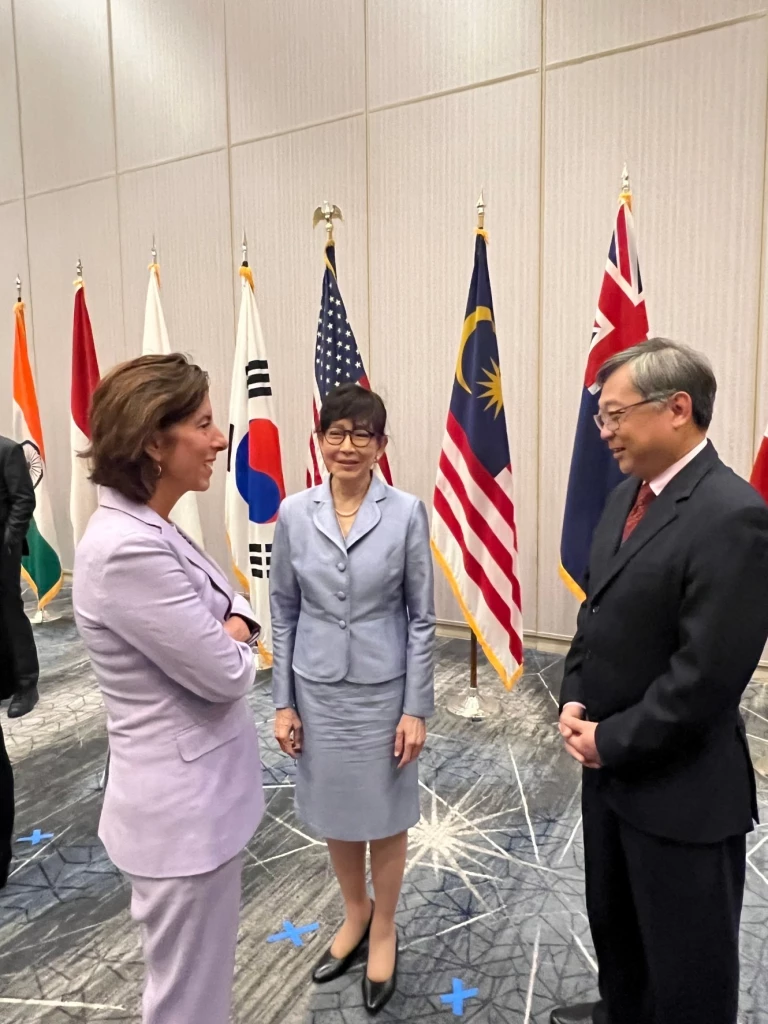
Pornpimol Kanchanalak, Advisor To The Minister Of Foreign Affairs, In Her Capacity As The Special Envoy Of The Deputy Prime Minister And Minister Of Foreign Affairs Of Thailand, Attended The Indo-Pacific Economic Framework (IPEF) Ministerial Meeting In Los Angeles Between September 8-9, 2022.
The Meeting was hosted by U.S. Trade Representative Katherine Tai and U.S. Secretary of Commerce Gina Raimondo. Attending the Meeting were the Ministers and high-level representatives from other IPEF partner countries, namely Australia, Brunei, Fiji, India, Indonesia, Japan, Republic of Korea, Malaysia, New Zealand, the Philippines, Singapore, and Vietnam. The Thai delegation also comprised Deputy Permanent Secretary for Foreign Affairs Chulamanee Chartsuwan as Thailand’s Senior Official Leader, together with representatives of relevant lead agencies, namely the Ministry of Commerce, Ministry of Industry, Ministry of Natural Resources and Environment, and Ministry of Finance.
The Meeting discussed ways to drive forward IPEF cooperation and announced 4 IPEF Ministerial Statements, covering important cooperation issues under 4 pillars, namely trade, supply chain, clean energy/decarbonization/infrastructure, and tax and anti-corruption. The Statements will guide IPEF Partner Countries toward concrete cooperation for sustainable and inclusive growth in the region, which will be further discussed in more detail. The Special Envoy reaffirmed Thailand’s commitment and readiness to work closely with other Partner Countries to steer IPEF cooperation toward tangible benefits for the people. The Special Envoy highlighted Thailand’s role and agenda as APEC Host of this year and emphasized that IPEF and APEC cooperation can be complementary in our pursuit toward sustainable economic growth in the region, particularly as the U.S. will be the APEC Host in 2023.
On this occasion, the Special Envoy attended the launch event of IPEF Upskilling Initiative, which will provide more than 7 million education and training opportunities, using digital tools, for women and girls in 8 IPEF economies, namely Brunei, Fiji, India, Indonesia, Malaysia, the Philippines, Vietnam, and Thailand, within the period of 10 years up until 2032. The training opportunities will be provided by 14 leading U.S. companies. This initiative is the first concrete project under IPEF toward tangible outcomes for the peoples in the region. In this regard, Thailand looks forward to actively engaging in this initiative and can also take a proactive role as a potential contributor to human capital development projects under IPEF in the future.
The Meeting was the first in-person Ministerial Meeting since the launch of IPEF on May 23, 2022 in Tokyo. IPEF serves as a constructive, innovative, and flexible platform of cooperation for the mutual interest and tangible benefit of IPEF partner countries and their peoples.
Queen’s Coffin Arrives In Edinburgh As Mourners Line Streets
BY LINE : REUTERS
MON, SEPTEMBER 12, 2022
Queen Elizabeth’s Coffin Arrived In Edinburgh On Sunday After A Six-Hour Journey From Her Summer Home In The Scottish Highlands, Past Tens Of Thousands Of Mourners Lining The Route, Many In Sombre Silence, Some Applauding And Others In Tears.
Shortly after 10 a.m. (0900 GMT), a hearse carrying Elizabeth’s oak coffin emerged from the gates of Balmoral Castle, where she died on Thursday aged 96, at the start of a slow drive to the Scottish capital.
The coffin was draped in the Royal Standard of Scotland with a wreath on top made of flowers taken from the Balmoral estate including sweet peas, one of Elizabeth’s favourites.
Crowds, fifteen deep in places, massed in the centre of Edinburgh to greet the cortege, as it made its way to the Palace of Holyroodhouse where it was met by a military guard of honour.
Princess Anne, the daughter of Queen Elizabeth, performed a curtsy as her mother’s coffin entered the Palace of Holyroodhouse in Edinburgh on Sunday.
Soldiers from the Royal Regiment of Scotland then carried the coffin to the throne room of the palace where it will remain overnight.
Cambodia To Push For Establishment Of RCEP Secretariat
SUN, SEPTEMBER 11, 2022
Analysts Believe There Will Be A Push To Establish A General Secretariat Of The Regional Comprehensive Economic Partnership (RCEP) In Cambodia At The 54th Asean Economic Ministers’ Meeting (AEM) This Week In Siem Reap.
Several Asean Economic Ministers’ Meetings are scheduled, including the Asean Ministers’ Meeting of RCEP.
The Commerce Ministry said on Friday that Cambodia was ready to work closely with all member states, partners and the Asean Secretariat to push for further efforts to rebuild the regional economic community and accelerate economic recovery.
Prime Minister Hun Sen will make the opening remarks at the two-day 54th AEM on September 14 under the theme “Asean Act: Addressing Challenges Together.”
At an August 3 meeting with Chinese Foreign Minister Wang Yi, Hun Sen called on Beijing, as a co-member of the agreement, to support the initiative of establishing an RCEP general secretariat of RCEP in Phnom Penh.
Lim Heng, vice-president of the Cambodia Chamber of Commerce, believes Cambodia should use this opportunity to push for the establishment of an RCEP office in the country as these meetings will bring representatives of leading economies and signatories of RCEP.
“This is a good opportunity as Cambodia chairs Asean [this year] and is hosting meetings. Cambodia will be able to help solve many issues related to the ongoing economic crises in the region and the world,” he said. “I also believe there will be a push for discussion about establishing a secretariat office on RCEP in Cambodia, following a request by Prime Minister Hun Sen.”
He added that in order to implement the RCEP agreement smoothly, it will be necessary to have a separate RCEP general secretariat to facilitate implementation.
“The RCEP General Secretariat will function no differently from the Asean secretary-general. Cambodia will also enjoy certain economic benefits from the RCEP general secretariat,” Heng said.
He added that RCEP was the largest free-trade agreement in the world, with a combined population of 2,270 million, an economic volume of US$26 trillion, and a total export volume of $5.2 trillion, or 30 per cent of the total volume of the world.
Hong Vannak, an economist at the Institute of International Relations of the Royal Academy of Cambodia, said that as chair of Asean, it is a good time for the kingdom to introduce the idea.
“Obviously, Cambodia, along with other countries in the region, is in a hurry to reorganise their economies, to recover from the hit they took from the global pandemic,” he said.
“National incomes have dropped and spending has increased dramatically. Cambodia, for example, has spent nearly $3 billion handling Covid-19, including the purchase of Covid-19 vaccines,” he added.
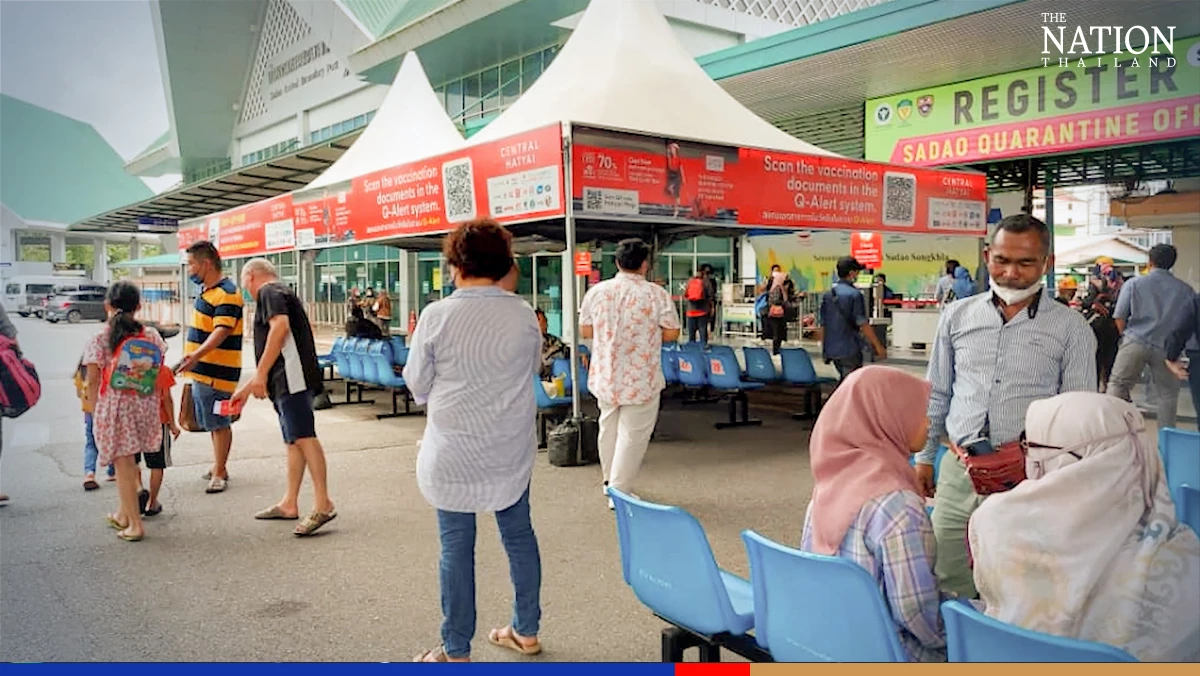
For Malaysians, Hat Yai Is Irresistible – Especially During The Weekends. Go To The Immigration Office In The Border Town Of Bukit Kayu Hitam And You Will Find Hordes Of Malaysian Travellers Queuing Up, Waiting To Enter Thailand.
Lorry driver Nazron Ahmad, 36, said was thrilled to take his family for a short break “after what felt like ages”.
“It’s been two years since we went across to Thailand,” he said on Friday.
Nazron’s nine-member “entourage” included his wife, their two children, a brother-in-law and other relatives.
“We plan to eat to our heart’s content,” he said, adding that the Khlong Hae floating market was on their itinerary as well.
As for health precautions, Nazron said they would all mask up when sharing spaces with strangers.
Rahimi Mohd Hanizam and Nor Eryanie Rizuan, both 24, said they were excited about the trip too.
It would be Rahimi’s first time in Thailand, though he has heard many stories from his wife about her holidays there.
“I can’t wait to take my husband there. It is a food haven,” Nor Eryanie said.
Before the pandemic, Nor Eryanie said she would cross the border at least five times every year with her friends.
The couple, who work as factory operators, said they would keep their masks on in public.
“It has become a way of life for us to have our faces covered,” Rahimi said.
A beautician, who wished to be known only as Mok, said she and her family had driven all the way from Ipoh.
“My last trip was three years ago. I used to go once a year,” she said, adding that she was keen to savour the food there.
“Even though we get to eat Thai food in Malaysia, it is not the same as having the real thing in Thailand,” said Mok, 38, who brought along her three children aged five, 10 and 12.
On the Thai side of the border, shops lining the streets at the crossing are seeing their business pick up again.
Kit Tomas, 60, who runs a snack shop right after the border crossing, said business is finally on the mend.
“It is still not back to what it was in 2019, but customers from all over Malaysia usually stop to buy something before they head home.”
He said the location of his shop, which was right at the end before the immigration point, meant that people tend to stop by if they wanted to get more snacks.
“Business is definitely picking up. Now, we can see people heading over to Thailand in busloads,” said Kit, who has been running his shop for the past 40 years.
Suraiya Mawarttee, 43, who sells the popular Thai delicacy of mango with sticky rice, said business has picked up since April when the border reopened.
“Malaysians have been making their way here since then. They stop over here before they make the 45-minute drive to Hat Yai. And on their way out of Thailand, they stop to buy from us so they can have a snack on their way home,” she said.
She acknowledged that there would be a big crowd during the school holidays, “but even on normal days, I see vans and cars packed with tourists”.
Tokyo Goes Solar With Policy For Mandatory Panels In New Buildings
BY LINE : THE JAPAN NEWS
SUN, SEPTEMBER 11, 2022
The Tokyo Metropolitan Government Has Made Installation Of Solar Panels Mandatory On Some Newly Constructed Homes, As Part Of A Policy To Promote The Use Of Solar Power.
The city government is eying 2025 for the launch of the solar power initiative, the first of its kind in Japan.
“The promotion of decarbonisation is essential,” said an official at a metropolitan government energy task force meeting on Friday.
Home builders who construct and sell at least 20,000 square metres of Tokyo floor space per year will be among about 50 companies obligated to install solar panels.
However, the percentage of new builds that must have solar panels installed will differ from district to district, taking into consideration the fact that the amount of sunlight that reaches panels differs depending on where homes are built.
The figure will be 30 per cent in the downtown wards of Chiyoda and Chuo, where many high-rise buildings and condominiums are located, and some areas outside of the capital’s 23 metropolitan wards; 85 per cent in Meguro and Setagaya wards and the Tama region, which comprise mainly low-rise residential areas; and 70 per cent in Musashino and the capital’s remaining wards.
As solar panels have a lifespan of 20-30 years, the Tokyo government will also create a recycling system in preparation for mass disposal in the future. The leasing of solar panels will also be possible and a system will be created to offer subsidies to home buyers and leasing companies.
A mid-sized home builder has expressed concern that mandatory installation of solar panels could drive up costs and make it difficult to sell properties. In response, the Tokyo metropolitan government vowed to enhance support measures before the programme begins.
From the spring of 2025, new homes nationwide will have to conform to energy-saving performance standards, such as using materials with high levels of thermal insulation.
The metropolitan government has decided to launch its solar power initiative at the same time as the national energy-saving standards programme to reduce the burden on homebuilders.
“To realise decarbonisation, it is essential to spread awareness among the people of Tokyo,” Governor Yuriko Koike said at Friday’s meeting. “I hope this will be a turning point in history that will make people say, ‘Tokyo has changed.’”
State Funeral Of Queen Elizabeth II To Be Held On Sept 19
BY LINE : REUTERS
SUN, SEPTEMBER 11, 2022
The Funeral Of Britain’s Queen Elizabeth, Who Died On Thursday Aged 96, Will Take Place On Sept. 19 And Her Body Will Lie In State For Four Days Prior To That, Royal Officials Announced On Saturday.
Here are details about events in the run-up to the funeral as provided so far by Buckingham Palace and other royal officials.
SUNDAY
The queen’s oak coffin, which was placed in the Ballroom of Balmoral Castle in Scotland following her death, will be taken by car on a six-hour journey to Edinburgh.
It will leave at 10 a.m. (0900 GMT) and arrive at 4 p.m. (1500 GMT), and be taken to the Palace of Holyroodhouse where it will be met by a military bearer party and then taken to the throne room.
MONDAY
King Charles and Camilla, the Queen Consort, will travel to Edinburgh from London.
At 2:35 p.m. (1335 GMT) the coffin will be taken in a procession from the Palace of Holyroodhouse to St Giles’ Cathedral on Edinburgh’s Royal Mile with the king and royal family members following on foot.
The Crown of Scotland will be placed onto the coffin as it is carried inside for a short service.
The king and other royals will hold a vigil at 7:20 p.m. (1820 GMT) and the coffin will remain there for about 24 hours.
TUESDAY
At 5 p.m. (1600 GMT) there will be short prayers at St Giles’ before the coffin is taken to Edinburgh Airport to be flown to London, accompanied by Elizabeth’s daughter Anne, arriving at 8 p.m. (1900 GMT).
It will be taken by state hearse to Buckingham Palace and placed in the Bow Room.
WEDNESDAY
At 2:22 p.m. (1322 GMT), the coffin will be placed on a gun carriage and taken to the Palace of Westminster. The king and other members of the royal family will walk in silence behind.
During the procession, Minute Guns will be fired at Hyde Park and Westminster’s famous Big Ben bell will toll. It will arrive at Westminster Hall at 3 p.m. (1400 GMT) and be placed on a Catafalque with a short service, conducted by the Archbishop of Canterbury.
The body will lie in state for four days until the day of the funeral.
MONDAY, SEPT. 19
At 10:44 a.m. (0944 GMT), the coffin will be taken in a procession from the Palace of Westminster to Westminster Abbey for the state funeral.
After the funeral, the coffin will be taken in a procession to Wellington Arch and then to Windsor Castle, about 20 miles (32 km) west of London. Windsor is the oldest and largest inhabited castle in the world and has been the family home of kings and queens for almost 1,000 years.
The hearse will travel via the Long Walk to St George’s Chapel for a committal service. There it is expected to be lowered into the royal vault and interred in the King George VI Memorial Chapel, in the North Nave Aisle where the queen’s parents and sister are buried.
The coffin of Prince Philip, the queen’s husband of 73 years who died in April 2021, is expected to be moved from the royal vault at Windsor to be buried alongside his wife.
Chinese Mosquito Repellent Sector Buzzes With Growth
BY LINE : CHINA DAILY
SUN, SEPTEMBER 11, 2022
There Is Something Even More Unbearable Than Scorching Heat While Having A Barbecue Party In China-Mosquitos. While The Fast-Flying Insects Cause Itchy Bumps On People’s Skin, They Are Propelling A Billion-Dollar Market That Has Seen Rapid Growth In Recent Years.
According to China Insights Consultancy, domestic retail sales of mosquito repellent and insecticide products increased from 6.2 billion yuan ($892.9 million) in 2015 to 8.4 billion yuan in 2019, with a compound annual growth rate of 7.96 per cent.
Take mosquito repellent liquid as an example. Its sales revenue in the domestic market rose from 1.8 billion yuan in 2015 to 2.7 billion yuan last year, data from Shenzhen-based consultancy ASKCI Corp showed.
A recent report by China Merchants Securities showed that China’s insecticide and mosquito repellent market scale ranks first in the world as of June. China Insights Consultancy estimates that the market will continue to rise, with retail sales reaching 12 billion yuan in 2024 and the compound annual growth rate standing at 7.28 per cent from 2020 to 2024.
The huge market potential has attracted numerous companies to step into the business. According to Qichacha, a corporate information provider, there were a total of 5,227 companies producing smoking mosquito coils and repellent plugins as of August, with a majority from Guangdong province.
Mosquito coils, electric plug-ins, mosquito repellent liquids and electric mosquito swatters are among the most common products sold online and offline. Most recently, mosquito-repelling bracelets, mosquito repellent pads-which stick to the skin-and gel emerged among the best-sellers.
“I don’t like wearing mosquito repellent liquid when going outside because it could cover up the smell of my perfume. Carrying a plug-in repellent could be extremely inconvenient. In such cases, a mosquito-repelling bracelet becomes a top choice,” said Li Jinpeng, a 28-year-old accountant in Beijing.
In recent years, companies in the sector have stepped up efforts in product innovation to be more competitive in the market. Super, one of China’s leading companies specializing in the production of insecticides and mosquito repellents, said it created the world’s first meperfluthrin-a new sanitary cyhalothrin insecticide that was invented in China-series in 2008.
The company said it also developed the first domestic insect repellent spray made from natural plant extracts in 2012 and became the country’s first to develop a room-temperature volatile mosquito repellent product in 2017-a product that releases the repelling chemicals into the air at room temperature rather than being plugged into an electrical outlet.
Super is a subsidiary of Cheerwin Group, based in Guangzhou, the capital of Guangdong province. It has reportedly topped the domestic mosquito repellent market for seven consecutive years since 2015. The company was listed on the Hong Kong stock exchange last year.
Thanks to the upgrade and innovation of mosquito repellent products, as well as stepped-up efforts in sales, the group’s revenue from insecticidal and mosquito repellent products, increased by 11.8 per cent year-on-year to 1.11 billion yuan last year, it said.
Aside from product innovation, companies in the sector are also ramping up efforts to improve their branding by cooperating with popular intellectual properties on social media in an attempt to attract young consumers, which is different from traditional products that are prudent in branding and design and have more focus on product quality.
Guangzhou-based Runben Biology, a major company in the sector, has cooperated with Duckyo, an emoji package that is trendy on social media platforms, to launch a series of innovative products such as mosquito repelling buttons and bracelets to upgrade its branding appearance to attract more consumers.
The company has also been exploring opportunities in the maternal, infant and children’s consumption markets. In order to strengthen consumers’ awareness of the brand, Runben not only labels its products as “especially for mothers and babies”, but also cooperates with online medical platforms for further endorsement.
From 2019 to 2021, revenue from Runben’s mosquito repellent products reached 114 million yuan, 169 million yuan and 278 million yuan, accounting for 40.88 per cent, 38.21 per cent and 39.14 per cent of the company’s total revenue, respectively, it said.