SpaceX capsule returns to Earth in calm Gulf of Mexico, with no surprises #ศาสตร์เกษตรดินปุ๋ย

#ศาสตร์เกษตรดินปุ๋ย : ขอบคุณแหล่งข้อมูล : หนังสือพิมพ์ The Nation.

SpaceX capsule returns to Earth in calm Gulf of Mexico, with no surprises

Aug 03. 2020

By The Washington Post · Christian Davenport, Jacob Bogage · NATIONAL, SCIENCE-ENVIRONMENT 
They’re home.

https://www.washingtonpost.com/video/c/embed/ca80e9ff-47ee-4cf7-b4c4-fafca72c3664?ptvads=block&playthrough=false 

NASA astronauts Bob Behnken and Doug Hurley completed a fiery, high-speed journey back from the International Space Station on Sunday, splashing down in calm Gulf of Mexico waters off the coast of Pensacola, Fla., hundreds of miles from a churning Tropical Storm Isaias in the Atlantic in a triumphal denouement to a historic mission.

It was the first time in the 59-year history of crewed American space travel that astronauts had used the Gulf of Mexico as a landing site, adding to other firsts that marked a new chapter in NASA’s human spaceflight program: the first launch of American astronauts to orbit from U.S. soil since the space shuttle was retired in 2011 and the first launch into orbit of humans on vehicles owned and operated by a private company.

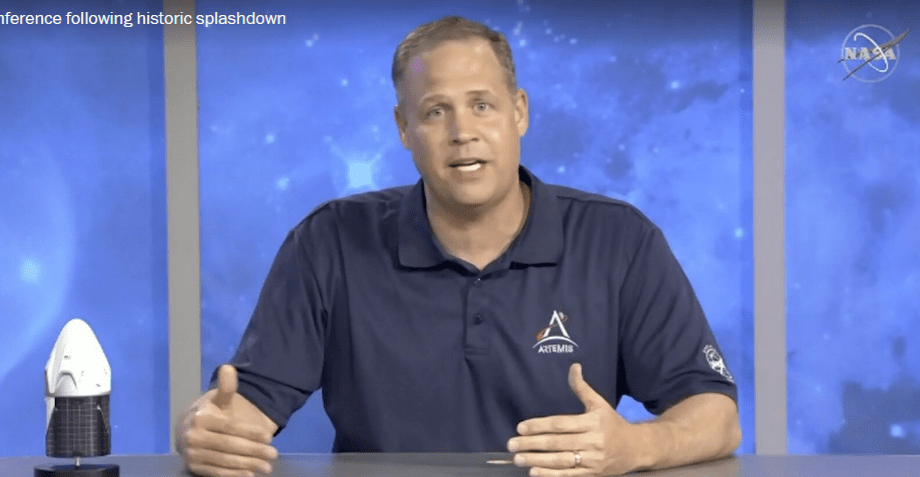
“Today we really made history. We are entering a new era of human spaceflight,” NASA Administrator Jim Bridenstine said at a news conference after the two astronauts emerged from the capsule.

https://www.washingtonpost.com/video/c/embed/51937fda-f5d2-4227-b1d9-7f25fb01d74a?ptvads=block&playthrough=false 

Gwynne Shotwell, president and chief operating officer of SpaceX, the private company that engineered the flight, called it “an extraordinary mission.”

“This is really just the beginning,” she said. “We are starting the journey of bringing people regularly to and from low Earth orbit, then onto the moon and then ultimately onto Mars.”
https://www.washingtonpost.com/video/c/embed/26831874-47cc-4bda-a9b3-c30219764b58?ptvads=block&playthrough=false

For days, NASA and SpaceX had kept a close eye on Isaias as it developed from tropical storm to hurricane and back again to tropical storm. But they always held the possibility of a Gulf of Mexico landing in their pocket should the weather in the Atlantic prove unfavorable. NASA and SpaceX had designated seven potential landing targets, four of them in the Gulf of Mexico, and SpaceX had positioned recovery craft in both locations for any eventuality.

SpaceX’s Dragon spacecraft floated under a quartet of parachutes and splashed down at 2:48 p.m. Eastern time, exactly on time, marking the first time NASA astronauts had landed at sea since Apollo-Soyuz, the joint U.S.-Soviet mission in 1975.

“On behalf of the SpaceX and NASA teams, welcome home and thanks for flying SpaceX,” mission control radioed to the spacecraft after it landed.

“It’s truly our honor and privilege,” Hurley responded. “On behalf of the Dragon Endeavour, congrats to NASA and SpaceX.”

The mission – the final milestone in a rigorous test program years in the making – was celebrated as a victory for NASA and its decision under President Barack Obama to entrust the private sector with the lives of its astronauts. And it served as a rare bright spot in a year full of turmoil and devastation, from the deadly coronavirus pandemic to the social unrest in the wake of George Floyd’s death to the clashes between protesters and authorities in cities from Portland, Ore., to Richmond, Va.

Instead of scenes of exhausted hospital workers, smoke-filled streets, and mounting death tolls from a virus that continues to spread, here were a pair of astronauts, smiling and giving a thumbs-up as flight technicians helped them from their spacecraft in a scene reminiscent of the early days of the space program. And it came days after another triumphant moment for NASA, the launch of the Mars Perseverance rover, which is expected to reach the Red Planet in February.

Shortly after the May 30 launch of the astronauts into orbit, SpaceX founder Elon Musk grew emotional as he talked about the responsibility of getting the astronauts, both fathers to young boys, back to their families safely.

To make it home, the spacecraft undocked from the space station at 7:35 p.m. Eastern time Saturday evening while it was orbiting Earth at 17,500 mph, or more than 22 times the speed of sound. On Sunday, about an hour before splashdown, it fired its engines for one final burn that began its descent home. As it plunged into the thickening atmosphere, the friction generated enormous heat, temperatures as high as 3,500 degrees.

The capsule, named Endeavour by its crew in homage to the space shuttle of the same name, appeared to weather the trip home successfully, scorch marks and all. The heat shield withstood temperatures that left the once-bright-white capsule looking like a toasted marshmallow.

Rescue crews descended on the Dragon spacecraft minutes after it landed, stabilizing the capsule as it bobbed in the water, checking to make sure there were no propellant leaks and gathering the parachutes. The spacecraft was then hoisted onto the deck of the Go Navigator recovery ship, where medical personnel were waiting to check out Hurley and Behnken.

The recovery process experienced two small hiccups. After the spacecraft splashed down, private boaters quickly surrounded the Endeavour before SpaceX safety crews could shoo them away. One boat with a Trump 2020 flag came within yards of the spacecraft.

The Coast Guard had cleared a 10-nautical-mile safe zone around the landing site, NASA and SpaceX officials said, but it was breached.

“We had all the clearance that was required at landing. That capsule was in the water for a good period of time and the boats just made a bee line for it,” Bridenstine said. “It’s a big area we have to clear, and it’s probably going to take more resources. . . . We need to do a better job next time for sure.”

Technicians aboard the Go Navigator also briefly delayed opening the hatch because of a buildup of harmful fumes around the capsule. Mission controllers detected higher-than-appropriate amounts of “hypergolic fumes,” or gases that could explode when coming in contact with one another. Tests found no toxic fumes inside the capsule.

NASA and SpaceX said they took extra precautions because of the coronavirus pandemic. The crews on the ship were tested and quarantined, and everyone was to be wearing masks.

Each of the astronauts gave a thumbs-up as he was wheeled off the spacecraft on a stretcher – a routine practice for astronauts who’ve experience a prolonged period without gravity.

“Thank you for doing the most important parts and most difficult parts of human spaceflight, sending us into orbit and bringing us home safely,” said Behnken, who was first out of the capsule. “Thank you very much for the good ship Endeavour.”

Hurley came out moments later. “For anyone who’s touched Endeavour, you should take a moment to cherish this day, given everything that’s happened this year,” he said.

Behnken and Hurley were scheduled to fly back to Houston on Sunday to be reunited with their families.

Hurley and Behnken are both married to astronauts they met in their astronaut class 20 years ago. While Hurley’s wife, Karen Nyberg, is no longer in the astronauts corps, Benhken’s wife, Megan McArthur, is. She’s scheduled to fly to the space station in the spring on the same spacecraft that brought her husband home Sunday.

Before that happens, NASA and SpaceX will evaluate the capsule to make sure it performed as expected. If all goes according to plan, SpaceX’s next human spaceflight mission could come within six weeks.


A school superintendent on reopening safely: ‘I’m sorry, but it’s a fantasy’ #ศาสตร์เกษตรดินปุ๋ย

#ศาสตร์เกษตรดินปุ๋ย : ขอบคุณแหล่งข้อมูล : หนังสือพิมพ์ The Nation.

A school superintendent on reopening safely: ‘I’m sorry, but it’s a fantasy’

Aug 02. 2020

Jeff Gregorich, Superintendent of Schools at Hayden-Winkelman Unified School District is shown at Hayden High School in Winkelman, Ariz. on July 30, 2020. MUST CREDIT: Photo for The Washington Post by Caitlin O'Hara

Jeff Gregorich, Superintendent of Schools at Hayden-Winkelman Unified School District is shown at Hayden High School in Winkelman, Ariz. on July 30, 2020. MUST CREDIT: Photo for The Washington Post by Caitlin O’Hara

By The Washington Post · Eli Saslow · NATIONAL, EDUCATION 

Jeff Gregorich, superintendent, on trying to reopen his schools safely. – – –

This is my choice, but I’m starting to wish that it wasn’t. I don’t feel qualified. I’ve been a superintendent for 20 years, so I guess I should be used to making decisions, but I keep getting lost in my head. I’ll be in my office looking at a blank computer screen, and then all of the sudden I realize a whole hour’s gone by. I’m worried. I’m worried about everything. Each possibility I come up with is a bad one.

Jeff Gregorich, superintendent of schools at Hayden Winkelman Unified School District in Arizona, shows results of a district survey. MUST CREDIT: Photo for The Washington Post by Caitlin O'Hara

Jeff Gregorich, superintendent of schools at Hayden Winkelman Unified School District in Arizona, shows results of a district survey. MUST CREDIT: Photo for The Washington Post by Caitlin O’Hara

The governor has told us we have to open our schools to students on August 17th, or else we miss out on five percent of our funding. I run a high-needs district in middle-of-nowhere Arizona. We’re 90 percent Hispanic and more than 90 percent free-and-reduced lunch. These kids need every dollar we can get. But covid is spreading all over this area and hitting my staff, and now it feels like there’s a gun to my head. I already lost one teacher to this virus. Do I risk opening back up even if it’s going to cost us more lives? Or do we run school remotely and end up depriving these kids?

This is your classic one-horse town. Picture John Wayne riding through cactuses and all that. I’m superintendent, high school principal and sometimes the basketball referee during recess. This is a skeleton staff, and we pay an average salary of about 40 thousand a year. I’ve got nothing to cut. We’re buying new programs for virtual learning and trying to get hotspots and iPads for all our kids. Five percent of our budget is hundreds of thousands of dollars. Where’s that going to come from? I might lose teaching positions or basic curriculum unless we somehow get up and running.

I’ve been in the building every day, sanitizing doors and measuring out space in classrooms. We still haven’t received our order of Plexiglas barriers, so we’re cutting up shower curtains and trying to make do with that. It’s one obstacle after the next. Just last week I found out we had another staff member who tested positive, so I went through the guidance from OSHA and the CDC and tried to figure out the protocols. I’m not an expert at any of this, but I did my best with the contact tracing. I called 10 people on staff and told them they’d had a possible exposure. I arranged separate cars and got us all to the testing site. Some of my staff members were crying. They’ve seen what can happen, and they’re coming to me with questions I can’t always answer. “Does my whole family need to get tested?” “How long do I have to quarantine?” “What if this virus hits me like it did Mrs. Byrd?”

We got back two of those tests already – both positive. We’re still waiting on eight more. That makes 11 percent of my staff that’s gotten covid, and we haven’t had a single student in our buildings since March. Part of our facility is closed down for decontamination, but we don’t have anyone left to decontaminate it unless I want to put on my hazmat suit and go in there. We’ve seen the impacts of this virus on our maintenance department, on transportation, on food service, on faculty. It’s like this district is shutting down case by case. I don’t understand how anyone could expect us to reopen the building this month in a way that feels safe. It’s like they’re telling us: “Okay. Summer’s over. It’s been long enough. Time to get back to normal.” But since when has this virus operated on our schedule?

I dream about going back to normal. I’d love to be open. These kids are hurting right now. I don’t need a politician to tell me that. We only have 300 students in this district, and they’re like family. My wife is a teacher here, and we had four kids go through these schools. I know whose parents are laid off from the copper mine and who doesn’t have enough to eat. We delivered breakfast and lunches this summer, and we gave out more meals each day than we have students. I get phone calls from families dealing with poverty issues, depression, loneliness, boredom. Some of these kids are out in the wilderness right now, and school is the best place for them. We all agree on that. But every time I start to play out what that looks like on August 17th, I get sick to my stomach. More than a quarter of our students live with grandparents. These kids could very easily catch this virus, spread it and bring it back home. It’s not safe. There’s no way it can be safe.

If you think anything else, I’m sorry, but it’s a fantasy. Kids will get sick, or worse. Family members will die. Teachers will die.

Mrs. Byrd did everything right. She followed all the protocols. If there’s such a thing as a safe, controlled environment inside a classroom during a pandemic, that was it. We had three teachers sharing a room so they could teach a virtual summer school. They were so careful. This was back in June, when cases here were starting to spike. The kids were at home, but the teachers wanted to be together in the classroom so they could team up on the new technology. I thought that was a good idea. It’s a big room. They could watch and learn from each other. Mrs. Byrd was a master teacher. She’d been here since 1982, and she was always coming up with creative ideas. They delivered care packages to the elementary students so they could sprout beans for something hands-on at home, and then the teachers all took turns in front of the camera. All three of them wore masks. They checked their temperatures. They taught on their own devices and didn’t share anything, not even a pencil.

At first she thought it was a sinus infection. That’s what the doctor told her, but it kept getting worse. I got a call that she’d been rushed to the hospital. Her oxygen was low, and they put her on a ventilator pretty much right away. The other two teachers started feeling sick the same weekend, so they went to get tested. They both had it bad for the next month. Mrs. Byrd’s husband got it and was hospitalized. Her brother got it and passed away. Mrs. Byrd fought for a few weeks until she couldn’t anymore.

I’ve gone over it in my head a thousand times. What precautions did we miss? What more could I have done? I don’t have an answer. These were three responsible adults in an otherwise empty classroom, and they worked hard to protect each other. We still couldn’t control it. That’s what scares me.

We got the whole staff together for grief counseling. We did it virtually, over Zoom. There’s sadness, and it’s also so much fear. My wife is one of our teachers in the primary grade, and she has asthma. She was explaining to me how every kid who sees her automatically gives her a hug. They arrive in the morning – hug. Leave for recess – hug. Lunch – hug. Locker – hug. That’s all day. Even if we do everything perfectly, germs are going to spread inside a school. We share the same space. We share the same air.

A bunch of our teachers have told me they will put in for retirement if we open up this month. They’re saying: “Please don’t make us go back. This is crazy. We’re putting the whole community at risk.”

They’re right. I agree with them 100 percent. Teachers don’t feel safe. Most parents said in a survey that they’re “very concerned” about sending their kids back to school. So why are we getting bullied into opening? This district isn’t ready to open. I can’t have more people getting sick. Why are they threatening our funding? I keep waiting for someone higher up to take this decision out of my hands and come to their senses. I’m waiting for real leadership, but maybe it’s not going to happen.

It’s me. It’s the biggest decision of my career, and the one part I’m certain about is it’s going to hurt either way.

Isaias, now a tropical storm, barrels toward Florida before it surges up entire East Coast #ศาสตร์เกษตรดินปุ๋ย

#ศาสตร์เกษตรดินปุ๋ย : ขอบคุณแหล่งข้อมูล : หนังสือพิมพ์ The Nation.

Isaias, now a tropical storm, barrels toward Florida before it surges up entire East Coast

Aug 02. 2020

By The Washington Post · Jason Samenow, Andrew Freedman, Matthew Cappucci · NATIONAL, SCIENCE-ENVIRONMENT 

Isaias is beginning a multiday assault on the U.S. East Coast with tropical storm conditions gradually developing over Florida on Saturday night, followed by hurricane conditions Sunday. The former hurricane was reclassified as a tropical storm by the National Hurricane Center in its 5 p.m. update but is forecast to regain hurricane strength Saturday night. As of 8 p.m., it was already showing signs of re-intensification.

The storm is then slated to ride up the entire East Coast later in the weekend into the middle of next week. It may unleash torrential rain, high winds and coastal flooding as far north as Maine.

Already, the Hurricane Center reports the storm’s outer bands have produced wind gusts of 40 to 60 mph in parts of southeast Florida. 

In Florida, hurricane warnings are in effect from Boca Raton to the Volusia-Flagler county line, which includes West Palm Beach, Jupiter, Vero Beach and Melbourne.

Fort Lauderdale is under a hurricane watch. Isaias’s approach is expected to take it just far enough north that the city could escape the worst impacts.

Areas from the Volusia/Flagler county line to Ponte Vedra Beach are under a tropical storm warning while a tropical storm watch has been issued from north of Ponte Vedra Beach in Florida to the South Santee River in South Carolina, including Jacksonville, Fla., Simons Island, Ga., and Charleston.

Meanwhile, a storm surge watch covers the zone from Jupiter Inlet to Ponte Vedra Beach. The surge is the storm-driven rise in ocean water above normally dry land, which could lead to several feet of coastline inundation.

Since Friday, the storm has drenched the southeastern and central Bahamas, buffeting the islands with hurricane-force winds while also likely producing several feet of storm surge inundation. The Northwest Bahamas caught the brunt of Isaias on Saturday as it closed in on Florida where forecast models suggest the storm may make landfall Sunday.

The tropical threat comes as the Sunshine State continues to grapple with a sharp increase in coronavirus cases.

Gov. Ron DeSantis (R) issued a state of emergency for counties along Florida’s Atlantic coast.

He said that the state and local communities are opening shelters while ensuring proper protocols be taken in the face of the pandemic.

North Carolina may also be hit hard by the storm from Monday into Tuesday, where Isaias could make a second landfall after slamming the Florida coast. A mandatory evacuation for Ocracoke Island has been ordered beginning at 6 a.m. Saturday.

Gov. Roy Cooper (D) issued a state of emergency and urged anyone who needs to evacuate to stay with family and friends or at a hotel, if possible, because of social distancing precautions at shelters. Shelters will provide personal protective equipment, Cooper said.

“With the right protection and sheltering, we can keep people safe from the storm while at the same time trying to avoid making the pandemic worse,” Cooper said via Twitter. “A hurricane during a pandemic is double trouble. But the state has been carefully preparing for this scenario.”

Other states, including Virginia, had also issued states of emergency ahead of the storm.

As of 8 p.m. Saturday, Isaias was located about 100 miles southeast of Fort Lauderdale, Fla., and was moving northwest at 9 mph. The storm’s maximum sustained winds had weakened from 75 to 70 mph, reclassifying it from a hurricane to a tropical storm.

Wind shear, or a change of wind speed and direction with height, along with dry air, continues to affect Hurricane Isaias, putting a lid on its intensity. However, the Hurricane Center expects the storm to restrengthen to a hurricane on approach to Florida as it passes over warm water. Towering thunderstorms erupted in part of the storm on Saturday evening, indicating it may be intensifying. 

After the storm makes its closest approach to the Florida Peninsula, potentially making landfall early Sunday, slow weakening is predicted. On Monday, Isaias may drop back to strong tropical storm intensity as it departs Florida’s northeastern shores.

On its track up the East Coast and through the Gulf of Maine, the Hurricane Center calls for Isaias to persist as a strong tropical storm. The intensity forecast, however, is uncertain and depends on how much time the storm spends over the ocean, which is abnormally warm. Waters from the Mid-Atlantic southward are more than warm enough to support a hurricane.

While much warmer than normal, water temperatures north of the Mid-Atlantic would be expected to result in gradual weakening as Isaias passes through.

Although Isaias is forecast to make its closest pass to Florida on Sunday, the storm’s outer rain bands have begun to affect southeastern Florida with heavy rains and strong winds.

Many models bring Isaias’s center far enough west that a landfall would occur in Florida on Sunday but it could also just scrape along the coast.

The Hurricane Center predicts a storm surge of two to four feet from Jupiter Inlet to Ponte Vedra Beach with one to three feet projected from north Miami Beach to Jupiter Inlet. The biggest surge is expected just north of where the center makes its closest approach to land.

“There is the potential for life threatening storm surge along portions of the immediate coast that are typically vulnerable to elevated ocean levels or where dune erosion has occurred,” wrote the National Weather Service. “Low land flooding is also possible along the intracoastal waterways and in vulnerable low lands near inlets and other low areas near the coast.”

Damaging wind gusts up to 70 mph could occur along the Florida coastline if the storm makes landfall but would be somewhat less if the center stays offshore. If Isaias remains lopsided with the bulk of its winds east of the center, it’s likely winds in Florida could be limited to lower or midrange tropical storm force winds, sustained at greater than 39 mph.

The weather is behind NASA and SpaceX’s decision to bring the crew of SpaceX’s “Endeavor” capsule, which is slated to undock from the International Space Station on Saturday evening and splash down on Sunday afternoon, for a first-ever astronaut splashdown in the Gulf of Mexico, away from Isaias. The space agency and its private sector partner are aiming for a landing near Pensacola, where waves are forecast to be between 1 to 2 feet. 

Heavy rainfall is predicted to unload a broad two to four inches with localized six-inch amounts in eastern Florida over the weekend. This could lead to “potentially life-threatening flash and urban flooding, especially in low-lying and poorly drained areas, across South to east-Central Florida,” the Hurricane Center wrote.

However, rainfall amounts in Florida will feature a steep gradient if the storm’s heaviest rains remain just offshore, in which case only a broad one to two inches with localized three-inch totals would be more likely.

Sunday night through Monday, Isaias will parallel the coast of the southeastern United States and potentially make landfall in the eastern Carolinas late Monday.

Heavy rain and flooding, strong winds and storm surge are possible in coastal Georgia, South Carolina, eastern North Carolina and southeast Virginia.

The National Weather Service predicts two to four inches of rain and isolated amounts to seven inches in this zone, although a lesser one to three inches is favored in southeast Georgia with a more offshore storm track. Where the heaviest rain falls, isolated flash, river and/or urban flooding could occur.

From the Delmarva Peninsula to coastal Maine, tropical storm conditions are also possible from Isaias between late Monday and Wednesday from south to north. This may include very heavy rainfall, strong winds, dangerous surf and coastal flooding.

Even areas somewhat inland from the coast, including the Interstate 95 corridor, could also see heavy rainfall depending on Isaias’s exact track.

The extremely moist air transported north by Isaias will also interact with a cold front preceding an approaching dip in the jet stream. That will help to focus the rainfall and will probably cause at least isolated flooding issues with up to six or seven inches of rain possible in a few locations, particularly in the Mid-Atlantic and along the Appalachians.

Big Tech is worth even more the day after Congressional grilling #ศาสตร์เกษตรดินปุ๋ย

#ศาสตร์เกษตรดินปุ๋ย : ขอบคุณแหล่งข้อมูล : หนังสือพิมพ์ The Nation.

Big Tech is worth even more the day after Congressional grilling

Jul 31. 2020

By  The Washington Post · Rachel Lerman, Reed Albergotti, Elizabeth Dwoskin, Heather Kelly · BUSINESS, TECHNOLOGY 

WASHINGTON – The four chief executives of Amazon, Apple, Facebook and Google on Wednesday faced a five-hour deluge of probing and pointed questions from a Congress accusing the companies of various anticompetitive behaviors.

A day later, all four companies were worth even more.

The tech giants’ stock prices rose Thursday as they reported strong financial results after the market closed. It shows, again, just how bulletproof the companies have become as investors bet on their long term success, even amid a global pandemic, an economic decline and antitrust probes.

Wednesday’s hearing was already unlikely to shake investors, analysts said, especially because many questions veered off topic.

“Had there been a focus on anticompetitive behavior, I suppose investors would be more concerned,” Wedbush Securities analyst Michael Pachter said in an email Thursday.

In the first full quarter affected by the historic coronavirus economic downturn, Amazon’s revenue surged 40%, fueled by people stuck at home and shopping online. Apple reported 11% revenue growth, fueled by customer demand. Amid a shrinking ad market, Facebook’s revenue increased. Google reported its first revenue decline, though it was less than expected.

Amazon CEO Jeff Bezos owns The Washington Post.

The strong showing demonstrates how well the tech giants are positioned to withstand significant challenges, including the scrutiny of Congress, federal investigations, a public health crisis and, in Facebook’s case, an advertiser boycott.

On Wednesday, representatives questioned the tech CEOs on topics including how Amazon pays third-party sellers, how much Apple charges developers on its app store and how Google manages both sides of its advertising tools. They also levied allegations of bias against conservatives on Facebook and Google search, as well as questions about the companies’ ties to China.

Lawmakers appeared well-prepared for the hearing, coming at the CEOs with documentation including email communications, transcripts of past testimonies and recordings of customers who say they were wronged.

Google and Facebook executives addressed the hearing head on during conference calls Thursday, while Apple CEO Tim Cook hinted at it. Amazon did not.

“We’re focused on growing the pie,” Cook said in prepared remarks, echoing comments he made the day before on Capitol Hill and pointing to the economic impact of the App Store.

Facebook CEO Mark Zuckerberg defended his company, saying that “some seem to wrongly assume that most of the content on our services is about politics, news, misinformation or hate. Let me be clear. It’s not.”

He said it’s a small part of total content, adding: “We do not profit from misinformation or hate. We do not want this content on our platforms.”

Facebook posted revenue of $18.7 billion in the quarter ending June 30, an 11% increase over the same period a year prior – a solid showing despite advertisers pulling back due to the pandemic and a boycott of the social network that includes Disney, Verizon, and more than a thousand other companies.

Zuckerberg said people also “wrongly assume” that the company’s business is dependent on a few large advertisers, but small businesses represent Facebook’s largest advertisers. He said he was troubled by the calls to go after digital advertising, especially during a period of economic turmoil.

“It’s true that going after the ability to target ads would affect the revenue of companies like Facebook. But a much bigger cost would be that it would reduce the effectiveness of the ads and opportunities to grow,” he said. “This would reduce the opportunities for small businesses so much that it would probably be felt at a macroeconomic level. Now is that really what policymakers want in the middle of a pandemic and recession?”

Facebook also paid out the $5 billion that it was required to pay to the Federal Trade Commission to settle charges that it violated consumer privacy when it allowed the political consultancy Cambridge Analytica to inappropriately siphon the data and profiles of millions of Facebook users, the company said.

On Google’s call, CEO Sundar Pichai repeated familiar talking points that he believes Google is good for users and creates more choice. But he also admitted that the scrutiny wouldn’t be going away anytime soon, and that the company would adapt if governments imposed new rules.

“We’ve obviously been operating under a scrutiny for a while and we realize at our scale that’s appropriate, and we’ve engaged constructively across jurisdictions,” he said. “Obviously we will operate based on the rules. And so to the extent there are any areas we need to adapt, we will. Being flexible around those things are important, I think.”

Google faces investigations from the federal government and the state into its size, and has already been fined about $9 billion for antitrust concerns by the European Union.

Google parent company Alphabet reported a 2% decrease in revenue to $38.3 billion, still beating Wall Street expectations. The company noted a “gradual improvement” in its ads business since the beginning of the pandemic. That began to pick up in the second quarter as more users started Googling for commercial items again after backing off in the early spring, CFO Ruth Porat said on the earnings call. But she cautioned that the economy is far from recovered.

“We do believe its premature to say that we’re out of the woods,” Porat said.

Amazon also reported a change in consumer shopping habits since April. In the early days of the pandemic, customer demand was skyrocketing, mostly for specific products like groceries and safety products. Its online grocery sales tripled this quarter year-over-year.

“That mix is not super profitable,” said Amazon Chief Financial Officer Brian Olsavsky on a media call Tuesday. “The extra costs of covid essentially make that type of sale a break-even proposition for us.”

The narrow demand was also likely due to Amazon’s own policies. It began limiting shipments to “essential” products in March, a policy that has it eased up on in mid-April.

That’s around the time customers went back to more normal shopping patterns, and Olsavsky said the company was also able to ship more products. Customers also spent more money on digital entertainment products like e-books, Audible titles, and movies.

Revenue grew to $88.9 billion in revenue. And while the company spent more than $4 billion on various covid-19 measures, including additional safety measures for workers and scaling up to meet demand, but still posted a more than $5 billion profit.

Bezos received some of the toughest questions during Wednesday’s hearing, partly because it was the executive’s first time testifying before Congress. Lawmakers dug in on how Amazon uses the data it collects from third-party sellers to inform its own products, and whether it recommend Amazon’s own brands over others.

Apple’s revenue was up 11% in the third quarter to $59.7 billion, beating Wall Street expectations and sending its stuck up in after hours trading. “In uncertain times, this performance is a testament to the important role our products play in our customers’ lives and to Apple’s relentless innovation,” Cook said in a news release Thursday.

The topic of antitrust scrutiny did not come up in questions from analysts, who focused more on how, exactly, Apple has been able to juice growth in iPhone sales during a global economic and health crisis and when sales had appeared to be declining for more than a year.

Apple said some consumers had been waiting for the new iPhone SE for its smaller form factor.

Analysts weren’t worried about Apple after Wednesday’s hearing. Gene Munster, an analyst with Loup Ventures, called Apple a “winner” in an email.

“The topics for Tim Cook largely orbited around the App Store, which we estimate accounts for about 5% of Apple revenue. By comparison, the other tech companies fielded questions that impacted the majority of their revenue,” he wrote. Munster believes the biggest problem for the tech companies is an abstract one: Distraction.

All four companies’ stock prices climbed in after-hours trading – spiking more than 5% for Facebook, Amazon and Apple. Three of the companies, Amazon, Apple and Google, are already among the most valuable in the world, with market caps of more than $1 trillion.

“Putting in rules and breaking up companies isn’t necessarily bad for stock prices,” said Matthew Stoller, the director of research at the American Economic Liberties Project, a Washington think tank devoted to reducing the power of monopolies. 

He pointed to the breakups of Standard Oil, AT&T and electric utilities, all of which he said were good for investors. “Does anybody really believe that if you separated AWS (Amazon’s cloud computing division) from the rest of Amazon that it would somehow reduce the value of the aggregate entity? Or course not,” he said.

Technology 202: Revelations from Congress’s antitrust investigation could have an enduring impact #ศาสตร์เกษตรดินปุ๋ย

#ศาสตร์เกษตรดินปุ๋ย : ขอบคุณแหล่งข้อมูล : หนังสือพิมพ์ The Nation.

Technology 202: Revelations from Congress’s antitrust investigation could have an enduring impact

Jul 31. 2020

By The Washington Post · Cat Zakrzewski · NATIONAL, BUSINESS, TECHNOLOGY, CONGRESS 

Top tech executives’ more than five-hour public lashing may be over. But the companies’ antitrust scrutiny may be about to get worse.

That’s because lawmakers on the House Judiciary antitrust panel came heavily stocked with new evidence from their year-long investigation into the tech industry’s power, which has amassed 1 million documents from the companies and hundreds of hours of interviews with industry insiders.

Lawmakers unveiled executives’ own words, recordings of conversations with small businesses and a trove of other evidence at the hearing to bolster accusations that tech companies squash their competitors.

The investigation could have an enduring impact on how the world regulates the tech industry. The revelations come at a critical moment, as tech companies face antitrust probes both in the United States and Europe – and U.S. lawmakers seek to overhaul existing antitrust laws they say are outdated and ill-equipped to rein in tech companies today.

Here were some critical findings you probably will hear about again:

– Lawmakers used Facebook chief executive Mark Zuckerberg’s words against him.

Emails, chat records and video recordings – including some remarks and messages directly from Zuckerberg himself – were key to the committee’s accusations that Facebook engaged in anti-competitive behavior. They accused the company of harvesting data about how its users behaved on other consumer apps, and then used that data to “copy, acquire, and kill” any rivals they notice have traction.

Jerrold Nadler, the New York Democrat who chairs the House Judiciary Committee, brought up a 2012 statements in which Zuckerberg apparently said he sought to acquire Instagram, which at the time was a rival photo-sharing app, out of fear that it could hurt Facebook. 

Zuckerberg, in response, said: “By having them join us, they certainly went from being a competitor in the space of mobile cameras, to an app that we could continue to help grow and help get more people to be able to use and be on our team.” Zuckerberg argued it was far from obvious at the time of the acquisition that Instagram would reach the scale it had today.

But Nadler argued that if Facebook did snap up the company to neutralize a competitive threat, it would be against antitrust law. He pressed Zuckerberg on whether the company should be broken up.

– The panel published text records revealing Instagram’s co-founder worried Zuckerberg would go into “destroy mode” if he didn’t sell.

Kevin Systrom’s chat logs show he worried about how Facebook might retaliate if he decided not to sell after Zuckerberg expressed interest in buying the photo-sharing app in 2012.

“Will [Zuckerberg] go into destroy mode if I say no [to an acquisition deal]?” Systrom asked in a message to tech investor Matt Cohler, according to documents published by the committee.

“Probably,” replied Cohler, who had been an early Facebook employee. He warned that Facebook might target the app more aggressively if its leaders knew Instagram was raising more funding from venture capitalists.

These chat records were key to the interrogation by Rep. Pramila Jayapal, D-Wash., of Zuckerberg, in which she pressed him on whether he copied competitors.

– Recordings of a merchant’s struggles with Amazon highlighted the personal costs of tech’s power.

Rep. Lucy McBath, D-Ga., sought to highlight the personal toll of the companies’ policies when she confronted Amazon chief executive Jeff Bezos with a recording of a third-party seller who said she was restricted because she competed with the e-commerce giant in selling textbooks. The small business owner, in the recording played during the hearing, accused Amazon of systematically blocking her company from selling textbooks for months, after her business began to cut into Amazon’s market share. She insisted the restrictions put her business and ability to feed her family in jeopardy, and that she heard no response when attempting to contact the company to get them lifted. (Bezos also owns the Washington Post.)

Bezos said it was not an acceptable way to treat a partner, but he wasn’t aware of a specific case. “I appreciate that you showed me that anecdote, and I would like to talk to her,” Bezos said. “It does not at all, to me, seem like the right way to treat her.”

Lawmakers sought to make the case that this was not a unique experience. “We have heard so many heartbreaking stories of small businesses who sunk significant time and resources into building a business and selling on Amazon, only to have Amazon poach their best-selling items and drive them out of business,” said David Cicilline, D-R.I., who chairs the subcommittee that hosted the hearing.

Bezos also was also pressed by the committee on reports and supporting interviews by congressional investigators that found Amazon employees used data collected from third-party merchants to develop its own competing products. The e-commerce titan testified that he couldn’t guarantee that the company didn’t use proprietary data for this purpose, The Washington Post’s Jay Greene wrote.Bezos said the company had a policy against that practice, but it is currently investigating whether those rules had ever been violated.

– Internal emails revealed an Apple executive considered hiking developer fees.

Apple executive Eddy Cue once suggested raising the cut Apple would take from subscriptions to apps on its App Store to 40%, up from the 30% the company initially charged.

Apple CEO Tim Cook insisted the company has never increased its commission fees, as lawmakers pressed him on whether the Apple App Store was too powerful and took too much of a tax from developers. But lawmakers questioned whether the company could do so in the future. Cook said that there was strong competition for app developers that would influence Apple’s pricing.

Yet the document was key reveal because it highlighted that there has not always been a consensus about this issue among Apple’s top leaders.

– Google faced pressure for reversing previous assurances to Congress about a controversial merger.

Rep. Val Demings, D-Fla., grilled Sundar Pichai, the chief executive of Google and its parent company Alphabet, about the company’s practice of combining user data from its services with that from DoubleClick, an advertising company that the search giant acquired in 2007.

Google had previously told Congress it wouldn’t combine data, Demings said. But then the company did so in 2016. Pichai confirmed that he signed off on the decision.

“Practically, this decision meant that your company would now combine all of my data on Google, my search history, my information from Google maps, information from my email, my Gmail, as well as my personal identity with the record of almost all of the websites I visited,” Demings said. “That is absolutely staggering.”

– Democrats hope the hearing is just the beginning of a bigger antitrust crackdown.

Cicilline accused all four companies of wielding monopoly power at the conclusion of his remarks, and he suggested some need to be broken up. He made clear a broader regulatory crackdown is coming for all of them.

That could start in about a month, when the committee is expected to issue a wide-ranging report on the findings of its investigation.

Cicilline told me after the hearing he thought the tech executives’ testimony supported many of the findings of the lengthy investigation. “They’re engaged in behavior that’s anticompetitive, which favors their own products and services, which monetizes and weaponizes data, which compromises the privacy of their users and which creates a competitive disadvantage for companies attempting to enter the marketplace,” he said as reporters gathered around him on the Hill.

It remains to be seen whether Republicans get on board with the Democrats’ plans. Though the investigation began as a bipartisan endeavor, significant partisan divisions have broken out. The panel’s top Republican, Jim Sensenbrenner, R-Wis., said he didn’t think it was time to overhaul antitrust laws, but rather to examine how the Federal Trade Commission and Justice Department are enforcing the rules already on the books.

Wildfires, record warmth and rapidly melting ice: Arctic climate goes further off the rails this summer #ศาสตร์เกษตรดินปุ๋ย

#ศาสตร์เกษตรดินปุ๋ย : ขอบคุณแหล่งข้อมูล : หนังสือพิมพ์ The Nation.

Wildfires, record warmth and rapidly melting ice: Arctic climate goes further off the rails this summer

Jul 30. 2020

By The Washington Post · Andrew Freedman · NATIONAL, WORLD, SCIENCE-ENVIRONMENT 

The Arctic summer of 2020 is one that’s been marked by raging fires in the Far North, with smoke extending more than 1,000 miles downwind, along with alarming new temperature records and ice melt. While rapid Arctic climate change is not exactly news – the region is warming at about three times the rate of the rest of the world, the manifestations of this phenomena are increasing in severity, scope and societal consequences.

This week, for example, with blazes raging across Siberia, smoke smothered the skies all the way into portions of Alaska. In Svalbard, a Norwegian Arctic archipelago that’s seen staggering warming rates in recent years, all-time temperature records were set, turning already receding glaciers into mush, covered by so much turquoise meltwater that it was visible from space.

The Svalbard Archipelago is one of the fastest warming places on Earth, with sea ice and glaciers on the decline. In Longyearbyen, Svalbard, the northernmost inhabited settlement with more than 1,000 residents, saw temperatures soar to 71.1 degrees (21.7 Celsius) on July 25, setting an all-time record high for this location. Longyearbyen had a string of four days that exceeded 68 degrees (20 Celsius), a feat only seen once before, in 1979.

At the same location, the overnight low temperature failed to fall below 62.2 degrees (16.8 Celsius) on the 25th, setting an all-time record for the warmest low temperature.

The average high and low temperatures at this time of year in Longyearbyen are 49 (9.4 Celsius) and 41 degrees (5 Celsius)

The ice cap in Svalbard has the highest surface mass loss of any Arctic ice sheet so far this summer, and hit a new record for surface snow and ice melt on July 25, when temperatures spiked, according to Xavier Fettweiss, a scientist at the University of Liege, Belgium.

– – –

While Siberia’s extreme temperatures, including a likely all-time Arctic temperature record of 100.4 degrees (38 Celsius) recorded in June in Verkhoyansk, which lies above the Arctic Circle, has received the most attention, it’s the wildfires there that are having ripple effects far beyond this region. These fires have continued on their relentless pace since June.

Each day, smoke, containing planet-warming greenhouse gases, has poured into the air, while on the ground flames have been destabilizing permafrost by burning away protective vegetation above the permanently frozen soil. This, too, adds to climate change, since it frees up carbon and methane.

On many days during July, a milky sheen of smoke thick enough to obscure the ground was visible on satellite imagery extending across an expanse that would cover much of the Lower 48 states. The most severe fires have been accompanied by towering smoke plumes, known as pyro cumulonimbus clouds, or pyroCb’s.

Arctic wildfire carbon emissions, driven primarily by Siberian fires, hit a record level in July, according to the Copernicus Atmosphere Monitoring Service, a European Union science agency based in Reading, England. Such data stretches back 18 years, with an increase in Arctic fire emissions seen during that period.

Between July 1 and July 23, the estimated July total carbon emissions from fires in the Siberian Arctic amount to 100 megatonnes of carbon dioxide, said Mark Parrington, a senior scientist with the Copernicus Atmospheric Monitoring Service in Reading, England, via email. Parrington said this is on top of the 59 megatonnes of carbon dioxide emitted from Arctic Circle fires in June.

“The large cluster of fires in well within the Siberian Arctic Circle has been burning with high intensity (higher than the highest daily total calculated for the region in 2019) for several days and look set to continue,” Parrington said on July 24, a prediction that has turned out to be true.

Via Twitter on July 29, Parrington said: “July 2020 has witnessed escalation in Arctic fires previously unseen” in data gathered by the Copernicus Atmospheric Monitoring Service, which goes back 18 years. Satellite-estimated wildfire carbon emissions, Parrington said, are running at twice the amount seen during the previous record Arctic fire season set just last year.

Smoke from these fires, including ash and carbon monoxide, spread across the Chukchi Sea as far as Alaska.

Siberia has been record warm for the entire calendar year so far. The Siberian fires and in particular, the prolonged heat, has already been directly tied to human-caused climate change.

In a rapid analysis, researchers found that the prolonged January-to-June heat in northern Siberia was made at least 600 times as likely by human-caused climate change. This led them to conclude such an event would be nearly impossible in the absence of global warming.

In addition, other parts of the Arctic are reeling from climate change-related effects, along with transient weather features.

Meanwhile, the extreme temperatures in the Scandinavian Arctic and Siberia has spilled over to northern Canada now too. On July 25, a temperature of 71.4 was recorded in Eureka, Nunavut, located in the Canadian Arctic at 80 degrees north latitude. According to Mika Rantanen, a researcher at the Finnish Meteorological Institute, that may be the highest temperature on record so far north.

In an example of how extreme weather events can interact with long-term climate change-related trends, a strong low pressure area spun up early this week over the Beaufort Sea, north of Alaska, potentially hastening sea ice melt. The low is reminiscent of a powerful storm that churned the sea ice cover during the summer melt season of 2012. That storm helped to accelerate ice loss and leading to an all-time record low ice extent.

Despite being of similar intensity, the recent storm is unlikely to have the same effects on the trajectory of the melt season, sea ice experts say. While noting that sea ice extent is currently at record low territory, the storm struck a region full of the thickest ice in the Arctic. Most of the ice loss this summer has come on the Eurasian side of the Arctic, including north of Siberia, where the Northern Sea Route very likely opened at its earliest date on record, a full month earlier than average.

“The key really is the timing of the storm and the thickness of the ice that’s there,” said Julienne Stroeve, a senior scientist at the National Snow and Ice Data Center (NSIDC) in Boulder, Colo., in an email.

There is a chance the storm could speed up ice melt, but it depends on a number of factors.

“Since storms tend to cause ice divergence, if the storm pushes some of the ice in the Beaufort [Sea] towards [the] Bering Strait then it will likely melt out, as the ocean temperatures there are up to 5 Celsius warmer than average,” Stroeve said.

Walt Meier, an NSIDC colleague of Stroeve’s, noted that the 2012 storm struck later in the melt season and in “a region where the ice cover was already broken up and was fairly disperse (low concentration). So there was a lot of opportunity for the storm to kick up waves and really decimate the ice. This year, the ice in that region is, at least at the moment, looking more formidable. It’s more compacted and likely thicker. So this year’s storm may not have the same impact as in 2012. We shall see.”

– – –

Almost uniformly, scientists studying Arctic warming emphasize how swiftly changes are occurring throughout the vast region. A new study, published Wednesday in Nature Climate Change, backs that impression up, showing that “major portions” of the region have been warming at a rate of 1.8 degrees (1 Celsius) per decade for the past 40 years, which constitutes an “abrupt climate change event” when viewed in light of paleoclimate records of abrupt glacial episodes in the past.

The study found that even the most dire climate model scenarios tend to underestimate the recent pace and extent of climate change in the Arctic. Co-author Martin Stendel, a research scientist at the Danish Meteorological Agency, wrote “[a]dditional abrupt changes can only be avoided following a low emission scenario,” via a Twitter message.

Baghdad soars to 125 degrees, its highest recorded temperature #ศาสตร์เกษตรดินปุ๋ย

#ศาสตร์เกษตรดินปุ๋ย : ขอบคุณแหล่งข้อมูล : หนังสือพิมพ์ The Nation.

Baghdad soars to 125 degrees, its highest recorded temperature

Jul 30. 2020

By The Washington Post · Matthew Cappucci, Mustafa Salim · NATIONAL, WORLD, SCIENCE-ENVIRONMENT, MIDDLE-EAST 

An extreme heat wave is bringing record high temperatures to the Middle East.

Tuesday’s preliminary high of 125.2 degrees (51.8 Celsius) in Baghdad shatters the Iraqi capital’s previous record of 123.8 degrees set on July 30, 2015, for any day of the year.

On Wednesday, Baghdad followed up with a temperature of 124 degrees, its second highest temperature on record. On Monday, it had reached 123 degrees.

The heat forced many residents indoors, and street merchants sought whatever shade they could find. With the state electricity grid failing, many households were relying on generators to power refrigerators, fans or air-conditioning units, the machines adding a guttural hum to the city’s already-noisy streets.

Security forces fatally shot two protesters Monday during demonstrations over a lack of electricity and basic services amid the heat wave.

In nearby Lebanon, where a nationwide electricity crisis has left much of the country with less than three hours of state-provided power per day, the cost of a generator had doubled, leaving many households to go without.

Weather-records expert Maximiliano Herrera tweeted that a location about 30 miles east of Beirut registered Lebanon’s highest temperature on record Tuesday, 113.7 degrees (45.4 Celsius), while additional locations in Iraq and Saudi Arabia also set records.

Herrera added that on Wednesday, Damascus, Syria’s capital, tied its hottest temperature on record, hitting 114.8 degrees (46 Celsius).

More near-record temperatures in the 120s are likely Thursday in and around Baghdad before a slight moderation Friday. Highs to round out the week into the weekend should fall back into the upper 110s.

For comparison, the hottest temperature ever measured in Phoenix is 122 degrees in 1990. Records date back to 1895. Phoenix has not made it to 120 degrees or higher since 1995.

The excessively hot temperatures can be attributed to a ridge of high pressure anchored over the Middle East, drifting west over the Red Sea toward Egypt. Beneath the “heat dome,” sinking air has warmed to extreme levels, while ridding the sky of any cloud cover that could offer the respite of brief cooling shade.

On Tuesday, the most intense part of the heat dome stretched from Israel and the eastern Mediterranean Sea to southern Israel and northern Saudi Arabia. That placed Baghdad under the core of the sweltering heat, while light clockwise winds around the high brought a gentle north-northwesterly breeze.

In Baghdad, a northwesterly breeze would bring in slightly more humid air from Lake Tharthar, which would acutely reduce the air’s ability to warm up. But a more northerly component to the wind, as occurred, draws in slightly drier air.

Such high temperatures expand the air, and the lower half of the atmosphere grew more than 280 feet taller than average on Tuesday.

That expansion also causes the air to push outward more, explaining how “high pressure” systems get their name.

The high pressure ridge will shift southwest in the coming days, parking over the Balat Desert in Egypt. Meanwhile, temperatures may rise into the upper 120s on Thursday over southeastern Mesopotamia near the Zagros Mountains in southwestern Iran.

While heat records can occur thanks solely to natural variability, they are disproportionately more likely to occur because of warming effects of climate change. Human contribution of greenhouse gases to the atmosphere has knocked Earth’s relative balance of cold and warm anomalies off-kilter, making the planet hotter.

Several major cities have notched their highest temperature on record in the past several summers, including Havana, Glasgow, Paris, Montreal and San Francisco.

TikTok says it will let U.S. skeptics see its code to defray privacy concerns #ศาสตร์เกษตรดินปุ๋ย

#ศาสตร์เกษตรดินปุ๋ย : ขอบคุณแหล่งข้อมูล : หนังสือพิมพ์ The Nation.

TikTok says it will let U.S. skeptics see its code to defray privacy concerns

Jul 30. 2020

By  The Washington Post · Tony Romm · BUSINESS, TECHNOLOGY 

TikTok pledged Wednesday it will allow U.S. regulators and privacy experts to take a closer look under its digital hood, offering them the ability to “examine” its underlying software code in response to claims it is handing off data to the Chinese government

The commitment from the company’s chief executive – Kevin Mayer, who recently arrived from Disney – is part of an enhanced push by the popular short-form video app to “show users, advertisers, creators, and regulators that we are responsible and committed members of the American community that follows US laws,” he wrote in a blog post.

“TikTok has become the latest target, but we are not the enemy,” Mayer added.

For TikTok, the renewed transparency pledges arrive as the Trump administration and its allies ramp up criticism of the app, which is owned by ByteDance, a tech conglomerate based in China. At times, top U.S. officials have even threatened to ban TikTok domestically, though it remains unclear exactly how they would do so.

TikTok also said Wednesday it would give select outsiders a “real-time” glimpse into its content-moderation policies, responding to concerns that it takes direction from Beijing’s strict censorship rules. TikTok first announced the transparency commitments in March, following reports in which former employees said they had been under pressure in the company’s earlier years to restrict videos that Beijing-based teams had deemed controversial.

TikTok timed its announcement to coincide with a congressional hearing Wednesday featuring the chief executives from Amazon, Apple, Facebook and Google. Lawmakers plan to grill the four companies’ leaders about competition, part of a year-long probe to determine the extent to which Silicon Valley’s size stifles smaller rivals and harms consumers.

TikTok isn’t part of that hearing, but its name is likely to come up repeatedly – either as a sign the industry is competitive or a warning about the dangers of breaking up its largest companies. Facebook CEO Mark Zuckerberg, for example, wrote in his prepared remarks that penalizing U.S. tech firms could instead embolden Chinese competitors that are “exporting their vision to other countries.”

TikTok took its own shots in response on Wednesday, at one point faulting Facebook for launching a “copycat product” similar to its short video app.

“Without TikTok, American advertisers would again be left with few choices,” Mayer wrote. “Competition would dry up and so too will an outlet for America’s creative energy.”

Lawmakers question Amazon, Apple, Facebook and Google about their market power #ศาสตร์เกษตรดินปุ๋ย

#ศาสตร์เกษตรดินปุ๋ย : ขอบคุณแหล่งข้อมูล : หนังสือพิมพ์ The Nation.

Lawmakers question Amazon, Apple, Facebook and Google about their market power

Jul 30. 2020Amazon CEO Jeff Bezos testifies remotely before the House Judiciary Committee on Wednesday, July 29, 2020. MUST CREDIT: Washington Post photo by Carolyn Van HoutenAmazon CEO Jeff Bezos testifies remotely before the House Judiciary Committee on Wednesday, July 29, 2020. MUST CREDIT: Washington Post photo by Carolyn Van Houten
By The Washington Post · Tony Romm · NATIONAL, BUSINESS, TECHNOLOGY 

WASHINGTON – The leaders of Amazon, Apple, Facebook and Google took a political lashing Wednesday as Democrats and Republicans depicted the executives as wielding their market power to crush competitors and amass data, customers and sky-high profits.

The rare interrogation played out over the course of a nearly six-hour hearing, in which lawmakers on the House’s top antitrust committee came armed with millions of documents, hundreds of hours of interviews and in some cases the once-private messages of Silicon Valley’s elite chiefs. They said it showed that some in the tech sector had become too big and too powerful, threatening rivals and consumers, and in some cases, even democracy itself.

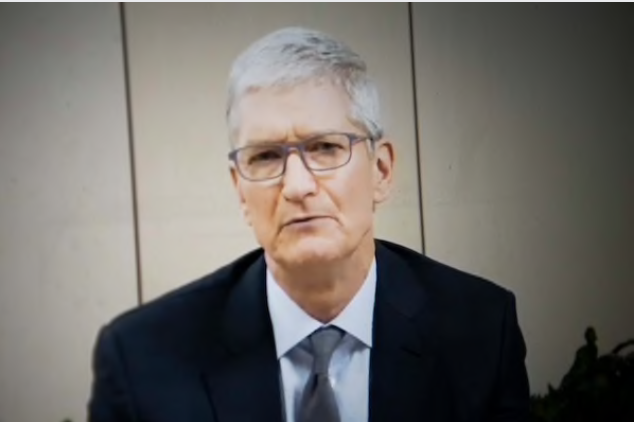
Tim Cook of Apple testifies remotely before the House Judiciary Committee on Wednesday, July 29, 2020. MUST CREDIT: Washington Post photo by Carolyn Van Houten

Tim Cook of Apple testifies remotely before the House Judiciary Committee on Wednesday, July 29, 2020. MUST CREDIT: Washington Post photo by Carolyn Van Houten

“Our founders would not bow before a king. Nor should we bow before the emperors of the online economy,” Rep. David Cicilline, D-R.I., said.

Cicilline, the chairman of the antitrust panel, opened the congressional investigation into Amazon, Apple, Facebook and Google last year, aiming to explore whether the tech industry’s most influential quartet of companies had attained their status through potentially anti-competitive means. In response, the four chief executives – Amazon’s Jeff Bezos, Apple’s Tim Cook, Facebook’s Mark Zuckerberg and Google’s Sundar Pichai – took the witness stand to fiercely defend their businesses Wednesday as rags-to-riches success stories, made possible only through American ingenuity and the sustained support of their ever-growing customer bases.

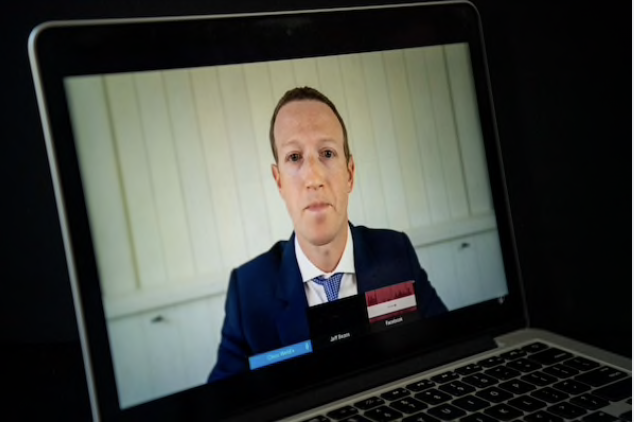
Facebook CEO Mark Zuckerberg testifies remotely before the House Judiciary Committee on Wednesday, July 29, 2020. MUST CREDIT: Washington Post photo by Carolyn Van Houten

Facebook CEO Mark Zuckerberg testifies remotely before the House Judiciary Committee on Wednesday, July 29, 2020. MUST CREDIT: Washington Post photo by Carolyn Van Houten

(Bezos owns The Washington Post.)

But lawmakers repeatedly presented a different vision at their hearing, one in which Silicon Valley’s myriad advancements in commerce, consumer electronics, communication and other online services had come at an immense cost to the people who use those tools and the companies that seek to compete against the tech giants.

In exchanges likely to have lasting resonance, Democrats repeatedly confronted Facebook’s Zuckerberg with his own past emails. Rep. Jerrold Nadler, D-N.Y., the top lawmaker on the House Judiciary Committee, brought up a 2012 message in which Zuckerberg apparently said he sought to acquire Instagram, which at the time was a rival photo-sharing app, out of fear that it could “meaningfully hurt us.” Later, Rep. Joe Neguse, D-Colo., noted other Facebook communications that described the company’s acquisition strategy generally as “a land grab.”

“Mergers and acquisitions that buy off potential competitive threats violate the antitrust laws,” Nadler said. “In your own words, you purchased Instagram to neutralize a competitive threat.”

“We compete hard. We compete fairly. We try to be the best,” Zuckerberg said earlier in the hearing.

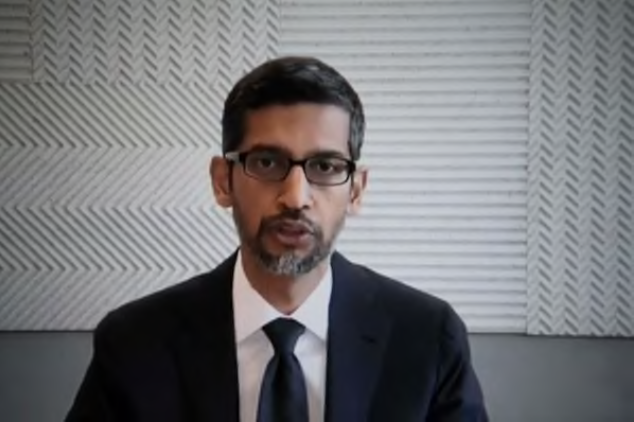
Google CEO Sundar Pichai testifies remotely before the House Judiciary Committee on Wednesday, July 29, 2020. MUST CREDIT: Washington Post photo by Carolyn Van Houten

Google CEO Sundar Pichai testifies remotely before the House Judiciary Committee on Wednesday, July 29, 2020. MUST CREDIT: Washington Post photo by Carolyn Van Houten

Amazon, meanwhile, faced withering scrutiny over allegations that it may have misled the committee. The e-commerce giant previously told lawmakers that it does not tap data from third-party sellers to boost sales of its own products. But Rep. Pramila Jayapal, D-Wash., brought up public reports that indicated the contrary, prompting Bezos – delivering his first testimony to Congress – to offer an admission of potential fault.

“What I can tell you is we have a policy against using seller-specific data to aid our private-label business,” he said. “But I can’t guarantee you that policy has never been violated.”

For all four executives, the afternoon offered uncomfortable clashes, laying bare the broad, bipartisan frustrations with the way Silicon Valley puts users’ privacy at risk, polices content online and hurts competitors, including small businesses that have told lawmakers they cannot hope to compete with these tech giants. On several occasions, lawmakers cut off or talked over the tech executives when they offered vague or long answers, seeking to hold them to account for the evidence investigators had gathered from their probe.

Republicans, meanwhile, largely used their time during the hearing to attack some tech companies for engaging in perceived political censorship against conservatives, a charge that the industry vehemently denies.

“We all think the free market is great,” said Rep. Jim Jordan of Ohio, the top Republican on the House Judiciary Committee. “We think competition is great. We love the fact that these are American companies. But what’s not great is censoring people, censoring conservatives and trying to impact elections. And if it doesn’t end, there has to be consequences.”

Despite scattered outbursts of political theater, the hearing could carry immense weight at a time when Amazon, Apple, Facebook and Google have lost support among both major political parties while facing a slew of investigations around the world. In the United States, the Department of Justice may file an antitrust lawsuit against Google as soon as this summer, The Post has reported, with cases against other companies potentially later.

Cicilline is expected to issue a report in August, outlining the case for updating federal competition rules that would give regulators more power to probe and penalize the industry. The fruits of his investigation could offer Congress one of the first major actions it can take if it aims to rein in Big Tech.

The four companies’ leaders began Wednesday on the West Coast, raising their right hands and taking the customary oath to deliver truthful testimony. Videoconferencing software helped beam the typically made-for-television moment into a sparsely attended, windowless congressional committee room thousands of miles away from the country’s tech heartland.

Each executive stressed his contributions to the U.S. economy. Bezos described Amazon as one of the most popular consumer brands, from which consumers can get their goods quickly and cheaply. Cook said Apple had enabled a popular ecosystem of apps and prized, high-end phones to match. Zuckerberg said Facebook stands for free expression and speech against a rising tide of international censorship, pointing to new competitors including TikTok. And Pichai said Google’s tools made it possible for people to find information and businesses to grow.

Democrats on the House’s top antitrust committee sought to unspool the circumstances behind the four tech giants’ successes.

Some lawmakers specifically accused Google of weaponizing its popular search engine to put rivals at a disadvantage. Cicilline said Google had “stolen content to build your own business,” citing its practice of culling and displaying information at the top of users’ search results.

Google historically has said its approach to search helps people find the answers they need or the products they’re looking for. In the case of Yelp, Cicilline questioned Google’s motives, stressing the search giant had stolen its restaurant reviews and threatened to “delist” the site when it complained. Cicilline also accused Google of monitoring web traffic to “identify competitive threats.”

“Our documents show that Google evolved from a turnstile to the rest of the Web to a walled garden that increasingly keeps users within its sights,” he said.

Pichai disputed the characterization that Google had stolen content and put rivals at a disadvantage. “Today, we support 1.4 million small businesses supporting over $385 billion in their core economic activity,” he said. “We see many businesses thrive, particularly even during the pandemic.”

Cook, the head of Apple, received fewer questions than his counterparts. But several lawmakers peppered him with questions about the way the company handles its app store – and the companies that have developed competing products or services that Apple also offers.

Lawmakers repeatedly raised the company’s policy to take up to a 30% commission on in-app sales and subscriptions, a fee that has chafed prominent companies, including Spotify, that fear they have no choice but to surrender critical revenue to Apple. The iPhone giant says the fee essentially funds the entire app ecosystem, and Cook at one point Wednesday told lawmakers the company has never sought to raise the rate.

But lawmakers later produced a document showing that one of Apple’s executives, Eddy Cue, in 2011 had proposed requiring developers to pay more. They posted it online, while in the hearing, Cook generally stressed that Apple had no desire to harm developers.

“We do not retaliate or bully people,” he said. “It is strongly against our company culture.”

Bezos touts Amazon’s customer focus in testimony ahead of House hearing #ศาสตร์เกษตรดินปุ๋ย

#ศาสตร์เกษตรดินปุ๋ย : ขอบคุณแหล่งข้อมูล : หนังสือพิมพ์ The Nation.

Bezos touts Amazon’s customer focus in testimony ahead of House hearing

Jul 29. 2020Jeff Bezos gives a presentation to the news media in Washington in 2019. MUST CREDIT: Washington Post photo by Jonathan NewtonJeff Bezos gives a presentation to the news media in Washington in 2019. MUST CREDIT: Washington Post photo by Jonathan Newton

By The Washington Post · Jay Greene, Elizabeth Dwoskin · NATIONAL, BUSINESS, CONGRESS

SEATTLE – Amazon chief executive Jeff Bezos cited the e-commerce company’s “customer obsession” Tuesday for fueling its business success as he attempts to counter congressional antitrust concerns a day ahead of a House hearing probing the power of tech giants.

As dominant as Amazon is – it accounted for 38.5% of U.S. e-commerce in June, according to Rakuten Intelligence – Bezos called the global retail market “strikingly large and extraordinarily competitive,” in written testimony submitted Tuesday afternoon to the House subcommittee that called the hearing. To fend off antitrust concerns, which often focus on consumer harm, Bezos noted that 80% of Americans have a favorable impression of Amazon, according to “leading independent polls” that he did not identify.

“At Amazon, customer obsession has made us what we are, and allowed us to do ever greater things,” Bezos wrote.

(Bezos owns The Washington Post.)

Bezos will swear an oath and appear at the hearing alongside Apple’s Tim Cook, Facebook’s Mark Zuckerberg and Google’s Sundar Pichai. Lawmakers are examining the clout of the tech behemoths that represent a nearly $5 trillion slice of the U.S. economy.

Other tech executives’ testimony also surfaced Tuesday evening. 

At the hearing, Zuckerberg plans to emphasize Facebook’s value in connecting people and supporting businesses during the pandemic, and the fact that the social network competes with the companies at the hearing, according to testimony obtained by The Washington Post. He plans to note that when Facebook moved its headquarters to the campus of a former tech giant, Sun Microsystems, he kept the company’s sign up front to remind employees to stay competitive because success can be fleeting.

He is expected to emphasize that Facebook’s success has been grounded in American values of democratic expression and competition, and to contrast that with the approach taken by China as a rising tech power.

Pichai emphasized Google’s popular Internet services as major benefits for consumers and small businesses in his testimony. The company’s products such as search and maps are free for everyone, he noted, and the company invests billions of dollars in research and development every year. He pointed toward Amazon’s Alexa and Twitter’s newsfeed as competitors to search, one of the areas the committee is investigating. 

Pichai repeated a familiar claim that Google and its competitors in online advertising help bring down costs for advertisers. Google is the dominant player in digital advertising, and critics have questioned the company’s power because it controls both the advertising framework and many websites where ads appear. 

“We also deliberately build platforms that support the innovation of others,” he said, mentioning Google’s Android operating system. 

Bezos’s written testimony anticipates that several of the topics lawmakers will probably grill him on during Wednesday’s hearing. Rather than focus on online commerce, Bezos sought in his testimony to define the retail market more broadly, and in a manner that diffuses Amazon’s clout. Amazon accounts for less than 1% of the $25 trillion global retail market, Bezos wrote, and less than 4% of retail in the United States. And while Amazon rarely talks about competitors, Bezos specifically cited Costco, Kroger, Target and Walmart, which he added is “a company more than twice Amazon’s size.”

A key area of focus for lawmakers is likely to be whether Amazon gives its own products unfair advantages over offerings from rivals on its digital marketplace, an allegation Bezos aimed to counter. The third-party sellers on Amazon account for about 60% of physical product sales on the site, and those sales are growing faster than Amazon’s own retail sales, Bezos wrote.

The written testimony did not address the allegation that Amazon uses data collected from third-party merchants to launch its own competing products, an issue that lawmakers on the same subcommittee pressed an Amazon lawyer about a year ago.

Bezos began his written testimony with a folksy refrain on his upbringing and the emergence of Amazon. He started by writing about his mother’s struggles giving birth to him when she was a 17-year-old high school student in Albuquerque, N.M. And he wrote about his decision to launch Amazon, an idea his boss at the time told him was “a better idea for somebody who didn’t already have a good job.” He worked in finance in New York at the time.

“When I’m 80 and reflecting back, I want to have minimized the number of regrets that I have in my life,” Bezos wrote. “And most of our regrets are acts of omission – the things we didn’t try, the paths untraveled.”

The hearing Wednesday will be Bezos’s first time testifying before Congress. In his written testimony, Bezos said, as he has previously, that he welcomes the inquiry.

“We should scrutinize all large institutions, whether they’re companies, government agencies, or non-profits,” Bezos wrote. “Our responsibility is to make sure we pass such scrutiny with flying colors.”