AI baby monitors attract anxious parents: ‘Fear is the quickest way to get people’s attention’ #ศาสตร์เกษตรดินปุ๋ย

#ศาสตร์เกษตรดินปุ๋ย : ขอบคุณแหล่งข้อมูล : หนังสือพิมพ์ The Nation

https://www.nationthailand.com/edandtech/30383097?utm_source=category&utm_medium=internal_referral

AI baby monitors attract anxious parents: ‘Fear is the quickest way to get people’s attention’
Mar 01. 2020
By Drew Harwell
The Washington Post

Baby-monitor companies are pushing artificial-intelligence technology into the family nursery, promising that surveillance software designed to record infants’ faces, sounds and movements can save them from injury or death.

But medical, parenting and privacy experts say the safety claims made for such Internet-connected systems aren’t supported by science and merely prey on the fears of young parents to sell dubious technology. No federal agency has provided evidence to back them up.

The camera systems gather round-the-clock data on the newborns and send alerts to parents when they detect crying, vomiting or signs of distress. The companies assure parents that the systems are a vital safeguard for babies’ health, claiming they can detect the signs of parents’ worst nightmares, including suffocation and sudden infant death syndrome. One camera brand, Cubo AI, which says it has sold roughly 10,000 devices, tells parents its system “saves babies’ lives.”

“Fear is the quickest way to get people’s attention,” Cubo’s chief strategy officer, Brian Lin, told The Washington Post.

But David King, a pediatrician working at Sheffield Children’s Hospital in the United Kingdom, said there is little evidence that such AI-powered baby monitors lower the risk of SIDS or suffocation.

Simpler, more established methods – such as laying babies on their backs with their feet at the end of the crib, and removing loose bedding – are already highly effective for those concerns without the need for extra machines. Conventional baby monitors, he added, can pick up the noises of crying and vomiting, if the parent so desires.

The new devices seem mostly designed toward “catering to parents’ anxieties,” he said. “Beyond what the manufacturers say, we don’t really know the answer to what parents get from buying them.”

Critics worry that the devices could lull parents into a false sense of security, with privacy trade-offs that could be profound: The camera systems gather intimate data on children’s first weeks of life, open homes to potential cyberattacks, and can subject parents to the simmering dread of relentless alerts and false alarms – delivered to cellphones wherever the parents might be.

“We have the technology to do this kind of constant surveillance and hyper-monitoring, and maybe some of these technologies will help or save one kid,” said Kim Brooks, the author of “Small Animals: Parenthood in the Age of Fear.” “But what we don’t talk about is the cost. It’s driving parents insane.”

But interest in the systems remains high. Craig Caruso, a father in Peekskill, New York, said the Cubo has been a huge hit in his family, allowing his wife and him to watch, record video and talk to their 3-month-old son from afar. They get regular notifications on their phones of the baby’s crying and movement, and they credit the system with alerting them to when their son had pulled a blanket over his face.

As for privacy concerns, he’s unbothered. “Everyone’s stealing your data,” he said; at least this time, the trade-off gets him peace of mind.

“I’d rather put the baby’s safety over privacy,” he said of the facial-analysis software. “His face is going to change, anyway.”

There’s no public data on how many of the experimental devices have been sold. But more than a half-dozen established baby-monitor firms and private tech start-ups now advertise “AI-enabled” devices, and the companies claim tens of thousands of camera systems are now online.

The Web-connected devices include always-on cameras, microphones, thermometers, motion sensors and speakers, so viewers can talk to their baby from miles away. Internal computers use AI techniques such as “computer vision” to process the real-time sounds, sights and motion happening in and around a baby’s crib.

The systems build on a new wave of baby monitors that look for subtle clues in the newborn’s body. The New York start-up Nanit’s $379 “complete monitoring system” uses an overhead camera and special swaddling blanket to track infant breathing and sleep patterns. The Utah-based company Owlet sells a $299 “smart sock” that tracks babies’ heart rate and oxygen levels.

But the AI-enabled devices go one step further by using facial-analysis software to send alerts when they sense a baby is crying or has covered their face. The systems are also designed to automatically record images, including of the babies’ smiling, which are then stored long-term in company-controlled server space.

With no industry leader, rival start-ups are competing to offer parents features they can’t get anywhere else. The Turkey-based start-up Invidyo, which claims roughly 5,000 active users, sells a $149 baby camera with a face-detection system that can send “stranger alerts” when an unknown person is spotted in an infant’s room.

GenkiCam, whose Taiwan-based developers said they intend to sell to U.S. buyers in the coming months, also advertises “vomiting detection” that can send alerts when a baby is seen spitting up. Camera systems that can detect when the baby is smiling, crying or has her face covered will sell for $149, the company said; vomiting detection will cost $50 more.

Developers said they trained the AI systems on infant behavior by building vast databases of babies’ cries and facial expressions. Some start-ups said they used video of babies taken from sites such as YouTube, while others captured original footage and refined their systems through parents’ real-world use.

GenkiCam’s developers, based at the Industrial Technology Research Institute in Taiwan, said they collected more than 500,000 baby images and hundreds of minutes of video from new mothers staying in postpartum care centers. More than 40 babies were involved in the systems’ testing, they said.

A promotional video for the camera system states the number of babies who die in their sleep every year and tells parents to “let GenkiCam take care of your baby.” GenkiCam’s lead creator, Chih-Tsung Shen, said in an interview, “We have a new solution to use the AI chip and help parents have a good life.”

But the software faces a number of technical challenges that some computer-vision researchers said could deeply undermine its performance. Few AI systems have been trained on small children because of a lack of available data and public unease. And they point to a simpler problem: Babies’ faces are typically less distinct, with fewer of the wrinkles, scars and signs of aging that help set adult faces apart.

Demonstration videos provided by the companies to The Post revealed imperfect results: The systems, for instance, sometimes said a baby’s face was dangerously covered when it sensed fingers were in the mouth. Those inaccuracies could end up flagging harmless occurrences as emergencies or overlooking worrisome situations that parents might expect the systems to catch.

The underlying AI software is also not as flawless as some companies advertise. Systems that purport to assess a person’s mood using their facial expressions have proved critically flawed, according to research published last year by a group of experts in machine learning, child emotion and neuroscience. Facial-recognition algorithms have also been found to show wide gaps in error rates depending on a person’s age, gender or skin color, a federal study in December revealed.

Lin, Cubo’s strategy chief, said the company had first trained its software with infant data recorded in local clinics in Asia. But shortly before delivering their first units, he said, the engineers worried the cameras would perform less accurately for babies with darker skin.

“We were scared about the color of the skin – the African American babies, the Indian babies, the Westerner babies who are more pale. We were like, ‘Oh shoot, we don’t have that data, what do we do? I need black babies, man,'” he said.

Their solution was to ship an early round of the bird-shaped camera systems to a test group of parents “not only for marketing but for data collection,” he said. “If you were a black mom influencer, we said, ‘Here’s one unit, go play with it.'” The accuracy, he says, quickly improved.

The fact that babies’ faces and cries are used to refine company software should be alarming to parents who want control over how their children’s data gets used, said Jamie Williams, a staff attorney at the Electronic Frontier Foundation, a digital-rights group.

Every company has different standards on privacy and data retention, and parents won’t have any idea of what happens to their babies’ likeness once it’s recorded and saved to the companies’ domain.

“What’s this data used for now? What’s it going to be used for later?” she said. “And can parents really be expected to keep an eye on every company’s privacy policy in terms of what they track in your baby’s crib?”

The monitors could further fuel a dependence in parents feeling they need to check on their kids at all times. A survey of 1,000 new parents last year, funded by the baby-product company Summer, found that a third of the responding fathers and a quarter of the mothers said they checked their monitors every minute.

The systems also open up ethical questions about surveillance inside the home. Invidyo’s co-founder, Özgür Deniz Önür, said the camera systems’ facial-analysis and motion-detection features have made it a popular product among parents wanting to watch their babies’ caregivers.

“It’s become more like a nanny monitor than a baby monitor,” he said. Though some nannies – including the one who watches his young son – have said they’re not comfortable having their words and movements recorded, he argues the cameras’ ability to closely monitor baby behavior is worth the trade-off. “The nannies seem to have accepted the fact that there are cameras everywhere,” he added.

Company leaders say the technology is just the beginning of a new age of newborn surveillance. Future versions could hook parents on even more alluring upgrades: A patent filing by Google engineers published last year proposed a system that could use motion detection and “eye state analysis” to predict whether a baby is in a silent “discomfort state,” allowing parents to respond before the baby wakes up. (Google has said the patent filing may never become a real product.)

This style of technology could also follow babies beyond the crib. The electronics firm ViewSonic said last month that it was building a whiteboard-mounted “mood sensing” device that could monitor students and alert teachers as to how engaged a class may be. The company’s chief technology officer, Craig Scott, said in a statement that the system was still in early development but was being designed to “improve class performance.”

But this level of computer-aided surveillance, Brooks said, can also have a corrosive effect on parents’ sense of self-worth and state of mind. The devices, she said, send the message that parents have failed if they don’t watch their baby at every turn.

“We have this mind-set, this mentality, that when kids are involved, we don’t have to be rational. Any risk mitigation is worth the cost we have to pay,” Brooks said. But the system “undermines parents’ feelings of basic competence: that they can’t trust themselves to take care of their babies without a piece of $500 equipment.”
Apple’s Tim Cook sees minor supply chain changes in wake of virus #ศาสตร์เกษตรดินปุ๋ย

#ศาสตร์เกษตรดินปุ๋ย : ขอบคุณแหล่งข้อมูล : หนังสือพิมพ์ The Nation

https://www.nationthailand.com/edandtech/30383067?utm_source=category&utm_medium=internal_referral

Apple’s Tim Cook sees minor supply chain changes in wake of virus

Feb 29. 2020
By Syndication Washington Post, Bloomberg · Mark Gurman · BUSINESS, TECHNOLOGY, US-GLOBAL-MARKETS 

Apple Chief Executive Officer Tim Cook suggested the iPhone maker wouldn’t make any quick moves out of China in light of interruptions due to the coronavirus and called the situation a “temporary condition.”

“We’re talking about adjusting some knobs, not some sort of wholesale, fundamental change,” he said in an interview aired Friday on Fox Business.

Apple’s China-focused supply chain is facing two major tests — first from a trade war between the U.S. and China and more recently from manufacturing outages spurred by the spread of the virus across the world’s most populous nation.

Apple scrapped its March quarter revenue guidance recently, citing iPhone production constraints and closed stores in China due to the coronavirus. On Friday, Cook was asked if the disruption would bleed into the June quarter. “We’re still in February, there’s reason for optimism, but we’ll see,” he said.

The Apple supply chain is “relatively more important in China,” he said, but noted that he’ll be watching the coronavirus situation unfold in Korea and Italy since Apple has suppliers and businesses there as well. “It’s very important to see what happens there,” he added.

Cook also defended a supply-chain strategy that he has led for years. “We’ve worked through earthquakes, tornadoes, fires, floods, tsunamis, SARS, so we’ve had a long list of things, and the operational team is very deep at working through these,” the CEO said. “So the question for us after we get to the other side, was the resilience there or not and will we need to make some changes?”

“It will take some time, but by and large, I think this is a temporary condition, not a long term of thing,” he added.

Tech firms take a hard line against coronavirus myths. So why not other types of misinformation? #ศาสตร์เกษตรดินปุ๋ย

#ศาสตร์เกษตรดินปุ๋ย : ขอบคุณแหล่งข้อมูล : หนังสือพิมพ์ The Nation

https://www.nationthailand.com/edandtech/30383057?utm_source=category&utm_medium=internal_referral

Tech firms take a hard line against coronavirus myths. So why not other types of misinformation?

Feb 29. 2020
By The Washington Post · Craig Timberg, Tony Romm, Jay Greene · NATIONAL, BUSINESS, WORLD, TECHNOLOGY, HEALTH

As misinformation about the coronavirus has spread online, YouTube has steered its viewers to credible news reports. Facebook has swept away some posts about phony cures. And Amazon has removed 1 million products for making dubious health claims.

These efforts have drawn praise from misinformation experts, who long have complained that tech companies should do more to confront misleading claims about other subjects, from the holocaust to fake cancer cures.

But this praise has come with a caveat: If tech companies can move to promote truth on a fast-moving public-health crisis, why do they struggle to do the same on other important issues?

Such questions have been particularly pointed when it comes to how technology companies handle misleading political claims, which Facebook and other social media companies have been wary of policing, even when information is demonstrably false. While tech companies often express their reluctance to act as “arbiters of truth,” their response to the coronavirus outbreak makes clear companies are willing to arbitrate some truths – so long as they are seen as uncontroversial and not politically charged.

“This is what it looks like when they really decide to take a stand and do something,” said Danny Rogers, co-founder of the Global Disinformation Index, a research group. “They haven’t had the policy will to act [on political misinformation]. Once they act, they can clearly be a force for good.”

Despite the work of tech companies, falsehoods about the coronavirus have burgeoned along with the outbreak itself, drawing together long-running conspiracy narratives about the contrails of jetliners, the rollout of 5G wireless technology and the supposed development of secret bioweapons.

Much of this has been accompanied by ads making unproven claims about the value of nutritional supplements, protective masks or supposed medicines in combating the outbreak. Other claims have appeared online with ads for survivalist gear and durable packaged food, or pitches for investors to stock up on gold and other precious metals as a hedge against a potentially devalued dollar.

“This is the first social media pandemic, if you will,” said Carl Bergstrom, a University of Washington biology professor who studies disinformation. “A social media environment is not designed to produce accurate claims. It’s designed to keep you on the site.”

The surge of news coverage in recent days also has sparked complaints from President Donald Trump’s political allies that fears of coronavirus are overblown and being intentionally hyped by his opponents – adding a dose of unproven political spin to what previously had been nonpolitical public conversation about the outbreak.

While technology companies permit many dubious claims to appear on their platforms, they have sought to check the spread of particularly egregious misinformation about the outbreak – such as claims that a certain medicine or nutritional supplement can cure coronavirus – and to direct users to authoritative information sources.

This has been especially visible on YouTube, which for years has been criticized for its role in spreading conspiracy theories, hateful ideologies and propaganda. Major reforms announced last year, however, curbed the platform’s propensity to direct users to such content through its recommendation algorithm, said longtime critic Guillaume Chaslot, a former YouTube engineer who founded the watchdog group AlgoTransparency.

The result is that searches for “coronavirus” prompts lists of mainstream news reports, and YouTube’s autoplay is offering videos from authoritative sources – and not conspiracy theories about the outbreak – according to tracking by AlgoTransparency.

Chaslot said that YouTube still hosts numerous videos featuring conspiracy theories, including about coronavirus, but they are less likely to be recommended to users.

“They’ve made a lot of improvements, but it’s still far from being enough,” Chaslot said.

YouTube videos about coronavirus also carry a label below saying, “Get the latest information from the World Health Organization about coronavirus.” The words link to the WHO’s information page on the outbreak.

“We have clear policies that prohibit videos promoting medically unsubstantiated methods to prevent the coronavirus in place of seeking medical treatment, and we quickly remove videos violating these policies when flagged to us,” said Farshad Shadloo, a YouTube spokesperson

Facebook users who search for coronavirus receive suggestions that they visit the Centers for Disease Control and Prevention site to “help you stay healthy and help prevent the spread of the virus,” with a link to a CDC Web page on the outbreak. Twitter does the same, with a box titled “Know the facts.”

Reddit imposed a “quarantine” on a coronavirus-themed group that hosted misinformation – warning users before they enter – and, early in the outbreak, posted a banner to direct users to “r/AskScience,” a community featuring accurate answers to medical questions, including about coronavirus.

Facebook, meanwhile, announced that it would take down posts that promoted bogus cures for coronavirus, going a step beyond its policy for addressing alleged cures to most other diseases, such as cancer and AIDS, which are permitted on the site.

The responses from the tech companies build on efforts for battling misinformation about vaccines. Facebook’s information box that pops up when users search for “coronavirus” – saying “Looking for coronavirus info?” – is almost identical to one that pops up for users searching for “vaccine.” (Both lead to CDC information pages.)

But Claire Wardle, the U.S. director of First Draft, a nonprofit group that combats misinformation, said the companies have been more aggressive on targeting false claims about the coronavirus because the outbreak has largely lacked political controversy.

The tech companies also are able to direct users searching for information to widely acknowledged international authorities, such as the WHO and CDC. There are no equivalents for many political claims in today’s polarized world, where nearly every utterance has its detractors and defenders – and companies that appear to favor one part of the ideological spectrum often come under attack from the other side.

“It’s this question of consensus,” said Wardell. “There aren’t two sides to health stuff.”

Facebook has come under the most sustained criticism for its handling of political misinformation, especially since the company announced in September that it would not subject statements or ads by politicians to the scrutiny of its independent fact-checking teams. Chief Executive Mark Zuckerberg later outlined his logic in a speech at Georgetown University in which he argued that democracies are best served by giving political speech an especially wide berth so that truths can emerge through robust debate.

But Democrats, backed by numerous misinformation researchers, have blasted the decision as serving Facebook’s business priorities by encouraging engagement on the platform and avoiding alienating politically powerful constituencies. This includes followers of President Trump, whose statements have been riddled with well-documented falsehoods, exaggerations and misstatements.

“Facebook is committed to supporting the global health community’s work by limiting the spread of coronavirus misinformation and connecting people to authoritative and helpful information about the virus and its prevention,” said company spokesman Andy Stone.

Amazon said it has blocked or removed 1 million products sold by third-party merchants on its retail site for suspect or misleading claims about coronavirus. The company warned at least one seller of surgical face masks that it would remove its listing for making false medical claims, according to a CNBC report. (The Washington Post is owned by Amazon chief executive Jeff Bezos.)

“Amazon has always required sellers provide accurate information on product detail pages and we remove those that violate our policies,” said company spokeswoman Cecilia Fan.

To counter misinformation, Amazon this month began showing shoppers who search “coronavirus” a message at top of the results to “Learn more about Coronavirus protective measures” that links to the CDC website. Typically, that spot in Amazon’s search results features ad-sponsored products.

Amazon also no longer allows merchants to bid on “coronavirus” as a keyword in search results, as well as related words such as “covid-19,” the disease caused by the coronavirus.

“They are always going to try to avoid controversy when it comes to advertising,” said John Ghiorso, chief executive of Amazon-focused ad agency and consulting firm Orca Pacific.

Still, some sponsored links have slipped through. Three survival books showed up as sponsored links this week on searches for “covid19,” as did disinfectant products on searches for “kill coronavirus.”

Boeing admits it failed to test the Starliner spacecraft adequately before its maiden flight #ศาสตร์เกษตรดินปุ๋ย

#ศาสตร์เกษตรดินปุ๋ย : ขอบคุณแหล่งข้อมูล : หนังสือพิมพ์ The Nation

https://www.nationthailand.com/edandtech/30383053?utm_source=category&utm_medium=internal_referral

Boeing admits it failed to test the Starliner spacecraft adequately before its maiden flight

Feb 29. 2020
File Photo/ Syndication Washington Post

File Photo/ Syndication Washington Post
By The Washington Post · Christian Davenport · NATIONAL, BUSINESS, WORLD, TECHNOLOGY, TRANSPORTATION 

Boeing acknowledged Friday that its procedures for testing the Starliner spacecraft’s systems ahead of its marred maiden flight in December were seriously flawed and that it now plans to revamp them as it scrambles to reassure NASA that one of its longest and most trusted contractors is up to the task of flying astronauts into space.

In the most comprehensive comments to date on what went wrong during Boeing’s test mission – an autonomous flight without astronauts – to the International Space Station, John Mulholland, the manager of Boeing’s Starliner program, said the company had cut short a key test of the craft’s software, failed to test a critical system against crucial hardware, and instead used a flawed computer system to conduct the test.

It was a stunning admission from the world’s largest aerospace company, which has been beset with questions about the software aboard its 737 Max aircraft. That software is being blamed for two fatal crashes that killed 346 people and led to the global grounding of the aircraft nearly a year ago.

Mulholland said that in addition to reviewing all 1 million lines of software code on the spacecraft, Boeing will revamp the way it tests its systems before they are put into service.

“From a hindsight standpoint, it’s very easy to see what we should have done because we uncovered an error,” he said. “But I really don’t want anyone to have the impression that this team tried to take shortcuts. They didn’t. They did an abundance of testing. And in certain areas obviously we have some gaps to fill.”

With the flight of its Starliner spacecraft, Boeing had hoped to show that it was getting close to flying NASA’s astronauts to the space station as part of the agency’s multibillion-dollar “commercial crew program.” But instead, the mission became another in a series of significant setbacks for the beleaguered company.

The Starliner spacecraft encountered problems almost immediately after reaching space when its onboard computer, with its time miscalibrated by 11 hours, failed to fire the thrusters that would send the craft on a path to the space station. While aloft, the spacecraft struggled to communicate with the ground. By the time controllers could figure out what went wrong, the spacecraft had burned too much fuel, preventing it from docking with the station, one of its primary objectives.

When Boeing officials discovered a software issue had caused the timing problem, they immediately began to hunt for other potential problems. It found a big one: another issue that would have fired the wrong thrusters during the separation of the service module and the crew module.

Boeing was able to quickly diagnose that problem and send a software patch to the spacecraft. The spacecraft then landed safely in the New Mexico desert several days ahead of schedule.

NASA is investigating the mishap and expects to release more results of its probe next week. The space agency is still mulling whether to require Boeing to fly another test mission without astronauts or to proceed to a flight with three people on board

Doug Loverro, NASA’s head of human spaceflight, said earlier this month that Boeing’s problems were a “fundamental” and widespread “breakdown of the software process.”

“We don’t know how many software errors we have – if we have just two or many hundreds,” he said.

He said the company needed to make its testing procedures more robust. And in a blog post, NASA said “there were numerous instances where the Boeing software quality processes either should have or could have uncovered the defects.” It added that the problems could have had serious consequences and “led to spacecraft loss.”

Speaking to reporters on Friday, Mulholland said that the company has been looking “to see if we have any other coding anomalies we need to fix. We haven’t found any yet.”

While many things went right during the mission, from its heatshield to environmental controls to the landing, he said the company knew “we need to do our part to rebuild trust with our customer.”

On the timing issue, he said the clock on the spacecraft was pulling its time from the rocket. During tests of the software in the laboratory, the crews were primarily concerned with making sure the two vehicles were communicating correctly. The testing team proved there were no communication issues, but it cut the test short so it never uncovered that the spacecraft was reading the wrong time.

“Unfortunately, the run was stopped after we separated from the launch vehicle,” he said.

If the test had continued, “we would have caught it.”

Boeing also had a breakdown in the testing of another key milestone in the flight – the moment when the service module was to separate from the crew module just before re-entry into the atmosphere. At the same time the test of the software was supposed to happen, Boeing had simultaneously scheduled a “hot fire” test of the module’s thrusters. As a result, the actual service module hardware was at another location for that test. To test the software, then, Boeing officials used an “emulator,” a computer system used to mimic the service module.

The problem was the emulator had the wrong thruster configuration programmed in.

Mulholland said the problems with the tests were “definitely not a matter of cost. Cost has never been in any way a key factor in any of our decisions on how we need to test our systems. The team thought it was more logical to break these mission phases into chunks and to do a lot of testing in those smaller chunks.”

In the future, he said, Boeing would continue to test the systems in smaller chunks but then also perform longer tests to simulate the moment from launch to docking at the space station, and then from release to landing.

“This is a tough business,” he said. “It’s a game of inches. And so you had a highly talented, very dedicated team that made that error. And going forward we just need to make sure we have the discipline that it won’t happen again.”

Oil companies can’t accurately locate polar bear dens in the Arctic, study finds. That could be grave for mothers, cubs. #ศาสตร์เกษตรดินปุ๋ย

#ศาสตร์เกษตรดินปุ๋ย : ขอบคุณแหล่งข้อมูล : หนังสือพิมพ์ The Nation

https://www.nationthailand.com/edandtech/30382983?utm_source=category&utm_medium=internal_referral

Oil companies can’t accurately locate polar bear dens in the Arctic, study finds. That could be grave for mothers, cubs.

Feb 28. 2020
A polar bear walks across rubble ice in the Alaska portion of the southern Beaufort Sea. MUST CREDIT: Mike Lockhart, USGS handout photo

A polar bear walks across rubble ice in the Alaska portion of the southern Beaufort Sea. MUST CREDIT: Mike Lockhart, USGS handout photo
By  The Washington Post · Darryl Fears · NATIONAL, BUSINESS, SCIENCE-ENVIRONMENT

A method used by fuel companies to avoid polar bear dens before they search for oil or gas works less than half the time, according to a new study released Thursday. That failure could pose a grave risk to mothers and their cubs in the dens, which are hidden under ice, if the Trump administration finalizes its plan to expand drilling into the Arctic National Wildlife Refuge.

According to the study published in the journal PLOS One, radar mounted on airplanes missed 55% of dens that were known to exist west of the Alaskan refuge off Prudhoe Bay. Oil operators search for the dens to comply with a federal requirement to build roads and facilities at least a mile away from the hibernating bears, whose shrinking populations are designated as threatened under the Endangered Species Act.

Since the 1990s, mining operations have used surveillance technology known as FLIR – Forward Looking Infared Radar – to identify the heat signature of maternal bears that bore as deep as four meters under thick ice to give birth. But FLIR is often disrupted by bad weather that blinds it to dens in some surveys and causes it to falsely identify dens in others.

Researchers who used the surveys provided by the industry as a guide to find dens and study bears between 2004 and 2016 found at least 18 dens that the radar missed. Conversely, they said, bears didn’t occupy areas that surveys said they inhabited.

“We froze our bleeps off out there,” said Tom Smith, a study co-author and associate professor at Brigham Young University. “I mean, it’s rough. When someone is telling us there’s a den here and we invest a lot of time and a lot of effort and there’s nothing there, and then we’re going down the sea ice 10 miles away and there’s a den when they said there wasn’t any, we took it kind of personal. We said this is useless. This is not working.”

Smith and researchers at Polar Bears International, a nonprofit conservation group, embarked on their study of aerial surveys using FLIR. They determined the radar can easily be disrupted if surveys are conducted in windy conditions or bad winter weather on the tundra.

Patrick Bergt, a manager of regulatory and legal affairs for the Alaska Oil and Gas Association, said FLIR “is just one of many mitigation activities” used by the industry to minimize harm to polar bears. Bergt said 40 years of data collection has shown “at most, a negligible impact on polar bear populations” in the North Slope Borough, which includes the Prudhoe Bay area where the study was conducted.

Much of what scientists understand about polar bears “is due in large part to the funding, personnel, and cooperation of oil and gas operators” that have a long history of cooperation with the U.S. Fish and Wildlife Service officials in the area, Bergt said.

The study comes five months after the Trump administration announced a controversial proposal to allow petroleum operation in the entire coastal plain of the Arctic National Wildlife Refuge, the most aggressive of five listed options. The proposal is in the process of being finalized, possibly by year’s end. It would be the first time exploration and drilling would be allowed in the environmentally pristine refuge, a critical habitat for polar bears.

Under the Interior Department’s Coastal Plain Oil and Gas Leasing Program, 1.5 million acres would be offered to the oil and gas industry, which is eyeing a potentially rich reward in the environmentally pristine refuge – an estimated 7.5 billion barrels of recoverable oil and more than 7 trillion cubic feet of natural gas.

But the potential loss of wildlife is also huge. The Arctic refuge hosts wolves, migratory birds and the massive Porcupine caribou herd that is sacred to the Vuntut Gwitchin First Nation, an indigenous group that has fought exploration and drilling.

According to the Bureau of Land Management, a division of Interior, oil and gas exploration and development could impact just about everything: Native hunting, water quality, greenhouse gas emissions, other types of air pollution and the breakup of permafrost. It could also result in oil spills and unintended boat strikes on marine mammals, to name only a few.

Bears stand to be impacted by airstrips and well pads, miles of oil pipelines, storage sites, a sewage treatment plant and 200 miles of roads.

Failing to correctly identify dens could have serious consequences. Polar bear mothers could be chased from dens by development activity such as seismic testing and road building before cubs are strong enough to survive the rigors of life on Arctic terrain. The animals could also be crushed or buried alive.

“The likelihood that maternal dens could be disturbed can be expected to increase” if and when oil and gas exploration is expanded to the refuge, the study said. “Because polar bear cubs cannot leave the shelter of the den until approximately 3 months of age, disruption . . . can have negative consequences.”

Even under the best conditions, locating a polar bear den is difficult. Radar often cannot detect their heat signature under a meter of thick ice, and mothers sometimes dig as deep as four meters.

Off Prudhoe Bay, where the winter wind blows hard and temperatures can plummet to 50 degrees below zero, it was possible for researchers to walk on thick ice without knowing a den was beneath them, Smith said.

Pregnant mothers bore into snow drifts in November and December, Smith said. Their babies are born weighing about a kilogram (2.2 pounds) around New Year’s Day. Before they emerge in spring, mothers feed them from stores of fat to help them grow.

“They have to socialize and create a bond with their cubs so that they’ll stay close for a couple of years or they could wander off and get picked off by a predator,” he said. “They develop muscle skills . . . so they can learn to walk and jump on ice.”

But if the mothers are disturbed, or the den destroyed, and they leave prematurely, all that is potentially lost. “That’s not going to end well for those little cubs,” Smith said.

According to the study, co-authored by Steven Amstrup and Geoffrey York of Polar Bears International, FLIR has flaws that the Arctic’s harsh conditions expose nearly every time it is used. Howling wind throws it off. It cannot detect heat signatures under a meter of ice.

Smith’s student researchers used handheld radar to detect dens. Alyeska contracts pilots to fly Twin Otter fixed-wing airplanes to canvass a wide area with attached radar.

“They miss them because they’re flying in bad weather,” Smith said. “They’re not paying heed to all the research that’s gone before that says you can’t just go out and fly.”

At Prudhoe Bay, the weather is unforgiving in the spring and especially bad in winter when the surveys are conducted. The findings are shared with the U.S. Fish and Wildlife Service, another division of Interior, that manages the area. Researchers rely on the word of the agency’s biologists.

“We were told by the Fish and Wildlife Service that a bear was gone,” Smith said. So he had one of his students dig with a shovel to determine the thickness of the den. “All of a sudden, right at his feet, a bear sticks its head out.” The student ran for his life. The bear stayed for another week.

“Yeah, it’s alarming” that surveys miss so many dens, Smith said. “It really undermines your confidence that they truly know where the bears are.”

“KUDOS Super Sensing” returns to Thailand at Bangkok Design Week 2020 #ศาสตร์เกษตรดินปุ๋ย

#ศาสตร์เกษตรดินปุ๋ย : ขอบคุณแหล่งข้อมูล : หนังสือพิมพ์ The Nation

https://www.nationthailand.com/edandtech/30382961?utm_source=category&utm_medium=internal_referral

“KUDOS Super Sensing” returns to Thailand at Bangkok Design Week 2020

Feb 28. 2020
By The Nation

It can be said that the scientific technology and industrial systems that currently support our lives have advanced largely due to the processes of mass-producing diverse materials, something that utilises large volumes of energy generated by transforming the earth’s resources.

It is also certainly true, however, that this has also caused various environmental and social problems. Today, the demand for reassessment of and improvements in regard to our inefficient use of resources and energy is increasing day by day, and it is necessary to propose new designs and technological theories that offer a specific directionality for these issues.

Following the success of “KUDOS Super Sensing” last year, KUDOS, a leading high quality sanitary ware and digital door lock provider – in collaboration with Super Sensing Forum, Asahi Kasei, and Creative Economy Agency (CEA) – introduced the newest discovery of Regenerative Technology under the theme of “KUDOS Super Sensing Returns” at Bangkok Design Week 2020. Brought directly from Consumer Electronics Show (CES) as Asia premiere, the advanced sensing design and technology can generate endless micro electricity anytime, anywhere and from any source.

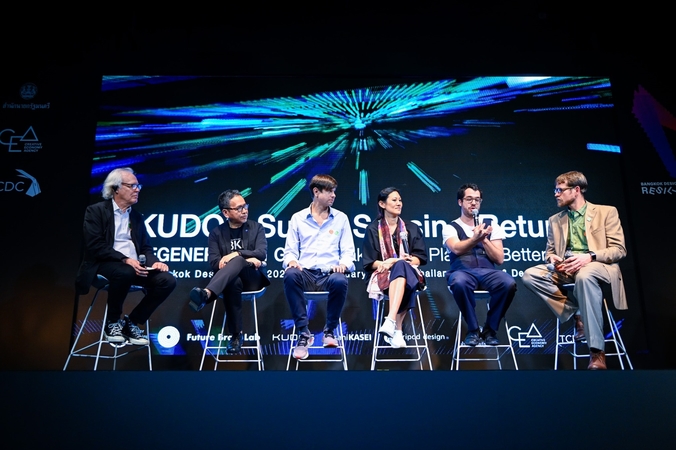
The event featured an international panel of keynote speakers, including Satoshi Nakagawa, Tucker Viemeister, Forrest Megger, Eric Schuldenfrei, Marisa Yiu and Andre Feliciano. The concept of “Regenerating Good Making Our Planet a Better Place” is that of industrial design and systems for the purpose of “regeneration.” It serves as an opportunity for the re-examination of both those systems that continue solely to consume precious energy and those environmental problems that result from the proliferation of plastics in our everyday lives, as well as for discussion and investigation that might lead to the discovery of new technologies and design proposals.

Satoshi Nakagawa, the founder of Super Sensing Forum

Satoshi Nakagawa, the founder of Super Sensing Forum

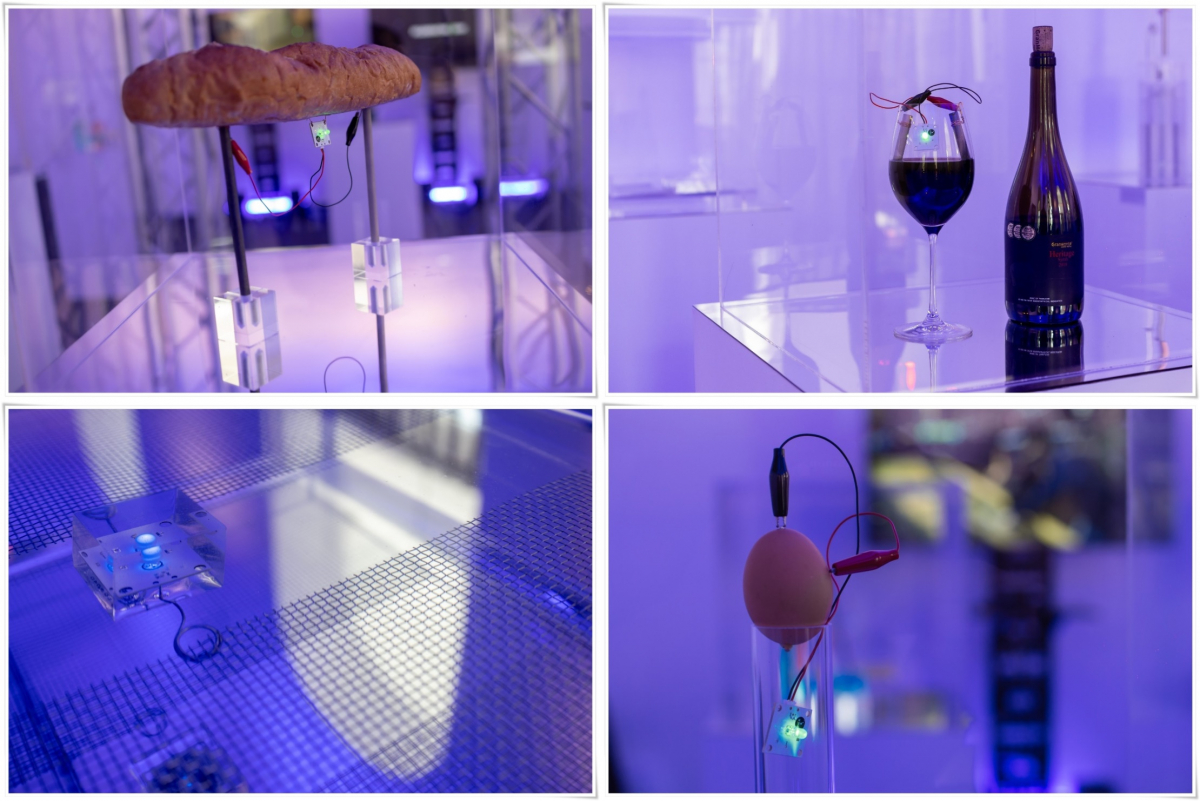
“Regenerating Good Project – E!ROOM” that we showcased this time is the Super Regenerator technology, debuted in Asia for the first time after CES 2020. Furthered from the Micro Energy generated from bacteria theory, it is able to generate electricity from anything and anywhere even from living things” said Satoshi Nakagawa, the founder of Super Sensing Forum. He adds that “This technology can help provide light in an emergency time, in natural disaster situation or at a far way place; moreover, it can help in developing environmentally friendly design and reduce natural resources consumption in the future”

It showcased samples of energy generated from our surrounding stuff, for example electricity from food, from water or from soil and bells ringing from spindle motor powered by energy obtained from any sources with the help of a step-up DC-DC converter boots up 1μW of power to 4-8 volts.

“This converter provides a long term, multipoint and low-cost electricity for electronic devices and sensing network; thus, accelerating large-scale IoT (Internet of Things) implementations. Moreover, hard working and continually research bring about the Sensorless Sensor, a new theory that power generation from any sources is an indication of power and by itself a sensor”

 Santi Srivicharnkul, Chief Executive Officer of CIT Corporation Limited and KUDOS brand

Santi Srivicharnkul, Chief Executive Officer of CIT Corporation Limited and KUDOS brand

“Sensing technology is one of the emerging trends that allows us to come up with new products and services that never exist before. With Nakagawa-sensei’s latest discovery in Super Regenerator, the potential of IoT will even become greater. Innovators can become more creative to see if what else sensors could improve personal lives, agricultural productivity and national security because there is no limitation for power generation. Hopefully, Thai entrepreneurs were be able to find a winning product that combines both design and technology to make people’s lives and the world better” said Santi Srivicharnkul, Chief Executive Officer of CIT Corporation Limited and KUDOS brand.Super Sensing technology is not just only a magic tool that impacts a whole industrial design but also a game changer for any business opportunities. All the world’s advanced sensors and technologies, and the act of acquiring data as defined as “Sensing,” will certainly allow a new generation of designers and product managers to design better products and services in the IoT space.

As we embark on a journey of rethinking about business and society, we may look at this technology as a big step forward for the future and thank Satoshi Nakagawa for his greatest discovery, Santi said.

Amazon to open larger Go Grocery store in hometown Seattle #ศาสตร์เกษตรดินปุ๋ย

#ศาสตร์เกษตรดินปุ๋ย : ขอบคุณแหล่งข้อมูล : หนังสือพิมพ์ The Nation

https://www.nationthailand.com/edandtech/30382847?utm_source=category&utm_medium=internal_referral

Amazon to open larger Go Grocery store in hometown Seattle

Feb 26. 2020
nterior of the new Amazon Go Store in the Capitol Hill neighborhood of Seattle on Feb. 24, 2020. MUST CREDIT: Chona Kasinger/Bloomberg.

nterior of the new Amazon Go Store in the Capitol Hill neighborhood of Seattle on Feb. 24, 2020. MUST CREDIT: Chona Kasinger/Bloomberg.
By Syndication Washington Post, Bloomberg · Matt Day · BUSINESS, RETAIL, FOOD

Amazon.com Inc. is taking aim at the urban grocery market with a larger version of its cashierless Go convenience store.

The company on Tuesday is set to open the first Go Grocery, located in Seattle’s Capitol Hill neighborhood, not far from the online retailer’s headquarters. The store is about five times the size of a typical Amazon Go – meaning it can accomodate shopping carts – and carries baked goods, meat, produce and household items.

Amazon is betting a frictionless checkout experience will help it grab a bigger share of the $800 billion U.S. grocery market, now dominated by Walmart Inc.

The Go Grocery stocks about 5,000 items, compared with 500 to 700 in a typical Go store, said Cameron Janes, who oversees the Go project along with several other brick-and-mortar experiments. The selection includes non-food staples like paper towels and laundry detergent but stops well short of the array offered at a traditional grocery store. Amazon’s Whole Foods markets carry tens of thousands of products.

Like the 25 existing Amazon Go convenience stores located in Seattle, Chicago, San Francisco and New York, Go Grocery uses cameras and sensors to track people and note what they took off the shelf. Shoppers are charged when they exit. But unlike the early stores, Go Grocery uses newer versions of the system capable of identifying produce without wrappers for each apple, cabbage or pineapple. That makes stocking easier and lowers costs in an industry with notoriously tight margins.

“We can pretty much handle everything” stocked by a regular grocer, Janes said of the latest technology.

He showed off grab-and-go food, coffee and baked goods from local purveyors. The store uses the same meat suppliers as the Amazon Fresh grocery delivery service, he said, and shares some organic produce and fish suppliers with Whole Foods. Unlike the high-end organic grocer, Go Grocery stocks items like Coca-Cola and Big League Chew bubble gum.

Amazon leased the retail space at 610 E. Pike Street in Seattle several years ago with the intention of using it for the first Go store. Given a broad mandate to shake up physical retail, the Go team originally planned to build a checkout-free supermarket, complete with a butcher, cheesemonger and coffee bar.

Chief Executive Officer Jeff Bezos toured a prototype store in late 2015 and said it could confuse customers. Instead, he asked the team to focus on refining the people-tracking technology and checkout experience. Go opened to the public three years later as a convenience store in Amazon’s headquarters, and the original space sat empty – until now.

The store’s opening won’t be Amazon’s last new take on grocery shopping this year. In Los Angeles, the company is preparing the first in a new line of grocery stores, with traditional checkout counters but distinct from the Whole Foods chain.

Amazon is also weighing other Go formats and potentially licensing the technology to other companies, Bloomberg reported last year. Blueprints filed in Washington, D.C., suggest a Go Grocery is coming to the nation’s capital, too.

Janes didn’t comment on plans for future stores but said the new Go Grocery will target apartment dwellers rather than the office workers the existing Go stores mostly serve.

“This is our first one,” Janes said. “I think we’re going to learn and see where they’re going to work … high-density residential areas is where we’re starting.”

Nate Silver: ‘There were some models that gave Trump as little as a 1 or 2 percent chance’ of winning in 2016 #ศาสตร์เกษตรดินปุ๋ย

#ศาสตร์เกษตรดินปุ๋ย : ขอบคุณแหล่งข้อมูล : หนังสือพิมพ์ The Nation

https://www.nationthailand.com/edandtech/30382834?utm_source=category&utm_medium=internal_referral

Nate Silver: ‘There were some models that gave Trump as little as a 1 or 2 percent chance’ of winning in 2016

Feb 25. 2020
Nate Silver at ABC Studios in New York on Feb. 13, 2020. MUST CREDIT: Photo for The Washington Post by Rick Wenner.

Nate Silver at ABC Studios in New York on Feb. 13, 2020. MUST CREDIT: Photo for The Washington Post by Rick Wenner.
By Special To The Washington Post · KK Ottesen · NATIONAL, POLITICS, MEDIA 

Nate Silver, 42, is founder and editor in chief of FiveThirtyEight, owned by ABC News. He correctly predicted the outcome in 49 of the 50 states in 2008’s presidential race and in all 50 states in 2012. He is the author of “The Signal and the Noise: Why So Many Predictions Fail – But Some Don’t.”

Q: People have called you a forecasting guru, a hero to nerds, a disrupter, a data journalist. How do you describe what you do?

A: I’m a journalist and an applied statistician, basically. And trying to explore the overlap between those two things. There are lots of things I don’t do well, but I am actually good at building statistical models that take a complex process, like the presidential primaries or the NBA season, and represent that mathematically. And it’s not just a matter of plugging some numbers into a computer; you’re trying to actually create a model of the real world. And the real world is complicated.

Q: Before the 2016 presidential election, your record was pretty spot-on in forecasting who would win. And you were closer than most on the 2016 election.

A: There were some models that gave Trump as little as a 1 or 2 percent chance, and we had him with a 30 percent chance – 29 percent, I think. Those are really different answers. One is saying, look, Trump’s going to win the election about as often as a good baseball player gets a base hit. And one is saying, this is a once-in-a-blue-moon scenario. We were quite emphatic that the election was competitive, and that Trump had a chance.

If you were betting the line in Vegas, then you would have used our model to lay a lot of money on Trump. Even though he wasn’t a favorite, our model said that Trump is significantly underpriced and that, on average, you’ll double your money by betting on Trump. Even though you lose most of the time, you make so much when he wins. And so, to us, the fact that Trump won this kind of narrow electoral college victory was exactly the scenario that our model identified as the reason he was more likely to win than people assumed. Because we’d done the historical work and the data work and the reporting work to actually kind of think through these things a little bit more deeply.

Q: I was wondering if that election brought you a different way of looking at things?

A: No. Because from a polling standpoint, 2016 was an extraordinarily boring and ordinary and normal election. From every other standpoint, it was remarkable. And not necessarily remarkable in a good way, depending on how you felt about the outcome. The one thing that said Donald Trump could become president was the polls. The polls showed him within the margin of error. The polls showed him, by the way, winning the Republican primary pretty much after the first month.

So the forecast is objective, but the way people look at probabilities is very contingent on what their assumptions are. The same person can look at a 70-30 probability, depending on their assumptions, and say, “OK, this proves that such-and-such is going to happen, thank God.” Or they can say, “Oh my gosh, there’s still a 30 percent chance of this happening.” You know, imagine if you’re boarding a flight and the flight attendant says, there’s a 70-30 chance that the plane will crash. It’s not terribly reassuring, right? So in some ways, you want people to actually trust their gut less. (Laughs.) You want people to say, look, maybe you can’t see how Trump wins the election or Bernie Sanders wins the primary or whatever else, but just be aware that, historically, this is something that could happen.

Q: If you were to apply your analysis to another area, what would that be?

A: The more I do this, the more focused I get. One misconception people have about the big-data-slash-analytics world is, if you know how to do analytics, you can solve any problem. I mean, not really, right? You still need a lot of domain knowledge about the field you’re trying to study.

I play poker on the side, right? A pretty on-brand activity. Well, there are people who specialize in poker for a living. They probably have the same types of intelligence that I have, but spend their whole life devoted to it. So I’m probably better than the average person off the street, but I get my a– kicked by dedicated professionals.

Elections are actually really tricky to cover because they require a lot of specialized knowledge. And there’s a lot of expertise that has historically been missing from campaign coverage. What happens, I think, is when people are smart but don’t necessarily have expertise, they tend to fill in the blanks with stuff that’s speculative. That’s the kind of polite way to put it, right? The impolite way is that you fill it in with a kind of B.S. that sounds good at a cocktail party, but which doesn’t necessarily hold up that well to scrutiny. I almost feel like we’re a journalistic throwback, saying, “Let’s take a step back and give reliable, unbiased information to assess a situation.”

Apple, TikTok decline to testify at second congressional hearing probing tech’s ties to China #ศาสตร์เกษตรดินปุ๋ย

#ศาสตร์เกษตรดินปุ๋ย : ขอบคุณแหล่งข้อมูล : หนังสือพิมพ์ The Nation

https://www.nationthailand.com/edandtech/30382776?utm_source=category&utm_medium=internal_referral

Apple, TikTok decline to testify at second congressional hearing probing tech’s ties to China

Feb 25. 2020
By The Washington Post · Tony Romm · NATIONAL, WORLD, TECHNOLOGY, CONGRESS, ASIA-PACIFIC 

Apple and TikTok each have declined a request to testify at a March congressional hearing that would have probed their relationships with China, a move that threatens to ratchet up tensions with federal lawmakers who see Beijing as a privacy and security threat.

Sen. Josh Hawley, R-Mo., one of TikTok’s leading critics, had invited the two tech firms to appear at a March 4 session, his office confirmed Monday. Both previously had declined to testify at a hearing last year on the same issue.

TikTok confirmed Monday that it told Hawley it would dispatch a top aide to appear at an unspecified later date, just not next week, citing a recent raft of new hires at senior ranks of the company. Apple did not respond to a request for comment about its expected absence.

In sitting out the hearing, Apple and TikTok still risk a verbal lashing on Capitol Hill, where Hawley, the chairman of a key Senate subcommittee, has upbraided both firms for not answering questions about their Chinese ties.

Hawley lambasted the iPhone giant at his hearing last year for storing Chinese users’ data locally in accordance with government rules. The move threatens Apple customers’ security, given Beijing’s broad surveillance powers, Hawley said then, even though Apple stresses it has not built back doors into its products.

With TikTok, Hawley and other lawmakers have been sharply critical of its Chinese-based parent company, ByteDance. Despite its repeated assurances, TikTok has struggled to convince lawmakers that the app is operating independently from Beijing, which heavily censors online content.

Hawley still plans to hold the March hearing in which U.S. law enforcement officials are set to testify, according to his office.

The tussle illustrates the growing appetite for answers among some lawmakers, particularly those who are generally skeptical of China and see Beijing as a threat to free speech and online privacy and security.

TikTok in particular has drawn bipartisan congressional scorn and sparked a national security probe into its origins. Branches of the U.S. military recently have barred service members from using the app on their official phones, fearing security risks. And the Transportation Security Administration this weekend said it would stop allowing its employees to use the app, responding to concerns first raised by Senate Minority Leader Chuck Schumer, D-N.Y.

In response, TikTok has sought to assuage federal regulators about its privacy and security practices. It revised its rules about what content it permits and prohibits, seeking to tamp down concerns of censorship. It also relocated the oversight of its content-management teams to the United States. The move came after news reports in which former employees recalled China exerting heavy influence over TikTok’s practices.

And the company in recent months has set its sights on Washington, hiring its first lobbyists and a new top official in the nation’s capital to try to forge better relationships with regulators. It had previously planned to dispatch its top executive, Alex Zhu, for meetings with lawmakers, but TikTok later canceled the trip, citing unspecified scheduling concerns.

Apple rebuffed by high court in $1 billion dispute with VirnetX #ศาสตร์เกษตรดินปุ๋ย

#ศาสตร์เกษตรดินปุ๋ย : ขอบคุณแหล่งข้อมูล : หนังสือพิมพ์ The Nation

https://www.nationthailand.com/edandtech/30382766?utm_source=category&utm_medium=internal_referral

Apple rebuffed by high court in $1 billion dispute with VirnetX

Feb 24. 2020
By Syndication Washington Post, Bloomberg · Susan Decker · NATIONAL, BUSINESS, COURTSLAW, US-GLOBAL-MARKETS 

The U.S. Supreme Court refused to consider an appeal by Apple Inc. as the iPhone maker seeks to avoid paying as much as $1 billion in patent damages to upstart software developer VirnetX Holding Corp.

VirnetX, a Nevada company with less than $2 million in annual revenue, has waged a decade-long fight to collect royalties from Apple for secure communications technology used in FaceTime and virtual private network programs on devices including the iPhone, iPad and Mac computers.

VirnetX jumped as much as 11% on the news.

The high court denied Apple’s petition arguing that a $439 million judgment from the first of two cases brought by VirnetX was “grossly excessive” and should be thrown out because the U.S. Patent and Trademark Office, in separate proceedings, ruled that the patents at the heart of the dispute are invalid.

VirnetX said Apple’s Supreme Court appeal is part of that company’s effort to avoid paying to use another of VirnetX’s inventions. Cupertino, California-based Apple’s legal tactics were part of the reason the trial judge increased the jury’s verdict of $302 million, VirnetX’s lawyers said.

“After 10 years of litigation, Apple has no plausible arguments for resisting the judgment,” VirnetX told the court. “It continues the pattern of ‘gamesmanship’ and delay that resulted in the district court enhancing damages below.”

On the question of damages, Apple said the U.S. Court of Appeals for the Federal Circuit, which handles all patent appeals, has created a “gaping loophole” in the rule that damages should be “limited only to the value of its patented invention” and not to the price of an end product that contains other features.

Apple said that in this case, VirnetX equated the rate paid for a desktop phone with the more complex iPhone.VirnetX said its expert witness estimated the “dollar value” of the invention in any phone supporting secure voice and video calls over the Internet. In that way, the company said it sought to avoid arguments that it was tying the royalty rate to the price of an iPhone or other Apple device.The Federal Circuit affirmed the jury verdict without issuing a formal opinion, and VirnetX argued that meant there was no real issue for the high court to review. The appeals court refused to put its decision on hold while Apple appealed to the Supreme Court.

Apple also contends the case should be thrown out because of the decisions from the patent office. While the Federal Circuit has affirmed some invalidity rulings from a patent office review board, it ordered a second look at others.

“There is no need or justification to require a defendant to pay massive damages for infringing patent claims that the PTO has decided should never have issued in the first place,” Apple said.

A second case, which ended with a $503 million verdict, involves the same patents but newer models of the Apple products. The Federal Circuit in November ordered a new trial on damages in that case after finding that newer models of FaceTime didn’t infringe the patents. It said Apple was barred from arguing invalidity because that issue was resolved in one of the earlier court appeals.

VirnetX said that none of its patents have been canceled because the legal dispute on those issues is continuing.

The Patent Trial and Appeal Board, established in a 2011 law as part of a sweeping overhaul of the U.S. patent system, is a favored venue for companies to challenge patents after they’ve been sued. The board has a reputation for siding with companies that challenge patents, and Apple is the most prolific user of the system.

Often, district court judges will put a civil suit on hold until the reviews are completed. When they don’t, as in these cases, it becomes a race for the parties to see which forum will finish first.

The case is Apple Inc. v VirnetX Inc., 19-832.