Thanks to the wide reach of social media, people nowadays are being bombarded by advertisements, many of them offering miracle cures.
However, the Nephrology Society of Thailand said on Wednesday that there is no herbal cure for kidney disease.
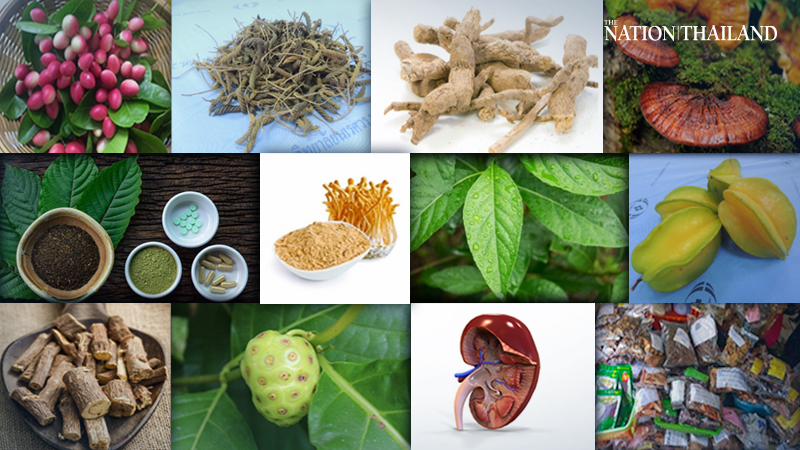
Captain Dr Pongsatorn Kochasenee, a kidney expert at Bhumibol Adulyadej Hospital, said there is still insufficient evidence that herbs can cure kidney disease. He also said that many herbs contain substances that may clash with medication a patient is already taking.
“Some herbs can also harm the kidney. For instance, star fruit can cause acute kidney injury, the East Indian screw tree can cause kidney failure, while licorice can cause high blood pressure,” he said.
The doctor also pointed out that there is insufficient evidence that cordyceps (Chong Cao), which currently popular among netizens, can treat kidney disease in humans.
“Some cordyceps products are high in metal content, which can harm the kidney in the long term,” he said.
Instead, the doctor said, the best way to maintain the kidneys is to remain healthy and avoid behaviour that may affect kidney function.
Reopening Thailand to tourists after the arrival of Covid-19 vaccines will only put the country in further danger, Thira Woratanarat, a lecturer from Chulalongkorn University’s Faculty of Medicine, warned in a Facebook post on Wednesday.
He said Covid-19 will continue spreading if the vaccine cannot stop asymptomatic people from transmitting the virus and if people lower their guard.
The lecturer said it was necessary to study asymptomatic infections further as the information available so far is insufficient.
“Things are no safe yet, so people should strictly adhere to preventive measures and monitor their health. See the doctor immediately if you have any symptoms,” Thira said.
Experts from the National Institute of Metrology (Thailand) (NIMT) showed up to check the temperature inside the Department of Disease Control’s warehouse in Nonthaburi on Tuesday.
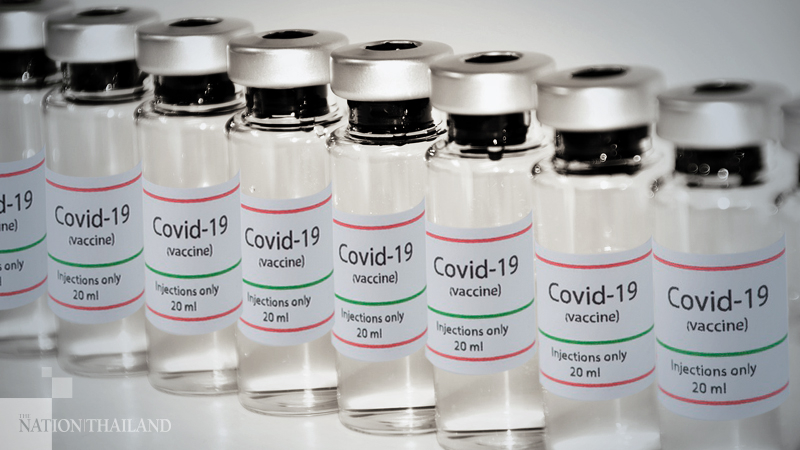
The warehouse is being prepared to store the first lot of 200,000 doses of Sinovac vaccine, which will arrive in Thailand at 8am on Wednesday.
“The vaccines need to be stored at a temperature of 2 to 8 degrees Celsius,” NIMT said.
NIMT experts used temperature sensors and recorders in line with the World Health Organisation’s measurement procedures.
Chulalongkorn University’s expert virologist Dr Yong Poovorawan on Tuesday explained why the Sinovac Covid-19 vaccine is deemed to only be effective on people aged between 18 and 59.
In a Facebook post, he said information on whether the vaccine is effective on people below 18 and over 60 is insufficient, adding that only 4 per cent of the people participating in clinical trials of the vaccine were above 60.
“As soon as there is sufficient information, Sinovac will be provided to the elderly,” he said.
He added that people above the age of 60 face the risk of severe infection, citing the case of Dr Panya Hanphanitphan, a doctor in Mahasarakham province who succumbed to complications from the virus. Dr Yong added that medical personnel must evaluate the vaccine thoroughly to ensure it delivers maximum benefits to the elderly.
“I believe more information on the vaccine should be available soon, making it possible for everyone to be vaccinated,” he added.
Thailand has bought 2 million doses of the Sinovac vaccine from China and the first lot of 200,000 doses is expected to be delivered on Wednesday.
By Syndication Washington Post, Bloomberg · Naomi Kresge, Jason Gale
The Pfizer Inc. and BioNTech SE coronavirus vaccine appeared to stop the vast majority of recipients in Israel becoming infected, providing the first real-world indication that the immunization will curb transmission of the coronavirus.
The vaccine, which is being rolled out in a national immunization program that began Dec. 20, was 89.4% effective at preventing laboratory-confirmed infections, according to a copy of a draft publication that was posted on Twitter and confirmed by a person familiar with the work. The companies worked with Israel’s Health Ministry on the preliminary observational analysis, which wasn’t peer-reviewed. Some scientists disputed its accuracy.
The results, also reported in Der Spiegel, are the latest in a series of positive data to emerge out of Israel, which has given more coronavirus vaccines per capita than anywhere else in the world. Almost half of the population has had at least one dose of vaccine. Separately, Israeli authorities on Saturday said the Pfizer-BioNTech shot was 99% effective at preventing deaths from the virus.
If confirmed, the early results on lab-tested infections are encouraging because they indicate the vaccine may also prevent asymptomatic carriers from spreading the virus that causes covid-19. That’s not been clear because the clinical trials that tested the safety and efficacy of vaccines focused on the ability to stop symptomatic infections.
“These are the data we need to see to estimate the potential for achieving herd immunity with vaccines,” said Raina MacIntyre, professor of biosecurity at the University of New South Wales in Sydney, in an email Monday. “However, we do need to be able to see the data published in a peer-reviewed journal and to be able to scrutinize the data in detail.”
Pfizer and BioNTech said they are working on a real-world analysis of data from Israel, which will be shared as soon as it’s complete. Spokespeople declined to comment on unpublished data.
The study wasn’t designed to accurately measure a reduction in transmission of SARS-CoV-2 because it used national testing data without accounting for differences in testing rates between vaccinated and unvaccinated people, said Zoe McLaren, an associate professor in the School of Public Policy at the University of Maryland Baltimore County.
“The main result overstates the reduction in transmission from the Pfizer vaccine,” McLaren said in an email.
The study compares the number of reported cases between those who had been fully vaccinated and those who hadn’t been vaccinated, but vaccinated people are less likely to get tested so the data will undercount cases, especially asymptomatic cases, in this group, she said.
“That means that the true reduction in transmission is lower than the estimate of 89.4%,” McLaren said. “How much lower? We need more evidence to know for sure. But I expect that, once we account for the bias, we’ll still find that this vaccine does reduce transmission. And that would be very good news.”
About 80% of SARS-CoV-2 cases in Israel during the time period of the study, from Jan. 17 to Feb. 6, were caused by the more transmissible strain first identified in the U.K. Israel’s vaccination drive began just before the so-called B.1.1.7 variant emerged, fueling infections and leading to a third lockdown on Jan. 8.
Through Feb. 6, about 27% of people aged 15 and older in Israel were fully vaccinated, with the Pfizer-BioNTech shot the only vaccine available in the country at the time. People were considered fully vaccinated and included in the analysis if the data collected were more than seven days after they received their second dose.
Based on SARS-CoV-2’s infectiousness, a vaccine that is 89% effective at preventing infection is likely to be effective at eliminating covid-19 in a population in which high vaccination coverage is achieved, said Helen Petousis-Harris, a vaccinologist at the University of Auckland.
Elimination of covid-19 will depend on potential “reservoirs” of SARS-CoV-2 in animals, genetic changes in the virus that might enable it to escape vaccine-induced immunity, and the ability to stop transmission across the world, said Petousis-Harris, who is co-leader of the Global Vaccine Data Network, a multinational group that collaborates on vaccine safety studies.
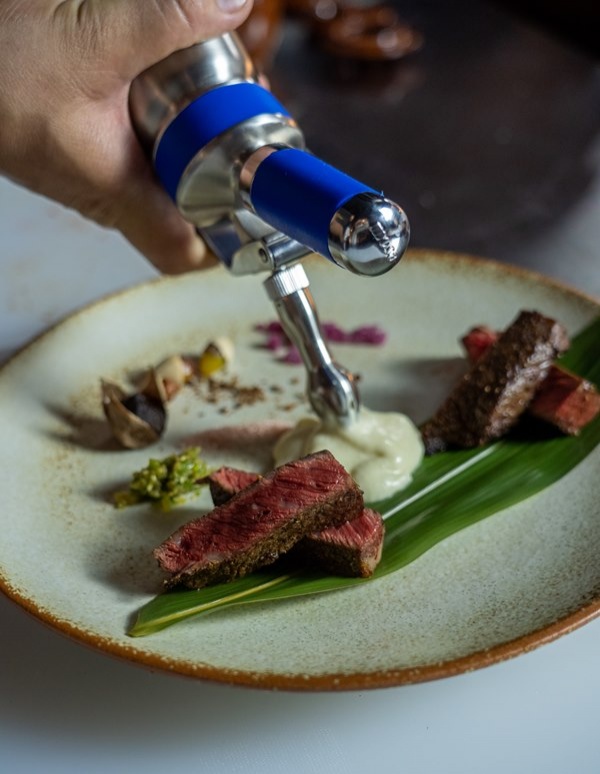
“เนื้อวากิว”ชั้นเลิศพร้อมเสิร์ฟอร่อยฟิน ที่ Wagyu Lab J Produced By Channel J
21 กุมภาพันธ์ 2564 – 07:17 น.
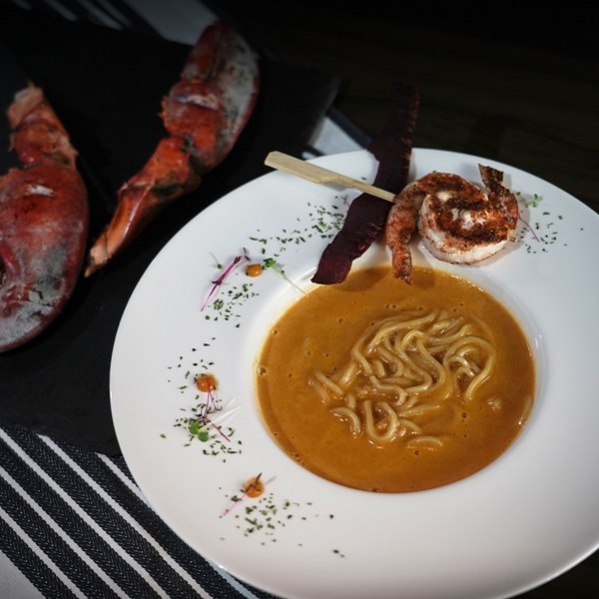
Wagyu Lab J Produced By Channel J ร้านอาหารญี่ปุ่นที่แรกที่เดียวในประเทศไทยที่นำเข้าเนื้อวากิวชั้นเลิศและส่วนผสมคุณภาพเยี่ยม พร้อมเมนูอาหารจานเด็ดมากมายในราคาเบาๆ






 Thira Woratanarat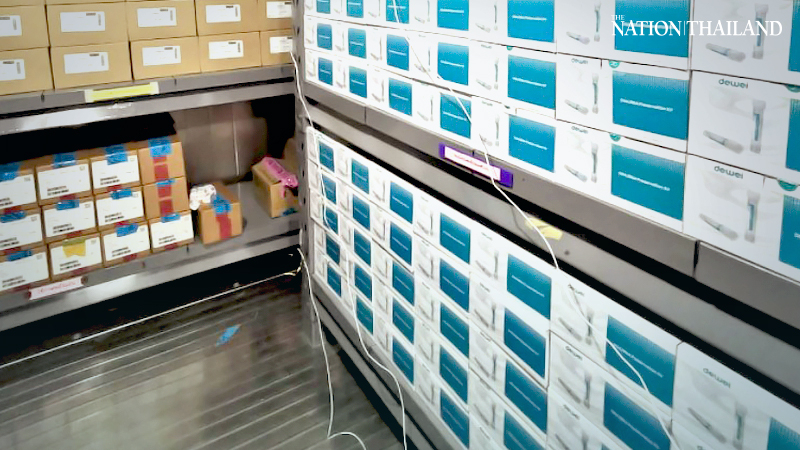


 Dr Yong Poovorawan