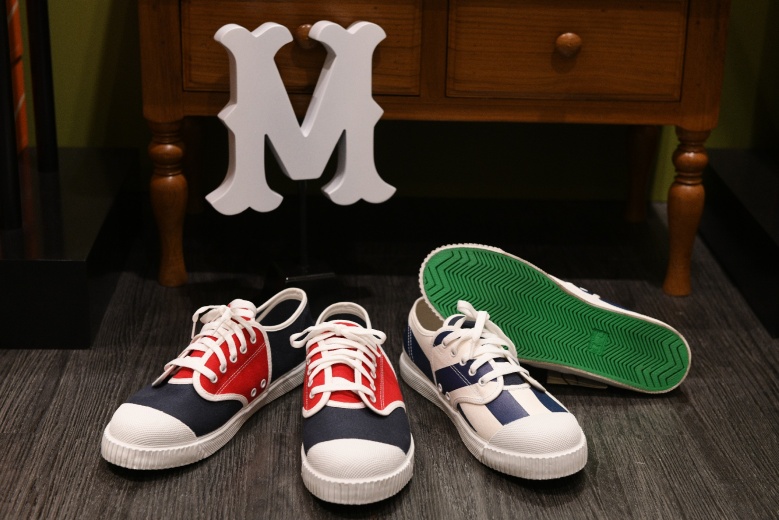
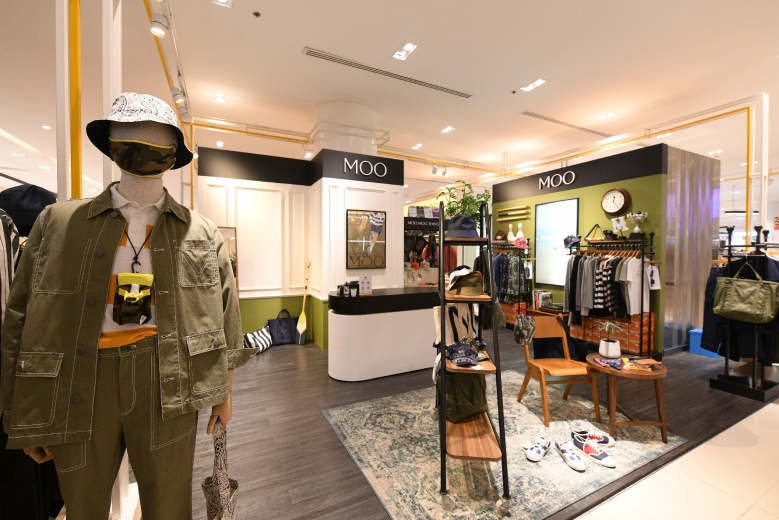
สร้างโปรเจกต์ใหม่ ‘MOO x Nanyang Sneakers’ รองเท้าผ้าใบที่มีดีไซน์ทันสมัย โดยวางกลุ่มเป้าหมายหลักเป็นวัยรุ่น Gen Y ที่มีไลฟ์สไตล์ชื่นชอบความทันสมัย มีความเรียบง่ายแต่แฝงไปด้วยความสนุกสนานในลักษณะของสตรีทแฟชั่นตอบโจทย์ความเป็นไลฟ์สไตล์แพลตฟอร์มของแบรนด์ได้เป็นอย่างดี
By The Washington Post · Carolyn Y. Johnson · NATIONAL, HEALTH, SCIENCE-ENVIRONMENT, HEALTH-NEWS
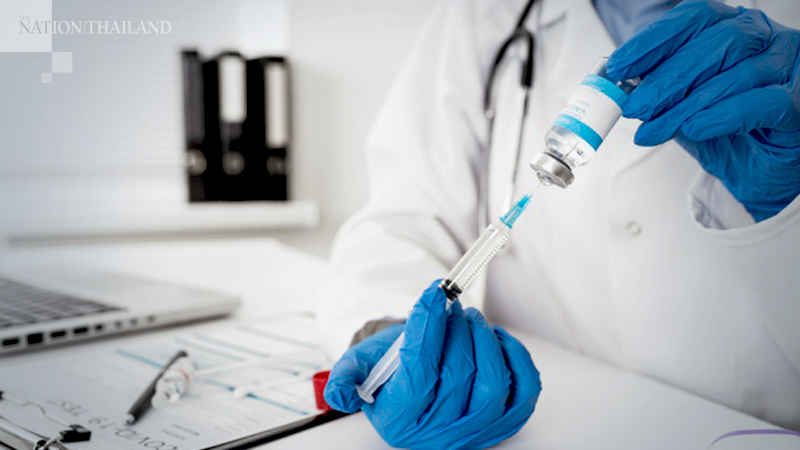
Biotechnology firm Moderna announced Monday that a preliminary analysis shows its experimental coronavirus vaccine is nearly 95 percent effective at preventing illness, including severe cases – a striking initial result that leaves the United States with the prospect that two coronavirus vaccines could be available on a limited basis by the end of the year.
The news comes a week after pharmaceutical giant Pfizer and its German partner BioNTech lifted the stock market and people’s hopes with the news that their coronavirus vaccine was more than 90 percent effective.
“It’s extremely good news. If you look at the data, the numbers speak for themselves,” said Anthony S. Fauci, director of the National Institute of Allergy and Infectious Diseases, who was one of three people briefed on the data by an independent committee Sunday morning. “I describe myself as a realist, but I’m fundamentally a cautious optimist. I felt we’d likely get something less than this. . . . I said certainly a 90-plus-percent effective vaccine is possible, but I wasn’t counting on it.”
Moderna’s vaccine, co-developed with Fauci’s institute, is being tested in 30,000 people. Half received two doses of the vaccine, and half received a placebo. To test how well the vaccine works, physicians closely monitored cases of covid-19 to see whether they predominantly occurred in people who received the placebo group.
Of the 95 cases of covid-19, the disease caused by the virus, 90 were in the group that received the placebo. There were 11 severe cases reported – all in people who received the placebo. With cases of covid-19 confined almost exclusively to trial participants receiving a placebo, that sends a strong signal that the vaccine is effective at thwarting the virus.
The data have not yet been published or peer reviewed, and the overall effectiveness of the vaccine may change as the study continues. But Fauci said the data on severe cases was “quite impressive” and effectively answers a question that has lingered: whether a vaccine measured by its success in preventing any case of covid-19 can prevent the most urgent cases, too.
An independent data committee, convened by the National Institutes of Health, analyzed the results Sunday morning. Stéphane Bancel, chief executive of Moderna, said in an interview that he spent the morning trying to distract himself from wondering about the results by working at his home in Boston, but instead he found himself constantly checking his phone and email. When he learned the results later in the morning, the evidence that the vaccine prevented severe disease stood out as most consequential.
“In this pandemic, what has been awful from a public health standpoint, an economic standpoint, is the worry people have to get so sick they have to go to the hospital – so sick they have to get to the ICU and have a high risk of dying,” Bancel said. “If a [vaccine] could prevent 95 percent of people to not get disease, but to not get severe disease, that would be a game-changer: the impact on hospitals, the impact on people’s psyche and the impact on deaths.”
Moderna has committed to completing its trial before applying for emergency-use authorization – which means waiting until there are 151 cases of covid-19 in the study. A previous projection showed that the trial might end sometime early next year, but it is instead expected to reach its endpoint in seven to 10 days, Bancel said, because of surging coronavirus cases in the United States. The explosion of virus cases translates into an expedited ability to ascertain whether a vaccine works.
The company will have enough safety data to support an application shortly before Thanksgiving. Bancel anticipates a vaccine might begin to become available to those at high risk in the second half of December.
Unlike Pfizer, which invested $2 billion of its own money in researching and developing a vaccine, Moderna is part of Operation Warp Speed, the government initiative designed to erase the financial risk of vaccine and therapeutics development by providing upfront funding to companies and helping coordinate the trials. Moderna received $2.5 billion from the U.S. government to support research, development and manufacturing of its vaccine candidate, whereas Pfizer signed a contract to sell doses to the U.S. government.
Moderna projects it can produce 20 million doses by the end of the year – enough for 10 million people to get both shots. The company aims to produce at least 500 million doses next year, with the possibility of scaling up to 1 billion doses depending on the availability of raw materials.
The side effects of the two-dose vaccine were mostly mild or moderate, including pain at the injection site, fatigue, headache and muscle pain, according to the company’s news release.
Regulators at the Food and Drug Administration must review the evidence for the Moderna and Pfizer vaccines, but the robust early indication of success suggests both vaccines might become available to high-risk populations before the end of this year.
Fauci predicted that people such as health-care workers or people with conditions that raise their risk of developing severe disease could begin receiving doses before the end of the year. It could take about four months to vaccinate people in high-risk groups, and in April, the vaccine could expand to the rest of the population.
The focus on vaccines will now shift to the daunting logistics of manufacturing and distribution.
The Pfizer vaccine requires ultracold storage conditions – minus 70 degrees Celsius – not widely available in typical vaccination settings. The company has been working to overcome that limitation.
Moderna announced Monday that its vaccine can be stable at refrigerator temperatures for a month and frozen for up to six months. It will not require dilution at the point of care, unlike the Pfizer vaccine.
Saving Christmas from covid is critical for Britain
Health & BeautyNov 15. 2020A passerby talks a photograph as an employee wearing a face mask dresses a Christmas tree in a Selfridges & Co Ltd. department store window in London on Nov. 4, 2020. MUST CREDIT: Bloomberg photo by Chris Ratcliffe.
By Syndication Washington Post, Bloomberg · Deirdre Hipwell, David Goodman · WORLD, EUROPE Britain knows Christmas is coming when John Lewis Partnership launches its television ad. Selling the season as a time for acts of charity rather than any particular products, this year’s edition will focus on food poverty and struggling parents.
Yet as the coronavirus continues to wreak havoc, it’s the department store chain itself that’s now a window on the festive period in a country that relies more on consumer spending than any of the big European economies.
With a partial lockdown in England closing all non-essential stores until at least Dec. 2, rescuing the next six weeks from covid-19 is critical for the U.K.’s financial well-being and a government beset by accusations that it can’t get a grip on the pandemic.
Further disruption to what retailers call the “golden quarter” could be disastrous for an industry that’s already been battered. November and December account for one of every five pounds of retail spending.
The slump during the U.K.’s spring lockdown precipitated the record decline in gross domestic product. It then contributed to most of the recovery in third quarter reported by the Office for National Statistics on Thursday.
The latest lockdown could cost retailers about 9 billion pounds ($12 billion), making what happens next month all the more important, said Kyle Monk, director of insight at the British Retail Consortium, or BRC. Household spending increases by 25% as Christmas comes. “If December is spent in lockdown it would be pretty catastrophic,” Monk said.
As lights and decorations start to go up on shopping streets, no retailer knows the importance of Christmas more than John Lewis, the store of choice for many middle-class Britons. Last year about 14% of the partnership’s annual sales came in the last five weeks of the year.
This year matters more than most for a 91-year-old company that’s a microcosm of the economy’s malaise, with job cuts, the accelerated shift to doing things online and the repurposing of staff and shops.
John Lewis announced plans on Nov. 4 to cut as many as 1,500 jobs at its head office, taking the total toll this year just under 4% of the workforce. Those cuts only add to the bloodletting on Britain’s main streets, where close to 125,000 jobs were lost in just the first eight months of 2020, according to the Centre for Retail Research.
Sharon White, chairman of John Lewis, said in October when she revealed the partnership’s turnaround strategy that hard decisions were needed to arrest a decline in profitability at one of the country’s biggest private employers.
She announced the closure of eight out of 50 stores while permission from local authorities to convert nearly half of John Lewis’s flagship store on London’s Oxford Street into offices has been granted.
The company also canceled annual bonuses this year. It’s the first time in more than 70 years that its 78,000 staff members who collectively own the partnership will receive no payout.
In addition to dealing with covid-19, Britain also faces the potential cost of leaving Europe’s single market without a trade agreement in place. As Brexit talks drag on, retailers have had to activate contingency plans to try and mitigate any initial supply chain problems and disruption.
John Lewis said last year that it was prepared for a no-deal Brexit but warned it will have a “significant impact,” particularly on fresh food supplies at its Waitrose grocery chain. The BRC said the industry would face 3 billion pounds of tariffs on food should the U.K. and EU fail to reach an accord.
But for now the attention is on avoiding a bad Christmas. A Deloitte survey in 2019 found British consumers were forecast to spend nearly 39% more on average compared to shoppers in the rest of Europe in the period.
“People underestimate just how geared the department store is towards the Christmas shopping period,” said Ian Cheshire, chairman of Barclays U.K. and former chairman of department store group Debenhams Plc. “More than a year’s profit is effectively made in that period.”
John Lewis started its Christmas ads a little over a decade ago. The two-minute clip usually involves pairing music with a storyline evoking nostalgia for family and celebrations. This year’s production will start running on social media on Friday and on television at the weekend.
In a sign of the struggles faced by households as well as retailers, it will include a direct appeal to support two charities helping people through the pandemic. It’s called “Give a Little Love.”





















 A passerby talks a photograph as an employee wearing a face mask dresses a Christmas tree in a Selfridges & Co Ltd. department store window in London on Nov. 4, 2020. MUST CREDIT: Bloomberg photo by Chris Ratcliffe.

