J&J halts covid-19 vaccine trial because of unexplained illness
Health & BeautyOct 13. 2020The Johnson & Johnson logo. MUST CREDIT: Bloomberg photo by Scott Eells
By Syndication Washington Post, Bloomberg · Riley Griffin · NATIONAL, BUSINESS, HEALTH, HEALTH-NEWS Johnson & Johnson said its covid-19 vaccine study has been temporarily halted after a clinical trial participant experienced an unexplained illness, the second time that a front-runner developer has paused a trial amid the intensifying race to create a viable immunization against the novel coronavirus.
The New Brunswick, New Jersey-based company said in a statement late Monday the participant’s illness is being evaluated, and that it would share more information after further investigation. J&J’s statement confirmed an earlier report by health-care news provider STAT that the study was paused.
“We are committed to providing transparent updates throughout the clinical development process of our vaccine candidate,” J&J said in its statement. “Adverse events – illnesses, accidents, etc. – even those that are serious, are an expected part of any clinical study, especially large studies.”
While pauses in late-stage testing are routine in the pharmaceutical industry, J&J’s interruption may contribute to concerns over safety with covid-19 vaccine research progressing at an unprecedented speed this year. British drugmaker AstraZeneca last month temporarily stopped tests of its own vaccine candidate after a trial participant fell ill. That study has resumed in a number of countries, but it remains halted in the U.S.
J&J executives probably will face questions about the trial halt Tuesday morning when they present third-quarter earnings. Representatives for the U.S. Food and Drug Administration could not immediately be reached by phone or email for comment after business hours.
J&J’s setback is the latest reality check for a world anxiously awaiting a vaccine against the virus, which has sickened more than 37 million globally. It’s a reminder of how long it takes to bring a successful shot to market, despite promises from politicians and governments that a covid-19 fix is around the corner.
The pursuit of a vaccine has become a political topic, with some observers concerned that President Donald Trump’s eagerness to see a shot authorized before the election could compromise the scientific process.
While there are hundreds of covid-19 vaccines being developed around the world, J&J is among a small group of vaccine makers that have progressed into final-stage human studies. The company is dosing up to 60,000 volunteers in the first big trial of a covid-19 inoculation that may work after just one shot.
AstraZeneca is still waiting for a decision from U.S. regulators on whether it can resume tests in the country after halting global trials on Sept. 6 because of concerns about a U.K. participant who became ill. Developed with Oxford University, that experimental vaccine has seen trials resume outside the U.S. in locations including the U.K. and South Africa.
Trump says he’s not contagious. Health experts say that’s not certain.
Health & BeautyOct 12. 2020President Donald Trump removes his mask as he arrives to speak to supporters at the White House on Saturday, Oct. 10, 2020. MUST CREDIT: Washington Post photo by Jabin Botsford
By The Washington Post · Karin Brulliard, Felicia Sonmez · NATIONAL, HEALTH, POLITICS, HEALTH-NEWS
WASHINGTON – President Donald Trump tweeted on Sunday that he is “immune” to the novel coronavirus and “can’t give it,” even though the White House has not released negative test results and immunity to the virus remains poorly understood.
The tweet was quickly flagged by Twitter, which said it contained “misleading and potentially harmful misinformation” related to the coronavirus. It was the latest example of the social media giant pushing back against the president’s posts on the deadly virus, and it appeared to refer to Trump’s claim to immunity. Some recovered patients with covid-19, the disease caused by the novel coronavirus, have been reinfected, and experts say many questions remain about immunity, including how long it may last.
“A total and complete sign off from White House Doctors yesterday,” Trump said. “That means I can’t get it (immune), and can’t give it. Very nice to know!!!”
Trump’s claim came one day after his physician said he is “no longer considered a transmission risk to others,” in a memo that seemed to clear Trump to return to his normal activities a little more than a week after he announced that he had tested positive for the coronavirus. Trump is expected to hold a campaign rally Monday in Florida.
But experts say there would be no way to know for sure whether the president is contagious so soon after a covid-19 diagnosis, and they noted that the White House has never made clear the severity of Trump’s illness, which could influence how long he should isolate.
The letter from Sean Conley said that Trump had met the Centers for Disease Control and Prevention’s criteria for “safe discontinuation of isolation” and that “an assortment of diagnostic tests” found no evidence of actively replicating virus, which must be present for someone to infect others.
It did not say that Trump had tested negative for the virus, however, and its brevity left experts puzzled over what evidence had led the White House physician to conclude the president is no longer contagious.
Trump, Conley wrote, was 10 days from the onset of symptoms, he had been fever-free for well over 24 hours and his symptoms had improved. That would mean he had met standards at which the CDC says people with mild to moderate cases of covid-19 can stop isolating.
But people with severe cases are advised to isolate for up to 20 days, the CDC says. Trump was hospitalized, administered supplemental oxygen and treated with the steroid dexamethasone, a drug typically used for serious cases, said Albert Ko, an infectious-disease expert at the Yale University school of public health.
“I think the big question is whether the president had severe or he had mild, moderate disease,” Ko said. “Regardless of what the rules are, I think most physicians would want to be cautious not only about protecting the president, but protecting the people around him. That’s usually our rules of practice. Why risk it?”
Tests can provide other clues as to a person’s contagiousness, but none are foolproof, experts said.
Conley’s memo did not detail the “assortment of diagnostic” tests Trump’s health-care team has used to assess his level of illness. But it said testing throughout the president’s illness had “demonstrated decreasing viral loads that correlate with increasing cycle threshold times, as well as decreasing and now undetectable subgenomic mRNA.”
A negative PCR test, the common laboratory test that detects the virus from nasal and throat swabs, would provide a fairly clear indication that Trump is no longer infectious, so releasing a negative result would “be to his benefit,” Ko said. But the president’s medical team has not released information about any of his test results other than the first positive test on Oct. 2.
A positive PCR test, however, would not necessarily mean Trump is contagious, experts said. People can test positive for weeks, even months, after they’ve been infected, because the test is “just as good at picking up the remnant dead fragments of virus DNA as it is picking it up when it’s alive,” said Jeanne Marrazzo, an infectious-disease expert at the University of Alabama at Birmingham.
Trump’s doctors might have been using quantitative PCR testing, which is not used widely for the coronavirus but would allow them to measure the amount of virus over time, Marrazzo said. “In general, the more virus you have, the earlier you are in the course of illness and the more likely it is to be healthy, replicating alive, infectious virus,” she said.
Conley’s reference to “increasing cycle threshold times” means the PCR test takes longer to detect the virus, which can be another sign that the level of virus is decreasing, she said. But Ko said that hasn’t been rigorously tested, and “we don’t know what the cutoff is” for a cycle length that indicates someone is no longer infectious.
Marrazzo said quantitative PCR test results typically correlate with results from the gold standard for detecting live, actively replicating virus: culturing it in a lab to see whether it infects and grows on cells. Culturing is rare because it is time-consuming and dangerous, and even its results can vary widely and be inaccurate. Conley’s letter did not say whether this was done to determine Trump’s infectiousness.
Conley’s reference to “subgenomic mRNA” indicates that Trump’s medical team has used an emerging lab test that detects actively replicating virus, experts said, and that it found none. New research suggests this test, too, may serve as a proxy for culturing.
“These are all kind of experimental diagnostic methods that kind of make sense, and I think Conley is putting it in there to bolster the argument,” Ko said. “But it doesn’t tell us that the president absolutely does not have infectious virus.”
Taken together, the references to testing and symptoms in the memo – while cryptic – are “reassuring,” Marrazzo said. But that assessment, she said, depends on believing that Trump is 10 days past the onset of symptoms and had a mild case, which the sketchy details released from the White House over the course of his illness have not made clear.
“What’s driving this very clearly is his desire to be able to be out and about and mingle,” Marrazzo said of Trump.
The president, who has been lagging behind Democratic nominee Joe Biden in polls, is expected to tout his swift return to work and his administration’s response to the coronavirus at rallies this week in Florida, Iowa and Pennsylvania. A new Trump campaign ad released Saturday claims that Trump “tackled the virus head-on, as leaders should.”
But part of that TV ad was rebutted Sunday by Anthony Fauci, director of the National Institute of Allergy and Infectious Diseases, who said the Trump campaign used his words out of context and without his permission.
“In my nearly five decades of public service, I have never publicly endorsed any political candidate,” Fauci said in a statement to CNN. “The comments attributed to me without my permission in the GOP campaign ad were taken out of context from a broad statement I made months ago about the efforts of federal public health officials.”
The ad includes a clip of Fauci speaking during an interview with conservative Fox News host Mark Levin in late March, during which Levin asked Fauci about the coordinated response of the Trump administration.
In his response, Fauci noted that he is “one of many people on a team” and spoke at length about the long days that he and others within the administration were working to combat the pandemic.
“There’s a whole group of us that are doing that,” Fauci said. “It’s every single day. So I can’t imagine that under any circumstances, that anybody could be doing more. I mean, obviously, we’re fighting a formidable enemy, this virus.”
Although Fauci did not mention Trump in his answer, the Trump campaign clip is edited to make it appear that Fauci is praising the president’s personal leadership during the crisis.
Tim Murtaugh, a Trump campaign spokesman, defended the ad Sunday.
“The video is from a nationally broadcast television interview in which Dr. Fauci was praising the work of the Trump administration,” he said. “The words spoken are accurate, and directly from Dr. Fauci’s mouth. As Dr. Fauci recently testified in the Senate, President Trump took the virus seriously from the beginning, acted quickly, and saved lives.”
Thanksgiving in Canada comes amid virus’s second wave, mixed messages
Health & BeautyOct 11. 2020Photo by: The Washington Post — The Washington Post
By The Washington Post · Amanda Coletta · WORLD, HEALTH, THE-AMERICAS, HEALTH-NEWS
TORONTO – With cases of the coronavirus rising this spring, Carole Robert’s “close-knit” family scrapped Easter. A family reunion planned for the summer was also a wash.
So when Robert got on the phone with a sister recently to talk Thanksgiving – a holiday she typically celebrates with some 35 family members – she knew what was coming.
“It’s completely canceled,” said Robert, who lives in Vankleek Hill, Ontario, roughly 60 miles from Ottawa. “There’s always next year.”
Canadian Thanksgiving comes earlier than the American version – families will gather to eat turkey and avoid discussing politics on Monday. But in this pandemic year, the timing is unfortunate.
As a second wave of the coronavirus prompts new restrictions in several provinces, authorities across the country are urging Canadians to curtail their holiday plans. Some suggest celebrating only with others who are already living under the same roof. Others advise moving the party outdoors or online.
In a rare nationally televised address last month, Prime Minister Justin Trudeau said it might be necessary to cancel Thanksgiving to “have a shot at Christmas.”
Whether Canadians obey those pleas remains to be seen. Forty percent of Canadians surveyed by the Montreal polling firm Leger this month said they haven’t or won’t change their Thanksgiving plans because of the pandemic.
Canada’s experience Monday might offer a preview of what Americans can expect next month – and a warning about what to avoid.
The United States has recorded nearly five times as many cases of coronavirus per capita than Canada and more than twice as many deaths. But Canada’s numbers are moving in the wrong direction, reversing gains made in the late spring and early summer. Officials worry the worst is yet to come as winter approaches, bringing with it flu season and temperatures that force more people indoors.
The country reported an average of 2,052 new daily cases over the last seven days on Thursday, up 30 percent from the week before, according to Theresa Tam, Canada’s chief public health officer. Daily case counts have eclipsed the records set in the spring when tougher restrictions were in place. Hospitalizations are up.
The second wave has hit the country unevenly. Roughly 80 percent of new cases are in Ontario and Quebec, Canada’s most populous provinces. The four provinces that formed an “Atlantic bubble” in July and the remote northern territories have largely been spared. Most of the infected are young people, who generally fare better then the elderly with covid-19, but the virus is spreading to other demographics.
Infectious-disease specialists see several reasons for the surge: Large social gatherings; the reopening of bars and restaurants; the failure of officials to take advantage of a summer of comparatively few cases to prepare for a fall wave; pandemic fatigue.
“My fear here is that we’re going to have a really dark fall and winter if we don”t act,” said University of Toronto professor Andrew Morris, an infectious-disease specialist at the Mount Sinai Hospital and University Health Network.
As in Europe, provinces are shying away from reimposing the broad business closures and stay-at-home orders of the spring, opting instead for targeted local measures that officials hope will inflict less damage on their economies.
Quebec has gone the furthest. Its three hardest hit areas – Montreal, Quebec City and parts of the southeastern Chaudière-Appalaches region – entered a 28-day partial lockdown on Oct. 1. More regions followed. Bars, theaters, casinos and museums are closed. Restaurants are limited to takeout. Private gatherings among people from different households are mostly prohibited.
Christian Dubé, the provincial health minister, said there’s more community transmission in more parts of the province than there was in the spring, when many outbreaks occurred in long-term care homes and cases were largely concentrated in Montreal.
“Don’t take the risk,” he said. “Don’t test the system. … Stay home.”
In Ontario, testing centers are so overwhelmed that officials have tightened the criteria for who can get a test. A backlog of tens of thousands of samples has left officials flying blind on the source of infections and the scope of the problem. Toronto, Canada’s largest city, has scaled back contact tracing.
Progressive Conservative Ontario Premier Doug Ford has responded with harsh words for rule breakers. The organizers of large social gatherings, he said, are “a few fries short of a Happy Meal.” The hundreds who attended a car rally in a parking lot in Hamilton last month should get their brains scanned, he said.
He had for several weeks resisted calls, including from Toronto’s top doctor, to do more. He said early last week that he needed to see more evidence before taking “someone’s livelihood away” and that the province was “flattening the curve.”
But on Friday, Ford’s tone changed, and he warned that Ontario was at risk of the “worst-case scenarios” seen in northern Italy. He announced restrictions in hard-hit areas, including a ban on indoor dining at bars and restaurants, and the closing of indoor gyms, theaters and casinos for at least 28 days.
Infectious-disease specialists say the response has been hampered by muddled messaging. Dubé has admitted that communication in Quebec could have been better. Different officials in Ontario have offered varying definitions of “household” and contradictory advice on how or whether to gather for Thanksgiving – even within the same news conference.
Ford described his own holiday plans, then appeared to change them after it was pointed out that they contradicted his own government’s advice to celebrate only with those in one’s immediate household.
Morris, the University of Toronto professor, said the messaging mishaps risk damaging public trust in officials when it’s most needed.
“There’s been a failure to recognize the inconsistent messaging … and an almost delusion that if you implore people to behave differently, then they will behave differently,” he said. “In almost every jurisdiction that hasn’t occurred, and we’ve failed to learn from other jurisdictions.”
Canadians observe Thanksgiving each year on the second Monday of October. As in the United States, many celebrate with turkey, stuffing and pumpkin pie. College students return home. The Canadian Football League typically plays a game or two – the Thanksgiving Day Classic – but the league canceled the season this year after failing to secure financial aid from the federal government.
Thanksgiving accounts for 39 percent of annual whole turkey sales, according to the Turkey Farmers of Canada. The national supermarket group Loblaw says it’s emphasizing smaller birds this year, in the expectation they’ll be more popular for smaller gatherings, but will still have large turkeys, “because, really, who doesn’t love leftovers?”
Robert is skipping the turkey this year. She said it’s been “extremely hard” not to see her family, but she has two brothers with cancer, and everyone has agreed that gathering isn’t worth the risk.
She’s keeping her fingers crossed for a more normal Christmas, but she’s not optimistic.
“When you look at the numbers,” she said, “I doubt that we’re all going to see each other.”
 13 ตุลาคม 2563 – 15:57 น.


 12 ตุลาคม 2563 – 20:18 น.


 The Johnson & Johnson logo. MUST CREDIT: Bloomberg photo by Scott Eells
  President Donald Trump removes his mask as he arrives to speak to supporters at the White House on Saturday, Oct. 10, 2020. MUST CREDIT: Washington Post photo by Jabin Botsford


 12 ตุลาคม 2563 – 10:21 น.


 12 ตุลาคม 2563 – 08:37 น.

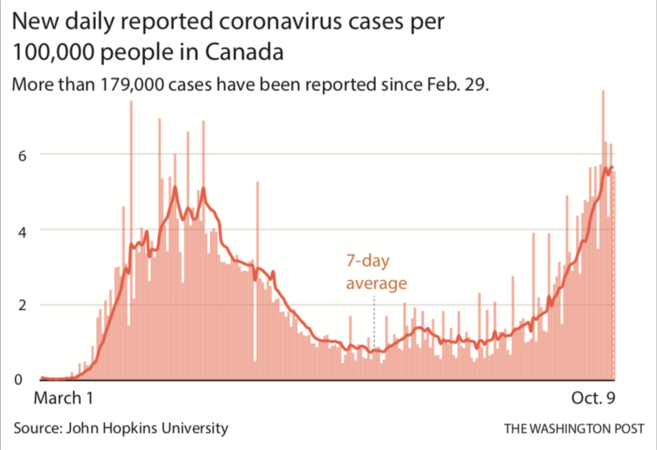 Photo by: The Washington Post — The Washington Post
