Biting into a sharper, sweeter apple

ศาสตร์เกษตรดินปุ๋ย : ขอบคุณแหล่งข้อมูล : หนังสือพิมพ์ The Nation

http://www.nationmultimedia.com/detail/lifestyle/30355425

Biting into a sharper, sweeter apple

lifestyle September 29, 2018 01:00

By Paisal Chuenprasaeng
The Nation Weekend

The new 15-inch Macbook Pro takes computer work to new heights

THE LAST edition of the MacBook Pro was impressive enough, but its new reincarnation, the 15-inch MacBook Pro has managed to ramp that perfection up a scale with a faster processor, larger memory and better security features.

The new model I got to test, which is not yet available in Thailand, has been configured with 6-core 8th generation Intel Core i9 2.9 GHz processor, 32 GB 2,400 MHz DDR4 working memory or RAM and a very fast 2 terabytes of SSD (Solid State Drive) storage.

It was also the first computer with Core i9 that I had ever tried and the super fast CPU, large memory and fast and large storage resulted in much faster performance.

With two additional processor cores, the new 15-inch MacBook Pro can get through workloads even faster because most pro software is designed to scale well with cores. The underlying code of most pro software is written in multiple threads that can be processed in parallel. So, with more cores to do the processing work, multi-thread workloads can reduce computing times a lot.

The new 15-inch MacBook Pro is the first Mac notebook computer to use Core i9, which features Intel’s Thermal Velocity Boost capability enabling the processor to opportunistically turbo up to 4.8 GHz when workloads and system thermals allow.

And with 32 GB DDR4 memory, you will experience better performance when using multiple pro apps simultaneously. Memory-intensive tasks will see a boost in performance. For example, when you apply effects to large projects in Adobe Photoshop, the task will be done up to 2.8 times faster quicker than with 16GB memory.

The new MacBook Pro has super-fast SSD storage with sequential read speeds of up to 3.2GB per second. And 2TB is a lot of memory for storing graphic works.

Video conversion and photo editing were completed fast during the test and the business applications were the fastest I had ever experience.

Measured with Wolffram Mathematica: CPU Benchmark, the new 15-inch MacBook with 6-core processor is 55 per cent faster than 15-inch MacBook Pro with quad-core CPU.

The new MacBook Pro features the custom Apple T2 chip that first debuted in the iMacPro. That chip brings security features like secure booth and encrypted storage, consolidates the system management controller, and audio and SSD controllers, manages the Touch ID, Touch Bar, the camera image signal and the ambient light sensor and also enables Siri personal assistant to receive voice commands.

The Apple T2 chip has a dedicated hardware encryption engine built into it for encrypting the data on the SSD so only your MacBook can read it. FileVault on MacBook Pro also extends this encryption to add your personal user key to ensure only your credentials can unlock your data.

And the new MacBook Pro now supports a secure boot process to ensure that only operating system software trusted by Apple loads at start up.

The T2 chip allows you to give voice commands to Hey Siri. For example, you can say “Hey Siri, activate the screen saver” as you walk away from your desk. Or you can say “Hey Siri, play some jazz”.

Like the previous MacBook Pro, the new 15-inch MacBook Pro also provides the security and convenience of Touch ID on the keyboard. The Touch ID, which is a fingerprint reader, is integrated with the power button at the end of the Touch Bar. The surface is a laser-cut sapphire crystal surrounded by a black, stainless steel border. Integrated with the button is a capacitive single-touch sensor.

The Touch ID uses sophisticated algorithms to recognise your fingerprint, thanks to a dedicated processor called the Secure Enclave, which is located on the T2 chip.

You can enrol your fingerprint when you’re setting your Mac or you can add your fingerprint later, then use your fingerprint to unlock it instead of typing user password.

Best of all, you can also quickly and securely authorise Apple Pay purchases on the web in Safari with Touch ID.

The new MacBook Pro retains the Touch Bar, which was introduced in the previous MacBook Pro to provide a dimension of interactivity to the keyboard in lieu of conventional function keys.

The Touch Bar is actually a Retina-resolution strip of glass with Multi-Touch capabilities. It has 2170×60-pixels resolution that can display millions of colours. It is located at the top of the keyboard where the function row used to be.

The Touch Bar can still display function keys but it has a lot of more uses because it is designed to dynamically adapt to the application you are using by providing app controls when and where you need them.

For example, the Touch Bar can provide formatting shortcuts, easy access to emojis, iTunes playing control and volume controls.

I loved this concept of a Touch Bar because it helped me discover useful functionality within the apps I use frequently to speed up common tasks.

The Touch Bar functionality is integrated throughout macOS and in apps such as Pages, Numbers, Keynote, and Final Cut Pro X. Third-party apps have also adopted the Touch Bar functionality. They include Evernote, Microsoft Office, Spotify, Adobe Photoshop and Final Draft.

Among other things, the Touch Bar provides the Control Strip that shows familiar system controls like display brightness, keyboard backlight, media controls, system volume and Siri.

And when you use Safari browser, for example, the Touch Bar will provide tab thumbnails to switch between your open tabs. When you tap the search field or open a new tab, the Touch Bar shows your favourite pages.

When you use Photos app, you can slide your finger along the middle of the Touch Bar to browse your library. You can even rotate or edit a photo on the Touch Bar. For example, in Crop mode, you can use the alignment wheel to straighten your photo.

The new MacBook Pro comes with a beautiful Retina display with True Tone technology. The display is very bright with 500 nits of brightness and it supports P3 wide colour.

Apple says the Retina display of the new MacBook Pro comes with the True Tone technology used in iPhone and iPad Pro. So the new Pro will now automatically shift the whitepoint of the display and the Touch Bar to match the colour temperature in the room, resulting in a more natural and comfortable viewing experience. The display has 2880×1800 pixels.

Another thing I love about the MacBook Pro is its keyboard, which delivers a quiet, comfortable and precise typing experience. The keyboard features a butterfly mechanism, which provides four times more key stability than a traditional scissor mechanism. Best of all, every key is individually illuminated with low-power LEDs, so I could conveniently type in low-light conditions.

Like the previous MacBook Pro, the new Mac notebook comes with four Thunderbolt 3 (USB-C) ports and abandons other ports, such as Thunderbolt 2 or full-size USB ports that are larger in size. Apple says there are now over 300 Thunderbolt 3 accessories and peripherals in the market so the ports will be very useful.

Every Thunderbolt 3 port is versatile and fast and supports charging, data transfer and video output. It’s also compatible with USB-C peripherals.

You can charge your MacBook Pro with any one of four Thunderbolt 3 ports – two on the right side and two others on the left side of the MacBook Pro.

And the Thunderbolt 3 ports have twice the bandwidth of Thunderbolt 2. The Thunderbolt 3 has a bandwidth of up to 40 Gbps. And when you connect USB-C devices, you’ll enjoy USB 3.1 Gen 2 speeds of up to 10 Gbps.

You can even connect two 5K displays to your MacBook Pro to get a whole new level of workspace.

The graphic engine of the new MacBook Pro is AMD Radeon Pro 560X with 4 GB of video memory. You can also upgrade the graphics performance with an optional and external module, Blackmagic eGPU that features a Radeon Pro 580 graphics processor and provides up to 2.8x faster graphics.

Two options of new 15-inch MacBook Pro are available on http://www.Apple.com/th. The option with Core i7 2.2 GHz, 16 GB RAM and 256 GB SSD retails for Bt85,900 and the option with Core i7 2.6 GHz, 16GB RAM, and 512 GB SSD for Bt100,900. They are available in silver and space grey. Blackmagic eGPU is available at http://www.Apple.com for US$699.

>> OS: macOS High Sierra

>> Processor: 2.9 GHz |6-core Intel Core i9

>> Memory: 32 GB 2400 MHz DDR4 RAM

>> Storage: 2TB SSD

>> Graphics: Radeon Pro 560X with 4GB of GDDR5 memory

>> Display: 15.4-inch |500-nit LED-backlit Retina display with IPS technology with 2880×1800 pixels, P3, True Tone technology

>> Camera: 720p FaceTime HD camera

>> Wireless: 802.11ac Wi-Fi, Bluetooth 5.0

>> Charging and expansion: 4 Thunderbolt 3 (USB-C) ports

>> Battery: Built-in 83.6-watt lithium-polymer battery; up to 10 hours of wireless web browsing

>> Dimensions: 34.93×24.07×1.55cm (WxDxH)

>> Weight: 1.83kg |(vary according to configuration)

>> In the box: 15-inch MacBook Pro, 87W USB-C Power Adapter, USB-C Charge Cable (2M)

Looking back and going forward

ศาสตร์เกษตรดินปุ๋ย : ขอบคุณแหล่งข้อมูล : หนังสือพิมพ์ The Nation

http://www.nationmultimedia.com/detail/lifestyle/30355419

Ikea launches the Gratulera limited edition vintage collection to celebrate its 75 years in business.

Looking back and going forward

lifestyle September 29, 2018 01:00

By The Nation Weekend

Ikea celebrates its 75th anniversary with a vintage collection that will look great in any home

SWEDISH FURNITURE and home furnishings giant Ikea celebrates its 75 years of business by bringing back a nostalgic vibe, introducing the Gratulera collection featuring the handpicked favourites created in three different periods – the 1950-60’s, 70-80’s and the 1990-00’s.

Classic Comebacks

“Each launch is very different, signifying its respective time period; from dark woods with a classic expression, to a very playful style with strong colours, and then to a more minimal look with natural light woods and graphic colours,” says Karin Gustavsson, creative leader of Ikea Sweden.

The designs from the 1950-60’s, a time when Ikea introduced some of its most iconic products, capture a sombre expression where darker woods meet classic lines.

Lovbacken table

The Lovbacken table (previously known as the Lovet) is a great example with only three legs, and the tips covered in metal. It was Ikea’s first knock-down product. Ironically, the flat-pack idea came about by chance. Gillis Lundgren, an Ikea co-worker, spontaneously decided to remove the legs from the table to make it fit into his tiny car to avoid damage during transit. Today, almost all Ikea products are flat-packaged for easier transportation and fewer trucks on the road.

Ganget armchair

Ikea launched the handmade Ganget armchair in 1958 when its first store opened in the Swedish town of Almhult. During the grand opening, all the journalists had the chance to sit in the armchair’s round design – a representation of a more optimistic future.

The Klippan sofa and Raane armchair add a bold, colourful and fun vibe.

The ’70’s and ’80s saw the launch of the Klippan sofa, a tribute to the Memphis group, an ’80’s design movement that was very popular at the time. The Klippan sofa was one of the first affordable sofas the firm offered, which is why it’s an icon of its era. Launched when the living room was declared for children, it was created with the idea of a sofa that could withstand the human need to play. For the new collection, new covers will come in a bright yellow, fiery red and a cool cobalt blue.

When launched in 1983, the Raane armchair was called Jarpen. Designer Niels Gammelgaard wanted to challenge the idea of an armchair and see if it was possible to make it comfortable without any filling or fabric. The solution? Mesh material in a resource-efficient design.

 PS bench

The 1990s was a simple and minimal period, mixing untreated, blonde Scandinavian woods with graphic patterns. During this decade, Ikea went for a more natural expression.

A small bench with wheels on one end, and legs on the other, was a design piece desired by so many people at the time it quickly became iconic. Its sleek design comes with a good dose of functionality thanks to its hidden storage. The Ikea PS bench was launched in the first PS collection back in 1995. With this collection, Ikea wanted to challenge and explore what modern Scandinavian design could look like.

Bjuran chair

The Bjuran chair, formerly known as Ogla, was first launched back in 1961. To this day, it’s still manufactured by the same factory in Poland, and the solid wood is bent in the same artisanal way. Place it by itself as a single pop of colour, or as a set around your dining table. The Gratulera limited edition vintage collection is available at Ikea Mega Bangna and Bang Yai.

For more information, check out Ikea.co.th.

Cooking your way around the world

ศาสตร์เกษตรดินปุ๋ย : ขอบคุณแหล่งข้อมูล : หนังสือพิมพ์ The Nation

http://www.nationmultimedia.com/detail/lifestyle/30355411

Cooking your way around the world

lifestyle September 28, 2018 07:05

By The Nation

Culinary tourism has gained in popularity in recent years and Small Luxury Hotels of the World (SLH) is responding to the demand with the introduction of the “Small Luxury Cookbook” featuring 142 dishes based on handpicked recipes from the brand’s portfolio of 520 hotels in more than 80 countries.

Many recipes have been passed down through generations or are inspired by the world-class fine dining prepared by internationally recognised chefs – more than 110 SLH hotels have restaurants that carry Michelin stars or awards of similar global acclaim.

From Maldivian tuna with tropical fruit salsa and slow cooked Greek octopus with aubergine miso to Swiss chard ravioli with scallops and Valencian paella with crayfish and mussels, the array of cuisine and technique of these special recipes offer at-home chefs a taste of luxury.

“The beauty of the Small Luxury Cookbook can be likened to our hotels, as it offers something for every independently minded traveller and self-professed foodie. Whether you’re an occasional, aspiring or proficient chef, these SLH recipes have been created with passion in mind and we are excited to give the world a taste of our hotels,” said Mark Wong, SLH vice president Asia Pacific.

All recipes in the book are accompanied by step by step instructions, as well as alternative suggestions for any hard-to-source ingredients allowing for a chance to recreate not only the dishes, but holiday memories at home.

To coincide with the release of the new cookbook, SLH identified some of the biggest culinary insights for this year to showcase the diversity of SLH’s global cuisine.

Wellness-led food options are inspired by guests wanting to focus on self-care and restoring balance on holiday. HGU New York serves up a liquid lunch menu made entirely of freshly blended juices whilst the Ovolo Woolloomooloo in Sydney includes a plant-based restaurant featuring dishes such as kimchi dumplings, zucchini lasagna with pistachio pesto or hibiscus strawberry cheesecake.

Appetite for hyper-local cuisine has been driven by travellers wanting to taste food straight from the source and rediscover ancient ingredients. Casa Angelina Lifestyle Hotel on the Amalfi Coast, Italy, has recently introduced two new floral-based cocktails to its bar Repertoire, designed to showcase oranges and lemons from the region.

El Lodge Ski & Bar in the mountains of Sierra Nevada, Granada, serves Riofr?o organic caviar (indigenous to the Andalusian province) at the El Grill restaurant, accompanied by blinis and sour cream. Les Sources de Caudalie in Bordeaux offers a vegetal lunch with dishes including nettle soup and wild daisy or strawberry gazpacho with immortelle flower ice cream.

While guests are increasingly seeking out-of-this-world dining options and ambience, Milaidhoo Island Maldives resort offers five different curated mood dining menus paired with wellness treatments including special baths, meditation and spa treatments to transport guests into a state of Zen. In Cyprus, Columbia Beach Resort hosts a series of full moon dinners on the beach every summer for their discerning guests.

Unusual food pairings such as green tea with French cuisine can be found at the ABBA Resorts Izu in Japan whilst The Lalit London offers naan and wine pairings at its restaurant, Baluchi.

Following trends in children’s consumption food habits, SLH hotels are changing their kids’ menus to incorporate healthier options such as Jersey crab with mango salsa at The Atlantic Hotel and even Michelin-starred selections at Althoff Hotel Villa Belrose.

The cookbook is available at http://www.slh.com/food and participating SLH hotels.

The power of exercise

ศาสตร์เกษตรดินปุ๋ย : ขอบคุณแหล่งข้อมูล : หนังสือพิมพ์ The Nation

http://www.nationmultimedia.com/detail/lifestyle/30355243

Toon Bodyslam will join Siriraj Hospital's walk-run-bike fighting stroke event.
Toon Bodyslam will join Siriraj Hospital’s walk-run-bike fighting stroke event.

The power of exercise

lifestyle September 28, 2018 01:00

By THE NATION

Siriraj Hospitals joins with major sponsors for the fourth walk-run-bike to fight stroke event

Siriraj Hospital’s nationwide stroke prevention campaign “Guiding Light for Thais; the Walk-Run-Bike Fighting Stroke” returns from its fourth year on October 28 and kicks off from Prince Mahidol Hall, Mahidol University, Salaya campus, Nakhon Pathom at 4.30am. Joining the event will be rock star and national hero Artiwara “Toon” Kongmalai, the front man of Bodyslam.

“When talking about exercising, everyone has to ask themselves ‘what do we do it for?’ Then we use the answer to drive us and make it successful. I don’t want to preach about how exercise is good for you, just suggest that you should try it yourself. I think people should also remember that one of the best ways to prevent stroke is exercising,” the rocker said during the recent press conference.

Professor Prasit Watanapa, Paron Israsena Na Ayudhya, and Thawatchai Taweesri pose with other doctors and nurses during the press conference.

“This event aims to encourage people to stay healthy by exercising. It is a collaborative effort by the private and public sectors and designed to reinforce academic corporation and policy making at the district hospital level. Siriraj Hospital, a medical institution that continues to play a major role in Thai people’s health, is constantly campaigning on prevention of stroke. The revenue after expenses have been deducted will be used to support the paralysis fund of the Siriraj Foundation in mounting new campaigns and activities,” added Professor Prasit Watanapa, dean of the hospital’s Faculty of Medicine Siriraj Hospital.

This walk-run-bike event is being supported by the Golden Jubilee Medical Centre, the Thaicom Foundation and the King Power Group, with representatives from the latter two organisations also speaking at the press conference.

Siriraj Hospital’s walk-run-bike fighting stroke is back for its fourth year at Mahidol University on October 28.

“Thaicom Foundation is encouraging and supporting education for Thai youth. We believe that good health is fundamental to a good life and essential for developing potential. For this fourth walk-run-bike fighting stroke event, Siriraj Hospital and Thaicom Foundation share the same purpose: helping Thais exercise while providing knowledge,” said Paron Israsena Na Ayudhya, vice chairman of Thaicom Foundation.

“King Power Group is delighted to join Siriraj Hospital’s activities, which are not only good for the health but helpful to the Thai people as a whole. We at King Power Group operate the social programme ‘King Power Thai Power’ and this includes an important health component,” added the group’s Thawatchai Taweesri.


Siriraj Hospital’s walk-run-bike fighting stroke is back for its fourth year at Mahidol University on October 28.

This fourth event consists of a 10.5-kilometre mini marathon and 21-kilometre half marathon, with the winners of both receiving a royal trophy of His Majesty the King. The walking for health component is 5 kilometres and the biking for health is 35 kilometres.

To register, visit http://www.SirirajStrokeCenter.org until October 10. For more information, email race@thai.run or call (093) 242 3888. Applications are also being accepted in person at the Golden Jubilee Medical Centre from Monday to Wednesday between 9am and 4pm.

For more information, please call (02) 414 1010. To donate to the stroke fund, call the Siriraj Foundation at (02) 419 765860.

Central Embassy’s Open House earns multiple awards

ศาสตร์เกษตรดินปุ๋ย : ขอบคุณแหล่งข้อมูล : หนังสือพิมพ์ The Nation

http://www.nationmultimedia.com/detail/lifestyle/30355317

Central Embassy’s Open House earns multiple awards

lifestyle September 27, 2018 13:20

By The Nation

2,354 Viewed

Open House, the co-living space on the sixth level of Central Embassy in Bangkok, was selected as the Most Beautiful Bookstore of 2017 at the Asian Bookstore Forum held recently in Chengdu, China.

It also recently won three PropertyGuru Thailand Property Awards – Best Retail Development, Best Retail Architectural Design and Best Universal Design Development.

Managing director Barom Bhicharnchitr says it’s an “honour” to earn the recognition in China and “a great pleasure” to receive “three other important awards in the region’s biggest, most trusted and most respected real-estate awards programme.

“They are our motivation to develop Central Embassy to be even more quintessential for both local people and foreign visitors.

“The Most Beautiful Bookstore Award certainly proves that our bookstore is as fascinating as any we might see in other countries,” he said. “Open House was created in collaboration with the Klein Dytham Architecture, a world-class interior-design company, to have a great sense of openness and a close-to-nature ambience.

“It’s a community space where anyone can feel relaxed and spend time as they wish, with a vast floor, tall ceilings and gorgeous views all around. The 7,000-square-metre space is divided into eight zones, with eating areas, cafes, a bookshop and reading area, playground, art gallery, lifestyle shop and a co-thinking space including a private, fully equipped meeting room with and cinema. And it all seamlessly leads to the elegant Park Hyatt Bangkok.”

The Open House Bookshop by Hardcover is 880sqm and has as its concept “Celebration of Print Culture”. It appeals to readers with a Book Tower and Book Wall. There are books on art, design, photography, creative media, cooking and lifestyle.

The Book Wall has more than 20,000 titles, including new releases and limited editions from publishers around the world, all selective by Shane Suvikapakornkul, the bookstore’s managing director.

Butterfly takes wing

ศาสตร์เกษตรดินปุ๋ย : ขอบคุณแหล่งข้อมูล : หนังสือพิมพ์ The Nation

http://www.nationmultimedia.com/detail/lifestyle/30355213

Butterfly takes wing

lifestyle September 27, 2018 01:00

By THE NATION

2,149 Viewed

In the exhibition “Papillon”, Thanakorn Chai Telan explores the freedom of artistic expression as seen in the 1973 Steve McQueen-Dustin Hoffman movie of the same name (recently remade).

The show is at the Jam Factory Gallery on Bangkok’s Charoen Nakorn Road until October 28.

Find out more at (02) 861 0950, gallery.thejamfactory@gmail.com and “TheJamFactoryBangkok” Facebook page.

Hed Kandi by the pool

B-Concept is presenting Hed Kandi at a So Sofitel Bangkok pool party on October 6 that will stretch into the night. Get set for funky, euphoric vocals, sexy beats and house classics from a group of women DJs that’s sold more than five million albums since 1999.

Passes are available at http://www.ThaiTicketMajor.com and (02) 262 3456.

Asian sport in focus

SPIA Asia, the awards ceremony and conference for the region’s sports industry, will be held at the Centara Grand and Bangkok Convention Centre at CentralWorld on November 19 and 20.

Brands, agencies, marketers and organisations that positively influence the sporting landscape in Asia will be honoured. Industry leaders will discuss Asia-specific initiatives that are changing the face of sport. Learn more at http://SpiaAsia.com.

Kento catches Insanity

Japanese DJ Kento, recognised as his country’s top “open format” DJ, will be bringing his peculiar brand of electro house to Insanity Nightclub on Bangkok’s Sukhumvit Soi 11 on September 28.

Representing record pool platform DJ-City, Kento collaborated with Mr Black on “Wasabi”, a Top 25 hit on the Beatport Electro House chart. Admission is Bt400 for dudes and Bt300 for dudettes and that gets you an opening drink. Find more details at (082) 731 8885.

World’s top 10 universities for graduate employment

ศาสตร์เกษตรดินปุ๋ย : ขอบคุณแหล่งข้อมูล : หนังสือพิมพ์ The Nation

http://www.nationmultimedia.com/detail/lifestyle/30355249

World’s top 10 universities for graduate employment

lifestyle September 26, 2018 13:43

By China Daily
Asia News Network
Beijing

3,891 Viewed

Massachusetts Institute of Technology has been crowned the best university in the world for graduate employability for the first time, followed by Stanford University and University of California, Los Angeles, according to the QS Graduate Employability Rankings 2019 released by Quacquarelli Symonds, a British company specializing in education.

Chinese universities record strong performance in graduate employment this year, with 34 universities entering the world’s top 500 universities for graduate employability. Tsinghua University ranked ninth while Peking University took the 20th spot.

Let’s take a look at world’s top 10 universities for graduate employment.

No 10 University of Oxford

Oxford University’s Bodilen Library. [Photo provided to China Daily]

No 9 Tsinghua University

People walk in the Tsinghua University campus in Beijing, August 28, 2018. [Photo/VCG]

No 8 University of California, Berkeley

Sather Tower rises above the University of California at Berkeley campus in Berkeley, California, on May 12, 2014. [Photo/VCG]

No 7 University of Cambridge

Punting on the river Cam, King’s College, Cambridge University. [Photo/VCG]

No 6 University of Melbourne

University Square, University of Melbourne, April 12, 2015. [Photo/VCG]

No 5 University of Sydney

Students attend the University of Sydney open day in Sydney, Australia, August 25, 2018. [Photo/VCG]

No 4 Harvard University

The entrance to Harvard Yard at Harvard University on August 30, 2018 in Cambridge, Massachusetts. [Photo/VCG]

No 3 University of California, Los Angeles

People walk in front of Royce Hall on the University of California Los Angeles campus in Los Angeles, California, November 15, 2017. [Photo/VCG]

No 2 Stanford University

A general view of the Stanford University campus on September 23, 2017. [Photo/VCG]

No 1 Massachusetts Institute of Technology

A student shades herself under her umbrella in the strong sun during the Massachusetts Institute of Technology commencement at Killian Court on the MIT campus in Cambridge, Massachusetts on Jun 9, 2017. [Photo/VCG]

What we can learn from other Asian cities to save a decaying Manila

ศาสตร์เกษตรดินปุ๋ย : ขอบคุณแหล่งข้อมูล : หนังสือพิมพ์ The Nation

http://www.nationmultimedia.com/detail/lifestyle/30355177

Singapore has created the world's smartest and most sustainable city.
Singapore has created the world’s smartest and most sustainable city.

What we can learn from other Asian cities to save a decaying Manila

lifestyle September 25, 2018 13:52

By David Nugent
The Philippine Daily Inquirer
Asia News Network
Manila

2,278 Viewed

At 6:30 a.m. on Dec. 1, 2016, my 9-year old labrador retriever, Anya, suffered cardiac arrest as I was fixing breakfast. Panicking, my friend and I hurried to the nearest clinic a couple of kilometers away.

But we didn’t account for the debilitating traffic jam that confronted us outside the gates of our village in southern Metro Manila. Desperate pleas to the traffic officers manning the intersection to proceed went ignored.

So a much-loved dog, whose life could have been saved, died in my arms while stuck in one of Manila’s interminable traffic jams.

Later that day, sitting outside the crematorium, awaiting my dog’s ashes, I told myself that I just couldn’t live in Manila anymore. The traffic, the pollution, the decayed infrastructure and the equally low level of national discourse had become just too much for me to take—just as I know it is for so many millions of Manileños.

I did leave, and in May 2017, I joined the staff of a United States-headquartered, global infrastructure company, AECOM.

Over the past year and a half, I’ve been fortunate to work with an amazing group of people imagining and designing the next generation of the world’s cities.

From our Southeast Asia regional headquarters in Singapore, I’ve extensively traveled across Asia. These trips have enabled me to undertake a deep dive into the issues confronting Asia’s megacities.

For many Filipinos, any trip abroad is sobering. From the moment they land at the visited country’s airport, they confront world-class infrastructure and technological connectivity and mobility.

Each visit is a reminder of how far the rest of the world is racing ahead, and how we will continue to be left behind.

Amazing models

What are Asia’s cities doing right?

Singapore and Hong Kong are amazing models to study.

When I worked for a former employer in the 2000s, I would marvel at how efficiently I could go from Hong Kong International Airport to our office at Exchange Square within 30 minutes.

Today, when I land at Singapore’s Changi Airport (currently ranked the world’s best), I go through the automated immigration in about 10 seconds.

Singapore and Hong Kong are examples of how the challenges of high density, connectivity and mobility are being successfully addressed.

Jakarta in Indonesia is a megacity long plagued by massive traffic. But when the government made the decision to address infrastructure issues, the game changed.

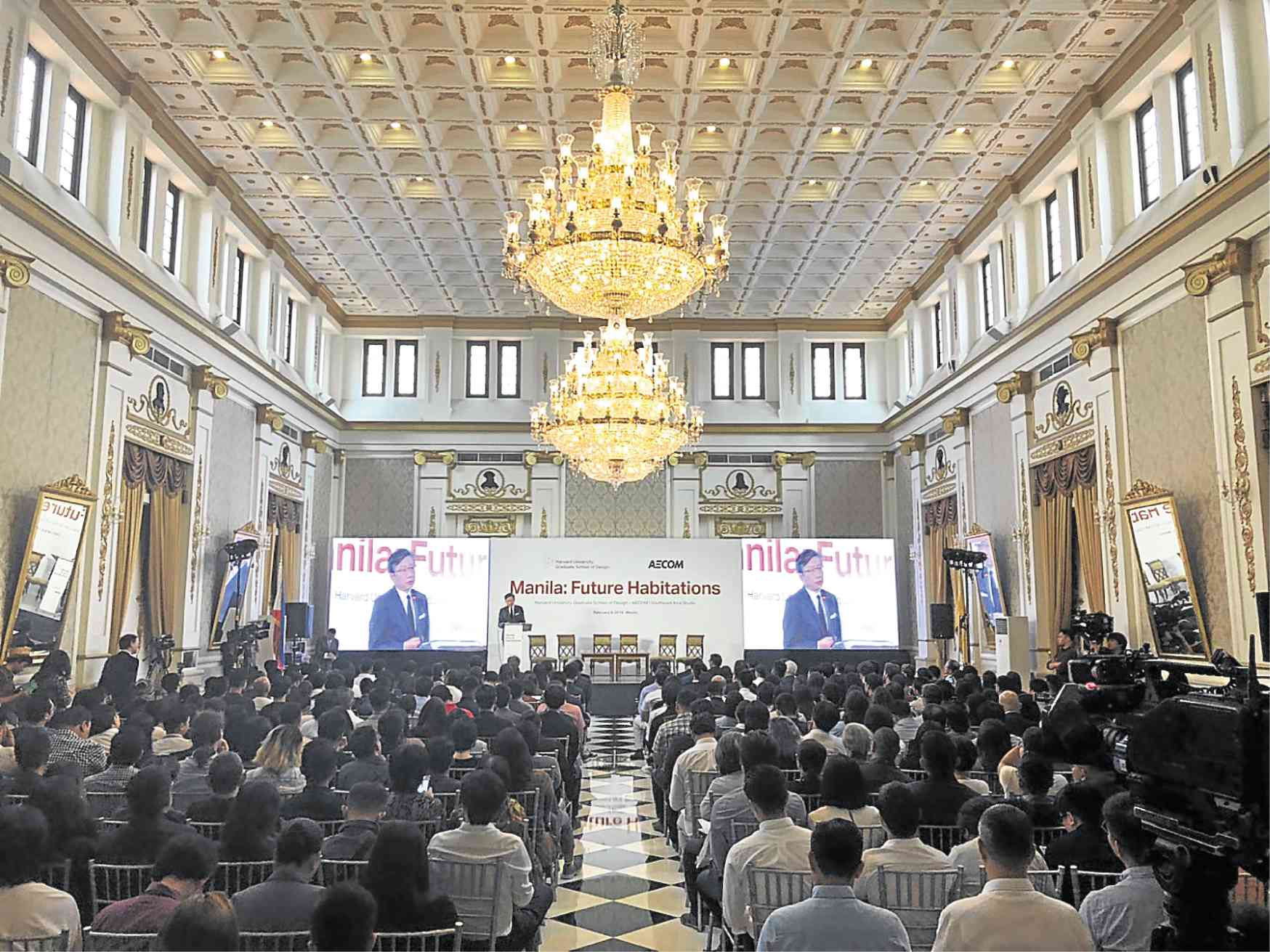
In February, the Harvard Graduate School of Design and AECOM launched a national conversation about the future of Manila and other Philippine cities.

The city’s first heavy-stock rail line is already on trial run, and the second line will open in just a few years. Soekarno-Hatta International Airport has been successfully expanded.

In Kuala Lumpur, Malaysia, investments have been made, from the expansive trains and sparkling stations of the Klang Valley Mass Rapid Transit, to the River of Life Project, a multi-year project to regenerate the city’s Klang and Gombok Rivers.

Not only has the project brought about the biological rebirth of the river, it has also reinvigorated Kuala Lumpur’s once blighted downtown.

The delivery partner for this project has been AECOM, and I encourage you to visit the project in downtown Kuala Kumpu.

There are many examples in our literal backyard that we could—and should—draw from to reimagine a new trajectory for the future growth of our cities.

The common denominators I see across all these great cities is the general sense of purpose and civic discipline that national and local political leaders, businesses and residents share.

Much of my career in Asia has been invested in Philippine urbanization. In the early 2000s, I was in the management of Metro Pacific, the original proponent for Bonifacio Global City (BGC).

A new way

I still clearly recall my beloved former boss, Manny Pangilinan (now better known to the nation as “MVP”), relating how, when he was “the original OFW” building First Pacific in Hong Kong, how much he wanted to deliver a new way of urban living to Manila.

That drive is what led his consortia then to invest billions of dollars in the acquisition of the original BGC site, and deploy massive infrastructure investments.

BGC was a project that required incredible discipline to get off the ground. In the years since they took over the project, Ayala Corporation and Ayala Land have taken it to glittering new heights.

It’s that kind of discipline that needs to be deployed today, but on a much larger scale and more complicated palette, if Manila is to be truly saved and improved for the future.

I propose a path for Metro Manila to move ahead.

First, decide that enough is enough! Filipinos need to decide that two-, three-, four-hour traffic jams, decrepit infrastructure, no public parks, blight and decay are completely unacceptable .

Today, when I drive across Metro Manila and see ambulances attempting to carve a path in bumper-to-bumper traffic, I pray for the passenger inside.

Second, we must agree that Metro Manila needs to become a city for all Filipinos. BGC, Rockwell, Alabang, Makati, Ortigas—Metro Manila will never progress if it continues to exist with fabulous pockets of extreme wealth and privilege, disconnected by tremendous swathes of urban blight and poverty.

In 1905, Daniel Burnham, the American designer and planner of Chicago, presented a plan for Manila that sought to create a grand and elegant capital city, with inner city trams, public parks and the attendant infrastructure to support an aspiring middle class. When creating that plan, he didn’t perceive Philippine society to be divided between the privileged and the “masses.”

Gentrification

Metro Manila can only be “saved” once we review the whole of the city. We must convince the leadership of the City of Manila, for example, that a more sustainable and value-creating future can only be created by urban regeneration, versus building isolated islands in Manila Bay.

The revitalization of the Pasig River, and gentrification of areas such as Baseco Compound or North Harbor, will in fact bring in higher earnings and leave a more lasting legacy.

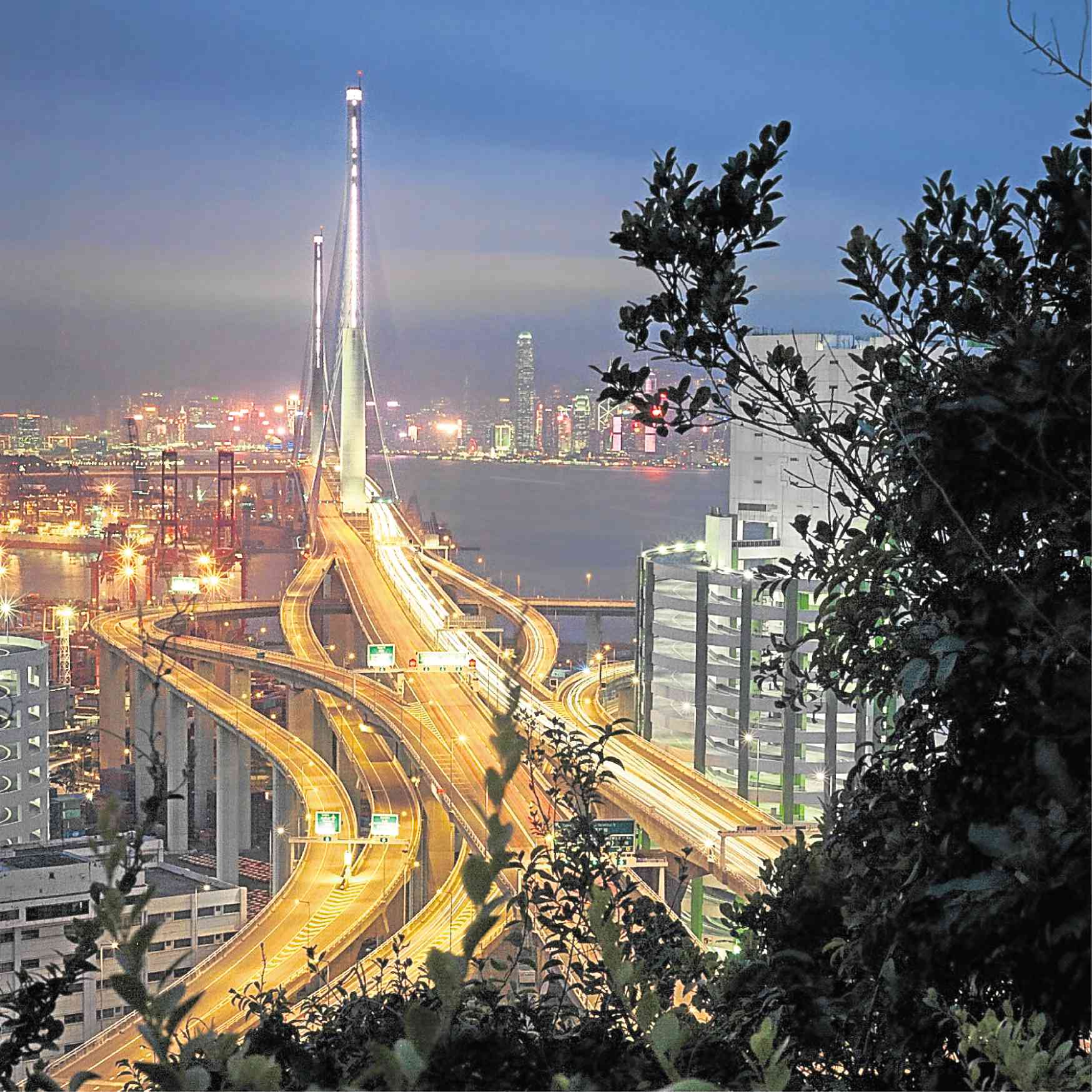
Hong Kong’s infrastructure is iconic and world-leading.

Third, to do this, government, business and civil society need to come together. In our charged local political environment, this may seem unrealistic. But if we don’t want to lose any more competitiveness—or lives—it’s absolutely necessary.

A national task force focused on fixing Metro Manila, examining the critical challenges our cities face, should be convened and empowered. And this task force should be given the resources to implement transformative solutions.

Fourth, infrastructure projects need to be approved faster and incentivized to be delivered on time. Recently, I was thrilled to traverse the portion of the completed connector road beyond Buendia in Makati. After about 20 seconds when the road ended, I was dismayed to find myself crawling again on South Super Highway.

In most of fast-growing emerging Asia, governments have established “coordinating ministries” that ensure red tape gets cut and projects are completed. It’s a crime that the Philippines is paying fees today for projects we have failed to complete, and we need to fix this.

Fifth, all of this must be addressed via a real, comprehensive and long-term plan. Metro Manila is 16 independent cities and one municipality, each with its own unique governance. It can be saved only if we recognize that this system does not work anymore.

All of Metro Manila needs to be considered as one urban fabric. The strengths of one city can help improve the weaknesses of another.

Sixth, we must recognize that we need outside help. Across Asia, national and local governments are turning to global companies, think tanks, universities and other institutions and crafting uniquely local fixes. It is a not an adverse commentary on our nationalism to say that we need to bring in international ideas and expertise.

As it turns out, just like the Hotdog song, “I keep coming back to Manila.” It is our home, and it needs urgent and comprehensive surgery if we are to save her, and prepare her for future generations.

On Sept. 27, visit “Manila: Future Habitations,” a presentation by the Harvard University Graduate School of Design (the world’s premier school for architecture, urban planning and landscape design) and AECOM on proposed future solutions Manila could consider.

A public forum will be held from 2-4:30 p.m. at the Jesuit Mission House, corner Arzobispo and Anda Streets, Intramuros, Manila.

After the forum, an exhibit of proposed ideas by the students of the Harvard Graduate School of Design will be held from 4:30-6 p.m. at the adjacent San Ignacio Church Exhibition space.

Both events are open to the public. For registration, visit the Facebook page Manila Studio 2018, or e-mail RafaelAudric.Imperial@aecom.com.

This program is brought to Metro Manila in conjunction with the Intramuros Administration and the Department of Tourism. –CONTRIBUTED

The author led the external communications practice for AECOM across Asia. All the opinions, reflections and recommendations are his own and in no way reflect those of the Harvard Graduate School of Design or AECOM.

Traditional crafts with a modern twist

ศาสตร์เกษตรดินปุ๋ย : ขอบคุณแหล่งข้อมูล : หนังสือพิมพ์ The Nation

http://www.nationmultimedia.com/detail/lifestyle/30355117

  • Mudmee silk from Khon Kaen gets a makeover from Kris Yensudjai
  • The Sukwan pendant light by Tavorn Tavornchotivong represents the fourth trend, “Surreal Hospitality”. /Nation photo
  • Sacict’s Amparwom Pichalai initiated the concept “Retelling the Detailing” which seeks to communicate past crafts from a different standpoint.

Traditional crafts with a modern twist

lifestyle September 25, 2018 01:00

By KUPLUTHAI PUNGKANON
THE NATION

2,134 Viewed

The support arts and crafts international centre of Thailand adopts new approaches to sustaining the Thai heritage.

In a world where digital is king and disruptors are changing life as we knew it, the importance of retaining the intricacies of traditional crafts while embracing the modern cannot be overstated. It is for this reason that the Support Arts and Crafts International Centre of Thailand (Sacict) under the patronage of Her Majesty Queen Sirikit has adopted as one of the trends in its strategy for 2019 a “Retelling the Detailing” concept in the making of new craft products that are both eye-catching and creative.

To get its point across, the centre recently hosted the “Sacict Craft Trend 2019 Open House” at its Craft Gallery in Ayutthaya where it unveiled the mechanisms for creating and presenting the richness of original work and traditional knowledge while increasing the perceived value of handicrafts.

“The story has to be told in a way that’s more appropriate to modern values. We believe that making innovative crafts a part of people’s lives is crucial to passing down the value of Thai arts and crafts to the new generations while simultaneously contributing to the strengths of the community in a sustainable way,” says Sacict’s chief executive says Amparwon Pichalai.

Millennials, she adds, already make up the most influential consumer group in the tourism and service industry. Ever eager to experience a different kind of lifestyle, this segment of society will continue to research what they are buying while comparing prices and quality, and pay attention to the origins from which product is sourced.

The “Tropical Dreams” trend brings nature into the home.

The “Retelling the Detailing” concept communicates contemporary designs in line with modern lifestyles. It represents the richness of original works in ways never seen before and preserves and transfers traditional knowledge to a new generation while enabling manufacturers, designers, local artisans to take pride and raise the value of the products bestowed upon them by ancestors.

“Retelling the Detailing” thus responds to Sacict’s initiative campaign, “Today’s Life Crafts – smart craft, craft studio, and craft society”. The other three trends for 2019 are “Tropical Dream”, “Righteous Crafts”, and “Surreal Hospitality”.

The trend book explains that storytelling provides an opportunity to communicate a good value that will lead a consumer to choose a specific product. And so, retelling the story provides an avenue to highlight new details about the manufacturing process including the material selection, designs, and a series of events associated with a specific product. It can be a story about how a brand was born or the history of a community craft passed on from generation to generation and which continues to flourish in even more attractive physical forms.

Part of the exhibition showcase in the gallery, “Grid Collection: Vastly Patterned” features a network of decorative diamond shapes with floral ornaments designed by Pornphun Sutthipraph. The delicate network of intersecting lines is redesigned and gets a contemporary look in Thai Benjarong (five-colour design) tableware. “Headphones” designed by Kris Putpim and Boonyarat Benjarong, stand out from other listening devices thanks to hoods concealing the drivers that are adorned with a criss-cross pattern symbolic of the Thai Benjarong traditional design.

“Patchwork” by Parsuree Wirachwiboolkit transforms the everpresent plastic chair into a seat everyone will love. 

With silk a manifestation of the Thai culture, designer Kris Yesudjai proudly presents the new work from the Mudmee silk Weavers Group of Baan Hua Fai, in Khon Kaen province. “Patchwork” is about transforming the common plastic chair into exciting new form, colour, and texture by upholstering it in multi-colour patchwork. Designed by Parsuree Wirachwiboolkit, it gives an ordinary object an entirely new meaning.

Thanavat Klongvishar and Prapanpong Suksawanf’s award-winning chair named “Where are you from?” is a great example of “Retailing the Detailing”. The pair, who won the Innovative Craft Award, used materials common in craft making such as rattan, wood, ceramics to build furniture that inspires and connects.

The second trend, “Tropical Dreams” refers to an attitude that has become entrenched in the mindsets of the new generation, with the “green is the new gold” code increasingly being adopted for home and workplace decor. Alternative materials are being pressed into service to mimic a natural environment and rising to the challenge is the “Bamboo Low Stool” designed by Plural Designs and the Bamboo Works Group of Baan Sri Pan Krua, Chiang Mai, which uses bamboo strands tightly wound up in a coil. The natural fibre stool is created out of four coils, three for the legs, and one for the seat.

Urbanites are also showing a preference for wood, with wooden lamps turning the room into a relaxing place and a wooden leaf chair adding to the impression of being part of nature.

The third trend known as “Righteous Crafts” is an attempt to show that what matters most consumers nowadays is the origin of products – the source of the raw materials. It is something both manufacturers and new-generation consumers are taking into consideration. In this way, they are able to repay or reward the community for their role in the development and preservation of handicrafts. The Bamboo Basket by Plural Designs has been working with the Bamboo weaving group from Baan Kai Noi, Mae Tang district, Chiang Mai province on this trend too, coming up with a raw material that not only has no environmental impact but which also generates more income for the locals. Also part of this trend are smart and casual outfits made from crafted cotton hand-dyed with organic substances that are nature-friendly.

Millennials enjoy luxury but are also keen on possessing an “experience”. The fourth trend ‘Surreal Hospitality’ caters to this new generation of travellers.

“Hotels these days often make their accommodations more exciting to entice Millennials to visit and experience new places rather than going to popular tourist destinations,” says Damrong Leevairoj, editor in chief of Room Magazine, who also curates the gallery.

“They often use handicrafts to add atmosphere. Crafts are works of art; they take time, manpower, and substantial amounts of money to make and this has turned them into items of luxury. If a hotel owner can work jointly with the artists and craftsmen in the community in creating outstanding pieces, they are sure to benefit and have interesting stories to tell.”

Highlight pieces include “Su-kwan” a suspended luminaire by Takorn Tavornchotivong that draws on the traditional welcome ceremony, Bai-sri-su-kwan, which is adorned with folded banana leaf, and a pendant wrapped in countless shimmering pieces of sheet metal folded and affixed to the enclosing boundary.

“Passion of Craft on the Wall” by designer Kritsanalak Pakkhakuntawi, features a papyrus floor mat that embodies the skill and knowledge of the traditional handicrafts found in all regions.

Healthcare: What the future holds in store

ศาสตร์เกษตรดินปุ๋ย : ขอบคุณแหล่งข้อมูล : หนังสือพิมพ์ The Nation

http://www.nationmultimedia.com/detail/lifestyle/30355121

  • Dr Jozica Habijanic
  • photo courtesy of Roche

Healthcare: What the future holds in store

lifestyle September 25, 2018 01:00

By DR JOZICA HABIJANIC
SPECIAL TO THE NATION

2,098 Viewed

With an ageing population in Asia and a scenario that foresees an increase in cancers, cardiovascular diseases and diabetes, shouldn’t we be looking at ‘clinical utopia’?

 The increasing prevalence of non-communicable diseases and an ageing population means healthcare resources will continue to struggle to meet the growing demand.

In the next decade, more Asians will suffer from chronic diseases such as cancers, cardiovascular diseases and diabetes, which will put strain on healthcare systems across Asia Pacific. It is expected that by 2040 there will be 350 million diabetics living in Asia, an increase of 110 million in about 20 years. By 2025 about 80 per cent of the deaths in the developed countries in Asia will be due to non-communicable diseases, while in emerging markets dual-disease dynamics will still be observed.

In parallel, we will see the number of elderly in Asia continue to rise. It is expected that the expenditure for elderly care in the region will increase fivefold by 2030 compared to that of 2015 . This again will put additional strain on healthcare systems and economies across Asia. In Thailand for instance, the growing number of elderly will undoubtedly lead to higher expenditure in health care, affecting the size of Thai economy by as much as 4.4 per cent in the next decade.

And with the middle-class continuing to grow, by 2030, Asia could represent two thirds of the global middle class population, creating an even greater demand for quality healthcare .

Meeting this demand however, will prove to be a challenge. The next 10 years will see a shortfall of nearly 18 million healthcare professionals in Asia Pacific. This will be exacerbated by a lack of efficient management in public health, insufficient infrastructure and restricted healthcare funding, especially in emerging markets. The gap between demand and supply is expected to increase in the coming years.

To address this challenge, healthcare providers and the industry as a whole will have to transform business models by using innovative technologies to make healthcare provision more efficient while also improving access. To this end, many countries have already embarked on Smart Health initiatives in various forms.

Many of these initiatives aim to move healthcare services for chronic disease management from hospitals to the community, closer to the patient. This will not only decrease overcrowding in hospitals, but make healthcare more affordable, efficient and patient-oriented. This is being enabled by innovation in digital technologies and platforms. A widely used platform is mHealth (Mobile Health), which allows doctors to diagnose patients through the use of smartphones. It is expected that 40 per cent of the doctor-patient consultations in the future will move from face to face to digital mHealth. This also includes remote diagnostics.

Another exciting trend in healthcare provision is Internet Hospitals, which are taking centre stage in the US and China. In this model, the majority of healthcare delivery is provided by digital means, except in the case of surgery or emergency cases where patients will still need to physically see medical professionals in a traditional setting. This is a rapidly evolving trend across Asia Pacific with South Korea and Australia planning similar models.

While many of these models are already being implemented, the rapidly evolving healthcare environment presents both challenges and opportunities. To understand this in greater detail, Roche Diagnostics Asia Pacific recently conducted an extensive study on the future of healthcare in Asia Pacific focusing especially on in vitro diagnostics (IVD).

The study has been conducted through collaboration with numerous stakeholders within and outside healthcare industry and across various Asian markets. The aim was to understand what the ideal healthcare environment – where every individual has access to high quality, affordable healthcare – would look like. The study also delved into what would constitute the patient journey in this “clinical utopia”.

In this “clinical utopia”, we will know much more about a baby through non-invasive foetal testing. By the time baby is born, its baseline healthcare profile will already be established. Before or at birth, the baby will have an embedded sensor. This device will monitor various health parameters in real-time which will be uploaded onto a personalised, highly secure cloud. The person will have control and ownership of his/her profile. Based on the information collected, this person will obtain real-time advice provided by artificial intelligence on how to manage his or her health and lifestyle in order to keep healthy.

In case of sickness, a person will get an alert with crucial information to manage the illness and recommendations from their healthcare providers. What will be truly game-changing is that an individual’s personal intelligence cloud could also feed into a larger population gathering database. This is where the public sector will access information.

In case of serious illness, the person will be sent to a hospital, which will be equipped with the latest technologies and robots and where care will be provided on-the-spot and efficiently. In the clinical utopia environment, a majority of the diagnosis will be done through sensors and people will be kept out of healthcare system thanks to an efficient and preventive healthcare model. We will see a marked shift from the reactive, episodic care we receive today. As a result, there will be a significant decrease in healthcare costs.

Ultimately, our ability to effectively harness technology will determine the future of healthcare. Patients today want easier access to care and demand better service, and this trend is here to stay. With this, patient centricity has become, and will continue to be, a focal point for innovation and healthcare delivery, now and well into the future.

Dr Jozica Habijanic is Country Manager at Roche Diagnostics Philippines and led the study in her former role as Head of Strategic Development at Roche Diagnostics Asia Pacific.