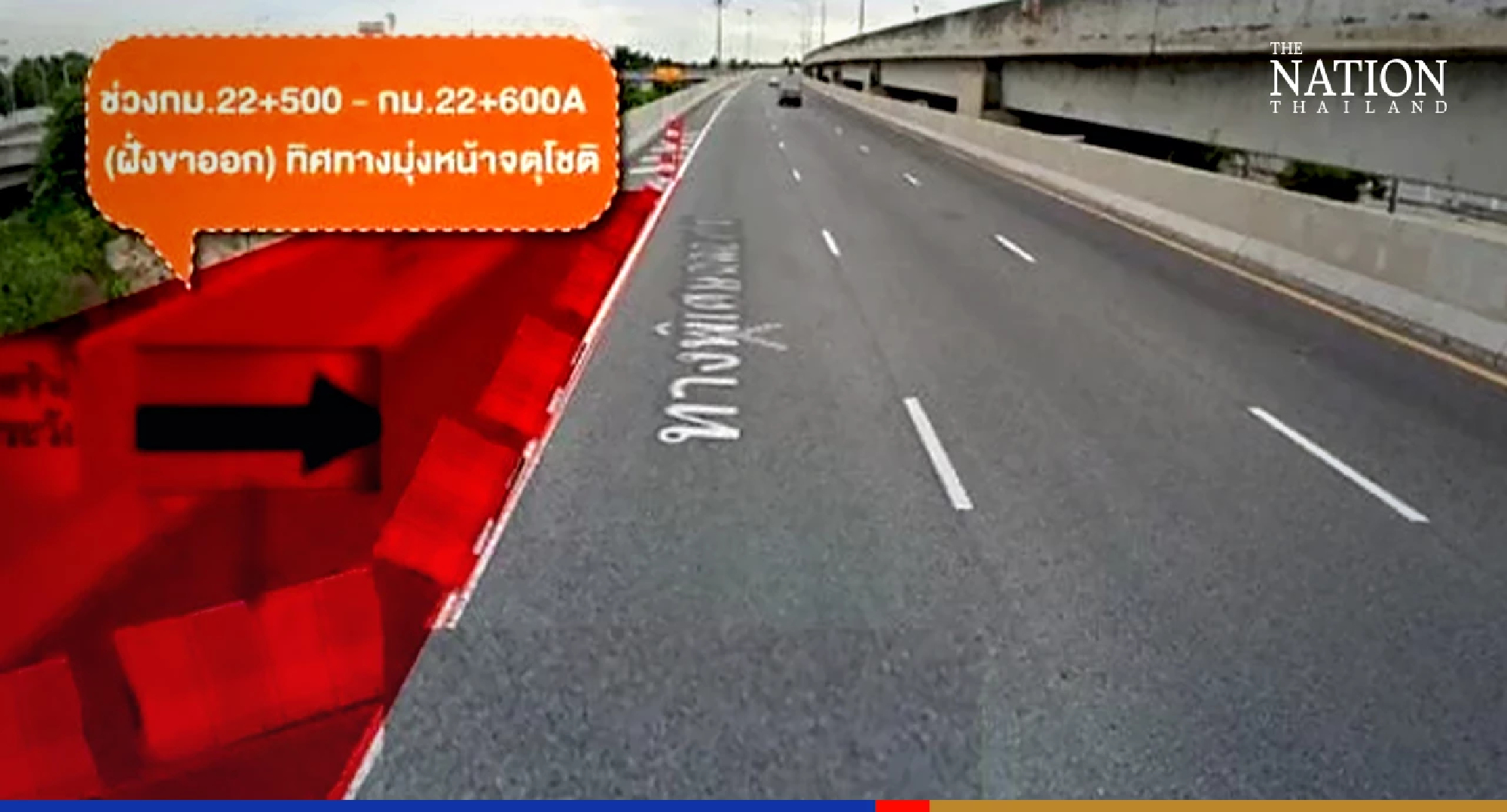
The left shoulder of the Chalong Rat Expressway from KM22+500 to KM22+600A (outbound) will be closed for maintenance between 10am to 3pm every day until October 23.
The Expressway Authority of Thailand (EXAT) announced on Sunday that the closure is to fix the expressway’s concrete barrier and install a traffic sign gantry at the Sukhapiban 5-4 toll booth.
EXAT said it has deployed warning signs and traffic sirens to notify motorists of the construction work ahead and has urged all expressway users to strictly obey traffic signs for safety.
The work has been contracted to Best Work (Thailand) Co Ltd. The 28.2-kilometre Chalong Rat Expressway runs from Ramindra Road to Chaloem Maha Nakhon Expressway and has 14 toll booths.
The Public Health Ministry reported on Monday (August 15) that over the past 24 hours, 1,663 Covid-19 patients have been admitted to hospitals.
The death toll has risen by 30, while 2,335 patients have recovered and discharged from hospitals.
The number of cumulative cases in the country since January 1, 2022, stands at 2,398,653 with 10,160 deaths.
The country’s total caseload from Covid-19 stands at 4,622,088 – 4,569,974 of whom have recovered, 20,256 are still in hospitals and 31,858 have died.
Separately, another 1,819 people were given their first Covid-19 shot in the last 24 hours, 2,379 their second shot and 17,670 a booster, bringing the total number of Covid-19 vaccine doses administered nationwide to 142,201,901.
According to Worldometer, confirmed cases globally had risen to 595.34 million on Monday, 568.73 million of whom have recovered, 20.16 million are active cases (45,590 in severe condition) and 6.45 million have died.
Thailand ranks 28th in the global list of most cases, which is topped by the US with 94.68 million, followed by India with 44.26 million, France with 34.22 million, Brazil with 34.17 million and Germany with 31.53 million.
The Centre for Alcohol Studies (CAS) on Sunday warned against extending opening times for pubs and bars to 4am in tourism provinces, citing statistics from other countries.
Tourism Minister Phiphat Ratchakitprakarn announced earlier that he will ask the Centre for Covid-19 Situation Administration to allow tourist zones to extend the drinking deadline from 2am to 4am. Phiphat argued that 4am closing would suit foreign tourists, who start drinking late. He also noted that if pub hours were not extended, tourists would simply buy alcohol to drink elsewhere. He wants extensions to be approved for Bangkok, Pattaya, Krabi, Phuket, Hua Hin, Samui and Chiang Mai starting from October.
Opposing the move, CAS deputy manager Surasak Chaiyasong said time zones for alcohol sales are approved by the World Health Organisation as a way of reducing problems related to drinking.
Surasak, an assistant professor of pharmacy at Mahasarkham University, said banning alcohol sales late at night and on certain public holidays helped to prevent problems such as physical assault, drink-driving, road accidents and other drink-related crimes.
Citing statistics from other countries, he said restricting late-night alcohol sales in Russia reduced people’s frequency of drinking while similar limits on buying alcohol in Switzerland and Germany had reduced the number of people admitted to hospital for drink-related issues. Meanwhile restrictions on alcohol sales in Lithuania had cut the number of road accidents and injuries.
In contrast, allowing late-night drinking had triggered a rise in physical assaults, injuries, drink-driving and other destructive behaviour, he said.
Surasak cited statistics from Australia showing that extending bar hours had led to increased drinking and road accidents. Longer sale hours in Iceland also led to a rise in emergency-ward patients, injuries, quarrels, physical assaults and drink-driving.
He added that Norway saw a 16 per cent rise in physical assaults after extending alcohol sales by just one hour.
“From the academic data and experiences of several countries, it is clear that restricting the days and hours in which alcohol can be sold is an effective measure for preventing and reducing problems related to drinking,” Surasak said.
“We disagree with the extension of bar hours to 4am,” he added.
Cheap loans being offered by the Paotang app and Government Savings Bank were among the top 10 fake news items last week, according to the Digital Economy and Society Ministry (DESM).
The ministry verified 358 alerts about fake news and found 166 issues that needed to be investigated, said DESM spokeswoman Noppawan Huajaiman on Sunday.
Most of the fake information detected concerned government policies, she added.
She said the 10 fake news items that captured most public attention from August 5 to 11 were:
– Heart massage can reduce chest pain, boost blood circulation and restore normal heartbeat.
– The Paotang app offers loans of 100,000 baht via ATMs.
– About 600 public health volunteers are dying each month after voluntarily testing Covid-19 vaccines.
– China is releasing water from Mekong dams, causing severe flooding in Thailand and Laos this month and next month.
– The GSB is providing collateral-free soft loans of between 5,000 and 500,000 baht via the Line app.
– The Mymo loans Facebook page belongs to the GSB.
– The Facebook page Bank for Agriculture and Agricultural Cooperatives True Friend of Investors belongs to the BAAC.
– The Land Transport Department is issuing driving licences via Facebook without the need for a driving test or exam.
– Drinking a juice made from Asiatic pennywort and other herbs can cure brainstem cancer.
– Thailand and four other Asean countries will stop using dollars for international debts from November 1.
The Thai rescue team famed for helping rescue young footballers from a Chiang Rai cave in 2018 received more praise on Sunday – though this time their mission ended in tragedy.
Dramatic footage of a Hook 31 private rescue team member carrying a body out of a mountainous forest in Nakhon Ratchasima’s Wang Nam Khiao district drew praise from netizens.
Rescuer Montree Piwpong said the operation was launched after the victim’s son contacted the team at 8pm on Saturday to say his father had gone missing in Thap Lan National Park forest.
The rescue team searched the forest until 2am on Sunday before halting the mission due to the risk of attacks by wild animals.
Montree said the headman of Hua Khao Thong village then contacted the team on Sunday morning to say the son had found the body of his father in the forest.
The victim was named as Lueng Chodkasem, a 73-year-old villager who had gone to the forest to collect luk samor fruit to sell. His body was found beneath a fruit tree with a broken branch, prompting suspicion he died from a fall while picking fruit.
“The operation to retrieve the body was very difficult and took more than 30 minutes as large vehicles cannot enter the forest,” Montree said.
He said he wrapped the body with white cloth, placed it on his motorcycle and tied it to his back. Montree said his younger brother Apichart Piwpong helped him carry the corpse out of the forest. The body was sent to Wang Nam Khiao Hospital for an autopsy.
Most Thais are worried about monkeypox while fewer than half think the government can handle the situation, according to a new survey.
The survey was carried out by Suan Dusit University among 1,095 respondents from around the country from August 5 to 11.
Asked if they were worried about monkeypox in Thailand:
– 54.34 per cent said fairly worried
– 14.16 per cent said very worried
– 27.21 per cent said not really worried
– 4.29 per cent said not worried at all.
Asked whether they thought the government could handle the monkeypox outbreak:
– 46.58 per cent said yes
– 29.22 per cent said no
– 24.20 per cent said they were uncertain.
Meanwhile, 66.76 per cent of respondents said they had some knowledge and understanding of the virus, 24.29 per cent said they had some understanding, 5.30 per cent said they had good understanding, and 3.65 per cent said they had no knowledge.
Asked whether they were more worried about Covid-19 or monkeypox, 41.19 per cent said they were equally worried about the two diseases, 29.32 per cent were more worried about monkeypox, 24.38 per cent were more worried about Covid-19, and 5.11 per cent said they were not worried about either.
Asked what the government should do to control monkeypox, 81.55 per cent said accurate and regular updates about the disease, 60.82 per cent wanted guidelines on protecting themselves, and 59.36 per cent said the government must disclose complete and true information about the spread. Respondents could give more than one answer to this question.
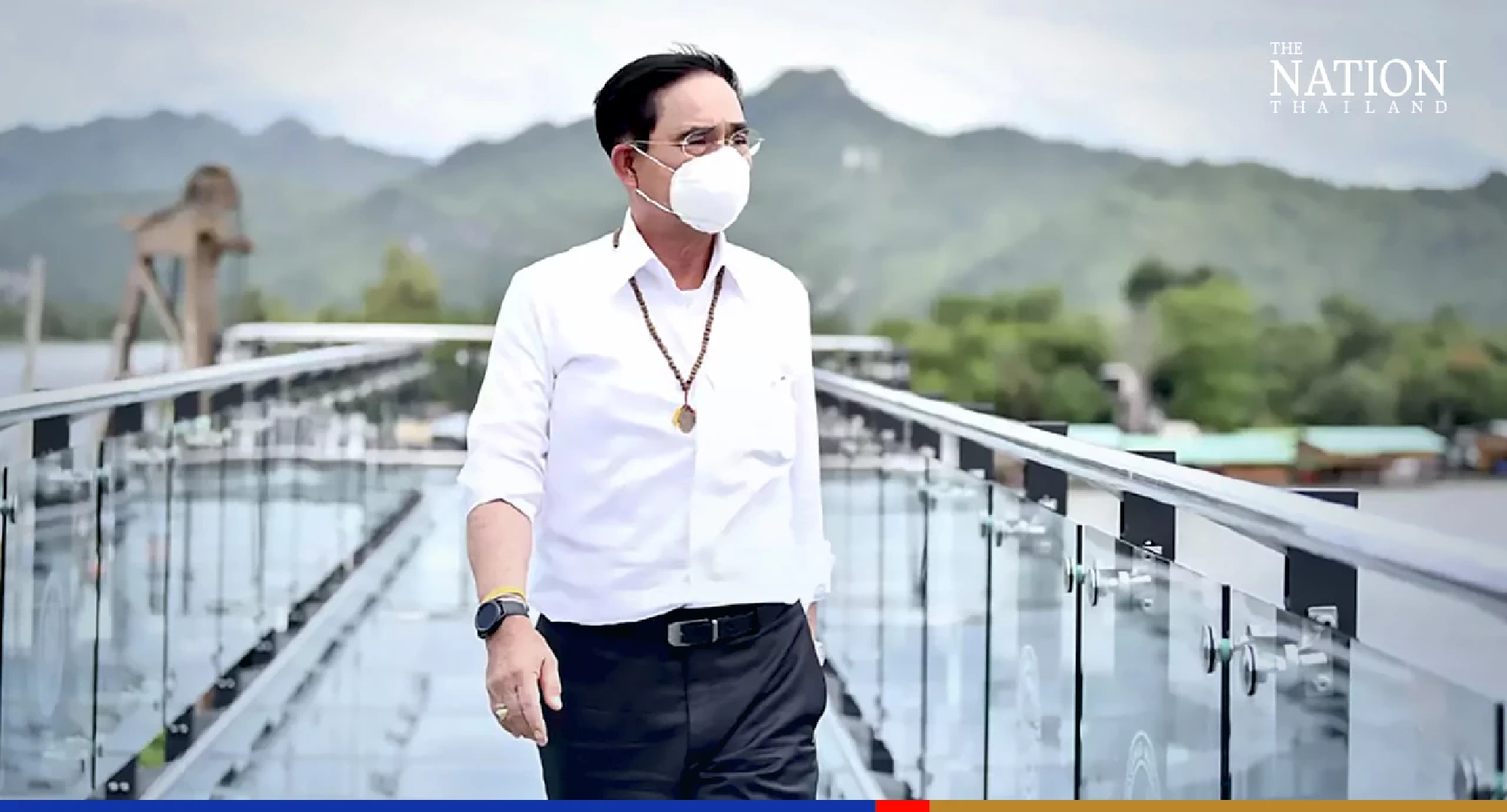
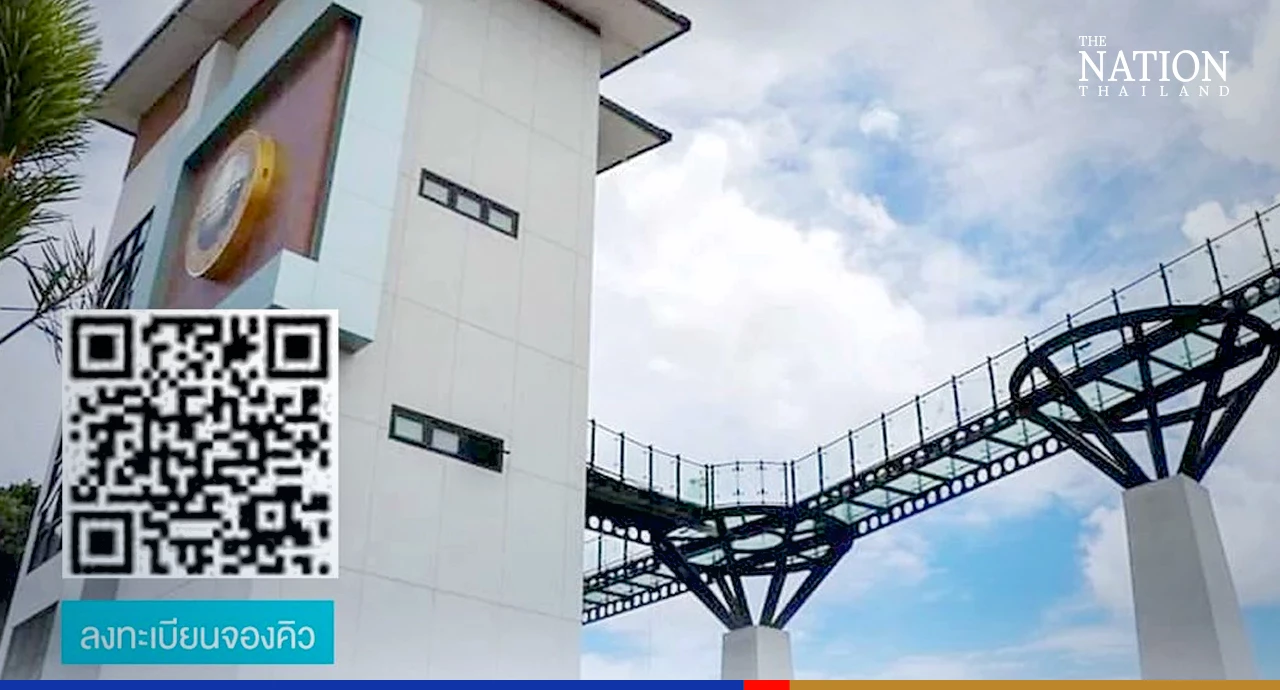
The first phase of the Kanchanaburi skywalk will be ready for public tests from Thursday now that it has been inspected by the prime minister.
Deputy government spokesperson Rachada Dhnadirek said on Sunday that a small number of people will be allowed to use the skywalk from August 18 to 26 before it is officially opened early next month.
She said Prime Minister Prayut Chan-o-cha tested the transparent glass walkway when he was in the western province on August 4.
The 12-metre-high, 150-metre-long skywalk has been built along the Kwae Yai River in Muang district and is close to the city pillar shrine.
Initially, 100 people who have made online reservations and 50 walk-ins will be allowed on the structure on weekdays. The number will be increased to 200 online reservations and 200 walk-ins after 2pm at the weekends.
Rachada said the PM has pledged full support for each province to develop its own tourist attraction because the government realises that tourism is a crucial factor for economic recovery and boosts income for provinces.
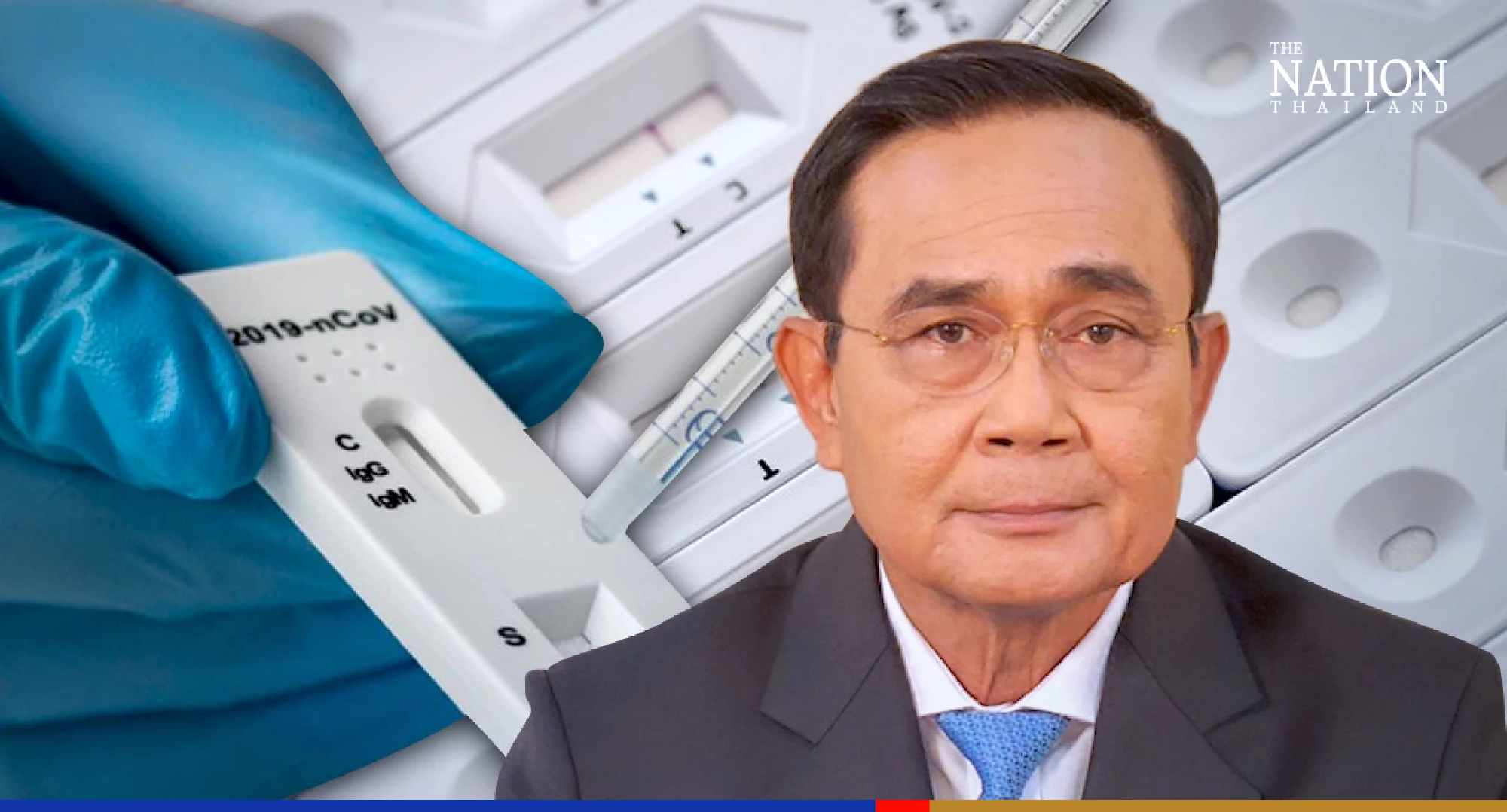
People returning from the long weekend holiday should take a rapid antigen test before going back to work, Prime Minister Prayut Chan-o-cha said on Sunday.
Government spokesman Thanakorn Wangboonkongchana said Prayut wanted people to continue wearing face masks and washing their hands after returning from the holiday, which started with Mother’s Day on Friday.
Prayut urged people who indulged in risky behaviours during the trips and those with suspicious symptoms to take ATK tests so they would not spread the virus in workplaces, the spokesman said.
The PM was concerned that the high infection rate in the first two weeks of August could lead to another rapid rise in cases so he wanted people to keep their guards up.
On Sunday, Thailand recorded 1,773 new cases of Covid-19 and 30 deaths during the previous 24 hours.
The government took note of a Senate committee’s warning that the Eastern Economic Corridor (EEC) could have long-term adverse impacts, before handing it over to the EEC Office.
Government deputy spokesperson Traisulee Trisaranakul said on Sunday that the Senate committee on tackling poverty and inequality presented its guidelines on preventing social, environmental and health impacts EEC projects may have on local communities.
She added that Prime Minister Prayut Chan-o-cha then forwarded this report to the Office of the EEC Policy Committee to consider. The report was also forwarded to the Industry, Interior, Social Development and Human Security and the Natural Resources and Environment Ministries as well as other relevant state agencies.
The spokesperson said Prayut had instructed the agencies to consider how the Senate panel’s proposals can be practically implemented.
The report presented possible negative impacts EEC developments can have, such as farmland can be taken away from farmers to expand urban areas, while factories can cause pollution and degradation of natural resources. The report also warned of inadequate water supply and poor management of industrial pollutants.
The committee proposed that the government use its Strategic Environmental Assessment system to proactively manage the potential negative impacts of EEC developments.
It also urged the EEC Policy Committee to promote eco-friendly industries for the sake of the environment and quality of life of local people.
To do this, it also encouraged the EEC Office to get local people involved in decision-making and evaluation of issues that may affect their way of living or livelihoods.
It said the EEC Office should urge businesses to help develop the potential of local people, so they too can have a hand in the development of their area.
Traisulee said the EEC Office recently met with relevant government agencies and they acknowledged the proposals. The EEC Office said many of the points suggested were already part of its plans and will be implemented in due course. As for those not in its plans, it has agreed to adopt and integrate them into its system gradually.
Meanwhile, Prayut is scheduled to chair a meeting with the EEC on Monday to follow up on the implementation of several investment projects and key social measures, Traisulee said.
The Monetary Policy Committee (MPC)’s decision to raise the key interest rate will not affect the government’s public debt, the deputy government spokesperson said on Sunday.
Rachada Dhnadirek made this remark after the MPC announced on Wednesday that it was raising the policy rate by 25 basis points to 0.75 per cent.
She said the Public Debt Management Office (PDMO) had come up with a plan to deal with the risk of rising government borrowing costs owing to the interest rate hike.
She said the government is not affected by the hike’s impact on the currency exchange because only 1.8 per cent of its debt is foreign.
“The government has already taken steps to prevent all risks related to the currency exchange rate,” she said.
Rachada added that the government will issue long-term bonds in the 2023 fiscal year. The volume of long-term bonds will rise from 45 per cent in fiscal 2022 to 48 per cent in fiscal 2023, she explained.
Also, she said, the volume of treasury bills and short-term borrowing will drop from 18 per cent to 14 per cent.
Rachada said the ratio of public debt to gross domestic product (GDP) at the end of June stood at 61.06 per cent as per the PDMO.
“PDMO expects the public debt to GDP ratio to stand at 61.3 per cent by the end of fiscal 2022 as the value of GDP has risen, while the government has revised all public debt management plans,” she said.
She added that government banks have been asked to maintain their current loan interest rates for as long as possible and launch measures to take care of debtors who are still suffering from the fallout of the pandemic.






 Rachada said the PM has pledged full support for each province to develop its own tourist attraction because the government realises that tourism is a crucial factor for economic recovery and boosts income for provinces.