Songkran’s fruity flavours

ศาสตร์เกษตรดินปุ๋ย : ขอบคุณแหล่งข้อมูล : หนังสือพิมพ์ The Nation

http://www.nationmultimedia.com/detail/thailand/30367061

Songkran’s fruity flavours

Thailand April 05, 2019 01:00

By THE NATION

2,215 Viewed

Travellers flying with Thai Smile between April 13 and 17 will be welcomed on board with two special fusion desserts created by Audrey Café.

“Thai Smile is committed to delivering excellence services beyond customer’s expectations as always. We provide inflight meals and beverages to all passengers for free on all flights and during festivals offer a special dish that symbolises the occasion,” said Nednapang Teeravas, chief customer service officer of Thai Smile Airways.


The Songkran treats are Mango Sago Panna Cotta that gets its crunch from pearl tapioca crumbled with young coconut meat and topped with mango. Marian Plum Panna Cotta adds a sweet and sour taste thanks to the slightly sour plum sauce.

“Audrey Cafe is delight to create these two special dishes with local seasonal fruits,” said Janista Charoonsmith, chief executive officer of Audrey Group.

“Panna cotta is our best seller. We’ve crafted two new desserts to cool passengers throughout the Songkran festival.”

The desserts are available on both domestic and international routes (except WE011, WE051, WE177, WE419 / 420, WE426 and WE609).

For flight information, go to http://www.ThaiSmileAir.com.

An elephantine task

ศาสตร์เกษตรดินปุ๋ย : ขอบคุณแหล่งข้อมูล : หนังสือพิมพ์ The Nation

http://www.nationmultimedia.com/detail/thailand/30366804

  • Visitors join a Walking with Giants tour.
  • Elephant masters from Surin’s Ban Ta Klang elephant village perform a traditional ritual to celebrate the Nation Elephant Day.
  • Animal osteopath Tony Nevin teaches visitors how to massage the elephants.

An elephantine task

big read March 30, 2019 01:00

By Pattarawadee Saengmanee
The Nation Weekend

A foundation dedicated to helping pachyderms and their mahouts holds and educational open day

SITTING ON a border of Thailand, Laos and Myanmar, the Golden Triangle Asian Elephant Foundation (GTAEF) in Chiang Rai recently opened its camp to celebrate the National Thai Elephant Day and give local and foreign visitors a chance to experience several educational activities about elephants and mahouts.

Set up in 2006 by the five-star Anantara Hotels chain, the foundation aims to solve the problem of elephants coming to city streets and generally improve elephant welfare in Thailand. Today, all elephants in its camp are rented from different villages to conduct the exclusive mahout and trekking programmes for the guests staying at Anantara Golden Triangle Elephant Camp and Resort and Four Seasons Tented Camp Golden Triangle.

 The Elephant Buffet is stacked high with fresh fruits.

“Anantara took over this property with its elephant camp back in 2002. We recognised the potential for tourism in the Golden Triangle and wanted to do more with the land. That gave birth to the idea of setting up the foundation and inviting mahouts to work with us rather than taking the elephants to towns to walk on the streets,” says John Roberts, director of Elephants and Conservation Efforts of Anantara.

“In those days, tourism in this part of the world was still relatively small and the mahouts had no other ways of making money.”

But despite the good intentions, the foundation hasn’t always had it easy. Last year, Anantara Hotels was put in the hot seat after the People for the Ethical Treatment of Animals (Peta) released worrying video footage showing mahouts using bullhooks to beat and jab elephants during the polo matches, resulting in all the big names drawing back their sponsorship.

Anantara took quick action and launched the inaugural King’s Cup Elephant Boat Race and River Festival to replace its annual polo match. The charity event is taking place this weekend, joined by veteran Thai Navy paddlers and international teams from China and the Philippines.

“To improve the situation, we provide a positive and targetted training programme that can help the villagers teach their elephants without using bullhooks or hitting them,” Roberts explains.

“All mahouts learn the basics for controlling an elephant from their parents. It’s like learning to drive with our parents. It might not be the best way but this is tradition and the techniques have been passed on from generation to generation for 4,000 years. We don’t want to touch their heritage. We just come up with a different way that can help them do better.”

The GTAEF camp in the luxury Anantara Golden Triangle Elephant Camp and Resort occupies 2,000 square metres as is home to 25 rescued elephants and a small village of mahouts and their families. Many of elephants here came from the streets but others used to work for illegal logging camps or elephant shows. The camp pays Bt25,000 a month to provide mahouts with an guaranteed income and also supports their spouses in their silk weaving group.

For the recent celebration, the lush jungle was transformed into a ceremonial ground, where a group of elephant spirit men from Surin’s Ban Ta Klang Elephant Village performed a Kui traditional ritual to pay respect to the guardian spirits.

A long table was set up in the middle of the lush grounds packed with offerings and nang pa kam, a sacred 100-year-old robe made from buffalo leather that has been used to capture a wild elephant in the past.

“Being an elephant spirit man is local wisdom and passed down from father to son. We pray in the Kui language and blow sang (a buffalo horn), which is traditionally used to capture wild elephants. The offerings include a chicken chin, a pig head, fruits and bai si,” explains Uncle Chalerm Salangam, 70.

“Today, our village has 300 elephants and we’ve trained a new generation of elephant spirit men to maintain our traditions.”

The elephants themselves were more excited about the buffet, eagerly tucking into watermelons, coconuts, bananas, sweet corn, pumpkins and pineapples.

Elephant masters from Surin’s Ban Ta Klang elephant village perform a traditional ritual to celebrate the Nation Elephant Day. 

A short walk from the ceremonial venue, development manager Laddawan Yonthantham was acting as a tour guide to give visitors an introduction to sustainable elephant welfare management.

“About 30 years ago, the government enacted legislation to ban logging in the jungle and mahouts became unemployed. To generate income, they shifted to putting on elephant shows at tourist attractions or took their elephants to the city essentially to beg. Raising elephants is expensive as they need 200 to 300 kilograms of pineapples, watermelons and sugar cane, depending on their weight – and the average weight of an elephant is 2,500 kilograms,” Laddawan says.

“Our camp offers natural space near the river so that the elephants can exercise and eat organic fruits from the local plantations. Initially, we purchased some overworked and street elephants from mahouts but they bought new elephants to sell to us again. So, we rented the elephants and hired the mahouts to conduct eco-friendly activities for our all-inclusive hotel packages.

“Mahouts can take advantage of Anantara’s staff welfare programme, which includes a residence, uniforms and three meals a day. Based on sustainable living, it aims to keep them from falling back into the same cycle.”

Hotel guests can register for trekking and riding an elephant or learn the basics of being a mahout while the elephants get additional exercise. As we walk around the property, we see domesticated giant Bo and her friends jumping into the Ruak river and having fun in the clear water as they take their daily bath.

“We limit work to three-and-a-half hours and even have a customised exercise routine for elephants so that they can stay healthy. They love jumping into a mud pond to cool down,” says Laddawan.

Mahout Wattana Salangam and his giant friend Bo have worked with the elephant camp for 14 years. Before that they were in Bangkok, roaming the streets to earn money.

“I was in debt so I took Bo to Bangkok. We would walk around the streets and would collect about Bt2,500 a day. We made ourselves a camp on vacant land to save money. Then we moved to the elephant foundation in Phetchaburi and had to take care of many elephants, most of them belonging to other people. It was dangerous because most elephants only obey their owners,” Wattana says.

“Here, I started on a salary of Bt18,000 and now receive up to Bt25,000, plus extra income from guest activities. I’m happy to work here. My elephant has enough food no matter if I have work or not.”

An elephant splashes dirt to chase off bugs on his back.

“Our foundation doesn’t support mahouts to breed their elephants. Today, there are more than 4,200 house elephants and not all of them live in good conditions. We can’t release them to the forest because they have no skills to survive. Normally, elephants live in a group and don’t accept strangers,” Laddawan says.

An in-house veterinarian team is in charge at the positive reinforcement target training station where elephants learn to perform certain tasks such as raising a foot in a purely positive manner. A small branch is used but no punishments are meted out. Instead the elephants quickly learn about rewards.

“Our camp set up this training in cooperation with Dr Gerardo Martinez, a world renowned large animal trainer from the Africam Safari Park in Puebla, Mexico. This target training can be used to train the elephant in the event that they need veterinary treatment. It can help feel free and release stress for both elephant and vet,” says Laddawan.

The camp also conducts Elephant Cognition (problem solving) Research. Here, visitors can see the elephants using their trunks to pick up tokens of different textures and work as a team.

Next door was the space for Elephant Osteopathy Demonstra-tions undertaken in collaboration with veteran British animal osteopath Tony Nevin. Adapted from techniques used with humans, the massage treatment is designed to relieve muscle tension and pain.

“We focus on the elephant’s spine and balance while walking. The massage starts from the neck and goes from rib to hip. This treatment can be used for other animals too, like giraffes, horses and ostriches,” Nevin says.

The Walking with Giants activity takes place in the early morning and takes guests to explore a trekking trail around the camp and learn about daily life of elephants. For example, elephants splash dirt over their back to chase bugs and black dung means they are eating too much dirt probably have flatulence.

Animal osteopath Tony Nevin teaches visitors how to massage the elephants.

“For the next step, we would like to help the elephants in several trekking camps have access to better welfare. We will also continue to train mahouts across Southeast Asia in positive reinforcement and elephant friendly training and handling techniques,” director Roberts says.

“We have teamed up with US Agency for International Development (USAID) to teach travellers not to buy ivory. We’re also working with Srinakharinwirot University, which is going to send students to the area where villagers are facing problems with elephants coming out from the forest. We will try to identify what is the best practice to keep both people and elephants happy when they come out from the national park.


PACHYDERM PARADISE

>> The Golden Triangle Asian Elephant Foundation is located in Anantara Golden Triangle Elephant Camp and Resort, Chiang Rai.

>> Find out details at http://www.HelpingElephants.org.

Splendid in Si Sa Ket

ศาสตร์เกษตรดินปุ๋ย : ขอบคุณแหล่งข้อมูล : หนังสือพิมพ์ The Nation

http://www.nationmultimedia.com/detail/thailand/30366337

  • The spectacular architecture of Sa Kamphaeng Yai Temple
  • Bueng Ban Bok is a new attraction in Sisaket.
  • Pha Mo I Daeng is the best viewpoint from which to admire the sunrise.
  • Visitors to Ban Takuan are welcomed with a the Bai Sri Su Kwan ceremony.
  • Don Tuan Sanctuary showcases the ancient arrest warrant in Khmer language carved on the pillars
  • Pha Mo I Daeng boasts three ancient basreliefs.

Splendid in Si Sa Ket

Thailand March 23, 2019 01:00

By Pattarawadee Saengmanee
The Nation Weekend

With its Kmer ruins, breathtaking scenery and welcoming residents, this lower Isaan province is perfect for a weekend break

TEN YEARS AGO, the Preah Vihear dispute between Thailand and Cambodia put paid to Si Sa Ket’s tourism hopes. Now, though, it’s back on the map, offering visitors a wide range of interesting historical sites and wildlife sanctuaries plus eco-cultural activities for people of all ages to enjoy.

The province is home to four ethic groups –Kui, Lao, Khmer and Yer – as well as 300-rai of rice fields and 500,000-rai of plantations of rubber trees, durian, mango, sweet corn, shallot and garlic.

Pha Mo I Daeng is the best viewpoint from which to admire the sunrise. 

“Si Sa Ket’s average income decreased significantly after the road to the controversial Preah Vihear Temple was closed in 2008 and this province was regarded as the home of Thailand’s poorest population who only survived by eating dirt,” says Governor Verasak Vichitsangsri.

“Now, we promote sustainable tourism to generate more income for the communities. Our residents are farmers and the ethnic groups co-exist happily, each happy to show off their own cultures. This is an asset for Si Sa Ket.”

Located a one-hour drive from Ubon Ratchathani Airport, Bueng Ban Bok in Non Khun district is a popular stop for visitors to admire a sea of pink lotus blooms and fields of sunflowers that stretch as far as the eye can see.

The swamp is linked by a striking 300-metre- long bamboo bridge with relaxing corners where visitors can lounge on a bamboo hammock and take in the cool breeze, a welcome relief from the 40 degrees Celsius the area reaches in the middle of the day.

At the end of the bridge is a small cafe serving Thai-style coffee and refreshing herbal drinks along with a shopping area selling handicrafts and local snacks.

Bueng Ban Bok is a new attraction in Si Sa Ket. 

“This swamp was originally used for agricultural purposes and we converted it into a new tourist attraction last year. Our village took part in the Nawatwithi One Tambon, One Product (Otop) Community Tourism project and spent Bt500,000 renovating the landscapes and building the bamboo bridge. This is the best viewpoint to see the pink lotuses that are in full bloom in December and January,” says village head Kingthawee Pokaew.

“We also plan to offer rafting to a nearby horse farm, a cycling route and a homestay service.”

For now, however, , the Northeastern province is covered in fragrant white cheesewood flowers known as lamduan, which welcome visitors to Somdet Phra Srinagarindra Park in downtown Si Sa Ket, the venue for the annual floral festival.

The festival, which runs for three days, features four markets, each representing one of the ethnic groups, cultural performances, a photography exhibition and an extravagant light and sound show telling the tale of the founding of Si Sa Ket, – Kurukaset as it was originally known – by King Jayavarman VII back in 1037.

A popular venue with local families is the Si Sa Ket Aquarium, the first in the lower Northeast, that’s home to more than 100 rare species of fish and creatures both from the river and ocean. It is divided into seven zones, where kids have fun learning about different aquatic ecosystems.

Its highlight in the 24-metre-long tunnel in the centre, where visitors can get up close and cosy with giant catfish, Siamese giant carp, albino striped catfishm royal knifefish and manta rays.

Visitors are greeted with a tempting feast of Isaan specialities.

The next day, we’re up long before the roosters start crowing to greet the morning and climb up to Pha Mo I Daeng, the best vantage point to admire the sunrise over the Khao Phra Vihan National Park. The temperature is lower than 20 degrees and the astonishing views of Dangrek mountain range, which forms the natural border between Thailand and Cambodia, take my breath away.

Facing east, this sandstone cliff boasts three 1,500-year-old bas reliefs. In the centre is a man with a sandalwood flower behind his ear, who is supposed to be the Giant of Hell’s Gate or a Khmer king who performed a ritual before the construction of Preah Vihear began.

A few minutes away from Pha Mo I Daeng are the ruins of Don Tuan Sanctuary built between the 10th and 11th century. A mixture of wood, laterite and brick, it has four sandstone pillars that are shaped to resemble an arched gate, with a rectangular sandstone base of an assembly hall and a pond on the southeast side of the complex.

In addition to the Khmer-style historical sites, Kantharalak district is home to Pan Koon Garden, which is promoted as a learning centre for mixed farming.

Set up in 1987 by Phatthasat Masakul and spread over 50 rai, it boasts some 500 volcanic durian trees, more than 2,000 mangoes of different species, mangosteen, rambutan and bananas as well as a rice field. Visitors pay just Bt30 to pick and eat the fresh fruit though the durian is excluded.

Phatthasat Masakul and his wife grow durians in the rich volcanic soil of Pan Koon Garden.

“For more than two decades, I have cultivated four types of durian– Mon Thong, Chanee, Kan Yao and Long Hin – using the volcanic soil rich in minerals and peculiar to Kantharalak, Singharn and Sirattana. My durian is less sweet and has a soft but crispy texture and doesn’t smell strong,” Phatthasat says.

The garden also offers 12 comfortable guestrooms as part of a homestay programme with a night’s stay priced at just Bt500 including breakfast and fruit picking. Guests are also invited to check out a variety of products including honey baked banana, dehydrated durian and banana cake, all of them delicious.

We arrive at Trakuan village in Sirattana district just in time for lunch and are greeted with a tempting feast of Isaan specialities. We enjoy kaeng kluay (coconut curry with unripe bananas), tom yum with chicken, spicy minced catfish salad, fried morning glory and fried crickets, while the villagers, both young and old, entertain us with traditional dance.

After the meal, a Brahmin and senior residents invite us to join a Bai Sri Su Kwan – a traditional welcoming ceremony to bring guests luck, good health and success. The offerings include coconut, khao tom mad (sticky rice with banana), boiled eggs, banana and marigolds, which symbolise purity, prosperity and abundance.

The villagers also take us around their homes, some of which are used for workshops in making herbal medicine, cultivating silkworms and preparing local desserts.

In the middle of the village, Yongyuth Mettaboon proudly reveal his integrated farm. He has a big mushroom farm and organic rice paddies and also raises pigs, ducks, chickens, fish and crickets.

“Focusing on sustainable living, I started an integrated farm in 2007 and use pig manure, sawdust, husk and microbes to produce organic fertiliser. I’ve planted Yang Na trees to absorb water and serve as an underground bank for my rice field.”

On the last day of our journey, we are taken to the historical ruins of Sa Kamphaeng Yai Temple in Uthumphon Phisai district. Built in the reign of King Jayavarman I, all structures were fashioned out of laterite and adorned with mural sculptures depicting Hindu deities and auspicious animals.

The sanctuary is home to five pagodas and the main one is in the middle of complex, taking inspiration from Mount Meru. A new viharn has been built alongside and houses the sacred 1,000-year-old Buddha in meditation posture on Naga’s tail created in reign of King Javarman VII after he converted from Hinduism to Buddhism.

The spectacular architecture of Sa Kamphaeng Yai Temple

We continue to the ancient Khmer village of Ban Mueng Luang in Huai Thap district. Famous for its black traditional blouses with elaborate embroidery locally known as suea saew, the Ban Mueng Luang Silk group was formed in 1992 and weave silk in the old Isaan motif of look kaew to earn more income.

“Saew means seam stitch and each ethnic group in Si Sa Ket has different patterns. These days, we draw our inspiration from nature to develop such creative designs as a bunch of roses, water clover, candlestick and latticework,” says Chaluay Chooseesattaya.

“We dye the silk with local plants and flowers. For example, we use coconut husk for pink, bastard teak for orange, myrobalan leaves for green and lac for red.”

We are shown how the fabric is dyed with ebony tree, mud and ming aralia that make its texture more durable and fragrant. The village also offers a tailor-made service that offers customers a choice of designs and colours.


ALL ROADS HEAD NORTHEAST

>> Si Sa Ket is an hour’s drive from Ubon Ratchathani Airport. Thai Smile, Air Asia, Nok Air and Thai Lion Air offer daily flights from Bangkok to Ubon Ratchathani.

>> Ban Trakuan village is Srirattana district. Book a sightseeing tour at (091) 834 1195.

>> Ban Mueng Luang village is in Huai Tap district. Call (085) 763 4261.
SilkAir to add another Singapore/Phuket flight on this popular route

ศาสตร์เกษตรดินปุ๋ย : ขอบคุณแหล่งข้อมูล : หนังสือพิมพ์ The Nation

http://www.nationmultimedia.com/detail/thailand/30365573

SilkAir to add another Singapore/Phuket flight on this popular route

Thailand March 11, 2019 13:25

By The Nation

2,184 Viewed

SilkAir prepares for the holiday season with the launch of a sixth daily service between Singapore and Phuket effective May 24.

SilkAir currently operates five flights per day on the popular SingaporePhuket route, and the new service will be operated by Boeing 737 aircraft, which feature both Business and Economy Class cabins.

Customers will receive a fullservice experience, including inflight meals, wireless inflight entertainment on SilkAir Studio, complimentary baggage allowance as well as through checkin in case travellers are connecting to or from another SilkAir or Singapore Airlines point via Singapore.

The additional flight –MI760 – will depart Singapore at 9.50am (Singapore time) and arrive at Phuket at 10.45am (Phuket time). The return flight will operate as MI759, departing Phuket at 11.35am  and arriving in Singapore at 1420hrs.

As the regional wing of Singapore Airlines, SilkAir extends the SIA Group’s network by seeding and developing new, exciting destinations in the AsiaPacific. The airline took to the skies in February 1989 as Tradewinds the Airline, before evolving into SilkAir in 1992.

In its early days, it catered to passengers holidaying in exotic destinations in the region, including Phuket and Tioman. As the carrier developed, regional business destinations such as Phnom Penh, Yangon and Kuala Lumpur were added. Today, the fullservice airline operates about 400 weekly flights to 49 destinations in 16 countries.

Check out the flights at http://www.SingaporeAir.com/silkair

Slow train to history

ศาสตร์เกษตรดินปุ๋ย : ขอบคุณแหล่งข้อมูล : หนังสือพิมพ์ The Nation

http://www.nationmultimedia.com/detail/thailand/30365454

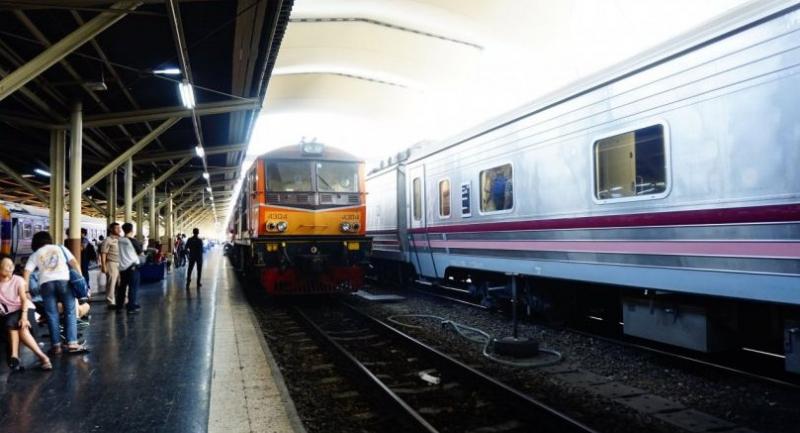
  • The 911 Special Train runs from Bangkok’s Hua Lamphong station to Hua Hin’s Suan Son Padipat Station on weekend, with a stop at Phetchaburi.
    The 911 Special Train runs from Bangkok’s Hua Lamphong station to Hua Hin’s Suan Son Padipat Station on weekend, with a stop at Phetchaburi.

Slow train to history

Thailand March 09, 2019 01:00

By Pattarawadee Saengmanee
The Nation Weekend

3,892 Viewed

A new eco-cultural tour takes day-trippers from Bangkok back in time to the unspoilt town of Phetchaburi

THERE’S SOMETHING very relaxing about travelling on a train. True, it takes a little longer, but anyone wanting to take a day trip from Bangkok to the coastal town of Phetchaburi this summer, will be rewarded by a relatively hassle-free journey with fabulous views of lush fields and a rare chance to observe the local life.

Famous for its unique culinary delights made from jaggery palm sugar, this southern province boasts tranquil pristine beaches, ancient temples, historical sites and old communities dating back to the glorious days of the Ayutthaya period.

The 911 Special Train runs from Bangkok’s Hua Lamphong station to Hua Hin’s Suan Son Padipat Station on weekend, with a stop at Phetchaburi. 

Available every weekend as well as on national holidays, the new eco-cultural tour programme “Chom View Rot Rang, Tiew Tang Rot Leng” (admiring a view from a train, travelling by tuk tuk) has been put together by the Tourism Authority of Thailand, the State Railway of Thailand and local residents and is part of the Amazing Thai-Teh campaign. The first 1,000 visitors can take advantage of a free tuk tuk service with knowledgeable driver guides to explore the provincial town.

Arriving at Hua Lamphong station early on a Saturday morning, I board the 911 Special Train for the three-hour journey on the Bangkok-Suan Son Pradipat route. The 911 is scheduled to depart at 6.30am and at first it seems that will run on time. But just a few minutes later, the 100 or passengers of whom I am one are told to disembark and watch helplessly as our train is towed away, apparently with a technical problem. We are left high and dry for the next hour, with no update on when or even if we will be leaving.

Wat Phra Pathom Chedi is a popular stopover for travellers. 

Our train tour eventually gets underway at 7.55am and I find myself relaxing in the air-conditioned second-class coach. It takes almost an hour and half to reach Nakhon Pathom station, where we are invited to disembark again, though this time to explore.

Located a short distance from the station, I walk through the morning market, where local vendors are offering street food and sweet delights. At the end of the street is Wat Phra Pathom Chedi, home to Thailand’s largest Lanka-style bell-shaped chedi built in 1853 to enshrine the Buddha’s relic.

Back at the station, the conductor rings the bell to indicate the train will soon be leaving. The vendors are unfazed though, continuing to serve snacks to the hungry tourists until the very last minute. An hour later, we pull into Phetchaburi station where more than 10 tuk tuks are waiting to take us on a sightseeing tour.

The magnificent European architecture of Phra Ramrajnivet Palace

A five-minute drive from the Phetchaburi station is Phra Ramrajnivet Palace, built in 1910 as the summer retreat for King Rama V.

Inspired by Kaiser Wilhelm’s castle in Germany, this luxury two-storey mansion originally named Wang Ban Puen is considered one of the masterpieces of German architect Karl Siegfried Dohring. It boasts a magnificent European design with high-ceilinged rooms and floors covered with Italian marble.

Occupying 349 rai, the construction was completed in 1916 in the reign of King Rama VI and in 1918 it opened to welcome royal guests. The ground floor has the Throne Hall and a dining room with yellow glazed tile walls overlooking the garden. German-style wrought iron embraces the doors and windows, which offer a view of a classic sculpture of Poseidon and the sea beyond.

Covered with green glazed tiles, a beautiful double spiral staircase takes visitors to the second floor, which is home to the queen’s chamber, a spacious study room and veranda where the royal family would appear to the public. The highlight is the King’s chamber with its oil paintings and an elegant bathroom with a vintage tub and water heater.

Wat Mahathat Worawihan has been recognised for its ancient murals and splendid stucco works. 

Not far from the summer palace is Wat Mahathat Worawihan, famous for splendid stucco works that showcase Phetchaburi’s first-class craftsmanship. Built in the Dvaravati period, this ancient temple houses the towering five-tiered, corn-cob shaped stupa in a mixture of traditional Thai and Khmer styles.

Based on Mahayana Buddhism beliefs, this stupa is constructed to resemble Mount Meru – the centre of the Buddhist universe – and contains relics of the Lord Buddha brought to Siam from India. The main hall boasts murals created by such Phetchaburi masters as Kru Infahsaeng depicting the way of life in bygone days.

Thailand’s past political conflicts are remembered elsewhere in the temple. A stucco sculpture of MR Kukrit Pramoj, who served as a prime minister between 1975 and 1976, and holding the base of the sacred Ayutthaya-style Luang Poh U-thong Buddha on his shoulders, stands proudly in the small hall. The sermon hall, meanwhile, has elaborate pediments adorned with stucco works that portray university students fighting with armed soldiers on October 14, 1973 and May 17, 1992.

Shophouses on the banks of Phetchaburi River are adorned with street art. 

Standing on the banks of Phetchaburi River, the old market has long been a popular dining and shopping venue for local residents and tourists. Colourful street art covers the walls of the shophouses lining the narrow alleys, illustrating everything from daily life to a litter of cute kittens and a map that shows places to eat and visit.

The old market offers a variety of local delicacies and desserts prepared to traditional recipes.

I find refuge from the summer heat in Mae Orn, a 60-year-old restaurant offering khao chae. Said to be the best in town, it serves the parboiled rice immersed in ice-cold jasmine-scented water with shrimp paste balls and glazed Chinese turnips. Next door is Cheng Yi Seng, famous for khanom pia, the Chinese pastry filled with mashed taro, gourd and salted egg yolk.

Wat Yai Suwannaram is home to a beautiful red teak pavilion.

After lunch, we climb back into the tuk tuks and head to Wat Yai Suwannaram. Built in the late Ayutthaya period, its main hall boasts 300-year-old murals portraying the Jakata tales. Another highlight is a red teak pavilion that was once part of the Grand Palace in the Ayutthaya Kingdom. It’s furnished with refined woodwork and home to an ancient gold throne that was used to enshrine part of the ashes of the late King Bhumibol Adulyadej in the royal cremation ceremony.

Wat Phra Phut Saiyat enshrines a 400-year-old reclining Buddha. 

The last stop is Wat Phra Phut Saiyat located to the southeast of Khao Wang. Left abandoned for several decades, it was restored on the orders of King Rama IV and a main hall was built to shelter a 43-metre-high statue of the holy 400-year-old reclining Buddha.

The day trip is almost over at 5, I board another train 912 to return home to Bangkok hoping that we won’t be delayed and that my window seat will offer me the chance to watch a beautiful sunset.

IF YOU GO

Tickets are Bt120 for a third-class seat and Bt240 for second-class. Make a reservation by calling 1690 (the State Railway of Thailand).

Find out more by calling Tourism Authority of Thailand, Phetchaburi Office at (032) 471 005-6.

Destination of deities

ศาสตร์เกษตรดินปุ๋ย : ขอบคุณแหล่งข้อมูล : หนังสือพิมพ์ The Nation

http://www.nationmultimedia.com/detail/thailand/30364600

  • Young pilgrims show their spirit in the sacred fire walking ceremony./Photo by Khob Jai Thailand page
    Young pilgrims show their spirit in the sacred fire walking ceremony./Photo by Khob Jai Thailand page

Destination of deities

Thailand February 23, 2019 01:00

By Pattarawadee Saengmanee
The Nation Weekend

4,945 Viewed

The charming Chinese festival to honour the goddess Lim Ko Niao was held this week in Pattani

WITH THE Chinese New Year celebrations done and dusted for another year, the people of Pattani turned their attention last weekend to the southern city’s annual festival honouring the highly revered goddess Lim Ko Niao.

Young pilgrims show their spirit in the sacred fire walking ceremony.

The festival, which started last Saturday and drew to a close yesterday, saw the Chinese descendants of the town turn the sacred Leng Chu Kiang grounds and Chinatown on Anuro Road into a lively entertainment venue. Thousands of local residents as well as tourists both Thai and from neighbouring Malaysia answered present for the festival, the highlights of which include a sedan-chair procession, the carrying of ancient deities to the river for bathing and walking through fire. On the sidelines, an outdoor theatre offers an interesting programme of cultural shows like Chinese opera, the southern shadow play and a Nora dance to pay homage to the deities while the walking street bustles with vendors selling local delicacies and souvenirs.

“This celebration reflects our identity and the diversity of our history and religious beliefs. Pattani has long been a multicultural community, where Thai Buddhists, Chinese and Muslims have learnt to live together in harmony. The economy is still driven by tourism and this festival is telling the outside world that Pattani is alive and well and different from what is seen on the news,” says assistant professor Noppadol Tippyarat, dean of the faculty of fine and applied arts at Prince of Songkhla University.

The pilgrims continue the procession by swimming across the Pattani River. 

Legend has it that Lim Ko Niao crossed the South China Sea from China to Pattani to bring her brother back home to be with their dying mother. The young man, Lim To Kiam, declined her request, preferring to stay in Pattani because he had married a daughter of Phraya Tani and converted to Islam. Lim Ko Niao was frustrated by her brother’s refusal and ended up hanging herself from a cashew nut tree. The villagers later carved a wooden statue and built a shrine next to Masjid Kerisik to remember her life.

In 1879, Luang Cheen Kananurak refurbished the Leng Chu Kiang Shrine and moved Chao Mae Lim Ko Niao to her new home. The shrine was originally built to honour the goddess medical doctor known as Zhou Shi Gong.

On the 14th day of the first month according to the Chinese calendar, the divine rituals begin with the goddess Lim Ko Niao procession. Only men are allowed to carry the red wood palanquin enshrined with an original figure of the goddess and her presence is supposed to bring residents fortune and prosperity.

The highlight is a grand procession of Chinese deities on the full moon of the first month, 15 days after the Chinese New Year. At midnight, Chinese men, young and old, gather at the Leng Chu Kiang Shrine and perform a ceremony to ask the goddess when they can start and how to arrange the line.

On 14th day of the first month, the more than 400-year-old statue of the goddess Lim Ko Niao is brought out from the Leng Chu Kiang Shrine and carried around the town. 

Featuring 18 statues of deities in the Leng Chu Kiang Shrine, plus seven others from local residences in the neighbourhood, this year’s procession began at 4.15am and was led by four original and imitation statues of the goddess Medical Doctor and goddess Lim Ko Niao, followed by goddess Tubtim, goddess Tiger, goddess Guan Yin, goddess Guan Yu and the fortune goddess.

“There’s no evidence that allows us to trace the beginning of this celebration. We don’t know when it started or who initiated it, but it has become a beautiful tradition handed down from generation to generation,” says 74-year-old Sathorn Kanjanasim, who serves as a committee member of Leng Chu Kiang Shrine.

“Pattani pioneered the tradition of the holy deity procession and this is now held in both Yala and Narathiwat. The difference here is that we don’t allow a medium to join the ceremony.”

After roaming around the town, the procession reached the Dechanuchit Bridge and the young men showed their respect for the goddesses by carrying all 25 statues across the Pattani River. It was deep and not easy to swim while carrying a statue but the men were cheered on in their task by Muslim villagers standing alongside Thai and Chinese pilgrims.

Late in the afternoon, the visitors moved to the ceremonial ground in front of the Shrine to find the best spot to watch the breathtaking fire walking ceremony. My friend and I climbed up to the roof deck, hoping our vantage point would allow us to capture stunning photos.

 Local residents set up an altar table to welcome the deity procession, while a million firecrackers are burnt to celebrate. 

“We believe that the water brings out the inauspicious elements from the statues when they are soaked in the river and that the fire walking ceremony burns wickedness,” Sathorn explains.

“I’ve been part of the deity procession for 40 years. We need to observe religious precepts for three to nine days before performing a fire walking ceremony to purify our minds.”

Surrounded by red fencing and off limits to women, the fire path is set up with charcoal, rice, coconut leaf stalks, salt and paper talismans. The deity procession continued to the entrance of the ceremonial ground where the hundreds of barefoot men were blessed with holy water before stepping into the fire.

Teerasak Kwansurat decided to take part in the fire walking ceremony when he was 19 at a friend’s invitation.

“I was born in Pattani and I first served as a volunteer for the Leng Chu Kiang Shrine. The fire walking ceremony is a way for a man to prove his maturity,” Teerasak, 32 says.

“After I saw other people walking on fire, I found myself wondering how hot it really was. I decided to find out for myself and prayed to Chao Mae Lim Ko Niao. If I came out of it safely, I would swear off beef for a life. And from the first steps, I never felt the heat of the fire. The streets are hotter. I stay focused on every step and I observe the religious precepts for three to nine days before the ceremony. It’s an individual belief.”

Carriers of the status meet to walk round the ceremonial ground three times while in a meditative state. 

My media friend Chainarong Kitinartintranee also joined the ceremony though he didn’t fare quite so well: he ended up with a burn on his foot.

“Not everyone that can participate in this auspicious ceremony, so I was quick to accept Teerasak’s invitation. I didn’t feel the fire was hot. But I walked on the black charcoal and that’s when I got burnt,” he says.

“At first, I found the palanquin was heavy but the atmosphere gave me power and strength. The senior members encouraged us and urged us to keep focused and everything went smoothly.”

The ceremony wrapped just before 6 when the procession entered the shrine. The statues were dressed in new costumes and jewellery, while the pilgrims offered fruits and joss paper to ask for fortune, success and good health in the Year of the Pig.


FANNING BELIEF

>> The Leng Chu Kiang Shrine is located at 63, Anoru Road, Pattani.

>> Find out more details at http://www.Facebook.com/LimKoNeaw.pn.

So why do we travel?

ศาสตร์เกษตรดินปุ๋ย : ขอบคุณแหล่งข้อมูล : หนังสือพิมพ์ The Nation

http://www.nationmultimedia.com/detail/thailand/30364597

So why do we travel?

Thailand February 23, 2019 01:00

By The Nation

3,322 Viewed

A well-known reservation website looks into our motivations for heading off to parts unknown

SEVENTY EIGHT percent of Thai travellers say their motivation to travel is to “go to places my friends have not been” when they were asked about travel motivation, according to new research conducted by Booking.com.

The survey also reveals how nationality is likely to impact travel style. For most nationalities, the top motivation to travel is straightforward: to get some downtime. Thais are no exception, with 89 per cent of Thai travellers saying that “giving myself time to relax” is one of the reasons why they go on holiday. This makes it the top travel motivation to all nationalities with the exception of the Danish and the French, who cite “being free to act how I feel” as their top motivation to travel.

However, when comparing top travel motivations between nationalities, it is clear that travellers from different corners of the world have different preferences. Thais seem most easily tempted by nostalgia (77 per cent of Thai travellers want to “rediscover past good times”), Chinese and Taiwanese travellers attach relatively high importance to “experiencing a simpler lifestyle (respectively 83 per cent and 76 per cent) and Japanese, German and Hong Kong travellers simply want to “get away from the demands at home”.

Finally, for some travellers, travel is a question of social status: particularly among Indonesians (75 percent), Indians (75 percent), Thais (78 percent), and Filipinos.

Most global disagreement is on the subject of adventure tourism. Russian travellers say they like to spend their off-time “finding thrills and excitement”, while Dutch and German travellers rate this on average the lowest.

For Thai travellers, the top five motivations are “give myself time to relax”, “taking time to mentally unwind”, “being free to act how I feel”, “being physically active”, and “experiences I couldn’t have at home”.

Destinations also vary according to nationality. Most global travellers select destinations based on categories such as “personal safety” and “cleanliness”, but there are plenty of nationalities that prioritise “natural beauty” or “tasty local food”. Top five factors Thai travellers take into considerations when choosing a destination are “personal safety”, “clean”, “tasty local food/cuisine”, “outstanding natural scenery”, and “an exotic atmosphere”.

Travel behaviour is also heavily influenced by what is easy to reach. This may be why Indian travellers make up the majority of Bhutan bookers, Argentinean travellers are the most seen customers in Paraguay and the South Koreans are the biggest fans of Guam. If you look at the countries that Thais travel to relatively often, it is clear that they know how to appreciate their country and the neighbours. The 10 of the most favoured destinations for Thai travellers in 2018 are Thailand, Laos, Myanmar, Singapore, Hong Kong, Cambodia, Japan, Macao, Vietnam and Maldives.

The research was commissioned by Booking.com and independently conducted among a sample of 53,492 respondents across 31 countries from the US, the UK, Spain and France to Australia, India and South Korea. In order to participate in this survey, respondents had to be 18 years of age or older, had to have travelled at least once in the past 12 months and be either the primary decision maker or involved in the decision making of their travel. The survey was taken online and took place between October 16 to November 12, 2018.

The always faithful ferry

ศาสตร์เกษตรดินปุ๋ย : ขอบคุณแหล่งข้อมูล : หนังสือพิมพ์ The Nation

http://www.nationmultimedia.com/detail/thailand/30364480

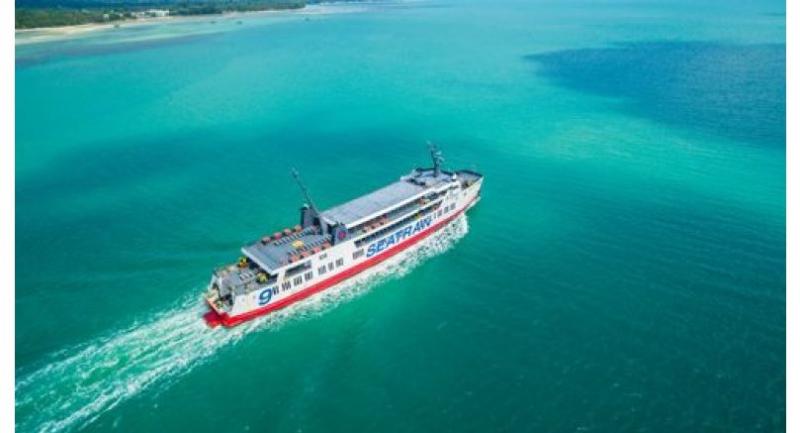
  • One of two major ferryboat services plying Thai waters, Seatran Ferry has been in business for 30 years.
    One of two major ferryboat services plying Thai waters, Seatran Ferry has been in business for 30 years.

The always faithful ferry

Thailand February 22, 2019 01:00

By Kitchana Lersakvanitchakul
THE NATION

3,345 Viewed

Among the Gulf islands, book passage with Seatran, which has been riding the waves for 30 years

It’s not so much fear of flying over open water that puts bums on the seats of ferryboats to get from Surat Thani to Koh Samui and back. It’s all about the bloody convenience and, well sure, the vastly cheaper fare.

Seatran Ferry, which has been in business for 30 years – not counting a brief hiatus that ended in 2002 – gets its passengers from Donsak Pier in Surat Thani to Nathon Pier on Samui Island in 120 minutes. Its boats are chugging back and forth every day from 5am to 7.30pm.


Up to 600 people and 80 vehicles can fit on the ferry. Passengers pay Bt150 each and another Bt400 to Bt470 if they have a vehicle, the rate varying with vehicle size.

Note that you cannot take your car to Samui on a plane – unless you’re very rich or very well connected.


“Ferryboat services are being used more and more by Thai and foreign tourists,” says Seatran general manager Benjawan Tanphaibul.

“There’s a rumour about a new concessionaire who’s going to jump-start the business, but it isn’t easy because of the huge investment and high maintenance costs involved.


“Sustaining our business requires continual improvements in service, with many fine experiences, as well as maintenance. We have our own shipyard with inspections and maintenance checks every two years,” she says.

One of the “fine experiences” Benjawan refers to is an auspicious pre-cruise van drive to Wat Donsak, home to the world’s largest statue of revered monk Luang Phor Thuat (1582-1682).


On boarding the ferry, passengers tend to spread out according to personal preference. Some take up positions at the stern to enjoy the views of the Gulf and the islands. Others grab a seat indoors to read or chat or take a nap. I was in a group holding “frequent traveller” cards and we had our own private space.

Boredom doesn’t seem to be a factor on the journey, not with a coffeeshop, a well-stocked mini-mart and a place to get your feet massaged for 45 minutes for Bt300.


“Our passengers can feel safe because we have all the basic equipment, such as lifejackets and life rafts,” says Benjawan. “We’re registered as a ‘coastal ship’ so we don’t need to have dinghies. It’s only a 34-kilometre crossing, so rescue vessels could reach us quickly if there were an emergency.”

On arrival on Koh Samui, we ride another van up into the hills, to the Fair House Beach Resort & Hotel. There’s a stop along the way at Lad Koh Viewpoint, between Chaweng and Lamai beaches. It offers a wonderful vista, making you appreciate the island’s incredible natural beauty.


A walk down to the beach and a hop across rocks being attacked by tumultuous waves affords more great photos. We make plans to return the next day and catch what promises to be a stunning sunrise.

Waking early the next morning, we’re ready for another ferry ride, this one on the high-speed, 200-passenger Seatran Discovery from Samui’s Bangrak Pier to Koh Phangan. The ride, naturally popular with revellers headed to the monthly full-moon parties on Rin Beach, takes 30 minutes and costs Bt350.


From there you can get to Koh Tao on yet another ferry, but that trip takes up to three hours.

Koh Phangan has another attraction that surely tops a rave party. Than Sadet Waterfall National Park is so named – it means “he visited” – because the visitor was King Rama V, who came in 1889 to see the waterfall. He was impressed enough to have the royal monogram inscribed prominently on a rock, where it still can be seen.


And then there’s the Yang Na Yai tree with a circumference of 14.6 metres a height of 53.5 metres. A sign erected by the Department of Rural Roads in 2013 puts the tree’s age at about 400 years.

Our jaws were still slack when we reached Mae Haad Beach in time for low tide, when it’s possible to walk over to little Koh Ma on sand that’s “ocean floor” the rest of the day.


Apart from the “separated sea”, visitors come for the beautiful white sand of the beach itself, the sunsets viewed over Koh Ma and some of the best snorkelling and diving on Koh Phangan.

Foreigners swimming in the clear waters off the beach could be seen from the Koh Raham Restaurant & Beach Bar perched on a small rocky outcrop, a nice spot for a coffee break.


Back on Samui, time was rewardingly spent at the Phra Yai Market near Nathon Pier and the Bophut Fisherman’s Village, a walking street packed with tourists struggling to decide what to buy and where to eat. There’s a lot on offer.

At Hinta Hinyai you hear the story of an elderly couple killed in a storm during a sea journey. There’s a shrine to Guan Yu, the Chinese god of war who espoused not just bravery and courage but also honesty, loyalty, gratitude and ethical behaviour.


And at the restaurant Wang Sarai there is a to-die-for dish among the Hainanese treats called moo kho, which got its name from a technique in food preservation but now, happily, is another memory to be preserved.

Off on a sea cruise

There are three ways to book passage on the Seatran Ferry. Get a membership card so you can use the Call Centre (077 950 559). Otherwise, visit the Seatran Ferry Office or go online to http://www.SeatranFerry.com.

Living like a local

ศาสตร์เกษตรดินปุ๋ย : ขอบคุณแหล่งข้อมูล : หนังสือพิมพ์ The Nation

http://www.nationmultimedia.com/detail/thailand/30363798

  • Skilled villagers conduct a cooking class for tourists.
  • Making a splash: Bang Santi and his neighbours invite tourists to jump into the sea for a mud spa.
  • A tourist applies a mud facial treatment that helps nourish the skin while removing dead cells and blackheads.
  • Villagers encourage visitors to conserve the mangrove swamp./Courtesy of Local Alike.
  • Visitors can pick and eat mulberries at Ban Suan Wanlee.

Living like a local

Thailand February 09, 2019 01:00

By Pattarawadee Saengmanee
The Nation Weekend

8,855 Viewed

A homestay programme in the southern province of Nakhon Si Thammarat makes for a relaxing and interesting break from urban chaos and teaches the visitor about the peaceful life in a Muslim village

I WASN’T sure what to expect when I was invited recently to spend two days and one night at Ban Laem Homestay in Nakhon Si Thammarat. But within minutes of arriving, I knew it was going to be an experience I would treasure for a long time. Warmly welcomed by the amiable villagers, the atmosphere was like being at a friend’s home – a place where you can kick back and relax without judgement.

Fishermen at work in the Golden Bay. /Courtesy of Local Alike.

Located in the Golden Bay area of Tha Sala district, this hamlet is luring visitors with cosy accommodation, tantalising seafood meals and several fun activities that allow guests to experience the lifestyles of this Muslim fishing community and learn more about marine ecosystems.

Ban Laem Homestay is being promoted as a model of sustainable community with an enhanced standard of hospitality. It is part of the “Happy Home Happy Stay” project, a collaboration between The Erawan Group and Local Alike.

“The Erawan Group operates more than 60 properties both in Thailand and the Philippines. In 2016, we initiated the ‘Happy Home Happy Stay’ project, aiming to share our hospitality and management experience to develop communities. We travelled around the country looking for the type of strong communities we could help grow sustainably,” says Petch Krainukul, the group’s president.

“Ban Laem Homestay is a pilot project. We picked this village because it has beautiful nature, a unique mud spa and striking Southern-style houses that identify its character. We educate villagers about hygiene and help renovate public areas, bathrooms and landscapes because cleanliness is the heart of any hospitality service. A team from Hop Inn teaches villagers how to greet guests and how to use the QR code system for check-in. We also plan to expand our project to other communities around the country,” he adds.

Bang Flittary’s House offers tourists comfortable accommodation. 

A mere 20 kilometres from downtown Nakhon Si Thammarat, this land was once home to a pristine beach with boutique resorts and seafood restaurants and 40 years ago was a popular holiday escape for local residents and Malaysian tourists. Then so-called “progress” set in, with the mangrove forest destroyed to make way for shrimps farms that before too long were also abandoned.

In 2014, Bang Taksin Minman joined with his neighbours to open their houses and welcome guests for overnight stays in the hope they could bring their home back to life and promote tourism.

“Eight years ago, hundreds of local students came here to reforest the area but they also turned our home into a garbage dump. We started by providing a catering service to reduce the number of plastic bags and foam containers in the area then we created a fun activity programme that included a mud battle that made our village widely known,” says Bang Santi Himma, secretary of the Community Enterprise of Ban Laem Homestay Mangrove Forest Conservation.

“The idea for launching a homestay programme came when we met an 18-year-old foreign biker who was cycling around the world. With a budget of just Bt100 as day, he was delighted to stay with us for a month and helped us create a fanpage on Facebook to promote our village.”

Popular with Thai families and tourists from the UK and Malaysia, the village has now four families ready to accommodate guests in their home for a two-day, one night programme. For just Bt1,750, tourists can enjoy three meals, an eco-cultural tour and cooking classes and for an extra Bt200 also get an airport transfer to the village thrown in – though this is limited to four people.

“I have long dreamt of improving the quality of our lives. In the past, our village had a drug problem and residents lived in poverty and were always exploited by loan sharks,” says Bang Taksin, another leader of the Community Enterprise .

Fishermen at work in the Golden Bay. /Courtesy of Local Alike. 

“Now, our village can accommodate around 50 guests and we plan to expand services to 10 houses. Thanks to our focus on sustainable living, we can earn Bt40,000 a year and we’ve learnt how to save. This project belongs to everyone and will be handed down to the young generation.

Surrounded by tropical plants and towering coconut trees, I spend one night in Bang Fittary’s house. Built of hardwood, it boasts a living area on the lower level, a private balcony and a bathroom with separate shower and toilet.

The airy bedroom has everything the urban traveller needs. There are four clean mattresses, towels, a television, three fans, mosquito nets and plenty of plugs. A fully-stocked mini bar corner is available in the house though there’s no refrigerator.

In the afternoon, we ride a modified motor-tricycle for a village tour and Bang Santi takes us to the headquarters of the Hang Uan Weaving Group. Jinda Laohawiwat, 60, and her members are happy to demonstrate the traditional techniques used to weave a 15-inch bolt of hang uan as young palm leaves are known in the southern dialect.

“In the past, fishermen used hang uan to interlace with their nets. With their soft texture and durability, they are ideal for fashion accessories and home furnishings such as shoulder bags, hats, coasters and place mats and are now available at many resorts in southern provinces and handicraft shops in Bangkok,” says Jinda.

We continue to Ban Suan Wanlee, home to a large organic mulberry garden. It’s the brainchild of former accountant Prasat Wanlee, who got his first mulberry tree from Chiang Mai and used pruning techniques to propagate.

Visitors can pick and eat mulberries at Ban Suan Wanlee.

“Now I have more than 500 mulberry trees in my garden and can harvest around 30 kilograms of fruit a day. I use chicken manure as fertiliser. The black fruits are sweet and light red ones are sour. The peak of the harvest season is March and April. As part of the homestay programme, I invite tourists to pick and eat the fruit fresh from the bushes and feed them crackers topped with mulberry jam that contains no gelatine and refreshing mulberry soda,” Prasat says.

We also join a cooking class led by local housewives and learn how to make several southern curry pastes like red curry, yellow curry and tai pla curry. The main ingredients are chilli, curcuma, garlic, galangal, shallot and salt and all the ingredients are found in their backyards.

And we also get to taste kanom pa da. Made from rice flour mixed with sweet nam wa banana, it looks like a doughnut but is filled with spicy curry and mangrove leaves before being fried.

We’re up before the birds the next morning, climbing into a fishing boat at 5.45am for a three-hour cruise through the mangrove swamp. We stop at the mouth of the Golden Bay to watch the sunrise and enjoy a breakfast served by Bang Santi of hot coffee and Ovaltine, deep-fried dough sticks, kaoman gaeng massaman (rice cooked with coconut milk and with massaman curry) and roasted sticky rice stuffed with taro.

Bang Santi serves hot coffee.  

“The Golden Bay occupies 3,000 rai and offers a beautiful view of Nakhon Si Thammarat’s mountain ranges. Local fishermen have transformed seven rai into a marine life sanctuary where schools of small fish live to conserve the ecosystem. We are now in seabass season, which runs from January to March,” he tells us.

A few fishermen are already out and we watch them for a while before planting a mangrove tree. On the way back to the shore, Bang Santi invites to jump into the water and enjoy a mud spa that nourishes the skins and the hair. The mud here has a blue tinge and is rich in more than 40 kinds of minerals. It’s even certified by the Pikunthong Royal Development Study Centre and Thailand’s Institute of Nuclear Technology.

The trip ends with a lunch of khaoman talay khlon (rice cooked with coconut milk and squid gallbladder) served with deep-fried mangrove leaves with shrimps and other seasonal seafood dishes.

“Our slogan is ‘Ban Laem Homestay has nothing but the heart’. Coming here, tourists can experience the ways of a Muslim community. We’re friendly and nothing like the negative portrayal of us that’s given out on the news. We always treat visitors as our friends,” says Bang Taksin.


IF YOU GO

>> Ban Laem Homestay is in Tha Sala district, Nakhon Si Thammarat.

>> Booking can be made by calling (065) 513 7273, (088) 768 9036.

>> Check out the programme at the BanLaemHomestay page on Facebook.

Lampang shares its dream

ศาสตร์เกษตรดินปุ๋ย : ขอบคุณแหล่งข้อมูล : หนังสือพิมพ์ The Nation

http://www.nationmultimedia.com/detail/thailand/30363715

  • Street art adorns a wall on a bank of the Wang River.
  • Wat Sri Rong Muang was one of the Lampang locations where the TV drama series “Rak Nakara” was filmed.
  • Lofty Kew Fin is an amazing place to watch the sunrise.
  • The women of Baan Paa Miang fashion lovely and useful items from miang leaves.
  • Baan Luk is famous for its woodcarving, but the artisans’ talents don’t stop there.
  • A relaxing horse-drawn carriage ride through old Lampang is one of the great and enduring pleasures of the North.
  • Delectable khai paam is an omelette cooked in a banana leaf.

Lampang shares its dream

Thailand February 08, 2019 01:00

By Kitchana Lersakvanitchakul
THE NATION

5,390 Viewed

The northern province has plenty to offer any traveller willing to stop and spend some time


The good people of Lampang are tired of travellers whizzing across their province on the way to Bangkok, Chiang Mai and Nakhon Elsewhere. They’ve got plenty of interesting things to see and do and would really like to share them with outsiders if they can just get them to stop for a day or overnight or longer.


So, in order to get off the list of 16 northern “secondary cities” that tourists ignore, the province and its capital of the same name are promoting “Lampang … Plai Thang Fun” (Dream Destination).


“Lampang is a destination for dream hunters,” says Songpol Sawasditham, its governor since 2017. He’s keen to chime in with the Tourism Authority of Thailand’s campaign somewhat clumsily translated as “Over the Dream of Million Inspirations”, which focuses on the North.


“The idea is to make Lampang a destination rather than a secondary city,” Songpol says, “but it goes deeper, making Lampang a destination for every dream, appealing to travellers from every walk of life and every category.


“It’s a place not only for those interested in the slower life, but also for those who like taking pictures and sharing them on social media. It’s a great place for adventurers seeking to discover new places, such as Baan Paa Miang, for example. And we want people to see Lampang as a romantic small town with activities such as ‘Fun Tam Roy Phaphayon’.”


Here he’s referring to a tour of the locations selected as settings for a string of films, including the 2015 Hollywood feature “No Escape”, shot in part at the airport, and the Thai TV series “Rak Nakara”, shot at the Burmese-style Wat Sri Rong Muang.


“We’re always ready to accommodate senior citizens and retirees, whether just for sightseeing or to hold their group meetings,” Songpol says. “We’re very proud of places like the Kew Fin and Chae Son hotsprings.


“For art lovers there is the Lampang Arts Centre and lots of street art to enjoy, and more at Baan Paa Miang.


“Our goal in promoting tourism isn’t just helping to stimulate the national economy but also to spread prosperity locally and thus reduce inequality, so the focus is on secondary tourism and community tourism.”


One eye-popping attraction is the charmingly named Hug You, which really ought to be called Hug Ewe because it’s a sheep farm where you can cuddle a Lampang lamb.


Cameras are essential because of the photogenic Harvest Moon Farm & Café, Rai Sub Muen San with its windmill landmark and lots of gaily painted signage, as well as a beautiful vineyard and strawberry fields. And don’t knock the resident livestock’s wool coats. As standup comedian Udom “Note” Taepanich once sarcastically remarked, “Lampang nao mak!” It can indeed get very cold.


For more adventurous tourism, Songpol recommends Baan Paa Miang in Muang Pan district, home to the hot springs and waterfalls of Chae Son National Park.


You can haul around a tent or you can arrange to stay with a family in the village of Mae Chaem. It’s a winding road up the mountain to the homestay-friendly “agrotourism” community. You move in with the clan in a house alongside a stream, sample some khai paam, which is an omelette cooked in a banana-leaf krathong, and plan your excursions off into the wild.


There’s a learning centre focused on community health where they show you how miang leaves are used to make tea and stuff pillows for the head and neck.


Next door the householders are advertising foodstuffs like nam phrik phao (chilli paste) made from mushrooms, though you have to order in advance. A stroll around the village takes you to Wat Paa Miang, then Baan Paa Miang School, whose walls are decorated with paintings of cats, chickens and cows. And finally you reach the Paa Miang Coffee and settle in for a lovely iced lemonade with wild honey and a spectacular view of a temple in the valley.


Early-morning risers are rewarded with a gorgeous sunrise at Kew Fin, a lookout 1,517 metres above sea level.

Governor Songpol isn’t done pitching attractions yet.


“Another outstanding event is the Dok Siew Festival in Baan Paa Miang every February and March, and you must see the love bridge that the street-art team from Silpakorn University painted with a dok siew pattern,” he says.


He’s got another promotional campaign underway, “Nakhon Hathasil Thin Utsahakram Sangsan” (Craftsmanship City, Creative Industries) that centres on Baan Luk Tai, a community skilled engravers, and the Dhanabadee Ceramic Museum.


The word “luk” in the village’s name refers to a turbine-driven bailer locally invented to draw water from a stream to irrigate crops. As if that weren’t enough, the residents are so talented at carving that they’re nationally famous. They can whip a chunk of mai chamcha (raintree wood) into a nifty pestle and mortar or, if it’s a big enough block, a life-size elephant and rhinoceros like the ones the kids can clamber on.


For now most of the carvings are sent to the Baan Tawai Handcraft Village in Chiang Mai to hawk to tourists, but that trade is expected to shift back to the source soon.


Songpol, who had success boosting tourism in Songkhla while he was governor there, says Lampang gets 900,000 a year now and he wants that number up to two million within two years.


Lampang is also renowned for its ceramics, including the ubiquitous and ultra-handy “chicken bowl”, and the Dhanabadee Museum traces that history. You can examine two ancient kilns, visit a showroom of impressive modern designs, and see “the world’s thinnest chicken bowl”, another one smaller than a grain of rice and another coated in gold, plus a ceramic flute that was made for National Artist Thanis Sriklindee.


The horse-drawn carriages that never fail to delight visitors to urban Lampang are well worth a try. They ply the well-treed old part of town, cross the Tha Ma-O community and stop by at the wonderful colonialera home of master tradesman Louis Leonowens, son of Anna, tutor to the children of King Rama IV.


Dropped off amid a jangle of street-art colour on the Wang River, you can meander along Thanon Talad Gao, a walking street each evening, to the Ratsadaphisek Bridge and past venerable Burmese-style houses.


Kad Kong Ta sells a huge variety of goods and foods including khai namrae Chae Son, a spicy salad with eggs hardboiled in a hot spring.

Stay just a little longer

Bangkok residents still not convinced about the appeal of Lampang should visit the Lampang Open House Fair at CentralWorld from February 19-21.

It will have glimpses of all the top sights and samples of all the main cultural and gastronomic highlights.