South Korea’s Bibong the bottlenose dolphin sees freedom after 17 years
MONDAY, OCTOBER 17, 2022
The last Indo-Pacific bottlenose dolphin kept in a South Korean aquarium has been released into the wild after 17 years, the oceans ministry said on Monday.
Bibong was set free on Sunday from a pen in the sea off the southern resort island of Jeju, where he had stayed for about 70 days for training to adapt to the new environment, the Oceans and Fisheries Ministry said.
Experts said Bibong, a male dolphin believed to be 23 years old, was believed to have been fully ready to return to the wild.
The dolphin had been kept in a marine mammal park on the island after being illegally caught in waters off the island in 2005.
He was the last marine mammal of his kind in captivity, as the country had released seven Indo-Pacific bottlenose dolphins into the sea since 2013 after designating the species as a priority marine life the previous year.
The ministry said it attached a positioning device to Bibong’s body for regular monitoring at least for about six months.
“Bibong was finally able to return home after 17 years. The government will continue seeking measures to improve the welfare of marine animals,” Minister Cho Seung-hwan said.
Other than Bibong, 21 belugas and other kinds of dolphins are currently at domestic aquariums, all of which have been kept after going through legal procedures for research or other purposes, the ministry said.
Xi’s zero-Covid is elephant in room blocking China’s economic recovery: Chula expert
MONDAY, OCTOBER 17, 2022
President Xi Jinping’s zero-Covid policy is derailing China’s economic recovery, according to a Chinese history professor at Chulalongkorn University.
Xi kicked off the 20th Chinese Communist Party (CCP) National Congress in Beijing on Sunday.
In his opening speech, XI emphasised “safety” and “security”, mentioning the words 73 times compared with just 53 times at the previous congress in 2017. According to Reuters, analysts viewed the speech as an affirmation of Xi’s increasingly authoritarian path that has prioritised security, state control of the economy, more assertive diplomacy, a stronger military and pressure to seize democratically governed Taiwan.
Although he made little reference to Covid-19, China has in recent days repeatedly emphasised its commitment to Xi’s zero-Covid strategy, “dashing hopes among countless Chinese citizens as well as investors that Beijing might begin exiting anytime soon a policy that has caused widespread frustration and economic damage”, said Reuters.
Xi is expected to be elected for a third term at the congress, cementing his status as the most powerful Chinese leader since Mao Zedong.
But Wasana Wongsurawat, an associate professor of modern Chinese history at Chulalongkorn University, said the highlight of the congress is not whether Xi will be elected to lead the country again.
“The biggest problem facing China now is that its economy cannot fully recover under Xi’s zero-Covid policy,” she said.
Wasana added that Xi will never backtrack on his own policy, since this would show he had been wrong and he would lose legitimacy as the country’s ruler.
She said Xi would instead keep the zero-Covid policy and China would face the same dilemma as in the early 1970s, when everyone agreed that Chairman Mao’s Cultural Revolution was a mistake but it could not be stopped as this would only prove that Mao was wrong.
“Xi is doing a lot of things to strengthen China’s political role on the global scale, such as expanding the Shanghai Cooperation Organisation and increasing military cooperation with Russia,” said Wasana. “However, none of these will matter if China cannot solve its economic problems at the foundation.”
“If Xi remains the leader, his policy will be here to stay. If the CCP wants to abandon his policy, then he must go.”
Wasana added that it was nearly impossible for the CCP to find a solution for the zero-Covid policy, such as declaring victory over Covid or easing restrictions. If the CCP chose to do so, it would face hard questions as to why the policy was in place for so long but then suddenly considered unnecessary, she said.
Meanwhile, Thailand would have to wait before welcoming back visitors from China, its biggest tourism market, as the country will not open anytime soon, she said.
Xi focuses on China’s security, zero-Covid policy as he kicks off Communist Party Congress
SUNDAY, OCTOBER 16, 2022
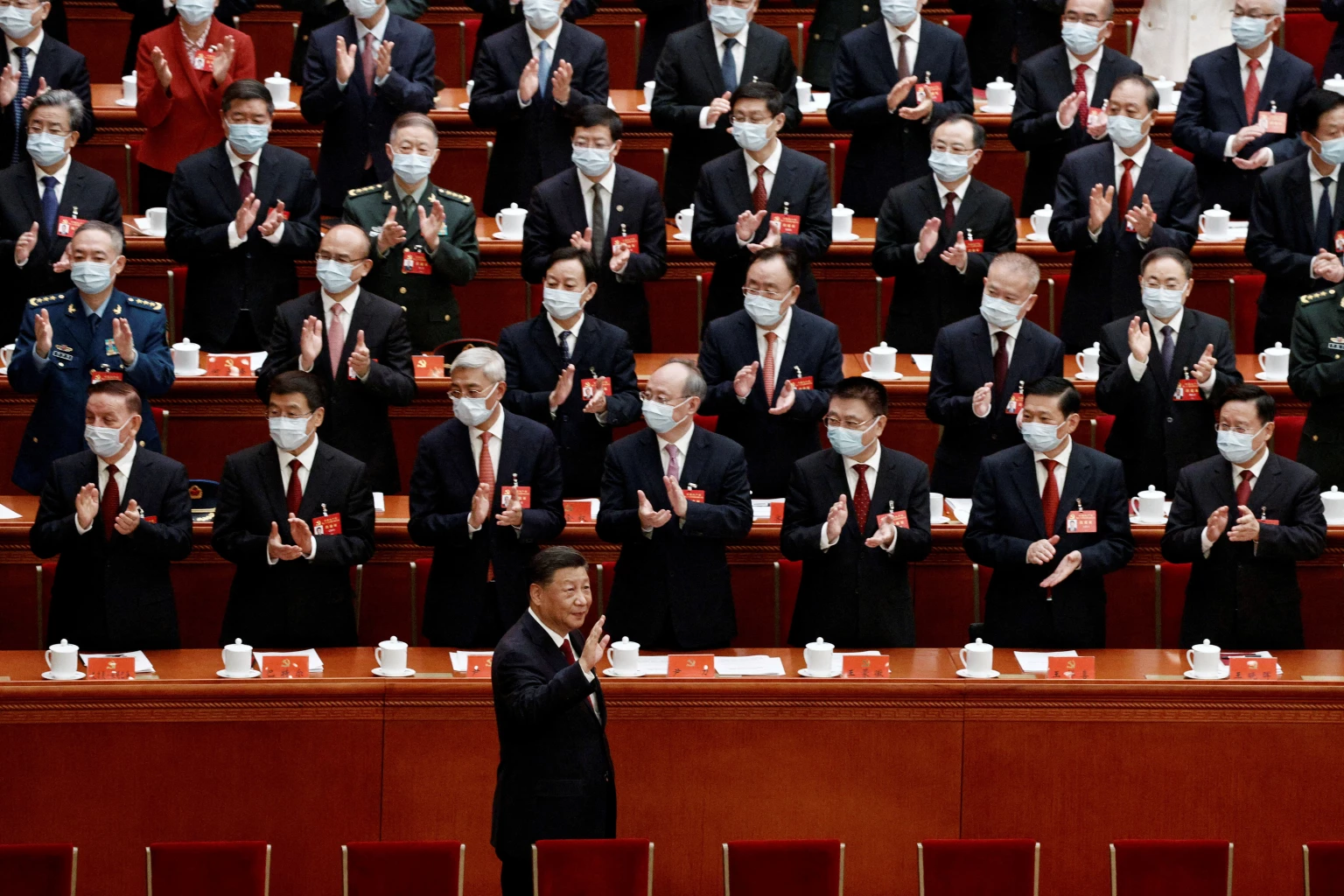
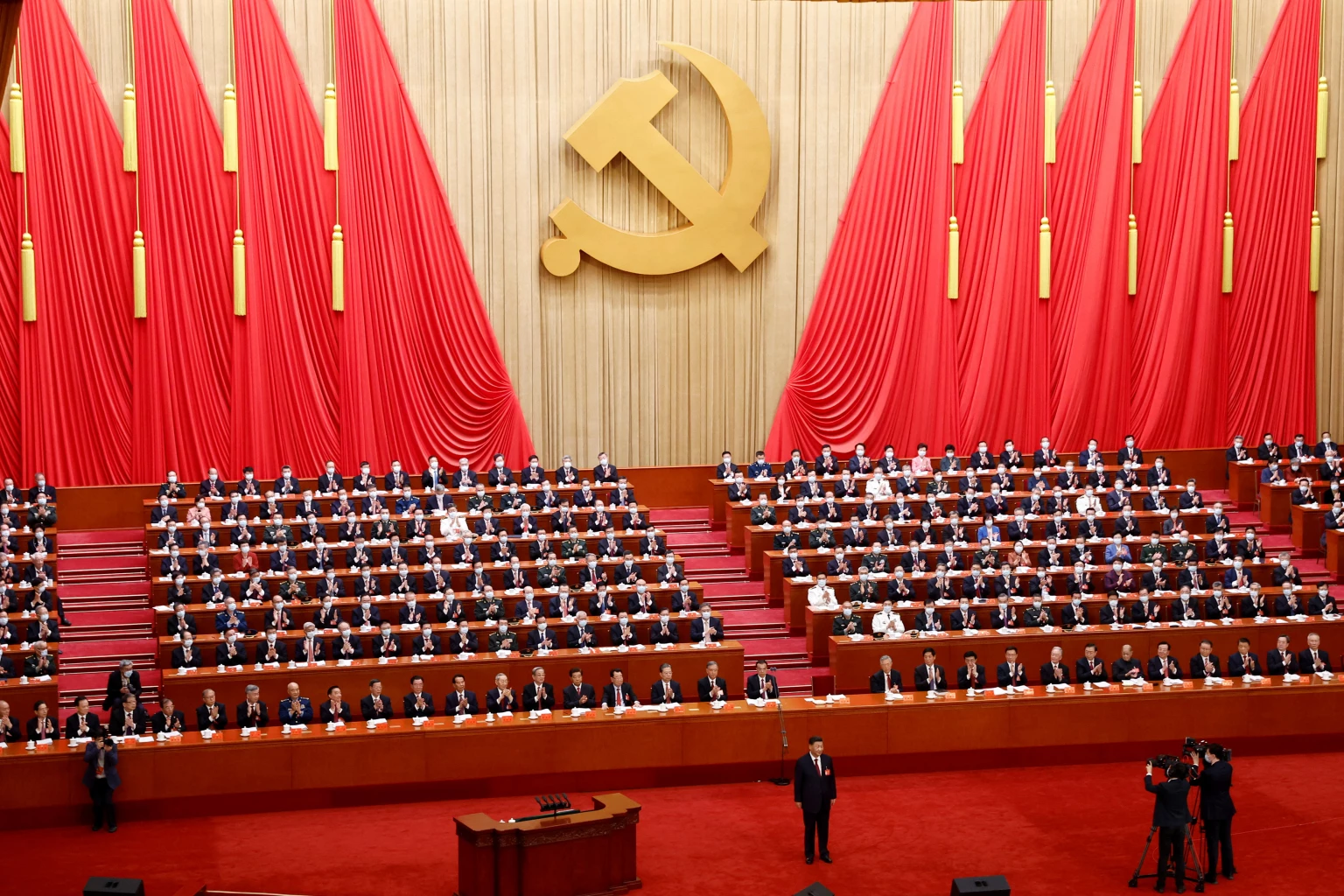
Chinese President Xi Jinping called for accelerating the building of a world-class military while touting the fight against Covid-19 as he kicked off a Communist Party Congress on Sunday morning.
Xi, 69, is widely expected to win a third leadership term at the conclusion of the week-long congress, cementing his place as China’s most powerful ruler since Mao Zedong.
Roughly 2,300 delegates from around the country gathered in the vast Great Hall of the People on the west side of Tiananmen Square amid tight security and under blue skies after several smoggy days in the Chinese capital.
Xi described the five years since the last party congress as “extremely uncommon and abnormal” in a speech that lasted less than two hours – far shorter than the nearly three-and-a-half-hour-long address in the 2017 congress.
“We must strengthen our sense of hardship, adhere to the bottom-line thinking, be prepared for danger in times of peace, prepare for a rainy day, and be ready to withstand major tests of high winds and high waves,” he said.
Xi mentioned the words “safety” or “security” 73 times, compared with 55 times in 2017, and said China will strengthen its ability to build a strategic deterrent capability.
In comparison, Xi only said the word “reforms” 16 times in the televised speech, far fewer than the 70 mentions five years ago.
Xi called for strengthening the ability to maintain national security, ensuring food and energy supplies, securing supply chains, improving the ability to deal with disasters and protecting personal information.
The biggest applause came when Xi restated opposition to Taiwan’s independence.
In his decade in power, Xi has set China on an increasingly authoritarian path that has prioritised security, state control of the economy in the name of “common prosperity”, a more assertive diplomacy, a stronger military and intensifying pressure to seize democratically governed Taiwan.
Analysts generally do not expect a significant change in policy direction in a third Xi term.
In recent days, China has repeatedly emphasised its commitment to Xi’s zero-Covid strategy, dashing hopes among countless Chinese citizens as well as investors that Beijing might begin exiting anytime soon a policy that has caused widespread frustration and economic damage.
Xi said little about Covid other than to reiterate the validity of a policy that has made China a global outlier as much of the world tries to coexist with the coronavirus, which emerged in central China in late 2019.
“We have adhered to the supremacy of the people and the supremacy of life, adhered to dynamic zero-Covid … and achieved major positive results in the overall prevention and control of the epidemic, and economic and social development,” Xi said.
On the economy, he restated support for the private sector and allowing markets to play a key role, even as China fine-tunes a “socialist economic system” and promotes “common prosperity”.
“We must build a high-level socialist market economic system … unswervingly consolidate and develop the public ownership system, unswervingly encourage and support the development of the private economy, give full play to the decisive role of the market in the allocation of resources, and give better play to the role of the government,” he said.
Xi’s power appears undiminished by the tumult of a year that has seen China’s economy slow dramatically, dragged down by the Covid policy’s frequent lockdowns, a crisis in the property sector and the impact of his 2021 crackdown on the once-freewheeling “platform economy”, as well as global headwinds.
China’s relations with the West have deteriorated sharply, worsened by Xi’s support of Russia’s Vladimir Putin.
The son of a Communist Party revolutionary, Xi has reinvigorated a party that had grown deeply corrupt and increasingly irrelevant, expanding its presence across all aspects of China, with Xi officially its “core”.
Xi did away with presidential term limits in 2018, clearing the way for him to break with the precedent of recent decades and rule for a third five-year term, or longer.
“We have comprehensively strengthened the party’s leadership … and ensured that the party plays the role of leadership core in overseeing the overall situation,” he said.
“Through continuous struggle, we have realised the thousand-year-old dream of a Chinese nation of moderate prosperity.”
The congress is expected to reconfirm Xi as party general secretary, China’s most powerful post, as well as chairman of the Central Military Commission. Xi’s presidency is up for renewal in March at the annual session of China’s parliament.
In the run-up to the congress, the Chinese capital stepped up security and Covid curbs, while steel mills in nearby Hebei province were instructed to cut back on operations to improve air quality, an industry source said.
The day after the congress ends on Saturday, Xi is expected to introduce his new Politburo Standing Committee, a seven-person leadership team. It will include the person who will replace Li Keqiang as premier when Li steps down from that post in March after serving the maximum two terms.
Open-air film festival brings romance back to Tokyo after 2-year hiatus
SUNDAY, OCTOBER 16, 2022
The open-air film festival that is held every year in Tokyo’s Shinjuku Ward is returning for the first time since 2019. The Shinjuku Park Cinema Festival will be held at Shinjuku Chuo Park from Wednesday to Friday next week.
“This is a rare opportunity for people to watch films against the backdrop of skyscrapers at night,” a public relations official said.
The annual outdoor event was launched in 2017 by Shinjuku Convention & Visitors Bureau, so people could enjoy watching films in the cool autumn temperatures.
However, the Covid-19 pandemic forced the festival to be cancelled for the last two years.
Featured in this year’s fest are three romantic local films, namely “Hanataba mitaina Koi o shita” (“We Made a Beautiful Bouquet”) directed by Nobuhiro Doi, which will be shown on Wednesday; “Ai ga nanda” (“Just Only Love”) directed by Rikiya Imaizumi on Thursday; and “Eiga: Yozora wa itsudemo Saiko-mitsudo no Aoiro da” (“The Tokyo Night Sky is Always the Densest Shade of Blue”) directed by Yuya Ishii on Friday.
Shows start at 6pm and admission is free. People will have access to 140 chairs plus 60 seats at tables and can also rent picnic mats at the site. Trucks will be positioned around the area selling snacks, craft beer and other beverages.
As inflation pinches, many Thais willing to risk buying second-hand beauty products: survey
TUESDAY, OCTOBER 18, 2022
A large portion of Thai consumers are willing to buy second-hand beauty products via social media channels due to the rising cost of living, a survey has found.
Despite the risk of getting fake products, 22 per cent of Thai consumers are willing to take the risk of buying second-hand beauty products via Twitter and Instagram channels as well as other social media channels because they do not want to pay the full price for the products, said Mintel, a global market research firm.
Chayapat Ratchatawipasnan, senior beauty and personal care analyst of Mintel, said Thailand is now experiencing a 7.1 per cent inflation, so consumers are trying to save costs when buying beauty products.
Chayapat said that owners of beauty brands may lose some customers to second-hand sellers, but the brands could still command loyalty by creating an exchange market for users to sell their second-hand products.
Chayapat said the brands could also add their own promotions to the second-hand products exchange market. Such exchange markets also would ensure the quality of the second-hand products while retaining brand loyalty.
Mintel found that many consumers had turned to social media to search for second-hand beauty products instead of looking for new products on conventional media, he said.
He added that TikTok, which is a short video clip platform, has become popular among Gen Z Thais searching for second-hand beauty products.
Sales of second-hand beauty products via TikTok is expected to grow by 42 per cent, he added.
Mintel found that 46 per cent of Gen Z Thais admitted social media influenced their purchase of beauty products via online stores, Chayapat added.
He recommended that owners of leading beauty brands should use their second-hand exchange markets to contact various groups of customers via chats and messages through applications to draw them to their new products.
Chayapat said the research by Mintel also found that most of the buyers, who are at least 45 years old, do not like to risk buying second-hand products and 40 per cent of this group stated they bought beauty products directly from online stores of the brands.
So, while the brands create and run exchange markets for second-hand products of their own brands, they can still use the market to reach out to the group of buyers who are over 45 years old, Chayapat added.
APEC Business Advisory Council presents APEC Economic Leaders Report to Prime Minister
TUESDAY, OCTOBER 18, 2022
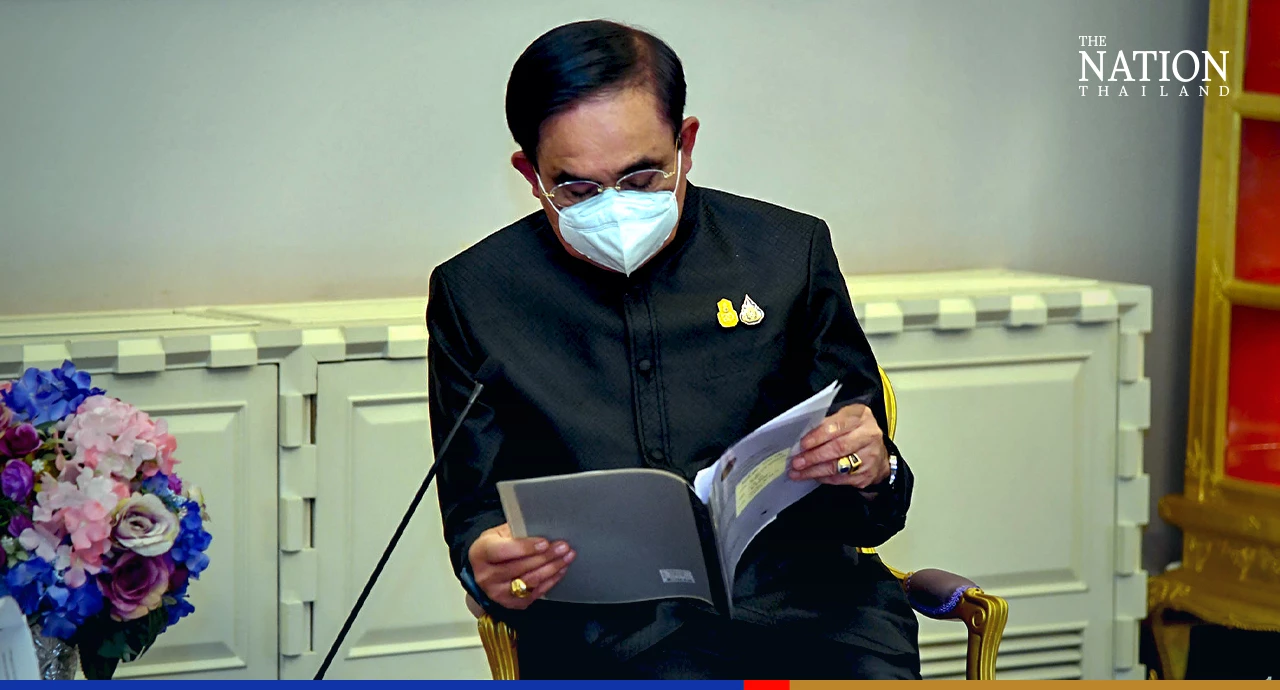
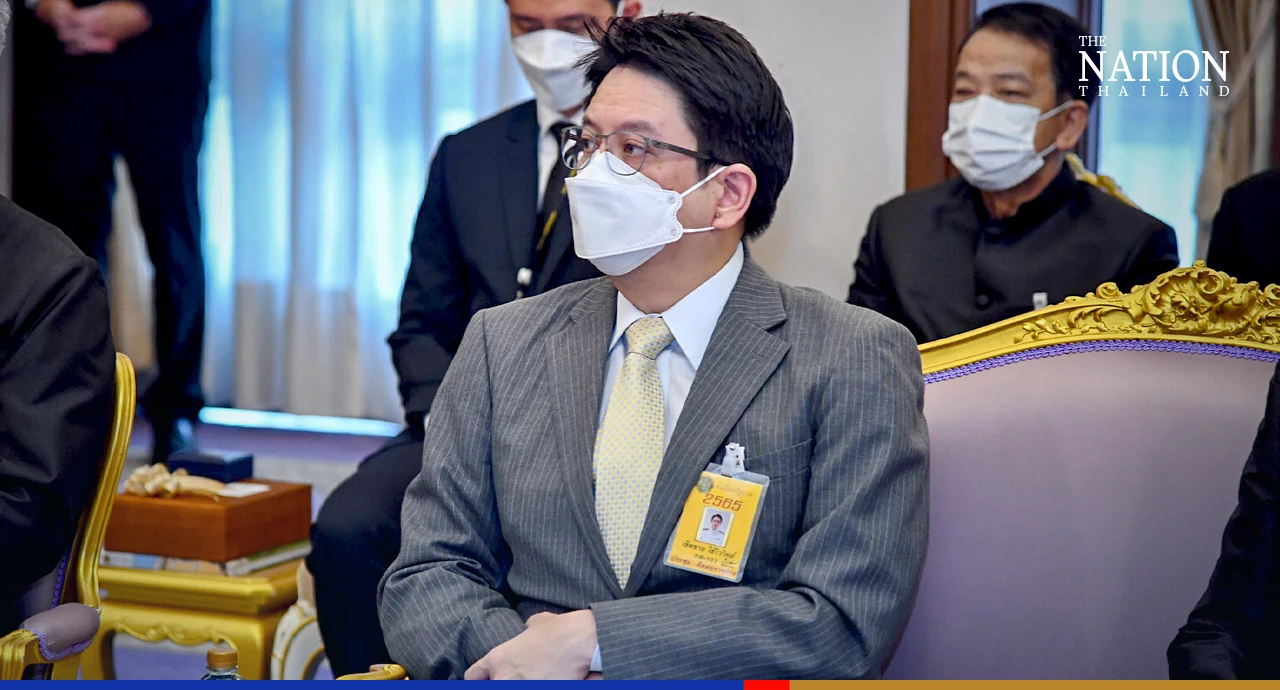
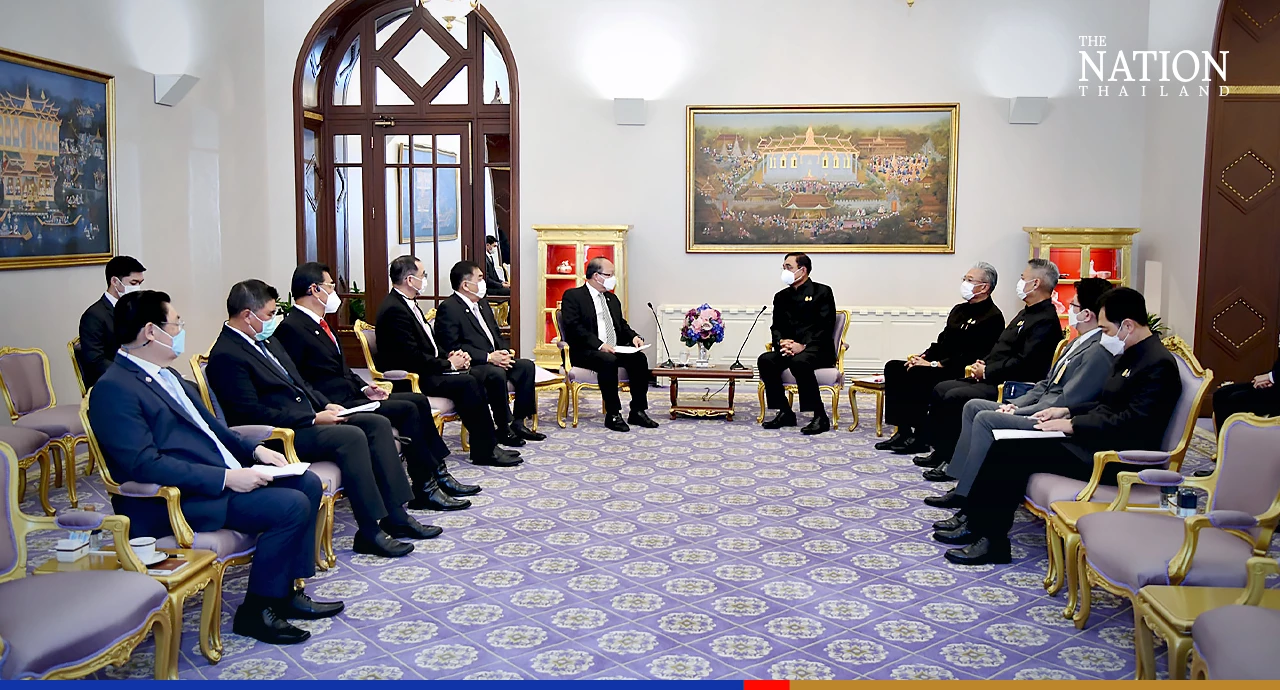
On October 11, Mr Kriengkrai Thiennukul, 2022 APEC Business Advisory Council (ABAC) Chair, along with other Thai ABAC Members, presented the 2022 ABAC Report to APEC Economic Leaders to Prime Minister and Chair of APEC 2022 General Prayut Chan-o-cha at the Government House.
ABAC has been working closely with the Asia-Pacific Economic Cooperation (APEC) throughout the year, offering insights and recommendations to APEC across its workstreams, and the presentation of the ABAC Report is an important part of the APEC process.
This year’s ABAC Report focuses on promoting speedy and sustained recovery and regaining the momentum for sustainable, inclusive and sustainable growth with an emphasis on climate change, food security, health resilience, low carbon economy, as well as advancing the FTAAP agenda and digitalization.
ABAC has held three meetings this year and will hold the Fourth ABAC Meeting ahead of the APEC Economic Leaders’ Week in November 2022 to prepare for the upcoming APEC Leaders’ Dialogue with ABAC.
APEC has benefitted and incorporated ABAC’s practical recommendations in APEC’s work. This includes a recommendation from the ABAC Report in 2021 on having a mechanism to promote travel that resulted in the establishment of the APEC Safe Passage Taskforce. This year, the Taskforce has been coordinating APEC’s work towards the resumption of safe and seamless cross-border travel.
Thai production companies find foreign buyers for content worth nearly THB400 million
MONDAY, OCTOBER 17, 2022
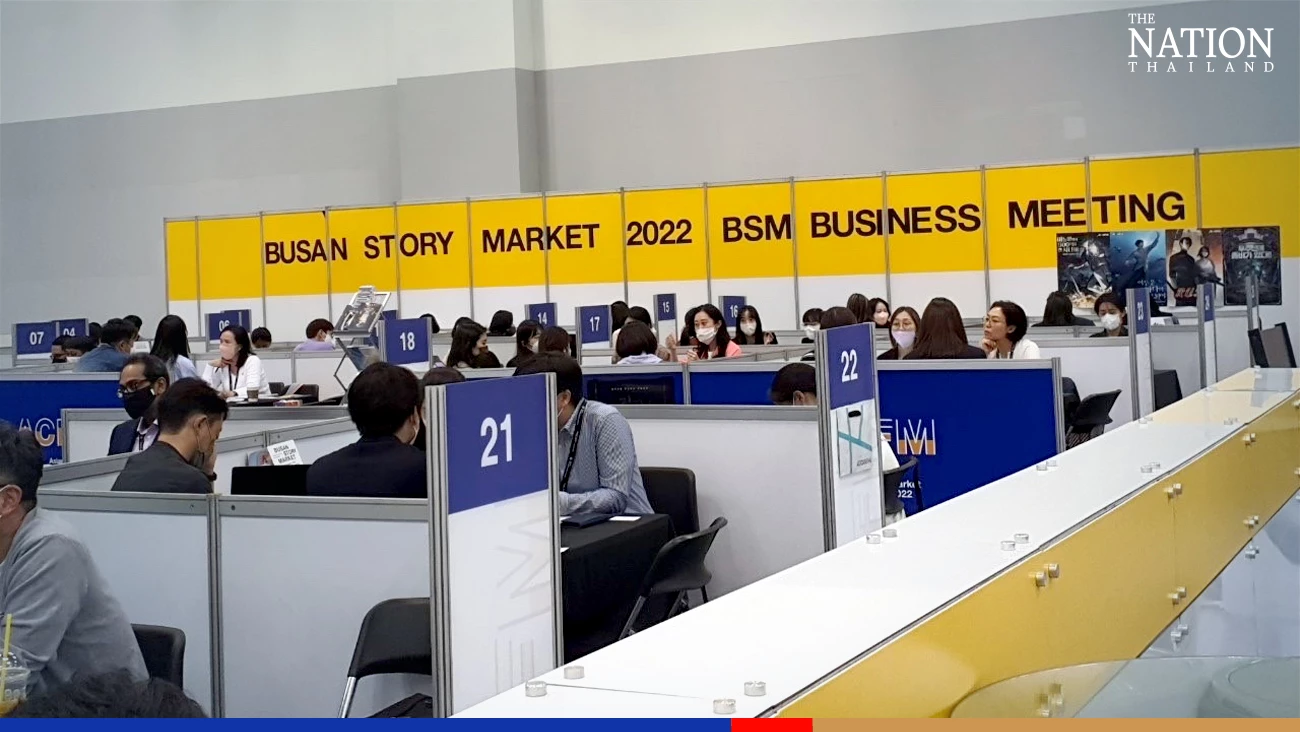
Thai content providers struck deals worth 398 million baht at a South Korean film event, the Department of International Trade Promotion (DITP) said on Monday.
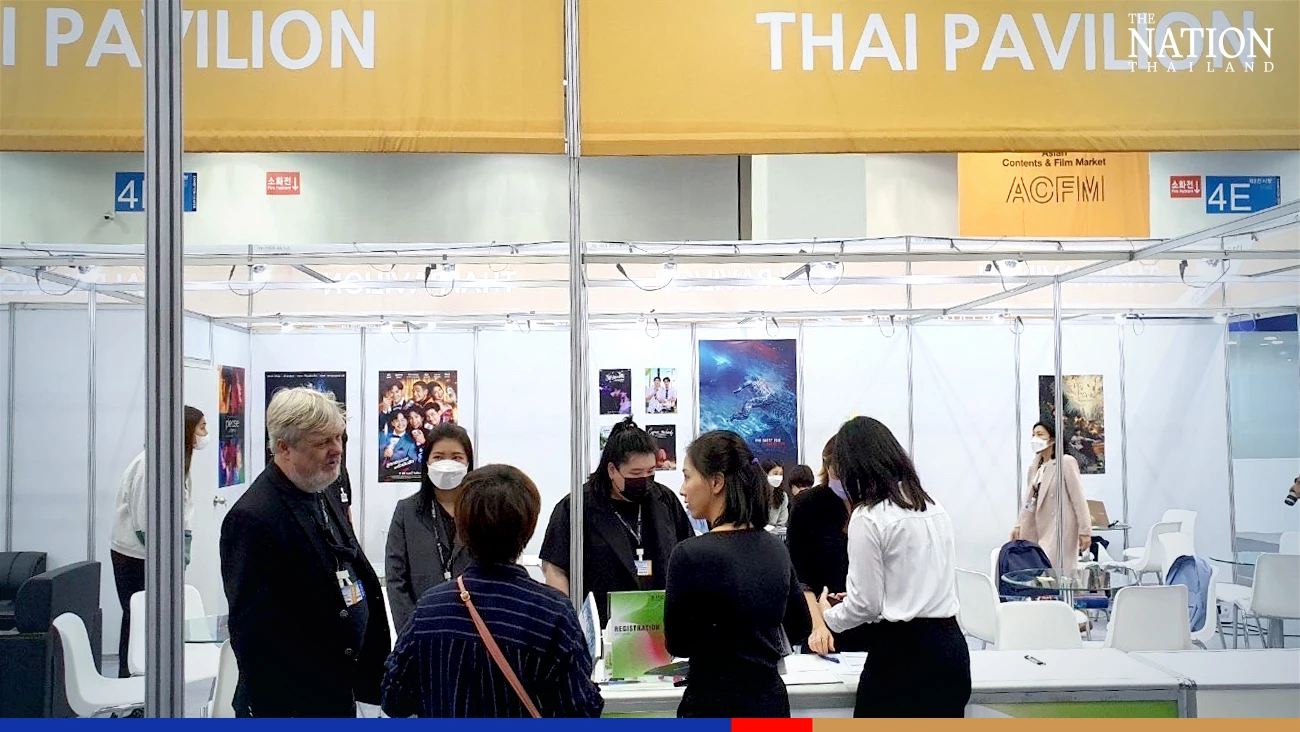
DITP director-general Phusit Ratanakul Sereroengrit said the department had taken eight Thai content providers to participate in the Asian Contents & Film Market 2022 at Busan Exhibition and Convention Centre in South Korea from October 8 to 11.
The eight Thai content providers were: 9Naa Productions, Benetone Films, De Warrenne Pictures, Halo Productions, M Flow Entertainment, M Pictures, Right Beyond and Thongkham Films.
“This move aims to promote Thailand’s soft power among filmmakers and investors worldwide, as well as increase marketing channels for Thai entrepreneurs in film and its related industries,” he said.
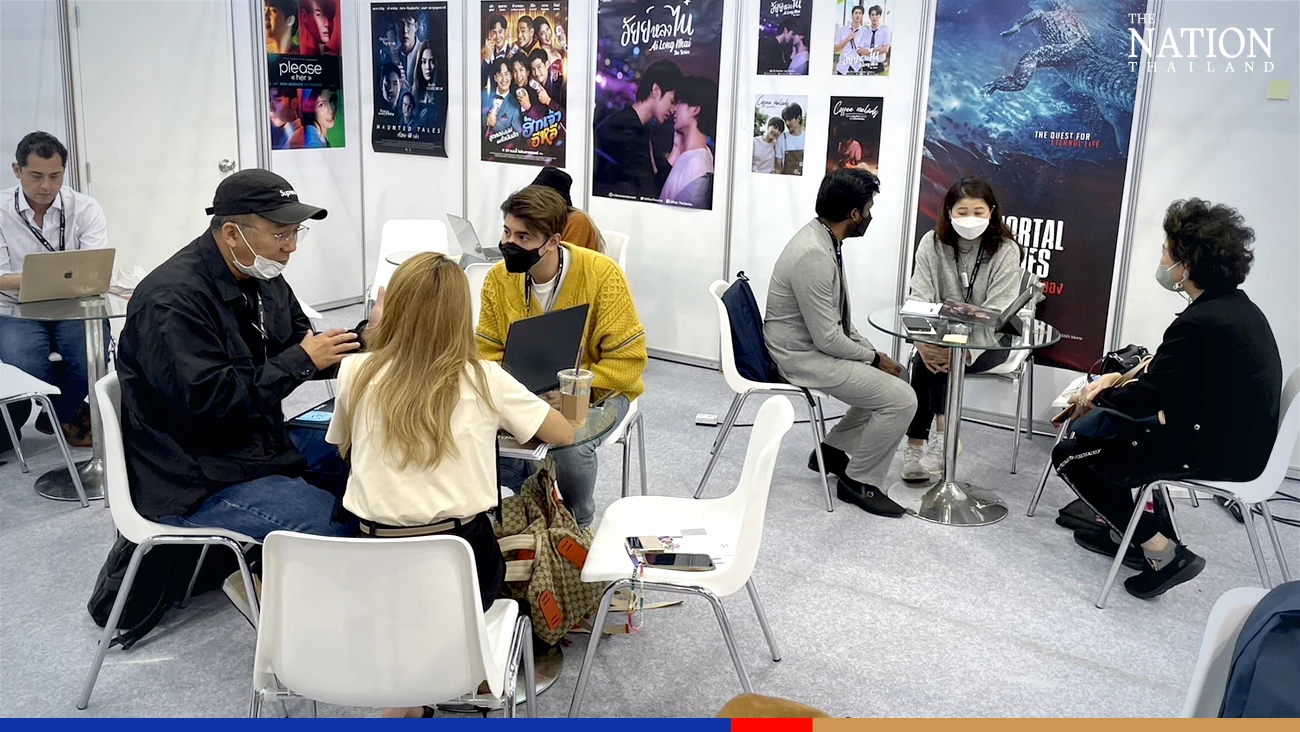
He said there were 134 trade negotiations between Thai and foreign entrepreneurs, generating 398 million baht in revenue.
The foreign entrepreneurs came from South Korea, Japan, Malaysia, Canada, Mongolia, India, Taiwan, Vietnam and the US.
“Content that received attention from foreigners revolved around action, thriller and boys’ love,” he said.
Phusit said the DITP is promoting Thai film and entertainment industries to get international recognition.
He added that Commerce Minister Jurin Laksanawisit is scheduled to promote Thai film and entertainment industries at two events, namely “American Film Market 2022” and “Thai Night”, in Los Angeles at the beginning of November.
“These events feature business activities, such as trade negotiations, film exhibitions, networking and seminars on business potential and trends,” he added.
Thailand considers South Korea, which is the 10th largest in the world, an important trade partner. Thailand-South Korea trade value last year was more than US$15 billion.
Thailand dreams big digital dreams with its brand new ‘Digital Infinity’ strategy
MONDAY, OCTOBER 17, 2022
Nongluck Ajanapanya
Thailand is set to launch an ambitious digital roadmap that will propel its digital industry forward, empower workers and position it at the forefront of the global digital revolution.
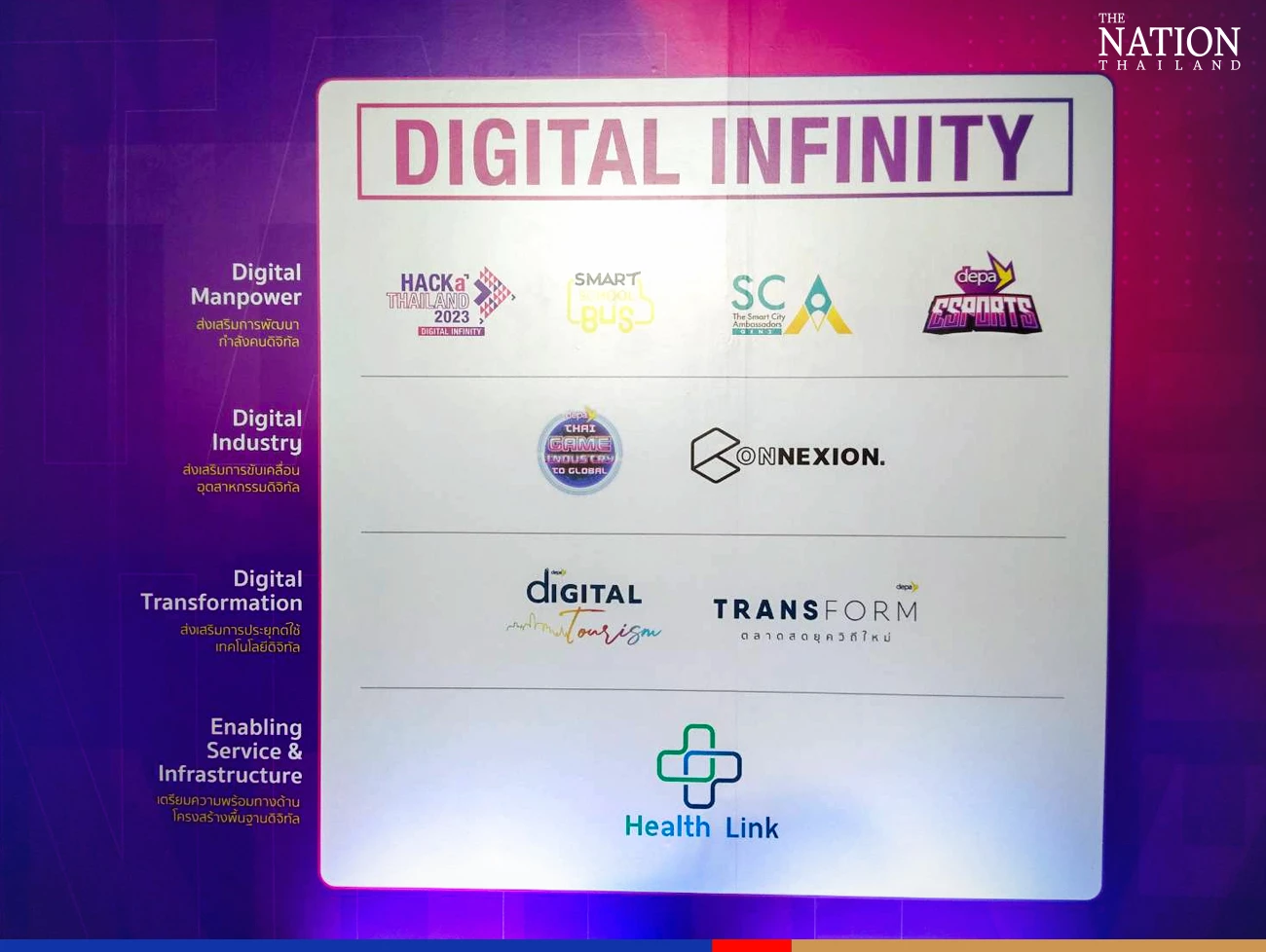
The strategic plan comprising eight projects under the “Digital Infinity” concept is being launched jointly by the Digital Economy and Society (DES) Ministry and the Digital Economy Promotion Agency (depa).
Assoc Prof Dr Nuttapon Nimmanphatcharin, depa president, told the press on Monday that the eight projects will go into operation gradually over the next 360 days and start showing concrete results by August 2023.
He said the aim is to generate at least 320 billion baht by upskilling more than 6.2 million Thai workers.
“The projects will help improve the adoption of digital technology and innovation, as well as the readiness of Thailand’s digital infrastructure and ecosystem to prepare for a thriving digital economy and society,” Nuttapon said.
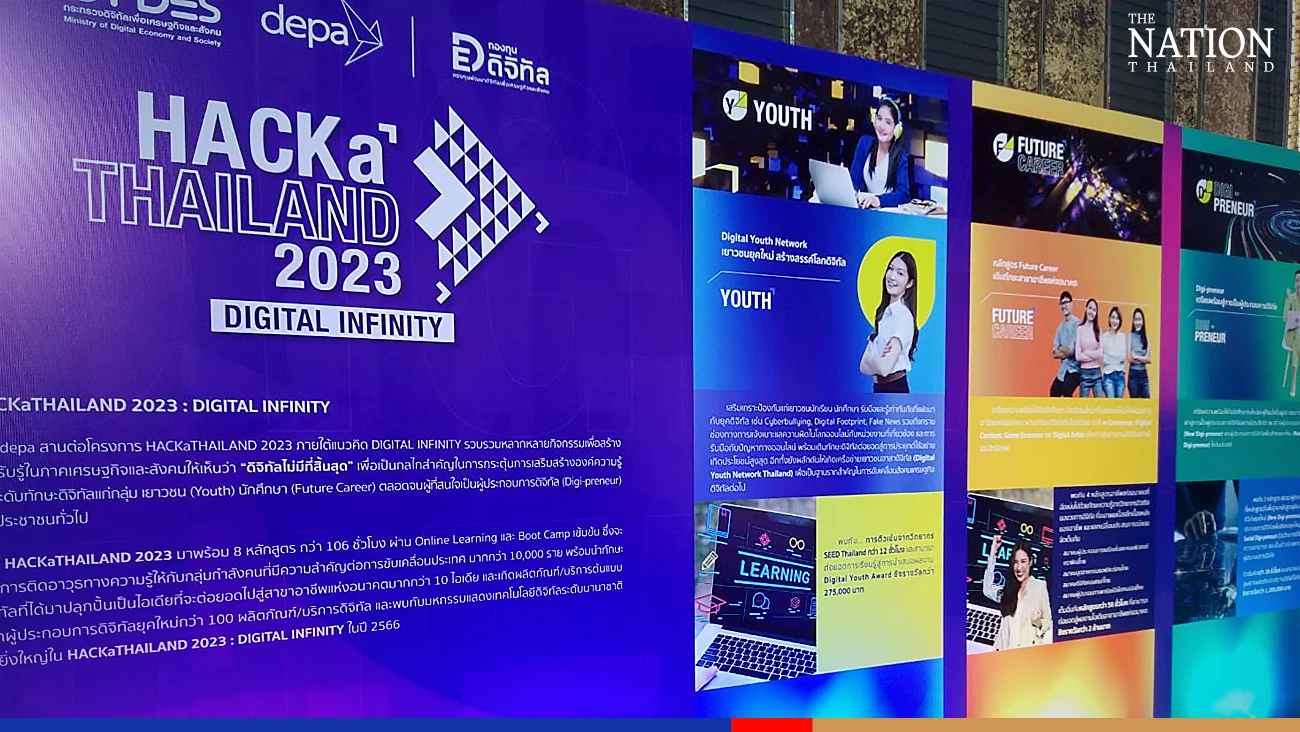
The first project, “HACKaThailand 2023: Digital Infinity”, will kick off next month with a contest that aims to boost the digital skills of the Thai public.
Participants can use the digital knowledge gained at the hackathon to advance their careers, he said.
HACKaTHAILAND will comprise three main activities: an online learning platform, the hackathon and a digital showcase.
Nuttapon said the event will showcase a variety of advanced technologies under the themes of digital manpower development, digital industry development, digital technology adoption and innovation promotion and digital infrastructure readiness.
“Depa hopes that with hands-on experience at the event, more Thais will be able to experience and learn about digital technology and innovation,” Nuttapon said.
The other projects under the Digital Infinity strategy are Smart School Bus Platform, Smart City Ambassadors GEN 2, Thai e-Sports Internationalisation Project, Thai Game Industry to Global, CONNEXION Project, Reopening the Country with Digital Tourism Platform and Transform: New-Normal Market Project.
Nuttapon said the plan will cost approximately 3 billion baht, with depa providing 1 billion baht and the remainder coming from the private sector.
DES Ministry’s Vice Minister Newin Chochaiyathip told the press on Monday that the project is part of the government’s efforts to reskill and upskill Thais so they can become “digital citizens”.
“They will be able to adapt their skills and embrace digital technology for opportunities in next-generation professions,” Newin said.
He added that the new digital roadmap will also help the country develop its own digital experts, reduce reliance on foreign know-how and accelerate the development of Thai-made technology and innovation.
The government is also preparing a digital infrastructure and ecosystem to support economic activities to smoothen the transition to “Digital Thailand”.
He added that the government was committed to encouraging farmers, small businesses, community enterprises and entrepreneurs to use technology and solutions provided by Thai digital start-ups to improve business performance.
BOI frames new 5-year investment promotion strategy to pave way for new economy
MONDAY, OCTOBER 17, 2022
Thailand’s Board of Investment (BOI) last week approved the framework of its new investment promotion strategy for the next five years, which will focus on entering the new economy era.
The strategy involves encouraging technological advancement, a transition to green and smart Industries, talent development, as well as creativity and innovation, to strengthen the country’s status as a regional hub for business, trade and logistics.
The new investment promotion strategy (2023-27) aims to promote investment to restructure the country’s economy around three core concepts: innovation, technology, and creativity; competitiveness and the ability to adapt quickly; and, inclusiveness, taking into account environmental and social sustainability.
“In view of the challenging, volatile and highly competitive global environment, the BOI will stay ahead of changes and keep promoting investment in a way that achieves concrete results, helping to lead Thailand into the new economy,” Narit Therdsteerasukdi told reporters during his first press conference since taking over as secretary-general of the BOI on October 3.
”To reach that objective, the BOI will broaden its role from that of a ‘promoter’ providing tax and non-tax benefits, to focus on becoming an ‘integrator’ of investment support tools, a ‘facilitator’ providing services, and a ‘connector’ linking industries to create more business opportunities.”
To implement the strategy and its vision of the new economy, the BOI will articulate its investment promotion policies around seven pillars:
● Upgrade existing industries, in parallel with the building of new industries in which Thailand has high potential, and an overall strengthening of the supply chain
● Acceleration of industrial transition to green and smart industries through investments in automation, digital adoption and decarbonisation
● Promotion of Thailand as a business centre, and an international trade and investment gateway for the region
● Strengthening SMEs and startups, ensuring they are connected to the global market and supply chain
● Promotion of investments in the different regions of Thailand that fits the potential of each area and enables inclusive growth
● Promotion of investments that will promote community and society development
● Promotion of Thailand’s overseas investment to expand business opportunities for Thai companies
Further details of the policies and sector-specific incentive packages will be presented to the board and announced in coming weeks, Narit said.
During the first nine months of 2022, foreign and local investors filed with the BOI a total of 1,247 applications for investment promotion, worth a combined 439.1 billion baht (US$11.6 billion), Narit said.
While the number of applications rose 8.5 per cent when compared to the 1,149 projects seen in the first nine months of 2021, the combined value fell 14.1 per cent, from 511 billion baht, reflecting a smaller average project size.
Thailand’s Eastern Economic Corridor (EEC) area saw 376 projects applying for promotion, representing a combined investment value of 246.7 billion baht, or 56 per cent of the total value of applications in the first nine months, Narit said. Most are investments in Rayong and Chonburi provinces.
Foreign direct investment (FDI) applications decreased 25 per cent year on year to 275.6 billion baht
The main source of FDI applications in the first nine months was China with 45 billion baht, followed by Taiwan (39.3 billion baht), Japan (37.6 billion baht), the US (34.3 billion baht), and Hong Kong (26.3 billion baht).
During the first nine months, FDI applications data for China, Hong Kong and Taiwan all included investments in the manufacturing of new electric vehicles (EV) and parts. Major EV investments announced in Thailand this year involve plants by BYD, whose investment is coming through its Hong Kong-based unit, and Foxconn.
Over the nine months to September, the BOI issued promotion certificates to 1,101 projects, an increase of 17 per cent year on year. The combined investment value of the certificates amounted to 357.6 billion baht, an increase of 57 per cent, Narit said.
“The promotion certificate statistics, the closest data we have to actual investment, are sending a clear signal that over the next one to two years, there will be a significant increase in actual investment flows,” Narit said.
Government considering extending shopping subsidy scheme to lift economy in last quarter
MONDAY, OCTOBER 17, 2022
THE NATION
The Finance Ministry is looking at reviving the “Shop Dee Mee Kuen” (Shop and Payback) scheme to stimulate the economy towards the year-end. There is no word yet on whether the “Khon La Khrueng” (Let’s Go Halves) co-shopping subsidy campaign, which expires this month, would be extended.
The Fiscal Policy Office (FPO) said on Monday that it is finalising the details for the new phase of the Shop Dee Mee Kuen scheme, with some adjustments made to the original criteria when it was first introduced in 2020.
Under the original Shop Dee Mee Kuen, people who shopped for specified products, such as those with VAT (excluding alcoholic beverages, tobacco, accommodation, or flight tickets), OTOP, or books, will receive a tax discount in line with the scheme’s rules.
However, FPO director and Finance Ministry spokesman Pornchai Theerawet said a decision is yet to be made on extending the Khon La Khrueng to its sixth phase. Under the scheme, the government covers 50 per cent of bills for food, drinks and basic necessities up to 150 baht per day when paying via Pao Tang application at participating shops. The fifth phase will end on October 31.
Pornchai said the fifth phase, which capped the spending at 800 baht per person, has recorded total spending of 34.3 billion baht, from 24.02 million people, as of Sunday. He said 8.75 million people, or 36 per cent of all registrants, had already maxed out their 800-baht limit.
Pornchai added the FPO estimates that measures stimulating domestic spending would help boost the country’s economy towards the year-end, and hoped to see gross domestic product (GDP) in 2022 expand by 3.0 to 3.5 per cent.
He said the Fiscal Policy Office estimated next year’s GDP growth at least 4 per cent, with tourism sector a major contributor thanks to the increasing number of foreign visitors.
The Finance Ministry will release by the end of October its updated forecast on economic expansion this year and in 2023.
The International Monetary Fund in August predicted 2.8 per cent GDP growth for Thailand in 2022.








 Nuttapon said the event will showcase a variety of advanced technologies under the themes of digital manpower development, digital industry development, digital technology adoption and innovation promotion and digital infrastructure readiness.
 The other projects under the Digital Infinity strategy are Smart School Bus Platform, Smart City Ambassadors GEN 2, Thai e-Sports Internationalisation Project, Thai Game Industry to Global, CONNEXION Project, Reopening the Country with Digital Tourism Platform and Transform: New-Normal Market Project.
 DES Ministry’s Vice Minister Newin Chochaiyathip told the press on Monday that the project is part of the government’s efforts to reskill and upskill Thais so they can become “digital citizens”.


