Labour Minister Suchart Chomklin on Monday met Thailand’s ambassador to Finland and sought his help in finding job opportunities for Thai workers in the northern European nation.
Suchart and his delegation met ambassador Chavanart Thangsumphant at the Thai embassy in Helsinki to discuss job opportunities for Thai workers in Finland.
Suchart’s delegation included Surachai Trakulthong, assistant to the labour minister, Labour Ministry spokeswoman Thianrat Nawamawat, Wannarat Srisuksai, deputy permanent secretary at the Labour Ministry, Pairoj Chotikasathien, director-general of the Department of Employment.
Among other things, Suchart said he discussed with the ambassador opportunities for unskilled workers from Thailand as berry-pickers with proper contracts and with all rights, perks and protection under Finnish law.
Suchart said he and his delegation also discussed with the ambassador about coordination between the Labour Ministry and the Thai embassy in Helsinki through a working group.
Suchart said the ministry hoped that the coordination would help Thai skilled and unskilled workers in Finland receive protection and welfare in accordance with the law.
He added that the ministry also aimed to have the working group find more labour markets for Thai workers in Finland.
During the meeting, Suchart thanked the ambassador for taking good care of Thai workers in Finland.
Suchart also had a chance to meet and discuss with executives of Helsinki Partners, which is a city marketing, investment and talent attraction company owned by the City of Helsinki.
Suchart said he discussed with the executives about exporting Thai workers to work in fields where Finland has a shortage of workforce.
The minister added that the embassy would lead representatives of private firms in Finland to visit Thailand in October to explore opportunities to hire workers.
The labour minister said Thailand has the potential to export workers to Finland. In 2021 and 2022, the Labour Ministry sent 7,902 workers to the country. Most of the labourers worked in the agricultural sector, while the second largest group worked as Thai cuisine chefs, Suchart said. Thai workers sent back about 700 million baht a year in remittances, he added.
Helsinki Partners CEO Clarisse Berggårdh told Suchart that Finland is facing a severe shortage of labour force, because the country is becoming an ageing society.
He said Finland needed a lot of employees in the fields of IT, computer programming and smart technologies, as well as staff to take care of the elderly.
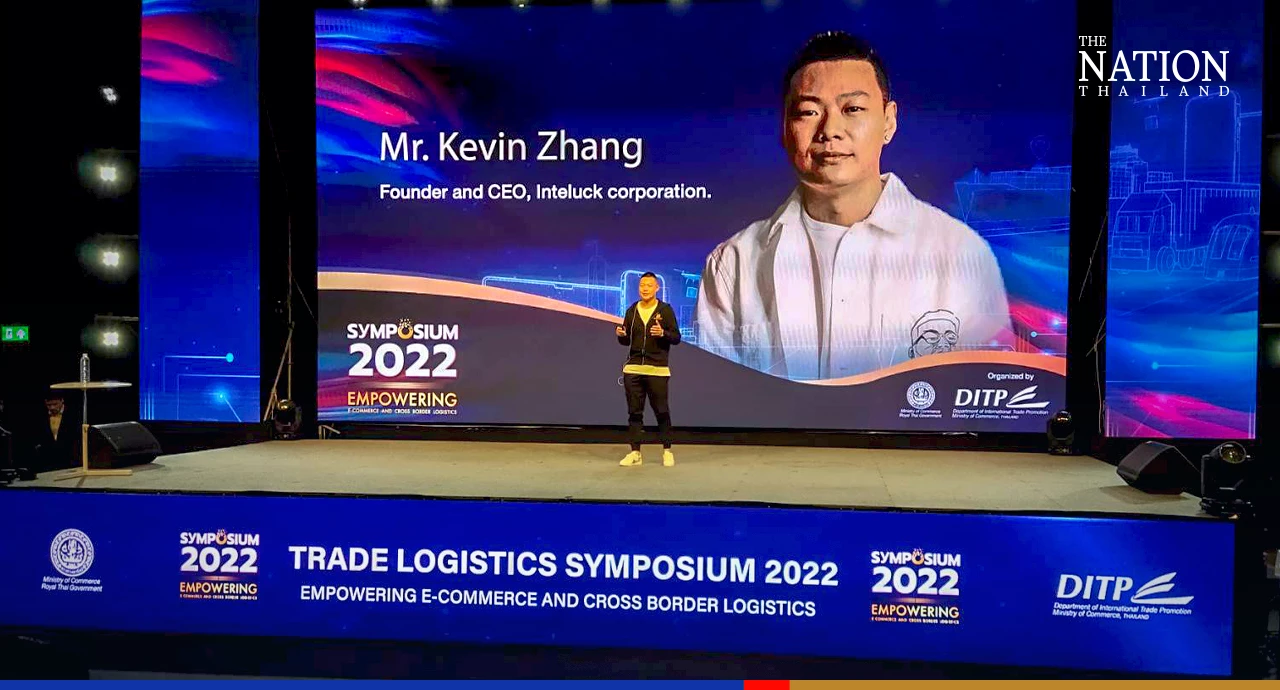
Cooperation with stakeholders and the application of technology to business operations are key to survival in the digital era, logistics and e-commerce experts said at the “Trade Logistics Symposium 2022”.
The event, organised by the Department of International Trade Promotion, was held on September 2 and 3 at Lido Connect in downtown Bangkok and online via the Zoom application.
The event’s aim was to help personnel in logistics and related sectors exchange knowledge on the trends and directions of the industry so they can enhance their operations to meet international standards.
The event also aimed to boost the regional and international competitiveness of Thai logistics providers and international tour operators.
Up to 330 logistics providers, importers, exporters, students and other interested persons joined the event both online and in person.
The event comprised five discussions and one seminar, namely:
Cross border trade: Challenges of multi-transportation logistics
Kevin Zhang, founder and CEO of Philippines logistics provider Interluck, said Thailand plays a key role in cross-border trade in Southeast Asia as it is close to Myanmar, Laos, Cambodia, Vietnam, Malaysia and China.
However, he said, there are four challenges, namely change in customers’ expectations, customs delays, accurate and transparent landing cost calculation and global supply chain shortage.
He advised businesses to be transparent and use technology in business operations to boost efficiency and gain customer confidence.
“The key is to connect all segments in logistics in response to challenges and difficulties in cross-border trade,” he said.
Fulfilment and warehousing in 21st century
Nattapume Pavaratn, executive committee member and senior vice president at JWD InfoLogistics, said there were many pain points in doing business, including finding the right sales channel and managing operational costs.
Nattapume, who is also president of Warehouse Silo and Cold Storage Business Association, said consumers’ feeling toward brands poses a challenge to businesses.
To tackle these challenges, he advised entrepreneurs to improve warehouse management and be flexible so they can fulfil consumers’ demands effectively. He also advised small business owners to adopt technology as it can solve their pain points effectively.
“Even though technology can help entrepreneurs with warehouse management, they should pay attention to many factors, such as business size and investments,” he said.
He also asked entrepreneurs to pay attention to the environment as green economy is part of the 21st century’s megatrends, along with robotic automation, fintech, data-driven business and e-commerce.
Tips to start door-to-door services
Jamie Ko, director of regional public affairs and policy at Grab, said the digital economy has brought benefits and opportunities to entrepreneurs, especially when it comes to seeking customers.
Since Southeast Asia’s digital economy has grown significantly during the Covid-19 crisis, she said, entrepreneurs should collaborate with partners to gain maximum benefits from the digital economy.
“The question is how do we work together across all stakeholder groups to gain benefits from the digital economy,” she said.
E-commerce, cross-border impact on Asean logistics industry
Cecile Barayre-El Shami, chief of United Nations Conference on Trade and Development (UNCTAD)’s Digital Economy Capacity-Building Section, said many e-commerce platforms had benefited during the pandemic.
She explained that e-commerce sales have increased exponentially from US$2.5 trillion in 2019 to $3.9 trillion in 2021, with the top three platforms being Alibaba, Amazon and jd.com.
She went on to say that Asean countries are working on e-commerce development, focusing on cross-border trade, business facilitation and consumer satisfaction by 2025.
However, she added, many countries in the region are less ready to engage in and benefit from e-commerce, such as internet access, logistics, skills availability and government strategies.
To make digital trade more sustainable and inclusive, she said, Asean countries should develop affordable and reliable ICT connectivity, build digital skills to ensure everybody can access digital trade, and improve regulatory framework and measurement.
“E-commerce ecosystem needs cooperation from every sector, such as government, digital commission and non-governmental organisations,” she said.
Collaboration at the heart of e-commerce logistics
Behzad Goudarzian, logistics manager of the United Arab Emirates supply chain solutions provider ISS Global Forwarding, said collaboration is the heart of e-commerce logistics.
He said all sectors, including consumer, marketplace, vendor, international freight, customs clearance, fulfilment and delivery, should work together, otherwise the operation would face difficulties.
“All gears should relatively move on the same page. If one gear stops, all gears will stop,” he said.
He also advised related agencies in e-commerce and logistics industries to focus more on data integration, ease customs procedures, streamline processes and use trusted digital payments.
Meanwhile, Pravin Shetty, ISS Global Forwarding’s regional IT manager, said technology also plays an important role in the e-commerce and logistics industries as they can facilitate many issues, such as system integration, secure transactions and risk mitigation.
He advised related agencies to apply four technologies to e-commerce and logistics operations, namely application programming interface, blockchain, internet of things and big data.
“Related agencies should optimise rules, improve delivery, ensure that the country’s infrastructure is in place and make use of equipment and resources,” he said.
Time for logistics marketplace platform in Mekong region
Piyanoot Sumrith, president of the Thai Transportation & Logistics Association, said the Mekong region is well prepared for adopting the logistics marketplace platform.
She added that people were now familiar with online shopping, thanks to the Covid-19 crisis over the past two years, as well as the government’s incentives, such as the Khon La Khrueng (Let’s Go Halves) co-paying scheme.
Piyanoot, who is also managing director of the delivery service WeMove Platform, expects the logistics marketplace platform to meet customers’ demand once factors like logistics and customs procedures are made smoother.
“It’s a good time to build the logistics marketplace platform as everything is ready, especially technology,” she said.
James Marchant, chief logistics officer for Lazada Express (Thailand), said even though the Covid-19 crisis changed customers’ behaviour, their expectation of the best service never changes.
He said it is only a matter of time before technology will play an important role in providing a different experience to customers, such as drones and robots.
“There are many trends that continue accelerating, such as how fast and how cheaply you can deliver and how strong is your return process,” he said.
Rachelle Alexis Lim, executive director of strategy and business development of payments platform 2C2P, said people preferred online shopping not just because of convenience but also because their demands have changed.
Echoing Marchant, she said online adoption will help boost the marketplace’s efficiency to provide experiences to customers, adding that many people preferred online payment instead of cash on delivery.
“Many businesses have shifted from traditional commerce to e-commerce even after the pandemic,” she said.
The panellists also urged the government to collaborate with related agencies to develop a logistics marketplace platform in the Mekong region and address it from various aspects, such as easing customs procedures and promoting technology adoption for sustainable growth.
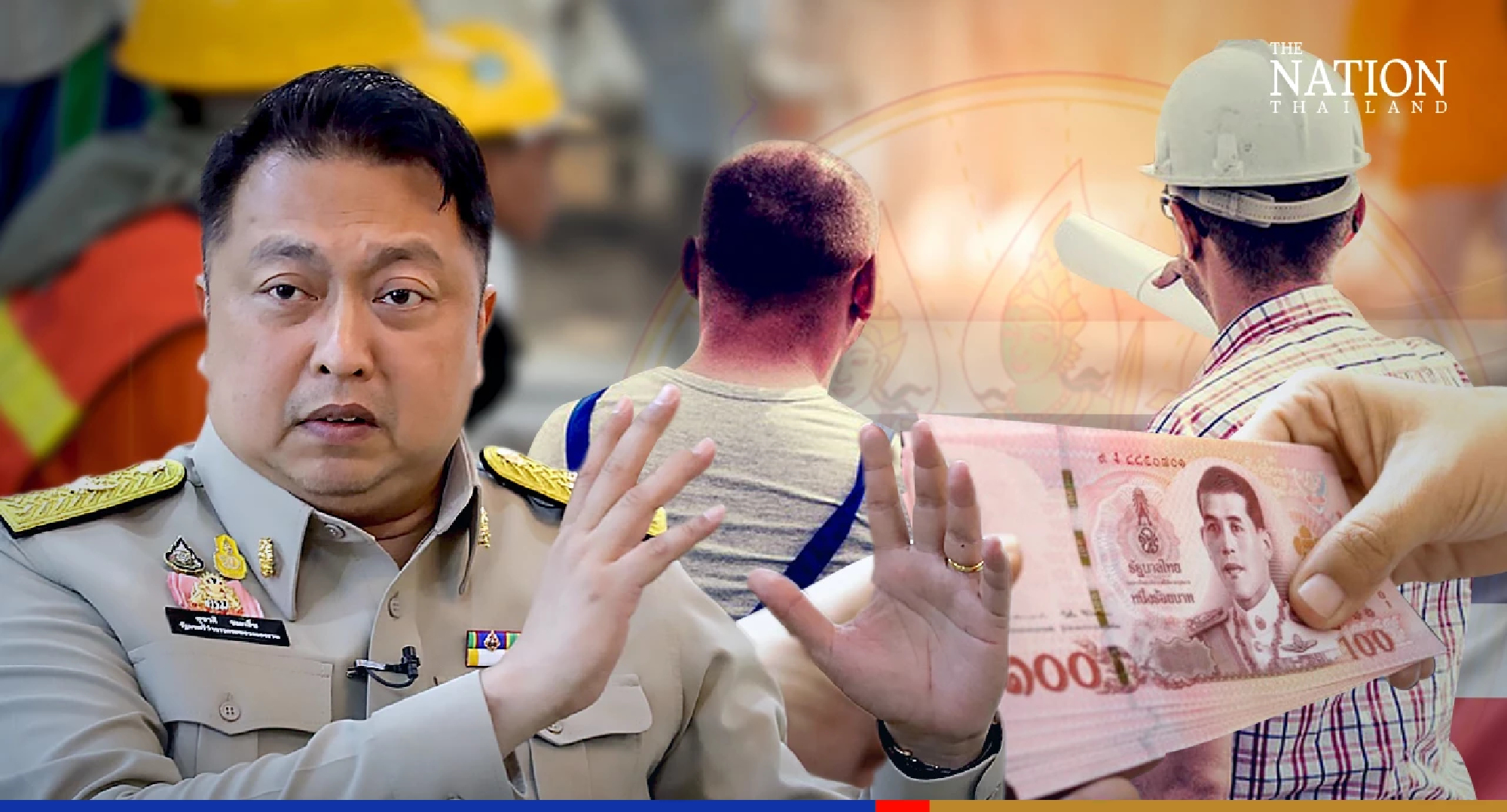
Labour Minister Suchart Chomklin said on Tuesday that he will ask the Cabinet to approve the new daily minimum wage rates next week so they can go into effect on October 1.
He said if approved, unskilled labourers should get an average daily wage hike of 5.02 per cent instead of the 8 per cent labour unions had demanded to keep up with inflation.
This is the first time that daily wages are being increased since January 2020.
The Labour Ministry is pushing for the new rates to go into effect from October, even though employers’ representatives on the tripartite national wage committee want it to be implemented in January and be no more than 3 per cent.
Employers have expressed concern that hikes from October would place too much of a financial burden on companies still reeling from the Covid-19 crisis.
The wage panel last week approved nine rates for nine zones in the country.
The zone covering Chonburi, Rayong and Phuket will enjoy the highest rate of 354 baht per day, while the lowest rate, 328 baht, will apply to Yala, Narathiwat, Nan and Udon Thani. Workers in Bangkok and adjacent provinces will get 353 baht daily.
The nine daily wage rates for the next fiscal year approved by the panel are:
• 335 baht: Phetchabun, Kanchanaburi, Bueng Kan, Chai Nat, Nakhon Phanom, Phayao, Surin, Yasothon, Roi Et, Loei, Phatthalung, Uttaradit, Nakhon Sawan, Prachuap Khiri Khan, Phitsanulok, Ang Thong, Sa Kaew, Buri Ram and Phetchaburi
• 332 baht: Amnat Charoen, Mae Hong Son, Chiang Rai, Trang, Si Sa Ket, Nong Bua Lamphu, Uthai Thani, Lampang, Lamphun, Chumphon, Maha Sarakham, Singburi, Satun, Phrae, Sukhothai, Kamphaeng Phet, Ratchaburi, Tak, Nakhon Si Thammarat, Chaiyaphum, Ranong and Phichit
• 328: Yala, Pattani, Narathiwat, Nan and Udon Thani
Suchart said the Cabinet will also consider other measures to minimise the economic impact of the daily wage rate hike, which will be handed down to other relevant agencies to enforce.
The baht opened at 36.51 to the US dollar on Tuesday, strengthening from Monday’s close of 36.56.
The currency is expected to move between 36.40 and 36.60 during the day, Krungthai Bank market strategist Poon Panichpibool predicted.
He said the baht is highly volatile amid concerns over Europe’s energy crisis, which is pressuring the euro and supporting the dollar.
Moreover, he does not expect investors to adjust their possession of assets until the European Central Bank’s meeting on Thursday, so the baht will swing sideways until there is a new factor.
Poon said the baht may possibly weaken during the day if the market is still in a risk-off state and investors sell off more Thai stocks.
However, he expects the stock sales to slow down as some investors are waiting for the stock index to drop and the baht to weaken before they buy more stocks.
However, the baht may strengthen from a bearish divergence technical sign, especially since it strengthened more than expected on Monday.
The strategist advises investors to use hedging tools such as options to manage risks in a highly volatile currency market.
The State Railway of Thailand (SRT) will put one of the 17 trains donated by Japan on the track for special short trips from October onwards.
SRT governor Nirut Maneephan said the four-bogey train may be used for trips from Bangkok to places like Sai Yok Falls in Kanchanaburi, Hua Hin or the Pasak Dam in Lopburi.
“SRT hopes the KIHA 183 trains will play a big part in promoting tourism in Thailand,” he said. “They will offer tourists a brand new experience.”
He added that SRT has renovated 13 of the 17 KIHA 183 trains donated by the Hokkaido Railway Company.
Of the 17 air-conditioned diesel locomotives, eight can seat 40 passengers, eight can seat 68 passengers and one carriage has 52 seats. The trains arrived in Thailand on December 13.
Nirut said SRT spent 42.5 million baht bringing the trains to Thailand and will spend about 200,000 baht each on renovation. However, he said renovating a used train is 400-times cheaper than buying a new one, which can up to 100 million baht.
He added that SRT has successfully conducted test runs with the train on the Makkasan-Chachoengsao route and learned it can comfortably achieve a maximum speed of 100 kilometres per hour.
He said 13 trains should be ready for short trips this year, adding that he is confident the locomotives will be in service for another 15 to 20 years.
In the second phase, the SRT will completely overhaul the trains by changing wheels, bearings, engines, electrical systems, brakes and air-conditioning so they can be used for long-haul services, Nirut said. The overhaul may take two years to complete, he added.
Six suspects were arrested on Monday for alleged looting at Chaweng Blue Lagoon The Teak Wing, a 384-room luxury hotel in Samui Island, Surat Thani province.
The arrest came after the hotel owner, Yomana Poolsawat, informed the police on Sunday, that many hotel assets, such as doors, utensils, windows, electric wires and lamps worth more than 70 million baht had been robbed.
She added that the hotel assets were robbed when the hotel was closed since 2020 as the 30-year hotel lease contract with a Swiss businessman had expired during that time.
Police seized the suspects’ equipment, stolen hotel assets and a six-wheel truck as evidence.
Bophut Police Station superintendent Pol Colonel Yuttana Sirisombat said the police will continue its investigation to seek more suspects and buyers of hotel assets.
He added that six suspects were charged for burglary at night using a vehicle.
“The police will do their best to find more suspects and bring back as many of the stolen assets as possible,” he said.
Ratchaporn Poolsawat
Meanwhile, Koh Samui Tourism Promotion Association President Ratchaporn Poolsawat said that hotel operators who faced looting can contact the association, so the association will cooperate with Bophut Police Station in taking legal action.
He added that the association has also cooperated with security agencies in implementing measures to deal with similar incidents in a bid to regain the confidence of investors.
The National Water Command Centre (NWCC) will appoint a frontline water management working unit to tackle floods in the Northeastern and Central regions.
Chayan Muangsong, deputy secretary-general of the Office of the National Water Resources (ONWR), said after a meeting on Monday that the NWCC had approved the setting up of frontline working units in risky areas in the Northeastern and Central regions.
They will prepare, monitor, analyse, and direct local organisations to manage the water until the situation improves.
The centre will present the plan to acting Prime Minister Prawit Wongsuwan for approval before setting up the first unit in Ubon Ratchathani province.
He explained that heavy rains are likely in the Chi and Mun river basins in the Northeast from Tuesday to next Monday (September 6-12).
The area might be hit by floods, while Ubon Ratchathani is an important economic zone where people would be affected.
The NWCC is expecting heavy rains from Tuesday to Friday in Suphanburi, Chai Nat, Singburi, Ang Thong, Ayutthaya, and Saraburi provinces.
River basins in these areas might be affected by floods as they are lowlands, while Ayutthaya is an important historical site.
Meanwhile, the ONWR has joined hands with the Thai Meteorological Department and the Hydro-Informatics Institute to create One Map for predicting rains.
Chayan said heavier rains were expected this year according to One Map, so the NWCC is collaborating with related organisations to manage the water in the reservoirs in preparation for rains.
A man was arrested on Monday night for allegedly lobbing rocks at cars parked near Wat Nong Kuti in Suphan Buri’s U Thong district.
Police rounded up the suspect after the owners of a grey pick-up truck and a white car filed a complaint saying that a man on a blue motorcycle had hurled rocks at their vehicles at around 7pm that day.
The grey truck’s roof was dented and the windscreen shattered, while the white car’s roof was also dented.
The victims led police officers to the suspect’s house nearby, where they found the blue motorcycle parked outside and the suspect hiding in a mango tree.
The suspect, later identified as Saranpat Boonchuay, refused to come down from the tree saying he was being bullied by big cars and ghosts. It took officers about an hour to coax him to come down.
Saranpat, whose age was not revealed, was found to be a drug addict and was taken to U Thong Police Station. He was initially charged with consuming narcotics and causing damage to other people’s property.
Investigators have said they will summon other victims for questioning and take further legal action.
The two victims have called on the police to set up lights and survey the area regularly to ensure such dangerous incidents do not occur again.
TMB Thanachart Bank (ttb) has said it will work on boosting the stability and efficiency of its “ttb touch” mobile banking application after it crashed for two days last week.
The app blacked out on Thursday and Friday (September 1-2), affecting millions of ttb clients.
Piti Tantakasem, the bank’s chief executive officer, said on Monday that the app crashed because the number of transactions had exceeded the limit. The app’s latest version was launched in May this year and has more than 4.5 million users.
“The bank worked with related teams to solve the outage problem as soon as possible and has launched measures to mitigate the impact on customers,” he said.
He added that the bank has taken steps to compensate users, such as extending the working hours of branches outside shopping malls, as well as waiving fees for issuing debit cards, funds transfers and late loan payments.
He added that the bank was strictly complying with the Bank of Thailand’s regulations to improve the mobile banking system and has taken appropriate steps to ease customers’ inconvenience.
Piti also confirmed that he and other bank executives will be part of the team to work on improving the mobile app as planned.
“We apologise to the customers from the bottom of our hearts and are willing to hear their comments to improve and develop the app, so it is more efficient,” he said.
He also vowed to compensate customers affected by the app outage to the fullest.
Many parts of Thailand may be hit by flash floods until Friday, the Thai Meteorological Department reiterated on Tuesday.
It said an active monsoon trough is covering the lower North and Northeast until Friday, while the southwest monsoon trough continues prevailing over the Andaman Sea, Thailand and the Gulf of Thailand.
The department expects more rain across the country, with isolated heavy to very heavy rain in the North, Northeast, East, South and Central region, including Greater Bangkok.
Strong winds are expected to create 2-3 metre high waves in the upper Andaman Sea and the upper Gulf of Thailand and even higher during thundershowers.
Waves in the lower Andaman are expected to rise about 2 metres high, and higher during thundershowers.
The department warned people to beware of flash floods and overflows. Ships have been advised to proceed with caution and avoid thundershowers while small boats in the upper Andaman Sea and the Gulf are advised to stay onshore until Friday.
The affected areas are as followings:
Tuesday to Wednesday
North: Mae Hong Son, Chiang Mai, Lamphun, Lampang, Phrae, Sukhothai, Uttaradit, Tak, Kamphaeng Phet, Phichit, Phitsanulok and Phetchabun.
Northeast: Loei, Nong Bua Lamphu, Udon Thani, Chaiyaphum, Khon Kaen, Kalasin, Mukdahan, Maha Sarakham, Roi Et, Yasothon, Amnat Charoen, Nakhon Ratchasima, Buri Ram, Surin, Si Sa Ket and Ubon Ratchathani
Central: Nakhon Sawan, Uthai Thani, Chai Nat, Singburi, Ang Thong, Ayutthaya, Lopburi, Saraburi, Kanchanaburi, Suphan Buri, Ratchaburi, Nakhon Pathom, Samut Songkhram and Samut Sakhon including Greater Bangkok
East: Nakhon Nayok, Prachinburi, Sa Kaew, Chachoengsao, Chonburi, Rayong, Chanthaburi and Trat.
South: Phetchaburi, Prachuap Khiri Khan, Chumphon, Surat Thani, Ranong, Phang Nga, Phuket and Krabi.
Thursday to Friday
North: Mae Hong Son, Chiang Mai, Chiang Rai, Lamphun, Lampang, Phayao, Phrae, Nan, Sukhothai, Uttaradit, Tak, Kamphaeng Phet, Phichit, Phitsanulok and Phetchabun.
Northeast: Loei, Nong Bua Lamphu, Nong Khai, Bueng Kan, Udon Thani, Sakon Nakhon, Nakhon Phanom, Chaiyaphum, Khon Kaen, Kalasin, Maha Sarakham, Roi Et, Nakhon Ratchasima, Buri Ram, Surin, Sisaket and Ubon Ratchathani.
Central: Nakhon Sawan, Uthai Thani, Chai Nat, Sing Buri, Ang Thong, Ayutthaya, Lopburi, Saraburi, Kanchanaburi, Suphan Buri, Ratchaburi, Nakhon Pathom, Samut Songkhram and Samut Sakhon including Greater Bangkok
East: Nakhon Nayok, Prachinburi, Sa Kaew, Chachoengsao, Chonburi, Rayong, Chanthaburi and Trat.
South: Phetchaburi, Prachuap Khiri Khan, Chumphon, Ranong, Phang Nga and Phuket
From Saturday to Sunday, the monsoon trough will move across the North and the Northeast while the moderate southwest monsoon will cover the Andaman Sea and the Gulf of Thailand, causing heavy rains in some areas in Thailand.
The department added that the Hinnamnor typhoon is heading to South Korea and Japan, and will not affect Thailand.


 Among other things, Suchart said he discussed with the ambassador opportunities for unskilled workers from Thailand as berry-pickers with proper contracts and with all rights, perks and protection under Finnish law.





 Nirut said SRT spent 42.5 million baht bringing the trains to Thailand and will spend about 200,000 baht each on renovation. However, he said renovating a used train is 400-times cheaper than buying a new one, which can up to 100 million baht.
 In the second phase, the SRT will completely overhaul the trains by changing wheels, bearings, engines, electrical systems, brakes and air-conditioning so they can be used for long-haul services, Nirut said. The overhaul may take two years to complete, he added.


 Ratchaporn Poolsawat


