The Nigerian monkeypox patient who fled from Thailand to Cambodia has recovered and was discharged from hospital on Saturday, the Cambodian Health Ministry’s spokesperson Or Vandine said.
The patient was detained in Phnom Penh on July 23, one day after lab results in Thailand confirmed he had monkeypox.
Vandine said the Khmer-Soviet Hospital discharged the man when his negative test result was confirmed at the Pasteur Institute Laboratory on Friday.
“This person has been handed over to the authorities, who may continue with any legal procedures deemed necessary,” she said.
“The public is urged to be careful and to continue implementing preventive measures to protect themselves from the spread of monkeypox.”
The Phnom Penh Post
Asia News Network
Asia News Network: The Nation (Thailand), The Korea Herald, The Straits Times (Singapore), China Daily, The Jakarta Post, The Star and Sin Chew Daily (Malaysia), The Statesman (India), Philippine Daily Inquirer, Yomiuri Shimbun and The Japan News, Gogo Mongolia, Dawn (Pakistan), The Island (Sri Lanka), Kuensel (Bhutan), Kathmandu Post (Nepal), Daily Star (Bangladesh), Eleven Media (Myanmar), The Phnom Penh Post and Rasmei Kampuchea (Cambodia), The Borneo Bulletin (Brunei), Vietnam News, and Vientiane Times (Laos).
South Korean immigration officials said on Sunday that they are unable to track 55 of the 280 Thai tourists who entered the country via Jeju Island earlier this week.
Of the 697 Thai nationals who had taken a direct Jeju Airlines flight to the island between Tuesday and Friday, 417 had been denied entry and flown home, the Jeju Immigration Service said.
Of the 280 Thais who entered the country on a three-day tourism package, 55 have disappeared, officials said, adding that the immigration office is trying to figure out where they went.
The authorities said that 367 of the 697 Thai tourists had previously been denied entry under the Korea electronic travel authorisation (K-ETA) scheme. They said Thai visitors prefer entering South Korea via Jeju as they can enter without undergoing the K-ETA procedure.
Under the K-ETA scheme, citizens from 112 visa-waiver countries, including Thailand, are required to obtain an ETA online before travelling.
However, the Seoul government has exempted foreign arrivals at Jeju International Airport from producing K-ETA documents because Jeju is a popular tourism spot.
The South Korean Justice Ministry said recently that it is pushing for the K-ETA system to be applied to Jeju Island as well.
The country has a long-standing problem with illegal migrant workers, especially Thais. They usually enter South Korea as tourists but pick up illegal jobs as labourers, which can earn them as much as 60,000 baht a month.
The Korea Herald
Asia News Network
Asia News Network: The Nation (Thailand), The Korea Herald, The Straits Times (Singapore), China Daily, The Jakarta Post, The Star and Sin Chew Daily (Malaysia), The Statesman (India), Philippine Daily Inquirer, Yomiuri Shimbun and The Japan News, Gogo Mongolia, Dawn (Pakistan), The Island (Sri Lanka), Kuensel (Bhutan), Kathmandu Post (Nepal), Daily Star (Bangladesh), Eleven Media (Myanmar), The Phnom Penh Post and Rasmei Kampuchea (Cambodia), The Borneo Bulletin (Brunei), Vietnam News, and Vientiane Times (Laos).
In the past, miniature books were produced for convenience because they could easily be carried in a waistcoat pocket or a woman’s purse. Gradually considered as handcrafted works, mini books are not only a source of knowledge but are also exhibits, collectables, and treasured possessions.
According to Nguyen Thuy Duong, the founder and CEO of Phuc Minh Books, creating miniature books requires a high level of virtuosity and extreme precision that only perfectionists and passionate people have.
“Miniature books are often the crystallisation of the love of literature and the art of printing because artisans have to spend a lot of time and labour to create a masterpiece. Despite its small size, a micro-volume book fully demonstrates the techniques of binding, content presentation, printing and processing, and almost no error is allowed,” Duong said.
In the last two years, Phuc Minh Books has released two sets of these little books: The Body and Soul by Maxence van der Meersch, comprising three books, sized 5.5cm by 7.6cm, and The Little Women by Louisa May Alcott, which consists of five books, sized 6cm by 7.8cm.
These books are produced with techniques first applied in Vietnam. The book’s cover is covered with silk with a highly smooth surface, woven with a delicate technique so that the silk fibres are immensely tight so that even light cannot penetrate.
In a vast old weaving workshop, wiping the sweat from her cheeks, Le Thi Kim Thu, an artisan in Vạn Phuc silk village, said: “To weave using a traditional loom, we select the most durable yarns and use delicate techniques to ensure the smoothness and tightness of the warp and weft. As a result, when pressing the silk sheet to the cover, the silk does not shrink, wrinkle or get glued out, ensuring durability and adhesion.”
“To cut silk into tiny pieces that would fit in a mini book, we drew out the warp and weft to the required size, then cut along the drawn threads so that the silk was cut beautifully by the right size,” Thu said.
Creating a mini book requires special skills in each stage of the production process, from book cover making, page layout, and illustration to printing and binding.
“Although the book is tiny, I had to choose the right font size so the letters still can be readable. Then when laying out the page, I have to pay attention to the ratio, so the reader’s hand will not cover the words when they are reading. With most of the drawings, I will put them on the right-hand side so that they can attract the reader’s attention easily,” book designer Nguyen Thi Hong said.
The illustrations for these books are also exquisite. Tran Minh Tam, an artist who illustrated the books, told Vietnam News: “When drawing in a large version, I can show many techniques and use many different strokes. But with the miniature books, the illustrations shrink to a tiny size, only about one-eighth of the size of the normal book, so I have to pay attention properly. If the stroke is too small, it will be clear, and if it is too thick, it will be rough. I have to do many printing tests to see how effective the illustration is and then continue to perfect it.”
To complete a set of books, the maker has to minimise everything from the pages and cover to the box and accompanying gifts. This requires the designers to be very patient, meticulous and skillful. In the binding stage, the stitches must have a certain distance, and the thickness of the spine must be equivalent to the book’s belly.
It requires the worker to be skilled and choose the right sewing needle and thread. Cutting books is also not as simple as with regular-sized books. The book is small but very thick, making it easy to slip when compressing pages together, requiring the cutting blade to be almost absolute. Therefore, the designer must have an almost absolute precision cropping technique.
“In Vietnam, it is difficult to find a workshop or individual to process these miniature books properly. The products require skilled techniques and to be extremely accurate, but the productivity is very low, so their cost is high. Even so, there are still people willing to secure these products,” Duong said.
“Up to now, Phuc Minh is still the first publishing house to make miniature books, with a minimal number of copies, and they only produce one set of miniature books each year. Therefore, even if the book is a bit expensive, I still can afford it because to me, they are exceptional and rare works,” book collector Tu Xuan Minh said.
Viet Nam News
Asia News Network
Asia News Network: The Nation (Thailand), The Korea Herald, The Straits Times (Singapore), China Daily, The Jakarta Post, The Star and Sin Chew Daily (Malaysia), The Statesman (India), Philippine Daily Inquirer, Yomiuri Shimbun and The Japan News, Gogo Mongolia, Dawn (Pakistan), The Island (Sri Lanka), Kuensel (Bhutan), Kathmandu Post (Nepal), Daily Star (Bangladesh), Eleven Media (Myanmar), The Phnom Penh Post and Rasmei Kampuchea (Cambodia), The Borneo Bulletin (Brunei), Vietnam News, and Vientiane Times (Laos).
Swimmers have been warned to stay away from dolphins in Fukui Prefecture in the wake of attacks on people by what is possibly a single male Indo-Pacific bottlenose dolphin, a species that usually lives in warm waters.
Having installed ultrasonic transmitters on buoys off the coast to repel dolphins, beach officials warned visitors not to approach dolphins even if they look cute.
On July 26, a beach house operator was seen urging people to watch out for dolphins at Koshino beach, located about 20 kilometres west of the Fukui City centre. The shallow waters of the beach are popular with families. The 71-year-old man was telling swimmers to come out of the sea immediately if they saw a dolphin.
According to the man, the dolphin began to be spotted around June and has frequently come into the shallow waters where many people bathe since the opening of the beach on July 9.
On July 24, the city received two reports of injuries involving a dolphin, including one in which a swimmer’s hand was bitten and the individual was taken to a hospital by ambulance.
“I’ve been doing my business here for more than 40 years, but there was never a case where a dolphin came so close to people,” he said.
In April, a dolphin began to be spotted at a fishing port more than 10 kilometres north of Koshino beach. A dolphin also showed up at nearby Takasu beach in the city around June.
Injuries began to be reported in early July when the beach season started. After two men had their hands bitten by a dolphin and incurred wounds at Takasu beach on July 29, swimming at the beach was temporarily banned.
According to the Fukui municipal government, there have been at least 10 cases of dolphin biting or ramming swimmers at the two beaches. Ultrasonic transmitters were installed in the sea at both beaches to repel dolphins. A sign was also put up at Koshino beach, warning people not to touch the animals.
Witness reports suggest there is an Indo-Pacific bottlenose dolphin that is usually found in warm seas around southern islands of Japan such as Amami Oshima island and the Izu Islands. These dolphins, which also live around Australia, are highly curious, and their teeth are sharp to catch fish and keep them from escaping.
Courtesy of a Yomiuri Shimbun reader A dolphin is spotted at Takasu beach in Fukui City on July 29.
According to Ryoichi Matsubara, deputy director of Echizen Matsushima Aquarium in Sakai, Fukui Prefecture, the dolphin sightings in the prefecture are all of the same male dolphins.
“In the unlikely event of a life-threatening situation, it could lead to culling the dolphin or the closure of beaches. I hope that people will try to coexist with the animal by coming out of the sea as soon as they see him,” Matsubara said.
Yusuke Sato and Kensuke Arata
The Japan News
Asia News Network
Asia News Network: The Nation (Thailand), The Korea Herald, The Straits Times (Singapore), China Daily, The Jakarta Post, The Star and Sin Chew Daily (Malaysia), The Statesman (India), Philippine Daily Inquirer, Yomiuri Shimbun and The Japan News, Gogo Mongolia, Dawn (Pakistan), The Island (Sri Lanka), Kuensel (Bhutan), Kathmandu Post (Nepal), Daily Star (Bangladesh), Eleven Media (Myanmar), The Phnom Penh Post and Rasmei Kampuchea (Cambodia), The Borneo Bulletin (Brunei), Vietnam News, and Vientiane Times (Laos).
The 2022 Taihu Bay Future Healthcare Conference held Thursday in Wuxi City in east China’s Jiangsu Province witnessed the launch of Wuxi Intellectual Property Protection Centre with 52 biomedical projects contracted, involving a total of more than 30 billion yuan investment.
The biomedical industry is an important part of Wuxi’s modern industrial system construction during the 14th Five-Year Plan(2021-2025) period. Its scale topped 140 billion yuan in 2021, a year-on-year increase of 24 per cent, making Wuxi among the top 20 prefecture-level cities listed on China Biomedical Industry Barometer in 2021.
Besides the property protection centre, six biomedical industrial parks were licensed and three biomedical public platforms were inaugurated at the conference, which is expected to inject impetus into the development of Wuxi’s biomedical industry.
The city will strengthen and expand its industrial chain to build a 200-billion-yuan modern biomedical industrial cluster, said Du Xiaogang, Secretary of the Wuxi Municipal Party Committee of CPC.
The biomedical industry started early in Wuxi. With a good foundation, it has developed a relatively comp industry chain covering chemical raw medicine production, preparation production, and pharmaceutical service outsourcing, and gathered 1,278 biomedical companies such as AstraZeneca and WuXi Biologics AppTech, showing a strong clustering effect.
Aiming at building a world-class biomedical industry highland with distinctive characteristics, Wuxi not only issued a special policy tailored for the development of biomedical industrial parks but also established a special fund for the modern biomedical industry to reward breakthroughs in forward-looking technologies and innovation research. In 2021, Wuxi funded more than 32 million yuan for the science and technology development of 43 biomedical projects.
Multiple fund agreements were signed at the conference, including a biomedical fund of 5 billion yuan jointly established by Guolian Group, AstraZeneca, and China International Capital Corporation Limited.
Gustavo Petro on Sunday became Colombia’s first leftist president, pledging to unite the polarized country in the fight against inequality and climate change and achieve peace with leftist rebels and crime gangs.
Petro, a former member of the M-19 guerrilla group, was sworn in by Senate President Roy Barreras in Bogota’s Bolivar Plaza on Sunday afternoon, watched by some 100,000 invitees, including Spanish King Felipe VI, at least nine Latin American presidents and other Colombians invited by Petro.
“I do not want two countries, just as I do not want two societies. I want a strong, just and united Colombia,” an emotional Petro said in his inauguration speech.
Petro has promised to revive scuppered peace negotiations with the National Liberation Army (ELN) rebels and apply a 2016 peace deal to ex-members of the Farc guerrillas who reject it. Armed groups should accept that deal, Petro said.
“We call on all those who are armed to leave their arms in the haze of the past. To accept legal benefits in exchange for peace, in exchange for the definitive non-repetition of violence,” Petro told the cheering crowd gathered under a bright Andean sun.
He also called for a new international strategy to fight drug trafficking, saying the U.S.-led war on drugs has failed.
“It is time for a new international convention that accepts that the war on drugs has failed, that it has left a million dead Latin Americans during 40 years and that it leaves 70,000 North Americans dead by overdose each year. The war on drugs strengthened mafias and weakened states,” he said.
Climate change must be fought internationally, but especially by countries which emit the most greenhouse gases, Petro added, saying Colombia would transition to an economy without coal or oil.
Petro, a 62-year-old former senator, has also said a top priority is to fight hunger in the country of 50 million, where nearly half the population lives at some level of poverty.
Petro has also pledged free public university education and healthcare changes and constructed a broad congressional coalition of leftist and centrist parties to pass his platform.
Promises of pension reform and a halt to new oil development have caused investor jitters despite the appointment of Ocampo, a long-time official. Read full story
New Vice President Francia Marquez, an environmental activist and former housekeeper, is the first Afro-Colombian woman to hold her post.
Thousands of supporters celebrated in Bogota and at large screens set up in public places around the country.
Groups of people were also celebrating on both sides of the Colombia-Venezuela border, with dozens gathered on either side of a crossing point on the Simon Bolivar bridge outside Cucuta.
Petro, a former mayor of Bogota, has promised to re-open diplomatic relations with Venezuela, allowing trade between the two countries and consular services to resume.
Petro’s first order as president was for the military to bring the sword of Latin American liberation hero Simon Bolivar – stolen by Petro’s erstwhile M-19 comrades in 1974 – to be displayed in the plaza, after his predecessor Ivan Duque did not authorize its use in the ceremony.
Police in New Mexico and federal agencies were probing the murders of four Muslim men to determine if the killings, the latest of which happened on Friday evening, were linked while the state’s governor described them as “targeted killings.”
Albuquerque Police Chief Harold Medina told reporters on Saturday that a “young man who was part of the Muslim community was murdered.”
The victim’s name and the circumstances of the murder were not disclosed. In the previous three cases, the victims were ambushed and shot without warning, police said.
Medina said the killing was possibly linked to the previous three murders.
Police in New Mexico had said earlier that the other three Muslim men murdered in the state’s largest city in the past nine months appeared to have been targeted for their religion and race.
Two of those murdered men were members of the same mosque, who were shot dead in Albuquerque in late July and early August. Police said there was a “strong possibility” that their deaths were connected to the November killing of an Afghan immigrant.
Muhammad Afzaal Hussain, 27, a planning director for the city of Espanola who came to the United States from Pakistan, was shot dead on Monday outside his Albuquerque apartment complex while Aftab Hussein, 41, was found dead of gunshot wounds on July 26 near the Albuquerque’s international district.
Those deaths are likely linked to the shooting of 62-year-old Mohammad Ahmadi in a parking lot by a halal supermarket and cafe on Nov. 7 last year, police said.
New Mexico State Police, the Federal Bureau of Investigation (FBI) and the U.S. Marshals Service are among several agencies involved in probing the murders.
Muslim men likely targeted and killed in New Mexico, police say.
Police was searching for a grey Volkswagen Jetta or Passat in connection to the murder of four Muslims in Albuquerque. Albuquerque Police Department handed out a flyer containing a picture of the car of interest on Sunday.
Speaking to the press, Albuquerque’s mayor Tim Keller pledged for help from the public to find the car. “We have got to find this vehicle.” Said the mayor.
A German diplomat in Brazil was transferred to a Brazilian prison on Sunday after police arrested him as the prime suspect in his Belgian husband’s murder.
The German consul in Rio de Janeiro Uwe Herbert Hahn was arrested on Saturday in connection with the death of his Belgian husband, police said.
Hahn said that his husband, Walter Biot, had died on Friday when he fell from their apartment in the Ipanema neighbourhood after suffering a sudden illness.
But police arrested him on suspicion of murder after their forensics found bloodstains in the apartment, and the autopsy of Biot’s body showed multiple wounds.
“There are indications of recurrent blunt force injuries, and I can say for sure that the victim was beaten,” police investigator Camila Lourenco told reporters.
The German Consulate in Rio did not immediately respond to a request for comment.
According to Brazilian news portal G1, the couple had been together for 23 years. Biot was 52.
Beijing residents feel confident that the purpose of the four-day military exercises around Taiwan in reaction to a visit by the US House speaker to the island is achieved, while residents in Hsinchu, Taiwan are unfazed as the drills were due to end on Sunday.
Nancy Pelosi’s visit last week to the self-ruled island infuriated China, which responded with test launches of ballistic missiles over the island’s capital for the first time and the cutting of communication links with the United States.
Twenty-four-year-old Hsinchu resident, Chen, who was at the Hsinchu Air Force Space to watch the military aircrafts, told Reuters that Taiwanese people are worried.
“I can’t say that they’re contemptuous, but there is no serious attitude to the matter,” she said.
Beijing resident Wang, however, when asked about the effect of the military exercises, said with confidence that the maximum purpose and impact are achieved by mainland China at the minimum cost.
Women and girls who seek to advance their STEM education have long faced incredible challenges in a field traditionally dominated by men.
At the same time, recent events have highlighted the soaring population of 89.3 million refugees, displaced and stateless people around the world – almost 27% of whom are women and girls under 18.
International education, and especially virtual exchange, is rarely used to address such issues, even though it can be a powerful way to broaden opportunities for marginalized groups.
Helping Young Women Enter the World of STEM & Sustainability AFS Intercultural Programs, a global non-profit renowned for its intercultural exchanges has run programs funded by bp since 2011 for young people in STEM.
In 2021, the two organizations launched an ambitious 5-year initiative aimed at giving 5,000 young people scholarships, with an emphasis on diversity and inclusion, and a particular focus on supporting young women.
The AFS Global STEM Accelerator program, which launched in June 2022, is a full-scholarship, virtual exchange program designed to provide 180 young women worldwide with access to education in sustainability, STEM (Science, Technology, Engineering, and Math), and positive social impact.
Giving Refugees Equal Access to Education The refugee crisis affects more than 89.3 million people globally, including the millions of displaced people from Syria, Venezuela, Sudan, and Myanmar. Since February 2022, the world has seen millions of Ukrainians being forced to flee their homes.
The immediate public response to refugee crises is often focused on meeting urgent humanitarian needs. However, education is a basic human right that is often denied to refugee youth. This is especially true of young refugee women. It’s also, according to the UNHCR, a critical part of any international refugee response.
With this in mind, AFS, with support from bp, increased the number of scholarships to ensure that young refugee women were included in the AFS Global STEM Accelerator Program. Recognizing the need to execute outreach thoughtfully, AFS partnered with SPARK, an international non-governmental development organization active in 14 regions throughout the Middle East, North and Sub-Saharan Africa. For over 28 years, SPARK has created pathways for young people to rebuild their futures, and provide opportunities for youth, particularly women and refugees, to study, work and grow their own businesses in fragile communities.
“Global citizenship education has to be accessible to everyone. We are so excited that we could work with bp and SPARK to make this program accessible to young people that are often excluded from these opportunities, but in reality need them the most,” says Daniel Obst, AFS President and CEO.
Over 1,000 applicants from 71 Countries The AFS Global STEM Accelerators program received 1,083applications from 71 countries worldwide, including applicants from Afghanistan, Ukraine, Nigeria, and Syrian refugees in Turkey. Applications were open to young women (ages 15-17.5) globally, with a keen interest in becoming changemakers in their communities. AFS allocated 20% of scholarships specifically for refugees and girls from displaced populations, whether from war, violence, or natural disaster.
The 180 scholarships awarded to young women from 61 countries reflect the diversity and inclusion the program seeks to achieve:
20% of recipients identify as refugees or from displaced communities
82% of recipients identify as People of Color
51% of recipients come from low-income households
10% will be the first in their families on track to graduate from high school
AFS and bp recognize that access to technology and internet connectivity is inequitable globally and are prepared to support these needs.
“It is exciting to see such strong interest from these brilliant young women,” says Kerry Dryburgh, EVP people & culture, bp. “With their passion to make a difference and the skills they will learn, they are future changemakers, leaders and innovators – we wish them the very best for their journey.”
The words of the scholarship recipients further support the claim that virtual exchange is a powerful tool for expanding access to educational opportunities.
“I am from a traditional Pashtun society, where in my province girls don’t even have the right to go to school. In each corner of my country, gender inequality is vivid. All these challenges give me the strength to create my own identity and to be different from my surroundings. Participating in this program will be my first step toward achieving my goal to explore the world and become someone influential in improving sustainable societies.” – Harira, from Afghanistan
What’s Next for These Young Women The AFS Global STEM Accelerators program culminates with scholars developing social impact capstone projects and presentations that offer potential solutions to real-world challenges, with an emphasis on sustainability. Participants receive the Advanced Certificate on Global Competence for Social Impact, awarded by AFS and the University of Pennsylvania, along with official validation on their capstone projects from the University of Pennsylvania Center for Social Impact Strategy.
Students’ learning and capstone development is guided by a diverse facilitation team representing twelve qualified facilitators (all women) from nine countries.
Upon program completion, scholars will be invited to join the alumni community offering diverse mentoring opportunities, skills development sessions, panel discussions and further development opportunities.
Scholars will also be invited to participate in the AFS Youth Assembly, a global gathering of young people actively tackling the United Nations Sustainable Development Goals.




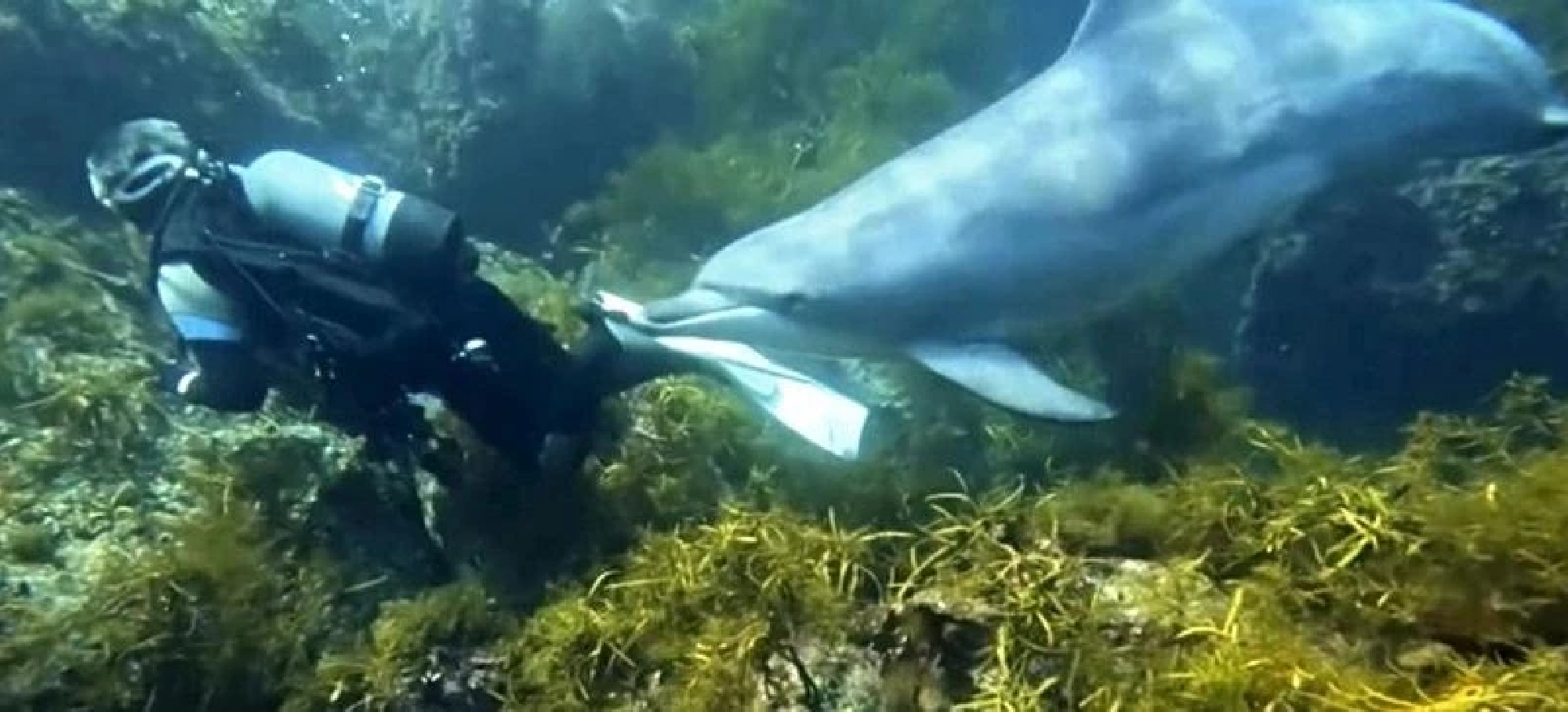
 Courtesy of a Yomiuri Shimbun reader A dolphin is spotted at Takasu beach in Fukui City on July 29.


