Chiang Mai and Chiang Rai provinces felt tremors from earthquakes in Myanmar in the early hours of Friday. As of press time, there were no reports of property damage or injuries caused by the quakes.
The Thai Meteorological Department’s Earthquake Observation Division said the first 6.4-magnitude earthquake was felt just after midnight in Myanmar at the coordinates of 21.22 degrees North and 99.85 degrees East.
The epicentre was found about 87 kilometres to the Northeast of Chiang Rai’s Mae Sai district.
Several milder quakes were registered later, with the last 5.3-magnitude tremor recorded at 5.22am.
The division reported that the quake could be felt in Chiang Rai’s Muang, Mae Chan, Chiang Khong and Chiang Saen districts and in Chiang Mai’s Muang district.
Thailand’s first case of monkeypox was detected last week on a Nigerian man in Phuket, the Department of Disease Control (DDC) announced on Thursday night.
DDC director-general Dr Opas Karnkawinpong said the department had been alerted by a private hospital in Phuket on July 18 that a patient was suspected to have contracted the disease. A DDC team arrived to learn the patient was a Nigerian national aged 27 who had travelled from his country to Phuket.
“About a week ago, the patient developed fever, cough, runny nose, rashes and pustules spreading from the genitals to the face, arms and rest of the body,” Opas said.
“A PCR test on the collected sample detected the monkeypox virus and the result was confirmed by the Department of Medical Sciences laboratory on July 19.”
Opas added that the lab results were then submitted to the National Communicable Disease Committee on Thursday to confirm that this patient was the first case of monkeypox found in Thailand.
Opas added that DDC has coordinated with the provincial communicable disease committee to track down those who may have been in close contact with the patient to prevent the virus from spreading.
“People should not panic and study the nature of monkeypox to stay safe. The DDC established an emergency centre for monkeypox on May 21 to closely monitor the situation in Thailand. Before this case was confirmed, 19 people had been suspected of having contracted the disease in Thailand, but they all tested negative,” he said. “The DDC has instructed all hospitals, as well as clinics for skin and sexually transmitted diseases to report all suspected patients to the DDC and to monitor their symptoms closely.”
Monkeypox virus can be spread through contact and bodily fluids, eating uncooked meat and touching rodents like rats or squirrels as well as primates that may be carrying the virus.
There are currently more than 15,000 monkeypox cases worldwide with five deaths reported in Africa as per the US Centres for Disease Control and Prevention.
The Public Health Ministry reported on Friday (July 22) that over the past 24 hours, 2,424 Covid-19 patients have been admitted to hospitals.
The death toll has risen by 25, while 1,816 patients have recovered and discharged from hospitals.
The number of cumulative cases in the country since January 1, 2022, stands at 2,347,450.
The country’s total caseload from Covid-19 stands at 4,570,885 – 4,515,759 of whom have recovered, 24,028 are still in hospitals and 31,098 have died.
Separately, another 7,373 people were given their first Covid-19 shot in the last 24 hours, 16,977 their second shot and 38,835 a booster, bringing the total number of Covid-19 vaccine doses administered nationwide to 140,954,292.
According to Worldometer, confirmed cases globally had risen to 572.84 million on Friday, 542.84 million of whom have recovered, 23.6 million are active cases (40,653 in severe condition) and 6.4 million have died (up by 1,603).
Thailand ranks 27th in the global list of most cases, which is topped by the US with 91.94 million, followed by India with 43.85 million, Brazil with 33.51 million, France with 33.34 million and Germany with 30.24 million.
New electric buses are likely to start operating in the city early next year if a 953-million-baht plan to hire private operators is not delayed, according to the state-run Bangkok Mass Transit Authority (BMTA).
BMTA chief executive Kittikan Chomdoung Charuworapolkul said on Thursday that the terms of reference for electronic bidding would be completed in August and the bidding could be held within September.
“We expect to pick the winners and sign contracts with them around late 2022. You can see EV buses in service within early 2023,” he said.
The BMTA, which operates public buses in Bangkok, plans to hire private firms to operate 224 electric buses to help boost its capacity for serving up to one million passengers per day.
Bus shortages have forced commuters to endure long waits, especially at night. However, the BMTA does not have enough budget to buy new buses to improve its service.
In February, the BMTA’s executive board approved the project to hire private firms to operate 224 electric buses with a budget of 953 million baht.
In order to ensure transparency of the project, the BMTA later decided to join the Integrity Pact of the Comptroller-General’s Department, Kittikan said on Thursday.
He said that the project’s bidding terms would be drafted under the observation of the Anti-Corruption Organisation of Thailand, in order to comply with the Integrity Pact.
“The drafted bidding terms will be reviewed in case of objection in order to ensure maximum transparency,” the BMTA chief said.
The use of the 224 EV buses is expected to help the BMTA save about 70 million baht in fuel costs per year, in addition to 160 million baht in annual maintenance costs.
At present, petrol and natural gas cost the BMTA about 1.5 billion baht per year while the maintenance costs are 1.6 billion baht.
American fried rice and corn soup at Took Lae Dee (cheap and good) Restaurant have become food items of interest among netizens, thanks to an Asian rapper’s influence.
Jackson Wang praised the two dishes for being delicious during an interview with EFM radio station on Tuesday (July 19).
He explained that he had tasted American fried rice and corn soup at the restaurant in Foodland supermarket near Rajamangala Stadium in Bangkok after finishing his concert rehearsal on July 11.
Wang was scheduled to perform in the one-hour opening show at the stadium before the exhibition match between Manchester United and Liverpool on July 12.
“It’s so good, it’s the best!,” he said.
He added that American fried rice is more delicious than tomato fried rice.
In response to the trend, Foodland launched a promotion of a set of American fried rice and corn soup at 99 baht per set at Took Lae Dee restaurants nationwide until Sunday (July 24).
Foodland operates the Took Lae Dee Restaurant business under the slogan “Everyone’s favourite restaurant” since 1972. The restaurant offers a variety of reasonably priced Thai, Chinese and Western dishes.
According to CNN report “World’s Greatest City: 50 reasons why Bangkok is No. 1”, it said Took Lae Dee Restaurant in Foodland, Sukhumvit Soi 5 branch, is a good place for dining anytime.
It also advised people to taste Pad Kaprao Kai (stir fried basil with chicken), saying that it is a delicious dish whose taste is unforgettable.
Currently, there were 25 Foodland branches across the East and Northeast of Thailand, as well as Bangkok and its surrounding areas.
Thailand’s leading mobile network operator Advanced Info Service (AIS) has forged a partnership with The Pokémon Company of Japan to bring the first-ever official Pokémon Unite tournament to the country.
The AIS “5G eSports Open Thailand 2022: Pokémon Unite” contest, starting on September 16, features a prize pool of over 600,000 baht, Rungtip Jarusiripipat, the AIS managing director for entertainment and content partnership, said on Thursday.
She said the event will also serve as a celebration of the online video game’s first anniversary in Thailand, where more than 1 million downloads have been recorded.
Globally, as of April, Pokémon Unite boasted more than 70 million downloads across all the platforms on which the game is available.
Those interested in taking part in the competition may apply from now until September 10 through the Facebook page of AIS eSports Tournament. The contest starts on September 16.
To qualify for the competition, applicants must be aged between 15 and 35. Each team comprises five members.
Applications can be made free of charge.
In addition to the total prize money of over 600,000 baht, the winners will also be eligible for item codes and premium merchandise from The Pokémon Company.
Move Forward Party’s former governor candidate, Wiroj Lakkhanaadisorn, on Thursday expressed his readiness to help Governor Chadchart Sittipunt fix the flood problem in metropolitan areas, while slamming the previous governor of mismanaging the budget earmarked for Bangkok’s Drainage and Sewerage Department.
In a Facebook post, Wiroj, a former party-list MP, said the previous governor, Aswin Kwanmuang, had poorly managed the budget for Bangkok’s water management during his term (2016-2022), resulting in floods and drainage problems plaguing the city almost every time heavy rains hit the city.
“The former governor had approved several water-related projects, including the construction of giant tunnels, flood retention areas, and new drainage facilities. Putting together these projects ended up costing more than the budget, resulting in constructions being delayed and eventually unfinished,” he said.
“Meanwhile, some projects had trouble finding qualified contractors as the specification requirements are too limited, as though they had been set to facilitate certain bidders only.”
Wiroj also pointed out that some of the projects only focus on the outcome without considering the impact on surrounding communities as a result there is a lack of participation from the public.
“The budget of the Drainage and Sewerage Department in 2023 had been set at 7.7 billion baht by Aswin. This time, under new Governor Chadchart Sittipunt, we need to disburse it carefully to fix the problems at their roots,” said Wiroj.
“Move Forward Party’s members of the city council in 13 districts are ready to work with the governor and district officials in surveying flood prone areas and plan the draining drill ahead of heavy rains to make sure that the water is drained as soon as possible.
“Move Forward Party will monitor budget disbursement closely at district and provincial levels to make sure that Bangkok has enough budget to tackle the flood problem,” he insisted.
Wiroj now serves as Move Forward Party’s chief of Bangkok policy taskforce.
The Bangkok Metropolitan Administration will stick to its schedule of open-air movie screenings despite the possibility that the heavens would open up and soak an already wet capital with more showers.
Bangkok deputy governor Sanon Wangsrangboon said on Thursday the plan to screen films at Benchakitti Park and Bang Khae Phirom Park has not been cancelled because preparations have been made.
The capital was pummelled by heavy downpours on Wednesday night, flooding several parts of the city and leading to questions whether the BMA would be able to go ahead with its open-air movie screenings.
Sanon explained that the screenings would be held under a roof at Bang Khae Phirom. He said the BMA has also prepared buses to evacuate people from the screening site in Benchakitti Park if heavy rains occur.
Movie screens have been set up while vendors have already put up stalls, so the screenings will go ahead, Sanon added.
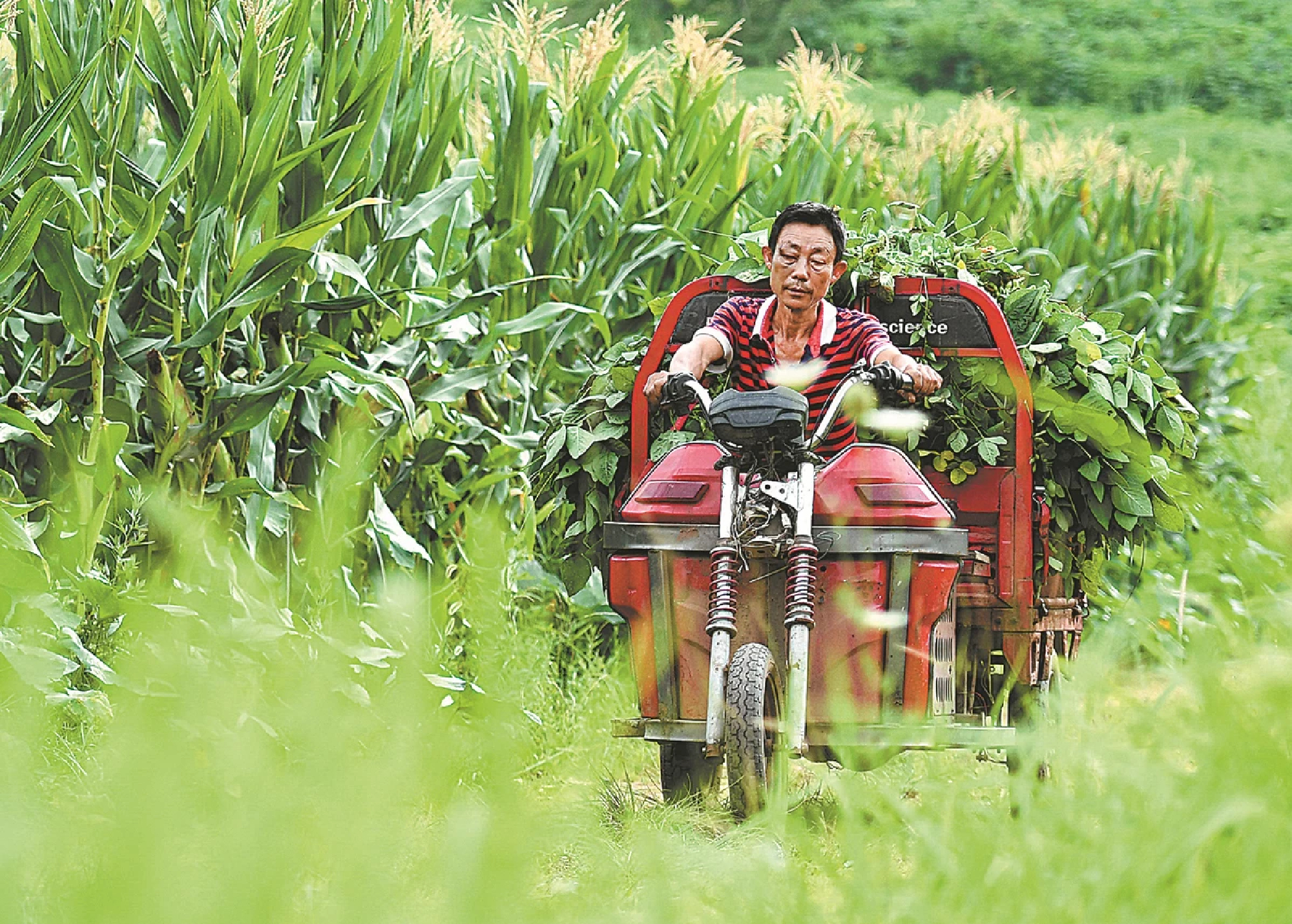
China has taken effective measures to respond to global food security risks caused by the Covid-19 pandemic and geopolitical conflicts, officials with the Ministry of Agriculture and Rural Affairs said on Wednesday.
Zeng Yande, head of the ministry’s development and planning department, said the pandemic and geopolitical conflicts have affected global agricultural production and supply and created prominent structural problems in the trading system.
“Some countries have adopted measures to restrict the export of grain and agricultural products, affecting regional and global food security,” Zeng said at a news conference focusing on the agricultural and rural economy in the first half of this year.
A joint statement led by the World Bank was issued recently to call for urgent action to address the global food security crisis.
China has been increasing food production capacity to ensure food supply through building high-quality farmland and accelerating breeding innovation.
“The per capita grain availability reached 483 kilograms last year, much higher than the global standard of food security. Based on domestic resources, China has solved the food problem of one-fifth of the world’s population, greatly contributing to global food security,” Zeng said.
Meanwhile, China is helping developing countries that are more vulnerable to the food crisis increase grain production and food security through projects including the China-FAO South-South Cooperation Programme. China is the biggest contributor in terms of donations and number of supportive experts, Zeng said.
China and the United States, both major countries in the agriculture sector, will seek technological cooperation and talent communication in the future to bring about more certainties to the global food system and the market of agricultural products, he added.
Liu Han, an official with the ministry’s department of market and informatization, said rising soybean and edible oil prices due to the tight supply of soybeans and limited export of sunflower oil made in Ukraine have resulted in high global oil prices.
As a result, domestic prices are also rising. Last month, the after-tax price of imported soybeans in Shandong province rose to 5.5 yuan (81 cents) per kilogram, a year-on-year increase of 14.7 per cent. Bean oil and rapeseed oil prices also increased by 30 per cent, Liu said.
“However, the domestic edible oil supply is ensured and has seen a smaller price rise than in the global market thanks to the country’s abundant oil storage and increasing rapeseed production,” she said.
Zeng said there has been a remarkable expansion of soybean and oil-producing crops, with this year’s rapeseed yield hitting a record high, and total production volumes undergoing the biggest increase in six years.
Meanwhile, there are now more than 1 million hectares of combined corn and soybean crops, and soybean cultivation is expected to increase greatly.
The summer grain harvest came in at 147.4 million metric tons, a rise of 1.4 million tons from last year, with wheat production at 135.7 million tons, up 1 per cent year-on-year.
The ministry expects the area of early rice crops to increase steadily, and more than 60 per cent has already been harvested, Zeng said.
Liu Lihua, deputy director of the ministry’s plantation management department, said China can also expect a bumper harvest of autumn grain, which accounts for about 75 per cent of the annual grain output.
The planting area is expected to increase and the growth in Northeast China, which produces one-third of the nation’s autumn grain, is better than normal years because of plentiful rainfall and good soil moisture, Liu said.
However, rural and agricultural economic development still faces challenges, such as the increasing threat of natural disasters, Zeng said.
Farmers are encountering greater pressure when it comes to increasing employment and incomes, and the growth rate of agricultural and rural investment is slowing.
The International Monetary Fund (IMF) intends to complete talks with Sri Lanka “as quickly as possible,” Managing Director Kristalina Georgieva said on Wednesday, hours before the Parliament voted Acting President Ranil Wickremesinghe as the President.
Speaking with Nikkei Asia in Tokyo, Georgieva said the fund was “very deeply concerned about the well-being of the people in Sri Lanka,” which has been gripped by severe shortages of fuel, food and other essentials after its foreign reserves dried up.
Frustrated citizens have turned their anger on the government, clouding the outlook for debt restructuring and driving once-powerful President Gotabaya Rajapaksa to go into exile and resign last week. On Wednesday, the Sri Lankan parliament elected Ranil Wickremesinghe as his replacement.
Georgieva vowed that “the moment there is a government that we can continue our discussions with, our team will be there.” She added that she was “very hopeful that based on the good technical work we have already done, and the fact that this technical team of Sri Lanka is there, we can complete program negotiations as quickly as possible.”
Wickremesinghe is no stranger to the IMF, as a finance minister and six-time prime minister who has had a hand in negotiations. But he is deeply unpopular with the public.
Georgieva said that the IMF would work with any Sri Lankan administration “as long as the next leader enjoys support and has the longevity to lead the country.”
Sri Lanka is not the only South Asian country facing serious economic pressure. Others include Pakistan, with which the IMF recently reached a staff-level agreement to extend about $1.2 billion in aid, and the Maldives, whose debt-to-gross domestic product ratio stood 123.4% last year according to the IMF’s estimate.
“It is very important for all countries that have had that burden to stare it in the face and not pretend that somehow the problem can go away,” Georgieva warned. “Because it won’t.”
The managing director, who was stopping in the Japanese capital after attending the Group of 20 finance ministers meeting in Indonesia last week, went on to say: “Countries that are faced with severe problems of bad management need to understand that, in this context, markets are jittery. Sentiment is such that there is more anxiety. So if you need to be prudent in good times, you have to be even more prudent in bad times where we are today.”
In the case of Sri Lanka, which “pre-emptively” defaulted on its foreign debt for the first time earlier this year after COVID-19 devastated its core tourism sector, the government was due to submit a debt restructuring plan to the IMF by next month.
“What we would need for the program is financial assurances that will be sustainable, not immediately, but that we have a credible plan to get to that point,” Georgieva said. She added that the incoming government has “a very important role to play, reaching out to both bilateral creditors and private-sector creditors.”
Sri Lanka’s large creditors include Japan, China and India. Georgieva said that she has discussed the situation with the countries during her Asia trip, and was encouraged because “there is an understanding that protracted negotiations are simply not viable, that there has to be decisive action as early as the weeks after a [new] government is in place.”
More broadly, on the global economy, Georgieva said that the IMF will further lower its projection for global GDP growth when it releases its latest World Economic Outlook on July 26. This will mark the third downgrade this year alone. In April, the IMF lowered the outlook for 2022 to 3.6% from 4.4% in January.
She said that the new growth projections would remain in positive territory both for 2022 and 2023. But the downside risks, such as the Ukraine war and inflation, “remain very present.”
“The risk of recession has gone up,” she said.
Georgieva said there will be a “quite significant downgrade” for China, from its 4.4% growth forecast in the IMF’s April projections due to the impact of COVID-19 lockdowns and real estate problems.
She noted that Beijing has started to use monetary as well as fiscal policy levers, but said the question is “how quickly they can produce results.”
When asked about the weakening Japanese yen and the Bank of Japan’s monetary policy, she pointed out that Japan is an export-oriented economy. Hence, the exchange rate is helping Japanese exporters.
“The economy is not yet achieving its inflation target [of 2%] in a sustained manner,” she said. “And therefore, monetary policy accommodation remains the right choice.”



 Sanon explained that the screenings would be held under a roof at Bang Khae Phirom. He said the BMA has also prepared buses to evacuate people from the screening site in Benchakitti Park if heavy rains occur.