
Biden administration defends its authority on vaccine policies ahead of Supreme Court hearing

#SootinClaimon.Com : ขอบคุณแหล่งข้อมูล : หนังสือพิมพ์ The Nation.

https://www.nationthailand.com/international/40010641


The Biden administration told the Supreme Court on Thursday that federal law gives it the authority to impose a nationwide vaccine-or-testing requirement for large employers, and the court should not stand in the way of a program that will save thousands of lives.

Biden administration defends its authority on vaccine policies ahead of Supreme Court hearing

“The nation is facing an unprecedented pandemic that is sickening and killing thousands of workers around the country, and any further delay in the implementation of the [requirement] will result in unnecessary illness, hospitalizations, and deaths because of workplace exposure” to the coronavirus, Solicitor General Elizabeth B. Prelogar wrote in a filing.

The Supreme Court has announced a special hearing on Jan. 7 to consider challenges to the rules from the Occupational Safety and Health Administration. It was upheld by a panel of the U.S. Court of Appeals for the 6th Circuit earlier this month, but is being challenged by a coalition of business groups and Republican-led states.

Also that day, the high court will hear a similar challenge to a vaccine mandate imposed by the Centers for Medicare & Medicaid Services; it requires shots for health-care workers at facilities that receive federal funds tied to those programs.

Together, the administration policies represent a major expansion of the Biden administration’s battle with the coronavirus, covering nearly 100 million workers – many of whom were vaccinated on their own.

It also represents, according to the Republican and business challengers, a vast overreach on the part of the executive branch and a misguided policy that will do more harm than good.

The mandate on health-care workers “is plainly unlawful,” said a brief filed by 14 Republican-led states, as well as bad policy.

“Across the country, healthcare workers are already far too scarce,” said the brief. “This new mandate worsens the problem, sidelining providers, professionals, and support staff who have led the fight against COVID-19. And, as is often the case, rural communities – already straining from threadbare resources – will bear the brunt of these consequences.”

More than half the states and coalitions of business and other interest groups are asking the justices for emergency action to block the OSHA rules, which would cover an estimated 80 million workers.

Prelogar said it is wrong for those opposed to the OSHA emergency temporary standards to refer to them as a vaccine mandate.

It mandates those who employ more than 100 workers to either require vaccination or have unvaccinated employees wear masks and be regularly tested. There are exemptions for those who work exclusively at home, alone or outdoors.

OSHA estimates that the standard will “save over 6,500 worker lives and prevent over 250,000 hospitalizations over the course of six months,” Prelogar wrote.

Even though the 6th Circuit panel upheld OSHA’s authority, the administration is delaying implementation of the standard until February as the legal fights continue. The business groups and Republican states are asking the Supreme Court to keep the standard from going into effect.

They say the agency is seeking unprecedented power that the law does not authorize.

But Prelogar said the opposite is true. She said OSHA “must” take action when it determines employees are exposed to grave danger.

“The standard falls squarely within that grant of authority,” she wrote. “SARS-CoV-2 is both a physically harmful agent and a new hazard; indeed, it has killed more than 800,000 individuals and made millions more seriously ill in the United States alone.”

And, she noted, “the virus manifestly poses a grave danger to unvaccinated workers, who face significant risks from workplace exposure because they are substantially more likely to become infected with COVID-19 and to suffer severe health consequences as a result.”

The Supreme Court generally has been supportive of decisions by local governments and universities to require vaccination.

But the justices also have been skeptical of federal agencies’ power to mandate pandemic-related responses. For instance, it ended a moratorium on evictions imposed by the Centers for Disease Control and Prevention, saying it was beyond the agency’s authority.

The Republican states in their filings Thursday against the health-care worker vaccine mandate said that it was another overreach by the federal government, and that President Joe Biden himself has vacillated on whether pandemic responses were best handled at the federal or state level.

The agency responsible for the vaccine mandate “assumes sweeping new federal power over individuals even though Congress has never claimed such expansive authority for itself and even though the Executive Branch expressly disclaimed it only five months ago,” said the states’ brief.

They said the agency “ignored and undermined” federal law and “rearranged the Constitution’s structures of federalism and separation of powers.”

In the health-care worker case, it is the Biden administration that went to the Supreme Court after lower courts agreed with the challengers.

It is unusual for the Supreme Court to hold a hearing in such emergency requests. But the court has been criticized for decisions issued under its emergency docket, which has also been called its “shadow docket.”

The hearing will mark the third time this term the court has scheduled public arguments. The previous cases involved a controversial Texas law that restricts abortion, and the other concerned the rights of inmates to have spiritual advisers close by at the time of execution.

The health-care worker cases are Biden v. Missouri and Becerra v. Louisiana. The OSHA cases are National Federation of Independent Business v. Department of Labor and Ohio v. Department of Labor.

Published : December 31, 2021

By : The Washington Post

Airline disruptions could linger for days as 1,300 more flights are canceled Thursday

#SootinClaimon.Com : ขอบคุณแหล่งข้อมูล : หนังสือพิมพ์ The Nation.

https://www.nationthailand.com/international/40010640


Elevated numbers of flight cancellations were stretching into a second week as carriers scrambled to get travelers to their destinations amid a coronavirus spike that has led to staffing shortages and weather that has slowed operations.

Airline disruptions could linger for days as 1,300 more flights are canceled Thursday

As of Thursday evening, 1,300 flights within, into and out of the United States had been canceled for the day, according to flight tracking website FlightAware. More than 700 flights scheduled for Friday already had been canceled, with more than 500 others cut on Saturday.

As cancellations extended days into the future, airlines and passengers grappled with the likelihood of disruptions days into the new year. While airlines have been hit hard since before Christmas, traveler delays were extending beyond airports to include rail networks and transit agencies.

In a Federal Aviation Administration statement issued Thursday – with the words “could” and “might” underlined and in bold – the agency warned of the potential for disruptions in the coming days. The FAA said it also is facing staffing shortages because of rising coronavirus infections.

“Weather and heavy seasonal traffic are likely to result in some travel delays in the coming days,” the agency said. “Like the rest of the U.S. population, an increased number of FAA employees have tested positive for COVID-19.”

The rising number of cases also triggered disruptions for Amtrak, which said Thursday it was canceling about two dozen trains between Dec. 31 and Jan. 6 in both the Northeast Corridor and along its long-distance routes – about 1.5% of scheduled service during that time.

“We are continuing to monitor changing conditions and will make any further adjustments as required,” the railroad said in a statement, adding that 97% of its employees are vaccinated.

Staffing shortages also were hitting public transportation agencies.

At the nation’s airports, concerns arose about whether carriers could cope with passenger volumes during the busy holidays after high-profile breakdowns over the summer and fall. Airlines passed their first major test over Thanksgiving, but Christmas has proved to be a different story, leaving thousands of frustrated air travelers unable to return home.

“This is a no-win situation for everyone,” said Henry Harteveldt, an aviation analyst and president of Atmosphere Research. “Airlines have lost this week. Passengers have lost this week. And it’s made worse by the fact it’s happening at Christmastime and the New Year’s break.”

While cancellations Thursday were widespread, United Airlines remained the hardest-hit among major carriers, with 198 flights canceled, about 9% of its schedule. JetBlue, which announced Wednesday it would reduce flights through Jan. 13, had 175 flights canceled. Regional carrier SkyWest also continued to be plagued by operational difficulties with 9% of its scheduled flights canceled.

Delta said it expected to cancel about 250 of more than 4,000 Delta and Delta Connection flights Thursday. The airline said cancellations will probably continue through the weekend with 200 to 300 daily cancellations.

“Delta people are continuing to work together around the clock to reroute and substitute aircraft and crews to get customers where they need to be as quickly and safely as possible,” the airline said in a statement.

Delta issued travel waivers for customers whose itineraries include Chicago, Detroit, Salt Lake City and Seattle – where storms are expected to complicate travel – and urged travelers whose plans include those cities to reschedule.

Kerry Tan, an associate professor of economics and an air travel expert at Maryland’s Loyola University, said that while weather is often a factor at this time of year, staffing issues have proved to be a greater challenge for carriers.

“The weather aspect is out of their hands,” Tan said. “What they can control is staffing, but like many companies out there, there are huge staffing issues. There are just not enough workers to meet the demand.”

Outside of the period following the Sept. 11 attacks, few in the industry could recall a time when so many flights had been affected for such a long duration.

“It’s the perfect storm,” said Dennis Tajer, a spokesman for the Allied Pilots Association, which represents crews at American Airlines.

Harteveldt noted that disruptions are not unique to the United States. According to FlightAware, more than 2,800 flights worldwide were canceled Thursday.

“We’re seeing airlines affected in Europe, Africa, Asia and elsewhere, so this is truly a global airline industry challenge,” he said.

The first signs of trouble emerged just before Christmas when airlines, citing staffing issues resulting from the more easily transmissible omicron variant of the coronavirus, began preemptively canceling flights. On Christmas Eve, about 613 flights were canceled, according to FlightAware. The day after Christmas, the number had ballooned to more than 1,400. Airlines have canceled nearly 8,000 flights in recent days.

In a shift that could help ease staffing shortages, the Centers for Disease Control and Prevention this week updated its guidance on the isolation period for those who test positive for the coronavirus, saying they need to isolate for only five days rather than 10.

CDC Director Rochelle Walensky said data indicates that most transmission occurs early in the course of a person’s illness, typically in the one to two days before symptoms appear and two to three days afterward. Health officials also recommended that those exposed get tested five days after their exposure.

Delta Air Lines quickly embraced the new guidelines, which chief executive Ed Bastian had urged the CDC to update in a letter to Walensky last week.

The carrier said that starting Monday, it will limit pay protection for vaccinated employees who test positive to five days, according to a memo to employees, with an additional two days for anyone who tests positive on the fifth day. The airline had previously offered 10 days of pay.

The memo ties the change to new CDC guidance on isolation. The airline encouraged employees to take either a rapid or PCR test on their fifth day of isolation. The CDC guidance applies to asymptomatic people and those who are fever-free for 24 hours. The memo makes no mention of what employees should do if they are symptomatic.

Southwest Airlines and other carriers said they are evaluating the CDC’s updated guidance.

The CDC’s shift continued to generate concern among some labor groups.

In a letter to executives at Alaska Airlines, Frontier Airlines, Hawaiian Airlines, United and other carriers, Sara Nelson, international president of the Association of Flight Attendants – which represents crew members at 17 airlines – urged carriers to maintain the 10-day quarantine recommendation as a demonstration of “your commitment to safety and the safety of those working on the front lines.”

If carriers decide to embrace the updated recommendations, Nelson urged them to include other safeguards, including proof of a negative coronavirus test at the end of the five-day isolation period. Wrote Nelson: “No one should feel pressured to come to work sick.”

Published : December 31, 2021

By : The Washington Post
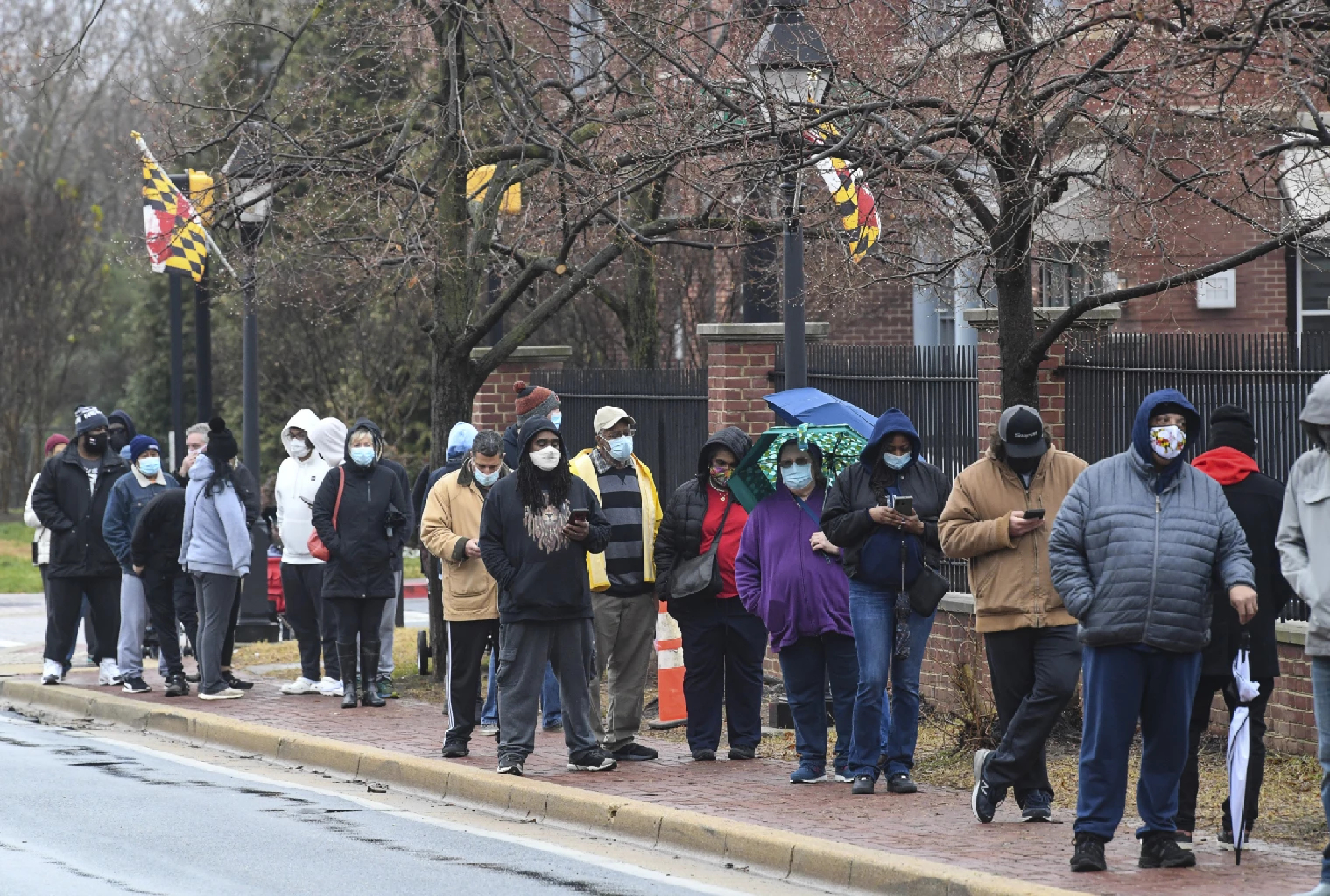
Crazy omicron surge could peak soon, but the virus is unpredictable as the pandemic enters its third year

#SootinClaimon.Com : ขอบคุณแหล่งข้อมูล : หนังสือพิมพ์ The Nation.

https://www.nationthailand.com/international/40010639


The rapid surge of omicron infections in the United States may be relatively brief, measured in weeks rather than months, according to infectious-disease experts who have been astonished by the speed of the coronavirus variants spread – and who are hoping this wave ebbs just as quickly.

Crazy omicron surge could peak soon, but the virus is unpredictable as the pandemic enters its third year

The idea of a rapid peak and swift decline has a precedent in South Africa, the country that revealed the presence of omicron in late November. Cases there spiked quickly and then dropped with unexpected speed after only a modest rise in hospitalizations. An especially transmissible virus tends to run out of human fuel – the susceptible portion of the population – quickly.

Photo Credit: Washington Post photo by Jonathan Newton

Some forecasts suggest coronavirus infections could peak by mid-January.

“Omicron will likely be quick. It won’t be easy, but it will be quick. Come the early spring, a lot of people will have experienced covid,” William Hanage, an epidemiologist at the Harvard T.H. Chan School of Public Health, said in an email Thursday.

But this has always been an unpredictable virus, going back to when it first appeared two years ago, on Dec. 31, 2019. The virus had probably been spreading for a month or more, but that was the day infectious-disease experts around the world began hearing by email and text about an outbreak of a mysterious pathogen causing pneumonia-like respiratory infections in Wuhan, China.

No one on that day could have known that this pathogen, initially called the “novel coronavirus” and later named SARS-CoV-2, would trigger the most brutal pandemic in a century. And no one today knows when it will be over.

Forecasts of how the pandemic will play out have repeatedly been incorrect, to the point that some modelers have stopped trying to make caseload projections four weeks out, instead limiting their forecasts to one week ahead.

Because beyond a week, who knows?

Forecasts of the current winter wave, in which omicron has come riding in atop an existing delta wave, are somewhat more plausible. Columbia University researchers have a model that projects a peak in cases during the week beginning Jan. 9, with about 2.5 million confirmed infections in that seven-day period – and potentially as many as 5 million.

Columbia epidemiologist Jeffrey Shaman said the infection numbers reported in recent days are already at the high end of projections, and the peak could come sooner. Omicron is setting new daily records for infections with the virus. The seven-day average of new, officially confirmed daily cases soared to more than 300,000 Wednesday. Then came the eye-popping Thursday numbers from state health departments and the Centers for Disease Control and Prevention – 562,000 new cases, pushing the seven-day average to 343,000.

The official number captures only a fraction of the true number of infections. People who use rapid tests at home may not report positive results. Many others never get tested when sick. And some people are infected but asymptomatic or pre-symptomatic.

Shaman estimates the number of infections is four to five times the official count. Given that people remain infected for many days, that translates to many millions of active infections across the United States.

“We’re talking somewhere up to maybe 10 million people,” Shaman said. “Maybe not all of them are contagious yet. Crazy numbers. Crazy, crazy numbers.”

When infections begin to drop, hospitalizations could still rise for a period as the disease progresses among those most vulnerable to a severe outcome. Forecasts posted Monday by the CDC show national hospitalization rates rising steadily in the weeks ahead, with daily new hospital admissions topping 15,000 by mid-January – although the projections from different research teams varied widely.

The predictions of a short omicron surge are reflected in hopes expressed at the highest level of the federal medical bureaucracy.

“My hope is that we get a sharp peak with omicron, and it goes down to a very, very low level, and it just sort of stays there, and we don’t have any more really problematic variants,” Anthony Fauci, President Joe Biden’s chief medical adviser for the pandemic, told The Washington Post on Wednesday.

But Fauci and other experts have consistently been surprised by the mutability of the virus. Some scientists did not think a variant with the number of mutations evident in omicron could be an effective transmitter.

“We are dealing with a virus that has a completely unanticipated level of transmissibility,” Fauci said. “We thought delta was very transmissible. This thing is like something we’ve never seen before.”

In the United States, vaccinations – including boosters – have blunted much of the impact of the latest wave of infections from the omicron variant, which appears to be innately less capable of generating severe disease.

That has led to a shift in the Biden administration’s strategy, with a new emphasis on keeping the economy running and shying away from top-down restrictions. All the while, the administration continues to push the available tools for fighting the pandemic, including testing, indoor masking, vaccinations for those reluctant to get the shots and boosters for those eligible for another dose.

But a more spontaneous shutdown has been underway since just before Christmas.

Airlines have canceled thousands of flights because of staffing shortages. The Smithsonian closed a few of its smaller museums. Some college football teams decided not to attend their bowl games. Broadway shows have gone dark. Actor Hugh Jackman, mildly sick with covid-19, is not anticipated back onstage in “The Music Man” until Jan. 6.

This is a new phase of the pandemic, one with sweeping disruptions but probably not the same level of fear and anxiety as earlier periods. Omicron appears milder. For many vaccinated people, it appears to present itself more like a bad cold than something capable of crippling the world economy – although the ramifications of the phenomenon known as “long covid” remain not well understood.

Scientists don’t know precisely why omicron tends to cause less severe illnesses than delta or other variants of the coronavirus. It is likely that immunity plays a role, as so many people have been infected previously or have been vaccinated.

That appears to have been the case in South Africa, hard hit by the virus in advance of the omicron wave.

A study of more than 7,000 people, posted online but not yet peer-reviewed, reported high levels of antibodies to the coronavirus in South Africa before the omicron wave. Omicron spread faster than previous variants, but rates of hospitalizations and excess deaths “did not increase proportionately, remaining relatively low,” the study found.

Research on mice and hamsters suggests that omicron is innately less dangerous, apart from population immunity. Although omicron appears to grow especially well in the nose and upper airways, leading to much higher viral loads and easier transmission, it may not invade the lungs as well as earlier variants.

“The dam has broken with a milder variant. Most people who made the correct choice to get vaccinated are protected from severe disease,” said David Rubin, director of PolicyLab at Children’s Hospital of Philadelphia.

Rubin predicts a swift recovery for much of the country in January but notes this is likely to vary geographically. The East Coast, including major cities along the Interstate 95 corridor, and the heavily populated states of Florida and Texas are seeing large spikes in cases, while parts of the country hit hard by delta, including the Upper Midwest, are already seeing improvements, he said.

“By the second week of January, we’re going to see the national declines, but there will be some areas struggling for sure,” Rubin said.

A model from the Institute of Health Metrics and Evaluation at the University of Washington puts the peak of this winter wave at Feb. 6, with 408,000 confirmed new daily infections.

Pandemic models are hampered by the difficulty of amassing reliable data. Testing is disrupted during the holidays. There are only rough estimates of how many people have already been infected.

The most urgent question is whether a spike in caseloads will lead to so many severe illnesses that hospitals are overwhelmed. Although some hospitals are stretched thin, the increase in hospitalizations has been modest so far compared with the rise in infections.

For now, the Biden administration is holding off on drastic measures to combat omicron, beyond common-sense efforts to get more tests in the hands of the public and to encourage vaccination. CDC has issued looser rather than tighter guidelines on the isolation time for people infected with the virus, reducing the recommendation from 10 days to five.

That covers people who are asymptomatic or are seeing their symptoms improve. The CDC’s guidance does not advise that people get a negative test before leaving isolation.

The virus has never been a static agent, nor is society a monolith, and so any forecast of what will happen in the coming weeks needs to be written with a pencil – not a pen.

Shaman, the Columbia epidemiologist, acknowledges that the model he and his colleagues have developed is based on incomplete data and must take into account a new variant that remains somewhat enigmatic.

And the virus itself may have new moves not yet anticipated.

“I’m not a betting person on this thing, ever,” Shaman said.

Published : December 31, 2021

By : The Washington Post
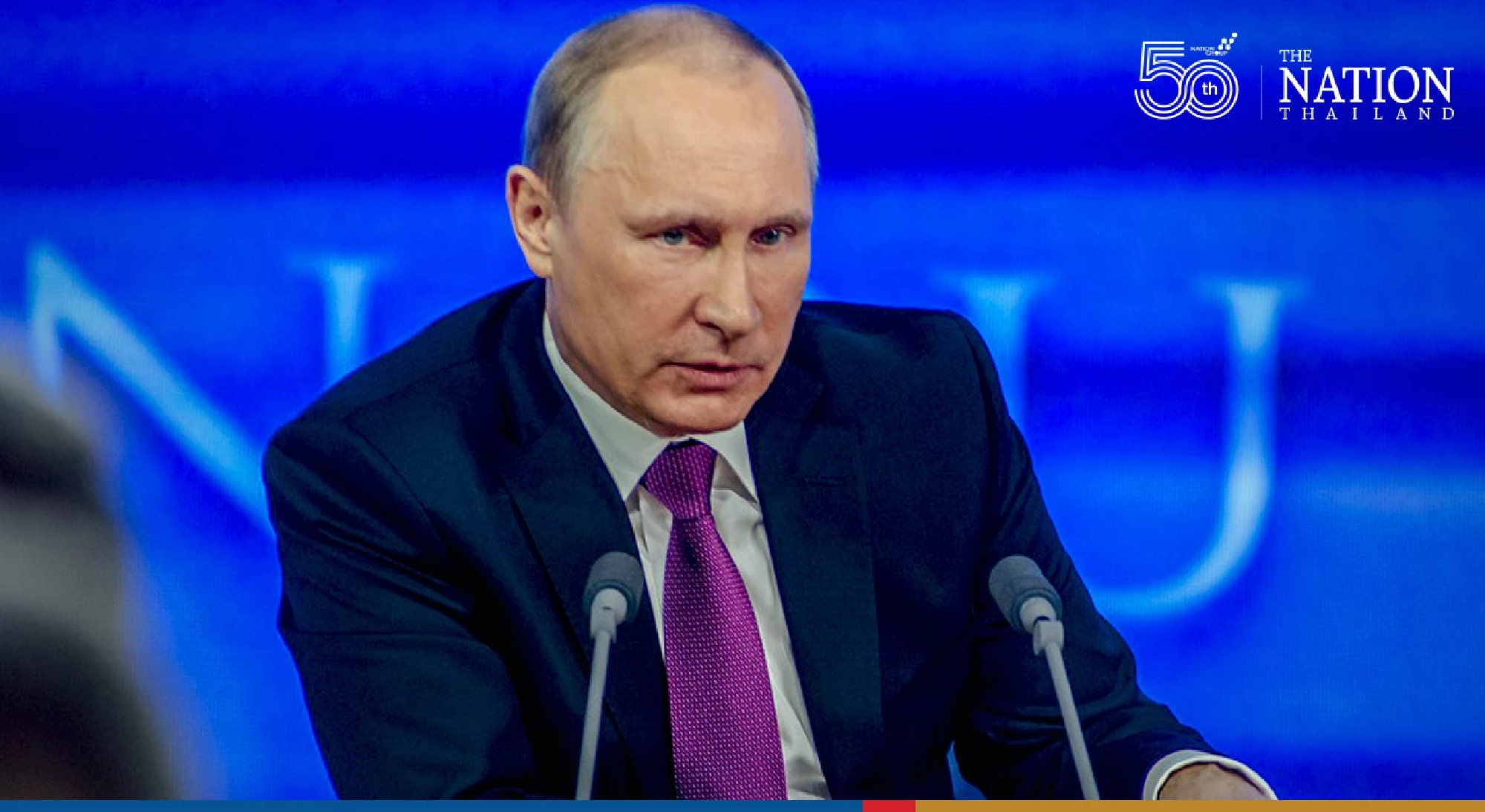
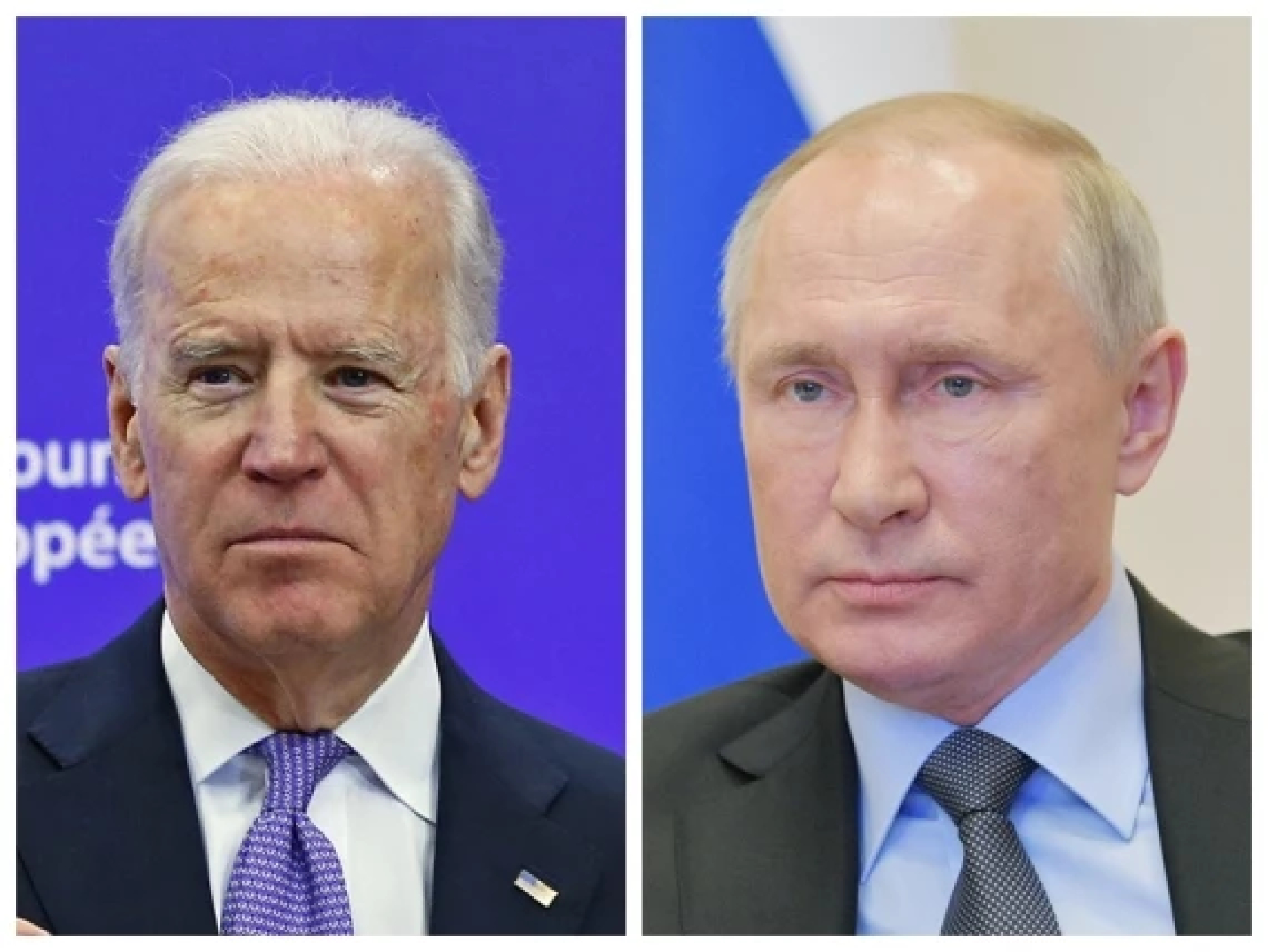
Putin warns Biden of complete rupture in relations if sanctions proceed

#SootinClaimon.Com : ขอบคุณแหล่งข้อมูล : หนังสือพิมพ์ The Nation.

https://www.nationthailand.com/international/40010638


MOSCOW – Russian President Vladimir Putin warned in a phone call with President Joe Biden late Thursday that any new sanctions on Russia as a result of the Ukraine crisis could lead to “a complete rupture of relations” between Moscow and Washington that their descendants would come to regret, according to Putins foreign policy aide.

Putin warns Biden of complete rupture in relations if sanctions proceed

Putin issued the warning during his second phone call this month with Biden, after the U.S. president reiterated how Russia would face unprecedented and punishing sanctions from Washington and its allies if Putin were to proceed with a new invasion of Ukraine, according to Russian presidential foreign policy aide Yuri Ushakov.

Putin told Biden that such actions would be a mistake, “which our descendants will later appreciate as a huge one,” Ushakov said, according to the Interfax news agency. “Many such mistakes have already been made over the past 30 years. Therefore, it is advisable not to make such mistakes in this situation.”

The call, which took place at Putin’s request and lasted 50 minutes, came as the Kremlin ratchets up pressure for a sweeping new European security deal after massing troops near the border of Ukraine and firing a test salvo of hypersonic weapons last week to reinforce its demands.

Putin has demanded swift acceptance of a proposed security deal that would bar Ukraine from ever joining NATO and rule out any other eastward expansion by the U.S.-led military alliance. The Russian leader has accused Western nations of encroaching on Russia’s borders with military exercises in the Black Sea region and turning Ukraine into a beachhead for anti-Russia action.

Russian officials see a time frame of just weeks for Biden to agree to demands that NATO has long refused, including effectively allowing Russia to veto the security decisions of Ukraine and other nations in the region. The White House has rejected any such bans on NATO membership out of hand, saying all sovereign nations should retain the right to make decisions about their own security.

A senior Biden administration official, speaking on the condition of anonymity to discuss sensitive diplomatic matters, told reporters after the call Thursday that Putin was looking to set the “tenor and tone” for upcoming in-person talks between Washington and Moscow that are slated to take place in early January in three different settings.

The United States and Russia are scheduled to hold bilateral talks in Geneva on Jan. 9 and 10, the senior official said. Those will be followed by talks at the NATO-Russia Council on Jan. 12 and negotiations at the Organization for Security and Cooperation in Europe, which includes Ukraine, on Jan. 13, the official added.

“Both leaders acknowledged that there were likely to be areas where we could make meaningful progress, as well as areas where agreements may be impossible, and that the upcoming talks would determine more precisely the contours of each of those categories,” the senior Biden administration official said.

Biden, who took the call from Wilmington, Del., where he and first lady Jill Biden are expected to ring in the new year, also told Putin that the United States wouldn’t be discussing the security of its European allies and partners without them at the table, and Putin said he understood, according to the administration official.

Biden and Putin will not attend any of the meetings set for January but will be represented by their respective top diplomats and defense officials.

The talks come amid significant disagreement about Putin’s intentions in Ukraine.

Some analysts say Russia’s insistence that a complex security deal be negotiated in such a short time and include pledges Putin knows Washington won’t make could be a pretext for military action. Others believe Putin has created the threat of a new Ukraine war simply to secure concessions from the United States and its allies in upcoming talks.

During the call, the Russian president told Biden that Russia wanted security guarantees and stressed that “the main thing we need is a result” from the upcoming talks, Ushakov said.

“The U.S. president, in principle, agreed with this point of view and reacted quite logically and quite seriously,” Ushakov said. Biden told Putin that Russia and the United States “could and should play a key role in efforts to ensure peace and security both in Europe and elsewhere in the world,” he said.

“It is important that the American side demonstrated a desire to understand the logic and essence of Russian concerns,” Ushakov added, describing the call as constructive and noting that Biden pledged to continue bilateral talks with Putin.

In their Dec. 7 videoconference, Biden warned Putin of tough new sanctions if Russia escalates action against Ukraine, a threat the Kremlin has shrugged off, saying it is accustomed to Western sanctions.

Putin last week made it clear he would not wait long for the written security guarantees he demands. He said he was not interested in negotiations, only results.

“It is you who must give us guarantees, and you must do it immediately, right now,” he told a Western journalist last week at his annual news conference, when asked whether he would rule out invading Ukraine. “It is the United States that has come to our home with its missiles and is already standing at our doorstep.”

Biden’s national security adviser, Jake Sullivan, said last week that the United States had its own list of security concerns about Russian actions to bring to the January talks.

An unclassified U.S. intelligence analysis revealed by The Washington Post this month found that Russia was preparing to move as many as 175,000 troops in preparation for an invasion, though the White House has said Putin has not made a decision yet. U.S. officials and military analysts have predicted that if Putin proceeds, the offensive could take place in late January or February.

Putin blames Western aggression for the rising military tension over Ukraine and last week threatened to respond with “military-technical measures” if his security demands were not met, without indicating what the measures would be.

On Sunday, Kremlin spokesman Dmitry Peskov explicitly linked Russia’s test firing of Tsirkon hypersonic missiles on Christmas Eve with Moscow’s demands for security guarantees, saying Russia hoped that its demands would “thus become more compelling.”

Putin, who has often boasted that Russia leads the world in hypersonic missile technology, said the first Tsirkon missile salvo test was “successful, impeccable.” He called it “a major event in the life of our country and a significant step in raising Russia’s security.”

Published : December 31, 2021

By : The Washington Post

New York City is pressing ahead with Times Square New Years bash despite omicron surge

#SootinClaimon.Com : ขอบคุณแหล่งข้อมูล : หนังสือพิมพ์ The Nation.

https://www.nationthailand.com/international/40010637


Times Squares last New Years Eve before the pandemic was a rollicking affair. A million people packed in, hugging and locking lips, all blissfully unaware that a virus would soon devastate their city and shut down the world.

New York City is pressing ahead with Times Square New Years bash despite omicron surge

One year later, the ball still dropped, but the mood was muted. Times Square was closed to the public, and only a few dozen health care workers attended as special guests, with the country battling a punishing winter wave of infections.

This year, the coronavirus is still with us – and is spreading at a record rate. But New York City’s leaders are pushing ahead with plans for a New Year’s Eve party despite the skyrocketing infections due mostly to the omicron variant, telling residents the annual event will serve as a symbol of progress for a place that has suffered severely during the past two years.

“We want to show that we’re moving forward, and we want to show the world that New York City is fighting our way through this,” Mayor Bill de Blasio said Thursday on NBC’s “Today” show. “It’s really important to not give up in the face of this.”

But Times Square will hardly be back to normal when revelers gather there Friday.

De Blasio, whose term ends with the year, had already announced that the celebrations would be scaled back from the “full-strength” jamboree he originally envisioned. Instead, attendees must show proof of vaccination to enter designated viewing areas outside. The crowds there will be limited to 15,000, and everyone who enters must wear a face mask.

“Our health care leadership believes this is the right way to do it,” de Blasio said, adding that there have been no discussions in his administration about canceling or scaling the event back even further.

But the numbers do not look good.

The city, state and country are all breaking records for newly confirmed infections. New York state has set a new high in the average number of daily reported cases for the last 11 days. On Thursday, the number stood at nearly 48,500, according to data tracked by The Washington Post.

More than 7,700 New Yorkers are hospitalized with the virus – which ranks eighth in the United States when adjusted for population – and the number is increasing rapidly.

Some experts and local officials have pointed to these trends as evidence that the city should cancel the New Year’s celebration, arguing that encouraging a mass gathering is irresponsible.

Mark Levine, a city councilor and incoming Manhattan borough president, has called for the Times Square event to be scrapped and said officials should discourage private in-person parties.

“We are not doing enough to slow this,” he said on Twitter. “Now is the time to act. Time is of the essence.”

The riskiest part of the evening won’t be the outdoor festivities, said Céline Gounder, an infectious-disease specialist and epidemiologist at Bellevue Hospital in New York, about two miles from Times Square. Rather, what concerns her most is the constellation of watch parties and after-parties at bars and restaurants across the city.

“That’s where the real risk is,” Gounder said in an interview. “It’s all the other activities. If all you do is stand in Times Square, watch the ball drop and go home, you’re actually probably at much lower risk of getting an omicron infection than somebody who is indoors at a party or at the bars.”

Generally speaking, socially distanced outdoor events – especially those that require proof of vaccination upon entry – are relatively low-risk, Gounder said. It’s still unclear if, or to what extent, omicron changes that, she said, but it’s possible that it does, given that the variant has proved to be more transmissible than its predecessors.

The entire health care system is already extraordinarily strained, Gounder said, and she’s seen it firsthand at her hospital, where scores of doctors, nurses and case workers are out sick. Any additional spike in patients from New Year’s or other holiday celebrations could leave facilities dangerously understaffed.

“It’s not just first responders,” she said. “This goes throughout the system.”

The city’s police force, for instance, is missing more than a fifth of its officers because of virus infections, NYPD Commissioner Dermot Shea said Thursday, and fire officials experiencing an influx of 911 requests and major staffing shortages implored residents to call only in a real emergency.

“Pretty unreal to me that NYC is still holding its big New Year’s Eve bash tomorrow when covid cases are higher than ever, hospitals are having to call in visiting help & cancel elective surgeries, and FDNY is pleading with the public not to call 911,” tweeted Kelly Doran, an emergency physician with NYU Langone.

Other large U.S. cities, notably San Francisco and Atlanta, have canceled their events, along with many of Europe’s most populous capitals – London, Paris, Berlin and Rome. And Anthony Fauci, the Biden administration’s chief medical adviser, has advised people to avoid large parties.

But de Blasio has remained adamant.

“We’ve got to send a message to the world,” he said on “Today.” “New York City is open.”

Published : December 31, 2021

By : The Washington Post

Chinas Amur tiger population at risk of inbreeding

#SootinClaimon.Com : ขอบคุณแหล่งข้อมูล : หนังสือพิมพ์ The Nation.

https://www.nationthailand.com/international/40010636


Chinese researchers have discovered that although Chinas wild Amur tiger population is experiencing rapid growth, there are risks of inbreeding.

Chinas Amur tiger population at risk of inbreeding

Inbreeding is more likely to occur in small, isolated and endangered populations, and may influence the sustainable survival of a population.

The Amur tiger population in China experienced a severe decline in the 1990s, with just over 10 of the tigers recorded at the end of the 20th century. After various effective conservation measures, more than 20 Amur tiger cubs were found in China in the last five years.

However, researchers from the Northeast Forestry University discovered that the recovering population is at risk of inbreeding given its small population. They said the species’ inbreeding status has not yet been evaluated, and the relationship between inbreeding and health in wild animals remains poorly understood.

Based on 150 genetic samples collected from the main Amur tiger habitats in China, the study published in the journal Animal Conservation analyzed the population’s inbreeding level, major histocompatibility complex polymorphism, parasitic infections, and gut microbial structures and functions, and then explored the influence of inbreeding on these traits.

The results indicated that the Amur tiger population in China has reached a moderate level of inbreeding and that there are direct interactions between inbreeding intensity and parasitic load and gut microbiota, according to Jiang Guangshun, leader of the research team and a professor at the university.

He noted that the study provides an early warning for the health of the Amur tiger population, and can promote international ecological cooperation and the reintroduction of new individuals to relieve the evident inbreeding pressure.

Published : December 31, 2021

By : Xinhua

New guideline of U.S. CDC to shorten isolation period spurs concerns among experts

#SootinClaimon.Com : ขอบคุณแหล่งข้อมูล : หนังสือพิมพ์ The Nation.

https://www.nationthailand.com/international/40010634


The guidance does not require a negative test to leave isolation or quarantine, which experts worry may drive up transmission and new cases. Another concern voiced by epidemiologists is that it fails to distinguish between vaccinated and unvaccinated people.

New guideline of U.S. CDC to shorten isolation period spurs concerns among experts

The U.S. Centers for Disease Control and Prevention (CDC) has shortened isolation time for Americans infected with COVID-19 from 10 to 5 days, which has prompted public confusion and made health experts warn that the recommendation may lead to more COVID-19 spread and more infections cases.

In a new guideline released earlier this week, the CDC is shortening the recommended time for isolation from 10 days for people with COVID-19 to 5 days, if asymptomatic, followed by 5 days of wearing a mask when around others.

The CDC has also updated its recommendation of quarantine period for those exposed to COVID-19. For people who are unvaccinated or are more than six months out from their second mRNA dose or more than 2 months after the Johnson & Johnson vaccine, and not yet boosted, CDC recommends quarantine for 5 days followed by strict mask use for an additional 5 days.

The change in guidance was “motivated by science demonstrating that the majority of SARS-CoV-2 transmission occurs early in the course of illness,” according to the CDC.

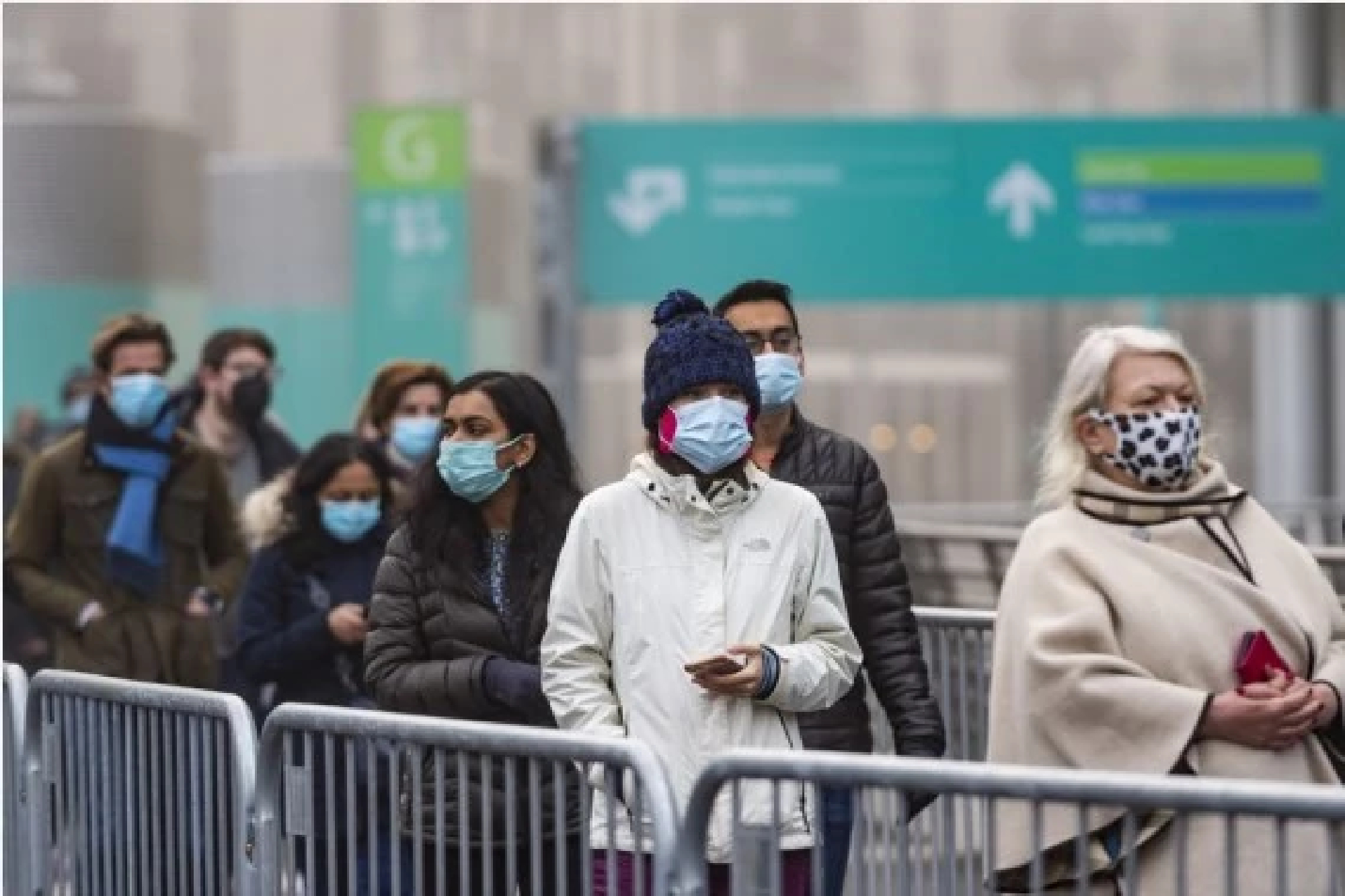
People line up to pick up free at-home COVID Antigen test kits in Washington D.C., the United States on Dec. 22, 2021. (Photo by Ting Shen/Xinhua)People line up to pick up free at-home COVID Antigen test kits in Washington D.C., the United States on Dec. 22, 2021. (Photo by Ting Shen/Xinhua)
Related Stories

CDC Director Rochelle Walensky said the change was also motivated by economic and societal concerns.

“With a really large anticipated number of cases from Omicron, we also want to make sure we can keep the critical functions of society open and operating,” she said on Tuesday. “We can’t take science in a vacuum. We have to put science in the context of how it can be implemented in a functional society.”

The guidance does not require a negative test to leave isolation or quarantine, which experts worry may drive up transmission and new cases.

“CDC’s new guidance to drop isolation of positives to 5 days without a negative test is reckless,” tweeted Michael Mina, assistant professor of epidemiology at Harvard T. H. Chan School of Public Health.

“Some people stay infectious 3 days, some 12 (days),” he tweeted. “Test negative to leave isolation early is just smart.”

With the surge in cases driven by the Omicron variant, the administration of President Joe Biden has faced criticism for failing to prepare adequate supply of tests. People are queueing up at malls and around city blocks, sometimes for hours, to get tested.

Another concern voiced by epidemiologists is that the new recommendation fails to distinguish between vaccinated and unvaccinated people, who recover from the virus at different times.

“Vaccinated people are much less likely to get infected and less likely to be infectious for a long period of time,” said Aaron Caroll, a pediatrician at Indiana University.

Eric Topol, director of the Scripps Research Translational Institute, said the policy represents “a new low” for the CDC, saying it flies in the face of the Biden administration’s pledge to hew closely to scientific evidence to curb the pandemic.

Some experts are concerned there is not enough evidence of how Omicron behaves to support CDC’s new five-day isolation recommendation.

In the meantime, some other experts acknowledged that shortening the isolation period would relieve stress on hospitals and businesses as more workers become infected with Omicron. 

Published : December 31, 2021

By : Xinhua

New “surge hubs” to be set up in UK amid Omicron wave

#SootinClaimon.Com : ขอบคุณแหล่งข้อมูล : หนังสือพิมพ์ The Nation.

https://www.nationthailand.com/international/40010632


Currently, there are no walk-in or drive-through PCR coronavirus test appointments available across England. Home PCR tests are also now unavailable for the general public and essential workers, according to local reports.

New "surge hubs" to be set up in UK amid Omicron wave

 Anumber of new “surge hubs” are to be set up in Britain as the country’s National Health Service (NHS) goes on a “war footing” in preparation for a wave of Omicron hospital admissions, health authorities said Thursday.

Temporary structures capable of housing around 100 patients will be erected on the grounds of eight hospitals across the country, with work starting as early as this week, NHS England has said.

NHS trusts have also been asked to identify areas such as gyms and education centers that can be converted to accommodate patients and more sites could be added to create up to 4,000 “super surge” beds across the country.

“Given the high level of COVID-19 infections and increasing hospital admissions, the NHS is now on a war footing,” said NHS National Medical Director Stephen Powis.

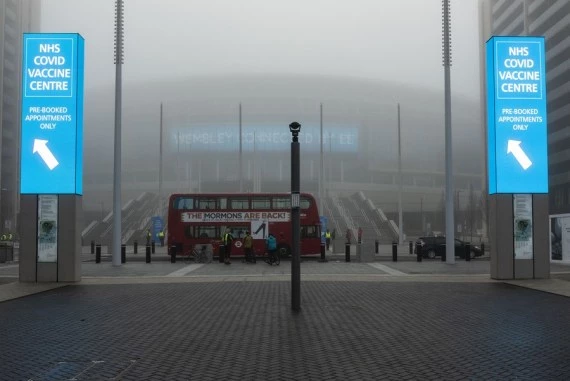
A double decker bus passes large digital signs directing the public to a mass vaccination center at Wembley Stadium in London, Britain, Dec. 19, 2021.  (Photo by Stephen Chung/Xinhua)A double decker bus passes large digital signs directing the public to a mass vaccination center at Wembley Stadium in London, Britain, Dec. 19, 2021. (Photo by Stephen Chung/Xinhua)

Related Stories

“We do not yet know exactly how many of those who catch the virus will need hospital treatment, but given the number of infections we cannot wait to find out before we act and so work is beginning from today to ensure these facilities are in place.”

Britain reported a new record increase of 189,213 coronavirus cases in the latest 24-hour period, bringing the total number of cases in the country to 12,748,050, according to official figures.

The country also reported a further 332 coronavirus-related deaths. The total number of coronavirus-related deaths in Britain now stands at 148,421.

Photo taken on Dec. 19, 2021 shows an ambulance at the emergency department of St ThomasPhoto taken on Dec. 19, 2021 shows an ambulance at the emergency department of St Thomas

The latest data showed that more than 90 percent of community COVID cases in England are now Omicron.

Meanwhile, issues with PCR and lateral flow availability in England persist. Currently, there are no walk-in or drive-through PCR coronavirus test appointments available across England. Home PCR tests are also now unavailable for the general public and essential workers, according to local reports.

British Prime Minister Boris Johnson said that up to 90 percent of people in intensive care with COVID are not boosted. He stressed the importance of booster jabs again on Wednesday, insisting this is the only way to enjoy the new year “sensibly and cautiously.”

Around 90 percent of people aged 12 and over in Britain have had their first dose of vaccine and more than 82 percent have received both doses, according to the latest figures. More than 58 percent have received booster jabs, or the third dose of a coronavirus vaccine.

Published : December 31, 2021

By : Xinhua

Biden, Putin hold phone call amid heightened tensions over Ukraine

#SootinClaimon.Com : ขอบคุณแหล่งข้อมูล : หนังสือพิมพ์ The Nation.

https://www.nationthailand.com/international/40010630


President Joe Biden urged Russia to “de-escalate tensions with Ukraine” and he made clear that the United States and its allies and partners will “respond decisively if Russia further invades Ukraine,” according to a White House statement.

Biden, Putin hold phone call amid heightened tensions over Ukraine

U.S. President Joe Biden spoke with his Russian counterpart Vladimir Putin via phone on Thursday amid heightened tensions over Ukraine.

Biden urged Russia to “de-escalate tensions with Ukraine” and he made clear that the United States and its allies and partners will “respond decisively if Russia further invades Ukraine,” according to a statement by White House Press Secretary Jen Psaki on the phone call.

Biden also expressed support for diplomacy, starting early next year with the bilateral Strategic Stability Dialogue, at NATO through the NATO-Russia Council, and at the Organization for Security and Cooperation in Europe, said the statement.

Related Stories

Biden reiterated that “substantive progress in these dialogues can occur only in an environment of de-escalation rather than escalation,” said the statement.

Thursday’s phone call was the second conversation between Biden and Putin this month. The two leaders spoke on Dec. 7 in a video conference that ended with a pledge to restart diplomatic discussions.
 

Published : December 31, 2021

By : Xinhua

“The Father” wins best international film of Chinas Golden Rooster Awards

#SootinClaimon.Com : ขอบคุณแหล่งข้อมูล : หนังสือพิมพ์ The Nation.

https://www.nationthailand.com/international/40010627


“The Father” has won the best international film of Chinas 34th Golden Rooster Awards as the winners were announced Thursday evening in the city of Xiamen, east Chinas Fujian Province.

"The Father" wins best international film of Chinas Golden Rooster Awards

Featuring Anthony Hopkins, the film tells a story that a man refuses all assistance from his daughter as he ages. As he tries to make sense of his changing circumstances, he begins to doubt his loved ones, his own mind and even the fabric of his reality.

This is the first time for China’s top film awards “Golden Rooster” to set the best international film award. Five foreign films competed for the award, namely “The Father,” “Persischstunden,” “Pinocchio,” “Wolfwalkers” and “Happy Old Year.”

Zhang Yimou walked away with the best director for the spy thriller “Cliff Walkers.” The best feature film award went to the “Island Keeper.”

Launched in 1981, the Golden Rooster Awards is sponsored by the China Federation of Literary and Art Circles and the China Film Association. 

Published : December 31, 2021

By : Xinhua