
White House unveils plans to roll out coronavirus vaccines for children ages 5-11 #SootinClaimon.Com

#SootinClaimon.Com : ขอบคุณแหล่งข้อมูล : หนังสือพิมพ์ The Nation.

https://www.nationthailand.com/international/40007786


WASHINGTON – The White House on Wednesday announced plans to distribute vaccines to a huge group that has been ineligible so far to receive the coronavirus shots – 28 million children aged 5 to 11.
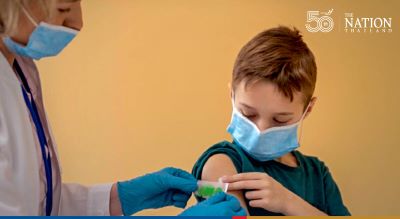
The operation is slated to begin as soon as federal health officials sign off on a reduced dose of the Pfizer-BioNTech vaccine, which the Biden administration anticipates as soon as the first week of November

White House officials said they have already acquired enough doses to vaccinate every child in that group and plan to make the specially packaged vaccine available at more than 25,000 pediatricians’ and doctors’ offices, hospitals, pharmacies, community health centers, and school- and community-based clinics. They also will undertake a campaign to educate parents more fully about the vaccines.

That strategy is key to reducing the impact of the virus across the United States, Anthony S. Fauci, the nation’s top infectious-disease specialist, said at a White House briefing. The delta variant has changed the game, he said, describing a recent study showing children are getting infected and transmitting the virus as readily as adults, even though 50% of them are asymptomatic.

“If we can get the overwhelming majority of those 28 million children vaccinated, I think that would play a major role in diminishing the spread of infection in the community,” Fauci said. “That’s one of the reasons why we want to do as best as we can to get those children 5 to 11 vaccinated.”

The rollout will rely on familiar approaches, such as identifying trusted messengers to overcome vaccine hesitancy. But this one will be tailored to children and families, officials said. Among the changes will be a focus on administering the vaccines in small-group settings and the creation of a Parent Leadership Corps of scientists and other experts who are parents themselves, and who will be a resource for other parents.

Wednesday’s announcement comes as the Biden administration has struggled to regain confidence in its planning and coordination in the wake of its mid-August announcement that all Americans would be eligible for booster shots beginning in late September. The FDA and CDC narrowed the ranks of those eligible for booster shots, sowing confusion among some patients and practitioners.

On Wednesday, members of the White House response team compared their readiness for a pediatric vaccine rollout to what they described as the lack of coordination around the initial vaccine distribution effort last December, rather than as an end-run around federal regulators and health officials.

“I think we learned that lesson from the previous administration,” said Jeff Zients, White House Coronavirus Response Coordinator.

“Should the FDA and CDC authorize the vaccine, we will be ready to get shots in arms,” Zients said. “Kids have different needs than adults.”

An expert group advising the Food and Drug Administration is scheduled to meet Oct. 26 to hear data about the vaccine’s safety and efficacy and make recommendations to regulators. The FDA will then decide whether to authorize its use. If the FDA gives its assent, a vaccine advisory panel to the Centers for Disease Control and Prevention is scheduled to meet Nov. 2 and 3 to weigh a recommendation for use. If the CDC director signs off on a recommendation, the vaccine may be administered to kids in early November.

White House officials said they are already hosting “operational readiness calls” with local jurisdictions and others, and stressing the need to distribute the shots to smaller, more intimate settings like pediatricians’ offices, rather than the mass-vaccination sites opened for adults last spring.

Zients said a total of 15 million doses will be available in the first week after the vaccine is cleared for use. Of those doses,10 million will be sent to local jurisdictions, five million to pharmacies, and 265,000 to federal entities, such as the Indian Health Service, according to a CDC planning document sent to local jurisdictions last week, a copy of which was obtained by The Washington Post.

The federal government plans to allocate the initial shots according to a formula to ensure equitable distribution based on a state’s population of eligible children, according to state and federal health officials.

This vaccine will be shipped in smaller packages than the adult version – 10-dose vials in cartons of 10 vials each – along with smaller needles that would make more sense for pediatricians and community clinics to use, according to a federal planning guide. Once a vial is opened, doses must be used within six hours, the documents state.

It will be up to state officials to decide how to spread out the initial doses. In Maine, officials are giving priority to providers who plan vaccine clinics in the first week after the vaccine is authorized and recommended, said Nirav Shah, director of Maine’s Center for Disease Control and Prevention.

Shah said officials don’t expect all families to rush their children in for shots the first week. Survey data suggests about 30% to 35% of parents will want their children vaccinated immediately, he said.

Lee Savio Beers, president of the American Academy of Pediatrics and a practicing pediatrician, praised the administration’s planning for “leaning heavily on the relationship that pediatricians have with families.”

She said the pediatricians’ group has been developing strategies to speak with parents about vaccination, some of them posted on online. The group is also figuring out how to work effectively with school and church leaders. “We are thinking about how we leverage their expertise,” she said.

Pediatricians who have signed up to be coronavirus vaccine providers are already making their own preparations.

Reshma Chugani, who is part of a two-doctor practice in Atlanta, said the group is calculating how many 5- to 11-year-olds are among their patients. Given the minimum order of 300 doses, Chugani said they may try to organize a weekend clinic to vaccinate as many children as possible “early on, as there will be initial demand that will then likely taper off.”

Such a pattern occurred among adolescents and teens, she noted. “Some families have been eager to vaccinate, while others are reluctant,” Chugani said in an email. “I have had countless conversations daily with parents and patients about the safety and efficacy of the vaccine and have had to counter misinformation on a daily basis. I anticipate that I will still be doing this with the younger age group moving forward.”

Jay A. Winsten, director of strategic media initiatives at the Harvard School of Public Health, said that despite top officials’ powerful vaccine endorsements, a far trickier messaging campaign lies ahead. Public health officials need to break down the science, possibly in question and answer form, for the lay people they need to enlist – and especially for parents who may worry about rare side effects, he said.

“I’m afraid parents will be much more attuned to reacting emotionally to what they hear from others,” Winsten said. “Government scientists should directly confront the vaccine side-effects issue by placing it in proper context.”

Surgeon General Vivek Murthy acknowledged as much in his remarks at Wednesday’s briefing, describing a public education campaign “that will meet parents where they are.”

“We will work with schools to send letters home to parents, who will convene doctors and health clinics, and support them in delivering vaccinations as soon as they have conversations with families,” Murthy said. “We will provide faith leaders with materials and toolkits that they can distribute to their congregations. We will create forums for parents to ask questions to health experts.”

Above all else, he said, the effort would emphasize “reaching parents in their language and through the people they trust.”

Despite the federal plan to prioritize doctors’ offices as vaccine sites, state health officials say they are concerned that clinicians have been slow to enroll as vaccinators in some parts of the country.

“There are serious concerns that providers are just not signing up,” said Marcus Plescia, chief medical officer for the Association of State and Territorial Health Officials. Those worries are more widespread in southeastern states, which have been among the hardest hit in the delta surge, he said.

“We are both concerned and disappointed,” he said of that enrollment. Providers cite reasons such as the logistics of obtaining and administering the vaccine. Others are “concerned that this may be controversial, and they don’t want to have demonstrations in front of their clinics,” he said.

Published : October 21, 2021

By : The Washington Post

Commerce Department announces new rule aimed at stemming sale of hacking tools to Russia and China #SootinClaimon.Com

#SootinClaimon.Com : ขอบคุณแหล่งข้อมูล : หนังสือพิมพ์ The Nation.

https://www.nationthailand.com/international/40007784


WASHINGTON – The Commerce Department on Wednesday announced a long-awaited rule that officials hope will help stem the export or resale of hacking tools to China and Russia while still enabling cybersecurity collaboration across borders.

The rule, which will take effect in 90 days, would cover software such as Pegasus, a potent spyware product sold by the Israeli firm NSO Group to governments that have used it to spy on dissidents and journalists.

It would bar sales of hacking software and equipment to China and Russia, as well as to a number of other countries of concern, without a license from the department’s Bureau of Industry and Security (BIS).

What it is not intended to do, senior Commerce Department officials say, is prevent American researchers from working with colleagues overseas to uncover software flaws, or cybersecurity firms from responding to incidents.

The rule had been in the works for years, stalled earlier by fears that it would stymie cyber defensive work. Now officials hope they have reached the right balance.

“The rationale is these are items that can be misused to abuse human rights, to track and identify dissidents or disrupt networks or communications, but they also have very legitimate cybersecurity uses,” said one senior official, who spoke on the condition of anonymity under ground rules set by the agency. “So what the rule does is restrict these exports to the problematic countries.”

Commerce already has export controls on products containing encryption, so the new rule applies to products that do not contain encryption, officials said.

There are probably few U.S. companies whose products would be covered by the rule, but anyone who sells U.S.-origin software or technology to develop cyber intrusion products outside the United States must also seek authorization, officials said.

The rule is complicated. For instance, an American company wanting to ship “intrusion software” to the governments of Israel, the United Arab Emirates and Saudi Arabia would require a license. If the software is to be used for cyberdefense purposes, such as penetration testing, and will be sold to nongovernment persons, then a license is not required.

Any intrusion software, even for defensive purposes, being sold to anyone in China or Russia, whether they work for the government, will require a license, according to the rule.

Commerce’s BIS will vet the end user before deciding whether to grant a license.

“That’s one of the primary purposes of the license application,” said Kevin Wolf, a former assistant secretary of export administration at the Commerce Department. “Do we trust that the company overseas is going to use it for the reason stated? If there are doubts, they will deny the application.”

The rule will align the United States with the 42 European and other allies that are members of the Wassenaar Arrangement, which sets voluntary export control policies on military and dual-use technologies – or products that can be used for both civilian and military purposes.

China is not a Wassenaar member, but Russia is. Israel is also not a member but voluntarily adopts its controls, although that apparently did not prevent Pegasus from being sold to and used by Saudi Arabia to track journalists and dissidents, as countries can vary in how they implement Wassenaar controls.

Most of the other Wassenaar countries have already imposed regulations on hacking tools. The United States would be the last or near last to do so, officials said. The delay grew out of the issue’s complexity and the agency’s desire not to impede legitimate cybersecurity work.

Unlike most of the other Wassenaar countries, the United States has a large cybersecurity industry. When Commerce several years ago released a proposed rule governing this area, companies voiced concerns that the regulation could restrict legitimate work such as responding to network attacks or disclosing software flaws to software makers.

The new rule is an attempt to address those concerns while seeking to prevent tools and technology from being misused by authoritarian states, officials said.

“We’re trying to walk the line between not impairing legitimate cybersecurity collaboration across borders, but trying to make sure these pieces of hardware and software technology aren’t obtained and used by repressive governments,” the senior official said.

The push for a control on hacking tools began about a decade ago in the wake of reports about firms whose wares were used to target dissidents. The official recalled how he learned that Libyan leader Moammar Gaddafi, who was deposed and killed in 2011, had used surveillance tools to track dissidents and activists. They were made by a French company, Amesys, according to the Wall Street Journal.

In the ensuing years, other companies that produced spyware made headlines: The Italian company Hacking Team. The European firm Gamma. The Israeli NSO Group.

In late 2013, Wassenaar members agreed to add products that aid cyber intrusions to the list of controls. It was up to each member state to adopt the control as it saw fit.

The rule’s complexity makes comment from the security community crucial, said Dave Aitel, a computer scientist who worked for the National Security Agency and who consulted on the rule’s provisions. Commerce should assign a team tasked with educating cyber researchers and companies about it, he said. “They’re very used to engaging with large companies but the security community is not centered in a few industry giants.”

Wolf, the former senior official, was glad to see the rule finally emerge.

“Commerce appears to have threaded the needle of controlling cyber intrusion software without harming legitimate cyber defense efforts,” said Wolf, a former head of BIS who spearheaded the effort to create the rule from 2013 until he left the agency in 2017.

He noted that Commerce is giving the public 45 days to comment on the rule, and the agency will have another 45 days to make changes before the rule becomes final.

Published : October 21, 2021

Health experts want the U.K. to bring back covid restrictions. Government says we dont want to go back #SootinClaimon.Com

#SootinClaimon.Com : ขอบคุณแหล่งข้อมูล : หนังสือพิมพ์ The Nation.

https://www.nationthailand.com/international/40007783


Public health experts in the United Kingdom are calling on the government to reintroduce some coronavirus restrictions as cases climb – far outstripping those of its western European neighbors – despite the countrys high vaccination coverage.

British Prime Minister Boris Johnson ended the lockdown in England on July 19, declaring it “Freedom Day.” Since then, the country has lifted most restrictions, with no legal mask requirement in most settings, including schools, and nothing approaching a universal vaccine mandate, in sharp contrast with some other European countries.

In a speech in September laying out his government’s plan for autumn and winter, Johnson said he would like things to continue that way, with an emphasis on promoting vaccinations, booster doses, and frequent testing, rather than reintroducing covid restrictions. However, he outlined a pandemic “Plan B” that he said could be necessary if the publicly funded National Health Service became overwhelmed. Some restrictions could then be introduced, including advising people to work from home, legally mandating face coverings in certain settings again, and bringing about mandatory covid passports.

Now, as the United Kingdom this week recorded its highest number of deaths from the coronavirus since March, health experts are warning of a potential “winter crisis,” and have begun urging the government to not just implement “Plan B” – but to go further with “Plan B Plus.”

“We are right on the edge – and it is the middle of October,” Matthew Taylor, Chief Executive of the NHS Confederation, a group representing the health care systems in England, Wales and Northern Ireland, told The Guardian newspaper Tuesday. “It would require an incredible amount of luck for us not to find ourselves in the midst of a profound crisis over the next three months.”

The government should ensure “clear communications to the public that the level of risk has increased,” his organization said, and call on the public to “mobilise around the NHS and do whatever they can to support front line services this winter,” including by getting booster shots and volunteering.

“Many of these measures, particularly around mask-wearing and COVID-19 certification, are already common in parts of Europe where the prevalence of the disease is lower,” the group added.

However, the government, which has been keen to reopen the economy, has insisted that its current approach is working. Business Secretary Kwasi Kwarteng said Wednesday that it was not the time for Plan B, adding: “What we want to do is manage the situation as it is – we don’t want to go back into lockdown and further restrictions. I would rule that out.”

The Cabinet Office said in an emailed statement: “The vaccination programme has significantly weakened the link between cases, hospitalisations and deaths and will continue to be our first line of defence against COVID-19.”

“We always knew the coming months would be challenging, which is why we set out our plan for Autumn and Winter last month.”

Daily case numbers are the highest they have been since July – 49,156 people were reported to have tested positive for the coronavirus in Britain on Oct. 18. And “the problem is a lot worse than the daily figures suggest,” says Robert West, a Professor of Health Psychology at University College London who is part of the government’s Scientific Pandemic Insights Group on Behaviors.

This is because not everyone who has covid-19 is aware of it, particularly if they do not have symptoms, and some people may test positive but not report their result to public health bodies. The Office for National Statistics estimates that the true number of infections in England, in the week ending on Oct. 9, was closer to 1 in 60 people in the country, or about 127,000 new cases per day.

And while hospitalizations and deaths remain low, they are climbing. According to the government, in the United Kingdom as a whole, 954 people were recorded to have died of covid-19 in the past seven days, a 21% week-on-week increase, while 6,074 people were reported to have been admitted to a hospital due to covid-19 in the seven days up to Oct. 16, an 11% week-on-week increase.

Experts say three major trends may have led Britain to this point: Loosened public health restrictions, the relative success of different vaccination campaigns and the natural evolution of the virus.

The government went into “an explicitly post-pandemic mode” and did not do enough to mitigate risks after Johnson ended lockdown, says Danny Altmann, Professor of Immunology at Imperial College London. This created a “perfect storm” once the more contagious delta variant began to spread, while schools reopened, immunity from the coronavirus vaccines began to wear off and the weather got cooler.

The success of the country’s vaccination program may, ironically, also be a factor in the rising number of cases right now. While much is still unknown about how coronavirus vaccines work, studies suggest their efficacy could be reduced over time. Because many people were vaccinated early, immunity to infections could be going down around now, says UCL’s West, just as people begin to spend more time indoors, potentially increasing transmission.

The virus mutates naturally over time, so some of the rising cases could also be explained by “basic biology and timeline,” says Altmann. “Not only were we early, we were also at the front of the queue for importation of delta variant so we’ve had much longer for it to percolate,” he said, adding that the same is true for AY4.2, a new variant sometimes known as “delta plus” that is “expanding” in England, according to the latest official analysis.

And while nearly 79% of those aged above 12 have been fully vaccinated, efforts to vaccinate school-aged children have progressed more slowly – even though infections are rising in that age group. The latest official data shows an estimated 8.9% of children in England in what roughly translates to sixth to tenth grade were infected.

“They get sick, they miss school, they spread it to their mates and teachers and family, they get long covid,” Altmann adds.

While the government has remains reluctant to reintroduce covid restrictions, it has said it will be keeping “a very close eye” on case numbers.

It has delayed implementing covid measures in the past, partly out of concern that the British public would not comply, according to a recent scathing review of the British response to the pandemic. In that review, lawmakers concluded that the government underestimated people’s willingness to comply with restrictions and erred in delaying a lockdown as a result.

Now, some health experts believe that the public would be willing to accept more restrictions again if they are sold as common-sense measures.

Research shows most people would be willing to start wearing masks again “if you make it very clear in your communications why and when to do it,” West says.

Meanwhile, Altmann has a more blunt assessment: “I don’t understand how people can get bored of avoiding death.”

Published : October 21, 2021

By : The Washington Post

Facebook CEO Mark Zuckerberg added to D.C. privacy lawsuit #SootinClaimon.Com

#SootinClaimon.Com : ขอบคุณแหล่งข้อมูล : หนังสือพิมพ์ The Nation.

https://www.nationthailand.com/international/40007782


WASHINGTON – The attorney general for the District of Columbia has added Facebook chief Mark Zuckerberg to a lawsuit stemming from the Cambridge Analytica scandal, one of the first times the tech scion has personally been targeted by regulators.

In 2018, Attorney General Karl Racine sued the social media giant on accusations of unfair and deceptive trade practices under the District’s Consumer Protection Procedures Act, alleging Facebook had misled users – including about half of District residents – about the security of their data. Under the CPPA, individuals are liable for the actions of a company if they were aware of them at the time.

But after reviewing hundreds of thousands of pages of internal documents and interviewing former employees and others, it became evident that Zuckerberg “knowingly and actively” participated in each decision leading up to Cambridge Analytica’s collection of user data and misrepresented how secure that data was, Racine said Wednesday in a statement.

If Zuckerberg and Facebook are found to have broken the law, they could be on the hook for millions of dollars in restitution and civil penalties.

Zuckerberg was aware that Facebook’s success hinged on assuring users their data was protected, while selling access to that data without driving people away, Racine’s complaint states. The decision to open Facebook to third parties was Zuckerberg’s “brainchild.”

“The evidence further demonstrates that Mr. Zuckerberg also participated in misleading the public and government officials about Facebook’s role,” Racine said. “Under these circumstances, Mr. Zuckerberg should be held liable for his involvement in the decisions that enabled the exposure of millions of users’ data.”

Though much of the evidence in the complaint is redacted due to a privacy order, what remains speaks to tight grip Zuckerberg has on operations. The CEO owns more than half of Facebook’s voting shares, giving him immense sway over the company’s activity.

In the wake of the scandal, Zuckerberg sought to take responsibility for the company’s missteps, including its entanglement with Cambridge Analytica.

“I started Facebook, I run it, and I’m responsible for what happens here,” he told lawmakers.

Historically, though, company lawyers have fought hard to shield Zuckerberg from legal and regulatory fallout, The Washington Post has reported. When the Federal Trade Commission cobbled together its initial Facebook settlement over privacy failings roughly a decade ago, the agency weighed whether to charge the young CEO personally.

In the end, however, the FTC dropped mention of him from a version of the order shared around April 2011, according to email records obtained from the agency under open-records laws.

Facebook fought Racine’s lawsuit when it was filed in 2018, asking the judge to dismiss it. On Wednesday, a Facebook spokesman called the allegations “as meritless today as they were more than three years ago, when the District filed its complaint,” in an emailed statement to The Post.

“We will continue to defend ourselves vigorously and focus on the facts.”

Cambridge Analytica, a political consultancy that had worked for the Trump campaign, was suspended from Facebook for improperly accessing the personal information of 87 million users. The company later declared bankruptcy and ceased operations in the United States and United Kingdom.

“Zuckerberg was personally aware of the risks that sharing consumer data with apps posed,” the complaint reads, “but actively disregarded those risks because sharing data was otherwise beneficial and lucrative to Facebook’s business model and platform growth.”

In 2019, the Federal Trade Commission reached a $5 billion settlement with Facebook over its failure to protect users in a case that began with the Cambridge Analytica scandal but later broadened to include other privacy and security abuses at the company.

The move to hold Zuckerberg accountable for the company’s privacy failures comes as Facebook and its effects on democracy, polarization, security, public health and other critical matters come under growing scrutiny.

On Wednesday, The Verge reported that Facebook is poise to ditch its name and unveil a new one that reflects the company’s ambitions to build a “metaverse,” a term Zuckerberg has been bandying that signals the company’s quest for further dominance in daily life and technology.

“The metaverse is going to be a big focus, and I think that this is just going to be a big part of the next chapter for the way that the internet evolves after the mobile internet,” Zuckerberg told The Verge this summer. “And I think it’s going to be the next big chapter for our company too, really doubling down in this area.”

Published : October 21, 2021

By : The Washington Post

Asean reported decreasing new Covid-19 cases on Wednesday #SootinClaimon.Com

#SootinClaimon.Com : ขอบคุณแหล่งข้อมูล : หนังสือพิมพ์ The Nation.

https://www.nationthailand.com/international/40007780


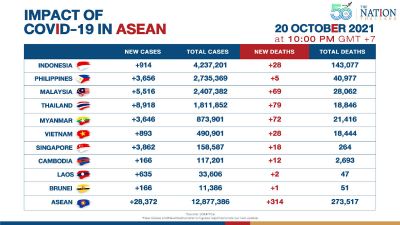
The number of Covid-19 cases crossed 12.87 million across Southeast Asia, with 28,372 new cases reported on Wednesday (October 20), lower than Tuesday’s tally at 29,432. New deaths are at 314, decreasing from Wednesday’s number of 530. Total Covid-19 deaths in Asean are now at 273,517.

Vietnamese Prime Minister estimated that the country’s exports are likely to rise 10.7 per cent in 2021, with annual inflation expected below 4 per cent year on year. He made this estimation although Vietnam’s gross domestic product (GDP) contracted 6.17 per cent in the third quarter of 2021 from a year earlier as the containment measures hit, the sharpest quarterly decline on record. A fast-spreading outbreak of the Delta variant in its economic hub of Ho Chi Minh City led to wide curbs on movement and commerce, hitting key manufacturing provinces nearby.

Meanwhile, Singapore reported 3,862 new cases and 18 deaths on Wednesday, bringing cumulative cases in the country to 158,587 patients and total 264 deaths. The government urged its citizens especially those in risky groups and elders to refrain from social activities and only leave home when it is necessary. The government is also monitoring the situation closely to estimate whether the rise in daily infections is just a temporary trend or the start of a new wave of pandemic.
 

Published : October 21, 2021

By : THE NATION

Singapores covid record sparks warning on hospital strain #SootinClaimon.Com

#SootinClaimon.Com : ขอบคุณแหล่งข้อมูล : หนังสือพิมพ์ The Nation.

https://www.nationthailand.com/international/40007777


Singapore warned that covid-19 cases are dangerously straining the city-states health care system, even as strict rules designed to curb the current outbreak are set to be reviewed within days.

New daily cases hit 3,994 on Tuesday, another record, with more patients needing intensive care, the Ministry of Health said in a statement. The increase was likely due to a post-weekend surge, the ministry said, though it will continue monitoring cases to determine if it is part of a trend.

“The number of persons requiring ICU care continues to rise, and this has put our hospitals under significant pressure and strain,” according to the ministry. It asked residents to limit their social activities, especially the elderly population, and go out only for essential trips.

There are currently 71 patients in intensive care, the agency said. Health minister Ong Ye Kung said earlier this month that the city-state is working to increase the number of ICU beds to 180, up from 134, in anticipation of a rise in cases.

The continuing surge in infections is likely to test the government’s resolve to proceed with reopening within the community, with officials set to review measures introduced nearly a month ago to curb the virus’s spread. The spate of restrictions, including making work-from-home the standard and allowing a maximum of two people to meet in social settings, were put in place until Oct. 24.

There are growing signs of fatigue with the curbs. A rise in activity levels was observed over the past week, including more visitors to malls and a slight increase in use of public transportation, the health ministry said.

The seven-day average number of new infections in the Asian financial hub have more than tripled from a month ago and is now hitting more than 3,000 a day, though the vast majority of cases are mild or asymptomatic. Daily reported infections among unvaccinated seniors above the age of 60, a group that is more vulnerable to developing severe disease, has risen to well over 100, according to the ministry.

Published : October 21, 2021

By : Bloomberg

Bombs planted on military bus in Damascus kill at least 14, in deadliest attack in years #SootinClaimon.Com

#SootinClaimon.Com : ขอบคุณแหล่งข้อมูล : หนังสือพิมพ์ The Nation.

https://www.nationthailand.com/international/40007776


BEIRUT – At least 14 people were killed in Syrias capital Wednesday morning when two explosive devices detonated on a military bus in one of the deadliest attacks to hit Damascus in years, according to the Syrian official news agency SANA.

At 6:45 a.m. local time, two bombs attached to the bus exploded as it crossed the usually bustling President Hafez al-Assad Bridge in central Damascus. A third device had fallen off and was later found and dismantled, SANA reported.

Footage shared by the news agency showed a charred husk of the small military bus after it had been doused with water. At least three people were wounded in the blast.

It was not immediately clear whether all the dead and wounded were military personnel.

It was the deadliest such incident in the capital since 2017, when at least 30 were killed in an Islamic State attack on the Justice Palace. The capital has enjoyed relative calm in the years before and since, while war raged on in the rest of the country as President Bashar al-Assad has tried to wrest control back from different groups, including a U.S.-backed Kurdish group, various rebel formations and armed Islamist organizations.

The attack was claimed by a group called Saraya Qasiyoun, which appears to have first surfaced two years ago when it took responsibility for targeting two security forces in Damascus. Since then, the group has claimed several attacks on Syrian army personnel, intelligence security outposts and pro-government militants.

In a statement shared on a Telegram channel that appeared to be its official method of communication, the group said it will continue its operations inside government-held areas “in response to the daily massacres that the regime and its militias commit against our people in the freed north.”

About an hour after the attack in Damascus, local media in the northern rebel-held pocket of Idlib reported intense artillery shelling on a residential area in the town of Ariha. Salem Abdan, the head of Idlib’s health directorate, said in a text message that at least 13 people had been killed, including three children. The Syrian American Medical Society, which supports hospitals in the province, said that at least 21 people wounded in the shelling were being treated at Idlib Central Hospital.

Juliette Touma, UNICEF’s Middle East spokeswoman, said the organization had confirmed that four children were killed in the shelling while they were on their way to school.

The rebel-held northwest corner of the country hosts millions of Syrians displaced from the rest of the country and has witnessed a surge of violence and attacks over the summer. A fragile cease-fire between rebels and the Syrian government has been interrupted by repeated bouts of violence, and fears of a larger military confrontation loom, especially after two Turkish soldiers were killed and three injured in an attack in Idlib last month.

Turkey, Syria’s northern neighbor, has supported anti-Assad rebels and maintains military observer posts in Idlib. Last year, Turkish troops helped deter a Syrian government offensive aimed at recapturing the province.

Photos of the artillery attack on Ariha circulated on social media, with one garnering immediate attention: two motionless boys in bloodied clothes, one with an arm missing and his leg twisted unnaturally, the other lying on his side clutching his bloodstained stomach with a green backpack still hugging his back.

Local opposition media reported the attack was on a market, as children were on their way to school. It is unclear if the shelling was related to the attack in Damascus.

In a statement, Syria’s Minister of Interior vowed to find those who had carried out the Damascus bombing, which he said “took place after terrorism had been kicked out from most of Syrian lands. Those who resorted to and planned this cowardly [attack] wanted to hurt as big a number of citizens as possible.”

It remains unclear if any civilians were hurt or killed, but the bombs exploded while the bus was driving over a central bridge, around the corner from the Four Seasons Hotel, a semi-permanent home for many of the U.N. employees in Damascus.

Published : October 21, 2021

By : The Washington Post
Squid’s Victory รายการใหม่จากจีนถูกวิจารณ์หนักลอก Squid Game #SootinClaimon.Com

#SootinClaimon.Com : ขอบคุณแหล่งข้อมูล : หนังสือพิมพ์โพสต์ทูเดย์

https://www.posttoday.com/world/666135

วันที่ 21 ต.ค. 2564 เวลา 18:30 น.Squid's Victory รายการใหม่จากจีนถูกวิจารณ์หนักลอก Squid Gameเหมือนตรงไหนเอาปากกามาวง! Youku สตริมมิงยักษ์ใหญ่ของจีนเปิดตัวรายการใหม่ ชาวเน็ตคุ้นๆ เหมือนเคยเห็นที่ไหนมาก่อน

หลังจากที่ซีรีส์เรื่อง Squid Game จากเกาหลีใต้ซึ่งออกอากาศทาง Netflix ประสบความสำเร็จและและได้รับความนิยมจากทั่วโลก สร้างรายได้ให้แก่ Netflix บริษัทสตรีมมิงไปเกือบ 900 ล้านเหรียญสหรัฐ หรือกว่า 30,000 ล้านบาท หลังเข้าฉายมาได้ 1 เดือน

ทั้งนักแสดง ผู้กำกับ ตัวละคร และเกมต่างๆ ในซีรีส์ถูกพูดถึงอย่างกว้างขวาง จนถึงขนาดที่ว่าเครื่องแต่งกาย และขนมทัลโกนา (dalgona) อย่างที่ปรากฏอยู่ในซีรีส์ถูกวางขายในต่างประเทศด้วย

รวมถึงประเทศจีนซึ่งไม่ได้มีการเปิดตัวซีรีส์อย่างเป็นทางการ เนื่องจาก Netflix ไม่มีให้บริการในประเทศ ถึงกระนั้นซีรีส์เรื่อง Squid Game ก็ยังได้รับความนิยมจากชาวจีนจำนวนมาก โดยพวกเขาชมผ่านสตรีมมิงเถื่อน หรือโดยการดาวน์โหลดทอร์เรนต์ รวมถึงบรรดาร้านขนมเบเกอรี่ในจีนยังออกเมนู “ทัลโกนา” ด้วย

นอกจากนี้มีรายงานจากแหล่งข่าวมากมายว่าจีนจะเปิดตัวรายการวาไรตี้ใหม่ชื่อ “Squid’s Victory” ประมาณปี 2022 ผ่านทาง Youku สตรีมมิงยักษ์ใหญ่ของจีน ซึ่งมีฐานสมาชิกประมาณ 90 ถึง 100 ล้านคน และเป็นหนึ่งในแพลตฟอร์มสตรีมมิงที่ได้รับความนิยมมากที่สุดของจีน

ทว่า หลังจากที่โปสเตอร์ของ Squid’s Victory ถูกเปิดเผยออกมาครั้งแรกนั้นก็เกิดกระแสในเชิงลบเป็นอย่างมาก ทั้งจากผู้ชมชาวจีนและเกาหลีใต้ ซึ่งถูกมองว่าทั้งชื่อรายการ โปสเตอร์ และพล็อตที่มีผู้เข้าแข่งขันมาร่วมเล่นเกมเด็กนั้น มันช่างคุ้นเสียเหลือเกิน

Youku ถูกวิพากษ์วิจารณ์อย่างหนักจากบรรดาชาวเน็ตบน Weibo แพลตฟอร์มออนไลน์ของจีน จนแฮชแท็ก #Youku’s show ‘Victory’ is the ‘Squid Games’ (#รายการ Victory ของ Youku คือ Squid Game) ติดเทรนด์ในไม่ช้าแต่ก็ถูกลบในภายหลัง

ถึงกระนั้น ก็ยังมีแฮชแท็กอื่นๆ ขึ้นมาแทน เช่น #Netflix responds to Youku’s Victory of Squid และ #Youku apologized เพื่อเรียกร้องให้ Youku ออกมาขอโทษ และให้ Netflix ดำเนินการขั้นเด็ดขาดต่อ Youku ซึ่งแฮชแท็กเหล่านี้ถูกกล่าวถึงหลายล้านครั้งภายในเวลาไม่กี่ชั่วโมง

ด้าน Netflix กล่าวว่ายังไม่ได้หารือเรื่องลิขสิทธิ์กับ Youku

ต่อมา Youku ได้ออกมาขอโทษพร้อมชี้แจงว่าโปสเตอร์ที่เห็นเป็นเพียงฉบับร่างเท่านั้น และมีการเปิดตัวโปสเตอร์ใหม่ที่แตกต่างไปจากเดิมอย่างเห็นได้ชัด พร้อมชื่อรายการใหม่ว่า “Game’s Victory”

อย่างไรก็ตาม ดูเหมือนว่าบรรดาชาวเน็ตบนโลกออนไลน์ยังคงไม่พอใจกับคำชี้แจงครั้งนี้ โดยผู้ใช้ Weibo รายหนึ่งกล่าวว่า “เป็นคำแก้ตัวที่ฟังไม่ขึ้น เห็นได้ชัดว่าพวกเขากำลังลอกเลียนแบบ Squid Game เพราะมันได้รับความนิยม”

ชาวจีนหลายคนรู้สึกละอายที่ผู้ผลิตจีนออกรายการที่คล้ายคลึงกับของเกาหลีใต้อีกแล้ว โดยก่อนหน้านี้รายการประกวดร้องเพลงแร็พยอดนิยม The Rap Of China ถูกวิพากษ์วิจารณ์ว่าเลียนแบบรายการ Show Me The Money ของเกาหลีใต้

ทั้งนี้ จีนและเกาหลีใต้ถกเถียงกันเกี่ยวกับวัฒนธรรมมาหลายครั้งในช่วงไม่กี่ปีที่ผ่านมา โดยในปีที่แล้วจีนถูกกล่าวหาว่าขโมยวัฒนธรรมเกาหลีโดยอ้างว่าเป็นผู้นำอุตสาหกรรมกิมจิ นอกจากนี้ยังเคยถกเถียงกันหลังจากที่จีนกล่าวว่าชุดประจำชาติของเกาหลีใต้มีต้นกำเนิดมาจากจีน

ที่มา: BBC, Global Times, Koreaboo

พบซากปูน้ำจืดโบราณอายุ 100 ล้านปีในก้อนอำพันจากเมียนมา #SootinClaimon.Com

#SootinClaimon.Com : ขอบคุณแหล่งข้อมูล : หนังสือพิมพ์โพสต์ทูเดย์

https://www.posttoday.com/world/666129

วันที่ 21 ต.ค. 2564 เวลา 17:31 น.พบซากปูน้ำจืดโบราณอายุ 100 ล้านปีในก้อนอำพันจากเมียนมานักวิจัยเผยการค้นพบครั้งสำคัญ ซากปูโบราณอายุ 100 ล้านปีในก้อนอำพันที่พบในเมียนมา

ทีมนักวิทยาศาสตร์ที่นำโดยบุคลากรจากมหาวิทยาลัยฮาร์วาร์ดและมหาวิทยาลัยธรณีศาสตร์จีนเผยการค้นพบซากปูโบราณในก้อนอำพัน หรือยางไม้อายุราว 100 ล้านปีที่พบในเหมืองทางตอนเหนือของเมียนมาเมื่อปี 2015

ทีมนักวิทยาศาสตร์ระบุว่า ซากปูโบราณดังกล่าวเป็นปูน้ำจืดที่เชื่อว่าอาศัยอยู่ในยุคครีเทเชียสร่วมกับไดโนเสาร์เมื่อประมาณ 100 ล้านปีก่อน นับเป็นปูที่มีรูปลักษณ์เหมือนปูยุคใหม่ที่มีอายุมากที่สุดเท่าที่เคยพบมา และเป็นครั้งแรกที่พบปูอยู่ร่วมยุคกับไดโนเสาร์

ฮาเวียร์ ลูเก นักวิจัยจากมหาวิทยาลัยฮาร์วาร์ดเผยว่า ซากปูโบราณขนาด 55 มิลลิเมตรคือฟอสซิลที่สมบูรณ์ที่สุดเท่าทีมีการค้นพบมา โดยการทำไมโครซีทีสแกนทำให้เห็นเนื้อเยื่อที่ละเอียดอ่อนชัดเจน อาทิ หนวด ขา ส่วนของปากที่เห็นเส้นขนชัดเจน ตา และนมปู

การวิเคราะห์พบว่าปูโบราณในก้อนอำพันตัวนี้ไม่มีเนื้อเยื่อปอด มีเพียงนมปูที่วิวัฒนาการมาอย่างดี บ่งบอกว่าปูชนิดนี้ไม่ได้อาศัยอยู่บนบก 100%

นักวิจัยตั้งสมมติฐานว่า ปูตัวนี้อยู่ในวัยเด็กและศัยอยู่ในน้ำจืดหรืออาจเป็นปูครึ่งบกครึ่งน้ำ โดยมันอาจอพยพขึ้นจากน้ำขึ้นบนบกเหมือนกับปูแดงบนเกาะคริสต์มาสของออสเตรเลีย ที่แม่ปูซึ่งอาศัยอยู่บนบกลงไปวางไข่ในน้ำก่อนจะกลับขึ้นมาบนบก

ฟอสซิลปูชิ้นนี้มีชื่อว่า Cretapsara athanata ซึ่งมาจากคำว่า Cretaceous (ยุคครีเทเชียส) รวมกับคำว่า Apsara (เทพีอัปสราที่เคลื่อนไหวในน้ำตามความเชื่อของผู้คนแถบเอเชียตะวันออกเฉียงใต้) ส่วนคำว่า athanatos เป็นภาษากรีก หมายถึงความเป็นอมตะ เปรียบกับชีวิตที่ถูกเก็บรักษาในก้อนอำพัน

ปัจจุบันอำพันก้อนนี้ถูกเก็บรักษาไว้ที่พิพิธภัณฑ์อำพันหลงอิ้นของจีน

งานวิจัยชิ้นนี้เผยแพร่ในวารสาร Science Advances เมื่อวันที่ 20 ต.ค.ที่ผ่านมา

ภาพ: Xiao Jia (Longyin Amber Museum)

หลักฐานยืนยันชาวไวกิ้งเหยียบทวีปอเมริกาก่อนโคลัมบัส #SootinClaimon.Com

#SootinClaimon.Com : ขอบคุณแหล่งข้อมูล : หนังสือพิมพ์โพสต์ทูเดย์

https://www.posttoday.com/world/666116

วันที่ 21 ต.ค. 2564 เวลา 16:24 น.หลักฐานยืนยันชาวไวกิ้งเหยียบทวีปอเมริกาก่อนโคลัมบัสพบหลักฐานใหม่ยืนยันว่าชาวไวกิ้งเดินทางเยือนทวีปอเมริกาเมื่อ 1,000 ปีที่แล้วก่อน คริสโตเฟอร์ โคลัมบัส

งานวิจัยซึ่งตีพิมพ์ในวารสาร Nature พบหลักฐานที่ยืนยันว่าชาวไวกิ้งแล่นเรือยาวที่สร้างจากไม้ซุงข้ามมหาสมุทรแอตแลนติกไปเยือนทวีปอเมริกาแล้วตั้งถิ่นฐานอยู่ในแคนาดาตั้งแต่ 1,000 ปีก่อน ก่อนที่ คริสโตเฟอร์ โคลัมบัส จะค้นพบทวีปอเมริกาถึง 471 ปี

ทีมนักโบราณคดีและผู้เชี่ยวชาญด้านการคำนวณอายุวัตถุโบราณทำการศึกษาเศษไม้จากสิ่งก่อสร้างของชาวไวกิ้งซึ่งปัจจุบันคืออุทยานประวัติศาสตร์แลนโซเมโดส์ (L’Anse aux Meadows) ทางตอนเหนือของเกาะนิวฟาวด์แลนด์ของแคนาดาด้วยเทคนิคใหม่ เนื่องจากการตรวจหาคาร์บอนเพื่อคำนวณอายุวัตถุแบบเก่าไม่สามารถระบุเวลาที่แน่ชัด

ทีมวิจัยใช้เทคนิคใหม่ซึ่งใช้การเกิดพายุสุริยะครั้งใหญ่เป็นจุดอ้างอิงกับตัวอย่างเศษไม้ 3 ชิ้นทำให้พบว่า สิ่งก่อสร้างโบราณของชาวไวกิ้งทำขึ้นในปี 1021 หรือเมื่อ 1,000 ปีที่แล้ว

เทคนิคกำหนดอายุโบราณวัตถุใหม่ที่ว่านี้อ้างอิงจากข้อเท็จจริงที่ว่าพายุสุริยะจะทิ้งร่องรอยของคลื่นกัมมันตรังสีของธาตุคาร์บอนที่เฉพาะเจาะจงในวงปีการเจริญเติบโตของต้นไม้ ซึ่งเป็นที่รู้กันว่าพายุสุริยะครั้งใหญ่ที่มีการระเบิดและแผ่รังสีคอสมิกพลังงานสูงจากดวงอาทิตย์กิดขึ้นเมื่อปี 992

เศษไม้ 3 ชิ้นที่นำมาตรวจสอบซึ่งนำมาจากต้นไม้ที่แตกต่างกัน 3 ต้น มีวงปีการเติบโต 29 วงเกิดขึ้นหลังจากวงปีที่เป็นสัญลักษณ์การเกิดพายุสุริยะ ซึ่งหมายความว่าต้นไม้ทั้ง 3 ต้นถูกตัดในปี 1021 ไมเคิล ดี นักวิทยาศาสตร์ธรณีวิทยาจาก University of Groningen ของเนเธอร์แลนด์ซึ่งเป็นหนึ่งในทีมวิจัยเผยว่า คนพื้นเมืองเดิมไม่ได้เป็นคนตัดต้นไม้ เนื่องจากมีหลักฐานว่าเป็นการใช้ใบมีดโลหะซึ่งคนพื้นเมืองยังไม่มีใช้

อย่างไรก็ดี แม้ว่ายังไม่ชัดเจนว่าชาวไวกิ้งเดินทางมาเหยียบทวีปอเมริกากี่ครั้ง หรือพวกเขาตั้งถิ่นฐานอยู่นานกี่ปี แต่หลักฐานปัจจุบันบ่งชี้ว่าชาวไวกิ้งตั้งถิ่นฐานอยู่ไม่กี่ปี

นอกจากนี้ ยังมีหลักฐานจาก L’Anse aux Meadows แสดงว่าชาวไวกิ้งเดินทางสำรวจพื้นที่ทางใต้ของเกาะนิวฟาวด์แลนด์ด้วยในขณะที่พวกเขาอยู่ในทวีปอเมริกา

สิ่งก่อสร้างของชาวไวกิ้งใน L’Anse aux Meadows คล้ายคลึงกับสิ่งก่อสร้างที่ไอซ์แลนด์และกรีนแลนด์ซึ่งเป็นที่ที่ชาวไวกิ้งเดินทางไปเยือนก่อนจะเดินทางมาถึง L’Anse aux Meadows

ตัวอย่างเศษไม้จากชุมชนโบราณของชาวไวกิ้งที่ L’Anse aux Meadows บนเกาะนิวฟาวด์แลนด์ของแคนาดา Petra Doeve/Handout via REUTERS