ในรายกาาร Lost tribe of Alexander the Great (เผ่าที่สาบสูญของอเล็กซานเดอร์มหาราช) ของสถานีโทรทัศน์ ABC ของออสเตรเลียสัมภาษณ์คนบร็อกปะ ในปากีสถานที่ชื่อ กูร์เม็ด เซตัน เขายืนยันว่า “ใช่ มีคนบอกว่าเราสืบเชื้อสายจากมาจากอเล็กซานเดอร์ บรรพบุรุษของเราบอกเราว่าเราสืบเชื้อสายมาจากเผ่าพันธุ์นั้น”
แต่โมนา ภันนักมานุษยวิทยาที่ศึกษาชุมชนนี้มาอย่างยาวนานได้ให้สัมภาษณ์กับ Open Magazine ทฤษฎีเรื่องชาวดร็อกปะเป็นอารยันนั้นยังมีข้อบกพร่อง เนื่องจากภาษาบางภาษาที่พูดในเทือกเขาหิมาลัยทางตะวันตกเฉียงเหนือมีความคล้ายคลึงกันกับภาษาอินโด-อารยันอื่นๆ ผู้พูดภาษาเหล่านี้จึงถูกจัดอยู่ในประเภทหนึ่ใของชาวอารยันด้วย
France was infuriated when Australia, the U.S. and Britain announced a security partnership known as AUKUS on Sept. 15, whose first initiative is the delivery of a nuclear-powered submarine fleet to Australia by the latter two countries despite the Australian governments multibillion-dollar 2016 contract to buy diesel-electric submarines from France.
French President Emmanuel Macron held talks here with visiting U.S. Secretary of State Antony Blinken on Tuesday, three weeks after an unprecedented crisis between the two countries sparked by Australia’s decision to scrap a submarine deal with France.
The “at length, face-to-face meeting” between Macron and Blinken, which lasted about 40 minutes according to French media, should “help restore confidence” between the two countries, the Elysee said in a statement.
ADVERTISEMENT
Earlier on Tuesday, Blinken also met with his French counterpart, Jean-Yves Le Drian. They chose not to hold a joint press conference. The objective of their “in-depth exchange” was to “identify the steps that may allow a return of confidence between our two countries,” the French Foreign Ministry said in a statement.
U.S. Secretary of State Antony Blinken testifies before the U.S. Senate Foreign Relations Committee on examining the U.S. withdrawal from Afghanistan, in Washington, D.C. Sept. 14, 2021. (Drew Angerer/Pool via Xinhua)
France is “still angry” and “reserved,” its reception for Blinken has been “distant,” while Washington, “which publicly made amends after the Australian submarine crisis, said nothing more and promised to seek ‘concrete action’ to seal reconciliation,” Agence-France Presse reported.
France was infuriated when Australia, the U.S. and Britain announced a security partnership known as AUKUS on Sept. 15, whose first initiative is the delivery of a nuclear-powered submarine fleet to Australia by the latter two countries despite the Australian government’s multibillion-dollar 2016 contract to buy diesel-electric submarines from France.
Le Drian condemned the trilateral move with harsh words, such as “lying,” “betrayal” and “backstabbing.” Macron recalled France’s ambassadors from Washington and Canberra.
France has never been consulted or notified in advance of the AUKUS deal, Le Drian told a Senate hearing last Wednesday. The crisis “has not ended only because the dialogue has resumed,” he said. “It will continue. And in order to get out of it, serious actions will be needed, not words.”
British Prime Minister Boris Johnson (L) greets Australian Prime Minister Scott Morrison in front of 10 Downing Street, in London, Britain, on June 15, 2021. (Tim Hammond/No. 10 Downing Street/Handout via Xinhua)
The WMOs data show that water-related hazards have increased in frequency over the past 20 years.
Since 2000, flood-related disasters have risen by 134 percent compared with the two previous decades, while during the same period the number and duration of droughts also increased by 29 percent.
The World Meteorological Organization (WMO), a specialized agency of the United Nations (UN), warned on Tuesday that climate change increases the global risk of water-related hazards like floods and droughts, and the number of people affected by water scarcity is also expected to soar.
ADVERTISEMENT
In its new report entitled “The State of Climate Services 2021: Water,” the WMO says that 3.6 billion people globally had inadequate access to water at least one month per year in 2018, and by 2050 this number is expected to exceed five billion.
A boy stands on a flooded road on the outskirts of Bangkok, Thailand, on Sept. 3, 2021. (Xinhua/Rachen Sageamsak)
“The situation is worsening by the fact that only 0.5 percent of water on Earth is useable and available freshwater,” the report says.
The WMO’s data show that water-related hazards have increased in frequency over the past 20 years. Since 2000, flood-related disasters have risen by 134 percent compared with the two previous decades, while during the same period the number and duration of droughts also increased by 29 percent.
Most drought-related deaths occurred in Africa, indicating a need for stronger end-to-end warning systems for drought in that region. Most of the flood-related deaths and economic losses were recorded in Asia, while Africa was hit the most by drought-related deaths.
“Increasing temperatures are resulting in global and regional precipitation changes, leading to shifts in rainfall patterns and agricultural seasons, with a major impact on food security and human health and well-being,” says WMO Secretary-General Petteri Taalas.
Last year saw a continuation of extreme water-related events, which displaced millions of people and killed hundreds across Asia, while in Africa more than two billion people still live in water-stressed countries and suffer lack of access to safe drinking water and sanitation, according to the WMO chief.
Underlining the important role of water resources management in reducing water-related disasters, the WMO recommends that countries, especially small island developing states and least developed countries, increase investment in integrated water resources management and in drought and flood early warning systems.
The WMO also urges countries to fill the capacity gap in collecting data for basic hydrological variables, which underpin climate services and early warning systems, and national level stakeholders to co-develop and operationalize climate services with information users to better support adaptation in the water sector.
Photo taken on Feb. 19, 2021 shows a dam affected by drought in Kandahar city, Afghanistan. (Photo by Sanaullah Seiam/Xinhua)
Northwell Health, New York States largest private hospital system, laid off 1,400 workers who wouldnt get vaccinated against COVID-19, a spokesperson confirmed.
The United States’ vaccination efforts against the coronavirus keep expanding, particularly in the sectors involving frequent movement of large amounts of people such as medical services and aviation, while new booster and multivalent vaccines are being planned under tight schedules in order to counter the pandemic in a more efficient way.
The U.S. Centers for Disease Control and Prevention (CDC) updated on Tuesday that 215,502,382 people have received at least one dose of COVID-19 vaccine, making up 64.9 percent of the whole U.S. population; fully vaccinated people stood at 185,788,098, accounting for 56 percent of the total. A total of 5,711,774 people, or 3.1 percent of the fully vaccinated group, received booster shots.
ADVERTISEMENT
Meanwhile, according to The New York Times’ data analysis, the seven-day average of confirmed cases of the pandemic stood at 103,785 nationwide on Monday, with its 14-day change striking a 24-percent fall. The COVID-19-related deaths were 1,829 on Monday, with the 14-day change realizing a 12-percent decrease.
Photo taken on March 27, 2019 shows Southwest Airlines Boeing 737 Max aircraft parked at the Southern California Logistics Airport, in Victorville, California, the United States. (Xinhua/Zhao Hanrong)
Northwell Health, New York State’s largest private hospital system, laid off 1,400 workers who wouldn’t get vaccinated against COVID-19, a spokesperson for the health care network confirmed Monday afternoon. Now, the hospital’s vaccination compliance rate is up to 100 percent for the roughly 75,000 staff that remain.
Hospital and nursing home workers were required to get at least one dose of the COVID-19 vaccine by Sept. 27, under a state mandate first announced in mid-August. Last week, Northwell said it started warning employees and planned to begin layoffs starting with the highest-paid workers who refused the shots.
“Northwell regrets losing any employee under such circumstances, but as health care professionals and members of the largest health care provider in the state, we understand our unique responsibility to protect the health of our patients and each other,” said Jason Molinet, a Northwell Health spokesperson.
Also on Monday, Southwest Airlines said that its 56,000-person workforce must be vaccinated against COVID-19 by Dec. 8 to continue working at the airline because of new federal rules, joining other carriers who made similar announcements last week.
The U.S. federal government last month said that staff of federal contractors must be vaccinated, unless they are granted a religious or medical exemption. Southwest and other major airlines are federal contractors since they fly government employees, cargo and provide other service.
“Southwest Airlines is a federal contractor and we have no viable choice but to comply with the U.S. government mandate for Employees to be vaccinated, and — like other airlines — we’re taking steps to comply,” Gary Kelly, CEO of the Dallas-based airline, told staff on Monday.
NEW BOOSTER, MULTIVALENT VACCINE
Johnson & Johnson on Tuesday said that it has asked U.S. health regulators to authorize a booster dose for its COVID-19 vaccine, citing studies showing it improved protection among adults who previously received a single shot.
The Food and Drug Administration (FDA) could decide on J&J’s request within weeks. The agency has scheduled an Oct. 15 meeting of an advisory panel to review the evidence of the need for a booster, and to recommend whether the agency should authorize one.
“We’re describing the data to them,” said Mathai Mammen, head of global research and development for J&J’s vaccine arm, Janssen. “The process is not that we asked for a very specific interval — we’re providing them data and we’re going to be presenting to the committee. They’ll take all that into consideration when they ultimately decide on an appropriate interval.”
Meanwhile, several companies are developing multivalent COVID-19 vaccines, which would target SARS-CoV-2 variants, reported The Wall Street Journal on Tuesday. The current vaccines wouldn’t protect against all coronaviruses. The viruses are quite distinct from one another, making it a scientific challenge to create one vaccine that targets them all.
The administration of U.S. President Joe Biden and other funders should give priority to the development of shots that would broadly protect against these variants, Eric Topol, director of the Scripps Research Translational Institute in La Jolla, California, was quoted as saying. “What we really need is a global collaborative effort,” he said.
Recent studies of antibodies in people infected with SARS-CoV-2 are helping to speed vaccine development, Dennis Burton, an immunologist at Scripps Research, told the Journal. He and other researchers have identified “broadly neutralizing antibodies” that ward off both the pandemic virus and close viral cousins.
Placards display signage for Johnson & Johnson and Pfizer COVID-19 vaccinations at a mobile COVID-19 vaccination center in the Brooklyn borough of New York, the United States, Aug. 18, 2021. (Xinhua/Michael Nagle)
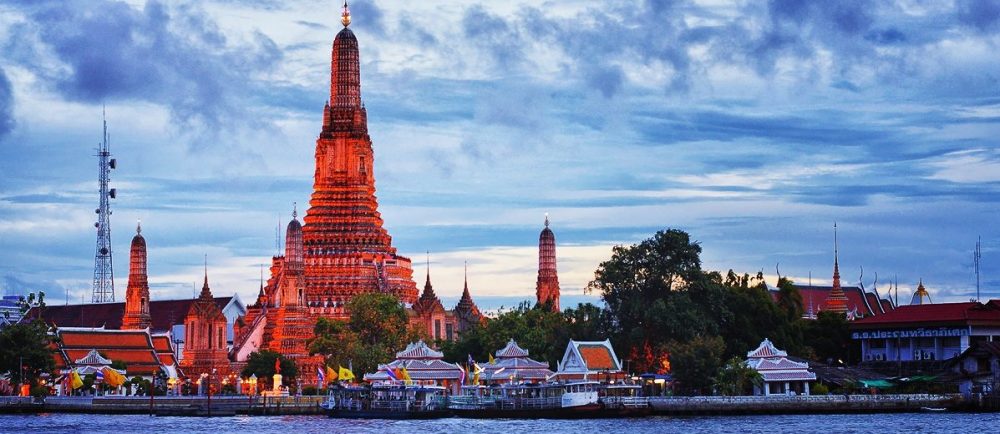
 ขณะที่ผู้ร่วมก่อตั้งอีกรายชี้ว่าอาจจะต้องฉีดบูสเตอร์กันอีก เพราะไวรัสจะกลายพันธุ์ได้อีก
 กล่าวกันว่าพวกเขาคือทายาทของกองทัพอเล็กซานเดอร์มหาราชที่ปักหลักในอินเดียและปากีสถาน และเป็นชาวพุทธที่มีเชื้อสายอารยัน
 สกุลเงินโบลิวาร์ของเวเนซุเอลาที่ถูกกระหน่ำด้วยภาวะเงินเฟ้อ มีเลขศูนย์หายไป 6 ตัว
 แน่นอนว่าเมื่อตลาดล่มย่อมเป็นโอกาสแห่งการช้อนซื้อ “เป็นโอกาสการลงทุนที่ยอดเยี่ยม”
 เหล่าชนชั้นสูงทั่วยุโรปแห่กันไปรัสเซียเพื่ออภิเษกสมรสครั้งแรกในรอบศตวรรษ ครั้งแรกหลังการปฏิวัติรัสเซีย


 จีนเร่งรัดการจัดระเบียบวงการบันเทิง สั่งแบน ‘ดารานักร้อง’ แหกกฎ คุมผู้เยาว์เอี่ยววงการบันเทิง
 ยอดผู้เสียชีวิตจากโควิด-19 ในสหรัฐ พุ่งถึง 700,000
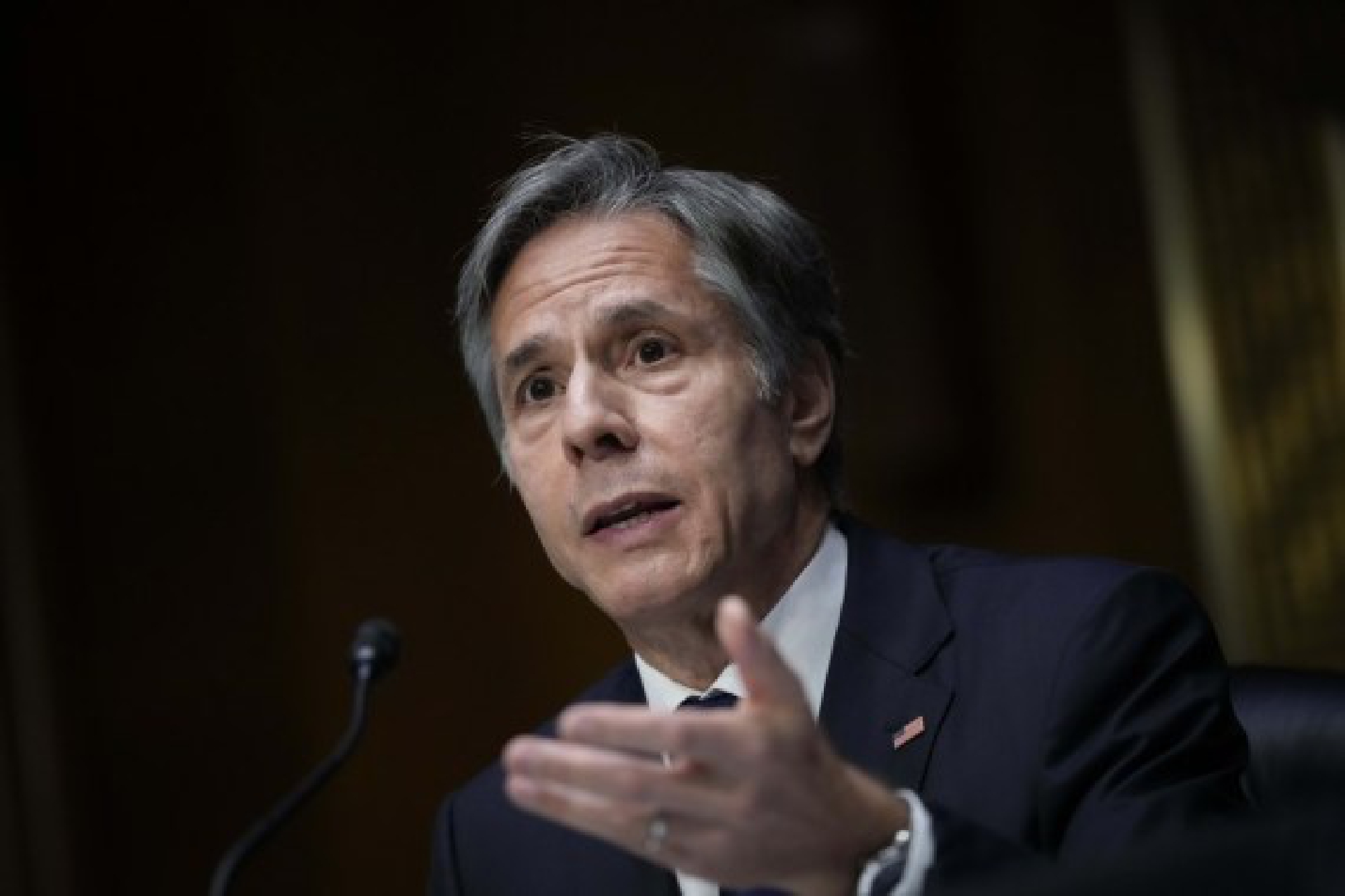 U.S. Secretary of State Antony Blinken testifies before the U.S. Senate Foreign Relations Committee on examining the U.S. withdrawal from Afghanistan, in Washington, D.C. Sept. 14, 2021. (Drew Angerer/Pool via Xinhua)
 British Prime Minister Boris Johnson (L) greets Australian Prime Minister Scott Morrison in front of 10 Downing Street, in London, Britain, on June 15, 2021. (Tim Hammond/No. 10 Downing Street/Handout via Xinhua)
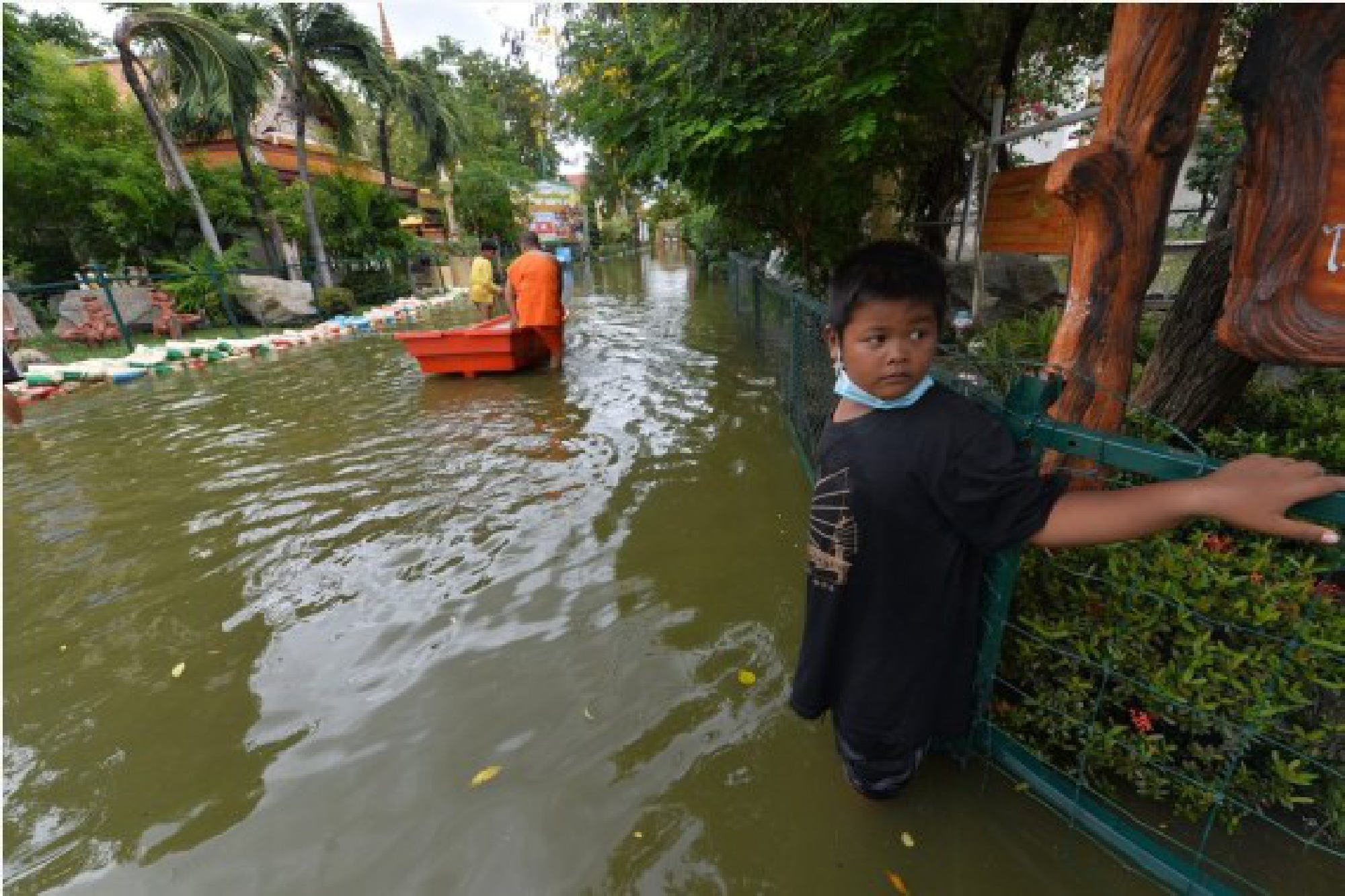 A boy stands on a flooded road on the outskirts of Bangkok, Thailand, on Sept. 3, 2021. (Xinhua/Rachen Sageamsak)
 Photo taken on Feb. 19, 2021 shows a dam affected by drought in Kandahar city, Afghanistan. (Photo by Sanaullah Seiam/Xinhua)
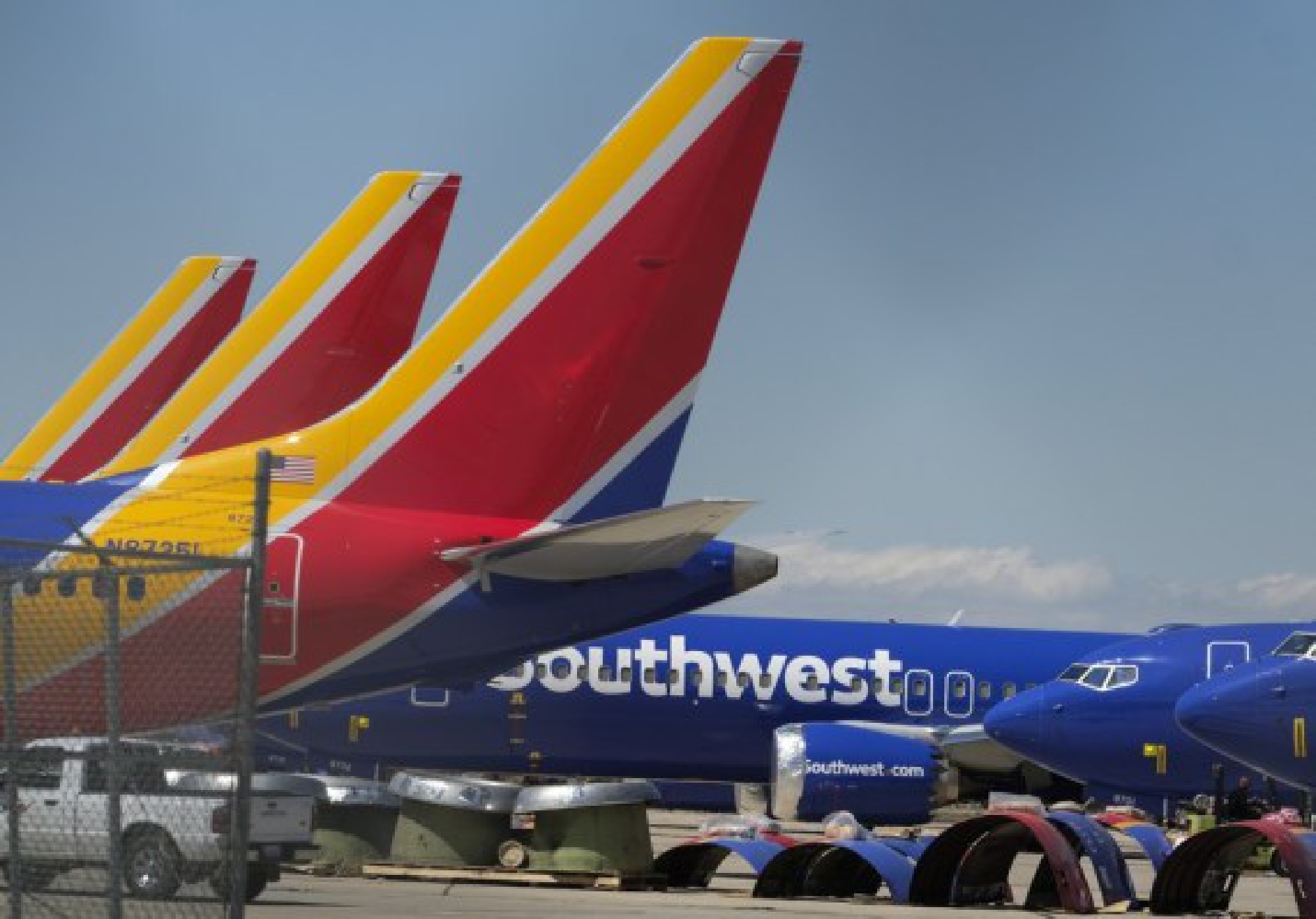 Photo taken on March 27, 2019 shows Southwest Airlines Boeing 737 Max aircraft parked at the Southern California Logistics Airport, in Victorville, California, the United States. (Xinhua/Zhao Hanrong)
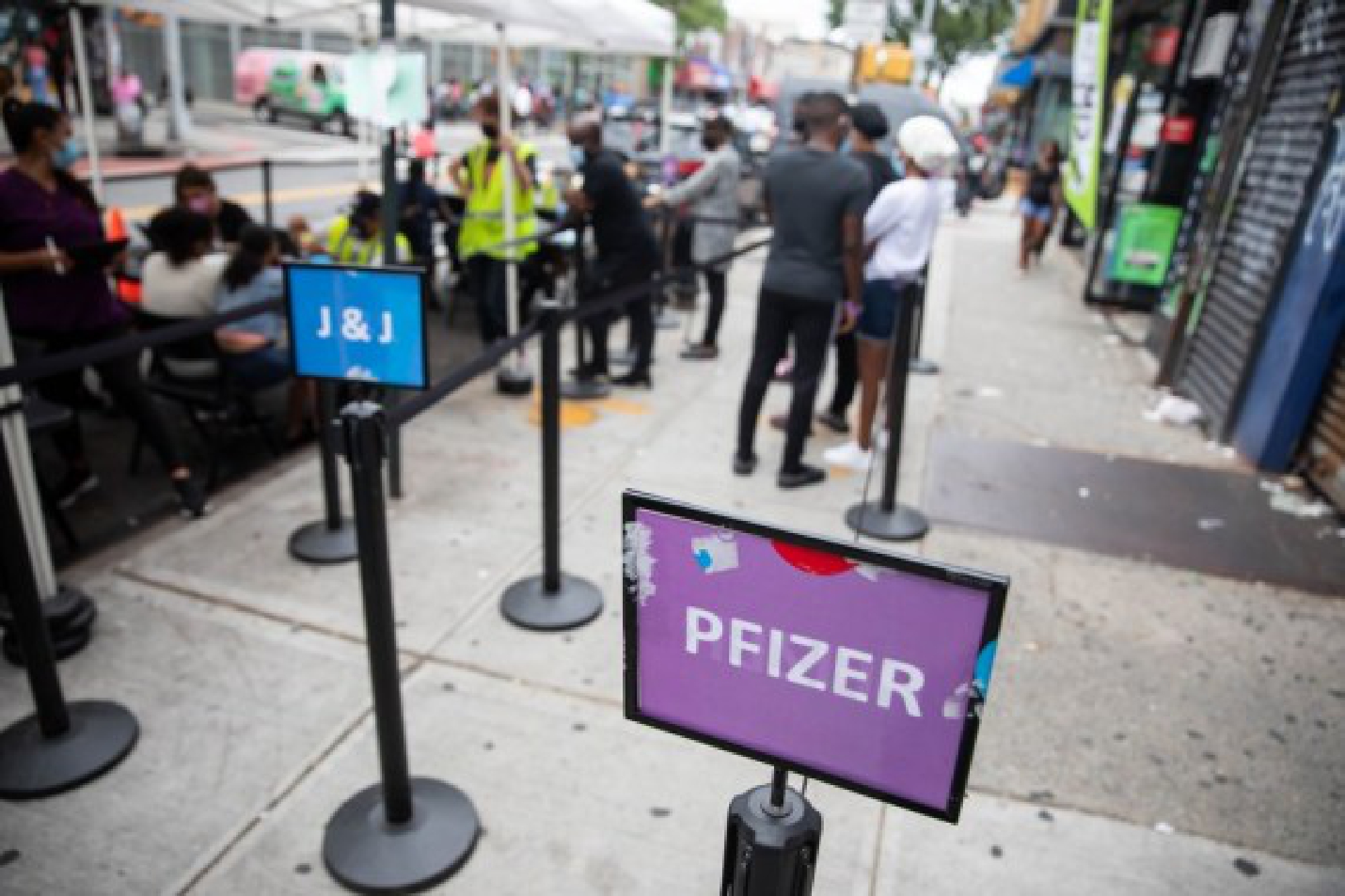 Placards display signage for Johnson & Johnson and Pfizer COVID-19 vaccinations at a mobile COVID-19 vaccination center in the Brooklyn borough of New York, the United States, Aug. 18, 2021. (Xinhua/Michael Nagle)
