China casino crackdown part of quest to transform Macau #SootinClaimon.Com

#SootinClaimon.Com : ขอบคุณแหล่งข้อมูล : หนังสือพิมพ์ The Nation.

https://www.nationthailand.com/international/40006667


To many investors, Macaus push to extend oversight over the worlds largest gambling hub came as a shock, triggering a record selloff in casino shares. To long-term observers, however, it was just the latest move in Chinas grand plan to transform the $24 billion economy.
For years, Beijing has been focused on trying to control an industry that’s enriched the only Chinese territory where casinos are legal but also provided an avenue for capital outflows for the country’s rising elite. Authorities have been steadily tightening their grip, with facial-recognition software installed in Macau’s ATMs, cash withdrawals limited, and a digital currency under consideration to better track transactions.

At the same time, the government has been laying the groundwork for the dilution of Macau’s reliance on gambling. Unveiled in 2019, China’s blueprint for the Greater Bay Area — a region that includes Hong Kong and parts of southern China — sees the former Portuguese colony departing from its decades-long identity as a casino mecca to become a global leisure and tourism hub. Think sports stadiums, convention centers and traditional Chinese medicine parks instead of more baccarat tables.

“What the government wants, and what Beijing wants, is to have a lot more non-gaming facilities,” said Allan Zeman, chairman and an independent director of Wynn Macau Ltd., one of the six casino operators with licenses to operate in the enclave. “The border will kind of disappear. Macau will become a much bigger place, so gaming is just one part of a city that will have a lot more.”

The announcement of revisions to the law governing casinos was one of the most definitive signs yet that there’s no turning back for Beijing.

ADVERTISEMENT

The proposed changes, which are now up for consultation with the public and industry, came just a week after the Chinese government released a plan to further integrate Macau with the Chinese mainland. The city is being encouraged to develop non-gaming industries in a special zone on the neighboring island of Hengqin — currently divided between Guangdong province and Macau — with a focus on high-tech manufacturing, cultural tourism, Chinese medicine, conventions and sports, according to a master plan released by Beijing earlier this month. Gambling won’t be allowed.

The Bloomberg Intelligence index of Macau’s six casino operators has fallen 26% since last Tuesday’s proposal. The market recovered slightly this week, with the index gaining about 1.7%.

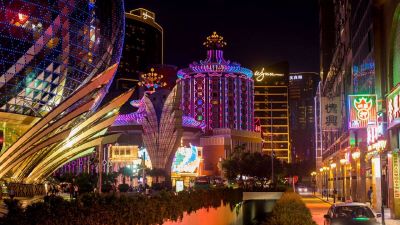
Gambling in Macau goes back more than three centuries, with the practice legalized there in 1847 as a way to fill the colonial authority’s coffers. By the late 19th century, gaming taxes had become the government’s main income. For decades the industry was monopolized by a company co-founded by late billionaire Stanley Ho before opening up in 2002 to the current players. Macau eventually surpassed Las Vegas, and today bettors can pose before a fake Eiffel Tower or stroll along replica Venetian canals on its main strip.

But a shift is firmly under way. While still employing one-fifth of the city’s workforce, the gambling industry’s contribution to Macau’s gross domestic product had dropped to 51% before the pandemic hit, from 63% in 2013, according to the latest government data.

The license renewal process for the city’s six casino operators is shaping up to be a key test of Beijing’s pivot. With the permits set to expire in less than 10 months, the government is expected to pressure the firms — who have seen gaming revenue contribute 85% of overall revenue on average the past three years, according to Bloomberg calculations from company reports — to boost investment in non-gaming sectors.

Macau’s government will likely nudge casino operators to invest in projects in Hengqin, even if their profit outlook is questionable, given the limitations on expanding further in Macau, said Ben Lee, a managing partner at gambling consultancy IGamiX.

While the casinos have recently been doubling down on luring more so-called mass market bettors, who may spend more time dining out and shopping than at the tables, entire projects separate to the casino business could be more challenging. Convention activities, the ferry service and income from retail accounted for less than 3% of net revenue in 2019 for Sands China Ltd., the largest operator in Macau by gaming revenue.

And they face stiff competition for non-gaming business from elsewhere in the region. Hong Kong — just a ferry ride away — has an established convention and exhibition industry and hosts major international events from art festivals to rugby tournaments. The island province of Hainan has also seen a domestic tourism boom due to its tax-free status and wants to develop similar industries.

The revisions to the casino law follow a decade-long crackdown on VIP bettors, said Morningstar Inc. analyst Jennifer Song. Such gamblers attracted Beijing’s wrath because they’re facilitated by junkets which sometimes breach Chinese law by promoting gaming in the mainland, organizing overseas gambling trips and providing shadow banking services to high rollers.

The moves significantly reined in what was once the lifeblood of Macau, Song said. Now, Beijing’s wider plan could have a similar effect on the casino industry overall.

Published : September 26, 2021
Exam-takers look for needles before pencils / Cities help students get shots before test season #SootinClaimon.Com

#SootinClaimon.Com : ขอบคุณแหล่งข้อมูล : หนังสือพิมพ์ The Nation.

https://www.nationthailand.com/international/40006666


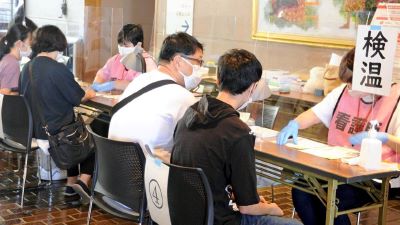
TOKYO – With registration for the Common Test for University Admissions set to open on Sept. 27, educators and authorities are facing a test of their own as they prepare for a second entrance exam season under the novel coronavirus pandemic.

There is a growing trend toward priority vaccination for test-takers as they are expected to travel more across prefectural borders.

“The Common Test exam site is going to be crowded, so I wanted to make sure I got vaccinated,” said a 17-year-old third-year high school student after receiving a shot at the Comprehensive Social Education Center in Ota, Gunma Prefecture on Sept. 19.

The student was vaccinated alongside her mother, 42, who added: “I didn’t want to leave any chance my daughter would be infected at home before taking her exams.”

Since August, Ota has offered priority vaccination to third-year students who live in the city and attend junior and senior high schools there. Students’ parents have also been given preferential access, as have students planning to take entrance exams or run the job interview gauntlet. About 2,400 people have applied for the 2,800 slots set aside by the city for these purposes.

Ota is just one of many local governments that have begun implementing priority vaccination campaigns as entrance exam season hits full swing.

In Tokyo, 50.7% of all residents have already received two shots. But less than 25% of Tokyoites aged 12 to 19 have been vaccinated. The Tokyo metropolitan government has begun accepting reservations for third-year high school students and other youths at a mass vaccination center in the capital from August.

ADVERTISEMENT

The Shizuoka city government set aside 7,000 doses for the priority vaccination of students in their last year of elementary, junior high or senior high schools in the city from September. About 6,300 doses have been claimed.

On Sept. 14, the Education, Culture, Sports, Science and Technology Ministry issued a memo to local governments nationwide, introducing the precedent for allowing exam-takers priority access to COVID-19 shots.

Education minister Koichi Hagiuda also called for “special consideration to be given to exam candidates who want to get vaccinated so that they can do so expediently.”

Private high schools have even initiated their own vaccine drives — some drawing ire in the process.

Although schools offered shots on a discretionary basis to students who wanted them, this was in some cases misconstrued as a vaccine mandate for all students. One school was inundated with missives protesting the policy, on the grounds that peer pressure would make it hard for students to decline the shots.

The Common Test for the upcoming academic year is slated to be held on Jan. 15 and 16 next year, with a makeup test two weeks later. Makeup tests will be conducted at venues in all 47 prefectures.

Face masks were required during the last Common Test in January, but trouble still arose when an exam-taker was disqualified after repeatedly refusing to cover his nose with his mask. This led to a new rule stipulating that masks must fully cover examinees’ mouths and noses.

A majority of universities plan to take precautions when conducting their own institution-specific admissions exams.

As of the end of July, 1,020 of 1,056 — 96.6% — of national, private, and junior colleges surveyed by the education ministry indicated that they plan to offer makeup exams or alternative dates.

According to the Kawaijuku cram school chain, some perennially popular private universities have announced that they will use Common Test scores to make an admissions decision in the event an applicant becomes unable to sit for their institution-specific entrance exams due to infection with the novel coronavirus or other extenuating reasons.

Published : September 26, 2021

Nearly one-third of Covid-related deaths in Asean reported in Malaysia #SootinClaimon.Com

#SootinClaimon.Com : ขอบคุณแหล่งข้อมูล : หนังสือพิมพ์ The Nation.

https://www.nationthailand.com/international/40006658


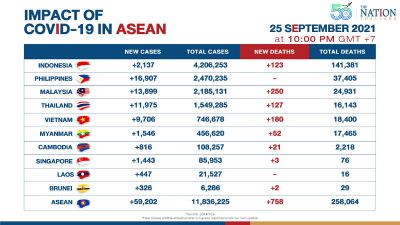
Southeast Asia witnessed a decline in new Covid-19 infections but the death toll was higher on Saturday, collated data showed.

Asean countries reported 59,202 infections and 758 deaths — nearly one-third in Malaysia — on Saturday compared to 61,840 and 690 respectively on Friday.

Vabiotech, a pharmaceutical company in Vietnam, has achieved success in production of Sputnik V Covid-19 vaccine.

The first batch of vaccines will be evaluated by Gamaleya, a research institution under Russia’s Sputnik V research and development centre.

These vaccines will be used under Vietnam’s vaccine distribution plan to deal with the fourth Covid-19 wave and vaccine shortage.

Cambodian Prime Minister Hun Sen has banned celebration of the Kan Ben festival that falls on October 6, in order to contain the spread of Covid-19.

ADVERTISEMENT

The move came after almost 50 monks at a Buddhist temple in Phnom Penh tested positive for Covid-19 on Thursday.

The Kan Ben festival is considered the country’s largest Buddhist festival as many devotees will go to temples to make merit for their ancestors.

Published : September 26, 2021

What to know about German federal election #SootinClaimon.Com

#SootinClaimon.Com : ขอบคุณแหล่งข้อมูล : หนังสือพิมพ์ The Nation.

https://www.nationthailand.com/international/40006650


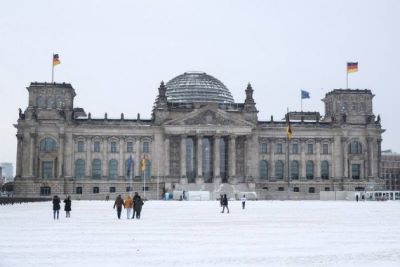
This year, around 60.4 million people are eligible to vote in Germany. In total, 6,211 candidates from 47 political parties will compete for at least 598 seats.

Germans will elect the members of the country’s 20th Bundestag (lower house of Parliament) on Sunday. In total, 6,211 candidates from 47 political parties will compete for at least 598 seats.

A new government will be formed after the election. The current German Chancellor, Angela Merkel, is not seeking re-election after 16 years in office.

The Bundestag exercises legislative power, supervises the implementation of laws, elects the chancellor and oversees the work of the federal government.

ADVERTISEMENT

This year, around 60.4 million people are eligible to vote in Germany, and the country is divided into 299 electoral districts according to population.

Voters cast two votes. The first for an individual constituency candidate. The candidate who gets the most constituency votes (relative majority voting) will become a directly elected member of the Bundestag. The second vote is for political party lists. The share of second votes won by the party lists determines the total number of seats they will hold in the Bundestag.

German Chancellor Angela Merkel (L) and Armin Laschet, leader of German Christian Democratic Union (CDU) and chancellor candidate of CDU/Christian Social Union (CSU), attend an election rally of CDU for GermanyGerman Chancellor Angela Merkel (L) and Armin Laschet, leader of German Christian Democratic Union (CDU) and chancellor candidate of CDU/Christian Social Union (CSU), attend an election rally of CDU for Germany

Related Stories

Currently, the Bundestag has 598 seats by law. The 299 lawmakers directly elected by their constituents (first vote) ensure that, in principle, every region is represented in the Bundestag. The proportion of second votes won by the political party lists determines the distribution of party power in the legislative body. As a rule, only parties receiving at least five percent of the second vote or winning at least three directly elected seats can enter the Bundestag.

However, an excess of seats may arise when a party obtains more directly elected seats in the first vote than the total number of seats it is entitled to on the basis of the second vote. In this case, the number of directly elected seats must be retained in full and the other parties are given additional seats to balance the proportion. The actual size of the Bundestag is thus greater than 598 seats. The last Bundestag elections in September 2017, for example, produced an unprecedented 709 seats.

Voters can bring their ballot papers and identity documents to their nearest polling station on polling day between 8 a.m. and 6 p.m., or they can choose to vote by post in advance, provided they ensure that their ballot papers reach the relevant authorities before 6 p.m. on polling day, when voting closes and counting begins.

In Germany’s current electoral system and party landscape, it is very unlikely that any one party will be able to secure an absolute majority of seats to govern alone. Therefore, after the election results are announced, the parties with the highest number of votes will try to make contact and discuss the possibility of forming a governing coalition. The parties that decide to govern together will negotiate the choice of a chancellor, the composition of the cabinet, policy directions and other issues, and eventually come up with a joint cabinet agreement.

Once the parties have agreed on all these, the new Bundestag will put the election of a chancellor on its agenda. As a matter of procedure, the chancellor will be nominated by the federal president of Germany and voted on by the members of Bundestag.

Once all the issues related to the formation of the government have been settled, the new government will start to implement its campaign promises and lead the country into the next phase.  

German Chancellor Angela Merkel (L) and Armin Laschet, leader of German Christian Democratic Union (CDU) and chancellor candidate of CDU/Christian Social Union (CSU), attend an election rally of CDU for GermanyGerman Chancellor Angela Merkel (L) and Armin Laschet, leader of German Christian Democratic Union (CDU) and chancellor candidate of CDU/Christian Social Union (CSU), attend an election rally of CDU for Germany

Published : September 26, 2021

Meng Wanzhou back in China #SootinClaimon.Com

#SootinClaimon.Com : ขอบคุณแหล่งข้อมูล : หนังสือพิมพ์ The Nation.

https://www.nationthailand.com/international/40006647


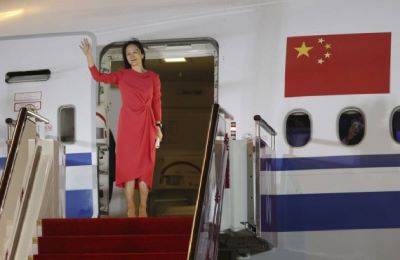
Meng Wanzhou, Huaweis chief financial officer, arrived in the southern Chinese city of Shenzhen on Saturday night on a charter flight organized by the Chinese government, after being illegally detained for nearly three years in Canada.

At around 10 p.m., the charter flight touched down at the Shenzhen Bao’an International Airport.

Meng, in a red dress, waved to the welcoming crowd after she stepped out of the cabin. As she walked down the stairs, applause and cheers erupted from the crowd. Airport staff presented flowers to her.

The crowd held up a banner reading “Welcome home, Ms. Meng Wanzhou,” waved national flags, and chanted “welcome home.”

ADVERTISEMENT

There were no handshakes due to epidemic prevention concerns. Meng made a brief speech at the airport.

Meng was arbitrarily detained by Canada on a U.S. extradition request on Dec. 1, 2018 at Vancouver International Airport.

Meng has pleaded not guilty to all charges against her and reached a deferred prosecution agreement with U.S. prosecutors. The U.S. side has withdrawn its extradition request. 

Meng Wanzhou, HuaweiMeng Wanzhou, Huawei
Related Stories

There were no handshakes due to epidemic prevention concerns. Meng made a brief speech at the airport.

“After more than 1,000 days of torment, I am finally back in the embrace of the motherland,” Meng said.

“I am back, motherland!” she chanted to the cheering crowd.

“As an ordinary Chinese citizen who had suffered this plight and been stranded overseas for nearly three years, there was never a moment when I did not feel the care and warmth of the Party, the motherland and the people,” she said.

“President Xi Jinping cares about the safety of each and every Chinese citizen, including me. I am deeply moved by this,” Meng said. “I also thank the relevant departments for their support and help. They have resolutely safeguarded the legitimate rights and interests of Chinese enterprises and citizens.”

“The motherland provides us the strongest backing,” Meng said. “As an ordinary Chinese person, I am proud of my motherland.”

Meng Wanzhou, HuaweiMeng Wanzhou, Huawei

The crowd broke into an impromptu rendition of the patriotic song “Ode to the Motherland” after the speech. Meng then sang together with the crowd.

According to epidemic control rules, Meng will be quarantined at a designated hotel after her arrival.

Meng was arbitrarily detained by Canada on a U.S. extradition request on Dec. 1, 2018 at Vancouver International Airport.

Meng has pleaded not guilty to all charges against her and reached a deferred prosecution agreement with U.S. prosecutors. The U.S. side has withdrawn its extradition request. 

Meng Wanzhou, HuaweiMeng Wanzhou, Huawei

Published : September 26, 2021

พบ 142 ไวรัสโคโรนาจากค้างคาวในจีน แต่ไม่เชื่อมโยงโควิด-19 #SootinClaimon.Com

#SootinClaimon.Com : ขอบคุณแหล่งข้อมูล : หนังสือพิมพ์โพสต์ทูเดย์

https://www.posttoday.com/world/664045

วันที่ 25 ก.ย. 2564 เวลา 17:00 น.พบ 142 ไวรัสโคโรนาจากค้างคาวในจีน แต่ไม่เชื่อมโยงโควิด-19วิจัยพบเชื้อไวรัสโคโรนาในค้างคาว 142 ชนิดที่เกี่ยวโยงกับโรคซาร์ส แต่ไม่มีความเชื่อมโยงกับเชื้อไวรัสที่ก่อโรค Covid-19

South China Morning Post รายงานว่า การศึกษาของจีนชิ้นหนึ่งเผยว่ามีเชื้อไวรัสโคโรนาในค้างคาวจำนวน 142 ชนิดที่มีความเกี่ยวโยงกับไวรัสที่ก่อให้เกิดการระบาดของโรคซาร์สเมื่อเกือบ 2 ทศวรรษก่อน แต่เชื้อไวรัสเหล่านี้กลับไม่มีความเชื่อมโยงกับเชื้อไวรัสที่ก่อโรค Covid-19

การศึกษาที่ตีพิมพ์ล่วงหน้าบนรีเสิช สแควร์ (Research Square) แพลตฟอร์มข้อมูลการศึกษาก่อนตีพิมพ์ เมื่อวันจันทร์ (20 ก.ย.) อ้างถึงคณะนักวิจัยจากสถาบันชีววิทยาจุลินทรีย์ก่อโรค (Institute of Pathogen Biology) ในกรุงปักกิ่ง ว่าพวกเขาได้เก็บรวบรวมและทดสอบตัวอย่างจากค้างคาวมากกว่า 4,700 ตัวในภูมิภาคต่างๆ ทั่วจีน ตั้งแต่เดือนมกราคม 2020 และมีหลายพันตัวที่ถูกทดสอบเชื้อตั้งแต่ปี 2016

การศึกษาล่าสุดเกี่ยวกับค้างคาว ซึ่งเชื่อกันว่าเป็นสัตว์ต้นกำเนิดของเชื้อไวรัส มุ่งเน้นไปที่ตัวอย่างที่เก็บรวบรวมจากค้างคาว 56 สายพันธุ์ใน 14 มณฑลของจีนตั้งแต่ปี 2016 จำนวนมากกว่า 13,000 ตัว

กลุ่มนักวิทยาศาสตร์ชี้ว่าเชื้อไวรัสที่ถือว่าใกล้เคียงกับไวรัสโคโรนาสายพันธุ์ใหม่ (Sars-CoV-2) ซึ่งก่อโรค Covid-19 มากที่สุดนั้น “หายากมาก” ในหมู่ค้างคาวในประเทศจีน

“นับตั้งแต่ Covid-19 อุบัติขึ้น นี่เป็นตัวอย่างแรกๆ ที่ผมเห็นจากกลุ่มนักวิทยาศาสตร์ชาวจีนที่มีชื่อเสียง เกี่ยวกับเชื้อไวรัสโคโรนาในค้างคาวในจีนที่มีความเกี่ยวพันกับโรคซาร์ส” หนังสือพิมพ์อ้างคำพูดปีเตอร์ แดสแซค นักนิเวศวิทยาด้านโรคติดเชื้อ ซึ่งในปีนี้เคยได้เข้าร่วมการศึกษาชิ้นหนึ่งขององค์การอนามัยโลก (WHO) ในประเทศจีน

ด้านลีโอ พูน จากมหาวิทยาลัยฮ่องกง (University of Hong Kong) เผยว่าการศึกษาชิ้นนี้เป็นขั้นตอนสำคัญที่ช่วยให้คณะนักวิจัยจำกัดขอบเขตและสายพันธุ์ของค้างคาวที่อาจเป็นแหล่งรังโรคของบรรดาเชื้อไวรัสที่มีความใกล้เคียงมากยิ่งขึ้น

Photo by NOEL CELIS / AFP

บริษัทรถยนต์ไฟฟ้าในเครือ Evergrande ส่อแววเบี้ยวหนี้ #SootinClaimon.Com

#SootinClaimon.Com : ขอบคุณแหล่งข้อมูล : หนังสือพิมพ์โพสต์ทูเดย์

https://www.posttoday.com/world/664044

วันที่ 25 ก.ย. 2564 เวลา 16:00 น.บริษัทรถยนต์ไฟฟ้าในเครือ Evergrande ส่อแววเบี้ยวหนี้บริษัทลูกของ Evergrande ที่ผลิตรถยนต์ไฟฟ้าแย้มอาจหาเงินมาจ่ายหนี้ไม่ทัน

สำนักข่าว Bloomberg รายงานว่า China Evergrande New Energy Vehicle Group (Evergrande NEV) บริษัทผลิตรถยนต์ไฟฟ้าในเครือของ Evergrande Group บริษัทอสังหาริมทรัพย์ยักษ์ใหญ่ของจีนที่กำลังเผชิญวิกฤตหนี้สิน ยื่นหนังสือต่อตลาดหลักทรัพย์ฮ่องกงว่า บริษัทไม่รับประกันว่าบริษัทจะหาเงินมาชำระหนี้ได้หรือไม่ โดยขณะนี้บริษัทกำลังมองหานักลงทุนเพื่ออัดฉีดเงินทุนเข้าบริษัท

“บริษัทกำลังประสบปัญหาขาดแคลนเงินทุนอย่างหนัก เนื่องจากแรงกดดันด้านสภาพคล่อง บริษัทจึงระงับการจ่ายค่าใช้จ่ายในการดำเนินการบางส่วน และซัพพลายเออร์บางรายได้ระงับการจัดหาวัสดุอุปกรณ์ในหลายโครงการ” หนังสือชี้แจงระบุ

หนังสือชี้แจงดังกล่าวเป็นการยืนยันรายงานก่อนหน้านี้ของ Bloomberg ที่ว่า Evergrande NEV ผิดนัดจ่ายเงินเดือนพนักงานบางส่วน และค้างชำระเงินค่าอุปกรณ์แก่ซัพพลายเออร์อีกก้อนหนึ่ง

การขาดสภาพคล่องของบริษัทหมายความว่า Evergrande NEV ที่ต้องการแซงหน้า อีลอน มัสก์ แห่ง Tesla ในวงการรถยนต์ไฟฟ้า อาจพลาดเป้าหมายที่จะเริ่มส่งมอบรถยนต์จำนวนมากในปีหน้า

Evergrande NEV ระบุอีกว่า กำลังเจรจากับนักลงทุนที่มีศักยภาพเกี่ยวกับการขายโครงการดูแลผู้สูงอายุและทรัพย์สินในต่างประเทศเพื่อปรับปรุงประสิทธิภาพโดยรวมของบริษัทและเพื่อเพิ่มเงินทุนหมุนเวียน ทว่ายังไม่แน่ใจว่าจะสำเร็จหรือไม่

บริษัทซึ่งก่อตั้งอย่างเป็นทางการหลังจาก Evergrande Health เปลี่ยนชื่อเป็น Evergrande NEV เมื่อเดือน ก.ค.ปีที่แล้ว ระบุว่าตัวเองเป็นผู้ผลิตรถยนต์ ทว่ารายได้ส่วนใหญ่ของบริษัทยังมาจากธุรกิจให้บริการด้านสุขภาพและบ้านพักผู้สูงอายุ

ทั้งนี้ เดือนที่แล้ว Evergrande NEV รายงานว่าในช่วง 6 เดือนที่ผ่านมาซึ่งนับจนถึงสิ้นเดือน มิ.ย. บริษัทขาดทุน 4,800 ล้านหยวน และมีรายได้ 6,920 ล้านหยวน โดยรายได้ส่วนใหญ่คือ 6,890 ล้านหยวน มาจากธุรกิจเกี่ยวกับสุขภาพและผู้สูงอายุ

เมื่อวันศุกร์ (24 ก.ย.) หุ้นของ Evergrande NEV ร่วงถึง 25.8% โดยรวมทั้งปีมูลค่าลดลงแล้ว 93% ขณะที่ในช่วงที่หุ้นมีมูลค่าสูงสุดนั้น Evergrande NEV ซึ่งยังไม่ได้ผลิตรถยนต์สักคัน มีมูลค่ามากกว่า Ford Motor และ General Motors สองบริษัทผลินรถยนต์ยักษ์ใหญ่

REUTERS/Aly Song/File Photo

โดนอีกหนึ่ง! จีนรวบ 2 ผู้บริหารบริษัทโลจิสติกส์ยักษ์ใหญ่ #SootinClaimon.Com

#SootinClaimon.Com : ขอบคุณแหล่งข้อมูล : หนังสือพิมพ์โพสต์ทูเดย์

https://www.posttoday.com/world/664037

วันที่ 25 ก.ย. 2564 เวลา 15:00 น.โดนอีกหนึ่ง! จีนรวบ 2 ผู้บริหารบริษัทโลจิสติกส์ยักษ์ใหญ่ทางการจีนจับกุมตัว 2 ผู้บริหารบริษัทโลจิสติกส์ยักษ์ใหญ่ที่เพิ่งยื่นล้มละลาย

บริษัท HNA Group ยักษ์ใหญ่ด้านการขนส่งและโลจิสติกส์ของจีนออกแถลงการณ์ว่า เฉินเฟิง ประธานบริษัท และอดัม ตัน ซีอีโอของ HNA Group ถูกตำรวจมณฑลไห่หนานทางตอนใต้ของจีนซึ่งเป็นที่ตั้งสำนักงานใหญ่ของบริษัทควบคุมตัวเมื่อวันศุกร์ (24 ก.ย.) เนื่องจากต้องสงสัยว่ากระทำความผิดอาญา แต่ทางบริษัทไม่ได้ระบุว่าข้อหาอะไร

HNA Group ซึ่งเป็นเจ้าของสายการบิน Hainan Airlines หนึ่งในสายการบินใหญ่ของจีน และยังเป็นกลุ่มบริษัทการบินเอกชนที่ใหญ่ที่สุดของจีน ยื่นขอล้มละลายเมื่อเดือน ม.ค.ที่ผ่านมา โดยขณะนี้อยู่ระหว่างการฟื้นฟูกิจการที่ควบคุมโดยรัฐบาลท้องถิ่น หลังจากประสบวิกฤตหนี้สิน

รูปแบบการทำธุรกิจของ HNA Group คล้ายกับ Evergrande คือ ขยายอาณาจักรธุรกิจด้วยการกู้ยืมเงินมหาศาล

เฉินก่อตั้ง Hainan Airlines เมื่อปี 1993 และเติบโตจากสายการบินระดับภูมิภาคไปสู่กลุ่มธุรกิจขนาดใหญ่ และเคยเข้าถือหุ้นในกิจการระดับโลกอย่างเครือโรงแรม Hilton และ Deutsche Bank จากนั้นขยับขยายสู่ธุรกิจการบิน การท่องเที่ยว อสังหาริมทรัพย์ การเงินจากการเข้าซื้อกิจการเป็นว่าเล่น

ปี 2017 รัฐบาลจีนเริ่มเข้ามาควบคุมการขยายตัวไปสู่ระดับโลกอย่างดุเดือดของ HNA Group เนื่องจากเริ่มมีหนี้สินจำนวนมาก จนบริษัทต้องลดขนาดธุรกิจเหลือเฉพาะธุรกิจสายการบินและธุรกิจท่องเที่ยว

ช่วงต้นปี 2020 หลังจาก Covid-19 กระทบธุรกิจการบิน รัฐบาลไห่หนานได้ส่งคณะทำงานเข้ามาช่วย HNA Group จัดการปัญหาสภาพคล่อง

ในวันเดียวกันสำนักข่าว Xinhua ยังรายงานว่า หยวนเริ่นกั๋ว อดีตประธาน Kweichow Moutai Group ผู้ผลิตแอลกอฮอล์สำหรับตลาดระดับไฮเอนด์ ถูกตัดสินจำคุกตลอดชีวิตในข้อหารับสินบนกว่า 17 ล้านเหรียญสหรัฐ

ทั้งสองกรณีเกิดขึ้นในช่วงที่รัฐบาลจีนเดินหน้าปราบปรามบริษัทยักษ์ใหญ่ที่มองว่าจะเป็นอันตรายต่อเศรษฐกิจของประเทศ

Photo by Mark Schiefelbein / POOL / AFP

Bitcoin ร่วงอีกหลังจีนประกาศให้ธุรกิจคริปโตผิดกฎหมาย #SootinClaimon.Com

#SootinClaimon.Com : ขอบคุณแหล่งข้อมูล : หนังสือพิมพ์โพสต์ทูเดย์

https://www.posttoday.com/world/664029

วันที่ 25 ก.ย. 2564 เวลา 12:30 น.Bitcoin ร่วงอีกหลังจีนประกาศให้ธุรกิจคริปโตผิดกฎหมาย Bitcoin และคริปโตอื่นๆ ร่วงตามกันหลังรัฐบาลจีนล้างบางธุรกิจทุกชนิดที่เกี่ยวกับสกุลเงินดิจิทัล 

หน่วยงานรัฐบาลจีน รวมทั้งคณะกรรมการกำกับหลักทรัพย์และตลาดหลักทรัพย์ และธนาคารแห่งชาติจีน ออกแถลงการณ์กำหนดให้ ธุรกิจทุกชนิดที่เกี่ยวข้องกับสกุลเงินดิจิทัลเป็นสิ่งผิดกฎหมาย และยังประกาศว่าจะปราบปรามกิจกรรมผิดกฎหมายที่เกี่ยวข้องกับสกุลเงินดิจิทัลด้วย 

นอกจากนี้ ยังระบุว่า การแลกเปลี่ยนสกุลเงินดิจิทัลในต่างประเทศจะถูกปิดกั้นไม่ให้ให้บริการแก่ชาวจีนผ่านทางอินเทอร์เน็ต

ประกาศดังกล่าวส่งผลให้ Bitcoin ร่วงลง 5% ขณะที่ Ethereum ร่วงถึง 9%

ขณะที่คณะกรรมการด้านการพัฒนาและปฏิรูปออกแถลงการณ์อีกฉบับหนึ่งว่า ทางการจีนจะพัฒนา “ระบบใหม่” เพื่อรับมือกับความเสี่ยงที่เกิดจากสกุลเงินดิจิทัล และจะค่อยๆ ปิดเหมืองขุดคริปโต รวมทั้งจะไม่อนุญาตให้เปิดเหมืองใหม่ ซึ่งถือเป็นมาตรการปราบปรามสกุลเงินดิจิทัลล่าสุดจากทางการจีน

เมื่อเดือน พ.ค.ที่ผ่านมา รองนายกรัฐมนตรี หลิวเหอ เผยกับเจ้าหน้าที่ด้านการเงินของจีนว่า รัฐบาลจะปราบปรามเหมือง Bitcoin และการซื้อขายแลกเปลี่ยนสกุลเงินดิจิทัล เพื่อสร้างสเถียรภาพทางการเงิน

ส่วนคณะกรรมการกำกับดูแลด้านการเงินและการธนาคารเผยว่า สถาบันการเงินและบริษัทให้บริการชำระเงินไม่ควรรับทำธุรกรรมที่เกี่ยวข้องกับสกุลเงินดิจิทัล หรือให้บริการเกี่ยวกับสกุลเงินดิจิทัลแก่ลูกค้า 

ทั้งนี้ นอกจากความกังวลเรื่องความเสี่ยงทางการเงินแล้ว รัฐบาลจีนยังเป็นห่วงเรื่องสิ่งแวดล้อมด้วย เนื่องจากการทำเหมืองคริปโตสิ้นเปลืองพลังงานไฟฟ้าจำนวนมาก

REUTERS/Dado Ruvic/Illustration/File Photo

จีนปล่อย 2 พลเมืองแคนาดาหลังลูกสาว Huawei ได้อิสรภาพ #SootinClaimon.Com

#SootinClaimon.Com : ขอบคุณแหล่งข้อมูล : หนังสือพิมพ์โพสต์ทูเดย์

https://www.posttoday.com/world/664027

วันที่ 25 ก.ย. 2564 เวลา 11:30 น.จีนปล่อย 2 พลเมืองแคนาดาหลังลูกสาว Huawei ได้อิสรภาพพลเมืองแคนาดา 2 คนที่ถูกจีนจับกุมเมื่อเกือบ 3 ปีก่อนได้รับการปล่อยตัวหลังทายาท Huawei บรรลุข้อตกลงกับสหรัฐและได้อิสรภาพคืน

นายกรัฐมนตรี จัสติน ทรูโด ของแคนาดาเผยว่า ทางการจีนปล่อยตัว ไมเคิล คอฟริก อดีตนักการทูต และไมเคิล สเปเวอร์ นักธุรกิจ 2 พลเมืองแคนาดาออกจากเรือนจำแล้ว และทั้งคู่กำลังเดินทางกลับคานาดาโดยคาดว่าจะถึงบ้านเกิดในวันเสาร์นี้

ทั้งของไมเคิลถูกทางการจีนจับกุมในข้อหาจารกรรมข้อมูลเมื่อปี 2018 ไม่นานหลังจากทางการแคนาดาจับกุมตัวเมิ่งหว่านโจว ประธานเจ้าหน้าที่การเงินของ Huawei และบุตรสาวของเหรินเจิ้งเฟยผู้ก่อตั้งบริษัท ตามคำขอของทางการสหรัฐ

คอฟริกและสเปเวอร์ถูกดำเนินคดีเมื่อเดือน มี.ค.ที่ผ่านมา และเมื่อเดือน ส.ค. สเปเวอร์ถูกตัดสินจำคุก 11 ปี ส่วนคดีของคอฟริกยังไม่มีคำพิพากษา

ในขณะนั้นเกิดเสียงวิพากษ์วิจารณ์ว่าจีนจับกุมพลเมืองแคนาดาทั้งสองคนเพื่อแก้แค้นที่แคนาดาจับกุมเมิ่งหว่านโจว และเพื่อนำมาใช้เป็นตัวแลกเปลี่ยนทางการเมือง ซึ่งเป็นข้อกล่าวหาที่จีนปฏิเสธมาตลอด

ด้าน แอนโทนี บลิงเคน รัฐมนตรีกระทรวงต่างประเทศสหรัฐกล่าวถึงการปล่อยตัวพลเมืองแคนาดาทั้งสองคนว่า สหรัฐพอใจกับการเคลื่อนไหวของจีนและยืนหยัดร่วมกับประชาคมระหว่างประเทศในการต้อนรับการตัดสินใจของสาธารณรัฐประชาชนจีนในการปล่อยตัวชาวแคนาดา

ทั้งนี้ ก่อนหน้านี้ ศาลในเมืองแวนคูเวอร์ของแคนาดาสั่งยุติกระบวนการส่งผู้ร้ายข้ามแดนและยกเลิกเงื่อนไขประกันตัวเมิ่งหว่านโจว และอนุญาตให้เธอเดินทางกลับจีนเป็นครั้งแรกหลังถูกจับกุมตัวที่สนามบินแวนคูเวอร์ตามคำขอของรัฐบาลสหรัฐเมื่อวันที่ 1 ธ.ค. 2018 หลังจากเมิ่งหว่านโจวบรรลุข้อตกลงกับอัยการสหรัฐ

Photos by WANG Zhao and Julie DAVID DE LOSSY / various sources / AFP