Virgin Galactic completes first fully crewed test spaceflight
Space tourism company Virgin Galactic completed its first fully crewed test flight of its spacecraft on Sunday, making a giant leap toward commercial suborbital spaceflight.
“Ihave dreamt about this moment since I was a child, but going to space was more magical than I ever imagined,” Richard Branson tweets after the flight.
The mission, dubbed “Unity 22,” was the company’s fourth crewed spaceflight, and the 22nd flight test for the company’s spacecraft VSS Unity.
It was also the first to carry a full crew of two pilots and four mission specialists in the cabin, including founder of Virgin Galactic Richard Branson, who was testing the private astronaut experience.
The crew took off from the company’s homeport of Spaceport America in U.S. state of New Mexico Sunday morning. The spacecraft, VSS Unity, achieved a speed of Mach 3 after being released from the mothership, VMS Eve, and reached space at an altitude of 53.5 miles.
One and a half hours after take-off, the spaceship touched down safely at Spaceport America.
Photo released by Virgin Galactic on July 11, 2021 shows “Unity 22” crew at zero gravity. (Virgin Galactic/Handout via Xinhua)
The four mission specialists on board were Richard Branson; Beth Moses, chief astronaut instructor at Virgin Galactic; Colin Bennett, lead operations engineer at Virgin Galactic; Sirisha Bandla, vice president of government affairs and research operations at Virgin Galactic. The two pilots were Dave Mackay and Michael Masucci.
The “Unity 22” mission focused on cabin and customer experience objectives, including evaluating the commercial customer cabin with a full crew, demonstrating the conditions for conducting human-tended research experiments, and confirming the training program at Spaceport America supports the spaceflight experience, according to the company.
“I have dreamt about this moment since I was a child, but going to space was more magical than I ever imagined,” Branson tweeted after the flight.
Photo released by Virgin Galactic on July 1, 2021 shows Virgin Galactic “Unity 22” crew (from L to R) chief pilot Dave Mackay, lead operations engineer Colin Bennett, chief astronaut instructor Beth Moses, founder of Virgin Galactic Richard Branson, vice president of government affairs and research operations Sirisha Bandla, and pilot Michael Masucci, posing for a photo in the United States.
Following this flight, the team will complete inspections of the vehicles and an extensive data review. Two additional test flights are planned before the company expects to commence commercial service in 2022.
Virgin Galactic is not alone in trying to build space flight business. Blue Origin is also planning a manned flight to space on July 20 that will include its founder Jeff Bezos.
Unlike SpaceX or Blue Origin, which put passenger capsules atop vertically launched rockets, Virgin Galactic uses a custom carrier aircraft that totes its rocket-powered spaceplane to an elevation where it is released. Then the rocket plane’s motor ignites and blasts its way toward space.
Indonesia reports over a 1,000 deaths on Sunday as Asean battles Covid-19 pandemic
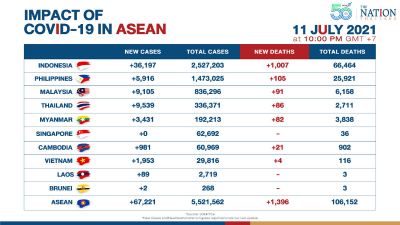
Southeast Asia reported nearly 1,400 deaths on Sunday, one of the highest on a single day since the Covid-19 outbreak, collated data showed.
Asean reported 67,221 new cases on Sunday, higher than Saturday’s 66,710, and 1,396 patients died, up from the previous day’s 1,199.
The total number of Covid-19 cases crossed 5.52 million, while the death toll in the region hit 106,152.
Indonesia reported over 1,000 deaths on a day for the second time in a week, prompting the public health ministry to closely monitor the hospitals’ bed occupation rate and reserves of medical oxygen, especially in 43 provinces in the red zone including Jakarta, Java and Bali islands that have been under lockdown since July 3, which will last until July 20.
Meanwhile, the US has donated 2 million doses of Moderna vaccine to Vietnam to combat the spread of Covid-19 in the country which is currently at its worst level with almost 2,000 new infections reported on Sunday. The vaccine is a part of the total 80 million doses that President Joe Biden had received from US manufacturers and will be donated to countries in need worldwide under the Covax programme.
A timeline of the assassination of Haitian President Jovenel Moïse
Several weeks before they were arrested in the July 7 assassination of the Haitian president, 13 Colombian nationals – some of them former military – traveled to the Dominican Republic, the country that shares an island with Haiti, according to Colombian police.
The men arrived in two groups. A group of two traveled through Panama in early May, and a group of 11 traveled directly from Bogota on June 4, according to flight records released by the Colombian police.
At least two of the men visited a popular tourist destination in the capital city Santo Domingo, according to images the police released. Those photos, along with images of the same location from one of the suspect’s social media accounts, are the earliest known images showing the alleged mercenaries were in the same location before the attack.
The Washington Post gathered photos and videos of the suspects and of the hours before and after the assassination to assemble a timeline of how the brazen attack unfolded.
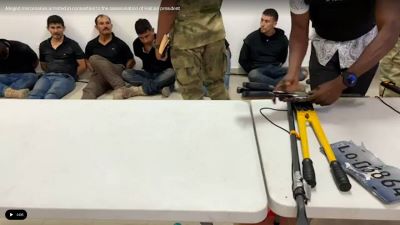
It remains unclear who organized the attack on the Haitian president, Jovenel Moïse. The detained suspects include two U.S. citizens of Haitian descent, identified as Florida residents James Solages, 35, and Joseph Vincent, 55, according to Mathias Pierre, Haiti’s minister of elections and interparty relations. An official who interrogated the pair said Solages claimed he was hired as an interpreter for “foreigners” after applying for the job online. The men and some of their family members claim that they didn’t know the president was going to be assassinated.
Solages told the official they were acting on an order to arrest the president authorized by a judge. He admitted to meeting with the foreigners for about a month, eating at the restaurant inside the Royal Oasis Hotel, 10 minutes from the president’s residence where the assassination took place.
Officials have not yet provided evidence of the detainees’ involvement in the assassination, and questions remain about who launched the attack and why. As of July 10, officials have said that 28 alleged assailants were involved, with 20 captured, three killed and five still on the run.
The attack by the alleged assailants that Haitian authorities have described as “commandos” comes amid months of escalating political instability and gang violence that have critically eroded the rule of law in the Caribbean nation of 11 million. Moïse, 53, dissolved parliament in January 2020 and ruled by decree as opponents and protesters demanded that he step down. Armed gangs with unclear allegiances have seized control of growing portions of the country, terrorizing the population with kidnappings, rapes and killings.
Moïse’s assassination has plunged the country into deeper crisis as authorities search for those responsible.
– – –
On Friday, the Colombian police announced that 41-year-old Manuel Antonio Grosso Guarin, a former Colombian soldier, had been detained by Haitian authorities along with 10 other Colombian nationals for their alleged involvement in the assassination. Most were members of the large group that traveled on Flight 252 with Avianca, a Colombia-based airline, and crossed into Haiti by June 6, Colombian police said.
Two Colombian suspects were killed in the attack, Mauricio Javier Romero Medina and Duberney Capador Giraldo. Giraldo and another suspect had flown to Panama from Colombia and then traveled on to the Dominican Republic before continuing into Port-au-Prince, the Haitian capital, in the first half of May, flight records show.
Colombian authorities said they have launched an investigation into the men’s alleged involvement.
At least 15 images posted to Grosso’s Facebook profile dated June 6, 2021, show the former soldier traveled to the Dominican Republic, where he visited Santo Domingo.
Grosso poses for pictures, often accompanied by a group of men, at popular tourist destinations in the city. In a photo released by Colombian authorities, he is seen at the Columbus Lighthouse in the capital.
An image released by Colombian police shows an individual they did not name but identified as a suspect at the same location as Grosso. The image shows at least six men wearing the same clothing as men seen in images shared by Grosso on June 6.
In the background of the photo a man is seen wearing the same clothing as Grosso in photos posted to Facebook and presented by the Colombian police.
– – –
The attack occurred around 1 a.m. on Wednesday, July 7, according to the Embassy of Haiti, at Moïse’s residence. Haitian authorities, eyewitnesses and videos indicated the alleged assailants were speaking Spanish and English.
Three videos, filmed at night and alleging to be from the morning of the assassination, circulated online. They all have similar characteristics – black frames with dotted white lights and a person talking through some sort of loudspeaker: “This is a DEA operation.” Haiti’s ambassador to the United States, Bocchit Edmond, said “They were screaming ‘DEA operation,’ but we know it was fake. We know they were not DEA agents.”
Solages told investigators that he called out to the president’s guards, claiming to be from the U.S. Drug Enforcement Administration (DEA).
U.S. officials have strongly denied the claim that the DEA were involved, and Haitian officials dismissed that possibility. Ralph Chevry, a board member of the Haiti Center for Socio Economic Policy in the capital Port-au-Prince, said the audio announcement of a DEA operation “sounded like a ruse, a tactic.”
Video of the security response after the attack shows armed men outside the residence as a car alarm blares. The Journal La Diaspora told Storyful News that one of their reporters filmed the video in the wake of the assassination at the president’s residence.
First lady Martine Moïse was wounded in the attack. She was flown to an airport in Fort Lauderdale, Fla., and is being treated at a hospital in Miami.
– – –
The assassination was followed by firefights between suspects and police. At least three suspects were killed. Photos show two bodies inside a car outside a police station.
Photos also show the detained suspects in the bed of a police truck.
Video footage from the official Facebook account of Haiti’s Prime Minister on Thursday shows Grosso and other alleged mercenaries detained.
In photos of Grosso’s arrest, he is in the same green shirt and jeans as the video and has a mole underneath his right eye. A photo from his Facebook page shows a mole in the same spot underneath his right eye.
In a separate video of Grosso, where he and another suspect, bloodied and with their arms bound, are led by a crowd through a residential area, a tattoo is visible, which matches the location of a tattoo in images posted to his Facebook profile.
Interim Prime Minister Claude Joseph announced a nationwide state of siege after Moïse’s death, with security under the control of the armed forces and police. This status provides powers to the government for 15 days to search homes and property, to restrict the right to gather and to control the roads, among other measures. Despite the state of siege, the country faces escalating chaos amid a lack of clarity over who has the authority to lead the country.
Published : July 12, 2021
By : The Washington Post · Dalton Bennett, Sarah Cahlan, Elyse Samuels, Anthony Faiola
After the Florida building collapse, condos struggle to fund big repairs
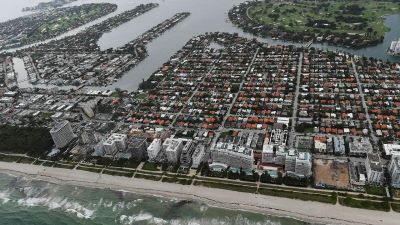
Condo owners are facing a financial reckoning in the wake of the building collapse in Surfside, Fla., that killed at least 86 people and left more than 40 unaccounted for.
Across the country, residents and board members are discovering that they haven’t set aside enough money to pay for major repairs, like aging roofs. This funding crunch is rattling developers and property owners, and could increase housing costs for millions of Americans, who often view condominiums as a low-stress, lower-cost alternative to single family homes.
There are about 160,000 condominium buildings in the U.S. Though industry officials can’t put a price tag on how much maintenance is needed nationwide, Robert Nordlund, the CEO of Association Reserves – which advises condominium and homeowners associations on setting aside money for repairs – said the figure is “staggering.”
Of Nordlund’s 30,000 clients, he estimates that 30 percent of properties are significantly behind in their reserve funding, meaning they hold 30 percent or less than the total funding they need for planned and unexpected future projects. Another 40 percent properties are only in “fair” condition, holding just 30 to 70 percent of needed funding.
In a separate report issued last year, Community Associations Institute, an umbrella organization for resident-owned buildings and developments, found that 80 percent of associations faced unplanned repairs during the preceding three-year period.
Despite the enormity of the challenge, industry leaders says they don’t see signs of a financial “bubble,” where costs could overwhelm residents and creditors. One major reason for that, they say, is that property values in many places continue to rise despite the backlog of maintenance needs.
But industry leaders say the collapse of Champlain Towers South in Surfside, Fla., should be a wake-up call for condominium owners on the true costs of their units. And the collapse could also nudge cities and states to reevaluate whether more regulation is needed.
“The sad part about government is it takes a crisis or a tragedy to inspire legislation to protect the future,” said Jerry Hill, a former California state senator who in 2018 pushed to update laws in that state after a six people were killed in a balcony collapse in Berkeley.
The financial and regulatory challenges facing the condominium industry come about four decades after the first big wave of condominiums hit the market in the U.S.
Although a form of common-interest ownership has been around for at least a century, there were only about 10,000 condominium and homeowners associations in the U.S. by 1970, according to the CAI.
But in the mid-1970s, after federal tax reform permitted condominium mortgages to be deductible, the number of units began to proliferate.
Around the same time, real estate investors in big cities such as Chicago sought to boost returns on aging apartment complexes by converting buildings into condominiums. Condominiums also helped absorb an influx of residents into fast-growing states such as Florida, Texas and California during the 1980s.
ADVERTISEMENT
The number of condominium units in the U.S. increased by 115 percent between 1980 and 1990, according to the Census Bureau.
Some of the buildings constructed during the original condo boom are now due for major repairs and replacement projects, part of the financial crunch owners now face. According to Fannie Mae, the recommended life span for a metal roof and chimney on multifamily building, for example, is about 40 years.
But Jim Riley, director of architecture for Certa Building Solutions – which advises condominium associations on how to rehab troubled properties – said that some buildings are experiencing structural breakdowns far sooner than expected, accelerating the timeline for remedial work.
The biggest culprit, Riley said, is moisture infiltrating some structures, especially those that were poorly built in the first place. “Water is getting into places it was never intended to be,” said Riley, who primarily works in Florida and the Pacific Northwest but says challenges can extend far away from coastal communities. “It’s rusting rebar. It’s damaging wood framing and it’s causing all kinds of problems.”
Joel Meskin, an insurance executive, added the structural vulnerabilities can impact newer buildings, as well as older ones.
ADVERTISEMENT
“I’ve got co-ops in Manhattan built in the 1920s that aren’t having these kinds of issues because they were built with good materials and craftsmanship,” said Meskin, managing director of community association products and risk management at McGowan Program Administrators. “A lot of the new developments are being put together with what seems to be cardboard and super glue now, and a lot of that has to deal with the developers.”
When problems arise, condominium associations can quickly face financial distress if owners have not been proactively saving for repairs.
Nordlund said condominium associations should be putting aside at least 25 percent of their annual budget into savings for repairs, which is known as a reserve fund. The budget of most condo boards is made up of monthly fees paid by residents, which can range from a couple hundred dollars to a couple thousand.
When they don’t, the costs of unexpected repairs are passed onto owners through special assessments that can quickly test the ability of the owner to pay for them.
At the Champlain Towers South building, for example, the condominium board had been pushing unit owners to finance $15 million in roof and structural repairs in the weeks before the building collapsed on June 24.
The association had just $800,000 in reserves. The only way to pay for the project was to charge each unit a special assessment, ranging from $80,000 to $200,000. Owners balked at the high cost, leading to infighting and causing board members to resign.
In recent years, some condominium buildings have faced equally eye-popping special assessments. In 2007, the owners of units in Harbor Towers in Boston faced special assessments of $70,000 to $400,000 after the board discovered it need $75 million in repairs on the then 36-year-old building, the Boston Globe reported at the time.
John David Allen, a former property manager in northern Virginia, said many condominium owners do not understand that a well-managed building should be steadily increasing monthly assessments.
“It’s a big challenge for property management,” Allen said. “I recall often going to the president of my company and saying, ‘We have to go to talk to the board and tell them, ‘No, you cannot cut this (monthly condo) fee.'”
Although engineers describe the catastrophic collapse of Champlain Towers South as exceptionally rare, condominium boards often don’t have to look far to see what could happen if they push off maintenance for too long.
In 2016, a building at River Towers Condominium, a marsh-front complex in Northern Virginia built in the 1960s, suffered serious structural damage.
The center tower, which is shaped like a “T” when viewed from above, rested on steel support beams that dug into the ground but had not been properly secured by concrete, according to Bill Hicks, Fairfax County’s director of land development services.
As that steel was exposed to the elements over the years, the northern end of the building – equivalent to the bottom trunk of the “T” – dropped about two inches down and shifted out another two inches, bringing the nine stories above closer to the ground and nearby sidewalk.
County officials quickly ordered mandatory evacuations.
Residents “left their homes with what they had in their hands,” Hicks said. “Immediately, all of a sudden, folks realized they were not going to be back anytime soon.”
Laura Sebastianelli, 61, who bought her unit in 2013 and still lives on the second floor, said that in hindsight the foundation issues appeared months earlier. She recalls how green marble that abutted the north end of the building began popping off. Then, a floor-to-ceiling window in the front lobby fell out, too.
“Nobody anticipated that the building was moving,” she said. “People thought it (the window and marble damage) was vandalism or that it was a high windstorm, but nobody imagined that our building was shifting.”
About 32 residents were displaced from their condos for up to 9 months, as firm KCE Structural Engineers developed a plan for remediation.
Margaret Crowley, a 70-year-old retired teacher who was one of the residents who was displaced, said the condo board split the cost of repairs among all the owners in the three-tower complex. The owners were given the option to pay the sum all at once – $4,000, in her case – or add it onto their condo fees, which range from about $350 a month for her smaller unit to $900 or $1,000 for some of the larger properties.
The River Towers condo association board did not respond to multiple requests for comment. But Hicks said it was likely that the problem got as bad as it did because of a lack of routine maintenance or inspection.
Residents, meanwhile, said the ordeal makes them question why Virginia does not require a thorough inspection of aging condominium properties.
“Nobody wants to pay extra money for an inspection,” Sebastianelli said, adding she would still support more robust inspections if it was “something that could truly help make us all safe.”
But most states and municipalities don’t do much to regulate condominium associations.
Currently, only California and two counties in Florida – Miami-Dade and Broward – require condo associations to conduct structural inspections of aging buildings.
Only nine states – California, Delaware, Colorado, Hawaii, Nevada, Oregon, Utah, Virginia and Washington – require condominium associations to conduct a reserve study to map out how much a condominium association should set aside based on the expected life span of building’s various components.
Hawaii is the only state that mandates how much an association must hold for its capital projects.
After the Champlain Towers South disaster, which occurred in the midst of Miami-Dade County’s 40-year recertification requirement for condominium buildings, some lawmakers are calling for tighter re-inspection requirements.
After a fatal balcony collapse at Liberty Gardens apartment building in Berkeley, California passed a law requiring condominium associations to hire a structural engineer or architect to inspect balconies, decks, outdoor stairs and elevated walkways every nine years.
“It happened here. It happened there (in Surfside). It can happen anywhere,” said Hill, the co-sponsor of the legislation.
Industry leaders, however, are skeptical that more government regulation of condominiums is needed.
Dawn Bauman, CAI’s senior vice president, government and public affairs, noted that most states have a limited number of municipal building inspectors. Requiring buildings to hire their own engineers would increase costs on homeowners while also raising questions about how government could assure the reports being generated are accurate, Bauman added.
And although government mandates for reserve studies are limited, Bauman said the mortgage industry has its own set of requirements. Fannie Mae, Freddie Mac, and the Federal Housing Administration – which currently back about 70 percent of mortgages in condominium buildings – usually require a building to have a reserve plan before they underwrite the loan, Bauman said.
“The problem is being addressed by the financing side, as opposed to the regulatory side,” said Tom Skiba, CAI’s chief executive, who adds he remains more worried about the financial risks posed by “natural disasters” than he is widespread foreclosures or insolvencies of condominium associations due to of maintenance costs.
But Skiba and other industry leaders say the Champlain Towers South collapse means condominium owners across the country could soon discover that their housing choice isn’t as cheap as they had expected.
Meskin, the insurance executive, said developers and Realtors continue to sell condominiums under false assumptions that associations are adequately funded, or that monthly assessments will never increase, perhaps substantially.
“The problem is, at the end of the day, someone has to pay or you can end up in this type of situation again,” Meskin said. “I am leery of creating too much fear in people, because I hope this does not happen again, but it may, and that is a concern of a lot of us so people have to wake up.”
Published : July 12, 2021
By : The Washington Post · Kathy Orton, Teo Armus, Tim Craig
Europe is racing to vaccinate residents – but in some countries, undocumented immigrants have been left out
As Europe races to vaccinate its residents against covid-19 and outpace the highly infectious delta variant, efforts to inoculate the continent face a major gap: undocumented immigrants.
An estimated 4.8 million unauthorized immigrants lived in 32 European countries as of 2017, according to the Pew Research Center. Studies show they are more vulnerable to the coronavirus than European populations at large. But many countries have excluded them from vaccination drives in policy or in practice – and deep distrust among some immigrant populations toward authorities has caused complications for more inclusive campaigns.
Around 64 percent of adults have received at least one dose of a vaccine and roughly 44 percent are fully vaccinated across European countries surveyed by the European Centre for Disease Prevention and Control (ECDC). But the delta variant sweeping the continent has heightened urgency to vaccinate the rest.
Undocumented immigrants in the United States are eligible to get the vaccine, and the federal government has said it will not conduct immigration enforcement operations around vaccine sites.
In March, the E.U. published guidance calling for member states to include all immigrants in coronavirus vaccination programs, regardless of their legal status.
Still, vaccination policies and procedures vary widely across Europe, and an ECDC report last month found that low vaccination rates persist among some immigrant groups.
“The public health imperative (to vaccinate immigrants) is one that still has legs. But it’s an invisibility issue in some countries,” said Alyna Smith, an advocacy officer at the Platform for International Cooperation on Undocumented Migrants (PICUM).
The struggle to vaccinate this “invisible” population has underscored existing health care disparities. Public health experts say it may put a wrench in plans to return to normal life on a continent itching to shed coronavirus restrictions.
“It’s important to address the issue of migrants because it’s a priority group, it’s a vulnerable group because of their risk factors, their living and working conditions,” said Benedetta Armocida, a PhD candidate in global health at University of Geneva and a research assistant at the Institute for Maternal and Child Health-IRCCS Burlo Garofolo.
Even before the pandemic, undocumented immigrants faced steep barriers to health care in many European countries, according to Sally Hargreaves, a migrant health expert and lead author of the ECDC report.
In the past, countries including the United Kingdom have charged immigrants for health services that citizens receive free. Other countries have turned away those without documents. In some places, health authorities share information with immigration services.
Fears of deportation or hefty medical bills have deterred some undocumented immigrants from seeking treatment for chronic conditions that put them at increased risk of covid-19 complications, public health experts said. The same concerns are keeping some immigrants away from vaccination sites.
“What happens with any of these hostile policies is that it means that when you speak to lots and lots of migrants and the wider ethnic minority community, there’s a real lack of trust in health systems,” Hargreaves said.
A handful of countries have prioritized undocumented immigrants in their vaccination programs. The Netherlands’ vaccination plan explicitly mentions that the group is eligible. Portugal created a registration platform for undocumented immigrants to book vaccine appointments, and more than 19,000 had signed up as of June, according to PICUM.
Everyone residing in Belgium is eligible to get the vaccine, and the Belgian government has specified that data collected during the vaccination process can only be used for health purposes. The government has deployed mobile vaccination teams and worked with local authorities and civil society groups to reach immigrant populations. In the capital, Brussels, public transportation to vaccination centers is free.
But in some countries where everyone is theoretically entitled to receive the vaccine, administrative hurdles remain. Coronavirus vaccines are free and available to undocumented immigrants in the U.K. Booking an appointment, though, often requires being registered with a general practitioner, and some GPs “routinely refuse” to register migrants who can’t provide proof of address or ID, Anna Miller of Doctors of the World UK said.
Italian authorities, meanwhile, have sent mixed messages on whether unauthorized immigrants are eligible. Registration requirements mean they are often “de facto excluded,” Human Rights Watch senior researcher Belkis Wille said in a webinar last month.
The German government clarified this spring that undocumented people could access the vaccine. But a law requiring public authorities to report them to immigration officials remains in effect. The result: Undocumented migrants avoid the medical system, nongovernmental organizations (NGOs) say.
Other countries are making little or no efforts to inoculate undocumented migrants. In Hungary, where Prime Minister Viktor Orban has long burnished his anti-immigrant reputation, it appears to be nearly impossible to register for a shot without proof of legal residence, according to PICUM.
Greece began vaccinating refugees living in camps in early June, after what critics called a sluggish start. But migrants without documents still cannot access the vaccine registration platform, according to Lefteris Papagiannakis, a former vice mayor of Athens and current head of advocacy, policy and research at SolidarityNow, an NGO that works with refugees and migrants in Greece.
Papagiannakis blamed anti-immigrant politics, and said that the country’s stance may backfire as it seeks to revive its tourism industry.
“When you talk about tourism and you don’t mention people who work as undocumented (people) in the kitchens, in the hotels, doing the laundry, guarding the elderly, then you have a hole in the protection of public health,” he said.
Even in countries that have attempted to include undocumented immigrants, language barriers and misinformation may be contributing to vaccine hesitancy among migrant populations, the ECDC study found. And for those eager to get the shots, long work hours or difficulties traveling to vaccination sites can stand in the way, Hargreaves, the study author, said.
Some NGOs and municipalities have taken the lead in addressing these concerns. Doctors of the World UK has run information sessions across London and – with government support – is working to translate resources about the vaccine into roughly a dozen languages, Miller said. In Italy, health authorities in the region encompassing Rome ran an overnight vaccination drive earlier this month for “people on the margins of society,” the New York Times reported.
Still, rights groups are calling for the E.U. to play a more active role in coordinating member states’ efforts to reach marginalized groups. Human Rights Watch has also asked governments to drop documentation requirements for vaccine registration and to implement strict firewalls between health and immigration services.
The pandemic has exposed the danger of sidelining undocumented immigrants from health services, public health experts say – and the need for broader access in the future.
“Going forward, it’s not acceptable in high income countries for tens of thousands of people to operate outside of health and vaccine systems,” Hargreaves said. “The reality is, we’re all in this together, aren’t we?”
“หนึ่งในคนที่คาดว่าน่าจะเป็นลูกหลาน คือนักบินที่ชอบบินเครื่องบิน แน่นอนว่าเลโอนาร์โดมีชื่อเสียงในเรื่องความหลงใหลในการบินและความเป็นไปได้ในการบินของมนุษย์ อีกคนคือศิลปินทัศนศิลป์ จิตรกร และแน่นอนว่าการมีความเชื่อมโยงกันกับเลโอนาร์โดในฐานะศิลปินนั้นเป็นเรื่องน่าตื่นเต้น” ออซูเบลบอกระหว่างร่วมรายการ As It Happens


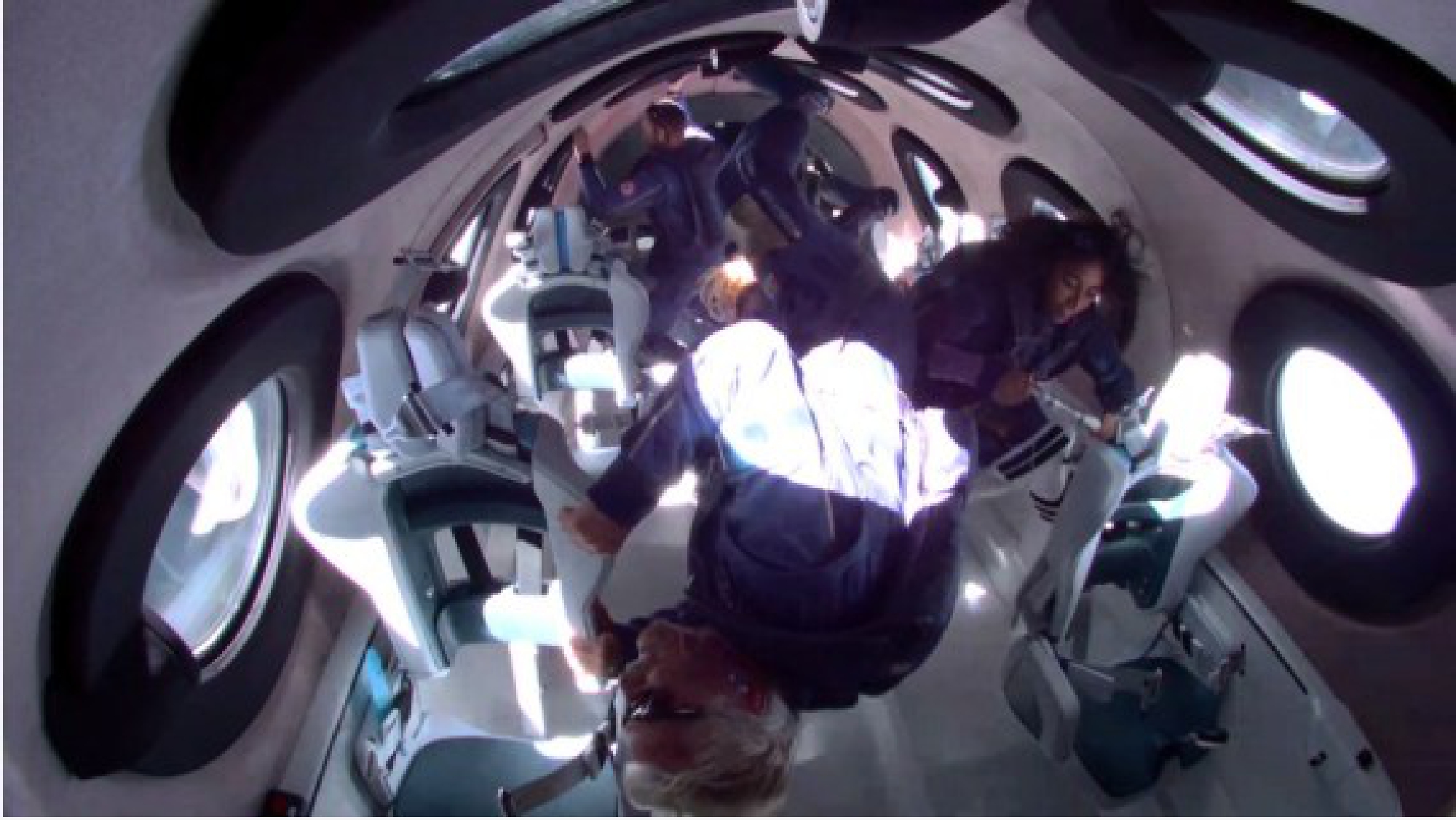 Photo released by Virgin Galactic on July 11, 2021 shows “Unity 22” crew at zero gravity. (Virgin Galactic/Handout via Xinhua)
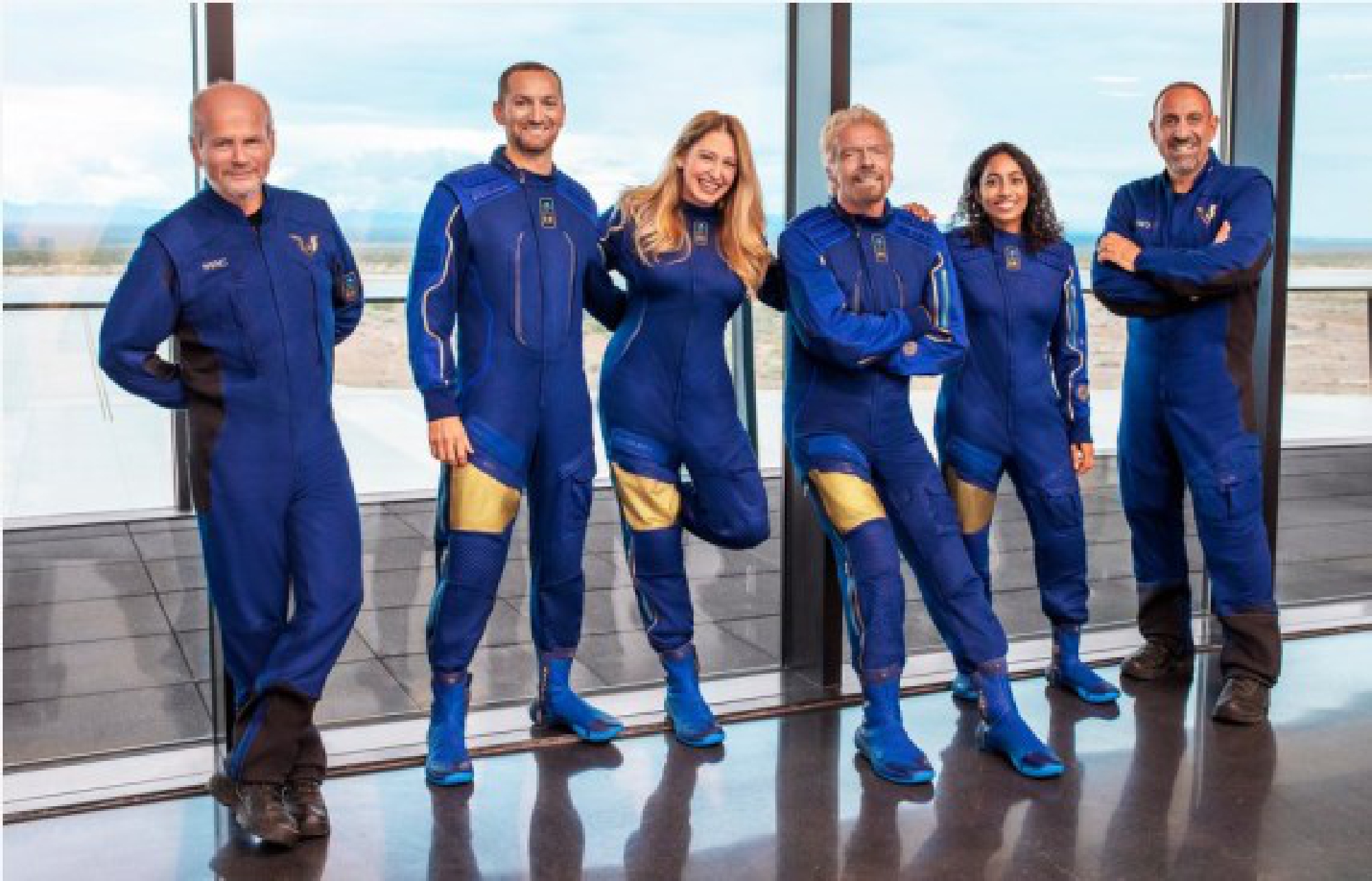 Photo released by Virgin Galactic on July 1, 2021 shows Virgin Galactic “Unity 22” crew (from L to R) chief pilot Dave Mackay, lead operations engineer Colin Bennett, chief astronaut instructor Beth Moses, founder of Virgin Galactic Richard Branson, vice president of government affairs and research operations Sirisha Bandla, and pilot Michael Masucci, posing for a photo in the United States.