China provides 500 million COVID-19 vaccine doses to intl community.
China has provided more than 100 countries and international organizations with 500 million doses of COVID-19 vaccines and concentrates, accounting for one-sixth of the current global COVID-19 vaccine production.
Guo Xuejun, deputy director-general of the department of international economic affairs at the Foreign Ministry, said during an interview with Xinhua that China has also actively supported other developing countries in producing vaccines to expand the global vaccine capacity. China has always accommodated domestic and foreign needs for COVID-19 vaccines, said Guo, adding that China opposes vaccine nationalism. With the help of the Chinese government, Chinese vaccine enterprises have carried out joint vaccine production in countries including the UAE, Indonesia, Malaysia, Egypt, Brazil, Turkey, Pakistan and Mexico, with production exceeding 200 million doses, Guo said. Among the 140 countries that have signed Belt and Road cooperation documents with China, 84 countries have proposed introducing Chinese vaccines in the first half of this year, said Guo, adding that China has made a positive response to all these countries and provided vaccines. Guo said that in the future China will continue to work with all parties to enhance vaccine cooperation, further improve the accessibility and affordability of vaccines in developing countries to make a greater contribution to fighting the pandemic and promoting economic recovery.
What will become of the land the Surfside condo is on?
Even as the search for victims of the Surfside condominium collapse continues, a question has surfaced: What will become of the land?
Although beachfront property is a hot commodity in South Florida, survivors, families who lost loved ones and neighbors are struggling to imagine another apartment building or hotel in a space that has suffered so much loss. Instead, many condominium owners have expressed hope that the government will purchase the property and build a memorial park.
The possibility of selling the land for a memorial – similar to the museum and fountains in the footprint of the twin towers that honor the terrorist attacks of Sept. 11, 2001 – has come up in official conversations in recent days. But when it was broached Wednesday at a hearing to discuss the various lawsuits filed on behalf of victims, a concern lingered: Would such a sale offer victims the largest possible payout for their lost homes?
Attorney Robert McKee said his client Steve Rosenthal, one of the residents suing the condo association, and other possible clients wondered if discussions about the possible park could start with the county, state or federal government, though he said it was “probably not the best commercial use.”
Miami-Dade Circuit Judge Michael Hanzman called it an “interesting thought” but added that Michael Goldberg, the attorney appointed by the court to handle the lawsuits on behalf of the condo association, is tasked with getting the most money for victims, including through asset sales and $48 million in insurance money. The land was valued at $100 to $130 million, according to one estimate offered to Hanzman.
Hanzman left what would happen if a government wanted to buy the land open to question. It’s unclear whether the government could pay as much as a developer.
“If other government agencies step in and take action that takes priority over this case and over the receiver, then we’ll address that at the appropriate time,” he said. “For the time being, it’s not this court’s role to set policy or establish parks or monuments.”
Rosenthal – who still owes part of his mortgage for Unit 705 – said he is looking for a solution that could offer him a chance at financial recovery. At 72, he said he can’t work for decades more to earn back what he had lost.
“Where am I going to move?” he asked, adding that he doesn’t feel safe living in a high-rise or beachfront building. “What am I going to do?”
Comparing the site to the locations of the twin towers attack and Oklahoma City bombing, both of which are now memorials for the hundreds killed, Rosenthal said the toll of this disaster is colossal in its reach for Miami, where many knew people who knew people missing or dead.
Rosenthal said he told Gov. Ron DeSantis, a Republican, about the memorial idea in a meeting with survivors.
DeSantis’s spokeswoman Christina Pushaw told The Washington Post that the governor had no comment on the land use, adding that it “would be up to the owners to determine, and it isn’t the place of the state to speculate on this subject before the owners have weighed their options.”
Miami-Dade Mayor Danielle Levine-Cava, a Democrat, also said she did not know yet what the county would do. “We’re exploring opportunities like that,” she said of the park in an interview.
When asked if Surfside would consider purchasing the land, Surfside Mayor Charles Burkett also said he will defer to families.
“I think it something we should put on the table and discuss with all the stakeholders,” he told The Post, adding that he thinks families “expect the town to step up and do what it’s supposed to do.”
Rabbi Sholom Lipskar, who leads the Shul of Bal Harbour, a large gathering spot of the Jewish community in the area, said he and other clergy told Burkett that they did not support a new condo placed on the site. Jewish burial laws specify that soil that may contain human remains is sacred and building on it is like building on a cemetery, Lipskar said.
“I just came from the pile, and anytime you go there, there’s a chill that runs through your body,” he said. “There are souls floating in that space.”
Lipskar said the memorial would offer people a space to honor the people who died, which Chabad of South Dade Rabbi Yakov Fellig, who lost his sister, Ingrid “Itty” Ainsworth, in the collapse, said families needed. His sister, 66, and her husband Tzvi, 68, were found Monday, after recently celebrating the birth of two new grandchildren, the Associated Press reported.
“The memorial will give our families and all people the opportunity to commemorate the memory of the loved ones and to meditate and reflect upon their lives,” Fellig said in a statement.
According to Michael Capponi, who runs the nonprofit Global Empowerment Mission that has given gift cards, laptops, necessities and more to many of the survivors, everyone he has spoken to is in favor of making the site a memorial.
“I haven’t met someone yet who doesn’t like that idea,” he said. Capponi, who was among the first to offer aid to the victims, has lent an ear to each family, listening to their harrowing stories of survival and working to provide housing to those who have nowhere to go.
He said many residents, such as Rosenthal, are retired and cannot return to work to make back the money they invested over the decades in their homes.
Reviewing comparable listings, Andres Asion, a broker and founder of Miami Real Estate Group, estimated that the $100 million to $130 million value would be a fair price for the site. Waterfront property is scarce, making the nearly two acres more valuable, he said.
In the last decade, new buildings erected north and south of Champlain have sold for steep prices, attracting affluent residents, including Ivanka Trump and Jared Kushner six doors down.
Surfside, a small beach town of roughly 6,000 people and a 12-story limit on its buildings, has less development than its neighbors – Miami Beach and its world-famous nightlife, and Bal Harbour with its luxury retail scene.
The property may be alluring to some developers interested in selling the ocean vistas and beach access. But a sale to a developer could be blocked by condo owners who don’t wish to see another apartment put up in place of Champlain Towers South.
Oren Cytrynbaum, who was not in his unit at the time of the collapse, said he also hopes a memorial can be put in place of where he lived, adding that he would like to see the funds end the ongoing legal battles and provide closure to those who lost family members and friends among the dead and unaccounted for.
“We can’t forget those who passed away,” he said. “We have to honor them in some way. We can’t let people have to deal with litigation for the next few years or decades.”
Darrell Arnold, who lives in a house along Harding Avenue, about a block from the site, could see Champlain Towers South condo – and then the wreckage – from his living room window. He watched when as engineers demolished the standing part of the tower, destroying what remained of people’s homes.
Imagining a view of another condo in just a few years is “grotesque,” Arnold said.
“At least, there needs to be some time for that to be some kind of memorial,” he said.
The Nir family, who rented their home on the ground level of the building had narrowly escaped the condo’s collapse, sprinting through the lobby and into the smoke-filled street. Days later, Gabe Nir boarded a bus to 8777 Collins, to see the towering heap, with spindly metal poles sticking out. It was hard being there for Nir, who had wished he could have reached into the pile and saved his neighbors.
He said the site needs to become a memorial. Building over it with another condominium would do a disservice to the lives lost.
“It’s just like, ‘Okay, yeah, people died, and we’ll just put a new one on top of it and forget about what happened,'” he said. “That’s what it feels like.”
“And also, like, if you were to build it like how are they going to remember?” he added. “People need to remember.”
Published : July 10, 2021
By : The Washington Post · Meryl Kornfield, Brittany Shammas
Virginia orders five state mental hospitals to stop taking new admits amid staffing crisis
The Virginia commissioner in charge of behavioral health on Friday closed five of the states eight adult mental health hospitals to new admissions, a step she said is necessary to protect workers amid unprecedented staffing shortages.
The pandemic exacerbated overcrowding and inadequate staffing at the state’s psychiatric hospitals, which are required to admit the most challenging and often violent patients under involuntary detention orders.
Calling the situation an “immediate crisis,” Alison Land, the commissioner of Behavioral Health and Developmental Services, said about 30 percent of positions that directly support patients are vacant, with 108 people having resigned over the past two weeks, citing long hours and lack of safety.
Workers who left during coronavirus outbreaks early in the pandemic were able to get better-paying, less-stressful jobs elsewhere and have not returned, she has said.
“The result is a dangerous environment where staff and patients are at increasing risk for physical harm and where effective treatment to help patients recover is much harder to deliver,” Land wrote.
There are on average 4 1/2 incidents or injuries to staff or patients every day across state psychiatric facilities, with 63 serious injuries since July 1, she said.
New admissions are closed at Catawba Hospital, Central State Hospital, Eastern State Hospital, Piedmont Geriatric Hospital, and Western State Hospital, Land wrote in her letter, while Northern Virginia Mental Health Institute, Southern Virginia Mental Health Institute, and Southwestern Virginia Mental Health Institute can continue to accept patients.
The letter comes as state lawmakers prepare to convene for a special session in August to decide how to spend the first tranche of more than $4 billion – Virginia’s share ofAmerican Rescue Plan Act money to help the economy recover and make investments for the future.
Gov. Ralph Northam, a Democrat, a pediatric neurologist, will propose devoting a “significant amount” of ARPA funding to increasing staff salaries, hiring workers and taking other actions to ensure the well-being of patients and staff at the mental health hospitals, spokeswoman Alena Yarmosky said.
Lawmakers have been meeting for weeks to come up with proposals for how to use the money for mental health, and have discussed staff bonuses, expanding loan forgiveness programs in exchange for working in an underserved area and funding crisis centers as alternatives to emergency rooms and jails for people in crisis.
Sen. Creigh Deeds, D-Bath, chairman of the Joint Subcommittee to Study Mental Health Services in the Twenty-First Century, supported the ideas, but noted that the pandemic money is one-time funding. He hoped lawmakers would come up with a long-term strategy to boost salaries in the special session.
“We are in a desperate situation,” he said. “I get why admissions had to be closed. I’m frustrated and saddened by it, but we’ll do what it takes to fix the issue.”
Anna Mendez, board president of the nonprofit advocacy group Mental Health of Virginia and executive director of the Charlottesville affiliate, Partner for Mental Health, attributed the bed shortage, in part, to years of inadequate funding of community based mental health services leading to an overreliance on inpatient treatment.
Virginia should “double its mental health care spending, bringing it into to the top ten in the nation, so that our Commonwealth can better support its residents with mental illness and crises like these can be prevented in the future,” she said.
The Commonwealth Center for Children and Adolescents, which treats minors in Staunton, has a 57 percent job vacancy in direct patient care positions, which has caused the 48-bed facility to go down to just 18 beds, Jaime Bamford, the medical director at CCCA, said.
The center has seen increased aggression, suicidal thoughts and attempts, and psychosis as well as substance abuse and other behaviors among its patients, exacerbated by the isolation and stress of the pandemic, she said.
“It’s a really critical time for CCCA in providing safe supervision for the children in our care,” Bamford said in an interview Friday.
A report by the Centers for Disease Control and Prevention released last month found across the United States, adolescent girls’ visits to the emergency department for suicide attempts increased by about half from the early months of 2019 to the same period this year.
A spokeswoman for Land did not respond to a request for comment on whether Land’s letter exempts the state psychiatric hospitals from a rule that says the facilities must provide the “bed of last resort” for involuntary detention if a bed cannot be found elsewhere.
Land has said the rule allowed private hospitals to decline the most challenging cases because the public hospitals had no choice but to admit them. Since the rule went into place in 2014, she said, daily admissions at public hospitals increased from about 4 to more than 18.
Northam last summer signed an executive order pausing the rule, due to the pandemic, but the order expired on June 30 after the coronavirus state of emergency lifted.
In her letter, Land called on private hospitals to admit more challenging cases given the dire staffing shortages at the public facilities.
In response to the letter, Julian Walker, a spokesman for the Virginia Hospital and Healthcare Association, said bed shortages mean people with acute psychiatric needs wait in emergency departments for hours or days, delaying care to other people.
“The challenges of this has ripple effect that can be felt across the continuum of care throughout the public health and private health system,” he said.
Private hospitals are also facing similar challenges as public ones, such as staffing shortages – meaning it wouldn’t be safe for them to take in certain patients, either, Walker said.
“We continue to see an increase in demand for these services . . . and this situation unfortunately may get worse before it gets better,” he said.
Biden tells Putin the U.S. will take any necessary action after latest massive ransomware attack, White House says
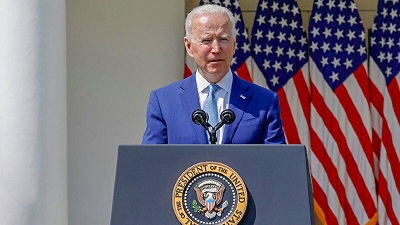
WASHINGTON – President Joe Biden told Russian President Vladimir Putin on Friday that the United States will take “any necessary action” to defend U.S. infrastructure, the White House said, after Russia-based hackers carried out the largest known ransomware attack to date.
Biden has been under increasing pressure to counter such costly, brazen assaults – pressure that spiked last weekend after the latest attack, which afflicted up to 1,500 companies, schools and hospitals around the world. It was claimed by a criminal group called REvil operating largely out of Russia.
In a phone call, Biden warned Putin that Russia must take action to disrupt ransomware groups operating there, or the United States would impose consequences, the president said.
“I made it very clear to him that the United States expects when a ransomware operation is coming from his soil, even though it’s not sponsored by the state, we expect them to act if we give them enough information to act on who that is,” Biden said.
Asked if there would be consequences, Biden said, “yes.” The president did not elaborate.
“It went well,” Biden said of their conversation. “I’m optimistic.”
Biden’s call to Putin came after a meeting between the two leaders three weeks ago in Geneva, during which Biden delivered a similar warning. It was the first time the two spoke since and reflected the sense of urgency surrounding the surge in ransomware attacks – something the Biden administration has elevated to a national security threat.
The attacks have grown in frequency over the last year and a half, officials said. Hospitals were targeted last fall amid the coronavirus pandemic, and there were fears ransomware would cripple election systems before the November presidential election. But it was an assault on Colonial Pipeline in May, leading to gasoline shortages in much of the Southeast, and a June attack on meat supplier JBS, that pushed the issued to the forefront.
The leader-to-leader engagement on this issue is unprecedented – “something the president feels as vital” given the threat, White House press secretary Jen Psaki said. “Certainly the president knew, even when they met in Geneva, that there would be a need for ongoing discussions and engagements.”
After the Geneva summit, the two sides also began strategic consultations involving White House cyber and regional experts and their Kremlin counterparts. Another virtual meeting is scheduled for Wednesday.
While in Europe last month, Biden also raised the issue of cyberattacks with allies in the Group of Seven and the European Union. The G-7 – the world’s largest advanced economies – issued a statement calling on Russia to hold to account criminals within its borders who conduct ransomware attacks.
Biden was direct in his call with Putin, and underscored that if Moscow did not take action to disrupt ransomware groups operating on Russian soil, the United States would, according to people familiar with the exchange, who spoke on the condition of anonymity because of the matter’s sensitivity.
“Clear, unambiguous leader-to-leader conversation doesn’t leave room for misinterpretation and allows us to convey what our expectations are and what the potential consequences will be if those expectations aren’t met,” said Christopher Painter, the State Department’s top cyber official in the Obama administration.
Some national security experts say Putin has had enough time to curb the attacks. “It’s time to take the gloves off,” said David Laufman, a former senior Justice Department official who oversaw prosecution of state-sponsored cyberattacks. He said Biden should impose consequences now, such as economic sanctions, export controls and law-enforcement actions, to disrupt criminals’ use of computer infrastructure.
According to the Kremlin’s readout of their call, Putin told Biden that Russia had expressed willingness to cooperate on the issue, but that U.S. law enforcement agencies had not approached Russian authorities about the recent cyberattacks.
A senior administration official disputed that. “We have relayed multiple specific requests for action on cyber criminals” to Moscow, “and been clear about what Russia’s responsibility is with regard to taking action, including again today,” said the official, speaking on the condition of anonymity under ground rules set by the White House.
Russian security services are able to identify criminal hackers without U.S. help, say current and former U.S. officials. Biden, on the call, expressed confidence in the Russian government’s ability to do so, the people familiar with their exchange said.
Biden’s remarks inevitably raise expectations that the United States will take decisive action to punish Moscow if the attacks do not abate quickly. Administration officials sought to temper those expectations.
“This is a broad campaign and won’t have an immediate on-off effect like a light switch,” the senior administration official said, “but we’re going to have to stay on top of it over a long period of time.”
The official alluded to Biden’s statement in Geneva that “we’ll find out within six months to a year” whether the engagement with Russia is working.
“The president really meant what he said . . . when he said that our assessment of this process, and our evaluation of Russia’s actions, would take time,” the official said.
The White House strategy extends beyond the bilateral talks. “This is really about our own resilience as a nation in the face of these attacks,” the official said. “It’s about addressing the challenges posed by cryptocurrency, which provides fuel for these sorts of transactions. It’s about ensuring that our allies and our partners are working with us collaboratively and upping their own game when it comes to resilience.”
Painter, the former State Department cyber official, said he, too, would not expect attacks to cease overnight. But “we can now expect Putin to take action” and Biden’s remarks have “set the stage for [imposing consequences on Russia] if they don’t.”
But, he warned, setting red lines and failing to act when they’re crossed is dangerous.
“If you don’t get the change of behavior you’re looking for and you don’t then take an action, you look like a paper tiger,” he said. “It puts you in a weaker position.”
Published : July 10, 2021
By : The Washington Post · Ellen Nakashima, Eugene Scott
WASHINGTON – Since taking office, President Joe Biden has raced to repudiate central elements of his predecessors “America First” approach to the world, by rejoining an international climate pact, reaffirming commitments to NATO, elevating multilateralism and vowing to place human rights over earnings in global arms deals.
But in the handling the United States’ longest war, Biden’s core instincts have aligned with those of former president Donald Trump – a skepticism of endless military deployments and a willingness to end those campaigns despite security concerns.
“I will not send another generation of Americans to war in Afghanistan with no reasonable expectation of achieving a different outcome,” Biden said in a White House address Thursday, defending his decision to end the U.S. military mission by the end of August. “It’s up to Afghans to make the decision about the future of their country.”
The administration’s scramble to execute a high-speed departure, and the president’s determination to push ahead despite the concern about a swift Taliban takeover, illustrate his mistrust of long-running counterterrorism operations and his desire to refocus government resources at home – disruptive beliefs that intersect with those of Trump even though the two men arrived at their positions from very different places.
Those converging convictions are behind an outcome that Andrew Wilder, a veteran Afghanistan scholar at the U.S. Institute of Peace, said many Afghans are describing as not safe nor orderly, as officials have labeled it, but as dangerous and hasty.
While the withdrawal plan the White House unveiled in April has been successful in averting U.S. casualties, Wilder said, “it’s leaving the [Afghan security forces] in a very difficult position, and they’re rapidly losing ground.”
Current and former officials have expressed growing fears as Taliban forces, emboldened by the American departure, make their most significant gains since they were routed after 9/11. The militants are besieging provincial capitals and seizing rural districts, often with little or no resistance from government troops. Anti-Taliban militiamen have vowed to rise up against the militants, fueling fears of another civil war, as happened after the Soviet withdrawal in 1989.
The accelerating Taliban offensive has also intensified concerns about the possible collapse of the Kabul government, which U.S. intelligence agencies have warned could happen in as few as six months.
While officials have framed the withdrawal decision as linked primarily to an agreement cemented with the Taliban in 2020 under Trump, it is equally rooted in Biden’s years of involvement in the United States’ post-9/11 wars from the Senate and the vice president’s office.
As a two-time chairman of the Senate Foreign Relations Committee, Biden was a leading figure in the congressional response to the Sept. 11, 2001, attacks, initially voting to support the wars in Afghanistan and Iraq. During the Obama administration, he argued against military leaders’ request for a major troop increase, recommending a lean counterterrorism mission instead. President Barack Obama ultimately heeded the Pentagon brass, bringing the troop level to 100,000 in a surge that generated important but short-lived gains.
When Trump took office in 2017, in contrast, he had no governing or foreign policy experience but had instead a penchant for making abrupt, unorthodox decisions, often via Twitter, and an innate suspicion of spending money in defense of foreign nations. No longer, he promised, would the United States be “the world’s policeman.”
Repeatedly, beginning with a review of South Asia policy in 2017, top aides sought to walk Trump away from a full withdrawal from Afghanistan by linking the U.S. presence there to the possibility of terrorist attacks on his watch.
In February 2020, Trump’s special envoy to Afghanistan cemented a deal that bound Washington to withdrawal by May 2021 if the Taliban complied with certain conditions, including forgoing attacks on U.S. forces and breaking ties with al-Qaeda.
Biden and his aides have argued the administration had little choice but to pull out, in keeping with the Trump administration deal, because failing to do so would prompt the Taliban to renew attacks on foreign forces – which have been mostly paused since February 2020 – and risk more American lives.
“Once that agreement with the Taliban had been made, staying with a bare-minimum force was no longer possible,” Biden told reporters this week. “Let me ask those who wanted us to stay: How many more – how many thousands more of America’s daughters and sons – are you willing to risk?”
Some Afghanistan experts disagree, arguing the administration could have attempted to negotiate an extension to give peace talks more time to advance. Or, they have argued, Biden could have simply kept the small force of 2,500 troops there in defiance of the Taliban, especially since the militants have fallen short of the spirit, if not the letter, of the deal struck with Trump.
In recent years, U.S. forces have been mostly confined to bases, where they help coordinate operations and facilitate air support that is a crucial element of Afghans’ ability to keep the Taliban at bay.
“That’s a talking point but not a very convincing one,” said James Dobbins, who served as a senior official for Afghanistan under Presidents George W. Bush and Obama, referring to the argument that the Trump deal bound Biden to a swift departure.
In the weeks following Biden’s withdrawal announcement, pressure has mounted even from within his party to solidify plans to assist thousands of onetime interpreters who are endangered by the U.S. withdrawal. As of this week, officials were still trying to hammer out plans to airlift some of those former employees to third countries or U.S. territories while their visa applications to come to the United States are processed.
The administration is also attempting to put in place arrangements for “over the horizon” counterinsurgent operations, which could include launching airstrikes from bases in the Persian Gulf or other areas if al-Qaeda or Islamic State militants rebound.
Dobbins said the scramble was not surprising, considering the short time frame between Biden’s inauguration and the May 1 deadline under Trump’s U.S.-Taliban deal.
Hugo Llorens, who served as the top U.S. diplomat in Kabul under Obama and Trump, said officials at the Defense and State departments may not have internalized the fact that U.S. forces, after so many false starts, could finally leave.
“The bureaucracy didn’t expect it,” Llorens said. “They resisted President Trump, and they thought they could bring Biden around. It was a bureaucratic surprise.”
Analysts and former officials credited Biden for chairing an in-depth review of Afghanistan policy, one that allowed opponents of an immediate departure, including Defense Secretary Lloyd Austin and Gen. Mark A. Milley, chairman of the Joint Chiefs of Staff, to make their case.
But Afghanistan “is unraveling more quickly than expected. They were hoping for what Henry Kissinger called a ‘decent interval,’ ” Dobbins said, referencing the Nixon-era hope for a substantial period between the U.S. exit from South Vietnam and its capitulation to the North. “They may not get it.”
Members of Congress demand immediate funding for Capitol Police, but face headwinds in the Senate
WASHINGTON – Members of Congress are sounding the alarm over the need to immediately fund the U.S. Capitol Police and National Guard or risk both security departments running out of money, potentially leading to hundreds of furloughs and cuts that would mark the latest setback for the forces after a tumultuous year.
Money allotted yearly to an account that pays for the thousands of Capitol Police officers is running out faster than in previous years because of overtime incurred by officers after the Jan. 6 insurrection. The end of the fiscal year is Sept. 30, but Congress has been unable to pass all appropriation bills through both chambers by that date for the past several years, delaying necessary funding to keep the Capitol safe.
House Democrats, in particular, are pressuring the Senate to immediately consider passing a $1.9 billion emergency security supplemental measure during the July session that would quickly allot $31 million to cover overtime pay, a demand that can be made difficult by a packed summer legislative calendar.
While it’s possible to reallocate current funds to the overtime pay account, according to two sources familiar with funding, it would only deplete other necessary sources. House Appropriations Committee Chairwoman Rosa DeLauro, D-Conn., and legislative branch appropriations subcommittee Chairman Tim Ryan, D-Ohio, who oversees the Capitol Police, warn that failure of the Senate to pass the legislation will force the department to make an “unacceptable choice: furloughing officers or forgoing the services, like mental health and wellness support, that officers need.”
“The solution lies in the Senate. It is time for the Senate to come to the table, honor the sacrifice of the Capitol Police, and swiftly pass the emergency supplemental,” they wrote in a joint statement Friday.
Senate Democratic leaders have not said whether they will consider the security supplemental passed by the House in May before August recess.
In a draft obtained by The Washington Post, Senate Republicans have proposed their own more narrow plan for addressing the shortfall of funding for the Capitol Police, but it’s unclear how much Democrats are willing to scale back their plan to attract GOP support.
The news of the depleting account was first reported by Punchbowl News.
The urgent need to fund the Capitol Police comes after the force has faced dozens of resignations by officers since Trump supporters stormed the Capitol complex and violently attacked those trying to protect lawmakers who voted whether to certify the presidential election on Jan 6. Officer Brian D. Sicknick died after suffering injuries during the insurrection, while two others later died by suicide.
Morale took another blow in April when Officer William “Billy” Evans died after being struck by a driver who hit him and another officer protecting the North Portico of the Capitol.
Moreover, Defense Secretary Lloyd Austin warned during a Senate Appropriations hearing last month that if the National Guard does not get reimbursement soon for staffing the Capitol daily for months after the insurrection, it would be forced to cancel trainings and drills.
While the bill narrowly passed the House last month, the Senate has yet to take it into consideration as Democrats strategize on how they can overcome the filibuster and bring on 10 Republicans to support the measure. But the likelihood of bipartisan support is slim, especially since no Republicans voted to pass the bill in the House.
Senate Appropriations Committee Chairman Patrick Leahy, D-Vt., urged his colleagues last month to work with him on a compromise solution if they cannot find the votes necessary to pass the supplemental.
“We will be turning our backs on those who fought, led and died on that day to protect us and defend this building and everything it stands for. We will be forcing the women and men of the National Guard to go without training that is necessary to achieve their mission. And we will be telling the Capitol staff who support us that we do not support them,” he said on the Senate floor in late June.
Senate Republicans prefer a piecemeal approach, addressing immediate funding to keep officers on the clock while waiting to pass a larger emergency supplemental bill to address security improvements and fiscal losses due to the insurrection. They offered their own bill days after Leahy’s plea and proposed allotting more than $37 million to officer pay, with $3.6 million going toward retention bonuses and $6.9 million for hazard pay. Over $1 million would go toward wellness programs. The measure also would give $231 million to the National Guard for expenses incurred.
“We should pass now what we all agree on: The Capitol Police and National Guard are running out of money, the clock is ticking and we need to take care of them,” said Senate Appropriations Committee Vice Chairman Richard Shelby, R-Ala.
In response to the new proposal, Leahy said he was “glad” to see Senate Republicans come to the table but signaled it’s unlikely Democrats will use it as a framework because it does not allot money to pay for security upgrades at the Capitol or staff who cleaned up the damage left by insurrectionists.
“Unfortunately, it is impossible to budget for a violent insurrection, and the Republican proposal simply does not provide costs incurred,” Leahy said before announcing his plan to release a Democratic proposal next week.
It’s unclear whether Democrats would support the legislation or push for a more compromised approach. House Democrats were barely able to pass the initial security supplemental legislation after three members of “the Squad” of liberal representives voted against and three others voted “present” in protest that the bill gives more money to police rather than remedying other problems.
The House and the Senate already face a busy summer calendar as they currently prioritize passing legislation that would help move President Joe Biden’s infrastructure proposals through Congress and yearly appropriation bills in the next three weeks in session.
In the interim, acting U.S. Capitol Police chief Yogananda Pittman marked the six months after the insurrection earlier this week by announcing that the force has increased training for officers and intelligence sharing and expanded its presence nationwide by establishing satellite offices in Florida and California to curb extremist threats.