Turkish police break up Pride parade with tear gas
ISTANBUL – Riot police in Istanbul used tear gas and rubber bullets to disrupt the annual Pride parade, intensifying a crackdown on the march at a time of rising government hostility toward LGBTQ individuals in Turkey, advocacy groups say. At least 20 people were detained, local media reported.
The Istanbul governor’s office had refused to grant a permit for the parade, which has been held since 2003 but banned for the last seven years. Even so, hundreds of people, many waving rainbow flags, marched Saturday in the city’s historic Beyoglu district, playing cat and mouse in back alleys with battalions of police officers who tried to prevent them from congregating on Istiklal Avenue, a hub for shopping and tourism.
“Rainbow is not a crime, discrimination is,” the marchers chanted.
The latest crackdown came during a withering year for gay and transgender people in Turkey, marked by increasingly strident official discrimination, advocacy groups said. Some of the loudest government denunciations came in February, when officials, including President Recep Tayyip Erdogan and Turkey’s interior minister, seized on student protests at a prominent Istanbul university to attack LGBTQ individuals.
“There is no such thing as LGBT. This country is national, spiritual and walking toward the future with these values,” Erdogan said during an address to members of his party that month, in comments that drew criticism from the Biden administration.
Earlier this year, the government also withdrew from the Istanbul Convention, a European Union treaty aimed at preventing violence against women, justifying the withdrawal in part by claiming that the agreement was “normalizing” homosexuality.
Erdogan, who spoke in favor of gay rights nearly two decades ago as his Islamist party was coming to power, has used far more divisive rhetoric against minority groups of late, as his party’s popularity is waning, and he is seeking to rally conservative and nationalist voters, analysts say.
“Anti-LGBT speeches and social media posts by top government officials have become common,” Human Rights Watch wrote in a report in March criticizing what it said was the government’s assault on rights and democracy.
In past years, Turkey has cited security concerns as the ostensible reason for banning LGBTQ celebrations. More recently, the government has also pointed to coronavirus-related safety protocols. But advocates say that those justifications ignore what is effectively a targeted crackdown against minority groups.
ADVERTISEMENT
Videos posted on social media Saturday showed police officers with riot shields breaking up the event and pushing rainbow-clad Pride march attendees out of their way. Those detained Saturday included Bulent Kilic, a photographer for Agence France-Presse, according to Reporters Without Borders.
A video of Kilic being forcefully pinned to the ground by at least three officers was widely circulated on social media. A lawyer representing Kilic told the BBC that the photographer was later released.
Published : June 27, 2021
By : The Washington Post · Kareem Fahim, Antonia Noori Farzan
4 dead, 1 in critical condition after hot-air balloon crash in New Mexico
Five people are dead after a hot-air balloon crashed Saturday morning in Albuquerque, N.M., police said.
Four died at the scene and one man was taken to the hospital with critical injuries, police said. Officials announced Saturday afternoon that the man died of his injuries.
The Albuquerque Police Department tweeted that the balloon appeared to have hit a power line.
The initial four deceased appeared to range in age from 40 to 60, police spokesman Gilbert Gallegos said at a Saturday morning news conference, according to the Albuquerque Journal. The age of the man who died at the hospital and the identities of any victims have not been released.
Gallegos said the balloon’s pilot was among those killed in the crash.
PNM, an electricity provider, tweeted that the crash caused power outages for more than 13,000 customers in the area.
Officials said the Federal Aviation Administration and National Transportation Safety Board will take over the investigation of the incident.
Delta variant Covid-19 infections on sharp rise in The U.S.
The proportion of the Delta variant infections for the two-week period ending June 19 was predicted to increase to 20.6 percent nationally and be higher in some regions, according to the CDC.
The Delta variant infection cases in the United States have increased rapidly recently, accounting for one fifth of the newly diagnosed COVID-19 cases, according to the U.S. Centers for Disease Control and Prevention (CDC). The proportion of the Delta variant infections for the two-week period ending June 19 was predicted to increase to 20.6 percent nationally and be higher in some regions, according to a report updated by the CDC on Friday. The proportion of Delta variant infections was only 2.8 percent in the two-week frame ending May 22, and increased to 9.5 percent in the two-week frame ending June 5, CDC data showed. The variant, which first emerged in India, has quickly swept across the globe. It has been reported in 77 countries and has become the main variant in COVID-19 cases in the United Kingdom, according to the CDC. On June 15, the Delta variant was classified by the CDC as a variant of concern (VOC) as it spreads from person to person more easily than other variants and may cause more severe disease. So far six variants have been classified as VOC in the United States. Delta variant Covid-19 infections on sharp rise in The U.S.
White House chief medical advisor Anthony Fauci said earlier this week the Delta variant would be the dominant variant in the United States in weeks. A recent CDC study found that the circulation of SARS-CoV-2 variants in the United States changed rapidly from December 2020 to May 2021, demonstrating how quickly a new variant can emerge, spread, and become the dominant strain. Calling the Delta variant “hyper” transmissible, CDC Director Rochelle Walensky repeatedly urged Americans to get vaccinated as soon as possible. Recent studies have shown that the vaccines available in the United States are effective against variants currently circulating, including the Delta variant. “Vaccines interrupt the ability of the virus that causes COVID-19 to move between people and mutate, so it is important for everyone to get vaccinated as soon as they’re eligible,” said the CDC.
UK reports another 15,810 coronavirus cases,mostly the Delta variant.
Britain has reported another 15,810 coronavirus cases in the latest 24-hour.The Delta variant now comprises 95 percent of all sequenced cases, the Public Health England (PHE) added. Last week, it made up 99 percent of new COVID-19 cases across Britain.
Britain has reported another 15,810 coronavirus cases in the latest 24-hour period, bringing the total number of coronavirus cases in the country to 4,699,868, according to official figures released Friday. The country also recorded another 18 coronavirus-related death. The total number of coronavirus-related deaths in Britain now stands at 128,066. These figures only include the deaths of people who died within 28 days of their first positive test. England’s coronavirus reproduction number, also known as the R number, has stayed the same at between 1.2 and 1.4, latest estimates showed. It means that, on average, every 10 people infected will infect between 12 and 14 other people. When the figure is above one, an outbreak can grow exponentially.
More than 43.8 million people have been given the first jab of the coronavirus vaccine while more than 32 million people have been fully vaccinated with a second dose, according to the latest official figures. British Prime Minister Boris Johnson has announced a four-week delay to the final step of England’s roadmap out of COVID-19 restrictions until July 19, amid a surge in cases of the Delta variant first identified in India. The Delta variant now comprises 95 percent of all sequenced cases, the PHE added. Last week, it made up 99 percent of new COVID-19 cases across Britain. Experts have warned that coronavirus may continue to evolve for years to come, and eventually it is likely current vaccines will fail to protect against transmission, infection, or even against disease caused by newer variants. To bring life back to normal, countries such as Britain, China, Russia, the United States as well as the European Union have been racing against time to roll out coronavirus vaccines.
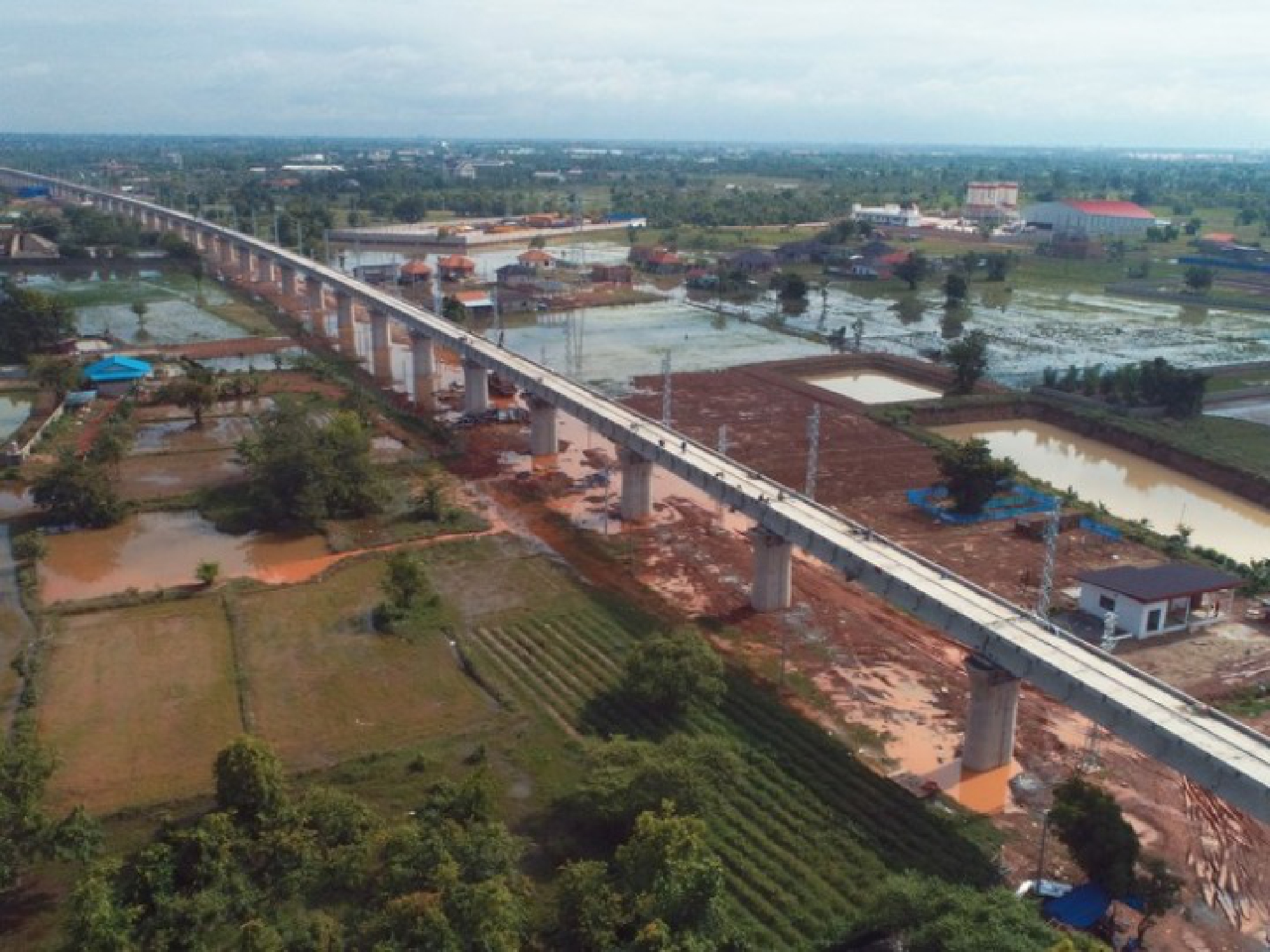
Construction progress of China-Laos Railway on schedule despite pandemic.
There is a Chinese saying “to get rich, build roads first.” The Lao people hoped the country, with the Laos-China railway, will become prosperous soon, and become a transportation hub in Southeast Asia to drive the development in the region.
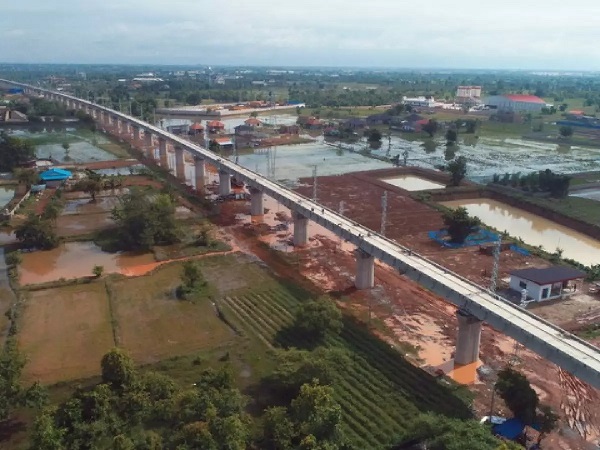
Despite the impact from the COVID-19 pandemic, both Chinese and Lao engineers are striving to complete the construction of the China-Laos Railway and put it on operation in the coming December as scheduled. “It will be on December 2 when we are to complete the railway construction and make it ready for full operation,” Xiao Qianwen, general manager of the Laos-China Railway Co., Ltd., a joint venture based in Lao capital Vientiane for the construction and operation of the first modern railway in the country, told Xinhua on Friday. “We are not changing the timetable and we are striving for that goal, with over 90 percent of the engineering work done, and our preparation for the operation is well on the way.” In the southern end of the railway in Vientiane, the China Railway No. 5 Engineering Group (CREC-5) has completed the construction of the main structure of the longest bridge along the China-Laos Railway, the Phonethong super major bridge with a length of 7,528.56 meters and 231 piers. In the northern end of the railway, the China Railway Construction Engineering Group (CRCEG) roofed the Lao border gate station in Boten On June 15, while the same Chinese company ceiled the top of the first railway station in Nateuy, some 360 km north of Lao capital Vientiane, nine months ago on Sept. 16, 2020. By May 15, the construction of all 67 communication towers along the China-Laos railway had completed, while the China-Laos railway tracks had been extended from Vientiane to the northern end of Boten. Construction progress of China-Laos Railway on schedule despite pandemic.
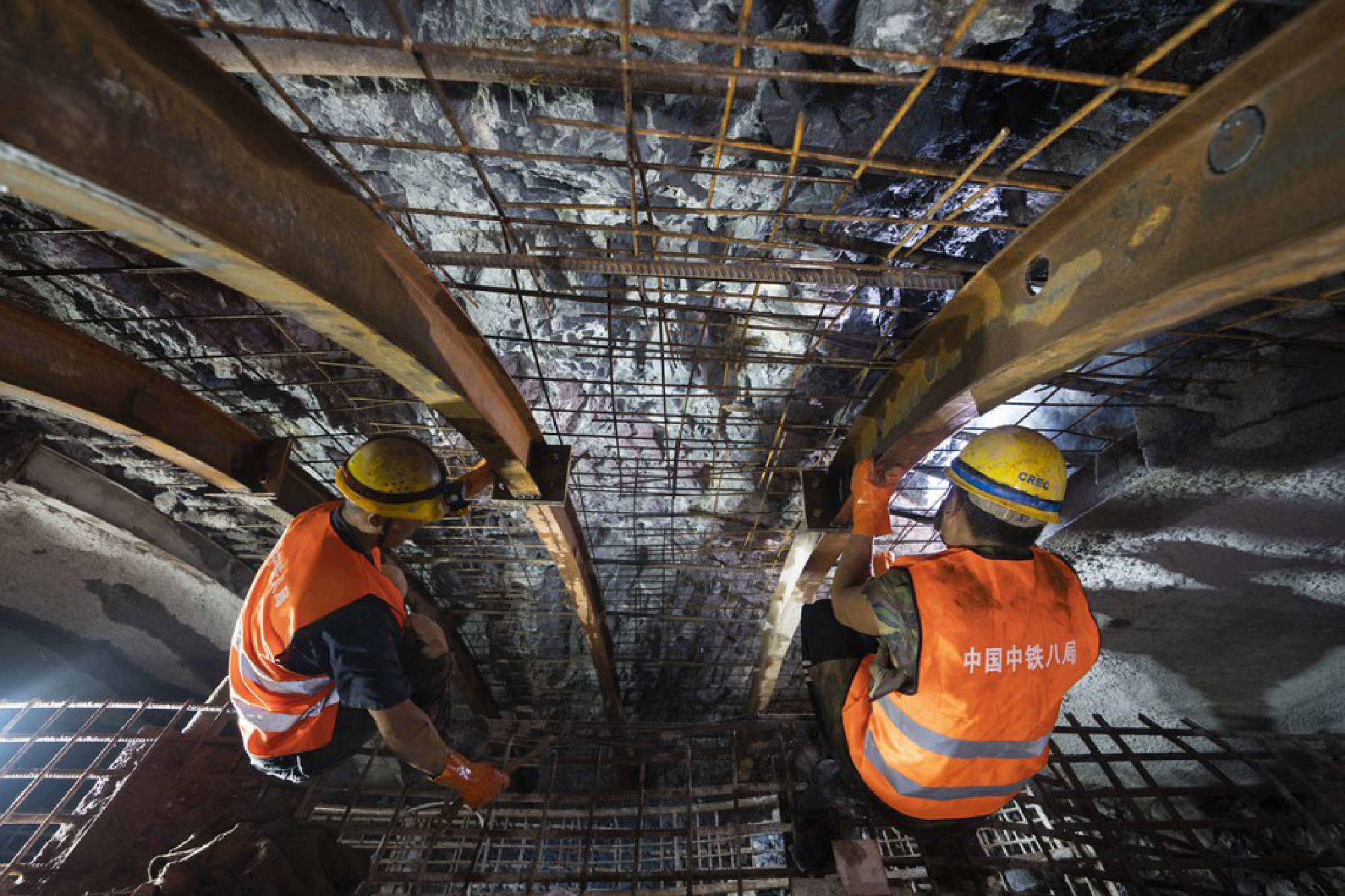
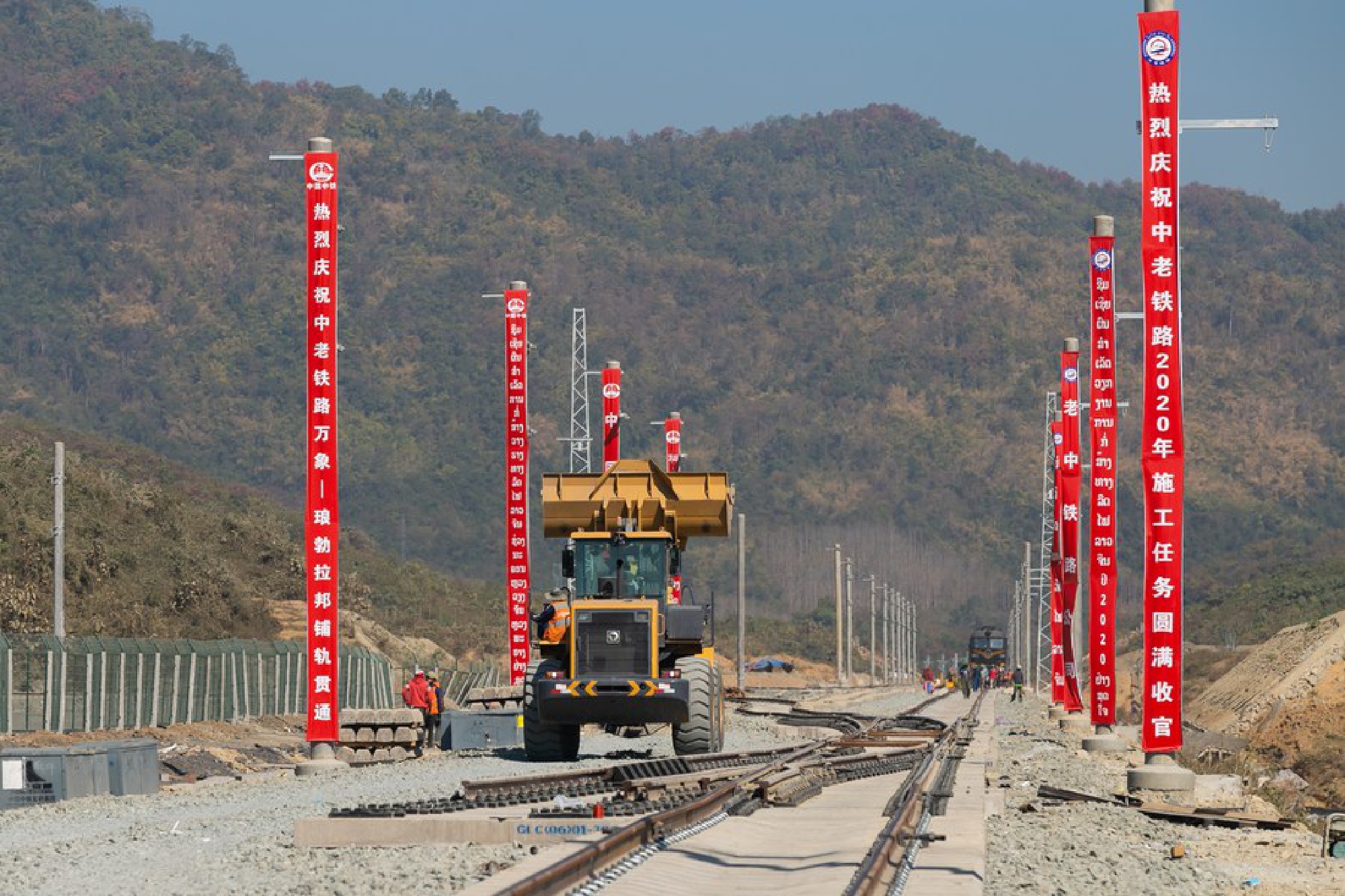
Workers are seen at the construction site of the Ban Phoukeu Tunnel in Muang Nga of Oudomxay Province, Laos, Sept. 21, 2020. (Photo by Pan Longzhu/Xinhua) “We will install all the tracks by mid-August,” Lei Chao, a China Railway No. 2 Engineering Group (CREC-2) railing base project manager, told Xinhua on Friday in Vientiane. Lei said the CREC-2 teams are carrying out strict precaution measures against the COVID-19 pandemic to achieve uninterrupted construction of the project with zero infection case. The company kicked off the track laying on March 27, 2020. According to Xiao Qianwen, most of the construction sites are located in tropical mountainous areas, with complex geographical conditions and poor traffic conditions, resulting in difficulties for the construction. Especially during the rainy season, the machinery can not get access to the construction sites and sometimes the Chinese engineering teams even have to turn to the piggyback transportation to carry large amounts of the needed materials and equipment. The China-Laos Railway’s construction has been confronted with huge challenges and difficulties during the pandemic, but the construction progress in an orderly and balanced manner has boosted the confidence in the timely completion of the railway in this December, Bounthong Chitmany, vice president of Laos, said when talking to Xiao Qianwen in the Lao presidential palace on June 15. On June 10, when inspecting the Vientiane railway station’s construction, Lao Deputy Prime Minister Sonexay Siphandone praised the Chinese engineering company there which hired some 700 local employees, hoping the railway will offer more jobs to local communities. The deputy prime minister, on behalf of the Lao government, hailed and progresses and achievements of the China-Laos Railway construction amid the epidemic, saying that the railway is a landmark project of the friendship between Laos and China and its completion coincides with the 60th anniversary of the establishment of diplomatic relations between China and Laos, which is of great significance. Both sides must cooperate to efficiently advance the remaining work, complete the construction and start the operation on schedule, and live up to the ardent expectations of the two parties and the two peoples, said Sonexay. Construction progress of China-Laos Railway on schedule despite pandemic.
“The COVID-19 pandemic has brought many difficulties to the Lao people, and thus, I especially expect the railway to be open to traffic this year, which is something the Lao people have been dreaming for a long time,” said Somphone Inleuangsy, aged 24, from Luang Namtha, a mountainous province in northern Laos that borders China. He is currently receiving training at the CREC-2 railing base on the northern outskirts of Vientiane. She told Xinhua “There is a Chinese saying ‘to get rich, build roads first,’ and I hope Laos, with the Laos-China railway, will become prosperous soon. I also hope Laos will become a transportation hub in Southeast Asia to drive the development in the region.” “As a female, among all over 600 trainees of the China-Laos Railway, I feel very honored and proud. I hope that I can become a formal railway employee after the training, and I hope my parents can see how I drive a train,” Somphone said. “I also hope that with the opening of the China-Laos railway, more Chinese friends can come to help the development here.” At present, a total of 636 Lao youngsters are trained for the future operation of China-Laos Railway, working as train drivers, equipment and infrastructure maintenance personnel. “In the past two years, the cooperation between Laos and China has been outstanding. Especially, the first modern Vientiane-Vangvieng Expressway in Laos has been put into operation through cooperation, and the high-speed Laos-China Railway will be completed by the end of this year,” said Valy Vetsaphong, Lao Prime Minister’s advisor and vice president of the Lao National Chamber of Commerce and Industry. “This is due to the policy coordination between the two countries, and the dovetail between Laos’ strategy to convert from a landlocked country to a land-linked hub and China’s Belt and Road Initiative.” Valy told Xinhua “The Laos-China Railway will lay a new foundation for the introduction of foreign investment, and Laos will surely take the advantage to participate in the regional and global industrial chain. In other words, the China-Laos Railway will not only promote bilateral trade, investment and people-to-people exchanges, but also benefit the countries to be connected. I believe that the completion and operation of the Laos-China railway will promote the post-pandemic recovery of neighboring countries and the whole region.” The over 400 km railway will run from Boten border gate in northern Laos bordering China to Vientiane with an operating speed of 160 km per hour. The electrified passenger and cargo railway is built with the full application of the Chinese management and technical standards. The construction of the project started in December 2016 and is scheduled to be completed and open to traffic in December 2021. ■ Construction progress of China-Laos Railway on schedule despite pandemic.




 Delta variant Covid-19 infections on sharp rise in The U.S.
 Construction progress of China-Laos Railway on schedule despite pandemic.
 Construction progress of China-Laos Railway on schedule despite pandemic.
 Construction progress of China-Laos Railway on schedule despite pandemic.
 เอลซัลวาดอร์เตรียมเปิดกระเป๋าเงิน Bitcoin แห่งชาติ พร้อมแจกประชาชนรวม 117 ล้านเหรียญสหรัฐ
 อิสราเอลต้องกลับไปสวมแมสก์ ออสเตรเลียต้องกลับไปล็อกดาวน์บางพื้นที่หลังสายพันธุ์เดลต้าทำผู้ติดเชื้อพุ่ง
 ผลการวิจัยชี้ว่าเมื่อ 20,000 ปีก่อนเอเชียตะวันออกเคยเจอเชื้อโคโรนาไวรัสระบาดมาแล้วครั้งหนึ่ง
 รัฐบาลสหรัฐไม่มีข้อสรุปอย่างเป็นทางการเกี่ยวกับการพบเห็น UFO ที่เกิดขึ้นหลายครั้ง
 ฝ่ายความมั่นคงเมียนมายึดอาวุธล็อตใหญ่ที่กำลังมุ่งหน้าไปเมืองมัณฑะเลย์

