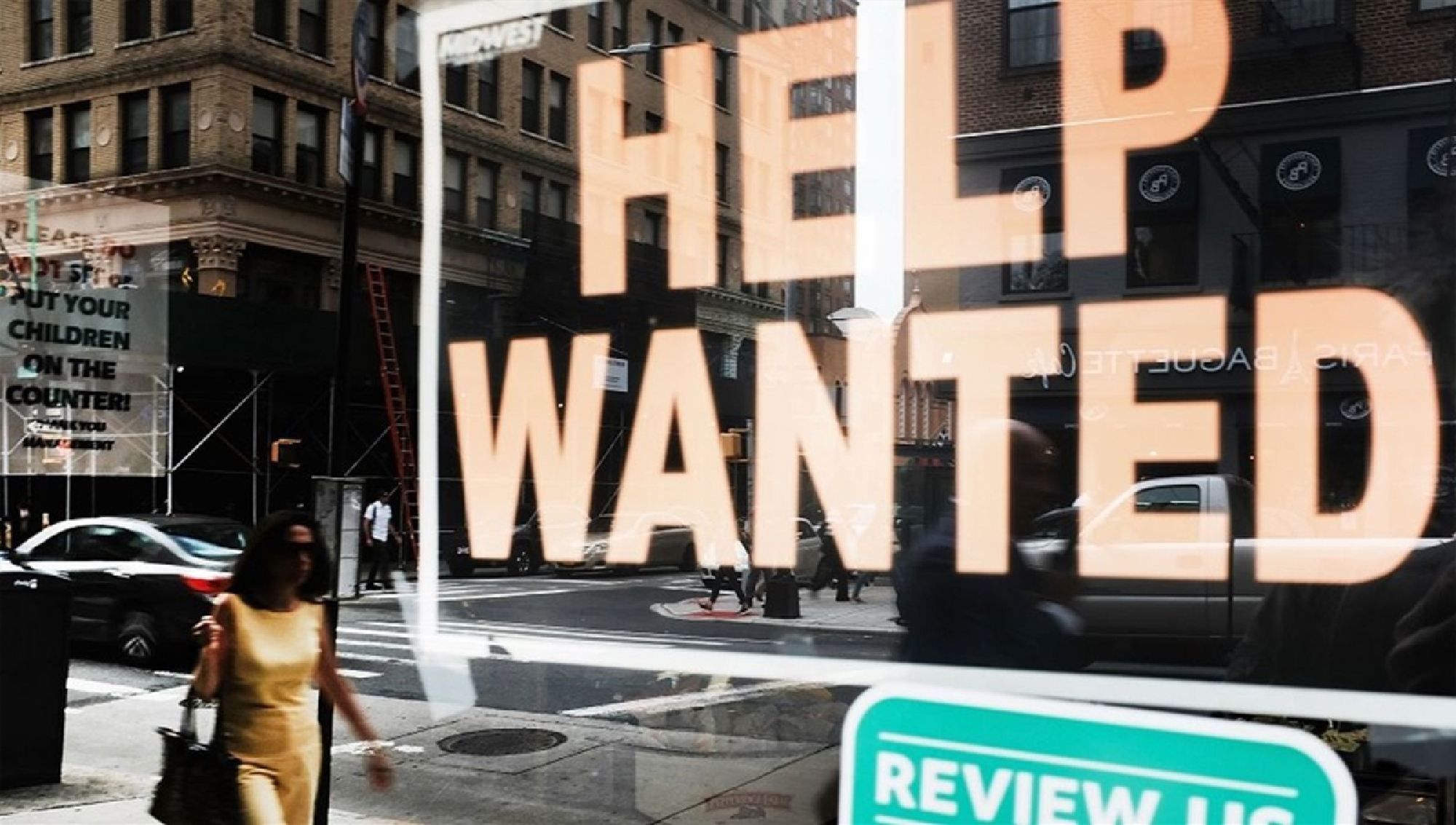
U.S. job openings surged in March to a record high, underscoring a rapid increase in labor demand as vaccinations accelerate and states reopen their economies.
The number of available positions increased to 8.12 million during the month, the highest in data back to 2000, from an upwardly revised 7.53 million in February, the Labor Department’s Job Openings and Labor Turnover Survey, or JOLTS, showed Tuesday. The median estimate in a Bloomberg survey of economists called for 7.5 million openings.
The number of vacancies exceeded hires by more than 2 million, the largest gap on record and evidence of current hiring challenges. Many employers say they are unable to fill positions because of ongoing fears of catching the coronavirus, child-care responsibilities and generous unemployment benefits.
The number of vacancies is consistent with accelerating demand as the economy reopens, with many companies trying to fill positions lost during the pandemic.
In another sign the economy is strengthening, the median single-family home price rose by the most on record in the first quarter.
The number of people who voluntarily left their jobs increased to 3.51 million, while the quits rate held at 2.4%. Separations, which include both layoffs and quits, decreased to 5.32 million from 5.43 million as dismissals declined.
The increase in openings was fairly broad, including more available positions in accommodation and food services, manufacturing and construction. Openings in accommodation and food services approached 1 million in March, the second-most in data to 2000.
Hires increased to 6 million in March, while the hires rate rose to 4.2%.
The April employment report from the Labor Department last week showed that the U.S. added 266,000 jobs, far below economists estimates for a 1 million gain. The weaker-than-expected payroll increase against the backdrop of record-high job openings indicates that labor supply, rather than demand for workers, is holding back employment growth.
Job openings increased in all regions, led by bigger monthly gains in the Midwest and Northeast.
Published : May 12, 2021
By : Syndication Washington Post, Bloomberg · Olivia Rockeman
Energy, financial and industrials shares led U.S. stocks lower as the pullback centered in the technology sector widened while investors remained on edge over the threat of inflation.
The tech-heavy Nasdaq 100 erased a loss of almost 2% to finish little changed as some dip buyers emerged. The benchmark S&P 500 dropped for a second day after setting a record high on Friday. Treasury yields edged up and the dollar traded near the lowest levels of this year.
Debate rages over whether the expected jump in price pressures will be enduring enough to force the Federal Reserve into tightening policy sooner than current guidance suggests. Fed Governor Lael Brainard said policymakers must show continued patience as distortions in the post-pandemic boom sort themselves out while the economy is still far from the central bank’s objectives.
“I just think that in general there’s this thought that inflation may rear its ugly head,” said JJ Kinahan, chief market strategist at TD Ameritrade. “We see a little bit higher rates, not significantly, but a bit higher rates. And I think this struggle between value and growth also continues at the same time.”
Among the biggest pandemic winners, tech stocks whose valuations often depend on earnings prospects far into the future are now at the center of the inflation debate. That was epitomized in Cathie Wood’s Ark Innovation ETF, which has tumbled about 15% so far this year after surging almost 150% in 2020.
Even after the declines, the Nasdaq Composite trades at 26 times the 12-month projected profits, while the gauge of European technology shares enjoys a valuation of 29 times.
Wednesday’s U.S. inflation report along with a series of U.S. government bond auctions this week are seen as the next factors to deepen or arrest the slide. The latest reading is expected to show an accelerated pace of consumer-price increases, with the year-on-year comparison made starker by the pandemic shock in 2020.
“What’s interesting about tech and the sell-off is that it comes in the face of stable yields, a Fed that is likely on hold for a while and some very strong earnings,” said Michael Arone, chief investment strategist for the U.S. SPDR exchange-traded fund business at State Street Global Advisors. “Markets seem to be anticipating some time of move in rates and inflation that could be problematic for the tech and growth trade.”
Copper prices traded near a record, while iron also rallied. Oil rose as fuel shortages are expanding across several U.S. states in the East Coast and South as filling stations run dry amid the unprecedented pipeline disruption caused by a criminal hack.
These are some of the main moves in markets:
Stocks
– The S&P 500 fell 0.9% to the lowest since April 22 as of 4 p.m. EDT
– The Nasdaq 100 fell 0.1% to the lowest since April 1
– The Dow Jones industrial average fell 1.4%, more than any closing loss since Feb. 26
– The MSCI World index fell 1.2%, more than any closing loss since March 4
Currencies
– The Bloomberg Dollar Spot Index was little changed
– The euro rose 0.2% to $1.2149
– The British pound rose 0.2% to the highest in about three years
– The Japanese yen rose 0.1% to 108.66 per dollar
Bonds
– The yield on 10-year Treasurys advanced two basis points, climbing for the fourth straight day, the longest winning streak since March 19
– Germany’s 10-year yield advanced five basis points, more than any closing gain since March 3
– Britain’s 10-year yield advanced five basis points, more than any closing gain since March 18
Commodities
– West Texas Intermediate crude rose 0.7% to $65 a barrel
– Gold futures rose 0.1%, climbing for the fifth straight day, the longest winning streak since Jan. 5
Published : May 12, 2021
By : Syndication Washington Post, Bloomberg · Claire Ballentine, Vildana Hajric
Fuel shortages crop up in Southeast, gas prices climb after pipeline hack
WASHINGTON – Lines of panicked drivers overwhelmed gas stations in the Southeast on Tuesday, as rising prices fed fears of shortages in the aftermath of a ransomware attack that forced the nations largest fuel pipeline offline.
In Atlanta, 1 of every 5 gas stations was reported to be out of fuel Tuesday evening.
“Look how crazy we’re all getting, over every little thing,” said Allan Hardy, a plumber who had driven from Myrtle Beach, S.C., to Wilmington, N.C., and saw long lines at every service station on the road, save for those that had already run out of gas. “And the only reason this shortage isn’t worse is that a lot of people aren’t working right now. Today it’s our oil pipeline, but what will it be tomorrow? If this kind of thing comes at another time, you just can’t gauge how bad it might get.”
In Washington, Energy Secretary Jennifer Granholm said the Southeast can expect a “crunch” that will take several days to alleviate.
“We have gasoline,” she said during a White House briefing. “We just have to get it to the right places. And that’s why I think the next couple of days will be challenging.”
She said Colonial Pipeline officials had told her that a decision on a “full restart” could come as soon as Wednesday evening.
The Colonial Pipeline system, which moves about 45% of the East Coast’s fuel, shut down Friday after hackers thought to be based in the former Soviet Union infiltrated servers and encrypted its data, demanding a fee to restore access. Homeland Security Secretary Alejandro Mayorkas, who was at the White House briefing, said American organizations have lost more than $350 million this year as a result of ransomware attacks.
“The threat is not imminent,” he said. “It is upon us.”
Now consumers are seeing some of the fallout as Colonial pushes to resume service by the end of the week.
As of Tuesday, governors in North Carolina, Georgia and Virginia had declared states of emergency and taken steps to relax fuel transport rules to ease pain at the pump.
More than 7% of gas stations in Virginia, 8% in North Carolina and 5% in Georgia were without fuel late Tuesday afternoon, according to Patrick De Haan, an oil analyst at Gas Buddy. A number of stations in Florida, Alabama and South Carolina also reported dry pumps. De Haan said fuel demand in these states spiked 40% on Monday, and cautioned against panic-buying, which will only exacerbate the shortages.
“It is vital that motorists do not overwhelm the system by filling their tanks,” De Haan said in analysis.
But plenty of motorists weren’t listening.
The owner of Masonboro Country Store in Wilmington, Musa Agil, said lines began forming just after 6 a.m. and had not abated all day, blocking the flow of traffic on two-lane Masonboro Loop Road. He spent the day “managing traffic and trying to keep the peace” as some motorists cut lines and others filled up a dozen tanks and jugs.
By 3 p.m. Agil was down to his last 200 gallons and told the packed parking lot that he would soon have to shut down. “Some people are selfish, taking more gas than they need,” he said. “But most people are just scared.”
Granholm said there is “no cause for hoarding gasoline” because the pipeline will be “substantially” back online by the weekend. But local news outlets from Florida to North Carolina reported long lines and dry pumps.
The national average for a gallon of gasoline stood at $2.98 on Tuesday, according to AAA. That’s an 8-cent jump on the week, and a penny shy of prices not seen since November 2014.
Granholm had a warning for service station operators: “We will have no tolerance for price-gouging,” she said, and she urged consumers to inform their state attorney general’s office if they suspect it is taking place.
Some Republican officeholders took shots at the Biden administration over the shutdown. Rep. Madison Cawthorn, R-N.C., ignoring four years of friendliness among some in the GOP toward Moscow, told Fox News, “The Biden administration must finally step up and acknowledge that their weak stance on Russia has real-world consequences.”
At a gas station just down the road from Agil’s, drivers spread blame for the debacle all around: at the Biden administration; at Rep. Alexandria Ocasio-Cortez, D-N.Y., and the Green New Deal; at the gas stations and oil companies supposedly hoarding and gouging; and at the Russians and their hackers. Finally one man in a black pickup truck pointed the finger somewhere closer to home.
“This is our fault,” Devin Singer of Wilmington said. “This whole thing. The people’s fault. Same thing with the whole toilet paper shortage. Everybody wants something and nobody has it, so we all freak out and then nobody can get it. It’s mass hysteria.”
Mayorkas said the Biden administration is prepared, if necessary, to waive the Jones Act, which normally forbids foreign-flagged ships from carrying cargoes between U.S. ports. The Federal Railroad Administration is analyzing the possibility of shipping gasoline or jet fuel by train, Granholm said.
“These are not easy solutions,” she cautioned. “The pipe is the best way to go.”
The Colonial Pipeline carries fuel from Gulf Coast refineries to customers on the East Coast. The company says the pipeline provides fuel for 50 million Americans and several major airports.
“This shutdown will have implications on both gasoline supply and prices, but the impact will vary regionally. Areas including Mississippi, Tennessee and the east coast from Georgia into Delaware are most likely to experience limited fuel availability and price increases, as early as this week,” Jeanette McGee, AAA spokeswoman, said in a statement. “These states may see prices increase three to seven cents this week.”
The FBI issued a statement confirming that DarkSide, a criminal ransomware group based in Eastern Europe, was behind the cyberattack.
Ransomware attacks have become a global scourge, affecting banks, hospitals, universities and municipalities in recent years. Almost 2,400 organizations in the United States were victimized last year alone, one security firm reported. But the attackers are increasingly targeting industrial sectors because these firms are more willing to pay up to regain control of their systems, experts say.
Roughly 43% of infrastructure organizations victimized by such attacks submit to ransom demands, more than any other industry, according to the Sophos 2021 “State of Ransomware” report. The report said that 64% of infrastructure organizations surveyed saw a spike in cyberattacks in 2020 and that 57% of IT managers felt such attacks had become too sophisticated for them to fend off effectively on their own.
“The unfortunate truth is that infrastructure today is so vulnerable that just about anyone who wants to get in can get in,” Dan Schiappa, Sophos chief product officer, said in comments emailed to The Post. He called infrastructure an easy and lucrative target. “They’re hitting where it hurts, hedging bets on a large payout.”
“In cyberspace,” Mayorkas said, “one is only as strong as one’s weakest link.”
Analysts have focused on the vulnerabilities of America’s aging infrastructure; the Colonial Pipeline system was installed in the 1970s. But some warn that new technologies are also at risk of cyberattack.
Power grid infrastructure is a likely target, said Pavel Molchanov, an energy analyst with Raymond James. The principal advantages of the smart grid – digitization and decentralization – also offer more pathways for cybercriminals to target, he said.
Elias Bou-Harb, an associate professor at the University of Texas at San Antonio, has studied electric vehicle charging stations, and in an unpublished paper he writes: “The EV charging ecosystem – one of the world’s most proliferating ecosystems – suffers from critical vulnerabilities within its most fundamental entities.” In the rush to install charging stations across the country, he wrote, vendors have paid too little attention to keeping them secure from hackers.
Published : May 12, 2021
By : The Washington Post · Taylor Telford, Will Englund, Rory Loverty
China population still growing, if slowly, according to once-a-decade census
SEOUL – The official word from Beijing is that Chinas population is still growing – if barely.
China released its once-a-decade census on Tuesday, rejecting whispers that the country may have reached the inflection point where its population begins to shrink. Still, officials acknowledged the looming demographic challenges ahead with an aging population and a low birthrate.
According to the census, China’s population reached 1.41 billion in 2020, up from 1.4 billion in 2019. Average annual population growth over the past decade was 0.53% per year.
“The population growth rate will continue to slow down in the future,” said Ning Jizhe, a commissioner of China’s National Bureau of Statistics, at a news conference in Beijing.
Ning declined to forecast when China’s population will peak, but said China’s population will remain above 1.4 billion for a while.
The census report was originally slated for an April release, and its delay prompted speculation. The Financial Times reported on Tuesday, citing sources close to the National Statistics Bureau, that the original figure had come in below 1.4 billion and was revised up.
Asked about the delay at the news conference, Zeng Yuping, the bureau’s chief methodologist, said officials decided to push back the release to add more details to the report because of public interest.
“That’s why it took longer to prepare the data,” he said.
China is still the world’s most populous country, but India is narrowing the gap.
Chinese economists have warned of a potential demographic crisis if not enough children are born in coming years. It will mean China’s society will be strained with fewer young working people to support a larger aging population.
China said its population has reached 1.41 billion in 2020, with “low-speed” growth over the past 10 years, in the closely watched release of its once-a-decade census.
Boris Johnson gives vision for British revival post-pandemic
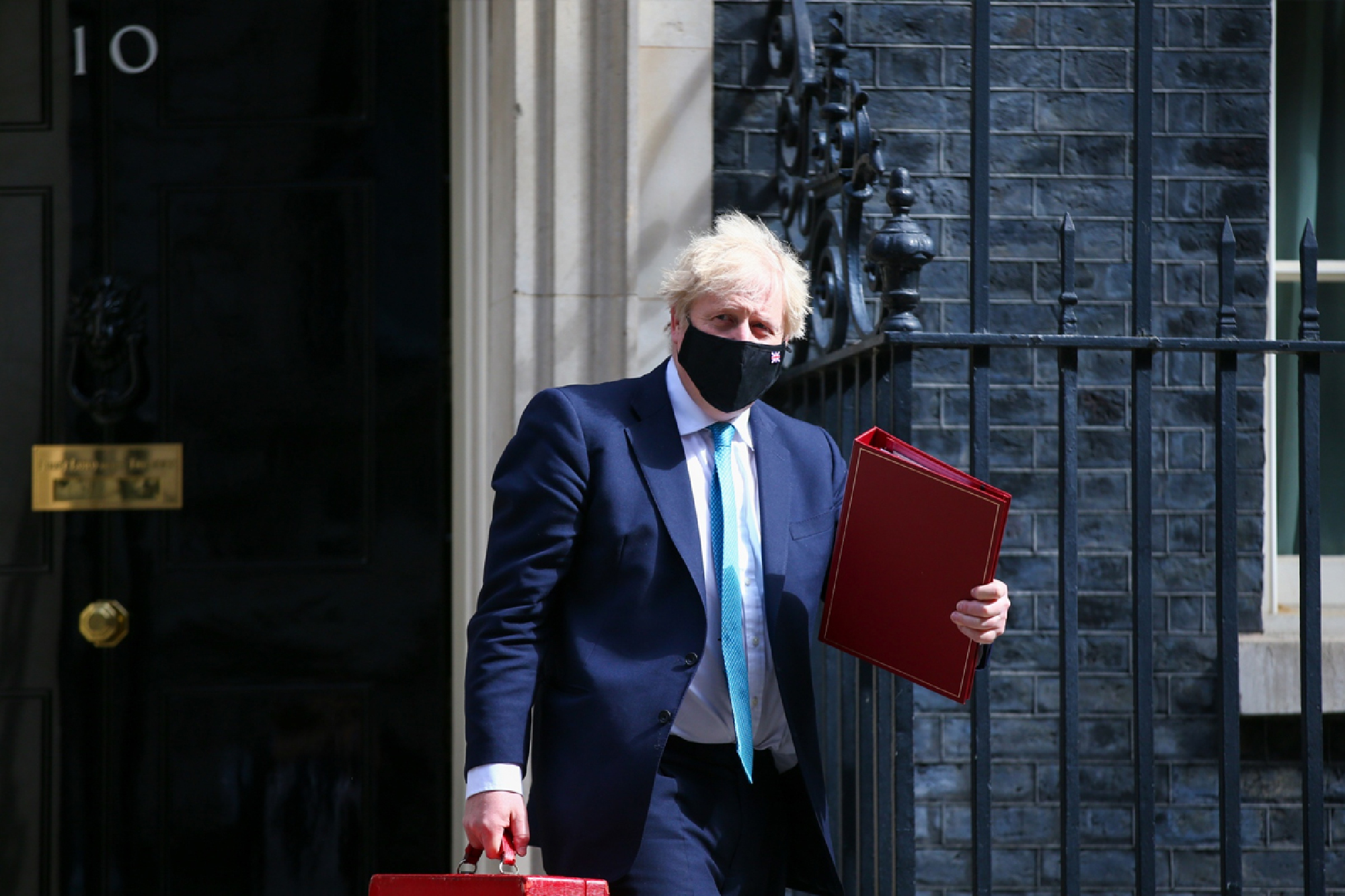
Prime Minister Boris Johnson set out his blueprint for the U.K.s revival after the coronavirus crisis, promising new laws to unleash “the nations full potential” and saying the country must not return to how things used to be done.
In the traditional speech to Parliament by Queen Elizabeth II, the government set out a legislative program with measures to spread broadband internet and 5G mobile coverage, boost homeownership and reform health care.
The overarching theme is one of recovery from a pandemic that hit the U.K. with its biggest crisis since World War II, with more than 127,000 deaths.
At the same time, Johnson aims to take advantage of the U.K.’s new freedom from European Union rules to set its own state subsidy regime for businesses, reform government procurement and create at least eight freeports.
Writing the foreword to the speech, Johnson returned to the theme of helping economically disadvantaged regions of the U.K. It’s a message that won him a big majority in 2019 elections and he cemented those gains in local votes last week.
“We have been given an historic opportunity to change things for the better, level up opportunities across the whole of the United Kingdom and address the problems that have constrained us far too often before,” Johnson wrote.
A successful vaccination program, with two-thirds of adults having received at least one shot, has enabled Johnson to press ahead with lifting the pandemic lockdown in stages, allowing the economy gradually to reopen. Yet with so much financial support given to businesses and citizens, the government will also need to address the impact on public finances.
Opposition Labour Party leader Keir Starmer said Johnson’s plans lack ambition and fail to commit to legislation on important issues such as social care reform. He also criticized a lack of measures to tackle unemployment and increase pay for workers.
The government’s plan is “packed with short-term gimmicks and distant promises,” Starmer said in the House of Commons. “It misses the urgency and the scale of the transformation that’s needed.”
These are the highlights from the package:
– Extra funding to the NHS to continue fighting the pandemic, prepare for booster vaccinations and tackle a backlog of health care; reforms to make health provision more efficient and joined-up between different parts of government and invest in preventive strategies such as reducing obesity, smoking, drug-use
– A Subsidy Control Bill will create a new system of state aid to free local authorities and devolved administrations from “bureaucratic” EU controls
– A Procurement Bill overhauling how the government spends some 290 billion of taxpayer’s money by simplifying processes and opening up government contracts to more innovative companies, small businesses and charities
– The Telecoms Security Bill will put a new duty of securing the security of the entire U.K. telecoms networks on network providers such as BT Group and Vodafone Group. Failure to meet standards would be met with fines of 10% of turnover or 100,000 pounds ($141,000) per day
– A draft bill on oil resilience to address threats to security of fuel supply. It would give government the powers to direct companies to act to ensure fuel supply
– The Counter-State Threats Bill will create a register of foreign spies in the U.K. and will update espionage laws, some of which date from previous world wars
– Laws to create the Advanced Research and Invention Agency, an 800 million-pound body designed to fund high-risk, high reward scientific research as ministers aim to turn Britain into a scientific superpower
– An Innovation Strategy outlining priority areas and seeking to attract business investment
– Legislation to create freeports at East Midlands Airport, Felixstowe and Harwich, Humber, Liverpool City Region, Plymouth and South Devon, Solent, Teesside, and Thames, as well as at further sites in Scotland, Wales and Northern Ireland
– An Environment Bill to boost investment in green industries and creating jobs by putting the environment at the heart of all government decision-making. It also aims to tackle air pollution, protect water resources and increase biodiversity
– A white paper setting out how the government will pursue its “leveling up” agenda to equalize opportunities across the country
– Creating a new building safety regulator, to avoid tragedies like the Grenfell Tower fire
– Measures to restrict the charging of ground rents on residential long leases
– A plan to repeal the Fixed-Term Parliaments Act and give the prime minister the power to trigger an election when he decides the time is right. A law to require voters to show identification at the polling station
Published : May 12, 2021
By : Syndication Washington Post, Bloomberg · Tim Ross, Alex Morales
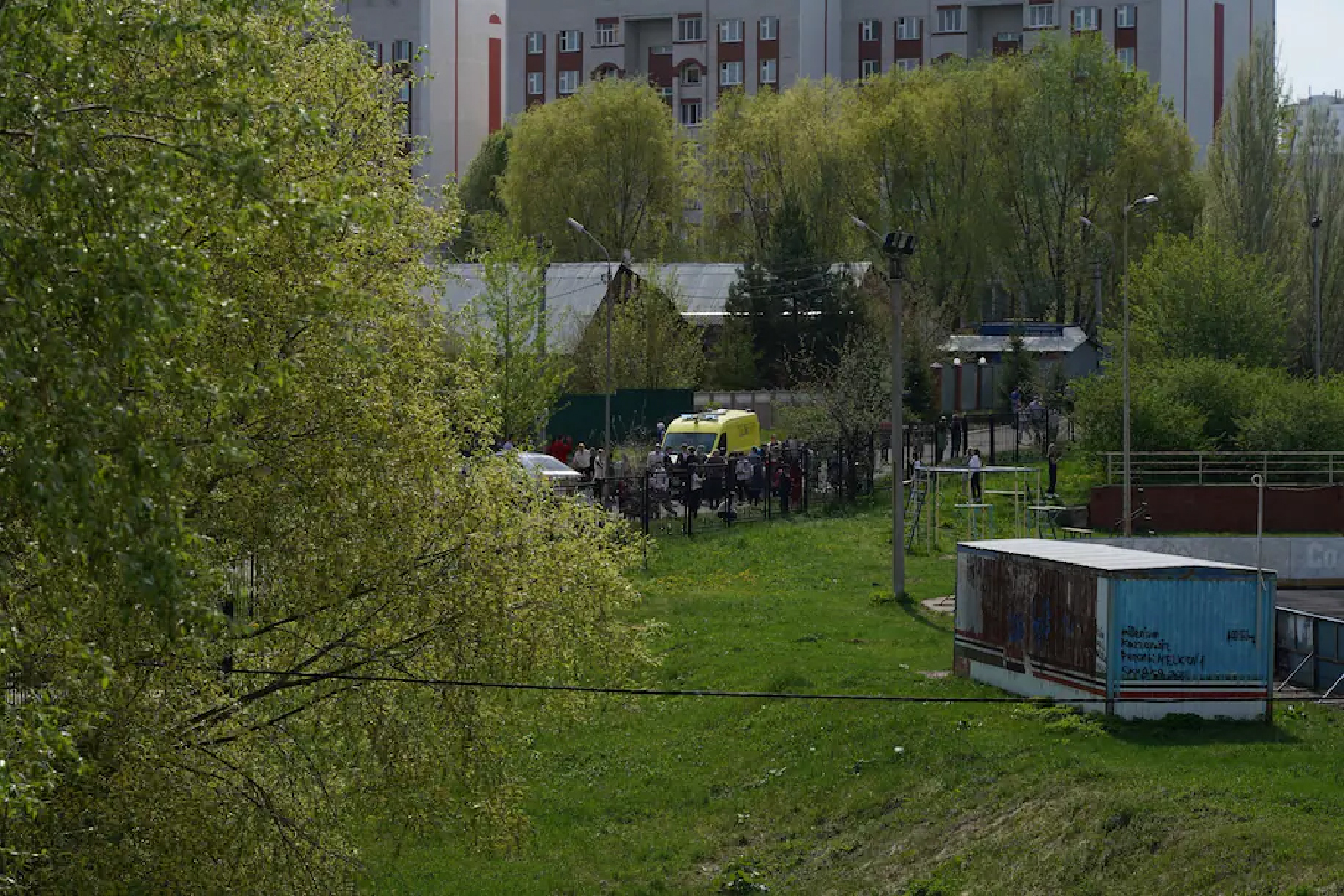
MOSCOW – At least seven students and two adults were killed and 20 people were injured Tuesday when a gunman opened fire at a school in the Russian city of Kazan, a regional official said, prompting President Vladimir Putin to call for tighter gun controls.
Video footage shared on social media showed students hurling themselves from third-floor windows to escape the gunfire in Kazan, about 500 miles east of Moscow. Two children died jumping from the windows, according to the RIA news agency.
The students killed were between the ages of 7 and 9, officials said. The alleged shooter was taken into custody, said the head of the Tatarstan region, Rustam Minnikhanov.
An account on the Telegram messaging app, purportedly belonging to the alleged shooter, contained posts in which he described himself as a “god” and said he planned to kill a “huge number” of people before committing suicide, according to Russian media. The account was later blocked.
Speaking to local reporters in Kazan, Minnikhanov described the suspect as a “19-year-old terrorist” whose weapon was registered in his name and that “no accomplices have been established.”
Putin ordered a plane with medics, psychologists and equipment to be dispatched to Kazan to assist the victims. He has also instructed the head of the Russian National Guard to “urgently” draft a new regulation on what kind of weapons can be owned by civilians, Kremlin spokesman Dmitry Peskov said.
Russia’s laws on civilian gun ownership are considered strict. To obtain a license for hunting and sport firearms, applicants are required to pass psychological exams. It is illegal for Russians to own guns that shoot in bursts or have magazines with more than a 10-cartridge capacity.
“The thing is that firearms, which are used as assault rifles and similar weapons in certain countries, are sometimes registered as hunting guns. The Russian National Guard will urgently consider the issue,” Peskov said.
Lawmaker Alexander Khinshtein wrote on Telegram that the suspect registered a Hatsan Escort, a Turkish-made shotgun, on April 28. It’s the same kind of gun that was used in a 2018 school shooting at a college in Russian-annexed Crimea.
School shootings are a relative rarity in Russia. A 2004 assault on a school in Beslan in the North Caucasus, in which more than 330 people were killed, was the work of Islamist separatists. In 2014, a teenage student in Moscow shot a teacher and a police officer and took more than 20 of his classmates hostage.
Since then, more than 20 incidents involving weapons have been recorded in schools and colleges across Russia.

 จรวดหลายร้อยลูกถุกยิงโจมตีอิสราเอล ส่วนอิสราเอลส่งเครื่องบินไอพ่นทิ้งระเบิดกาซา สถานการณ์ที่บานปลายเกิดจากความตึงเครียดหลายสัปดาห์ในกรุงเยรูซาเล็ม


 แม้ว่าผลการทดลองวัคซีนที่ผ่านมาอาจทำให้หลายฝ่ายเกิดความไม่มั่นใจในวัคซีนดังกล่าว แต่จากการใช้จริงในอินโดนีเซียและบราซิลพบว่าได้ผลดี
 ยักษ์ใหญ่เดลิเวอรีหุ้นร่วงหนักหลังโพสต์บทกวีส่อวิจารณ์รัฐบาล ซ้ำโดนกลุ่มผู้บริโภคถล่ม
 ความคืบหน้าของวงการวัคซีนจากทั่วโลก สามารถเช็ค “ข่าวจริง” ของวัคซีนจากทั่วโลกได้ที่นี่