U.S. track team cancels Olympics training in Japan on virus
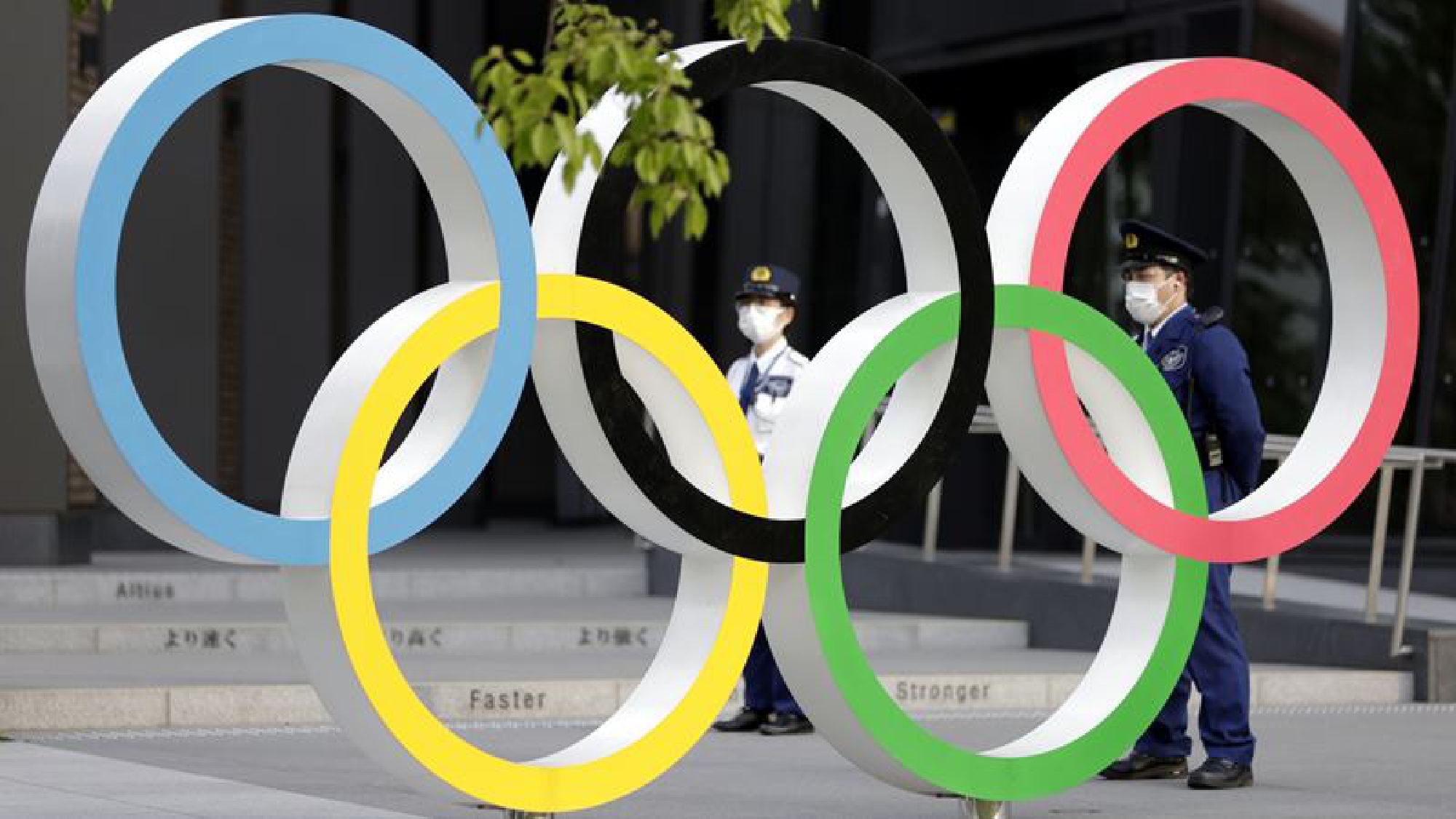
The U.S. national track & field team has canceled its training planned outside Tokyo for the 2020 Olympics due to safety concerns for the athletes, in another blow to the sporting event which has come under strong opposition from the Japanese public.
The U.S. team notified the decision last month to authorities in Chiba prefecture, located next to Tokyo, saying the pandemic would put athletes’ safety at risk, according to Takuya Iida, an official in charge of the training camps in the prefecture. The team had planned to train in July and August. Some other national teams have also canceled training camps for similar reasons, he said.
Earlier this week, International Olympic Committee President Thomas Bach postponed his trip to Japan this month after the government decided to extend the state of emergency in Tokyo and other areas due to concerns over a rise in virus cases.
Despite the infections, Japanese Prime Minister Yoshihide Suga, the Tokyo organizers as well as the IOC have repeatedly said the games will proceed from July 23 as planned in a safe environment. However calls from the Japanese public to cancel the event have been increasing, with nearly 60% of those surveyed voicing opposition in holding the event this summer, according to a Yomiuri poll published Monday. As of Wednesday, more than 330,000 people signed an online petition calling for the games to be called off.
Published : May 13, 2021
By : Syndication Washington Post, Bloomberg · Ayai Tomisawa
Amazon wins fight to throw out $303 million EU tax bill
Amazon.com won its bid to topple a 250 million-euro ($303 million) tax bill in another blow to European Union competition chief Margrethe Vestagers crackdown on preferential fiscal deals.
Regulators failed to show that the U.S. online retailer was given special treatment by Luxembourg’s tax authority in violation of state-aid rules, the EU General Court ruled on Wednesday.
Amazon’s victory follows last year’s landmark court defeat for the EU commissioner against Apple, which contested a record 13 billion-euro tax order. The tech giants were both targeted as part of Vestager’s eight-year crusade against allegedly unfair treatment doled out by EU nations such as Luxembourg, Ireland and the Netherlands to attract some of the world’s leading firms.
The European Commission “did not prove to the requisite legal standard that there was an undue reduction of the tax burden of a European subsidiary of the Amazon group,” the Luxembourg-based EU judges said.
It was not all bad news for Vestager, as judges rejected Engie’s appeal against an order to pay back about 120 million euros to Luxembourg. They also said that the commission “cannot be accused of having exceeded its powers,” by probing tax issues. Both of Wednesday’s decisions can be appealed.
Court challenges are piling up, as companies hit with tax-repayment orders from Vestager argue that deals to reduce their fiscal liabilities were legal before the EU labeled them as unfair subsidies. Since last year’s Apple case, EU enforcement against so-called tax rulings handed out by nations to selected businesses has slowed.
The Amazon “ruling is a blow” and “shows again that case-by-case investigations do not solve large-scale tax dodging,” said Chiara Putaturo, a tax expert with Oxfam EU. It “shows the urgent need for the EU to do more to end corporate tax avoidance and bolster government coffers to help fuel the recovery.”
How big companies reduce their tax bills has become a political focus with EU regulators planning a new tax on technology firms if global tax reforms can’t be agreed.
While the amount at stake in the Amazon case is relatively tiny following a record earnings quarter for the company, tax experts see the outcome of its appeal helping to shape ongoing cases. These include probes into Dutch tax treatment of Nike Inc. and Ikea units.
Amazon said the court’s decision “is in line with our long-standing position that we followed all applicable laws” and that the company “received no special treatment,” according to an emailed statement.
“We’re committed to Europe and follow the law in every jurisdiction in which we operate,” Amazon said. “We have invested 78 billion euros since 2010 and have 60 fulfilment centers, 100 corporate offices and development centers, and employ over 135,000 people in a wide variety of well-paid roles.”
The commission didn’t immediately respond to a request for comment.
Luxembourg’s finance ministry said the ruling in Amazon confirms that its tax treatment at the time wasn’t state aid. On Engie, Luxembourg “will examine the judgment with all due diligence and reserves all its rights,” the ministry said in a statement.
Amazon is one of several tech giants under fire for tax structures that may allow it to pay less than rivals. Its tax deal with Luxembourg, the base for the retailer’s European operations, allowed the company to cut its taxable profits “to a quarter of what they were in reality,” the commission decided in 2017.
The regulator found that Amazon’s tax rulings “significantly” reduced taxable profits and “did not reflect economic reality.” The structure was in place from May 2006 to June 2014, the EU said. The company then changed to a new structure.
In Engie’s case, the EU decided Luxembourg had selectively deviated from provisions of national law to help lower the tax bill for France’s former natural-gas monopoly.
Engie declined to immediately comment.
Amazon’s European retail business paid no corporate tax in Luxembourg last year, reporting a 1.2 billion euro loss which exempted it from corporate tax on revenue of 44 billion euros, the New York Times said this month.
Amazon said in a recent blog post that “what Amazon pays in corporate tax in an entity in Luxembourg with what Amazon pays Europe-wide” are often “wrongly conflated” in media reports.
“We pay corporate tax in countries across Europe amounting to hundreds of millions of euros, and we operate in full compliance with local tax laws everywhere,” it said.
Published : May 13, 2021
By : Syndication Washington Post, Bloomberg · Stephanie Bodoni
JERUSALEM – The worst violence in years continued to shake Israel and the Gaza Strip on Wednesday after a long night of Israeli airstrikes that were met by rocket fire from Palestinian militants.
The death toll now includes 48 Gaza residents, including 14 children, according to Palestinian health officials. On the Israeli side, emergency response officials say that at least six people, including one teenager, are dead.
Meanwhile, Palestinian citizens of Israel poured into the streets despite the warnings of air raid sirens, burning cars and fighting with police.
The escalation follows weeks of clashes and demonstrations amid rising tensions in Jerusalem. On Monday morning, hundreds of Palestinians were injured in a police raid on the al-Aqsa Mosque compound in Jerusalem, one of the holiest sites in Islam. By the evening, militants in the Gaza Strip had fired rockets toward Jerusalem for the first time in years, and Israel responded with airstrikes.
A confluence of factors – some decades old, others more immediate – has contributed to the surging volatility and violence.
Here’s what you need to know.
– What’s behind the unrest in Jerusalem in recent days?
Monday began with more than 300 Palestinians – who had come to pray at al-Aqsa Mosque in Jerusalem’s Old City during the holy month of Ramadan – injured in clashes with Israeli forces, who fired rubber bullets, tear gas and stun grenades. Confrontations between Israeli police, Palestinian protesters and far-right Jewish Israelis continued throughout the day.
The city remained tense ahead of a contentious march by nationalist Jews, which was set to pass through Palestinian neighborhoods as part of a flag-waving Israeli holiday, Jerusalem Day. The route was to include Damascus Gate, one of the few centers of Palestinian life in the contested city. In recent weeks, Israeli forces and Palestinians have clashed over Israeli restrictions on nightly gatherings there after the Ramadan fast.
Soon before the march was due to proceed, Israeli authorities ordered it rerouted. Organizers called it off in protest but said participants should still gather at the Western Wall, the holiest site in the city for Jews, situated below al-Aqsa Mosque, which Jews call the Temple Mount compound.
That was around the same time that Hamas, an extremist group that controls the Gaza Strip, announced that it would fire rockets if Israeli settlers did not withdraw from al-Aqsa Mosque and Sheikh Jarrah, a predominantly Palestinian neighborhood of East Jerusalem where Arab families are facing evictions after years of court battles waged by Israeli settlers. The area has seen nightly confrontations between Israeli far-right nationalists and Palestinians, who have faced a heavy-handed police response.
– How did this escalate into rocket attacks and airstrikes?
On Monday evening, Hamas fired rockets toward Jerusalem and southern Israel. Israel responded with airstrikes that continued into Tuesday, and were met with even more fire. The Israel Defense Forces said that one rocket was being fired toward Israel every three minutes, on average.
Additional skirmishes broke out in the West Bank on Tuesday, resulting in hundreds of arrests and at least one Palestinian fatality.
The Israeli army said that of the more than 1,050 rockets and mortar shells Hamas fired at Tel Aviv since Monday – including ones that hit a bus and injured a 5-year-old child – 850 landed in Israel or were intercepted by its Iron Dome antimissile defense system.
Some 200 failed to clear the border and landed back in Gaza, the Israeli army said. Israeli residents who live near the Gaza Strip were told to stay home on Wednesday due to fears that they could be hit by rockets or targeted by snipers. Schools and businesses were closed across the area.
Officials on both sides are bracing for the conflict to grow even more deadly. By Tuesday, the focus had shifted to whether Israel and Hamas might return to war for the first time since 2014.
Israeli airstrikes also continued in Gaza. Health officials said that the strikes were adding new strain to an overwhelmed health-care system that has been grappling with a surge in coronavirus infections.
Israeli Prime Minister Benjamin Netanyahu is fighting for his political survival after four recent deadlocked elections that have left Israel in political turmoil. He is at the helm of a caretaker government as he fights corruption charges, while opposition parties struggle to form a viable alternative government.
The prime minister has aligned himself with far-right politicians. Among them are Itamar Ben-Gvir, head of the extremist Jewish Power party, who has been part of the confrontations in Sheikh Jarrah and around the Temple Mount.
Netanyahu’s critics say tensions have in part been permitted to escalate because he was distracted by these other affairs.
For Palestinians, several recent developments have stoked fears and frustrations over the future of their demands for sovereignty and rights in Jerusalem and an end to the Israeli occupation.
In late April, President Mahmoud Abbas, head of the Palestinian Authority, which has control over some parts of the West Bank, announced he was postponing what were supposed to be the first Palestinian elections in 15 years. In theory, the elections were to take place in the Israeli-occupied West Bank, Gaza Strip and East Jerusalem. But Abbas is at odds with Hamas, which rules in Gaza, and Israel has barred the Palestinian Authority from operating in East Jerusalem, where most Palestinians are not Israeli citizens. Abbas, who was lagging in polls, blamed the cancellation on Israel, saying it had not agreed to a mechanism for East Jerusalemites to vote.
Against that backdrop, Israeli restrictions around access to the Damascus Gate and al-Aqsa Mosque became flash points as many Palestinians gathered there to observe Ramadan.
– What else is at play here?
Conflicts around al-Aqsa Mosque have flared up before, igniting tensions around the Middle East. But in recent days, international attention has also increased around the decades-old legal battle in Sheikh Jarrah, where a group of Israelis is trying to evict and replace mostly refugee Palestinian families from homes. Many Palestinians say the case is emblematic of their displacement from Jerusalem. Palestinians citizens of Israel, as well as Palestinians in the West Bank and neighboring Arab countries, have been holding protests in solidarity with Sheikh Jarrah.
A final ruling by the Supreme Court was originally set for Monday – but it was postponed Sunday by Israel’s attorney general in an effort to de-escalate tensions.
In the meantime, Hamas, which has fought three wars with Israel, has sought to fill the political void. The militant group is also facing its own pressures in the Gaza Strip, which is beset by multiple humanitarian crises 14 years into an Israeli- and Egyptian-led siege.
Regionally, relations between neighboring Jordan, which is a custodian of the al-Aqsa Mosque, and Israel are tense. That’s in part because Israel has been growing closer with Arab gulf countries, such as the United Arab Emirates, with which it signed a normalization agreement in September. These developments have also angered Palestinians, who say these deals come at the expense of their rights.
– What could happen next?
The Israeli military has deployed 5,000 reservists and ramped up its presence at the Gaza border, and Netanyahu warned Tuesday that Israel intends to “increase both the intensity of the attacks and the rate of attacks.” Hamas has pledged to retaliate, while Palestinian Prime Minister Mohammad Shtayyeh has asked the United Nations Security Council to intervene.
In the past, Arab states including Egypt and Qatar have stepped in to mediate tentative cease-fires. An Egyptian official told the Associated Press on Tuesday that Cairo is working behind the scenes to negotiate a truce but that Israel’s actions in Jerusalem had complicated those efforts.
The United States, which has condemned the violence on both sides, is also working behind the scenes to de-escalate the conflict. The Biden administration is trying to work with Egypt to negotiate a cease-fire and plans to send an envoy to Israel on Wednesday, Axios reports.
Published : May 13, 2021
By : The Washington Post · Miriam Berger, Antonia Noori Farzan
Police shootings of children spark new outcry, calls for training to deal with adolescents in crisis
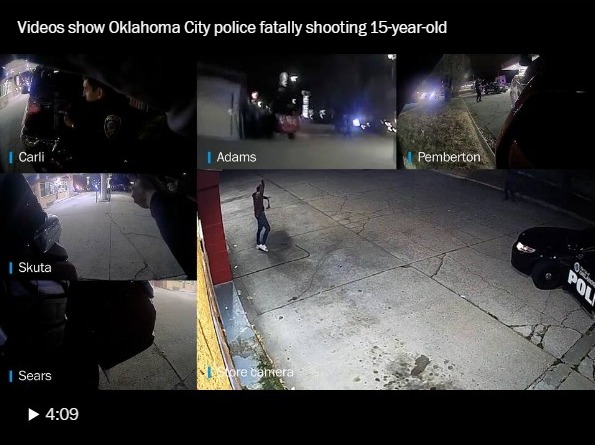
Stavian Rodriguez squeezed his 15-year-old body through the drive-through window of the Okie Gas Express convenience store, poking his hands out first so police could see that they were empty. He jumped to the ground, holding his hands in the air, then lifted his shirt to reveal a gun tucked into his front waistband. Using the tips of his thumb and index finger, Rodriguez gently pinched the end of the barrel far from the trigger and dropped the weapon to the ground.
As the gun hit the pavement, Rodriguez reached for his rear pocket; a volley of bullets burst out and the teenager sank to the ground, surveillance and camera footage show. Dozens of Oklahoma City police officers had responded last November to the 911 call at the convenience store, where Rodriguez was a robbery suspect. Five of them shot 13 bullets into the teen, from his head to his feet.
He is one of 112 children who have been fatally shot and killed by police between Jan. 1, 2015, and Monday, according to a Washington Post database that tracks fatal police shootings. Over the same period of time, 6,168 adults were shot by police.
“They knew he was a child. They were joking about whether he was in there calling his mom,” said Cameo Holland, Rodriguez’s mother, referring to conversations recorded on officers’ body cameras. “No one was asking, ‘How do we tactically approach this so no one dies today?’ “
The five officers who fired shots into Holland’s child are now facing first-degree manslaughter charges. This is a rare response by prosecutors who tend to side with police investigators who routinely clear officers of wrongdoing. Prosecutors must also consider whether they can persuade jurors, who tend to trust police more than other witnesses. The department said the officers shot because they perceived a threat, and the officers’ attorneys say the shooting was justified.
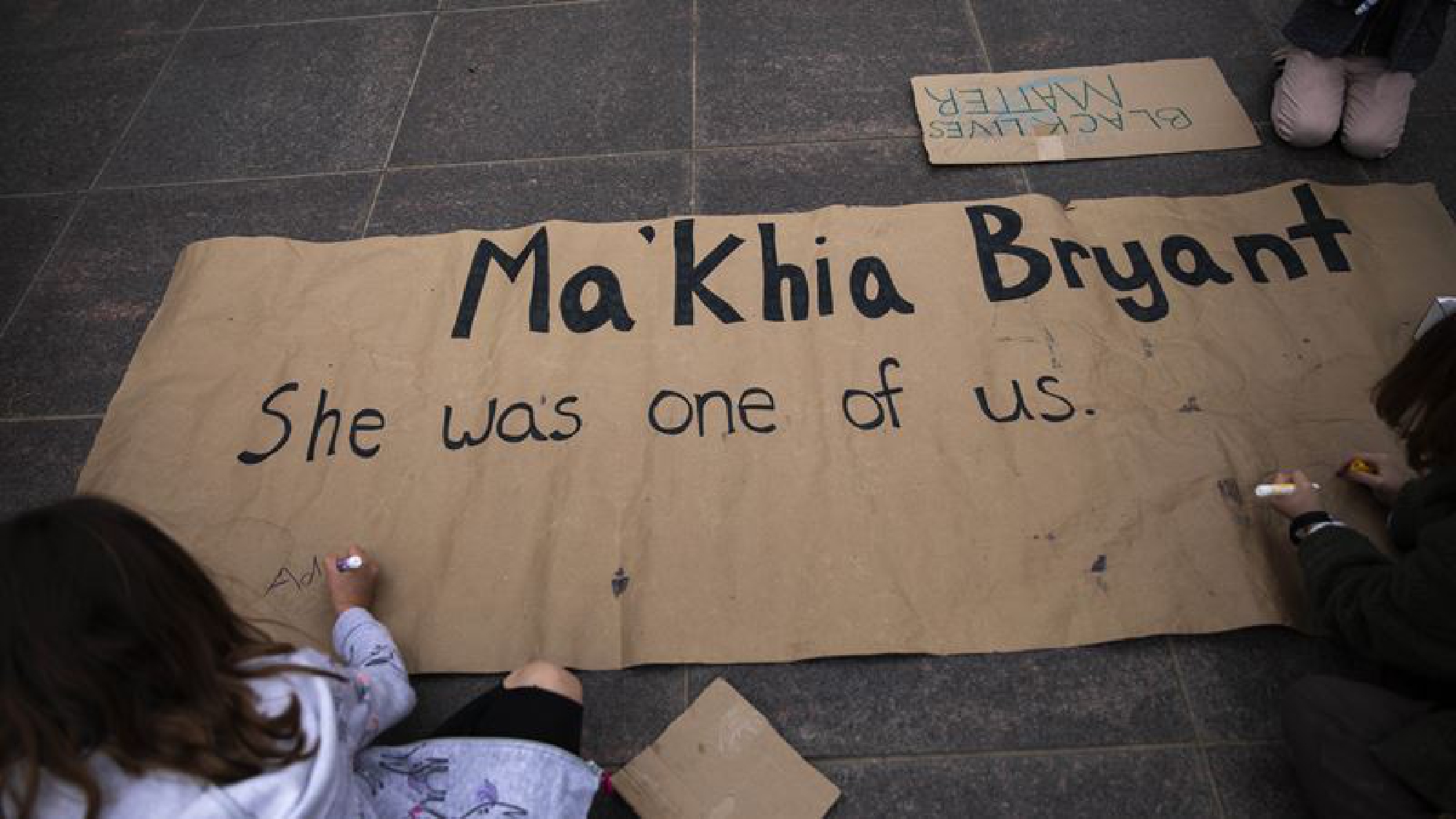
The long-standing question of how fatal police shootings of children could be avoided and lives spared has engulfed the nation in recent weeks. The debate was renewed by the death of 13-year-old Adam Toledo, who was killed by an officer on March 29 in Chicago and further fueled by another fatal police shooting of a knife-wielding 16-year-old, Ma’Khia Bryant, on April 20 in Columbus, Ohio.
Three other children were shot and killed by police during the three-week span between Toledo’s and Bryant’s deaths.
Police leaders have asked the public to withhold judgment in the Toledo and Bryant cases until the investigations into their shootings are complete. But they acknowledge that communities are less likely to listen as they become increasingly weary and distrustful of police. A Washington Post-ABC News poll in April showed that 55% of Americans said they were not confident that police are adequately trained to avoid excessive use of force – up from 52% in July and 44% in 2014.
Patrick Yoes, national president of the Fraternal Order of Police, said he hopes the public will recognize that officers are faced with instant life-or-death decisions and that even a child can be dangerous, especially if armed.
Of Officer Nicholas Reardon, who shot Bryant, Yoes said: “I assure you he wasn’t focused on her age. He was focused on the knife. He was looking to save a life. Even children can pose a threat.”
Lawrence Miller, a clinical, forensic and police psychologist based in Palm Beach County, Fla., said there is no national standard or set of protocols regarding how officers should handle encounters with children.
He and other police training experts said they know of no academies or programs that offer specialized training to officers in this area as they do for other segments of society, such as the mentally ill.
“They need to talk to them like they are children, not yell a bunch of commands at them,” Miller said.
Of the 112 people younger than 18 who have been fatally shot by police, according to The Post’s database, five were shot and killed by Columbus Police Department officers, the most of any single agency. Nine other departments had multiple fatal shootings of children. In the other 87 departments with such shootings since 2015, one child’s death was recorded.
The database shows that the circumstances leading to the shootings of children are varied, with about half beginning with a robbery, a traffic stop, a stolen car or a 911 call. Most of the incidents took place during daytime hours; one appears to have involved alcohol use by the child; 19 of the children were experiencing a mental health crisis at the time of the shooting.
The database shows that children are frequently armed with a gun or a knife during these fatal police encounters, but not as often as adults who die by police gunfire – 63% of the time for children vs. 76% for adults.
Sixty-six percent of the children who died in police shootings were Black, Latino, Asian or Native American compared to 44% of adults who were racial minorities.
Children also were more often shot while running from police: 50% compared to 33% of adults.
The youngest of the children who have died were 6-year-olds – Kameron Prescott in Texas and Jeremy Mardis in Louisiana. Both were killed as police fired at but missed the suspects who were their intended targets.
The renewed focus on shootings of children owes much to their visibility: Videos of the Toledo and Bryant killings went viral, prompting national protests and stinging rebukes of police from high-profile celebrities and politicians.
Public pressure prompted police officials to quickly release body-camera video of the incidents. In one, Bryant, who was Black, appears to be swinging a knife at two girls before she is shot. In another, Toledo, who was Latino, is running from police before he stops and turns, tossing an object that police say was a firearm. A split second later, after turning toward the officers with his hands raised, he is shot in the chest.
Among the 112 deaths of children in the database, five incidents have resulted in officers being criminally charged, according to a Post analysis. Four officers in three cases have been found guilty on charges that ranged from murder to aggravated assault. An officer in a fourth case faced a single homicide charge, which allowed jurors to chose between murder or manslaughter, but they ultimately acquitted him.
In the fifth case, the five officers who fired the lethal shots at Rodriguez last year were charged in March with first-degree manslaughter. They have pleaded not guilty. No trial date has been set.
Prosecutors dispute the police department’s and the union’s characterization of the events that led to Rodriguez’s death. The department initially said in a news release that the teen was shot because he “did not follow officers’ commands” and had been “holding a pistol” when he climbed through the window.
“Our brave officers leave their families behind and walk into dangerous situations every day to protect and serve this community,” Oklahoma City Fraternal Order of Police Lodge 123 Vice President Mark Nelson said in a statement several days after the shooting. “Officers often provide commands in tense moments to ensure the safety of all individuals involved. Police training and experience tells us furtive movements and a lack of following commands present a deadly threat.”
Since then, additional videos became public – from police body cameras, news camera crews and surveillance cameras – and a more complex picture of what happened that night in November began to emerge.
Court documents say security footage from inside the store, along with a police interview with the clerk, shows that the robbery began with Rodriguez pointing a gun at the employee as he demanded money. Another teen, 17-year-old Wyatt Cheatham, loaded packs of cigarettes into a backpack. (Cheatham entered a guilty plea on April 19 on a felony charge of robbery with a firearm.)
Both youths left the store briefly, and after about two minutes, Rodriguez returned alone and demanded more money, according to court records.
The clerk escaped through a window and used a security system to lock Rodriguez inside, court records say. He called 911 and officers poured into the parking lot within minutes, several taking cover behind the gas pumps.
For more than 10 minutes, officers yelled conflicting and overlapping commands to Rodriguez as he hid inside the store, video and court documents show. In charging documents, prosecutors said there appeared to be no commanding officer organizing the response.
Police body-camera videos also captured officers joking about Rodriguez and the robbery during the standoff. “He’s probably calling his mom,” one says. Another says, “Oops,” and Officer Bethany Sears laughs and adds, “I messed up,” speculating on the teenager’s state of mind as he hides.
Minutes later, Rodriguez stuck his hands through the window and pulled himself through. On a half-dozen videos, officers can be heard simultaneously yelling different commands at him – “Hands!” “Facedown! On the ground!” “Drop it!”
A strobe light from at least one of the patrol cars – often used to disorient suspects – flashed into Rodriguez’s face.
As he dropped the gun to the ground, the teen reached for his left rear pocket.
At that moment, Officer Sarah Carli fired a 40 mm foam projectile that struck the teenager, according to prosecutors.
Almost immediately, the other officers fired at him, the video shows. “A cellphone was recovered from the left rear pocket he had his hand in at the time he was shot,” the prosecutors’ affidavit said.
On a body-camera video, Rodriguez winces in pain as officers yell at the teen to show his hands. Officer John Skuta can be heard repeatedly muttering “Damn it.”
Then officers quickly huddle, video shows, and one of them tells Officer Brad Pemberton to shut off his body-camera video. Police are only required to leave their cameras on when they are interacting with the public, according to department policy.
Pemberton, Sears, Skuta and Officers Jared Barton and Corey Adams were those charged with first-degree manslaughter, which carries a sentence of between four years and life in prison.
Attorneys representing the officers who have been charged say the shooting was legally justified because Rodriguez reached toward the back of his pants after he dropped the gun. At that moment, they say, officers thought he could have been reaching for a second weapon.
“This case is ultimately about whether each individual officer responded to a perceived threat in a way that was reasonable and in accordance with the law,” the attorneys said in a joint statement. “Five officers, with similar training, came to the same conclusion when the suspect made a sharp movement toward his waistband after being told to show officers his hands and get on the ground. While the results were tragic, the officers’ actions were reasonable and legally justified under the circumstances created by an armed robbery suspect.”
David Thomas, a forensics psychologist and former police officer, said there is a natural assumption that officers know how to respond differently in tense encounters if it becomes clear that they are dealing with a child.
“They think they will put on their father’s hat or mother’s hat and be able to sit down and talk to a child without being a macho cop,” he said. “Or have a big brother or big sister conversation. Training for this – it just doesn’t exist.”
Miller, the Florida psychologist, said that children’s responses to police commands are often found “at both ends of the spectrum.” They are either quickly compliant or, he said, become confused or defiant and attempt to run away.
“They are egocentric, impulsive, unpredictable,” Miller said of teens. “They are less likely to show the kind of restraint adults tend to, unless there is a mental illness or drugs involved.”
Thomas said it would be helpful for officers to learn more about development of the human brain, which is not complete until someone reaches their mid-20s. That can make teens more impulsive.
Miller said officers often put themselves and children at risk by underestimating them, especially if they are slight in build. He said the Rodriguez case is an example of this, as police joked about the unfolding scene, and, in some cases, stood out in the open at the window where they knew the teen would have to exit.
“It should never have never gotten to that point. Being a child, in a sense, worked against the decedent. If it was an adult, they would have taken cover,” Miller said. “They would have probably had him strip down to his skivvies so they wouldn’t have to worry about whether he had a weapon on him.”
Holland, Rodriguez’s mother, said without the video that documented how police handled the incident, prosecutors would have been left with the version of events that the police department presented after the shooting.
In 66% of the database incidents involving children, there is no video documentation. Sometimes the only witnesses who support an officers’ contention that a shooting was justified are fellow officers at the scene.
The 2016 fatal shooting of 13-year-old Tyre King falls into this category. Like Bryant, the Black teen was fatally shot by a Columbus officer.
The officer, Bryan Mason, said the teen was reaching into his shorts for a weapon – which turned out to be a BB gun – when Mason shot and killed him. A fellow officer backed up Mason’s description of the incident, court records show. However, three civilian eyewitnesses, including a nun, said they did not see this movement, instead saying the teen appeared to be trying to run away, according to court records.
It was Mason’s fourth shooting – and the first fatal one – in six years, personnel records show. City officials said the shooting was within department policy, as they determined his previous three shootings had been, and a grand jury declined to bring charges. Mason’s attorney did not respond to calls and emails seeking comment. Mason could not be reached for comment.
In all five incidents in which children were shot by police, the Columbus department determined that the shootings were justified.
“This is never an outcome Columbus police want to see. Any loss of life is tragic, even more so when it involves a juvenile,” said Columbus Public Safety Director Ned Pettus “Each of these incidents is singular and has to be evaluated on its own merits and circumstances. Our priority every day on every call is to protect life and safety.”
Dearrea King, the teen’s grandmother, said police need to understand why children – particularly those who are racial minorities – sometimes do not comply with their commands.
“These kids are running away because they are afraid,” said King, who has a lawsuit pending against the city. “They are trying to get someplace safe because they do not trust the police.”
Like Mason, three of the Oklahoma City police officers involved in Rodriguez’s shooting had also been cleared in previous shootings. In each case involving the Oklahoma City officers, the person they shot died.
Holland said she worries that when departments justify police shootings, future shootings could be fueled.
“They are used to shooting people and they are used to not having a lot of consequences,” she said. “How do you [kill] multiple people and are somehow still fit to carry a gun? Supposedly they are traumatized from these shootings. If they are so traumatized, why don’t they do something different?”
Published : May 13, 2021
By : The Washington Post · Kimberly Kindy, Julie Tate, Jennifer Jenkins, Ted Mellnik
Biden hails coronavirus vaccine for 12- to 15-year-olds as one more giant step in fight against the pandemic
WASHINGTON – A federal advisory panel threw its support Wednesday behind the use of the Pfizer-BioNTech coronavirus vaccine in children as young as 12, paving the way for millions of adolescents to get the shots, and making it easier for state and local officials to reopen schools and summer camps.
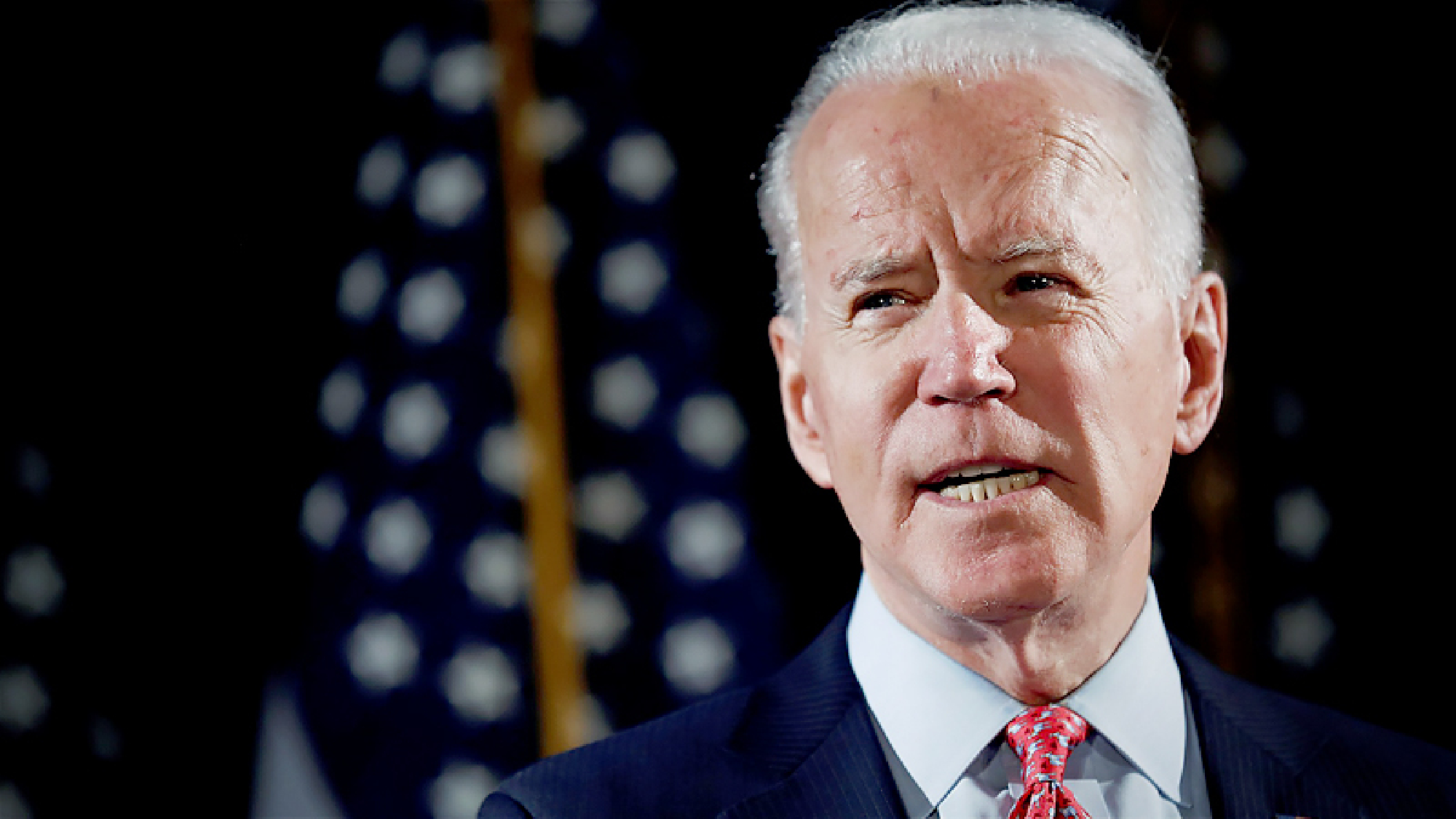
The decision was hailed by President Joe Biden “as one more giant step in our fight against the pandemic,” and he called on parents to get their kids inoculated. “The bottom line is this: A vaccine for kids between the ages of 12 and 15 . . . [is] safe, effective, easy, fast and free,” he said. “So my hope is that parents will take advantage of the vaccine and get their kids vaccinated.”
The vote Wednesday afternoon by the Advisory Committee on Immunization Practices, an independent group of medical and public health experts, was 14 in favor, with one recusal. CDC Director Rochelle Walensky signed off by day’s end, giving the green light for the two-dose vaccine to be used in 12- to 15-year-olds.
“Getting adolescents vaccinated means their faster return to social activities and can provide parents and caregivers peace of mind knowing their family is protected,” Walensky said.
The Food and Drug Administration cleared the vaccine for emergency use in that age group Monday, saying it was safe and effective at the same dose that is being given to those 16 and older.
Biden said that 15,000 pharmacies are ready to start vaccinating adolescents as soon as Thursday, saying most of those pharmacies are no farther from family’s homes than their neighborhood schools. Children will be able to receive their two Pfizer shots in different places if they change locations this summer, he said.
The vaccine’s cold-storage requirements and large lot size – 1,170 doses is the minimum order – make it more challenging to be distributed immediately to doctors’ offices. But Biden said officials are also mobilizing to find ways to equip doctor’s offices, including pediatricians, so they can give the shots to patients coming for check-ups, or other services. He described these efforts as enabling parents and children to consult the doctors they trust.
Vaccinating children is a key to boosting the level of immunity in the population, and reducing hospitalizations and deaths, experts say. As more adults are vaccinated, adolescents 12- to 17-years-old are making up a greater proportion of infections, accounting for 9% of cases reported in April, according to CDC data presented at the meeting. That’s even higher than cases among people 65 and older, now that many people in that age group are vaccinated.
“Older children can have severe disease from covid-19 infection,” said Kathy Poehling, a pediatrics professor at Wake Forest University and member of the advisory panel, who described a teenager with covid-19 who suffered a heart attack as a result of the disease, and who survived. While deaths are uncommon in children, she and others noted that covid-19 deaths are one of the top 10 causes of death for children.
“Many parents and adolescents want to be protected by being vaccinated. And I’m so glad we have the vote to enable them to do that today,” she said.
Jose Romero, the panel chair and Arkansas’ health secretary, said the action brings the United States “one more step closer to gaining immunity and bringing the pandemic closer to the end.”
Referring to studies of the effectiveness of the Pfizer-BioNTech and Moderna vaccines in children as young as infants, Romero added that “we still have the younger age group to deal with, and we are dealing with that. And we still need to vaccinate the rest of the world. But we’ve made significant steps.”
Some states, including Arkansas, Delaware and Georgia, did not wait for the CDC decision, opening up eligibility on Tuesday, a day after the FDA authorized the vaccine for younger teens. But many other states and providers were waiting for the recommendation; some insurance plans won’t reimburse providers for the administration fee without the CDC sign-off.
Vaccination of a significant number of adolescents could also allow U.S. schools and summer camps to relax masking and social-distancing measures recommended by the CDC, and help speed a return to normalcy. There are almost 17 million adolescents in the 12- to 15-year-old age group in the United States, accounting for about 5.3% of the U.S. population and almost 27% of the population younger than 16, according to the Kaiser Family Foundation.
The only debate by the advisory panel occurred when members questioned whether the Pfizer-BioNTech vaccine should be given alongside other childhood or adolescent vaccines in the absence of data on how it might interact with them. That’s an issue because routine immunizations have fallen sharply during the pandemic, a decline of nearly 12 million doses as of May 2, compared with 2019, according to a CDC presentation.
The gap is largest in vaccines primarily given to adolescents, including the one targeting the human papillomavirus, known as HPV, and another to prevent tetanus, diphtheria, and pertussis.
A CDC slideset presented at the meeting said that “substantial data” have been collected regarding the safety of coronavirus vaccines and also noted that “extensive experience” with other vaccines demonstrates their side effects and ability to generate an immune response are “generally similar when vaccines are administered simultaneously as when they are administered alone.”
For that reason, the presentation said that covid-19 and other vaccines “may now be administered without regard to timing,” including giving them on the same day as well as within 14 days.
But several panel members said they wanted more data, asking manufacturers to study how the Pfizer-BioNTech vaccine might interact with other routine vaccines. Sarah Long, a pediatrics professor at Drexel University said she was “not at all comfortable with deciding right now how these vaccines can be used concurrently with anything, without any data.”
After the discussion, panel members agreed the vaccine could be given at the same time as other vaccines, but asked that the CDC spell out more detailed instructions for providers that would take into account whether a patient is behind on recommended vaccines, or at risk of becoming so, and whether certain vaccines are more likely to produce side effects.
Yvonne Maldonado, a pediatrics professor at Stanford University and the panel’s liaison from the American Academy of Pediatrics, said the pediatrics group would be issuing a statement to support the administration of multiple vaccines at the same time, “given the importance of routine vaccinations and the need for rapid uptake of covid-19 vaccines.”
The FDA based its emergency authorization Monday on a trial of nearly 2,300 adolescents between 12 and 15 years old, half of whom received the same two-shot regimen shown effective and safe in adults. There were no cases of covid-19 among fully vaccinated adolescents, compared with 16 among children given a placebo, suggesting the regimen offered similar protection to younger recipients as it does to adults.
The younger teens had the same side effects as adults, mostly soreness at the injection site and flu-like fever, chills or aches, especially after the second dose.
In testimony before a Senate committee Tuesday, Walensky encouraged parents to get their children vaccinated, saying she knew some wanted to wait to see how the administration of shots goes.
“Some parents want to be first, but I’m also encouraging children to ask for the vaccine,” she said. “I have a 16-year-old myself, and I can tell you he wanted to get the vaccine. He wants his life back. These kids want to go back to school.”
Biden said his administration would launch a public education campaign about the vaccine and partner with a variety of organizations to encourage children to get vaccinated.
In Alaska, some school districts already have scheduled vaccination clinics for Thursday and Friday because parents are eager for their children to get the shots before the school year ends, Anne Zink, Alaska’s chief medical officer, told reporters Tuesday.
“States have been planning and preparing for, and are now rolling out their plans for vaccinating this group of adolescents,” said Nirav Shah, director of Maine’s Center for Disease Control and Prevention and president of the Association of State and Territorial Health Officials.
There is no federal legal requirement for parents or guardians to give consent for coronavirus vaccinations or any other vaccination. But the vaccines must be given according to state vaccination laws, including those related to consent.
Most coronavirus vaccines worldwide have been authorized for adults. Pfizer’s vaccine is being used in multiple countries, including the United States, for teens as young as 16. Canada recently became the first to expand use to those 12 and older. Parents, school administrators and public health officials have eagerly awaited approval for the shot to be made available to more children in the United States, particularly with the growing gap between what vaccinated and unvaccinated people may do safely.
Although adolescents are less likely than adults to be hospitalized or have severe illness because of coronavirus infection, there is no way to predict the few who will become critically ill or develop a rare, dangerous inflammatory syndrome. Out of more than 581,000 covid-19 deaths in the United States, only about 300 have been among those younger than 18. But that exceeds the number of children who die in a bad flu season.
Parents’ eagerness to get their children vaccinated varies. A CDC presentation, citing four surveys, said about half of parents plan to get their children vaccinated.
A Kaiser Family Foundation survey found three in 10 parents of children ages 12 to 15 say they will get their children inoculated as soon as a vaccine is available; one-quarter say they will wait a while to see how the vaccine is working; 18% plan to get their children vaccinated if their schools require it; and nearly a quarter say they will definitely not have their children vaccinated.
The Kaiser poll found that parents’ intentions about having their children vaccinated against the coronavirus largely align with their attitudes toward being vaccinated themselves.
Sara Oliver, a CDC medical officer and the lead of the panel’s covid-19 working group, said officials plan to promote adolescent vaccination as quickly and equitably as possible.
The plan is to expand vaccinations down to 12-year-olds at existing sites as part of an “early summer sprint” in May and June, followed by increased access in June and July that will include children’s hospitals and large health-care providers serving adolescents. A back-to-school campaign will kick off later in the summer and include school-based vaccination programs and pharmacies after the start of the school year.
Published : May 13, 2021
By : The Washington Post · Lena H. Sun, Fenit Nirappil
Fan Economy เป็นการขับเคลื่อนเศรษฐกิจรูปแบบใหม่ เป็นความสัมพันธ์ระหว่างการสร้างรายได้จากแฟนคลับและคนดังในวงการหรือแม้กระทั่งองค์กร เป็นการทำงานรูปแบบหนึ่งเพื่อให้ได้มาซึ่งผลประโยชน์ทางเศรษฐกิจและสังคมโดยมีแกนกลางเป็นทุนทางอารมณ์ของผู้บริโภคที่มีวัตถุประสงค์เพื่อเพิ่มคุณค่าของศิลปินที่ตนชื่นชอบ โดยการขับเคลื่อนเศรษฐกิจรูปแบบนี้มีวัตุประสงค์หลักเพื่อส่งเสริมการขาย
Yang Ling นักวิชาการคนหนึ่งให้ความหมายของ Fan Economy ไว้ว่าเป็นเศรษฐกิจที่เกี่ยวข้องกับอารมณ์และไม่เป็นทางการ เธอมองว่าความสำคัญสูงสุดของเศรษฐกิจรูปแบบนี้คือการทำลายโครงสร้างอำนาจแบบเดิมๆ และให้ผู้บริโภคมีอำนาจมากขึ้นเพื่อส่งเสริมความหลากหลายทางวัฒนธรรม
เศรษฐกิจรูปแบบนี้เกิดขึ้นมาตั้งแต่ช่วงปี 1990 โดย Matt Hills นักวิชาการชาวอังกฤษตั้งข้อสังเกตว่าในอุตสาหกรรมบันเทิง แฟนคลับเป็นผู้บริโภคที่น่าสนใจที่สุดหากสถานีโทรทัศน์ต้องการทำกำไรไม่จำเป็นต้องเข้าถึงประชาชนทั่วไปจำนวนมากเพียงแค่รองรับแฟนคลับที่จกรักภักดีเท่านั้น
อย่างกรณีที่เกิดขึ้นกับรายการค้นหาไอดอลยอดนิยมของจีน “Youth with You 3” เมื่อสัปดาห์ก่อนแสดงให้เห็นว่าพลังขับเคลื่อนเศรษฐกิจของบรรดาแฟนคลับนั้นแรงเพียงใด แต่ในขณะเดียวกันมันทำให้เกิดปัญหาตามมาจนต้องระงับการออกอากาศไปเลย
จุดเริ่มต้นของดราม่า
Youth with You เป็นรายการเฟ้นหาไอดอลหน้าใหม่ในวงการซึ่งผู้เข้าประกวดจะได้รับคะแนนจากบรรดาแฟนคลับผ่านการโหวต โดยในช่วงท้ายของการประกวดมีการเพิ่มช่องทางการโหวต โดยผู้ชมสามารถสแกน QR Code บนสินค้าซึ่งเป็นสปอนเซอร์ของรายการเพื่อโหวตให้แก่ผู้เข้าประกวดที่ตนชื่นชอบได้
นอกจากนี้ตามรายงานของ Global Times ระบุว่าทางรายการยังถูกร้องเรียนและตรวจสอบโดยหน่วยงานของรัฐบาล ซึ่งสำนักวิทยุและโทรทัศน์ของปักกิ่งได้ออกแถลงการณ์หลังได้รับคำร้องเรียนโดยประกาศระงับการออกอากาศรายการ Youth with You 3 ในวันที่ 8 พ.ค. พร้อมระบุว่าทีมงานผู้ผลิตรายการกำลังดำเนินการแก้ไขปัญหาที่เกิดขึ้น
เมื่อเร็วๆ นี้ Toyota ซึ่งเป็นผู้บุกเบิกรถยนต์ไฮบริดได้เปิดเผยแผนการสำหรับรถยนต์ไฟฟ้าแบตเตอรี่รุ่นแรกของโลกเนื่องจากผู้ผลิตรถยนต์รายอื่นจับกระแสอนาคตของรถยนต์ไฟฟ้ากันแล้ว
เมื่อเดือนที่แล้วในงานแสดงรถยนต์ที่เซี่ยงไฮ้ Toyota ได้ประกาศสายการผลิต bZ ในอนาคตหรือ Beyond Zero ซึ่งจะมีรุ่น 7 รุ่นเข้าสู่ชั้นโชว์รูมภายในปี 2025
วันเดียวกัน Toyota เผยกำไรสุทธิทั้งปีของเพิ่มขึ้น 10.3% แม้ว่าการระบาดของโรคจะกระทบสู่อุตสาหกรรมยานยนต์ก็ตาม และยังคาดการณ์ว่าจะเติบโตแม้จะเกิดวิกฤตเซมิคอนดักเตอร์



 ความคืบหน้าของวงการวัคซีนจากทั่วโลก สามารถเช็ค “ข่าวจริง” ของวัคซีนจากทั่วโลกได้ที่นี่
 พลังขับเคลื่อนเศรษฐกิจจากกลุ่มแฟนคลับเกิดกระแสตีกลับเพราะความไม่รอบคอบ
 Xiaomi Corp. และรัฐบาลสหรัฐได้บรรลุข้อตกลงในการลบชื่อของบริษัทจีนแห่งนี้จากบัญชีดำที่รัฐบาลทรัมป์ทำขึ้นเพื่อจำกัดการลงทุนของชาวอเมริกันในผู้ผลิตสมาร์ทโฟนของจีน
 มุ่งสู่โลกแห่งพลังงานหมุนเวียน ยักษ์ใหญ่ยานยนต์เดินแผนยุทธศาสตร์ตั้งเป้าขายรถยนต์ EV เกือบ 10 ล้านภายในไม่ถึง 10 ปีข้างหน้านี้
 สาเหตุที่องค์การอนามัยโลกยกให้โควิดสายพันธุ์อินเดียเป็นสายพันธุ์ที่น่ากังวลระดับโลก ซึ่งขณะนี้แพร่กระจายไปแล้ว 44 ประเทศ

