Amazon Web Service แพลตฟอร์มคลาวด์เป็นธุรกิจที่ทำรายได้มากที่สุดของ Amazon โดยในไตรมาสแรกของปีนี้ทำรายได้สุทธิถึง 13,500 ล้านเหรียญสหรัฐ เพิ่มขึ้นจากช่วงเวลาเดียวกันของปีก่อน 32%
Teens death ignites call for changes in foster system
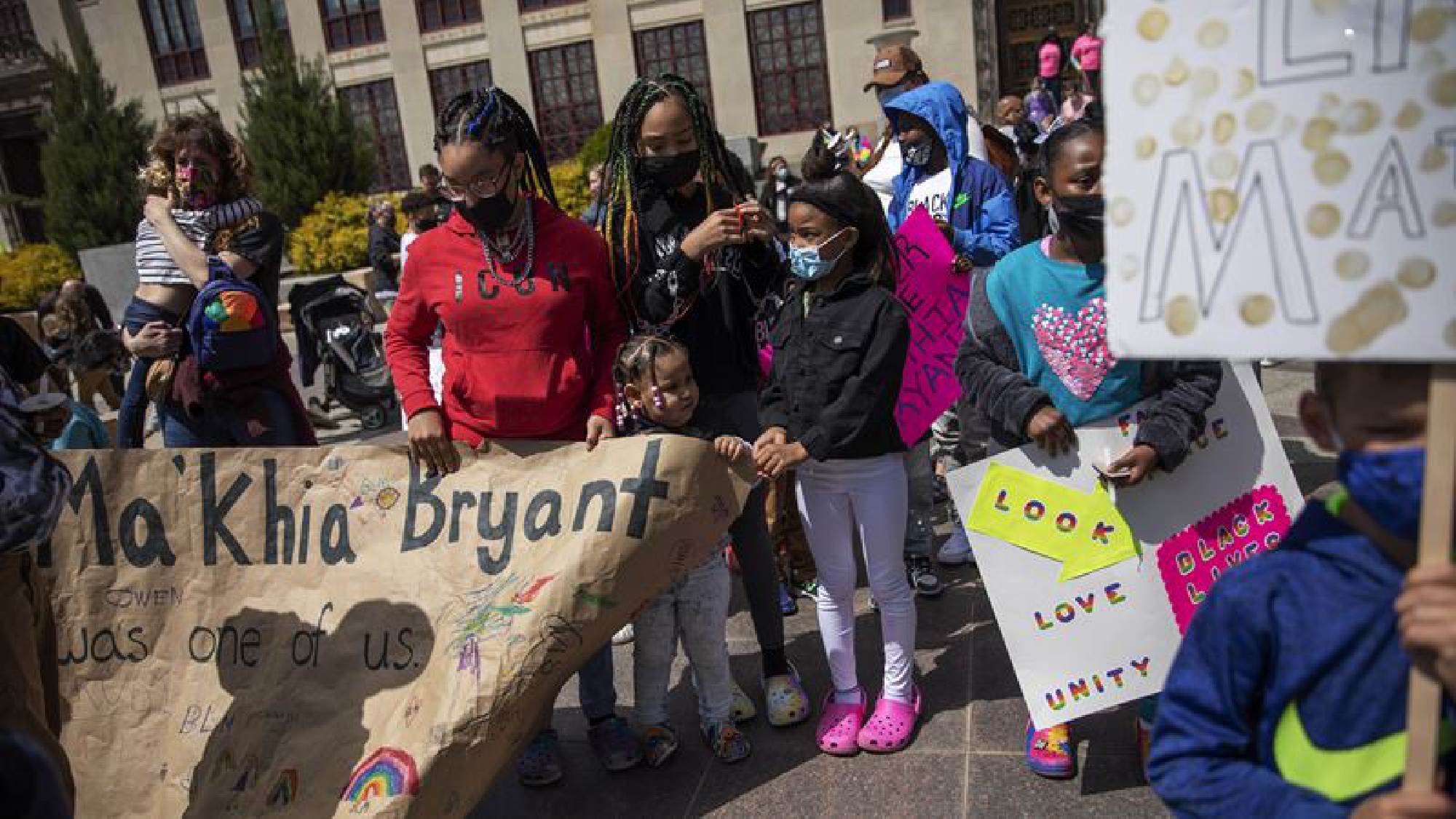
COLUMBUS, Ohio – MaKhia Bryant and her sister lived with their foster mother in a two-story house in a middle-class neighborhood, next to a cornfield along the edge of the city limits here.
Residents described the neighborhood as quiet and most of those interviewed said they did not even know that the sisters were foster children until April 20, when Bryant, 16, was shot and killed by a Columbus police officer when he saw her swinging a knife at a woman during a disturbance in front of the foster home.
Bryant’s grandmother, Jeanene Hammonds, said Ma’Khia called her that afternoon asking for help. She told her grandmother that there was trouble at the foster home involving a former foster child who had previously lived at the residence. The young woman had returned for a visit and was upset over the condition of the house, sparking an argument, Hammonds said.
The Ohio Bureau of Criminal Investigation is investigating the case, which has raised questions about police officers’ use of deadly force. But the disturbance at the house and Bryant’s death also are indicative of deeper problems in the state’s foster care system, said foster parents and child welfare advocates, many of whom are now calling for reforms to the overwhelmed and disjointed system caring for abused and vulnerable children. With Bryant’s funeral scheduled for Friday, her death has become a call to action.
At a somber news conference Wednesday, Bryant’s birthparents and their attorney called on the U.S. Department of Health and Human Services to investigate Ohio’s foster care system and asked for a Justice Department probe of the Columbus Division of Police, whose officers have fatally shot 38 people since 2015, including five under the age of 18, according to the department.
“We are going to investigate every agency that had a time and an opportunity to prevent Ma’Khia’s death,” attorney Michelle Martin said. “All systems failed her . . . and we have to protect our children.”
Foster parents, some of whom gathered with their children at a protest to honor Bryant on Sunday, say they need more training on how to de-escalate conflicts, more funding for social workers and more resources devoted to helping children remain with their birthparents. They are also demanding that armed police officers no longer be the first responders for most incidents involving foster children, nearly all of whom are traumatized in some way by being relocated away from birthparents.
And to many foster parents, Bryant’s death only reinforces their own concerns about the system. Morgan Wade had been a foster parent for just a couple of years when her 3-year-old foster son began having an episode that is probably familiar to many parents.
She was driving down a highway when the toddler crawled out of his car seat and began hitting his younger sister. Wade called the agency that licensed her for guidance.
“They told me to call the police,” Wade said. “I was just wanting advice, but they told me to call police on a 3-year-old.”
Wade disregarded the advice, quickly determining she could handle the child’s outburst on her own. But her story resonated with many of the foster parents at Sunday’s protest.
“It’s a really tough choice for foster parents,” said Laura Flynn, 27, who has been a foster parent for five years. “We are all aware of how unsafe it is to call law enforcement on our kids, but who else do you call for support? And how do you protect your kids from being moved [to a new home] if you are not following what the current systems say you should and you lose your license?”
– – –
Over the past decade, Ohio has been hit hard by the nationwide opioid crisis, leading to a surge in the number of foster children, officials said. The number of children in the state’s care has grown from 12,000 in 2012 to about 15,000 today.
More recently, the system has been battered by a lack of funding and a shortage of foster families – about 8,000, a sizable percentage of whom do not take teenagers.
Earlier this year, Gov. Mike DeWine, a Republican, said an ongoing overhaul of the system was his top priority, and he proposed spending $415 million to help children in need. DeWine has also pledged to make changes to the system through executive actions.
“This is going to remain an issue that Governor DeWine will be focused on throughout his tenure as governor,” said Dan Tierney, a DeWine spokesman, who added that the governor is also a former U.S. senator and state attorney general who has been pushing to reform the system for decades.
But the state’s foster care system continues to face setbacks and criticisms, including accusations that it is especially debilitating for non-White children.
A March report commissioned by the Ohio Department of Job and Family Services found that Black youths make up 36 percent of Ohio’s foster care population, despite making up just 14 percent of the state’s population of children.
Black youths also stay in the system longer than White children and often feel as if they cannot speak up about the quality of their care, the report said. Many White foster parents don’t believe they have adequate training on how to best raise children in multiracial environments, the report concluded. Advocates say about 80 percent of Ohio foster parents are White.
Ma’Khia Bryant’s biological mother, Paula Bryant, declined Wednesday to discuss why her children were placed in foster care or how long they have been in the system.
But as she sobbed, she told reporters that her daughter “had a full life in front of her that ended in a tragedy.”
“I loved my baby. She was a good little girl,” Paula Bryant said. “Words can’t even explain how I feel right now that I have to bury my beautiful daughter.”
Hammonds, the grandmother, said Paula Bryant lost custody of her four children several years ago. Hammonds said she cared for the children until mid-2019, when Franklin County Children Services removed them amid a dispute with a landlord and disagreement over adequate housing.
Hammonds said Ma’Khia Bryant initially ended up in a group home near Dayton but in February was placed with a foster parent who was already caring for her younger sister in southeast Columbus.
A spokeswoman for Franklin County Children Services confirmed that Bryant was in foster care but declined additional comment, citing confidentiality laws.
– – –
Hammonds said Bryant called her on the afternoon of April 20 asking for help. A former foster child, now a woman in her 20s, had returned for a visit and was upset over the condition of the house, sparking an argument, Hammonds said.
The woman then left the house but returned with at least two other women to continue the argument, Hammonds said. Hammonds said it was her other granddaughter – Bryant’s younger sister – who called 911 at 4:32 p.m.
“We’ve got these grown girls over here trying to fight us, trying to stab us, trying to put their hands on our grandma,” the girl told an operator, according to a recording of the call that police released after a public records request. “Get here now.”
Officer Nicholas Reardon arrived 12 minutes later to the scene of a physical altercation involving several people, including Bryant swinging a knife while pinning a 22-year-old woman against a car.
Reardon fired four shots, striking Bryant, who died a short time later after being transported to a hospital.
Gerry Slocum, who lives three doors down from the house where Bryant and her sister lived, said the foster parent was not home during the incident. But the woman, who Slocum thought had been at work, returned a short time later and huddled with other neighbors in Slocum’s driveway.
“She was distraught, and she was very confused about what was happening,” said Slocum, 50, adding that she believes the woman was a single foster parent. “She was trying to piece together what possibly could have been going on.”
Martin, the attorney for Bryant’s biological parents, said she does not believe that Ma’Khia and her sister were receiving adequate care.
“It doesn’t sound like the children were being properly supervised, even within the moment,” said Martin, who also works as a court-appointed attorney in foster care cases. “Who were those girls at the house? How did they get there? What trauma was not being addressed in the home?”
A Washington Post reporter visited the foster home Tuesday evening. A woman who answered the Ring doorbell audio system said the foster mother was not at the home. The woman then asked for privacy to “allow her time to mourn.” Attempts to reach her by phone on Wednesday were also unsuccessful.
Slocum and several other neighbors interviewed by The Post said the April 20 shooting was the first time they had seen or heard any sort of disturbance at the home.
“It’s like all of this just came out of the blue,” said Shonnell Kelly, 38, who has lived on the block for four years. “I didn’t even find out it was a foster home until that day . . . and you don’t know what goes on behind closed doors, but I had never seen any conflict of any kind outside.”
But police records, obtained by The Post after a public records request, show that the April 20 incident wasn’t the first time Columbus police had been dispatched to the home.
Since mid-2018, police have been called to the house 11 times to investigate suspicions that a teenager who lived at the home had run away; the most recent of those calls occurred April 7 and involved a 13-year-old.
In December, the foster parent called police to report that a 10-year-old was “knocking things off the Christmas tree, yelling,” according to the police records.
In March, a 15-year-old girl – identified as Bryant’s younger sister – called 911 and told an operator she no longer wanted to live in the home, according to police records. Officers responded and learned that the girl had a fight with her sister and foster mother, and threatened to “kill someone” unless she was placed in a different foster home.
A caller from the residence also called police on April 15 to report that someone had fired two gunshots into a neighboring residence.
“Why were any children still in the house at this point with those types of calls coming into police?” said Martin. “That is one of my questions.”
Glenn McEntyre, a spokesman for the Columbus Department of Public Safety, said the police department’s “computer-aided dispatch” system includes a flagging mechanism that can alert officers to properties with a history of problems or other issues that could require a modified response. But McEntyre said he does not know whether Bryant’s foster home had also been designated a “special-situation premise address.”
“We won’t know until the conclusion of the investigation what information [officers] had access to,” McEntyre said. “The information that the [officers] had will fall under the purview of the state investigation into the response.”
– – –
For foster families in Columbus, the experiences in the foster home where Bryant and her sister lived sound all too familiar, and are among the reasons many are urging the public not to make sweeping judgments about the care and the oversight she may or may not have received from her foster mother.
Nicole Hernandez, 24, who has been a foster mother for about two years, said Ohio foster families struggle to navigate a bureaucratic system that does not provide enough financial or mental health support for parents or children.
Although the Ohio Department of Job and Family Services sets statewide standards for foster care, state officials stress that the system is designed to be “state-supervised” but is administered by 88 counties.
In Franklin County, which includes Columbus, the county department of child services has opted to contract out the placement and supervision of foster children, employing 21 private agencies. Statewide, Ohio counties are contracted with about 100 private agencies involved in the placement and care of foster children.
The guidance foster parents receive depends on which agency they are licensed under, said Flynn,the foster parent with five years’ experience.
When a child is having an outburst or conflict erupts in a home, some agencies urge foster parents never to physically restrain or try to break up the commotion. Others offer some form of physical de-escalation for small children but not after they become teenagers, Flynn said.
“A lot of foster parents are not really trained to de-escalate situations,” Flynn said. “I think most agencies say, ‘Just call police.’ . . . And police arrive, they just take them to [Nationwide Children’s Hospital], and just adds to the child’s trauma.”
The burden on families is especially intense for those who are willing to care for teenagers. Foster parents say many families do not take teenagers, meaning those who can are at times expected to care for up to five teenagers at the same time.
“When you have a lot of teens, all suffering trauma, stuck in a home together, conflict is bound to happen,” Hernandez said.
Ajmeri Hoque, who works as a court-appointed advocate for foster children in several central Ohio counties, said the state simply isn’t requiring “enough supervision” of children that it decides to remove from their biological parents.
“The bar is very low for what is considered to be a safe home, in terms of cleanliness and number of people in the home, and the number of children that one foster parent has to take care of,” Hoque said. “When you have multiple children . . . and you have one parent taking care of all of them, there is going to be issues, and there is going to be conflict.
“If the state is taking these children, the state needs to care for these children,” Hoque added.
Foster parents in Ohio are reimbursed by the state and county between $10 and $200 a day per child, depending on the age of the child, their health and a few other factors, including the location of the placement.
Dot Erickson-Anderson, coordinator of the all-volunteer Ohio Family Care Association, said most foster parents simply do not receive enough money to avoid having to work primary jobs, meaning many foster children are also “latchkey kids.”
“The system places a kid with an individual family and expects them to be able to deal with that child, and sometimes a sibling group of three or four, and then the parent then has to leave those children for some time or leave them with someone else,” said Erickson-Anderson, who has been a foster parent for 35 years.
Erickson-Anderson said state and national leaders should be working on developing a more coordinated approach to foster care, including a robust network of trained social workers who are capable of responding to foster homes “within 10 minutes” when problems arise. Foster families should also be encouraged to create their own support pods, in which they work together to try to respond to and de-escalate trouble even when it involves a child not under their direct supervision, Erickson-Anderson said.
“Child welfare is now built so much on the confidentiality of the system, you might have two foster parents on the same block, and they may not even know they are both foster parents,” Erickson-Anderson said.
Scott Britton, assistant director of the Public Children Services Association of Ohio, an advocacy group for county children services agencies, said some help is coming for foster families. He said that in January, the Ohio Department of Medicaid will launch “mobile response teams” to help children with “complex behavioral health needs.”
“These are programs that Ohio should have had for a long time,” said Britton, adding that 99 percent of the state’s foster children qualify for Medicaid.
Lily Cunningham, a clinical mental health counselor in Franklin County, added that Bryant’s death shows why social workers have been pushing for police to embrace a “wraparound” approach to public safety.
“The question always is: Why is this child or family in foster care?” Cunningham said. “But the right question should be: What can we be doing right now to enhance the lives of children in foster care?”
McEntyre, the Columbus public safety spokesman, said it’s up to Franklin County Children Services and state lawmakers to make such policy decisions.
Hana Abdur-Rahim, an organizer with the Black Abolitionist Collective of Ohio, which is affiliated with the Black Lives Matter movement, said Bryant’s death only reinforces her group’s belief that the Ohio foster care system should be abolished. The state should instead spend its money supporting families so children are not removed from their homes, she said.
“A lot of times people’s children get taken away because they can’t afford to take care of them, or they don’t have proper housing,” Abdur-Rahim said. “So if we had more resources, children would not get taken away from their families.”
Many foster parents also say they, too, would like to see the day when their services are not needed. But in Ohio and elsewhere, they know it’s only a matter of time before they get another call from their agency pleading for them to take in another child.
“There is literally nowhere else for these kids to go,” Flynn said. “So for people who want to criticize [foster parents], you instead should think whether you can take in a teenager.”
Published : April 30, 2021
By : The Washington Post · Tim Craig, Randy Ludlow
NYC mayor sets goal to fully reopen July 1 as virus eases
New York City is moving to fully reopen July 1 with arenas, gyms, stores, restaurants and hair salons returning, Mayor Bill de Blasio said.
“This is going to be the summer of New York City,” de Blasio said Thursday during a press briefing. “We’re all going to get to enjoy this city again, and people are going to flock here from all over the country to be a part of this amazing moment.”
New York locked down almost completely as the pandemic descended upon the most populous U.S. city last March, with schools closing and non-essential businesses forced to shut. The city has been embarking on a slow step-by-step comeback as infection rates have eased, accelerated by the advent of vaccinations. The city is about halfway toward the mayor’s goal of having 5 million people fully vaccinated by the end of June, state data show.
De Blasio’s goal of a complete re-opening leaves some key sectors until later, such as schools and Broadway. City officials say they intend to offer in-class summer school programs for more than 100,000 students, with school buildings open for full enrollment in September. Shows at Broadway theaters also aren’t slated to resume until that month.
To help lead the recovery, de Blasio appointed New York restaurant mogul Danny Meyer, creator of Union Square Café, Gramercy Tavern and Shake Shack, to chair the city’s Economic Development board. As the city reopens, it will need to hire a lot of people very quickly, Meyer said. At least 400,000 jobs will return in the city this year, de Blasio said.
“One of my hopes is that the city will be an agent that will connect job seekers with employers,” Meyer said.
The mayor may need to get state officials on board for his July 1 reopening plan. Ultimate authority still resides with orders already issued by Governor Andrew Cuomo, according to a vote taken by the state legislature last month. That vote stopped Cuomo from issuing any new directives without lawmakers’ approval, while also allowing the governor’s existing directives to be extended, and he’s frequently clashed with de Blasio on measures to fight the pandemic.
“The federal government, state government always have a say, but I’m saying as leader in New York City, we’re ready to come back and come back strong,” de Blasio, who is term-limited and in his final year in office, said Thursday during an interview on MSNBC.
Cuomo reopened New York City indoor dining in February at 25% capacity and then increased that limit to 35%. On March 19, he boosted it again to 50%.
New York’s all-important tourism industry has begun to show signs of slowly recovering. Since January, the hotel occupancy rate has ticked up six percentage points, to about 35%, according to hospitality data company STR. The industry reported its fifth straight monthly increase in average daily room rates, which have risen 12% since December.
New York City has administered more than 6.4 million vaccine doses, according to the mayor. Daily Covid-19 related hospitalizations dipped below 100 Tuesday for the first time since mid-November. New confirmed and probably cases on a seven-day average stood at 1,354 as of April 27, down more than 50% from two weeks earlier. The city’s seven-day average rate of positive tests for the virus also fell to 3.18%, from 5.43% on April 14.
Published : April 30, 2021
By : Syndication Washington Post, Bloomberg · Henry Goldman
INDIANAPOLIS – A blue card sat on the windshield of Josh Woolvins black Hyundai Tucson on Tuesday, a spot of color in the sunshine at Indianapolis Motor Speedway. It signaled to nurses at this drive-by immunization clinic that Woolvin and his mother, Debbie Shipp, wanted Johnson & Johnsons single-dose coronavirus vaccine, not their other choice, Pfizer-BioNTechs two-shot regimen.
Both selected Johnson & Johnson for its one-and-done convenience, a preference that outweighed their concerns about the extremely rare blood clots that prompted a 10-day pause in use of the vaccine.
“I’d rather deal with the side effects than die” of covid-19, Woolvin said.
There is no government data yet on whether health authorities’ 10-day halt in administration of the Johnson & Johnson vaccine soured people on the product, and the company declined to discuss the matter. But in spot checks across the country, people seeking vaccines and officials dispensing them appear eager to resume using the vaccine, which is also easier to store and transport.
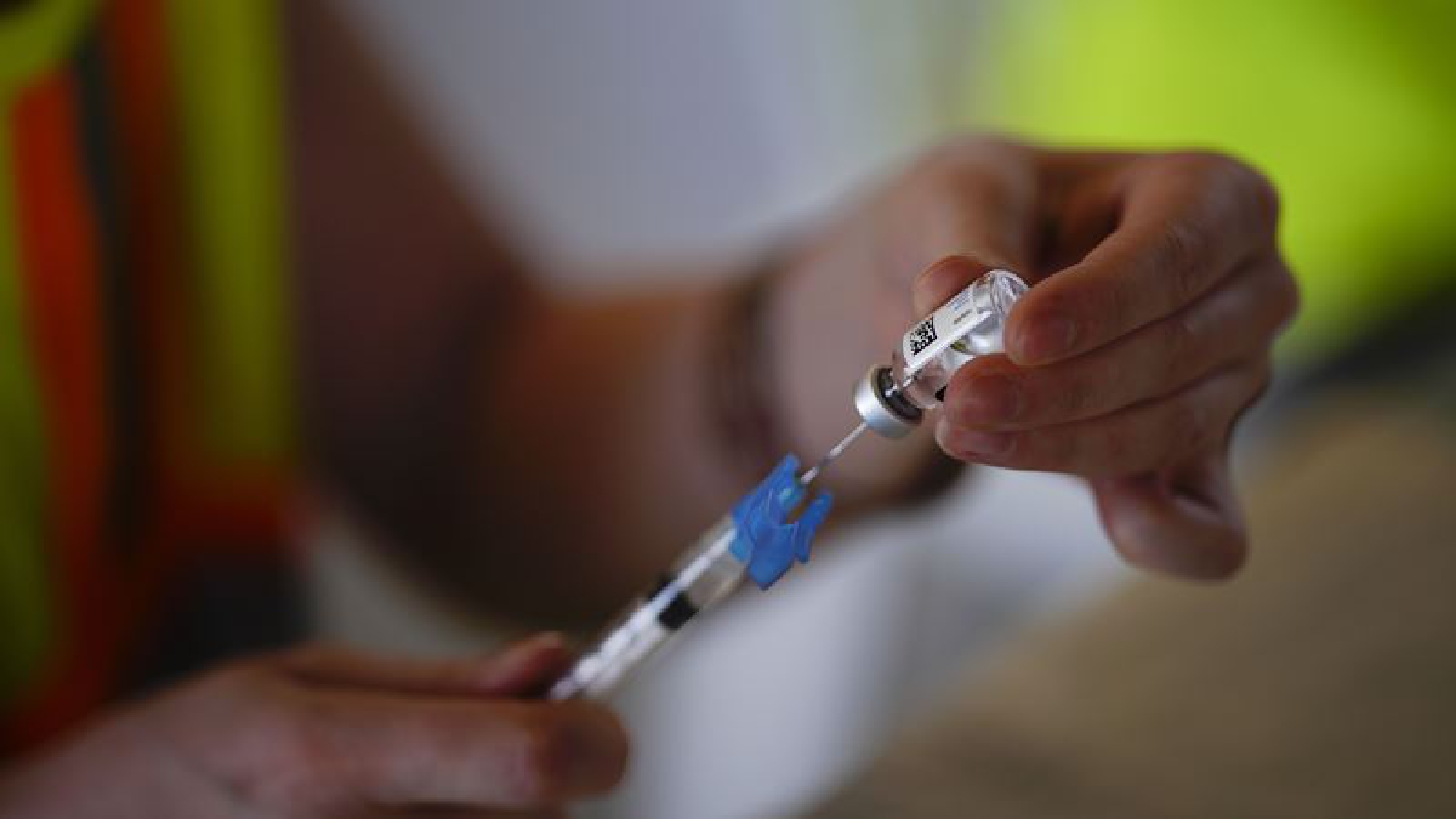
On Tuesday, for example, 1,355 people at the racetrack chose Johnson & Johnson at the clinic run by Indiana University Health, while 407 took the Pfizer vaccine, according to spokesman Jonathon Hosea. At a homeless program in San Francisco, drugstores in Maine and universities across the country, the same sentiment is largely true.
“For most people experiencing homelessness, it was their preference,” said Margot Kushel, director of the UC San Francisco Benioff Homelessness and Housing Initiative, who hopes her county health department reauthorizes use of the Johnson & Johnson vaccine in time for another outreach Thursday. “They wanted it to be one and done. They didn’t want to worry about coming back.”
More than 7 million doses of Johnson & Johnson’s vaccine – a small fraction of the national total – had been dispensed when health authorities halted use of the product April 13 to allow review of a handful of cases of cerebral venous sinus thrombosis, the clotting disorder that has affected at least 15 people, killing one. Ten days later, federal health officials authorized resumption of the use of the vaccine with a warning about the rare side effect.
Another 9 million doses had been shipped and were available, according to Ian Sams, a spokesman for the U.S. Department of Health and Human Services.
But there appears to be little Johnson & Johnson vaccine in the pipeline at the moment. Federal data released Tuesday shows that just 765,000 doses were allocated this week.
A recent Washington Post-ABC News poll suggested that fewer than one in four unvaccinated people would be willing to get the J & J vaccine. But the survey was taken during the pause, while health authorities were reviewing the safety data.
Company spokesman Jake Sargent said Johnson & Johnson would not comment. He pointed to a statement released April 23 by the company’s chief scientific officer, Paul Stoffels, who said that “as the global pandemic continues to devastate communities around the world, we believe a single-shot, easily transportable COVID-19 vaccine with demonstrated protection against multiple variants can help protect the health and safety of people everywhere.”
Near the Canadian border in rural Van Buren, Maine, pharmacist John Hebert started giving vaccinations in December. He initially had an allocation of Moderna that he took to nursing homes across the state.That sometimes took Hebert on day-long drives to elderly populations asfar as Portland, more than 300 miles away.
After the J & J vaccine was authorized in February, Hebert, the head pharmacist at Hebert Rexall Pharmacy, said the one-dose shot was the “ideal offering for that kind of activity” because he doesn’t have to return for second shots weeks later, a requirement for the Pfizer and Moderna vaccines.
Hebert had about 100 doses of the J & J vaccine in the refrigerator when the pause was imposed. He believes they will be used as he continues to trek to homebound residents of the state.
“It’s going to go fairly quickly,” Hebert said. “We have a list that only want J & J.”
Hebert believes the pause may have contributed slightly to vaccine hesitancy – but that it won’t take long to reverse. “We can get those people back,” he said.
At a town hall event for evangelicals hosted Tuesday by Wheaton College, National Institutes of Health Director Francis Collins said his two young adult grandchildren chose J & J – a decision he supported. Collins described the single shot’s practical benefits and extremely rare clotting risk, but worried that concerns about the company’s vaccine may extend to the other two “in a way that would not be justified by the data we have seen.”
Eric Norberg, the pharmacist and owner of Carroll Drug Store in Southwest Harbor, Maine, said the CDC allocated Moderna to his small operation a couple of weeks ago but uptake has been slow. He doesn’t know whether that is because people in the area already traveled to get vaccinated in other places or whether there is hesitancy about vaccination in general.
“There’s not as much traction as I was hoping,” said Norberg, whose store administered about 70 doses last week and 30 so far this week. The store has called many homebound people and found they already have been helped by friends and neighbors.
The Moderna vaccine is packaged in 10-dose vials, all of which need to be used within hours. Johnson and Johnson’s vaccine comes in five-dose vials and can be stored in a regular refrigerator, presenting less of a logistical challenge, Norberg said. Looking ahead, he said, the J & J vaccine would be useful for seasonal workers who power the town’s summer tourist economy.
At the University of Arizona, the vaccination campaign has relied heavily on the Pfizer shots because the school has the substantial special freezer capacity required to store those doses. But President Robert Robbins said he expects the Johnson & Johnson vaccine will continue to be a useful tool for many colleges and universities.
“The best vaccine is the one you can get tomorrow,” he said. The paramount goal, he added, is to “vaccinate as many people as you can as fast as you can.”
At the University System of Maryland, Joann Boughman, senior vice chancellor for academic and student affairs, said the J & J vaccine was convenient because of its single dose and its storage capabilities.
The system is determined to continue its effort to vaccinate students, regardless of the vaccines it receives from the federal and state governments.
Before the pause, the Johnson & Johnson vaccine wasn’t in wide use at Maryland schools because the supply was limited. “Would it be nice to offer individuals a choice on the vaccine they receive – for example, Pfizer over J & J? Sure it would – but that will be up to state health authorities to decide. In the meantime, we will continue moving forward assuming use of the Pfizer and Moderna vaccines,” she said.
At the racetrack, Shipp arrived with a clear evaluation of her options. She said her husband had experienced side effects after his Johnson & Johnson shot, including headaches and restless legs syndrome.
She was nervous about similar problems, but added: “I think it’s just a roll of the dice. It could happen with any of the vaccinations.”
Kushel, director of the San Francisco program trying that is trying to reach 30,000 to 40,000 people on the street, in single-room occupancy hotels and in supported housing, recalled a moment on April 8, when a pop-up effort ran out of Johnson & Johnson vaccine. Workers quickly made arrangements to transport people waiting in line to a hospital for their shots.
“People’s first question was ‘What vaccine is it?’ It was really amazing,” she said. Upon learning they would receive the two-shot Moderna vaccine, they all had the same reaction, she said: “Yeah, no, we’ll wait.”
Kushel said her task force will have another vaccine on hand for those reluctant to accept Johnson & Johnson, and will explain the risks to women of childbearing age, the group most affected by the blood clotting found so far. She said she has spoken to one group that will not accept Johsnon & Johnson because of the fear of the rare blood clots.
But avoiding the effort of chasing down sometimes mobile and hard-to-find homeless people for their second shots is a major advantage, she said.
“The J & J vaccine is easier. The dose vials are smaller. We have not wasted one dose,” she said. “I would be thrilled to have it back.”
Published : April 30, 2021
By : The Washington Post · Mary Claire Molloy, Lenny Bernstein, Frances Stead Sellers, Nick Anderson
Jobless claims hit new pandemic low for third straight week as labor market picks up
WASHINGTON – Weekly jobless claims fell to a pandemic low for the third consecutive week, the Labor Department reported Thursday, with 553,000 Americans filing for initial unemployment benefits for the week that ended April 24.
This marks a decrease of 13,000 compared with the previous week, putting the insured unemployment rate around 2.6%, the Labor Department said.
While claims remain elevated, the trajectory signals that growing vaccination numbers, loosening business restrictions and warmer weather are helping to heal the jobs market. The streak of declining claims started in mid-April, with a surprise drop of more than 175,000. Now, economists say they think the trend will continue.
“With more news of cities set to fully reopen in the coming months and vaccinations picking up speed, we’re starting to see some real firepower behind an economic comeback,” Chris Larkin, managing director of trading at E-Trade, said Thursday in comments emailed to The Washington Post.
States reported 121,749 initial claims for Pandemic Unemployment Assistance, for gig and self-employed workers, for the week ended April 24. There were nearly 7 million continued PUA claims, for benefits that are set to expire in September.
There are myriad signs of a brightening outlook. The U.S. economic recovery picked up speed in early 2021, the Commerce Department reported Thursday, with economic growth hitting 1.6% in the first three months of the year. The January-to-March period saw some of fastest economic growth in more than four decades, behind only the initial 7.5% surge last year, when businesses first reopened from pandemic-related shutdowns.
The promising economic data, plus strong corporate earnings, helped lift the S&P 500 to another record close. It added 28.29 points, or 0.7%, to close at 4,211.47. The benchmark index has risen more than 10% since Biden’s inauguration, putting him on track to have the best first-term markets kickoff of any president since Franklin D. Roosevelt, according to the Wall Street Journal.
The tech-heavy Nasdaq jumped 31.52 points, or 0.2%, to close at 14,082.55, while the Dow Jones industrial average climbed 239.98, or 0.7%, to settle at 34,060.36.
“The U.S. economy is going to enjoy a few more months of tremendous data releases on vaccinations, stimulus checks and pent-up consumer demand,” Ed Moya, a financial analyst with OANDA, said Thursday in comments emailed to The Post. “The second half outlook is up in the air, but for now everyone wants to ride this last big wave of growth.”
Consumer confidence rebounded to pre-pandemic levels in April, according to the Conference Board, as stimulus and improving labor market conditions left households feeling better about their incomes.
This time last year, more than 3.4 million Americans were applying for initial unemployment benefits, and the national unemployment rate was between 15 and 20%.
“How do I file for unemployment” was the most Googled question across the nation the past year, according to research from CenturyLinkQuote.com.
But there’s still a long way to go. More than 17 million Americans were drawing unemployment benefits across all programs this month. In 2019, average weekly initial claims hovered around 218,000.
Meanwhile, poverty rose to 11.7% in March, the highest level of the pandemic, according to research from the University of Chicago and University of Notre Dame, as Americans awaited the next round of stimulus relief. Children and women were hit the hardest by the spike, researchers said.
Many economists describe the recovery as “K-shaped” because of its diverging prospects for the rich and poor. But the divide is also splintering across gender lines. The U.S. economy added back 916,000 positions in March, but only about a third of these were regained by women. Women would need nearly 15 straight months of job gains at last month’s level to recover the more than 4.6 million net jobs they have lost since February 2020, according to the National Women’s Law Center.
Biden’s March $1.9 trillion coronavirus relief package broadened unemployment eligibility and extended some unemployment benefits through September, including the weekly $300 benefit offered by states.
Biden, in speech to Congress, offers sweeping agenda and touts democracy
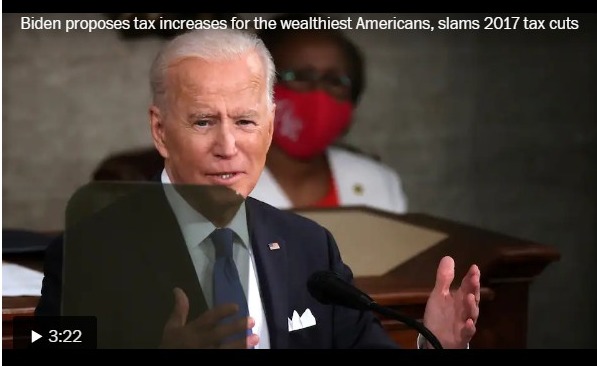
WASHINGTON – President Joe Biden on Wednesday night used his first speech to a joint session of Congress to argue for a dramatic expansion of government services, making a plea for sweeping plans to provide universal preschool, free community college and expanded health care and new tax breaks for families – much of it funded for by higher taxes on the wealthiest Americans.
While he also renewed calls for an array of priorities – including immigration changes, gun control and police reform – Biden more broadly portrayed a country that is rapidly emerging from the depths of a global pandemic and has survived events that, in his view, tested American democracy as rarely before.
“We have stared into an abyss of insurrection and autocracy – of pandemic and pain – and ‘we the people’ did not flinch,” he said toward the end of a 65-minute speech.
Biden delivered his address in a Capitol that had faced a lethal assault from a mob less than four months ago. He walked through the House chamber’s wooden doors just after 9 p.m., passing through the same entryway that had been battered by insurrectionists on Jan. 6 in an attempt to prevent his presidency.
Biden’s remarks juxtaposed a more traditional presidential cheerleading for America – a country he declared was “on the move again” – with far more unusual warnings about existential threats to American democracy and references to a country that repeatedly flies flags at half-staff because of mass shootings.
“I took the oath of office – lifted my hand off our family Bible – and inherited a nation in crisis,” Biden said. “The worst pandemic in a century. The worst economic crisis since the Great Depression. The worst attack on our democracy since the Civil War.”
“Now, after just 100 days, I can report to the nation: America is on the move again,” he added. “Turning peril into possibility. Crisis into opportunity. Setback into strength.”
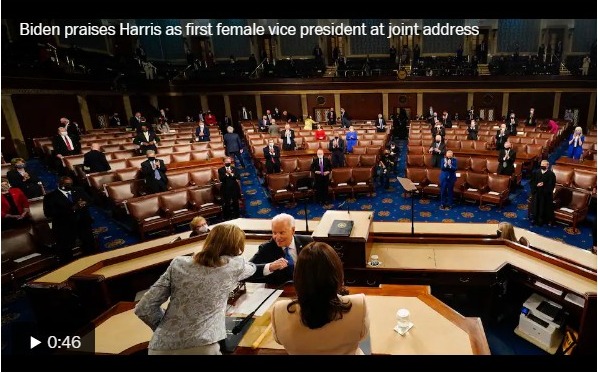
Biden delivered the remarks with a historic backdrop, as two women – House Speaker Nancy Pelosi and Vice President Kamala Harris – sat within the camera’s frame for the first time during such an address. The two women greeted each other at the front of the chamber, grabbing hands and then bumping elbows.
Biden went out of his way to highlight the moment. After acknowledging “Madam vice president,” he added, “No president has ever said those words from this podium; no president has ever said those words. And it’s about time.”
In a historic marker of a different sort, only about 200 people were invited to a speech that is normally heard by a crowd of 1,600. Members were spread out, with many in the gallery above the floor, nearly everyone wearing masks.
“While the setting tonight is familiar,” Biden said at the start of his speech, “this gathering is a little bit different.”
Chief Justice John G. Roberts Jr. was the only one representing the Supreme Court. Just two members of Biden’s Cabinet – Secretary of State Antony Blinken and Defense Secretary Lloyd Austin – were in attendance, and Gen. Mark A. Milley, chairman of the Joint Chiefs of Staff, represented the military. Jill Biden was in attendance, but without the first lady’s box that typically includes guests to be mentioned by the president during the speech.
For Biden, a president who has mostly communicated through brief appearances and limited remarks, partly because of the pandemic, the address was the first opportunity to make his case on a grander stage.
New to the office but an old hand in Washington, the president took that opportunity to present himself as a leader who wants to deliver an array of benefits to ordinary Americans, from green jobs to elder care. The message was intended to resonate both with the populist moment and Biden’s guy-next-door political identity.
Biden has been a frequent attendee of such addresses over the past half-century, but this was his first time giving the prime-time address himself. Biden’s tone was calm, his language simple and his style at times notably casual and devoid of rhetorical flights.
“It’s not right,” he said of the corporate tax rate. “It’s long past time,” he said of pay equity for women. “I want to be very blunt about it,” he said about climate change.
And as a man who served in the Senate for more than three decades, he displayed a deep familiarity with the elected officials in the room. “It’s good to be back!” he said at the start.
The address came at a pivotal moment in his presidency, following three months of intense focus on the coronavirus and as Biden begins pitching ambitious new items on his agenda that face fierce resistance from Republicans.
It fell on the eve of his 100th day in office, a symbolic marker that many presidents have used to gauge early success and that Biden has highlighted more than most. He has used his first 100 days as a timetable for various efforts, from mask-wearing guidelines to vaccination goals to reopening schools.
His remarks touting the viability of democracy were particularly striking and not a message presidents would typically feel the need to deliver. “The question of whether our democracy will long endure is both ancient and urgent – as old as our Republic, still vital today,” he said.
Biden also spoke forcefully of the need for racial equity, and he made a point of embracing LGBTQ rights. “To all the transgender Americans watching at home – especially the young people who are so brave – I want you to know that your president has your back,” Biden said in another striking moment.
Earlier in the day, the administration unveiled a $1.8 trillion proposal that would expand child care, provide universal preschool, cover two years of free community college and expand paid family and medical leave.
Biden, adopting lines that could have been ripped from a Sen. Bernie Sanders, I-Vt., campaign speech, chastised the country’s biggest corporations for not paying federal income taxes and called on America’s wealthiest to “pay their fair share.”
Biden’s new proposal comes on top of a $2.3 trillion plan announced last month to rehabilitate the country’s physical infrastructure – bridges, roads, airports – as well as to improve the water system and expand broadband access, particularly in rural areas. Some of the spending would be offset by raising the corporate tax rate from 21% to 28%.
Biden focused on the first part of the plan Wednesday as a way to rebuild the middle class, saying that 90% of the jobs created would not require a college degree.
“The American Jobs Plan is a blue-collar blueprint to build America,” he said, adding, “Wall Street did not build this country. The middle class built this country, and unions built the middle class.”
Biden also touted parts of his plan that include an infusion of money for clean energy, saying Democrats have often failed to connect fighting climate change with potential economic benefits.
“There’s no reason the blades for wind turbines can’t be built in Pittsburgh instead of Beijing,” he added. “No reason. None.”
Biden’s plans are facing significant opposition in Congress, however.
Sen. Tim Scott (R-S.C.), who was tapped to give the GOP response to Biden’s speech, touted the successes of the Trump administration, attempting to counter Biden’s effort to take credit for the economy and progress on the fight against covid.
“Our best future won’t come from Washington schemes or socialist dreams,” he said. “It will come from you – the American people.”
Biden has sought to redefine bipartisanship as winning support from GOP voters, and in some cases local officials, rather than Republican lawmakers.
As he gears up for his next big legislative push, Biden has invited the top four congressional leaders – two Democrats, two Republicans – to meet at the White House on May 12.
He framed the challenges the country faces as existential threats to the survival of democracy, invoking the United States’ growing competition with autocratic countries, especially China, saying they doubted the ability of American democracy to survive.
“They believe we’re too full of anger and division and rage,” he said of autocratic leaders. “They look at the images of the mob that assaulted this Capitol as proof that the sun is setting on American democracy. But they are wrong. You know it. I know it. But we have to prove them wrong. We have to prove democracy still works.”
Biden also returned to many of the vexing problems that have confronted Washington for years.
He urged Congress to overhaul the country’s immigration system, pushing for the passage of the immigration bill he sent to the body on his first day as president, while also saying that he was open to compromise. Notably absent, however, was any mention of the current surge of migrants at the border – an omission that received swift criticism from Sen. Mark Kelly (D-Ariz.).
He pressed for police reform, pointing to the recent conviction of Derek Chauvin, the White former police officer found guilty last week of killing George Floyd, a Black man who was in custody. Biden called on lawmakers to pass legislation named for Floyd by the end of next month to mark the first anniversary of his death.
“We have all seen the knee of injustice on the neck of Black America,” he said. “Now is our opportunity to make real progress.”
And he pressed lawmakers to take action on gun control in light of a spate of recent mass shootings.
Presidential addresses to Congress have sometimes been the scene of partisan theatrics. A year ago, Pelosi dramatically tore up President Donald Trump’s speech when he was done. In 2009, Rep. Joe Wilson (R-S.C.) shouted “You lie!” during President Barack Obama’s speech on health care, an outburst for which the congressman later apologized.
This speech, for all its unusual atmospherics, was devoid of such drama, making it the latest institution Biden has returned to a more traditional style. At the end, he appeared to thank lawmakers for sitting through it.
“Thank you,” he said in closing, “for your patience.”
Published : April 30, 2021
By : The Washington Post · Matt Viser, Tyler Pager
White House urged to address surge in ransomware attacks
Cybersecurity experts, law enforcement agencies and governments urged the White House to root out safe havens for criminals engaging in ransomware and step up regulation of cryptocurrencies, the lifeblood of hackers, in the hopes of controlling a growing wave of attacks.
These are two of 48 recommendations made by a task force in a report Thursday to the Biden administration aimed at fighting the continuing ransomware episodes that plague major corporations, local governments and health-care providers across the world. The task force, organized by the Institute for Security and Technology, said the cyber-attacks have become a $350 million criminal industry — a four-fold increase from the previous year. Last week, the U.S. Justice Department created its own, independent ransomware task force, signaling growing awareness inside the U.S. government of the now decade-old threat.
Ransomware is a type of malicious code that typically encrypts a victim’s data or network of computers. The hackers then demand a ransom to decrypt the information. More recently, ransomware gangs have also stolen data and threatened to make it public unless the victim pays a fee.
The FBI encourages organizations to refuse to pay hackers, but many victims end up doing so because the costs of the attacks can outweigh the ransom demand. Ransomware attacks have forced hospitals to postpone critical treatment, energy providers to cut off power supplies and schools to stop teaching. In some instances, lives are at stake, said Kemba Walden, an attorney in the Digital Security Unit at Microsoft.
The report was born from months of consultations among cybersecurity experts at Palo Alto Networks Inc., researchers at Chainalysis Inc. and law enforcement agencies in the U.S., U.K. and Canada, among others. The recommendations include five priorities deemed to be ”foundational and urgent,” including a push to use diplomatic channels and law enforcement across the world to dissuade countries from becoming “safe havens to ransomware criminals.”
“Most ransomware criminals are based in nation-states that are unwilling or unable to prosecute this cyber crime, and because ransoms are paid through cryptocurrency, they are difficult to trace,” according to the report. “This global challenge demands an ‘all hands on deck’ approach, with support form the highest levels of government.”
John Demers, U.S. assistant attorney general for national security, told reporters this week that ransomware as a cybercrime is no longer limited to independent cartels seeking to hold victims hostage for profit. Instead, nation-states may be using the attacks as a tool to disrupt government or private operations.
Earlier this month, for instance, the U.S. Treasury Department sanctioned Russian entities for helping to facilitate cyber-attacks and tied a Russian intelligence agency to a notorious ransomware group known as Evil Corp.
The report also outlines methods to regulate and control the economic backbone of the ransomware business: cryptocurrencies. Such payments between hackers and their victims occur in the largely unregulated realm of digital currency, which is harder for experts to track in hopes of identifying the criminals. The task force calls for governments to require cryptocurrency exchanges and trading desks to enforce basic “know your customer,” anti-money laundering and financial terrorism laws.
These rules could help law enforcement identify the nexus of ransomware cartels and the individuals getting rich from ransom payments, said Don Spies, director of market development for Chainalysis.
“I firmly believe cryptocurrencies are a new asset class. They’re now part of the overall financial system,” Spies said. “So, too, is ransomware, and it’s not going away. But I believe these recommendations can go a long way to combating a problem that’s out of control.”
Published : April 30, 2021
By : Syndication Washington Post, Bloomberg · Kartikay Mehrotra

 Amazon ได้อานิสงส์ช็อปฟอร์มโฮมยุคโควิดโกยกำไรเพิ่มขึ้น 3 เท่าตัวไตรมาสแรก
 ชาวกะเหรี่ยงกว่า 8,000 คนกำลังหลบหนีการโจมตีจากกองทัพเมียนมาบริเวณชายแดนไทย เผยพร้อมอพยพเข้าไทยหากการสู้รบบานปลาย
 Covid-19 สายพันธุ์กลายพันธุ์จากอินเดียถูกพบแล้วในหลายประเทศ
 ความเคลื่อนไหวที่ชัดเจนขึ้นเรื่อยๆ ของกลุ่มพันธมิตรต้านจีนที่นำโดย Quad ทันทีที่ประเทศเหล่านี้เริ่มเห็นผลจากโครงการวัคซีน ไม่แน่ว่าหลังจากโลกกลับสู่ภาวะปกติหลังโควิด มันอาจเป็นการเริ่มต้น “ลงมือลงไม้” แบบจริงๆ จังๆ นี่คือตอนที่ 1 ของซีรีส์ “ชุมชุมพันธมิตรฆ่ามังกร”