Demand in Japan for appliances at record high amid consumers staying home
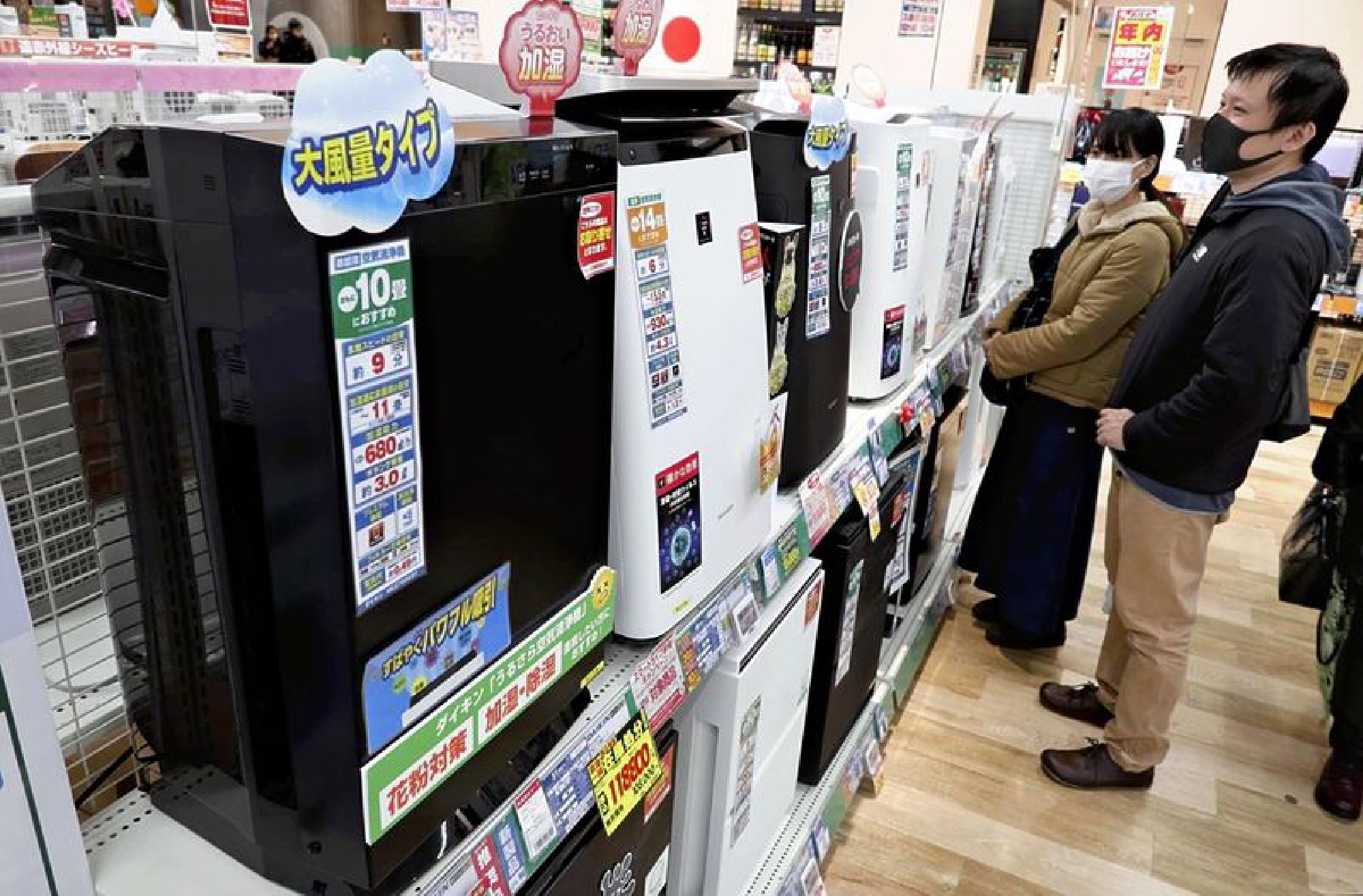
More time at home has driven demand for home electrical appliances to record levels.
The value of domestic home electrical appliance shipments in fiscal 2020, which ended in March, increased 6.5% from the previous fiscal year to ¥2.61 trillion, the Japan Electrical Manufacturers’ Association said Tuesday. This was the highest figure since fiscal 1997, when the current statistical method was introduced.
The fiscal 2020 figure was also 5.9% higher than the previous record of ¥2.47 trillion in fiscal 2018, when there was last-minute demand ahead of the consumption tax rate hike from 8% to 10%.
By product category, the shipment value of air cleaners nearly doubled from the previous year to ¥109.4 billion, exceeding ¥100 billion for the first time. For room air conditioners, the shipment value increased 3.5% to ¥818.2 billion. The rising demand is believed to be due to increased awareness of health and cleanliness amid the novel coronavirus pandemic.
Online sales have been strong as electronics retailers have had to shorten business hours.
Consumption was also boosted by the central government’s special cash benefit of ¥100,000 per resident. There was increased demand especially to replace consumer goods and appliances with high sticker prices. The shipment value of washing machines increased 8.4% to ¥399.5 billion and that of vacuum cleaners by 7.6% to ¥99.5 billion.
Demand for kitchen devices also increased as some companies began introducing telecommuting. Sales of refrigerators rose 3.1% to ¥452.5 billion, while sales of microwave ovens increased 5.7% to ¥94.4 billion.
On a monthly basis, the overall shipment value of home electrical appliances in April and May was sluggish, in the range of ¥150 billion to ¥200 billion, because of the state of emergency issued during those months. After the emergency was lifted, shipment value surged to ¥308 billion in June, and remained above ¥200 billion from July through September.
A second state of emergency was declared for parts of the country in January and continued for about 2½ months, but the shipment value in January was the highest seen for that month in the past 10 years.
The strong demand from people staying at home continued in February and March. The shipment value in March increased 8.9% from the same month the year before to ¥238.9 billion, marking six consecutive months with a year-on-year increase.
Entry approvals for non-Sporeans, non-PRs travelling from India cut due to Covid-19
SINGAPORE – Entry approvals for non-Singapore citizens and non-permanent residents are being reduced with immediate effect, in response to the worsening Covid-19 situation in India and the emergence of new virus variants, the Ministry of Health announced on Tuesday (April 20).
From 11.59pm on Thursday, all travellers from India will also have to serve an additional seven-day stay-home notice (SHN) at their place of residence, following the usual 14-day SHN at a dedicated facility.
Those who have yet to complete their 14-day SHN by that time will also have to serve the extra seven days.
The travellers will be tested for Covid-19 at the end of the initial 14-day SHN and at the end of the additional seven-day SHN.
Migrant workers arriving from India who work in the construction, marine and process sectors will continue to be subjected to a 21-day SHN. These measures will minimise importation risks and protect public health, the MOH said.
Measures for travellers from Hong Kong, Britain and South Africa relaxed
Meanwhile, the SHN period for travellers from Hong Kong will be reduced from 14 days to seven days as the situation there has improved, and the SHN can be served at one’s place of residence if it is suitable.
This will apply to travellers who have remained in Hong Kong in the last 14 consecutive days and who enter Singapore from 11.59pm on Thursday.
They will be subjected to the Covid-19 polymerase chain reaction (PCR) test upon arrival and another PCR test before the end of their seven-day SHN.
Singapore will also allow entry and transit for all long-term pass holders and short-term visitors with recent travel history to Britain and South Africa from 11.59pm on Thursday.
They will be able to enter Singapore after obtaining the relevant entry approvals or transit through the airport on airlines approved to operate such transfers.
This group had earlier been subject to restricted entry due to concerns of a more contagious variant of the coronavirus circulating in these places.
Arriving travellers who were in Britain or South Africa in the last 14 days before their entry will continue to be subjected to a seven-day SHN period at their place of residence, following their 14-day SHN at dedicated facilities.
The MOH said Singapore’s existing border control and domestic measures have been able to contain the risks of community spread from imported cases with such variants, which is now present in many countries beyond Britain and South Africa.
It added that it will continue to evaluate the data on the various strains of the virus that cause Covid-19 as they emerge and review Singapore’s border measures accordingly.
Essential official travel overseas to be allowed
In spite of the Covid-19 pandemic, essential business and official travels still need to continue, the MOH noted.
It said: “While many meetings have been conducted over digital media, certain critical discussions need to be done face to face. Official interactions are also crucial to safeguarding and advancing Singapore’s national interests.”
In order to facilitate such travel, the MOH said it will allow fully vaccinated individuals who need to travel to higher-risk countries or regions as part of an official delegation to be subjected to a stringent testing and self-isolation regime from 11.59pm on Thursday.
They must adhere to a strict event-by-event controlled itinerary while overseas, and undergo Covid-19 PCR tests upon arrival, and on the third, seventh and 14th days of their return.
As an added precaution, these travellers will also be required to undergo a seven-day self-isolation period at home or in a hotel upon return.
They may leave their place of accommodation only to commute to the PCR test site or to the workplace for essential work that cannot be done remotely.
Travellers who are not fully vaccinated will continue to be subjected to prevailing border measures upon their return.
Some private banks re-run for some services, Yangon ATMs being crowded
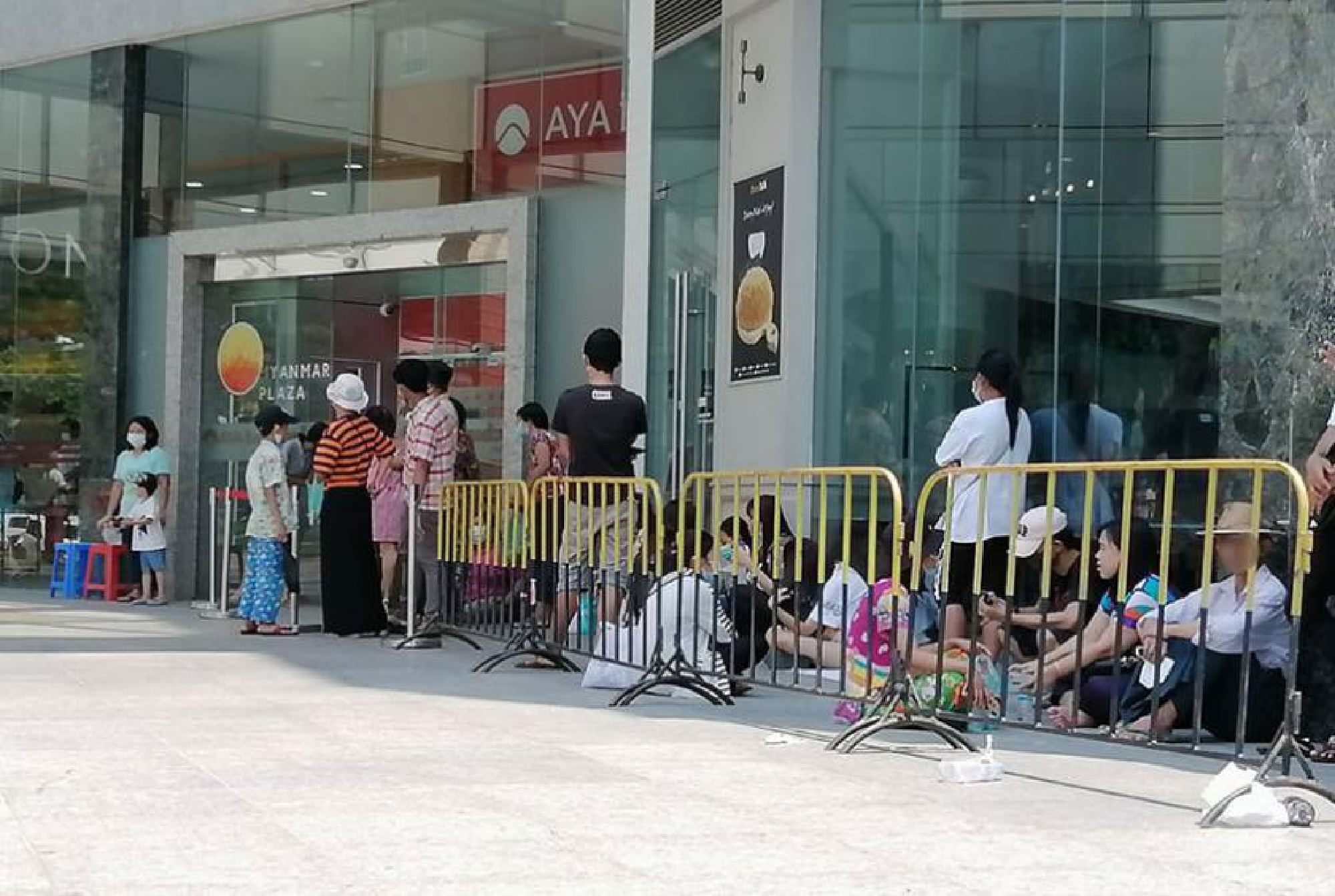
Some private banks are providing some banking services with a lot of people withdrawing cash from automated teller machines (ATMs) in Yangon city.
After announcing that customers need to register first for their cash withdrawal, private banks reopened some of their branches on April 20.
Yoma Bank opened some branches on April 20 announcing that customers will be informed daily about reopening of its branches, but they are requested to inform prior to their cash withdrawal.
CB Bank is also adopting a token system to prevent delays in cash withdrawal. The bank says token issuance time and number of tokens can be browsed on its Facebook page for respective branches.
Moreover, the ATMs of some private banks in Yangon city are crowded on April 20. Among them, those of KBZ Bank, AYA Bank, CB Bank and Yoma Bank are most crowded.
KBZ Bank announced on March 30 that a customer will be able to withdraw a maximum of Ks200,000 per day from its ATMs.
For customers of Yoma Bank, they will be allowed to withdraw a maximum of Ks300,000 per day. Only one ATM card can be used for withdrawing one time. On April 20, the bank also called for a systematic queue for ATM cash withdrawal.
CB Bank announced that it was trying to insert as much money as possible into its machines for the convenience of customers. Moreover, CRMs (cash recycling machines) are being arranged for its customers to make both deposits and withdrawals.
Seoul’s “strategic ambiguity” to be tested amid Washington’s ramped-up efforts to form a unified front on a more assertive China
Last week’s highly productive US-Japan summit has left few options for South Korean President Moon Jae-in, who is heading to Washington next month for a summit with the new US president, experts say.
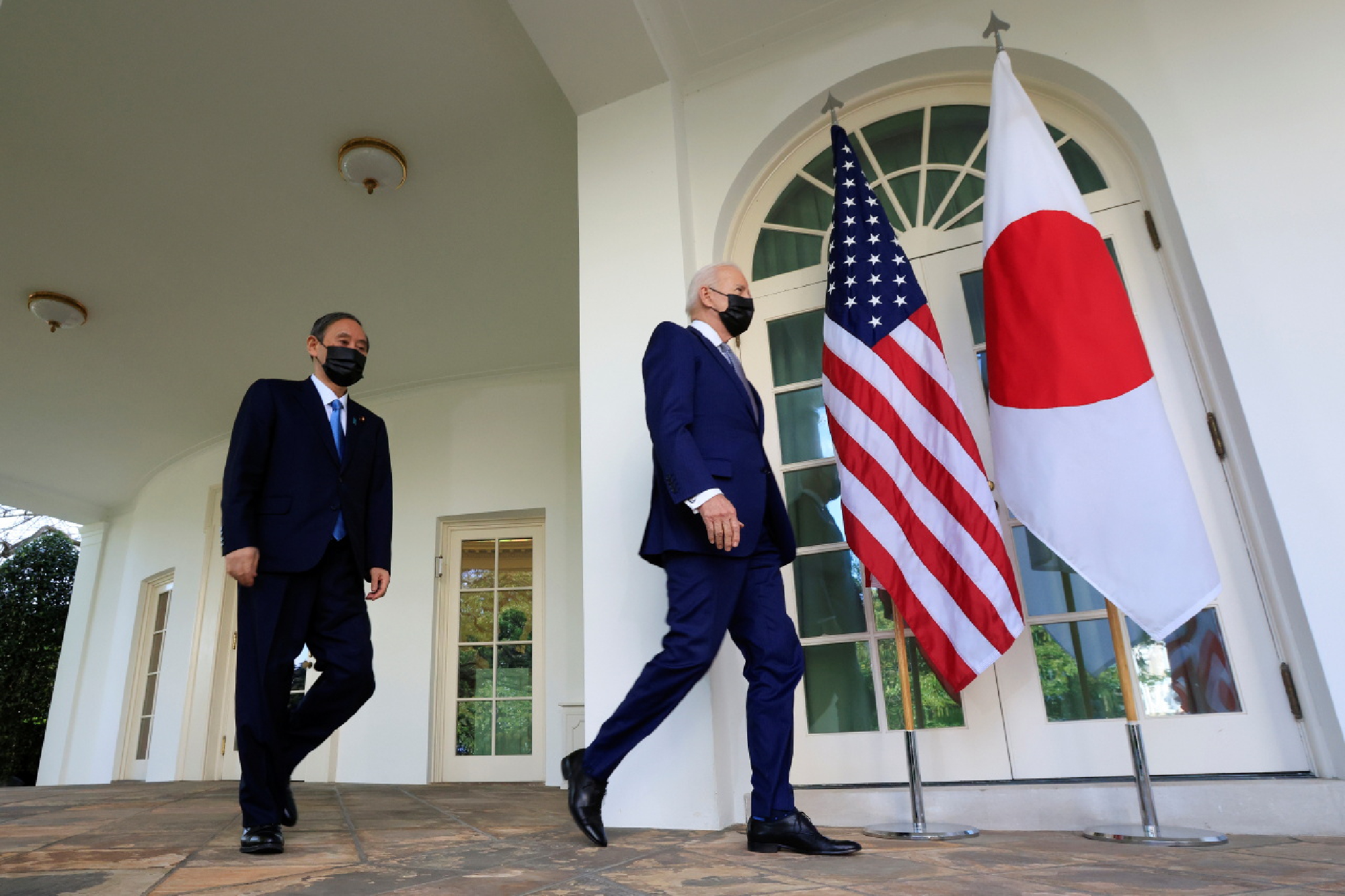
US President Joe Biden and Japanese Prime Minister Yoshihide Suga presented a united front on China in their first face-to-face meeting on Friday.
The leaders reaffirmed their commitments to countering China’s continuing assertiveness over Hong Kong, Taiwan and the South China Sea, while pledging a whopping $4.5 billion to develop ultrafast communications technologies to prevent Huawei, China’s state-backed telecom giant, from dominating the global market.
“It’s almost like the US and Japan have announced a set of new global orders,” said Park Won-gon, a professor of North Korean studies at Ewha Womans University. “Now the only option left for South Korea is whether to join the initiative or not.
“It had been widely expected that China issues would loom large in the summit. But discussions were much more direct and specific than expected,” he added.
Biden, three months into his term, has invested heavily in rebuilding ties with Japan and South Korea amid the growing influence of China in the Indo-Pacific region.
Tokyo and Seoul were the first destinations of his administration’s highest-level foreign travel in March. With Suga and Moon becoming the first foreign leaders to meet Biden in person, the summit talks are considered the culmination of a flurry of diplomacy over the past months.
But South Korea has walked a fine line to avoid being drawn into the escalating US-China rivalry, while Japan has explicitly backed the US policy of challenging a more assertive China.
For Seoul, Beijing is more than just its biggest trading partner. South Korea has used its ties with China as leverage to engage with a defiant North Korea and put an end to its nuclear ambitions — Moon’s signature policy goals.
With Washington’s new North Korea policy coming soon, Moon has expressed high hopes of reviving his mediating role in the collapsed diplomacy between the US and North Korea, whose relationship has reached a new low since the breakdown of the second summit talks between former President Donald Trump and North Korean leader Kim Jong-un in 2019.
“Moon may want to make a breakthrough in the stalled denuclearization talks through the upcoming summit with Biden. But the North Korea issue is not a top priority for the US president,” Park said. “Due to Korea’s strategic ambiguity, the Korea-US alliance could be reduced to a regional alliance tackling North Korea only.”
Hwang Jae-ho, a professor of international studies at Hankuk University of Foreign Studies, was also cautious about placing high expectations on the Moon-Biden summit, but made it clear “it’s not a competition with Japan either.”
Even for Suga, it was a tough decision to make a direct reference to Taiwan, China’s most sensitive territorial issue, during the joint press conference with Biden. China rebuked Japan immediately, warning of retaliatory action. Some critics in Japan criticized Suga for going too far, considering Japan’s dependence on trade with China.
“Suga, a diplomatic novice, seemed well-prepared. Upping the ante against China or North Korea is helpful for a Japanese prime minister to elevate approval ratings at home,” Hwang said, predicting a limited impact from China’s retaliatory threats due to Japan’s huge domestic market.
“But South Korea’s situation is much more complicated than that of Japan, which is a fact both the US and China are well aware of,” he added. “Rather than losing their crucial partner in the region at all, both countries will continue to gauge the situation, adjusting the pressure level.”
As for the “Quad,” an informal strategic alliance consisting of the US, Japan, India and Australia that aims to confront challenges from China, Park urged the South Korean government to join immediately in a clear sign of its alliance with the US. Meanwhile, Hwang said there is no need to rush when the US has not yet made an official request.
“There are not many things Moon can gain in the summit with Biden, especially at a time when inter-Korean relations have remained at a standstill,” Hwang said. “No serious confrontations between the two countries are expected at least under the two liberal presidents, except that time is running out for Moon, who is in his final year in office.”
Xi: China will never seek hegemony, sphere of influence
BEIJING – China will never seek hegemony, expansion, or a sphere of influence no matter how strong it may grow, President Xi Jinping said Tuesday.
Nor will China ever engage in an arms race, Xi added.
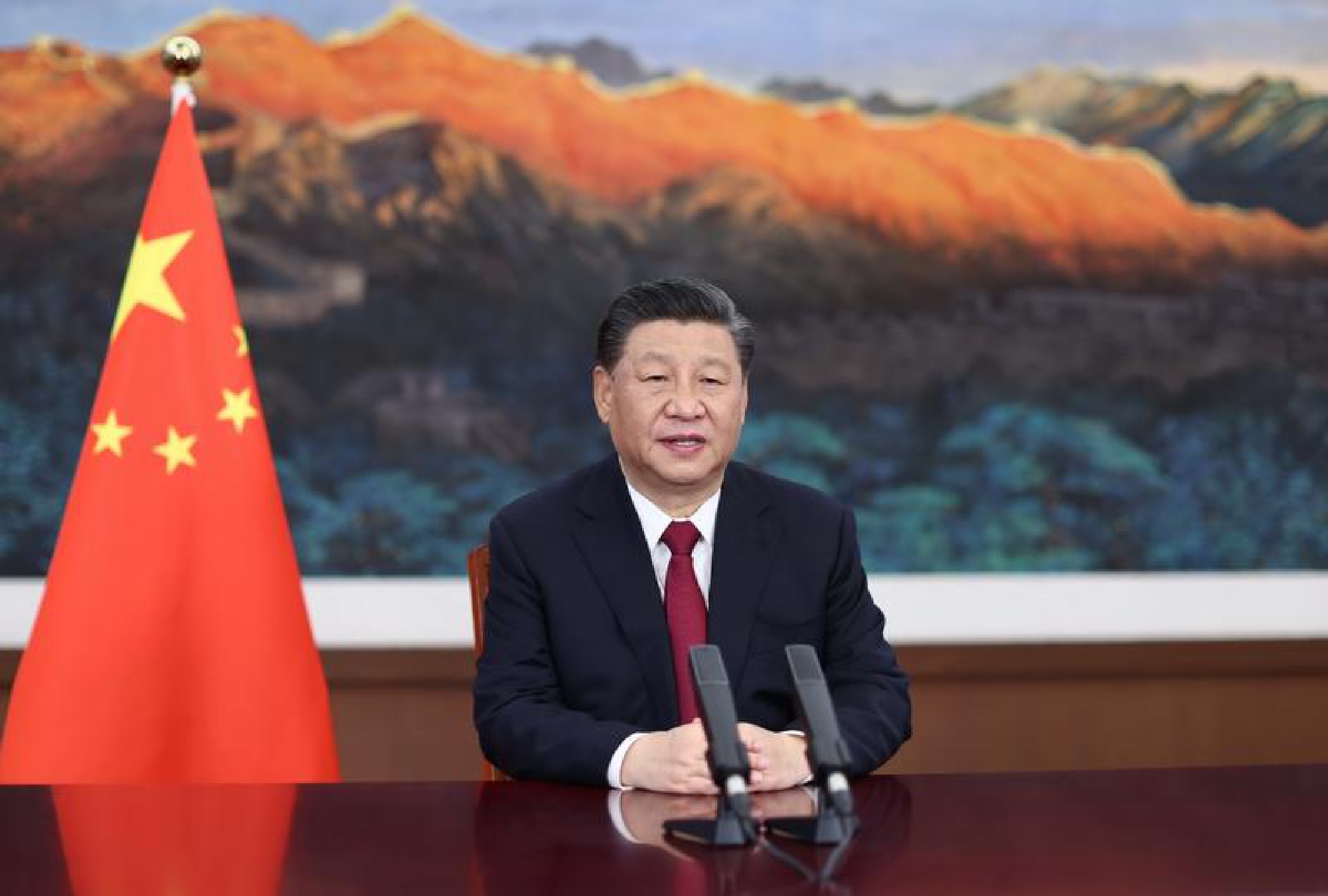
Xi made the remarks while delivering a keynote speech via video at the opening ceremony of the Boao Forum for Asia Annual Conference 2021.
China will develop friendship and cooperation with other countries on the basis of the Five Principles of Peaceful Coexistence, and promote a new type of international relations, Xi said.
Justice is needed in today’s world, not hegemony, he said.
“The COVID-19 pandemic has made it all the more clear to people around the world that we must reject the cold-war and zero-sum mentality and oppose a new ‘Cold War’ and ideological confrontation in whatever forms,” Xi said.
The principles of equality, mutual respect and mutual trust must be put front and center in state-to-state relations, Xi continued.
“Bossing others around or meddling in others’ internal affairs would not get one any support,” he said.
“World affairs should be handled through extensive consultation, and the future of the world should be decided by all countries working together,” Xi said.
“We must not let the rules set by one or a few countries be imposed on others, or allow unilateralism pursued by certain countries to set the pace for the whole world,” Xi stressed.
Big countries should behave in a manner befitting their status and with a greater sense of responsibility, he added.
Opening-up
The Chinese president said that 2021 marks the 20th anniversary of the Boao Forum for Asia (BFA).
The forum has borne witness to the extraordinary journey of China, of Asia and of the world, and has exerted a significant influence in boosting development in Asia and beyond, Xi said.
ALSO READ: Xi set to elaborate on growth in Boao speech
Xi underscored the significance of the theme of the forum, which he said was convened against “a very special background”.
The theme – A World in Change: Join Hands to Strengthen Global Governance and Advance Belt and Road Cooperation – is most opportune and relevant under the current circumstances, Xi said.
China has achieved progress and development in tandem with the rest of Asia and the world, the president said.
As an important member of the Asian family, China has kept deepening reform and opening-up while promoting regional cooperation, Xi said
As an important member of the Asian family, China has kept deepening reform and opening-up while promoting regional cooperation, Xi said.
All are welcome to share in the vast opportunities of the Chinese market, Xi said.
China will take an active part in multilateral cooperation on trade and investment, fully implement the Foreign Investment Law and its supporting rules and regulations, and cut further the negative list on foreign investment, said Xi.
China will continue to develop the Hainan Free Trade Port and develop new systems for a higher-standard open economy, he added.
Upholding true multilateralism
In his speech, Xi stressed following the principles of extensive consultation, joint contribution and shared benefits, and upholding true multilateralism.
Economic globalization is showing renewed resilience, and the call for upholding multilateralism and enhancing communication and coordination has grown stronger, Xi noted.
In the age of economic globalization, attempts to “erect walls” or “decouple” run counter to the law of economics and market principles, and would hurt others’ interests without benefiting oneself, Xi said.
Xi called for building an open world economy, saying that openness is essential for development and progress, and holds the key to post-COVID economic recovery
The Chinese president called for building an open world economy, saying that openness is essential for development and progress, and holds the key to post-COVID economic recovery.
“We need to promote trade and investment liberalization and facilitation, deepen regional economic integration, and enhance supply, industrial, data and human resources chains,” said Xi.
READ MORE: Report: Integration key to Asia’s sustained economic recovery
China will work with all sides to promote “hard connectivity” of infrastructure and “soft connectivity” of rules and standards in an effort to build a closer partnership for connectivity, Xi said.
He called for turning the fruits of scientific and technological innovation into greater benefits for people in all countries.
Efforts must be made to boost the digital economy, and step up exchanges and cooperation in areas including artificial intelligence, biomedicine and modern energy, Xi said.
Belt and Road Initiative
The Belt and Road Initiative (BRI) is a public road open to all, not a private path owned by one single party, the Chinese president said.
“All interested countries are welcome aboard to take part in the cooperation and share in its benefits,” he said.
Xi called for improving the BRI International Green Development Coalition, the Green Investment Principles for the Belt and Road Development and other multilateral cooperation platforms “to make green a defining feature of Belt and Road cooperation.”
Meanwhile, China will work with all willing participants to build the BRI into a pathway to poverty alleviation and growth.
By 2030, Belt and Road projects could help lift 7.6 million people from extreme poverty and 32 million people from moderate poverty across the world, Xi said, citing a World Bank report.
COVID-19
Xi said that the key role of the World Health Organization (WHO) must be given full play in the ongoing fight against COVID-19.
“We must put people and their lives above anything else, scale up information sharing and collective efforts, and enhance public health and medical cooperation,” he said.
Xi called for efforts to bolster international cooperation on the research and development, production and distribution of vaccines.
He stressed that efforts should be made to ensure that everyone in the world can access and afford the vaccines they need.
China will expand cooperation with various parties in infectious disease control, public health, traditional medicine and other areas, said Xi.
READ MORE: Full text of Xi’s speech at Boao forum opening ceremony
Climate change
Meanwhile, Xi stressed the importance of advancing international cooperation on climate change and doing more to implement the Paris Agreement.
“The principle of common but differentiated responsibilities must be upheld, and concerns of developing countries on capital, technology and capacity building must be addressed,” Xi said.
Conference on Dialogue of Asian Civilizations
China will host the second Conference on Dialogue of Asian Civilizations once the pandemic gets under control.
It will be part of China’s active efforts to promote inter-civilization dialogue in Asia and beyond, Xi noted.

 อินเดียทุบสถิติเสียชีวิตพุ่งเกิน 2,000 คนในรอบ 24 ชั่วโมง ออกซิเจนสำรองเหลือ 2-3 ชั่วโมง
 สื่อรัสเซียเผยทั้ง 2 ประเทศตกลงจัดหาอาวุธก่อนเกิดรัฐประหารในเมียนมา และเมื่อเดือนก.พ. เมียนมานำเข้าอุปกรณ์เรดาร์มูลค่าเกือบ 15 ล้านเหรียญสหรัฐจากรัสเซีย
 ภาวะแห้งแล้งรุนแรงสุดในรอบ 50 ปีในไต้หวันยิ่งซ้ำเติมภาวะขาดแคลนชิป
 อย่างไรก็ตามยังคงเป็นอัตราส่วนที่น้อยมากเมื่อเทียบกับวัคซีนโควิดที่ถูกฉีดไปแล้วเกือบ 900 ล้านโดสทั่วโลก
 ผู้อำนวยการใหญ่ WHO ห่วงจำนวนผู้เสียชีวิตจากโควิดเพิ่มขึ้นอย่างต่อเนื่อง หลังจากผู้ป่วยในช่วงอายุ 25-59 ปีที่รักษาตัวในรพ.มีจำนวนเพิ่มมากขึ้น