ประธานเฟดชี้คริปโตเป็นแค่เครื่องมือเก็งกำไร #SootinClaimon.Com

#SootinClaimon.Com : ขอบคุณแหล่งข้อมูล : หนังสือพิมพ์โพสต์ทูเดย์

https://www.posttoday.com/world/650523

วันที่ 16 เม.ย. 2564 เวลา 10:55 น.ประธานเฟดชี้คริปโตเป็นแค่เครื่องมือเก็งกำไรด้านซีอีโอบริษัท Bitcoin ชั้นนำเตือนรัฐบาลต่างๆ อาจเริ่มจำกัดคริปโต โดยเฉพาะสหรัฐที่มีวิสัยทัศน์คับแคบในเรื่องนี้

เจอโรม พาวเวลล์ประธานธนาคารกลางสหรัฐ (เฟด) กล่าวเมื่อวันพุธตามเวลาท้องถิ่นสหรัฐว่า สกุลเงินดิจิทัลส่วนใหญ่ใช้สำหรับการเดิมพันด้านราคาและยังไม่ถึงสถานะของกลไกการชำระเงิน

“พวกมันเป็นเครื่องมือสำหรับการเก็งกำไรจริงๆ พวกมันไม่ได้ถูกใช้เพื่อการชำระเงินจริงๆ”พาวเวลล์กล่าวกับ The Economic Club of New York ระหว่างการสัมภาษณ์เสมือนจริงกับเดวิด รูบินสไตน์ผู้ร่วมก่อตั้ง Carlyle Group

ประธานธนาคารกลางสหรัฐยังเปรียบเทียบคริปโตเคอร์เรนซี่กับทองคำโดยบอกว่าเป็นเวลาหลายพันปีแล้วที่มนุษย์กำหนดมูลค่าพิเศษให้กับทองคำโดยที่ทองคำไม่มีมูลค่านั้นในตัวมันเองในฐานะโลหะอุตสาหกรรม

ย้อนกลับไปเมื่อปลายเดือนมีนาคม พาวเวลล์เคยกล่าวในการประชุมสุดยอดเสมือนจริงซึ่งจัดโดย Bank for International Settlements ว่า “พวกมันมีความผันผวนสูงมากดู Bitcoin จึงไม่มีประโยชน์อย่างแท้จริงในฐานะตัวเก็บมูลค่า พวกมันเป็นสินทรัพย์สำหรับการเก็งกำไรมากกว่า ดังนั้นจึงไม่ได้ถูกใช้เป็นวิธีการชำระเงินโดยเฉพาะ …โดยพื้นฐานแล้วมันใช้แทนทองคำมากกว่าดอลลาร์”

ท่าทีของเจอโรม พาวเวลล์คล้ายคลึงกับเจเน็ต เยลเลน อดีตประธานเฟดซึ่งปัจจุบันดำรงตำแหน่งรัฐมนตรีว่าการกระทรวงการคลัง ในเดือนกุมภาพันธ์เยลเลนบอกกับ CNBC ว่า Bitcoin เป็น “สินทรัพย์ที่มีการเก็งกำไรสูง” และกล่าวว่ามันไม่ได้ถูกใช้กันอย่างแพร่หลายในฐานะกลไกการส่งผ่าน (ทางการเงิน)” และเป็น “วิธีการทำธุรกรรมที่ไม่มีประสิทธิภาพอย่างยิ่ง”

ด้านเจสซี พาวเวลล์ ซีอีโอของ Kraken บริษัทแลกเปลี่ยน Bitcoin กล่าวกับ CNBC ว่า รัฐบาลทั่วโลกอาจเริ่มจำกัดการใช้ Bitcoin และคริปโตเคอร์เรนซี่อื่นๆ แต่เขารู้สึกว่าสหรัฐมีวิสัยทัศน์ที่สั้นกว่าในเรื่องนี้เพราะได้รับแรงกดดันจากกลุ่มธุรกิจเก่า คือพวกธนาคารที่รู้สึกเสียผลประโยชน์ที่คริปโตเคอร์เรนซี่กำลังได้รับความนิยม ในขณะที่จีนมองการณืไกลมากกว่า

Photo by Al DRAGO / POOL / AFP

จีนฟื้นแล้วไตรมาส 1 โตเร็วที่สุดเป็นประวัติการณ์ #SootinClaimon.Com

#SootinClaimon.Com : ขอบคุณแหล่งข้อมูล : หนังสือพิมพ์โพสต์ทูเดย์

https://www.posttoday.com/world/650516

วันที่ 16 เม.ย. 2564 เวลา 09:54 น.จีนฟื้นแล้วไตรมาส 1 โตเร็วที่สุดเป็นประวัติการณ์เศรษฐกิจของจีนเติบโต 18.3% ในไตรมาสที่ 1 ซึ่งเป็นอัตราที่รวดเร็วที่สุดเป็นประวัติการณ์

เศรษฐกิจของจีนเติบโตอย่างรวดเร็วที่สุดเป็นประวัติการณ์ในช่วงสามเดือนแรกของปี 2021 โดยขยายตัว 18.3% จากปีก่อนหน้า เนื่องจากอุปสงค์ทั้งในและต่างประเทศฟื้นตัวอย่างต่อเนื่องจากวิกฤตโคโรนาไวรัส

ประเทศจีนซึ่งได้ชื่อว่า “โรงงานของโลก” ได้แสดงสัญญาณของการฟื้นตัวทางเศรษฐกิจในรูปตัววี (V-shaped) ด้วยกิจกรรมทางธุรกิจที่ทวีความคึกคักขึ้นและยอดค้าปลีกที่กลับมากระเตื้องขึ้น

ในช่วงเวลาเดียวกันของปี 2020 เศรษฐกิจดิ่งลง 6.8% นับเป็นการหดตัวในระยะไตรมาสครั้งแรกของจีน เนื่องจากการเคลื่อนย้ายของผู้คนและสินค้าถูกจำกัดอย่างมากท่ามกลางการระบาดซึ่งส่งผลกระทบอย่างหนักต่อการผลิตการบริโภคและการค้าไปทั่วทั้งระบบ

ทั้งนี้ จีนซึ่งเป็นเศรษฐกิจที่ใหญ่เป็นอันดับสองของโลกคาดว่าจะเติบโต 8.6% ในปีนี้ตามการสำรวจของรอยเตอร์หลังจากเพิ่มขึ้น 2.3% ในปีที่แล้วซึ่งเป็นการขยายตัวที่อ่อนแอที่สุดในรอบ 44 ปี แต่ยังคงทำให้จีนเป็นเศรษฐกิจหลักเพียงแห่งเดียวที่หลีกเลี่ยงการหดตัวได้ในช่วงที่ทั่วโลกล็อคดาวน์

อย่างไรก็ตามมีข้อสงสัยว่าจีนสามารถรักษาอัตราการขยายตัวอย่างรวดเร็วหรือไม่ โดยเมื่อไตรมาสต่อไตรมาส จีดีพีเพิ่มขึ้น 0.6% ในเดือนมกราคมถึงมีนาคมเทียบกับไตรมาสก่อนหน้า 3.2%

AFP PHOTO / Fred DUFOUR

วงการวิทย์สั่นสะเทือนเมื่อนักวิจัยเพาะเซลล์มนุษย์ในตัวอ่อนลิง #SootinClaimon.Com

#SootinClaimon.Com : ขอบคุณแหล่งข้อมูล : หนังสือพิมพ์โพสต์ทูเดย์

https://www.posttoday.com/world/650510

วันที่ 16 เม.ย. 2564 เวลา 09:22 น.วงการวิทย์สั่นสะเทือนเมื่อนักวิจัยเพาะเซลล์มนุษย์ในตัวอ่อนลิง การทดลองนี้จุดประกายการถกเถียงทางจริยธรรมในหมู่นักวิทยาศาสตร์

ทีมนักวิจัยสหรัฐ – จีนทำการเพาะตัวอ่อนลิงที่มีเซลล์ของมนุษย์ในห้องปฏิบัติการ โดยนักวิทยาศาสตร์ได้ฉีดเซลล์ต้นกำเนิดของมนุษย์ซึ่งเป็นเซลล์ที่มีความสามารถในการพัฒนาเป็นเนื้อเยื่อต่างๆ ของร่างกายเข้าไปในตัวอ่อนลิงแสมจากนั้นทำการศึกษาตัวอ่อนที่กำลังพัฒนาเป็นเวลานานถึง 20 วัน

ทีมนักวิทยาศาสตร์นำโดย ศ. ฮวน คาร์ลอส อิซปิซัว เบลมอนเตจาก Salk Institute ในสหรัฐซึ่งในปี 2017 เขามีส่วนช่วยสร้างลูกผสมมนุษย์กับหมูตัวแรก และสมาชิกในทีมของเขายังเป็นคนกลุ่มแรกที่สามารถเพาะเลี้ยงตัวอ่อนลิงในจานเพาะได้นานถึง 20 วันหลังการปฏิสนธิเมื่อปี 2019

ศ. เบลมอนเต กล่าวว่างานของพวกเขาสามารถปูทางในการแก้ไขปัญหาการขาดแคลนอย่างรุนแรงของอวัยวะปลูกถ่ายสำหรับมนุษย์ รวมทั้งช่วยให้เราเข้าใจมากขึ้นเกี่ยวกับพัฒนาการของมนุษย์ในระยะเริ่มต้น, พัฒนาการของโรค และความชราภาพ

การศึกษานี้ตีพิมพ์ในวารสาร Cell เมื่อวันที่ 15 เมษษยน ซึ่ง ศ. เบลมอนเตยืนยันว่าเป็นไปตามหลักเกณฑ์ด้านจริยธรรมและกฎหมายในปัจจุบันและอธิบายว่าทำการศึกษาเหล่านี้เพื่อทำความเข้าใจและปรับปรุงสุขภาพของมนุษย์

แต่ข่าวนี้สร้างประเด็นถกเถียงอย่างหนักเรื่องจริยธรรมวาสารออนไลน์ด้านวิทยาศาสตร์ Nature ชี้ว่า การทดลดงล่าสุดทำให้เกิดความแตกแยกในหมู่นักชีววิทยาพัฒนาการ บางคนตั้งคำถามถึงความจำเป็นในการทดลองโดยใช้ไพรเมต (ลิง) ที่เกี่ยวข้องอย่างใกล้ชิดกับมนุษย์ สัตว์เหล่านี้ไม่ควรจะถูกใช้เป็นสัตว์จำลอง/สัตว์ทดลองเหมือนพวกหนูและสัตว์ฟันแทะ นอกจากนี้สัตว์เลี้ยงลูกด้วยนมที่ไม่ใช่มนุษย์ได้รับการคุ้มครองตามกฎจริยธรรมการวิจัยที่เข้มงวดกว่าสัตว์ฟันแทะ และพวกเขากังวลว่างานดังกล่าวมีแนวโน้มที่จะกระตุ้นการต่อต้านของสาธารณชน

สำนักข่าว BBC สัมภาษณ์ดร. แอนนา สมาจดอร์ ผู้บรรยายรายวิชาและนักวิจัยด้านจริยธรรมชีวการแพทย์จาก Norwich Medical School ซึ่ง ดร. สมาจดอร์ การทดลองนี้เป็นความท้าทายทางจริยธรรมและกฎหมายที่สำคัญ เนื่องจากเราไม่สามารถทำการทดลองบางประเภทในมนุษย์ได้ และยังไม่ชัดเจนอีกว่าตัวอ่อนเหล่านี้จะถือเป็นมนุษย์หรือไม่

คริสติน แมทธิวส์ วิทยาศาสตร์และเทคโนโลยีจาก Baker Institute กล่าวกับ NPR ว่าสาธารณชนจะต้องกังวลและเธอก็เช่นกัน เพราะเรากำลังแค่ต้องการผลักดันวิทยาศาสตร์ไปข้างหน้า โดยไม่ได้หารือกันว่าอะไรควรและไม่ควรทำ

ภาพประกอบ – นักวิจัยใช้คราบแอนติบอดีเรืองแสงและกล้องจุลทรรศน์ขั้นสูงเพื่อให้เห็นภาพเซลล์ของสิ่งมีชีวิตที่แตกต่างกันในตัวอ่อน (เอ็มบริโอ) ในระยะเริ่มแรก สีแดงบ่งบอกถึงเซลล์ต้นกำเนิดของมนุษย์ ภาพจาก Weizhi Ji/Kunming University of Science and Technology

Dogecoin แรงจนอาจจะไม่ใช่เรื่องล้อเล่นซะแล้ว #SootinClaimon.Com

#SootinClaimon.Com : ขอบคุณแหล่งข้อมูล : หนังสือพิมพ์โพสต์ทูเดย์

https://www.posttoday.com/world/650484

วันที่ 15 เม.ย. 2564 เวลา 18:31 น.Dogecoin แรงจนอาจจะไม่ใช่เรื่องล้อเล่นซะแล้ว เหรียญที่ถูกมองว่าเป็นมีมเริ่มแสดงพลังอีกครั้ง คราวนี้ไม่ใช่เพราะเอลอน มัสก์หรือ Reddit แต่เป็นปฏิกิริยาต่อการเข้าตลาดหุ้นของ Coinbase

สัปดาห์แห่งความร้อนแรงของคริปโตเคอร์เรนซี่ เมื่อ Bitcoin และ Ethereum ทำสถิติสูงสุดในสัปดาห์นี้ แต่นอกจากโทเคนหลักๆ แล้ว ยังมี Dogecoin ซึ่งเป็นสกุลเงินดิจิทัลที่มีใบหน้าของสุนัขชิบะอินุเป็นโลโก้ได้ทะลุ 10 เซนต์เป็นครั้งแรกด้วย รวมแล้วราคาพุ่งขึ้นมา 85% ในเวลาแค่ 24 ชั่วโมง

Dogecoin เป็นสกุลเงินเสมือนจริงซึ่งเริ่มต้นจากการล้อเลียนทางอินเทอร์เน็ตเมื่อกว่า 7 ปีก่อนได้เพิ่มขึ้นมากกว่า 85% ในช่วง 24 ชั่วโมงที่ผ่านมาและมีการซื้อขายที่ 0.13 ดอลลาร์ตามข้อมูลของ CoinDesk ตอนนี้มูลค่าตลาดอยู่ที่กว่า 17,000 ล้านเหรียญ ทำให้มันกลับมาเป็นที่สนใจอีกครั้ง หลังจากไม่กี่เดือนก่อน Dogecoin เคยเป็นกระแสมาแล้ว

ย้อนกลับไปในเดือนมกราคมปี 2021 มูลค่าของ Dogecoin เพิ่มขึ้นกว่า 800% ใน 24 ชั่วโมงอันเป็นผลมาจากเอลอน มัสก์เอ่ยถึงเงินสกุลนี้จนทำให้ผู้ใช้แพล็ตฟอร์ม Reddit บางส่วนกันมาลงทุนกับมัน บวกกับในตอนนั้นมีกระแสช็อร์ตเซลของหุ้น GameStop ด้วย และลในเดือนกุมภาพันธ์ Dogecoin มีราคาสูงเป็นประวัติการณ์เพราะเอลอน มัสก์เอ่ยถึงมันอีก รวมถึงสนูป ด็อก นักแร้องเพลงแรปชื่อดังและจีน ไซมอนส์ นักร้องชื่อดัง หลังจากนั้นกระแสของมันก็หายไป

จนกระทั่งในเดือนเมษายนมันทำราคาสูงเป็นประวัติการณ์ที่ 0.14 ดอลลาร์ โดยได้รับแรงกระตุ้นจากการเข้าตลาดหุ้นของบริษัท Coinbase แม้ว่าแพลตฟอร์ของ Coinbase จะไม่มีการซื้อขาย Dogecoin ก็ตาม รวมแล้วในปีนี้มูลค่าของมันเพิ่มขึ้นมาแล้ว 2,000% ตั้งแต่ต้นปี

หลังจากที่ Dogecoin ทำลายสถิติใหม่ เอลอน มัสก์ก็ทวีตถึงมันอีกครั้งในวันที่ 15 เมษาายน แต่เมหือนกับทวีตก่อนๆ ของเขาเกี่ยวกับ Dogecoin ที่ดูคลุมเครือและคาดเดาแต่ผู้คนคาดเดาไปเองว่าเขาสนับสนุนเงินสกุลนี้ เช่น ล่าสุด เขาทวีตภาพถ่ายงานศิลปะของจิตรกรและประติมากรชาวสเปน ฮวน มีโร (Joan Miro) ที่วาดขึ้นในปี 1926 ที่มีชื่อว่า “Dog Barking At The Moon” แต่คำบรรยายใต้ภาพของ เอลอน มัสก์เปลี่ยนเป็น “Doge barking at the moon”

ในภาษาอังกฤษมีสำนวนว่า to the moon หมายความว่าความตั้งใจที่จะไปให้ถึงเป้าหมายที่ไกลจนยากจะไปถึง แต่ในวงการเทรดเดอร์ยังหมายความว่าราคาของหุ้นหรือสกุลเงินดิจิทัลจะเพิ่มขึ้นอย่างมากในสายตาของนักลงทุน ก่อนหน้านี้เมื่อวันที่ 24 กุมภาพันธ์ เอลอน มัสก์ยังเคยโพสต์ภาพของชิบะอินุกับธงสัญลักษณ์ของ Dogecoin บนดวงจันทร์มาแล้ว

ทั้งนี้ Dogecoin ก่อตั้งขึ้นโดยวิศวกรซอฟต์แวร์ของ IBM ชื่อ บิลลี่ มาร์คัสจากเมืองพอร์ตแลนด์ รัฐโอเรกอนและวิศวกรซอฟต์แวร์ของ Adobe ชื่อแจ็คสัน พาล์เมอร์ ซึ่งมุ่งมั่นที่จะสร้างสกุลเงินดิจิทัลแบบเพียร์ทูเพียร์ที่สามารถเข้าถึงกลุ่มประชากรได้กว้างกว่า Bitcoin โดย Dogecoin เปิดตัวอย่างเป็นทางการเมื่อวันที่ 6 ธันวาคม 2013

เมื่อวันที่ 19 ธันวาคม 2013 Dogecoin มีมูลค่าเพิ่มขึ้นเกือบ 300% ใน 72 ชั่วโมงโดยเพิ่มขึ้นจาก 0.00026 เหรียญสหรัฐเป็น 0.00095 เหรียญสหรัฐ และในเดือนมกราคม 2014 ปริมาณการซื้อขายของ Dogecoin สูงกว่า Bitcoin และสกุลเงินดิจิตอลอื่นๆ ทั้งหมดรวมกันในช่วงสั้นๆ อย่างไรก็ตามมูลค่าตลาดยังคงตามหลัง Bitcoin อย่างมาก

Dogecoin เริ่มกำหนดการผลิตเหรียญครั้งแรกโดยมีการหมุนเวียน 100,000 ล้านเหรียญ ต่อมาภายในกลางปี 2015 Dogecoin 100,000 ล้านถูกขุดไปแล้วโดยมีเหรียญอีก 5,00 ล้านเหรียญเพิ่มเข้าไปหมุนเวียนทุกปีหลังจากนั้น และขณะนี้ยังไม่มีการกำหนดฮาร์ดแคป (อัตราสูงสุดของปริมาณเหรียญในระบบ) ของ Dogecoins ทำให้มันมีเหรียญมากกว่าที่สกุลเงินดิจิทัลชั้นนำอื่นๆ

เวียดนามโวเหนือกว่าไทย ครองอันดับหนึ่งด้านราคาข้าวของโลก #SootinClaimon.Com

#SootinClaimon.Com : ขอบคุณแหล่งข้อมูล : หนังสือพิมพ์โพสต์ทูเดย์

https://www.posttoday.com/world/650487

วันที่ 15 เม.ย. 2564 เวลา 16:27 น.เวียดนามโวเหนือกว่าไทย ครองอันดับหนึ่งด้านราคาข้าวของโลกแต่จากข้อมูลต่างประเทศ เวียดนามนำเข้าข้าวราคาถูกมาเลี้ยงประชาชนและราคาที่แพงขึ้นทำให้การนำเข้าลดลง

สำนักข่าว VietNamNet ของเวียดนามรายงานอ้างข้อมูลจากกรมแปรรูปและพัฒนาตลาดการเกษตร ของกระทรวงพัฒนาเกษตรและชนบทว่า เวียดนามส่งออกข้าว 1.1 ล้านตันในช่วง 3 เดือนแรกของปี 2021 โดยมีรายได้ 606 ล้านเหรียญสหรัฐ ในด้านปริมาณลดลง 30.4% และมูลค่าลดลง 17.4% เทียบกับช่วงเวลาเดียวกันของปี 2020

ในเดือนมีนาคม 2021 ราคาข้าวส่งออกเฉลี่ยของเวียดนามอยู่ที่ 547 เหรียญสหรัฐต่อตันเพิ่มขึ้น 0.5% เมื่อเทียบกับเดือนกุมภาพันธ์ 2021 และ 19.1% เมื่อเทียบกับเดือนมีนาคม 2020 โดยเฉลี่ยในไตรมาสแรกของปี 2021 ราคาข้าวส่งออกเฉลี่ยเพิ่มขึ้น 18.6% เมื่อเทียบปีต่อปี และราคาข้าวเวียดนามสูงกว่าของไทยและอินเดีย

ขณะเดียวกันราคาข้าวหัก 5% ของไทยมีราคา 538 เหรียญสหรัฐต่อตันในช่วงต้นเดือนมีนาคม แต่ลดลงเหลือ 509 เหรียญสหรัฐต่อตันในปลายเดือนมีนาคม ส่วนอินเดียมีราคาข้าวต่ำที่สุดในหมู่ประเทศส่งออกข้าวชั้นนำทั้ง 3 ประเทศ

VietNamNet ชี้ว่า ตั้งแต่ปี 2020 เวียดนามได้แซงหน้าคู่แข่งด้านราคาขายโดยมีปริมาณการส่งออก 6.15 ล้านตันทำรายได้ 3,070 ล้านเหรียญสหรัฐจนแซงหน้าไทยขึ้นเป็นผู้ส่งออกข้าวรายใหญ่อันดับสองของโลกอย่างเป็นทางการรองจากอินเดีย

จากข้อมูลของกรมแปรรูปและพัฒนาตลาดการเกษตร ราคาข้าวเวียดนามอยู่ในระดับสูงเนื่องจากความต้องการข้าวฤดูหนาว-ฤดูใบไม้ผลิตจากเวียดนามมีสูงจากประเทศคู่ค้า และจากข้อมูลของสมาคมอาหารเวียดนามตั้งแต่ปลายเดือนมีนาคม 2021การส่งออกข้าวจะเพิ่มขึ้น เนื่องจากอุปทานข้าวมีปริมาณมากและธุรกิจต่างๆ ได้ดำเนินการแปรรูปข้าวเพื่อการส่งออกเรียบร้อยแล้ว

อย่างไรก็ตาม เป็นที่สังเกตว่าในขณะที่เวียดนามเร่งส่งออกและต่อมาประกาศชัยชนะเหนือไทย แต่ปรากฎว่าเวียดนามกลับนำเข้าข้าวหัก 5% และ 10% จากอินเดีย เพื่อตอบสนองความต้องการในประเทศเวียดนามซึ่งกลับมานำเข้าข้าวจากอินเดีย ซึ่ง M Madan Prakash ประธานสมาคมผู้ส่งออกสินค้าเกษตร (ACEA) ของอินเดียบอกกับ The Hindu BusinessLine ว่า เวียดนามมุ่งเน้นเฉพาะการผลิตพันธุ์พรีเมี่ยมเท่านั้นเพราะได้ราคาดีในตลาดโลก

จากข้อมูลของกระทรวงเกษตรของสหรัฐ (USDA) ราคาข้าวที่สูงของเวียดนามส่งผลให้การส่งออกข้าวลดลงสู่ระดับต่ำสุดในรอบ 5 ปีในช่วงเดือนมกราคม – กุมภาพันธ์ และสาเหตุอีกส่วนหนึ่งเพราะจีนที่กระจายตะกร้านำเข้าข้าวโดยไปซื้อเพิ่มจากอินเดีย, เมียนมา และกัมพูชา

Photo by Nhac NGUYEN / AFP

Hong Kong schools devote a day to China’s national security #SootinClaimon.Com

#SootinClaimon.Com : ขอบคุณแหล่งข้อมูล : หนังสือพิมพ์ The Nation.

https://www.nationthailand.com/news/30404940

Hong Kong schools devote a day to China’s national security

InternationalApr 16. 2021Students raise the Chinese national flag during a ceremony marking the National Security Education Day at a school in Hong Kong on April 15. MUST CREDIT: Bloomberg photo by Chan Long Hei.Students raise the Chinese national flag during a ceremony marking the National Security Education Day at a school in Hong Kong on April 15. MUST CREDIT: Bloomberg photo by Chan Long Hei.

By Syndication Washington Post, Bloomberg · Kari Lindberg, Iain Marlow, Chloe Lo

Hong Kong marked its first National Security Education Day since last year’s imposition of sweeping national security legislation by Beijing, as the government ramps up efforts to overhaul the school system and instill patriotism in the city’s populace following the protests of 2019.

Schools across the city were mandated to hold events including singing the Chinese national anthem and raising flags. In addition, giant billboards promoting the event have been plastered across the city, while the police held an open day where they displayed professional drills, anti-terrorism exercises and displayed armored vehicles.

While mainland China has celebrated such a day since 2016, this is the first time the semi-autonomous financial hub is marking the occasion. The city’s government is required, under the national security law that was drafted in Beijing and forced on the city with no meaningful local debate, to “promote national security education in schools and universities.”

The shift to a forceful inculcation of national security issues, even among young children, comes as Beijing increases its control over almost all sectors and institutions in Hong Kong. In its most recent move to stifle political dissent, China’s top legislative body approved an overhaul of the city’s already limited elections to give authorities an effective veto over any potential opposition candidate.

Carol Chan, an events manager who has children aged three and five, said of the new curriculum, “Would you teach a kindergarten kid how much money to put into the bank? They are only counting coins. It’s insane.”

Beijing believes that Hong Kong’s insufficiently patriotic youth were responsible for the sometimes violent protests throughout 2019 and the national security education day is one way of trying to shape nationalistic students, said Ivan Choy, a senior lecturer at the Chinese University of Hong Kong.

“They think that one of the major sources of instability is from the students, the young people, so they will put more efforts on this aspect,” said Choy, who studies Hong Kong politics. “They have put more patriotic education in, and they have tried to punish or discipline teachers in secondary schools.”

As the city prepared to mark the occasion, China’s state media also published several articles about citizens who had allegedly compromised national security. These include a Shanghai real estate tycoon who allegedly financed “anti-China” activists in Hong Kong, a mainland student who became supportive of the city’s protests and a migrant worker who allegedly photographed a military port in the southern city of Shantou for foreign spies.

The day began with a formal ceremony featuring top officials of the Hong Kong government. Also in attendance were Zheng Yanxiong, head of the secretive agency China created to implement the controversial security law that was condemned by major Western governments, and Major General Chen Daoxiang, head of the People’s Liberation Army garrison in the city.

In a speech, Luo Huining, Beijing’s top official in Hong Kong, said, “Any attempt by foreign countries and external forces to flagrantly interfere in the affairs of Hong Kong, and to exploit Hong Kong as a pawn will be met with impactful countermeasures.”

Schools held a number of events, including what the government called a national security themed bulletin board design competition at a primary school.

“To support the theme and objectives of the National Security Education Day, the school has arranged flags to be raised,” one local secondary school said in an email to parents that was seen by Bloomberg. “In addition, there is a set of displays near the school office with details on National Security and some Q&A posted for information.”

Hong Kong students also took part in what a government press release called “Together We Safeguard Our Nation and Homeland – Community Mosaic Wall,” where students put stickers with “smiling faces” onto a display board — reminiscent of the Lennon Walls which protesters built around the city during the 2019 protests exhibiting protest slogans and artwork.

Bookmarks distributed to students days before the event list a host of topics linked to national security, including “polar security,” “deep sea security” and “ecological security.”

There were limited public displays of opposition in a city where social-distancing restrictions and the national security law have made once raucous protests almost disappear entirely. Four activists led a small protest in the city’s Wan Chai neighborhood, according to local broadcaster RTHK.

The city has identified education, along with media and the judiciary, as key sectors that need to be brought to heel, after students played a key role in the city’s protest movement. Beijing has urged Hong Kong to eliminate the alleged “black hands” influencing its schools, intimating that foreign forces have helped foment societal unrest.

International schools seem to be exempt from participating in National Security Education Day. According to the South China Morning Post, the English Schools Foundation, which operates a group of international schools in Hong Kong, told parents in February that it would still have autonomy over its curriculum.

However, the city’s Education Bureau stressed that international schools still need to prevent “teaching or other school activities” that breach the security law, as well as ensure students “acquire a correct and objective understanding and apprehension of the concept of national security and the National Security Law.”

The government’s website promoting national security day has only been made available in Chinese.

Representatives of multiple of the city’s international schools didn’t immediately respond to requests for comment about how they would handle the day’s events. A spokeswoman for the ESF declined to comment.

Hong Kong told schools in February to start using a more patriotic curriculum and advised teachers to report breaches of the national security law. Children starting from around kindergarten age will be taught to memorize offenses under the law, including subversion, secession, terrorism and collusion with foreign powers.

Loha Tse, who works as a hotel manager and is parent to a four-and-a-half year old, said her child received a sticker last week promoting the event.

“It makes no sense to force these things on to kids so young,” said Tse.

German institutes cut 2021 GDP forecast on longer lockdowns #SootinClaimon.Com

#SootinClaimon.Com : ขอบคุณแหล่งข้อมูล : หนังสือพิมพ์ The Nation.

https://www.nationthailand.com/news/30404939

German institutes cut 2021 GDP forecast on longer lockdowns

InternationalApr 16. 2021

By Syndication Washington Post, Bloomberg · Birgit Jennen, Carolynn Look

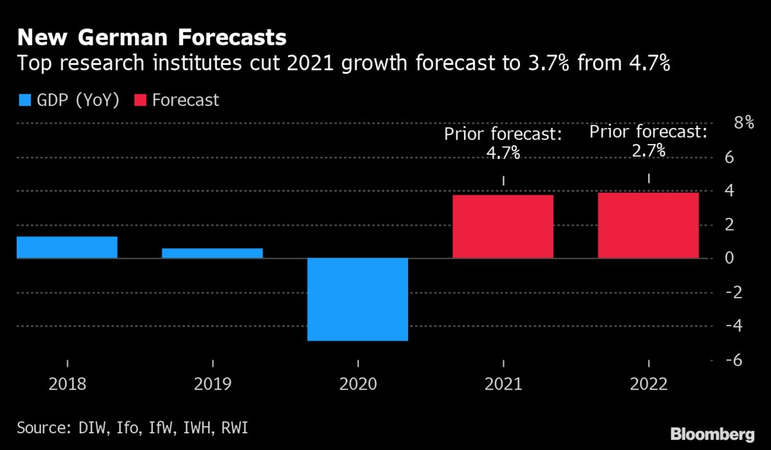
Germany’s leading research institutes cut their joint 2021 growth forecast for Europe’s biggest economy as prolonged lockdowns hold back the nation’s recovery.

The downgrade to a 3.7% expansion in gross domestic product, from 4.7% previously, reflects a sluggish vaccination campaign which has forced the government to extend virus restrictions. The outlook for 2022 was upgraded to 3.9% from 2.7%.

The economy likely shrank by 1.8% in the first quarter of this year, Torsten Schmidt, Economic Director of RWI Leibniz Institute for Economic Research, said in the report.

Germany has struggled to control a third wave of infections, and Chancellor Angela Merkel is seeking to impose even harsher curbs in virus hot spots. The institutes said they don’t expect rules to be loosened again until the middle of the second quarter, and that restrictions will likely remain in place until the end of the third quarter.

The twice-yearly outlook is prepared for the economy ministry by the DIW, Ifo, IfW, IWH and RWI institutes, and helps guide the government’s own forecasts and budget planning.

The government’s forecast is for growth of 3% this year, after a contraction of around 5% in 2020, and it expects a return to pre-pandemic levels of output in mid-2022. The economy ministry has said the signs point to a recovery over the rest of this year, and that a pickup in the pace of inoculations is fostering confidence.

Economy Minister Peter Altmaier said Thursday that he’ll publish an update to the government’s forecasts on April 27, and the prediction for this year would likely be “well above the previous forecast.”

“In particular, manufacturing is currently robust,” he said in an emailed statement. “However, we still have major problems in the area of retail and services,” he said.

Merkel’s ruling coalition has made tens of billions of euros available to offset the economic impact of the pandemic, and Finance Minister Olaf Scholz said Thursday it’ll continue to help businesses and households for as long as necessary.

“We must ensure that we can support companies and jobs with financial aid until the end of the crisis,” Scholz said during a lower house of parliament debate on the his supplementary budget for this year.

“We can afford to finance everything that is needed,” he said, adding that Germany’s budget will be in better shape than other countries after the crisis thanks to sensible policies in the past that laid a solid foundation.

U.S. could have 300 million extra vaccine doses by end of July, raising concerns over hoarding #SootinClaimon.Com

#SootinClaimon.Com : ขอบคุณแหล่งข้อมูล : หนังสือพิมพ์ The Nation.

https://www.nationthailand.com/news/30404938

U.S. could have 300 million extra vaccine doses by end of July, raising concerns over hoarding

InternationalApr 16. 2021

By The Washington Post · Adam Taylor, Emily Rauhala

The United States is on track to have gathered an oversupply of hundreds of millions of coronavirus vaccine doses as soon as July, even while many countries in the developing world will have to wait years to vaccinate a majority of their populations, according to a report by the Duke Global Health Innovation Center.

https://www.washingtonpost.com/video/c/embed/3cadc601-82a1-44fc-b2e7-c164d2799130?ptvads=block&playthrough=false

The new estimates, included in the paper alongside recommendations, come as the Biden administration faces mounting pressure to facilitate equitable vaccine distribution around the world. The United States has pledged money to the global immunization effort, but has resisted calls to share vaccine technology or donate surplus doses.

On Thursday, Secretary of State Antony Blinken held a fundraising event for Covax, a World Health Organization-backed push to distribute coronavirus vaccines, particularly to low- and middle-income countries, and called on other nations to do more.

Covax aims to secure and distribute enough vaccine to reach up to 20% of the population in 92 participating target countries by the end of 2021. In February, the Biden White House pledged up to $4 billion in support, reversing a Trump administration decision to opt out.

At a virtual event on Thursday, Blinken urged countries to give more, saying an additional $2 billion could help Covax reach 30%, rather than 20%, of target populations this year. “Just think for a moment of all the people whose lives would be impacted by hitting that higher target.” he said.

The secretary of state said countries must support vaccine manufacturing, but stopped short of announcing any specific policies or plans. He did not address the issue of surplus U.S. doses.

On Wednesday, Oxfam released a letter signed by more than 100 former heads of state and Nobel laureates calling on President Joe Biden to waive intellectual property rules for coronavirus vaccines and “put the collective right to safety for all ahead of the commercial monopolies of the few.”

“Leadership from the US on safe, effective, and equitable global access to Covid-19 vaccines is imperative,” the Duke paper argues, pushing for Washington to increase funding for vaccine-sharing programs, and to donate excess doses and use its clout to open up vaccine manufacturing.

Another proposal, put forward in a letter backed by the Center for Strategic and International Studies (CSIS), calls for the United States to donate 10% of its excess doses over the summer, moving to 50% by the end of the year, and argues that Biden should deliver a speech this spring to make the case to the American people.

Under the leadership of Gayle Smith, Blinken’s new coordinator for global coronavirus response and health security, the ONE Campaign, a nonprofit organization, called on wealthy countries to donate 5% of their surplus doses once they’ve vaccinated 20% of their populations.

The proposals come just after the United States surpassed that 20% target -and as the virus spreads uncontrolled in much of the world and more-virulent variants continue to take hold.

The United States will probably have “at least 300 million excess doses or more” by the end of July, the Duke paper’s authors estimate, even as vaccination programs are extended to the vast majority of U.S. children.

The estimate is based on the assumption that the vaccine developed by AstraZeneca receives emergency-use authorization and the Johnson & Johnson vaccine is used widely, despite rare side effects.

The oversupply in the United States forms a stark contrast with the situation in many poorer parts of the world, where vaccination programs have been slow to begin amid problems with supply and distribution, and could ultimately prolong the pandemic and hamper a U.S. recovery.

The Biden administration has pledged to donate doses. “If we have a surplus, we’re going to share it with the rest of the world,” Biden said last month, when pressed on the issue. “We’re going to start off making sure Americans are taken care of first, but we’re then going to try to help the rest of the world.” And Blinken has made the case that protecting Americans requires international action. “This pandemic won’t end at home until it ends worldwide,” he said at a news conference on April 5. But no global plan to donate doses has been specified.

The world’s poorest 92 countries will not be able to reach a vaccination rate of 60% of their populations until 2023 “or beyond” if current distribution trends continue, the Duke paper estimates.

The authors include former U.S. officials such as Mark McClellan, who served as commissioner of the Food and Drug Administration under President George W. Bush, as well as Krishna Udayakumar, founding director of the Duke Global Health Innovation Center.

Their recommendations echo the concerns from other public health experts worldwide, including World Health Organization Director General Tedros Adhanom Ghebreyesus, who called vaccine-distribution plans that focus only on domestic issues a “self-defeating strategy [that] will cost lives and livelihoods.”

French President Emmanuel Macron in February pushed for the United States and Europe to donate up to 5% of secured vaccine doses, although the idea has not gained significant momentum.

Covax is just one part of the broader Access to COVID-19 Tools (ACT) Accelerator, a broader plan that has a funding gap of more than $22 billion.

Even if Covax were fully funded this year, it would be able to vaccinate only a quarter of the populations in the world’s 92 poorest nations, according to the Duke paper.

Although many experts think the United States needs to do more to ensure that the developing world can vaccine faster, they differ on approach.

While the letter spearheaded by Oxfam called on the United States to back a temporary waiver of World Trade Organization intellectual property rules, breaking vaccine monopolies, the Duke experts argued that such a measure is unnecessary and could prove chaotic.

Instead, they propose that the United States should back the use of cooperative licensing arrangements to increase manufacturing capacity, so that production can be scaled up quickly but safely.

The Duke authors also state that although U.S. contracts with drug manufacturers may restrict donations of excess doses, the Biden administration could modify its contracts and could provide “loans” of currently available vaccine doses (as it has done with Mexico and Canada). It also could shift the timing of vaccine deliveries so more-needy countries receive their doses first.

Both the Duke and CSIS proposals noted that although the AstraZeneca vaccine does not have emergency-use approval in the United States, it could be used in other countries. The United States has purchased 300 million doses of the AstraZeneca vaccine alone.

Spring wave of coronavirus crashes across 38 states as hospitalizations increase #SootinClaimon.Com

#SootinClaimon.Com : ขอบคุณแหล่งข้อมูล : หนังสือพิมพ์ The Nation.

https://www.nationthailand.com/news/30404937

Spring wave of coronavirus crashes across 38 states as hospitalizations increase

InternationalApr 16. 2021A heart emblazoned with a hopeful message appears at American Coney Island in Detroit. The popular tourist site is closed during Michigan's stay-at-home order during a coronavirus surge. MUST CREDIT: Photo by Nick Hagen for The Washington Post.A heart emblazoned with a hopeful message appears at American Coney Island in Detroit. The popular tourist site is closed during Michigan’s stay-at-home order during a coronavirus surge. MUST CREDIT: Photo by Nick Hagen for The Washington Post.

By The Washington Post · Joel Achenbach, Jacqueline Dupree

The coronavirus pandemic in America has turned into a patchwork of regional hotspots, with some states hammered by a surge of infections and hospitalizations even as others have seen the crisis begin to ease. The spring wave of the pandemic has driven hospitalizations above 47,000, the highest since March 4.

Thirty-eight states have reported an increase during the past week in the number of people hospitalized with covid-19, the illness caused by the virus, according to a Washington Post analysis of data provided by the Department of Health and Human Services.

But the national statistics fail to capture the intensity of the coronavirus emergency in the hotspots. Michigan reported more than 10,000 new infections on Tuesday alone. The state on Wednesday reported an average of 46 deaths a day, up from 16 a month earlier.

“We’re still climbing, unfortunately,” said Nicholas Gilpin, system medical director for infection prevention at Beaumont Health, which runs eight hospitals in the Detroit area and has more than 800 patients hospitalized.

Michigan officials have pleaded with the White House for more vaccine doses, but the Biden administration has said it will stick to allocations based on state populations. Administration officials stressed that vaccines aren’t rapid-response tools for outbreaks.

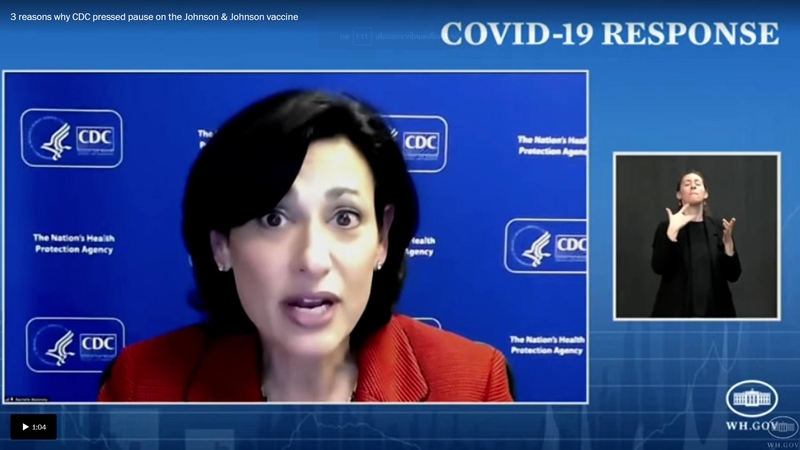
“What we need to do in those situations is shut things down,” Rochelle Walensky, director of the Centers for Disease Control and Prevention, said Monday. “We need that vaccine in other places. If we vaccinate today, we will have, you know, impact in six weeks, and we don’t know where the next place is going to be that is going to surge.”

Along with Michigan, 32 other states have also registered increases in infections in the past two weeks, including all the states along the Great Lakes from Wisconsin to Pennsylvania. Minnesota and South Dakota are also up, making the Upper Midwest the major regional center of the spring wave. If there’s a single broad trend, it’s that the northern tier of the country is generally faring worse than the southern – for the moment.

Other regional hotspots include Maine and New Hampshire in northern New England; Delaware and Maryland in the mid-Atlantic; Colorado, Arizona and Nevada in the Mountain West; and Oregon and Washington in the Pacific Northwest.

By contrast, much of the Deep South, with the exception of Florida and Georgia in recent days, has reported sharp decreases. Since the winter wave ended, West Texas and the Great Plains have seen improving numbers.

“The spring wave has not had a huge amplitude nationally, but has been very regional,” said David Rubin, director of PolicyLab at Children’s Hospital of Philadelphia.

He and his colleagues have pointed to weather and seasonality as a factor in infection rates, with warmer and lengthening days supporting less virus transmission.

“There’s a clear latitude effect. If you go up into Canada, they’ve been having a really hard time,” he said.

The vaccination campaign appears to have altered the demographics of hospitalizations: With a large majority of elderly people now inoculated, the average age of patients has dropped. Gilpin, of Beaumont Health, said patients are generally less ill than in previous phases of the pandemic.

As of Thursday, more than 76 million people in the United States had been fully vaccinated. The vaccines are not foolproof, however – something known since the first results emerged from clinical trials. The CDC said Thursday that 5,800 cases of post-vaccination “breakthrough infections” have been reported nationwide. That’s fewer than 1 in every 13,000 vaccinations.

Of those breakthrough cases, 29% were asymptomatic and 7% required hospitalizations. CDC spokeswoman Kristen Nordlund said 74 of those vaccine recipients who had breakthrough infections died.

Separately, officials in the state of Washington reported Wednesday that 217 people among the 1.7 million fully vaccinated there had suffered breakthrough infections. Five deaths among patients ranging in age from 67 to 94, all with multiple underlying conditions, are under investigation, the state department of health said.

Anthony Fauci, President Joe Biden’s chief medical adviser on the pandemic, said during Monday’s White House task force news conference that there are two distinct types of vaccine failure.

“Primary vaccine failure” is when the body doesn’t mount a robust immune response. That could be caused by poor health, age, medication or something wrong with the vaccine. “Secondary vaccine failure” is when immunity fades over time, or if the person is exposed to a different virus strain.

“However, even if a vaccine fails to protect against infection, it often protects against serious disease,” Fauci said.

The CDC said these breakthrough infections were seen in all age groups. Women accounted for 65% of reported breakthrough cases. The CDC did not break down the cases by vaccine type.

“To date, no unexpected patterns have been identified in case demographics or vaccine characteristics,” Nordlund said. She added that the CDC continues to advise vaccinated people to take precautions in public places, such as wearing masks, maintaining social distancing, and avoiding crowds and poorly ventilated places.

The nation appears to be moving forward, if not always smoothly, toward its goal of crushing the pandemic. By the end of the week, the United States is poised to reach the milestone of 200 million vaccine shots into arms, and the now-rapid pace of inoculations among the most vulnerable populations is driving down mortality rates from covid-19.

But vaccine hesitancy is much on the mind of public health officials. In coming weeks, the supply of doses may outstrip demand. Biden administration officials said Wednesday the country is averaging 3.3 million vaccine doses a day. On Wednesday, the government reported only 2.5 million vaccine doses administered – even though that included pre-pause Johnson & Johnson vaccinations.

That pause is because of a rare blood-clotting condition seen in six women, one of whom died. That number is small compared with the 7.5 million doses delivered, but the similarity of the cases to blood clotting seen in Europe in the rollout of the AstraZeneca vaccine – which uses a similar vector for introducing the vaccine into the body – has grabbed the attention of the scientific community.

This country’s vaccination efforts have relied far more heavily on the Pfizer-BioNTech and Moderna vaccines. But Johnson & Johnson has been ramping up in recent weeks, with 344,000 vaccinations reported Monday before the pause.

Any attempt to forecast the future of the pandemic has been hampered by unknowns about the virus and the human immune response to it, the unpredictability of human behavior, the successes or failures in persuading people to get vaccinated, and many other crosscurrents that can push infection and hospitalization numbers in opposite directions. Changing metaphors: There are many dials controlling this situation, manipulated simultaneously, clockwise and counterclockwise.

One dial involves the speed of vaccination. That took a setback this week. Inoculations with the Johnson & Johnson vaccine were paused nationwide amid reports of six women between the ages of 18 and 48 who suffered a rare blood clotting disorder.

That is not a showstopper given that Johnson & Johnson so far has represented only about 5% of vaccinations. But the news was unwelcome in Michigan. The worries about this one vaccine could erode confidence in the broader vaccination campaign and the assurances of public health experts, at a moment when vaccines are the most powerful tool for ending the pandemic, Gilpin said.

“You’ve already got a pretty concerned chunk of the population that are already skeptical of the vaccine. This is not going to help,” Gilpin said. “This has become a race, a race to get the vaccine into people as quickly as possible before the virus can continue to spread, or continue to mutate. And so this will slow us down.”

Rubin, of Children’s Hospital, said human behavior is the biggest cause of recent infection upticks. Fatigued by the pandemic, people are lowering their guard, traveling more readily, socializing indoors with unvaccinated people. Governors and mayors are easing restrictions on gatherings.

“The biggest driving force of the spring resurgence has been how quickly the American people have abandoned social distancing,” Rubin said.

One of the big unknowns is the number of people who have already been infected with the virus and may have at least partial immunity. The official count is 31 million, but some experts believe the true number is many times that. Some states hammered by high numbers of infections earlier in the pandemic, such as Iowa, have recorded more modest spring numbers, while states such as Maine and New Hampshire, largely spared until now, are seeing sharp spikes in cases.

On Tuesday, the country’s seven-day daily average for new infections topped 71,000 for the first time since Feb. 18.

Federal coronavirus data released Wednesday showed 1,414 counties color-coded as red, with “high transmission” rates, a rise from 1,317 on March 14. There was a mirror image to that increase: The number of counties color-coded blue, “low transmission,” also rose in the same time period, from 186 to 249.

Within states, the trends are not uniform. In Georgia, which has seen its average of new cases increase more than 17% in the past week, 38 of its counties – many in the north and west of the state – have registered case average increases, while 52 have experienced decreases and the other 67 counties reported no change.

The northern states such as Michigan and Minnesota may have reached a peak in cases, as the upward trend of new infections has flattened in recent days. Rubin said modeling by Children’s Hospital of Philadelphia suggests those states, as well as the New York City area, could soon experience declining infections. The forecasts are based in part on widespread drops in test positivity percentages that have consistently foreshadowed declines in caseloads and hospitalizations, Rubin said.

Highly contagious, mutation-laden variants of the virus are circulating. A variant first seen in the United Kingdom, known as B.1.1.7, and believed to be at least 50% more transmissible, is now the dominant strain in the United States, according to the CDC. Several other less-common variants are in the mix. The vaccines work against the variants for now, but evolution of the virus could necessitate changes in the vaccines similar to the reformulation of seasonal flu shots.

“There are these variants that are wild cards. But one thing we know for sure is if a virus can’t circulate, if it can’t replicate, it can’t create new variants,” said Ellen Foxman, an immunologist at Yale School of Medicine.

That points to the need for mass vaccination, she said, and the Johnson & Johnson vaccine pause shouldn’t derail the campaign.

“You want normal life? That’s your ticket, is mass vaccination. We don’t want to let this one little bump of this very rare complication of this one vaccine to interrupt the progress that we’ve been making,” she said.

U.S. imposes economic sanctions on Russia over cyberspying, efforts to influence presidential election #SootinClaimon.Com

#SootinClaimon.Com : ขอบคุณแหล่งข้อมูล : หนังสือพิมพ์ The Nation.

https://www.nationthailand.com/news/30404936

U.S. imposes economic sanctions on Russia over cyberspying, efforts to influence presidential election

InternationalApr 16. 2021

By The Washington Post · Ellen Nakashima

WASHINGTON – The Biden administration on Thursday imposed sanctions targeting the Russian economy to punish the Kremlin for a cyberespionage campaign against the United States and to influence the presidential election, according to senior U.S. officials.

The administration also sanctioned six Russian companies that support Russian spy services’ cyberhacking operations and will expel 10 intelligence officers working under diplomatic cover in the United States. It formally named the Russian intelligence service SVR as responsible for the hacking operation commonly known as SolarWinds.

The measures were taken under a new executive order and are an effort to make good on President Joe Biden’s vow to hold Moscow accountable for a series of operations, including election influence and the cyberhacks that compromised nine federal agencies and about 100 private firms.

“Our view is that no single action that we will take or could take . . . could directly alter Russia’s malign behavior,” said Jonathan Finer, principal deputy national security adviser. “But this is going to be a process that is going to take place over time, and it will involve a mix of significant pressure and finding ways to work together.”

The announcement of a U.S. response had been repeatedly pushed back, in part because Biden has wanted his team to develop more effective measures, said senior administration officials who spoke on the condition of anonymity to discuss a sensitive matter.

Biden told Russian President Vladimir Putin in a call on Tuesday that Washington would be taking actions “in the coming days” to defend U.S. national interests, without specifying the exact timing or measures, a senior administration official said. Biden also raised the possibility of a summit in a third country with Putin in the coming months.

As president-elect, Biden had told Putin in January that his administration would be “compelled to respond” to these activities, the official said. “So it should not come as a surprise to the government of Russia that we’re taking these actions.”

The package includes sanctions on all debt Russia issues after June 14, barring U.S. financial institutions from buying government bonds directly from the Russian Central Bank, the Russian National Wealth Fund and the Ministry of Finance. The action, experts said, will complicate Moscow’s ability to raise money in the international capital markets.

Some Russian officials discounted the move, saying it is easy for investors to work around the restriction by investing in bonds on the secondary market through an intermediary.

But under the new order signed by Biden, the United States is reserving the right to broaden the scope of the sovereign debt sanctions to include secondary markets if Moscow’s malign activities persist, officials said.

“This action signals that the Biden administration is not going to hold back,” said Edward Fishman, a nonresident senior fellow at the Atlantic Council. “They’re taking significant actions against the Russian economy and putting global markets on notice that Russian sanctions will increase if Russia’s aggressive behavior continues.”

At the same time, said a second senior administration official, “we’re not looking for escalation. We’re providing a proportionate and tailored response.”

Kremlin spokesman Dmitry Peskov said Thursday that Russia viewed any U.S. sanctions as illegal and would retaliate in kind. Moscow summoned U.S. Ambassador to Russia John Sullivan for what a Foreign Ministry spokeswoman said would be “a difficult talk.”

Peskov said sanctions would not be helpful in the lead-up to the proposed summit.

“We condemn any sanction aspirations,” Peskov said. “We believe they are illegal. In any case, the principle of reciprocity applies in this case. Reciprocity will meet our interests in the best possible way.”

The SVR, Russia’s foreign intelligence agency, dismissed the accusations that it was involved in cyberattacks as “nonsense.”

The European Union, Australia and Canada issued statements of support after the White House’s actions on SolarWinds, noting that European countries were also affected but they did not join in sanctions targeting Russia’s sovereign debt.

The measures will be accompanied by what the White House hopes will be a strong message to Moscow to convey U.S. displeasure, but without cutting off diplomacy, said a second official. The message, the official said, is: “We are willing to talk about certain things, but we can’t have a strong relationship while you continue to take these malign steps.”

One action that will not be tied to the sanctions is Russia’s reported effort to put bounties on the heads of U.S. troops in Afghanistan in 2019, officials said. U.S. intelligence agencies had low to moderate confidence that officers with the Russian military spy agency, the GRU, sought to encourage Taliban attacks against U.S. and coalition personnel – not strong enough to justify the imposition of sanctions, officials said.

“But we do believe that this information puts the burden on the Russian government to explain its action and takes steps to address this disturbing pattern of behavior,” the senior administration official said. “We expressed those concerns directly to the government of Russia.”

The new executive order focuses on Russian activities outside its borders and “is intended to signal to the Russian government that its destabilizing behavior is unacceptable and that the United States will impose economically impactful costs if it continues or escalates,” the senior official said.

The executive order covers a range of actions that can be sanctioned, from cyberattacks to election interference to transnational corruption. Creating such an umbrella order streamlines the messaging, allowing the administration to sanction one nation – Russia – for a diverse set of activities under one authority, experts said.

“It’s good to clearly message our priorities to Russia,” said Andrea Kendall-Taylor, a senior fellow at the Center for a New American Security. “By packaging a response to several things at once, the administration can get off the back foot and move on its agenda. What we don’t want is to always be in response mode to Russia.”

The sanctions and expulsions come four months after revelations that Russian cyberspies had compromised major federal agencies, including the Treasury and State departments and a number of private-sector companies. The hacks were enabled by corrupted software updates from the Texas-based company SolarWinds. The Washington Post first reported that the SVR was believed to be behind the intrusions. The SolarWinds link was first disclosed by a private cyber firm, FireEye.

Biden’s repeated vows to punish the party responsible raised expectations the administration would take action – despite the fact that the intrusions apparently fell into the category of political espionage. All developed countries engage in such espionage.

But senior administration officials have said that Russia’s presence in federal networks could give it a toehold to undertake more disruptive actions. And some policy experts have said that should be grounds for punishment. Others disagreed, saying the operation did not reach disruptive levels.

The six cyber firms to be sanctioned have facilitated Russian government hacking in some way, from providing expertise to developing tools that allow the spy agencies to gain access to targeted networks, the officials said. Some, but not all, are linked to the SolarWinds campaign, they said.

The U.S. intelligence community last month issued a report concluding that Putin sought to sway the 2020 election in President Donald Trump’s favor by spreading misleading information about Biden.

In response, the Treasury Department is sanctioning 32 entities and individuals involved in the influence campaign and other acts of disinformation. They include Konstantin Kilimnik, a Ukrainian-Russian who worked in Ukraine with Trump’s 2016 presidential campaign chairman Paul Manafort. A Senate panel last year concluded that Kilimnik was a Russian intelligence officer, and the Treasury on Thursday offered new details, saying that during the 2016 campaign, Kilimnik “provided Russian intelligence services” with sensitive information on polling and campaign strategy.

The Treasury also sanctioned Russian disinformation sites including InfoRos, which calls itself a news agency but is primarily run by the GRU; and the Strategic Culture Foundation, an online journal controlled by the SVR that the Treasury said promoted false narratives in the 2020 election and tried to obscure its Russian origins.

The United States is expelling the 10 operatives from Russia’s embassy in Washington. Russian spies have been sent home before. The Obama administration expelled 35 intelligence operatives in December 2016 in retaliation for Kremlin interference in that year’s presidential election. The Trump administration in 2018 ordered out 60 Russian officers, including a dozen identified as spies, in response to the poisoning of former Russian spy Sergei Skripal in Britain. That action was taken in coordination with European allies.

Officials in Moscow expressed anger that the Biden administration expelled diplomats and slapped on new sanctions two days after Putin’s call with Biden. “Such aggressive behavior will doubtless be decisively rebuffed,” said Russian Foreign Ministry spokeswoman Maria Zakharova, saying Russia would inevitably respond. “Washington must realize that the degradation of bilateral relations will come at a cost. Responsibility for what is happening lies entirely with the U.S.,” she said.

The new sovereign debt sanctions, affecting ruble and nonruble bonds, are noteworthy, officials said. Before this action, U.S. sanctions barred Americans from buying only nonruble denominated debt – about 20% of Russia’s sovereign debt. Now, said the second senior administration official, the other 80%, or the full amount, will be covered.