นักลงทุนสหรัฐหวั่นจีนจะใช้ Bitcoin เป็นอาวุธ #SootinClaimon.Com

#SootinClaimon.Com : ขอบคุณแหล่งข้อมูล : หนังสือพิมพ์โพสต์ทูเดย์

https://www.posttoday.com/world/649937

วันที่ 08 เม.ย. 2564 เวลา 13:00 น.นักลงทุนสหรัฐหวั่นจีนจะใช้ Bitcoin เป็นอาวุธปีเตอร์ ธีล เตือน Bitcoin อาจเป็น “อาวุธทางการเงินของจีน” ที่ใช้โค่น USD ซ้ำทำลายสิ่งแวดล้อม

ในการพูดคุยร่วมกับไมค์ ปอมเปโอ อดีตรัฐมนตรีว่าการกระทรวงการต่างประเทศของสหรัฐซึ่งจัดขึ้นในรูปแบบเสมือนจริงโดยมูลนิธิ Richard Nixon เมื่อวันพุธที่ผ่านมา ปีเตอร์ ธีล ผู้ร่วมก่อตั้ง PayPal และนักลงทุนระดับพันล้านได้ให้ความเห็นว่าหากจีนใช้สกุลเงิน Bitcoin อาจเป็นภัยคุกคามต่อสถานะของสกุลเงินดอลลาร์สหรัฐ ท่ามกลางความกังวลว่าจีนจะมีอำนาจควบคุม Bitcoin อีกครั้ง

“แม้ว่าผมจะมีความเชี่ยวชาญด้านคริปโตและ Bitcoin ผมก็ยังกังวลว่า Bitcoin จะถูกมองเป็นอาวุธทางการเงินของจีนในการต่อต้านสหรัฐหรือไม่…มันคุกคามสกุลเงินอื่นๆ โดยเฉพาะอย่างยิ่งดอลลาร์สหรัฐ” ธีลกล่าวในระหว่างการพูดคุย

อย่างไรก็ตาม การศึกษาที่ตีพิมพ์บนวารสาร Nature ระบุว่าเหมือง Bitcoin ของจีนซึ่งคิดเป็นเกือบ 80% ของการค้าสกุลเงินดิจิทัลทั่วโลกอาจเป็นภัยต่อสภาพอากาศอย่างมาก

เนื่องจาก Bitcoin และสกุลเงินดิจิทัลอื่นๆ อาศัยเทคโนโลยี “blockchain” ซึ่งเป็นฐานข้อมูลการทำธุรกรรมร่วมกันโดยมีรายการที่ต้องได้รับการยืนยันและเข้ารหัส ซึ่งต้องใช้คอมพิวเตอร์พลังสูงในการตรวจสอบธุรกรรมจึงจำเป็นต้องใช้พลังงานไฟฟ้าจำนวนมหาศาล

การศึกษาดังกล่าวระบุว่า ประมาณ 40% ของเหมือง Bitcoin ของจีนใช้พลังงานถ่านหิน และส่วนที่เหลือเป็นพลังงานหมุนเวียน อย่างไรก็ตามโรงไฟฟ้าถ่านหินขนาดใหญ่อาจเป็นการบั่นทอนเป้าหมายในการเป็นกลางทางคาร์บอน (carbon neutrality) ของจีนซึ่งตั้งเป้าไว้ภายในปี 2060

การศึกษายังกล่าวอีกว่าเหมือง Bitcoin ของจีนอาจปล่อยก๊าซคาร์บอน 130.5 ล้านเมตริกภายในปี 2024 ซึ่งใกล้เคียงกับการปล่อยก๊าซเรือนกระจกประจำปีของอิตาลีหรือซาอุดิอาระเบียที่อุดมด้วยน้ำมัน

ทั้งนี้ ตามดัชนีการใช้ไฟฟ้าของ Bitcoin จากมหาวิทยาลัยเคมบริดจ์คาดว่าในปีนี้อุตสาหกรรมการขุดคริปโตจะใช้ไฟฟ้า 0.6% ของการผลิตไฟฟ้าทั้งหมดของโลกหรือมากกว่าการใช้ไฟฟ้าในนอร์เวย์ตลอดทั้งปี

Photo by KAREN BLEIER / AFP

จีนสั่งปลดเจ้าหน้าที่เมืองชายแดนเมียนมาฐานปล่อยโควิดระบาด #SootinClaimon.Com

#SootinClaimon.Com : ขอบคุณแหล่งข้อมูล : หนังสือพิมพ์โพสต์ทูเดย์

https://www.posttoday.com/world/649928

วันที่ 08 เม.ย. 2564 เวลา 11:30 น.จีนสั่งปลดเจ้าหน้าที่เมืองชายแดนเมียนมาฐานปล่อยโควิดระบาด  ทางการจีนสั่งปลดประธานพรรคคอมมิวนิสต์สาขาเมืองรุ่ยลี่ฐานบกพร่องในหน้าที่อย่างร้ายแรงในการรับมือโควิค  

สำนักข่าวรอยเตอร์สรายงานว่า กงอวิ๋นจุน ประธานพรรคคอมมิวนิสต์จีนสาขาเมืองรุ่ยลี่ในมณฑลยูนนานถูกปลดจากตำแหน่ง เนื่องจากบกพร่องในหน้าที่อย่างร้ายแรงจนไม่สามารถควบคุมการแพร่ระบาดของ Covid-19 ในพื้นที่  

คำสั่งจากทางการมณฑลยูนนานระบุว่า เกิดการระบาดถึง 3 ครั้งในเมืองรุ่ยลี่ภายในช่วงเวลาครึ่งปีที่กงอวิ๋นจุนรับหน้าที่ควบคุมเมืองนี้ รวมทั้งคลัสเตอร์ล่าสุดเมื่อสัปดาห์ที่แล้ว ซึ่งการระบาดดังกล่าวส่งผลกระทบต่อความพยายามในการควบคุมโรคของมณฑลยูนนานและในระดับประเทศ ทั้งยังสร้างความเสียหายกับเศรษฐกิจและการพัฒนาสังคมของมณฑล

คำสั่งระบุอีกว่า กรณีของกงอวิ๋นจุนถือเป็นกรณีตัวอย่างแก่ประธานพรรคสาขาอื่นๆ

คำสั่งปลดดังกล่าวมีขึ้นในช่วงที่จีนยืนยันพบผู้ติดเชื้อโคโรนาไวรัสรายใหม่เพิ่มอีก 24 คนเมื่อวันที่ 7 เม.ย. รวมทั้งผู้ติดเชื้อในมณฑลยูนนาน 11 คน ซึ่งเพิ่มจากวันก่อนหน้าถึง 2 เท่า

ทั้งนี้ ก่อนหน้านี้เมืองรุ่ยลี่ซึ่งเป็นจุดเชื่อมต่อการเดินทางหลังของยูนนานและมีพรมแดนติดกับเมียนมาสั่งให้ประชาชนกักตัวอยู่ในบ้าน เพิ่มการตรวจหาเชื้อ และเร่งฉีดวัคซีนเพื่อยับยั้งการแพร่ระบาด

Photo by STR / CNS / AFP

ตำรวจทหารเมียนมาบุกจับ ‘ไป่ ทาคน’ คาบ้านพัก #SootinClaimon.Com

#SootinClaimon.Com : ขอบคุณแหล่งข้อมูล : หนังสือพิมพ์โพสต์ทูเดย์

https://www.posttoday.com/world/649923

วันที่ 08 เม.ย. 2564 เวลา 10:30 น.ตำรวจทหารเมียนมาบุกจับ 'ไป่ ทาคน' คาบ้านพักตำรวจและทหารเมียนมารวบตัว ไป่ ทาคน พร้อมนักแสดงหญิงชื่อดังหลังถูกออกหมายจับ

ช่วงเช้าวันนี้ (8 เม.ย.) พี่สาวของไป่ ทาคน (Paing Takhon) นักแสดงและนายแบบชื่อดังชาวเมียนมาที่ร่วมเดินขบวนต่อต้านรัฐประหารได้โพสต์ข้อความผ่านเฟซบุ๊กส่วนตัวระบุว่าไป่ ทาคนถูกตำรวจและทหารพร้อมรถ 8 คันบุกจับกุมที่ผ่านพักในย่างกุ้งเมื่อช่วงเวลา 5.00 น. ตามเวลาท้องถิ่น

https://www.facebook.com/plugins/post.php?href=https%3A%2F%2Fwww.facebook.com%2Fpermalink.php%3Fstory_fbid%3D2629961210628423%26id%3D100008437094997&width=500&show_text=true&height=724&appId

ต่อมาสำนักข่าวท้องถิ่นเมียนมา The Irrawaddy รายงานว่าไป่ ทาคน ถูกออกหมายจับเมื่อช่วงค่ำวันที่ 7 เม.ย. ที่ผ่านมาในข้อหาฝ่าฝืนประมวลกฎหมายอาญามาตรา 505a ที่แก้ไขโดยพลเอก อาวุโส มิน อ่อง หล่าย ผู้นำรัฐประหาร ซึ่งระบุให้การกระทำใดที่ทำให้ข้าราชการ ทหาร และพนักงานรัฐ เป็นปรปักษ์ต่อรัฐบาลหรือกองทัพถือเป็นความผิด

นอกจากนี้ยังมี วิน มิน ธาน (Win Min Than) นักแสดงและบล็อกเกอร์หญิงชื่อดังถูกจับกุมด้วยข้อหาเดียวกัน

Photo by YE AUNG THU / AFP

รัฐบาลทหารเมียนมายึดสถานทูตในกรุงลอนดอน #SootinClaimon.Com

#SootinClaimon.Com : ขอบคุณแหล่งข้อมูล : หนังสือพิมพ์โพสต์ทูเดย์

https://www.posttoday.com/world/649922

วันที่ 08 เม.ย. 2564 เวลา 10:15 น.รัฐบาลทหารเมียนมายึดสถานทูตในกรุงลอนดอน   ทางการเมียนมาปลดกลางอากาศเอกอัครราชทูตเมียนมาประจำอังกฤษ ส่งคนปิดประตูสถานทูตไม่ให้เข้าทำงาน

สำนักข่าวรอยเตอร์สรายงานว่า จอซอมิน (Kyaw Zwar Minn) เอกอัครราชทูตเมียนมาประจำกรุงลอนดอนของอังกฤษถูกปลดจากหน้าที่และไม่ได้รับอนุญาตให้เข้าไปในสถานทูตซึ่งตั้งอยู่ในย่านเมย์แฟร์ของกรุงลอนดอนเมื่อวันพุธที่ผ่านมาตามเวลาท้องถิ่น

“สถานทูตปิดประตูไม่ให้ผมเข้าไป นี่คือการรัฐประหาร กลางกรุงลอนดอนเลยนะ คุณก็เห็นว่าพวกเขายึดที่ทำงานผม” จอซอมินเผยกับรอยเตอร์สขณะยืนพูดคุยกับเจ้าหน้าที่ตำรวจอังกฤษอยู่ด้านหน้าสถานทูต และยังให้สัมภาษณ์กับ Daily Telegraph อีกว่า “พวกเขาบอกว่าได้รับคำสั่งมาจากเนย์ปยิดอว์”

แหล่งข่าวนักการทูตที่ทราบเรื่องนี้ 4 คนเผยกับรอยเตอร์สว่า รัฐบาลทหารเมียนมาแต่งตั้งให้ ชิตวิน (Chit Win) ขึ้นรับตำแหน่งอุปทูตรักษาการแทนเอกอัครราชทูต โดยชิตวินร่วมมือกับผู้ช่วยทูตทหารเมียนมายึดสถานทูตด้วยการปิดประตูล็อกไม่ให้จอซอมินเข้า

ในเวลาต่อมามีกลุ่มผู้ประท้วงต่อต้านรัฐประหารออกมารวมตัวกันบริเวณหน้าสถานทูตเมียนมาในกรุงลอนดอน โดยมีเจ้าหน้าที่ของอังกฤษคอยรักษาความปลอดภัย

ก่อนหน้านี้จอซอมินร่วมเรียกร้องให้รัฐบาลทหารปล่อยตัวอองซานซูจีและประธานาธิบดีวินมยินต์ ทำให้เมื่อเดือนที่แล้วทางการเมียนมามีคำสั่งเรียกตัวจอซอมินกลับเมียนมา

Photo by Niklas HALLE’N / AFP

White House to unveil actions on gun control #SootinClaimon.Com

#SootinClaimon.Com : ขอบคุณแหล่งข้อมูล : หนังสือพิมพ์ The Nation.

https://www.nationthailand.com/news/30404646

White House to unveil actions on gun control

InternationalApr 08. 2021

By Seung Min Kim, Tyler Pager
The Washington Post

WASHINGTON – President Joe Biden on Thursday will announce a half-dozen executive actions focused on curbing gun violence, including regulations on home-assembled firearms and the nomination of a gun-control advocate to head the Bureau of Alcohol, Tobacco, Firearms and Explosives.

The initiatives are the first major actions that Biden will take as president on guns, a top Democratic priority that has only become more urgent after recent mass shootings in Boulder, Colo., and the Atlanta area.

“We know that Americans are dying from gun violence every single day in this country,” a senior administration official, briefing reporters on the condition of anonymity, said Wednesday. “That’s why we are pursuing an agenda that will address not only mass shootings, but also community violence disproportionately affecting Black and Brown Americans, domestic violence and suicide by firearm.”

The White House has suggested that executive actions by Biden would not preclude legislation on Capitol Hill, where a pair of bills expanding background checks passed the House last month, with support from nearly all Democrats and a handful of Republicans. The senior administration official emphasized that Biden could issue more executive actions on gun violence in the future.

Biden plans to announce his new directives at a White House event accompanied by Attorney General Merrick Garland, as well as advocates for stricter gun laws and lawmakers who have worked on the issue.

So-called ghost guns – devices without serial numbers that are sold in kits and assembled at home – will be a major focus of Thursday’s executive actions. Biden plans to direct the Justice Department to issue a tentative rule meant to “help stop the proliferation” of the devices, the official said, without providing specifics.

The president will also tap David Chipman – a veteran ATF special agent who for five years has served as senior policy adviser at Giffords – as his nominee to lead the bureau, a key agency in the fight against gun violence that has gone without a permanent director for years.

Before his current role at Giffords – an advocacy group led by former congresswoman Gabrielle Giffords, D-Ariz., who was injured in a 2011 mass shooting – Chipman was a special agent at ATF for more than two decades. He worked on gun-trafficking operations and investigations into the 1993 World Trade Center bombing and the 1995 Oklahoma City bombing.

Over his 25-year career at ATF, Chipman rose from an investigator focused on bombings and arson to a supervisory role in the agency. He was a member of ATF’s version of a SWAT team and was in charge of the agency’s firearms programs. After leaving ATF, Chipman worked at Everytown for Gun Safety and ShotSpotter, a private company focused on improving policing strategies.

The ATF director role has often become embroiled in political battles, and it is not clear if Chipman can be confirmed in an evenly divided Senate given his record of advocating for tougher gun laws. The last permanent director of the bureau was Todd Jones, who was confirmed in 2013 under the Obama administration and left the post in 2015.

Biden on Thursday will also direct the Justice Department to draft a new rule regulating a device that, once placed on a pistol, turns it into a short-barreled rifle. DOJ will also craft a template for states to enact red-flag laws, which empower a judge to keep firearms from people determined to be a threat to themselves or others.

The other actions include a directive to the Justice Department to issue a report on gun trafficking and an order for more funding of community violence intervention programs.

“It is long, long past time for Congress to act,” the senior administration official said. “But that doesn’t mean that we can”t call for Congress to act and also push through executive actions at the same time.”

In lieu of legislative action, several lawmakers have urged the president to issue executive orders on guns. Four Democratic senators – Robert Menendez of New Jersey, Dianne Feinstein of California, Edward Markey of Massachusetts and Richard Blumenthal of Connecticut – wrote to Biden last month, asking the administration to regulate ghost guns like other firearms.

“It’s incredibly exciting and a tremendous relief to finally have allies in the struggle against gun violence in the White House,” Blumenthal said Wednesday. “Both President Biden and Vice President [Kamala] Harris are longtime champions committed to doing everything in their power to stem the tide of this public health epidemic.”

Republicans contend that tightening gun control would do little to prevent gun violence.

“Every time there’s a shooting, we play this ridiculous theater where this committee gets together and proposes a bunch of laws that would do nothing to stop these murders,” Sen. Ted Cruz, R-Texas, said at a recent Judiciary Committee hearing.

Any change to current gun regulations is likely to be challenged in court by gun rights groups. One such lawsuit resulted recently in a federal appeals court rejecting a Trump administration rule change designed to ban bump stocks, attachments to semiautomatic rifles that make the weapons fire much more quickly, similar to fully automatic weapons.

While campaigning for the Democratic nomination, Biden promised that gun legislation would be a “day one” priority for him, including legislation that would repeal liability protections for gun manufacturers. But the White House has yet to release a legislative plan, instead deferring to a pair of bills passed by the Democratic-controlled House last month.

On the liability legislation, as well as executive actions on guns, Biden said in a news conference last month that he planned to do “all of the above” but that it was a “matter of timing,” suggesting that other goals were more urgent.

“As you’ve all observed, successful presidents – better than me – have been successful, in large part because they know how to time what they’re doing – order it, decide and prioritize what needs to be done,” Biden said.

The House measures would expand background checks to include private transactions between unlicensed individuals, while closing what advocates of stricter gun laws have called the “Charleston loophole,” which allows a gun sale to go through if a background check isn’t finished after three days.

Senate Majority Leader Charles Schumer, D-N.Y., has promised to put those bills on the Senate floor for a vote, but it’s unclear whether they can win even a simple majority, much less the support of 60 senators needed to pass most legislation in the Senate.

Sen. Joe Manchin III, D-W.Va., has signaled opposition to the House-passed gun measures, preferring instead a more modest expansion of background checks that he co-wrote with Sen. Patrick Toomey, R-Pa., in the aftermath of the 2012 shooting at Sandy Hook Elementary School in Newtown, Conn.

– – –

The Washington Post’s Devlin Barrett contributed to this report.

Before becoming a terrorist leader, ISIS chief was a prison informer in Iraq for U.S., records show #SootinClaimon.Com

#SootinClaimon.Com : ขอบคุณแหล่งข้อมูล : หนังสือพิมพ์ The Nation.

https://www.nationthailand.com/news/30404645

Before becoming a terrorist leader, ISIS chief was a prison informer in Iraq for U.S., records show

InternationalApr 08. 2021

By Joby Warrick
The Washington Post

In confidential interrogation reports, Iraqi detainee M060108-01 is depicted as a model prisoner, “cooperative” with his American captors, and unusually chatty. At times he seemed to go out of his way to be helpful, especially when offered a chance to inform on rivals within his organization, then known as the Islamic State of Iraq.

Over several days of questioning in 2008, the detainee provided precise directions on how to find the secret headquarters for the insurgent group’s media wing, down to the color of the front door and the times of days when the office would be occupied. When asked about the group’s No. 2 leader – a Moroccan-born Swede named Abu Qaswarah – he drew maps of the man’s compound and gave up the name of Qaswarah’s personal courier.

Weeks after those revelations, U.S. soldiers killed Qaswarah in a raid in the Iraqi city of Mosul. Meanwhile, the detainee, U.S. officials say, would go on to become famous under a different name: Abu Ibrahim al-Hashimi al-Qurashi – the current leader of the Islamic State.

U.S. officials opened a rare window into the terrorist chief’s early background as a militant with the release this week of dozens of formerly classified interrogation reports from his months in an American detention camp in Iraq. Whereas the Defense Department previously released a handful of documents that cast the future Islamic State leader as an informant, the newly released records are an intimate portrait of a prolific – at times eager – prison snitch who offered U.S. forces scores of priceless details that helped them battle the terrorist organization he now heads. The Islamic State grew out of an organization that was once called al-Qaida in Iraq.

“Detainee seems to be more cooperative with every session,” one 2008 report says of the man whose real name is Amir Muhammad Sa’id Abd-al-Rahman al-Mawla. “Detainee is providing a lot of information on ISI associates,” says another.

As spelled out over 53 partially redacted reports, Mawla’s cooperation with American forces included assisting with artists’ sketches of top terrorism suspects, and identifying restaurants and cafes where his erstwhile comrades preferred to dine.

In an ironic twist, Mawla appears in the reports to be particularly helpful in equipping the Americans to go after the group’s propaganda unit, as well as non-Iraqis in his organization – volunteers from across the Middle East and North Africa who joined the group during the U.S. occupation of Iraq. Foreign terrorism branches and media operations are regarded as the most effective components of today’s Islamic State.

“He did a number of things to save his own neck, and he had a long record of being hostile – including during interrogation – toward foreigners in ISIS,” said Christopher Maier, director of the Defense Department’s Defeat-ISIS Task Force, who discussed in an interview the records released by the Combating Terrorism Center at West Point, a Pentagon-funded academic institution at the U.S. Military Academy. “With the rise of ISIS, and the desire to form a caliphate with thousands of foreign fighters, that’s problematic” for Mawla.

The records, which were released as part of an academic study, have helped U.S. officials fill in blanks in the biography Mawla, a relatively obscure functionary in the Islamic State when he was named as the caliph after the death of Abu Bakr al-Baghdadi in October 2019. After some initial uncertainty about the true identity of the new leader, U.S. counterterrorism officials concluded that it was Mawla, an Iraqi figure well known to them from his previous captivity.

The Iraqi, then a 31-year-old midlevel official within the Islamic State of Iraq – later known simply as the Islamic State – was apparently captured in late 2007 or early 2008, and was subjected to dozens of interrogations by U.S. military officials. The precise date of his release is not known, but the interrogation record stops in July 2008. By then, al-Mawla has stopped being cooperative, and reports reveal that he was “anxious” about his status, suggesting that he expected to be rewarded for the quantity of information he supplied.

What is clear from the reports is that over a period of at least two months in early 2008, Mawla was an interrogator’s dream, revealing the identities of terrorism leaders and providing map-like directions on how to find them. In one instance, he walked U.S. officials through his personal phone book, a black notebook that was seized when he was captured. In one session, he pointed out the phone numbers of 19 Islamic State officials and even disclosed how much money some of them made.

“Al-Mawla was a songbird of unique talent and ability,” Daniel Milton, an associate professor at the Combating Terrorism Center and one of the researchers who reviewed the documents, wrote in an essay published by the national security blog Lawfare. “These [interrogation reports] are chock-full of such details.”

The officials who released the documents clearly understood their potential as a source of embarrassment for Mawla, although the Islamic State leader’s background as an informant was already known within Islamist militant circles. Prominent commentators on pro-Islamic State social media sites criticized the decision to elevate the Iraqi to caliph, arguing that he was not qualified for the job.

He took the position several months after the liberation of the last of the Islamic State’s territorial holdings in Syria, and since that time he has kept a relatively low profile. U.S. counterterrorism officials think he is hiding out in Iraq or Syria, the terrorist group’s traditional base. There, he has continued to wage a low-grade insurgency marked by frequent attacks against military outposts and government and tribal officials.

The group’s propaganda organs meanwhile have sought to shift attention to the achievements of Islamic State branches in Africa, where well-armed terrorists are regularly killing government soldiers and occasionally seizing territory. Last month, militants seized the town of Palma on Mozambique’s northern coast in a brazen operation that killed dozens.

U.S. officials warn that even a tarnished and partially defanged Mawla remains dangerous, given the ample opportunities to acquire money, weapons and recruits in ruined and largely lawless provinces in eastern Syria.

“They’re biding their time and waiting for circumstances to change in their favor,” said John Godfrey, the State Department’s acting special envoy for the global coalition against the Islamic State. “They’re conducting just enough high-profile attacks to show that they’re still there and still relevant.”

Author Information:

‘A moment of peril’: Biden’s coronavirus response collides with case spikes #SootinClaimon.Com

#SootinClaimon.Com : ขอบคุณแหล่งข้อมูล : หนังสือพิมพ์ The Nation.

https://www.nationthailand.com/news/30404643

‘A moment of peril’: Biden’s coronavirus response collides with case spikes

InternationalApr 08. 2021President Joe Biden answers a question from a reporter Tuesday after giving remarks at the White House on the U.S. vaccination effort. MUST CREDIT: Washington Post photo by Demetrius FreemanPresident Joe Biden answers a question from a reporter Tuesday after giving remarks at the White House on the U.S. vaccination effort. MUST CREDIT: Washington Post photo by Demetrius Freeman

By The Washington Post · Dan Diamond, Fenit Nirappil

WASHINGTON – For the first two months, all the coronavirus numbers brokein the Biden administration’s favor.

More than 100 million Americans have gotten at least one shot of vaccine and more than 200 million doses have been sent to states, a dramatic acceleration of the bumpy vaccine operation itinherited. Virus-related cases and deaths, which peaked in January, have fallen by about two-thirds since President Joe Biden’s inauguration.

But the Biden White House is now seeing new infections climb on its own watch – a potential crisis that could erase many of the hard-won gains of the president’s first 75 days, should the numbers keep rising. And after railing for a year about the last administration’s responseand vowing a more muscular strategy, Biden is encountering the limits of his own authority. The president can help secure and distribute supplies and medicines, issue guidance and urge caution – but like Donald Trump before him, he has few tools when governors decide tolift coronavirus protections at the wrong moment,manufacturers botch vaccine production, or Americans refuse to wear masks or get vaccinated.

“We need you to spread the word,” Biden told faith leaders last week, saying he was worried about Americans becoming “cavalier” about the virus. “They’re going to listen to your words more than they are me as president of the United States.”

Biden also has no more sway than Trump over a mutating virus that scientists have only begun to understand.The Washington Post’s rolling seven-day national average of coronavirus cases is more than 65,000 new cases per day, an 18% uptick since the middle of last month, even as many states drop public health restrictions and new variants spread. More than 146,000 new cases were reported on Thursday and Friday, the highest two-day count in several weeks, according to state data tracked by The Post.

The B.1.1.7 variant first identified in the United Kingdom, which has been shown to be more contagious and lethal than the original “wild” virus, is now the most common lineage in the United States, administration officials said Wednesday.

After three coronavirus surges under Trump, most experts think a “fourth wave” is unlikely given the accelerating pace of vaccinations and the number of Americans who have acquired natural immunity after being infected by the virus. But the trends have alarmed some public health experts, who are calling on Biden to adopt new strategies to speed up shots or take a harder line with states relaxing restrictions.On Tuesday, the president announced he was moving up the deadline for all adults to be eligible for vaccines to April 19, although that doesn’t guarantee they will be able to be inoculated right away.

“Let me be deadly earnest with you,” Biden said during the announcement. “We aren’t at the finish line. We still have a lot of work to do. We’re still in a life-and-death race against this virus.”

Public health experts say the president has benefited from good policy, as well as good luck. Virus cases, which spiked in mid-January, began to recede before Inauguration Day.Biden’s team also spent months studying Trump’s stumbles, while figuring out how to buildonhis successes, such as exercising contract options negotiated by the Trump administration to produce vaccine supply and avoiding unrealistic promises that could disappoint Americans.

“They benefited from Operation Warp Speed. They benefited from the variants coming in late and not supercharging what was a pretty destructive surge” in the winter, said J. Stephen Morrison, who oversees global health policyat the Center for Strategic and International Studies. “And they benefited from the six months they had in planning their response out, beginning in July 2020, and then making it a top priority and executing with a great amount of speed this year.”

Nearly three-quarters of Americans approve of Biden’s handling of the pandemic, including almost half of Republicans, according to an AP-NORC poll last week. Biden’s poll numbers are well ahead of his predecessor’s, with most Americans before November’s election critical of Trump’s response and saying they had lost trust in Trump’s claims as the virus flared again and again.

Biden’s recent poll numbers also have boosted his efforts to pass a $1.9 trillion coronavirus relief bill and pursue other priorities, like a possible $2 trillion infrastructure package, and White House officials hope that a successful coronavirus response will helpthe president restore faith in government, laying the groundwork for other goals.

But there’s risk in raising expectations that are pinned tothat response, said Robert J. Blendon, a Harvard University professor who studies public opinion about health care.

“It’s all tied in people’s minds to what I call the key policy measure: ‘Next Thanksgiving, can I eat with my family in person?'” Blendon said, adding that Americans would blame Biden if virus-related shutdowns are needed again. “They can’t blame a variant.”

White House officials fear their nuanced message – urging Americans to see the light ahead, while remaining vigilant against the virus – is being lost as the rising numbers of coronavirus infections and vaccinations collide, potentially stretching out the nation’s pandemic fight. The challenge is compounded because public health officials are trying to speak to a fractured America. Tens of millions of people are still eager to get their first shots, many more are asking what they can do now that they’re vaccinated and others remain hesitant about getting inoculated at all.

“It’s important to level with the public. It’s very hard to keep in your mind it’sokayto be optimistic, but also to be concerned,” said Andy Slavitt, a senior adviser for the White House’s coronavirus response. “But that’s where we’re at. The job is not done.”

In statements last week, Biden stressed that, while urginggovernors to keep safeguards in place and saying in response to a reporter’s question that states should alsopause reopenings. “Please, this is not politics,” he said. “Reinstate the mandate if you let it down.”

But governors who rolled back mask mandates and other restrictions are mostlyshrugging himoff.

North Dakota Gov. Doug Burgum, R – who tearfully begged residents last year to wear masks and to stop demonizing those who did – said he wouldface a credibilitycrisisif he reinstated a mask mandate after lifting it in January. Less than 30 people in North Dakota are hospitalized with the virus, compared with more than 300 in November when Burgum imposed it. Most new cases are among young people and college students, who are far less likely to get severely illand overload hospitals,Burgum said.

Burgum said that reinstating the mandate could be interpreted as “a huge overreach by government.”

Administration officials say most conversations with governors now center on a single issue: They want more shots. Michigan Gov. Gretchen Whitmer (D) last week appealed to the White House to rush doses to her state and other areas where the virus is surging. Whitmer in February rolled back some restrictions on indoor dining and, as in North Dakota, the increase in cases has been driven by younger residents. Like Burgum,she has not reversed the rollbacks.

Public health experts said they’re frustrated that states are dropping their guard before a majority of Americans are vaccinated, arguing the results are predictable: More cases now, more hospitalizations and deaths later.

“This is the pattern of every previous surge,” said Atul Gawande, a surgeon and public health professor who served on Biden’s coronavirus advisory board during the transition. “This is the pattern of the surge that started over a month ago in Europe and Asia and has been ongoing in Latin America. Wishful thinking is not a strategy.”

– – –

Inside the White House’s coronavirus response, where leaders strategize about how best to address more than a dozen pandemic scenarios as theywork to accelerate vaccine distribution, six officials described a non-blamingculturethat is unruffled by the uptick in cases, messaging missteps or a recent manufacturing error that led to the loss of millions of potential Johnson & Johnson vaccine doses.

“Prepare for the worst, hope for the best, and don’t be shocked by anything in between that,” said one official, speaking on the condition of anonymity to characterize private conversations. “That’s been the focus from the beginning.”

“We have an accelerated virus, and we have an accelerated response,” said Slavitt. “What’s important is that we’ve been readying our response to get better and better and better.”

Both Biden and Ron Klain, the White House chief of staff who helped lead former president Barack Obama’s response to Ebola, have continually counseled a long-term outlook and eschewed political battles. “Ron’s not taking the bait from a governor who wants to pick a fight over a mask,” said a senior official, who also spoke on the condition of anonymity to discuss private conversations.

Jeffrey Zients, who runs the White House coronavirus response, also has stressed a businesslike approach.

“Jeff has created a culture where we identify issues early enough and that allows people to avoid blame,” Slavitt said. “He says at the end of basically every call, ‘If you have a problem or concern, let us know what it is. Bring it forward and we can problem-solve.'”

It’s a departure from last year’s coronavirus response, when Trump publicly feuded with Democratic governors, such as Washington’s Jay Inslee and New York’s Andrew M. Cuomo, and internal turf wars could rage for days. Trump also cycled through leadership, first replacing then-Health and Human Services Secretary Alex Azar with the vice president as head of the White House coronavirus task force, and later sidelining then-White House coronavirus coordinator Deborah Birx and infectious-disease expert Anthony S. Fauci.

And after Trump used last year’s media briefings to tout his administration’s success, broadcast unproven theories about the virus and issue political attacks, this White House has opted for a lower-profile approach in which government health experts offer regular, science-focused updates three times per week. The strategy hasn’t been seamless. Rochelle Walensky, director of the Centers for Disease Control and Prevention, recently warned reporters about her “feeling of impending doom.”

“We have so much to look forward to, so much promise and potential of where we are, and so much reason for hope, but right now I’m scared,” Walensky said last week.

Her dire remark, which she said was off the cuff, sparked days of questions.

“I’m pretty sure ‘impending doom’ isn’t in the CDC communication playbook,” said a former Obama administration official, who spoke on the condition of anonymity because of ongoing conversations with the Biden administration.

White House officials defended Walensky, saying her comments were intended to resonate with people after weeks of more formal warnings.

“She was trying to talk to people like she knew them,” a senior White House official said, characterizing her remarks as a sound bite that was taken out of context. “For the 99.9 percent of Americans who didn’t watch her say that, it really sounded like she was predicting doom. And she really wasn’t. There’s no message in which we’re doomed.”

– – –

Surveying the state of the response, public health experts agree that “doom” is unlikely. The next coronavirus case spike “won’t be as huge and not nearly as deadly as past surges, because so many of the most vulnerable people have now been vaccinated,” former CDC director Tom Frieden wrote on March 22, estimating that vaccinations had already saved at least 40,000 lives in the United States.

But he noted that the virus is a “wily enemy” and warned of emerging variants that could someday evade existing vaccines and treatments. “If we let our guard down too early, covid will take advantage,” Frieden added.

The most obvious test of whether the nation will keep its guard up is the fight over mask mandates, with at least 10 governors bucking Biden’s call to restore them.

“I just think we need to give ourselves another four to six weeksor so to get more people vaccinated, and then we’d be in a much better place to drop mask mandates,” said Celine Gounder, an infectious-disease specialist who served on Biden’s coronavirus advisory board during the transition.

Wyoming Gov. Mark Gordon, R, who on March 16 lifted a mask requirement for most public places, as well as restrictions on restaurants and gyms, was unmoved by Biden’s plea. “Given Wyoming’s current metrics, the governor has no plans to reinstate statewide mask protocols,” spokesman Michael Pearlman wrote in an email.

A spokeswoman for Alabama Gov. Kay Ivey. R, said Ivey also would not budge on plans toend a mask mandate on April 9. “We have made progress, and we are moving toward personal responsibility and common sense, not endless government mandates,” saidspokesperson Gina Maiola.

But Lina Hidalgo, a Democrat who is the top elected official in Harris County, Texas, praised Biden’s call for requiring masks. Hidalgo clashed last year with Republican Gov. Greg Abbott, R, when she first attempted to impose a mask order in her county, which includes Houston, the state’s largest city.Abbott rescinded a statewide mask mandate last month, effectively doing away with Harris County’s order.

“The biggest challenge in this pandemic has been mixed messaging,” Hidalgo said, adding that county residents were confused by the conflicting advice.

– – –

Officials and outside advisers pointed to one strategy the White House could immediately deploy to help stave off a fourth wave: find ways to get shots into arms more quickly.

Gawande, the surgeon and public health professor, said the recent uptick in coronavirus cases changed his mind about the nation’s strategy to administer two doses of the Pfizer-BioNTech or Moderna vaccines in strict adherence to the three- and four-week timelines used in their clinical trials. He cited new CDC data that a single dose of either vaccine provides comparable protection to the single-shot Johnson & Johnson vaccine.

“Push the second shot out to 12 weeks and get doses into as many people as we possibly can,” Gawande said, noting that it would effectively double the amount of available doses. “It is the one pathway that we have.”

Gawande also noted the success of nations such as Israel and the United Kingdom, which opted to delay second doses to prioritize the first for as many people as possible. Both nations have seen coronavirus cases and deaths fall at a more rapid rate than the United States.

But Fauci and other senior doctors advising Biden continueto stand by the two-shot strategy as the safest approach to protect Americans against the virus, and White House officials say they have no plans to overrule them.

“That’s a decision made by the scientists,” Slavitt said.

Burgum, North Dakota’s governor, said in an interview last week that Biden might also accomplish more if top administration officials, including the president and vice president, joined weekly calls with governors. He noted that Vice President Mike Pence and Trump Cabinet officials were on such calls last year, which Burgum said were a platform for candid discussions.

Vice President Kamala Harris did join Tuesday’s call, and White House officials said she and the president could be made available for future events if it would help the coronavirus response. “Any feedback that you want to give us, we’re happy to take,” Slavitt said.

The White House also has focused on building relationships with local officials and businesses in states like Florida and Texas, recognizing the possibility of constructive partnerships even as governors roll backstatewide restrictions.

Miami Mayor Francis Suarez, a Republican, said he would give the Biden administration “an A+” for making more vaccine available, including swiftly setting up a mass vaccination site in Miami-Dade County after Suarez appealed for additional doses.

Suarez acknowledged that cases in Miami-Dade County have “slightly” trended upward following spring break celebrations.

That uptick, driven by younger Americans, is precisely what worries Morrison, the Center for Strategic and International Studies expert, who warned that the nation is still facing a “moment of peril.”

“We’re still at 65,000 cases per day. We’ve got to get to 10,000 to control this,” he said, adding: “We’re in a great moment of anxiety and optimism mixed together. And I don’t think we’re going to exit from that moment for quite a while.”

Tokyo eyes tighter virus restrictions as cases rebound in Japan #SootinClaimon.Com

#SootinClaimon.Com : ขอบคุณแหล่งข้อมูล : หนังสือพิมพ์ The Nation.

https://www.nationthailand.com/news/30404642

Tokyo eyes tighter virus restrictions as cases rebound in Japan

InternationalApr 08. 2021People walk past cherry blossom trees in bloom along the Meguro River in Tokyo on March 27, 2021. MUST CREDIT: Bloomberg photo by Soichiro Koriyama.People walk past cherry blossom trees in bloom along the Meguro River in Tokyo on March 27, 2021. MUST CREDIT: Bloomberg photo by Soichiro Koriyama.

By Syndication Washington Post, Bloomberg · Gearoid Reidy

Tokyo is planning to seek a return to stricter virus measures as coronavirus cases in the Japanese capital hit a two-month high, less than three weeks after a state of emergency was lifted.

The capital recorded 555 cases on Wednesday, the most since early February, as officials feared a “rebound” in cases had begun to hit earlier than expected, amid an increase in virus variants. Tokyo Governor Yuriko Koike said she’d decide on formally requesting the measures after consulting with experts.

The extra steps, already imposed on the Osaka area, are broadly similar to the emergency declaration, itself much less strict than lockdowns seen in European capitals. Bars and restaurants in urban areas would likely to be asked to close early, and may face the threat of fines for non-compliance.

Osaka, the current center of the pandemic in Japan, has seen cases hit record highs since lifting its state of emergency in February. The prefecture has a population just over half that of Tokyo’s, but saw 878 infections on Wednesday, topping those in the capital for almost two weeks. Experts fear that the sudden surge seen in Osaka could be repeated in Tokyo.

“Tokyo could go the way of Osaka,” Shigeru Omi, the head of a panel of experts advising the government, said in parliament on Monday. “It takes a week or two after the lifting of the state of emergency for this impact to appear.”

The slow pace of vaccine rollout is adding to concerns. Japan is set to begin vaccinating over-65s starting Monday, but supply constraints mean mass inoculations won’t begin in earnest until May. Less than 1% of the population have received just one dose of vaccine.

Japan imposed the state of emergency in January, initially on Tokyo before expanding to other areas. Despite lacking the ability to enforce lockdowns, the steps mostly targeting bars and restaurants had immediate success in reducing new infections. But the pace of decline slowed, with new cases hitting a floor of around 300 in Tokyo in early March, even before the emergency was lifted.

While the raw numbers pale in comparison to other metropolitan areas worldwide struggling with the pandemic, the renewed surge is a concern for a country preparing to host the Olympics in just over 100 days. Osaka Governor Hirofumi Yoshimura said Wednesday he would cancel the Olympic Torch Relay in the prefecture, which was set to be held April 13 and 14, Kyodo reported.

The surge in cases will likely have political implications as well. The Osaka governor came under fire on social media as case numbers jumped, and a broader surge would probably further undermine support for Prime Minister Yoshihide Suga, who faces an election by October.

India’s virus epicenter has only three days of vaccines in stock #SootinClaimon.Com

#SootinClaimon.Com : ขอบคุณแหล่งข้อมูล : หนังสือพิมพ์ The Nation.

https://www.nationthailand.com/news/30404641

India’s virus epicenter has only three days of vaccines in stock

InternationalApr 08. 2021A healthcare worker administers a rapid antigen test near the Gateway of India monument in Mumbai on March 31, 2021. MUST CREDIT: Bloomberg photo by Dhiraj Singh.A healthcare worker administers a rapid antigen test near the Gateway of India monument in Mumbai on March 31, 2021. MUST CREDIT: Bloomberg photo by Dhiraj Singh.

By Syndication Washington Post, Bloomberg · Dhwani Pandya, Chris Kay

India’s fight against a renewed wave of coronavirus infections is beset by vaccine shortages in several states and cities including the financial capital, Mumbai.

The nation’s worst-hit state, Maharashtra, has only three days worth of vaccines in stock, Health Minister Rajesh Tope told reporters Wednesday, even as the country reported a record of over 115,000 daily new cases. Maharashtra alone accounts for some 55,000 infections. Other states, including southern Andhra Pradesh is also running low on shots, according to the Economic Times.

The steep jump in infections from early February, when the country reported around 11,000 daily infections, has forced states to reinstate movement curbs and other restrictions. Maharashtra has halted all non-essential services, ordered private companies to work from home, and shut malls and restaurants through April.

India’s federal Health Minister Harsh Vardhan released a statement Wednesday in which he deflected blame for the shortages and said some states, including Maharashtra were “trying to divert attention from their poor vaccination efforts by just continuously shifting the goal-posts.”

For Prime Minister Narendra Modi, whose party is fighting five state elections, the unfolding health crisis may continue to dent his international image after India curbed vaccine exports this month as the second covid wave mounted. The renewed restrictions are also spurring public anger at the government’s failure to get ahead of the virus despite a monthslong lull.

After the country shipped or donated more than 60 million doses of covid vaccine, India last month said it would slow down exports to focus on its own requirements. The world’s biggest vaccine manufacturer, the Serum Institute of India Ltd., is a key supplier to Covax, a program through which 2 billion vaccine doses are supposed to be distributed to middle and low-income countries, many of which can’t afford to sign procurement contracts on their own.

But domestic demand is expected to outrun supply despite those export curbs.

For now, one month of supplies from India’s two approved vaccines only last 17 days at peak demand, without taking existing inventories into account, according to Abhishek Sharma, a Mumbai-based healthcare analyst at Jefferies.

“As vaccination picks up pace across India, we expect to see demand outstripping supply over the next few months,” Sharma wrote in a report on Tuesday. “Approved vaccines are ramping up capacity but only slowly.”

Maharastra has only 1.4 million doses of the immunizations left, Tope said, adding that the administration has asked the federal government to arrange for at least 4 million doses a week to get a grip on the state’s soaring pandemic.

“Many of our vaccination centers are facing shortages and had to be shut due to unavailability of vaccines,” he said. “Healthcare workers at many centers are forced to send back people saying the vaccine has not arrived yet.”

Still, Indian medical groups, public health experts and business leaders have called for the government to fully open up the inoculation drive to all age groups as the second-wave continues to build. The nation currently only allows people over 45 years of age to get shots. For a country of India’s size and population density movement curbs are likely to only offer a temporary respite.

India is mostly relying on its inoculation drive to curb the second wave, said Charles Clift, a senior consulting fellow with the Centre on Global Health Programme at Chatham House in London. “Locking down effectively in that environment is rather difficult so they have to rely heavily on the vaccine to get control.”

The government has also decided to allow public and private workplaces to arrange vaccination drives from April 11, according to an April 6 letter, which has not yet been public, and was seen by Bloomberg News. A spokesperson of the health ministry could not be reached for comment.

The nation’s tally of cases now stands at 12.8 million — behind Brazil and the U.S. — with the new virus wave threatening nascent growth in Asia’s third-largest economy, which had slumped into a historic recession last year after Modi’s strict nationwide lockdown.

India’s failure to quickly examine Covid-19 samples for new variants also risks hurting its ability to contain the fresh outbreaks, with scientists warning the delays could damage everything from vaccine efficacy to effective hospital treatments. The South Asian nation has tested less than 1% of its positive samples, according to government data.

“We are also observing people suddenly getting worse in home isolation, and we are suspecting certain virus mutations or strains may be causing this,” Tope said. “There is a need to identify these different strains that are being detected in Maharashtra” and get fresh treatment protocols to the states.

Biden says he’s open to compromise with Republicans on $2 trillion infrastructure plan #SootinClaimon.Com

#SootinClaimon.Com : ขอบคุณแหล่งข้อมูล : หนังสือพิมพ์ The Nation.

https://www.nationthailand.com/news/30404640

Biden says he’s open to compromise with Republicans on $2 trillion infrastructure plan

InternationalApr 08. 2021 President Joe BidenPresident Joe Biden

By The Washington Post · Jeff Stein, Tony Romm

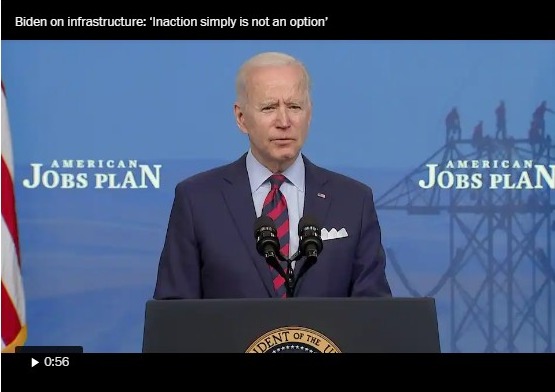
WASHINGTON – President Joe Biden on Wednesday said he was open to compromise with Republicans on how to pay for his approximately $2 trillion jobs and infrastructure package, but insisted that inaction was unacceptable.

His comments, delivered at the White House, reflect how he is quickly recalibrating his political strategy after passing a $1.9 trillion stimulus bill into law without any GOP support. The infrastructure package marks another of his top campaign promises, but it has been met with a torrent of criticism from Republicans, and even some Democrats have appeared squeamish.

“Debate is welcome. Compromise is inevitable. Changes are certain,” Biden said. He added he would soon invite Republican lawmakers to the White House and that the administration is “open to good ideas and good-faith negotiations.”

He said, for example, he was willing to agree to a lower corporate tax rate than his proposal of 28% if Republicans had other ideas that would work. Such a change could be politically necessary. Sen. Joe Manchin III, D-W.Va., said earlier this week that he supported raising the corporate rate from 21% to 25%, but not all the way to 28%.

But, Biden said: “Here’s what we won’t be open to: We will not be open to doing nothing. Inaction is simply not an option.”

The remarks reflect a changing political calculus for Biden.

Some Republicans, like Senate Minority Leader Mitch McConnell, R-Ky., have said they support a more scaled-back infrastructure plan, but they have attacked both the proposed tax hikes and the large scale of Biden’s pitch. And with Manchin earlier this week saying he had the “leverage” to demand changes, Biden appears to be bending to a new political calculus.

On Wednesday, he said he would work with Republicans on how best to design the package but he was unapologetic about the scope of his proposal. He said the money was needed to finance projects beyond just roads and bridges. He said, for example, that new spending was needed to do things like improve waste treatment plants and remove asbestos from schools.

“Damnit, Maybe it’s because I come from a middle-class neighborhood, but I’m sick and tired of ordinary people being fleeced,” he said.

Biden has so far not backed down on his insistence that the proposed spending increases be offset by a range of corporate tax hikes. This has prompted bipartisan unease.The Department of Treasury on Wednesday outlined the proposed tax increases on businesses that Biden is seeking in his initial plan. It would raise about $2.5 trillion over 15 years, meant to offset the costs of the infrastructure package. These changes would have to be approved by Congress. They would also amount to one of the largest tax increases in decades.

“I’m open to ideas about how to pay for this plan,” Biden said. Biden added he would not raise taxes on households earning less than $400,000 per year, a pledge he made during the presidential campaign.

In a 19-page report, Treasury officials called for more than a half-dozen tax measures affecting U.S. firms, including an increase in the corporate tax rate and subjecting the overseas earnings of businesses to higher tax rates.

Unlike the $1.9 trillion stimulus plan that passed in March, the cost of which was almost entirely added to the national debt, the White House has said it will seek to pay for the infrastructure plan through tax hikes on businesses and corporations.

Fifty-five corporations saw zero federal tax liability in 2020, according to a report this week by the Institute on Taxation and Economic Policy, a left-leaning think tank. The amount of corporate tax revenue raised by the government has fallen from above 2% of the United States’ gross domestic product before the GOP tax law to half that, the Treasury report says.

“Here you have 51 or 52 corporations of the Fortune 500 haven’t paid a single penny in taxes for three years. Come on, man. Let’s get real,” Biden said earlier this week, after walking off Marine One.

Biden’s plea arrived as House and Senate leaders forged ahead with their early work to translate his multi-trillion-dollar blueprint into a legislative reality. The process of writing infrastructure reform into law is one that spans much of Congress, where many Democrat-led committees have already held hearings to examine federal funding for roads, bridges, pipes and other policy priorities including housing and climate change.

In doing so, Democratic leaders have echoed Biden’s pledge to work with Republicans and compromise. But they have also threatened to try to move forward without Republicans if they must. Democrats passed the $1.9 trillion coronavirus stimulus package in March without GOP support through a budget process known as reconciliation, which in the Senate only requires Democrats to obtain 51 votes to pass legislation.

Democrats have signaled they could use reconciliation again to adopt some or all of Biden’s infrastructure reforms, seeking to bypass a potential Republican filibuster. They gained an additional political advantage on Monday, when the Senate’s parliamentarian appeared to open the door for the party to use reconciliation at least three more times than they initially anticipated between now and the 2022 midterms. So far, Senate Majority Leader Charles Schumer, D-N.Y., has declined to say how, exactly, he plans to take advantage of the ruling.

As the administration ramps up its push for the package, Biden transportation secretary Pete Buttigieg spoke on a Zoom call with moderate House lawmakers in the New Democrats caucus on Wednesday for about 45 minutes, two people familiar with the matter said. They spoke on condition of anonymity because they weren’t authorized to reveal the back and forth. The call reflected how the Trump administration is hearing opinions from a wide range of people about what should and shouldn’t be included in the package.

On the call, Rep. Cindy Axne, D-Iowa, raised concerns about the impact of transitioning to an electric vehicle fleet on farmers in Iowa, given the role of ethanol in gasoline production, the people said. Several lawmakers on the call also asked Buttigieg to press for high-speed rail, the people said.

Many Democrats are trying to push the White House to keep the package as big as possible.

“The American people want bold action to address our country’s many challenges, and Democrats now have more options to overcome Republican obstruction and get things done,” Sen. Ron Wyden, D-Ore., the chairman of the Senate Finance Committee, said in a statement Monday heralding the announcement.

First, however, Democrats face the daunting task of passing major tax hikes to fund their infrastructure push. The centerpiece of Biden’s tax hikes is increasing the corporate rate from 21% to 28%, after President Donald Trump’s 2017 tax law cut it from 35% to 21%. Trump also was forced to compromise on his tax proposal, as he insisted for months that the rate needed to be lowered to 15%. He eventually softened his proposal, but Biden appears to be signaling much faster that he is open to hearing other ideas.

The report released by the Treasury also details more than $700 billion in new government revenue through revamping America’s international tax system. In particular, the plan would increase the global minimum tax paid by U.S. firms operating abroad from about 13% to 21%. It would also repeal provisions from the Republican tax law that the Biden administration says encourage outsourcing of U.S. manufacturing and production.

Parts of corporate America have appeared more open to Biden’s push than expected. John Zimmer, the CEO of the ride-share company Lyft, told CNN that the company supported the 28% corporate tax rate and Biden’s push for electrical vehicles and infrastructure. Amazon founder and CEO Jeff Bezos also said Tuesday that the e-commerce giant supports a rise in the corporate tax rate, while also calling for a “balanced solution that maintains or enhances U.S. competitiveness.” (Bezos also owns The Washington Post.) Still, Biden’s plans have been sharply criticized by American business groups and congressional Republicans.

“What the president proposed this week is not an infrastructure bill,” Sen. Roger Wicker, R-Miss., said earlier this month. “It’s a huge tax increase, for one thing. And it’s a tax increase on small businesses, on job creators in the United States of America.”

The Treasury report included an analysis showing a rising share of income from multinational corporations ending up in tax havens, along with data showing only a handful of countries in the world collect less revenue from corporations than the United States.

Conservatives have called these measures misleading. Donald Schneider, who served as chief economist to Republicans on the House Ways and Means Committee said the revenue declines are overstated due to temporary provisions in the GOP tax law. Schneider said the analysis also misses the rise in pass-through entities, which make the fall in corporate revenue appear larger than it actually is.

The administration has countered with estimates from Moody’s Analytics showing the spending from Biden’s infrastructure proposal would grow the economy by about 1.6%. The Treasury plan also calls for beefing up corporate tax enforcement at the Internal Revenue Service; shifting subsidies for fossil fuel production to clean energy production; and pushing a global minimum tax through international negotiations.

“By choosing to compete on taxes, we’ve neglected to compete on the skill of our workers and the strength of our infrastructure. It’s a self-defeating competition, and neither President Biden nor I am interested in participating in it anymore,” Treasury Secretary Janet Yellen wrote in a Wall Street Journal op-ed announcing the plan. “We want to change the game.”