Fed chair, treasury secretary’s message to Congress: Recovery has a long way to go #SootinClaimon.Com

#SootinClaimon.Com : ขอบคุณแหล่งข้อมูล : หนังสือพิมพ์ The Nation.

https://www.nationthailand.com/news/30404046

Fed chair, treasury secretary’s message to Congress: Recovery has a long way to go

InternationalMar 24. 2021Federal Reserve Chair Jerome PowellFederal Reserve Chair Jerome Powell

By The Washington Post · Rachel Siegel

WASHINGTON – A year into the coronavirus pandemic, after the loss of millions of jobs and the closure of thousands of small businesses, the Federal Reserve and Treasury Department have a message for Congress: It could have been worse, and there’s still a long way to go.

Testifying before the House Financial Services Committee on Tuesday, Federal Reserve Chair Jerome Powell and Treasury Secretary Janet Yellen told lawmakers that the economy is slated for booming growth this year. But their sunny forecast was paired with reminders that at least 9.5 million jobs are still missing from the labor force and that fully healing the economy depends on getting the pandemic under control.

U.S. jobless rate will fall to 4.5% this year and inflation will rise temporarily, Fed projects

“We welcome this progress but will not lose sight of the millions of Americans who are still hurting, including lower-wage workers in the services sector, African Americans, Hispanics and other minority groups that have been especially hard hit,” Powell said Tuesday.

The economic outlook has significantly improved over the past few months and been buoyed by the recent passage of President Joe Biden’s $1.9 trillion coronavirus relief package and more-widespread vaccinations. Millions of Americans have started to see $1,400 stimulus payments hit their bank accounts. The Fed projects the U.S. economy will grow at its fastest pace in four decades this year, with the unemployment rate falling to 4.5%.

Still, there are plenty of challenges to getting the elements of the sprawling stimulus law out the door, along with many unresolved questions about how hundreds of billions of dollars allocated by the American Rescue Plan will actually be dispersed. On Tuesday, a number of lawmakers pushed for more regular oversight of the $1.9 trillion bill, noting mechanisms put in place after Congress passed the Cares Act last spring.

“Now that we have an addition $1.9 trillion to track, I would ask for your commitment along those same lines,” Rep. Patrick McHenry of North Carolina, the top Republican on the House Financial Services Committee, told Yellen, adding, “That would be encouraging that you’d continue the practice of your predecessor … to ensure appropriate oversight.”

Yellen agreed to work with the committee and other oversight groups, and laid out some of the challenges to implementing Biden’s bill. Yellen said earlier rounds of the Paycheck Protection Program often didn’t reach the country’s smallest businesses, especially those in rural and low-income areas. Rental assistance was frequently tied up in red tape. Many Americans still haven’t received their stimulus checks.

“And all this is just a fraction of Treasury’s work,” Yellen told the committee. “There are so many more relief programs, including one that will provide $350 billion in aid to state and local governments. Implementing all of it is more complicated than it sounds.”

Meanwhile, many Republican lawmakers, Wall Street investors and prominent economists are worried that the economy won’t be able to absorb a massive stimulus package and post-pandemic consumer spending, pushing prices rapidly upward. Their worry is that dangerous cycles of inflation will force the Fed to hike interest rates, triggering a new recession.

“Economic projections are increasingly positive,” McHenry said. But “with the addition of $1.9 trillion, there’s been a great deal of debate about what will happen with this amount of liquidity in financial markets.”

But the Fed and White House argue that inflation is not a pressing concern. Powell says that there would have to be substantial progress in the labor market before the Fed considers raising rates. Any price increases resulting from the economy reopening and people spending big on vacations or concert tickets will be temporary, he has said.

“Our best view is that the effect on inflation will be neither particularly large nor persistent,” Powell said Tuesday. “We’ve been living in a world of strong disinflationary pressures around the world really for a quarter of a century. We don’t think a one-time surge in spending leading to temporary price increase would disrupt that.”

Lawmakers pressed Powell and Yellen on a range of other issues, from the regulators’ research on digital currencies to banking regulations. Of particular focus was climate policy, which the Biden White House has made core to its agenda. The Fed increasingly points to climate risk as a threat to the financial system and financial stability.

As Powell and Yellen testified on Tuesday, Fed Governor Lael Brainard announced that the central bank is launching a Financial Stability Climate Committee, which will work closely with another Fed team focused on banks’ resilience to climate change.

Republicans in Congress have warned the Fed against delving too deeply into climate issues. They argue that climate policy is part of progressives political agenda and not the purview of the central bank, which is independent and aims for price stability and maximum employment.

“There’s concern in my district that the financial regulators may be moving towards regulation and supervision with environmental policy objectives, potentially discouraging banks from doing business with entire sectors of the economy,” Rep. Frank Lucas, R-Ok., said at Tuesday’s hearing.

Yellen said that even as climate issues are a top priority for the Biden administration, the Treasury Department doesn’t plan to regulate specific investments banks can or can’t make. Powell said that it’s the Fed’s job to better understand the risks climate change poses to the financial system, noting that many large banks are already making similar assessments themselves.

“We don’t a have new mandate,” Powell said. “This is consistent with our existing mandate of supervision of financial institutions. It’s just the same mandate but a different risk.”

Yellen and Powell will appear before the Senate Banking Committee on Wednesday.
10 people, including police officer, killed in Colorado shooting at grocery store; suspect in custody #SootinClaimon.Com

#SootinClaimon.Com : ขอบคุณแหล่งข้อมูล : หนังสือพิมพ์ The Nation.

https://www.nationthailand.com/news/30404020

10 people, including police officer, killed in Colorado shooting at grocery store; suspect in custody

InternationalMar 23. 2021

By The Washington Post · Paulina Villegas, Andrea Salcedo, Amanda Miller

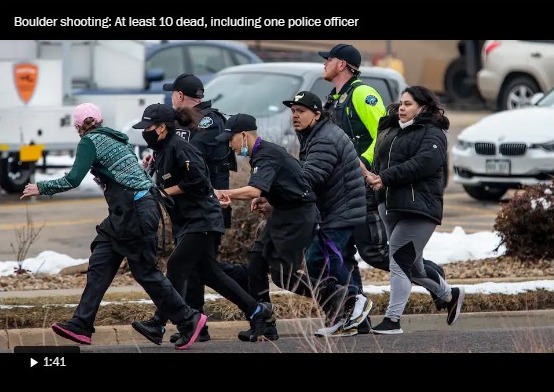
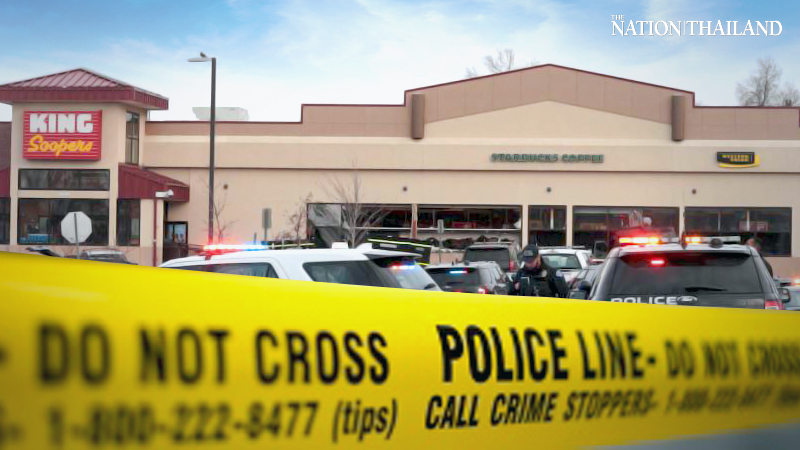
BOULDER, Colo. – Ten people were killed at a King Soopers grocery store on Monday, including a Boulder police officer, after a shooter opened fire on customers and responding officers.

Law enforcement officials said a suspect was in custody but offered scarce details about the killings, including information about a possible motive.

Boulder Police Commander Kerry Yamaguchi said in a brief news conference that the suspect was being treated for an injury. Boulder County District Attorney Michael Dougherty, a Democrat, said officials were still working to notify family members of the victims.

Dozens of emergency vehicles lined the streets around the store Monday afternoon during a massive response to what police said was a shooting at the store. Witnesses described a chaotic scene, with customers rushing to exits at the front and back of the supermarket after shots were fired from a rifle. One witness told local media that the shooter did not say anything before opening fire.

Ryan Borowski, 37, had gone to King Soopers to grab a bag of chips and a soda. Borowski, who does not frequent the store, said he had thought about getting a pint of ice cream but changed his mind because the aisle was too far away and he wanted to leave quickly.

At about 2:30 p.m., just as Borowski was walking up to the checkout area, he heard a loud bang.

“My first hope was that it was an employee who dropped something,” he said. Then came the second bang. “By the third bang I was running. It was bang, bang, bang, bang, bang! I was thinking around eight.”

He added: “I saw a woman shorter than myself with a terrified look on her face running toward me, and at this point I turned, and people were saying things like: ‘Run, run! Go, run!’ Everybody was running, and everybody was scrambling.”

Borowski and a group of customers and employees ran toward the back of the store in a line, placing their hands on top of one another’s backs so they would not leave anyone behind, he said. “Don’t stop! Keep going!” he recounted telling people.

The group exited through the loading dock in the back of the store, he said, then hid under a semi-truck for a moment before running up a hill to the parking lot of a nearby Whole Foods.

Video from a witness who was live-streaming on YouTube from the King Soopers parking lot showed at least two people injured and motionless on the ground outside and a third just inside the front doors.

“There are gunshots inside the store! People ran out of the back door! The active shooter is still in there!” the witness shouted.

The live video showed heavily armed officers surrounding the building – with its front windows broken – and police could be heard trying to communicate with the attacker through a bullhorn. Officers were lifted onto the roof in a cherry picker.

At about 3:30 p.m. local time, a man in handcuffs who was bleeding down his leg was guided away from the building by police. Officials did not confirm whether the bleeding man was the suspect.

As details of the attack emerged slowly Monday evening, government officials shared their sorrow and condolences.

“My heart is breaking as we watch this unspeakable event unfold in our Boulder community,” Colorado Gov. Jared Polis, a Democrat, said in a written statement. “We are making every public safety resource available to assist the Boulder County Sheriff’s Department as they work to secure the store.”

Polis had said earlier that he was “closely watching unfolding events.”

Rep. Joe Neguse, D-Colo., sent his prayers to the Boulder community, first responders and law enforcement who responded to the “terrible incident,” he wrote on Twitter.

Meanwhile, those who experienced and survived the attack offered details of the horrific scene. A witness who spoke to The Denver Post said the gunman did not say anything – “he just came in and started shooting.”

Andy Arellano, 35, was working in the King Soopers meat department when he started to hear shots like “big hammers on a metal table,” said the Boulder resident.

“At the first, it was just like boom boom boom – it was three. Then suddenly boom, boom, boom, boom, and that’s when all the people started running.”

Employees and customers ran out of the back of the store, Arellano said. He never saw the shooter.

“I could hear the shots getting closer and closer,” he said. “The shots were so close that I started hearing that ringing bell with the gunshots.”

While waiting outside the police barrier across the street from the crime scene, he tried to contact co-workers. “I’m trying to, like, call my friends to see if they’re OK, and there’s no word of them.”

A man told 9 News that his grandchildren were in the store during the shooting. He said they hid in a closet as the incident unfolded and as police dropped into the store through the roof.

Daniel Douglas was in the store, picking up lunch and flowers for his girlfriend, when the gunshots began.

“Nobody knew what was going on, so we started screaming, ‘Hit the ground,’ ” he told Fox 31 Denver.

The shooter, Douglas said, moved to the front of the store while Douglas and other customers rushed to the back of the building, where he said many others were hiding and trying to escape. A co-worker kicked the emergency-exit door open so people could get out, he said.

“A lot of people were petrified. A lot of people were crying,” he said.

Another man, who said he was on his way to pick up coffee at the store, walked away from the incident unharmed. He told Fox 31 that he was “terrified” and “in shock” when he realized what has happening.

He said he called his mother to let her know that he was all right, then “it all kind of sunk in and I started panicking.”

“The fact that it’s happening all over America,” he added, “seeing it on the news, like, something I’ve grown up with, like people my age and my generation – we’re used to this, and its just never something that I think would happen in my town.”

There have been as many as nine school shootings in the area since the Columbine massacre in 1999, which left 12 students and a teacher dead. Four other major shootings have occurred within 20 miles of the suburban Columbine High School, including a 2012 shooting at a movie theater in Aurora that left 12 dead.

Fed’s digital dollar push worries Wall Street #SootinClaimon.Com

#SootinClaimon.Com : ขอบคุณแหล่งข้อมูล : หนังสือพิมพ์ The Nation.

https://www.nationthailand.com/news/30404003

Fed’s digital dollar push worries Wall Street

InternationalMar 23. 2021The Federal Reserve building in Washington, D.C., on Feb. 19, 2021. MUST CREDIT: Bloomberg photo by Samuel CorumThe Federal Reserve building in Washington, D.C., on Feb. 19, 2021. MUST CREDIT: Bloomberg photo by Samuel Corum
By Syndication Washington Post, Bloomberg · Joe Light

The financial services industry, braced for what could be its biggest disruption in decades, is about to get an early glimpse at the Federal Reserve’s work on a new digital currency.

Wall Street is not thrilled.

Banks, credit card companies and digital payments processors are nervously watching the push to create an electronic alternative to the paper bills Americans carry in their wallets, or what some call a digital dollar and others call a Fedcoin.

As soon as July, officials at the Federal Reserve Bank of Boston and the Massachusetts Institute of Technology, which have been developing prototypes for a digital dollar platform, plan to unveil their research, said James Cunha, who leads the project for the Boston Fed.

A digital currency could fundamentally change the way Americans use money, leading some financial firms to lobby the Fed and Congress to slow its creation — or at least ensure they’re not cut out.

Seeing the threat to their profits, the banks’ main trade group has told Congress a digital dollar isn’t needed, while payment companies like Visa Inc. and Mastercard Inc. are trying to work with central banks to make sure the new currencies can be used on their networks.

“Everyone is afraid that you could disrupt all the incumbent players with a whole new form of payment,” said Michael Del Grosso, an analyst for Compass Point Research & Trading LLC.

Lawmakers, U.S. Treasury Department officials and the Fed haven’t yet approved the rollout of a U.S. virtual currency, which could still be years away. Nor have they decided how a digital dollar would interact with the existing global payments network. Still, the U.S. and other countries seem committed enough to digitizing their currencies that it’s making financial industry executives nervous.

“The fire has been lit,” said Josh Lipsky, who has helped convene government officials from the U.S. and other countries working on digital currencies as director of the GeoEconomics Center at the Atlantic Council. “The world is moving very quickly on these projects.”

At issue are forms of digital cash being considered by the U.S. and other governments. The growing popularity of bitcoin, Ethereum and other cryptocurrencies, whose market value has grown to more than $1 trillion, inspired the projects. Unlike those privately created tokens, the new currencies would be issued by central banks as an alternative to paper bills. Cash wouldn’t go away, but its use would likely decline.

Using the currencies could be as simple as holding up the screen of a mobile phone to be scanned. Behind the scenes, the digital cash would move from one account to another. This is similar to how most money already works — the majority of U.S. dollars are just digital entries in bank accounts — but the new currency could potentially avoid the go-between of a commercial bank or credit-card network. For vendors, settlement would happen almost immediately, without having to wait for the money or worry about fraud.

The U.S. effort got an extra push last month, when Treasury Secretary Janet Yellen said such a project could help Americans who don’t have access to the banking system.

In video remarks last week to a payments conference in Basel, Switzerland, Federal Reserve Chair Jerome Powell may have eased some of the banks’ concerns when he said “digital currencies would need to be integrated into existing payment systems alongside cash and other forms of money.”

Powell in a Bank for International Settlements panel on Monday said the Fed has “an obligation to be on the cutting edge of understanding the technological challenges” and the costs and benefits of a digital dollar but wouldn’t rush the project. Powell also said the Fed wouldn’t proceed without support from Congress, ideally in the form of legislation.

Cunha said the Boston Fed and MIT hope to unveil some of their work in the third quarter, including at least two prototype software platforms that could move, store and settle transactions made with digital dollars. He wouldn’t say if either platform uses the blockchain technology that underlies bitcoin and other cryptocurrencies. Once the prototypes are released, Cunha said, others will be able to see and build on the code.

The Fed’s work is meant to show what’s possible without taking a stand on major issues that the central bank, Treasury and Congress must address, Cunha said. These include whether the Fed itself should host customer accounts, whether to allow anonymity, and what protections consumers would have in case of a cyber-breach or mistaken transaction.

“We think it’s important that we not wait for the policy debate because then we’ll be a year or so behind,” Cunha said. “This will take significant outreach to the industry and serious debate.”

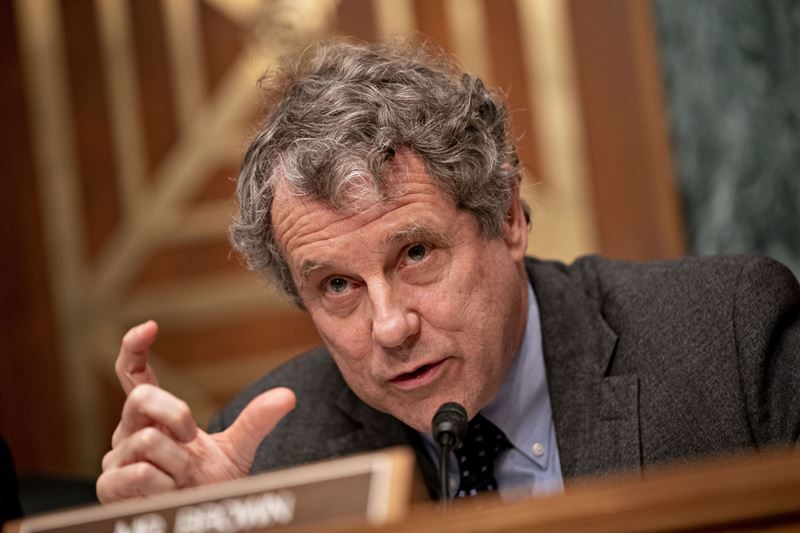
Sen. Sherrod Brown, D-Ohio, is urging the Federal Reserve to move quickly to create digital-currency accounts for Americans who can't easily access the financial system and must deal with payday lenders who charge higher fees and interest rates. Brown is photographed in 2020. MUST CREDIT: Bloomberg photo by Andrew Harrer

Sen. Sherrod Brown, D-Ohio, is urging the Federal Reserve to move quickly to create digital-currency accounts for Americans who can’t easily access the financial system and must deal with payday lenders who charge higher fees and interest rates. Brown is photographed in 2020. MUST CREDIT: Bloomberg photo by Andrew Harrer

The potential that the central bank could cut banks out of their middleman role in the lucrative U.S. payments system is causing angst among banks.

So is the push coming from Sen. Sherrod Brown, D-Ohio, the new chairman of the Senate Banking Committee. Brown is urging the Fed to move quickly to create digital-currency accounts for Americans who can’t easily access the financial system and have been forced to deal with payday lenders who charge higher fees and interest rates. Brown’s plan could threaten the deposits that commercial banks rely on to make mortgages and other loans.

“Rushing anything of this potential magnitude could introduce unintended consequences that threaten the stability of the banking system without contributing meaningfully to economic inclusion,” said Steve Kenneally, senior vice president of payments at the American Bankers Association.

The ABA, which says it’s lobbying Congress on the issue, last year in written testimony called the digital dollar a costly solution in search of a nonexistent problem.

Two lobbyists for a large bank said they’re in contact with lawmakers to keep track of the issue. They expect lobbying to pick up once banks can actually see the Fed’s work and how it might affect them, said the lobbyists, who requested anonymity to discuss internal conversations.

Interest in a digital currency has gathered momentum in part because many banks take days to give consumers access to checks deposited in their accounts and some charge stiff overdraft fees. Those without bank accounts sometimes must pay high fees to cash paychecks or transmit money to relatives.

Some of the profits of credit-card companies, such as Visa and Mastercard, could be at risk if the new currencies let Americans more easily make transactions without their involvement and fees.

Spokespeople from both companies say their firms are working with central banks to ensure the new currencies can run over their networks. Mastercard in February began to issue prepaid debit cards loaded with the “Sand Dollar,” a digital currency issued by the Bahamas.

“We’re increasingly having conversations with central banks as they think about designing potential central bank digital currency, CBDC, and we’re talking to them about how they think about design,” said Visa’s North America president Oliver Jenkyn, at a Morgan Stanley conference earlier this month. “So there’s a lot of talking, but there’s actually a lot of action alongside it as well.”

Other countries are further along. China is piloting a digital yuan in several cities. Lipsky said there’s a chance its currency could be ready for a broader debut at the 2022 Winter Olympics in Beijing, which he said could cause tensions if American athletes are asked to use a currency that the Chinese government can completely track.

Brown earlier this month sent a letter to Powell urging him to speed up the research. “We cannot be left behind,” Brown wrote.

Among other threats, Brown pointed to the development by Facebook Inc. and other companies of their own cryptocurrency, once called Libra. That currency, since renamed Diem, was slated to launch in 2020 but has struggled to win regulatory approval.

Advocates of existing cryptocurrencies, like bitcoin, have mixed feelings about the Federal Reserve muscling into the industry.

A Fedcoin could acclimate Americans to purchasing bitcoin, said Jerry Brito, who heads Coin Center, a cryptocurrency advocacy group. But depending on the government’s direction, such a currency could be used to track Americans’ spending, destroying the partial anonymity that was once the promise of crypto, he said.

A U.S. digital dollar could also put the final nail in the coffin for bitcoin as a means of exchange, Brito said. Crypto enthusiasts have already started to acknowledge that’s happening anyway, and instead tout the currency as a store of value or “digital gold.”

Biden determined to tax rich after windfalls from covid crisis #SootinClaimon.Com

#SootinClaimon.Com : ขอบคุณแหล่งข้อมูล : หนังสือพิมพ์ The Nation.

https://www.nationthailand.com/news/30404002

Biden determined to tax rich after windfalls from covid crisis

InternationalMar 23. 2021US President Joe BidenUS President Joe Biden

By Syndication Washington Post, Bloomberg · Nancy Cook

President Joe Biden’s economic team at the White House is determined to make good on his campaign pledge to raise taxes on the rich, emboldened by mounting data showing how well America’s wealthy did financially during the pandemic.

With Republican and business-lobby opposition to the administration’s tax plans stiffening, Democrats need to decide how ambitious to be in trying to revamp the tax code in what’s almost-certain to be a go-it-alone bill. Interviews with senior officials show there’s rising confidence at the White House that evidence of widening inequality will translate into broad popular support for a tax-the-wealthy strategy.

Biden himself has become convinced of the need, saying last week that those earning over $400,000 can expect to pay more in tax.

“2020 really did show him that there were so many of the fragilities across society” that need addressing, Heather Boushey, a member of the White House Council of Economic Advisers, said in an interview. Funding spending priorities given a shortfall in revenues from the 2017 Republican tax cuts “has really demanded the president sit down and think about both the enormous needs, and these questions we’re talking about as to how we tax,” she said.

Behind the scenes, aides have been working on a proposal to pay for some of the longer-term Biden agenda. Boosting income and capital-gains tax rates on top earners, along with levies on companies and an expansion of the estate tax, would help fund priorities such as infrastructure, climate change, and assistance for child care and home health care.

Lawmakers and the administration are stepping up discussions about what measures could pass later in the year. The Senate Finance Committee on Thursday will hold a hearing on the impact on employment and investment of the current U.S. international tax structure.

– – –

Senior members of the administration, including David Kamin, deputy director of the National Economic Council, and Lily Batchelder, who’s been tapped to become assistant Treasury secretary for tax policy, have been working for years on options to raise revenue from the best-off Americans.

Kamin, who with Batchelder mapped out potential reforms in a 2019 paper called “Taxing the Rich: Issues and Options,” signaled in an interview that the following options are among those under discussion:

– Removing “step up in basis” for estates, which revalues assets such as stocks and real estate at market prices, rather than their original purchase cost — reducing tax liabilities

– Taxing capital gains for wealthy Americans at income-tax rates, which are higher

– A minimum tax for large companies

“The idea of finally eliminating what is a massive loophole, in that the highest income Americans escape tax on their wealth by addressing step up in basis and then taxing capital gains as ordinary income, is a major reform of our system, which I think is needed,” Kamin said.

“These would be major accomplishments, which would pretty fundamentally shift how our tax system treats the richest Americans and the largest corporations so they can’t escape tax in the ways they now can,” he said.

The administration is also looking at rolling back a portion of former President Donald Trump’s income-tax cuts, aides say.

“Anybody making more than $400,000 will see a small-to-a-significant tax increase,” Biden said in an interview with ABC earlier this month. For those under that level, there won’t be “one single penny in additional federal tax,” he said.

Major aspects of the plan have yet to be detailed, including the specifics of the threshold for higher taxes. The White House clarified last week that the $400,000 figure applies to families, but Deputy Press Secretary Karine Jean-Pierre suggested Friday that the level at which tax hikes would kick in for individuals isn’t yet set.

“It’s a little early — we’re still working out through the process,” Jean-Pierre said.

The so-called K-shaped recovery, in which wealthier Americans thrived even as low-income and many middle-class workers suffered from job losses, evictions, food insecurity and health risks associated with working in-person jobs during covid-19, has reinforced the administration’s intentions.

The richest 1% of U.S. households added more than $4 trillion in wealth last year as stocks hit record highs and property values swelled, fueled in part by record-low interest rates. The bottom 50% saw their net worth gain by a much-smaller $470 billion — and that was bolstered by the extraordinary income support provided in the March 2020 Cares Act.

A new paper from the left-leaning Economic Policy Institute showed that 80% of job losses in 2020 were concentrated among the lowest 25% of wage earners, while the workers in the top half of the distribution saw gains in employment.

“It is always true that recessions hit low- and middle-income people harder, but I have never seen anything like this,” said Heidi Shierholz, the institute’s policy director and a former chief Labor Department economist.

Republicans warn that higher taxes will hold back the recovery. The U.S. Chamber of Commerce says boosting levies on companies will “make the United States a less attractive place to invest profits and locate corporate headquarters.”

– – –

“Whatever the new normal is we return to after covid-19, I think it is important for the government to stay as far out of the way as possible to allow the economy to find its footing,” said Chris Campbell, a former Senate Republican aide who served in the Treasury during the Trump administration.

Senate Minority Leader Mitch McConnell said last week there wouldn’t be bipartisan support for higher taxes, and predicted Democrats will use the reconciliation process — which allows bills to pass the Senate with a simple majority — for their proposals.

Biden’s current determination marks a shift in a decades-long political career with few episodes of pushing for higher taxes. On the presidential campaign trail he drew a distinction with liberal competitors’ plans for a wealth tax, and as vice president he cut a deal with Republicans in late 2012 to make permanent 82% of the tax cuts originally passed by President George W. Bush.

But liberals are fully behind his efforts now.

“We have seen him propose, fight for, sign, and sell one of the most progressive pieces of legislation in three generations,” said Senator Elizabeth Warren in an interview, referring to the pandemic-relief plan. “There is momentum now for real change, and tax policy is a critical part of that change.”

U.S., E.U., Canada, Britain announce sanctions on China over abuse of Uyghurs #SootinClaimon.Com

#SootinClaimon.Com : ขอบคุณแหล่งข้อมูล : หนังสือพิมพ์ The Nation.

https://www.nationthailand.com/news/30404000

U.S., E.U., Canada, Britain announce sanctions on China over abuse of Uyghurs

InternationalMar 23. 2021Secretary of State Antony BlinkenSecretary of State Antony Blinken

By The Washington Post · Emily Rauhala

The United States, the European Union, Britain and Canada each announced sanctions against China over human rights abuses in Xinjiang, a coordinated effort aimed at holding Beijing accountable for a years-long campaign against Uyghurs and other minority groups in the northwestern Chinese region.

The diplomatic push, announced Monday, comes after a tense meeting between U.S. and Chinese officials and amid growing calls for democracies to work together to take on an increasingly authoritarian and assertive Beijing.

The European Union was first to move, saying early Monday that it would punish four Chinese officials and the Xinjiang public security bureau with travel bans and freeze their assets – its most significant measures since an arms embargo after the 1989 killings in Tiananmen Square.

China quickly responded, leveling similar measures against a long list of its European critics.

Not long after, the United States, Canada and Britain jumped in. Secretary of State Antony Blinken announced midday that the United States will add two names to its existing Xinjiang sanctions list.

Britain committed for the first time to freeze assets and ban travel for the same Chinese officials as the European Union did, as well as a Xinjiang security body. Canada said it would sanction the same officials and security body as Britain did.

The U.S., British and Canadian statements stressed that the moves were the result of close cooperation. “We stand united with the UK, Canada, and the EU in promoting accountability for those who abuse human rights,” Blinken wrote in a tweet.

Although the sanctions are largely symbolic, they are sure to complicate ties between China and the rest of the world.

Under President Donald Trump, the United States vowed to take a strong stance on China, but for the most part it did so alone. The Biden administration has stressed the importance of rallying allies to the cause, saying the scale of the challenge requires collective action. Monday’s moves appear to be a step in that direction.

The E.U. sanctions focus on four senior Chinese officials involved in designing and implementing policy in Xinjiang, as well as the region’s much-feared public security bureau.

The British list targets the same senior officials but names a different security entity.

Neither the European Union list nor the British one includes the Chinese Communist Party’s top official in the region, Chen Quanguo, who was named in more-robust U.S. sanctions last year.

Despite extensive reporting, satellite imagery and witness testimony, Beijing denies human rights abuses in Xinjiang, claiming that Uyghurs and other Turkic Muslims are thriving there.

The countermeasures it issued Monday took aim at outspoken members of the European Parliament; Dutch, Belgian and Lithuanian officials; a prominent German think tank focused on China; a Danish foundation; and two European scholars known for their work regarding the Xinjiang region.

The sanctions block those on the list and their families from traveling to the People’s Republic of China, Hong Kong or Macao, or from doing business with China, according to a news release from the Ministry of Foreign Affairs.

The news release condemns the officials for “lies” about the “so-called human rights issues in Xinjiang.”

Raphaël Glucksmann, a French member of the European Parliament who has spoken out on Xinjiang, tweeted Monday that he considered the sanction a “badge of honor.”

In recent months, Europe has been accused of standing idle while the United States took the lead on issues such as Xinjiang.

Late last year, the European Union and China reached an agreement in principle on a much-delayed investment pact, a move seen as a diplomatic victory for Beijing and a snub to the incoming Biden administration.

Critics of that deal asked why Europe was knitting itself closer to an increasingly authoritarian China rather than tackling issues the European Union says it cares about, including forced labor. The fate of that deal remains uncertain.

In the run-up to Monday’s announcement, China’s Communist Party-controlled media warned that there will be “no escape” for “some EU institutions and poorly behaving individuals” if the bloc pressed ahead.

Vaccine battle heats up with EU ready to halt U.K. shipments #SootinClaimon.Com

#SootinClaimon.Com : ขอบคุณแหล่งข้อมูล : หนังสือพิมพ์ The Nation.

https://www.nationthailand.com/news/30403999

Vaccine battle heats up with EU ready to halt U.K. shipments

InternationalMar 23. 2021A health worker administers the Moderna Covid-19 vaccine to a visitor at a vaccination center in Rome on March 17, 2021. MUST CREDIT: Bloomberg photo by Alessia Pierdomenico.A health worker administers the Moderna Covid-19 vaccine to a visitor at a vaccination center in Rome on March 17, 2021. MUST CREDIT: Bloomberg photo by Alessia Pierdomenico.

By Syndication Washington Post, Bloomberg · Nikos Chrysoloras, Suzi Ring, Joe Mayes

The European Union is ready to start withholding Covid-19 shots from the U.K., risking a sharp deterioration in relations with London in a bid to turn around its lackluster vaccination campaign.

The EU will likely reject authorizations to export AstraZeneca’s coronavirus vaccines and their ingredients to the U.K. until the drugmaker fulfills its delivery obligations to the 27-nation bloc, according to a senior EU official.

The conflict between the EU and the U.K. has been growing since Astra informed Brussels it wouldn’t deliver the number of shots it had promised for the first quarter. Both sides have blamed each other for export curbs and nationalism, posing a risk to the fragile post-Brexit trade relationship agreed on in December. Astra has been at the center of the EU’s vaccination problems since production issues emerged in January. Most recently, its shot was temporarily suspended in much of Europe over blood-clot fears.

While the EU drug regulator backed the vaccine last week, and U.S. trial results published Monday said there were no safety concerns, public trust in the shot has plummeted in Europe. The majority of people in Germany, France, Italy and Spain now see the vaccine as unsafe, a survey by YouGov published by The Telegraph on Monday shows.

The EU, which has pledged to immunize 70% of adults by the end of September, is struggling to overcome a slow start to its inoculation campaign. The bloc has administered 12 doses per 100 people, less than a third of what the U.K. has managed, according to Bloomberg’s Coronavirus Vaccine Tracker. The U.K. vaccinated more than 1.5 million people on Friday and Saturday, setting daily records on successive days.

The European Commission said last week that it would restrict exports of vaccines to countries that don’t reciprocate or that already have high vaccination rates. The U.K. is the largest recipient of doses made in the EU, receiving 10 million of 42 million shots from the bloc so far.

U.K. Prime Minister Boris Johnson and Commission President Ursula von der Leyen spoke last week and a new round of high-level diplomacy is expected among leaders ahead of a summit in Brussels.

“Vaccine nationalism, this kind of breathless speculation about limiting supply doesn’t do anybody any good,” Helen Whately, a junior U.K. health minister, told Sky News on Monday. Von der Leyen “made a commitment to the prime minister that the EU wouldn’t block companies from fulfilling their contractual obligations to supply vaccinations,” she said, urging the EU to “actively stand by that commitment.”

According to the EU official, the bloc has contracts with Astra that aren’t being respected, and any vaccines and their ingredients produced in European factories will be reserved for local deliveries. The official asked not to be named because the decisions are under consideration and haven’t been made public.

EU leaders meeting this week will discuss the plan. Countries including Italy and France said they were open to exploring the export ban while others, such as Ireland, Belgium and the Netherlands, urged caution and warned about the impact on European companies, according to a diplomatic note seen by Bloomberg.

AstraZeneca — one of four approved in the bloc — is now expected to deliver 30 million shots to the EU by the end of this month, less than half of what it initially committed to.

Johnson has called EU leaders about the dispute in recent days, including Dutch premier Mark Rutte and Belgium’s Alexander De Croo, and is prepared for more conversations before this week’s summit, a person familiar with the matter said.

Pfizer warned that the free movement of supplies between the U.K. and the EU is critical to the production of its vaccine. Manufacturing of lipids — the fatty substance used to deliver the genetic material at the heart of the vaccine Pfizer makes with its German partner BioNTech — takes place at a secret location in the U.K. before shipping to the EU where the shots are completed.

The EU official added that there are no outstanding requests for U.K. exports from Astra’s production facility in the Netherlands, but should such a request be made, it will likely be rejected. A production plant in the Netherlands and one in Belgium produce ingredients for the Astra shot.

“The Netherlands in principle allows exports to continue until told otherwise by the European Commission,” the Dutch government said Sunday. “It is of paramount importance that Brussels, London and AstraZeneca reach a deal promptly on the vaccines produced by the company in facilities falling under both contracts.”

The EU isn’t alone in having supply issues. The U.K. is facing a “significant” four-week cut to the supply of Covid-19 vaccines from late March. A delayed shipment of the Astra vaccine from India and a batch requiring re-testing are behind the disruption.

U.K. Defense Secretary Ben Wallace told Sky News on Sunday that the EU should allow Astra to keep supplying Britain and warned the bloc would pay a heavy price if it tried to interfere with those shipments.

“The commission knows deep down that this would be counterproductive,” he said. “They’re under tremendous political pressure at the European Commission. It would damage the EU’s relations globally.” A spokesperson for Johnson’s office declined to comment and referred back to Wallace’s remarks.

Contentious hunt for covid’s origin points to China animal trade #SootinClaimon.Com

#SootinClaimon.Com : ขอบคุณแหล่งข้อมูล : หนังสือพิมพ์ The Nation.

https://www.nationthailand.com/news/30403998

Contentious hunt for covid’s origin points to China animal trade

InternationalMar 23. 2021

By Syndication Washington Post, Bloomberg · Jason Gale, Corinne Gretler

Scientists tracing the origins of the covid-19 pandemic believe they’ve identified a possible transmission source: China’s thriving wildlife trade.

The highly anticipated findings from experts convened by the World Health Organization and the Chinese government are expected to show parallels to the 2002 spawning of severe acute respiratory syndrome, or SARS, a bat-borne coronavirus spread by civets that killed 800 people. The path trod by SARS-CoV-2, as the new coronavirus is known, before it emerged in December 2019 in central China remains a mystery, though it’s one researchers say can be solved.

In Wuhan, where the first cluster of cases occurred, scientists involved in the hunt identified four hypotheses to explain the virus’s genesis, including two that stoked controversy even as they were deemed unlikely. The idea that the virus was introduced via contaminated food or packaging is one embraced in Beijing, while the Trump administration said it may have been the result of a laboratory accident. But the most plausible theory, say experts involved in the mission, concerns China’s wildlife trade for food, furs and traditional medicine, a business worth about $80 billion (520 billion yuan) in 2016.

Live animals susceptible to coronavirus infection were present at the Huanan food market in downtown Wuhan, the city where the first major covid-19 outbreak was detected. It’s possible they acted as conduits for the virus, carrying it from bats — likely the primary source — to humans, says Peter Daszak, a zoologist who was part of the joint research effort, which saw international experts visit Wuhan earlier this year after months of stonewalling by the Chinese government.

“The main conclusion from this stage of the work — and it’s not over yet of course — is that the exact same pathway by which SARS emerged was alive and well for the emergence of covid,” said Daszak, who is also president of EcoHealth Alliance, a New York-based nonprofit that works to prevent viral outbreaks around the world.

The scientists’ report, slated for release this week after delays due to political wrangling, is likely to be far from conclusive. More studies are planned, including outside China, with deciphering covid-19’s creation story vital to understanding how best to thwart its resurgence, and to help avert similar catastrophes in the future.

China is Making It Harder to Solve the Mystery of Where covid Began

While the hunt for the virus’s origin has become political football for the world’s superpowers, Daszak says he thinks the scientific process will prevail. Significant data on where SARS-CoV-2 came from and how it emerged will be uncovered over the next few years, he said during a March 10 webinar organized by Chatham House.

Farmed and wild-caught civets, a small, nocturnal mammal consumed in China, were blamed for spreading the SARS virus in a market in the southern province of Guangdong in 2003. Scientists later found the infection originated in horseshoe bats, a natural reservoir of coronaviruses.

The two species likely collided in markets where live animals are caged in crowded conditions, potentially allowing the bat-borne virus to adapt and amplify before it spilled over to humans, initially among workers and those handling the animals.

Scientists working on the origin hunt say a similar scenario may have played out with covid-19. A study of the first 99 patients treated at an infectious diseases hospital in Wuhan found half were linked to the Huanan seafood market, which also reportedly sold live animals, some illegally captured in the wild and slaughtered in front of customers.

It’s possible the virus was introduced through an infected animal that was sold at the Huanan market or somewhere else in Wuhan, said Dominic Dwyer, a microbiologist in Sydney who was part of the WHO-convened team that traveled to the Chinese city in February.

Still, questions remain about the market’s ultimate role.

Testing after it was shut down in December 2019 failed to turn up any infected animals. Contaminated surfaces were widespread, compatible with the virus being introduced via infected people or tainted animal products. Compounding the confusion, the first known covid-19 patient developed symptoms four days before the earliest cases tied to the market.

An analysis of SARS-CoV-2 samples collected in mid-December found subtle genetic differences between them. The variation indicates the virus may have circulated surreptitiously for weeks in the community before doctors were alerted to it via a handful of severely ill patients with a mysterious viral pneumonia.

The original spillover of the coronavirus to a human was probably followed by rapid adaptation of the virus, said Joel Wertheim, an associate professor of medicine at the University of California, San Diego. It’s possible the virus was transmitted multiple times and went extinct when infected individuals didn’t transmit the virus to anyone, Wertheim and colleagues said in a paper published March 18 in the journal Science. Eventually, the virus infected someone who passed it to several people, who also passed it on to others, possibly in a super-spreading event.

The Huanan market may have been where that occurred, Wertheim said in an interview. “The market may have been key to the virus ensconcing itself in humans.”

Current evidence suggests the market is where SARS-CoV-2 was amplified, and not necessarily its birthplace, Dwyer said.

“When you visit the market, you realize that it’s a perfect place for an outbreak to occur because it’s crowded, lots of stalls, lots of animal products, and ventilation and drainage are a bit suboptimal,” he said in an interview. “It’s not surprising we had an explosion through there.”

The WHO research team found evidence that wildlife farms in southern China were supplying vendors at the Huanan market, Daszak told National Public Radio. It also found a route from southern provinces such as Yunnan — where the closest known coronavirus to SARS-CoV-2 was found in horseshoe bats in 2013 — to Wuhan, he said on the Chatham House webinar.

“It provides a link and a pathway by which a virus could convincingly spill over from wildlife into either people or animals farmed in the region, and then shipped into a market by some means,” Daszak said. “That’s a really important clue. Those beginnings of an understanding of a pathway need to be followed up pretty rapidly.”

For decades, the government of China promoted the farming of wildlife to bolster rural incomes. The practice provided an especially valuable alternative source of meat after African swine fever emerged in 2018. The deadly outbreak resulted in an unprecedented shortage of pork, researchers at the South China Agricultural University and University of Glasgow said in a study that was released in February without a formal peer-review. China typically consumes half the world’s pig meat.

While the pork shortage bolstered wildlife consumption, eating birds, snakes, bamboo rats, squirrels, porcupines and other nondomesticated animals was already popular, especially in southern provinces, the researchers said.

They cited a 2004 survey by the China Wildlife Conservation Association that found 46% of urban residents had consumed wildlife and 2.7% were regular consumers. A January 2017 survey found 52% of markets they investigated were trading wildlife, while 40% of restaurants were providing wild animal dishes.

Much of the trade supposedly ended just over a year ago. After President Xi Jinping warned that the consumption of wildlife posed an immense risk to public health, the Standing Committee of the National People’s Congress decided on Feb. 24, 2020, to expand the scope of China’s Wildlife Protection Law to ban the consumption of almost all wild animals.

Amid international criticism of its handling of the early days of the pandemic, China’s official rhetoric is focused on creating doubt that the pathogen originated within its borders. But China targeted the wildlife trade a year ago for a reason, Daszak told NPR.

“The reason was, back in February 2020, they believed this was the most likely pathway” for the coronavirus to reach Wuhan, he said. “And when the WHO report comes out…we believe it’s the most likely pathway too.”

Toyota กับค่ายรถญี่ปุ่นกระอักวิกฤตชิป หลังโรงงาน Renesas ไฟไหม้ #SootinClaimon.Com

#SootinClaimon.Com : ขอบคุณแหล่งข้อมูล : หนังสือพิมพ์โพสต์ทูเดย์

https://www.posttoday.com/world/648534

วันที่ 22 มี.ค. 2564 เวลา 18:31 น.Toyota กับค่ายรถญี่ปุ่นกระอักวิกฤตชิป หลังโรงงาน Renesas ไฟไหม้วิกฤตชิปรุนแรงขึ้นไปอีก หลังจากที่ตลาดขาดแคลนหนัก ยังต้องมาเจอกับปัญหาใหม่สดๆ ร้อนๆ เมื่อโรงงานผลิตในญี่ปุ่นเกิดเพลิงไหม้

ประธานบริษัทผู้ผลิตชิปรายใหญ่ของญี่ปุ่น Renesas Electronics Corp. กล่าวเมื่อวันอาทิตย์ว่าการระงับการผลิตโรงงานบางส่วนในภาคตะวันออกของญี่ปุ่นเนื่องจากไฟไหม้เมื่อเร็วๆ นี้อาจส่งผลให้อุปทานชิปลดลงอย่างมาก ส่งผลกระทบต่อลูกค้าต่างๆ รวมถึงผู้ผลิตรถยนต์

ฮิเดโทชิ ชิบาตะ (Hidetoshi Shibata) ประธานและซีอีโอของ Renesas กล่าวในการแถลงข่าวออนไลน์ว่า จากเหตุไฟไหม้เมื่อวันศุกร์ที่โรงงาน Naka ในจังหวัดอิบารากิอาจมี “ผลกระทบอย่างมาก” ต่อความสามารถในการจัดหาชิปให้กับผู้ผลิตรถยนต์ซึ่งกำลังต่อสู้กับปัญหาการขาดแคลนชิปทั่วโลก

ในเวลานี้บริษัทกำลังพิจารณาเพิ่มการผลิตชิปที่โรงงานอื่นๆ เพื่อชดเชยผลผลิตที่สูญเสียไปที่โรงงาน Naka ชิบาตะกล่าวว่า “เราหวังว่าจะกลับมาดำเนินการ (ที่โรงงานที่ต้องหยุดชะงัก) ได้ภายในหนึ่งเดือน”

Renesas กล่าวว่าอุปกรณ์การชุบและเคลือบในสายการผลิตที่อยู่อาศัยของอาคารแห่งหนึ่งที่โรงงานเกิดไฟลุกไหม้เนื่องจากกระแสไฟฟ้าลัดวงจร ทำให้โรงงานถูกเผาผลาญไป 600 ตารางเมตรหรือประมาณ 5% ของพื้นที่ห้องปลอดเชื้อ (Cleanroom) ซึ่งได้รับการออกแบบมาเพื่อรักษาระดับอนุภาคให้ต่ำมาก เช่น มีปริมาณฝุ่น สิ่งมีชีวิตในอากาศหรืออนุภาคที่กลายเป็นไอต่ำมาก

ในเวลานี้ชิปกำลังขาดตลาดในระยะสั้นทั่วโลกเนื่องจากความต้องการใช้ในผลิตภัณฑ์ดิจิทัลที่เพิ่มขึ้นทำให้ผู้ผลิตรถยนต์บางรายต้องลดการผลิตลง

หลังจากที่มีข่าวเพลิงไหม้ที่ Renesas เมื่อเปิดตลาดซื้อขายหลักทรัพย์ที่ญี่ปุ่นในวันจันทร์ ปรากฎว่าหุ้นของค่ายรถยนต์ได้รับผลกระทบในทันที โดยหุ้นของ Renesas ลดลงมากถึง 5.4% ในขณะที่ลูกค้าใหญ่ๆ เช่น โตโยต้า (Toyota Motor Corp.) ไปจนถึงฮอนด้า (Honda Motor Co.) และนิสสัน (Nissan Motor Co.) ก็ลดลงในการซื้อขายช่วงแรกวันจันทร์

Toyota กล่าวเมื่อวันจันทร์ว่ากำลังพยายามประเมินผลเสียจากการหยุดชะงักที่ไม่คาดคิด ซึ่งอาจส่งแรงกระเพื่อมไปทั่วอุตสาหกรรมยานยนต์ที่ต้องดิ้นรนเอาตัวรอดอยู่แล้วในช่วงที่ขาดแคลนชิปอย่างรุนแรง และไฟไหม้ที่ Renesas มีแนวโน้มที่จะเลวร้ายลง

ความต้องการชิปอย่างหนักเป็นผลมาจากความต้องการอุปกรณ์สำหรับใช้ในบ้านและที่ทำงานที่เฟื่องฟูในช่วงการระบาดของโรค โดยคาดว่าเมื่อต้นปีนี้จะทำให้ผู้ผลิตรถยนต์ทั่วโลกเสียเงินไปประมาณ 61,000 ล้านดอลลาร์จากยอดขายที่หายไปในปี 2021

นอกจากผลกระทบจาก Renesas แล้ว Toyota เตือนด้วยว่าสภาพอากาศหนาวเย็นและการขาดแคลนเซมิคอนดักเตอร์ ทำให้ต้องระงับการผลิตที่โรงงานในสาธารณรัฐเช็กเป็นเวลาสองสัปดาห์ ตัวแทนของ Toyota กล่าวว่ากำลังตรวจสอบผลกระทบที่อาจเกิดขึ้นจากการหยุดชะงักของ Renesas

AFP PHOTO / TOSHIFUMI KITAMURA

ทหารพม่ายังหวังให้ชาติเอเชียยังคงลงทุนหลังรัฐประหาร #SootinClaimon.Com

#SootinClaimon.Com : ขอบคุณแหล่งข้อมูล : หนังสือพิมพ์โพสต์ทูเดย์

https://www.posttoday.com/world/648522

วันที่ 22 มี.ค. 2564 เวลา 16:52 น.ทหารพม่ายังหวังให้ชาติเอเชียยังคงลงทุนหลังรัฐประหารรัฐบาลทหารของเมียนมาคาดว่าการลงทุนจากประเทศในเอเชียจะดำเนินต่อไป แม้จะมีเสียงประณามมากขึ้นจากการรัฐประหารและตามด้วยการปราบปรามการประท้วงเพื่อประชาธิปไตยอย่างรุนแรง

อ่อง นายง์ อู (Aung Naing Oo) รัฐมนตรีว่าการกระทรวงการลงทุนและความสัมพันธ์ทางเศรษฐกิจต่างประเทศของสหภาพแรงงานกล่าวในการให้สัมภาษณ์ทางโทรศัพท์กับสำนักข่าว Bloomberg ว่า “เมื่อพิจารณาถึงสถานการณ์ เราคาดว่านักลงทุนดั้งเดิมจะยังคงทำธุรกิจที่นี่ รัฐบาลของพวกเขาไม่ได้บอกให้ บริษัทของพวกเขาไม่ลงทุนหรือทำธุรกิจในเมียนมา ดังนั้นเราจึงคาดหวังว่านักลงทุนจากประเทศเหล่านี้จะยังคงมาที่นี่ต่อไป”

ในขณะที่สหรัฐและพันธมิตรกำลังดำเนินการคว่ำบาตรต่อกองทัพและบริษัทบางแห่งลดขนาดการดำเนินงานในเมียนมาลง แต่เพื่อนบ้านในเอเชียส่วนใหญ่ละเว้นที่จะถอนตัวจากเมียนมา และทหารผู้กุมอำนาจยังว่าพันธมิตรในภูมิภาคจะยังคงมีส่วมร่วมกับเมียนมาต่อไปในระยะยาว

เมียนมาไม่ได้เพิ่งจะมาถูกคว่ำบาตรหลังการรัฐประหาร แต่ความสนใจในการลงทุนจากตะวันตกลดลงหลังจากรัฐบาลลพเรือนของเมียนมาและกองทัพถูกกล่าวหาเรื่องการฆ่าล้างเผ่าพันธุ์ต่อชนกลุ่มน้อยชาวมุสลิมโรฮิงญาตั้งแต่ปี 2560 หลังจากนั้นเมียนมาได้มุ่งเน้นไปที่ประเทศต่างๆ ในเอเชีย เช่น สิงคโปร์และจีนเพื่อแสวงหาการลงทุนจากต่างประเทศ

อ่อง นายง์ อูซึ่งดำรงตำแหน่งปลัดกระทรวงในสมัยรัฐบาลพลเรือนมาตั้งแต่ต้นปี 2016 และรับตำแหน่งรัฐมนตรีในช่วงรัฐประหารกล่าวว่ารัฐบาลรัฐประหารคาดว่าจะเห็น “ผลกระทบเล็กน้อย” ต่อการลงทุนจากต่างประเทศ แต่ได้พิจารณาแล้วก่อนที่จะมีการยึดอำนาจทางทหาร

“ที่จริงเราคาดการณ์ไว้แล้ว และเคยประสบกับความกดดันเช่นนี้ในอดีต มีแรงกดดันจากนานาชาติมีต่อเมียนมาในช่วงรัฐบาลก่อนหน้านี้แม้กระทั่งในรัฐบาลที่นำโดยพรรค NLD” ซึ่ง NLD คือพรรคสันนิบาตแห่งชาติเพื่อประชาธิปไตยที่นำโดยอองซานซูจี

ความคิดเห็นของอ่อง นายง์ อูเกิดขึ้นเมื่อกองทัพเผชิญหน้ากับการประท้วงของข้าราชการและประชาชนทั่วไปซึ่งทำให้บริการสาธารณะและการเติบโตทางเศรษฐกิจต้องหยุดชะงัก วิกฤตดังกล่าวส่งผลให้บริษัท ต่างชาติบางแห่งยกเลิกการดำเนินการในเมียนมา ขณะที่กองทัพประกาศ “กฎอัยการศึกเต็มรูปแบบ” ในย่างกุ้งหลังจากมีรายงานว่าโรงงานกว่า 30 แห่งที่สร้างด้วยการลงทุนของจีนถูกทำลาย

“การประกันความปลอดภัยและการคุ้มครองโครงการลงทุนเป็นสิ่งสำคัญของเรา นั่นคือเหตุผลที่กองกำลังรักษาความปลอดภัยถูส่งไปในเขตอุตสาหกรรมที่ได้รับผลกระทบเหล่านั้นเพื่อความปลอดภัยที่ดีขึ้น เราจะปกป้องพวกเขาไม่ให้ถูกทำลาย” อ่อง นายง์ อู กล่าว

ทั้งนี้ ตั้งแต่ปีงบประมาณ 2016-17 จนถึงเดือนมกราคม 2021 การลงทุนจากสหรัฐและยุโรปมีมูลค่า 2,000 ล้านดอลลาร์หรือน้อยกว่า 8% ของ FDI ที่ไหลเข้ามาในประเทศเมียนมาทั้งหมด การลงทุนที่ใหญ่ที่สุดในช่วงเวลานั้นคือ 45% มาจากสิงคโปร์ตามด้วยจีนที่ 14%

Photo by STR / AFP

ชาวเอเชียในอเมริกาแห่ซื้อปืน ไม่ยอมตกเป็นเหยื่อความเกลียดชัง #SootinClaimon.Com

#SootinClaimon.Com : ขอบคุณแหล่งข้อมูล : หนังสือพิมพ์โพสต์ทูเดย์

https://www.posttoday.com/world/648501

วันที่ 22 มี.ค. 2564 เวลา 15:30 น.ชาวเอเชียในอเมริกาแห่ซื้อปืน ไม่ยอมตกเป็นเหยื่อความเกลียดชังอาชญากรรมจากความเกลียดชังต่อชาวเอเชียในสหรัฐเพิ่มขึ้นเกือบ 150% ส่งผลให้ชาวเอเชียหันมาพกอาวุธปืนกันมากขึ้น

การแพร่ระบาดของโควิด-19 กระตุ้นให้ยอดขายปืนในสหรัฐเพิ่มขึ้นตามข้อมูลของสมาคมการค้าแห่งชาติของอเมริกาสำหรับอุตสาหกรรมอาวุธปืนระบุว่าโควิด-19 ส่งผลให้มีผู้ชื้อปืนครั้งแรกมากกว่า 8.4 ล้านรายรวมยอดขายปืนทั้งหมดถึง 39.69 ล้านกระบอกในปี 2020

ถึงกระนั้นในช่วงต้นปี 2020 มีเพียงไม่ถึง 4% ของผู้ซื้อปืนที่เป็นชาวเอเชีย แต่เมื่อเวลาผ่านมาเกือบ 1 ปี ชาวเอเชียในอเมริกาตกเป็นเหยื่อของการเหยียดเชื้อชาติถูกกล่าวหาว่าเป็นสาเหตุของการแพร่ระบาดของไวรัสโคโรนา

อาชญากรรมจากความเกลียดชังต่อชาวอเมริกันเชื้อสายเอเชียเพิ่มขึ้น 149% ในปี 2020 ในขณะที่อาชญากรรมจากความเกลียดชังโดยรวมลดลง 7% จากการศึกษาตามสถิติของตำรวจโดยศูนย์ศึกษาความเกลียดชังและหัวรุนแรง ที่มหาวิทยาลัยแห่งรัฐแคลิฟอร์เนียซานเบอร์นาดิโน

โดยนักวิจัยพบว่าอาชญากรรมจากความเกลียดชังเพิ่มขึ้นในเดือนมีนาคมและเมษายน 2020 ท่ามกลางการแพร่ระบาดของโรคโควิด-19 และทัศนคติเชิงลบต่อชาวเอเชียที่เกี่ยวข้องกับการแพร่ระบาดส่งผลให้ชาวเอเชียหันมาพกอาวุธปืนกันมากขึ้น

คำบอกเล่าจากร้านค้าปืนในสหรัฐ

จิมมี่ กง เจ้าของร้านค้าปืน Jimmy’s Sport Shop ในนิวยอร์กกล่าวว่าชาวอเมริกันเชื้อสายเชียหันมาซื้อปืนมากขึ้นท่ามกลางอาชญากรรมที่เกิดจากความเกลียดชังเอเชียที่ทวีความรุนแรงขึ้นหลังเกิดการแพร่ระบาดของไวรัสโคโรนา ทั้งที่ก่อนหน้านี้ไม่เคยมีวัฒนธรรมพกปืนในชุมชนชาวเอเชียมาก่อน

กงระบุว่ายอดขายปืนของเขาเพิ่มขึ้น 2 เท่าในช่วงที่เกิดโรคระบาดและประมาณครึ่งหนึ่งของทั้งหมดมาจากชาวเอเชียนอกจากนี้พวกเขายังซื้ออาวุธป้องกันตัวอื่นๆ อย่างเช่นสเปรย์พริกไทยด้วย

ไม่เพียงแต่ร้านของกงเท่านั้นแต่ร้านค้าปืนอื่นๆ ทั่วประเทศก็มีผู้ซื้อชาวเอเชียเพิ่มขึ้นอย่างแดเนียล เจมส์ ผู้จัดการร้านค้าปืน Poway Weapons & Gear ในรัฐแคลิฟอร์เนียก็เผยว่ามีลูกค้าเอเชียเพิ่มขึ้นถึง 20% ในช่วงปีที่ผ่านมาเมื่อเทียบกับปีก่อนหน้า

เช่นเดียวกับทิม เฮนส์ลีย์ ผู้จัดการร้าน Towers Armory ร้านขายปืนในโอเรกอนกล่าวว่าทุกวันนี้ที่ร้านมีลูกค้าชาวเอเชียประมาณ 5 ถึง 6 คนต่อวันจากเดิมที่มีเพียง 2 ถึง 3 คนต่อวันเท่านั้น หรือคิดเป็น 2 เท่าเมื่อเทียบกับก่อนเกิดโรคระบาดเลยทีเดียว

เจอร์รี่ ฮวาง พนักงานขายจากร้าน Wade’s Eastside Guns ในรัฐวอชิงตันเผยว่าโรคระบาดทำให้มีลูกค้าชาวเอเชียจำนวนมากแห่กันมาซื้อปืนพกและปืนไรเฟิลกึ่งอัตโนมัติซึ่งได้รับความนิยมในร้านขายปืนทั่วประเทศและยอดขายพุ่งสูงขึ้นเป็นประวัติการณ์ในช่วงการแพร่ระบาดของโควิด-19

รวมถึงเดวิด หลิว เจ้าของร้าน Arcadia Firearm & Safety ในแคลิฟอร์เนียกล่าวว่าในช่วงไม่กี่สัปดาห์ที่ผ่านมาผู้ซื้อปืนชาวเอเชียอ้างถึงอาชญากรรมที่เกิดจากความเกลียดชังชาวเอเชียเป็นแรงจูงใจให้พวกเขาต้องแสวงหาอุปกรณ์ป้องกันตนเอง

Photo by GEORGE FREY / AFP