Deutsche Bank ธนาคารเพื่อการลงทุนข้ามชาติของเยอรมันและบริษัทที่ให้บริการทางการเงินซึ่งมีสำนักงานใหญ่อยู่ที่เมืองแฟรงก์เฟิร์ตประเทศเยอรมนี ได้เผยแพร่รายงานที่ระบุว่าบิตคอยน์ (Bitcoin) มีความสำคัญเกินกว่าที่จะเพิกเฉยได้ โดยชี้ว่าตอนนี้ Bitcoin เป็นสกุลเงินที่ใหญ่เป็นอันดับสามในแง่ของมูลค่ารวมในการหมุนเวียน
นอกจากนี้ Deutsche Bank ยังกล่าวว่ารัฐบาลและธนาคารกลางในประเทศต่างๆ รู้ดีว่าสกุลเงินดิจิทัลจะอยู่กับเราไม่ไปไหนและคาดว่าจะเริ่มควบคุมอุตสาหกรรมเงินดิจิทัลในปีนี้
เมื่อกลางเดือนมีนาคม Deutsche Bank Research เผยแพร่รายงานชื่อ “Bitcoins: Can the Tinkerbell Effect Become a Self-Fulfilling Prophecy?” (บิตคอยน์: ปรากฏการณ์ในจินตนาการจะทำให้คำทำนายเป็นความจริงหรือไม่?) เป็นส่วนที่สามของรายงานชื่อ “The Future of Payments: Series 2” (อนาคตของระบบการจ่ายเงิน: ซีรีส์ 2 )
WANTED for ASSAULT: Do you know this guy? On 3/19/21 at approx 2:40 PM, inside the Franklin & Varick St. subway station in Manhattan, the suspect punched a 68-year-old male in the head, leaving the victim in critical condition. Any info, call or DM @NYPDTips at 800-577-TIPS. pic.twitter.com/FGpwcgTJID— NYPD NEWS (@NYPDnews) March 21, 2021
ภายหลังตำรวจจับกุมผู้ต้องสงสัยระบุว่าคือ Marc Mathieu วัย 36 ปีในข้อหาทำร้ายร่างกายแต่เบื้องต้นยังไม่ถูกระบุว่าเป็นอาชญากรรมที่เกิดจากความเกลียดชังทางเชื้อชาติโดยตำรวจเผยว่าขณะนี้ยังอยู่ในขั้นตอนการสอบสวน
Noel Quintana is a 61yr old Filipino man who was slashed in the face a few weeks ago while on his way to work in NY, nobody helped him while he was bleeding out and he required 100 stitches after this hate crime. Please share to help medical bills https://t.co/vukNGBHBI1pic.twitter.com/RO86VZdFIB— Mel (@SeballosTV) March 18, 2021
อี้กังกล่าวปาฐกถาที่ China Development Forum ในปักกิ่งว่า PBOC ยังมีโอกาสในการปั๊มสภาพคล่องเข้าสู่ระบบเศรษฐกิจอีกในขณะที่รักษาอัตราส่วนหนี้สินให้คงที่ เขากล่าวว่าสมดุลที่มีเสถียรภาพนี้ “ไม่เพียงแต่จะให้แรงจูงใจในเชิงบวกสำหรับผู้เล่นทางเศรษฐกิจเท่านั้น แต่ยังช่วยสร้างสภาพแวดล้อมที่มีโอกาสน้อยที่จะก่อให้เกิดความเสี่ยงทางการเงินด้วย”
Germany mulls extending curbs into April as virus worsens
InternationalMar 22. 2021Visitors line up for free covid-19 tests at a ‘Test-To-Go-Station’ in Berlin, on March 8. MUST CREDIT: Bloomberg photo by Liesa Johannssen-Koppitz
By Syndication Washington Post, Bloomberg · Mariajose Vera
Germany is considering an extension of lockdown restrictions into April and the introduction of new rules for those returning from abroad after covid-19 infections rose beyond a key level that may prompt action by authorities to prevent the health system becoming overrun.
Draft plans, seen by Bloomberg, include mandatory quarantine and coronavirus tests for all people returning from a trip to another country, independently of infection rates at their travel destination. They will be discussed by Chancellor Angela Merkel and regional leaders when they meet on Monday.
The national seven-day rate of cases per 100,000 people has risen to 103.9, German health agency Robert Koch Institute said on its website Sunday, taking the rate to the highest since Jan. 26. Separate data from Johns Hopkins University showed cases in the country increased by 24,034 in the 24 hours to Sunday, compared with 10,568 recorded a week earlier.
Cases in Germany are rising again after authorities began to relax restrictions in late February and set out a plan to gradually unwind curbs. That plan depends on the infection trend, heightening the stakes for Monday’s talks.
Germany uses the incidence rate as a gauge of covid-19’s spread. If it exceeds 100 for three days in a row, an “emergency brake” provision allows authorities to tighten lockdown measures again. That threshold had been crossed in 9 out of 16 federal states as of Sunday, prompting some state leaders to call for uniform nationwide measures for virus hotspots.
“We have an instrument that works: the emergency brake. It must be applied consistently everywhere in Germany,” Bavarian Prime Minister Markus Soeder told the Frankfurter Allgemeine Sonntagszeitung in an interview. “Otherwise it will become a toothless tiger.”
Regional leaders expressed diverging views on what to do ahead of the upcoming Easter holiday when asked by the Welt am Sonntag newspaper. Reiner Haseloff, prime minister of Saxony-Anhalt (incidence rate: 115.1), said people should be able to vacation within the confines of their own region. But Bodo Ramelow, president of Thuringia (incidence rate: 207.7), pleaded with the population not to go on vacation at all.
“Whoever believes that you can open up entire holidaying regions without testing in the current phase of the pandemic doesn’t know what’s going on,” Ramelow told the newspaper.
Merkel’s Christian Democratic Union suffered a rout in two regional elections this month. The stuttering pace of the vaccine rollout, irritation with lockdown restrictions in place since late last year and a widening scandal over claims that some conservative lawmakers profited from the pandemic have all taken a toll on her popularity.
Still, Merkel was clear last Friday about the threat to the system posed by the virus resurgence. “We are seeing exponential growth” in cases, Merkel said Friday. “We will unfortunately have to make use of the emergency brake.”
On Sunday, Merkel’s chief of staff Helge Braun tweeted that the draft paper circulating didn’t stem from the chancellery, as first reported by Bild newspaper.
The resolution calls for companies in Germany to offer their employees two rapid covid-19 tests per week and states that the federal government will “enact the relevant regulations by the end of March.”
By Syndication Washington Post, Bloomberg · Nick Wadhams
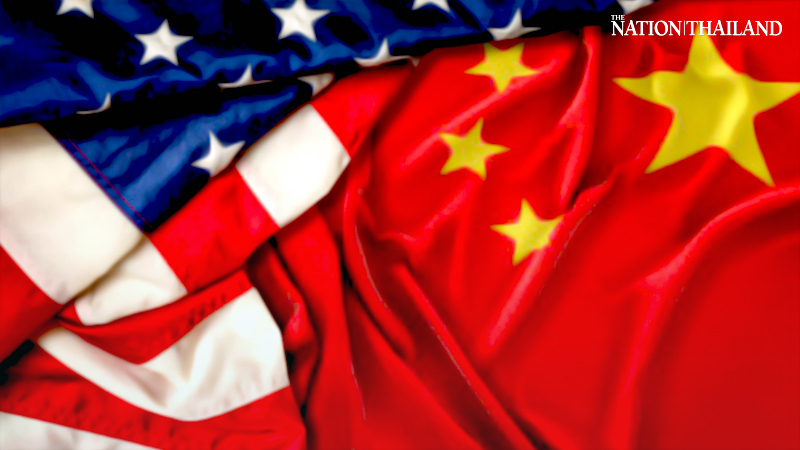
U.S. and Chinese officials traded acrimony and accusations over two days of talks in Anchorage, Alaska, that both sides hope will clear the air. Now the real work begins.
While the Americans portrayed the talks as a good chance to exchange views, they left Alaska without any clear path forward on issues from tariffs and human rights in Xinjiang and Hong Kong to cyber attacks and the long roster of Chinese companies at risk of being delisted from U.S. exchanges.
That will be a disappointment to officials and businesses on both sides that had hoped for some solid indication that the world’s two largest economies were ready to ease off their confrontation, such as by planning a virtual summit on climate change between Presidents Joe Biden and Xi Jinping. In the end, they didn’t even come away with that.
“We were clear-eyed coming in, we’re clear-eyed coming out and we will go back to Washington to take stock of where we are,” National Security Advisor Jake Sullivan said after emerging with Secretary of State Antony Blinken from the meetings in an Anchorage hotel. They refused to take questions from reporters.
Yang Jiechi, a member of the Communist Party’s Politburo, told Chinese reporters that the talks were “candid, constructive and helpful” but added that “there are still some important differences between the two sides.”
“China is going to safeguard our national sovereignty, security and our interests,” Yang said. If there was any hope to be had, it was that his remarks were far less hostile than his blistering 20-minute monologue at the start of the talks.
The lack of any visible progress underscored just how bad relations have become between the U.S. and China in the time since former President Donald Trump shifted from intermittent praise of Xi to a far more confrontational approach to the country, and how little appetite — or ability — there appears to be on either side to improve relations.
China’s Xinhua news agency reported Saturday that the two sides would establish a joint working group on climate change, and would hold talks on facilitating activities of each other’s diplomats as well as issues relating to journalists. By contrast, the U.S. made no public mention of agreements after the talks.
Lawmakers on both sides of the aisle in the U.S. have pressed Biden to maintain Trump’s tough tone on China, and his team has largely done so.
In China, the government has executed a hard turn toward greater authoritarianism, eroding democratic freedoms in Hong Kong and cracking down on ethnic Muslims in Xinjiang in a campaign that the U.S. has labeled genocide.
That designation especially rankles the Chinese. Calling it “the biggest lie of the century,” the Chinese delegation to the talks protested “the presumption of guilt by those who are biased and condescending,” Xinhua reported after the talks broke up.
The meetings in Anchorage may have been “useful to see if there’s anything else people want to say behind closed doors that they’re not going to say publicly,” Bonnie Glaser, a senior adviser on Asia at the Center for Strategic & International Studies in Washington. She warned, though, that relations may only get worse.
“We’re going to have more bills come out of Congress, not fewer, we’ll have more people screaming about how the U.S. has to stand up to China,” Glaser said.
Richard Haass, president of the New York-based Council of Foreign Relations, said “deft handling” is needed in relations with Beijing. “Anchorage is not a good start,” he said Sunday on CNN’s “Fareed Zakaria GPS.”
“There’s way too much public signaling — they ought to have private dialogues,” Haass said. “By talking in public it forces both sides to take out absolute postures because they are playing to the local crowd.”
In the meantime, the Biden administration’s China policy is work in progress. Officials are still reviewing how hard to push back against Chinese technology firms such as Huawei Technologies Co. and how much can be done to stall China’s ability to develop and export the latest-generation microchips.
They haven’t said what they’ll do about the many Chinese companies that could be delisted from U.S. exchanges, or whether they’ll lift tariffs on billions of dollars in Chinese goods. And China has shown no sign of backing down from its far bolder approach.
“An optimistic read is that Yang’s public performance was entirely for a domestic audience, and behind closed doors it will still be possible to make progress,” Tom Orlik, chief economist for Bloomberg Economics, wrote in a note. “A more straightforward interpretation is that China is now so confident in its ascendancy that it sees no benefit to working cooperatively except on its own terms.”
The U.S. had sought the talks and arranged to hold them in Alaska, where Blinken stopped to refuel after visits to key U.S. allies Japan and South Korea. That was intended to send a signal: The Biden administration would talk to China only on its terms and after checking in with key partners.
But whatever position of strength the U.S. had seemed to dissolve within minutes, as Yang delivered the monologue in what were supposed to be perfunctory open remarks. Responding to a shorter presentation of complaints from Blinken, Yang accused the U.S. of hypocrisy, called its democracy flawed and tainted by racism and said it was the “champion” of cyber attacks.
Within the administration, there was debate about whether the opening session — and even the decision to have talks — was a miscalculation. According to some officials, relations are so sour that Blinken and Sullivan should have expected, and sought to avoid, the show of vitriol.
But others argued that China often amplifies its rhetoric before making concessions, and it was important to allow that before getting down to business. Two people familiar with the matter said the idea of the meeting originated with Kurt Campbell, Biden’s Asia coordinator, and voices in the State Department had pushed back, arguing a meeting had little utility.
Skeptics said that the hope for a free-wheeling conversation was naive because Chinese officials rarely diverge from talking points even in private. That appears to have been the case, as one official who briefed reporters said that while the meeting was frank, they didn’t get the back-and-forth they had hoped for.
Although the talks were merely the first move in the Biden administration’s approach to China, it left very little indication of what’s to come. Some Republicans are already demanding that the U.S. boycott the 2022 Winter Olympics that will be held in China, a decision that would infuriate Beijing.
And although former Secretary of State John Kerry is looking for an opening on climate cooperation, his portfolio, the tone in Anchorage seems to have left little opportunity or trust to make a deal anytime soon.
“If anyone in the Biden administration believes that being testy with the Chinese in this meeting will create domestic space for cooperation,” Derek Scissors, a China analyst at the conservative American Enterprise Institute, said as the talks were underway, “they are out of their minds.”
By Syndication Washington Post, Bloomberg · Nikos Chrysoloras
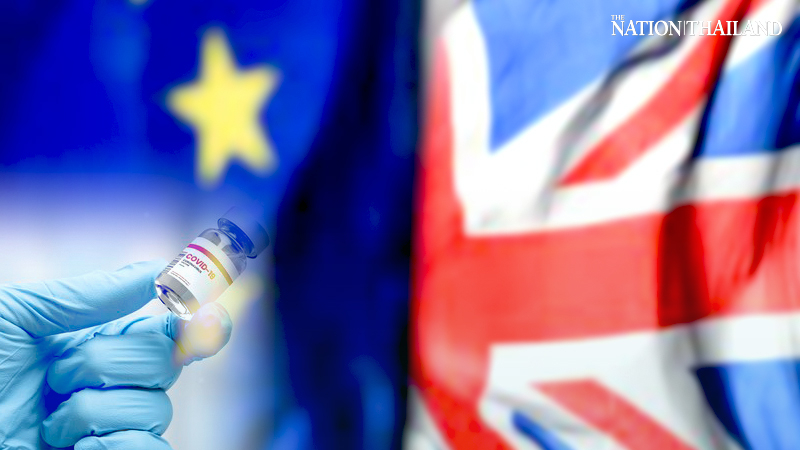
The European Union will review all requests to export the AstraZeneca vaccine to the United Kingdom “very severely” and probably will reject them until the drugmaker fulfills its delivery obligations to the bloc, a senior E.U. official said.
Responding to comments by U.K. Defense Secretary Ben Wallace on Sunday that the European Union must honor its vaccine contracts, the official in Brussels said it’s not the European Union’s responsibility to help AstraZeneca deliver on its commitments to the United Kingdom.
The European Union has its own contracts with the company that are not being respected, and any vaccines and ingredients produced in European factories will be reserved for local deliveries, said the official, who spoke on the condition of anonymity because the decisions are under consideration and have not been made public.
The European Union and the United Kingdom have been at loggerheads over vaccine exports since AstraZeneca informed Brussels that it would not be in a position to deliver the shots it had promised to the bloc. The row is becoming increasingly toxic, with the two sides accusing each other of export curbs and nationalism, and some fear that the spat could pose a risk for the fragile post-Brexit trade relationship agreed to in December.
The European Union must honor its vaccine contracts even as the sluggish rollout puts pressure on governments there, Wallace told Sky News.
“The commission knows deep down that this would be counterproductive,” he said. “They’re under tremendous political pressure at the European Commission. It would damage the E.U.’s relations globally if they should renege on these contracts.”
The E.U. official said there are no outstanding requests for U.K. exports from Astra’s production facility in the Netherlands, but should such a request be made, it probably would be rejected. More than 10 million doses have been exported from the European Union to the United Kingdom, though officials have said few of these shipments were of the AstraZeneca vaccine and its ingredients.
“The Netherlands in principle allows exports to continue until told otherwise by the European Commission,” a Dutch spokesman said Sunday. “In order to avoid a tipping point where further steps are indeed taken by the Commission in cooperation with member states, it is of paramount importance that Brussels, London and AstraZeneca reach a deal promptly on the vaccines produced by the company in facilities falling under both contracts.”
By The Washington Post · Christopher Rowland, Emily Rauhala, Miriam Berger
Abdul Muktadir, the chief executive of Bangladeshi pharmaceutical maker Incepta, has emailed executives of Moderna, Johnson & Johnson, and Novavax offering his company’s help. He said he has enough capacity to fill vials for 600 million to 800 million doses of coronavirus vaccine a year to distribute throughout Asia.
He never heard back from any of them. The lack of interest has left Muktadir worried about prolonged coronavirus exposure for millions of citizens of Bangladesh and other low-incomenations throughout Asia and Africa who are at the back of the global queue for shots.
“Now is the time to use every single opportunity in every single corner of the world,” Muktadir, whose company is being promoted by the Bangladesh government for emergency vaccine production, said in a Zoom interview. “These companies should make deals with as many countries as possible.”
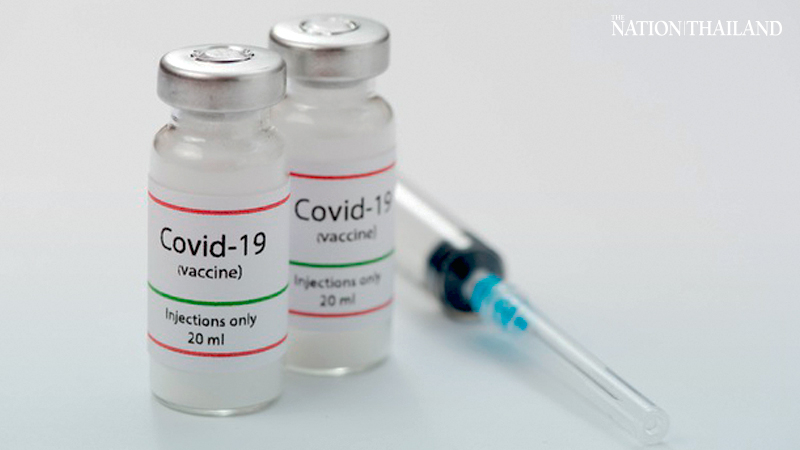
The drug companies that developed and won authorization for coronavirus vaccines in record time have agreed to sell most of the first doses coming off production lines to the United States, European countries and a few other wealthy nations.
The slow pace of ramping up production and shortages of raw materials have exacerbated the disadvantages for countries unable to afford the large outlays to reserve early supplies. Billions of people are left with an uncertain wait, with most of Africa and parts of South America and Asianot expected to achieve widespread vaccination coverage until 2023, according to some estimates.
But drug companies have rebuffed entreaties to face the emergency by sharing their proprietary technology more freely with companies in developing nations. They cite the rapid development of new vaccines as evidence that the drug industry’s traditional business model, based on exclusive patents and know-how, is working. The companies are lobbying the Biden administration and other members of the World Trade Organization against any erosion of their monopolies on individual coronavirus vaccines that are worth billions of dollars in annual sales.
The debate about how to immunize more people overseas is picking up greater steam in the United States now that President Joe Biden has promised that most Americans will be vaccinated by July. Some Democrats in Congress, fresh off approving Biden’s $1.9 trillion pandemic rescue package, are determined to make sure Americans don’t forget about the rest of the world as they potentially celebrate Independence Day with a semblance of normalcy.
“We’re spending lots of money to save the hospitality industry, the airlines, travel. It will all come to naught if the rest of the world is not protected,” said Rep. Jan Schakowsky, D-Ill., who questioned drug executives at a recent House hearing over their refusal to share vaccine patents openly.
The fights over vaccine supply are not just over a moral dutyof Western nations to prevent deaths and illness overseas. Lack of supply and lopsided distribution threaten to leave entire continents open as breeding grounds for coronavirus mutations. Those variants, if they prove resistant to vaccines, could spread anywhere in the world, including in Western countries that have been vaccinated first.
“It doesn’t make any sense for rich countries to think they can vaccinate their own and let the rest of the world live off dribs and drabs,” said Brook Baker, a Northeastern University law professor.
Baker advised the World Health Organization last year in creating a technology-sharing pool to help developing countries make coronavirus vaccines.
But no coronavirus vaccine manufacturer has agreed to participate in the program, called the COVID-19 Technology Access Pool, the WHO said.Albert Bourla, the chief executive of Pfizer, last year called the concept “nonsense.”
“Unfortunately, only limited, exclusive and often non-transparent voluntary licensing is the preferred approach of some companies, and this is proven to be insufficient to address the needs of the current COVID-19 pandemic,” the WHO said in response to questions from The Washington Post. “The entire population and the global economy are in crisis because of that approach and vaccines nationalism.”
Last month, United Nations chief António Guterres warned that 10 countries had administered 75% of all doses by then and 130 countries had not received a single dose. The WHO-linked vaccine purchasing push, known as Covax, has since delivered some doses to low- and middle- income countries – but dozens of countries remain without a single dose, or with a small quantity that falls woefully short of checking the pandemic.
Of the potential 10 billion to 14 billion vaccine doses the industry hopes to produce in 2021 – a range that relies on optimistic projections – more than two-thirds have been claimed by wealthy and middle-income countries, according to a joint report released by the drug industry and the Coalition for Epidemic Preparedness Innovations earlier this month.
The remaining doses would cover as little as 28% of the populations of 92 of the world’s most impoverished nations, according to the report.
The dire international situation contrasts sharply with theoptimism spreading in the United States.
The United States has committed nearly $20 billion in subsidies for vaccine development and advance purchase agreements of hundreds of millions of doses, mostly spread across six private companies. The upfront investment was intended to reduce the private-sector financial risk of rapidly developing the vaccines. It worked. Emergency FDA authorization of three vaccines – from Pfizer, Moderna, and Johnson & Johnson – arrived in record time.
Two more are in the near-term pipeline for Food and Drug Administration review: shots made by AstraZeneca and Novavax. A sixth vaccine candidate supported with U.S. funds, from Sanofi, has been delayed for further clinical trials after it did not trigger a sufficient immune response in elderly people.
These exclusive franchises are on track to generate billions of dollars in revenue for the companies. The Moderna vaccine, which was co-developed with the United States government and supported with $483 million in taxpayer backing, is expected to bring in $18.5 billion for the company this year, Moderna said in February.
Pfizer, which partnered with Germany’s BioNTech, a company that received German subsidies, has predicted it will get $15 billion from sales of its vaccine, an estimate that is considered conservative. Pfizer did not accept U.S. government funding.
Both the Pfizer and Moderna vaccines are based on novel messenger RNA technology that holds potential for other vaccines and drugs against an array of diseases. That makes the technology especially valuable.
Drug companies are lobbying the Biden administration to block a push at the WTO by India, South Africa and about 80 other countries for a temporary waiver on patent protections for the new vaccines. The pharmaceutical industry argues that innovation as well as vaccine quality and safety depend on maintaining exclusive intellectual property rights.
“Eliminating those protections would undermine the global response to the pandemic,” industry executives and the Pharmaceutical Research and Manufacturers of America, their powerful lobbying group, warned President Biden in a letter this month. Biden has sided with the drug companies so far. The United States on March 10 joined Britain, the E.U. and Switzerland in blocking the push for waivers.
The United States, which initially declined to join Covax under President Donald Trump, last month pledged $4 billion to help pay for vaccine purchases. But there is just not enough supply in the pipeline for Covax to satisfy demand in developing countries, say experts on global health.
“The starting point is that we need to make more vaccine,” said Mara Pillinger, an associate in global health policy and governance at Georgetown’s O’Neill Institute for National and Global Health Law. “Any conversation about allocating the limited supply we have now will never get us where we need to be.”
The companies say they are working furiously to produce more vaccine doses, using their own factories and licensing agreements with contract manufacturers with the highest degree of expertise and the most capacity, most of them in North America, Europe and India.
Step-by-step manufacturing instructions are just as important as intellectual property rights, because vaccines require multiple complex steps to produce. It takes highly specialized equipment and workers trained in biopharmaceutical manufacturing.
“WHO criticism of industry is showing a lack of understanding for the complexity of vaccine manufacturing and global supply chain and a disrespect for the daunting challenge of literally trebling global vaccine capacity for one single disease almost overnight,”Thomas Cueni, director general of the International Federation of Pharmaceutical Manufacturers and Associations, said in an email.
“COVID-19 vaccine makers have been making agreements with other vaccine makers, wherever they are in the world,”he said.”Speed is of the essence; and for these relationships to be established quickly, you need trust, as well as a total shared commitment to the quality and safety of COVID-19 vaccines produced.”
Most of the companies have announced plans to sell vaccine to Covax or directly to poorer nations.
AstraZeneca has been the most aggressive about creating technology transfer deals and has priced its vaccine the lowest, for as little as $2.15 per dose in Europe. But European countries have created a crisis atmosphere around the vaccine by suspending doses after blood clots appeared in a tiny number of individuals who received the shots.
Biden earlier this month announced an initiative to produce 1 billion doses of Johnson & Johnson’s single-shot vaccine in India, at the company’s manufacturing partner there, Biological E, by the end of 2022. Those doses would be targeted to the developing world and could help boost total production as high as 3 billion in 2022, a company executive told Reuters. The company’s vaccine is produced by a network of nine contractor companies, most in North America and Europe. It said in a statement that “we continue to seek out new partnerships.”
Pfizer, which says it plans to produce 2 billion doses of vaccine in 2021, has begun selling its vaccine directly to countries. The company said 36% of its production will be reserved for middle- and low-income countries, with nonprofit pricing baked in for the poorest nations.
“We are firmly committed to equitable and affordable access of coronavirus vaccines for people around the world,” Pfizer spokeswoman Amy Rose said in an email.
Moderna has said it will make nearly 1 billion doses in 2021. It has only a few commitments outside of the United States and Europe. It has been criticized for not yet agreeing to supply doses to Covax.
Moderna last year said it did not intend to enforce its patents against any companies making coronavirus vaccines. The announcement generated positive headlines. But as a practical matter, it is unlikely to have an impact on the supply of vaccine in the developing world.
In a Zoom call on Feb. 3, John Lepore, Moderna’s senior vice president for government engagement, told vaccine advocates the company is reluctant to share details about how to make its vaccine, according toadvocates who participated in the call and were interviewed by The Washington Post. Lepore said Moderna sees its mRNA vaccine delivery system as a proprietary platform for other drugs and vaccines in the future, the participants said.
“He saw this as fundamental to them maintaining proprietary technology,” said one of the people on the call, James Love, director of Knowledge Ecology International, a nonprofit advocacy group that is critical of many monopolistic practices in the drug industry. “Can they really keep the genie in the bottle that long?”
Moderna did not comment on the conversation but referred to the October patent pledge. “Our patent pledge stated that, while the pandemic persists, Moderna will not use its patents to block others from making a coronavirus vaccine intended to combat the pandemic. There was no mention of a commitment to transfer our know-how beyond our chosen partners,” Moderna spokesman Ray Jordan said in an email.
Pakistan has received a small trickle of vaccine doses from China and none from Western drug companies, even though it is the world’s fifth-largest country, with about 220 million people.
Wajiha Javed, head of public health and research at Pakistani drug company Getz Pharma, sees a prolonged crisis on the horizon under the current vaccination plan.
She said she has sent proposals to multiple coronavirus vaccine manufacturers to accelerate vaccine supply to Pakistanis and other customers in the developing world. Getz also has been met with silence, she said in an interview.
“We say we are ready to do tech transfer, import licensing, fill-finish,” she said. “We offer everything. We are desperate. Nobody even bothers to answer back.”
Experts on global health and pandemics are looking for ways to break through the logjam and create more supply.
“Basically, you need a global version of Operation Warp Speed,” said Thomas Bollyky, a senior fellow at the Council on Foreign Relations and director of its Global Health Program, referring to the Trump administration’s effort to develop vaccines in the United States. “Operation Warp Speed did not just spend money. It coordinated, it aligned all the inputs involved, it played a general-contractor role.”
Bollyky ventured that the WHO may have lacked the money or clout to take on big pharma. He envisioned a diplomatic push, perhaps led by the Group of 20.
The high cost of HIV medications, protected by drug industry patents, prevented the treatments from reaching Africa in the late 1990s and created enormous pressure for distribution of low-cost pills. In 2001, the World Trade Organization carved out an exemption to international patent protections for public health emergencies. For vaccines, the industry has said it has scrambled to build new manufacturing capacity fast enough.
Some argue that drug companies have already proved they can transfer the new vaccine production to contract manufacturers and licensees in a matter of months, so there is no reason they can’t continue to expand to a wider roster of companies.
“This idea that it would take too long to stand up is a dodge,” said Pillinger, at Georgetown’s O’Neill Institute. “They are sharing the IP where they see that it is in their financial interest to do so to make the effort worthwhile.”
Muktadir, the pharmaceutical chief executive in Bangladesh, alreadymakes andsells a number of vaccines and other drugs throughout the developing world. Even after his appeal to help in the global pandemic response was reported by the Associated Press, he said he has heard nothing from the vaccine companies.
Bangladesh qualifies as a “least developed country” under WTO rules, which gives it an automatic intellectual property waiver until 2033. But Muktadir said he is not interested in attempting to break any of the vaccine patents. He wants to work with the industry for tech transfer, not against it.
“Incepta is a very, very large, capable, high-quality manufacturing place,” he said, “and we are left out because we are in Bangladesh.”

 จีนพบ ‘ไวน์ผลไม้’ ในกาน้ำสัมฤทธิ์ยุคก่อนราชวงศ์ฉินครั้งแรก


 Deutsche Bank ชี้คริปโตเคอร์เรนซี่ที่ใหญ่ที่สุดในโลกได้กลายเป็นสกุลเงินที่สหคัญที่สุดอันดับต้นๆ ของโลกไปแล้ว ซึ่งสำคัญเกินไปที่จะเพิกเฉย
 ตำรวจเพิ่มกำลังพลหลายร้อยนายเฝ้าระบบขนส่งมวลชนรับมืออาชญากรรมจากความเกลียดชังเอเชีย
 ชาวบ้านนับพันรายในรัฐฉานต้องอพยพหลังทหารประกาศล้างแค้นแทนทหาร 4 นายที่เสียชีวิตในรัฐฉาน
 จีนเลือกผู้กำหนดนโยบายธนาคารกลางรายใหม่เพื่อสนองแนวทางไปมุ่งเน้นที่การจัดการความเสี่ยง
 โมเดลการทำเกษตรแบบใหม่ที่ริเริ่มเมื่อ 10 ปีที่แล้ว แต่ขยายรูปแบบการดำเนินงานอย่างต่อเนื่อง จนมีอนาคตที่สดใสไม่น้อย


 Visitors line up for free covid-19 tests at a ‘Test-To-Go-Station’ in Berlin, on March 8. MUST CREDIT: Bloomberg photo by Liesa Johannssen-Koppitz