BOJ reportedly mulling wider yield range among tweaks
InternationalMar 19. 2021Haruhiko Kuroda, governor of the Bank of Japan, speaks during an event hosted by business lobby Keidanren (Japan Business Federation) in Tokyo on Dec. 24, 2020. MUST CREDIT: Bloomberg photo by Kiyoshi Ota.
By Syndication Washington Post, Bloomberg · Toru Fujioka, Sumio Ito
The Bank of Japan ends three months of speculation Friday when it is expected to tweak its bond yield management and asset buys after a policy review that could still have sizable implications for investors given the BOJ’s dominant presence in markets.
The central bank is considering widening the movement range around its 10-year bond yield target to 0.25 percentage point from around 0.2, according to a Nikkei newspaper report Thursday that strengthened the yen and pushed up yields.
The BOJ will also scrap its 6 trillion yen annual buying target of exchange-traded funds, the report added. The Nikkei 225 stock index briefly fell by more than 1% following the report.
The report adds to speculation over the likely tweaks the central bank will unveil, though the BOJ is widely expected to keep its main policy rates unchanged at the meeting.
As a way of convincing investors that further rate cuts are still a viable option if needed, Governor Haruhiko Kuroda and his colleagues may also hint at steps that could be taken to lessen the toll its policies are taking on banks.
Since the BOJ announced the review in December, jumps in U.S. Treasury yields that far outrun those in Japan have helped weaken the yen. That’s bolstered Kuroda’s case that the BOJ’s yield-curve control framework is working effectively, and needs only small adjustments so it can be held in place longer to deal with a worsened inflation outlook.
Still, with the BOJ now the biggest single holder of Japanese stocks and bonds, even small changes can have big implications.
“The aim would be to make its yield curve control policy more flexible, and give itself more leeway to reduce asset purchases when market conditions allow,” Masujima, economist with Bloomberg Economics, wrote in a report.
For the BOJ, the risk is leaving any impression that it’s backpedaling on stimulus, especially after the European Central Bank last week made clear it intends to step up its bond buying, while the Federal Reserve overnight continued to project near-zero rates at least through 2023.
Kuroda is likely to stress his readiness to ease further when he meets reporters in Tokyo, usually at 3:30 p.m., following the BOJ’s policy statement expected around noon.
What to look for:
– If the BOJ sets its yield movement band at 0.25% from the current range of around 0.2 percentage point either side of zero, attention will focus on how the band is characterized. After leaving plenty of room for interpretation over the width of the target range, the BOJ could say it had 0.25% in mind all along when it said the range was around 0.2%.
– The BOJ could try to raise the low volatility of Japanese yields also by adjusting its bond operations, its monthly buying plan or even its fixed-rate operations used for suppressing yield jumps.
– To signal that a rate cut is still a real option, the BOJ could offer some kind of analysis that shows the side-effects on banks can be managed.
– Increasing lending incentives or adjusting the structure of the BOJ’s reserves so that more of them are exempted from the negative rate or earn interest are measures that could make a rate cut more palatable for commercial lenders.
– Most analysts see the BOJ signaling its intention to buy fewer exchange-traded funds when stock prices are high while remaining aggressive when needed. A key question is how the bank will convey the shift.
– To convey that message, the bank could ditch its 6 trillion yen ($55 billion) annual purchasing target, while keeping the current 12 trillion yen-per-year upper limit on the buys.
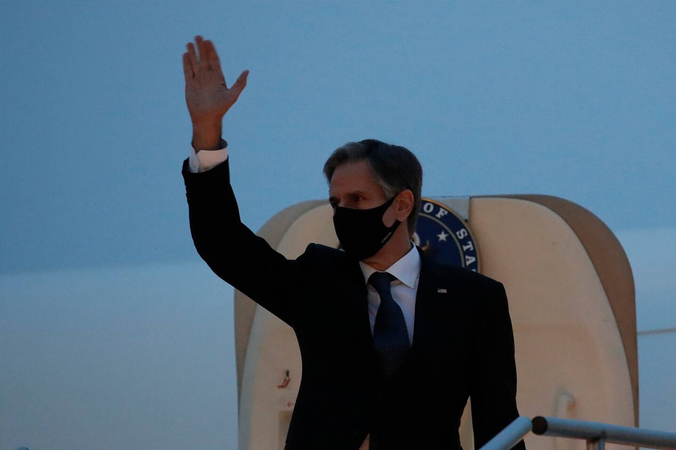
WASHINGTON – The Biden administration’s first faceoff with China began in Alaska on Thursday with a testy exchange between Secretary of State Antony Blinken, who chided Beijing for “cyberattacks on the United States” and “economic coercion toward our allies,” and China’s top diplomat, Yang Jiechi, who detailed America’s own human rights problems, citing recent Black Lives Matter protests.
The world’s two remaining superpowers presaged the meetings with elaborate public posturing, unveiling dueling agendas that appeared to offer little space for common ground amid disagreements over trade, Tibet, Hong Kong, the western Xinjiang region and the coronavirus pandemic.
Blinken cited China’s actions in those areas as threats to “the rules-based order that maintains global stability” at the top of Thursday’s meeting, which included Yang, China’s State Councilor Wang Yi and U.S. national security adviser Jake Sullivan.
Wang criticized new U.S. sanctions against Chinese officials for actions in Hong Kong, saying, “This is not supposed to be the way one should welcome his guests.”
After Wang ended his comments, government handlers began to usher the media out of the conference room, but Blinken waved at them to stay as the top U.S. diplomat added that the United States “is not perfect,” but throughout history it has dealt with its challenges openly. When the media was again ushered out, Yang told reporters to “wait” and raised a finger at the U.S. side, accusing Blinken of speaking in a condescending tone.
The ad hoc remarks and tense back-and-forth marked a sharp break from the heavily choreographed diplomatic engagements that usually occur between U.S. and Chinese officials. But this first meeting had long shown signs of breaking the ordinary mold.
No agreements and no joint statements are expected to result from the meetings in snow-covered Anchorage, U.S. officials said, as the Biden administration hangs onto some of the hard-line China policies implemented under President Donald Trump.
“We do not seek conflict,” Sulivan told his Chinese counterparts at the top of the meeting, “but we welcome stiff competition.”
The four top officials are scheduled to meet three times over the next two days in conversations that “will be pretty tough,” a senior administration official told reporters as temperatures dipped to 14 degrees outside Anchorage’s Hotel Captain Cook, the venue for the conversations.
Blinken set the stage for a confrontational encounter in remarks in South Korea before boarding a plane for Anchorage.
“We are clear-eyed about Beijing’s consistent failure to uphold its commitments, and we spoke about how Beijing’s aggressive and authoritarian behavior are challenging the stability, security and prosperity of the Indo-Pacific region,” he said.
Chinese officials immediately shot back.
“There’s no room for China to compromise on issues related to sovereign security and core interests, and its determination and will to safeguard its core interests is unwavering,” Chinese Foreign Ministry spokesman Zhao Lijian said.
Dispensing with the pomp and circumstance associated with official visits, the four officials are set to hold formal business meetings instead of stately affairs that entail banquets and cultural events. U.S. officials in Alaska said they wanted to avoid a simple recitation of talking points and create space for the two sides to discuss issues and ask each other questions.
“This will be a frank conversation in calling out Beijing’s actions,” State Department deputy spokeswoman Jalina Porter said.
Blinken arrived in Alaska after visits to U.S. treaty allies in Japan and South Korea, where he was joined by Defense Secretary Lloyd Austin. During his stop in Tokyo, the two governments issued a joint statement criticizing China’s treatment of Uyghur Muslims in western Xinjiang province and coercive and “destabilizing behavior” toward its neighboring countries.
“We will push back if necessary when China uses coercion or aggression to get its way,” Blinken said in Japan.
China’s official media organs initially sounded a positive note when the Anchorage meetings were announced, with an editorial in China Daily calling it a “welcome development, reviving hopes that the two countries will be able to demonstrate the wisdom and resolve to navigate ties away from conflict and confrontation.”
But as U.S. officials downplayed the meeting, calling it a “one-off” that entails no intention of “follow-on engagements,” Chinese messaging dimmed in response, with the Chinese ambassador to the United States, Cui Tiankai, saying, “We don’t hold overly high hopes.”
The challenge for U.S. officials will be in balancing what Blinken has called a “complex relationship” that has significant stakes for combating the coronavirus pandemic and climate change given Beijing’s status as the world’s largest emitter of greenhouse gases.
Blinken had made clear he would open the discussions from a tone of confrontation.
“Among the factors that drive the administration’s messaging is not wanting to expose a flank and invite criticism of being appeasing to Beijing,” said Danny Russel, a vice president at the Asia Society Policy Institute and a former career diplomat. “They are disabusing people of the expectation that this is going to produce some solutions or even negotiations. But it’s an opportunity to lay our priorities and level-set.”
U.S. officials told reporters ahead of the trip that Blinken and Sullivan would emphasize U.S. concerns over China’s “increasingly aggressive activities across the Taiwan Strait” and other issues China considers internal matters, such as its treatment of Uyghur Muslims and control over Taiwan. “We will absolutely make those points very clear,” said an official, who like others spoke on the condition of anonymity to discuss the sensitive discussions.
China, in turn, has indicated that it wants the Biden administration to reverse sanctions imposed by the Trump administration, including limitations on U.S. technology sales to Chinese telecommunications companies and chipmakers.
Given the wide gulf between the two countries, the chances of a breakthrough are limited, but they will have the benefit of very few distractions.
“When you’re in Anchorage, there are not Congress people around and there are a finite number of reporters,” Russel said. “You’re basically sequestered.”
By The Washington Post · Loveday Morris, , William Booth, Luisa Beck
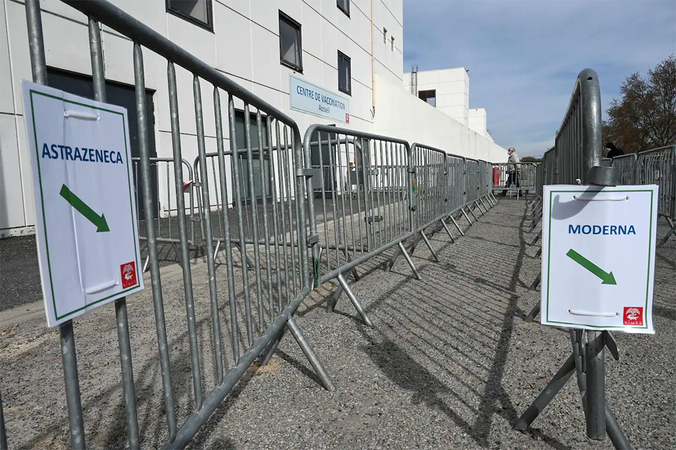
BERLIN – Europe’s medical regulator said Thursday that AstraZeneca’s vaccine was “safe and effective,” but that it could not rule out a link to highly unusual types of blood clots and said a warning would be added to the product.
Many of the countries in Europe that had paused the use of the Oxford-AstraZeneca vaccine – including Germany, France, Italy and Spain – announced that they would resume Friday or early next week. Ireland said it would announce its decision Friday, and Sweden said it would next week.
“If it was me, I would be vaccinated tomorrow,” said Emer Cooke, the head of the European Medicines Agency. “But I would want to know if anything happened to me after vaccination, what I should do about it, and that’s what we’re saying today.”
In addition to the warning, the agency said it would conduct outreach to health-care providers and the public about the signs and symptoms to watch for.
The suspensions of the AstraZeneca vaccine have split both the scientific community and the countries in Europe, with some continuing their vaccination campaigns as others warn that the extremely unusual and deadly nature of blood clots detected, even if in small numbers, warrant caution.
Norwegian experts said Thursday that their investigations into three cases of unusual clots among health workers there, one of whom died, found they were likely caused by an immune response to the vaccine.
Even with the European regulator reiterating that the benefits far outweigh the risks, experts say the damage has been done, with trust in the vaccine already diminished. The pause comes as several European countries warn they are at the beginning of a third wave of the pandemic, with an already slow pace of vaccinations and new more contagious variants spreading rapidly.
The potential ramifications stretch much further than the continent. Easier to store and handle than other products on the market, the offering from AstraZeneca, which developers have said will be distributed on a not-for-profit basis, is a major tool in the fight against the spread of the coronavirus in developing countries.
AstraZeneca has said that the 37 blood clotting incidents reported among the 17 million shots given in Europe are far lower than to be expected in the normal population, and the World Health Organization has said it continues to think that the benefits outweigh the risks.
Experts from the EMA agreed on both counts, but said their investigation was focused on a small number of normally extremely rare brain clots that have been reported in countries, including Germany and Norway, following vaccinations, including in younger people and notably among women.
Their panel said the vaccine “may be associated with” those cases, which include 18 incidents of a rare brain clot known as cerebral venous sinus thrombosis, three of which were reported in the United Kingdom. It’s a kind of stroke that can be deadly.
There have also been seven cases of an unusual condition in which blood clots form in vessels throughout the body. While such symptoms may be linked to the coronavirus itself, “we still feel that we see sufficient information to include a warning,” said Sabine Straus, head of the EMA’s safety committee.
She said that “younger women” seemed to be notably affected, but that it was too early to issue specific guidance, and the agency is looking into whether there could be increased risk for people on contraceptive pills. Women on the pill are already at a higher risk of the rare clots in the brain.
In Britain, where 11 million shots have been administered, almost double the amount across the entire European Union, the medical regulator continues to urge people to get their vaccines.
June Raine, the chief executive of the Medicines and Healthcare Products Regulatory Agency, Britain’s counterpart to the EMA, said they had received a “very small number” of reports of “an extremely rare form of blood clot” in the brain along with lower levels of platelets following vaccination, but that such events could occur among those who haven’t been vaccinated, or those who have coronavirus.
“While we continue to investigate these cases, as a precautionary measure we would advise anyone with a headache that lasts for more than 4 days after vaccination, or bruising beyond the site of vaccination after a few days, to seek medical attention,” she said in a statement on Thursday.
Concerns were first triggered in Austria in early March. As the country vaccinated medical workers, a 46-year-old nurse died of multiple blood clots. Another medical worker at the same hospital suffered a pulmonary embolism. Austria suspended use of that batch as a precaution.
Last week, Europe’s regulator said that it found no evidence of a causal link with the vaccine in those cases, and it maintains that there is no problem with a specific batch.
Given that decision, Germany had initially said it would go ahead with its AstraZeneca vaccinations, with its health minister assuring people of its safety on Friday. But it reversed course after recording eight cases of a rare type of brain clot among 1.6 million doses of vaccine administered. Half of them were in the course of a few days.
Germany said that among the 1.6 million doses of the vaccine administered, the eight cases of a rare type of blood clot, called cerebral venous sinus thrombosis, which occurs in a vein in the brain is higher than one would normally expect.
It said that among a group that size, one case could normally be expected. Johns Hopkins University says it normally affects about 5 people in 1 million each year.
Given the seriousness of the condition, Germany said it had little choice but to pause until there was an expert review.
Norway has reported four similar cases after administering 130,000 doses of the vaccine.
Steinar Madsen, medical director at the Norwegian Medicines Agency, said all four people were under 50 years old, and that two are now dead.
He described the type of blood clot as very rare. “What I can say is that this picture with low platelet counts, blood clots and internal bleeding is very unusual,” he said. “Even experts have not seen cases directly similar to this.”
Experts at Oslo University Hospital said Thursday they think there is a link to the vaccine and three cases of hospitalizations there.
“Our findings support the early theory that the patients had a strong immune response, which led to antibody creation which can ignite blood platelets and cause a thrombosis,” said Pål Andre Holme, the lead physician looking into the cases. He said he could not be certain that the vaccine was the cause, but “I see no other possibility as of today.”
He said he was “surprised” by his team’s findings and that he had not seen a similar response caused by other vaccines. He said his team is continuing its studies and cannot yet say whether the three health workers shared any underlying conditions that could explain why they had such a reaction to the vaccine.
Denmark has recorded one death in a 60-year-old recently vaccinated woman, who had “a highly unusual disease pattern,” which also included a low platelet count and blood clots in small and large vessels.
Spain has said it has had one such case in a 46-year-old teacher who died of a blood clot to the brain, which contributed to its decision to pause its rollout.
The EMA said there were three cases of the brain clots recorded among those who had had the vaccine in Italy.
Amid the pauses, there has been resistance from some parts of the scientific community, particularly in Britain.
Before the EMA annnoucement, Ian Douglas, a professor of pharmacoepidemiology at the London School of Hygiene and Tropical Medicine, said there appears to be no strong evidence that the events are causally related, though he didn’t rule it out.
He said that even if the vaccine was causing some concerning side effects, those most be weighed in a risk-benefit analysis: How serious are the side effects and how numerous when balanced against the drug’s benefits.
“We do this all the time with all medicines,” he said. “You have to weigh the risks and benefits.”
Douglas said he was deeply concerned that the actions taken by European countries would reduce use of this or any vaccine and that European countries acted rashly. To pause the AstraZeneca vaccine, which is desperately needed, requires a higher level of certainty of harmful effects than has been shown, he said.
“If you take action too early it is very easy to lose trust,” he said. “Confidence is easily lost and less easily regained.”
Experts in Germany have speculated that Britain may not be picking up as many similar cases because it began with vaccinations of older people, generally at lower risk of such complications and a population in which deaths might be less notable.
“I think the most likely explanation is different populations being vaccinated,” said Peter Arlett, head of data at the EMA said Thursday.
Klaus Cichutek, president of the Paul-Ehrlich-Instituts, Germany’s regulator, said they had analyzed “large data sets” from Britain and found few cases.
“But the focus and the gaze was not yet focused on such cases either,” he told German broadcaster ARD. “On the other hand, it may be the case that in the U.K. another age group, another population group, was vaccinated.”
Some have alleged that the decision in some countries to suspend the vaccine is political. Paul Hunter, a professor of medicine and infectious diseases at the University of East Anglia, said evidence of a link was weak and he believed herd mentality was at play.
“If Germany is doing this, we don’t want to be seen as less protective than the Germans,” he said. “Many people, including me, don’t think this is real. This is very likely a random association – and not a causal relationship.”
Hans Kluge, the World Health Organization’s Europe director, reiterated Thursday that blood clots occur all the time. The detection and reporting of such events is testament to strong surveillance systems, he said.
“In vaccination campaigns, it is routine to signal potential adverse events,” he said. “This does not necessarily mean that the events are linked to the vaccination.” The WHO is conducting its own assessment and has said details will be made public as soon as possible.
Even before the concerns over blood clots, AstraZeneca had been suffering from an image problem in Europe. Trial data came under fire from the scientific community, while there was also confusion over dosing and efficacy rates.
In Europe there had been reports that AstraZeneca appointments were not being taken up amid particular skepticism over its efficacy.
“Even if it turns out that the vaccine is harmless for most, it will unfortunately not be easy to rebuild trust,” Ulrich Weigeldt, chairman of the German Association of General Practitioners, told Redaktionsnetzwerk Deutschland on Thursday.
Myanmar is descending into chaos. A Yangon neighborhood is in the eye of the storm.
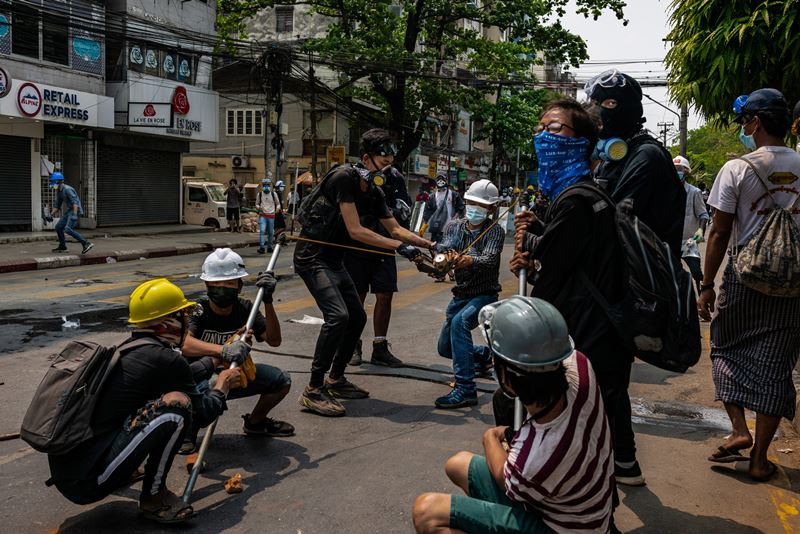
InternationalMar 19. 2021Anti-coup protesters with homemade shields line up during a protest in the Sanchaung neighborhood of Yangon, on March 14. MUST CREDIT: photo for The Washington Post.
By The Washington Post · Shibani Mahtani
When Moe and two friends moved into a shared apartment in Yangon in 2019, they chose the city’s Sanchaung neighborhood for its lively bars, restaurants and new malls. Striking out on their own for the first time, the young professionals thought they had finally made it as adults – and decorated their digs with stuffed toys and colorful cushions.
Then came the military coup.
Last week, Moe, 23, sat huddled in a bedroom, contemplating torture or death, with her housemates and 13 female protesters. Police officers were rattling on the door, she said, screaming for them to emerge and threatening to arrest them after another day of street battles between security forces and civilians.
“Before the coup, I could have never imagined my life would turn out this way,” Moe said. “I don’t think I could have ever been prepared.”
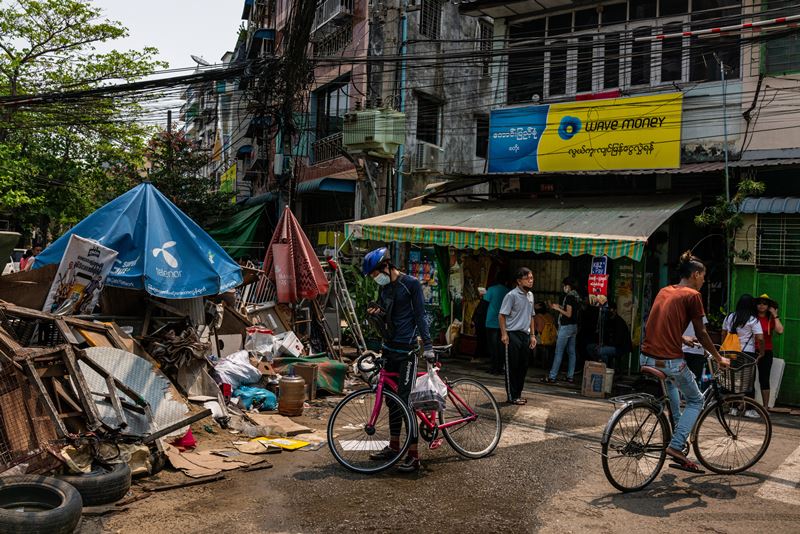
A food delivery employee checks his phone after encountering a barricade in the Sanchaung neighborhood of Yangon. The neighborhood has emerged as the heart of the anti-coup resistance. MUST CREDIT: photo for The Washington Post.
Since the military seized power Feb. 1, hundreds of thousands across Myanmar have protested the ouster of the elected government led by Aung San Suu Kyi. The armed forces, known for campaigns of slaughter against ethnic and religious minorities, have responded by turning weapons on unarmed civilians, killing at least 200, including more than 60 on Sunday, according to human rights groups. Two officials from Suu Kyi’s party have died in custody – one tortured so badly that all of his teeth were missing, according to human rights organizations and his family.
The descent into chaos is playing out most starkly in places such as Sanchaung, a jumble of streets wedged between the gleaming Shwedagon Pagoda and the murky Yangon River that has emerged as the heart of the resistance movement. Starting in 2010, when the military loosened its five-decade grip on power, the area boomed as middle-class families, expatriates and small businesses moved in, followed by malls and high rises. Many of its apartments and hair salons are now staging grounds for protesters.
“Everyone wanted to live here. It was very metropolitan. It represented the future of Myanmar,” said Htun, a 37-year-old Sanchaung resident. “We have lost everything: our freedoms first, then our businesses, our restaurants, our offices, and our townships, which have turned into a battlefield.”
Moe, Htun and others interviewed by The Washington Post spoke on the condition that only part of their names be published, citing security concerns. The military has condemned the protests as “riots” and “incitement,” and said authorities “are exercising restraint as peacefully as possible.”
Protesters throw a homemade smoke bomb toward security forces. Sanchaung residents have offered assistance and shelter to anti-coup demonstrators. MUST CREDIT: photo for The Washington Post.
Spontaneous protests flared immediately after the coup, but within 48 hours became more coordinated. Among the groups acting as representatives of the resistance is the General Strike Committee of Nationalities, a coalition of ethnic minority activists and others. After security forces cracked down on protesters at rally sites, such as the Sule pagoda, the group shifted tactics and organized protests mainly in Sanchaung, which it viewed as strategically located and especially receptive to its goals.
“Many Sanchaung residents experienced military atrocities before,” said Maung Saung Kha, a committee member, noting that ethnic minorities from around Myanmar, formerly known as Burma, had settled in the area. “They know the true colors of the military, and when the chance of revolution presented itself, they were ready.”
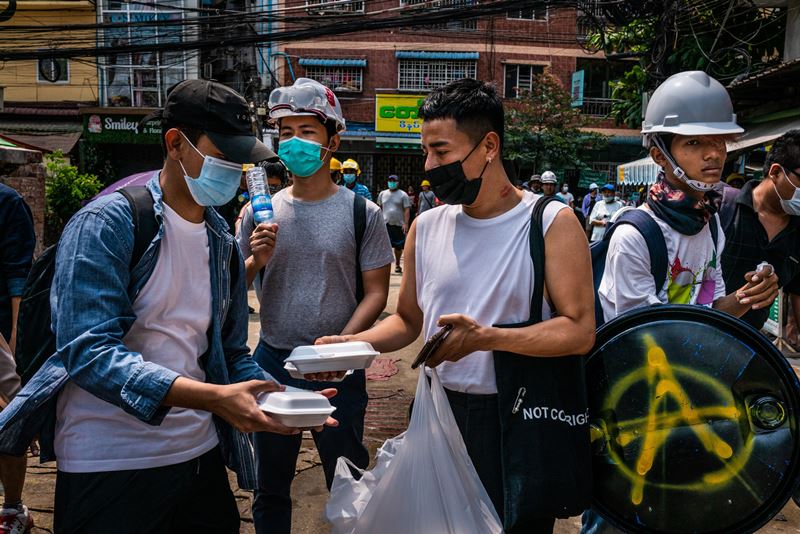
Sanchaung’s overwhelmingly young, middle-class and diverse community stepped up, helping demonstrators who poured in from other parts of the city. Htun, Moe and others began receiving protesters, providing them with food, water, shelter, protective gear and other essentials. When police fired rubber bullets or tear gas at the crowds, the dissidents would melt away into apartments and shops.
Volunteers arranged themselves into more than 10 rescue teams, providing medical assistance and security for anti-coup demonstrators. These groups patrol the neighborhood on bicycle, apprehending or threatening those suspected of working as informants for the security forces.
“Protesters feel safe here. They feel well taken care of,” Htun said.
Sanchaung residents give food to the anti-coup protesters. MUST CREDIT: photo for The Washington Post.
On March 8, security forces changed tactics, according to protesters and residents in Sanchaung. After using rubber bullets and stun grenades to disperse protesters – who once again took shelter in safe houses – security forces sealed off a section of Sanchaung, trapping hundreds of demonstrators. Police and soldiers threatened to arrest and “punish” anyone caught helping the resistance fighters, according to those who heard the warnings.
May Lay, 38, who runs a beauty salon on one of the barricaded streets, said 13 protesters were sheltering in her premises when the security forces descended on the neighborhood late in the afternoon.
Peering out from her salon, May Lay saw officers break down her neighbor’s door and forcibly remove the occupant and five protesters he was hiding. More than 2,000 have been arrested or detained since Feb. 1, according to the Assistance Association for Political Prisoners (Burma); some have not been seen or heard from since.
Knowing that she and the black-clad protesters in her salon had to leave quickly, May Lay turned to camouflage. She dressed the protesters in sarongs, T-shirts, blouses and flip-flops to make them look like ordinary residents. One protester had identifiable gray hair, which May Lay dyed black. Armed with decoy bags of trash, the protesters sneaked out, telling officers they were on their way to buy groceries.
Others had closer encounters. On a parallel street, police officers saw Moe and her housemates peering out from behind a curtain, and threatened to shoot them, she said. Officers then demanded that the group – the three housemates and the 13 protesters – come down to the street and comply with investigators.
The group rushed into a bedroom as officers ascended to their fifth-floor apartment and tried unsuccessfully to enter, Moe said. The missing doorknob and bits of metal that remain in its place are a testament to how close they came.
Salai Thurein, a 35-year-old member of one of the local rescue teams, said it was especially challenging to hide the protesters’ gear, including makeshift metal shields and hard hats. But virtually every resident within the barricaded area took in some equipment, he said, stashing it in backyards, on rooftops and in drains.
Security forces eventually pulled back early the next day, after arresting several dozen protesters. They took revenge on Sanchaung by smashing cars and destroying shops – but for residents and protesters, that was the best-case scenario.
“We averted a catastrophic event,” Htun said.
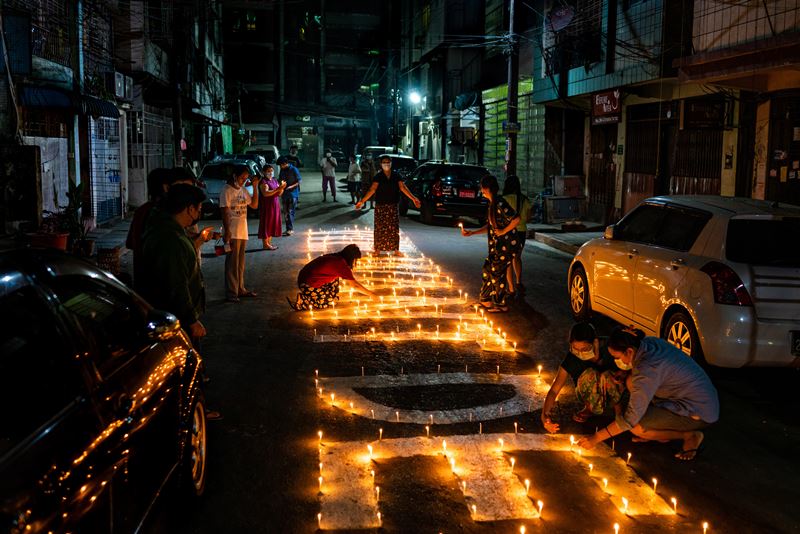
Residents light candles as part of a protest in Sanchaung to pray for those who have died during the protests. MUST CREDIT: photo for The Washington Post.
Protests against the military’s power grab have intensified and spread. On Sunday, Hlaing Tharyar, an impoverished neighborhood packed with garment factories, became the latest flash point. Soldiers and police took a far more violent approach there than in Sanchaung, killing at least 30, according to doctors at a nearby hospital. Hlaing Tharyar and several other neighborhoods are now under martial law, meaning perceived crimes can be punished with hard labor or the death penalty.
Some protesters say they will soon abandon peaceful tactics and arm themselves, threatening a significant escalation of an already volatile situation. Myanmar is awash with weapons after decades of ethnic conflict.
“We now consider it a battle,” said Naing Min, a 27-year-old physician who witnessed the killings in Hlaing Tharyar. “They have guns, and we have knives, slingshots and homemade weapons. We might be able to kill them, too.”
A committee representing members of Suu Kyi’s National League for Democracy, who were ousted in the coup, said in a statement that people have “the full right to defend themselves or others” in response to the military’s actions.
Longtime observers of Myanmar are warning of an imminent major lethal crackdown – similar to the one the military inflicted on the Rohingya in 2017, in which thousands were killed. The Special Advisory Council for Myanmar, which comprises former United Nations officials who investigated the Rohingya abuses, said in a statement that the military’s actions, including Internet blackouts, are consistent with “past major military offensives.”
“Without immediate political intervention, a major crackdown with fatal consequences is inevitable,” the statement added.
Myanmar’s junta-controlled TV presented a businessman saying he gave Daw Aung San Suu Kyi $550,000 in illegal payments. Her lawyer has dismissed corruption accusations as a joke, but charges look increasingly likely. #WhatsHappeningInMyanmarpic.twitter.com/oToy6OrfIQ— Matthew Tostevin (@TostevinM) March 17, 2021

 Haruhiko Kuroda, governor of the Bank of Japan, speaks during an event hosted by business lobby Keidanren (Japan Business Federation) in Tokyo on Dec. 24, 2020. MUST CREDIT: Bloomberg photo by Kiyoshi Ota.
 Anti-coup protesters with homemade shields line up during a protest in the Sanchaung neighborhood of Yangon, on March 14. MUST CREDIT: photo for The Washington Post.
 หลังจากจัดการกับ Alibaba ของ แจ็ก หม่า แล้ว เป้าหมายต่อไปของรัฐบาลจีนคือ Tencent ของ โพนี่ หม่า
 โปรโมชั่นของร้านอาหารแห่งหนึ่งทำให้คนไต้หวันพากันไปเปลี่ยนชื่อเป็นแซลมอน
 การค้นพบครั้งนี้ถือเป็นความสำเร็จที่สำคัญอีกขั้นของนักโบราณคดี เพื่อนำชิ้นส่วนเหล่านี้ไปปะติดปะต่อกับชิ้นส่วนอื่นๆ และไขปริศนาอันลึกลับของหนังสือเดดซี


 ออง ซาน ซูจีเผชิญอีก 1 ข้อกล่าวหาหลังนักธุรกิจอ้างให้สินบนกว่า 16 ล้าน รวมแล้วอาจคุกยาว 30 ปี
 เปิดประวัติเควิน แพลงค์ เจ้าของ Under Armour จากเด็กเกเรสู่เส้นทางนักธุรกิจเบอร์ต้นๆ ของโลก

 ทรัพย์สินของ โดนัลด์ ทรัมป์ ลดลงราว 700 ล้านเหรียญสหรัฐหลังพ้นตำแหน่งผู้นำสหรัฐ

