ประกอบกับการแพร่ระบาดของโรคโควิด-19 ส่งผลให้บริษัทเติบโตอย่างรวดเร็วด้วยการบริการแบบ non-face-to-face หรือการที่ผู้คนไม่ต้องพบปะกัน อย่างเช่น Weelo ที่ช่วยให้สามารถออกกำลังกายอย่างถูกต้องได้โดยไม่ต้องพบคนแปลกหน้าผ่านการช่วยเหลือของเทรนเนอร์ AI
คำบอกเล่าจากผู้ใช้ส่วนใหญ่พูดเป็นเสียงเดียวกันว่าเป็นเทคโนโลยีที่น่าทึ่ง เพราะเทรนเนอร์ AI จะช่วยให้คำแนะนำและเตือนทันทีเมื่อผู้ใช้ออกกำลังกายผิดท่า รวมถึงผู้ใช้ยังสามารถออกกำลังกายได้อย่างเป็นส่วนตัวและอิสระโดยไม่ต้องพบเจอคนแปลกหน้าเหมือนไปยิม
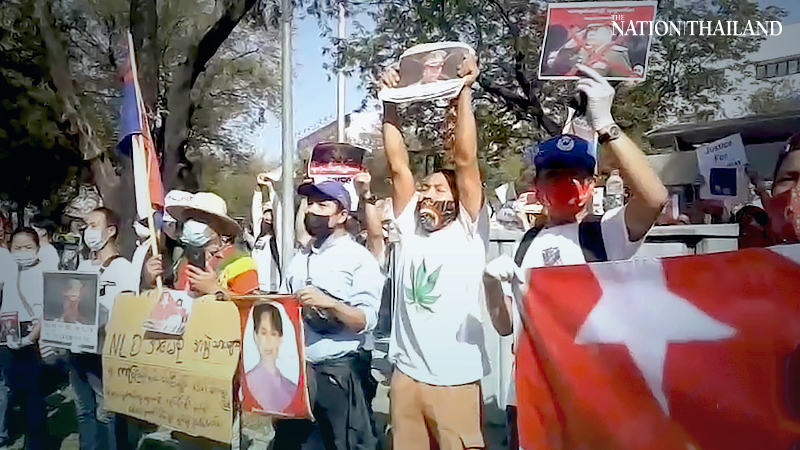
Myanmar’s military has asked security forces responsible for deadly attacks on anti-coup protesters over the weekend not to use live ammunition as international condemnation grows.
The announcement was made in a broadcast on state-run MRTV after the Southeast Asian nation on Sunday saw its deadliest day since the Feb. 1 coup, with the United Nations saying at least 18 protesters were killed and 30 others wounded. The military also said Monday that more than 1,300 protesters were arrested during nationwide demonstrations.
“When it comes to crowd dispersal methods, security forces have been instructed not to use live bullets,” the broadcast stated, accusing protesters of instigating violence by using slingshots and petrol bombs. “Security forces are allowed to protect themselves when protesters harm their lives by firing shots at the protesters below the waist.”
It wasn’t immediately clear that troops would use only rubbers bullets in their defense.
A new wave of rallies began Tuesday morning after a Myanmar court brought additional charges against detained civilian leader Aung San Suu Kyi that could keep her behind bars for an even longer period of time. The rising death toll may increase pressure on governments around the world to take more action against Myanmar’s generals, who refused to recognize a landslide election victory by Suu Kyi’s political party in November.
The call to refrain from using live rounds comes as foreign ministers in the 10-member Association of Southeast Asian Nations are set to hold an informal meeting Tuesday to discuss the situation in Myanmar for the first time since the coup. ASEAN has long followed a policy of nonintervention in the domestic affairs of its members, which include Myanmar, also known as Burma. It has thus far refrained from condemning the military for its actions or referring to the coup.
Thai Prime Minister Prayuth Chan-Ocha reportedly referred to it as a “political issue” that is “their country’s matter.” Indonesia, on the other hand, issued a statement Sunday calling on security forces to “refrain from the use of force and exercise utmost restraint to avoid further casualties.”
“Instability in Myanmar ultimately creates danger for the rest of us in Southeast Asia, so it’s not a purely Myanmar situation alone,” Singapore Minister of Foreign Affairs Vivian Balakrishnan said during an interview on Monday with local television outlet Channel 5. “Although, as I said, the responsibility for resolving this lies with the authorities in Myanmar.”
By The Washington Post · Anne Gearan, Ellen Nakashima
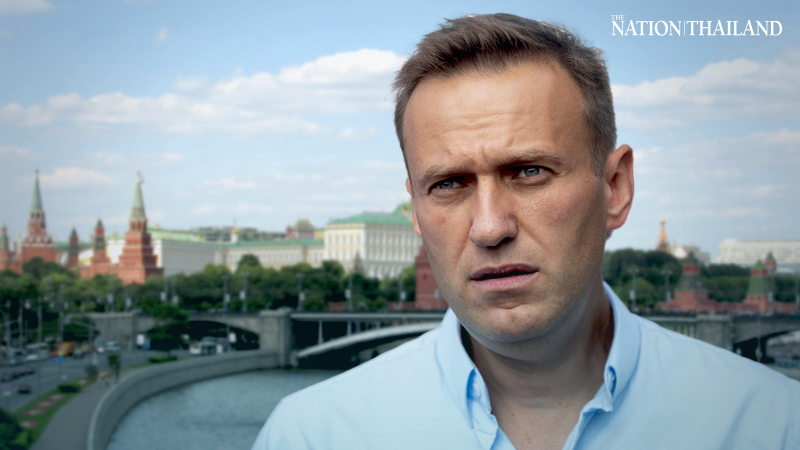
WASHINGTON – The Biden administration on Tuesday announced punitive sanctions against senior Russian government figures for the poisoning of opposition leader Alexei Navalny, the first of what is likely to be a series of actions designed to signal a tougher approach to Moscow than that taken by President Donald Trump.
The sanctions block access to financial and other assets in the United States for seven top figures around Russian President Vladimir Putin, though not Putin himself. The United States also reiterated its demand that Navalny be released from detention.
The largely symbolic penalties represent the first Biden administration action against Russia, and U.S. officials said it is a signal that Biden will treat Russia differently than his predecessor did.
“The U.S. government has exercised its authorities to send a clear signal that Russia’s use of chemical weapons and abuse of human rights have severe consequences,” Secretary of State Antony Blinken said in a statement. “Any use of chemical weapons is unacceptable and contravenes international norms.”
He called Navalny’s prosecution and imprisonment “politically motivated” and said the Russian government must release Navalny immediately.
Putin’s Russia poses one of the thorniest foreign relations problems facing Biden, complicated by Trump’s tendency to dismiss or defend some of Putin’s most belligerent actions.
Biden has said he will confront Putin over actions that harm the United States or its allies, while seeking cooperation with Moscow on arms control, climate change and other issues. The United States blames Russia for undermining U.S. and European elections, promoting disinformation and cyberattacks, and threatening its neighbors, including Ukraine.
Biden’s administration shares a widening European concern that Russia is becoming more authoritarian and isolated from Europe, giving the West less leverage and dulling the effect of sanctions like those imposed Tuesday.
“It was not meant to be a silver bullet or an ending to what has been a difficult relationship with Russia,” said White House press secretary Jen Psaki. “We expect the relationship to continue to be a challenge. We’re prepared for that, and we’re neither seeking to reset our relations with Russia nor are we seeking to escalate.”
That comment was intended to suggest that Biden will not follow previous administrations – including that of Barack Obama – that pledged to “reset” the U.S. relationship with Russia, only to see those efforts fail.
Russia denies poisoning Navalny, and Foreign Ministry spokeswoman Maria Zakharova on Tuesday called the U.S. sanctions “a hostile anti-Russian attack,” suggesting that Moscow would retaliate. In the past, Russia has responded in tit-for-tat fashion to sanctions and punitive actions such as the expulsion of diplomats.
“All this is just a pretext for continuing open interference in our internal affairs,” Zakharova said. “We do not intend to put up with this.”
Psaki said the new penalties stem from a U.S. intelligence assessment that found “with high confidence” that Navalny was poisoned by officers of Russia’s Federal Security Service in August 2020.
The administration also announced new export restrictions on items that could be used to manufacture chemical weapons, as well as a widening of existing sanctions under a law controlling use of such weapons.
Navalny nearly died from the poisoning last year, but he traveled to Germany for treatment and ultimately recovered. Returning to Moscow in January, he was promptly jailed and sentenced to more than two years behind bars on what human rights advocates call manufactured charges.
Two days after his arrest, a bombshell video starring Navalny was released through supporters. It accuses Putin of colossal corruption and mocks the Russian leader as a power-mad king. Navalny’s arrest sparked mass protests in Russian cities, a movement that continues to pose a rare threat to Putin’s authority.
The U.S. sanctions largely mirror actions taken by the European Union and Britain. The EU announced additional actions in concert with Washington on Tuesday.
The Trump administration had declined to join the EU’s initial actions last fall, and Trump himself was reluctant to assign blame for the attack on Navalny.
While Putin is not among those targeted – sanctioning a head of state carries additional diplomatic and logistical challenges – the list does include another top official, the director of the Federal Security Service, Aleksandr Bortnikov.
Two of the entities named were already under U.S. sanctions imposed during the Trump and Obama administrations. The FSB, a successor agency to the KGB, had been sanctioned in 2016 and 2018 for election interference and other malign cyberactivities. The GRU, Moscow’s military intelligence agency, was likewise sanctioned in 2016 and 2018 for election interference.
A December investigation by Bellingcat, an independent investigative group, linked members of what it called a secretive toxins unit within the FSB to long-term surveillance on Navalny, placing agents in the Siberian city of Tomsk, several hundred yards from Navalny’s hotel before his poisoning.
A later Bellingcat investigation linked the unit with surveillance of three other journalists and politicians who died suddenly under mysterious circumstances.
The new sanctions are the first of several steps the administration is planning to hold Russia to account for destabilizing actions in four areas, senior administration officials said Tuesday, speaking on the condition of anonymity to describe sensitive matters.
Coming “sooner rather than later,” one official said, will be U.S. responses to Moscow’s SolarWinds hacks of federal agencies and private-sector entities, Russian efforts to meddle in the 2020 election, and reports of Russian bounties on the lives of U.S. troops in Afghanistan.
All these areas were the subject of intelligence reviews ordered by Biden on his first full day in office.
The response to the SolarWinds hack will probably include not only sanctions but also at least one executive order aimed at shoring up federal cybersecurity, as well as a stronger statement linking Moscow to the hacks than the Trump administration issued in January.
The hacks penetrated nine federal agencies and at least 100 private entities. A senior administration official told The Washington Post that it represented a “broad, indiscriminate compromise” that “crosses a line of concern to us because it can be turned to be disruptive so quickly.”
Psaki said the responses to Russia’s hostile activities will be “seen and unseen,” an allusion to possible covert operations.
In addition to Bortnikov, the officials targeted Tuesday include the head of Putin’s domestic policy office, Andrei Yarin, and a leader of the president’s executive office, Sergei Kiriyenko.
Kiriyenko and Yarin have both played important roles in the Kremlin’s full-scale effort to pursue and neutralize Navalny, which has been underway since 2013. The campaign includes propaganda efforts designed to discredit Navalny, such as recent state-sponsored campaign to portray him as a Nazi.
According to the Russian investigative outlet Proyekt, the presidential office orchestrated a plan to smear Navalny after he criticized supporters of constitutional amendments allowing Putin to rule until 2036. Navalny tweeted that they were traitors, leading to a libel case that saw him convicted of insulting a World War II veteran.
Navalny’s Anti-Corruption Foundation last month called on the United States and the EU to sanction top oligarchs who support and benefit from Putin’s regime, arguing that they play a key role in propping up his power.
Maria Pevchikh, a senior investigator with Navalny’s foundation, said Tuesday that the sanctions against officials in Putin’s regime were important, but she expressed disappointment that they fell short of punishing oligarchs close to Putin.
“The most painful sanctions – which, unfortunately, neither Europe nor the United States have yet reached – are the sanctions against the oligarchs,” Pevchikh said, adding that “it is difficult for an official from these countries to fully comprehend how strongly the Putin regime is tied to the money of these oligarchs.”
Alexander Gabuev, a senior fellow at the Carnegie Moscow Center, said the administration’s coordinated response with Europe is more effective than Trump’s go-it-alone approach. But, he said, it is “very unlikely to change the fate of Mr. Navalny. It will impose costs on Russia, but the costs are totally bearable.”
Gabuev said that those sanctioned are close to Putin and are prepared to “go down with him,” and that they have assets that are protected in Russia and are willing to refrain from travel outside the country. “Another round of sanctions gives them a badge of honor internally – and more clout in the system,” he said.
In the United States, however, Biden’s action drew bipartisan support, even as some urged further actions.
“I have called on the administration to hold Vladimir Putin accountable for his unconscionable attempts to silence his opponents, and I support their actions today to implement these sanctions,” said Rep. Michael McCaul, R-Texas, the senior Republican on the House Foreign Affairs Committee.
Sen. Ben Sasse, R-Neb., a member of the Senate Intelligence Committee, said the sanctions “send a clear message to Moscow” but are not enough. “We need to kneecap all financial support to Putin’s corrupt regime,” Sasse said.
Senate Foreign Relations Committee Chairman Robert Menendez, D-N.J., also said the sanctions should be followed by other actions to keep “dirty Russian money” out of the U.S. financial system.
“After four years of Donald Trump’s kowtowing to Putin, getting our sanctions regime back on track will demonstrate our rejection of Russia’s lawless behavior and resolve to change it,” Menendez said.
For investors fretting about an end to the era of cheap and plentiful debt, China just provided another reason to worry.
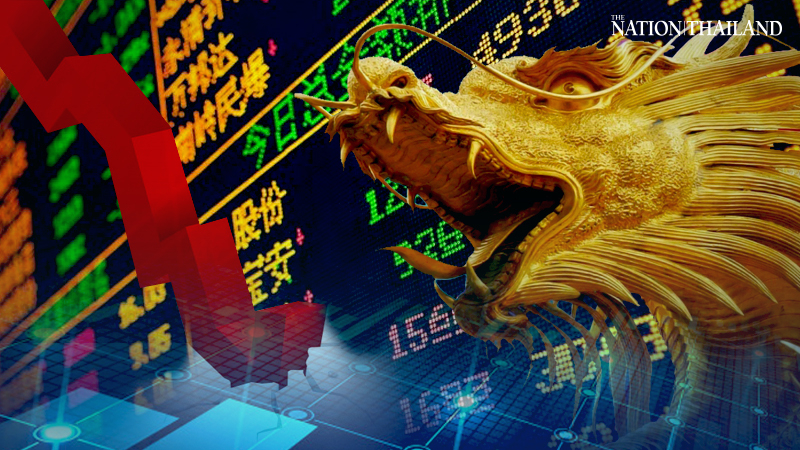
The nation’s top banking regulator jolted markets on Tuesday with a warning about the need to reduce leverage amid the rising risk of bubbles globally and in the local property sector. The impact on Chinese stocks was swift: the CSI 300 index fell as much as 2.1% to lead declines in Asia, while Kweichow Moutai, the biggest contributor to gains during 2020’s stimulus cycle, tumbled almost 5%. China’s largest stock has lost more than $100 billion in nine days.
Central banks around the world are facing the challenge of when and how to pare back stimulus as economies recover from the pandemic. Global bond markets plunged last week as traders pulled forward bets on interest rate increases, with the 10-year Treasury yield reaching the highest in a year.
Deleveraging has particular resonance in China, where it is a key priority of President Xi Jinping due to the size of the nation’s debt mountain. A crackdown on leverage in 2017 sent corporate and government bond yields to multiyear highs before officials halted the drive a year later amid the intensifying trade war with the United States.
Guo Shuqing, chairman of the China Banking and Insurance Regulatory Commission and Party secretary of the central bank, did not mince his words. “From a banking and insurance industry’s perspective, the first step is to reduce the high leverage within the financial system,” Guo said at a briefing in Beijing. Speculation in the property market is “very dangerous” and bubbles in U.S. and European financial markets may soon burst, he said.
“His talk shows a willingness to tolerate higher rates,” said Zhiwei Zhang, chief economist at Pinpoint Asset Management in Hong Kong. “This is a confirmation of monetary-policy stance tightening. That’s important.”
A stronger economy and signs of excess have provoked stronger rhetoric from Beijing in recent weeks. The People’s Bank of China said in its latest monetary policy report that it will balance the need to support growth and prevent risk. A front-page report in state media last week said the economy is strong enough to withstand policy normalization. In January, the central bank engineered the biggest cash squeeze since 2015, after an adviser suggested a shift away from stimulus.
Debt was about 280% of China’s gross domestic product in November, the highest ratio since Bloomberg started compiling the data in 2014.
Beijing is set to unveil its major economic goals on Friday, when the National People’s Congress, China’s rubber-stamp parliament, convenes for its yearly meeting. While officials have stressed that changes in policy would be gradual, China’s monetary policy conditions “will visibly tighten this year,” Li-Gang Liu, managing director and chief China economist at Citigroup wrote in a report this week.
The prospect that China will tighten funding conditions is derailing gains in the country’s most popular stocks. Liquor makers such as Moutai are hardest hit because they are widely owned and command some of the highest valuations. The CSI 300 index – which in February briefly topped its record close from 2007 – has lost 7.9% since mainland markets reopened after the new Lunar New Year.
Authorities are juggling curbing leverage while maintaining economic growth before the Communist Party’s 100-year anniversary this year. The central bank has calmed interbank funding markets since January, when short-term rates spiked to the highest since 2015.
“Deleveraging and financial risk mitigation will both stay in policy focus in 2021,” said Tianhe Ji, a strategist at BNP Paribas in Beijing.
Chip machinery makers emerge as biggest winners in supply crunch
InternationalMar 03. 2021A 300-millimeter silicon wafer at the Globalfoundries semiconductor fabrication plant in Dresden, Germany, on Feb. 11, 2021. MUST CREDIT: Bloomberg photo by Liesa Johannssen-Koppitz
By Syndication Washington Post, Bloomberg · Jeran Wittenstein
The sudden shortage of semiconductors disrupting auto production and limiting revenue growth for Apple Inc. has created a stock market boon for the makers of chip production equipment.
Those companies have emerged as the biggest winners from the supply crunch as chipmakers rush to add more factory capacity. Applied Materials Inc., the world’s biggest equipment maker, has seen its shares advance about 40% this year, making it the best performer in a semiconductor index. Brooks Automation Inc., Lam Research Corp. and KLA Corp. are each up more than 23% over that span, nearly twice the gain in the Philadelphia semiconductor index. The stocks edged lower on Tuesday during early trading in New York.
Expanding equipment budgets by major chipmakers and governments concerned about foreign dominance of production facilities are giving Wall Street increasing confidence that the rally has staying power.
“Over the next three to five years, this is definitely very bullish for semicap equipment in terms of overall tightness and focus on domestic supply,” said Krish Sankar, an analyst with Cowen & Co.
The shortfall is a problem that seemed unthinkable a year ago when a rapidly spreading Covid-19 virus sent economic activity plummeting as companies began efforts to reduce production in anticipation of ebbing sales. Instead, after an initial shock, sales in many industries surged and companies scrambled to boost inventories. Many chipmakers are now producing at maximum capacity and governments are suddenly looking at a dearth of homegrown plants as a national security risk.
President Joe Biden signed an executive order last week to review the country’s supply chains for semiconductors and other products. While there aren’t expected to be any quick fixes, industry watchers say the long-term trend is clear: more equipment will be needed.
“The semiconductor industry is running on all cylinders, and you’re seeing companies that might in the past have been reluctant to commit to capex (capital expenditures) now all of a sudden trying to ramp up as quickly as they can,” said Daniel Morgan, a senior portfolio manager with Synovus Trust Co., which owns shares of Applied Materials.
Taiwan Semiconductor Manufacturing Co., which produces chips for Apple and Broadcom Inc., plans to spend $12 billion to construct a plant in Arizona. Some of the costs for that facility were included in the company’s capital spending plans for 2021 that sparked a rally in chip related stocks around the world in January. Broadcom’s capital outlays could total as much as $28 billion, up from $17 billion in 2020.
Huge manufacturers like Taiwan Semi building smaller plants in new regions creates particularly attractive opportunities for Applied Materials, Chief Executive Officer Gary Dickerson said on the Santa Clara, California-based company’s earnings call last month.
“You have to look at the scale of the factories they’re building and at least what’s been announced is smaller scale,” he said. “That somewhat less efficient factory size is a positive for Applied.”
In addition to Applied Materials, top picks for Cowen’s Sankar include Lam Research and MKS Instruments Inc.
“You have an environment where demand is very strong, supply is constrained and then you add to it domestic supply build out,” the analyst said in an interview. “At some point these things will normalize, but it won’t be anytime soon.”

 ม็อบเมียนมาเสียชีวิตรายวันหลังเจ้าหน้าที่เปิดฉากยิงต่อเนื่องพร้อมตั้งข้อหานักข่าวอย่างน้อย 6 คน
 ติ๊กต็อกจีนแบนเนื้อหาอวดรวยสร้างมลพิษทางสังคม สอดคล้องรัฐบาลจีนส่งเสริมเนื้อหาเชิงบวกบนโลกออนไลน์
 มีรายงานผู้เสียชีวิตหลังฉีดวัคซีนโควิด-19 ในหลายประเทศ แต่ยังคงไม่ยืนยันว่าเกี่ยวข้องกับวัคซีนแต่อย่างใด ซึ่งทางการกำลังเร่งตรวจสอบเพื่อหาคำตอบต่อไป
 ครอบครัวนายวิชาเผย ‘พฤติกรรมโมโหฉุนเฉียว’ ฟังไม่ขึ้น ไม่มีข้อแก้ตัวสำหรับการฆ่าคน
 บริษัทเกาหลีใต้พัฒนาเทรนเนอร์ AI ทางเลือกใหม่ในการออกกำลังกายยุคโควิด
 ประเทศไทยเคยจนกว่าเมียนมาและฟิลิปปินส์รวยที่สุดในภูมิภาค แต่ทำไมมันถึงกลับตาลปัตรไปได้
 A 300-millimeter silicon wafer at the Globalfoundries semiconductor fabrication plant in Dresden, Germany, on Feb. 11, 2021. MUST CREDIT: Bloomberg photo by Liesa Johannssen-Koppitz

