Asia rebuffs U.S. sanctions on Myanmar, giving generals lifeline #SootinClaimon.Com

#SootinClaimon.Com : ขอบคุณแหล่งข้อมูล : หนังสือพิมพ์ The Nation.

https://www.nationthailand.com/news/30403288

Asia rebuffs U.S. sanctions on Myanmar, giving generals lifeline

InternationalMar 04. 2021A demonstrator wears a National League for Democracy (NLD) party themed protective mask during a protest outside the Embassy of Myanmar in Bangkok, Thailand, on Feb. 1 2021. MUST CREDIT: Bloomberg photo by Andre Malerba.A demonstrator wears a National League for Democracy (NLD) party themed protective mask during a protest outside the Embassy of Myanmar in Bangkok, Thailand, on Feb. 1 2021. MUST CREDIT: Bloomberg photo by Andre Malerba.

By Syndication Washington Post, Bloomberg · Philip J. Heijmans

As the U.S. looks to build a coalition to further punish Myanmar’s generals, it is not having much success convincing governments in Asia to follow suit.

The standing of army chief Min Aung Hlaing’s regime has slipped even further in the West after his envoy to the United Nations denounced the military takeover and Myanmar authorities killed at least 18 protesters on Sunday, the deadliest day since the Feb. 1 coup. While the junta has since told security forces to avoid using live bullets, reports emerged that protesters were still being shot with them. At least two more were killed on Wednesday in the city of Mandalay.

The U.S. has led the international pushback, with National Security Advisor Jake Sullivan saying the country was “coordinating closely with allies and partners in the Indo-Pacific region” and would take additional actions after imposing targeted sanctions on the coup makers. The U.K. also sanctioned the generals and the European Union has said its working on punitive measures.

Asian countries, by contrast, haven’t taken any concrete action. While Indonesia has conducted shuttle diplomacy and Singapore has said its “appalled by the violence,” no countries in the region so far have indicated they would support sanctions or any other measures that would hit the military’s finances.

On Tuesday, foreign ministers of the 10-member Association of Southeast Asian Nations, which includes Myanmar, called “on all parties to refrain from instigating further violence” and for “a peaceful solution through constructive dialogue.” While some individual ministers called for the release of Aung San Suu Kyi and a return to democracy, the statement didn’t mention her by name and refrained from using the word “coup.” It also said Asean, which is based on the principle of nonintervention, was ready “to assist Myanmar in a positive, peaceful and constructive manner.”

Singapore Prime Minister Lee Hsien Loong separately said sanctions would only hurt the population at large and push Myanmar closer to those willing to talk to them like China.

“You can ostracize them, condemn them, and pass resolutions or not, but it really has very little influence,” Lee told the BBC, according to comments distributed by his office. “We have to express disapproval for what is done, which is against the values of many other countries, and in fact a large part of humanity. But to say that I will take action against them, where does this lead?”

For Myanmar’s generals, Asia’s reluctance to join in U.S.-led sanctions or even cut them out of meetings effectively offers a diplomatic lifeline as they struggle to gain control of the country. Prior to Myanmar’s opening about a decade ago, business ties with Asia allowed the junta to survive for years despite much broader Western sanctions than are currently in place.

“Asean has an unmatched track record of indifference to authoritarian rule in Myanmar,” said Lee Morgenbesser, a lecturer at Australia’s Griffith University whose researches Southeast Asian politics.

Among Southeast Asia’s 10 countries, two are run by military men who staged coups, two are Communist regimes with no elections, two have had ruling parties in power for more than two decades and one is an absolute monarchy. Malaysia, Indonesia and the Philippines are the only democracies that have seen peaceful transfers of power from one party to another in recent years.

Countries in Asia also avoided sanctioning Myanmar’s generals over allegations of genocide against the Muslim Rohingya minority that forced more than 700,000 people to flee across the border into Bangladesh. An independent UN fact-finding mission found in 2019 that at least 59 foreign firms — most from Asia — had either joint ventures or commercial ties with the military, producing revenue that “substantially enhances its ability to carry out gross violations of human rights with impunity.”

“In some ways, Asean allowed the military to get away with what happened with the Rohingya crisis and I think that they are faced with something more dangerous,” said Bridget Welsh, honorary research associate at the Asia Research Institute, University of Nottingham Malaysia. “This is going to be much more difficult for them to wrestle with.”

Myanmar’s generals have made clear they have no intention of returning the nation to isolation, vowing to hold elections after a yearlong state of emergency. The junta has appointed Aung Naing Oo — a familiar face to foreign investors — as investment minister.

China and Thailand alone accounted for about half of Myanmar’s trade in 2019, the latest year for which data is available, with the U.S. and Europe comprising roughly 13%. Asian economies represented seven of Myanmar’s top 10 foreign investors as of January, led by China and Singapore, according to data from the Directorate of Investment and Company Administration.

Vietnam’s Viettel Group, a state-owned enterprise operated by the Ministry of Defense, announced in 2018 that it was investing $1.5 billion to set up the mobile operator Mytel. Thailand’s state-owned PTT, meanwhile, has imported natural gas from Myanmar for years via the Gulf of Martaban, and its exploration arm said last month it didn’t expect the political situation to impact its operations or plans in the country.

Asean should take a clear stand particularly on avoiding more civilian casualties, according to Ong Keng Yong, a former secretary-general of the bloc. He likened Myanmar to a neighbor who infringes on the rights of nearby home owners.

“You can rearrange the furniture and setup in your home,” he said. “But if that involves more use of scarce electricity and water resources, the others in the gated compound can have a say.”

Samsung details plans for $17 billion chip facility in U.S. #SootinClaimon.Com

#SootinClaimon.Com : ขอบคุณแหล่งข้อมูล : หนังสือพิมพ์ The Nation.

https://www.nationthailand.com/news/30403284

Samsung details plans for $17 billion chip facility in U.S.

InternationalMar 04. 2021The Samsung Electronics logo is displayed in a window at the company's D'light flagship store in Seoul, South Korea, on Oct. 6, 2020. MUST CREDIT: Bloomberg photo by SeongJoon Cho.The Samsung Electronics logo is displayed in a window at the company’s D’light flagship store in Seoul, South Korea, on Oct. 6, 2020. MUST CREDIT: Bloomberg photo by SeongJoon Cho.
By Syndication Washington Post, Bloomberg · Sohee Kim

Samsung Electronics Co. revealed additional details about its plans to build a cutting-edge semiconductor facility in the U.S. in a filing with the state of Texas, making the disclosure as the Biden administration vows to make the security of the U.S. chip supply a national priority.

The South Korean company plans to invest about $17 billion in its Project Silicon Silver and create about 1,800 jobs over the first ten years, according to an economic impact study prepared by a local consultant. Some $5.1 billion would go into buildings and property improvements, while $9.9 billion would be spent on machinery and equipment.

The filing with the Texas comptroller warned the chips project is “highly competitive.” Samsung is evaluating alternatives sites in Arizona and New York, as well as in Korea.

“Because of its strong ties to the local community and the successful past 25 years of manufacturing in Texas, Samsung Austin Semiconductor would like to continue to invest in the city and the state,” the study said.

In their first weeks in office, the Biden administration has emphasized the importance of advanced technologies, including semiconductors, artificial intelligence and next-generation networks. The president has ordered a global supply chain review for microchips as well as large-capacity batteries, pharmaceuticals and critical minerals and strategic materials such as rare earths.

Bloomberg News first reported in January that Samsung was considering building an advanced chipmaking plant in the U.S., in hopes of winning more American clients and narrowing the gap with industry leader Taiwan Semiconductor Manufacturing Co. The company was in discussions to locate a facility in Austin, Texas, capable of fabricating chips as advanced as 3 nanometers, people familiar with the matter said at the time.

Details of Samsung’s discussions with local governments have since leaked out in filings and other revelations. The economic impact study was prepared by Impact DataSource, an Austin, Texas-based economic consulting, research and analysis firm.

The report shows Samsung’s Project Silicon Silver would add approximately 7 million square feet of new space to the Austin campus, where the company has had operations for decades. It estimates that 542 new workers would move to the city, contributing to an addition of 1,626 new residents.

Property tax abatements would total about $1.5 billion over 20 years at the city and county levels, while direct and indirect economic output would be about $8.6 billion and salaries would total $7.3 billion.

A January filing detailed the likely timeline for the project. If Samsung chooses Austin, it would break ground in the second quarter of 2021 with the expectation that production would be up and running by the fourth quarter of 2023, it said.

Separately, Samsung’s current foundry plant in Austin hasn’t resumed operations since Feb. 16 after it was ordered to halt operations by Austin Energy due to blackouts in the region. Power and water are back but it will take more time to fully restart operations, officials said.

Biden limits eligibility for stimulus payments under pressure from moderate Senate Democrats #SootinClaimon.Com

#SootinClaimon.Com : ขอบคุณแหล่งข้อมูล : หนังสือพิมพ์ The Nation.

https://www.nationthailand.com/news/30403282

Biden limits eligibility for stimulus payments under pressure from moderate Senate Democrats

InternationalMar 04. 2021

By The Washington Post · Erica Werner, Jeff Stein

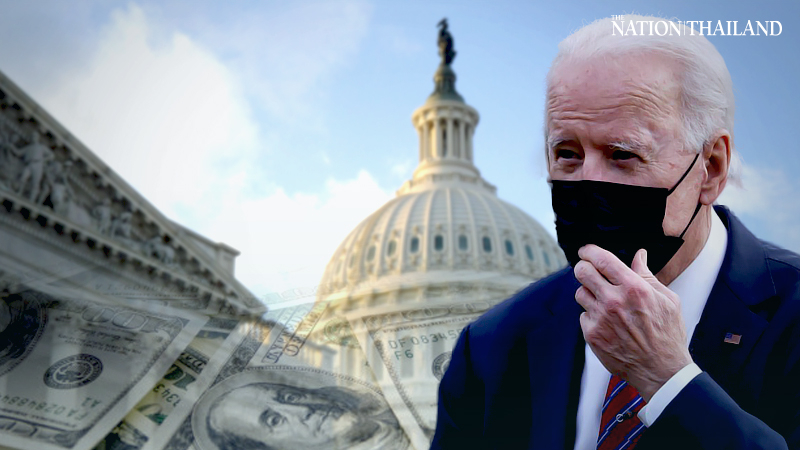
WASHINGTON – President Biden has agreed to narrow eligibility for a new round of $1,400 stimulus payments in his $1.9 trillion coronavirus relief bill, a concession to moderate Senate Democrats as party leaders moved Wednesday to lock down support and finalize the sweeping legislation.

https://www.washingtonpost.com/video/c/embed/6f766ef3-c231-4b54-9c6c-0f5e902c3c17?ptvads=block&playthrough=false 

Under the new structure, the checks would phase out faster for those at higher income levels, compared to the way the direct payments were structured in Biden’s initial proposal and the version of the bill passed by the House on Saturday.

The change came as the Senate prepared to take an initial procedural vote to move forward on the bill as early as Thursday. Biden and Senate Democratic leaders were scrambling to keep their caucus united since they cannot lose a single Democrat in the 50-50 Senate if Republicans unite against the legislation.

https://www.washingtonpost.com/video/c/embed/5d652b9b-bc8b-45a1-a5bd-d0bdb32bd21b?ptvads=block&playthrough=false

In addition to the stimulus checks, the sweeping economic package would also extend unemployment benefits through August, as well as set aside $350 billion for state and local aide; $130 billion for schools; $160 billion for vaccinations, testing and other health care system support; increased the child tax credit; and spend billions more on a variety of other provisions including rental aid and food assistance.

Biden made a closing pitch for the package to House Democrats on Wednesday evening, citing public polling in favor of the measure and telling them: “I know parts of this and everything else we seek to do are not easy, but people are going to remember how we showed up in this moment, how we listened to them . . . and how we took action.”

At least one Senate Republican, Lisa Murkowksi of Alaska, appeared open to considering a vote in favor of the legislation, telling reporters, “My state needs relief.” Elsewhere, though, GOP opposition was hardening, as Sen. Ron Johnson, R-Wis., announced plans to force Senate officials to read the entire 600-page-plus bill aloud before debate could even begin — a process he predicted would take around 10 hours.

“I don’t want to sound like a leftist, but I’m gonna resist,” Johnson told a talk radio host in Wisconsin.

The action in the Senate was unfolding against a backdrop of tightened security around the Capitol complex, as the sergeant-at-arms and the Capitol Police warned of potential violent unrest over the coming days. The House moved up votes to allow members to avoid the Capitol on Thursday, the day some conspiracy theorists have identified as when former president Donald Trump should rightfully be inaugurated. The Senate is scheduled to remain at work.

Under the plan for stimulus checks passed by the House, individuals earning up to $75,000 per year and couples making up to $150,000 per year would qualify for the full $1,400 payment. The size of the payments would then begin to scale down before zeroing out for individuals making $100,000 per year and couples making $200,000.

Under the changes agreed to by Biden and Senate Democratic leadership, individuals earning $75,000 per year and couples earning $150,000 would still receive the full $1,400-per-person benefit. However, the benefit would disappear for individuals earning more than $80,000 annually and couples earning more than $160,000.

That means singles making between $80,000 and $100,000 and couples earning between $160,000 and $200,000 would be newly excluded from seeing any benefit under the revised structure Biden agreed to.

The changes were confirmed by a Democratic aide who spoke on the condition of anonymity to describe internal deliberations.

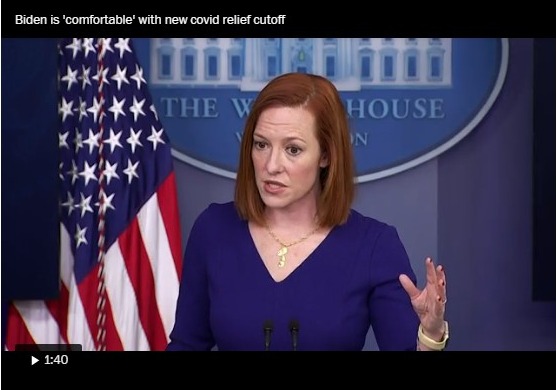
White House press secretary Jen Psaki said Biden has always been open to a faster phaseout for higher-earning individuals and “he is comfortable with where the negotiations stand.”

“He is comfortable and knows there will be tweaks on the margin,” Psaki said Wednesday’s White House briefing. “What his firm viewpoint is, is that it needs to meet the scope of the challenge, it needs to be the size he’s proposed, it needs to have the core components in order to have the impact on the American people.”

Sen. Jeanne Shaheen, D-N.H., was among those who had called for changing the eligibility levels for checks, telling reporters this week, “I think we could drop it below the $200,000 and still get households that really need it.”

She said she would hope to redirect the savings from that change toward other needs, such as hospitals.

Narrowing eligibility for the stimulus checks was just one change moderates like Sens. Shaheen and Joe Manchin, W.Va., had been seeking. Several were also eyeing better targeting money for state and local governments, and changing the structure of weekly federal unemployment benefits in the bill, to keep them at the current level of $300 rather than raise them to $400 as proposed by Biden and passed by the House.

Senate Democrats do not intend to adopt the suggested change to unemployment benefits, and they will stay at $400-per-week, the aide said. The unemployment benefits currently are set to expire March 14; the Biden bill would extend them through August. Democrats are aiming for final passage of the bill ahead of the March 14 deadline.

About 12 million fewer adults and 5 million fewer children would get the stimulus payments under the new Biden-Senate compromise, according to preliminary estimates from the Institute on Taxation and Economic Policy, a left-leaning think tank. About 280 million Americans in total – 200 million adults and 80 million children – would be eligible for the checks under the new structure.

Centrist Senate Democrats initially had pushed for even more aggressive restrictions on the stimulus payments. Senior Democratic officials had at one point considered dropping the full benefit for those making more than $50,000 per year, a change they ultimately abandoned after a backlash led by Senate Finance Chair Ron Wyden, D-Ore., and Senate Budget Chair Bernie Sanders, I-Vt.

Still, liberal lawmakers bristled at the new changes. House liberals have suggested it could be difficult for them to approve the package if it’s watered down significantly in the Senate. Presuming the Senate passes the package this week, it would still have to go back to the House for final approval.

“I don’t understand the political or economic wisdom in allowing Trump to give more people relief checks than a Democratic administration,” Rep. Alexandria Ocasio-Cortez, D-N.Y., said in a statement. “People went far too long without relief last year – if anything we should be more generous, not more stingy. It’s also an insensitive compromise for the roughly 80 percent of Americans that live in urban areas, which are known for higher costs of living.”

Biden acknowledged in his comments to House Democrats that “I know we’re all making some small compromises,” but he said staying united to pass the relief bill, his first major piece of legislation, would help restore the public’s faith in government and open the door to further successes.

“It’s a show of strength,” Biden said. “We know how much we have to do, but it all starts here, it starts by bringing this home.”

On a portion of his call with House Democrats that was not public, Biden told Rep. Suzan DelBene, D-Wash., that he supports legislation that would permanently increase the child tax credit to $3,000 per child, according to two people on the call who spoke on the condition of anonymity to share details of the conversation. The legislation as currently written would do so for one year.

Senate moderates were discussing further changes and GOP senators also were preparing amendments aimed at further targeting the legislation, which could peel off Democratic votes as the legislation moves through the Senate.

Democrats are advancing the package under a process called “budget reconciliation” that allows it to pass with a simple majority instead of the 60 votes normally required. With only 50 votes in the Senate and GOP support uncertain, Democrats must ensure they remain united to pass the legislation with Vice President Kamala Harris breaking the tie.

Attention has focused on Senate moderates who have voiced skepticism about various elements of the bill. Psaki expressed optimism Wednesday that Democratic moderates such as Manchin would support the bill.

ECB downplays yield concerns, signaling no drastic action needed #SootinClaimon.Com

#SootinClaimon.Com : ขอบคุณแหล่งข้อมูล : หนังสือพิมพ์ The Nation.

https://www.nationthailand.com/news/30403280

ECB downplays yield concerns, signaling no drastic action needed

InternationalMar 04. 2021Flags of the European Union (EU) fly outside the European Central Bank (ECB) headquarters in Frankfurt, Germany, on July 16, 2020. MUST CREDIT: Bloomberg photo by Alex Kraus.Flags of the European Union (EU) fly outside the European Central Bank (ECB) headquarters in Frankfurt, Germany, on July 16, 2020. MUST CREDIT: Bloomberg photo by Alex Kraus.

By Syndication Washington Post, Bloomberg · Carolynn Look, Alexander Weber, Jana Randow

European Central Bank policymakers are downplaying concerns over rising bond yields, suggesting they can manage the risk to the euro-area economy with verbal interventions including a pledge to accelerate bond-buying if needed.

ECB Governing Council members, who meet next week to set policy, see no need for drastic action such as expanding the overall size of their 1.85 trillion-euro ($2.24 trillion) emergency asset-purchase program, according to officials familiar with internal discussions.

The officials didn’t say whether the pace of purchases has been stepped up in recent days, for which data isn’t yet available. One person noted that yields fell on Monday after some policy makers said the institution would react against unwarranted increases. An ECB spokesman declined to comment.

The relatively sanguine mood was backed up on Wednesday by Governing Council members including ECB Vice President Luis De Guindos and Bundesbank President Jens Weidmann, who said in public remarks that they’re not too worried.

European yields rose, led by the longest-dated debt. The rate on German 10-year bonds climbed as much as seven basis points to minus 0.28%. The euro was down 0.2% at $1.2073 at 5:20 p.m. Frankfurt time.

The global sell-off of government bonds originates from the U.S., where prospects of massive fiscal stimulus are bolstering the economy and lifting inflation expectations.

In Europe, Greek and Italian 10-year yields led the charge, climbing about 20 basis points in the past two weeks. Benchmark German yields touched levels last seen in March 2020, and those for their French equivalents briefly turned positive for the first time since June.

That’s a problem for the euro area because sovereign yields are used by banks as a reference point for lending. The region’s recovery is already expected to be slower than that of many other advanced economies, in part due to its slow vaccine roll-out, and higher borrowing costs could further damp momentum.

Policymakers have been rolling out public appearances before their weeklong quiet period starts this Thursday. Guindos said yields have risen from very low levels and “the situation is very calm” when looking at spreads between different nations. Weidmann told Bloomberg Television that “the size of the movements is not such that this is a particularly worrisome development.”

The Bundesbank head added that the ECB is ready to adjust the pace of asset purchases if needed though, saying that “we want to preserve favorable financing conditions for the non-financial sector — that’s not just looking at financing costs for governments, it’s a much broader picture.”

Bank of Spain Governor Pablo Hernandez de Cos said at a separate event that rising yields may reflect market expectations of an earlier start to unwinding monetary stimulus, and that “avoiding premature increases in nominal interest rates” is essential.

Earlier in the week, Executive Board member Fabio Panetta said the jump in yields “is unwelcome and must be resisted.” He also said it is “not too late” to act. French Governing Council member Francois Villeroy de Galhau said the ECB “can and must react” to any unwarranted moves.

The latest purchasing data surprised investors though by showing that the central bank actually slowed buying last week, despite President Christine Lagarde saying policy makers are “closely monitoring” the rise in nominal bond yields.

Those figures don’t reflect orders made Thursday and Friday, as transactions take a couple of days to settle and show up in the central bank’s accounts. This week’s purchasing data will be published next Monday and Tuesday.

Investors have been closely watching for any signs of market intervention by the ECB. Vincent Juvyns, a strategist at JPMorgan Asset Management, said on Bloomberg radio that in contrast to the U.S., where the economy is being boosted by massive stimulus, “it is probably too early to allow rates to rise in Europe.”

“I would hope and expect that the ECB would be a bit fire-fighting with additional buying in the coming weeks and months,” he said.

OPEC+ is poised to cool oil market with extra production #SootinClaimon.Com

#SootinClaimon.Com : ขอบคุณแหล่งข้อมูล : หนังสือพิมพ์ The Nation.

https://www.nationthailand.com/news/30403279

OPEC+ is poised to cool oil market with extra production

InternationalMar 04. 2021Oil pumping jacks operate in an oilfield near Almetyevsk, Tatarstan, Russia, on March 11, 2020. MUST CREDIT: Bloomberg photo by Andrey Rudakov.Oil pumping jacks operate in an oilfield near Almetyevsk, Tatarstan, Russia, on March 11, 2020. MUST CREDIT: Bloomberg photo by Andrey Rudakov.

By Syndication Washington Post, Bloomberg · Javier Blas, Grant Smith, Salma El Wardany

OPEC+ is poised to agree a production increase this week as it seeks to cool a rapid rally in crude prices.

There is a widespread view within the group that the market can absorb additional barrels, according to people familiar with the deliberations. While the usual differences are present — with Saudi Arabia cautious and Russia keen to open the taps — all sides are ready to increase production, they said, asking not to be named because the information was private.

That could put the group on track to implement the majority of the 1.5 million barrel-a-day output increase that’s up for debate on Thursday.

An agreement to hike OPEC+ supply would be the latest sign that the global economy is recovering from the damage wrought by the coronavirus pandemic. The cartel has endured a year of pain, dominated by the deepest output cuts in its history. But the sacrifice has paid off, reviving oil prices back to pre-crisis levels above $60 a barrel.

Brent crude rose 0.3% to $62.89 a barrel as of 7:54 a.m. in London. The international benchmark has surged more than 20% this year.

“Both the global economic outlook and oil market prospects show signs of continued improvement,” OPEC Secretary-General Mohammad Barkindo said at the opening of a meeting of the group’s technical experts on Tuesday. “The headwinds of uncertainty that shocked and disrupted the market last year continue to abate.”

There are two distinct elements to the production increase that the Organization of Petroleum Exporting Countries and it allies will debate this week.

First, will the cartel proceed with a 500,000 barrel-a-day collective output hike in April? Second, how will Saudi Arabia phase out the extra supply reduction of 1 million barrels a day it’s been making voluntarily in February and March?

Russia has been the most consistent advocate for the 500,000 barrel-a-day increase, and other members now largely agree that it should go ahead, according to people familiar with the matter.

The top oil executive from the United Arab Emirates, which has also supported output hikes at recent OPEC+ meetings, gave a bullish assessment of the market on Tuesday.

“Oil demand is robust,” Sultan Al Jaber, the chief executive officer of Abu Dhabi National Oil Co., said at the IHS Markit Ltd. CERAWeek virtual conference. “Demand will rise to above pre-covid levels by the end of this year.”

Adnoc has already signaled it’s preparing to open the taps, allocating customers greater volumes of Murban, Das and Upper Zakum crudes for April compared with March.

Saudi Arabia always said that its voluntary supply reduction would only last for two months, but seasoned OPEC-watchers have suggested that Riyadh could phase it out gradually.

The kingdom will start to roll back its extra cut as planned in April, but is still discussing internally whether to return all of the barrels in a single month, or over a longer period, said people familiar with the deliberations. The decision will take into account the commissioning of the new 400,000 barrel-a-day Jizan refinery, which could affect both domestic crude consumption and exports, they said.

At CERAWeek, Saudi Aramco CEO Amin Nasser struck a more cautious tone than his counterpart from the UAE, predicting strong demand in the second half of 2021, and a return to pre-Covid consumption next year.

Whatever the Saudis decide, the global oil market is poised to receive its biggest supply boost since August, when OPEC+ first began the process of tapering the 9.7 million barrel-a-day cut agreed in April last year as the pandemic crushed demand.

The group appears to think the market is ready for it. Even if OPEC+ boosts production by 2.4 million barrels a day between February and June — the maximum amount allowed under the current deal — it will still be able to clear the remnants of the 2020 supply glut by August, the secretariat’s analysts predicted on Tuesday.

Achieving that would be a remarkable comeback from one of the biggest crises in the cartel’s history. It’s almost exactly a year since a disagreement between Russia and Saudi Arabia over how to respond to the early stages of the pandemic triggered a monthlong price war. The group flooded the market just as demand plunged, a disastrous decision that pushed crude prices below zero for the first time in history.

Twelve months later, fuel stockpiles in industrialized countries aren’t far off target levels and crude prices are close to break-even for some members, presenting “the perfect opportunity for OPEC+ to raise production,” analysts at Australia & New Zealand Banking Group Ltd. said in a note.

Amazon, Google vie for piece of India’s digital payments market #SootinClaimon.Com

#SootinClaimon.Com : ขอบคุณแหล่งข้อมูล : หนังสือพิมพ์ The Nation.

https://www.nationthailand.com/news/30403278

Amazon, Google vie for piece of India’s digital payments market

InternationalMar 04. 2021A customer pays Indian Rupee banknotes to a vendor at a sim card store in Mumbai on April 21, 2018. MUST CREDIT: Bloomberg photo by Dhiraj Singh.A customer pays Indian Rupee banknotes to a vendor at a sim card store in Mumbai on April 21, 2018. MUST CREDIT: Bloomberg photo by Dhiraj Singh.

By Syndication Washington Post, Bloomberg · Saritha Rai

Technology giants Facebook, Amazon.com and Google and credit-card providers Visa and Mastercard are among those vying for unprecedented access to India’s burgeoning digital retail payments market.

The companies are part of four consortia preparing to apply for licenses to operate retail payments and settlement systems in the country, people familiar with the matter said. More companies could band together before a March 31 application deadline.

In a market where cash is still king, digital payments are quickly gaining ground as India’s 1.3 billion people are starting to embrace online shopping and services such as online gaming and streaming. With Credit Suisse Group predicting $1 trillion in online payments in India in 2023, the companies chosen to enable such transactions stand to reap lucrative commissions.

“India’s mobile digital payments is seeing huge growth in a post-pandemic world,” said Vijay Shekhar Sharma, founder and chief executive officer of New Delhi-based payment provider Paytm. “It’s a good time to open up more diverse payments solutions and keep the momentum going.”

One of the consortia consists of Amazon, Visa, Indian retail banks ICICI Bank and Axis Bank as well as fintech startups Pine Labs and BillDesk. Another group is led by billionaire Mukesh Ambani’s Reliance Industries and its partners Facebook and Google, which together agreed to invest more than $10 billion in Reliance’s digital services unit last year.

Sharma’s Paytm heads a group that includes ride-hailing startup Ola and at least five other companies. The fourth consortium consists of Tata Group, Mastercard, telecom operator Bharti Airtel and retail banks Kotak Mahindra Bank and HDFC Bank.

Sharma, a spokeswoman for Tata Group and a spokesman for Google declined to comment on the potential bidders. Amazon and Facebook didn’t respond to emailed questions.

The contest is fierce as regulator Reserve Bank of India is expected to give just one or two licenses, as implied in its notification inviting bids. The process to decide the winners could take at least six months and it could be a further year or more before the systems and solutions come into use.

The winners will take on National Payments Corporation of India, the sole pioneering umbrella organization backed by more than 50 retail banks. Its Unified Payments Interface, or UPI, protocol debuted in 2016 and set the digital payments arena afire by allowing users to link their phone numbers to their bank accounts. That made transferring and receiving money via apps as easy as sending a text message, allowing large scale and high volumes of transactions to happen at minimal cost.

“The regulator probably doesn’t want concentration risk as the UPI backbone has become critical to the economy,” said Nandan Nilekani, who conceived and built a biometric identity database the system uses to identify users. “With more licensees and these systems presumably being able to operate seamlessly with each other, the aim seems to be to reinvigorate innovation and push digital payments even deeper into the country,” said Nilekani, co-founder and chairman of IT services company Infosys Ltd.

Though commissions on digital payments are thin, the volume is potentially huge as India tries to reduce its reliance on cash. Card and mobile payments represented only 21% of $781 billion in retail purchases at brick-and-mortar stores in 2019, according to an estimate by S&P Global Market Intelligence.

The new licensees could make money by charging businesses transaction fees. They can also break new territory by setting up and operating ATMs, point-of-sale systems, remittance services and new innovative payment solutions.

“There seems to be a prime mix of regulatory support and innovation attracting investors to the space right now,” said Anis Uzzaman, general partner and chief executive officer of Silicon Valley-based Pegasus Tech Ventures, an investor in Robinhood and other fintech startups. “A new generation of entrepreneurs is grabbing the opportunity.”

Sunak to hike U.K. business tax to pay for covid’s economic bill #SootinClaimon.Com

#SootinClaimon.Com : ขอบคุณแหล่งข้อมูล : หนังสือพิมพ์ The Nation.

https://www.nationthailand.com/news/30403277

Sunak to hike U.K. business tax to pay for covid’s economic bill

InternationalMar 04. 2021Chancellor of the Exchequer Rishi Sunak on March 3, 2020, in London. MUST CREDIT: Bloomberg photo by Hollie Adams.Chancellor of the Exchequer Rishi Sunak on March 3, 2020, in London. MUST CREDIT: Bloomberg photo by Hollie Adams.

By Syndication Washington Post, Bloomberg · Alex Morales, Andrew Atkinson

U.K. finance minister Rishi Sunak announced he will carry on spending to help the economy through the pandemic emergency but outlined a plan for businesses and individuals to start paying the huge bill in the years ahead.

With the country mired in a third national lockdown, the chancellor of the exchequer delivered his annual budget and made clear that saving jobs is his immediate priority.

He added 65 billion pounds ($90.7 billion) of aid to help companies and citizens make it through the rest of this year and next, taking the government’s total fiscal support to 407 billion pounds.

In a dramatic statement to Parliament, Sunak then sketched out a blueprint to start restoring the U.K.’s battered public finances over the coming years. At the center of his plan is a politically risky freeze of income tax thresholds, pulling more people into paying higher bills as earnings rise in future, and an increase in corporation tax to 25% in 2023, from 19% now.

Given how much the government is spending to help businesses through the crisis, it is “fair and necessary” to ask them to contribute, Sunak said.

“It’s going to take this country – and the whole world – a long time to recover from this extraordinary economic situation,” the chancellor told members of Parliament. “Once we are on the way to recovery, we will need to begin fixing the public finances – and I want to be honest today about our plans to do that.”

The U.K. economy has already suffered its deepest recession in more than 300 years, alongside the worst pandemic death toll in Europe. Official forecasts Wednesday confirmed the economy will suffer long-term damage from the crisis, lasting years.

Key budget developments include:

– Income tax thresholds will be frozen for the basic 20% rate and higher 40% rates after next year, potentially dragging more people into paying more tax as their earnings increase in future years. Sunak said he wasn’t “hiding” this policy, and argued it will be “progressive and fair.”

– The 5% reduced rate of VAT will be extended for six months to Sept. 30.

– The stamp duty holiday, which pauses taxing home sales, will be extended until June 30.

– The furlough wage support program will be extended through September. As businesses reopen, from July, they will be asked for a contribution of 10%, rising to 20% in August and September.

– The 20 pound a-week uplift to Universal Credit welfare payments will be extended for six months.

– Planned rises in alcohol and fuel duty will be canceled.

– The Bank of England is being ordered to drive the U.K.’s goals toward eliminating greenhouse gas pollution.

– The U.K. economy, which shrank almost 10% last year, is forecast to expand by 4% this year, according to the Office for Budget Responsibility.

– The economy will grow 7.3% next year, stronger than forecast, but after five years it will remain 3% smaller than it would have been without the pandemic.

– Gilts fell across the curve on Wednesday after the Debt Management Office announced that it will sell 295.9 billion pounds ($413 billion) of bonds in 2021-22.

“When Chancellor of the Exchequer Rishi Sunak looks back at his March 2021 budget, he’ll probably be able to say he got the balance right. He extended significant near-term support to help drive the recovery from the pandemic while deferring most tax increases until the economy has healed,” said Dan Hanson, senior economist with Bloomberg Economics.

The extended aid for workers and businesses will help prevent a surge in unemployment. But it will also add to the 300 billion pounds the U.K. has spent fighting the pandemic amid the sharpest contraction since the Great Frost of 1709.

Sunak is aiming to strike a balance between providing short term emergency help for a country still battling to emerge from lockdown, while seeking to reassure markets that he will get a grip on the deficit before too long.

Politically, Sunak is in danger of infuriating his Conservative colleagues who do not want taxes on business to rise and may worry that increased bills for citizens ahead of the 2024 election will cost the party votes.

The economic risk is that planned tax increases and the withdrawal of state support could deter investment and potentially stifle the longer-term recovery.

With that in mind, Sunak also announced measures to encourage investment and incentives for businesses to hire more apprentices. A new “super deduction” policy will be introduced, which will mean that for the next two years when companies invest, they can reduce their taxable income by 130% of the cost of that investment.

“We’ve never tried this before in our country,” Sunak said. Forecasters say the plan will boost business investment by 10%, he added.

The main opposition Labour Party said the chancellor was desperate to slash government aid for those who need it.

“Behind the spin, the videos and the photo ops, we all know the chancellor doesn’t believe in an active and enterprising government,” Labour Leader Keir Starmer said. “We know he’s itching to get back to his free market principles and to pull away support as quickly as he can.”

While the national debt has risen past a record 2 trillion pounds, historically low interest rates means the cost of servicing it is low. That gives the chancellor breathing space, although he’ll also have an eye on the next general election due in 2024.

หนุ่มเวียดนามหางานไม่ได้เพราะไม่หล่อ ทุ่มครึ่งล้านศัลย์ทั้งหน้า #SootinClaimon.Com

#SootinClaimon.Com : ขอบคุณแหล่งข้อมูล : หนังสือพิมพ์โพสต์ทูเดย์

https://www.posttoday.com/world/646958

วันที่ 03 มี.ค. 2564 เวลา 20:06 น.หนุ่มเวียดนามหางานไม่ได้เพราะไม่หล่อ ทุ่มครึ่งล้านศัลย์ทั้งหน้าหนุ่มเวียดนามลงทุนขึ้นเขียงศัลยกรรมทั้งหน้าหลังถูกล้อเลียนเรื่องหน้าตาตอนสัมภาษณ์งาน

โด๋เขวี่ยน หนุ่มชาวเวียดนามวัย 26 ปีกลายเป็นที่สนอกสนใจติ๊กต๊อก หลังจากเจ้าตัวโพสต์ภาพก่อนและหลังทำศัลยกรรมของตัวเองที่ทำเอาชาวโซเชียลถึงกับอึ้งไปตามๆ กัน เพราะใบหน้าของหนุ่มคนนี้ในเวอร์ชั่นอาฟเตอร์ดูเหมือนเป็นคนละคนกับตอนก่อนขึ้นเขียงผ่าตัด ไม่ว่าจะเป็นรูปทรงของใบหน้า ตา และจมูก

โด๋เขวี่ยนซึ่งปัจจุบันนี้ได้งานเป็นเมกอัพอาร์ทิสต์ในเมืองไซ่ง่อนของเวียดนามเล่าให้ฟอลโลเวอร์ในติ๊กต๊อกฟังว่า เขาใช้เงินไปราว 400 ล้านด่อง หรือ 527,855 บาท สำหรับการผ่าตัดศัลยกรรม 9 ครั้ง ตั้งแต่ทำจมูก เสริมคาง วีเนียร์เคลือบฟัน ปรับรูปปาก ตาสองชั้น และเสริมริมฝีปากให้หนาขึ้น

หนุ่มรายนี้ยังเล่าว่า หน้าตาของเขาทำให้หางานทำยาก และเคยถูกว่าที่นายจ้างล้อเลียนเรื่องรูปลักษณ์ภายนอกขณะสัมภาษณ์งาน เหตุการณ์นี้เป็นฟางเส้นสุดท้ายให้เขาตัดสินใจขึ้นเขียงเปลี่ยนหน้าตาของตัวเอง แต่ด้วยความที่ครอบครัวไม่ได้มีฐานะร่ำรวย เจ้าตัวจึงต้องเก็บเงินด้วยตัวเอง

“ครั้งแรกที่ผมทำศัลยกรรมแล้วกลับบ้าน พ่อแม่จะผมไม่ได้ ผมคาดหวังไว้มาก กลั้นน้ำตาไม่อยู่เลย” โด๋เขวี่ยนเผย

แม้จะถูกวิจารณ์เรื่องการทำศัลยกรรมบ้าง แต่เจ้าตัวไม่เคยเสียใจที่ตัดสินใจทำ และยังแนะนำให้คนอื่นทำอะไรก็ตามที่ทำให้ตัวเองรู้สึกดี

“ต้องเข้มแข็งและหาความสวยความหล่อในแบบที่ตัวเองมั่นใจ ความสวยหล่อสำหรับผมคือ การมองไปที่กระจกแล้วรู้สึกพึงพอใจและมั่นใจในตัวเอง” โด๋เขวี่ยนทิ้งท้าย

@quyen_do8

##howichange ai r?i c?ng khác cam ?n ai ?ó ?ã b? r?i tôi ?? tôi tìm l?i chính mình ##Thaydoi ##daythithanhcong? nh?c n?n – Thiên Tú Singer@quyen_do8

##howichange cám ?n ai ?ó b? r?i tôi ?? tôi tìm l?i dc chính mình ##l?txác ##Thaydoi? He?n Ye?u – Minh Vu?o?ng, Thu?o?ng Vo?, ACV

สื่ออังกฤษอ้างเมแกน มาร์เคิลกลั่นแกล้งเจ้าหน้าที่ในวัง #SootinClaimon.Com

#SootinClaimon.Com : ขอบคุณแหล่งข้อมูล : หนังสือพิมพ์โพสต์ทูเดย์

https://www.posttoday.com/world/646954

วันที่ 03 มี.ค. 2564 เวลา 19:15 น.สื่ออังกฤษอ้างเมแกน มาร์เคิลกลั่นแกล้งเจ้าหน้าที่ในวังเมแกน มาร์เคิล ปฏิเสธข่าวลือบูลลี่คนในวัง แจงข่าวปลอมจงใจปั่นก่อนที่เธอและเจ้าชายแฮร์รีจะให้สัมภาษณ์ในรายการโทรทัศน์อาทิตย์นี้

เมแกน มาร์เคิล ดัชเชสแห่งซัสเซกซ์ กำลังเผชิญกับข่าวลืออีกครั้งเมื่อสื่ออังกฤษอย่างเดอะไทมส์รายงานเมื่อวันที่ 2 มี.ค. ที่ผ่านมาว่าเธอกำลังถูกกล่าวหาว่ากลั่นแกล้งผู้ช่วยในพระราชวังเค็นซิงตัน

คำร้องเรียนดังกล่าวเกิดขึ้นตั้งแต่เดือนตุลาคม 2018 ก่อนที่ดัชเชสเมแกนและเจ้าชายแฮร์รีจะถอยห่างจากราชวงศ์อังกฤษและย้ายไปอยู่ที่สหรัฐอเมริกา

โดยแหล่งข่าวระบุว่า เจสัน นอฟ เลขาของทั้งคู่ในขณะนั้นร้องเรียนว่าเจ้าหน้าที่ในพระราชวังถูกกลั่นแกล้งโดยดัชเชสเมแกน มีการลือกันว่าเธอขับไล่ผู้ช่วยส่วนตัวออกจากบ้านรวมถึงกลั่นแกล้งผู้ช่วยคนอื่นๆ คนภายในทราบกันดีว่ามีเจ้าหน้าที่โดนกลั่นแกล้งจนบางรายถึงขั้นหลั่งน้ำตาเลยทีเดียว

แต่ล่าสุดโฆษกของดัชเชสเมแกนปฏิเสธข่าวลือดังกล่าวโดยกล่าวว่าพวกเขาเป็นเหยื่อของการนำเสนอข่าวปลอม พร้อมเผยว่า “ดัชเชสเมแกนเสียใจอย่างยิ่งกับการโจมตีครั้งนี้ โดยเฉพาะอย่างยิ่งในฐานะที่เธอตกเป็นผู้ถูกกลั่นแกล้ง เธอมุ่งมั่นที่จะทำงานต่อไปและพยายามเป็นตัวอย่างในการทำสิ่งที่ถูกต้องอยู่เสมอ”

เช่นเดียวกับทนายความของทั้งคู่ซึ่งกล่าวว่ารายงานครั้งนี้ของเดอะไทมส์ถูกใช้เพื่อนำเสนอข่าวเท็จก่อนที่ทั้งคู่จะให้สัมภาษณ์ในรายการดิ โอปราห์ วินฟรีย์ โชว์ (The Oprah Winfrey Show) ซึ่งมีกำหนดออกอากาศในวันอาทิตย์นี้

ขณะที่สำนักพระราชวังบักกิงแฮมและเค็นซิงตันยังไม่แสดงความคิดเห็นเกี่ยวกับกรณีดังกล่าว

Photo by DANIEL LEAL-OLIVAS / POOL / AFP

วัคซีนพาสปอร์ตจะฟื้นท่องเที่ยวไทยได้จริงหรือ? #SootinClaimon.Com

#SootinClaimon.Com : ขอบคุณแหล่งข้อมูล : หนังสือพิมพ์โพสต์ทูเดย์

https://www.posttoday.com/world/646944

วันที่ 03 มี.ค. 2564 เวลา 18:00 น.วัคซีนพาสปอร์ตจะฟื้นท่องเที่ยวไทยได้จริงหรือ?ขณะที่ผู้นำหลายประเทศกำลังพิจารณาวัคซีนพาสปอร์ตก็ยังมีความกังวลเกี่ยวกับประสิทธิภาพของวัคซีน

หลังจากหลายประเทศเริ่มฉีดวัคซีนต้าน Covid-19 ให้ประชาชน บรรดาผู้นำประเทศเริ่มนำแนวคิดเรื่องการใช้ “วัคซีนพาสปอร์ต” หรือใบรับรองการฉีดวัคซีนมาพิจารณา ด้วยความหวังว่าวัคซีนพาสปอร์ตจะช่วยให้การเดินทางท่องเที่ยวกลับมาอีกครั้ง เพื่อฟื้นฟูเศรษฐกิจที่ได้รับผลกระทบอย่างหนักจาก Covid-19

นายกรัฐมนตรี บอริส จอห์นสัน ของอังกฤษเผยว่า การใช้วัคซีนพาสปอร์ตเป็นประเด็นที่ลึกและซับซ้อน หากนำมาใช้อาจเป็นการกีดกันประชาชนที่ไม่สามารถฉีดวัคซีน ไม่ว่าจะเป็นด้วยเหตุผลทางการแพทย์หรือความสมัครใจที่จะไม่ฉีด

ด้านนายกรัฐมนตรี ลีเซียนลุง ของสิงคโปร์ ประกาศผ่านเฟซบุ๊คว่า สิงคโปร์กำลังหารือเรื่องวัคซีนพาสปอร์ตกับประเทศอื่นๆ และเอ่ยว่าวัคซีนพาสปอร์ตเป็นเรื่องจำเป็นเพื่อฟื้นฟูการท่องเที่ยวของโลก

ขณะที่นายกรัฐมนตรี อังเกลา แมร์เคิล ของเยอรมนีเผยหลังการประชุมร่วมกับผู้นำประเทศสมาชิกสหภาพยุโรปว่า ทุกประเทศเห็นตรงกันว่าจำเป็นต้องมีวัคซีนพาสปอร์ตในอนาคต แต่ก็ไม่ได้หมายความว่าเฉพาะคนที่มีพาสปอร์ตนี้เท่านั้นที่จะเดินทางท่องเที่ยวได้

เช่นดียวกับ พลเอกประยุทธ์ จันทร์โอชา ที่เผยว่าไทยกำลังพิจารณาวัคซีนพาสปอร์ตเพื่อฟื้นฟูอุตสาหกรรมท่องเที่ยวของประเทศที่มีสัดส่วนถึง 11% ของจีดีพี

แนวคิดวัคซีนพาสปอร์ตได้รับการตอบรับอย่างดีในประเทศยุโรปตอนใต้ที่ต้องพึ่งพาการท่องเที่ยว อาทิ สเปน กรีซ โดยกรีซและไซปรัสเตรียมจะเปิดรับนักท่องเที่ยวจากอิสราเอลที่มีพาสปอร์ตวัคซีนในช่วงซัมเมอร์นี้ เช่นเดียวกับเดนมาร์กและสวีเดน

ขณะนี้มีประเทศอิสราเอลเป็นประเทศแรกที่เริ่มใช้วัคซีนพาสปอร์ตที่เรียกว่า “Green Pass” ซึ่งออกให้กับผู้ที่ฉีดวัคซีนเข็มที่ 2 แล้วอย่างน้อย 2 สัปดาห์ โดยพาสปอร์ตนี้จะมีอายุ 6 เดือน ผู้ถือพาสปอร์ตสามารถเข้าร่วมอีเว้นต์ต่างๆ ร้านอาหาร สระว่ายน้ำสาธารณะ เป็นต้น

สำหรับไทยที่หวังรายได้จากนักท่องเที่ยวต่างชาติ อาจต้องเตรียมใจว่านักท่องเที่ยวอาจเข้ามาไม่มาก เนื่องจากการฉีดวัคซีนยังมีข้อจำกัดบางประการ เช่น ไม่เหมาะกับผู้ที่มีอายุเกิน 65 ปี หรือผู้มีโรคประจำตัว บวกกับหลายประเทศยังไม่ได้รับวัคซีนหรือยังฉีดวัคซีนได้ไม่ทั่วถึง เช่น จีน ซึ่งเป็นกลุ่มนักท่องเที่ยวที่เดินทางเข้าไทยเป็นอันดับต้นๆ ประกาศว่า ปีนี้จะฉีดวัคซีนได้เพียง 40% ของพลเมืองเท่านั้น และในจำนวน 40% นี้นับรวมทั้งคนที่ฉีดเข็มเดียวและสองเข็ม

หมายความว่าจำนวนนักท่องเที่ยวที่จะมีวัคซีนพาสปอร์ตเพื่อเดินทางเข้าไทยมีเพียงกลุ่มเล็กๆ เท่านั้น

นอกจากนี้ ยังมีความกังวลเกี่ยวกับประสิทธิภาพของวัคซีน แม้แต่องค์การอนามัยโลกก็ยังไม่แนะนำให้ประเทศต่างๆ ใช้วัคซีนพาสปอร์ตเป็นข้อกำหนดในการเดินทางเข้าประเทศในขณะนี้ เนื่องจากยังไม่มีหลักฐานชี้ชัดว่าคนที่ได้รับวัคซีนแล้วจะไม่แพร่เชื้อให้คนอื่น และยังไม่แน่ชัดว่าประสิทธิภาพของวัคซีนคงอยู่ได้นานเท่าใด

นอกจากประเด็นเรื่องสุขภาพแล้ว หลายฝ่ายแย้งว่าวัคซีนพาสปอร์ตจะยิ่งทำให้ปัญหาความไม่เท่าเทียมกันระหว่างประเทศร่ำรวยกับประเทศยากจนเลวร้ายลงไปอีก เนื่องจากพลเมืองในหลายประเทศต้องรอวัคซีนอีกหลายปี

รายงานของหน่วยงานวิเคราะห์เศรษฐกิจ Economist Intelligence Unit (EIU) ของนิตยสาร The Economist พบว่า ประชากรวัยผู้ใหญ่ในประเทศร่ำรวยจะได้รับวัคซีนราวกลางปีหน้า และระยะเวลาจะยืดออกไปจนถึงช่วงต้นปี 2023 สำหรับประเทศรายได้ปานกลางส่วนใหญ่ และปี 2024สำหรับประเทศยากจน

ขณะนี้มีพลเมืองโลกได้รับวัคซีนเพียง 100 ล้านคนเท่านั้นจากประชากรทั้งหมด 7,780 ล้านคน และในไทยก็ยังไม่เริ่มฉีด หากไทยใช้วัคซีนพาสปอร์ตในการจำกัดการเดินทางเข้าประเทศ หรือใช้บริการในโรงแรม เข้าร่วมอีเว้นต์ต่างๆ คนอีกนับล้านที่ยังไม่ได้รับวัคซีนจะถูกทิ้งไว้ข้างหลัง

อย่างไรก็ดี ไทยยังมีทางเลือกที่เรามีศักยภาพไม่แพ้การท่องเที่ยว นั่นคือ ส่งเสริมการเป็นศูนย์กลางของชาว Digital Nomad หรือกลุ่มคนที่ใช้ชีวิตตามสถานที่ต่างๆ ของโลกโดยทำงานผ่านช่องทางออนไลน์

การแพร่ระบาดของ Covid-19 ทำให้รูปแบบการทำงานเปลี่ยนไป จากที่เคยทำงานอยู่กับออฟฟิศก็หันมาทำจากที่บ้าน หรือจริงๆ ก็คือจะทำจากที่ไหนก็ได้บนโลกใบนี้ เพียงแค่มีแล็ปท็อปและสัญญาณอินเทอร์เน็ต ซึ่งบังเอิญเข้าทางชาว Digital Nomad

การสำรวจของบริษัทเทคโนโลยี MBO Partners พบว่า เมื่อปีที่แล้วชาวอเมริกันกว่า 10.9 ล้านคนเป็น Digital Nomad ซึ่งเพิ่มขึ้นจากปีก่อนหน้าถึง 50%

และเทรนด์นี้ยังอยู่ในช่วงขาขึ้น เนื่องจากมีแนวโน้มว่าบรรดาบริษัทต่างๆ จะไฟเขียวให้พนักงานทำงานจากที่บ้านเพิ่มขึ้น ชาวอเมริกัน 19 ล้านคนเผยกับ MBO Partners ว่า พวกเขามีแผนจะผันตัวไปเป็นชาว Digital Nomad ในอีก 2-3 ปีข้างหน้า และอีก 45 ล้านคนบอกว่ากำลังพิจารณาตัวเลือกนี้อยู่

สำหรับไทย เว็บไซต์ France24 ระบุว่า เป็นสวรรค์สำหรับชาว Digital Nomad เพราะมีชายหาดที่สวยงามขึ้นชื่อในกลุ่มนักท่องเที่ยวชาวต่างชาติ หนึ่งในนั้นก็คือ เกาะพะงัน ที่เป็นหนึ่งในจุดหมายปลายทางยอดฮิตของ ชาว Digital Nomad

ลอ มูมิวส์ Digital Nomad วัย 34 ปีจากกรุงปารีสที่ตัดสินใจเช่าห้องพักริมหาดบนเกาะพะงันเป็นที่ทำงานเผยกับ France24 ว่าเธอชอบที่นั่นมาก “ที่นี่คือสวรรค์สำหรับฉัน ฉันไม่เคยอยู่ใกล้ชิดธรรมชาติเท่านี้มาก่อนเลย”

หากรัฐบาลไทยอำนวยความสะดวกให้กลุ่มคนเหล่านี้ อาทิ การออกวีซ่าพิเศษ คาดว่าไทยจะโกยเงินเข้าประเทศได้ไม่น้อยเช่นกัน เพราะนอกจากทำงานแล้ว คนกลุ่มนี้ยังต้องการเดินทางท่องเที่ยวหรือสังสรรค์กับกลุ่มเพื่อนฝูงเพื่อคลายเครียดด้วย