Latest from the Indian border is that 19 police have now crossed over from Myanmar – they had said they rejected the orders of the military government. Indian police officer said more were expected. #WhatsHappeningInMyanmar
ในเวลาต่อมาเจ้าหญิงทั้งสองพระองค์ซึ่งยังไม่ถึงคิวที่จะเข้ารับการฉีดวัคซีนในสเปนชี้แจงกรณีดังกล่าวกับหนังสือพิมพ์ El Mundo ว่า “เราสองคนเดินทางไปเยี่ยมพระบิดา และเราได้รับการแนะนำให้ฉีดวัคซีนเพื่อให้ได้หนังสือรับรองซึ่งจะทำให้เราเดินทางไปเยี่ยมพระบิดาได้ต่อเนื่อง ซึ่งเราทั้งคู่รับข้อเสนอดังกล่าว”
By Maria Sacchetti, Nick Miroff, Silvia Foster-Frau The Washington Post
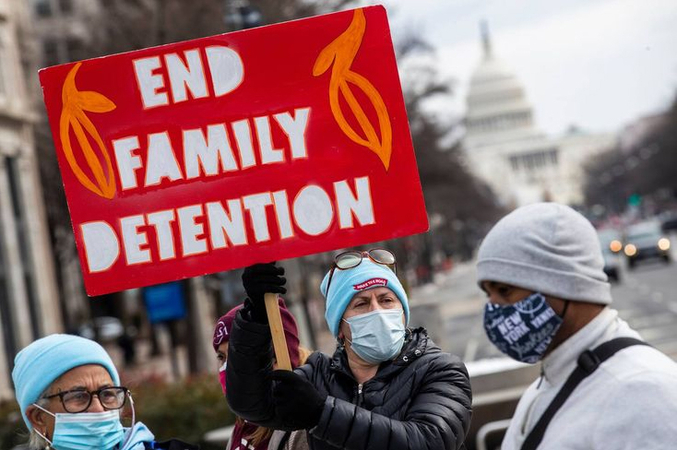
WASHINGTON – The Biden administration is preparing to convert its immigrant family detention centers in South Texas into Ellis Island-style rapid-processing hubs that will screen migrant parents and children with a goal of releasing them into the United States within 72 hours, according to Department of Homeland Security draft plans obtained by The Washington Post.
The plans show the Biden administration is racing to absorb a growing number of migrants crossing the U.S.-Mexico border amid shortages of bed space and personnel. Republicans and some Democrats fear that relaxing detention policies will exacerbate a surge that is already straining the Biden administration.
Russell Hott, a senior official with Immigration and Customs Enforcement, notified staff of the rapid-processing plan in an email Thursday that said arrivals by unaccompanied minors and families this year “are expected to be the highest numbers observed in over 20 years.”
If U.S. border officials continue to take in more than 500 family members per day, the change in use to the family detention centers “may not be sufficient to keep pace with apprehensions,” Hott warned in his email, which was reviewed by The Post.
Individuals who cannot be housed in one of the rapid-processing centers may need to be placed in hotels, Hott wrote. MVM, an ICE contractor, will help transport the families to hotels if there is no longer capacity at the rapid-processing centers, he said, adding that the company plans to use hotels in McAllen and El Paso, Texas, and Phoenix.
“We welcome the change, because the detention of families – we never thought that was a good system or a good policy at all,” said Edna Yang, co-executive director of American Gateways, an immigration legal aid organization in Texas. “They shouldn’t be detained, and they should be given the opportunity to go before the immigration judge and be released in the community and not held like prisoners.”
The plans come as Republicans are criticizing President Joe Biden for relaxing immigration policies, saying he could encourage more migrants to travel to the border.
“There is no question there’s a crisis at the border,” Rep. James Comer, R-Ky., said Thursday on Fox News. “It’s Joe Biden’s fault. Joe Biden has signaled to the world that he’s not going to take border security seriously.”
Transforming family detention amounts to a wholesale repudiation of not only Donald Trump’s policies but also Barack Obama’s and presents a significantly different vision of how to handle the fast-changing character of mass migration at the southern border.
For decades, single adults – particularly men – dominated the flows northward into the United States, but the number of families and minors traveling without their parents has increased substantially in recent years. Before the coronavirus pandemic, migrant families and unaccompanied minors were a majority of those taken into custody at the southwest border, a trend that more closely resembles refugee streams worldwide.
During the Obama and Trump administrations, most families were quickly released or deported. But some were held in dormitory-style facilities for weeks or months, if not longer, for immigration proceedings. Advocates for these families have long said they are fleeing violence and poverty and shouldn’t be detained at all – a sentiment Biden echoed on the campaign trail last year.
“Children should be released from ICE detention with their parents immediately,” Biden wrote on Twitter in June. “This is pretty simple, and I can’t believe I have to say it: Families belong together.”
Six weeks into Biden’s presidency, advocates are frustrated that his administration has continued to detain families and expel them from the border under a public-health order. The number of detained family members more than doubled, from 228 adults and children before Biden took office to 476 last week, federal records show.
Although the tally is a fraction of the combined capacity of 3,300 people at three family residential centers, the uptick baffled child-welfare advocates who hoped that the detention centers would finally close. They noted that Biden and Alejandro Mayorkas, now the homeland security secretary, helped to expand use of these detention centers during the Obama administration.
“There needs to be open expression of what they’re going to do with these facilities,” said Bridget Cambria, a lawyer representing migrant families in Pennsylvania. “They shouldn’t detain families or children even for one second.”
ICE oversees three family residential centers for immigrants facing deportation: the 96-bed Berks Family Residential Center in Leesport, Pa., and a pair of larger facilities outside San Antonio, a 2,400-bed center in Dilley and an 839-bed center in Karnes City.
The Biden administration has said it is reviewing the way it uses family detention facilities and told a federal judge last week in a lawsuit over the detentions that the policies had not changed.
“A detention center is not where a family belongs,” Mayorkas told NBC News in an interview this week, hinting at the plans.
DHS officials, speaking on the condition of anonymity to describe the unpublicized plans, said the transition to rapid-release centers is already underway.
ICE emptied out the Berks center Feb. 26, releasing all 21 people there. ICE confirmed that the facility is empty but would not say why.
Officials are considering turning Berks into a women-only center, a DHS official said, while Dilley and Karnes would serve as quick-release intake facilities that would screen migrant families, check their backgrounds and release them pending an immigration court hearing. Some would enroll in “alternatives to detention,” such as ankle-monitoring programs. Families would undergo coronavirus testing, and nonprofits would then help them secure airplane or bus tickets to their final destinations in the United States, typically with relatives or friends.
The goal is to process and release 100 families per day, the plans show. Migrants who test positive for the coronavirus would be quarantined for 10 days.
Advocates for immigrants have cheered the preliminary plans in recent days – albeit cautiously because DHS has not made a formal announcement.
In Texas, advocates said the region’s top immigration officials held an emergency conference call with them on Feb. 20 to discuss plans to transform the centers into shorter-term facilities. Officials told them to prepare for more migrants to be released from Dilley and Karnes.
“It’s incredibly encouraging to hear a completely different philosophy and attitude for people coming into this country,” said Daniel Klein, board chairman for the Interfaith Welcome Coalition, who was on the call, which was first reported by the San Antonio Express-News.
Klein said that the nonprofit has added more volunteers at the bus station in downtown San Antonio to help migrants find shelter or make travel plans and that it has sometimes spent $1,000 a night on food, water and bus tickets.
Biden has pledged to create a more humane immigration system and restore the asylum process, but he is also eager to skirt a border crisis that could imperil his legislative agenda, including an effort to legalize 11 million longtime undocumented immigrants.
Some Democrats from southern border communities worried that rising migration would burden communities reeling from the coronavirus and a winter storm that cut power to millions and killed more than 30 in Texas.
“Our country is currently unprepared to handle a surge in migrants in the middle of this pandemic,” Rep. Henry Cuellar, D-Texas, tweeted Thursday. “I urge the Biden administration to listen and work with the communities on the southern border who are dealing with this influx. Inaction is not an option.”
The Biden administration has not detailed how it would handle another influx.
In 2014 – when Biden was vice president and Mayorkas was deputy DHS secretary – the United States received an influx of 68,000 families, up from 14,800 the year before. At the time, Biden said the “crisis” was “untenable and unsustainable,” and he and Mayorkas worked to stem flows from Central America and expanded family detention by opening the facilities in Dilley and Karnes. Mayorkas said then that he would ensure that “the detention of adults with children is done as humanely as possible.”
After the centers expanded, the number of migrant families apprehended at the border dropped below 40,000, but detention did not stop the flows. After a judge ruled that officials could not detain children in unlicensed facilities for more than 20 days, the numbers began to rise again.
Advocates for immigrants said detention had little impact because of the severe conditions in Central America and the Caribbean that are driving migrants north, such as violence, climate change, poverty and government corruption.
The numbers have only continued to grow.
More than 470,000 migrant families and 76,000 unaccompanied minors arrived in fiscal 2019, a record on both counts, and most were released into the United States pending a court hearing.
Dora Schriro, who led ICE’s office of detention policy and planning, said ICE’s experience with family detention shows that it is harmful to children and their parents by placing them in conditions where they are afraid. She said she reduced the capacity in Pennsylvania to 84 beds before leaving in 2009.
After the Obama administration expanded the detention centers to more than 3,300 beds, she said, DHS asked her and others to issue recommendations in a report published in late 2016. Their first recommendation: “Detention is never in the best interest of children.”
“DHS should discontinue the general use of family detention, reserving it for rare cases when necessary,” such as because someone is a flight risk or a danger to the community, the report said.
Soon after, Trump took office. He sought to detain families and separated parents from their children in a failed attempt to stem the rising flows of migrants.
Schriro said the Biden administration faces dual challenges at the border: keeping its international obligations to offer refuge to people feeling harm, and making sure Americans are safe.
“You’ve got two really critical commitments, and this administration is finding a path to honor both of those obligations,” she said. “The trick is not sacrificing one for the other.”
By The Washington Post · Mustafa Salim, Louisa Loveluck
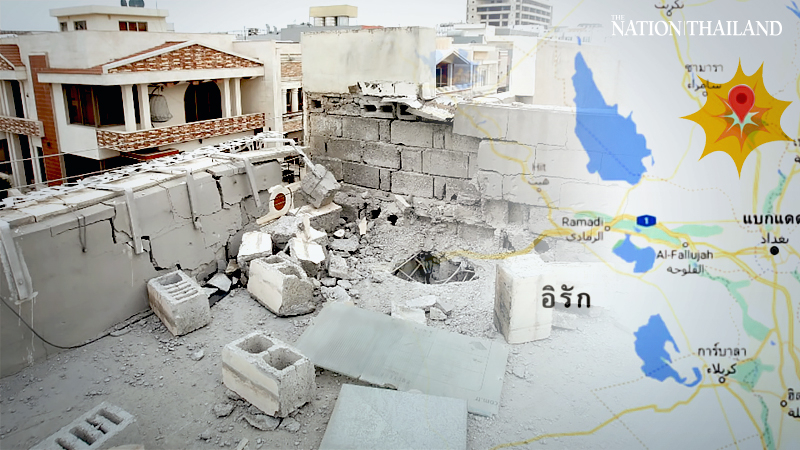
BAGHDAD – A U.S. contractor died during rocket attacks on an Iraqi military base Wednesday, the Pentagon said, posing a fresh challenge to the Biden administration days after it launched military action in retaliation for an earlier attack.
Iraq’s military said that 10 Grad rockets had landed on the Ain al-Asad air base in the western province of Anbar, and that the vehicle they were launched from had also been located. Around half of the rockets were intercepted by a U.S. aerial defense system, American and Iraqi officials said.
“A U.S. civilian contractor suffered a cardiac episode while sheltering and sadly passed away shortly after,” said Pentagon spokesman John Kirby, sharing no further information about the person’s identity. “There are no current reports of U.S. service member injuries, and all are accounted for.”
The attack came during an acutely sensitive period for the President Joe Biden and the Iraqi government. While similar rocket attacks have routinely been claimed by or blamed on Iran-backed militia groups, Washington is trying to blunt the tensions that soared between Washington and Tehran during President Donald Trump’s years in office.
Biden said Wednesday: “We are following that through right now. Thank God no one was killed by the rocket. One individual, a contractor, died of a heart attack. But we’re identifying who’s responsible, and we’ll make judgments from that point.”
Western officials point to Biden’s response to rocket attacks on U.S. service personnel in Iraq last week as a case in point. Although the strikes resulted in the first unilateral military action of Biden’s presidency, the Iran-backed militants it targeted were across the border in Syria, not Iraq, a move that seemed consciously calibrated to avoid further escalation.
In Baghdad, meanwhile, officials have all hands on deck for the arrival of Pope Francis on Friday, with the pontif’s visit representing an opportunity for the embattled government here to showcase Iraq’s relative stability in the wake of the Islamic State’s military defeat.
“Iraqi security forces are on scene and investigating. We cannot attribute responsibility at this time, and we do not have a complete picture of the extent of the damage,” Kirby said in a statement. “We stand by as needed to assist our Iraqi partners as they investigate.”
Rocket attacks on U.S. diplomatic and military targets have escalated in the year since Trump ordered the killing of Iran’s most influential military strategist, Maj. Gen. Qasem Soleimani, and the Iraqi militia leader, Abu Mahdi al-Muhandis, responsible for maintaining cohesion among the country’s disparate network of militia groups.
Recent attacks on U.S.-linked bases have been claimed by splinter groups that have announced themselves since the deaths of Soleimani and Muhandis. Although U.S. officials say that those groups are backed by Iran, the extent of Tehran’s control over individual attacks remains unclear.
As night fell Wednesday, there was no claim of responsibility for the latest rocket attacks.

 การช่วยชีวิตน้องแมวที่ติดอยู่บนเรือที่ถูกไฟไหม้กลางทะเลกลายเป็นข่าวไปทั่วโลก ตามมาด้วยเสียงชื่นชมมากมาย


 ตำรวจเมียนมาจำนวนหนึ่งขอลี้ภัยไปอินเดียแทนทำตามคำสั่งรัฐบาลทหาร
 ไป่ ทาคน เคลื่อนไหวแล้วหลังหายตัวนานหลายวัน แฟนเกรงถูกกองทัพเมียนมาจับตัว

 สื่อสเปนเผย 2 เจ้าหญิงพระเชษฐภคินีกษัติรย์สเปนฉีดวัคซีนที่สหรัฐอาหรับเอมิเรตส์ก่อนถึงคิวฉีดในบ้านตัวเอง
 การขุดบิตคอยน์ต้องใช้พลังงานไฟฟ้าปริมาณมหาศาลทะลุร้อยเทระวัตต์-ชั่วโมงต่อปี
 ผู้นำทหารเบอร์ 2 ของเมียนมาบอกไม่กลัวถ้าถูกคว่ำบาตร
 องค์กรเพื่อประชาธิปไตยเผยผลการจัดอันดับเสรีภาพไทยลดลง ชี้ประชาชนไม่ถึง 20% ของโลกอยู่ในประเทศเสรีภาพ
 เฟซบุ๊กประกาศระงับ 185 บัญชีหลังพบปฏิบัติการข้อมูลข่าวสารเชื่อมโยงกองทัพไทย