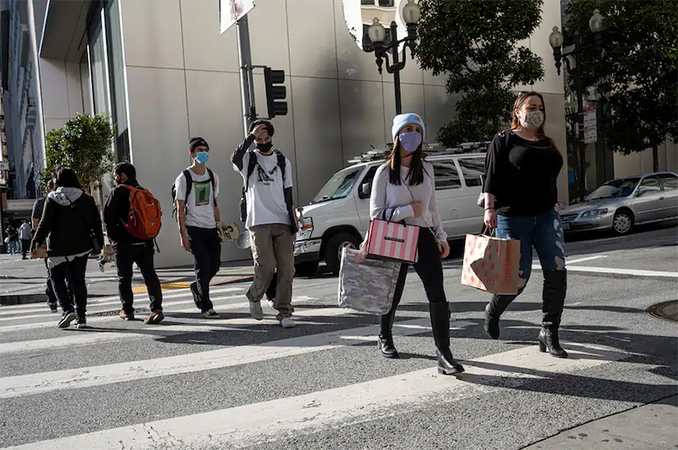
Biden declares major disaster in Texas as focus shifts to who is responsible for the winter weather crisis #SootinClaimon.Com

#SootinClaimon.Com : ขอบคุณแหล่งข้อมูล : หนังสือพิมพ์ The Nation.

https://www.nationthailand.com/news/30402865

Biden declares major disaster in Texas as focus shifts to who is responsible for the winter weather crisis

InternationalFeb 21. 2021Customers walk through nearly empty aisles at the Natural Grocers in Austin, Texas, on Friday. Grocery stores and some places like breweries were trying to offer free water to residents who could bring their own containers. MUST CREDIT: photo for The Washington Post by Sergio Flores.Customers walk through nearly empty aisles at the Natural Grocers in Austin, Texas, on Friday. Grocery stores and some places like breweries were trying to offer free water to residents who could bring their own containers. MUST CREDIT: photo for The Washington Post by Sergio Flores.

By The Washington Post · Drew Harwell, Brittney Martin, Marisa Iati, Kim Bellware

HOUSTON – President Joe Biden signed a major disaster declaration that will allow much of Texas to tap vast reserves of federal aid, the White House said Saturday, offering a new lifeline to a state struggling to recover from a brutal winter storm that left more than 50 dead and millions without power across the South.
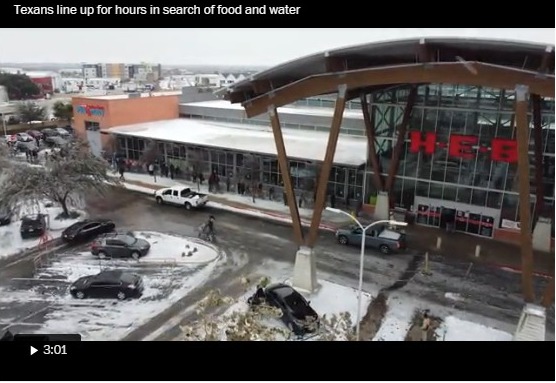
https://www.washingtonpost.com/video/c/embed/69880787-cf0c-4449-86e7-54f0a3a1c961?ptvads=block&playthrough=false

As Texas thawed from days of frigid darkness, an epic blame game emerged over who is responsible for the billions of dollars in damages from what some expected would become the most costly weather disaster in state history.

Texas’s deregulated electrical grid had triggered mass outages that left residents in the nation’s second-largest state trapped without heat for days in freezing homes. Several died following desperate attempts to stay warm, including a 75-year-old woman and her three young grandchildren in a suburban Houston house fire sparked by a fireplace.

Many other households faced jaw-dropping electrical bills from some of the state’s increasingly popular variable-rate plans, which charged thousands of dollars for a few days of power as wholesale energy prices soared.

The plans offer a potentially lower-cost alternative to traditional fixed-rate energy payments, but the outages quickly raised havoc. One company, Griddy, said it was forced to raise its prices to 300 times higher than the normal wholesale rate, meaning a typical $2-a-day household would face more than $600 in daily charges.

Texas Gov. Greg Abbott, a Republican, said Saturday he was convening an emergency meeting with state lawmakers to discuss the spikes, saying in a statement that “it is unacceptable for Texans who suffered through days in the freezing cold without electricity or heat to now be hit with skyrocketing energy costs.”

The Electric Reliability Council of Texas (ERCOT), which manages the state’s power grid, faces a state investigation and two lawsuits arguing that its failure to prepare for extreme cold left residents freezing and in the dark.

Texas Attorney General Ken Paxton said Friday he was launching an investigation into how ERCOT and other power companies had “grossly mishandled” the winter storm. An ERCOT official defended its decision to trigger rolling outages, saying in a statement Saturday that it had been the “right choice to avoid a statewide blackout.”

The catastrophic winter storm was expected to become the “largest insurance claim event in [Texas] history,” said the Insurance Council of Texas, a trade group, which estimated the damage would far outpace the $19 billion in claims from Hurricane Harvey in 2017.

Biden’s major disaster declaration in Texas, which followed similar state-of-emergency notices in Louisiana and Oklahoma, will allow the general public and business owners to apply for temporary-housing grants, home-repair loans and other emergency aid. Dallas Mayor Eric Johnson, a Democrat, said Saturday that the declaration would “help our city recover.”

Biden’s Texas declaration offers individual assistance to 77 of 254 counties, including the areas around Houston, Dallas and Austin, but does not cover the entire state. Biden said Friday at the White House that he hopes to visit the state this week.

Abbott said Saturday that the “partial approval is an important first step,” and the White House said more counties could be covered as government officials continue assessing the damage. The Federal Emergency Management Agency has in recent days provided generators, food, water and other supplies statewide.

The gatekeepers of the Texas power grid – famously unregulated and disconnected from the broader United States – are expected to face intense scrutiny over whether they neglected infrastructural upgrades and weather safeguards that could have helped during the disaster.

Congress is likely to open an investigation next week into what went wrong, and the Texas legislature is expected hold its own hearings. At least two Texas residents have filed lawsuits faulting ERCOT for not heeding safety warnings or boosting energy supplies.

Although temperatures have risen since the Arctic storm dropped air below freezing, many across the South are just beginning to recover from the devastation of burst pipes, power failures and flooded homes.

More than 14 million people across the South are still without a consistent supply of clean drinking water, and roughly 80,000 utility customers across Texas woke up Saturday morning without heat or power.

In Houston, the nation’s fourth-largest city, residents on Saturday were still being told to boil all water. In Austin, the state capital, many homes still lacked running water, and officials couldn’t say when it might return.

“This has just been one thing after another,” Austin Mayor Steve Adler, a Democrat, told CNN on Friday. “This is a community of people that are scared and upset and angry. We’re eventually going to need some better answers to why we’re here.”

More than 50 recent deaths have been linked to the bitterly cold weather and its aftermath, including from hypothermia, house fires and carbon-monoxide poisoning from people using cars or ovens to stay warm. In the Houston suburb of Sugar Land, Loan Le, 75, and her three grandchildren – ages 5, 8 and 11 – died in a house fire early Tuesday after using a fireplace to stay warm overnight while without power, city spokesman Douglas Adolph said.

Even as temperatures warmed, the threat of ruptured pipes and dry water supplies threatened further strain. In Killeen, a fire at a fully occupied Hilton Garden Inn raged out of control after the hotel’s sprinkler system failed, officials said. No deaths were reported, and the cause of the blaze is still unknown.

For many, the storm’s challenges are just beginning. Tabitha Charlton, 44, was playing Uno and trying to stay warm with her 7-year-old twins Tuesday when a pipe burst and covered her girls’ bedroom with soggy gray insulation.

On Saturday, as the family laid pillows and stuffed animals out to dry on their lawn in Sienna, 30 miles south of Houston, Charlton remembered back to the three years she had spent battling insurance companies and state agencies for repair costs related to home damages from Hurricane Harvey.

“I settled my Harvey insurance claim last Wednesday, six days before this damage occurred. I haven’t even received the check yet,” Charlton said. “After dealing with that trauma for three-plus years, I felt immediately gutted when this happened. I fell to my knees and sobbed.”

Many in the Lone Star State, faced with an uncertain recovery, have pushed to take matters into their own hands. Don Nichols, 70, visited four hardware stores Saturday trying to find parts to fix the busted pipes at his home in Crosby, 25 miles northeast of Houston, where he also owns a barn and some rental properties. He, his tenants and his 100 cows had been without water for most of the week.

On Saturday afternoon, Nichols stood in line with about 30 others at a Home Depot in the city of Humble, waiting to pick through the remaining plumbing supplies. He said he still remembers the last time it was this cold for this long: Christmastime 1989.

“I had my blankets on and my feather bed and my comforter and all of that, and I was still freezing to death,” he said. “I’m a pretty tough ol’ Boy Scout and I don’t worry about that. But this time, man, I did.”

Israel agrees to vaccinate Palestinian workers, Palestinian officials say #SootinClaimon.Com

#SootinClaimon.Com : ขอบคุณแหล่งข้อมูล : หนังสือพิมพ์ The Nation.

https://www.nationthailand.com/news/30402864

Israel agrees to vaccinate Palestinian workers, Palestinian officials say

InternationalFeb 21. 2021

By The Washington Post · Steve Hendrix

JERUSALEM – Israel, which has faced criticism from human rights groups for not extending its world-leading vaccination program to Palestinian territories under its control, agreed Friday to inoculate 100,000 Palestinians who regularly cross into Israel to work, according to the Palestinian Minister of Health.

The vaccinations, which will occur at ad hoc centers set up along the line dividing Israel from the West Bank, she said, would mark the largest delivery of the protectant serum to the five million Palestinians living there and the Gaza Strip. Authorities there are largely depending on vaccines yet to be distributed by an internationally-funded effort targeting poor countries, as well independent purchases they are making on the open market.

To date, Palestinians have gotten access to about 10,000 doses of the Russian Sputnik vaccine donated by Moscow, 2,000 of which of arrived in Gaza this week. Israel also sent 5,000 doses in early February to inject health workers.

Being able to reach 100,000 workers would mark a significant boost in the Palestinian program, according to Palestinian Heath Minister Mai al-Kaila.

“We welcome this,” al-Kaila said Saturday. “We need to vaccinate our people so we can end the pandemic everywhere.”

The agreement followed a rare meeting between Israeli and Palestinian officials Friday in Ramallah, the West Bank seat of the governing Palestinian Authority. Senior health officials from both sides, including Israel’s coronavirus “czar,” Nachman Ash, discussed efforts to control the outbreak that has killed more than 1,900 in the territories.

Israel’s Ministry of Health has not officially announced the provision of vaccines and officials did not respond to requests for comment Saturday, the Jewish sabbath. But the ministry had indicated earlier in the week its intention to offer doses to Palestinian workers, thousands of whom cross checkpoints every day to work in construction, service and other jobs in Israel.

In a statement, the ministry said Friday’s meeting occurred in the understanding “that Israel and the Palestinians live in one area and that an outbreak of COVID-19 among the Palestinian Authority may also affect the infection rate among Israeli residents.”

Israel has depended on the Pfizer vaccine, which requires ultracold storage, to inoculate more than 40% of its residents. But it also took shipment of a reported 120,000 doses of the Moderna vaccine in January. It was unclear what vaccines would go to the Palestinians and how quickly the shots could begin.

“We agreed on the principle but we don’t know the details yet,” al-Kaila said.

The agreement would represent a reversal of Israel’s reluctance to offer vaccine in mass quantities to the Palestinians. The government has faced months of criticism for that stance, even as it has mounted a fast-paced campaign to inoculate its own population.

Some officials, including the Israeli health minister, said they would be willing to aid the Palestinians but only after their own citizens had gotten the jab.

Human Rights advocates argue that Israel has a moral and legal obligation to vaccinate a population under its effective control. Israel countered that the 30-year-old Oslo accords places responsibility for health care with the Palestinian’s own elected leaders, the Palestinian Authority in the West Bank and the militant Hamas group in Gaza.

The issue grew heated this week when Palestinians accused Israel of pollical interference Tuesday when it turned back a shipment of the Russian-donated vaccine meant for Gaza at a military checkpoint. That incident occurred amid calls from some right-wing Israeli politicians to condition the delivery on the release of hostages and human remains held by Hamas.

Israeli officials said the request to send the vaccine across the checkpoints required time for an official review. The vaccines was allowed to reach in Gaza two days later.

“To me, health should be beyond politics,” al-Kaila said. “We and the Israelis, the Lebanese, the Syrians, the Egyptians, we are all in the same region. We should reach herd immunity together.”

In a Russian court, Alexei Navalny loses again but still has the last word #SootinClaimon.Com

#SootinClaimon.Com : ขอบคุณแหล่งข้อมูล : หนังสือพิมพ์ The Nation.

https://www.nationthailand.com/news/30402863

In a Russian court, Alexei Navalny loses again but still has the last word

InternationalFeb 21. 2021

By The Washington Post · Robyn Dixon

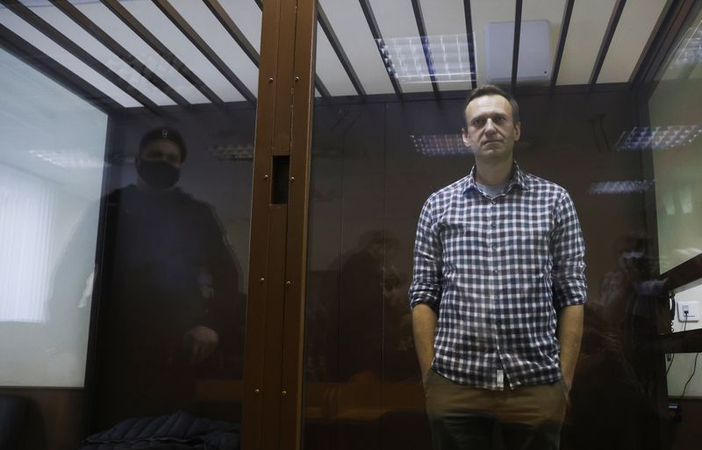
MOSCOW – Russian opposition leader Alexei Navalny lost in a court appeal against jail time Saturday, but again used his time in the dock to expound on why he stands against President Vladimir Putin, no matter the personal risk.

Even as Russian authorities try to crush Navalny’s stature and his activist network, a series of court hearings has offered him an unexpected public forum for commentary that has run the serious to the sublime.

From the glass-enclosed cage used for defendants, he has talked about a salted cucumber recipe and mused about his lonely path – jailed for standing against the regime.

He has called the judge in his libel case “Obersturmbannführer” – a Nazi paramilitary rank – and described Putin as an old man quivering in his bunker, terrified of his own people.

An Instagram post attributed to him Wednesday mused about spaceships and the risks of living in confinement.

Not expecting justice from a judiciary with an acquittal rate of less than half a percent, Navalny is using his time in the dock in two current court trials to ram home his message that Russia’s criminal justice system is a sham used to silence Putin’s critics.

He calls the cases “performances” trumped up by the authorities to instill fear in the population or to smear him, but he has seized the stage they afford for his own purposes. He appeared in court Saturday for the result of his appeal against a prison term for breaching probation. A second ruling on his trial for criminal libel was due later Saturday. A third case, involving embezzlement allegations and up to 10 years in prison, is pending.

At the appeal hearing Saturday, Navalny mused on the meaning of life and the importance of religious belief, telling the truth and doing what was right, no matter how hard the consequences.

He said the authorities were using the trials against him “showing me they can do as they want, like jugglers.

“Ordinary people who look at this think, ‘What if I run into the judicial system? Do I stand a chance?'” The goal of power, he said was to make people like him feel isolated, alone and frightened.

Navalny said if he was not willing to take risks, he would just be a bunch of molecules floating through space.

He was not enjoying prison but “I do not feel any regret. On the contrary I feel satisfaction. In a difficult moment, I have not betrayed the commandments.” The court rejected his appeal against the jail term, but shortened it slightly to two years and five months to take into account the time he has spent under house arrest.

Navalny said the libel case, in which he is accused of defaming a World War II veteran, is designed as a smear. On Monday, a state media presenter, Vladimir Solovyov, compared Navalny unfavorably to Hitler, who he said had fought bravely as a soldier – “unlike this codpiece Führer,” a reference to a state security agent’s comment that the opposition leader’s underwear was poisoned in an August attack.

The libel allegation stemmed from Navalny’s tweet criticizing a group of people – including actors, other celebrities, sports figures and one war veteran, 94-year-old Ignat Artemenko – who appeared in a RT network propaganda video urging Russians to support constitutional changes that could keep Putin power until 2036. Navalny called the participants traitors and lackeys.

His lawyers argue that his tweet was not libelous because the activist was voicing an opinion, not an assertion capable of being proved factual or otherwise.

When Judge Vera Akimova repeatedly struck out the questions Navalny raised during the trial, he addressed her from his glass prisoner’s cage as Obersturmbannführer and likened the hearing to a Nazi interrogation, adding that she would look good with a German machine gun.

In his final words before the libel verdict Saturday, Navalny said Putin’s United Russia party – which faces testing parliamentary elections due in September – “has turned into an enormous pig which guzzles from a trough of oil and dollars.” He said the regime was using the libel case to pretend it cared about veterans.

Authorities have restricted Navalny’s ability to use the hearing as a platform, with Akimova barring video of the proceedings. However, state media aired his rant against the judge at length, while also reporting that his remarks could trigger yet more charges – of insulting the court.

“Navalny’s hysterics continue, and in the meantime his team, guided by sponsors from the United States, Canada and Europe, are preparing a military coup in the country,” said state TV presenter Yevgeny Popov.

By Tuesday, day three of the hearing, Navalny said the case was so ridiculous he might just as well talk about cucumbers as the law.

“Every moment of this case is obvious legal nonsense,” he said, veering off to tell how he had to order salt repeatedly to his cell, only to finally get three kilograms all at once.

“Now I have a lot of cucumbers and three kilos of salt. Since it makes no sense to talk about any legal issues here, maybe, Prosecutor and Your Honor, you know some good recipes for salted cucumbers,” he said.

According to the independent investigator media website Proyekt, the libel case grew out of a vast Kremlin-directed campaign involving state security service agents, state media propagandists, regional governors and ambitious freelancers all working hard to discredit Navalny. In August, Proyekt published a WhatsApp message that it said was from the presidential administration to all regional policy groups in June initiating an operation against Navalny – based on his tweet – in the lead-up to the Jun. 25 to July 1 vote on the constitutional changes.

“Colleagues, we must urgently organize an information campaign (responses, quotes, rebukes) defending the WWII veteran insulted by A. Navalny. The campaign is to run *until 1 July*,” the message said, including the asterisks. It asked participants to instigate news articles citing other veterans, patriots “or simply any high-profile or well-known individuals” and to submit the articles and links to it.

At the appeal hearing Saturday, Navalny said he dreamed of a future where Russia was not only free but also happy.

“Despite the fact that our country is built on injustice and we constantly face it and see its worst form, armed injustice, tens of millions of people want the truth and they sooner or later they will get it,” he said.

Navalny is finding other ways to communicate. A post on his Instagram account Wednesday, made on his behalf, said that being in jail was not so hard but felt rather like a space voyage “to a beautiful new world.”

“Could I, a fan of books and movies about space, refuse such a flight, even if it lasts three years? Obviously no,” he wrote.

“There’s just one big difference from space movies. I have no weapons at all. What if the ship is attacked by xenomorphs? I doubt I could fight them off with a kettle.”

Space travel is “dangerous,” Navalny added. The voyage could take years longer than expected, or it could take him nowhere.

U.S. economy may have its best chance in years to break from era of subpar growth #SootinClaimon.Com

#SootinClaimon.Com : ขอบคุณแหล่งข้อมูล : หนังสือพิมพ์ The Nation.

https://www.nationthailand.com/news/30402862

U.S. economy may have its best chance in years to break from era of subpar growth

InternationalFeb 21. 2021

By The Washington Post · David J. Lynch

As increasingly widespread covid-19 vaccinations signal a possible return to normal life, the United States is moving toward an unusual experiment that could produce an economy many Americans will not recognize – for better or for worse.

Factories are humming and consumers are spending again, signs that the United States could emerge from the current health crisis with its strongest growth in decades. Goldman Sachs expects the economy to expand this year at an annual rate of 7%, the fastest pace since President Ronald Reagan proclaimed “morning again in America” in 1984.

The question is whether that fast-paced rebound can be made to last, freeing the nation from the low-growth rut it has plowed for most of the past 20 years, or will instead ignite the sort of inflation that has not been seen since the 1970s. Prominent economists such as former Treasury Secretary Larry Summers already are warning that potential overheating could end in a new recession.

After 20 years of subpar growth, the odds are against a prolonged boom. But the pandemic has catalyzed new thinking about both fiscal and monetary policy, creating the most favorable conditions for restoring vigorous economic growth in several decades.

“In terms of history, this is a unique situation,” said Chetan Ahya, chief economist for Morgan Stanley, who recently advised clients to prepare for a fast-growing “high-pressure economy” through at least the end of 2022.

The Biden administration plans to spend $1.9 trillion backstopping growth on top of the $3.7 trillion in federal funds that have flowed since March, helping all but guarantee years of massive government borrowing to spur the economy.

At the same time, the Federal Reserve says it will keep interest rates near zero even if inflation creeps above the central bank’s annual target of 2%, making it easier for businesses and consumers to borrow.

Not for 75 years, since American G.I.s were battling two totalitarian empires, has the economy been boosted simultaneously by so much deficit spending and so much easy money. The economy will enjoy additional support this year from consumers, who have more than $1.6 trillion in excess savings, thanks in part to last year’s stimulus checks, according to Bank of America.

As President Joe Biden seeks congressional approval of fresh pandemic relief, he plans other moves to boost the economy’s long-term prospects. Administration officials are drawing up an ambitious spending package that would provide up to $3 trillion for a range of Democratic priorities, including infrastructure, clean energy, domestic manufacturing and child and elder care.

The U.S. economy, most experts say, clearly needs a push to re-create the kind of growth that made Americans so prosperous in the last half of the 20th century. Over the past 20 years, by contrast,the U.S. economy grew at an average annual rate of just 1.9%, well below the 3.5% figure between 1980 and 2000.

Expanding the labor force – either through immigration or by making it easier for women to return to work – and modernizing the nation’s infrastructure would deliver faster long-term growth, manyeconomists said. Growing over the next decade at an annual rate of 2.5% rather than the tepid 1.8 pace the Congressional Budget Office expects would produce nearly $11 trillion in additional economic activity.

“Policies make a difference,” said economist Julia Coronado, president of Macropolicy Perspectives. “There’s scope to move toward a higher run rate.”

The current situation bears little resemblance to the government’s response to the 2008 crisis, which produced the most anemic recovery in U.S. history. The Bush and Obama administrations deployed more than $2 trillion to save the economy, but within months of the recession’s official end in June 2009, the United States began reducing the federal deficit, which sapped the economic rebound.

The deficit fears that colored that era’s policy debates today are less potent. Investors require just 1.3% interest to lend money to the government for 10 years, one-third of what they demanded in 2009.

Republican lawmakers still warn against lavish government spending. But after agreeing to add more than $5 trillion to the national debt during the Trump administration, their complaints may carry less weight.

Biden, in any event, seems determined to avoid repeating the mistake of premature austerity.

“Now is the time to go big,” the president said during a CNN town hall this week.

The Fed also has revolutionized its approach to managing the economy. For decades, the central bank had believed that if unemployment fell too low, inflation would rise, requiring it to pump the brakes by raising interest rates.

But as the economy recovered from the Great Recession, unemployment declined to half-century lows without inflation reaching the Fed’s 2% price stability target.

After raising rates in 2018 to head off price increases that never materialized, the Fed pivoted to cutting them in 2019. Fed officials also set out on a national listening tour to hear from communities that hadn’t reaped the benefits of “full employment.”

In August, the Fed announced it no longer would be so quick to raise rates. Instead, central bank officials will allow the jobless rate to fall until inflation exceeds its 2% target for a temporary, but unspecified period of time in order to get more Americans in the workforce.

The new framework is rooted in the lesson of the final pre-pandemic months, when wage gains began reaching lower-income workers who until then had missed out on the expansion’s benefits. Fed officials concluded they “could do more to tighten the labor market than we previously thought was possible,” said Skanda Amarnath, research director at Employ America, a left-leaning think tank.

Still, there are risks with running the economy hot. Summers, who was also an economic adviser to the Clinton and Obama administrations, warned earlier this month that Biden’s $1.9 trillion relief bill could “set off inflationary pressures of a kind we have not seen in a generation.”

Olivier Blanchard, former chief economist of the International Monetary Fund, also has warned that the legislation is too large and risks triggering inflation that would cause the Fed to raise interest rates and likely send the economy into recession.

If demand for goods and services rose too fast, eventually the pool of unemployed workers would be exhausted and factories would be stretched. Beyond that point, wages and prices could begin climbing, repeating the experience of the late 1960s, when President Lyndon B. Johnson famously refused to choose between the “guns” of the Vietnam War and the “butter” of his Great Society domestic agenda. By 1969, prices were increasing at an annual rate of 6.2%, up from just 2.4% two years earlier.

A similar situation today would almost certainly cause the Fed to raise its benchmark lending rate, a move that often leads to recession.

Powell and Treasury Secretary Janet Yellen, a former Fed Chair, have dismissed those concerns. Despite the decline in the official jobless rate, roughly 10 million fewer Americans are working today than were employed last February. More aid from Congress plus a spike in consumer spending could cause “some upward pressure on prices” but it “will be neither large nor sustained,” Powell said.

“We are still very far from a strong labor market whose benefits are broadly shared,” the Fed chair said last week.

But Robin Brooks, chief economist for the Institute of International Finance, an industry group, said financial markets are beginning to register concern. One measure of inflation expectations, the 10-year treasury break even rate, has jumped since the November election to 2.2%, its highest level in more than two years.

“That thing is screaming,” Brooks said. “Perhaps we’re overdoing it.”

At issue is how far below its potential the economy is operating, a measurement that economists call “the output gap.” Those who worry about overheating say the economy was operating close to its limits before the pandemic hit and would be pushed beyond them by Biden’s plan.

CBO says the economy now is about 3% below its potential. But using a different calculus, Goldman Sachs this week pegged the gap at 6%.

“Trying to estimate potential growth is more an art than a science,” said Megan Greene, global chief economist at the Harvard Kennedy School of Government.

Indeed, over the past two decades, CBO scorekeepers have repeatedly lowered their assessments of the economy’s ability to grow without sparking inflation. Throughout 2018 and 2019, CBO said the economy was operating above its sustainable path. Yet the unemployment rate declined from 4.1% at the end of 2017 to 3.5% in February 2020, while inflation stayed tame.

One year ago, the economy was largely healthy. Unemployment of 3.5% was near a half-century low amid a record-long expansion.

The recovery from the pandemic crash, which pushed unemployment to nearly 15% in April, has been faster than expected. Thanks to multiple rounds of federal relief last year, the economy should rise “meaningfully above its pre-covid-19 path” later this year and total output will be higher next year than economists expected before the pandemic, according to Ahya.

But Biden’s “build back better” program aims to create an economy that exceeds the February 2020 model, with reduced income inequality and greater opportunities for women and disadvantaged minority communities.

“There’s now an increased focus not just on aggregate GDP, but how it’s spread across the population [and] addressing inequality and racial justice,” Coronado said. “It’s not just about the growth numbers and the stock market.”

To make that a reality, additional spending beyond the $1.9 trillion relief bill will be needed. Even before that legislation has cleared Congress, the administration is talking up a potential $3 trillion infrastructure package, which faces an uncertain reception on Capitol Hill.

Launching the economy onto a permanently higher trajectory also will require worker retraining, expanded child care to allow women forced from the labor force by the pandemic to return to work, and updated bridges, ports and broadband connections, Greene said.

As millions of Americans each week get vaccinated against covid-19, the economy is stirring. Retail sales in January jumped by more than 5% – their best showing since June – while industrial production rose for the fourth straight month.

“The whole economy is going to grow in a way that we haven’t seen it grow in a long time,” the president said Wednesday. “This is the time for us to move.”

เทกซัสวิกฤต หนาวจนน้ำไม่ไหลชาวบ้านต้องแซะหิมะไปต้มดื่ม #SootinClaimon.Com

#SootinClaimon.Com : ขอบคุณแหล่งข้อมูล : หนังสือพิมพ์โพสต์ทูเดย์

https://www.posttoday.com/world/645907

วันที่ 20 ก.พ. 2564 เวลา 18:30 น.เทกซัสวิกฤต หนาวจนน้ำไม่ไหลชาวบ้านต้องแซะหิมะไปต้มดื่มพายุฤดูหนาวเล่นงานเทกซัสต่อเนื่อง ชาวบ้านกว่าครึ่งยังไม่มีน้ำใช้ จนต้องแซะหิมะไปต้ม  

พายุฤดูหนาวที่ถล่มรัฐเทกซัสของสหรัฐส่งผลให้ระบบน้ำประปาในพื้นที่ 177 เคาน์ตีจากทั้งหมด 254 เคาน์ตีไม่สามารถจ่ายน้ำได้ ทำให้ชาวเทกซัสกว่า 14 ล้านคนไม่มีน้ำประชาใช้ จนชาวบ้านส่วนใหญ่ต้องออกไปแซะหิมะที่ตกค้างอยู่บนกำแพงบ้านมาต้มเป็นน้ำดื่มน้ำใช้

นอกจากนี้ ชาวบ้านบางส่วนยังประสบปัญหาเพดานบ้านพังถล่ม อันเนื่องมาจากท่อน้ำประปาในบ้านระเบิดเพราะอุณหภูมิติดลบ ตลอดช่วงสัปดาห์ที่ผ่านมา

เบื้องต้นทางการส่งรถบบนทุกน้ำราว  1 ล้านแกลลอนไปแจกจ่ายประชาชนที่เดือดร้อนในเมืองออสติน ขณะที่เมืองฮุสตันมีการแจกจ่ายน้ำบรรจุขวด

ชาวเมืองเทกซัสเข้าคิวรับน้ำแจกที่สนามกีฬาเดลมาร์ในเมืองฮุสตัน

Photo by Justin Sullivan/Suzanne CORDEIRO/AFP

รมว.สธ.อาร์เจนตินาลาออกเซ่นกรณีเพื่อนสนิทใช้อภิสิทธิ์ฉีดวัคซีนก่อน #SootinClaimon.Com

#SootinClaimon.Com : ขอบคุณแหล่งข้อมูล : หนังสือพิมพ์โพสต์ทูเดย์

https://www.posttoday.com/world/645901

วันที่ 20 ก.พ. 2564 เวลา 16:30 น.รมว.สธ.อาร์เจนตินาลาออกเซ่นกรณีเพื่อนสนิทใช้อภิสิทธิ์ฉีดวัคซีนก่อนรัฐมนตรีสาธารณสุขอาร์เจนตินาลาออกหลังเพื่อนอ้างความสนิทสนมแซงคิวฉีดวัคซีนก่อนคนอื่น

สำนักข่าวเอเอฟพีรายงานว่า จีเนส กอนซาเลส การ์ซี รัฐมนตรีว่าการกระทรวงสาธารณสุขอาร์เจนตินาลาออกจากตำแหน่ง หลังมีคำสั่งจากประธานาธิบดี อัลแบร์โต เฟอร์นันเดซ เนื่องจากบุคคลใกล้ชิดอ้างความสัมพันธ์ส่วนตัวเพื่อให้ได้ฉีดวัคซีนต้าน Covid-19 ก่อนประชาชนทั่วไป

กรณีอื้อฉาวนี้กลายเป็นข่าวใหญ่หลังจาก โฮราซิโอ เวอร์บิตสกี นักข่าววัย 71 ปีเพื่อนของรัฐมนตรีว่าการกระทรวงสาธารณสุขเปิดเผยว่า ต้องขอบคุณความสนิทสนมระหว่างเขากับกอนซาเลส การ์ซีที่ทำให้เขาได้รับการฉีดวัคซีนก่อนชาวอาร์เจนตินาคนอื่นๆ

นอกจากนี้ สื่อท้องถิ่นยังรายงานว่า ยังมีบุคคลที่ใกล้ชิดกับรัฐบาลอีกหลายคนที่ได้อภิสิทธิ์ในการลัดคิวฉีดวัคซีนที่กระทรวงสาธารณสุข

ตั้งแต่เดือน ธ.ค.ปีที่แล้ว ทางการอาร์เจนตินาใช้วัคซีน Sputnik V ฉีดให้บุคลากรทางการแพทย์ที่ปฏิบัติหน้าที่ในแนวหน้า และเพิ่งเริ่มฉีดวัคซีนให้กลุ่มผู้สูงอายุตั้งแต่ 70 ปีขึ้นไปเมื่อวันพุธที่ผ่านมาในกรุงบัวโนสไอเรส

สองสาวมะกันแต่งตัวเป็นคนแก่แซงคิวฉีดวัคซีน #SootinClaimon.Com

#SootinClaimon.Com : ขอบคุณแหล่งข้อมูล : หนังสือพิมพ์โพสต์ทูเดย์

https://www.posttoday.com/world/645889

วันที่ 20 ก.พ. 2564 เวลา 14:30 น.สองสาวมะกันแต่งตัวเป็นคนแก่แซงคิวฉีดวัคซีน2 สาวอเมริกันลงทุนปลอมตัวเป็นคนแก่เพื่อให้ได้ฉีดวัคซีนก่อนคนอื่น

ราอูล พิโน ผู้อำนวยการกระทรวงสาธารณสุขรัฐฟลอริดาในเขตออเรนจ์เคาน์ตีแถลงข่าวว่า มีหญิง 2 รายอายุ 34 และ 44 ปีเดินทางมาที่ศูนย์ฉีดวัคซีนต้าน Covid-19 โดยแต่งตัวให้ดูเหมือนผู้สูงอายุด้วยการสวมหมวก ถุงมือ และแว่นตา เพื่อให้ได้ฉีดวัคซีนเข็มที่สอง

พิโนเผยว่าผู้หญิงทั้งสองคนมีบัตรสำหรับเข้ารับการฉีดวัคซีนเข็มแรกอย่างถูกต้อง แต่ถูกปฏิเสธไม่ให้ฉีดเข็มที่สอง เนื่องจากเจ้าหน้าที่ตรวจสอบพบว่าวันเดือนปีเกิดของทั้งคู่ไม่ตรงกับที่ลงทะเบียนไว้ แม้ว่าชื่อจะตรงกันก็ตาม

เจ้าหน้าที่สาธารณสุขยังไม่ทราบว่าหญิงทั้งสองรายนี้ได้รับวัคซีนเข็มแรกได้อย่างไร และยังตั้งข้อสังเกตว่าพวกเธออาจปลอมตัวแบบครั้งล่าสุดนี้

เหตุการณ์นี้ทำให้เขตออเรนจ์เคาน์ตียกระดับการรักษาความปลอดภัยบริเวณศูนย์ฉีดวัคซีน โดยพิโนกล่าวว่า “ขณะนี้วัคซีนเป็นสิ่งที่ผู้คนต้องการมากที่สุด เราต้องระมัดระวังมากๆ สำหรับเงินทุนและทรัพยากรที่เราได้รับมา”

ขณะนี้รัฐฟลอริดากำหนดให้กลุ่มผู้สูงอายุตั้งแต่ 65 ปีขึ้นไป ผู้สูงอายุที่พักอาศัยในบ้านพักคนชรา และเจ้าหน้าที่สาธารณสุขที่ต้องสัมผัสกับผู้ป่วยโดยตรงได้รับวัคซีนเป็นกลุ่มแรก

Photo by Federico PARRA / AFP

หวั่นกระทบมรดกโลก นักอนุรักษ์ค้านกัมพูชาสร้างสวนสนุกใกล้นครวัด #SootinClaimon.Com

#SootinClaimon.Com : ขอบคุณแหล่งข้อมูล : หนังสือพิมพ์โพสต์ทูเดย์

https://www.posttoday.com/world/645881

วันที่ 20 ก.พ. 2564 เวลา 12:30 น.หวั่นกระทบมรดกโลก นักอนุรักษ์ค้านกัมพูชาสร้างสวนสนุกใกล้นครวัด นักอนุรักษ์และยูเนสโกหวั่นว่าการสวนสนุกแห่งนี้จะสร้างความเสียหายให้นครวัดซึ่งเป็นมรดกโลก

องค์การเพื่อการศึกษา วิทยาศาสตร์ และวัฒนธรรมแห่งสหประชาชาติ หรือยูเนสโก ออกแถลงการณ์ถึงแผนการก่อสร้างสวนสนุกใกล้กับนครวัดของกัมพูชาว่า “ความใกล้เคียงกันของโครงการกับพื้นที่ที่ได้รับการปกป้องของนครวัด รวมทั้งขนาด ขอบเขต และแนวคิดของกิจกรรมต่างๆ อาจส่งผลกระทบต่อความโดดเด่นของนครวัดที่ได้รับการขึ้นทะเบียนเป็นมรดกโลกของยูเนสโก” 

และยังระบุอีกว่า บรรดาผู้เชี่ยวชาญด้านการอนุรักษ์และการพัฒนาที่ยั่งยืนต่างแสดงความกังวลและแนะนำให้ยกเลิกการก่อสร้างสวนสนุกดังกล่าว 

เช่นเดียวกับชาวกัมพูชาบางส่วนที่ไม่ต้องการให้มีการก่อสร้าง โดย Leng Chentha ชาวกัมพูชาในกรุงพนมเปญเผยกับ Radio Free Asia ว่า ไม่สนับสนุนการก่อสร้างหากสวนสนุกทำลายความงดงามของนครวัด 

เมื่อเดือน พ.ย.ปีที่แล้ว รัฐบาลกัมพูชาตกลงให้บริษัท NagaCorp ที่ตั้งอยู่ในฮ่องกงซึ่งเป็นผู้ดำเนินกิจการคาสิโนที่ใหญ่ที่สุดในกัมพูชา เช่าที่ดินใกล้กับนครวัดเป็นเวลา 50 ปี

โดยบริษัทมีแผนสร้างสวนสนุกและโรงแรม Angkor Lake of Wonder ขนาด 750,000 ตารางเมตร ซึ่งอยู่ห่างจากนครวัดเพียง 500 เมตร 

ขณะนั้นบริษัทระบุว่า จะโปรโมทโครงการสวนสนุกมูลค่าการลงทุน 350 ล้านเหรียญสหรัฐ ซึ่งมีกำหนดการเปิดให้บริการในปี 2025 ร่วมกับนครวัดให้เป็นสถานที่ท่องเที่ยวคู่แฝดของกัมพูชา 

ส่วน พาย สีพัน โฆษกรัฐบาล ยืนยันว่าสวนสนุกแห่งใหม่จะไม่กระทบกับนครวัด 

หลังจากนี้ ยูเนสโกมีแผนจะพิจารณาตรวจสอบแผนการก่อสร้างสวนสนุกดังกล่าวในที่ประชุมคณะกรรมการมรดกโลกที่จะจัดขึ้นในเดือน มิ.ย.นี้ และจะติดต่อประสานงานกับทางการกัมพูชาเพื่อให้แน่ใจว่าการปกป้องนครวัดคือเรื่องสำคัญเร่งด่วนที่สุด

ทั้งนี้ นครวัดสร้างขึ้นในคริสต์ศตวรรษที่ 12 ในยุคจักรวรรดิเขมร และได้รับการขึ้นทะเบียนเป็นแหล่งมรดกโลกโดยยูเนสโกเมื่อปี 1992

Photo by TANG CHHIN Sothy / AFP

เตือนระวังแอพ Clubhouse ปลอมเสี่ยงถูกแฮกเกอร์เล่นงาน #SootinClaimon.Com

#SootinClaimon.Com : ขอบคุณแหล่งข้อมูล : หนังสือพิมพ์โพสต์ทูเดย์

https://www.posttoday.com/world/645876

วันที่ 20 ก.พ. 2564 เวลา 10:34 น.เตือนระวังแอพ Clubhouse ปลอมเสี่ยงถูกแฮกเกอร์เล่นงานผู้เชี่ยวชาญเตือนคนอยากเล่น Clubhouse ระวังแอพพลิเคชั่นปลอม เผลอคลิกอาจถูกแฮกเกอร์ล้วงข้อมูล

แคสเปอร์สกี (Kaspersky) บริษัทซอฟท์แวร์รักษาความปลอดภัยบนอินเทอร์เน็ตเตือน ความนิยมของแอพพลิเคชั่น Clubhouse ที่กำลังฮิตในขณะนี้อาจเป็นช่องทางให้แฮกเกอร์ปล่อยมัลแวร์เพื่อล้วงข้อมูลผู้ใช้

เดนิส เลเกโซ ผู้เชี่ยวชาญด้านความปลอดภัยทางไซเบอร์ของแคสเปอร์สกีเผยว่า มีความเป็นไปได้ 2 ทางที่แฮกเกอร์จะใช้โจมตีผู้ใช้งานคือ การขายคำเชิญและแอพพลิเคชั่นปลอม โดยการซื้อขายคำเชิญถือเป็นการสร้างรายได้เล็กๆ น้อยๆ แต่แอพพลิเคชั่นปลอมนั้นร้ายแรงกว่า

เลเกโซอธิบายว่า แฮกเกอร์อาจสร้างแอพพลิเคชั่น Clubhouse ปลอมขึ้นมาแล้วแฝงมัลแวร์ไว้ เมื่อผู้ใช้งานโหลดแอพพลิเคชั่นปลอม แฮกเกอร์สามารถเข้าถึงข้อมูลต่างๆ ของผู้ใช้ตามการตั้งค่าความปลอดภัย เช่น การระบุตำแหน่งที่อยู่ของอุปกรณ์ การบันทึกเสียงและวิดีโอ และการส่งข้อความต่างๆ

นอกจากนี้ ยังสามารถใช้เทคนิคอื่นๆ หลอกเอาข้อมูลเพิ่มเติมได้ เช่น หากสามารถใช้งานและเข้าถึงฟังก์ชันการบันทึกเสียงในอุปกรณ์ได้ก็จะสามารถใช้การบันทึกเสียงคุณภาพสูงเพื่อฝึกอัลกอริทึมของเครื่อง และสร้างการปลอมแปลงหรือ Deep Fake ที่ซับซ้อนมากขึ้น

ทางแคสเปร์สกีแนะนำให้ผู้ใช้งานหมั่นอัพเดตแอพพลิเคชั่น ตรวจเช็กการตั้งค่าความปลอดภัยบนสมาร์ทโฟนสม่ำเสมอ และระมัดระวังการดาวน์โหลดแอพพลิเคชั่นต่างๆ

Photo by Odd ANDERSEN / AFP

Billions in damage across the South prompts focus on who’s to blame, and who will pay #SootinClaimon.Com

#SootinClaimon.Com : ขอบคุณแหล่งข้อมูล : หนังสือพิมพ์ The Nation.

https://www.nationthailand.com/news/30402854

Billions in damage across the South prompts focus on who’s to blame, and who will pay

InternationalFeb 20. 2021 With their power out since Monday morning, Evelyn Hernandez, 15, and her sister, Daeslyn, 1, use a samping stove on their family's front porch in Houston to keep warm. 
Photo by Callaghan O'Hare for The Washington Post With their power out since Monday morning, Evelyn Hernandez, 15, and her sister, Daeslyn, 1, use a samping stove on their family’s front porch in Houston to keep warm. Photo by Callaghan O’Hare for The Washington Post
By The Washington Post, Sofia Sokolove, Emily Wax-Thibodeaux, Mark Berman, and Griff Witte

AUSTIN, Texas – Millions of people across a storm-scarred South were bracing for one last night of extreme cold Friday following a devastating week in which dozens of people died, homes and businesses sustained billions of dollars in damage and basic services such as power and water catastrophically failed.

The reckoning over why – and who is to blame – was intensifying Friday, even as residents were still coming to grips with the scale of destruction. Across the region, homeowners who had fled frigid, energy-starved houses or apartments were returning after the lights finally switched back on. But once there, they discovered burst pipes, flooded floors, collapsed ceilings – and no water to drink.

In Texas, the epicenter of the disaster, more than 14 million people in 160 counties were still experiencing water-service disruptions, with impacts also being felt in Mississippi, Louisiana, Tennessee and beyond.

Houston, the nation’s fourth-largest city, was under a boil-water advisory. In Austin, Texas’s capital, much of the city was without running water, and officials could not say Friday when it might return. Bottled water had been stripped from the shelves of minimarts and gas stations, and lines were wrapped around some supermarkets, which were imposing purchase limits as residents scrambled for food.

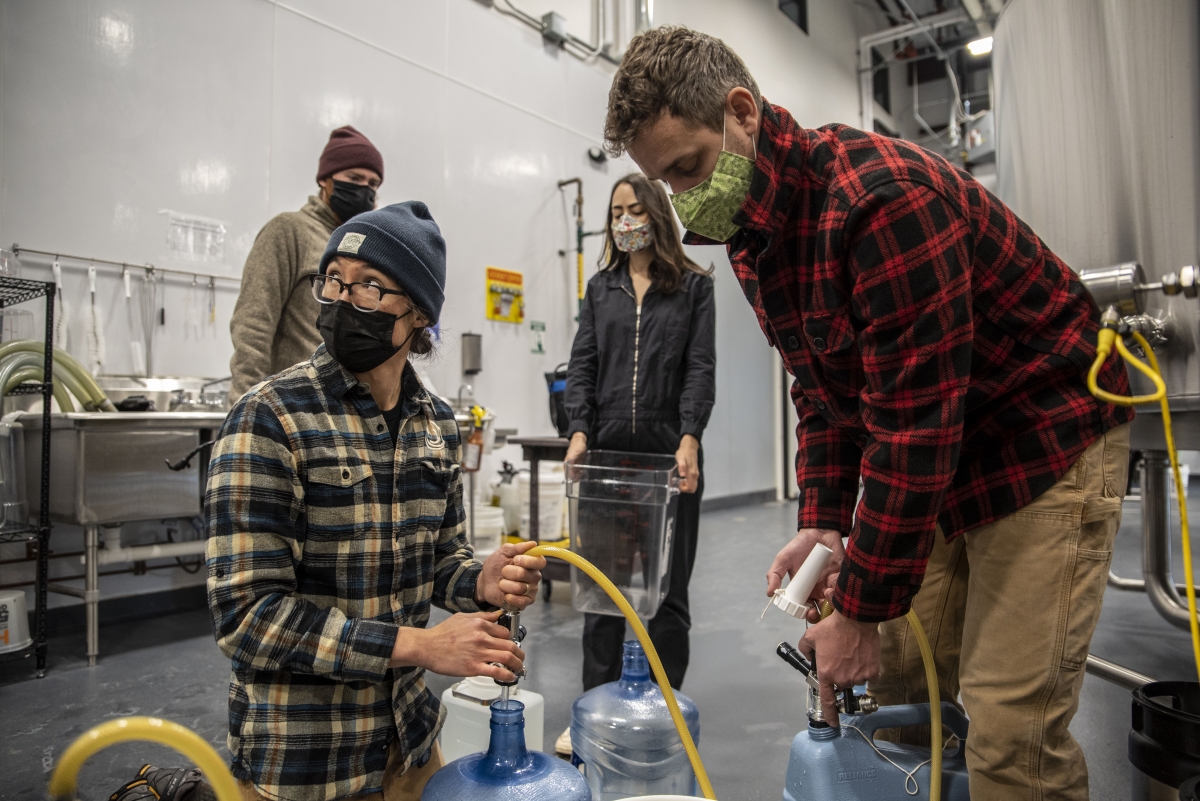
 Will Jaquiss and Nao Ohdera fill containers with water for residents at Meanwhile Brewing Co. in Austin on Friday. Photo by Sergio Flores for The Washington Post

Will Jaquiss and Nao Ohdera fill containers with water for residents at Meanwhile Brewing Co. in Austin on Friday. Photo by Sergio Flores for The Washington Post

“We know that it’s intolerable,” said Texas Gov. Greg Abbott, a Republican, during a Friday afternoon news conference.

With a long recovery ahead, the focus was rapidly shifting to who would pay. The Insurance Council of Texas, an organization that represents the state’s home, auto, renters and business insurance agents, said the storm would be the “largest insurance claim event in [Texas] history,” with hundreds of thousands of claims expected.

“We are used to our storms in Texas with tornadoes, hurricanes and hail,” said Camille Garcia, communications director for the council. “But those hit smaller areas. This winter event reached every part of Texas.”

Some of the costs of recovery will be handled by the federal government. President Joe Biden said Friday he plans to sign a major disaster declaration for Texas, freeing up funds that can be tapped by individuals who have been impacted, as well as by the state and local governments.

Attention was also shifting Friday to whether the scale of the disaster could have been avoided. Congress is likely to open an investigation next week into what went wrong in Texas, and the state’s legislature is expected to conduct its own hearings.

Abbott, Texas’s governor, has consistently blamed the state’s electric grid operator for a lack of preparation and has called on its leadership to resign.

But the operator – the Electric Reliability Council of Texas (ERCOT) – said Friday that it had little control over the power suppliers and could not force them to better prepare for extreme cold.

“We don’t own the generation units. We don’t own the transmission,” said ERCOT chief executive Bill Magness in a video call with journalists. “It’s not really our role to do winterization.”

Independent authorities said it is up to the Public Utility Commission of Texas – which oversees ERCOT – to mandate that suppliers better prepare for extreme cold and penalize those that choose not to do so. Without such costs, experts said, the power suppliers will continue to neglect preparations, with predictable consequences.

“To save millions of dollars, the generators failed to weatherize, and the consequences are that people have died and it’s cost the state many billions of dollars in repairs to our homes and our buildings,” said Tom “Smitty” Smith, the former longtime director of the Texas office of Public Citizen.

The exact scale of the damage was still becoming clear on Friday. Karen Clark, co-founder and chief executive of Karen Clark and Company, a catastrophe modeling firm, said the bout of winter weather could cost $18 billion in insured losses, with the total economic damage likely to be higher. The damage was spread across 20 states, though most was in Texas.

Beyond the financial toll, there was the human one: The storms have killed at least 48 people since Sunday – including 30 in Texas, according to data compiled by The Washington Post.

Still, there were signs Friday that a halting recovery had begun. Millions of people who had lost power earlier this week had it restored by Friday, with ERCOT declaring in the morning that “operations have returned to normal” after days of rotating outages. Across Texas, Louisiana and Mississippi, the number of customers without electricity was down to about 300,000 as of Friday afternoon.

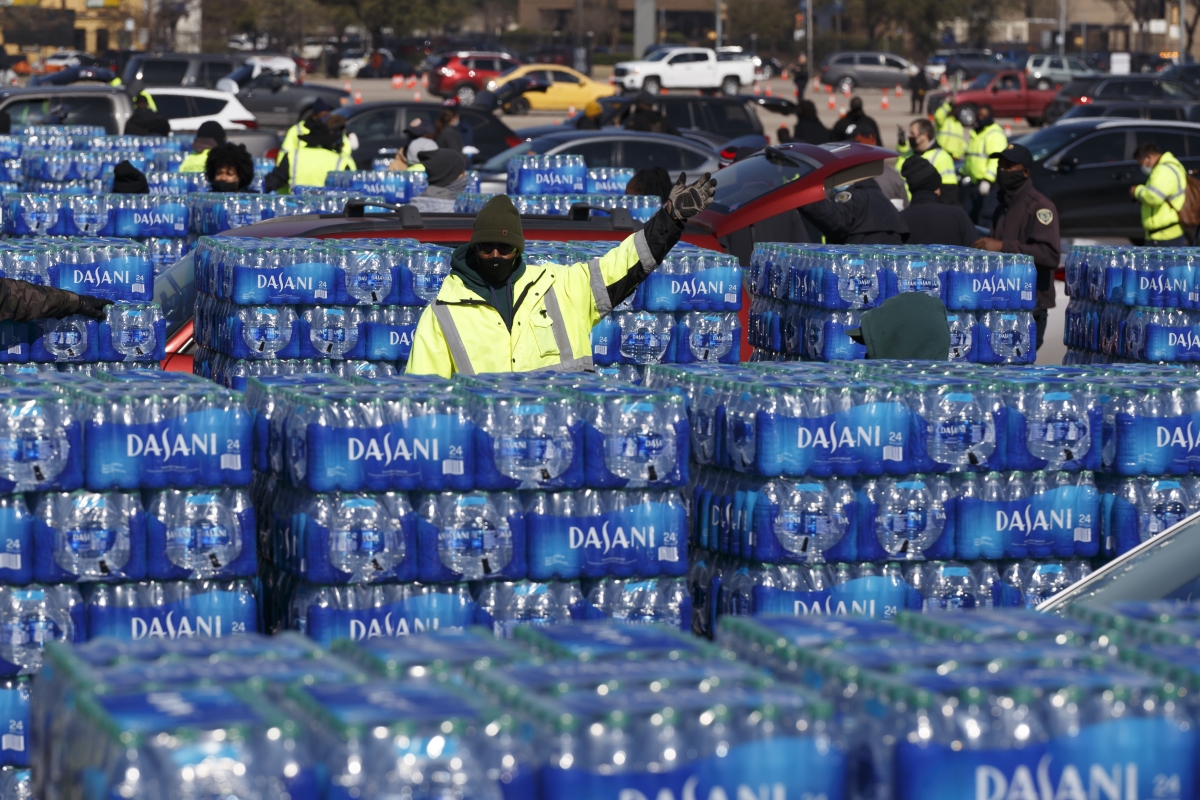
 Houston city workers direct lines of cars waiting to receive bottled water at a high school sports complex. Houston, the nation's fourth-largest city, was under a boil-water advisory Friday, as more than 14 million Texans were still experiencing water-service disruptions. Photo by Michael Stravato for The Washington Post

Houston city workers direct lines of cars waiting to receive bottled water at a high school sports complex. Houston, the nation’s fourth-largest city, was under a boil-water advisory Friday, as more than 14 million Texans were still experiencing water-service disruptions. Photo by Michael Stravato for The Washington Post

And after repeated blasts of Arctic wind – including one more moving in Friday night – the weather finally appeared poised to offer a respite, with temperatures forecast to climb Saturday and stay higher into next week.

But even with the thaw, peril lurked: The dramatic uptick in temperatures was expected to lead to potholes – and more burst pipes.

That’s damage the region can ill afford.

In Louisiana, Gov. John Bel Edwards, a Democrat, said Friday that authorities are “having to deliver bulk and bottled water to a big part of the state today” after nearly a million people were left without access to clean drinking water Thursday.

Edwards, who spoke during a Washington Post Live event, said temperatures were expected to hit record lows again late Friday, before several days of warming that he hoped would provide utility companies and authorities the opportunity to make extensive repairs to the state’s water and energy infrastructure.

Louisiana’s damage has been most extensive in Shreveport, located in the northwest part of the state.

“It’s been a rough one for us,” said Mayor Adrian Perkins, a Democrat, recounting how roughly six inches of sleet and snow made local highways so slick that even National Guard troops and tankers couldn’t reach the city with fresh water until Wednesday night.

Residents with four-wheel-drive trucks helped pull ambulances out of ditches. Area oil and gas companies supplied some “gray water” to hospitals for heating systems.

Power outages also continued to plague Mississippi on Friday, with one utility warning residents that it could take a few days for all the lights to come back on.

In downtown Tulsa, where hundreds of pipes had burst, the Chalkboard was hit with massive damage. Shannon Garner, who has owned the restaurant with her brother for nearly a decade, said she was still feeling shock and disbelief.

“The fire suppression system sprinklers just busted, and it was like it was raining in the kitchen,” she recounted. “We ended up with five inches of water in the dining room, and it went down into our wine cellar.”

The cumulative impact of the week’s power cuts and burst pipes was forcing residents of Austin to take extreme measures, including posting to neighborhood Facebook groups and Slack channels rumors of where food and water could be found.

“It feels like it’s just one thing after another after another,” Austin Mayor Steve Adler, a Democrat, said Friday on NBC’s “Today” show.

By 10 a.m. on Friday, at least 50 people armed with large plastic jugs, empty milk cartons and soda bottles were queued up for drinking water outside Meanwhile Brewery in South Austin, The scene was similar at a Natural Groceries store in north Austin, where people waited with mostly empty carts, holding pots, tea kettles and jugs to fill from the tap of a small sink labeled “kombucha rinse only!”

Brewery owner Will Jaquiss said that after its water was shut off Wednesday evening, the bar decided to give out all the potable water it had on hand, about 3,500 gallons. Staff shared 2,000 gallons on Thursday, including to four hospitals. The rest was swiftly doled out on Friday.

Nina Selzer Bellomio, a 47-year-old graphic designer who lives in northwest Austin with her two teenagers and husband, said she has been “harvesting snow, boiling it and using it to wash dishes. But the problem is we don’t have much food.”

The family moved from Boston in 2009, because her husband got a job in technology. At first, Austin seemed like a dream: cheaper housing, a vibrant counterculture and music scene.

But she said politics and the state’s refusal to better regulate its energy industry had made Texans like her family “feel like we are back in time, doing sponge baths at the sink. Hauling buckets of water. It’s like being a pioneer.”

To Houston resident and real estate agent Zory Calcaben, the week brought the elements indoors.

“I kid you not, the temperature was 22 degrees,” she said. “And we thought we had good insulation.”

The extreme conditions, she said, brought out the best in her neighbors.

“People were calling out for help, and amidst the sleet, the snow, the freezing cold, people were coming and helping each other,” she said.

But Calcaben said the week had also exhibited the worst in politicians and others who are, at least in theory, responsible for protecting the public from the sort of deprivations on display statewide.

“The ones who are supposed to ensure our safety, they seem to get away with everything,” she said.

That sort of anger was widespread in Texas on Friday, and it led some to predict that state leaders will have no choice but to initiate reform.

“Given the magnitude statewide of this crisis, I do think there will be changes,” said Sherri Greenberg, who spent a decade as a Democratic Texas state representative and now teaches at the University of Texas’s public affairs school.

But others were much more skeptical, given that any shift would probably require more aggressive government regulation – and higher upfront costs – in a state whose politics are dominated by conservative Republicans.

“The issue is Texas doesn’t want to spend the money on an expensive weatherization package,” said Jim Krane, an energy studies fellow at Rice University’s Baker Institute. “There is no mandate.”

Even with this week’s disaster, that may not change. Any reports taking stock of what went wrong “are going to arrive when it’s sunny, 87 and lovely,” said Calvin Jillson, a political science professor at Southern Methodist University

“And people are going to say, ‘Wow, that was terrible, but it’s going to be really expensive to deal with that, let’s think this through.’ “