The civil disobedience movement and demonstrations show that the people of Myanmar want democracy. We stand with them.— U.S. Embassy Burma (@USEmbassyBurma) February 13, 2021
By The Washington Post · Matthew Cappucci, Andrew Freedman
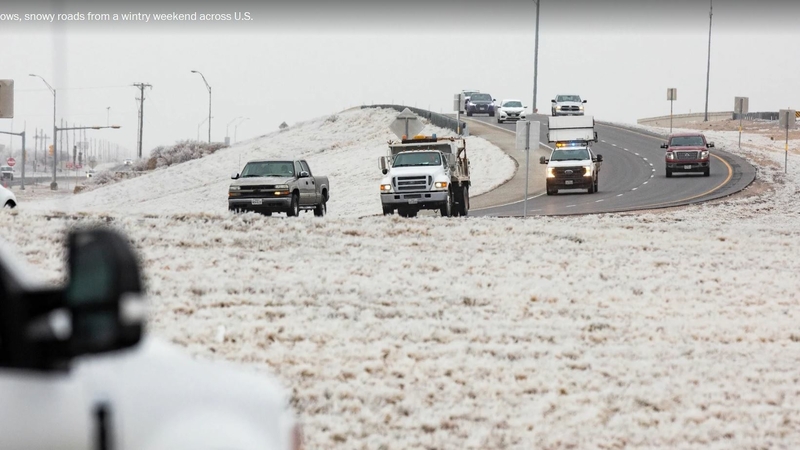
A historic Arctic outbreak continues to bring a bone-chilling deep freeze to the central United States, as the coldest air in generations plunges south and is accompanied by snow and ice all the way to the Gulf of Mexico. Some cities will see their lowest temperatures in more than a century as high-impact winter storms roll across the country.
Temperatures about 50 degrees below average occupy an enormous swath of the central United States, stretching from the Rockies to the Mississippi Valley and the Midwest. At least 15 states could see temperatures of minus-10 or colder, while lows near the U.S.-Canada border flirt with minus-40.
More than 50 million people could see temperatures dip below zero during the next several days as the record-setting deep freeze envelops the country.
Meanwhile, Gov. Greg Abbott issued a state disaster declaration for Texas, where every one of the state’s 254 counties was under a winter storm watch, warning or advisory leading up to the approaching storms.
“Extreme impacts” were likely, according to the National Weather Service. Oklahoma Gov. Kevin Stitt declared a weather disaster emergency for his state, as well, with every county under a winter storm warning. The cold is expected to be damaging in these areas, with pipe bursts in homes adding to ice-induced power outages.
The core of the cold was found bleeding south over the Plains on Sunday morning. This air originated in Siberia and crossed the Pole before moving south into North America.
Numerous daily temperature records are falling during this cold snap, and even some all-time records. For example, the temperature in Bottineau, N.D., fell to minus-51 degrees Saturday morning, an all-time record. Bismarck reported a low of minus-28 early Saturday and was sitting at minus-25 to start Sunday morning.
Grand Forks, N.D., hadn’t reported a temperature above zero since Feb. 6 and probably won’t until at least Monday afternoon. Saturday’s high temperature was minus-12, up from a morning low of minus-27.
Minneapolis had dropped below minus-10 degrees seven of the past nine nights, with Sunday’s low falling to minus-17. Subzero readings had also been observed in Omaha, Des Moines and Chicago, while International Falls, Minn., set a daily record early Saturday at minus-42 degrees.
Wind chill warnings and advisories are in effect from Nebraska to Illinois and northwest to Montana and the Dakotas, indicating the risk of frostbite from the combination of cold air and winds.
The climax of the cold air outbreak is expected Monday night, when temperatures between minus-10 and minus-15 could pour as far south as the Texas Panhandle, with single digits and teens making it to the Gulf of Mexico. Houston could start early Tuesday at 10 degrees, which would be its coldest reading since 1989.
Oklahoma City may hit minus-11 on Tuesday morning, a temperature not observed there in 116 years. In Texas, the electrical grid was under strain because of heavy demand from the impending cold.
The cold air’s push south is associated with a deep dip in the jet stream, a narrow river of strong upper-level winds slicing across the country. A steep temperature contrast between the frigid air and relatively mild air to the south and east will spark winter storms that are poised to bring a rare dose of prolonged winter weather to tens of millions.
Depending on its effect on agriculture and the broader economy, this cold snap could end up on the list of 2021′s billion-dollar weather events because of its wide scope, duration and severity.
Snow had already broken out in the Texas Panhandle and much of Oklahoma early Sunday, with moderate snow reported in Amarillo, Texas, and Tulsa. In Albuquerque, a severe thunderstorm warning was issued for a lightning-producing snow squall as the developing system got underway Saturday night.
The dangers of the winter weather was highlighted on Thursday in Fort Worth, when at least six people were killed during the morning in a 133-car pileup on icy roads slickened by freezing drizzle. Now, the Metroplex is bracing for a plowable snowfall of 3 to 4 inches, which will again lead to hazardous driving conditions.
Snow will increase in coverage and intensity across the Lone Star State and Oklahoma throughout the day on Sunday, with heavy snow possible at times with an isolated rumble of thunder. Five to 10 inches of snow was expected in Oklahoma City, where single-digit temperatures dropping below zero Sunday night were expected to lead to a fluffy powder and winds were forecast to lead to blizzard conditions at times.
There was a chance that Austin could see more snow from the system than the 4.5 inches Washington, D.C., has measured this winter.
In Texas, freezing rain and sleet could make it to such places as Brownsville and Corpus Christi, even dipping into Tamaulipas, Mexico. Winter storm warnings were up for every county in Texas. Houston was expecting 1 to 2 inches of snow, along with a 10th to a quarter of an inch of ice.
For the first time, the National Weather Service issued a wind chill warning that covers Houston. The warning, in effect from Sunday night through noon local time on Tuesday, calls for wind chills to potentially drop below zero.
More snow is forecast to pile up north of the city, where up to 6 inches could fall in College Station, followed by a steep drop in temperatures with wind chills heading below zero.
“Prepare for power outages and have nonperishable food and water on hand,” wrote the National Weather Service in Houston. “Do not travel unless it is an emergency.”
Sleet and freezing rain were likely across most of Louisiana except for the Florida Parishes and greater New Orleans, with a dangerous glaze of 0.1 to 0.3 inches of ice likely in Lake Charles, a region ravaged by back-to-back hurricanes during August and October 2020.
The storm will pull northeast on Monday, affecting such places as Memphis, Louisville and Cincinnati with snow and Jackson, Miss., Nashville and Lexington, Ky., with freezing rain and ice.
Ice storm warnings are also up in Charleston, W.Va., where up to a quarter-inch of ice is expected. This could cause outages as trees take out power lines.
Thereafter, significant snow accumulations are expected in the Northeast and interior New England, with a messy mix for some and rain near the coast. On the warm side of the storm, flooding and severe weather could occur Monday and Tuesday in parts of the southeastern United States and Florida.
There is a growing chance that yet another winter storm laden with snow and ice could spin up from the Southern Plains through the Mississippi and Tennessee valleys on Wednesday and Thursday, again pulling into the Northeast.
The barrage of storminess and extreme cold can be traced back to an early January disruption of the polar vortex, which allowed lobes of extreme cold to ebb south over North America, Europe and Asia. A weaker polar vortex has a tougher time bottling up Arctic air at high latitudes, allowing for cold air outbreaks in areas where we reside.
The cold pattern looks to ease late in the week, along with a moderation in temperatures and, perhaps, a slight quieting of the weather pattern currently affecting the country.
French carmaker rivalry defies Macron’s EV battery vision
InternationalFeb 15. 2021Emmanuel Macron, France’s president, at a European Union (EU) leaders summit in Brussels on Dec. 11, 2020. MUST CREDIT: Bloomberg photo by Geert Vanden Wijngaert.
By Syndication Washington Post, Bloomberg · Tara Patel
President Emmanuel Macron’s vision for France Inc. to join forces in building batteries for cars of the future isn’t going exactly as planned.
The more than 120-year rivalry between Peugeot and Renault has proved too fierce to overcome, even for a 5 billion-euro ($6 billion) project backed by their powerful shareholder, the French government. Instead, PSA Group, now part of Stellantis, and oil giant Total are pushing ahead without Renault, which may pursue its own plans with South Korea’s LG Chem.
Macron sought to form a united front because batteries will be one of the most powerful forces to reshape Europe’s auto industry in decades. Getting significant regional production up and running to counter Asian dominance and meet the needs of a booming electric-car market will take years, and it’s been made more difficult by the pain inflicted by the pandemic.
“Every carmaker with plans to make and sell electric vehicles in Europe will need to eventually source batteries in the EU,” said Jean-Louis Sempe, a Paris-based analyst at Invest Securities. “To be competitive, they will have to internalize this as much as possible and it will cost a lot of money.”
France and Germany, where the electric revolution is making obsolete thousands of jobs in areas like engine and transmission-making, have led the political push over the past few years for developing a local battery cell industry in a bid to take back control of a car part that can make up 40% of an EV’s value. Yet other carmakers are further along in sorting out battery-supply strategies than the French.
Volkswagen and BMW have teamed up with startup Northvolt AB, which has plans for factories in Sweden and Germany, while Tesla Chief Executive Officer Elon Musk has said he’ll produce cells at the company’s auto plant that’s under construction outside Berlin. BMW will also source batteries from China’s Contemporary Amperex Technology Co. Limited that is building a site in Erfurt, Germany.
In France, the inability of Renault and Stellantis to work together on what is effectively the country’s only viable project to date has become increasingly clear. The companies have long battled to woo customers of affordable cars and even Macron’s strong-arming them to work together in what was dubbed the ‘Airbus of Batteries’ has failed so far.
“Renault doesn’t want to be in a supply agreement with PSA due to their historic rivalry,” Sempe said. Their talks “may have ended in a clash, but for diplomatic reasons no one is saying so.”
Carlos Tavares, the CEO of Stellantis, has left the door open for his competitor, stating “Renault is very welcome.”
“Renault could bring us something from a technological point of view,” said Yann Vincent, who heads the joint venture with Stellantis and Total called Automotive Cells Company. “But the business plan was built without them so we can move ahead without them.”
At Renault, executives seeking to turn the loss-making automaker around have sent ambiguous signals. Chairman Jean-Dominique Senard has said the carmaker wants battery production close to its factories in northern France and could join ACC if it’s “treated at parity.”
CEO Luca de Meo has said only that the company is in talks with many companies about future supplies. Other parties include LG Chem, which provides batteries for Renault’s best-selling Zoe model from its plant in Poland, and tiny French startup Verkor.
A little more than a year after Macron journeyed to a small town in southwestern France to promote ACC, an official in his office said discussions are ongoing about participation in the project including with Renault. Macron has looked to back innovation in industries like battery cells, automation and aeronautics as a way to safeguard jobs in France and keep factories going in regions outside the capital which have suffered from decline in the past decades.
Batteries can make up roughly 40% of the value of an EV depending on the model. They weigh hundreds of kilograms, making long-distance supply chains unworkable both environmentally and as vehicle output grows.
Governments are putting an eye-watering amount of subsidies into battery projects, as part of an effort to make Europe more self-sufficient. Electrified cars will account for 35% of sales by 2030, in a market that typically exceeds deliveries of 15 million vehicles annually, according to BloombergNEF.
The European Commission last month unveiled a second package in as many years bringing the total sum of support to 6.1 billion euros. Automakers BMW, Stellantis’s Fiat Chrysler Automobiles and Tesla were listed as direct recipients along with companies ranging from chemical makers to power producers. The bloc expects the funds to generate another 14 billion euros in private investment.
Europe will need at least eight to 10 battery factories to support a market making 15 million battery-electric and plug-in hybrid vehicles annually, according to Jean-Luc Brossard, who oversees R&D at France’s auto lobby La Plateforme Automobile. This would include a couple in southern Europe to supply car factories in Italy, Spain and Portugal, he said.
Stellantis’s ACC will get 1.3 billion euros from France and Germany and has pledged to open plants in both countries. The project will have an initial production capacity of 8 gigawatt-hours and aims for 48 gigawatt-hours by 2030, enough to supply 1 million electric vehicles annually. By then, the European market will be about 400 gigawatt-hours, according to a company forecast.
ACC is far behind Northvolt, which was founded in 2016 by former Tesla executives and expects to start churning out cells later this year at a factory in Skelleftea, Sweden. It aims to grab a quarter of the European battery market, establishing 150 gigawatt-hours of manufacturing capacity in Europe by 2030. Aside from the BMW-backed plant of China’s CATL, LG Chem already has a plant in Poland.
As EV sales grow, the potential for battery-supply bottlenecks is increasing. Tesla’s Musk this month said cell production was “the primary limiting factor” on raising vehicle output. He has urged global suppliers to boost capacity, saying Tesla will “buy as much as they can send to us.”
Competition in a tight market is adding tension for suppliers and carmakers alike. This week, SK Innovation Co. was banned from importing South Korea-made-batteries into the U.S. for 10 years, after rival LG Chem accused it of stealing battery-making secrets. The decision spells potential trouble for Ford and VW’s EV plans, with Ford calling for the companies to work out a settlement.
If Renault opts to develop its own battery production at a French factory, the country could end up with two plants instead of one. ACC is still refining the type of battery technology it plans to adopt and has started discussions with a range of carmakers on selling future output from its plants, according to Vincent.
“There is more than enough room for all the battery projects out there now,” he said.
2021 looks like a black hole for battered European tourism
InternationalFeb 15. 2021People socialize at Camoes Square ahead of the afternoon curfew in Lisbon, Portugal, on Nov. 22, 2020. MUST CREDIT: Bloomberg photo by Jose Sarmento Matos.
By Syndication Washington Post, Bloomberg · Paul Tugwell, Flavia Rotondi, Alberto Brambilla
Across Southern Europe’s tourist hotspots, all they can do is get ready and hope.
Vaccinations for the coronavirus are being rolled out, but it’s going to be months before enough shots are delivered that people can start crowding onto planes, taking cruises, or hanging out in packed bars along the beach. That means businesses are largely in the dark about this year’s summer season.
The expectation is that it will be better than 2020, but that’s a low bar to hit. On the Greek island of Santorini, just three cruise ships arrived last year, compared with close to 600 in 2019. European Commission figures released on Thursday showed non-resident holiday nights in Italy, Spain and Greece fell at least 70%, and it warned the industry to brace for another quiet year.
“Tourism flows on the whole are not expected to fully recover to their pre-crisis levels in 2021,” the commission said. In Italy, tourism will lag behind the broader economic recovery as visitors “only gradually return as uncertainty diminishes.”
For those in the industry, that’s already apparent less than two months into the year. Paolo Manca, who runs the Felix Hotels chain in Sardinia, says he would normally see summer reservations at 30% by now as people grow weary of long winter nights. Instead, he’s looking at near empty books.
It’s a difficult situation for owners, who still have maintenance and hiring costs with no guarantee of income.
“We need to be ready without knowing if we can open,” said Manolis Karamolegos, who owns Meltemi Hotels and Resorts in Santorini and is president of the local hoteliers ‘association. “We can’t leave preparations to the last minute.”
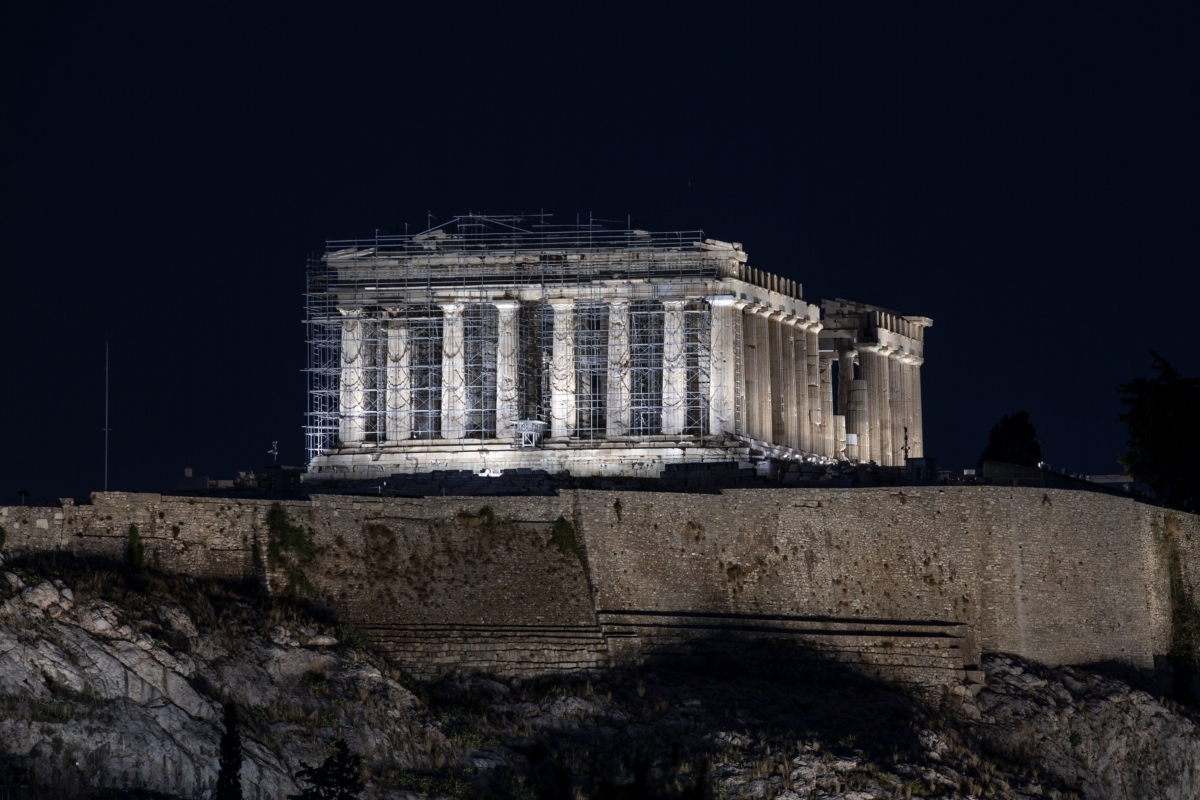
The temple of the Parthenon in Athens, Greece, Oct. 4, 2020. MUST CREDIT: Bloomberg photo by Yorgos Karahalis.
Tourism is crucial for many places along Southern Europe. It accounts for 21% of the economy in Greece, and 17% in Portugal. It’s often the main employer in regions where other industries are absent, providing crucial income for families and support for local economies.
The outlook will improve as vaccinations continue, with pent-up demand leading to more spontaneous holiday bookings. But the emergence of vaccine-resistant strains across the continent could scupper that.
Even if there’s a surge in last-minute bookings, the benefits won’t be felt evenly. The European Commission says they will favor destinations at home or within driving distance over places like Greece and Portugal.
Meanwhile, as the European Union’s inoculation campaign progresses slowly — and controversially — governments are looking at any opportunity to help tourism.
Greece wants the European Union to create a certificate so those who are inoculated can travel freely. It’s already made an agreement with Israel, which is the world leader in vaccinations, according to the Bloomberg Vaccine Tracker.
TUI, the world’s biggest tour operator, said this week it’s sticking with plans to offer four-fifths of its usual holiday program this summer. It’s betting that the rapid pace of the U.K. vaccine rollout will boost demand from British sunseekers.
But its enthusiasm isn’t shared by the U.K. government. Transport Secretary Grant Shapps advised Britons this week against booking holidays yet given the uncertainty.
“I simply don’t know the answer to the question of where we’ll be up to this summer,” he said. “The best advice is do nothing at this stage.”
Some hotels in Southern Europe are seeing stronger domestic demand, which will offset some, but not all, of the hit to revenue. In Portugal, Pestana Hotel Group Chief Executive Officer Jose Theotonio said rooms in his January sales were snapped up by locals, as ongoing fear of travel bans and quarantines deterred foreign visitors.
While vaccines should bring to an end such harsh measures, it’s still very unclear when. And governments have often been haphazardly introducing restrictions, keeping businesses, and their potential customers, on edge.
“We need precise indications from the government, in terms of safety guidelines, protocols, in order to plan ahead,” said hotelier Manca, who is also head of hoteliers’ association Federalberghi Sardegna. “For tourism, lack of clarity is as damaging as covid itself.”
By The Washington Post · Tory Newmyer, Matt Zapotosky
The Biden administration is sending a clear signal to Wall Street that the industry’s Washington cops are back on the beat. Regulators and federal prosecutors are probing potential misconduct in the GameStop trading frenzy, as the Securities and Exchange Commission moves to restore harsher penalties on wrongdoers.
Attorneys in the Justice Department’s criminal division are conducting a wide-ranging investigation into possible market manipulation from the trading surrounding GameStop, and recently issued a subpoena to Robinhood as part of that, a person familiar with the matter said. The probe, though, appears to be in its early stages.
SEC acting chair Allison Herren Lee in a radio interview earlier this month said the agency already is investigating the matter “from a number of different angles, and they’re very significant.”
Specifically, she indicated the agency is looking into whether brokers such as Robinhood complied with regulations when they limited trading in certain so-called “meme stocks.” And she said the agency is looking for signs of market manipulation amid the trading mania. A Robinhood spokesman declined to comment.
Beyond the GameStop probe, Lee said Thursday that the agency is reversing a policy that shielded financial firms settling charges from further punishment. Under the Trump-era approach, the SEC bundled settlement agreements with waivers that allowed the targeted companies to continue raising money in public markets.
Lee in a statement said the new policy marks a “return to the division’s long-standing practice” and ensures “that the consideration of waivers is forward looking and focused on protecting investors, the market, and market participants from those who fail to comply with the law.”
The same day, the SEC announced it suspended trading in SpectraScience, a defunct company that had seen its stock zoom amid social media chatter. The agency said in a statement that “certain social media accounts may be engaged in a coordinated attempt” to boost the share price of the company, a Minnesota-based business that had not filed any reports since 2017.
The suspension itself was unremarkable. The SEC acted similarly more than 100 times last year. But the agency used the move as an opportunity to remind investors they should “exercise tremendous caution when investing based on social media or a sudden surge of enthusiasm for a particular security, especially where that interest does not appear tied to any news about the company or industry,” Melissa Hodgman, the acting head of the agency’s enforcement division, said in a statement.
Taken together, the SEC’s moves “certainly signal a changing of the guard,” said Philip Moustakis, a former senior counsel in the SEC’s enforcement division now with Seward & Kissel.
But Moustakis also noted that despite invoking the GameStop frenzy in its announcement of its latest trading suspension, the SEC did not halt trading in GameStop itself. He said that signals the agency “made an initial determination that the facts and circumstances here don’t give rise to sufficient concerns about manipulation to warrant a suspension” of that stock or others that saw dramatic run-ups thanks to attention they attracted from amateur investors.
The matter is poised to get further scrutiny in the coming week, when the House Financial Services Committee convenes a Thursday hearing on it. The panel’s witness list so far includes Robinhood CEO Vlad Tenev, Citadel CEO Ken Griffin, Melvin Capital CEO Gabriel Plotkin, Reddit co-founder Steve Huffman, and Keith Gill, the trader with a huge online following who helped set off the GameStop surge.
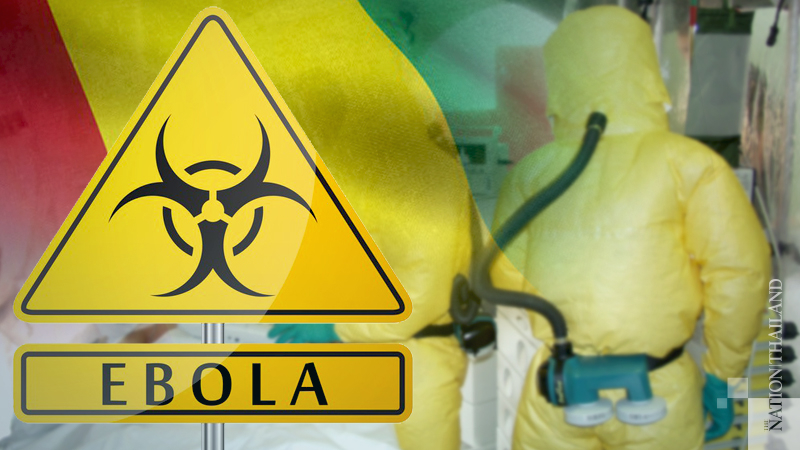
DAKAR, Senegal – Public health officials in Guinea declared a new epidemic of Ebola on Sunday after recording seven cases and three deaths – the first resurgence since the hemorrhagic fever devastated the West African nation and two neighbors from 2014 to 2016.
More than 11,300 people died in the last outbreak, the deadliest on record, which started in a rural Guinea village before tearing through Liberia and Sierra Leone.
Health investigators are rushing to trace and isolate suspected contacts, said Sakoba Keita, head of the National Health Security Agency. The country is building a new Ebola treatment center.
But resources are thin in Guinea, one of the world’s poorest countries, which was already battling the coronavirus pandemic on top of outbreaks of yellow fever and measles.
“We are facing four epidemics at the same time,” Keita said.
The nation of 13 million has recorded 14,895 coronavirus infections and 84 deaths.
An Ebola vaccine rollout is expected to begin as early as this week in the southeast region of Nzerekore, Keita said, where the latest outbreak was detected.
Authorities blamed the spread on the Feb. 1 funeral of a nurse.
It’s unclear if Ebola caused her death, Keita said, but seven people who attended the burial later showed the telltale symptoms: diarrhea, vomiting and bleeding.
Three died: One man and two women.
“Faced with this situation and in accordance with international health regulations, the Guinean government declares an Ebola epidemic,” Guinea’s health ministry said in a statement Sunday.
The government urged anyone with symptoms to contact a doctor. Officials set a goal: Containment in six weeks. “Together, we will win!” Remy Lamah, the health minister, said in a statement.
Ebola is spread through contact with bodily fluids. Corpses of those who died from the illness are also infectious.
The World Health Organization called for a swift response to the threat in Guinea.
“It’s a huge concern to see the resurgence of Ebola in Guinea, a country which has already suffered so much from the disease,” said Matshidiso Moeti, the WHO’s regional director for Africa. “However, banking on the expertise and experience built during the previous outbreak, health teams in Guinea are on the move to quickly trace the path of the virus and curb further infections.”
The last outbreak began in the same region. The first case, reported in December 2013, was an 18-month-old boy in a rural village. Doctors believe he was infected by a bat.
The contagion blazed through Conakry, the capital, and into neighboring countries. Officials recorded 28,616 cases in Guinea, Liberia and Sierra Leone before the outbreak was contained.
Also Sunday, the Democratic Republic of Congo confirmed a fourth new case of Ebola in North Kivu, where a flare-up of the virus was reported on Feb. 7. (The outbreaks are not thought to be linked.)
Authorities declared the end of Congo’s nearly two-year outbreak in June after more than 2,200 deaths.
Mexico hopes to work with Cuba on covid vaccine Phase 3 trial
InternationalFeb 15. 2021A healthcare worker administers a dose of the Pfizer BioNtech covid-19 vaccine at the Centenario Hospital Miguel Hidalgo in Aguascalientes, Mexico, on Jan. 14. MUST CREDIT: Bloomberg photo by Mauricio Palos
By Syndication Washington Post, Bloomberg · Fabiola Zerpa
Mexico is in talks with Cuba to host part of a trial on a covid-19 vaccine in an effort to draw more supplies from international laboratories as doses run short in the country and the death tally grows.
So far, just 0.5% of Mexico’s population has received at least one vaccine against the coronavirus, compared with 11.5% in the U.S., according to the Bloomberg vaccine tracker.
The country received 870,000 AstraZeneca vaccines from India on Sunday and is preparing to start inoculations of its elderly, officials said during a press briefing headed by President Andres Manuel Lopez Obrador. Of the total, 10% will be channeled to Mexico City.
AMLO, as the president is known, pledged during the briefing from Oaxaca state to vaccinate more than 15 million people above 60 years of age by mid-April with at least a first dose.
Mexico is negotiating with Cuba to host part of a Phase 3 vaccine trial and will announce it once health regulator Cofepris approves it, Foreign Minister Marcelo Ebrard said. Cuba has four vaccine candidates in trials, the Wall Street Journal reported in January.
Mexico is racing to reach vaccine deals with several companies and nations, among them China, Russia and now Cuba, as inoculations remain slow. AMLO said Mexico is looking at developing its own vaccines.
So far, Mexico has inked deals with the United Nations’s vaccine system COVAX, Pfizer/BioNTech and China’s CanSino Biologics. The country was first in the region to start a vaccination plan in late December, but the pace has lagged.
Mexico reported 173,771 deaths from the virus as of Saturday night, the third most in the world. Total cases are approaching 2 million.
Other details from Sunday’s press conference:
– The first batch of AstraZeneca vaccines are being sent to seven states by land and to the rest of Mexico’s states by air so that all states receive some shots. Mexico City is getting 87,000 of the initial doses. AstraZeneca vaccines that arrived Sunday are ready to administer and another 1.2 million such doses from India are due to arrive in March. The Indian shipment was going to be reduced to 500,000 doses, but Mexico pressed India to deliver the full amount, AMLO said.
– Pfizer will deliver 490,000 vaccines on Tuesday and a second batch the following week, Ebrard said. The Pfizer batch will go toward second doses for health care workers.
– Vaccination of elderly will go ahead in all states, starting with 330 small towns, so that the least fortunate are also being vaccinated, AMLO said.
– Russia’s Sputnik V vaccines are supposed to arrive next weekend.
– China’s Sinovac is set to send Mexico 1 million doses in the coming days, Ebrard said.

 เมื่อความเหงารุนแรงกว่าที่คิด นายกญี่ปุ่นจึงตัดสินใจแต่งตั้งรัฐมนตรีว่าการกระทรวงความเหงา

 กลุ่มผู้ชุมนุมชาวเมียนมารวมตัวกันหน้าสถานทูตสหรัฐ เรียกร้องกองทัพสหรัฐส่งทหารเข้าช่วยเหลือในประเทศ
 กลุ่มผู้ชุมนุมชาวเมียนมายืนหยัดประท้วงต่อแม้กองทัพส่งรถหุ้มเกราะวิ่งทั่วเมืองพร้อมตัดสัญญาณอินเทอร์เน็ตเมื่อคืนที่ผ่านมา
 Emmanuel Macron, France’s president, at a European Union (EU) leaders summit in Brussels on Dec. 11, 2020. MUST CREDIT: Bloomberg photo by Geert Vanden Wijngaert.
 People socialize at Camoes Square ahead of the afternoon curfew in Lisbon, Portugal, on Nov. 22, 2020. MUST CREDIT: Bloomberg photo by Jose Sarmento Matos.
 A healthcare worker administers a dose of the Pfizer BioNtech covid-19 vaccine at the Centenario Hospital Miguel Hidalgo in Aguascalientes, Mexico, on Jan. 14. MUST CREDIT: Bloomberg photo by Mauricio Palos

