Asean on Monday called for the return to dialogue and reconciliation in Myanmar after the military staged a coup on Monday morning.
According to China’s Xinhua news agency, Myanmar’s State Counsellor Aung San Suu Kyi, President U Win Myint and other senior officials were detained by the military early on Monday. Myanmar military TV declared on Monday a state of emergency in the country for one year after the government leaders were detained.
The Asean chairman’s statement read:
“Asean member states have been closely following the current developments in the Republic of the Union of Myanmar.
“We recall the purposes and the principles enshrined in the Asean Charter, including the adherence to the principles of democracy, the rule of law and good governance, respect for and protection of human rights and fundamental freedoms.
“We reiterate that political stability in Asean member states is essential to achieving a peaceful, stable and prosperous Asean Community.
“We encourage the pursuance of dialogue, reconciliation and the return to normalcy in accordance with the will and interests of the people of Myanmar.”
Brunei Darussalam takes over the Asean chairmanship in 2021 from Vietnam.
Meanwhile, Stéphane Dujarric, the spokesman for the United Nations Secretary-General, issued a statement strongly condemning the situation in Myanmar.
“The Secretary-General strongly condemns the detention of State Counsellor Daw Aung San Suu Kyi, President U Win Myint and other political leaders on the eve of the opening session of Myanmar’s new Parliament. He expresses his grave concern regarding the declaration of the transfer of all legislative, executive and judicial powers to the military. These developments represent a serious blow to democratic reforms in Myanmar.
“The November 8, 2020 general elections provide a strong mandate to the National League for Democracy, reflecting the clear will of the people of Myanmar to continue on the hard-won path of democratic reform. The Secretary-General urges the military leadership to respect the will of the people of Myanmar and adhere to democratic norms, with any differences to be resolved through peaceful dialogue. All leaders must act in the greater interest of Myanmar’s democratic reform, engaging in meaningful dialogue, refraining from violence and fully respecting human rights and fundamental freedoms.
“The Secretary-General reaffirms the unwavering support of the United Nations to the people of Myanmar in their pursuit of democracy, peace, human rights and the rule of law.”
Merkel’s hand prints are all over Germany’s vaccine failings
InternationalFeb 02. 2021It wasn’t until Nov. 20 that an EU agreement with BioNTech was finalized. MUST CREDIT: Bloomberg photo by Alex Kraus.
By Syndication Washington Post, Bloomberg · Arne Delfs, Naomi Kresge
Angela Merkel is starting to crack under the pressure of Germany’s faltering coronavirus vaccine program.
With the chancellor under fire publicly for a lack of covid-19 shots and her strategy of delegating responsibility to the European Union looking misguided, she snapped when pressed for answers by German state premiers during a closed-door meeting in early January.
Getting angrier than those involved had ever seen, she threatened to retaliate and make the officials’ mistakes public, shocking the participants into silence. On other occasions, she’s come close to tears in public in recent weeks.
“It’s breaking my heart when I see how many people have died in senior homes in loneliness,” she said in a recent speech.
Such emotion is highly unusual for the sober physicist, who has unflappably confronted one crisis after another in her 15 years at the helm of Europe’s largest economy. But, as she prepares to hand over the chancellorship after September’s election, the pandemic seems to be getting away from her. An opinion poll released last week bears that out. Only 11% of respondents thought Germany’s vaccine program is going well, while 61% saw major shortcomings with the rollout.
A reconstruction of events for this story, which is based on information from government officials who asked not to be identified discussing the private conversations inside the chancellery, shows that the country’s vaccine stumbles bear Merkel’s hand print. Her European focus sparked conflicts within the German government, while relying on an overburdened European Commission hampered the rollout. A government spokesman declined to comment on the internal deliberations.
The tension has sparked a high stakes power play in Brussels. The EU is taking on AstraZeneca and other pharmaceutical companies, and imposing export controls in an all-or-nothing response to its perceived failings.
Germany’s effort started out well enough. Merkel’s government supported early-stage vaccine development, getting a jump on other countries.
In April, Health Minister Jens Spahn — Merkel’s longtime adversary — contacted BioNTech and offered financial help. In September, the German start-up received 375 million euros ($450 million) in research funding, about three times what its public listing raised in late 2019. In June, Germany invested 300 million euros in another German start-up, CureVac, acquiring a stake and fending off an approach by the Trump administration.
But behind the scenes, a political struggle festered.
Spahn had long been a thorn in the chancellor’s side. The ambitious 40-year-old conservative was an outspoken critic of her refugee policy and was offered a seat in her cabinet in 2018 only reluctantly. The coronavirus crisis offered him a chance to raise his profile, and he planned to take it.
During the first weeks of the pandemic, Spahn gave press conferences almost daily, until the chancellery told him to step out of the limelight. In mid-March, Merkel put the crisis under her wing, and Germany’s relatively mild lockdown contained the spread. The impression was that Merkel had saved the day again.
Flushed with that success, she looked toward Germany’s EU presidency in the second half of 2020. There were big issues to tackle like the testy Brexit negotiations and the landmark recovery fund.
But Spahn kept active. In June, he forged a vaccine alliance with France, Italy and the Netherlands. The goal was to secure as many doses as possible, and on June 13, the group signed a preliminary contract with AstraZeneca for 400 million shots. What could have been good news raised alarm bells in Berlin and Brussels.
European Commission President Ursula von der Leyen asked the chancellery to stop Spahn’s alliance. Merkel’s former defense minister made it clear to the chancellor that Spahn’s effort could overshadow Germany’s EU presidency.
As a committed multilateralist, she didn’t want to be remembered saving Germans at the expense of the rest of the EU. Shortly thereafter, Spahn effectively apologized for the initiative.
“We think it makes sense if the commission takes the leadership in this process,” Spahn and his three counterparts said in the letter — which was leaked to the media in January as part of a pressure campaign on Merkel.
Meanwhile, the U.S. was throwing money around as part of Operation Warp Speed. In May, the Trump administration pledged as much as $1.2 billion in funding for AstraZeneca’s vaccine project. In July, the U.S. agreed to pay $1.95 billion for 100 million doses of the BioNTech vaccine, with an option to acquire an additional 500 million.
Nearly simultaneously with the U.S. deal, the U.K. also agreed to buy 30 million doses from BioNTech and its partner Pfizer.
Little was happening in Brussels. In July, the Commission flubbed a BioNTech offer for 500 million doses amid dithering on price and concerns about supercold storage for the shots.
By the end of the summer, the chancellery was increasingly alarmed about the slow progress, and Merkel asked von der Leyen to speed things up. At the end of August, the Commission signed a deal with AstraZeneca.
It wasn’t until Nov. 20 that an EU agreement with BioNTech was finalized, 11 days after the company announced that its vaccine candidate was more than 90% effective in clinical trials.
Even that was a struggle. Germany had to guarantee it would take up to 100 million doses and added 192 million euros to EU’s pot of money for virus deals. But as more studies underlined the shot’s benefits, other member states lined up, and Germany’s allotment was more than halved.
Meanwhile, a bilateral agreement that Spahn signed with BioNTech on Sept. 8 for 30 million doses exclusively for Germany was mired in red tape.
“The process in Europe certainly didn’t proceed as quickly and straightforwardly as with other countries,” BioNTech Chief Executive Officer Ugur Sahin told Spiegel magazine, blaming the EU’s cumbersome bureaucracy and a careless approach. “There was apparently an attitude of: We’ll get enough, it won’t be that bad, we have everything under control.”
While the EU’s procurement process was sputtering, Merkel was busy presenting herself as the advocate for vaccine fairness. In June, she announced Germany would give 600 million euros to the Gavi alliance, plus 100 million euros for developing countries.
The global approach makes sense from a scientific point of view, and to be sure, there’s still a long road ahead that could allow Germany — still better off than many other countries — to recover.
But politically, it was making her allies squirm, especially as they looked ahead to elections in September. Bavarian state leader Markus Soeder — a leading contender to succeed her as chancellor — has supported Merkel’s European course, but noted: “It’s also not wrong to care about your own country.”
To ease tensions, Merkel will hold a German vaccine summit on Monday, but the pressure remains palpable. When asked recently whether she would be willing to apologize for the missteps, she deflected and instead responded with a lecture about the complex production process, including the role of saline solution.
“Of course we could have ordered more earlier,” Spahn said on Friday, refusing to point the finger publicly at Merkel or anyone else. “It’s the virus that’s our opponent, and not the pharma industry and not each other.”
Singapore opens door for more governments to use covid data for other purposes
InternationalFeb 02. 2021The TraceTogether contact-tracing phone app. After countries from the U.S. to Australia to Israel collected reams of data during the pandemic, they may start to see uses for that information beyond the original intent. MUST CREDIT: Bloomberg photo by Lauryn Ishak
By Syndication Washington Post, Bloomberg · Jamie Tarabay
In early 2020, as the coronavirus began to ricochet around the world with terrifying consequence, Harish Pillay decided to do whatever he could to help stop the spread.
The software engineer, who lives in Singapore, heard the government was designing an app to track the virus so he emailed the minister in charge and asked how he could help. He was part of a fellowship of developers and engineers who volunteered their services, ready to pitch in on a solution.
“The problem was being solved by creating this tool, but there were aspects of trust and confidentiality which also needed to be addressed,” said Pillay, who has worked on Red Hat’s open-source software much of his career and fervently believes in transparent technologies. “We understand all of these things. Let the community help you do the right thing.”
In the beginning, Singapore was held up as a model for other nations. As the government encouraged people to download the TraceTogether app to their smartphones, it published the source code and promised strict limits on data use. Developers from around the world pitched in to hone and debug it in real time.
Now the early optimism is fading. Public support took a hit after authorities disclosed in January that police had used the app’s data in a murder investigation — only months after the minister in charge vowed it would be used only for covid containment. The government issued a rare apology. But rather than back down, it plans to formalize the ability of police to access such data in specific cases, introducing the proposed legislation in parliament Monday.
Pillay had put aside his politics as a member of the opposition Progress Singapore Party to be part of the TraceTogether campaign, but he’s become concerned.
“I felt disappointed,” he told Bloomberg News. “The trust factor that was there was reduced.”
Now Singapore could become a very different kind of model. After countries from the U.S. to Australia to Israel collected reams of data during the pandemic, largely with public support, they may start to see uses for that information beyond the original intent.
“Singapore is saying to other governments, with a wink and a nod, that we’ve done it and you can do it too,” said Phil Robertson, the deputy director in Asia for Human Rights Watch. “Many countries look to Singapore as a success story, so they think whatever Singaporeans do must be good, and that’s a problem.”
Singapore has tried to explain the changes. The legislation would allow access to contact tracing data under seven categories of serious crime including murder, rape and drug trafficking. In response to queries, a government spokesperson referred to Minister Vivian Balakrishnan’s comments in January.
“The police must be given the tools to bring criminals to justice, and protect the safety and security of all Singaporeans,” he said at the time. “Especially in very serious cases, and where lives are at stake, it is not reasonable for us to say that certain classes of data should be out of reach of the police.”
He added that TraceTogether data is automatically purged after 25 days and that the whole program will be retired once the covid-19 pandemic is over.
A government minister said in January TraceTogether is used by about 78% of Singapore’s residents, or about 4.2 million people. A smartphone app and token use Bluetooth technology to gauge the distance between users, allowing the government to notify them if they’ve been in contact with someone who’s tested positive for the virus.
Initial acceptance from the general public was sluggish, with downloads of the app hovering at around 20%. The slow pace paralleled a general wariness that coursed through the region, amplified by breaches in data security that governments in other countries struggled to address.
In South Korea, private sector contact tracing apps became increasingly invasive – one provided the exact location of every place of business or home visited by a positive case – and government workers are able to review hundreds of hours of surveillance camera footage and go through mobile phone and credit card transactions to track people down.
In China, a digital website reported last December that hackers were able to breach Beijing’s health code system and access government ID numbers and sell them online; such ID numbers are used to access a person’s coronavirus test records.
There has been pushback from the public. In Thailand, the government was forced to back off of a threat from the spokesman for the government pandemic center that anyone found to have tested positive without downloading the virus tracking app would face jail time.
In Malaysia, the health ministry mandated businesses destroy the personal records of visitors to their premises within six months after government-ordered tracing ended.
In Israel, the Supreme Court banned the country’s intelligence agency from using technology to track covid-19 cases.
In Australia, federal legislation was passed to prevent data collected in the country’s covid app from being used for any purposes beyond contact tracing.
The World Health Organization has issued guidelines to governments on the “ethical” considerations of using tracking technologies for contact tracing. Member states are obliged to develop surveillance systems to capture “critical data” to monitor the virus, “while ensuring that such systems are transparent, responsive to the concerns of the communities, and do not impose unnecessary burdens, for example infringements on privacy,” the guidance issued in May 2020 reads.
One major risk from governments seeking to expand their use of covid-19 tracking data is that people will be deterred from participating.
“Is this one of the laws of unintended consequences where it reduces the usage rate and be worse for society?” said Troy Hunt, an information security expert and the creator of the data-breach aggregation service, “Have I Been Pwned.”
He points out that governments can present virus technologies as benign and then reverse legislation or regulations later. The risk of Singapore’s move is that it shows not just governments, but citizens as well, how easily changes can be made.
“There is a slippery slope, where data retention periods are increased because it does add value to law enforcement, and suddenly the scope of the privacy risk changes so much more,” he said.
Singaporeans tend to be sanguine about such moves when it comes to their government, but unusually forceful arguments have broken out over the proposed legislation. When one local posted online that he thought concerns were overblown and privacy overrated, he triggered fierce blowback.
“The government is using covid-19 as an excuse to put in place social engineering and public surveillance platforms and policies that ordinarily would never have been considered nor publicly palatable,” wrote Andy Wong, a 27-year-old freelance defense writer and risk analyst. “I wonder how many sane foreigners will want to work in a country like that.”
He wrote that Singapore, with its high quality of life and tough government, is sometimes described as Disneyland with the death penalty, but he worries it will become “North Korea with a smile.”
The episode is “a massive betrayal of trust for ordinary citizens like myself,” he told Bloomberg News.
Jonathan Kok, an intellectual property lawyer in Singapore, said there was limited value to the data that police could get from the contact tracing app for their investigations. A person’s interaction history provided circumstantial evidence at best, he said.
“So, the data has really limited use. I’m just surprised why the police want to go through all that trouble to collect data when it only shows you who that person was with within the last few weeks or so,” he said.
“Many people have written in and said they may just turn on the device when they need to go out instead of having it run all the time. That’s not going to help the national effort to contain the virus,” he added.
As for Pillay, he spent his compulsory national service as a police officer, so he understands the context of using the data in rare and exceptional cases. But police have plenty of other ways to get data for their investigations, including CCTV footage and cellphone tower records.
“It’s less than ideal to have specific instances where the TraceTogether data could be accessed,” he said. “This will be a tarnished gold standard.”
Japan considers extension of covid emergency as economy sputters
InternationalFeb 02. 2021Japanese Prime Minister Yoshihide Suga
By Syndication Washington Post, Bloomberg · Yoshiaki Nohara
Japanese Prime Minister Yoshihide Suga looks set to extend a state of emergency for major metropolitan areas that will inflict more pain on the economy, as he tries to stem the latest wave of covid-19 cases and reverse a fall in public support.
The emergency covering 11 areas including Tokyo, Osaka and Nagoya has helped halt a rapid acceleration of virus cases threatening the developed world’s oldest population. While infection numbers have started to drop under the guidelines, Suga’s government has said the number of cases remains worryingly high.
Suga will extend the emergency by one month to March 7, after consulting with an advisory panel on Tuesday, Kyodo News reported, citing an unnamed official with knowledge of the situation. The measure will remove Tochigi prefecture from the original 11 areas after cases there dropped sharply this month, it said.
Parliament’s lower house separately on Monday approved measures to add teeth to emergency orders including fines for bars and restaurants that defy instructions to close early. The legislation was expected to gain final approval later this week in the upper house, which is also controlled by Suga’s ruling coalition.
Japan’s current measures including a request that people work from home are far less stringent and enforceable than the lockdowns of some European nations. But they have already caused a sea change in the view of economists. Instead of the year starting with a slowing recovery, some of them now see a double-digit contraction looming.
The prime minister, who runs the risk of being replaced by the ruling party ahead of an election that must be held by October, has seen his support slide since he took office about four months ago. Critics contend his focus on propping up the economy has slowed efforts to stem infections.
Extending the emergency will prolong the distress for businesses, but Suga looks to have little choice if he is to control the virus, shore up his leadership and keep alive the hope of holding the Olympic Games in summer.
“The damage to businesses would be enormous,” said sushi restaurant owner Mamoru Sugiyama, referring to an extension. Bars and eateries are among the firms hardest hit by the guidelines. He has temporarily closed his restaurant, which boasts a history of 130 years in the swanky Tokyo shopping district of Ginza.
“Some businesses are about to use up their loans and I think if the emergency continues through February, firms may start going bust one after another, even in Ginza,” said Sugiyama, who also heads a coalition of about 370 local restaurants and bars.
A Nikkei/TV Tokyo survey suggests the public is in favor of an extension. The Jan. 29-31 poll showed 90% of respondents supported the lengthening of the emergency.
The government has said the emergency can end when the virus crisis eases to Stage 3 on a four-stage scale that draws on six data points.
In Tokyo, that would mean daily infections falling below 500 and staying there. Tokyo reported 393 new infections on Monday, the first reading below 500 since Dec. 28 and well below the city’s daily record of 2,447 on Jan. 7.
As of Jan. 27, the capital’s hospital bed occupancy rate was 73% and critical care units were at 113% of capacity, according to the health ministry. Both numbers would have to come down below 50% to reach Stage 3.
“We can see that the state of emergency has had an impact, but it’s been too weak,” said Yoshihito Niki, a professor of clinical infectious diseases at Showa University’s School of Medicine in Tokyo, indicating a need to prolong the measures. “The government will need to exercise patience at least through February.”
Parliament’s powerful lower house on Monday approved measures to add teeth to emergency orders including fines for bars and restaurants that defy instructions to close early. The legislation was expected to gain final approval later this week in the upper house, controlled by Suga’s ruling coalition.
Since the declaration of the emergency in early January, economists warned that the less stringent advisories compared with the first emergency in April, risked being insufficient and causing more damage over time. This time, schools remained open and streets continued to see foot traffic, albeit smaller than during normal times, despite repeated calls from officials to stay home.
Toshihiro Nagahama, economist at Dai-Ichi Life Research Institute, sees an emergency extended to two months shaving about 3 trillion yen off the economy.
While the consensus among analysts is for the economy to shrink an annualized 2.5% this quarter, economists Yoshimasa Maruyama and Koya Miyamae at SMBC Nikko Securities Inc., now see a stronger finish to 2020 whiplashing into an 11.5% contraction in the three months through March.
Still, an unemployment rate of just 2.9% and year-on-year falls in the number of bankruptcies show that spending and loan support from the government and the Bank of Japan have helped cushion the economic blow of the pandemic so far. Suga’s administration got a third extra budget through parliament last week offering another round of help for businesses, medical facilities and the economy.
The concern going ahead is how much longer companies can hang on if the emergency is extended and consumer spending remains subdued.
Yasuhide Yajima, chief economist at NLI Research Institute, warns there won’t be a dramatic revival of growth even when the emergency ends unless there’s more concrete reassurance for the public.
“Regardless of the state of emergency, consumption isn’t going to come back until we see the impact of vaccination,” Yajima said.
By The Washington Post · Erica Werner, Jeff Stein, Seung Min Kim
WASHINGTON – President Joe Biden intends to meet on Monday with 10 GOP senators who are calling on him to make a bipartisan deal instead of forging ahead with a party-line vote on his $1.9 trillion coronavirus relief plan.
The group announced plans Sunday to release an approximately $600 billion coronavirus relief package as a counterproposal to Biden’s much larger plan, posing a test for the new president who campaigned on promises to unify Congress and the country.
The senators, led by Susan Collins, R-Maine, said that they would formally unveil the plan Monday, and that they requested a meeting with Biden. Biden and Collins subsequently spoke, and White House press secretary Jen Psaki announced late Sunday that the president had invited the 10 Republican lawmakers to the White House “for a full exchange of views.”
The meeting will take place Monday, according to two people with knowledge of the plans who spoke on the condition of anonymity because the official announcement had yet to be made.
The planned meeting comes as Democrats prepare to move forward this week to set up a partisan path for Biden’s relief bill, which Republicans have dismissed as overly costly because of Congress has already committed to spending $4 trillion to fight the pandemic, including $900 billion in December.
The GOP proposal jettisons elements that have drawn Republican opposition, such as increasing the federal minimum wage to $15 an hour.
It would also reduce the size of a new round of checks Biden wants to send to Americans, from $1,400 per individual to $1,000 – while significantly reducing the income limits that determine eligibility for the stimulus payments.
A $600 billion plan that is a small fraction of Biden’s proposal probably will not draw much, if any, Democratic support. However, the GOP offer presents a challenge for Biden, who campaigned on promises of bipartisanship and must decide whether to rebuff the overture or make a genuine effort to find common ground across the aisle.
“We want to work in good faith with you and your administration to meet the health, economic and societal challenges of the covid crisis,” the Republican lawmakers wrote, adding that they were responding to his “calls for unity.”
Top Biden economic adviser Brian Deese said on CNN’s “State of the Union” before the meeting was announced that Biden was open to an exchange of views on his plan. But Deese emphasized that speed was of the essence and refused to say whether Biden was willing to entertain a smaller overall cost.
“The president is uncompromising when it comes to the speed that we need to act at to address this crisis,” Deese said.
“The provisions of the president’s plan, the American Rescue Plan, are calibrated to the economic crisis that we face,” Deese said.
The White House is pushing its plan amid signs of a broader economic slowdown and a continued wave of enormously high unemployment claims of close to 1 million a week. The emergence in the U.S. of highly transmissible coronavirus variants has also intensified fears that another wave of lockdowns will be necessary.
Because the Senate is split 50-50 between Republicans and Democrats, it is significant that Republicans assembled 10 lawmakers to get behind the proposal. That means that, if Democrats were to join them, they could reach the 60-vote threshold necessary to pass legislation under regular Senate procedures.
Democrats are planning to skirt the 60-vote requirement using special budget rules that would allow the Biden package to pass with a simple majority vote. Democrats control the Senate because Vice President Kamala Harris can cast tie-breaking votes.
Democratic aides said the GOP proposal would not change their plans to move forward with the budget bill this week that would set the stage for party-line passage of Biden’s plan.
Psaki’s statement said Biden also spoke to Senate Majority Leader Chuck Schumer, D-N.Y., and House Speaker Nancy Pelosi, D-Calif., on Sunday as they prepare to push his relief package.
“The key to getting robust job opportunities is to cease any delay, any inaction, any wait-and-see around this rescue plan,” Jared Bernstein, a member of the White House Council of Economic Advisers, said on “Fox News Sunday.”
“The American people could not care less about budget process. . . . They need relief and they need it now,” Bernstein said.
Biden’s plan would send $1,400 payments to individuals with incomes up to $75,000 per year, and couples making up to $150,000.
Sen. Rob Portman, R-Ohio, one of the signers of the letter, said the GOP plan would lower those thresholds to $50,000 for individuals and $100,000 for couples. Instead of $1,400 checks, the GOP plan would propose $1,000 checks, according to Sen. Bill Cassidy, R-La., another member of the group.
The GOP plan would also reduce Biden’s proposal for extending emergency federal unemployment benefits, which are set at $300 a week and will expire in mid-March. The Biden plan would increase those benefits to $400 weekly and extend them through September. The GOP plan would keep the payments at $300 per week and extend them through June, according to three people with knowledge of the plan who spoke on the condition of anonymity ahead of an official announcement.
Portman criticized Democrats for their plans to go it alone, saying this approach would “jam Republicans and really jam the country.”
The signers of the letter include eight Republican senators who are part of a bipartisan group that has conferred with Biden administration officials about the relief bill. In addition to Collins, Portman and Cassidy, these are Sens. Lisa Murkowski of Alaska, Mitt Romney of Utah, Todd Young of Indiana, Shelley Moore Capito of West Virginia and Jerry Moran of Kansas. Also signing are Mike Rounds of South Dakota and Thom Tillis of North Carolina.
Cassidy strongly criticized Biden for not soliciting broader input from senators in both parties. Speaking on “Fox News Sunday,” Cassidy said the Republican package amounted to $600 billion and was “targeted to the needs of the American people.”
Cassidy also said Biden’s push to raise the minimum wage to $15 an hour would cost millions of jobs.
“You don’t want bipartisanship. You want the patina of bipartisanship. … The president’s team did not reach out to anybody in our group, either Democrat or Republican, when they fashioned their proposal,” Cassidy said. “They’ve never reached out to us – that’s the beginning of the bad faith.”
Democrats bristled at Republican accusations that Biden’s relief proposal would give too much in federal aid to affluent Americans, pointing to GOP support for the 2017 tax law that nonpartisan analysts cut taxes substantially for the wealthiest Americans.
“Reasonable people can have honorable differences on the precise income limits of emergency tax relief. But there’s a degree of chutzpah in the GOP suddenly on their high horse on this point when they were just fine with permanently giving people who make over $5 million more tax relief than the bottom 60% of American taxpayers combined,” said Gene Sperling, an economist who advised the Biden presidential campaign and served as former director of the White House National Economic Council under Presidents Bill Clinton and Barack Obama.
The $900 billion relief bill Congress passed in December included $600 stimulus payments to individuals. Biden’s plan to issue a new round of $1,400 checks would bring that figure to $2,000 – making good on promises he and other Democrats made that helped the party win two Senate seats in Georgia in early January. Those victories gave Democrats the majority in the Senate, and Democrats including the two new senators from Georgia have insisted they must make good on those promises.
“The entire Democratic Party came together behind the candidates in Georgia – we made promises to the American people,” Sen. Bernie Sanders, I-Vt., said on ABC. “If politics means anything – if you’re going to have any degree of credibility – you can’t campaign on a series of issues … and then change your mind. That’s not how it works. We made promises to the American people; we’re going to keep those promises.”
In addition to a new round of checks, a higher minimum wage and increased unemployment benefits, Biden’s plan includes rental assistance and eviction forbearance, an increased child tax credit, some $130 billion to help schools reopen, hundreds of billions of dollars for cities and states, and $160 billion for a national vaccination plan, more testing and public health jobs.
Money for vaccinations – which Federal Reserve Chairman Jerome Powell said recently was key to helping the economy – has emerged as the one real area of bipartisan consensus on Capitol Hill. The GOP plan would match Biden’s call to devote $160 billion to vaccines, testing and related health care spending.
“With your support, we believe Congress can once again craft a relief package that will provide meaningful, effective assistance to the American people and set us on a path to recovery,” the GOP senators wrote.

 ผู้ก่อตั้ง Alibaba อาจจะถูกกีดกันจากทางการจีน หลังจากที่ไม่มีชื่อของเขาในฐานะนักธุรกิจชั้นนำของประเทศในสื่อสำคัญทางธุรกิจ
 จีนกวาดล้างแก๊งผลิตวัคซีนโควิด-19 ปลอมได้กว่า 80 ชีวิต ขณะที่รัฐบาลกำลังเร่งฉีดวัคซีนรับเทศกาลตรุษจีน
 นักวิเคราะห์หลายคนมองว่าหลังรัฐประหาร เศรษฐกิจและการพัฒนาประเทศของเมียนมาจะถอยหลังเข้าคลองไปอีกหลายปี
 ประธานาธิบดีโจ ไบเดน ขู่ฟื้นมาตรการคว่ำบาตรเมียนมาอีกครั้งพร้อมเรียกร้องกองทัพเมียนมาสละอำนาจทันที
 ไม่ใช่ครั้งแรกที่กองทัพเมียนมายึดอำนาจ พวกเขาไม่ทำบ่อยเท่ากองทัพไทย แต่ทำไมถึงกุมอำนาจได้นาน?
 It wasn’t until Nov. 20 that an EU agreement with BioNTech was finalized. MUST CREDIT: Bloomberg photo by Alex Kraus.
 The TraceTogether contact-tracing phone app. After countries from the U.S. to Australia to Israel collected reams of data during the pandemic, they may start to see uses for that information beyond the original intent. MUST CREDIT: Bloomberg photo by Lauryn Ishak
 Japanese Prime Minister Yoshihide Suga
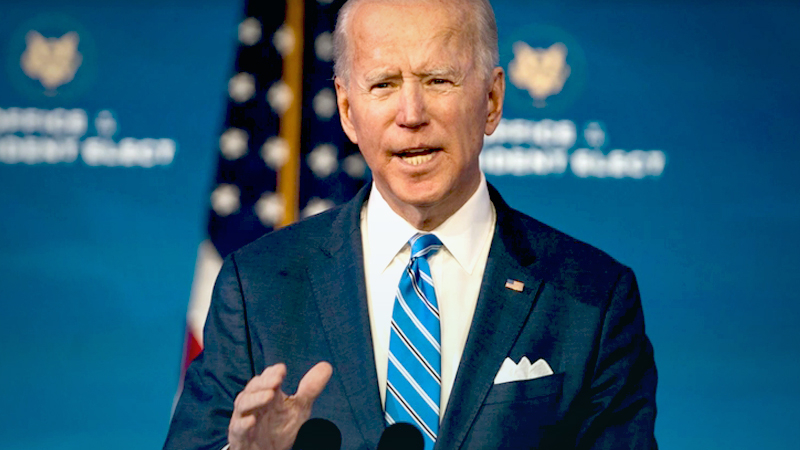
 US President Joe Biden