Ukraine stayed quiet during Trump-era pressures. Now it’s sharing some Giuliani tales. #SootinClaimon.Com

#SootinClaimon.Com : ขอบคุณแหล่งข้อมูล : หนังสือพิมพ์ The Nation.

Ukraine stayed quiet during Trump-era pressures. Now it’s sharing some Giuliani tales.

InternationalJan 31. 2021Rudy Giuliani listens as then-President Trump held a news briefing at the White House on Sept. 27, 2020. MUST CREDIT: Washington Post photo by Salwan Georges.Rudy Giuliani listens as then-President Trump held a news briefing at the White House on Sept. 27, 2020. MUST CREDIT: Washington Post photo by Salwan Georges.

By The Washington Post · David L. Stern

KYIV, Ukraine – There was a consistent message from Ukraine’s leadership over everything from the Trump campaign’s dirt digging to Ukraine’s central role in the first impeachment proceedings: No comment.

But now, as the Biden administration settles in, some close allies of Ukraine President Volodymyr Zelensky are opening up about one of the longest-running dramas from the Trump era – the blitz of meetings, messages and public statements in Ukraine by former president Donald Trump’s personal lawyer, Rudy Giuliani.

Among the accounts emerging from Ukrainian officials is a July 2019 phone call between Giuliani and Andriy Yermak, formerly one of Zelensky’s top aides and now his chief of staff. Yermak said the conversation was the first direct contact between Giuliani and the Zelensky administration and, until now, was only discussed in general terms.

The new disclosures from Ukraine do not offer any bombshell revelations about Giuliani’s dealings. But they help fill in some blanks on his frantic – and unsuccessful – quest to press Ukraine to make statements seen as potentially helpful to the Trump reelection bid.

Giuliani’s overall goal, according to the accounts, was to have Zelensky’s government validate the Trump campaign’s unsupported claims – including that Joe Biden’s son, Hunter, engaged in corrupt dealings in Ukraine and that then vice president Biden attempted to cover it up.

Giuliani, saying he was acting on President Donald Trump’s behalf, also was promoting a false narrative that the Ukrainian government colluded to interfere in the 2016 U.S. presidential elections against Trump – an unproven claim that sought to deflect attention from Russia’s interference in the campaign.

Ukraine’s willingness to discuss Giuliani’s forays also lands at a difficult time for the former New York mayor as he faces mounting personal battles, including a $1.3 billion defamation lawsuit by Dominion Voting Systems over alleged false claims about ballot rigging in the 2020 election.

Giuliani did not respond to a list of questions sent to him, and also through his lawyer. Kurt Volker, the former State Department’s special envoy to Ukraine for peace negotiations, who was also on the call with Yermak, declined to comment.
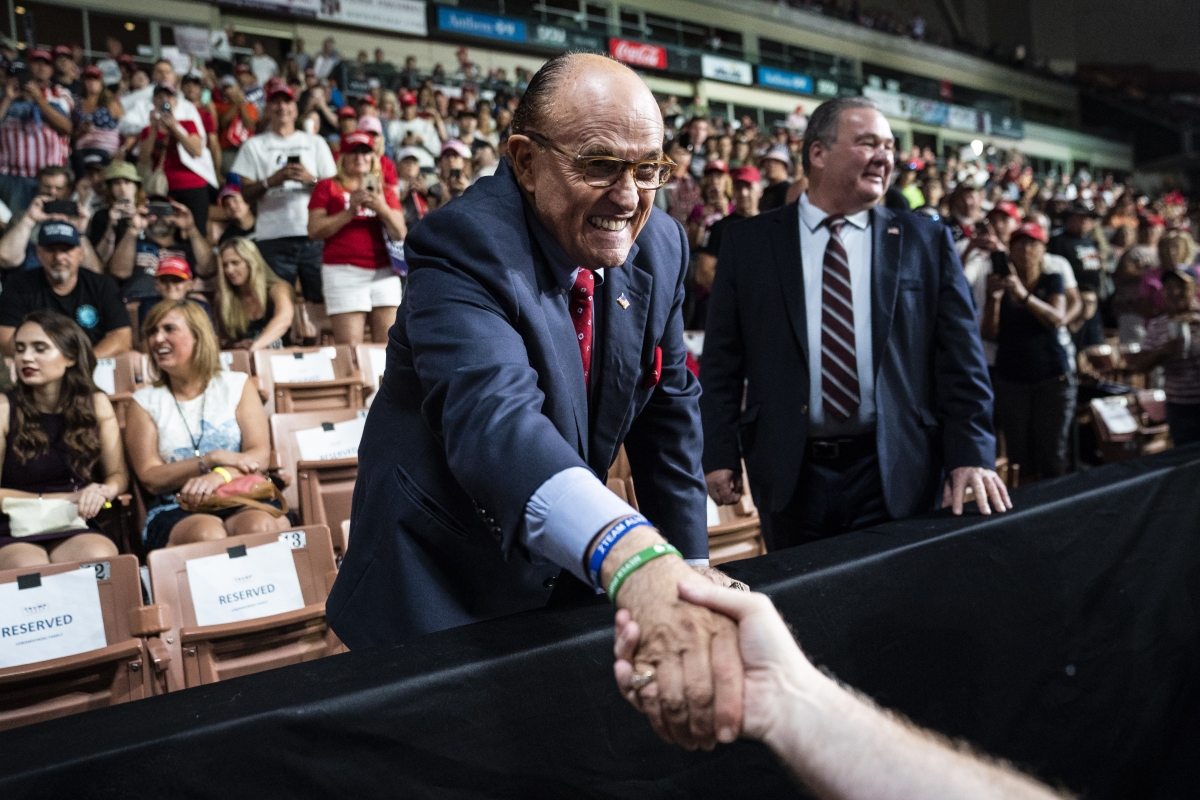
Rudy Giuliani greets supporters before then-President Donald Trump's arrival at a rally at Southern New Hampshire University Arena on Aug 15, 2019 in Manchester, N.H. MUST CREDIT: Washington Post photo by Jabin Botsford.

Rudy Giuliani greets supporters before then-President Donald Trump’s arrival at a rally at Southern New Hampshire University Arena on Aug 15, 2019 in Manchester, N.H. MUST CREDIT: Washington Post photo by Jabin Botsford.

The Zelensky team’s decision to talk about Giuliani’s tactics coincides with efforts for a reset in relations with President Biden, who dealt closely with Ukraine during his eight years as vice president.

“We’ve gotten through all these trials, despite criticism at home and abroad,” said Yermak. “And today, this feeling that Ukraine – the mention of Ukraine – is associated with various scandals should disappear.”

Giuliani’s tone and actions during his dealings with the Ukrainians were “aggressive and threatening,” said one Zelensky insider, who spoke on the condition of anonymity because of the sensitivity of the issue.

But the Ukrainians, he said, steadfastly refused to “play ball.”

The accusations against Biden centered on his son, Hunter, and his previous position on the board of the Ukrainian energy company Burisma, which is under investigation for alleged corrupt dealings. Trump and his allies claimed, without evidence, that Joe Biden, then vice president, used his clout to end the investigations.

Ukrainian investigations into Burisma and its founder, Mykola Zlochevsky, are ongoing. But authorities say that none of the cases involve Hunter Biden. A Senate report in September described the younger Biden’s position at the company as “problematic” but found no wrongdoing by Joe Biden.

Giuliani’s pressure began almost from the moment of Zelensky’s election in April 2019. The former New York mayor planned to travel to Ukraine the following month.

But Giuliani canceled at the last moment, claiming that Zelensky was surrounded by “enemies” of Trump. This set off concerns in Zelensky’s inner circle that Giuliani would poison Zelensky’s relations with the White House.

In July 2019, Yermak asked Volker to introduce him to Giuliani in an effort to clear the air.

Ukrainians needed U.S. diplomatic and financial muscle to bolster them in their ongoing battles with Kremlin-backed insurgents in eastern Ukraine, a conflict that has killed more than 13,000 people since 2014.
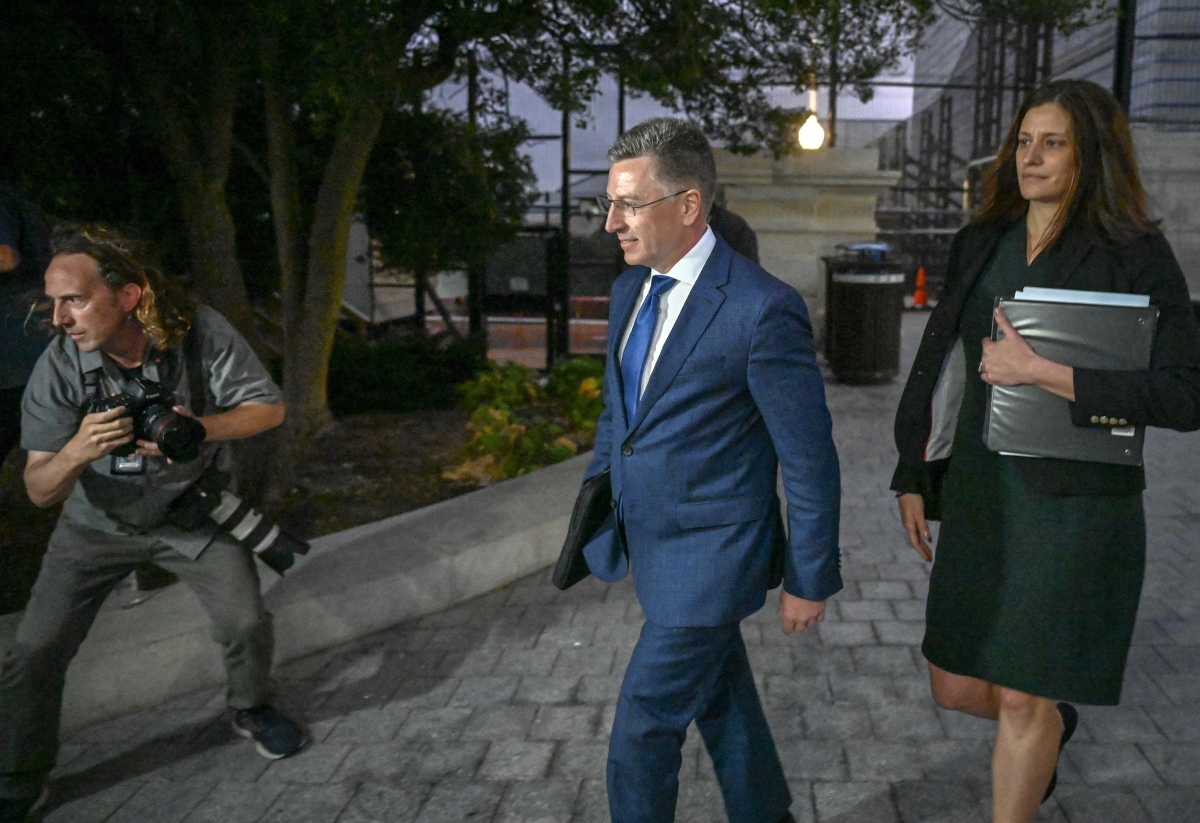
Former envoy to Ukraine, Kurt Volker, departs the Capitol on Oct. 3, 2019 after meeting with the House Intelligence Committee as part of investigations into the then President Donald Trump's dealings with that country. MUST CREDIT: Washington Post photo by Bill O'Leary.

Former envoy to Ukraine, Kurt Volker, departs the Capitol on Oct. 3, 2019 after meeting with the House Intelligence Committee as part of investigations into the then President Donald Trump’s dealings with that country. MUST CREDIT: Washington Post photo by Bill O’Leary.

“Until we were 100% certain that Rudy was the go-to guy, and nothing would happen without him, we were trying to avoid him as much as possible,” said Igor Novikov, who served an adviser to Zelensky until August and was a member of the team tasked with responding to U.S. overtures during the Trump administration.

“But then toward the end of June, we realized that we couldn’t achieve anything with Trump without talking to Rudy first,” Novikov said.

To this end, Volker set up an introductory phone call on July 22, 2019 between himself, Yermak and Giuliani, according to Volker’s testimony during the impeachment proceedings. Novikov, unknown to Giuliani and Volker, sat next to Yermak and took notes.

Volker mentioned the phone call briefly in his testimony, saying that it was short and that he did not remember any discussion of Ukraine opening investigations.

Novikov, however, said the call lasted more than 40 minutes, during which Giuliani spelled out what he wanted.

The Giuliani wish list, according to Novikov: Zelensky would publicly announce the launch of investigations into Burisma and allegations that Ukrainian officials conspired to interfere in the 2016 presidential elections.

“Just let these investigations go forward, get someone to investigate them,” Novikov recalled Giuliani saying. Furthermore, Giuliani wanted a public statement from Zelensky “at the right time” saying that he supports the investigations. It would “clear the air really well,” Giuliani said, according to Novikov’s notes.

According to Novikov, Giuliani told the Ukrainians that Zelensky should “be careful” of the people surrounding him or he could find himself “in trouble.”

Ukrainian officials believe Giuliani later played a key role in setting up the July 25, 2019 call in which Trump asked Zelensky to “do us a favor.” The call became the centerpiece of the House impeachment later that year. Trump later was acquitted by the Senate.

“Trump took the phone call because Rudy said Zelensky would say the right things,” said the official involved in the Ukrainian discussions. “But the Americans’ tone changed after the call. Trump apparently didn’t hear what he wanted to hear.”

After the phone call, Giuliani ratcheted up his efforts for the Ukrainians to open investigations.

In early August 2019, Giuliani and Yermak met in Madrid, according to testimony during the impeachment hearing. Also present was Lev Parnas, an associate of Giuliani’s who is now under federal indictment for campaign finance violations and wire fraud. He has pleaded not guilty.

“In Madrid, Rudy was like a confident mobster, with a smirk and a smile,” Parnas said in an interview. “He was like, ‘We don’t care, you need this more than we do.’ “

Yermak, however, said that Giuliani did not pressure him in Madrid and that Burisma was mentioned only briefly.

In the meantime, the Ukrainians found out from American media that $250 million in U.S. military aid had been put on hold.

Members of Zelensky’s team contemplated giving Giuliani and Trump what they desired, and considered having Zelensky announce the investigations during a planned interview with CNN. Some advisers objected strongly to this, however, and the announcement was canceled.

“Can you imagine what would have been the reaction one second after that interview?” said Oleksandr Danyliuk, the former head of Zelensky’s security council. “Zelensky would be looked upon as a toy, as a soft toy – not as a president. Nobody would have respected him.”

Some Zelensky aides now say it was a mistake to open channels with Giuliani. But Ukraine’s rebuff of the demands, said Novikov, was a victory in keeping the country out of U.S. affairs.

“Without our actions,” he asserted, “the U.S. presidential race would have been very different.”

กองทัพเมียนมาปัดข่าวลือรัฐประหาร ยืนยันปกป้องรัฐธรรมนูญ #SootinClaimon.Com

#SootinClaimon.Com : ขอบคุณแหล่งข้อมูล : หนังสือพิมพ์โพสต์ทูเดย์

https://www.posttoday.com/world/644075

วันที่ 30 ม.ค. 2564 เวลา 18:15 น.กองทัพเมียนมาปัดข่าวลือรัฐประหาร ยืนยันปกป้องรัฐธรรมนูญกองทัพเมียนมาลดความแรงข่าวรัฐประหารยืนยันจะปกป้องและปฏิบัติตามรัฐธรรมนูญ

สำนักข่าวรอยเตอร์สรายงานว่า กองทัพเมียนมาออกแถลงการณ์โต้ข่าวลือรัฐประหารว่า กองทัพจะปกป้องและปฏิบัติตามรัฐธรรมนูญ และเคารพกฎหมาย

นอกจากนี้ ยังชี้แจงคำพูดของนายพล มินอ่องหล่าย ผู้บัญชาการทหารสูงสุด ที่กล่าวถึงหากไม่มีใครปฏิบัติตามก็ควรฉีกรัฐธรรมนูญก่อนหน้านี้ว่าเป็นการตีความผิด โดยย้ำว่ามินอ่องหลายต้องการพูดเพื่อให้ทหารเจ้าใจสถานการณ์ของรัฐธรรมนูญเมียนมาเท่านั้น

“กองทัพจะปกป้องรัฐธรรมนูญปี 2008 และปฏิบัติตามกฎหมาย บางองค์กรหรือบางสื่อตีความตามที่พวกเขาต้องการให้เป็นและเขียนข่าวว่ากองทัพจะล้มล้างรัฐธรรมนูญ” แถลงการณ์ระบุ

ขณะที่พรรคสันนิบาตแห่งชาติเพื่อประชาธิปไตย (NLD) ของอองซานซูจีมองว่า คำอธิบายของกองทัพเหมาะสมแล้ว

ทั้งนี้ สถานการณ์การเมืองของเมียนมาตึงเครียดหลังจากกองทัพไม่ยอมรับผลการเลือกตั้งที่พรรค NLD กวาดชัยชนะ โดยอ้างว่าเกิดการทุจริต และขู่ว่ากองทัพจะเข้ามาจัดการหากไม่ได้รับการชี้แจงกรณีดังกล่าว จนสหประชาชาติและชาติตะวันตกพากันแสดงความกังวลว่าจะเกิดการรัฐประหาร

ดัชนีภาพลักษณ์การคอร์รัปชั่นของไทยอันดับตก #SootinClaimon.Com

#SootinClaimon.Com : ขอบคุณแหล่งข้อมูล : หนังสือพิมพ์โพสต์ทูเดย์

https://www.posttoday.com/world/644068

วันที่ 30 ม.ค. 2564 เวลา 16:15 น.ดัชนีภาพลักษณ์การคอร์รัปชั่นของไทยอันดับตกคะแนนความโปร่งใสของไทยน้อยกว่าค่าเฉลี่ยระดับโลกและค่าเฉลี่ยในภูมิภาคเอเชียแปซิฟิก

องค์กรความโปร่งใสสากล (TI) เผยดัชนีภาพลักษณ์การคอร์รัปชันประจำปี 2020 (Corruption Perception Index) โดยไทยได้ 36 จาก 100 คะแนน ไม่เปลี่ยนแปลงจากคะแนนปีก่อนหน้า แต่อันดับของไทยตกจาก 101 ในปี 2019 มาอยู่ที่ 104 ในปี 2020 จากที่สำรวจทั้งหมด 180 ประเทศ

ขณะที่ค่าเฉลี่ยของโลกอยู่ที่ 43 คะแนน ค่าเฉลี่ยกลุ่มประเทศเอเชียแปซิฟิกซึ่งรวมถึงไทยอยู่ที่ 45 คะแนน และไทยยังอยู่ในกลุ่ม 2 ใน 3 ประเทศที่ได้คะแนนน้อยกว่า 50 คะแนนด้วย

เมื่อพิจารณาในกลุ่มประเทศอาเซียน ปรากฏว่าไทยอยู่ในอันดับและคะแนนเท่ากับเวียดนาม โดยคะแนนของเวียดนามลดลงจากปี 2019 1 คะแนน

ขณะที่สิงคโปร์ยังเป็นที่ 1 ของอาเซียนด้วยคะแนน 85 คะแนน และขยับขึ้นเป็นอันดับ 3 ของโลก ส่วนบรูไน มาเลเซีย และอินโดนีเซียอยู่ในอันดับเหนือไทย มีเพียงฟิลิปปินส์ ลาว เมียนมา และกัมพูชาที่ได้คะแนนน้อยกว่าไทย

ส่วนประเทศที่คอร์รัปชันน้อยที่สุดในโลก 10 ประเทศแรก ได้แก่ เดนมาร์กและนิวซีแลนด์ซึ่งได้ 88 คะแนนเท่ากัน ตามด้วยฟินแลนด์ สิงคโปร์ สวีเดน สวิตเซอร์แลนด์ซึ่งได้ 85 คะแนนเท่ากัน นอร์เวย์ เนเธอร์แลนด์ เยอรมนี และลักเซมเบิร์ก

หญิงญี่ปุ่นซุกศพแม่ในตู้แช่แข็ง10 ปีเพราะกลัวถูกไล่จากอพาร์ตเมนต์ #SootinClaimon.Com

#SootinClaimon.Com : ขอบคุณแหล่งข้อมูล : หนังสือพิมพ์โพสต์ทูเดย์

https://www.posttoday.com/world/644056

วันที่ 30 ม.ค. 2564 เวลา 14:15 น.หญิงญี่ปุ่นซุกศพแม่ในตู้แช่แข็ง10 ปีเพราะกลัวถูกไล่จากอพาร์ตเมนต์ ลูกสาวกลัวถูกไล่ออกจากอพาร์ตเมนต์เลยซ่อนศพแม่ในตู้แช่แข็งนาน 10 ปีโดยไม่มีใครรู้

สำนักข่าวเกียวโดของญี่ปุ่นรายงานเรื่องสุดช็อกว่า ยูมิ โยชิโนะ หญิงวัย 48 ปีซ่อนศพแม่ของตัวเองไว้ในตู้แช่แข็งโดยที่ไม่ไม่ใครระแคะระคายเป็นเวลา 10 ปี เพราะกลัวว่าจะถูกไล่ออกจากอพาร์ตเมนต์ที่พักอยู่ด้วยกันกับแม่หากมีคนรู้ว่ามีการเสียชีวิตเกิดขึ้น

ตำรวจเปิดเผยว่าโยชิโนะถูกจับกุมในข้อหาละเลยและซ่อนศพแม้ซึ่งเจ้าหน้าที่เพิ่งพบเมื่อวันที่ 27 ที่ผ่านมาในตู้แช่แข็งที่อพาร์ตเมนต์แห่งหนึ่งในกรุงโตเกียว 

โยชิโนะสารภาพว่า เธอซ่อนศพแม่เมื่อ 10 ปีก่อนหลังจากเธอพบว่าแม่เสียชีวิต เนื่องจากไม่ต้องการย้ายออกจากอพาร์ตเมนต์ห้องนี้ เพราะแม่มีชื่ออยู่ในสัญญาเช่าอพาร์ตเมนต์

เมื่อกลางเดือนที่ผ่านมาโยชิโนะถูกไล่ออกจากอพาร์ตเมนต์ดังกล่าวหลังจากไม่ได้จ่ายค่าเช่า ก่อนที่พนักงานทำความสะอาดจะพบศพในตู้แช่แข็งที่ซ่อนอยู่ในตู้เสื้อผ้า โดยจากการชันสูตรไม่สามารถระบุเวลาและสาเหตุการเสียชีวิต

บิตคอยน์พุ่ง 20% หลัง อีลอน มัสก์ ติดแฮชแท็กในทวิตเตอร์ #SootinClaimon.Com

#SootinClaimon.Com : ขอบคุณแหล่งข้อมูล : หนังสือพิมพ์โพสต์ทูเดย์

https://www.posttoday.com/world/644046

วันที่ 30 ม.ค. 2564 เวลา 12:15 น.บิตคอยน์พุ่ง 20% หลัง อีลอน มัสก์ ติดแฮชแท็กในทวิตเตอร์แค่ อีลอน มัสก์ ติดแฮชแท็ก #bitcoin มูลค่าบิตคอยน์ก็พุ่งไปถึง 20%  

อีลอน มัสก์ มหาเศรษฐีเจ้าของค่ายรถยนต์ไฟฟ้า Tesla สร้างปรากฏการณ์ในตลาดหุ้นอีกครั้งจากเจ้าตัวติดแฮชแท็ก #bitcoin ลงในประวัติส่วนตัวในทวิตเตอร์มื่อช่วงเช้าวันศุกร์ตามเวลาสหรัฐ หรือช่วงค่ำวันเดียวกันตามเวลาประเทศไทย

และไม่กี่ชั่วโมงหลังจากนั้นมูลค่าของสกุลเงินดิจิทัล บิตคอยน์ (Bitcoin) ก็เพิ่มขึ้นมาอีก 5,000 เหรียญสหรัฐ มาอยู่ที่ 37,299 เหรียญสหรัฐ หรือพุ่งขึ้นถึง 20% ก่อนจะขยับไปอยู่ที่ $37,653 เหรียญสหรัฐ

นี่ไม่ใช่ครั้งแรกที่การทวีตของมัสก์มีผลต่อราคาหุ้น อย่างในกรณีของหุ้นร้านจำหน่ายวิดีโอเกม GameStop ที่ราคาพุ่งขึ้นไปอีกหลังจากมัสก์แชร์ลิงค์ของกลุ่มย่อยที่คุยเรื่องหุ้น WallStreetBets ใน Reddit ซึ่งเป็นผู้อยู่เบื้องหลังการดันราคาหุ้นให้ทะยานขึ้นถึง 1,700%

การเพิ่มบิตคอยน์ลงในประวัติส่วนตัวในทวิตเตอร์ของมัสก์เกิดขึ้นท่ามกลางการคาดเดาว่าซีอีโอของ Tesla อาจลงทุนซื้อบิตคอยน์หรืออาจเพิ่มสกุลเงินดิจิทัลนี้ในบัญชีงบดุลของ Tesla แม้จะยังไม่มีคำอธิบายเพิ่มเติมจากเจ้าตัว แต่เท่านั้นก็เพียงพอให้มูลค่าบิตคอยน์เพิ่มขึ้นแล้ว

Photo by Britta Pedersen / POOL / AFP

อาร์เจนตินาเก็บภาษีคนรวยมาช่วยคนเดือดร้อนจากโควิด #SootinClaimon.Com

#SootinClaimon.Com : ขอบคุณแหล่งข้อมูล : หนังสือพิมพ์โพสต์ทูเดย์

https://www.posttoday.com/world/644042

วันที่ 30 ม.ค. 2564 เวลา 10:16 น.อาร์เจนตินาเก็บภาษีคนรวยมาช่วยคนเดือดร้อนจากโควิดCovid-19 ที่ระบาดหนักซ้ำเติมปัญหาความยากจนของอาร์เจนตินา
ทางการอาร์เจนตินาเริ่มบังคับใช้มาตรการจัดเก็บภาษีแบบครั้งเดียวที่เรียกว่า “ภาษีมหาเศรษฐี” จากกลุ่มคนที่มีฐานะมั่งคั่ง เพื่อนำเงินมาจัดซื้ออุปกรณ์การแพทย์และช่วยเหลือภาคธุรกิจขนาดเล็กที่ได้รับผลกระทบจาก Covid-19 รวมถึงเป็นทุนการศึกษาและจัดหาอุปกรณ์บรรเทาทุกข์ให้ประชาชน

มาตรการนี้ใช้กับบุคคลที่มีทรัพย์สินตั้งแต่ 200 ล้านเปโซ หรือ 68.69 ล้านบาท ต้องจ่ายภาษี 3.5% ของทรัพย์สินที่อยู่ในประเทศ และ 5.25% ของทรัพย์สินที่อยู่ต่างประเทศ ซึ่งมีบุคคลเข้าข่ายราว 12,000 คนจากประชากรทั้งหมด 44 ล้านคน

รัฐบาลของประธานาธิบดี อัลแบร์โต แฟร์นานเดซ คาดว่าจะได้เงินราว 3,000 ล้านเหรียญสหรัฐ หรือ 89,601 ล้านบาท

มาตรการดังกล่าวได้รับการอนุมัติจากสภาเมื่อเดือน ธ.ค.ปีที่แล้วด้วยคะแนนเสียง 42 ต่อ 26 ทว่ามีเสียงคัดค้านจากฝ่ายค้านว่ามาตรการนี้เสมือนเป็นการยึดทรัพย์คนรวย และยังมีความกังวลจากสมาคมชนบทอาร์เจนตินาซึ่งเป็นปากเสียงของเกษตรกรในประเทศว่ามาตรการนี้อาจนำมาใช้แบบถาวร

ทั้งนี้ กว่า 40% ของประชากรอาร์เจนตินาอยู่ใต้เส้นแบ่งความยากจน คือมีรายได้วันละ 1.90 เหรียญสหรัฐ หรือ 56.75 บาท ขณะที่อัตราการว่างงานอยู่ที่ 11

Transgender girls are at the center of America’s culture wars, yet again #SootinClaimon.Com

#SootinClaimon.Com : ขอบคุณแหล่งข้อมูล : หนังสือพิมพ์ The Nation.

Transgender girls are at the center of America’s culture wars, yet again

InternationalJan 30. 2021

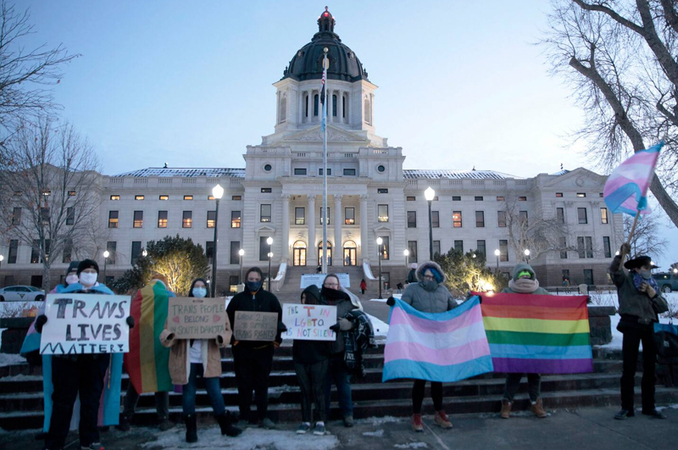
A group of LGBTQ advocates gathered outside the South Dakota Capitol in Pierre on Tuesday, to protest a bill that would have banned people from updating the sex on their birth certificates. (Stephen Groves/ AP)

A group of LGBTQ advocates gathered outside the South Dakota Capitol in Pierre on Tuesday, to protest a bill that would have banned people from updating the sex on their birth certificates. (Stephen Groves/ AP)

By The Washington Post, Emily Wax-Thibodeaux, Samantha Schmidt

WASHINGTON – On the day that President Joe Biden signed an executive order allowing transgender people to serve in the military, Republican lawmakers 2,100 miles away in Montana’s capital advanced a law to ban transgender youth from competing in girls’ sports.

Less than a month into their 2021 sessions, GOP state legislators across the United States are relaunching campaigns to restrict transgender people’s access to medical care and school athletics. But this time, their efforts are clashing with the agenda of a Democratic president who has been called the most pro-transgender in history.

Biden signed an executive order on his first day in office to reinstate protections for gender identity that were curbed by the Trump administration. Meanwhile, lawmakers in at least a dozen states have proposed bills in recent weeks that challenge such protections. Some were carried over from 2020 sessions, when a record number of anti-trans bills were filed in state legislatures, according to the ACLU.

Many of those bills target youth and collegiate sports, with supporters arguing that transgender girls have an unfair physiological advantage in girls’ sports, an edge that can affect access to scholarships.

State Rep. Bruce Griffey, a Republican, who has a cisgender daughter on a school golf team, is backing/sponsoring a bill in Tennessee that would only allow school competition based on the gender listed on one’s birth certificate.

“What if one of the boys is not doing well, so he pretends to be transgender to win?” he asked. “I’m protecting a discriminated class: that’s girls and women in sports.”

But detractors say arguments about biological advantages among transgender athletes are based on limited research and put an outsize focus on a tiny fraction of young competitors. About 2% of high school students in the United States identify as transgender, according to data published in 2019 by the Centers for Disease Control and Prevention.

While studies on the issue are limited, advocates say young transgender athletes also face hurdles that affect their athletic performance, including discrimination, trauma and gender dysphoria.

Bills targeting transgender rights have a history of failing in state legislatures or getting tied up in legal battles. They often elicit protests and boycotts from LGBTQ activists and their supporters or create legal issues around discrimination and privacy.

The Montana House on Tuesday narrowly voted down a bill that would have punished doctors who provided certain medical treatments to transgender minors. Some Republican opponents were critical of bringing government into doctors’ offices and worried it would risk the state’s economy by attracting the kind of boycotts that North Carolina experienced after passing a “bathroom bill” in 2016 that banned transgender people from using public facilities that match their gender identity.

The Montana youth athlete bill has passed the state House on a 61-to-38 vote. It will now move to the state Senate.

Democratic opponents of these bills and some political experts charge that the legislative efforts amount to a political power play to rally the conservative base around an issue they see as threatening traditional gender roles.

The Alliance Defending Freedom, a legal advocacy group for socially conservative causes, published a blog post this week that charges transgender athletes with hijacking competitive opportunities and calls Biden’s executive order a threat to “gut legal protections for women and girls.”

“Alliance Defending Freedom will stand against any attempt by the Biden administration to advance an unconstitutional agenda,” the post reads.

“They just see it as an easy win,” said Don Haider-Markel, chair of political science at the University of Kansas and an expert on public opinion on LGBTQ issues. “It’s an easy way for them to show that Democrats have just gone over the edge, that there is no limit to how far they will push these radical ideas.”

But some Republican lawmakers say the issue is deeper than that. After seeing similar legislation pursued in other states, South Carolina Rep. Ashley Trantham, a Republican, and 18 other state lawmakers sponsored the Save Women’s Sports Act, which would restrict middle- and high school students to sports that correspond to their assigned sex at birth. The bill, pre-filed in December, has been referred to a committee.

School athletics are “an extremely competitive environment,” said Trantham, whose daughter was a high school basketball player. “If it was my daughter and she needed that scholarship to go to college, it would be very important to me that she was playing on an even playing field.”

Trantham said one of the first people she notified when she decided to file the bill was the head of the LGBTQ advocacy group South Carolina Equality.

“I want to make sure you guys understand this is not me trying to hurt the transgender community,” Trantham said she told him. “This is me trying to protect girls in women’s sports.”

LGBTQ activists and many pediatricians say that the medical treatments transgender youth receive to align their bodies with their gender identity mitigate the physical disparities in athletics. They note that those same treatments – including hormones and puberty blockers – also have also been targets of Republican lawmakers, with about a dozen bills introduced this month seeking to restrict transgender minors’ access to them.

While bills limiting transgender athletes are spreading, more than 16 states already have instituted laws and guidance that support full inclusion of transgender youth in sports that correspond to their identities, according to GLSEN, an advocacy group for LGBTQ youth.

“I’ve seen arguments that this will be the end of women’s sports,” said Katrina Karkazis, a cultural anthropologist and bioethicist. “If so, it should have ended already.”

Since the Supreme Court ruled in favor of same-sex marriage in 2015, statehouses have launched more than 300 bills seeking to restrict LGBTQ rights, many targeting transgender issues as well as conversion therapy and same-sex adoption, according to the Equality Federation, a national advocacy organization. Some have attempted to criminalize doctors who provide hormone treatment to transgender youth and others mandate written parental approval for teens who want to use a pronoun different from their sex at birth.

Many of the bills use the same language and are written by conservative advocacy groups. Almost all of them have failed in statehouses or are stuck in court litigation.

After Idaho became the first state to institute restrictions on transgender youth athletes and order “sex examinations” before they could play, a federal judge in August granted a preliminary injunction. Judge David Nye wrote: “The state has not identified a legitimate interest served by the Act . . . other than an invalid interest of excluding transgender women and girls from women’s sports entirely, regardless of their physiological characteristics.”

He wrote that being subjected to physical examinations of their gender “is itself humiliating.”

In South Dakota, which has been at the forefront of legislation that limits transgender rights, state Rep. Fred Deutsch, a Republican, sponsored a bill last February that sought to criminalize medical professionals for treating transgender youths with hormone blockers or surgery. Despite the state having a majority-Republican legislature, the bill failed after hundreds of people protested.

In a November interview, Deutsch said he would not pursue any transgender bills this year, and instead would focus on the state’s high coronavirus infection rates. “My focus is on pandemic related issues for 2021. It’s a more urgent need.”

But he later changed his mind, putting forward a bill that would ban people from changing the sex designation on their birth certificates, unless there was a clerical error or a person has ambiguous genitalia.

“Values always matter and there’s a divide in our country over values,” Deutsch said in a phone interview Thursday. “I stood up and said this is not a hate bill. It’s about biology. It’s science. You can’t change your sex. You can look like a boy, you can take hormones and sex operations but it doesn’t make you a boy. Your gender can be a boy, but you can never change your sex.”

Deutsch’s bill has passed the House and is moving to a Senate committee.

South Dakota state Rep. Linda Duba, a Democrat, who has consistently voted against legislation that restricts transgender rights, said she was taken aback by Deutsch’s about-face.

“Again? What a waste of time. We need to focus on legislation to help those who are impacted by covid,” said Duba, who said she worries about the stakes of such legislation for a population with a disproportionately high rate of suicide and homelessness. “Why discriminate and focus on a group of people who already feel marginalized? We have so many other problems.”

These state-level legislative efforts come as more than 8 in 10 Americans say they favor laws that would protect LGBTQ people against discrimination in jobs, public accommodations and housing, according to a Public Religion Research Institute 2020 American Values Survey.

But while public opinion polls across the board show support for transgender military service and other transgender rights, support softens when it comes to public accommodations and sports, Haider-Markel said.

“These things make people feel uncomfortable,” Haider-Markel said. “When you combine that with close contact . . . whether it be in bathrooms or in sports, that disgust becomes more threatening.”

But transgender athlete Juniper Eastwood, 23, a cross-country runner, said she hopes public sentiments will soon shift, just as many conservatives have come to accept the gay community.

“It’s just going to take a long time,” she said. “It won’t happen this year.”

Paul Crutzen, Nobel laureate who studied ozone and named new ‘Anthropocene’ era, dies at 87 #SootinClaimon.Com

#SootinClaimon.Com : ขอบคุณแหล่งข้อมูล : หนังสือพิมพ์ The Nation.

Paul Crutzen, Nobel laureate who studied ozone and named new ‘Anthropocene’ era, dies at 87

InternationalJan 30. 2021

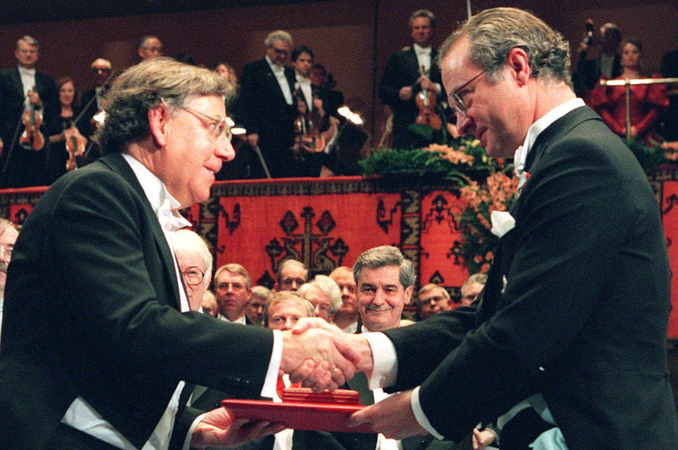
Dutch atmospheric chemist Paul J. Crutzen, left, receives the 1995 Nobel Prize in chemistry from Swedish King Carl XVI Gustaf. (Eric Roxfelt/ AP)

Dutch atmospheric chemist Paul J. Crutzen, left, receives the 1995 Nobel Prize in chemistry from Swedish King Carl XVI Gustaf. (Eric Roxfelt/ AP)

By The Washington Post, Harrison Smith

Paul Crutzen, a Nobel-winning chemist who revealed threats to the ozone layer, developed the concept of “nuclear winter” and concluded that humans were having such a profound impact on the planet that it was time to recognize a new geological epoch – the Anthropocene – died Jan. 28 at a hospital in Mainz, Germany. He was 87.

His death was announced by the Max Planck Institute for Chemistry in Mainz, where Dr. Crutzen directed the atmospheric chemistry department from 1980 until retiring in 2000. A spokeswoman for the institute, Susanne Benner, said he “suffered from several years of illness” but did not specify the cause.

Crutzen was raised in the Nazi-occupied Netherlands and initially worked as an engineer, not a scientist. Though he dreamed of an academic career, he enrolled at a technical school to spare his parents the cost of a university education, and built bridges in Amsterdam before starting a new life for himself in Sweden.

When he spotted a newspaper ad for a computer programming job at Stockholm College, he saw an opportunity. Despite lacking any experience, he applied for the position and got the job – and was soon sitting in on college classes, accumulating enough credits to get a master’s degree and apply for a doctorate program in meteorology.

Crutzen went on to spend decades investigating the interplay between humans and the atmosphere, studying the causes of air pollution, the impact of wildfires, the consequences of nuclear war and the depletion of the ozone layer, which earned him a share of the 1995 Nobel Prize in chemistry. For all his accomplishments, he was perhaps best known in recent years for popularizing “the Anthropocene,” a poetic new term that he first used in 2000.

“I was at a conference where someone said something about the Holocene, the long period of relatively stable climate since the end of the last ice age,” he told Fred Pearce, author of the climate-change book “With Speed and Violence” (2007). “I suddenly thought that this was wrong. The world has changed too much. So I said: ‘No, we are in the Anthropocene.’ I just made up the word on the spur of the moment. Everyone was shocked.”

He later learned that he was not the first to use the term “Anthropocene,” which biologist Eugene Stoermer had employed in the 1980s. Nor was he the first to offer a name for this human-dominated epoch of shrinking forests, rising temperatures and soaring population, which journalist Andrew Revkin once suggested calling the Anthrocene.

But Crutzen’s proposal, formalized in a 2002 Nature article titled “Geology of Mankind,” quickly took off, spurring an ongoing debate over whether it is time to rewrite geology textbooks and add a new epoch to the planet’s timetable, one that emphasizes the powerful role that humans play in shaping the Earth.

“Paul was very good at launching ideas that resonate with a lot of people, and that start to become a central theme of something,” said Guy Brasseur, a distinguished scholar at the National Center for Atmospheric Research in Boulder, Colo. In a phone interview, he called Crutzen a master of developing “simple ideas, simple models, that show the essence of a process.”

Crutzen was initially known for his work on the ozone layer, the thin atmospheric shield that protects plants and animals from ultraviolet radiation. In 1970, he demonstrated that compounds known as nitrogen oxides – spewed out by microbes in the soil – play a central role in controlling the level of ozone in the stratosphere.

His discovery marked a fundamental breakthrough in understanding the chemistry of the ozone layer, and shook up the debate over manufacturing supersonic transport planes such as the Concorde. Drawing on Crutzen’s research, some scientists feared that fleets of supersonic aircraft would pose a threat to the ozone layer by releasing nitrogen oxide into the atmosphere. (The transport planes were never built in large numbers.)

Inspired by his research, chemists Mario Molina and F. Sherwood Rowland published a 1974 article that identified a threat to the ozone layer from chlorofluorocarbons, or CFCs, which were used in everything from air conditioners and refrigerators to hair spray and deodorant. British researchers later discovered a vast “ozone hole” over the South Pole, which Crutzen and other scientists linked to the CFCs.

Their findings paved the way for the Montreal Protocol, a landmark 1987 treaty that phased out the use of ozone-destroying gases. In awarding the Nobel Prize to Crutzen, Rowland and Molina, who died in October, the Royal Swedish Academy of Sciences said that “the three researchers have contributed to our salvation from a global environmental problem that could have catastrophic consequences.”

The loss of the ozone was far from the only environmental catastrophe that Crutzen studied. In a 1982 article memorably subtitled “Twilight at Noon,” he and chemist John Birks warned of a climate disaster caused by a nuclear war, in which fires rage through cities, forests and oil fields. The resulting smoke would blot out the sun, they concluded, cooling the surface of the planet and jeopardizing agricultural production.

Their theory gained further traction when five others, including astronomer Carl Sagan, co-authored a 1983 Science paper titled “Nuclear Winter.” Sagan later discussed the concept on television and campaigned against nuclear weapons, along with researchers such as Crutzen.

“Although I do not count the ‘nuclear winter’ idea among my greatest scientific achievements . . . I am convinced that, from a political point of view, it is by far the most important,” Crutzen said in his Nobel Prize lecture. The theory, he added, “magnifies and highlights the dangers of a nuclear war and convinces me that in the long run mankind can only escape such horrific consequences if nuclear weapons are totally abolished by international agreement.”

Paul Jozef Crutzen was born in Amsterdam on Dec. 3, 1933. His mother worked in a hospital kitchen, and his father waited tables but was often unemployed. The family later struggled to find food and fuel during the German occupation, amid a nationwide famine that became known as the “hunger winter.”

Several of Crutzen’s classmates died before the Swedish Red Cross began dropping packages of food by parachute, and nearly all his classmates lost a year of schooling because they had only a few hours of instruction each week. With special help from a teacher, Crutzen carried on.

In his telling, he excelled in math and physics but, “because of a heavy fever,” struggled in his high school final exam. His grades kept him from receiving a university stipend, setting him on a path to join the Amsterdam bridge construction bureau.

In 1958 he married Terttu Soininen, a Finn, and moved to northern Sweden. He joined the meteorology department at Stockholm College (now a university) the next year, and soon learned machine code that he used to program weather prediction models. He received a master’s degree in 1963, a PhD in 1968 and a doctor of science degree in 1973.

Crutzen was a postdoctoral fellow at the University of Oxford and worked at the National Center for Atmospheric Research before joining the Max Planck Institute for Chemistry, where he mentored younger researchers such as Birks, his collaborator on the “nuclear winter” paper.

“Paul Crutzen mentored at least hundreds and promoted the careers of thousands of scientists around the world,” Birks said in an email. “Besides being a brilliant scientist, he one of the most caring and generous people I have ever known.”

Survivors include his wife, two daughters and three grandchildren.

Long after he helped keep pollutants out of the atmosphere through his ozone research, Crutzen made a bold proposal to flood the air with sulfur in an effort to combat global warming. Such “geoengineering” efforts were worth further study, Crutzen argued, especially if humanity did not act quickly to stem emissions and alter consumption habits.

“Imagine our descendants in the year 2200 or 2500. They might liken us to aliens who have treated the Earth as if it were a mere stopover for refueling, or even worse, characterize us as barbarians who would ransack their own home,” he wrote in a 2011 essay with journalist Christian Schwägerl. “Living up to the Anthropocene means building a culture that grows with Earth’s biological wealth instead of depleting it. Remember, in this new era, nature is us.”

Biden’s national security adviser suggests a fast timeline to rejoin Iran deal #SootinClaimon.Com

#SootinClaimon.Com : ขอบคุณแหล่งข้อมูล : หนังสือพิมพ์ The Nation.

Biden’s national security adviser suggests a fast timeline to rejoin Iran deal

InternationalJan 30. 2021

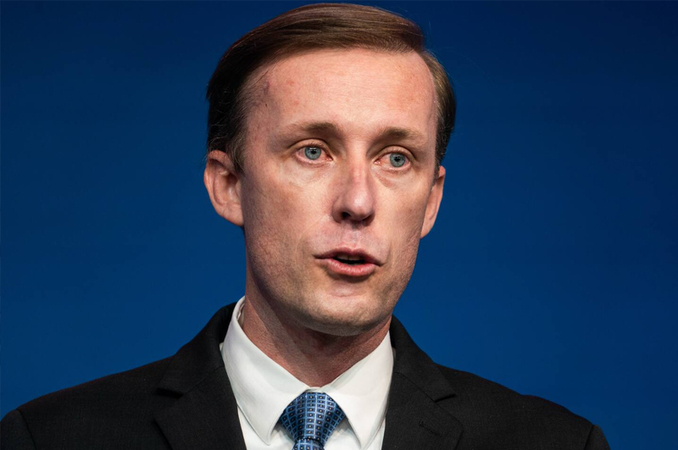
Jake Sullivan, President Biden's new national security adviser, helped shape the Iran nuclear deal struck in 2015. (Demetrius Freeman/ The Washington
Post)

Jake Sullivan, President Biden’s new national security adviser, helped shape the Iran nuclear deal struck in 2015. (Demetrius Freeman/ The Washington Post)

By The Washington Post, Anne Gearan

WASHINGTON – President Joe Biden is eyeing an urgent restoration of the international nuclear deal with Iran as a first step to deal with a range of threats from that country, new national security adviser Jake Sullivan said Friday, suggesting a faster timeline than the administration has previously outlined.

Sullivan did not mention Biden’s oft-stated precondition that Iran make the first move by rolling back nuclear activities to come back into compliance with terms of the 2015 deal. Iran is closer to building a bomb now than it was when President Donald Trump pulled the United States out of the deal, and putting the nuclear program “in a box” is the first imperative, Sullivan said.

“We are going to have to address Iran’s other bad behavior, malign behavior across the region, but from our perspective, a critical early priority has to be to deal with what is an escalating nuclear crisis as they move closer to having enough fissile material for a weapon,” Sullivan said. “And we would like to make sure that we reestablish some of the parameters and constraints around the program that have fallen away over the course of the past two years.”

Containing Iran’s ability to produce bombmaking nuclear material was the central rationale the Obama administration applied in seeking the deal that Sullivan helped to shape.

The timing of a U.S. return to the deal, as well as new concessions or promises made to Iran and the scope of a potential follow-on agreement, is one of the first major foreign policy tests for the Biden administration.

Sullivan did not spell out a preferred timeline, and the issue is now being debated among White House and State Department advisers. But Sullivan’s emphasis on a pressing need to contain Iran suggests he may push for an accelerated response.

Secretary of State Antony Blinken has adopted a skeptical tone about any fast action, saying on his first full day in office Wednesday that a U.S. return to the deal is still far off.

“Iran is out of compliance on a number of fronts. And it would take some time, should it make the decision to do so, for it to come back into compliance and time for us then to assess whether it was meeting its obligations,” Blinken said during a news conference at the State Department. “We’re not there yet, to say the least.”

As a 2020 presidential candidate, Biden committed to returning to the international compact that Trump had run in 2016 on reversing. After Trump pulled the United States out in 2018, Iran began breaking its obligations under the agreement.

Biden set the condition that Iran would have to return to complying with the agreement first, and said a restored deal would then be a starting point for negotiation of a larger agreement that addresses long-standing concerns over Iran’s ballistic missile capability, its support for terrorism, and aggressions toward Israel and Persian Gulf neighbors.

Sullivan mentioned those concerns in remarks to the United States Institute of Peace, and said the threats have only gotten worse because of Trump’s decision.

“Our view is that if we can get back to diplomacy and can put Iran’s nuclear program in a box, that will create a platform upon which to build a global effort, including partners and allies in the region and in Europe and elsewhere, to take on the other significant threats Iran poses, including on the ballistic missile issue,” Sullivan said.

With key decisions about the pace and scope of U.S. outreach on hold, the administration on Friday named former Obama administration Middle East adviser and veteran diplomat Robert Malley to be a special envoy on Iran.

Conservatives including Sen. Tom Cotton, R-Ark., criticized the pick before it was announced, calling Malley too soft on Tehran. Other opponents of the 2015 deal said Malley has been too critical of Israel, whose leaders opposed the deal reached when Biden was vice president.

“As the President and Secretary Blinken have said, if Iran comes back into full compliance with its obligations under the JCPOA, the United States would do the same and then use that as a platform to build a longer and stronger agreement that also addresses other areas of concern,” State Department spokesman Ned Price said in a statement Friday.

The 2015 deal is formally known as the Joint Comprehensive Plan of Action.

“But we are a long way from that point as Iran is out of compliance on a number of fronts, and there are many steps in the process that we will need to evaluate,” Price said, promising coordination with allies and with Congress, where skepticism about a return to the deal is widespread.

Malley will lead a team of “clear-eyed experts with a diversity of views,” as the new administration decides what to do, Price said.

Iran has said the United States must make the first move.

Iran’s parliament has tried to raise pressure on the new administration, threatening to suspend some U.N. nuclear inspections unless the United States lifts sanctions by Feb. 21.

Iranian Foreign Minister Mohammad Javad Zarif responded to Blinken’s remarks with a tweet in English.

“Reality check for @SecBlinken: The US violated (the) JCPOA,” Zarif tweeted.

Sullivan spoke during an event that also featured his predecessor, Trump national security adviser Robert C. O’Brien. Sullivan and O’Brien agreed on other major priorities, including confronting China and Russia and extending Trump’s effort to forge diplomatic and economic agreements between Israel and Arab neighbors.

Israeli Prime Minister Benjamin Netanyahu objected to the 2015 agreement and tried to derail it. Sullivan did not mention Israel in his remarks Friday but did say Iran’s threats against other nations in the Middle East are rising.

11 soldiers injured after drinking what officials say may have been antifreeze #SootinClaimon.Com

#SootinClaimon.Com : ขอบคุณแหล่งข้อมูล : หนังสือพิมพ์ The Nation.

11 soldiers injured after drinking what officials say may have been antifreeze

InternationalJan 30. 2021

By The Washington Post, Alex Horton

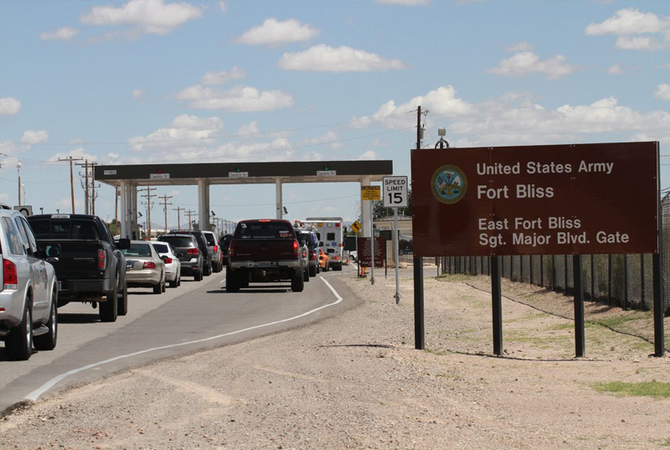
Eleven soldiers were hospitalized at Fort Bliss in Texas after they drank antifreeze mistaken for alcohol, Army officials said Friday, as two service members remained in critical condition.

The soldiers were on the last day of a 10-day field training exercise when the incident occurred Thursday, Lt. Col. Allie Payne, a spokesperson for the 1st Armored Division and Fort Bliss, said during a news conference. Some soldiers may be released from the hospital later Friday, she said, noting that the two most serious cases required intensive care.

The substance detected in lab results – ethylene glycol – is commonly referred to as antifreeze, Payne said.

“The soldiers fell ill after consuming a substance acquired outside of authorized food supply distribution channels,” she said in an earlier statement. All but one of the soldiers were enlisted personnel, with one warrant officer among those injured.

Law enforcement is investigating the incident, Payne said.

Ingesting antifreeze can cause kidney damage, which could lead to organ failure, Col. Shawna Scully, deputy commander for medical services at the William Beaumont Army Medical Center at Fort Bliss, said during the news conference.

Army regulations prohibit soldiers from drinking alcohol while in the field. Payne did not indicate whether the soldiers confused the antifreeze with alcohol, or if it was deliberately mixed together to form a toxic cocktail. Bowls of alcohol with several spirits mixed together, known as grog, are mainstays at military social functions and sometimes include less-than-appetizing ingredients, such as hot sauce.

The soldiers all belonged to the 11th Air Defense Artillery Brigade, Payne said, which uses air artillery like the Patriot system to shoot down enemy rockets and missiles.

Fort Bliss has been scrutinized in recent weeks after the death of Pfc. Asia Graham, who was found unresponsive in a barracks on New Year’s Eve. She had previously reported another soldier for sexual assault. That soldier is facing a court-martial on the sex assault charge, CNN reported.